



Crispy vegetarian alternatives for a healthy dinner work because crunch gives the plate a spine. Without it, a meatless meal can slide into that limp, polite territory where everything tastes fine and nothing feels finished. With it, tofu, cauliflower, chickpeas, cabbage, halloumi, and even a stubborn little tray of broccoli suddenly read as dinner, not a side dish pretending to be more.
That texture matters more than people admit. A crisp edge changes how you taste salt, how you notice garlic, how long a bite lingers on the tongue. The first time a cauliflower cutlet comes out of the oven with browned corners and a firm, brittle crust, it doesn’t feel like a compromise. It feels like someone in the kitchen paid attention.
Most of the bad advice around meatless crisp cooking misses the obvious thing: vegetables are full of water, and water is the enemy of browning. If you want a clean, shattering crust at the end of a long day, you need to think like a cook with a sheet pan, a little patience, and no interest in soggy dinner. That’s the real trick, and once you see it, the whole category opens up.
Why This Kind of Dinner Works
-
Crunch makes vegetables feel like the main event. A crispy crust turns cauliflower, tofu, or chickpeas into something with structure, which is why these dinners satisfy in a way plain steamed vegetables never will.
-
You can keep the fat in check without making the food dull. A hot oven, air fryer, or skillet uses far less oil than deep-frying, yet still gives you browned edges and a firm bite.
-
Protein stays on the plate without needing meat. Tofu, tempeh, beans, paneer, halloumi, and edamame each bring a different kind of heft, so dinner does not end up feeling like a side salad with ambition.
-
The meal gets easier to balance. Crisp mains pair well with grains, slaws, and bright sauces, which makes it simple to build a plate that feels full without feeling heavy.
-
Leftovers can still be worth eating. If you store the sauce separately and reheat the crisp part the right way, a lot of these dishes hold up better than people expect.
-
The same technique works across seasons and budgets. Cabbage, carrots, potatoes, tofu, chickpeas, and broccoli each respond well to dry heat, so you can cook this way with what’s cheap and sitting in the fridge.
Why Crispy Vegetarian Dinners Feel So Satisfying
Crunch is not a garnish. It’s the part that tells your brain the food has shape.
That sounds a little dramatic, maybe, but it’s true. A plate of roasted vegetables with no browning can taste clean and healthy and still leave you wandering back to the kitchen twenty minutes later. Add a crust — panko on cauliflower, cornstarch on tofu, a hard sear on halloumi — and the meal suddenly has contrast. That contrast is what keeps a dinner from feeling flat.
There’s a reason fried foods have a reputation for satisfaction: they hit more than one sensory note at once. You get salt, fat, heat, texture, and aroma in the same bite. Vegetarian cooking can borrow that pleasure without becoming heavy. The goal is not to make vegetables taste like chicken. The goal is to give them enough texture and browning that they stand on their own.
The trick is especially useful if you’re trying to eat a little lighter without building a sad, underfed plate. The USDA’s MyPlate pattern and Harvard’s Healthy Eating Plate both push the same basic idea from different angles: make produce a major part of the meal, keep refined starches in check, and let protein do a real job. Crispy vegetarian cooking fits that mindset neatly, because it gives vegetables some drama while still leaving room for beans, grains, and a sharp sauce.
And yes, there’s a bit of kitchen theater in it. A cauliflower floret that goes from pale and flabby to bronzed and nutty in 25 minutes is more convincing than another lecture about eating more vegetables. Food has to earn its place on the plate.
The Dry-Surface, Hot-Heat Formula Behind Real Crunch
If you want a crust that actually stays crisp, the surface has to be dry before it gets hot. That is the whole game.
Water on the outside of tofu, chickpeas, broccoli, or eggplant turns to steam before the browning starts. Steam is useful in a braise. It is a disaster when you’re chasing a crust. This is why so many home cooks end up with food that tastes seasoned but feels soft — the heat never gets a clean shot at the surface.
What steam does to your dinner
Steam lifts coatings, softens crumbs, and keeps starch from setting. If the pan is crowded, you make even more steam because the food traps its own moisture. That’s why a crowded sheet pan can look fine at the start and then smell oddly wet halfway through roasting. The food is cooking. It is also steaming.
Why starch is your friend
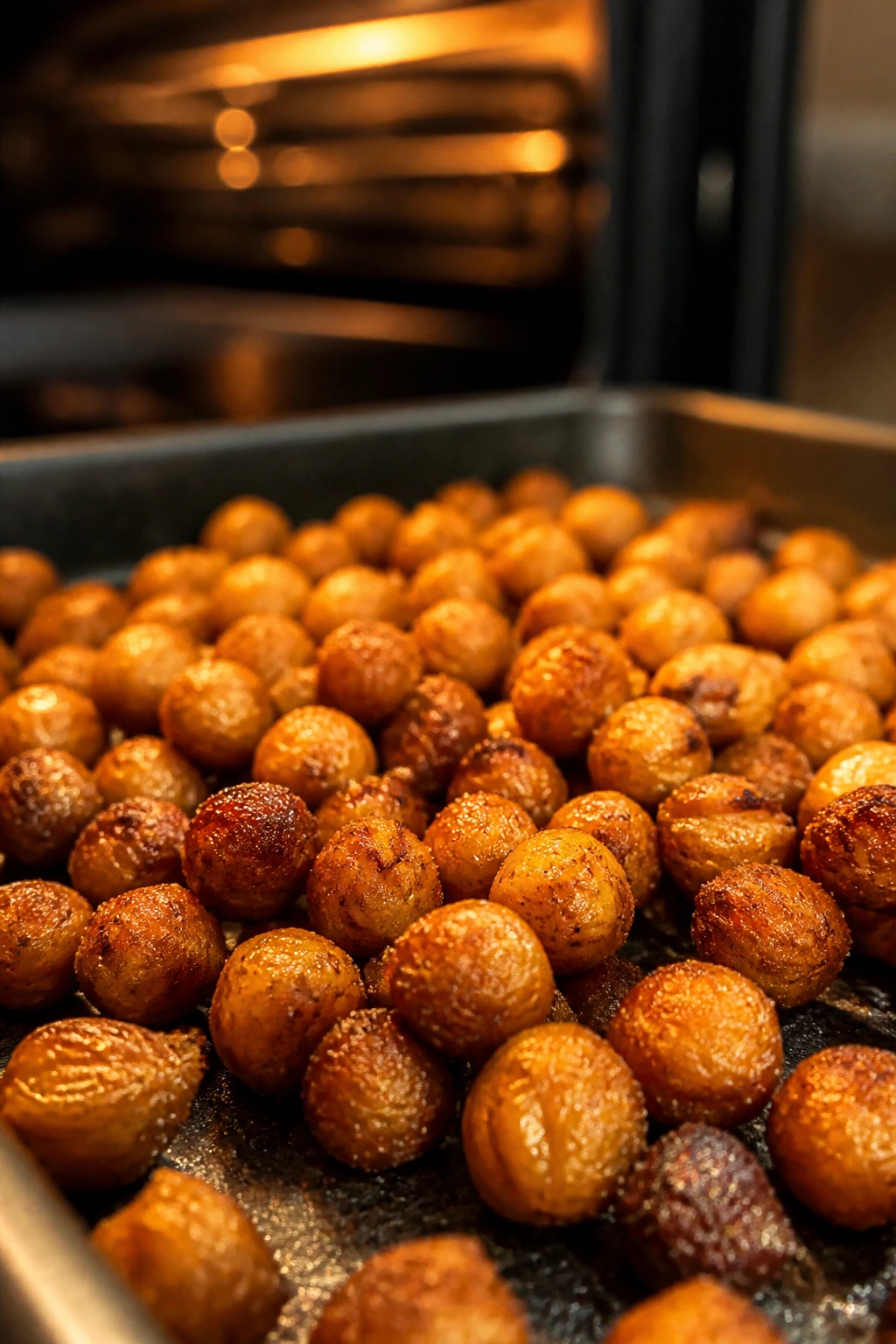
A light dusting of starch — usually cornstarch, potato starch, rice flour, or a mix — absorbs surface moisture and gives the browning reaction a head start. On tofu, I like cornstarch because it dries into a crisp, thin shell instead of a floury blanket. On chickpeas, a little starch before roasting helps the skins blister instead of just splitting open and going chalky.
Why heat has to be steady
A lukewarm oven is a betrayal. Seriously. If you slide a tray into an oven that hasn’t fully preheated, the food leaks water before it browns, and then you spend the next 20 minutes wondering why the edges look beige. A true 425°F oven, a properly hot air fryer, or a cast-iron skillet that has had time to heat up gives you the quick surface set that crisp cooking needs.
The part people skip
Let the food rest a minute or two after cooking. Not forever. Just long enough for the surface to settle and the steam to escape. A tofu cutlet pulled straight from the oven can feel fragile; a tofu cutlet left on a rack for two minutes firms up enough to hold its crust when you move it to a plate.
Vegetables and Plant Proteins That Actually Crisp
Not every vegetarian ingredient wants to be crispy. Some of them are drippers, some are sponges, and some are just more honest in a soup. The best meatless dinner candidates are the ones that either have low moisture to begin with or can be managed with drying, salting, or high heat.
Tofu and tempeh
Extra-firm tofu is the dependable workhorse here. Press it for 15 to 30 minutes, cut it into slabs or cubes, and it will soak up seasoning without collapsing. Tempeh has a nuttier bite and a denser structure; it likes a quick steam or simmer for 5 minutes before cooking, which takes the edge off its raw bitterness and helps it brown more evenly.
Tofu crisps best when it’s patted dry and lightly coated in starch before it hits oil or a hot oven. Tempeh gives you a more toothsome bite, almost like a firm nut loaf, and it works well with glazes that stay thick.
Chickpeas and white beans
Roasted chickpeas are one of those simple ideas that can go right or wrong by a hair’s width. Dry them well after rinsing. Really well. If you rush this part, the outer skins stay leathery instead of crackly. Cannellini beans and butter beans are a little trickier because they’re softer; they’re better mashed into cutlets or patties than left whole if you want a crisp exterior.
Cauliflower, broccoli, and cabbage
These are the obvious stars, and for once the obvious choice is a good one. Cauliflower behaves like a blank canvas that browns at the edges and catches seasoning in all its little crevices. Broccoli crisping is about the florets, not the stems, though peeled stems can roast nicely too. Cabbage is underused and honestly a little underrated; wedge it, oil it sparingly, and let the edges char until they go sweet.
Potatoes, sweet potatoes, and squash
If you want crisp without a lot of fuss, potatoes still deserve respect. Yukon Gold wedges, smashed baby potatoes, and thin sweet potato rounds all give you a sturdy outer crust and a soft interior. Squash is the least crisp of this group, but butternut cubes can brown well if they’re cut small and given space. Bigger chunks usually steam.
Halloumi and paneer
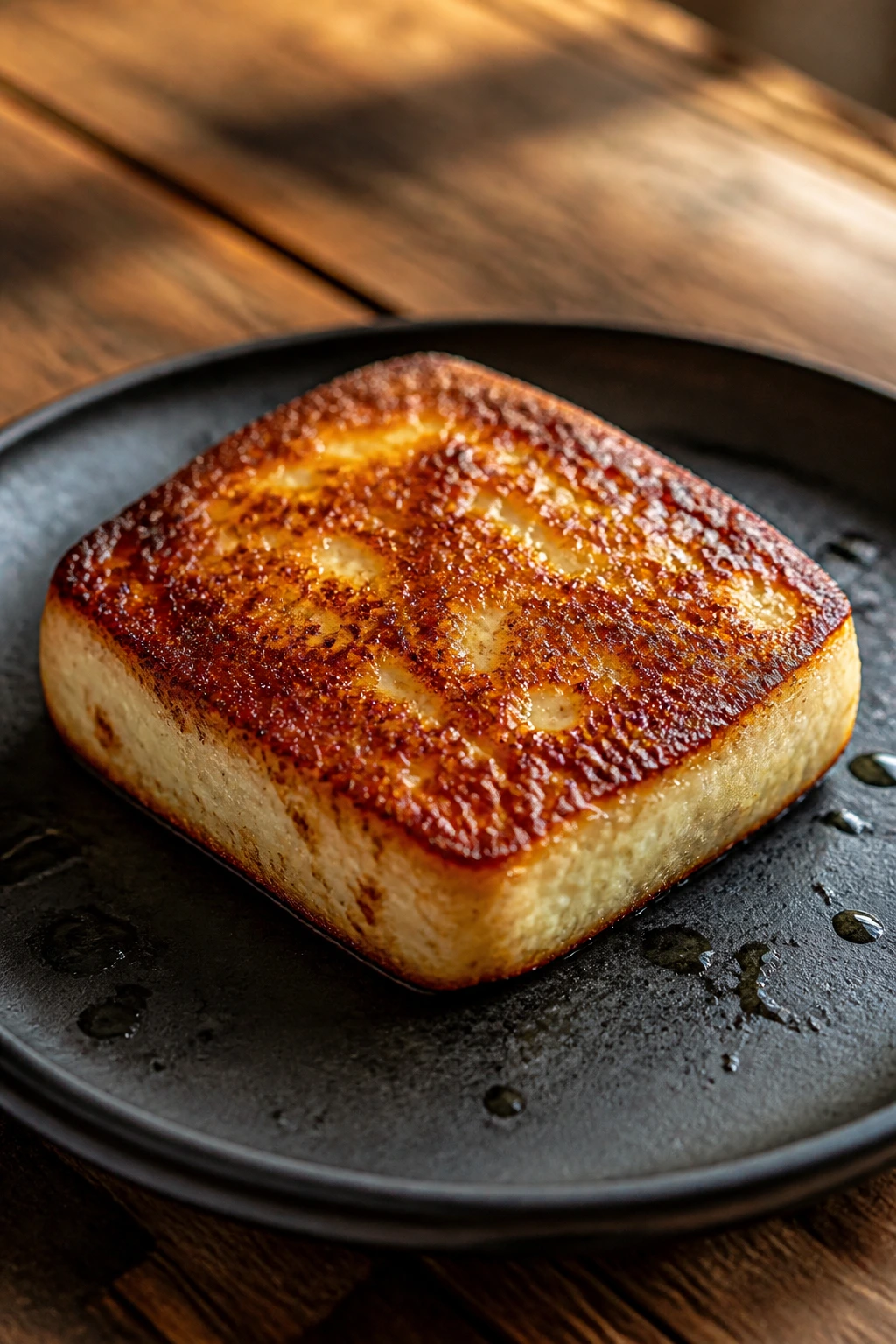
Halloumi is salty, squeaky, and built for a hot pan. It does not need a breading. Paneer, by contrast, is mild and soft enough to benefit from a quick sear or a spice crust. Both are useful when you want a vegetarian dinner that feels substantial without needing a pile of legumes.
Mushrooms, eggplant, and zucchini
These are the tricky ones. Mushrooms release water as they cook, so they brown best in a wide skillet with room to breathe. Eggplant loves oil and punishes stinginess; if you under-oil it, it goes leathery before it turns silky. Zucchini is a diva. It can crisp at the edges if sliced thick and cooked hot, but if you crowd it or salting it too early, you’ll end up with a slick, tired pan.
Coatings and Crusts That Stay Crunchy Instead of Going Limp
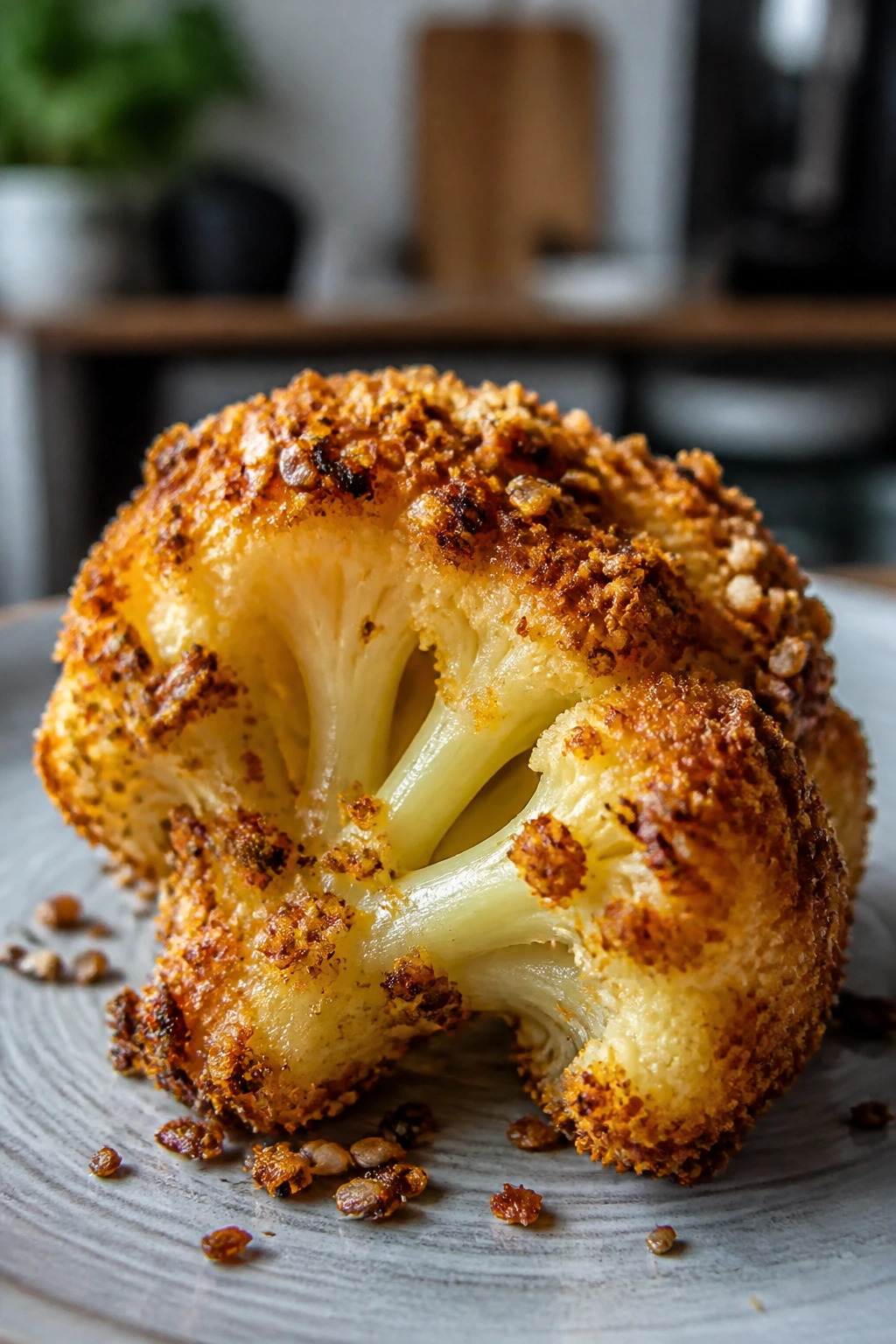
A good crust has layers. One layer grabs the food, one layer dries it out a bit, and one layer gives you the crackle.
The starch layer
Starch is the quiet hero of a crisp vegetarian dinner. Cornstarch is the one I reach for most often because it clings cleanly to tofu, cauliflower, and mushrooms. Potato starch browns well and gives a slightly lighter bite. Rice flour works if you want a thinner, drier crust, especially on air-fried vegetables. A little goes a long way; too much starch and the coating can taste dusty.
On tofu, a light dusting — usually a tablespoon or two per pound — is enough. On cauliflower florets, you can toss the pieces in a spoonful of starch before they go into a seasoned crumb. That extra step helps the coating grab onto the surface instead of sliding around.
Breadcrumbs, cereal crumbs, and seed crusts
Panko is popular for a reason. The flakes are jagged and irregular, so they toast into a crisp shell that feels cleaner than fine breadcrumbs. Crushed cornflakes give you a louder crunch and a slightly sweeter finish. Crushed rice cereal is a good gluten-free stand-in if you season it properly. Sesame seeds, sunflower seeds, and finely chopped nuts can make a crust feel more toasted and more savory, but they brown faster, so keep an eye on the pan.
I like panko for oven baking, cornflakes for cutlets, and a mix of panko plus sesame seeds for tofu when I want a crust with a little more bite. Fine crumbs work, but they can go dense fast. Dense is the enemy of crisp.
Bindings that actually help
Egg is the classic binder. It works because it gives the crust something tacky to hold onto before the heat sets it. If you want an egg-free version, aquafaba can do the job in a pinch, and thick yogurt mixed with spices also clings well to cauliflower or paneer. Mustard is another smart trick — a thin swipe on the surface gives both flavor and grip.
The binder should be thin, not gloopy. Thick batter sounds promising until it cooks into a heavy shell that slumps under its own weight. You want a film, not a blanket.
Seasoning the crust itself
Season every layer. Not the food, the crust too.
A bland crust is a waste of good crunch. Mix garlic powder, smoked paprika, black pepper, onion powder, dried oregano, or cumin into the starch or crumb so the outside tastes alive before the sauce shows up. If you’re using a salty cheese like halloumi, back off the salt in the coating. If you’re using plain tofu or cauliflower, season more assertively than you think you should — the crust is where the flavor lands first.
Oven, Air Fryer, or Skillet: Choosing the Right Tool for the Job
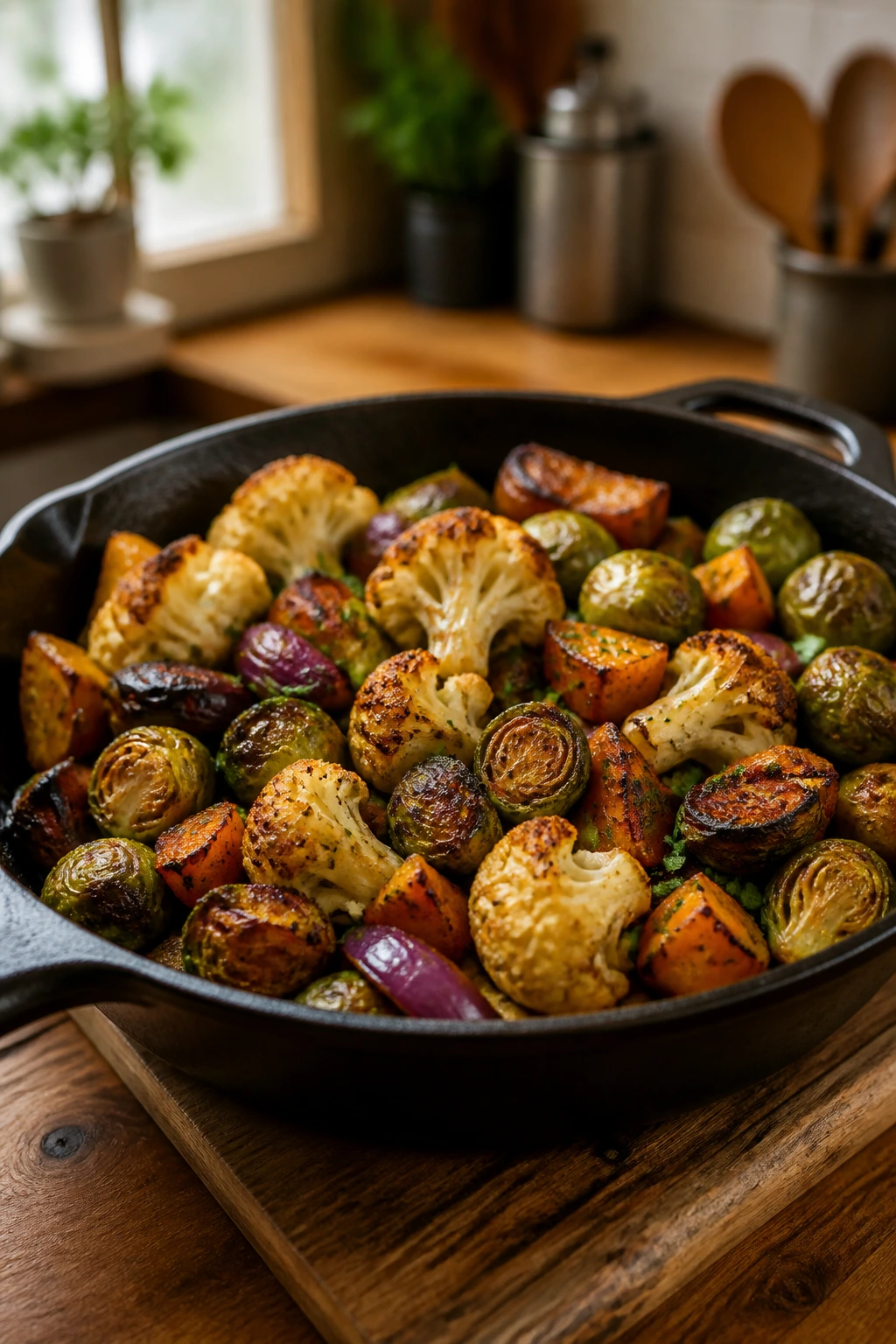
A lot of people ask which method is “best,” and the annoying answer is that the right tool depends on what you’re cooking. Still, some clear patterns show up once you cook this way a few times.
The sheet pan gives you the most room
The oven is the best choice when you’re feeding more than two people or cooking a mix of vegetables and protein on the same tray. A fully preheated 425°F oven can brown cauliflower, chickpeas, broccoli, and tofu without much babysitting. The catch is space. If the food sits too close together, it steams.
Use parchment when you want easy cleanup, but don’t expect parchment to create the sharpest underside. A lightly oiled bare metal tray, or a rack set over a tray, browns more aggressively. That matters if you care about the bottom of a tofu cutlet. It also matters if you dislike that one soft patch where the food rested on paper.
The air fryer is efficient, not magical
Air fryers shine on small batches. Tofu cubes, broccoli florets, chickpeas, and thin cauliflower cutlets cook quickly in that hot, circulating air. The basket has to stay in a single layer, though, or the food crowds itself into a steaming mess. People forget this and then blame the machine.
I like the air fryer for weeknights when I want crisp in 12 to 18 minutes and don’t want to heat the whole kitchen. It’s less forgiving than the oven for large quantities, but it gives fast, intense browning when you treat the basket like a one-layer rule, not a suggestion.
The skillet gives you the best browning
Cast iron and heavy stainless steel make especially good searing tools for halloumi, paneer, mushroom steaks, cabbage wedges, and breaded cutlets. The direct contact with the hot surface creates the kind of browned crust a tray can’t always match. The downside is that you need attention. Keep the heat moderate, let the food sit long enough to set, and do not keep poking it every 20 seconds.
A skillet is the method I reach for when the crust itself is the point. Halloumi in a hot pan, finished with lemon and pepper, is one of those things that barely needs a recipe because the browning does the talking.
A broiler finish can save a dull tray
Sometimes the tray just needs a little more edge. A minute or two under a broiler can rescue cauliflower or chickpeas that are cooked through but still pale. Watch it like a hawk. Broilers go from useful to burnt in a blink, and burnt panko tastes like someone left toast in the hallway.
Building a Plate That Stays Light Without Feeling Spare
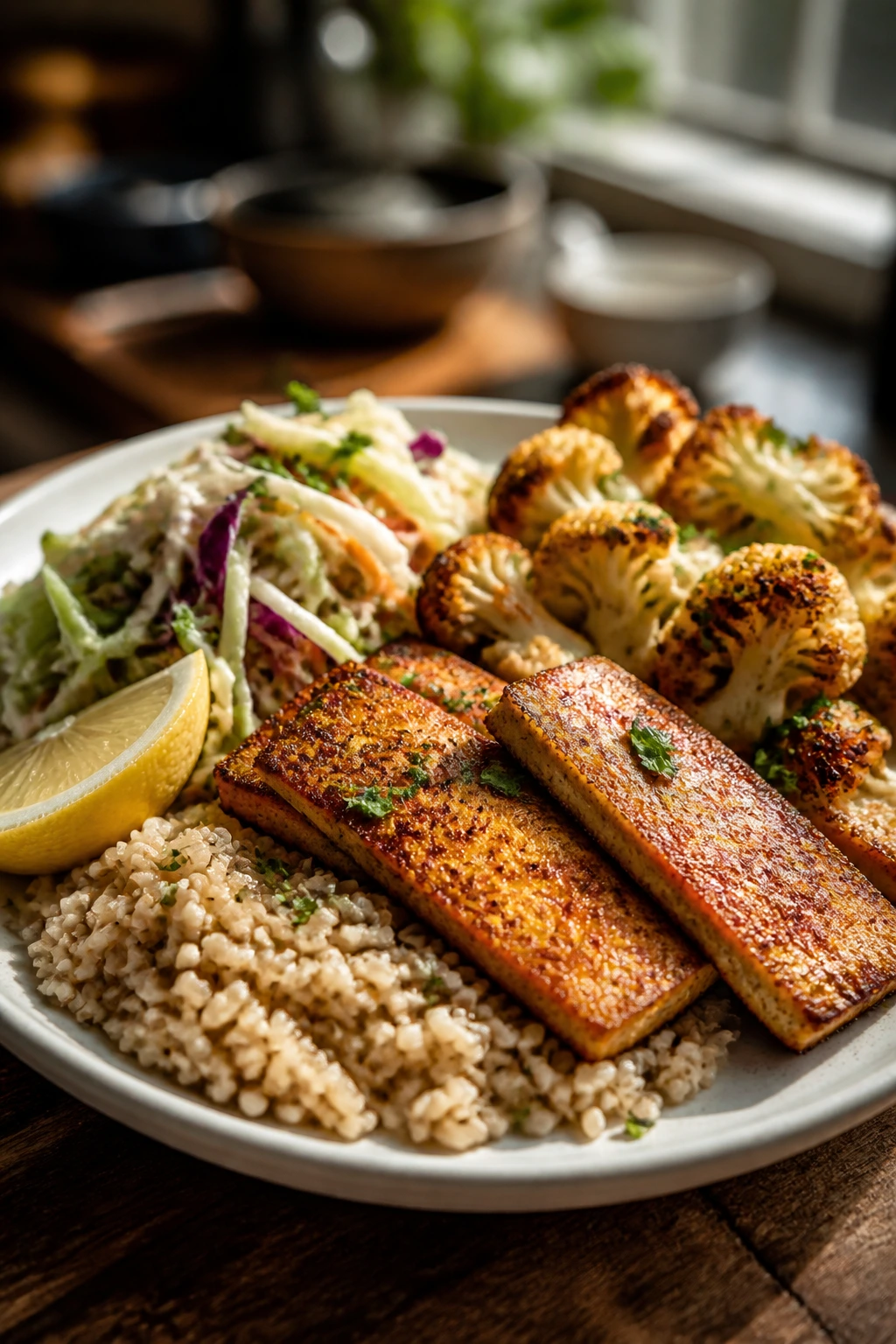
The old half-plate produce rule from the USDA and the similar structure from Harvard’s Healthy Eating Plate are useful here because they solve a real dinner problem: too many crispy mains without anything fresh beside them start to feel greasy, while too much raw salad makes the meal feel unfinished. The sweet spot is somewhere in the middle.
A crunchy vegetarian dinner usually works best when you give it something soft, something bright, and something that can catch the drips. That might mean a scoop of brown rice under tofu cutlets, a lemony slaw beside roasted cauliflower, or a heap of herbed quinoa under crisp chickpea patties. The point is not to pile on more food. The point is to give the crunch a place to land.
Start with one sturdy base
A grain or starch helps absorb sauce and makes the plate feel intentional. Farro, brown rice, couscous, roasted potatoes, or polenta each bring a different texture. I like creamy polenta under crisp mushrooms because the contrast is so clear: soft underneath, crunch on top. With tofu or paneer, a grain bowl lets the crisp pieces sit above the rest of the ingredients instead of going soggy in the middle.
Add something fresh or acidic
Raw cabbage, shaved fennel, cucumber, radish, pickled onions, or a quick tomato salad keep the plate awake. They also give you relief from fried or roasted flavors. That sharp note matters more than people think. Without it, crispy food can read as heavy even when the oil is modest.
Keep the vegetables doing different jobs
If the main is roasted cauliflower, don’t make the side another roasted thing unless you have a sharp dressing or a cool garnish to break it up. Pairing crisp broccoli with roasted carrots and roasted potatoes can work, but it needs acid and herbs to stop the plate from tasting one-note. One crisp thing, one soft thing, one bright thing. That’s a useful rhythm.
Watch the portions, not just the ingredients
A healthy dinner doesn’t need to be tiny. It needs to be balanced. A plate with 4 to 6 ounces of tofu or paneer, 1 to 2 cups of vegetables, and a modest serving of grains usually feels satisfying without turning into a gravity test. If you prefer a lighter meal, lean harder on the vegetables and cut the starch in half. If you’ve had a long day and want a more filling plate, keep the starch but make it plain and let the crisp main carry the flavor.
Sauces, Dips, and Garnishes That Keep the Crust Alive
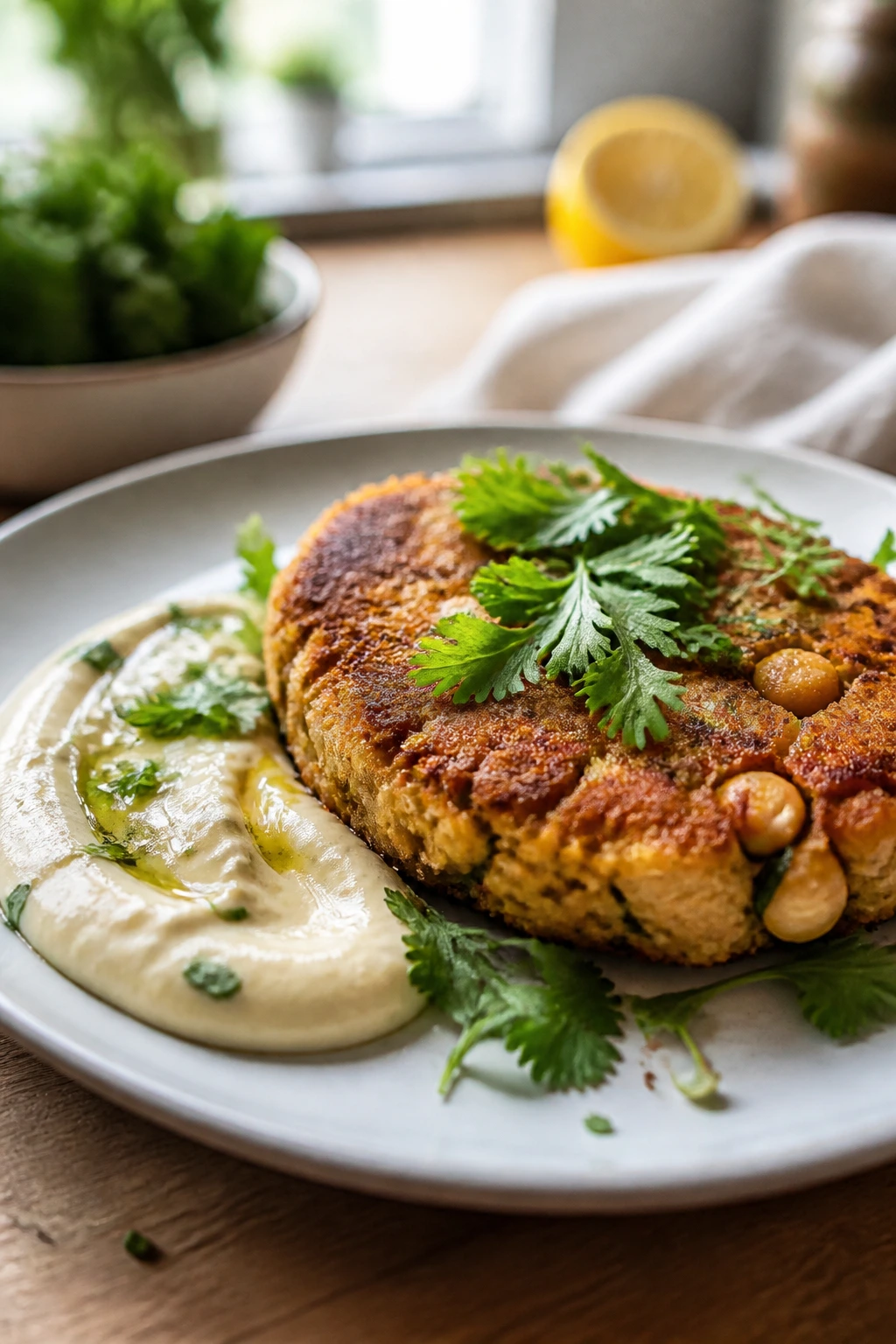
If you pour thin sauce all over crisp food, you know what happens. The crust sighs and gives up.
That doesn’t mean sauce is the enemy. It just means the sauce needs some thickness, or some discipline, or both. A good rule is simple: if you want a crust to survive, serve the sauce on the side or spoon it under the food, not over the top. A thick sauce can live on the plate beside the crunch; a watery dressing will send the whole thing downhill in minutes.
Thick sauces belong here
Tahini sauce, yogurt-herb sauce, peanut-lime sauce, romesco, and chimichurri all work because they cling instead of flooding. A spoonable sauce gives you richness in each bite without drowning the crust. Even a simple mustard-yogurt mix can do a fine job if you keep it thick and tangy.
For tofu and chickpeas, I like sauces with acidity and salt. For cauliflower and broccoli, a little nuttiness goes a long way. For halloumi or paneer, a bright herb sauce keeps the cheese from feeling too dense.
Cold toppings add contrast
Fresh herbs, chopped scallions, shaved radish, pickled red onions, and lemon zest all wake up the plate. They’re not decoration. They’re a texture and flavor reset. A crisp dinner that’s been in a hot oven benefits from a cool finish, especially if the main component is rich or salty.
Keep dressings where they belong
Thin vinaigrettes are best for slaws and side salads, not for the crust itself. If you want lemon on the food, zest it over the top or squeeze it right before serving. If you want oil, use a small drizzle after cooking, not during. A teaspoon of good olive oil at the end does more than a tablespoon dumped into the pan before baking.
Salt matters at the finish
A tiny pinch of flaky salt on roasted cauliflower or seared halloumi can make the whole dish taste sharper. Do not overdo it, especially if your cheese, sauce, or seasoning mix is already salty. The finish should snap, not sting.
Weeknight Tricks That Save the Crunch
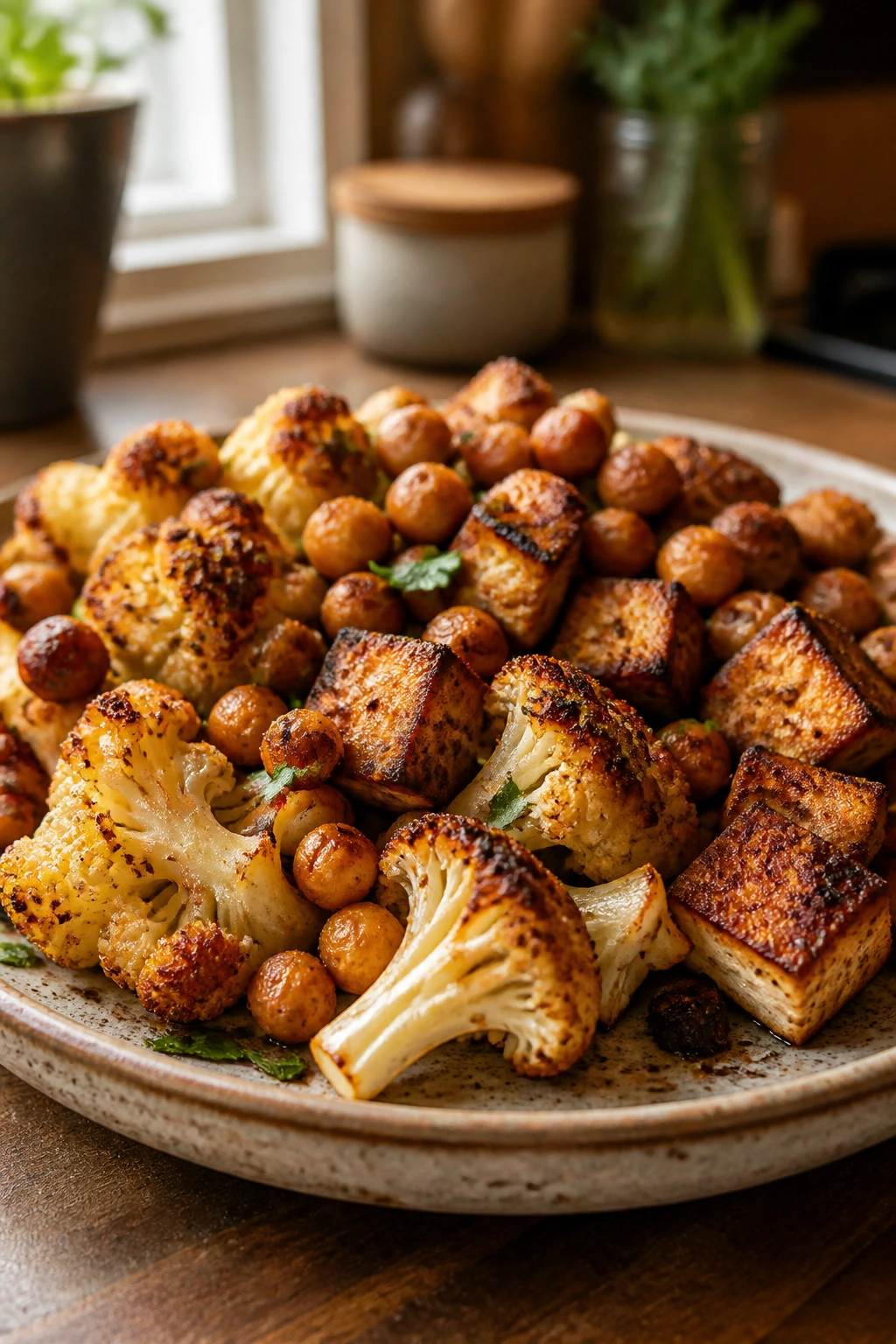
Flavor Enhancement: Mix smoked paprika, garlic powder, and a little cumin into your coating, not just onto the vegetables. The spices toast in the crust and taste deeper than they do sprinkled on at the end.
Time-Saver: Preheat the sheet pan or air fryer while you’re still drying and seasoning the food. A hot landing surface buys you browning in the first minute, and that minute matters more than people think.
Pro Move: Use a wire rack for anything breaded. The underside stays drier, which is the difference between a cutlet that stays crisp and one that sweats into its own coating.
Cost-Saver: Chickpeas, cabbage, potatoes, and tofu give you the best ratio of crunch to price. Halloumi and paneer are worth buying when you want that specific cheese texture, but they do not need to carry every meal.
Texture Rescue: If your vegetables are watery — zucchini, mushrooms, eggplant — salt them lightly, let them sit for 10 to 20 minutes, then blot the surface before cooking. You are not trying to make them dry as chips. You’re just getting rid of the extra moisture that blocks browning.
Make-It-Yours: For a gluten-free crunch, use rice flour, cornstarch, crushed rice cereal, or gluten-free panko. For a nutty crust, mix in ground almonds or sesame seeds, but watch the oven because seeds brown faster than breadcrumbs and can go from toasted to bitter in a minute.
Common Mistakes That Turn a Crisp Dinner Soft
-
Crowding the pan. The symptom is pale food with damp patches and no real browning. Fix it by spreading the pieces out so they don’t touch, even if that means using two trays.
-
Skipping the dry step. Wet tofu, wet chickpeas, or wet cauliflower will fight the crust the whole way. Pat the food dry, let rinsed ingredients sit for a few minutes, and blot surface moisture before they meet the heat.
-
Saucing too early. A crisp crust can go soggy in under five minutes if you coat it before serving. Keep sauce on the side, or spoon it under the food so the top stays intact.
-
Using too much coating. Heavy breading can bury the vegetable or plant protein and cook into a thick shell with a chewy middle. Aim for a thin, even layer that looks rough and craggy, not doughy.
-
Underheating the oven or skillet. If the pan isn’t hot enough, the coating absorbs oil and goes soft before it sets. Let the oven fully preheat and give cast iron a few extra minutes to heat through.
-
Underseasoning the crust. A bland crust makes the whole dish feel unfinished, even when the inside is great. Season the coating itself, not just the filling, so the first bite has some life.
Smart Variations and Swaps for Different Eatters
Air-Fryer Crunch Bowl: Use tofu cubes, broccoli florets, or chickpeas tossed with cornstarch and seasoning, then air-fry in a single layer. This version is good when you want fast browning and don’t feel like turning on the oven for a small dinner.
Gluten-Free Sesame Crust: Swap regular breadcrumbs for crushed rice cereal or gluten-free panko, then add sesame seeds for extra bite. The sesame gives a toasty, almost nutty finish that works especially well with cauliflower and tempeh.
Lower-Sodium Lemon Herb Plate: Use unsalted or lightly salted tofu, skip salty cheeses, and lean on lemon zest, parsley, dill, and garlic. This version depends on bright herbs and a thick yogurt or tahini sauce, so you don’t miss the salt as much.
Higher-Protein Tempeh Dinner: Steam tempeh for a few minutes, slice it thin, then sear it in a skillet before adding a sticky glaze at the very end. It takes on strong flavors well and gives you a firmer, meatier bite than tofu.
Kid-Friendly Cutlet Night: Shape chickpea or tofu mixture into smaller cutlets and use a mild coating of panko, parmesan, and garlic powder. Smaller pieces brown faster and give you more edge per bite, which tends to win over skeptical eaters.
Mediterranean Cabbage Wedges: Roast cabbage wedges with olive oil, oregano, and pepper until the edges char, then finish with lemon and crumbled feta. It’s a low-cost option that feels more substantial than most people expect.
Tools Worth Keeping Within Arm’s Reach
-
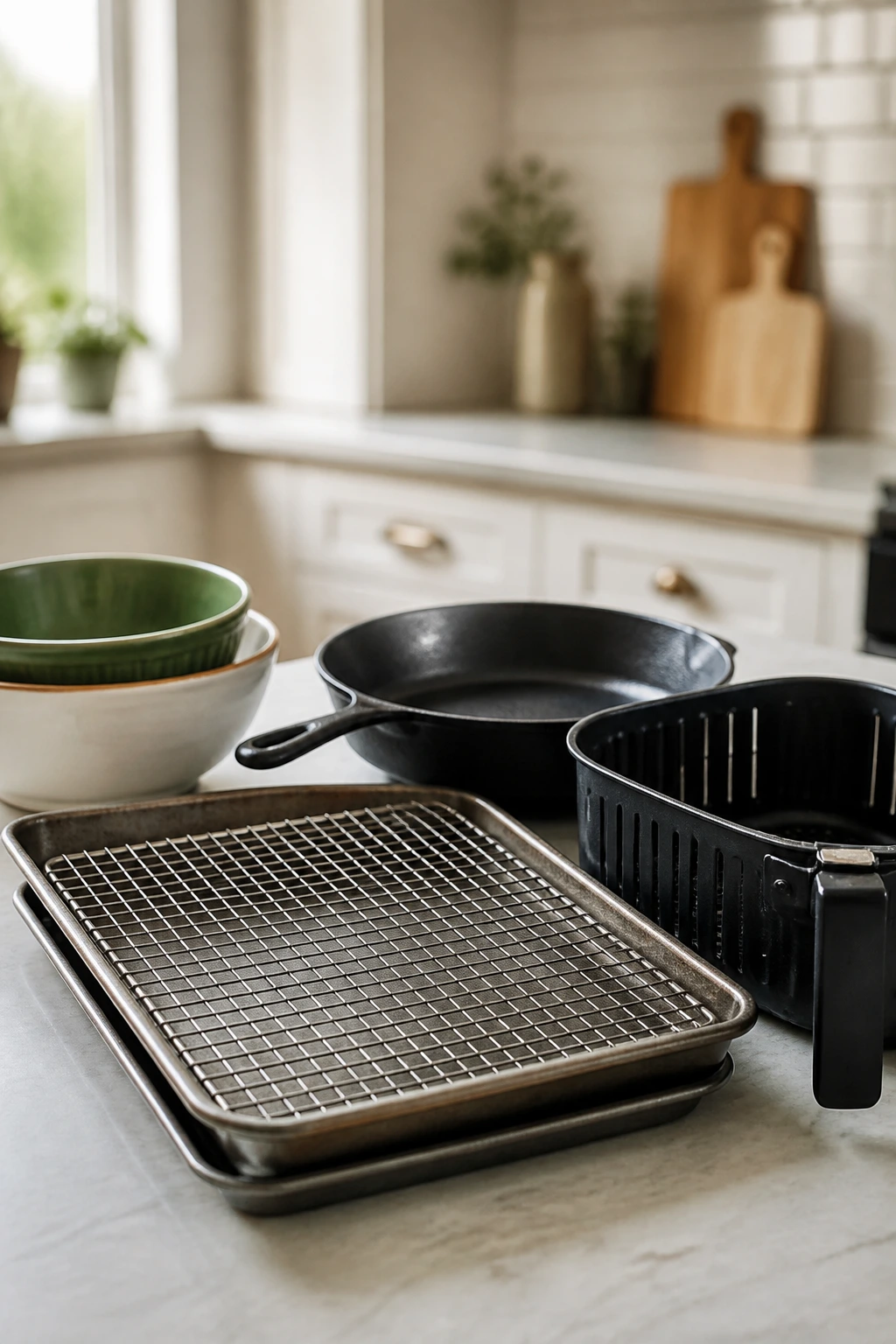
Rimmed baking sheet: Keeps oil and crumbs from sliding off while giving you a wide surface for browning.
-
Wire rack: Lets hot air move under breaded tofu, cutlets, or cauliflower so the bottoms stay drier.
-
Cast-iron skillet: Excellent for halloumi, paneer, cabbage wedges, and mushroom steaks because it holds heat well.
-
Air fryer basket: Useful for small batches of broccoli, chickpeas, tofu cubes, and other pieces that need fast circulation.
-
Mixing bowls: You’ll want at least two for coating stations, one for dry ingredients and one for binders.
-
Tongs or a thin spatula: Helpful for turning cutlets or lifting fragile pieces without tearing the crust.
-
Clean kitchen towels or paper towels: Not glamorous, but they matter for pressing tofu and blotting watery vegetables.
-
Instant-read thermometer: Optional for this style of cooking, but useful if you want to check that reheated leftovers are hot enough or that a cheesy filling has warmed through.
-
Microplane or fine grater: Good for lemon zest, garlic, and hard cheese finishes that need to spread evenly.
-
Airtight storage containers: Keep sauce and crisp components separate so leftovers don’t turn limp in the fridge.
Make-Ahead, Storage, and Reheating Without the Sog
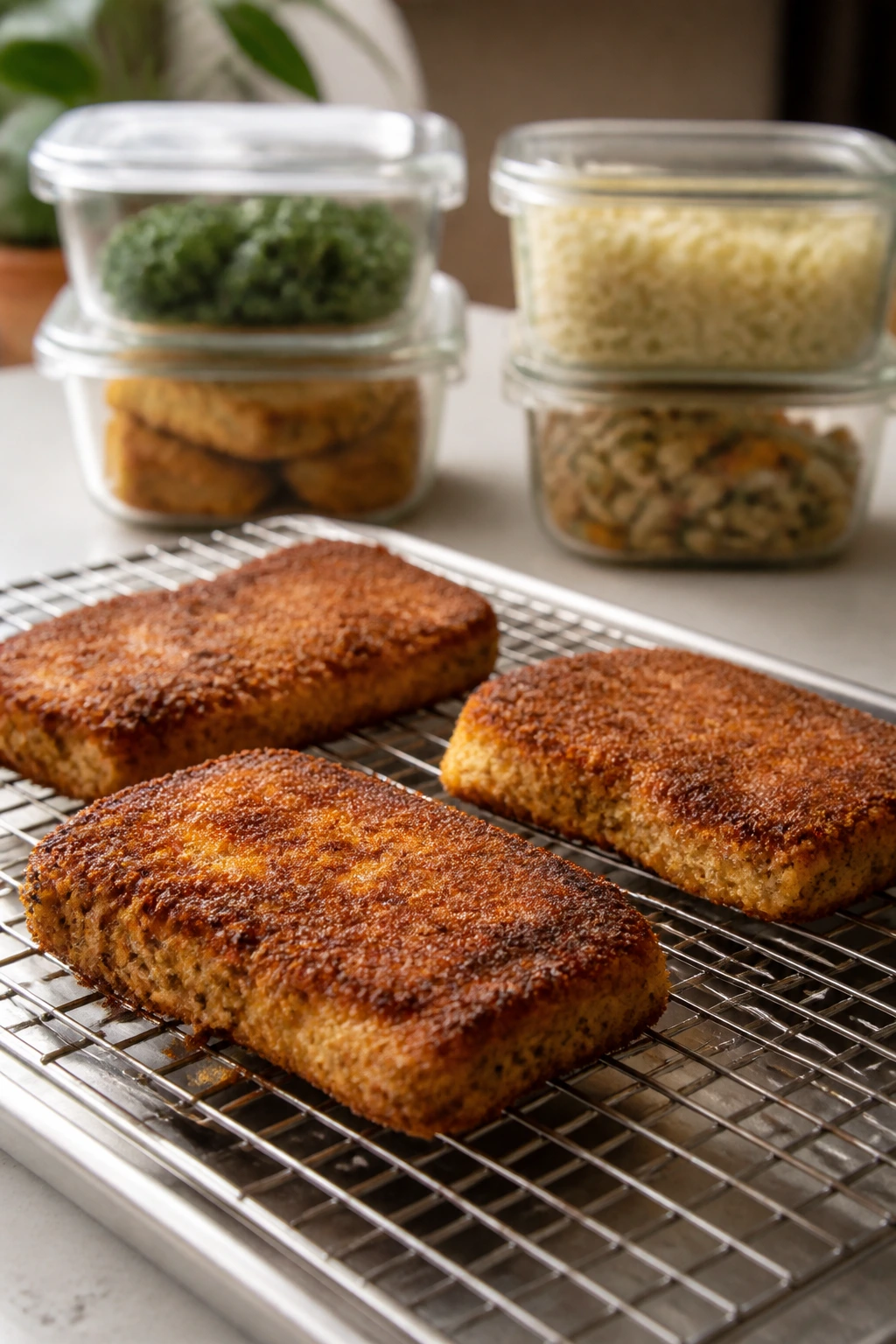
Crisp vegetarian food has a short best window, and pretending otherwise is how people end up microwaving a sad tray of leftovers. The good news is that a little planning helps a lot.
If you’re keeping cooked food on the counter, follow the usual food safety rule: no more than 2 hours at room temperature. After that, move it to shallow containers so it cools quickly. The fridge is the better home for anything you want to save. Most cooked crispy vegetarian mains keep 3 to 4 days refrigerated, though the crust will soften over time.
Freezing is hit-or-miss. Sturdier items like breaded tofu cutlets, chickpea patties, and roasted cauliflower can freeze for up to 2 months if they’re cooled first and wrapped well. Delicate vegetables like zucchini or mushrooms do not come back with much dignity after freezing, so I would not bother. They’re better cooked fresh.
For the best reheat, use dry heat. A 400°F to 425°F oven for 8 to 12 minutes brings back a lot of the original texture, especially if you set the food on a wire rack. An air fryer at 375°F for 4 to 6 minutes works well for small portions and gives fast crisping. A skillet over medium heat with a teaspoon of oil also works for halloumi, paneer, and cutlets. The microwave is useful only when you value speed more than texture.
Make-ahead prep can save the whole dinner. You can press tofu, mix coating ingredients, chop vegetables, and whisk sauces a day ahead. Breaded items hold best for a few hours uncooked in the fridge, lightly covered and not stacked. If you know you’ll be reheating later, pull them from the oven a minute or two before they hit full crunch; that leaves some room for the second round of heat.
Questions Readers Ask Before Cooking Crispy Vegetarian Dinners
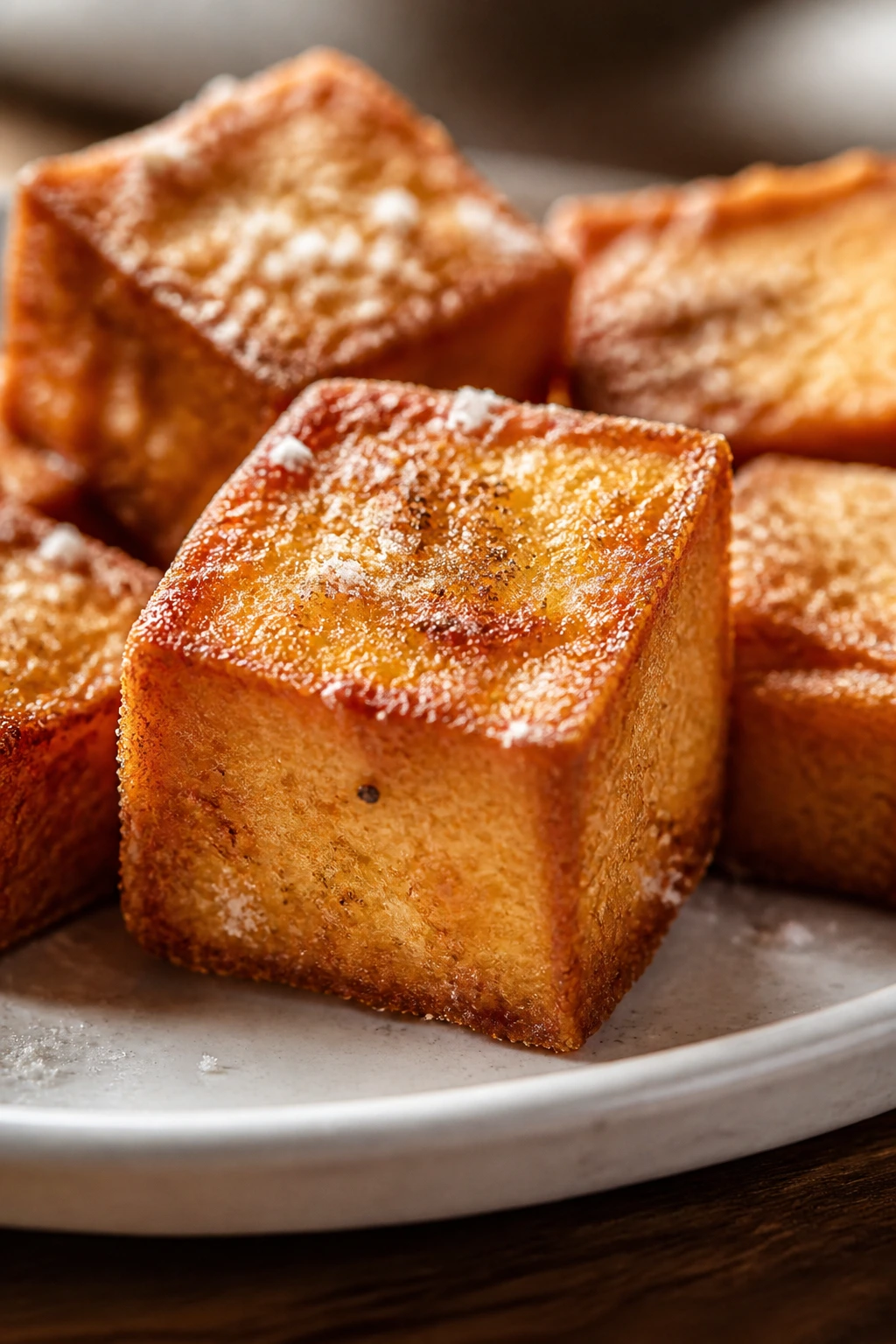
What vegetarian ingredients crisp up the best?
Tofu, tempeh, cauliflower, broccoli, chickpeas, halloumi, paneer, and cabbage are the most reliable choices. They either hold their shape well or brown in a way that gives you a real crust instead of a soft shell.
Can I make a crispy vegetarian dinner without breadcrumbs?
Yes. Cornstarch, rice flour, crushed cornflakes, crushed rice cereal, sesame seeds, and finely chopped nuts all work in different ways. The main trick is still the same: dry the surface first, then use enough heat to set the coating.
How do I keep tofu crunchy after I sauce it?
Keep the sauce thick and use it at the table, not in the pan. If you want the tofu coated, toss the pieces in a small amount of sauce only right before eating, and leave the rest plain so the leftovers still have some texture.
Is an air fryer better than an oven for this kind of dinner?
For small batches, yes, often it is. The air fryer gives quick, aggressive browning and uses less time, but the oven is better when you need to cook a larger amount without crowding. The oven also handles mixed trays more easily.
What if my vegetables keep coming out soggy?
Dry them more, crowd them less, and raise the heat. Watery vegetables like zucchini, mushrooms, and eggplant usually need salting, blotting, or extra space on the tray before they’ll brown properly.
Can I make these dinners ahead of time?
You can prep the components ahead, but the full crispy result is best fresh. Press tofu, mix coating ingredients, chop vegetables, and make sauces earlier in the day, then cook right before serving. If you need a true make-ahead dish, choose chickpea patties or tofu cutlets, because they reheat better than most roasted vegetables.
What makes a crispy vegetarian dinner filling enough for adults?
Protein plus starch plus bright vegetables. A tofu cutlet with farro and slaw, or roasted cauliflower with chickpeas and a grain bowl, lands much more satisfyingly than vegetables alone. You want enough substance that nobody starts hunting for crackers an hour later.
How do I make the meal gluten-free or dairy-free without losing crunch?
Use rice flour, cornstarch, or gluten-free panko for the crust, and build flavor with herbs, spices, citrus, or tahini instead of cheese-heavy sauces. If you miss the richer note, a spoonful of miso or a sesame seed crust brings a lot of depth without leaning on dairy.
A Better Kind of Meatless Dinner
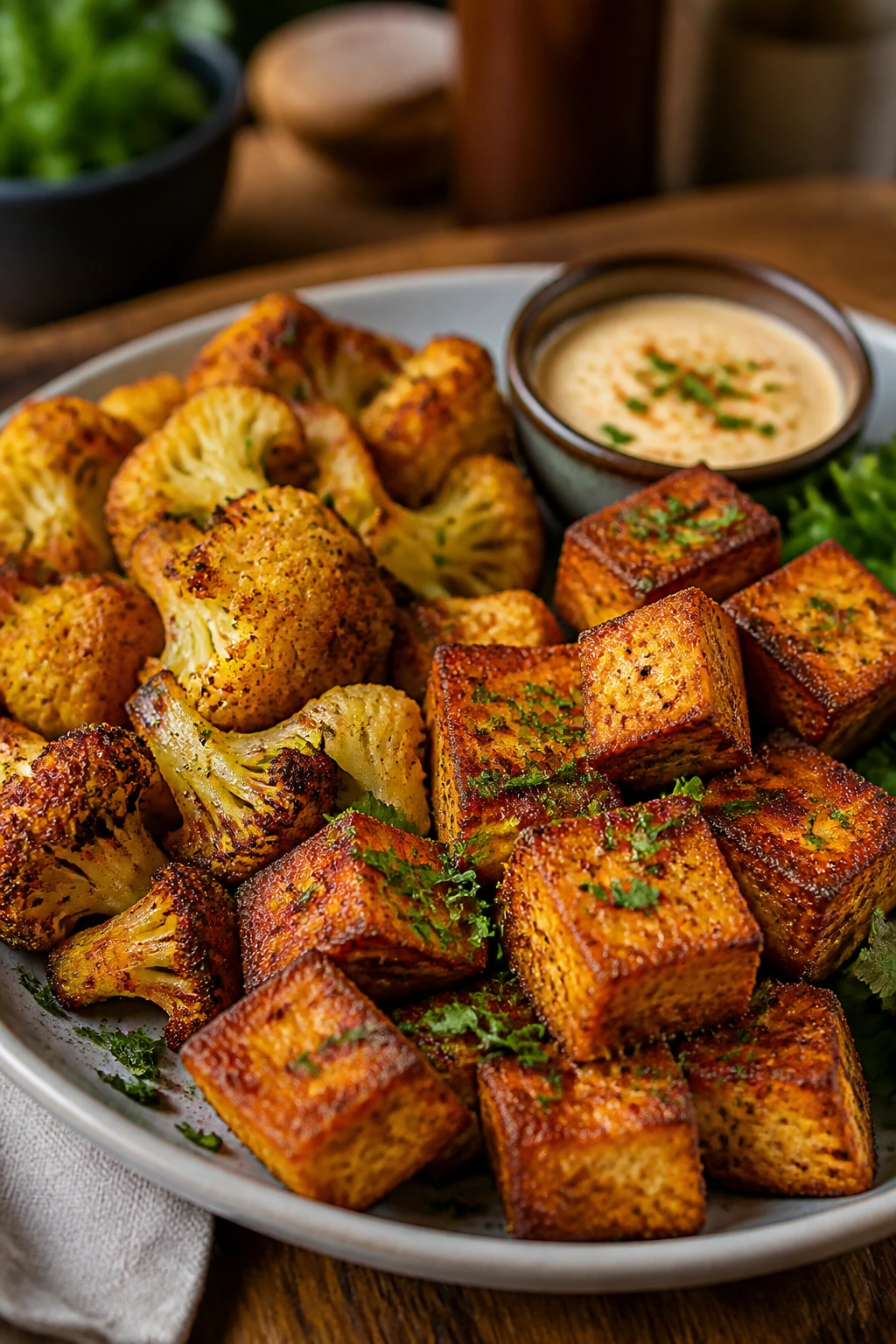
The nicest thing about cooking this way is that it stops asking vegetarian dinner to be delicate. It can be loud. It can crackle when you bite into it. It can look like a tray of roasted cauliflower and tofu, then eat like something with more confidence than the ingredient list suggests.
Keep the food dry, the heat hot, and the sauce on the side unless the crust is built to handle it. That’s the whole play, really. Once you get that rhythm in your hands, you start seeing dinner differently — chickpeas become cutlets, cabbage becomes a main, and a plain Tuesday night gets a little more interesting without getting complicated.