



A good roasted vegetable medley should not taste like a polite apology for dinner. It should smell like garlic warming in olive oil, look like it spent a little time under a broiler even when it didn’t, and arrive with enough browned edges to make a fork do a second trip across the tray. That’s the whole trick: vegetables that are tender in the middle, crisp at the corners, and seasoned well enough that you don’t need a sauce to rescue them.
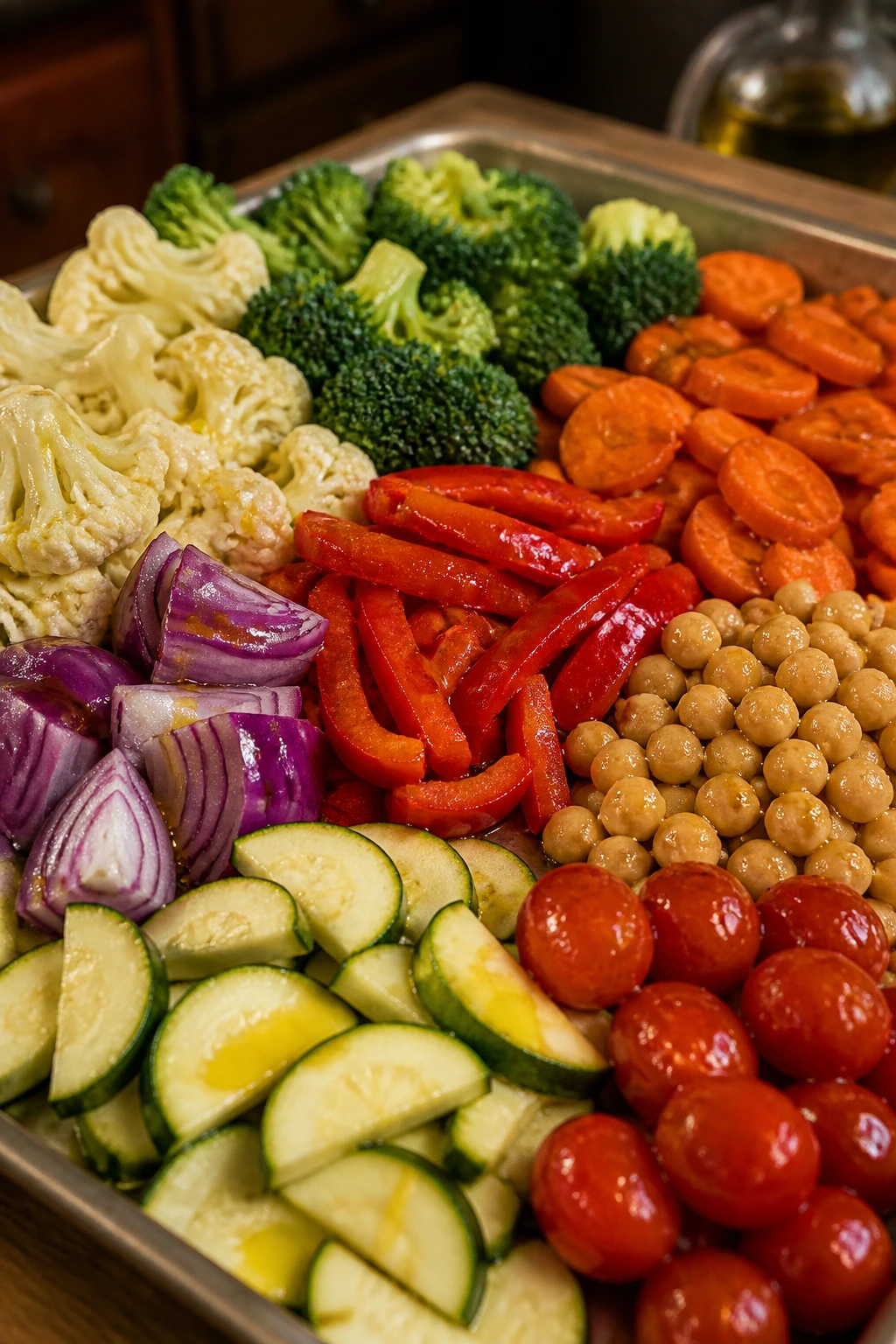
The version I keep coming back to uses sturdy vegetables first, soft vegetables later, and a bright finish at the end. That timing matters. Broccoli and cauliflower need a head start so their stems soften without going gray and wet. Zucchini and cherry tomatoes need less time because they collapse fast and turn sleepy if they sit in the oven too long. Chickpeas, if you use them, bring a little chew and a toasted shell that makes the whole pan feel more like dinner and less like a side dish someone forgot to season.
This is the kind of tray I want when I’m hungry, not when I’m trying to impress anybody. It’s straightforward, but not bland. And because the vegetables roast in stages, you get a pan that tastes deliberate instead of accidental.
Why This Roasted Vegetable Medley Works So Well
-
Browned edges do the heavy lifting: A 425°F oven gives the cauliflower, broccoli, and carrots enough heat to caramelize before they turn limp.
-
The texture stays balanced: Starting with the sturdier vegetables and adding zucchini and tomatoes later keeps the tray from collapsing into a soft pile.
-
Chickpeas make it feel like dinner: One can of chickpeas adds substance, a little plant protein, and crisp little corners that break up the softness of the vegetables.
-
The seasoning is simple but not thin: Garlic, smoked paprika, thyme, and rosemary create a savory base that tastes deeper after the lemon goes on at the end.
-
Cleanup stays sane: Two lined sheet pans are easier than a dozen pans and a sink full of bowls, and they brown the vegetables better than a crowded single tray.
-
Leftovers stay useful: The vegetables are good hot, warm, or room temperature, which means you can turn one roast into lunch bowls, wraps, or a quick egg dinner the next day.
Timing, Yield, and the Oven Setting That Matters
Yield: Serves 4 as a main dish or 6 as a side
Prep Time: 20 minutes
Cook Time: 28 to 32 minutes
Total Time: 48 to 52 minutes
Difficulty: Beginner — the work is mostly cutting vegetables into sensible sizes and giving the oven enough space to brown them instead of steaming them.
Best Served: Warm from the oven with lemon juice, parsley, and a little feta
The Exact Ingredients for the Tray
For the Roasted Vegetables:
- 1 medium head cauliflower, cut into 1-inch florets
- 1 medium head broccoli, cut into 1-inch florets
- 3 medium carrots, peeled and sliced on the bias into 1/2-inch pieces
- 1 small red onion, cut into 8 wedges
- 1 red bell pepper, seeded and cut into 1-inch strips
- 1 medium zucchini, halved lengthwise and sliced into 1/2-inch half-moons
- 1 cup cherry tomatoes
- 1 (15-ounce) can chickpeas, drained, rinsed, and patted dry
- 3 tablespoons olive oil
- 3 cloves garlic, minced
- 1 1/2 teaspoons kosher salt
- 1 teaspoon black pepper
- 1 teaspoon smoked paprika
- 1 teaspoon dried thyme
- 1/2 teaspoon dried rosemary, crushed between your fingers
For Finishing:
- 1 teaspoon lemon zest
- 1 tablespoon lemon juice
- 2 tablespoons chopped fresh parsley
- 1/4 cup crumbled feta, optional
Why These Vegetables Roast Well Together
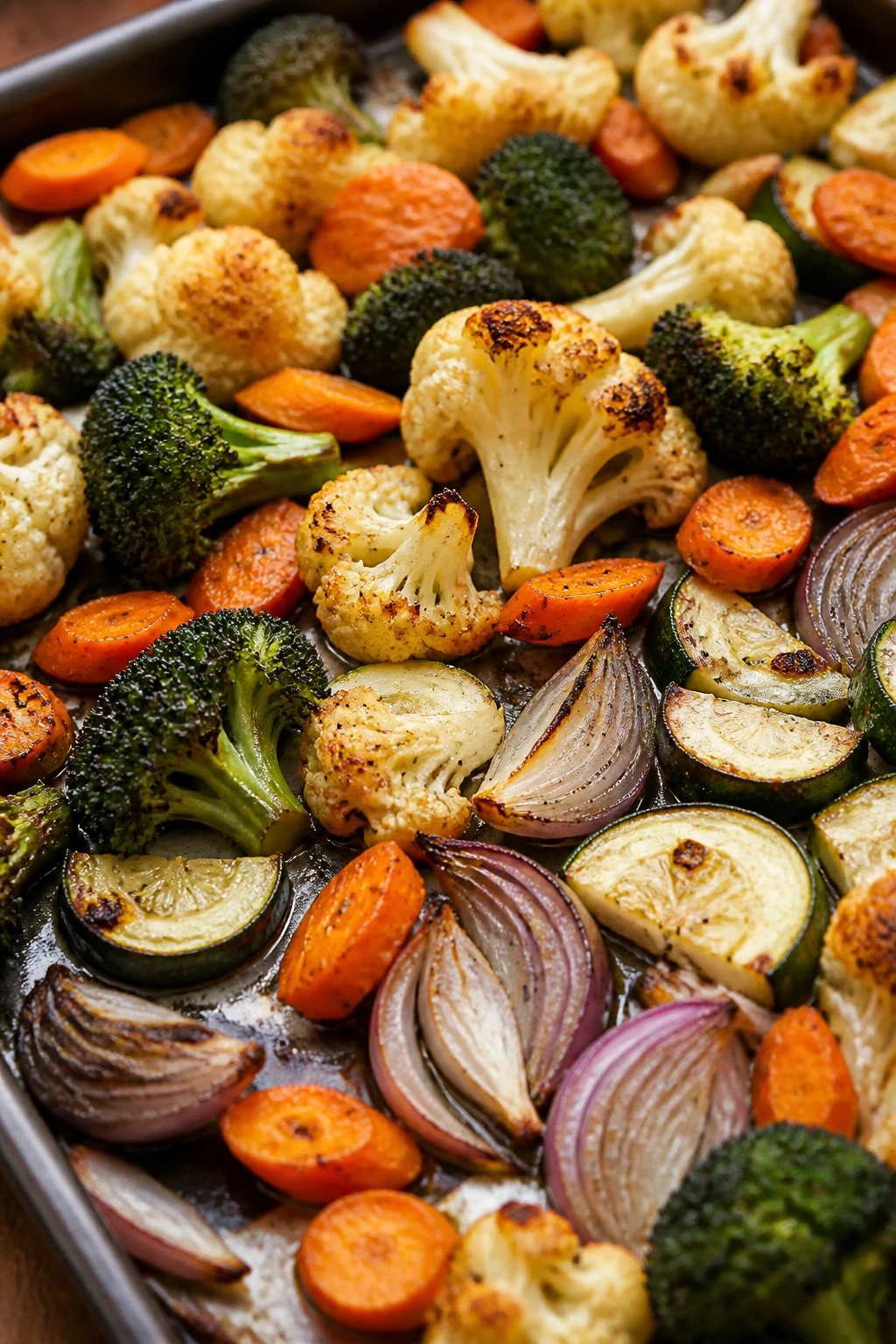
The sturdy vegetables: cauliflower, broccoli, and carrots
What to use: 1 medium head cauliflower, 1 medium head broccoli, and 3 medium carrots give the tray its backbone. They hold shape at 425°F and develop browned tips instead of collapsing.
Preparation: Cut the florets into pieces that are close in size, and slice the carrots on the bias so they roast fast enough to match the florets. If one carrot slice is paper thin and the next is chunky, the chunky one will still be hard when the thin one is already soft.
Substitutions: Brussels sprouts, parsnips, or sweet potato cubes can step in here if that’s what’s in the crisper drawer. Keep the size consistent and make sure the dense vegetables go in first.
Tips: Dry the cauliflower and broccoli well after washing. Water clinging to the florets turns into steam in the oven, and steam is the enemy of browning.
The softer vegetables: onion, bell pepper, zucchini, and tomatoes
What to use: 1 small red onion, 1 red bell pepper, 1 medium zucchini, and 1 cup cherry tomatoes add sweetness, color, and a softer bite. They turn the tray from “mixed vegetables” into something you’d actually put in the middle of a dinner plate.
Preparation: Cut the onion into wedges so it keeps some structure, slice the pepper into strips that roast at the same pace, and keep the zucchini thick enough that it doesn’t melt. Leave the tomatoes whole so they blister rather than disappear.
Substitutions: Yellow onion works if red is out of reach, and any color bell pepper is fine. If zucchini isn’t appealing, sliced fennel or mushrooms can replace it, though mushrooms need a little more time than tomatoes do.
Tips: Add these later in the roast, not at the start. Zucchini especially is a fast learner in the oven; give it too much time and it goes from tender to floppy in a blink.
The pantry workhorses: olive oil, garlic, salt, pepper, paprika, thyme, and rosemary
What to use: 3 tablespoons olive oil, 3 cloves garlic, 1 1/2 teaspoons kosher salt, 1 teaspoon black pepper, 1 teaspoon smoked paprika, 1 teaspoon dried thyme, and 1/2 teaspoon dried rosemary build the savory layer that keeps the vegetables from tasting plain.
Preparation: Mince the garlic finely so it coats the vegetables without burning in little chunks. Crush the rosemary between your fingers before adding it; that wakes it up and keeps the needles from staying stubborn and sharp.
Substitutions: Avocado oil can replace olive oil if you want a more neutral fat. If smoked paprika isn’t in the cupboard, use regular paprika and add a pinch of cumin for warmth.
Tips: Don’t drown the vegetables in oil. You want a thin sheen, not a slick puddle on the tray. Too much oil softens the edges instead of crisping them.
The finishing layer: lemon, parsley, and feta
What to use: 1 teaspoon lemon zest, 1 tablespoon lemon juice, 2 tablespoons chopped fresh parsley, and 1/4 cup crumbled feta finish the tray with sharpness and freshness.
Preparation: Zest the lemon before juicing it, and chop the parsley right before serving so it stays bright. Add the feta after roasting so it softens a little from the heat but doesn’t melt into nothing.
Substitutions: Fresh dill or basil can replace parsley, and the feta is optional if you want the tray fully dairy-free. A spoonful of tahini can step in for creaminess if you want something richer.
Tips: Acid belongs at the end. Lemon juice roasted for half an hour loses its lift, and that final splash is what keeps the vegetables from tasting flat.
The Tools That Keep the Tray Moving
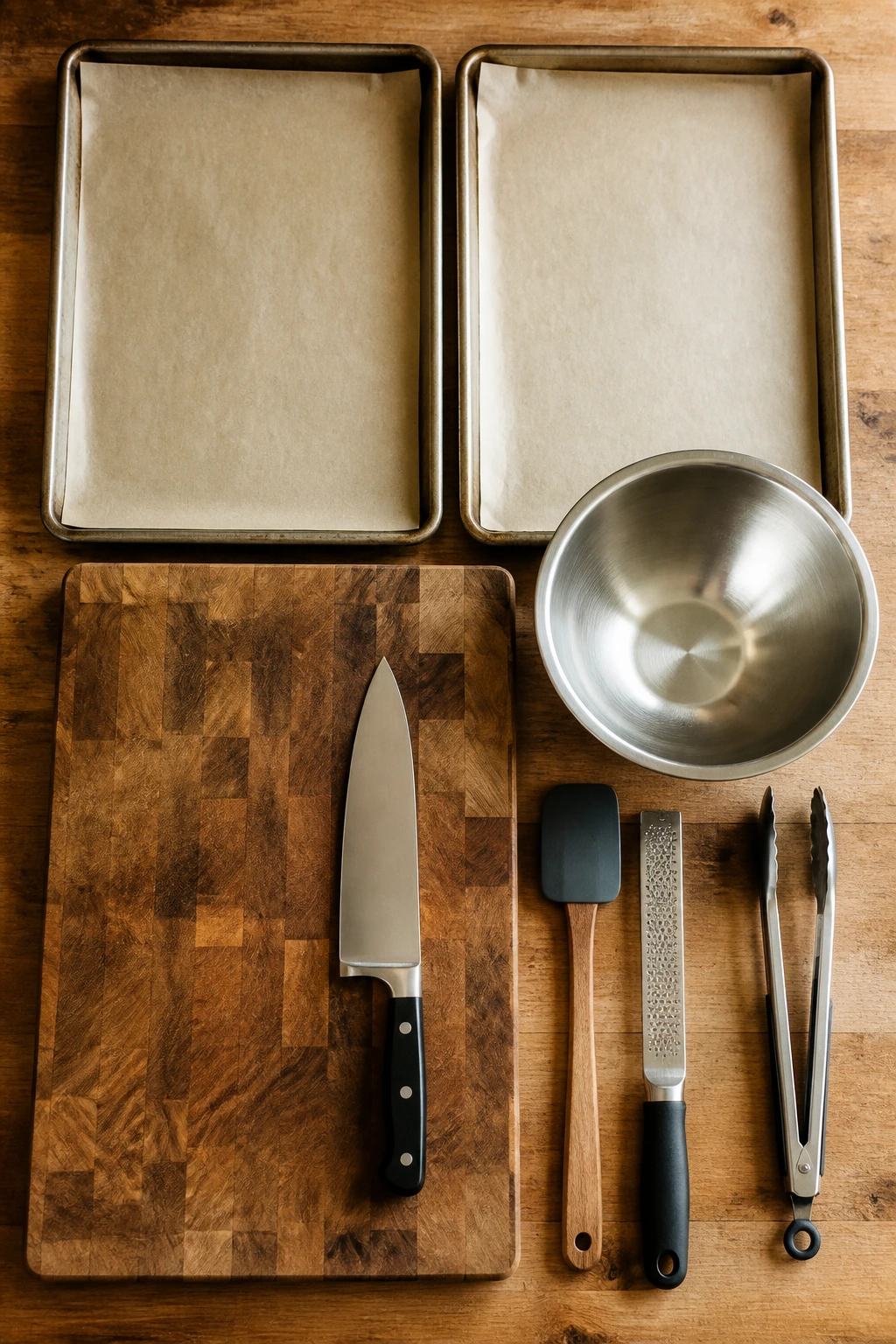
-
2 rimmed sheet pans — Two pans give the vegetables breathing room, which means browned edges instead of a soggy pile.
-
Parchment paper — Useful for easy cleanup and for keeping sticky bits from welding themselves to the pan.
-
Large cutting board — You’ll be chopping several vegetables at once, and a small board turns prep into a mess.
-
Chef’s knife — A sharp knife makes the cauliflower and broccoli safer to cut and keeps the carrots from splitting unevenly.
-
Large mixing bowl — Big enough to toss the vegetables without sending paprika across the counter.
-
Silicone spatula or wide spoon — Handy for turning the vegetables halfway through roasting without shredding the softer pieces.
-
Microplane or fine grater — Best for lemon zest; a coarse grater tends to shave off too much bitter white pith.
-
Tongs, optional — Good for moving the roasted vegetables if you want to keep the tray tidy, though a spatula does the job.
How to Roast the Vegetables Without Steaming Them
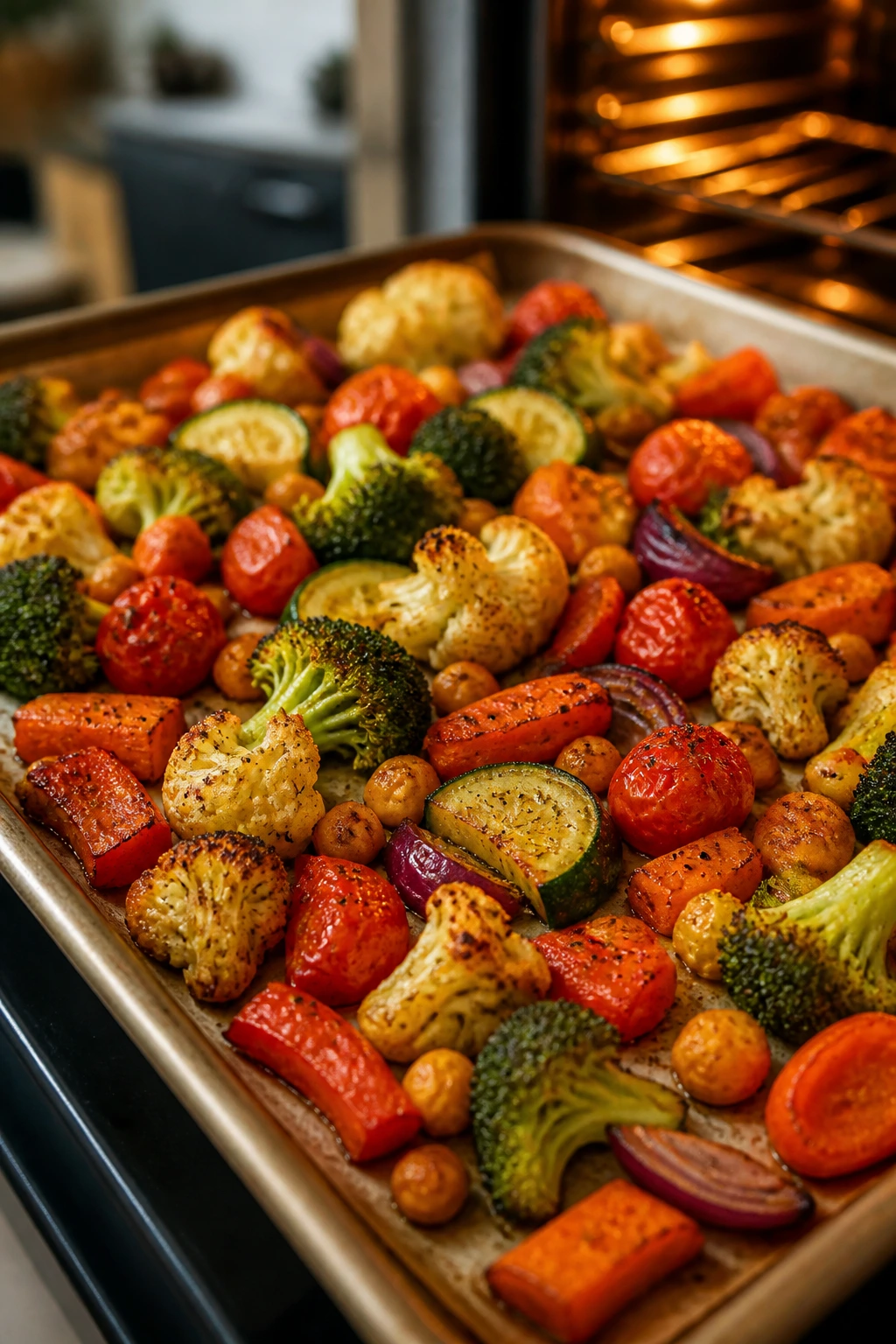
Prep the pan and heat the oven:
-
Preheat the oven to 425°F (220°C). Place racks in the upper and lower thirds of the oven, then line two rimmed sheet pans with parchment paper.
-
If you only have one pan, use the largest rimmed sheet pan you own and be ready to roast in two batches. Crowding is the fastest way to lose color.
Season the sturdy vegetables first:
-
In a large bowl, combine the cauliflower, broccoli, carrots, red onion, and chickpeas. Add the olive oil, garlic, salt, black pepper, smoked paprika, thyme, and rosemary, then toss until everything looks lightly coated and evenly speckled.
-
Spread the mixture onto the prepared pans in a single layer. Leave a little space between pieces so the hot air can move around them. If the vegetables overlap, they steam.
-
Roast for 15 minutes, then remove the pans from the oven. The carrots should be starting to soften at the edges, and the chickpeas should look a little dry and matte.
Add the quick-cooking vegetables:
-
Add the bell pepper, zucchini, and cherry tomatoes to the pans. Toss gently with a spatula so the new vegetables pick up some of the seasoned oil already on the tray, then spread everything back into a single layer.
-
Return the pans to the oven and roast for 12 to 15 minutes more, switching the pans between the upper and lower racks halfway through. The cauliflower should have browned edges, the broccoli tips should look crisp, and the zucchini should be tender but still hold its shape.
-
If you want deeper color, broil for 1 to 2 minutes at the end, watching closely the entire time. Broilers are fast and unforgiving; step away and you get black spots instead of brown ones.
Finish and serve:
-
Transfer the roasted vegetables to a serving bowl or platter. Add the lemon zest, lemon juice, parsley, and feta, then toss once more or scatter the finishing ingredients over the top if you want a neater look.
-
Taste and adjust the salt if needed. Serve while warm.
What to Put Next to the Tray at Dinner
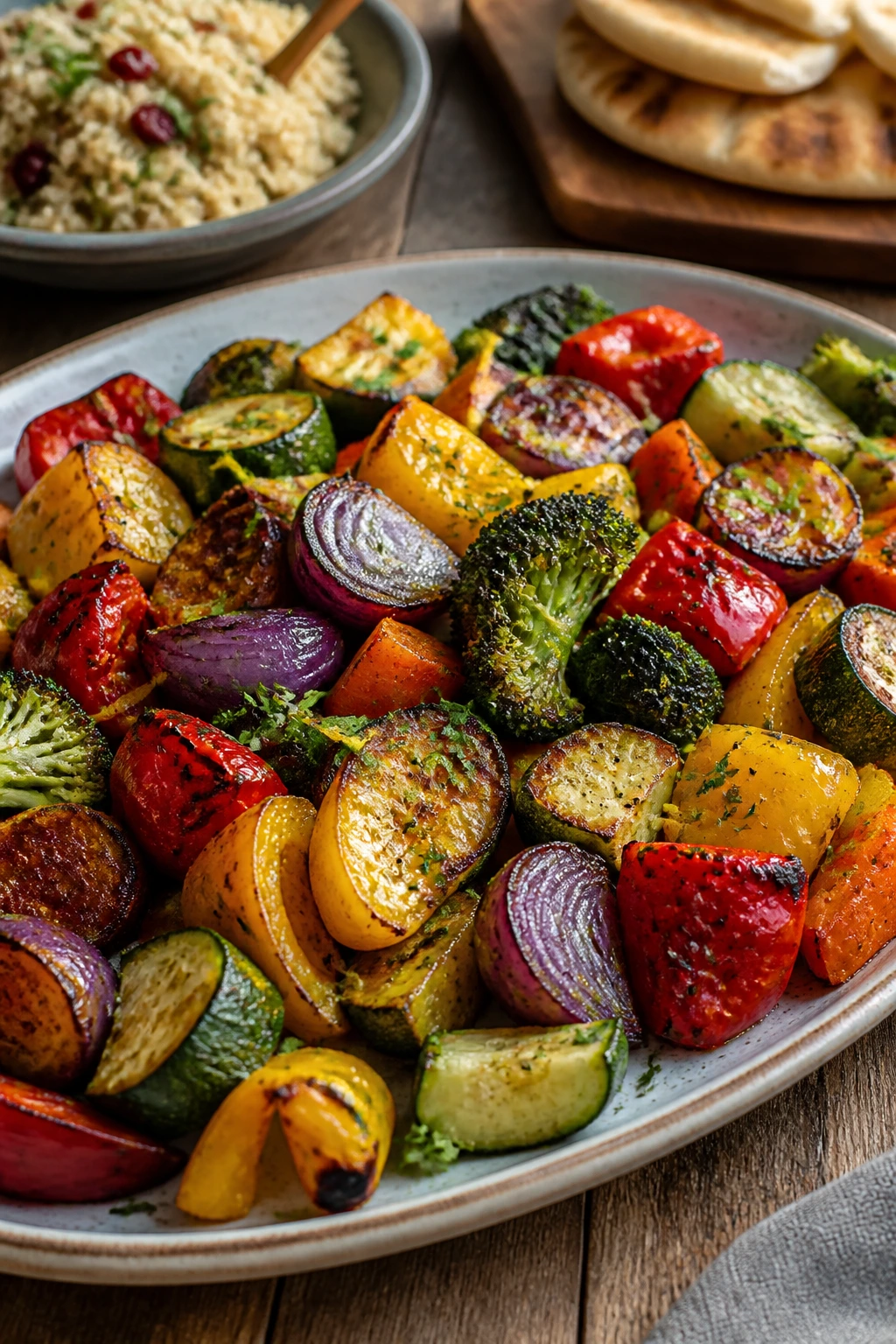
Presentation: Pile the vegetables on a wide shallow platter instead of a deep bowl. That keeps the browned edges visible, and the lemon zest and parsley look much better scattered over a broad surface than buried in a mound.
Accompaniments: For a fuller dinner, spoon the medley over quinoa, farro, brown rice, or couscous. Warm pita, hummus, a dollop of plain yogurt, or a little tzatziki turns the tray into a complete plate without making it feel heavy.
Portions: Count on about 2 to 2 1/2 cups per main-dish serving if you’re eating it with grain or bread, or about 1 1/2 cups as a side dish. If you want to stretch it, add another sheet pan of vegetables rather than cramming more onto the same one.
Beverage Pairing: Sparkling water with lemon suits the lemony finish, and a dry white wine like Sauvignon Blanc or Pinot Grigio works well if you want something with a little snap. For a nonalcoholic option, unsweetened mint tea is clean and good with the roasted garlic.
Small Upgrades That Make the Tray Taste Intentional
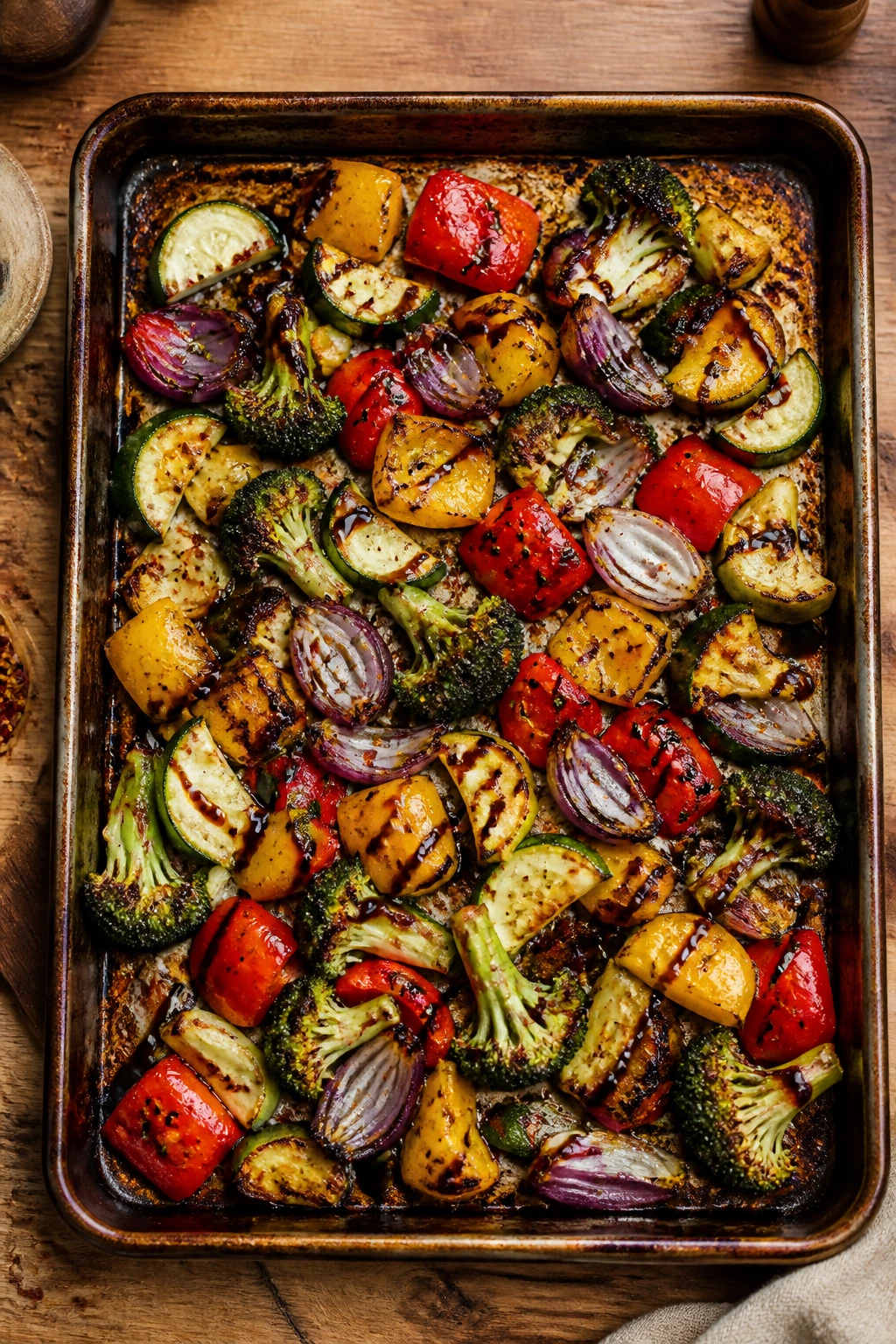
Flavor Enhancement: A pinch of red pepper flakes tossed into the oil gives the tray a mild heat that sits in the background. If you like a slightly deeper finish, add 1 teaspoon of balsamic vinegar after roasting, not before.
Time-Saver: Chop the cauliflower, broccoli, carrots, and onion up to 24 hours ahead and keep them in separate containers in the fridge. Leave the zucchini and tomatoes for the day you roast, because they soften faster and get watery if they sit cut for too long.
Texture Move: Dry the chickpeas with a clean towel after rinsing them. That one small step helps them roast with a firmer edge instead of going soft and chalky.
Make-It-Yours: If you want more protein, add a handful of toasted nuts at the end or serve the vegetables over white beans, lentils, or quinoa. If you want a dairy-free finish, a spoonful of tahini thinned with lemon juice and water gives you the same creamy contrast that feta usually brings.
Why Roasted Vegetables Turn Soft or Bland
-
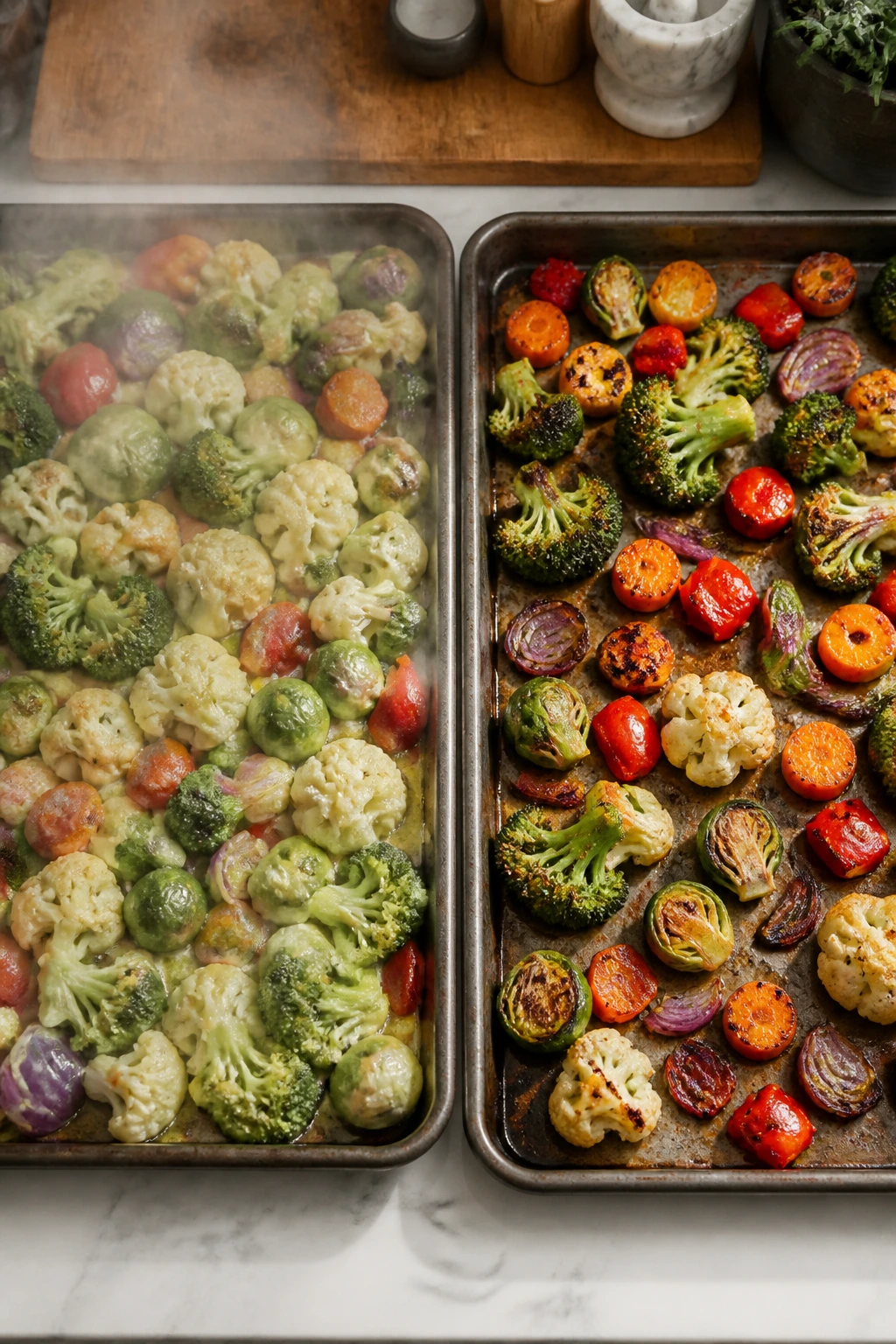
The pan is overcrowded. When the vegetables sit on top of one another, the moisture has nowhere to go and the whole tray steams. The fix is blunt: use two pans, or roast in batches.
-
The vegetables are cut unevenly. Thick carrot chunks and tiny broccoli florets do not finish together. Cut the dense vegetables into smaller pieces and keep everything close to the same size so the tray cooks at a sane pace.
-
Wet vegetables hit the oven. Rinsed cauliflower, broccoli, or chickpeas that are still damp will shed water before they brown. Pat them dry after washing; the paper towel or kitchen towel does more work than another tablespoon of oil ever will.
-
You add the quick-cooking vegetables too early. Zucchini and tomatoes collapse if they roast for the full length of the tray. Add them after the first 15 minutes so they soften without going limp.
-
The oven runs too cool. A lazy oven leaves vegetables pale and leathery instead of browned. If yours is weak, give it an extra 5 minutes of preheating and use the middle rack, or leave the tray in for a few more minutes at the end.
-
The lemon goes on too soon. Acid helps at the end; before roasting, it dulls the flavor and works against browning. Save the lemon juice for the final toss, and use zest to carry the aroma.
Four Ways to Change the Flavor Without Changing the Method
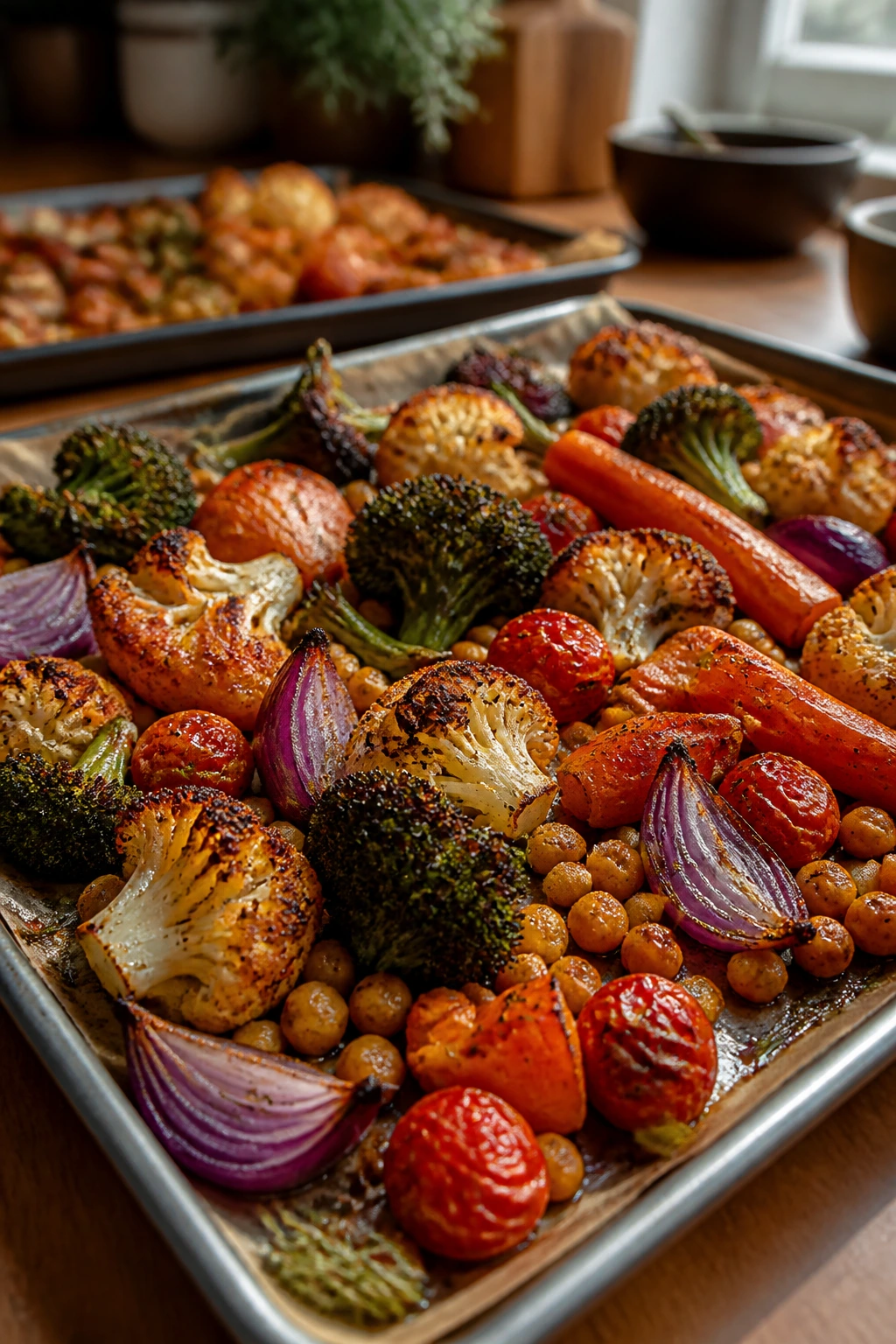
Mediterranean Market Tray: Add 1/3 cup Kalamata olives and the feta, then finish with extra parsley and a pinch of oregano. This leans salty and briny, which works well if you’re serving the vegetables with couscous or hummus.
Smoky Chili-Lime Tray: Swap the smoked paprika for 1 teaspoon chili powder and finish with lime juice instead of lemon. A little chopped cilantro at the end pushes it toward something brighter and sharper, especially if you’re serving it with black beans or rice.
Root-Heavy Winter Tray: Replace the zucchini and bell pepper with 1 small sweet potato and 1 parsnip, both cut into 3/4-inch pieces. Start those dense vegetables 10 minutes before you add the broccoli and cauliflower so the tray doesn’t finish with a hard center.
Protein-Forward Halloumi Tray: Add 6 ounces halloumi, cut into cubes or thick slices, during the last 8 minutes of roasting. Halloumi gets bronzed on the outside and stays chewy inside, which gives the tray a little salty richness without needing meat.
Keeping the Leftovers Useful Tomorrow
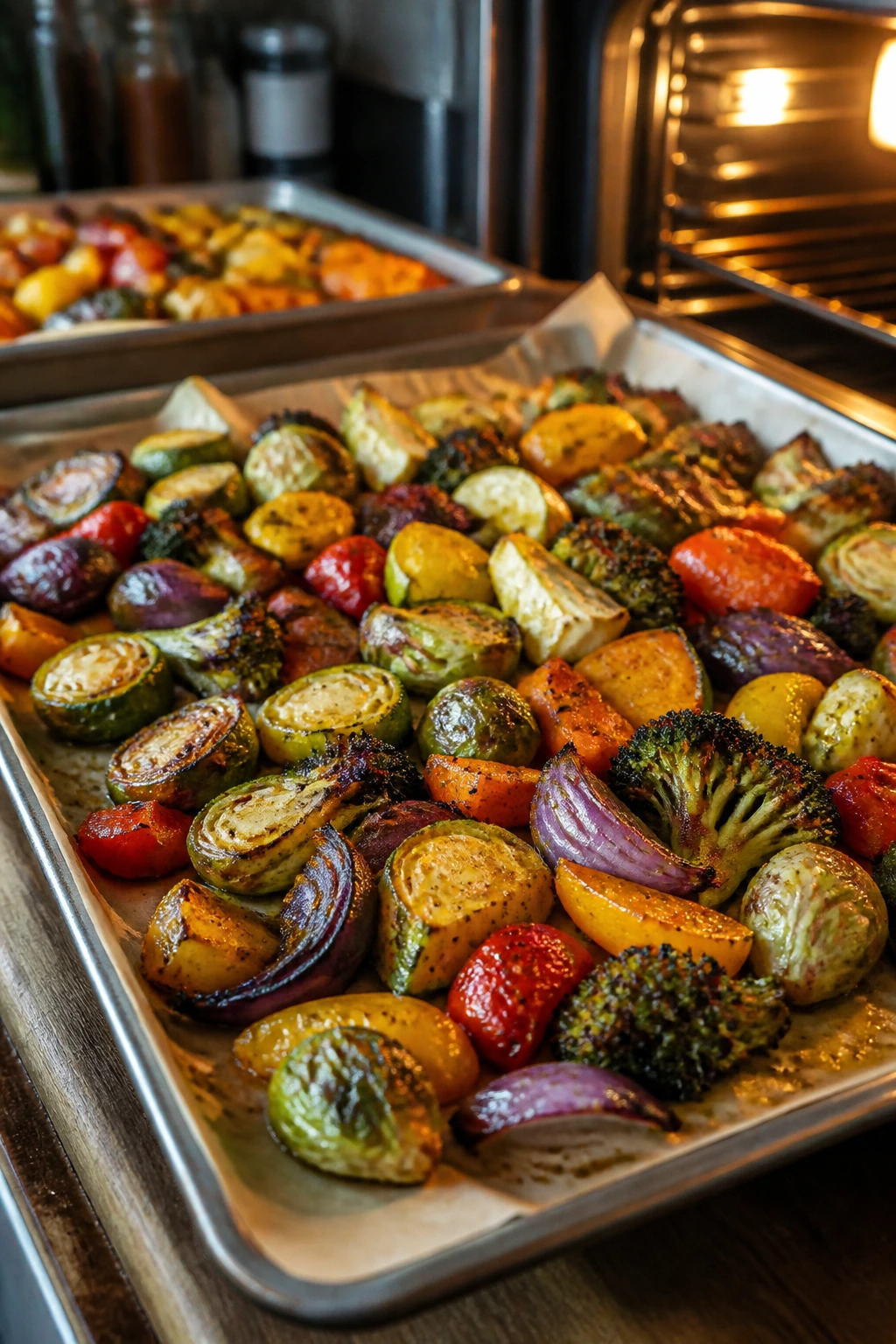
Roasted vegetables are best the day they’re made, but they hold up better than most people expect. Let them cool, then refrigerate them in an airtight container for up to 4 days. Keep them at room temperature no longer than 2 hours, which is the sensible food-safety line for any cooked dish.
Freezing works, but with a warning. Broccoli, cauliflower, carrots, onions, and chickpeas freeze well enough for soups, grain bowls, and egg scrambles, up to 2 months in a freezer-safe container. Zucchini and tomatoes turn softer after freezing, so if you plan to freeze the batch, leave those out or expect a much softer texture when it comes back.
For reheating, the oven is best. Spread the vegetables on a sheet pan and warm them at 400°F for 8 to 12 minutes, just until the edges crisp back up and the centers are hot. A skillet over medium-high heat works too; use a teaspoon of olive oil and stir every minute or so until the tray smells roasted again.
Microwaving is the least exciting option, but it works if you’re in a hurry. Use short bursts and stop before the vegetables get steaming-hot and floppy. If they come out a little soft, a quick minute in a dry skillet fixes the texture better than more microwave time ever will.
Leftovers also break apart nicely into other meals. Chop them into an omelet, tuck them into a wrap with hummus, or stir them into cooked barley with a spoonful of yogurt. The tray has a second life if you let it.
Questions People Ask Before Making This Again
Can I use frozen vegetables?
Yes, but use them selectively. Frozen broccoli or cauliflower can work if you thaw and pat them very dry first, while frozen zucchini is a poor trade because it turns watery and soft fast. If you go the frozen route, roast at a slightly higher heat and give them more space on the pan.
Do I really need two sheet pans?
If you want deep browning, yes, two pans are better. One crowded tray traps steam, and the vegetables start to taste boiled at the edges instead of roasted. If you only have one pan, roast in batches and keep the finished batch warm in a low oven.
How do I make this into a full dinner without adding meat?
The chickpeas already help, but the easiest move is to serve the vegetables over quinoa, farro, rice, or couscous. A spoonful of hummus, a handful of toasted seeds, or a fried egg on top makes the plate feel complete without much extra work.
What if my zucchini always turns mushy?
Cut it thicker than you think you need to, and add it later than the rest of the vegetables. Zucchini gives off a lot of water, so if it sits in the oven for the full roast time it loses shape fast. The late addition is the fix, not a different knife.
Can I roast everything the same way if I add potatoes?
Potatoes need a head start. Cut them into 3/4-inch pieces and roast them for 15 to 20 minutes before adding the rest of the vegetables. If you toss them in at the same time as zucchini, one will be hard and the other will be soft.
Can I make the vegetables ahead and reheat them later?
Yes, and the tray still tastes good if you reheat it correctly. Roast them a little underdone if you know you’ll warm them again, then reheat in a hot oven or skillet so they don’t dry out.
Why do my vegetables taste flat even when they’re browned?
Usually it’s a salt and acid problem. Vegetables need enough salt before roasting to taste seasoned inside, and they need lemon juice or another sharp finish at the end so the roasted flavor doesn’t feel heavy. Browned but bland vegetables usually need both.
One Tray, Many Dinners
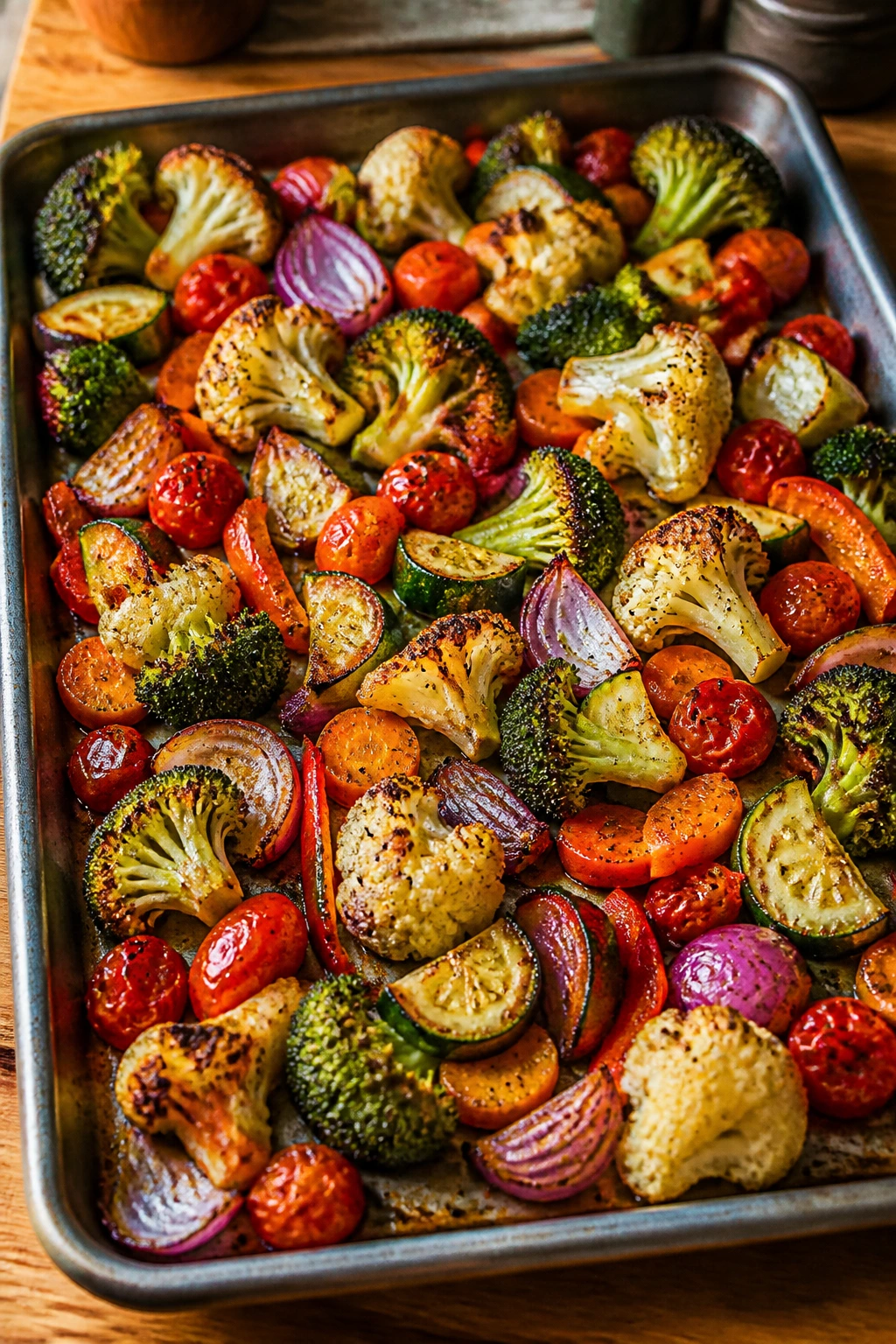
A roasted vegetable medley works because it respects how vegetables actually cook. Harder pieces go in first, softer pieces come later, and the whole tray gets a bright finish that keeps it from tasting tired. That’s not fancy. It’s just the difference between vegetables that sit there and vegetables people want to eat.
I like this kind of dinner because it leaves room for choice. Serve it over grains, pile it into a bowl with beans, or put it next to something simple and call it done. Keep a lemon on the counter, keep a few vegetables in the fridge, and dinner gets a lot less complicated.
Roasted Vegetable Medley — Recipe Card
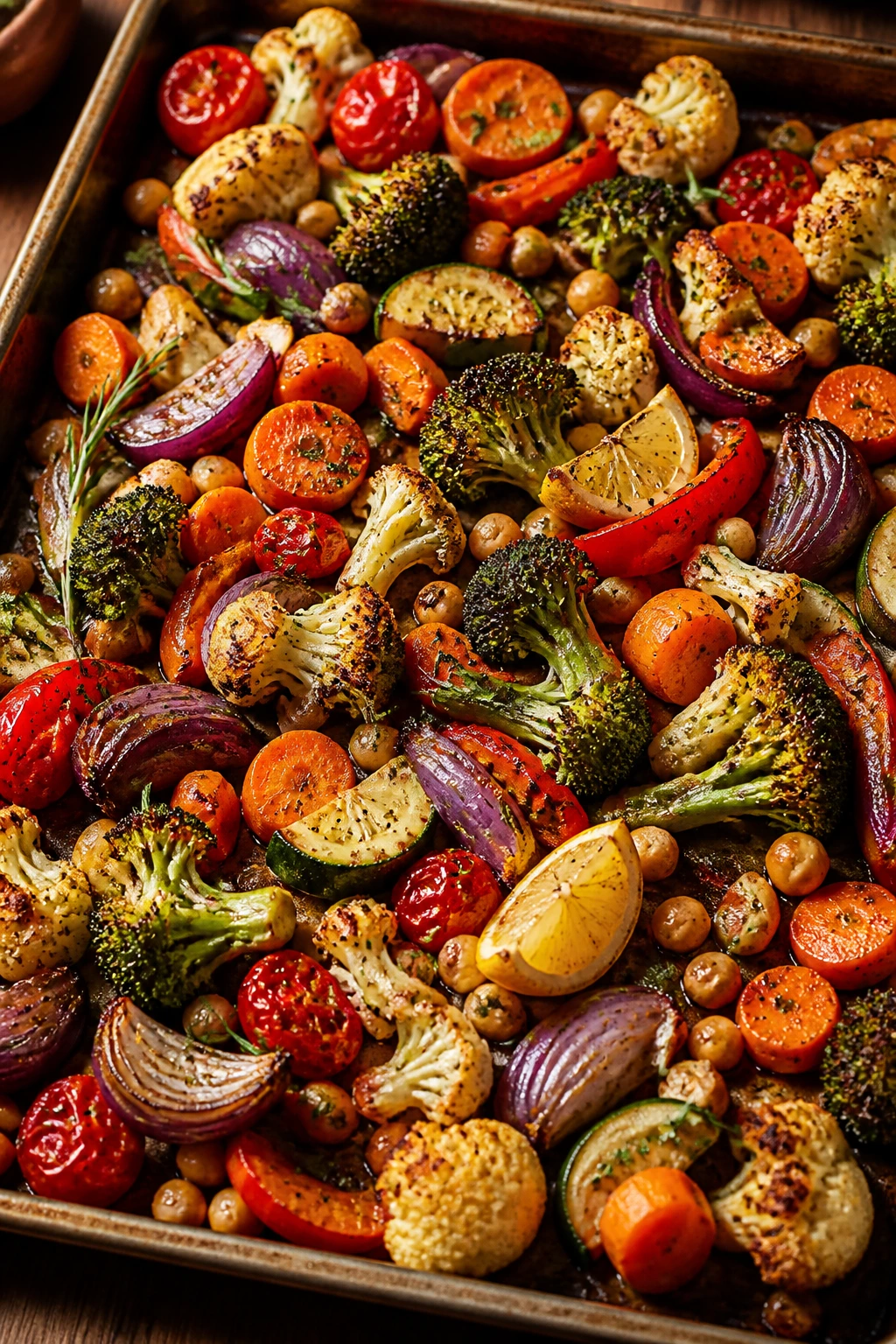
Recipe Name: Roasted Vegetable Medley for a Healthy Dinner
Description: A colorful sheet-pan mix of cauliflower, broccoli, carrots, onion, bell pepper, zucchini, tomatoes, and chickpeas roasted with garlic, herbs, and a lemony finish. The edges brown, the centers stay tender, and the whole tray works as a light dinner or a sturdy side.
Prep Time: 20 minutes
Cook Time: 28 to 32 minutes
Total Time: 48 to 52 minutes
Course: Dinner, Main Course
Cuisine: Mediterranean-Inspired
Servings: 4 servings as a main dish, 6 as a side
Calories: About 240 kcal per serving
Ingredients
For the Roasted Vegetables:
- 1 medium head cauliflower, cut into 1-inch florets
- 1 medium head broccoli, cut into 1-inch florets
- 3 medium carrots, peeled and sliced on the bias into 1/2-inch pieces
- 1 small red onion, cut into 8 wedges
- 1 red bell pepper, seeded and cut into 1-inch strips
- 1 medium zucchini, halved lengthwise and sliced into 1/2-inch half-moons
- 1 cup cherry tomatoes
- 1 (15-ounce) can chickpeas, drained, rinsed, and patted dry
- 3 tablespoons olive oil
- 3 cloves garlic, minced
- 1 1/2 teaspoons kosher salt
- 1 teaspoon black pepper
- 1 teaspoon smoked paprika
- 1 teaspoon dried thyme
- 1/2 teaspoon dried rosemary, crushed
For Finishing:
- 1 teaspoon lemon zest
- 1 tablespoon lemon juice
- 2 tablespoons chopped fresh parsley
- 1/4 cup crumbled feta, optional
Instructions
-
Preheat the oven to 425°F (220°C) and line two rimmed sheet pans with parchment paper.
-
In a large bowl, toss the cauliflower, broccoli, carrots, onion, and chickpeas with olive oil, garlic, salt, pepper, smoked paprika, thyme, and rosemary.
-
Spread the vegetables across the pans in a single layer and roast for 15 minutes.
-
Add the bell pepper, zucchini, and cherry tomatoes. Toss gently, spread them back out, and roast for 12 to 15 minutes more, switching pans halfway through.
-
Transfer to a serving bowl or platter. Finish with lemon zest, lemon juice, parsley, and feta, then serve warm.
Notes: Dry the chickpeas well for better browning. If the pan looks crowded, use a third pan or roast in batches. Lemon goes on after roasting, not before.