



A pastel candy cake with cream cheese frosting can go wrong fast. Too much sugar, and it turns cloying. Too little structure, and those pretty candy pieces sink to the bottom like little pebbles. Too much frosting warmth, and the whole thing starts to slide before you’ve even cut the first slice.
That’s why I like this style of cake when it’s handled with a little restraint. The crumb should be tender and vanilla-rich, not bland. The pastel candy should give you little bursts of crunch and color, not a mouthful of brittle sugar. And the frosting — this matters — should be tangy enough to keep the whole cake from tasting like a bakery display case. Cream cheese frosting is doing real work here. It reins in the sweetness and gives each bite a cool, slightly sharp finish that keeps you going back for another forkful.
The best version of this dessert looks playful from across the table and eats like a proper layer cake. You want soft cake, clean frosting, and candy that stays where you put it. That means choosing the right mix-ins, handling the batter gently, and treating the frosting like a structural layer, not an afterthought.
Why You’ll Want a Second Slice
- The tang matters: Cream cheese frosting cuts through the sugar in a way buttercream often can’t, so the cake tastes rich instead of flat.
- The crumb stays soft: Sour cream and butter give the layers a plush, close texture that holds up to thick frosting and candy pieces.
- The candy adds crunch in the right places: Chopped pastel candy-coated chocolates stay crisp at the edges and give each slice a little texture shift.
- It looks festive without extra fuss: A few handfuls of pastel candy on top do more for the finish than elaborate piping ever would.
- It travels well once chilled: The frosting firms up enough to slice neatly, which makes this cake easier to serve than a lot of softer celebration cakes.
- It’s easy to steer the flavor: Vanilla, almond, lemon, or even a little orange zest can change the whole mood without rebuilding the recipe.
Why the Candy and Frosting Pair So Well
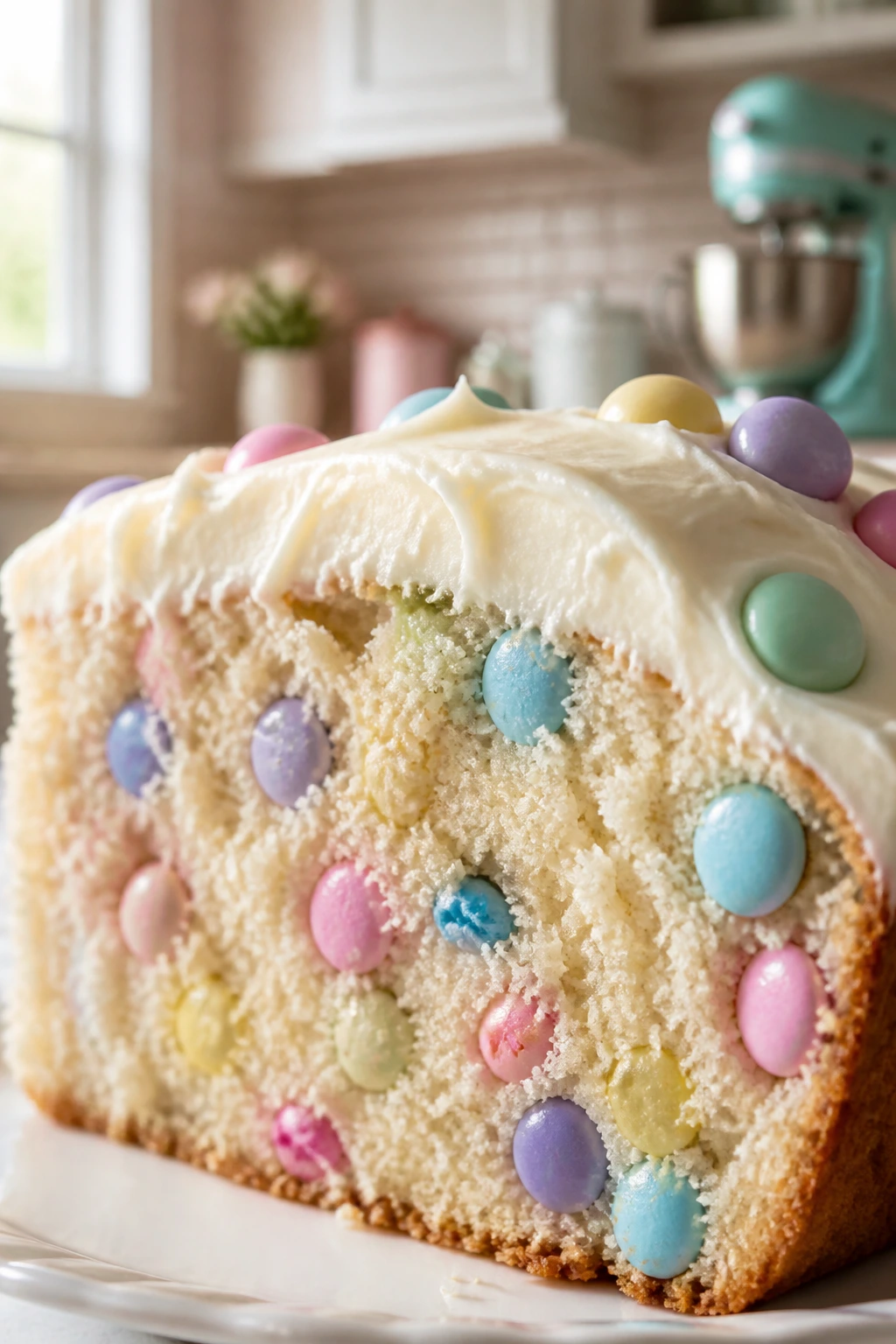
A candy-studded cake sounds like it might be all sweetness and no backbone, but the texture plays a bigger role than people expect. The pastel candy pieces bring pockets of crispness, and the cream cheese frosting brings a cool, tangy edge that keeps the bite from becoming heavy. That contrast is the whole trick. Without it, you’re left with a cake that looks cute and tastes one-note.
The other reason this pairing works is simple: cream cheese frosting is forgiving on a cake that has little bits of sugar in the crumb. Buttercream can feel too airy or too sweet here. Whipped frosting can collapse under the weight of candy. Cream cheese frosting sits somewhere in the middle. It’s spreadable, sturdy, and just a little sharp. That sharpness wakes the vanilla cake up.
There’s also a practical reason I like candy in the batter instead of relying only on decoration. A lot of celebration cakes are all top and no middle. Pretty on the outside. Forgettable once you cut in. Folding candy into the batter gives the cake a small surprise in every slice, and the top decorations become the finishing touch instead of the whole idea.
Timing, Yield, and How Long It Takes
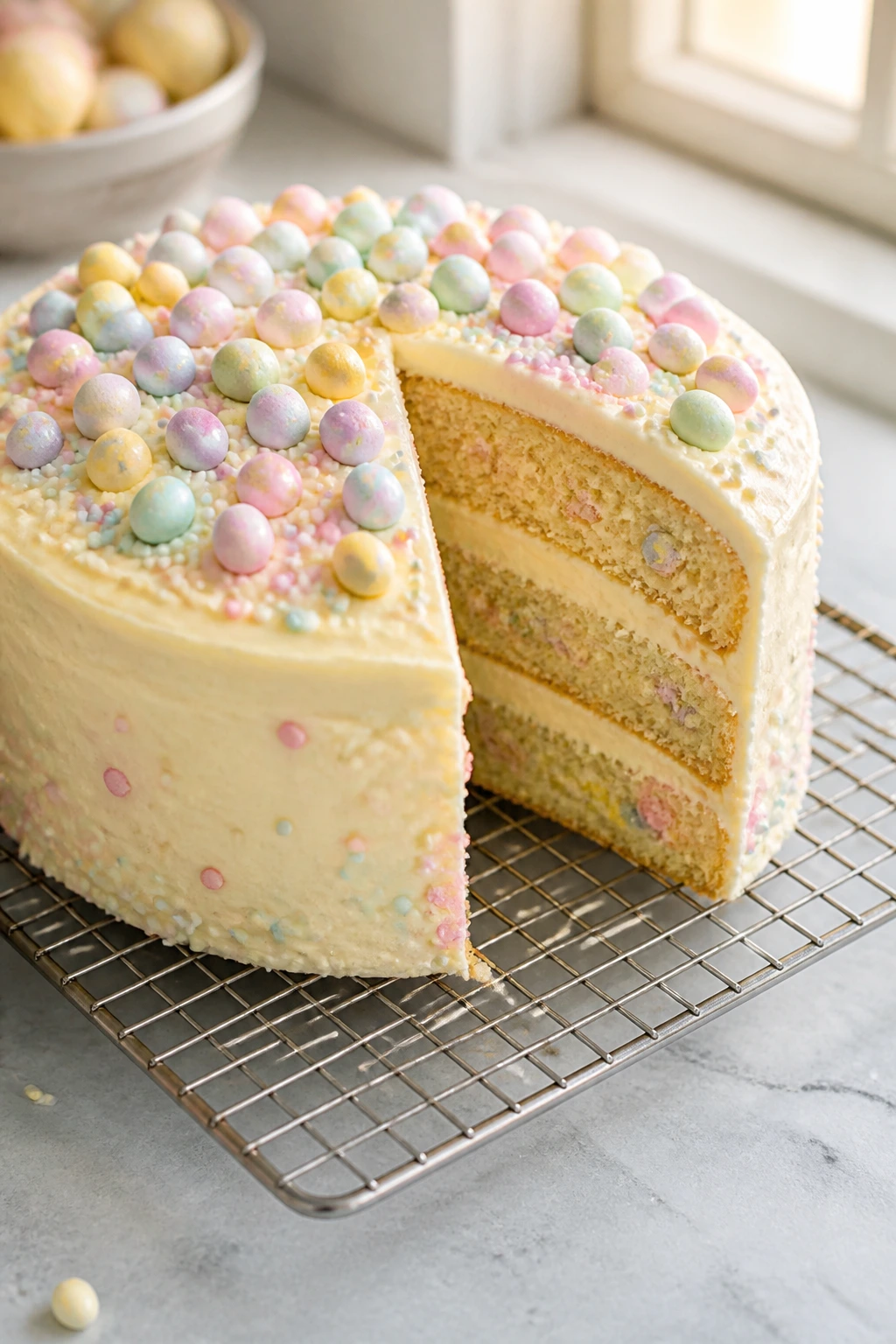
Yield: 12 slices
Prep Time: 35 minutes
Cook Time: 30 to 35 minutes
Total Time: 1 hour 10 minutes active, plus cooling and chilling time
Difficulty: Intermediate — the batter is straightforward, but gentle mixing, even baking, and a tidy frosting finish take a little care.
Chill/Rest Time: 1 hour for cooling the cake layers, plus 20 to 30 minutes chilling after frosting if you want clean slices
Best Served: Slightly cool or at cool room temperature, when the frosting softens just enough to cut without dragging
The Ingredients That Make This Cake Work
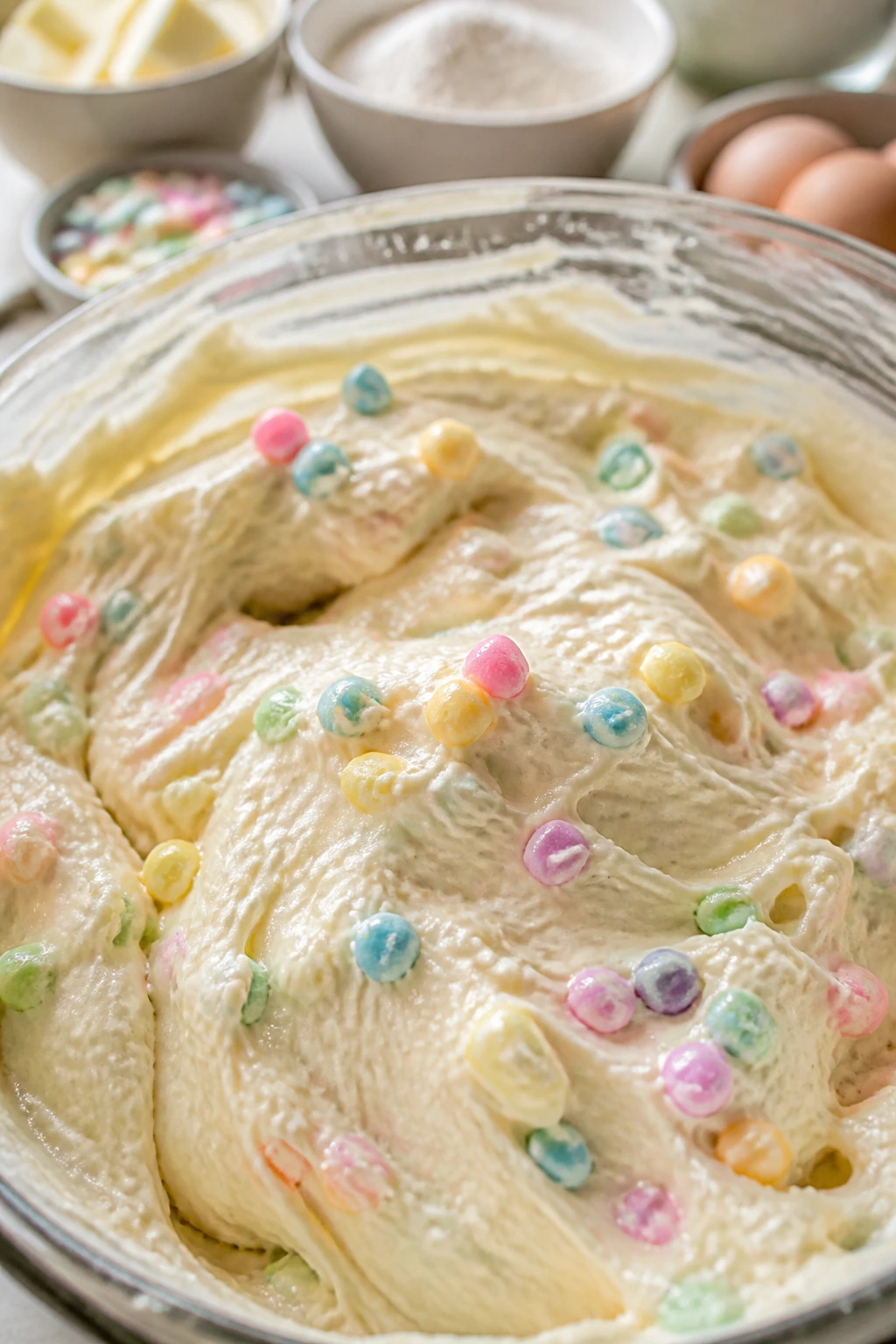
For the Cake Layers:
- 2 1/4 cups cake flour
- 2 1/2 teaspoons baking powder
- 1/2 teaspoon baking soda
- 3/4 teaspoon fine salt
- 1 cup unsalted butter, softened to cool room temperature
- 1 3/4 cups granulated sugar
- 4 large eggs, room temperature
- 2 teaspoons pure vanilla extract
- 1/2 teaspoon almond extract
- 1 cup sour cream, room temperature
- 1/2 cup whole milk, room temperature
- 1 1/2 cups pastel candy-coated chocolates, chopped if large
- 1 tablespoon all-purpose flour, for tossing the candy
For the Cream Cheese Frosting:
- 16 ounces full-fat cream cheese, softened but still cool
- 1 cup unsalted butter, softened
- 5 cups powdered sugar, sifted
- 2 teaspoons pure vanilla extract
- 1/4 teaspoon fine salt
- 1 to 2 tablespoons heavy cream, only if needed for spreading consistency
For the Finish:
- 1/2 cup pastel candy-coated chocolates
- 2 tablespoons pastel sprinkles, optional
- Tiny pinch of flaky salt, optional if you like a sweet-salty edge
Why Each Ingredient Earns Its Place
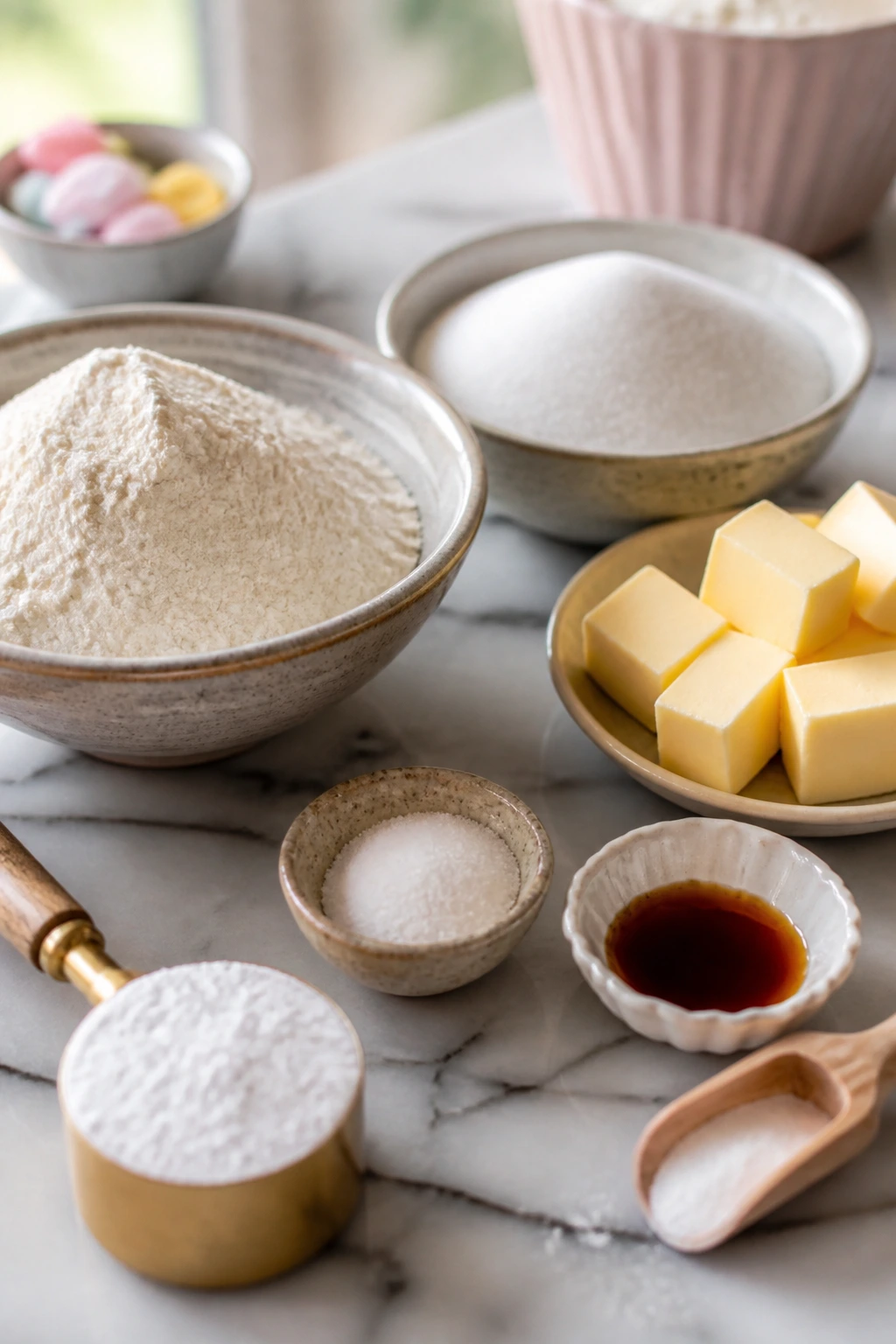
Cake Flour, Leaveners, and Salt
What to use: 2 1/4 cups cake flour, 2 1/2 teaspoons baking powder, 1/2 teaspoon baking soda, and 3/4 teaspoon fine salt.
Preparation: Whisk the dry ingredients together so the leaveners disappear evenly. Cake flour is worth the small extra effort because it gives you a finer crumb than all-purpose flour.
Substitutions: If you don’t have cake flour, use 2 cups all-purpose flour minus 4 tablespoons, plus 4 tablespoons cornstarch. It won’t be identical, but it gets you close enough for a home cake.
Tips: Don’t skip the salt. Candy brings a lot of sweetness, and salt keeps the cake from tasting hollow.
Butter, Sugar, and Eggs
What to use: 1 cup unsalted butter, 1 3/4 cups granulated sugar, and 4 large eggs.
Preparation: Let the butter soften until it yields to a fingertip but still holds shape. The eggs should be room temperature so the batter stays smooth instead of curdling.
Substitutions: You can use superfine sugar if that’s what you have, though regular granulated sugar works fine after a full creaming step. If you’re out of butter, I wouldn’t swap here; the flavor and structure matter.
Tips: Cream the butter and sugar until it looks pale and a little fluffy, not just mixed. That extra minute or two gives the cake its lift.
Sour Cream, Milk, and Extracts
What to use: 1 cup sour cream, 1/2 cup whole milk, 2 teaspoons vanilla extract, and 1/2 teaspoon almond extract.
Preparation: Bring both dairy ingredients to room temperature so they blend into the batter without seizing the butter. Measure the extracts carefully; almond can take over if you get heavy-handed.
Substitutions: Plain Greek yogurt works in place of sour cream if that’s what’s in the fridge. If you dislike almond, leave it out and add another 1/2 teaspoon vanilla.
Tips: Sour cream is doing more than adding richness. It gives the cake a slight tang and keeps the crumb soft after chilling.
Pastel Candy and Frosting Finish
What to use: 1 1/2 cups pastel candy-coated chocolates for the batter, plus 1/2 cup for the top.
Preparation: Chop the larger candy pieces into halves or rough thirds so they distribute through the batter more evenly. Toss them with the tablespoon of flour before folding them in.
Substitutions: If you can’t find candy-coated chocolates, use chopped pastel-coated chocolate eggs, candy-coated almonds, or even pastel chocolate chips. The shape changes, but the texture job stays the same.
Tips: Keep the candy pieces on the larger side. Tiny shards melt into the crumb and vanish; pieces around 1/2 inch hold their shape better.
Cream Cheese Frosting Base
What to use: 16 ounces full-fat cream cheese, 1 cup butter, 5 cups powdered sugar, 2 teaspoons vanilla, 1/4 teaspoon salt, and 1 to 2 tablespoons heavy cream.
Preparation: Softened cream cheese should still feel cool. If it gets warm and greasy, the frosting loosens fast.
Substitutions: Full-fat mascarpone can replace part of the cream cheese for a milder flavor, but I wouldn’t swap all of it. Light cream cheese makes a runnier frosting and doesn’t set as well.
Tips: Beat the cream cheese and butter until smooth before adding sugar. If you start with lumpy cream cheese, no amount of powdered sugar will hide it.
The Equipment That Makes the Bake Easier
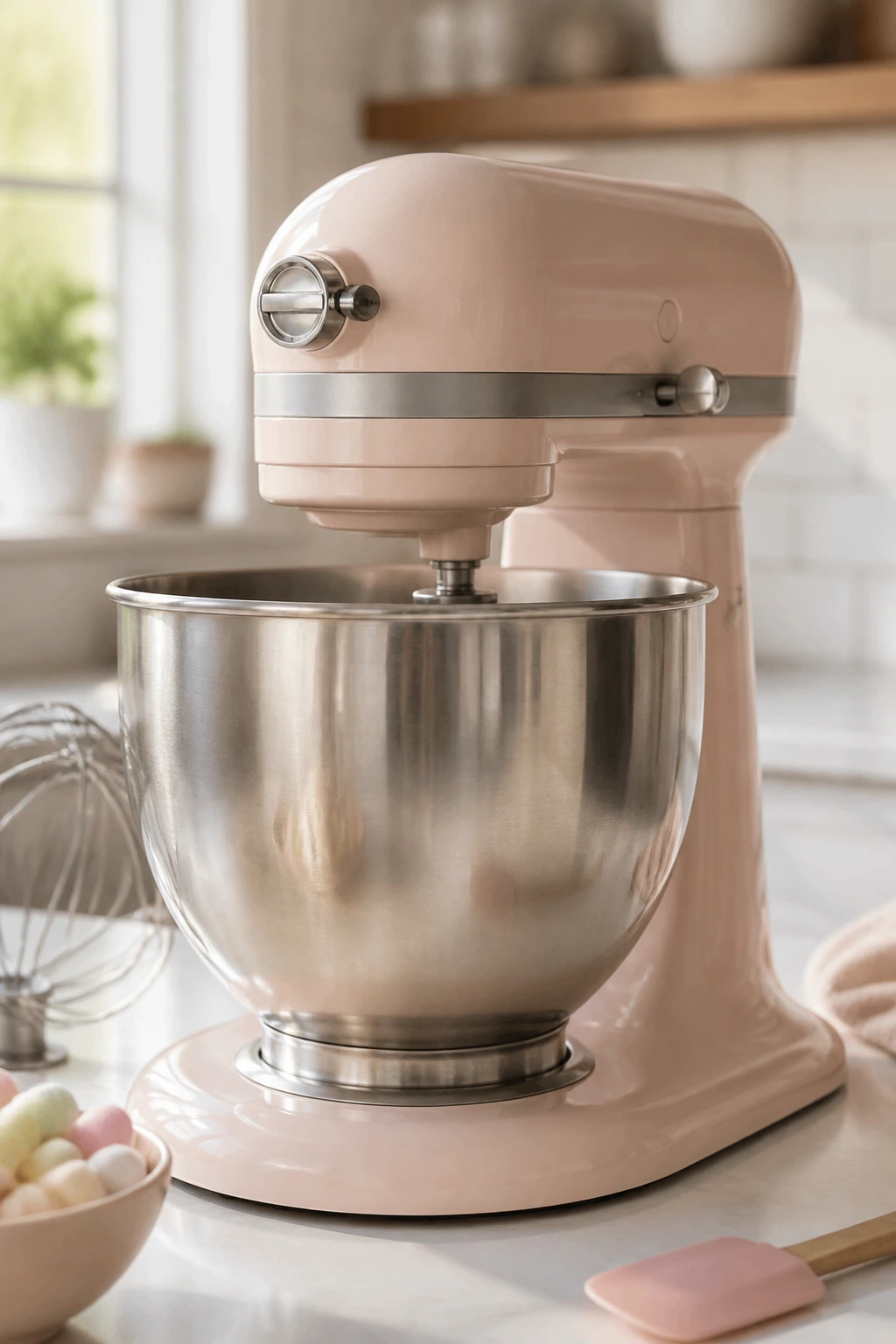
- Two 8-inch round cake pans: The layers bake more evenly than one deep pan, and the finished cake slices cleanly.
- Parchment paper circles: They save you from sticking, especially when candy bits press into the bottom of the pan.
- Stand mixer or hand mixer: You need real creaming power for the butter and sugar, and hand-whisking isn’t worth the strain.
- Large mixing bowls: One for dry ingredients, one for the batter, and one for frosting keeps things from getting messy.
- Rubber spatula: Useful for folding candy in gently and scraping the bowl so you don’t leave streaks of butter behind.
- Offset spatula: Not mandatory, but it makes frosting the sides of the cake much easier.
- Wire cooling rack: Hot layers need air circulation underneath or they’ll steam in the pan and turn sticky at the bottom.
- Cake turntable: Optional, but it makes frosting the sides more even and less fiddly.
Mixing the Batter Without Crushing the Candy
Prepare the pans and oven:
- Preheat the oven to 350°F (175°C) and position a rack in the center.
- Grease two 8-inch round cake pans with butter or baking spray, line the bottoms with parchment circles, then lightly dust the sides with flour. Tap out the excess.
Build the dry base:
- In a medium bowl, whisk together the cake flour, baking powder, baking soda, and salt for at least 20 seconds. You want the leaveners distributed evenly so the cake rises with a level top, not a lopsided hump.
Cream the butter and sugar:
- In a large bowl, beat the butter and granulated sugar on medium-high speed for 3 to 4 minutes, until the mixture turns pale, fluffy, and a little billowy at the edges. If it still looks dense and grainy, keep going.
- Add the eggs one at a time, beating for about 20 seconds after each addition. Scrape down the bowl after the second egg so the bottom doesn’t hide streaks of butter.
- Mix in the vanilla extract and almond extract. The batter may look glossy and loose for a moment; that’s fine.
Bring the batter together:
- Stir the sour cream and milk together in a small bowl.
- Add the dry ingredients in three additions, alternating with the sour cream mixture in two additions — dry, wet, dry, wet, dry. Mix on low speed only until the flour disappears. Do not overmix; once the batter turns smooth, stop.
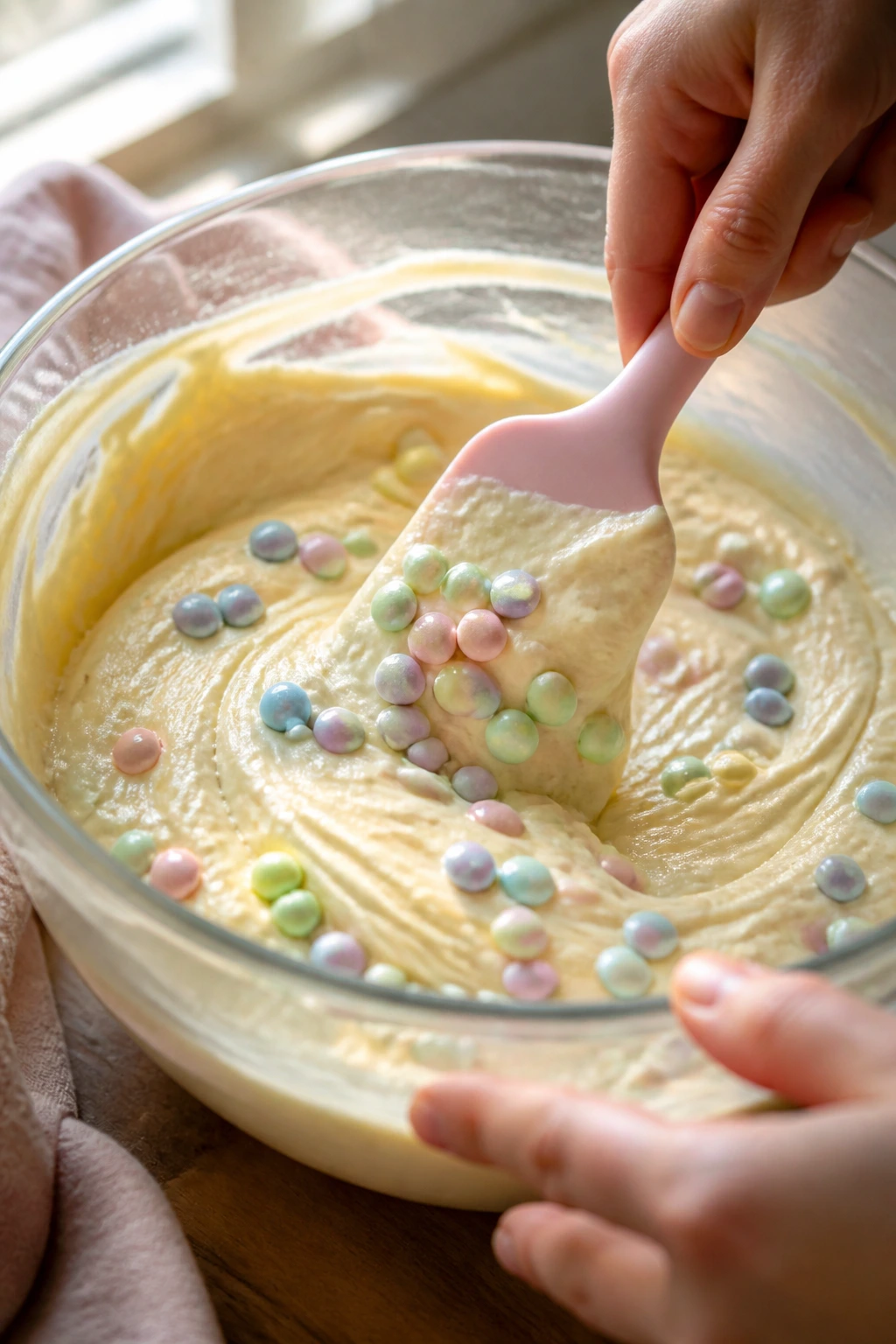
- Toss the pastel candy-coated chocolates with the 1 tablespoon flour, then fold them in with a spatula. Use a gentle hand here. A few streaks are fine. Overmixing turns the candy into crumbs and drags the batter down.
- Divide the batter evenly between the prepared pans and smooth the tops with the back of a spoon or an offset spatula.
Baking, Cooling, and Layering the Cake
Bake the layers:
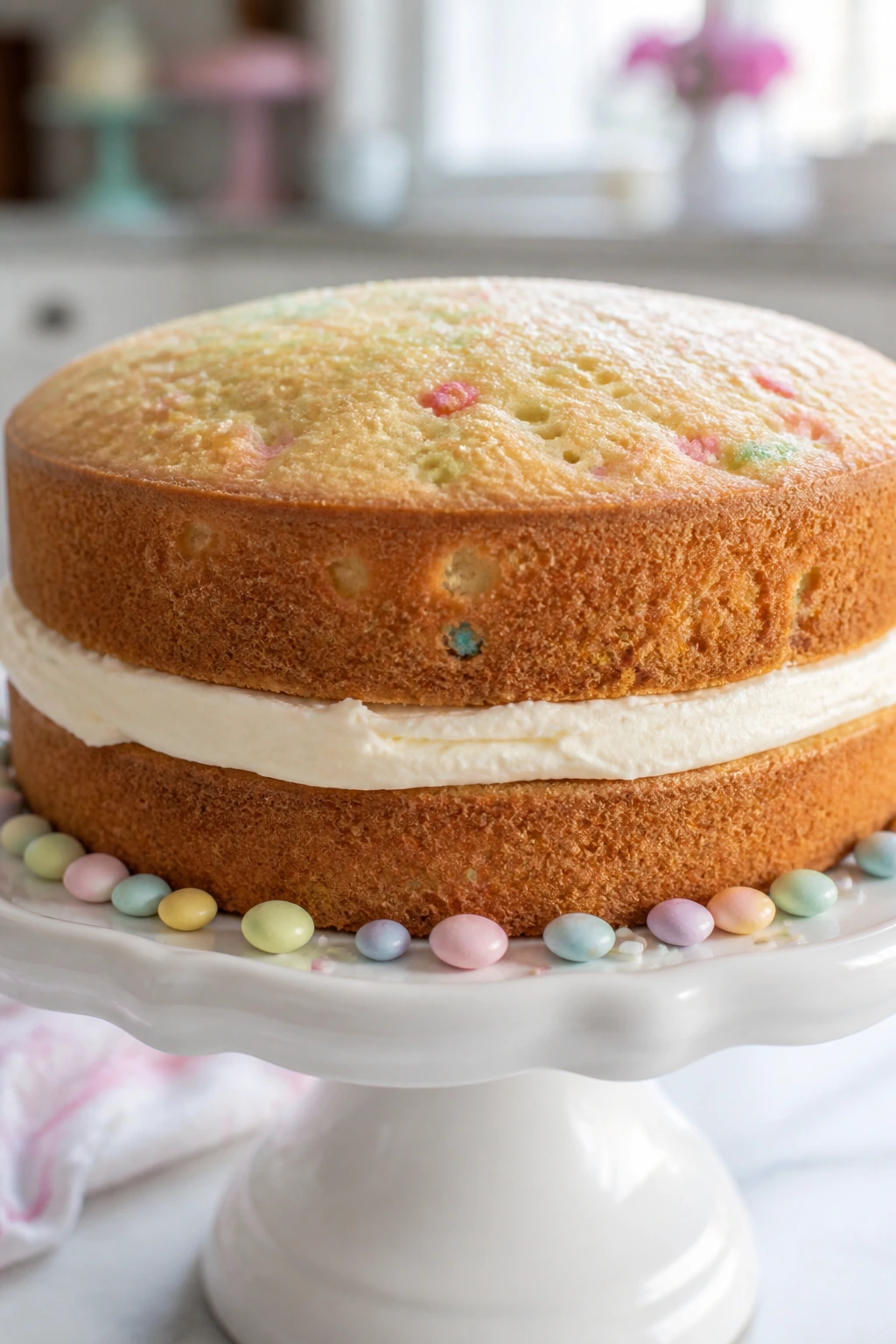
- Bake for 30 to 35 minutes, rotating the pans once halfway through, until the tops spring back when touched lightly and a toothpick inserted in the center comes out with a few moist crumbs, not raw batter.
- If the tops brown too quickly, lay a loose sheet of foil over the pans for the last 5 to 8 minutes. Avoid opening the oven every few minutes. That rush of cool air can flatten the rise.
Cool with patience:
- Let the cakes rest in the pans for 10 minutes. Then run a thin knife around the edge, turn them out onto a wire rack, peel off the parchment, and let them cool completely — about 1 hour. Frosting a warm cake is a losing battle. The frosting softens, the candy slips, and the whole thing starts to lean.
- If the layers dome a lot, trim the tops with a serrated knife once they’re fully cool. A flat layer stack is easier to frost and looks cleaner on the plate.
Whipping the Frosting So It Holds Its Shape
Make the frosting base:
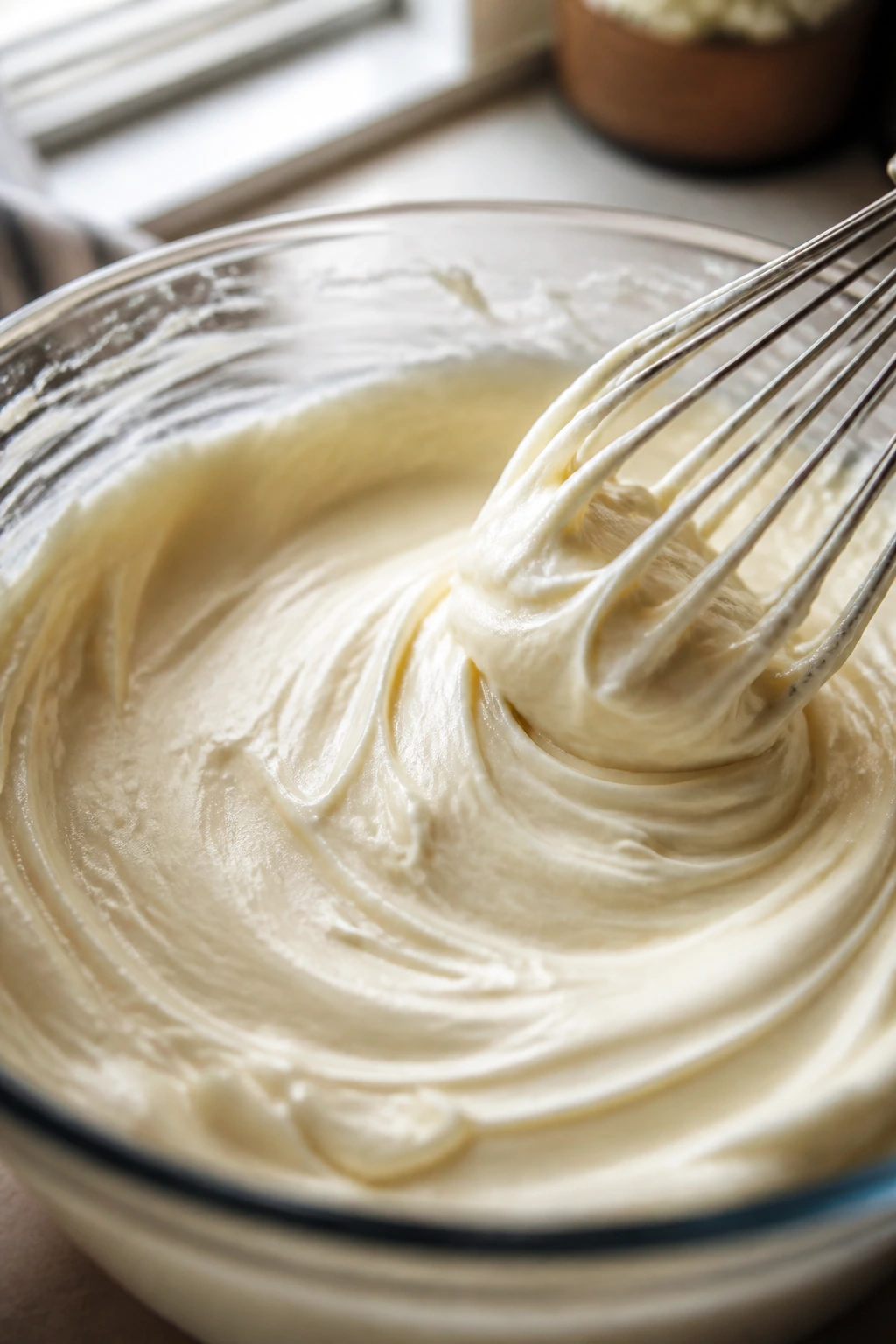
- Beat the cream cheese and butter together on medium speed for 1 to 2 minutes, until completely smooth and no little cream cheese lumps remain.
- Add the powdered sugar in three additions, mixing on low speed at first so the sugar doesn’t puff out of the bowl. Once it’s mostly incorporated, increase the speed to medium.
- Add the vanilla extract and salt, then beat for another 30 seconds. If the frosting feels too stiff for spreading, add 1 tablespoon heavy cream. If it still needs more movement, add the second tablespoon. You want it soft enough to glide, not run.
Watch the temperature:
- If your kitchen is warm or the frosting starts to look shiny and loose, chill the bowl for 10 minutes, then stir again. Cream cheese frosting is calm when it’s cool and ornery when it gets warm. That’s just how it behaves.
Frosting and Decorating the Cake
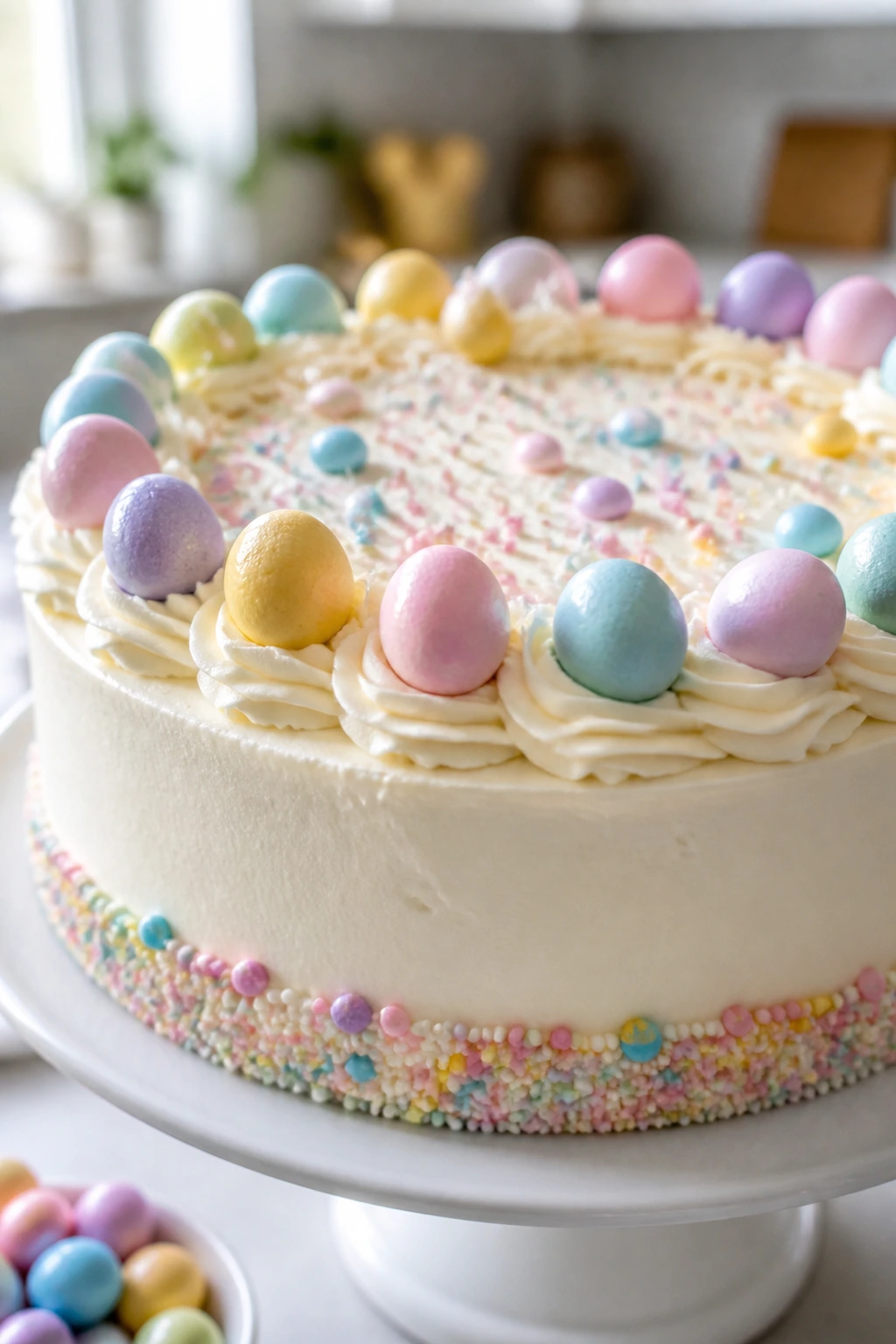
Assemble the layers:
- Place one cooled cake layer on a serving plate or cake stand. Spread about 1 cup frosting over the top in an even layer.
- Set the second layer on top, top-side down for a flatter finish. Press very gently so the layers meet without squeezing frosting out the sides.
Crumb coat and finish:
- Spread a thin layer of frosting over the top and sides to trap crumbs. Chill the cake for 15 to 20 minutes until the coating feels set to the touch.
- Frost the cake with the remaining cream cheese frosting, using an offset spatula to create smooth sides or soft swirls, whichever you prefer.
- Press the remaining pastel candy-coated chocolates around the top edge and scatter a few across the center. Add the pastel sprinkles if you want a more celebratory look.
- If you like a tiny salty finish, add a few flakes of salt only on the very top. Don’t overdo it. One light pinch is enough to sharpen the frosting.
How to Serve It Without Making a Mess
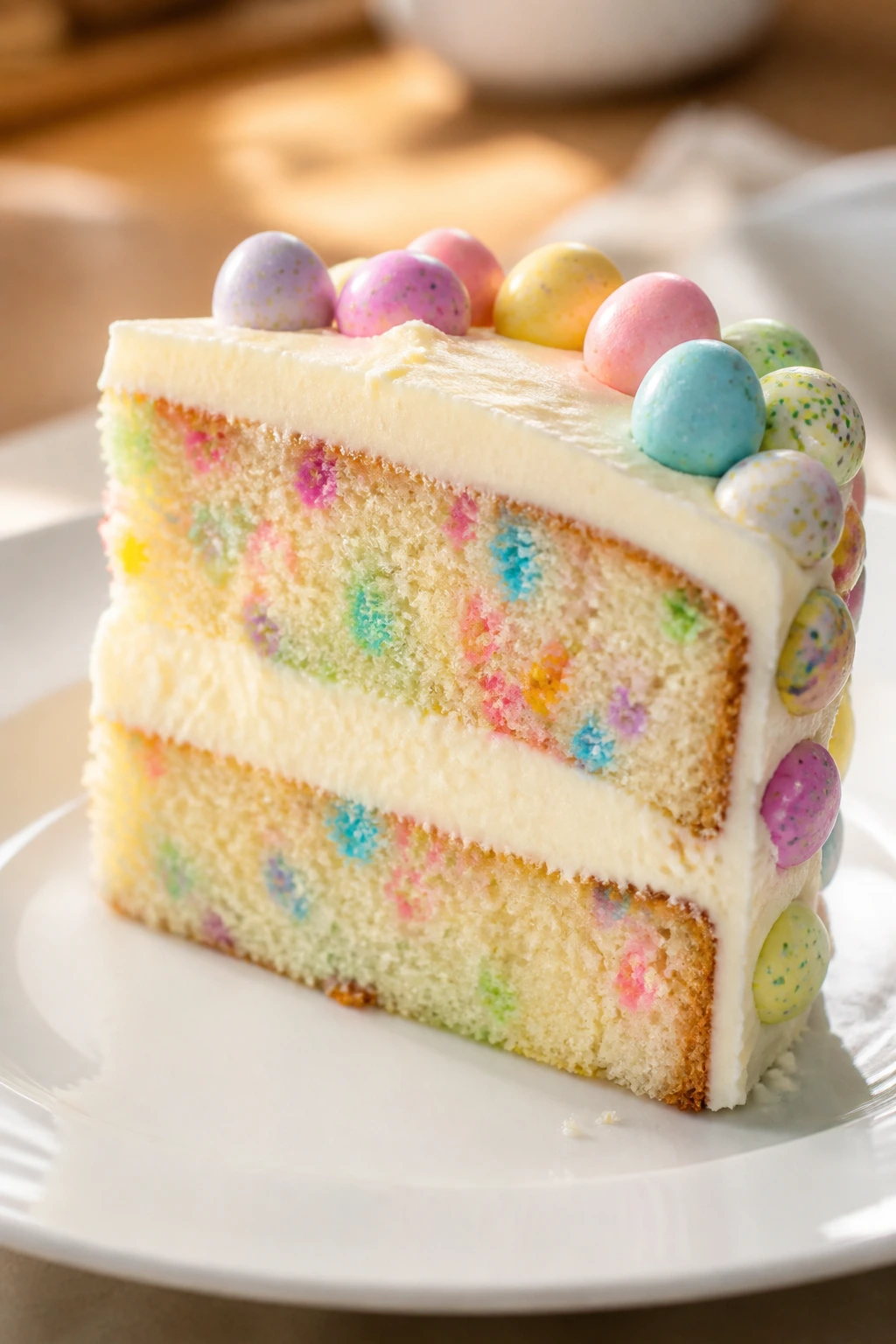
Presentation: A chilled cake slices cleanly if you dip a long knife in hot water, wipe it dry, and cut in one steady motion. I like serving this on a plain white plate so the pastel candy pieces do the visual heavy lifting. The frosting will look smoother once it sits out for 10 to 15 minutes after chilling, so don’t rush the first slice straight from the fridge.
Accompaniments: Fresh berries are the cleanest sidekick here because they bring brightness without competing with the candy. Raspberries and sliced strawberries work especially well. If you want something richer, a small scoop of vanilla bean ice cream on the side is enough. You do not need a sauce unless you’re serving a party-sized dessert spread.
Portions: This cake serves 12 modest slices or 10 generous ones. If you’re feeding a crowd, cut each layer into a 9-inch square pan version and keep the frosting thickness the same; if you want smaller slices, chill the cake longer and cut with a warm knife. The frosting firms up enough that you can trim neat edges without everything smearing across the plate.
Beverage Pairing: Cold milk is the obvious choice, and it’s good for a reason. Hot coffee also works because the bitterness plays against the frosting’s sweetness. For a fancier pairing, a lightly sweet tea or a latte with a little vanilla syrup keeps the cake from feeling too heavy.
The Small Moves That Make It Taste Better
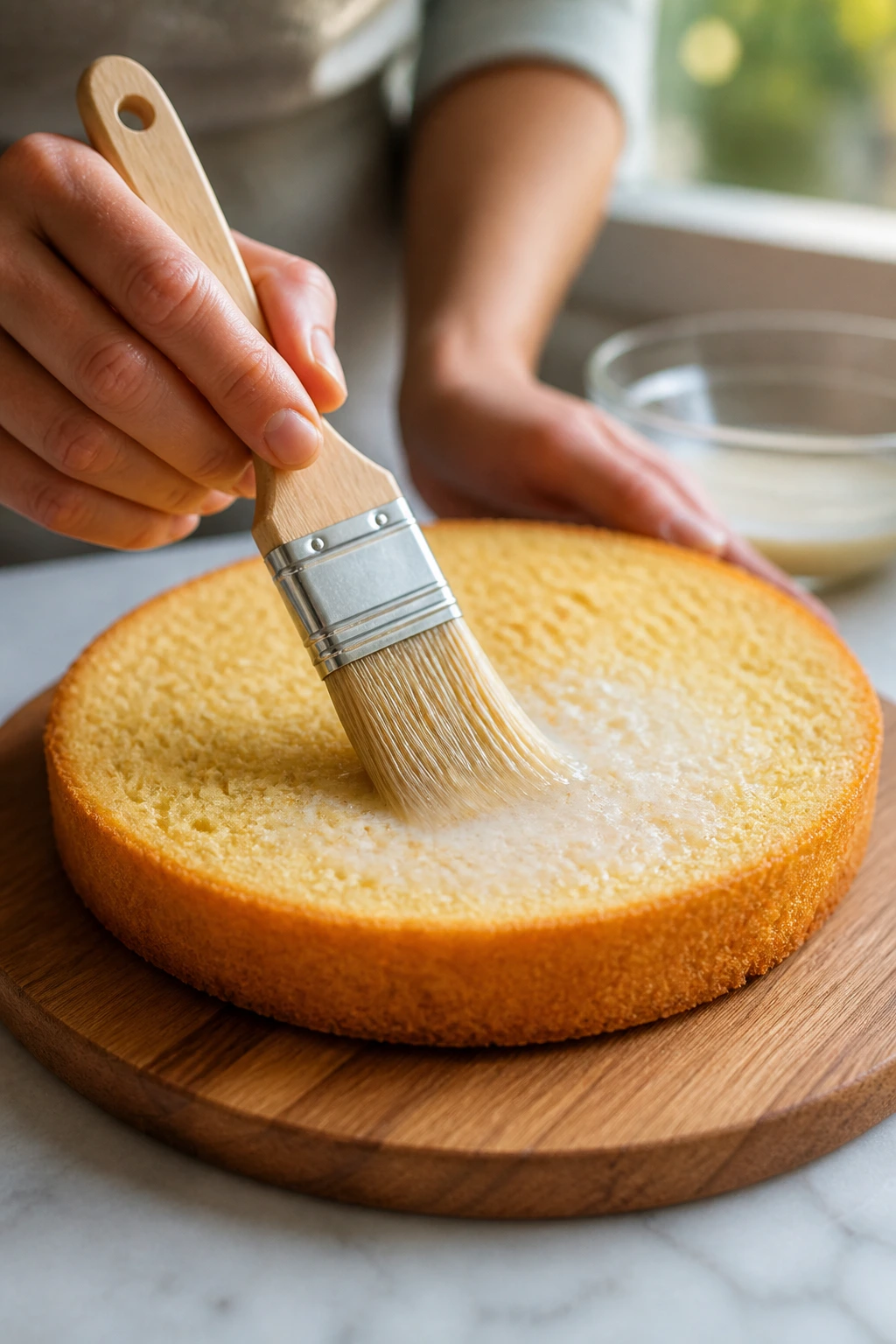
Flavor Enhancement: Brush each cooled layer with 1 to 2 tablespoons of vanilla milk — just milk mixed with a few drops of vanilla — if you want a slightly softer crumb and a more pronounced bakery-style flavor. It’s a tiny move, but it makes the cake taste less like it came straight from the mixing bowl and more like it had time to settle.
Customization: Swap the almond extract for 1 teaspoon lemon zest if you want the frosting and cake to feel brighter. Lemon and pastel candy can sound a little odd on paper, but the citrus keeps the sugar from flattening out your palate. You can also fold 1/2 cup white chocolate chips into the batter if you want more sweetness and a softer melt.
Serving Suggestions: Add a ring of candy around the top edge and leave the center open, or pile everything toward one side for a looser look. A few fresh berries tucked between the candy pieces make the cake feel less rigid. I also like a scatter of candy on the serving platter itself — it catches any crumbs and turns the whole plate into part of the presentation.
Make-It-Yours: For a slightly less sweet version, reduce the frosting sugar by 1/2 cup and add another pinch of salt. For a gluten-free version, use a 1:1 gluten-free baking flour with xanthan gum already included. For a stronger vanilla profile, use vanilla bean paste in place of the extract and keep the almond extract out altogether.
Common Mistakes That Turn a Pretty Cake into a Soggy One
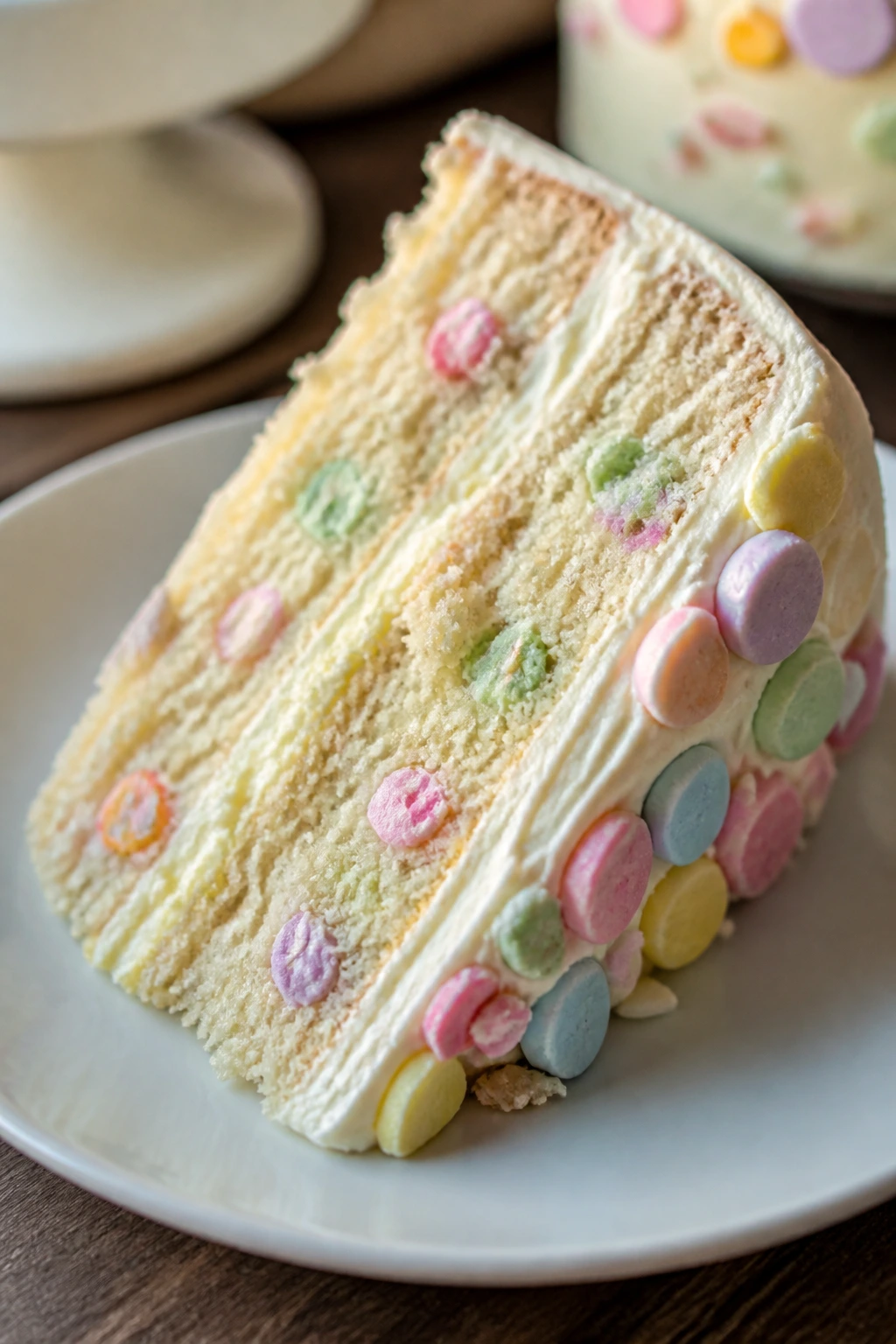
- Using candy pieces that are too small: Tiny bits melt into the batter and disappear. Chop large pieces into rough 1/2-inch chunks so they stay visible and give you actual texture.
- Frosting the layers while they’re still warm: Warm cake softens cream cheese frosting until it slides. Wait until the layers feel completely cool on the outside and slightly firm in the center.
- Using spreadable cream cheese from a tub: The low-fat or whipped stuff makes frosting loose and grainy. Block cream cheese gives you a thicker, cleaner finish.
- Overmixing after the flour goes in: The cake turns tight and a little rubbery. Once the dry streaks vanish, stop the mixer and finish by hand if needed.
- Skipping the flour toss on the candy: The candy pieces sink toward the bottom and leave the top layer bare. That one tablespoon of flour is there for a reason.
- Adding too much cream to the frosting: One extra spoonful can turn a firm frosting into a soft mess. Add cream drop by drop only if the frosting is too stiff to spread.
Variations That Keep the Same Spirit
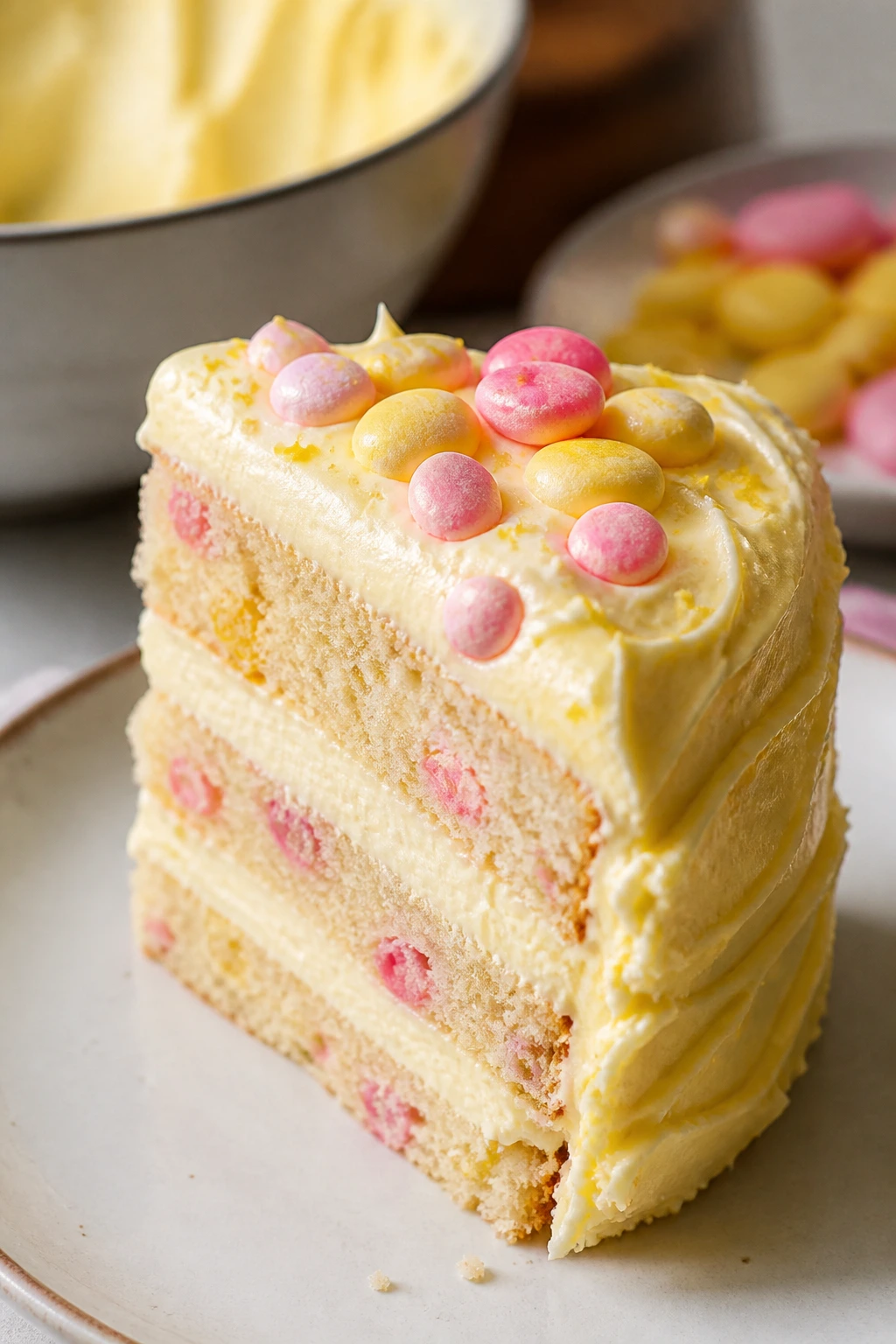
Lemon-Gloss Pastel Cake: Add 1 tablespoon lemon zest to the batter and replace the almond extract with 1 teaspoon lemon extract. The cake gets a sharper, cleaner edge, which works nicely if you prefer dessert that doesn’t lean quite so sweet.
Strawberry Milk Cake: Replace 1/4 cup of the whole milk with strawberry milk and fold in 1/2 cup freeze-dried strawberries, crushed fine. The frosting stays the same, but the cake takes on a pink-leaning, berry-candy flavor that plays well with the pastel pieces.
Cupcake Parade: Turn the batter into 24 cupcakes and bake at 350°F for 18 to 20 minutes. Frost with a piping bag or a spooned swirl, then top each cupcake with 2 or 3 candy pieces so the finish stays tidy.
Blue-Edge Vanilla Cake: Leave the cake base plain vanilla, then tint the frosting with the tiniest touch of blue food coloring and decorate with pale blue and white candy. The flavor stays familiar, but the look shifts into something a little more polished and less busy.
Orange Cream Version: Add 1 tablespoon finely grated orange zest to the batter and use orange extract in place of almond. It tastes brighter and slightly warmer, especially if you serve the cake with berries on the side.
Storage, Make-Ahead, and Freezing Without Ruining the Texture
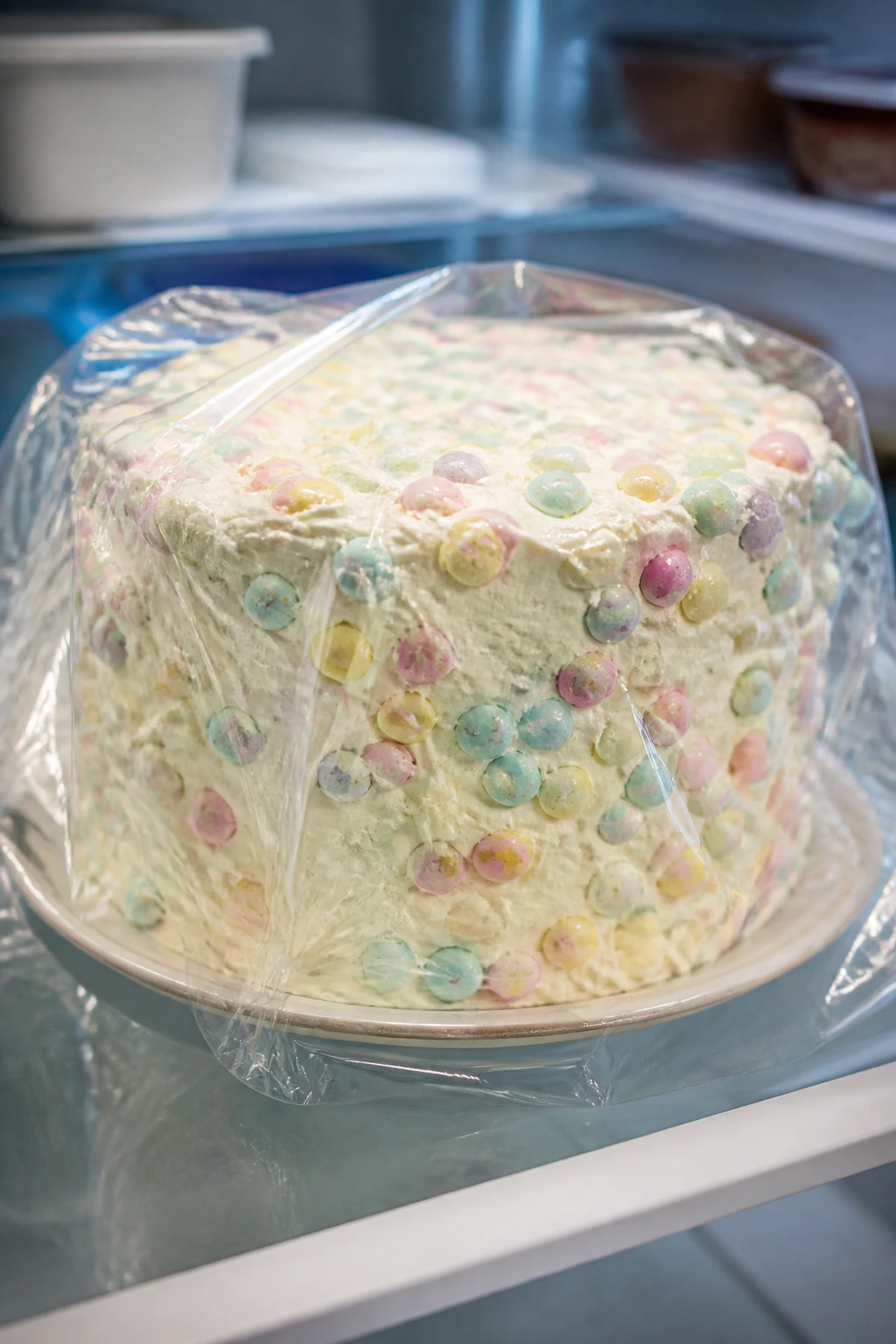
This cake needs a little care once the frosting is on because cream cheese frosting doesn’t love long stretches at room temperature. If the cake is sitting out for a party, keep it under 2 hours at room temperature. After that, move it to the fridge. The frosting firms up there, which is helpful, but the cake also dries out if you leave it uncovered.
For the fridge, cover the cake loosely with a cake dome or wrap the cut edges well with plastic wrap. It keeps 3 to 4 days refrigerated. The candy on top may soften a bit by day three, especially if the fridge runs humid, but the flavor stays good. Bring slices to room temperature for 20 to 30 minutes before serving so the frosting loses that cold, slightly stiff bite.
The layers freeze well before frosting. Wrap each completely cooled layer in plastic wrap, then a layer of foil, and freeze for up to 2 months. Thaw them in the fridge overnight before assembling. Frosting can also be made ahead and chilled for 3 days; just beat it briefly after it softens to bring back the texture. If you want to freeze the fully frosted cake, slice it first, chill the slices until firm, then wrap them individually. That’s the easiest way to keep the finish neat when you thaw.
A cake like this does improve a bit overnight because the crumb settles and the frosting firms. The candy loses some crunch after a day or two, though, so if you care most about texture, decorate with a portion of the candy right before serving.
Questions People Ask Before Baking It
Can I use whipped cream cheese instead of block cream cheese?
I wouldn’t. Whipped cream cheese contains more air and often more moisture, which makes the frosting softer and less stable. Block cream cheese gives you the sturdy, smooth finish this cake needs.
Why did my candy sink to the bottom?
Usually the batter was too loose or the candy wasn’t coated in flour. Toss the candy with the measured tablespoon of flour, and don’t overmix the batter once the flour goes in. A thicker, well-creamed batter helps keep the pieces suspended.
Can I make this as a sheet cake?
Yes. A 9×13-inch pan works well, though you’ll want to watch the bake time closely and start checking at about 28 minutes. The frosting amount stays about the same, but you can spread it more simply and top the whole cake with candy instead of layering.
Do I need the almond extract?
No, but it adds a bakery-style note that tastes good with candy and cream cheese frosting. If you skip it, replace it with another 1/2 teaspoon vanilla so the cake doesn’t taste flat.
How do I keep the frosting from turning runny?
Start with cool cream cheese and room-temperature butter, not warm butter. Beat the cream cheese and butter until smooth before adding powdered sugar, then stop as soon as the frosting looks spreadable. If the bowl feels warm, chill it for 10 minutes before finishing.
Can I make the cake layers ahead of time?
Yes, and I recommend it if you’re hosting. Bake the layers, cool them fully, wrap them well, and leave them at room temperature overnight or freeze them for longer storage. Frosting a fully cooled layer cake is easier than trying to rush the job.
What if I only have all-purpose flour?
You can use it in a pinch, but the crumb will be a little denser. If you want a closer match to cake flour, remove 4 tablespoons from each 2 cups of all-purpose flour and replace them with 4 tablespoons cornstarch, then sift well.
A Cake That Earns Its Confetti
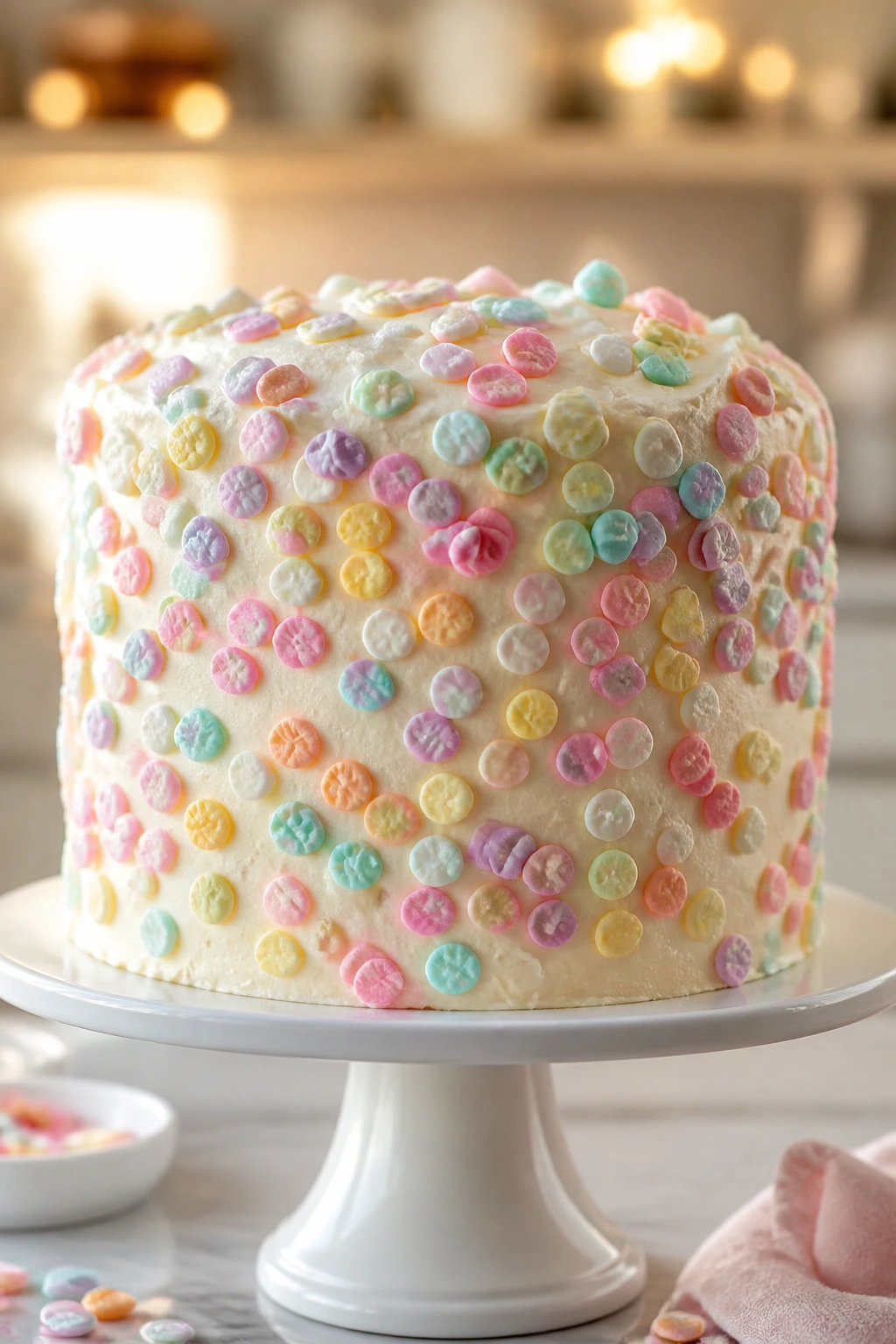
There’s a reason I keep coming back to cakes like this. They look playful, but the good ones don’t taste childish. The vanilla crumb gives you softness. The cream cheese frosting brings the tang. The pastel candy adds crunch, color, and just enough surprise to make the second slice feel earned.
The thing to remember is that every part has a job. If the batter is handled gently, the layers stay tender. If the frosting is kept cool, it spreads cleanly. If the candy is chopped and floured, it stays put instead of drifting to the bottom of the pan. Get those pieces right, and the cake lands where it should: cheerful on the outside, balanced on the plate.
Decadent Pastel Candy Cake with Cream Cheese Frosting — Recipe Card
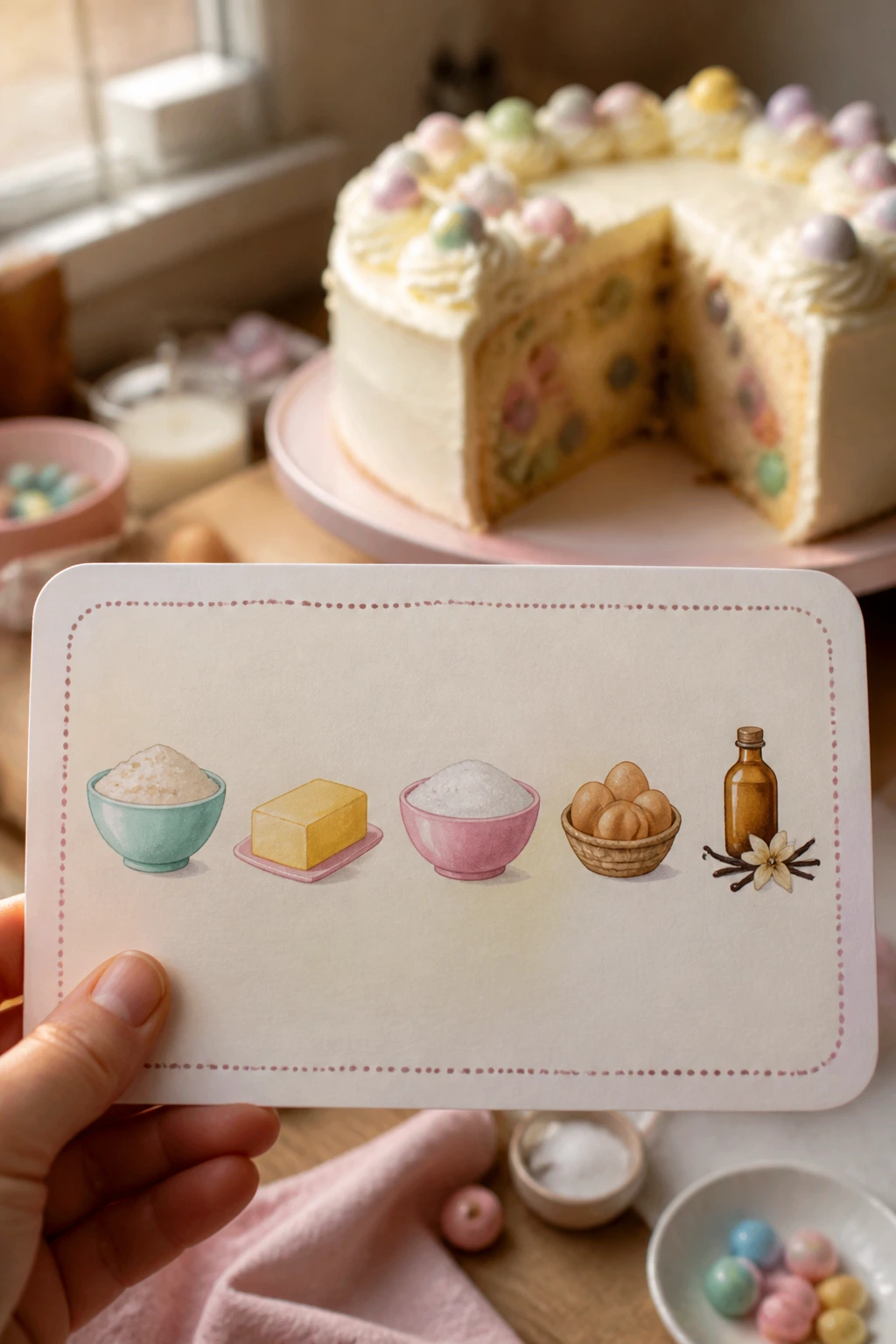
Recipe Name: Decadent Pastel Candy Cake with Cream Cheese Frosting
Description: A soft vanilla layer cake studded with pastel candy-coated chocolates and finished with tangy cream cheese frosting. The crumb stays tender, the frosting slices cleanly, and every piece has a little crunch.
Prep Time: 35 minutes
Cook Time: 30 to 35 minutes
Total Time: 1 hour 10 minutes active, plus cooling and chilling time
Course: Dessert
Cuisine: American
Servings: 12 slices
Calories: About 520 kcal per serving
Ingredients
For the Cake Layers:
- 2 1/4 cups cake flour
- 2 1/2 teaspoons baking powder
- 1/2 teaspoon baking soda
- 3/4 teaspoon fine salt
- 1 cup unsalted butter, softened to cool room temperature
- 1 3/4 cups granulated sugar
- 4 large eggs, room temperature
- 2 teaspoons pure vanilla extract
- 1/2 teaspoon almond extract
- 1 cup sour cream, room temperature
- 1/2 cup whole milk, room temperature
- 1 1/2 cups pastel candy-coated chocolates, chopped if large
- 1 tablespoon all-purpose flour, for tossing the candy
For the Cream Cheese Frosting:
- 16 ounces full-fat cream cheese, softened but still cool
- 1 cup unsalted butter, softened
- 5 cups powdered sugar, sifted
- 2 teaspoons pure vanilla extract
- 1/4 teaspoon fine salt
- 1 to 2 tablespoons heavy cream, only if needed
For the Finish:
- 1/2 cup pastel candy-coated chocolates
- 2 tablespoons pastel sprinkles, optional
- Tiny pinch of flaky salt, optional
Instructions
- Preheat the oven to 350°F (175°C) and prepare two 8-inch round cake pans with butter, parchment circles, and flour.
- Whisk together the cake flour, baking powder, baking soda, and salt.
- Beat the butter and granulated sugar until pale and fluffy, about 3 to 4 minutes.
- Add the eggs one at a time, then mix in the vanilla and almond extracts.
- Stir the sour cream and milk together.
- Add the dry ingredients in three additions, alternating with the sour cream mixture, mixing on low just until combined.
- Toss the candy-coated chocolates with the flour and fold them into the batter.
- Divide the batter between the pans and smooth the tops.
- Bake for 30 to 35 minutes, until the cakes spring back lightly and a toothpick comes out with moist crumbs.
- Cool in the pans for 10 minutes, then turn out onto a wire rack and cool completely.
- Beat the cream cheese and butter until smooth.
- Add the powdered sugar, vanilla, salt, and heavy cream as needed until the frosting is spreadable.
- Frost between the layers, crumb coat, chill briefly, then frost the outside of the cake.
- Decorate with the remaining candy and sprinkles, then chill before slicing for the cleanest cuts.
Notes: Keep the cake chilled if it will sit out for more than 2 hours. For a brighter flavor, add lemon zest to the batter. For the neatest slices, use a warm knife wiped clean between cuts.