



Rich chicken pot pie with cream cheese frosting sounds like a dare until the first forkful lands on your tongue. The crust is buttery and crisp, the filling is thick enough to sit on a spoon for a second before sliding, and the frosting — yes, frosting — brings a cold, tangy finish that makes the whole thing feel sharper and less heavy than a standard pot pie.
Nope, this is not sweet frosting. The topping here is savory: cream cheese, sour cream, chives, garlic, black pepper, and a little lemon, whipped until smooth and pipable. It goes on after the pie has had a short rest, so it keeps its shape instead of melting into a puddle. That tiny choice changes the whole dish.
Most chicken pot pies fail in the same two places. The filling is either thin enough to run, or the crust gets so soft on the bottom that you end up eating stew trapped under pastry. The version here fixes both problems with a proper stovetop thickening step, cooked chicken that doesn’t need a long bake, and a cream-cheese-enriched sauce that stays plush instead of gluey.
Why This Chicken Pot Pie Feels Rich Instead of Heavy
- Thick, spoon-coating filling: The sauce gets its body from a flour roux, milk, stock, and a small amount of cream cheese, so it cuts cleanly instead of sloshing around in the shell.
- Savory frosting contrast: A chilled chive-and-garlic cream cheese topping gives each bite a cool, tangy edge that keeps the butter and pastry from wearing you out halfway through the slice.
- Fast use for cooked chicken: Rotisserie chicken or leftover roast chicken drops right in, which means the pie tastes slow-cooked without asking you to babysit raw meat.
- Crisp crust protection: Cooling the filling for a few minutes before assembly keeps steam from turning the bottom crust soggy before the oven can set it.
- Built for neat slices: A 9-inch deep-dish pie with a thick filling and a short rest time cuts into clean wedges instead of collapsing into a heap on the plate.
Timing, Yield, and the Best Moment to Pipe the Frosting
Yield: Serves 6 to 8
Prep Time: 30 minutes
Cook Time: 45 minutes
Total Time: 1 hour 15 minutes
Chill/Rest Time: 15 minutes
Difficulty: Intermediate — the steps are straightforward, but the filling, crust, and savory frosting each need a little attention.
Best Served: Warm, after the pie rests 10 to 15 minutes, with the frosting piped onto slices or around the edge of the pie.
The frosting is fastest to handle when it is made while the pie bakes. Keep it chilled until the filling has set and the crust is out of the oven. If the pie is piping hot, the frosting softens too fast and starts to slide. A short rest fixes that.
The Grocery List for the Filling, Crust, and Frosting
For the Filling
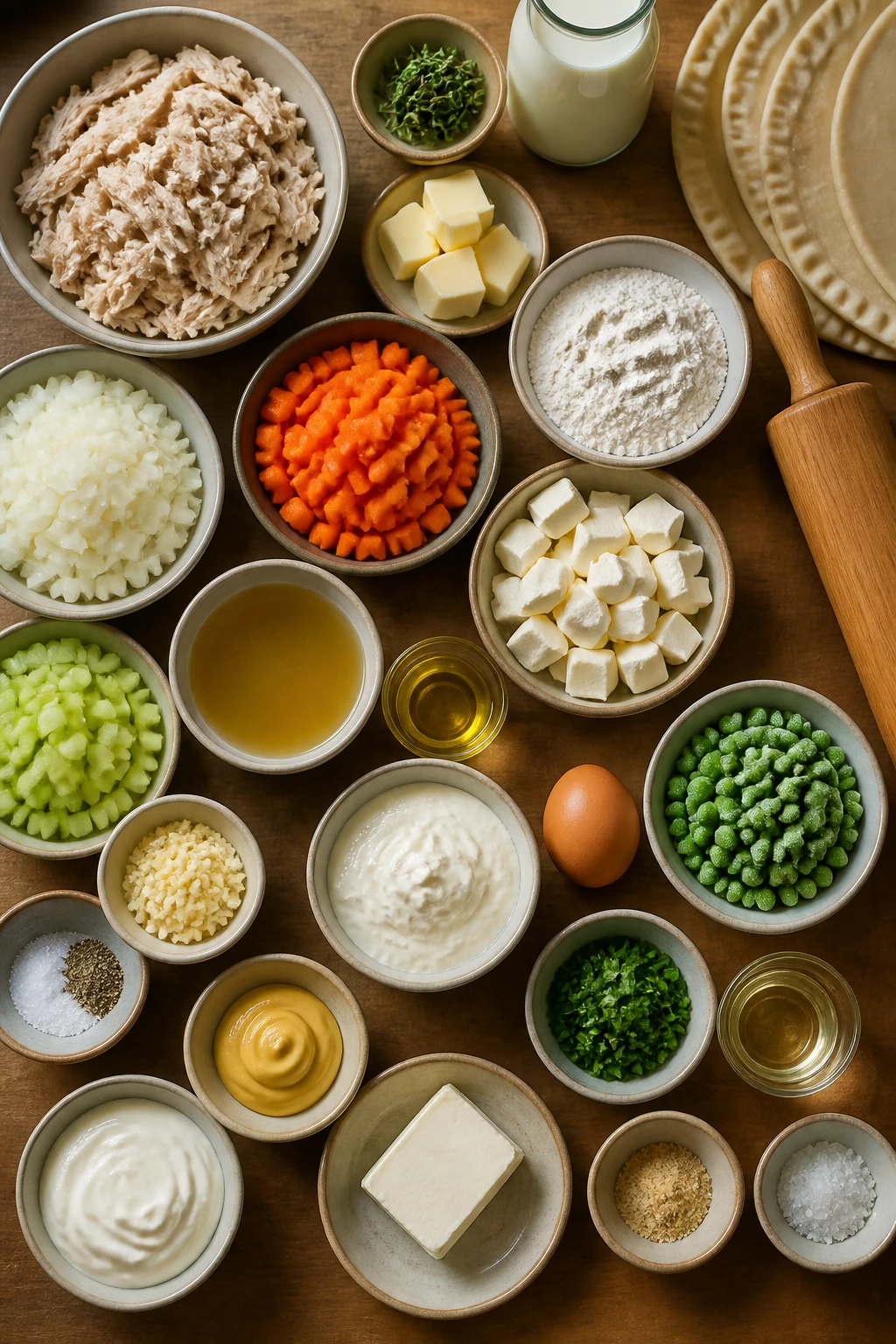
- 4 cups cooked chicken, shredded or chopped, about 1 1/2 pounds (rotisserie chicken or leftover roast chicken works well)
- 2 tablespoons unsalted butter
- 1 tablespoon olive oil
- 1 medium yellow onion, diced
- 2 medium carrots, diced small
- 2 celery stalks, diced small
- 3 cloves garlic, minced
- 1/3 cup all-purpose flour
- 2 cups low-sodium chicken stock
- 1 cup whole milk or half-and-half
- 4 ounces cream cheese, softened and cut into cubes
- 1 teaspoon Dijon mustard
- 1 teaspoon fresh thyme leaves or 1/2 teaspoon dried thyme
- 1 cup frozen peas
- 2 tablespoons chopped fresh parsley
- 1 tablespoon dry sherry or white wine, optional
- 1 1/2 teaspoons kosher salt, divided
- 1/2 teaspoon black pepper, divided
For the Crust
- 2 refrigerated pie crusts, thawed according to package directions
- 1 large egg
- 1 tablespoon whole milk or cream
- 1 pinch flaky salt, optional
For the Savory Cream Cheese Frosting
- 8 ounces cream cheese, softened
- 2 tablespoons unsalted butter, softened
- 1/4 cup sour cream
- 1 tablespoon finely chopped chives
- 1 teaspoon lemon juice
- 1/2 teaspoon garlic powder
- 1/2 teaspoon kosher salt
- 1/4 teaspoon black pepper
- 1 to 2 tablespoons milk, as needed for piping consistency
What Each Ingredient Does Once the Oven Is Hot
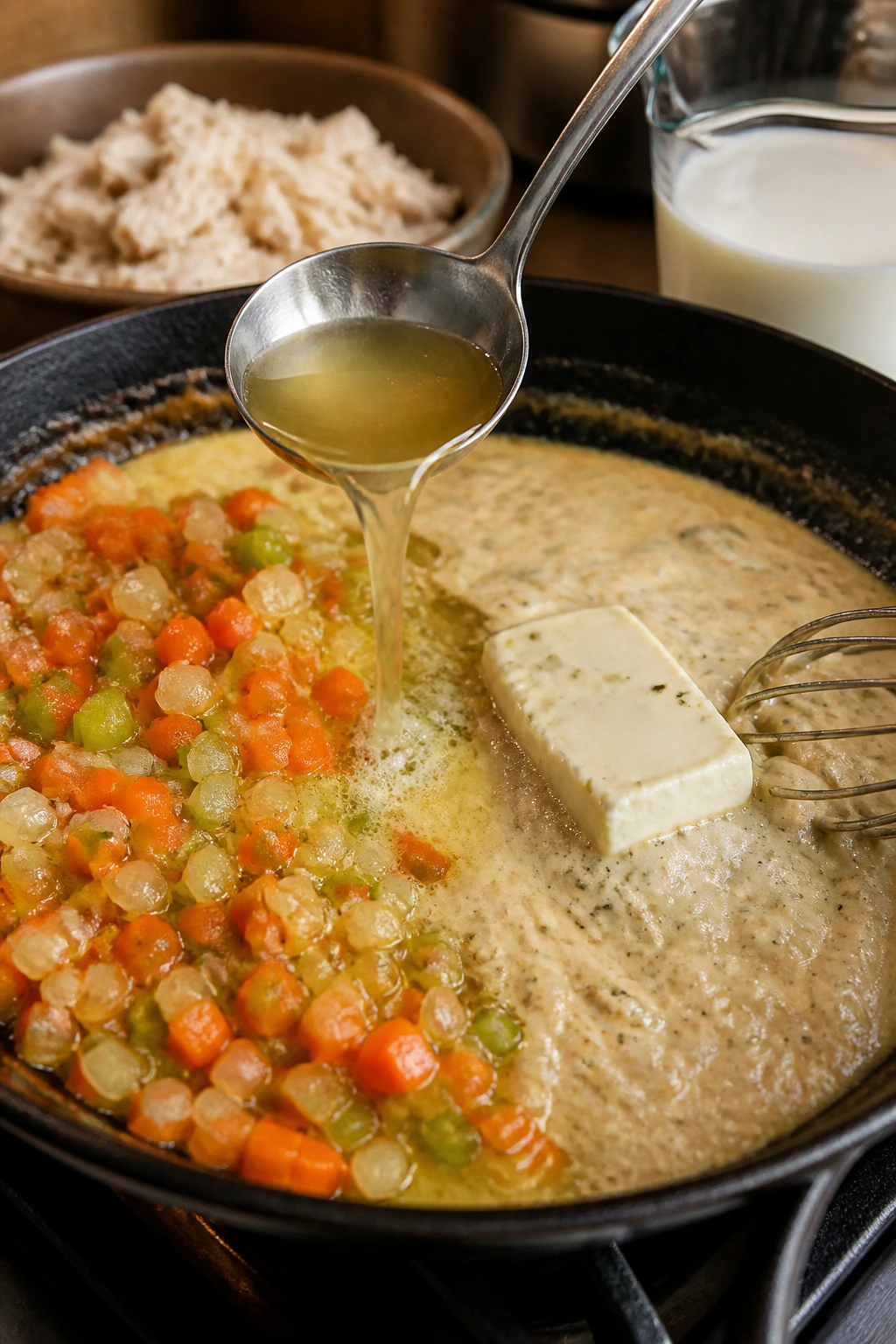
Chicken and vegetables
What to use: 4 cups cooked chicken, 1 onion, 2 carrots, 2 celery stalks, and 3 garlic cloves.
Preparation: Shred the chicken into loose bite-size pieces and dice the vegetables small so they soften in the time it takes the sauce to come together.
Substitutions: Cooked turkey works the same way, and a mix of leftover roast chicken and rotisserie meat is fine if that’s what’s in the fridge.
Tips: Use chicken that is seasoned, not plain supermarket shreds with no flavor; the filling tastes flatter when the chicken itself is dull.
Creamy sauce base
What to use: Butter, oil, flour, stock, milk, cream cheese, Dijon, thyme, peas, parsley, and the optional sherry.
Preparation: Measure everything before you start; once the roux is in the pan, the sauce comes together quickly.
Substitutions: Half-and-half makes the sauce fuller, while whole milk keeps it lighter; if you need a non-dairy direction, the texture changes and the pie stops tasting like this recipe.
Tips: Full-fat block cream cheese beats whipped tub cream cheese every time here. Whipped cream cheese can go thin and grainy under heat.
Pie crust
What to use: Two refrigerated pie crusts, one egg, and a spoonful of milk for the wash.
Preparation: Let the dough sit just long enough to stop cracking, then keep it cold until you assemble the pie.
Substitutions: Homemade all-butter pie dough works if you already make it well, and a biscuit topping can replace the top crust if you want a different finish.
Tips: A cold crust is easier to crimp and gives you a cleaner edge. Warm dough tears, then you start patching, and that is never the fun part of pie making.
Savory cream cheese frosting
What to use: Cream cheese, butter, sour cream, chives, lemon juice, garlic powder, salt, pepper, and a little milk if needed.
Preparation: Soften the dairy so it whips smooth, then chill the frosting briefly before piping if your kitchen is warm.
Substitutions: Crème fraîche can stand in for sour cream, and dill can replace part of the chives if you want a brighter, greener flavor.
Tips: The frosting should taste a touch salty and sharply tangy on its own. Once it hits the warm pie, both of those notes calm down.
The Tools That Make the Pie Less Fussy
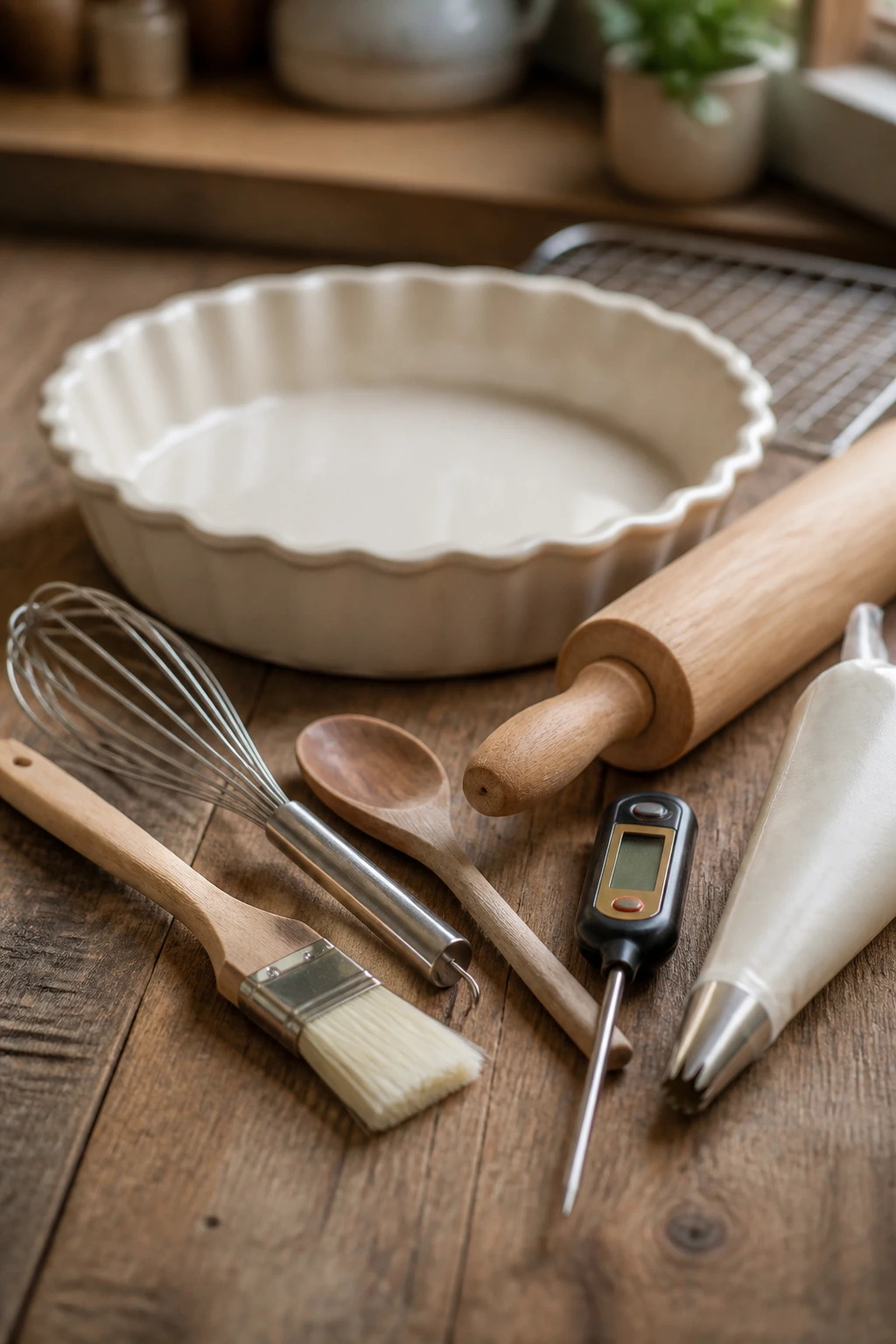
- 9-inch deep-dish pie plate — The deeper dish gives the filling room to mound without spilling over.
- Large skillet or Dutch oven — A wide cooking surface helps the vegetables soften evenly and gives the sauce room to thicken.
- Wooden spoon or silicone spatula — You want something that can scrape the pan bottom clean while the roux cooks.
- Rolling pin — Useful if the crust needs a few extra passes to fit the pie plate.
- Pastry brush — For the egg wash, which gives the crust a deep brown sheen.
- Rimmed baking sheet — Set the pie on it in the oven to catch drips and keep the bottom from baking unevenly.
- Instant-read thermometer — Not mandatory, but handy if you want to check that the filling is hot all the way through.
- Piping bag or zip-top bag — The easiest way to put the savory frosting on slices without smearing it.
- Wire rack — Lets the pie cool evenly so steam doesn’t trap under the crust.
How to Build a Thick Filling on the Stove
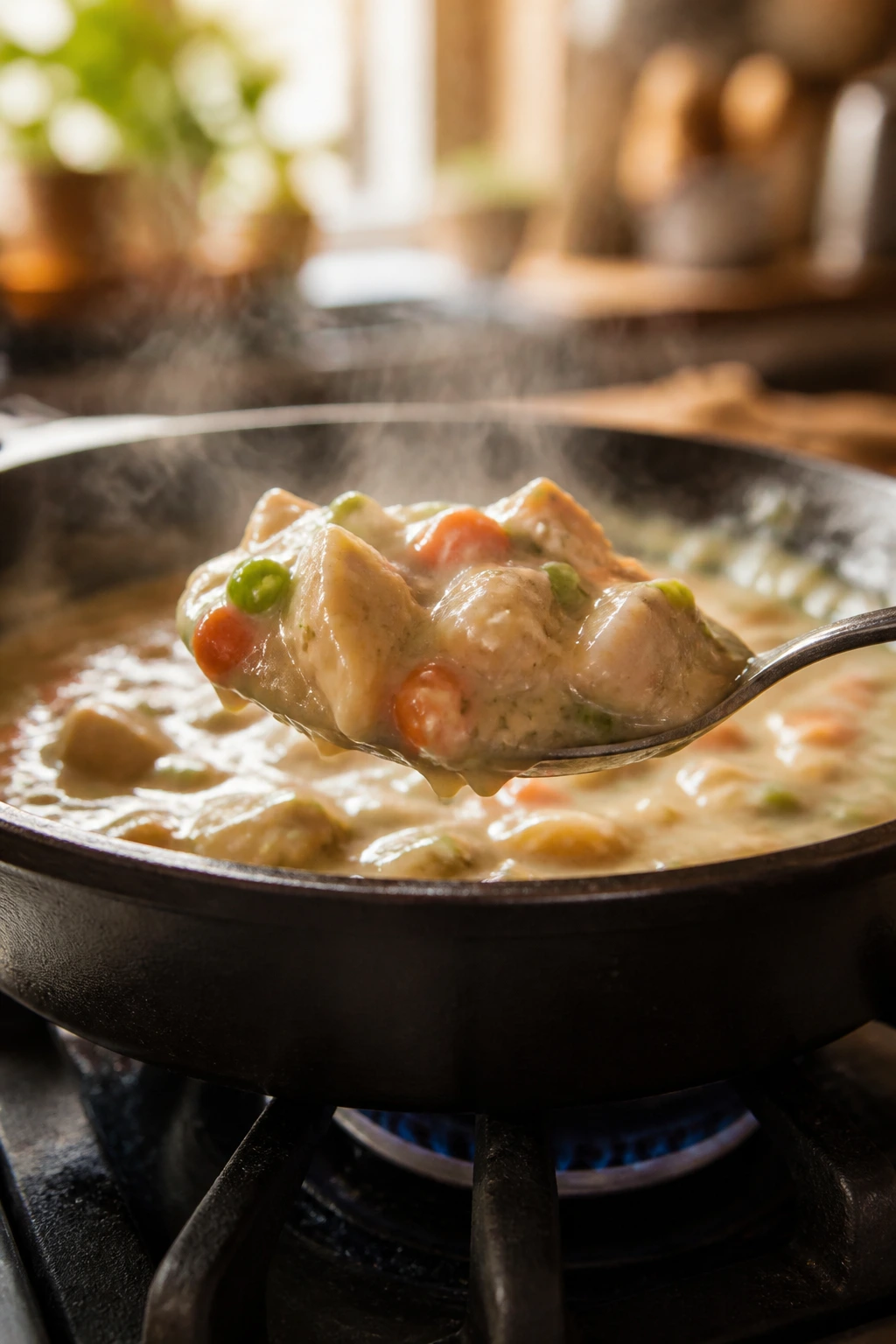
Cook the filling until it stands up on a spoon
-
Soften the vegetables: Melt the butter and olive oil in a large skillet over medium heat. Add the onion, carrots, celery, 1 teaspoon of the salt, and 1/4 teaspoon of the black pepper. Cook for 6 to 8 minutes, stirring often, until the onion looks translucent and the carrots have started to lose their raw edge but still have a little bite.
-
Wake up the garlic and flour: Add the minced garlic and cook for 30 seconds, just until it smells sweet and sharp instead of raw. Sprinkle the flour over the vegetables and stir for 1 minute so the flour coats everything and loses its dusty smell. The mixture should look pasty, not wet.
-
Whisk in the liquids: Slowly pour in the stock while whisking or stirring constantly, then add the milk or half-and-half. Drop in the cream cheese cubes, Dijon mustard, thyme, the remaining salt, and the remaining pepper. Keep the heat at medium and stir until the cream cheese melts and the sauce turns smooth and glossy, about 3 to 5 minutes.
-
Thicken and finish the filling: Add the chicken, peas, parsley, and the optional sherry. Simmer for 2 to 3 minutes, just until the chicken is hot and the peas are bright green. The filling should coat the back of a spoon and hold a line for a moment if you drag a finger through it. If it pours like soup, keep simmering.
-
Cool before baking: Take the pan off the heat and let the filling sit for 10 minutes. That small pause matters. Hot filling blows steam into the bottom crust and turns a good pie into a damp one.
How to Fill, Seal, and Bake the Crust
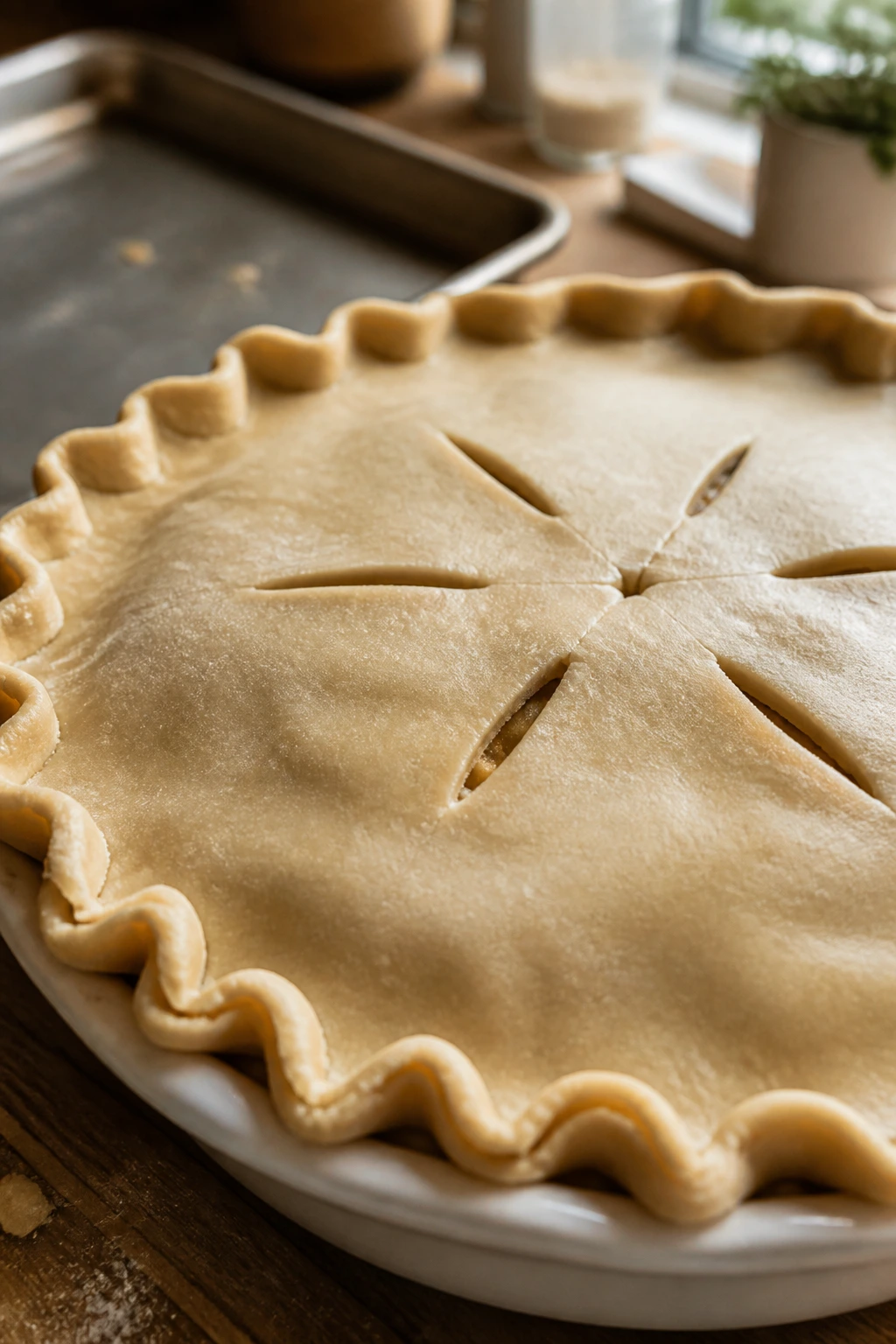
Assemble the pie like you mean to serve clean slices
-
Preheat and set up the crust: Heat the oven to 400°F (200°C) and set a rack in the lower third. Place a rimmed baking sheet on the rack while the oven heats if you want extra insurance against drips. Fit one pie crust into the deep-dish pie plate, letting the edges hang over slightly.
-
Add the filling and top crust: Spoon the cooled filling into the crust and mound it gently in the center. Lay the second crust over the top, trim the overhang to about 1 inch, then fold the top and bottom edges together and crimp them firmly. Cut 4 to 5 vents in the top so steam can escape.
-
Brush and bake: Beat the egg with the milk or cream, then brush it over the crust. Sprinkle with flaky salt if you like a little finish on top. Bake for 20 minutes at 400°F, then reduce the oven to 375°F (190°C) and bake for another 20 to 25 minutes, until the crust is deep golden and the filling bubbles through the vents. If the edges brown early, cover them loosely with foil strips.
-
Rest the pie: Transfer the pie to a wire rack and let it rest for 15 minutes before adding the frosting. The filling tightens during this rest, which makes the wedges hold together instead of leaking at the first slice.
How to Whip the Savory Cream Cheese Frosting
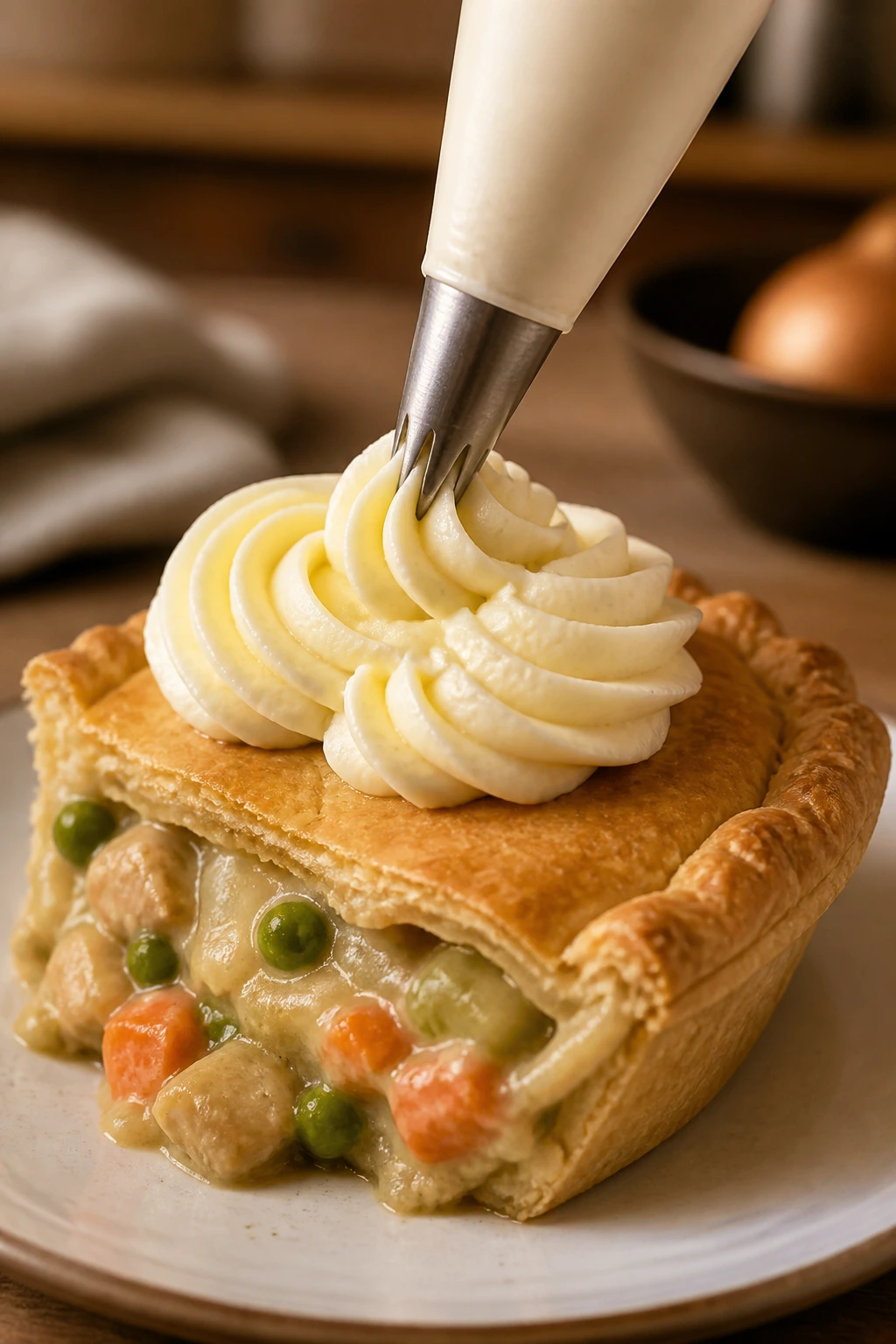
Make the frosting while the pie bakes, then chill it if needed
-
Beat the frosting base: In a medium bowl, beat the cream cheese and butter with a hand mixer until smooth, about 1 minute. Add the sour cream, chives, lemon juice, garlic powder, salt, and pepper. Beat again until the mixture looks fluffy and even.
-
Adjust the texture: Add milk 1 tablespoon at a time, beating after each addition, until the frosting is soft enough to pipe but still thick enough to hold a ridge. You want a texture that clings to the beaters in thick folds, not something that runs off like dressing. If it gets too loose, chill it for 10 minutes and beat briefly again.
-
Pipe and serve: Transfer the frosting to a piping bag or a zip-top bag with a corner snipped off. Pipe rosettes onto each plated slice, or run a thin decorative border around the edge of the pie if you prefer a full pie presentation. Add a little extra chopped chive on top and serve while the pie is still warm.
Serving the Pie So the Frosting Stays Neat
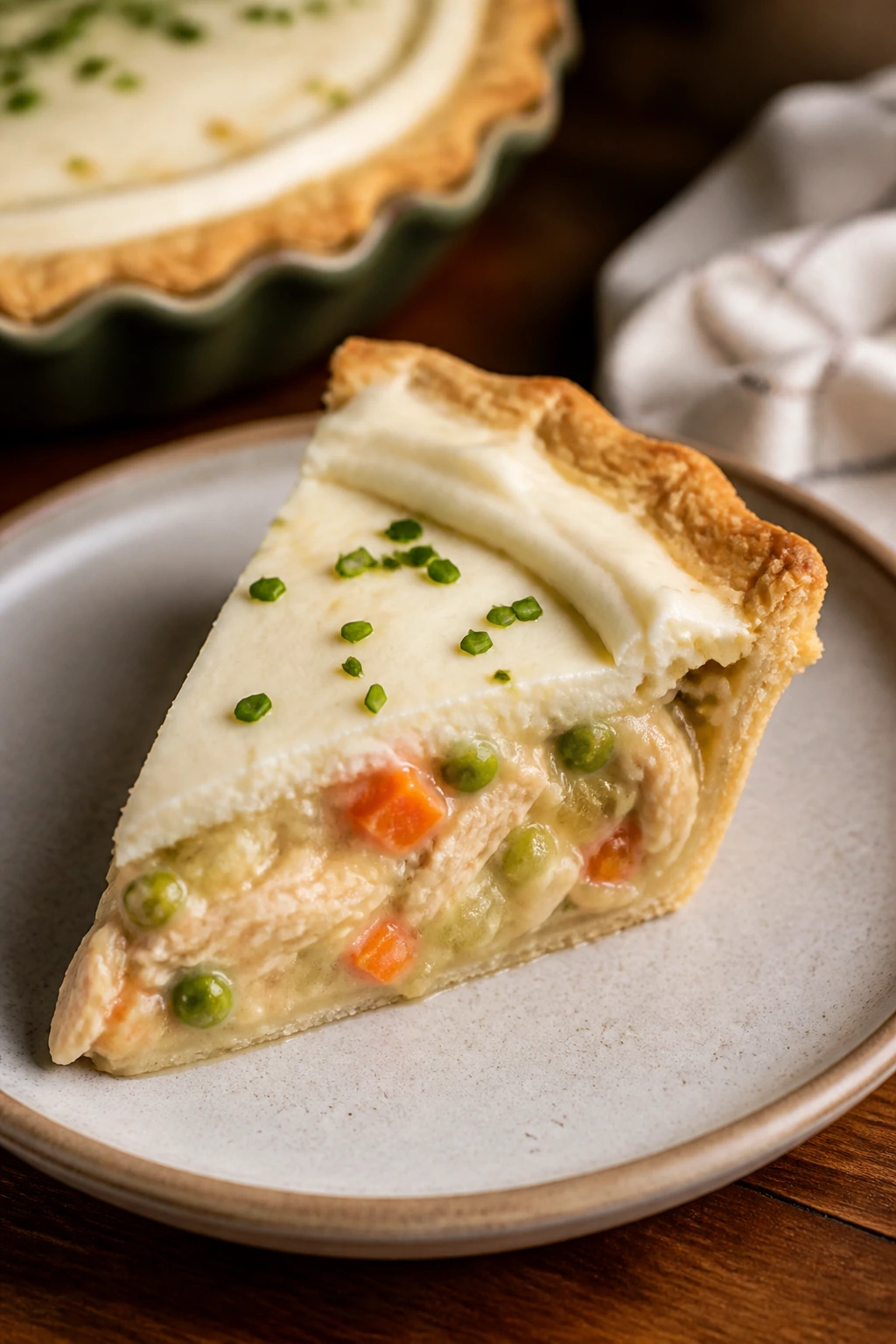
Presentation: The cleanest move is to plate the wedge first, then pipe the savory cream cheese frosting over the slice rather than across the whole pie. That keeps the crust crisp and makes the frosting look deliberate instead of melted. A few chive flecks on the frosting and one bare edge of crust on the plate make the whole thing look more finished.
Accompaniments: This pie wants something sharp or fresh beside it. I like a peppery arugula salad with lemon vinaigrette, roasted green beans with extra black pepper, or a simple cucumber salad with vinegar and dill. You do not need mashed potatoes here; the pie is already carrying plenty of weight.
Portions: Six generous wedges make sense if the pie is the main event. Cut it into eight if you are serving salad and a vegetable on the side, or if you want smaller portions for a buffet table. A deep-dish pie fills the plate fast, so aim for slices that are broad enough to show off the layers but not so wide that the frosting ends up buried under crumbs.
Beverage Pairing: A dry cider is a nice match because it cuts through the cream cheese and butter. If you want wine, reach for a crisp Sauvignon Blanc or a light Pinot Noir. For something non-alcoholic, cold sparkling water with lemon keeps the bite clean between forkfuls.
Small Tweaks That Improve Flavor and Texture
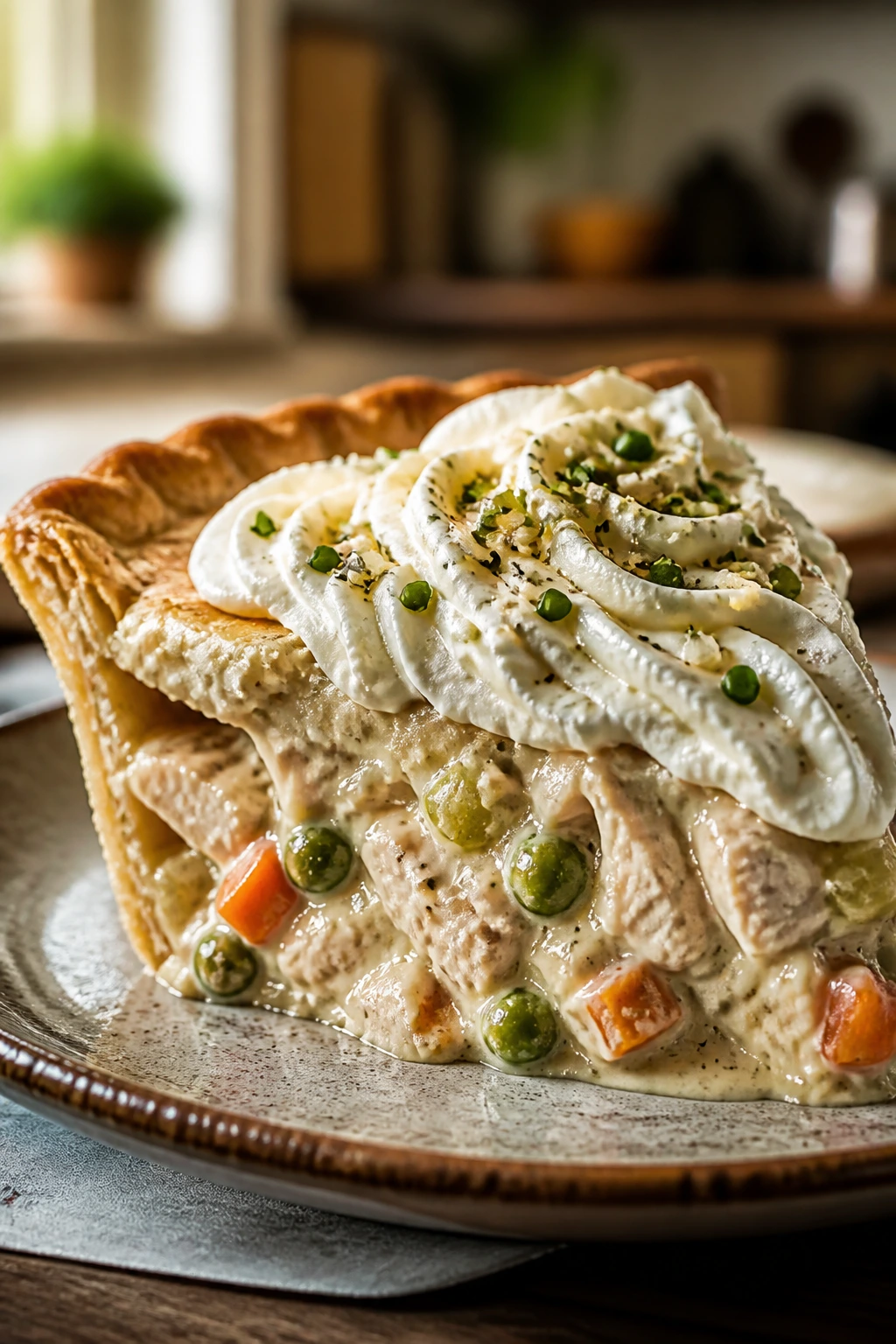
Flavor Enhancement: A teaspoon of apple cider vinegar or a little extra Dijon in the filling wakes up the sauce without making it taste sharp. Cream sauces can go quiet fast, and a tiny hit of acid brings the chicken, peas, and thyme back into focus.
Texture Insurance: Let the filling cool for 10 minutes before it goes into the crust. I know that feels like a small detail. It is not. Steam is the enemy of a crisp bottom, and hot filling turns the underside of the pie soft before the oven can set the crust.
Time-Saver: Use rotisserie chicken and store-bought pie crust, then spend your attention on the sauce and frosting. That is where the flavor lives anyway. The chicken needs to be tender, not heroic.
Frosting Control: Keep the frosting thick. If it seems stiff in the bowl, that is fine; add milk one teaspoon at a time and stop early. A frosting that is too loose slides around on warm pie and loses the piped shape that makes this dish memorable.
Mistakes That Turn the Pie Watery or the Frosting Grainy
-
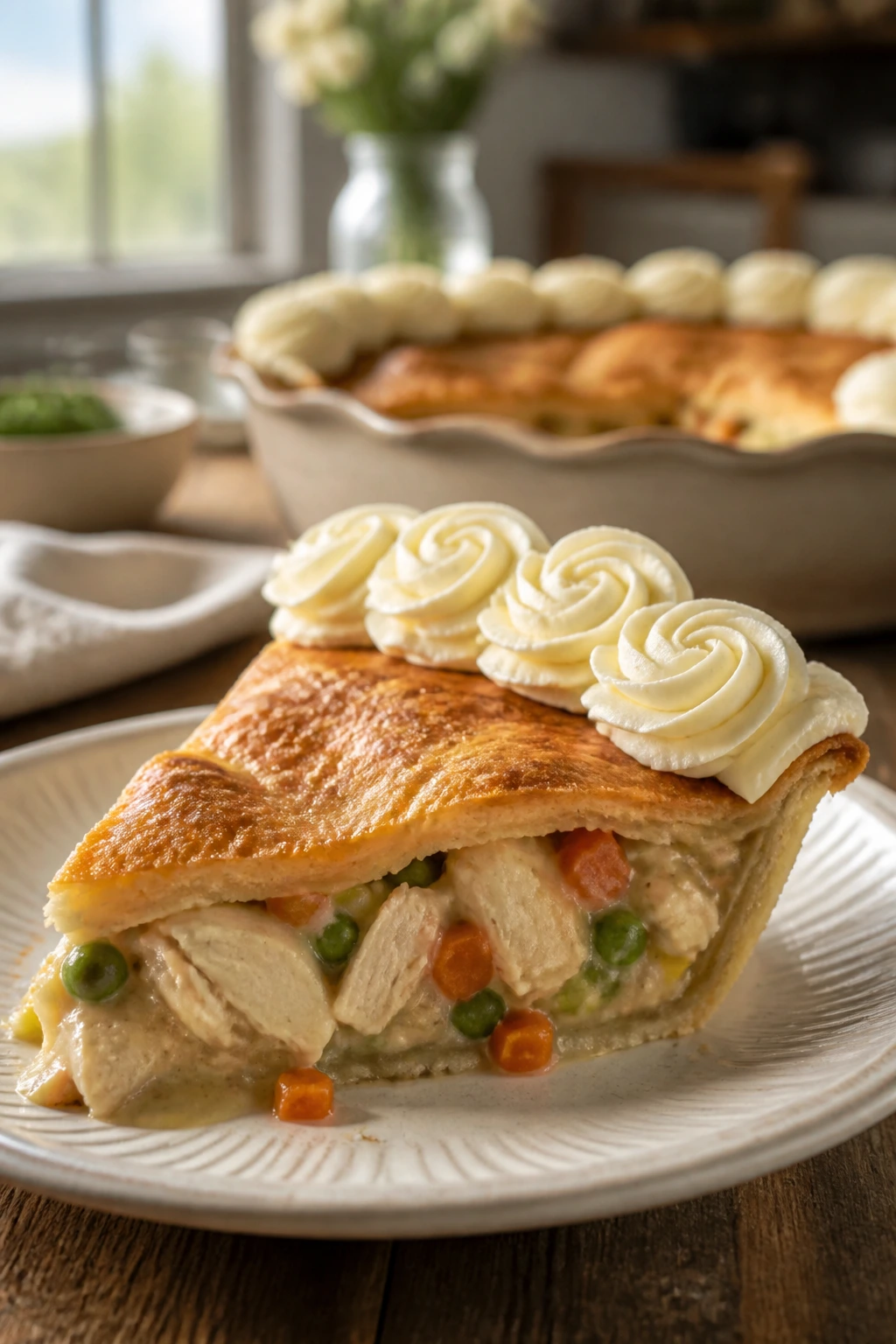
The filling is too thin. You’ll know it by the first slice: the bottom crust tears and liquid runs into the plate. Fix it by simmering the filling a few extra minutes before it goes into the pie, until it coats the spoon and looks almost too thick in the pan.
-
You use cold, whipped tub cream cheese. The sauce can turn grainy, and the frosting won’t hold its shape. Use block-style cream cheese and let it soften on the counter first so it blends smoothly.
-
The pie goes into the crust while the filling is still steaming hard. That steam has nowhere to go except into the bottom crust. Let the filling sit for 10 minutes before assembly, even if that feels annoyingly long.
-
The top crust browns before the filling bubbles. The smell is usually great, but the center may still be lagging behind. Tent the pie loosely with foil strips over the edges and, if needed, a sheet over the top for the final minutes.
-
The frosting is piped on a scorching-hot pie. It melts, spreads, and loses the neat swirl. Rest the pie first, then pipe the frosting onto the slice or the edge of the pie when the steam has slowed down.
-
You forget to season the filling in layers. Cream cheese softens salt, and chicken can taste flat if all the seasoning happens at the end. Season the vegetables, taste the sauce, then taste again after the chicken and peas go in.
Variations That Still Taste Like Chicken Pot Pie
Holiday Turkey Swap
Use 4 cups of chopped cooked turkey instead of chicken, and add 1/2 teaspoon chopped sage to the filling. Turkey stock works well here if you have it, but low-sodium chicken stock is fine. This version leans a little more toward a holiday leftovers pie without losing the creamy, savory center.
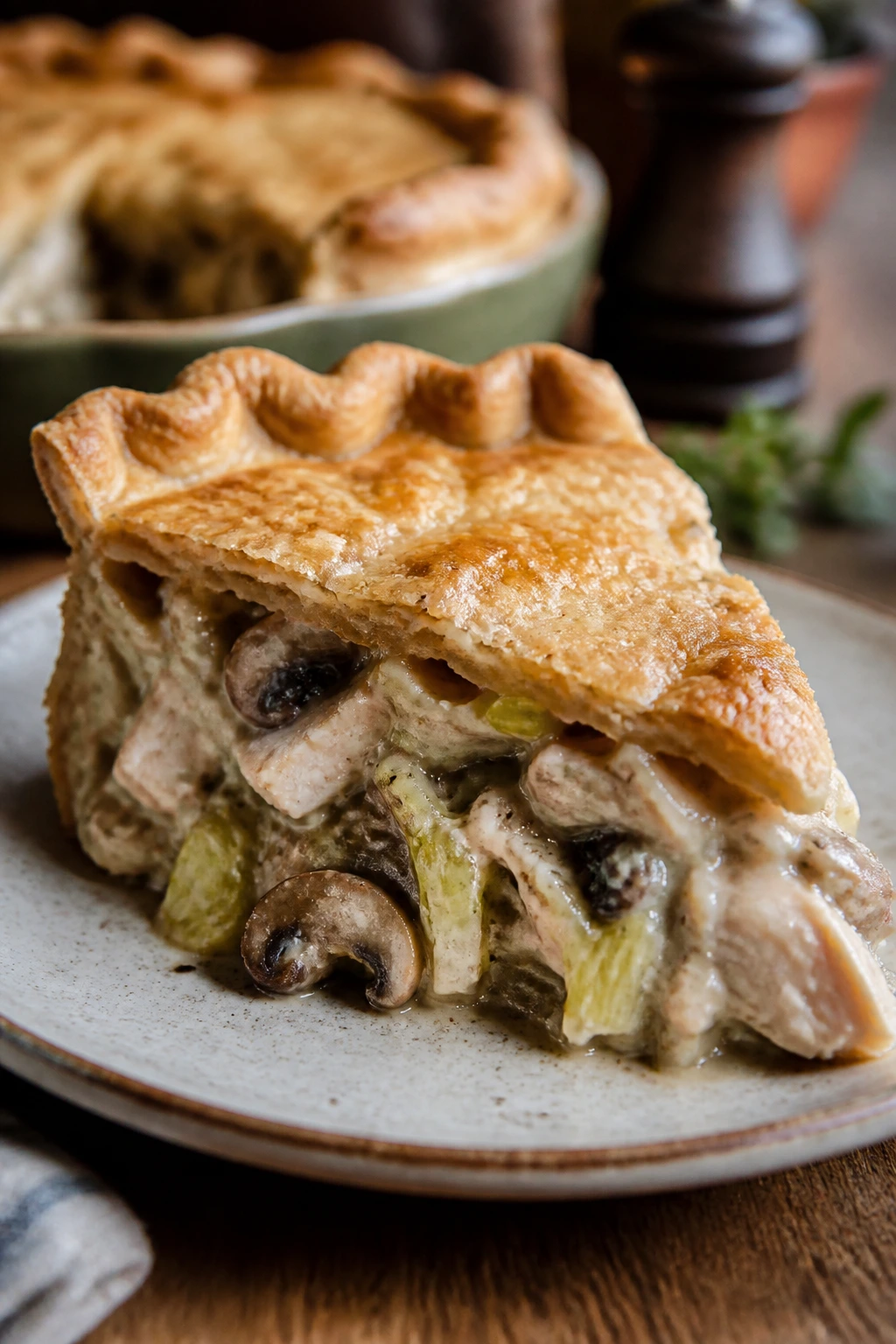
Leek and Mushroom Pie
Swap one carrot for 8 ounces of sliced mushrooms and replace half the onion with 1 small leek, well rinsed and sliced thin. The mushrooms add a deeper, woodsy note that makes the pie taste more grown-up and less plain. I like this one when I want the filling to feel a touch earthier.
Biscuit-Capped Shortcut
Skip the top pie crust and spoon the filling into the dish with only a bottom crust, then top it with 8 to 10 drop biscuits before baking. Pipe the cream cheese frosting on the biscuits after they cool for 10 minutes. The look changes, but the rich filling and tangy topping still make sense together.
Dill and Lemon Brightness
Swap half the chives in the frosting for fresh dill, and add 1/2 teaspoon lemon zest to the filling. This version tastes a little cleaner and lighter, especially if you’re serving the pie with a sharp salad. It is a good move when you want the cream cheese frosting to feel more herb-forward.
Make-Ahead, Storage, and Reheating
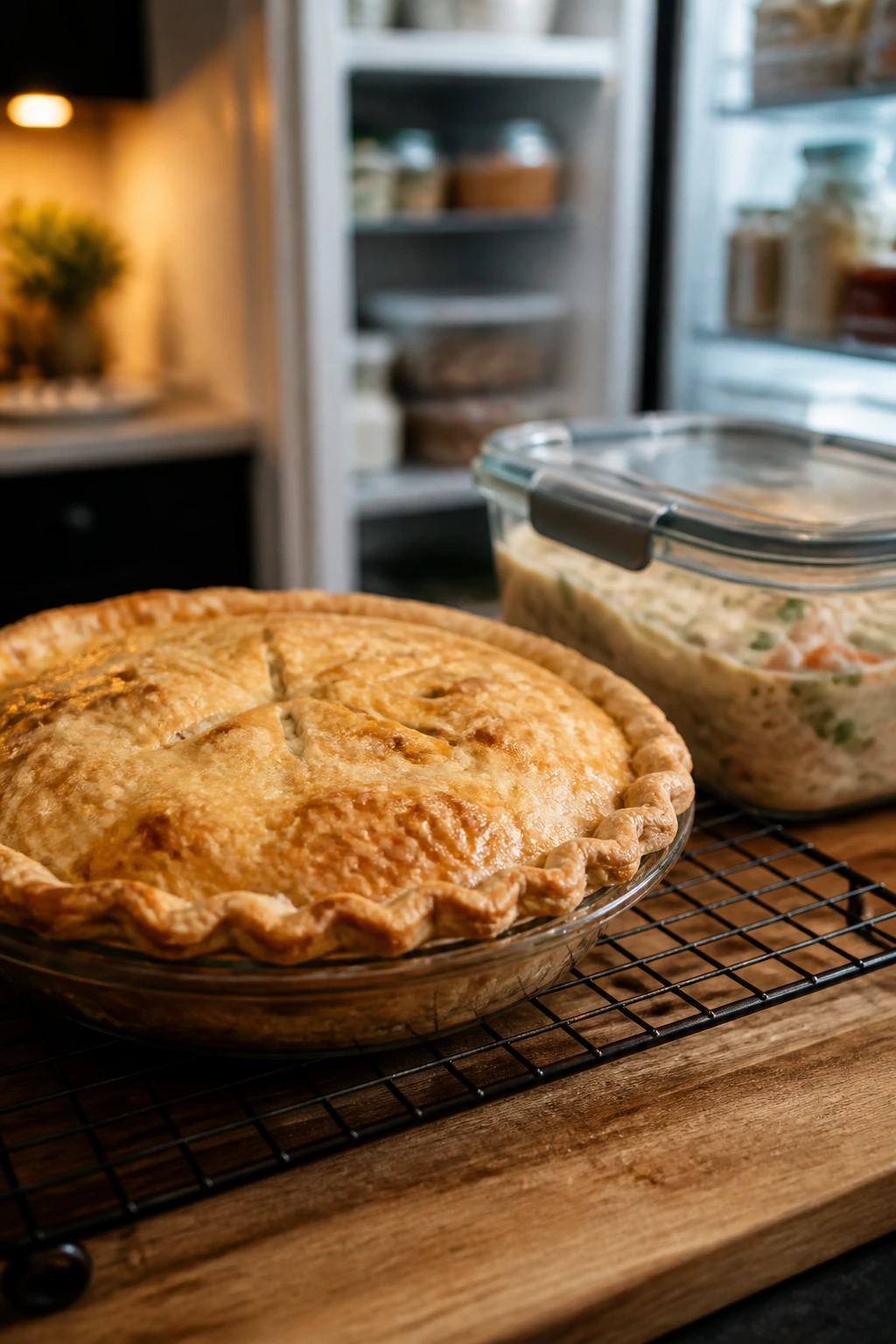
Make-Ahead: The filling can be cooked up to 2 days ahead and stored in the fridge in an airtight container. The frosting can also be made 2 to 3 days ahead; keep it covered and chilled, then beat it briefly before piping to loosen it back up. If you want to move even faster on baking day, you can cut the vegetables the night before and keep them cold in a covered container.
Refrigerator: Leftover baked pie keeps for up to 3 days in the fridge. Cover it loosely once it has cooled so the crust does not sweat and turn soft. If the frosting is already on the pie, expect the topping to soften a little; it still tastes good, but the shape will not be as sharp.
Freezer: A baked, cooled pie freezes for up to 2 months if it is wrapped tightly in foil and then placed in a freezer bag or container. For the cleanest result, freeze the pie without the frosting and make the topping fresh later. The frosting itself can be frozen for up to 1 month, but the texture is better if you make it fresh and keep it refrigerated instead.
Reheating: Reheat whole pie at 350°F (175°C) for 20 to 25 minutes, loosely covered with foil so the crust does not overbrown. Individual slices take about 12 to 15 minutes. The microwave works in a pinch, but it softens the crust and makes the frosting slump, which is not the point of the recipe. Add the frosting after reheating, or pipe it onto each warm slice right before serving.
Questions Home Cooks Usually Ask
Does the cream cheese frosting taste sweet?
No. It should taste savory, tangy, and a little salty, more like a whipped herb spread than dessert frosting. If you taste it on its own, it should remind you of a rich chive dip with a firmer texture.
Can I use rotisserie chicken?
Yes, and it is one of the easiest ways to make this pie. Pull the meat into bite-size pieces and use 4 cups total; if the meat is lightly seasoned already, the filling gets a deeper flavor without extra work.
Can I make the filling ahead of time?
You can make it 2 days in advance and keep it in the fridge. In fact, a chilled filling often behaves better in the crust because it is less likely to steam the bottom pastry before the oven sets it.
What if my filling still looks loose after simmering?
Keep it on the stove a little longer. The sauce should be thick enough to hold a clean line when you drag a spoon through it, and it will thicken slightly more as it cools. If it still looks runny after that, the pie needs another minute or two on the stove before you bake it.
Can I pipe the frosting over the whole pie?
You can, but I prefer piping it on the slices or around the edge after the pie rests. The whole-pie version is prettier in a picture and messier on the plate, especially if the pie is still carrying a lot of heat.
Do I have to use a deep-dish pie plate?
A standard pie plate can work if you reduce the filling a little, but a deep-dish pan gives you room to mound the filling without disaster at the seams. Since this recipe is called rich chicken pot pie, I would not try to cram it into a shallow dish unless you like spillovers.
Can I skip the bottom crust?
Yes, if you want a less fussy casserole-style version. Bake the filling in a buttered dish, cover it with a top crust or biscuits, and add the frosting after it rests. You lose some of the classic pie feel, but the flavor still lands.
How do I keep the frosting from melting into the crust?
Let the pie rest first, and make sure the frosting is thick, not pourable. If the kitchen is warm, chill the frosting for 10 minutes before piping and add it only after the steam from the pie has slowed down.
One Last Slice
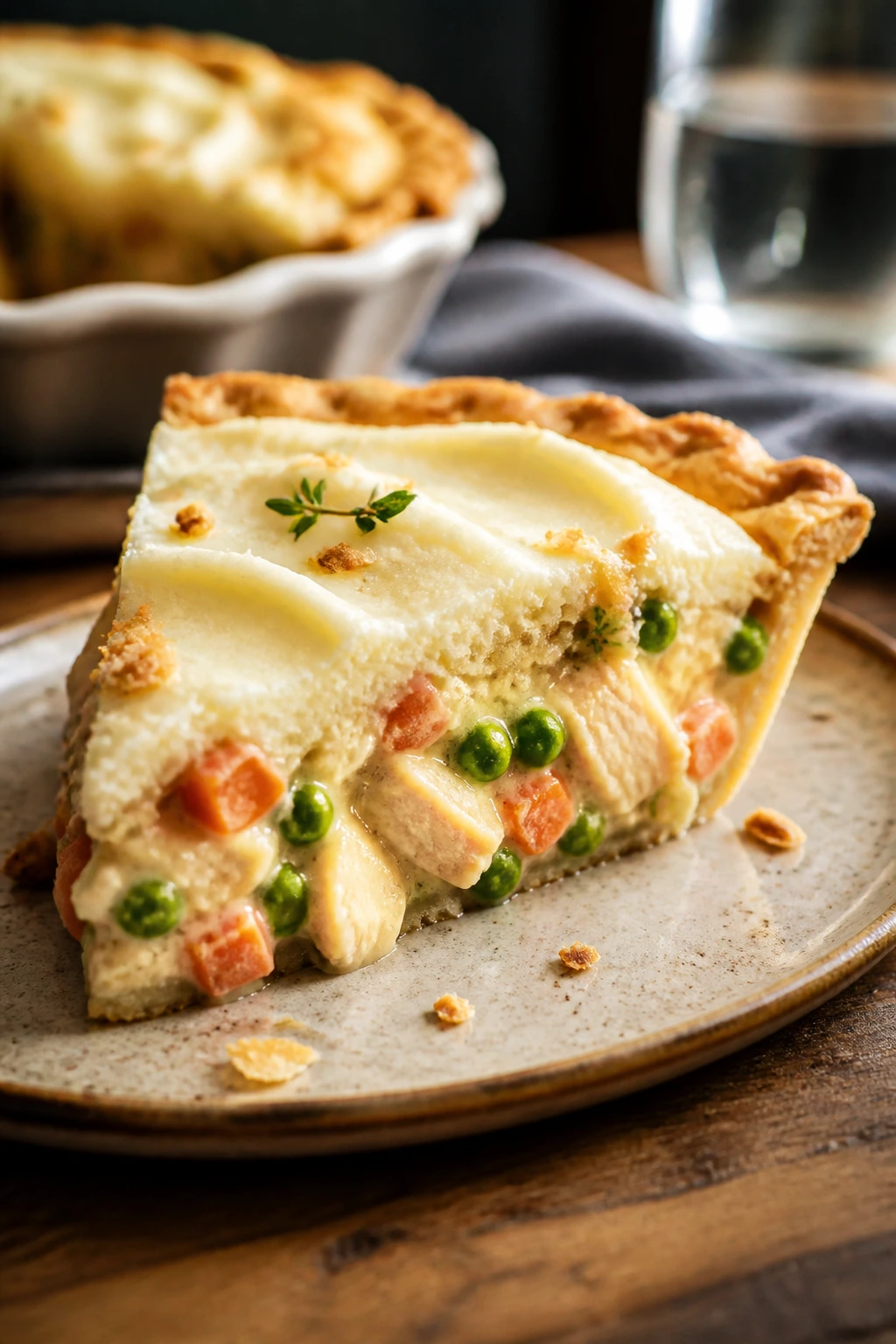
This pie works because it refuses to act like one thing. The filling is creamy, but not loose. The crust is buttery, but not soft. The frosting sounds odd until you taste how its cold tang cuts through the richness and keeps the bite moving.
That contrast is the whole trick. If you make the filling thick enough, cool it before the crust goes on, and keep the savory frosting chilled until the end, the dish lands with a kind of confidence that a plain pot pie never quite manages. Serve it once, and you may start thinking of cream cheese frosting as a dinner move instead of a dessert one.
Rich Chicken Pot Pie with Cream Cheese Frosting — Recipe Card
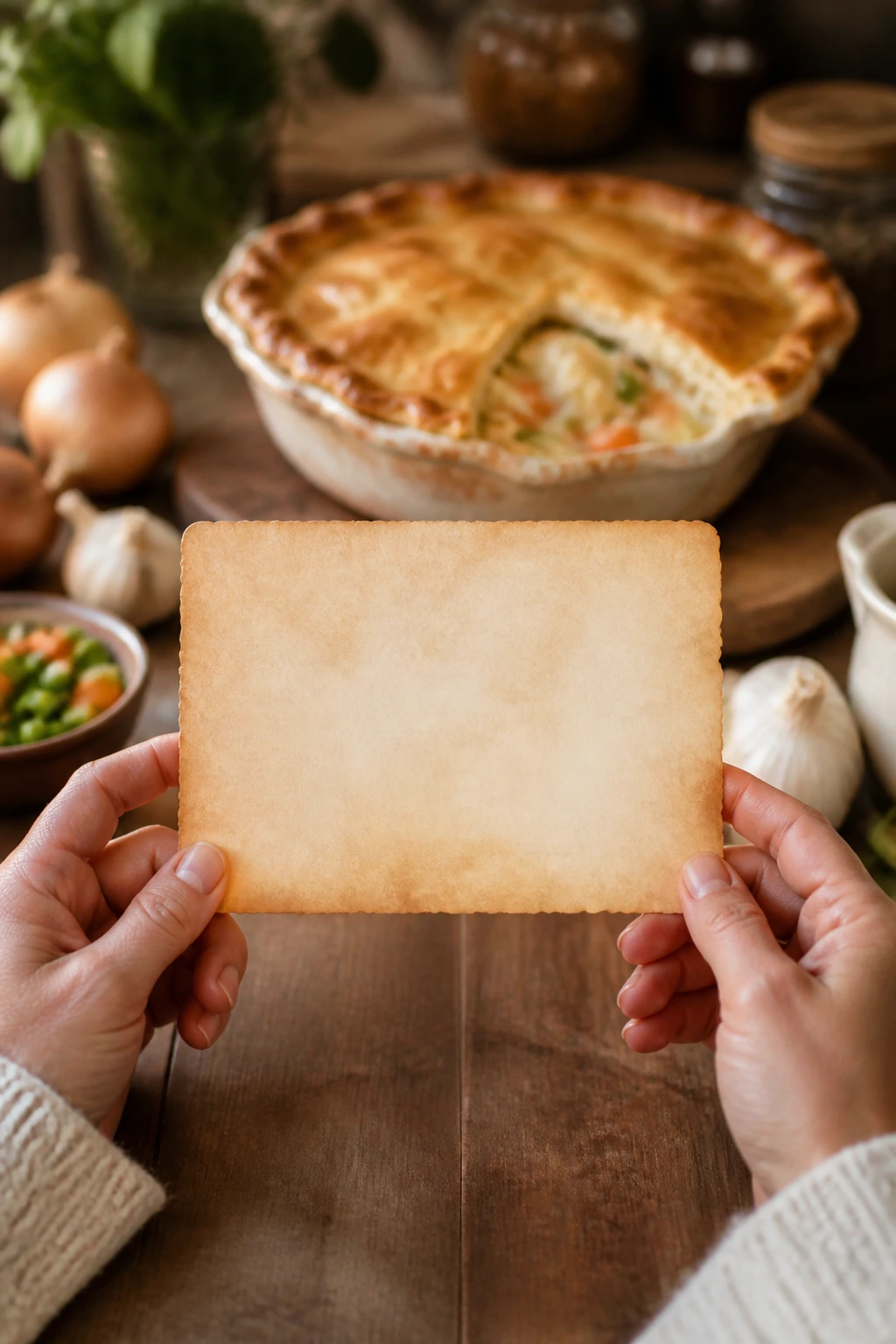
Recipe Name: Rich Chicken Pot Pie with Cream Cheese Frosting
Description: A deep-dish chicken pot pie with a thick, cream-cheese-enriched filling, a flaky double crust, and a savory chive frosting piped on after baking. The frosting is not sweet; it brings a cool, tangy finish to the warm pie.
Prep Time: 30 minutes
Cook Time: 45 minutes
Total Time: 1 hour 15 minutes
Chill/Rest Time: 15 minutes
Course: Dinner, Main Course
Cuisine: American
Servings: 6 to 8 servings
Calories: About 650 kcal per serving
Ingredients
For the Filling:
- 4 cups cooked chicken, shredded or chopped, about 1 1/2 pounds
- 2 tablespoons unsalted butter
- 1 tablespoon olive oil
- 1 medium yellow onion, diced
- 2 medium carrots, diced small
- 2 celery stalks, diced small
- 3 cloves garlic, minced
- 1/3 cup all-purpose flour
- 2 cups low-sodium chicken stock
- 1 cup whole milk or half-and-half
- 4 ounces cream cheese, softened and cut into cubes
- 1 teaspoon Dijon mustard
- 1 teaspoon fresh thyme leaves or 1/2 teaspoon dried thyme
- 1 cup frozen peas
- 2 tablespoons chopped fresh parsley
- 1 tablespoon dry sherry or white wine, optional
- 1 1/2 teaspoons kosher salt, divided
- 1/2 teaspoon black pepper, divided
For the Crust:
- 2 refrigerated pie crusts, thawed according to package directions
- 1 large egg
- 1 tablespoon whole milk or cream
- 1 pinch flaky salt, optional
For the Savory Cream Cheese Frosting:
- 8 ounces cream cheese, softened
- 2 tablespoons unsalted butter, softened
- 1/4 cup sour cream
- 1 tablespoon finely chopped chives
- 1 teaspoon lemon juice
- 1/2 teaspoon garlic powder
- 1/2 teaspoon kosher salt
- 1/4 teaspoon black pepper
- 1 to 2 tablespoons milk, as needed for piping consistency
Instructions
- Cook the onion, carrots, celery, butter, oil, salt, and pepper in a skillet over medium heat for 6 to 8 minutes until softened.
- Add the garlic and flour, cook for 1 minute, then whisk in the stock and milk.
- Stir in the cream cheese, Dijon, and thyme; simmer until smooth and thick.
- Add the chicken, peas, parsley, and optional sherry; cook until hot and glossy, then cool for 10 minutes.
- Fit one crust into a 9-inch deep-dish pie plate, add the filling, top with the second crust, seal, crimp, and cut vents.
- Brush with the egg wash and bake at 400°F for 20 minutes.
- Reduce the oven to 375°F and bake 20 to 25 minutes more, until deep golden and bubbling.
- Rest the pie for 15 minutes on a wire rack.
- Beat the cream cheese, butter, sour cream, chives, lemon juice, garlic powder, salt, and pepper until smooth; add milk as needed for piping.
- Pipe the frosting onto slices or around the edge of the pie and serve warm.
Notes: Keep the frosting savory and chilled until piping. Add it after the pie rests so it stays neat. If the filling looks loose before baking, simmer it a little longer on the stove.