



The trick to a fluffy candy pop with cream cheese frosting is not piling in more candy. It’s keeping the crumb light enough to carry the candy without sinking under it.
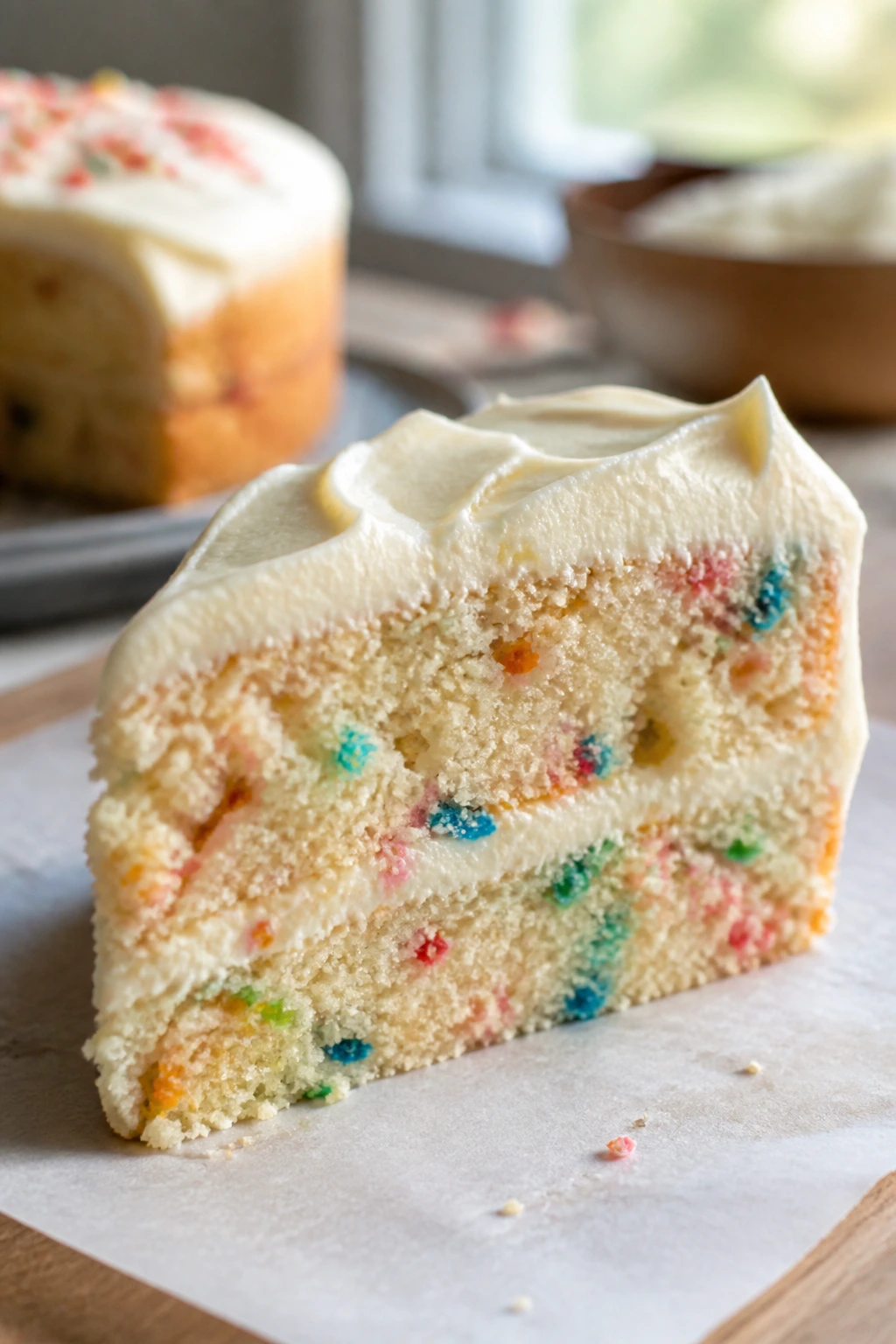
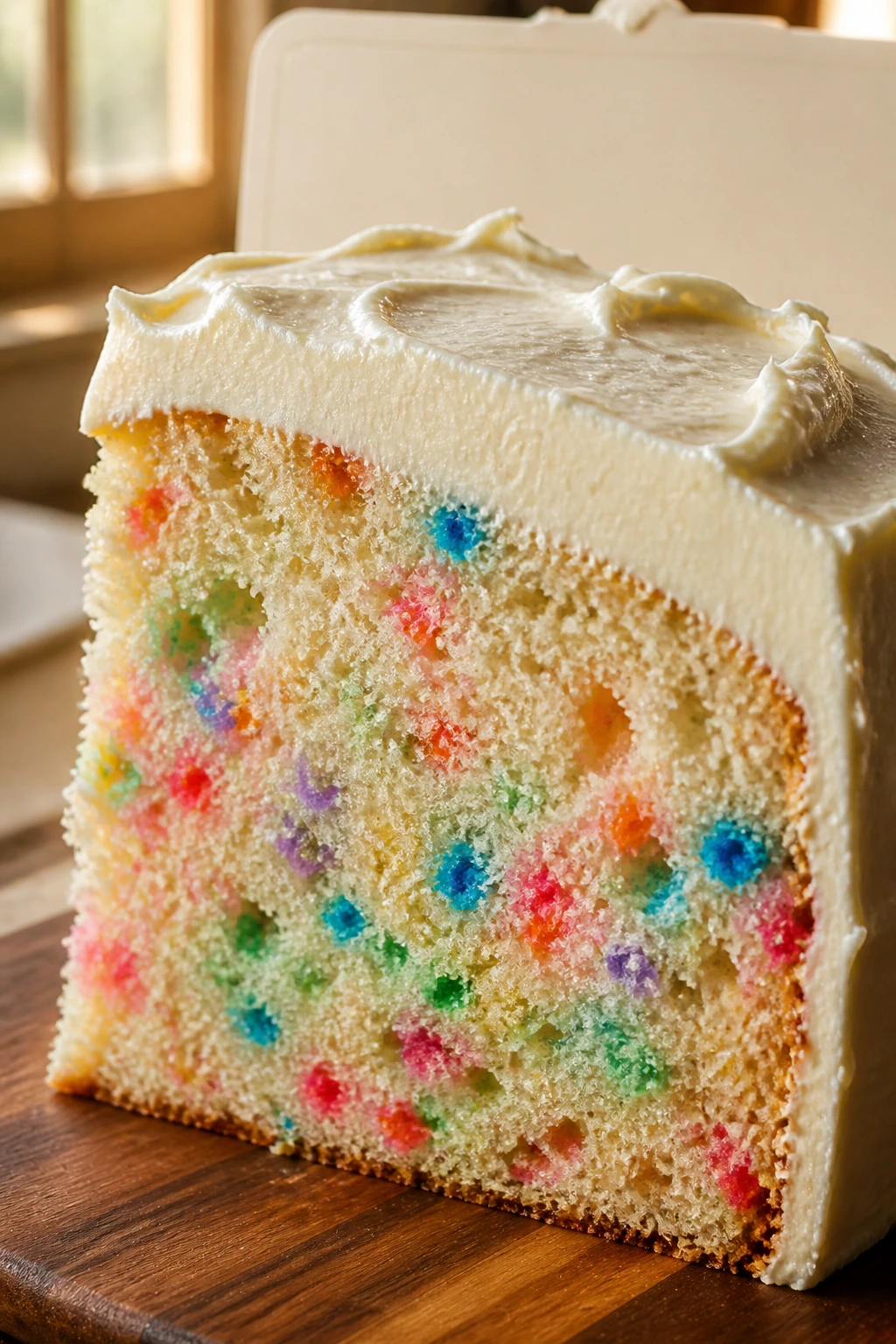
When this cake works, it looks almost cheerful in a way that borders on rude: pale vanilla crumb, bright candy flecks, and a thick blanket of tangy frosting that cuts the sweetness instead of letting it run wild. A slice should hold together cleanly, but still feel soft when you press it with a fork. That balance is the whole game.
Most cakes with candy in them go one of two directions. They either bake up heavy and dull, or they turn into a sticky sugar bomb with no shape at all. This version avoids both problems by using cake flour, sour cream, buttermilk, and a flour toss for the candy pieces. Those details matter. A lot.
Why This Fluffy Candy Pop Cake Earns Its Spot
- Soft crumb: Cake flour, sour cream, and buttermilk give the cake a tender bite that stays fluffy even after chilling.
- Candy in every slice: Tossing the candy-coated chocolates in flour keeps most of them suspended instead of collecting at the bottom.
- Frosting with a little tang: Cream cheese frosting keeps the dessert from tasting flat or cloying, which is exactly what you want here.
- Easy to cut and serve: A 9×13-inch pan makes tidy squares that travel well and don’t need a fancy cake stand.
- Flexible on the finish: You can keep the top simple or pile on extra candy, jimmies, or a thin drizzle of white chocolate.
Timing and Texture at a Glance
Yield: 12 to 15 servings
Prep Time: 25 minutes
Cook Time: 30 to 34 minutes
Total Time: 55 to 60 minutes, plus cooling
Difficulty: Intermediate — the steps are straightforward, but the batter is soft, the dairy needs to be room temperature, and cream cheese frosting can loosen fast if the kitchen is warm.
Chill/Rest Time: 1 hour cooling before frosting, plus 20 to 30 minutes chilling after frosting for cleaner slices
Best Served: Cool or at cool room temperature
This is the kind of cake that tastes better after it has had a little time to settle. The frosting firms up, the crumb slices more neatly, and the candy pieces stop feeling sticky on the tongue. If you like a softer, more spreadable frosting, let the slices sit out for 15 minutes after chilling.
The Ingredient List That Keeps the Crumb Tender
For the Cake:
- 2 1/2 cups cake flour, spooned and leveled
- 2 teaspoons baking powder
- 1/2 teaspoon baking soda
- 3/4 teaspoon fine salt
- 3/4 cup unsalted butter, softened to cool room temperature
- 1/3 cup neutral oil
- 1 1/4 cups granulated sugar
- 4 large eggs, room temperature
- 2 teaspoons vanilla extract
- 1/2 teaspoon almond extract, optional
- 3/4 cup sour cream, room temperature
- 3/4 cup buttermilk, room temperature
- 1 cup mini candy-coated chocolates, tossed with 2 tablespoons cake flour
- 1/2 cup rainbow jimmies
For the Cream Cheese Frosting:
- 8 ounces block-style cream cheese, softened
- 1/2 cup unsalted butter, softened
- 3 1/2 cups powdered sugar, sifted
- 1 1/2 teaspoons vanilla extract
- Pinch of fine salt
- 1 to 2 tablespoons heavy cream or milk, as needed
For the Finish:
- 1/4 cup extra mini candy-coated chocolates
- 2 tablespoons rainbow jimmies or chopped candy
The ingredient list looks long, but nothing here is fussy. Every item earns its keep. The candy gives the “pop,” the dairy keeps the crumb soft, and the frosting is doing a lot of the balancing work.
Why These Ingredients Work the Way They Do
Cake Flour, Baking Powder, Baking Soda, and Salt
What to use: 2 1/2 cups cake flour, 2 teaspoons baking powder, 1/2 teaspoon baking soda, and 3/4 teaspoon fine salt.
Preparation: Whisk the dry ingredients together before they meet the wet ingredients so the leaveners spread evenly through the batter.
Substitutions: If cake flour is missing from the pantry, use 2 1/4 cups all-purpose flour plus 2 tablespoons cornstarch. The cake will be a little less delicate, but it still works.
Tips: Cake flour has less protein than all-purpose flour, so it builds a softer crumb. That matters here because candy pieces already bring weight to the batter; you do not want the flour to add more.
Butter, Oil, Sugar, and Eggs
What to use: 3/4 cup softened unsalted butter, 1/3 cup neutral oil, 1 1/4 cups granulated sugar, and 4 large eggs.
Preparation: Let the butter sit out until it yields to a finger press but still holds its shape. The eggs should be room temperature, not cold from the fridge.
Substitutions: Canola oil or grapeseed oil both work. If you want a slightly richer flavor, use melted and cooled refined coconut oil, though it will add a faint coconut note.
Tips: Butter gives flavor and structure; oil keeps the cake soft on day two. That combination is better than using butter alone, especially in a sheet cake that may sit in the fridge before serving.
Sour Cream, Buttermilk, Vanilla, and Almond Extract
What to use: 3/4 cup sour cream, 3/4 cup buttermilk, 2 teaspoons vanilla extract, and 1/2 teaspoon almond extract if you like that bakery-style note.
Preparation: Keep both dairy ingredients at room temperature so they blend smoothly with the butter mixture.
Substitutions: Plain Greek yogurt can replace sour cream in a pinch. If you do not have buttermilk, use 3/4 cup milk mixed with 2 teaspoons lemon juice or white vinegar and let it sit for 5 minutes.
Tips: Sour cream and buttermilk do two jobs at once. They add moisture, and they react with the baking soda to help the cake rise without making the crumb dry or coarse.
Candy-Coated Chocolates and Jimmies
What to use: 1 cup mini candy-coated chocolates and 1/2 cup rainbow jimmies.
Preparation: Toss the candy-coated chocolates with 2 tablespoons cake flour before folding them in. If the candies are large, chop them into rough quarters first.
Substitutions: White candy-coated chocolates, chopped caramel-filled candies, or mini peanut butter cups all work if you want a different flavor. I would keep the jimmies, though; they give a good burst of color without turning muddy.
Tips: Mini candy-coated chocolates hold their shape better than chopped bars, and jimmies are safer than nonpareils inside the batter. Nonpareils can bleed and leave the crumb streaky, which is not the look here.
Cream Cheese Frosting and the Final Topping
What to use: 8 ounces block-style cream cheese, 1/2 cup butter, 3 1/2 cups powdered sugar, vanilla, salt, and a small splash of cream or milk.
Preparation: Soften the cream cheese and butter before beating them, and sift the powdered sugar if it looks lumpy.
Substitutions: Dairy-free block cream cheese and plant butter can work if you need a dairy-free version, though the frosting will be a little softer. Avoid spreadable tub cream cheese; it is too loose.
Tips: The frosting should hold a thick swoop on the spatula. If it looks shiny and slack, it needs more powdered sugar or a short chill in the fridge.
The Equipment That Keeps the Batter Calm
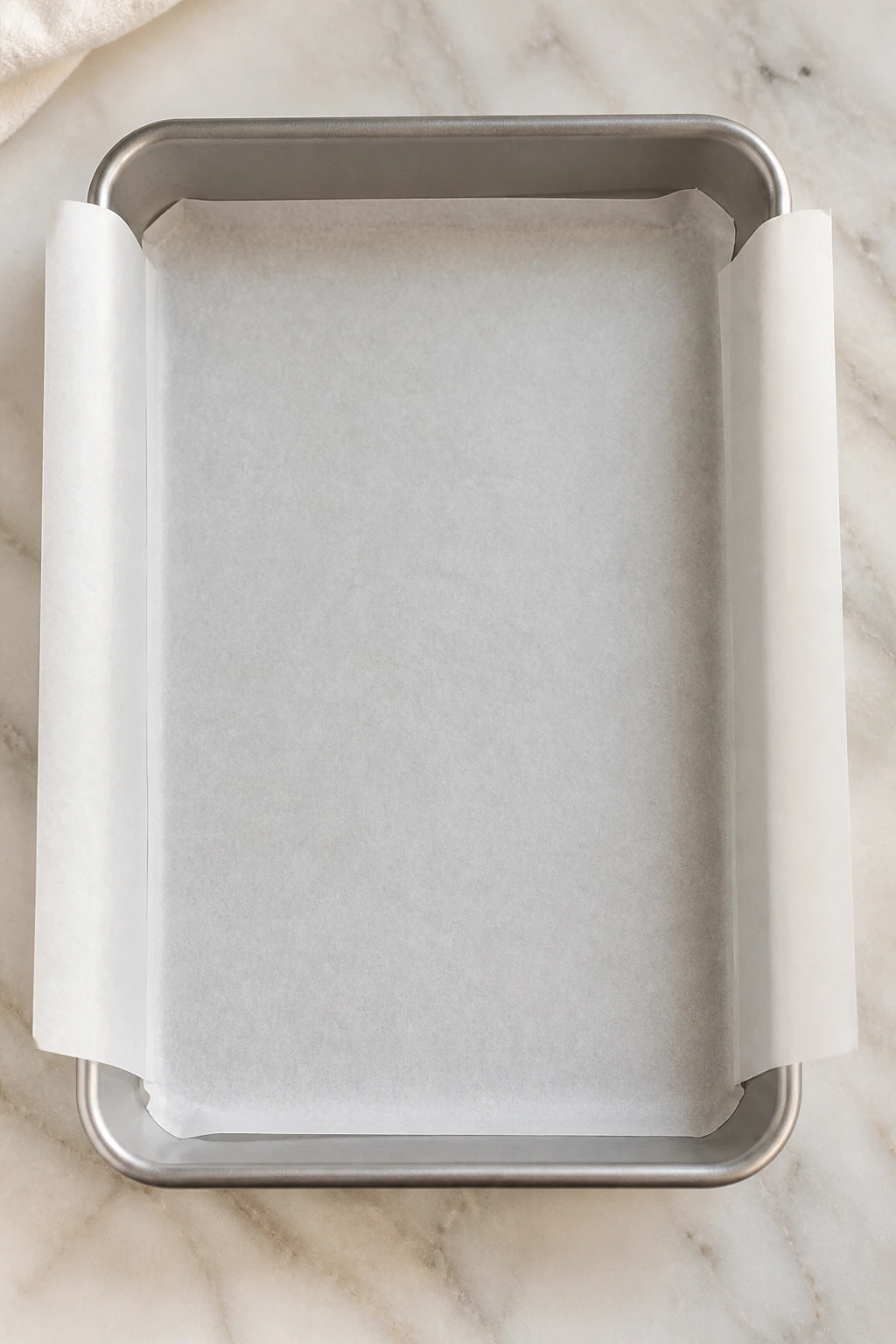
- 9×13-inch metal baking pan — Metal gives more even heat than glass and helps the cake set with better edges.
- Parchment paper — A sling makes it much easier to lift the cooled cake out of the pan.
- Stand mixer or hand mixer — Either one will cream the butter and sugar properly; the stand mixer just saves your arm.
- Large mixing bowl — You need room to fold in the candy without beating the batter down.
- Rubber spatula — This is the tool that keeps you from overmixing after the flour goes in.
- Offset spatula or butter knife — Handy for spreading the cream cheese frosting in a smooth layer.
- Cooling rack — Lets steam escape so the bottom of the cake does not turn damp.
- Fine sieve — Optional, but useful if your powdered sugar tends to clump.
If you only have a glass baking dish, you can still make the cake, but I would lower the oven to 325°F and start checking a few minutes early. Glass holds heat differently, and candy cakes already have enough drama without a burnt edge.
Mixing the Batter Without Losing the Fluff
Prepare the Pan and Candy
-
Preheat the oven to 350°F (175°C) and position a rack in the center. Grease a 9×13-inch metal baking pan, then line it with parchment paper so the paper hangs over the two long sides.
-
Place the 1 cup mini candy-coated chocolates in a small bowl and toss them with 2 tablespoons cake flour until lightly coated. Shake off any extra flour. If the candies are large, chop them into rough quarters first so they distribute more evenly.
Build the Dry Base
- Whisk together the cake flour, baking powder, baking soda, and salt in a medium bowl until the mixture looks even and soft, with no streaks of salt or clumps of leavener.
Cream the Butter Mixture
-
In a large bowl, beat the butter, oil, and granulated sugar on medium speed for 3 to 4 minutes, until the mixture looks paler, fluffier, and slightly glossy. Scrape down the bowl once or twice so the butter around the edges does not stay hidden.
-
Beat in the eggs, one at a time, mixing for about 20 to 30 seconds after each addition. Add the vanilla and almond extract, then beat in the sour cream until the batter looks smooth. It may look a little curdled for a moment. That is fine.
Bring the Batter Together
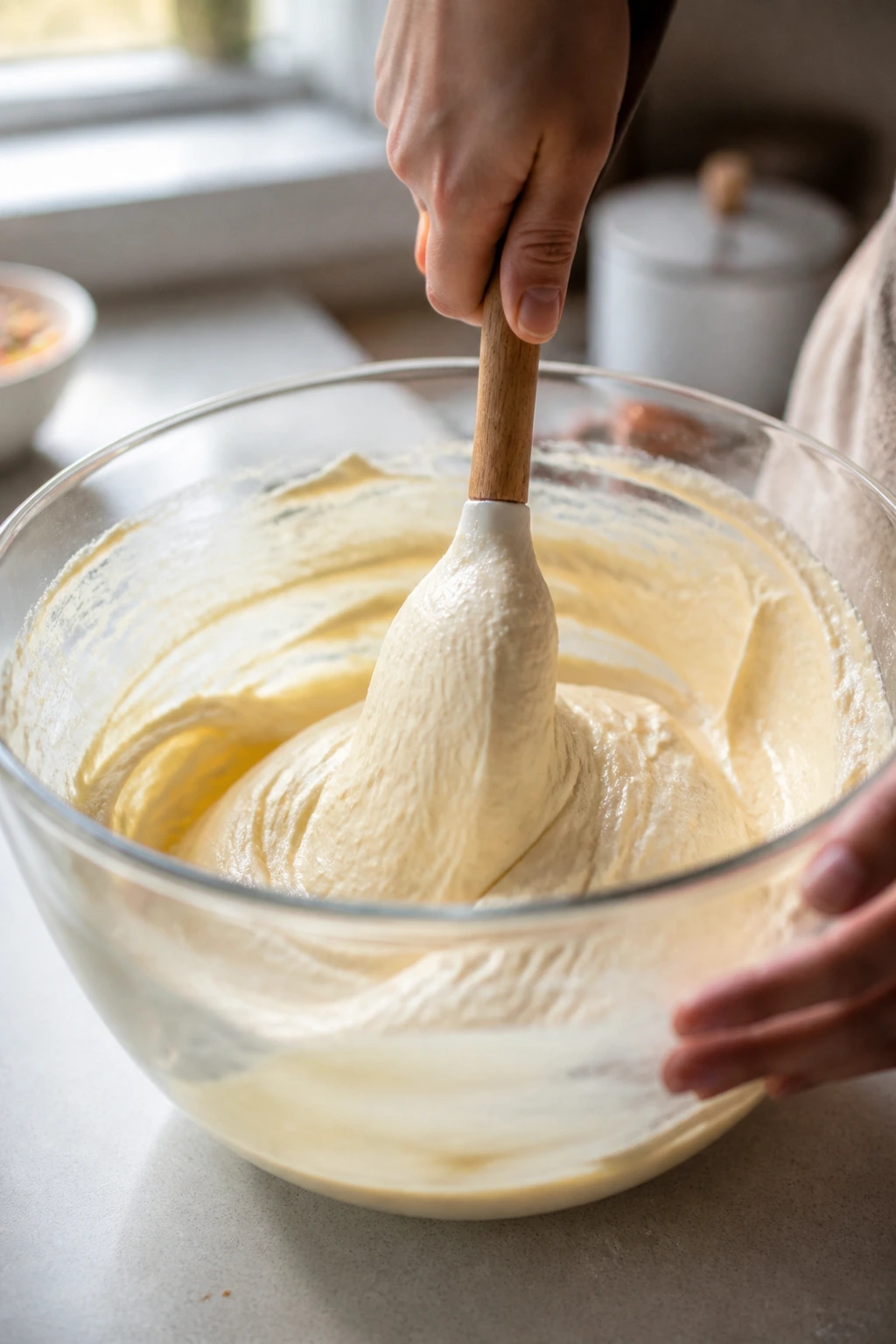
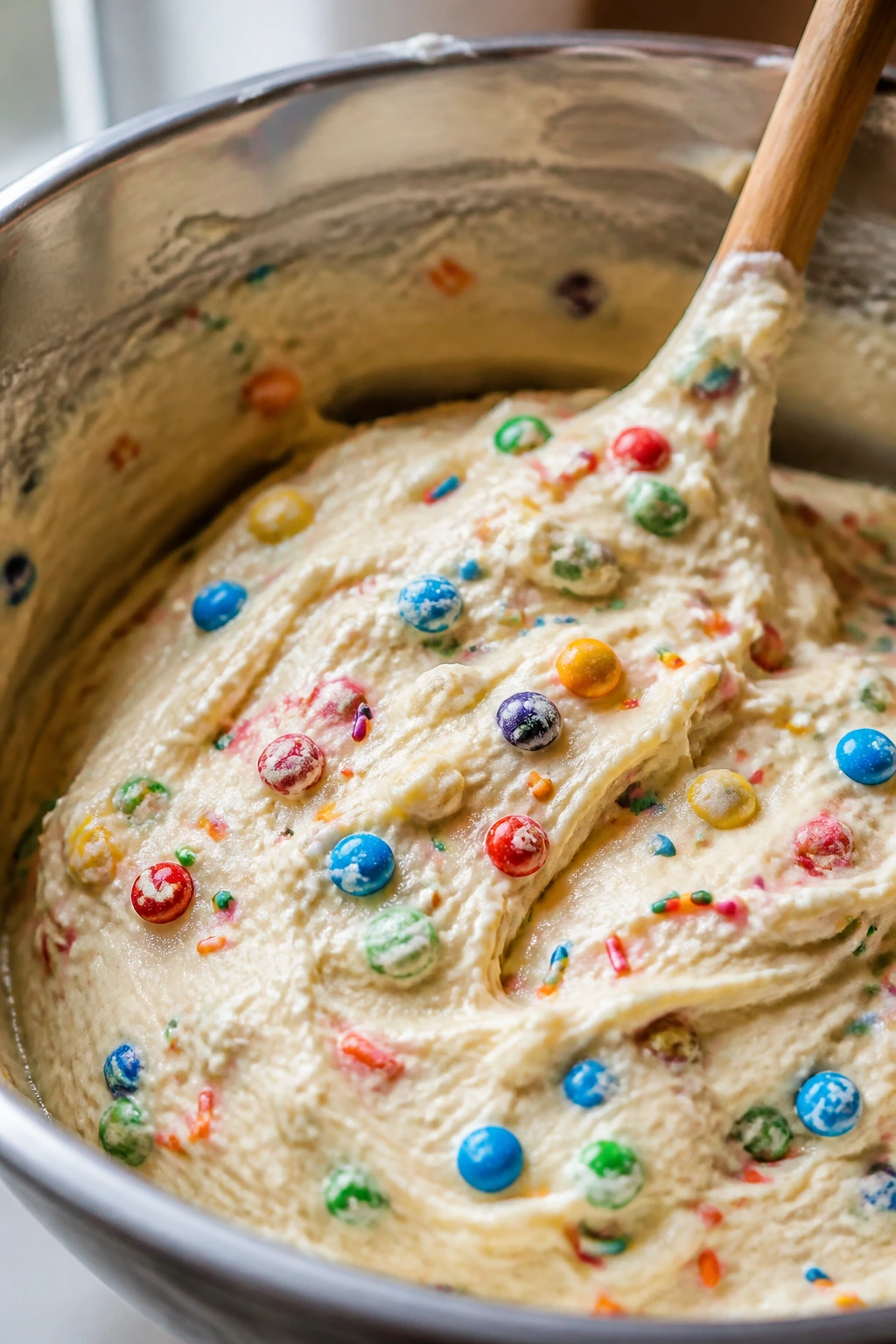
- Add the dry ingredients in three additions, alternating with the buttermilk in two additions — flour, buttermilk, flour, buttermilk, flour — and mix on low speed just until the flour disappears. Fold in the floured candy-coated chocolates and the rainbow jimmies with a spatula. Stop as soon as the batter looks evenly dotted; overmixing here will make the cake dense and can smear the sprinkles.
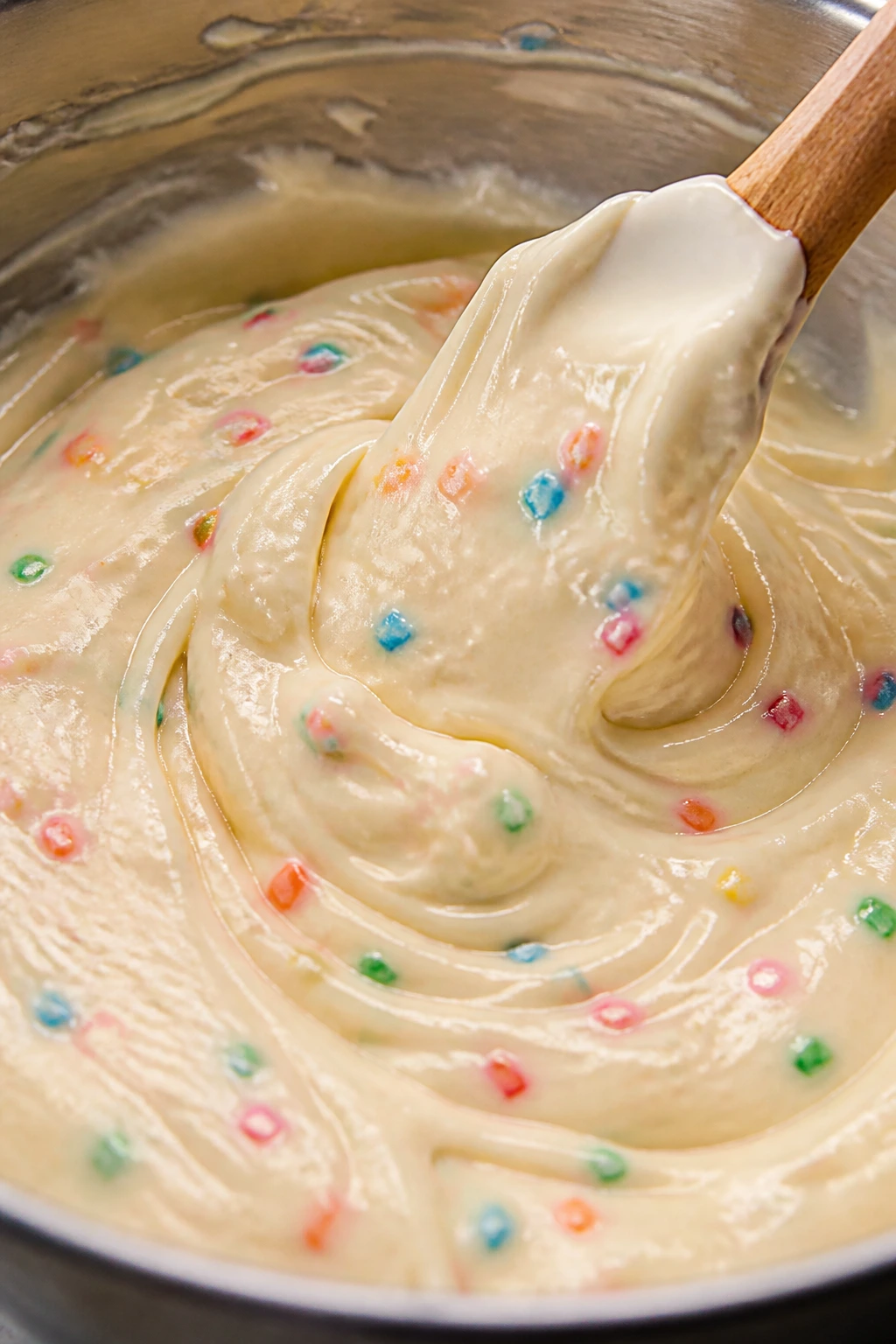
The batter should look thick, silky, and pale cream-colored, with bright candy bits scattered through it like confetti. If it seems almost too thick for a sheet cake, that is normal. A fluffy candy pop cake is not pourable like boxed cake batter; it should spread, not run.
Baking, Cooling, and Frosting the Cake
Bake the Cake
- Scrape the batter into the prepared pan and spread it into an even layer with the spatula. Tap the pan once or twice on the counter to knock out big air pockets, then bake for 30 to 34 minutes, until the top is lightly golden, the center springs back when pressed, and a toothpick inserted in the middle comes out with a few moist crumbs, not wet batter. If the top browns too quickly, lay a loose sheet of foil over it for the last 8 minutes.
Cool the Cake Properly
- Set the pan on a cooling rack and let the cake cool in the pan for 15 minutes. Then lift it out using the parchment overhang, or leave it in the pan if you prefer a tidy sheet-cake look. Let it cool completely, about 1 hour. Do not frost a warm cake; the frosting will melt, slide, and pick up crumbs in the worst possible way.
Make the Frosting
- Beat the cream cheese and butter together on medium speed for 1 to 2 minutes, until smooth and creamy with no lumps. Add the powdered sugar in two additions, then beat in the vanilla and salt. Add 1 tablespoon of cream or milk if the frosting feels too stiff, or a second tablespoon if needed, and beat for another 30 to 45 seconds until the frosting holds soft peaks and spreads cleanly.
Frost and Finish
- Spread the frosting over the cooled cake in thick, even swoops. Scatter the extra mini candy-coated chocolates and rainbow jimmies over the top, then chill the cake for 20 to 30 minutes before cutting. For the cleanest slices, use a long knife dipped in hot water and wiped dry between cuts.
That chilled finish makes a bigger difference than people expect. The frosting settles, the candy stays where you put it, and the slices come out neat instead of ragged. If you want a looser, softer frosting for serving, let the cake sit at room temperature for 15 minutes after chilling.
How to Serve It at the Table
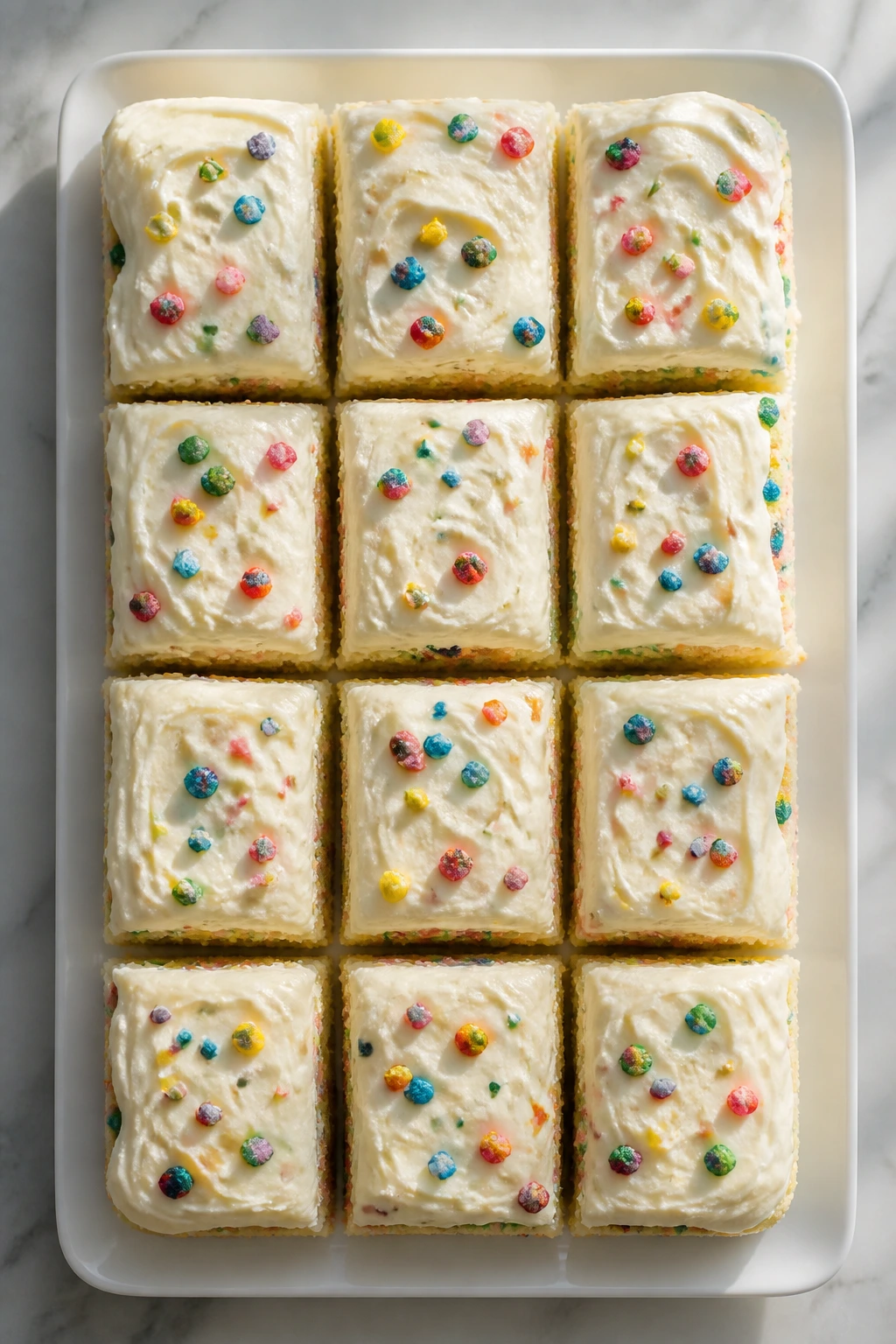
Presentation: Cut the cake into 12 large rectangles or 15 smaller squares and lift each piece with an offset spatula. A few extra candy-coated chocolates scattered around the platter make it look intentional, not crowded.
Accompaniments: Cold milk is the easy choice, but strong coffee works well too because the bitterness cuts through the frosting. If you want a fresh side, serve a small bowl of strawberries or raspberries next to each slice.
Portions: One 9×13-inch cake serves a crowd without feeling skimpy. If the dessert table has other sweets, cut smaller squares; cream cheese frosting is richer than a plain buttercream, so people usually want a little less than they think.
Beverage Pairing: Brewed coffee, cold brew, black tea, or plain milk all work. For a kid’s party, cold milk wins every time.
I like this cake served cool, not cold. Straight from the fridge, the frosting can feel a little firm, and the candy pieces lose some of their snap. Letting a slice sit out for a short spell softens the crumb and gives the frosting room to breathe.
Extra Tips and Flavor Boosters
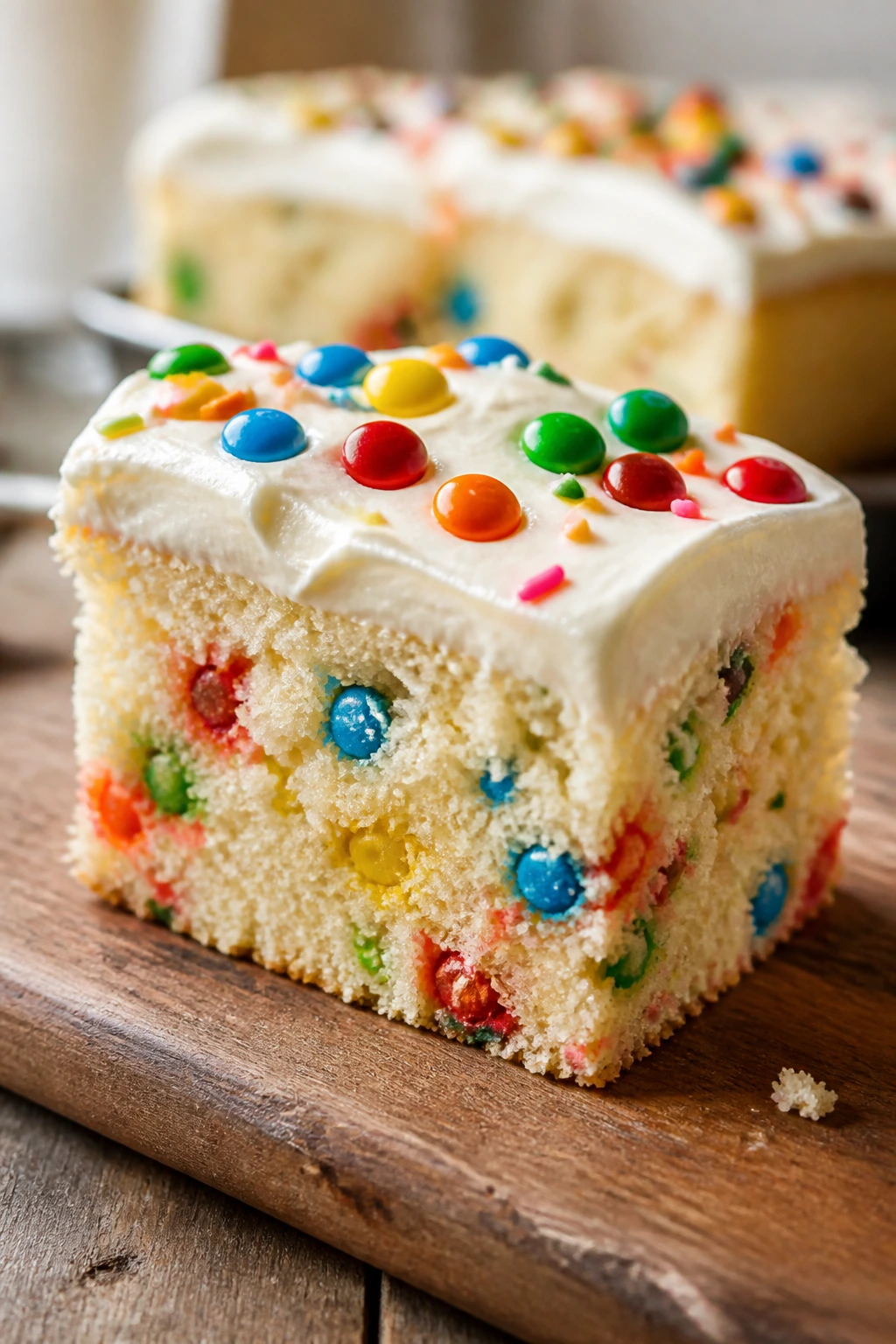
Flavor Enhancement: A tiny splash of almond extract in the batter gives the cake that bakery-counter smell people notice before they even take a bite. If almond is not your thing, swap in clear vanilla and add 1 teaspoon of finely grated lemon zest to the frosting. The citrus lifts the cream cheese without turning the cake into a lemon dessert.
Customization: Chopped white chocolate, toffee bits, mini peanut butter cups, or pastel candy-coated chocolates can stand in for the rainbow candy if you want a different look and texture. I would keep the total add-ins around 1 1/2 cups so the cake still reads as cake, not candy rubble.
Serving Suggestions: Add the candy topping right before serving if you want the colors to stay bright and the coating to keep its shine. If you pile the top too heavily, the frosting starts to look busy. A light scatter is enough.
Make-It-Yours: For a dairy-free version, use plant butter, dairy-free block cream cheese, and unsweetened oat milk mixed with a teaspoon of lemon juice in place of the buttermilk. For a gluten-free version, use a 1:1 baking flour blend with xanthan gum and check the center a few minutes early, because gluten-free batters often finish a little faster at the edges.
One more small thing: chill the candy-coated chocolates for 10 minutes before tossing them into the batter if your kitchen is warm. Cold candy pieces hold their shape better and are a little less likely to sink during baking. It is a tiny move, but it pays off.
Common Mistakes That Flatten the Cake
-
Using spreadable tub cream cheese: The frosting turns loose and never holds a proper swirl. Use block-style cream cheese, and if it feels soft, chill the finished frosting for 10 to 15 minutes before spreading.
-
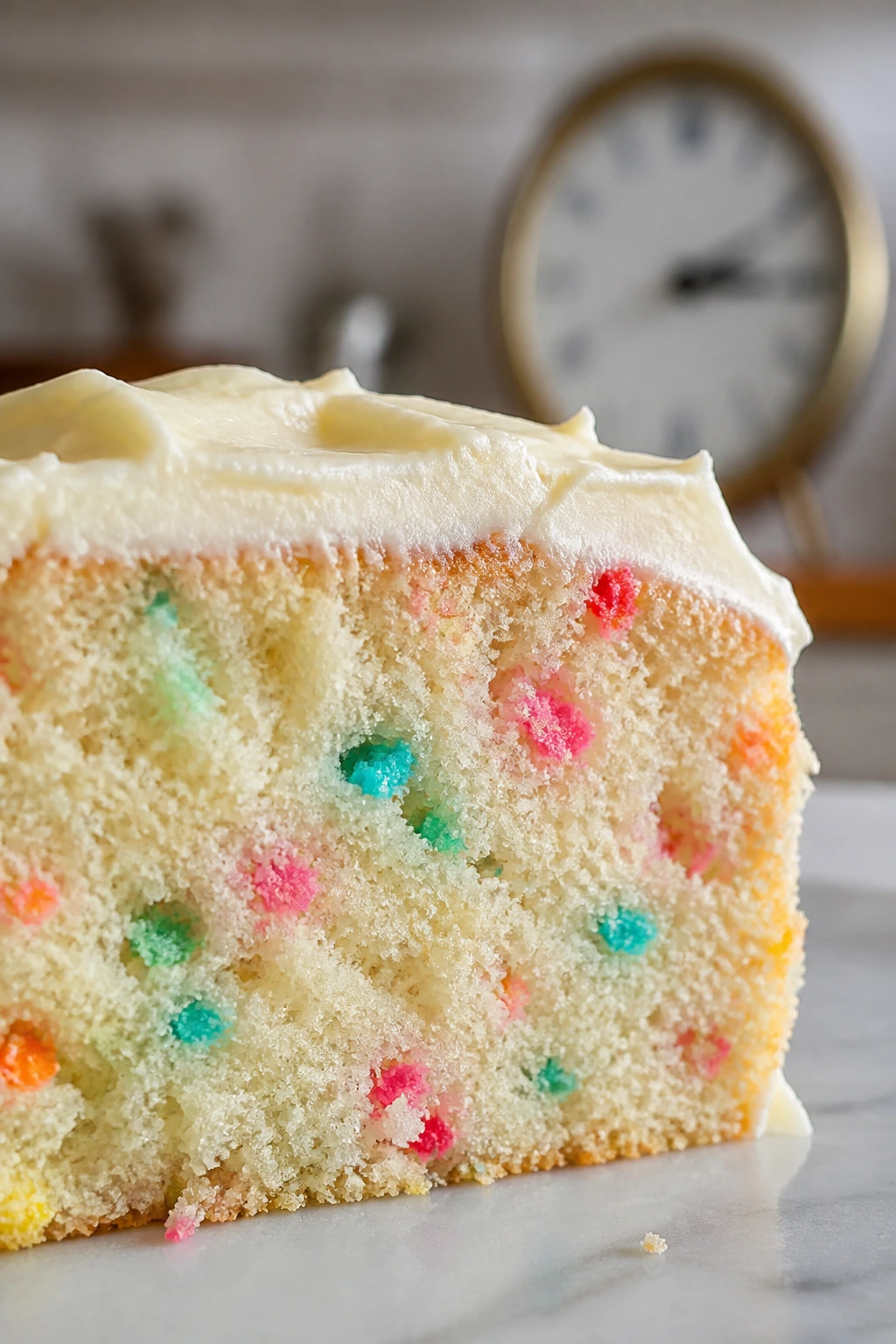
Skipping the flour toss on the candy: The candy-coated chocolates sink to the bottom and leave the top bare. A quick toss in cake flour helps suspend them through the batter.
-
Overmixing after the flour goes in: The crumb turns tight and a little bready instead of soft. Mix on low only until the dry streaks disappear, then switch to a spatula for the candy and jimmies.
-
Frosting a warm cake: The frosting melts into the surface and picks up crumbs like a magnet. Wait until the cake is fully cool to the touch, not just warm on top.
-
Using nonpareils inside the batter: They bleed into the cake and leave muddy streaks. Save them for the top if you love the look, but use jimmies in the batter.
-
Baking in a pan that runs hot on the edges: The sides dry out before the center sets. A metal 9×13-inch pan is the safer choice, and a foil tent can save the top if it browns too quickly.
The cleanest fix for most of these problems is patience. Annoying, yes. Necessary, also yes. Candy cake rewards people who let the batter stay light and the frosting stay cool.
Variations Worth Baking Next
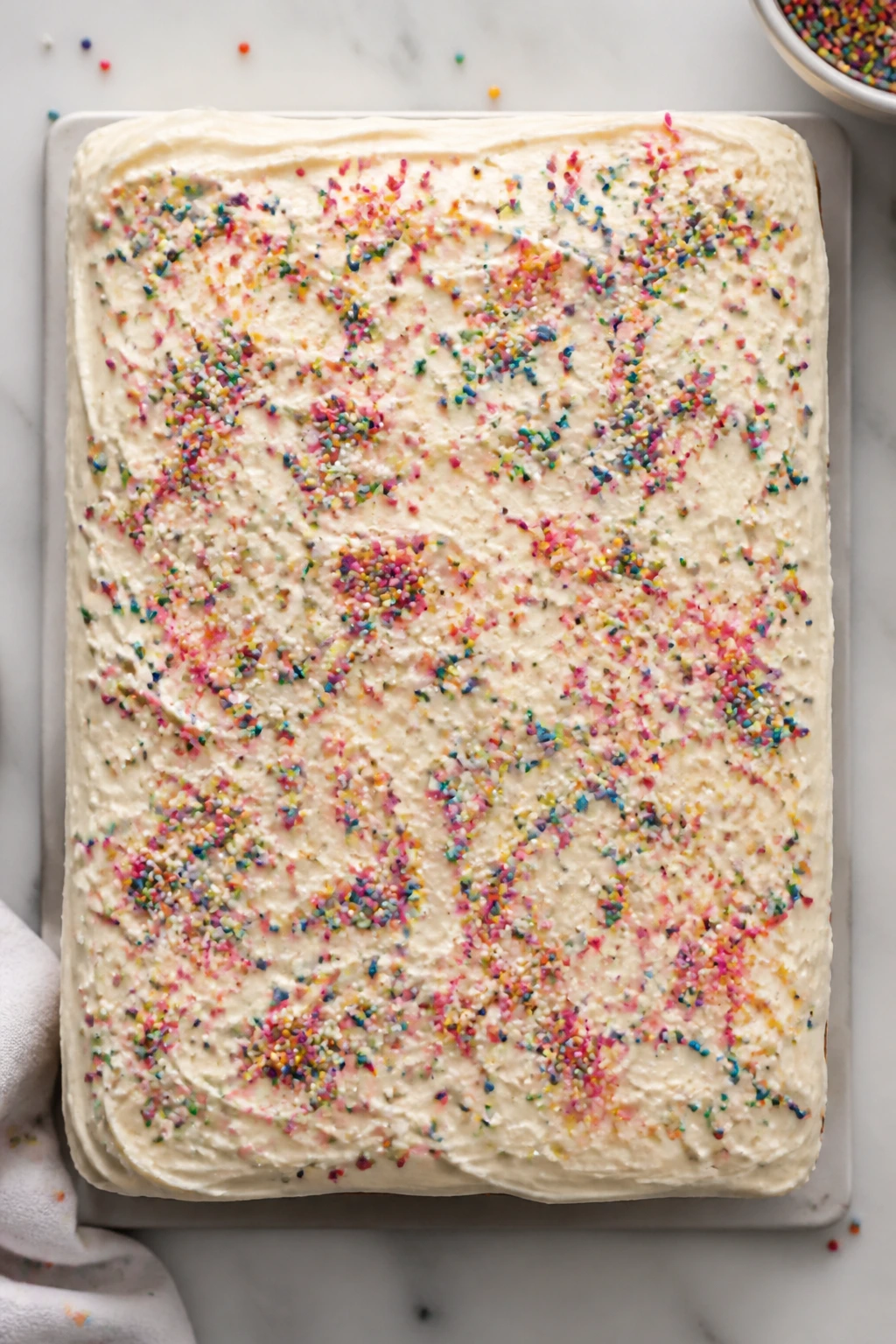
Confetti Birthday Board Cake: Increase the rainbow jimmies to 3/4 cup and leave out the almond extract for a more classic birthday-cake flavor. Finish with extra candy-coated chocolates pressed into the frosting so each square looks like a little party platter.
Chocolate Carnival Slice: Replace 1/2 cup of the cake flour with 1/2 cup Dutch-process cocoa powder and add a little extra buttermilk, about 2 tablespoons, if the batter feels stiff. The cream cheese frosting stays the same, but a dusting of shaved chocolate on top makes the whole thing feel deeper and less sugary.
Strawberry Spark Cake: Fold in 1/2 cup crushed freeze-dried strawberries along with the candy pieces and use white candy-coated chocolates on top. The tart berry flavor keeps the sweetness under control and gives the cake a brighter edge.
Toffee Crunch Version: Swap half the candy-coated chocolates for toffee bits and add 1/2 teaspoon espresso powder to the frosting. That little bit of coffee flavor makes the brown sugar notes in the toffee stand out.
Gluten-Free Party Sheet: Use a 1:1 gluten-free baking flour with xanthan gum and bake in a metal pan. The cake may be a touch tighter in texture, but the candy and frosting carry the flavor well enough that most people will never miss the wheat.
Cupcake Parade: Turn the batter into 24 cupcakes and bake at 350°F for 18 to 20 minutes. Frost them with a piping bag and top each one with a single candy piece so the decorating stays tidy.
I do think the cupcake version is the easiest one to hand to a crowd. You lose the big sheet-cake drama, but you gain clean portions and a lower risk of the frosting smearing while people hover around the table.
Storage, Make-Ahead, and Reheating Notes
Room Temperature: Because the frosting contains cream cheese, keep the finished cake out for up to 2 hours if the room is cool. After that, it should go back into the fridge.
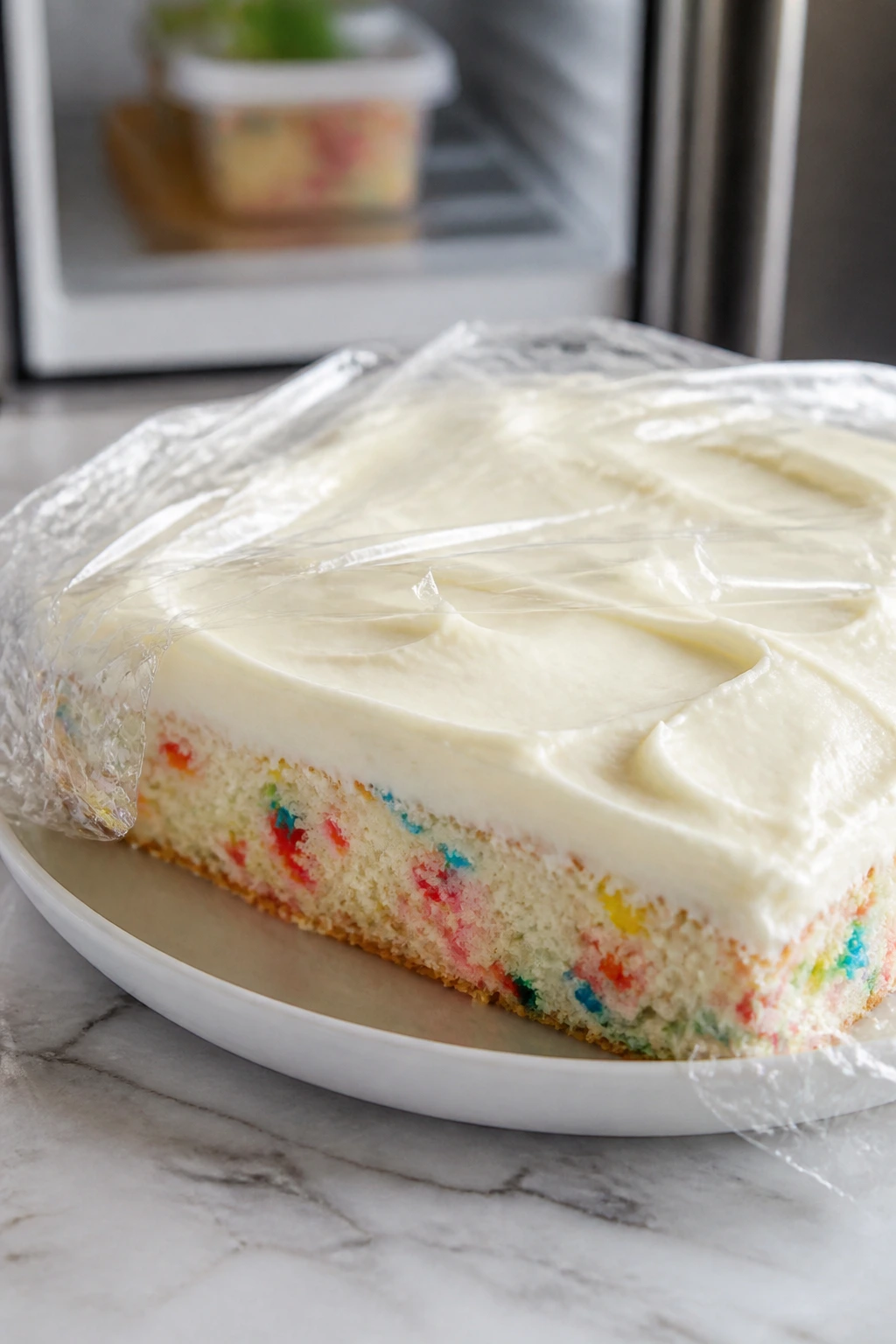
Refrigerator: Cover the cake tightly or store slices in an airtight container for up to 4 days. The crumb stays moist, but the frosting firms up, so let chilled slices sit at room temperature for 15 to 20 minutes before serving.
Freezer: Freeze the unfrosted cake for up to 2 months. Wrap it in plastic, then foil, and label it so you do not forget what it is three weeks later. Frosted slices can be frozen too, but the candy topping loses some shine and the frosting texture gets a little softer after thawing.
Make-Ahead: Bake the cake a day ahead if you want. It actually slices better after an overnight rest, once it is completely cool and wrapped. The frosting can be made 1 to 2 days ahead and kept in the fridge; beat it again for 20 to 30 seconds before spreading so it loosens back up.
Reheating: There is no real reason to reheat this cake. If you want a softer bite, leave a slice on the counter for 15 minutes. Microwaving a cream cheese frosted cake turns the frosting slack and greasy faster than you’d expect.
If you are freezing the cake, I would hold back the top candy garnish until after thawing. That keeps the colors brighter and the pieces a little less sticky. It is a tiny detail, but it makes the finished cake look fresher.
Questions People Ask About Candy Pop Cake
Can I use all-purpose flour instead of cake flour?
Yes, though the crumb will be a little heavier. If that is what you have, use 2 1/4 cups all-purpose flour plus 2 tablespoons cornstarch to get closer to the softness cake flour gives you.
Why did my candy sink to the bottom?
Usually it means the pieces were too heavy, too large, or not coated in flour. Mini candy-coated chocolates behave best, and the quick flour toss makes a real difference. A batter that has been overmixed can also lose enough body that the candy drops.
Can I make this as cupcakes or layer cake instead of a sheet cake?
Absolutely. For cupcakes, bake at 350°F for 18 to 20 minutes. For two 8-inch layers, divide the batter evenly and bake for about 24 to 28 minutes; just keep the candy layer lighter so the cakes stack cleanly.
Does cream cheese frosting need to be refrigerated?
Yes. Because it contains cream cheese and butter, it should be chilled if it is not being served right away. A short time on the counter is fine, but for a longer stretch, put it in the fridge.
What if my frosting is too soft to spread neatly?
Chill the bowl for 10 to 15 minutes, then beat in 1/4 cup powdered sugar at a time until it thickens. If the kitchen is warm, even the butter can soften the frosting too much, so a short chill usually fixes more than people think.
Can I use different candy in the batter?
You can, but choose candy that can survive baking. Mini candy-coated chocolates, chopped toffee bits, and peanut butter chips all work. Sticky gummies and very hard candies are a mess in the oven.
Can I make it ahead for a party the next day?
Yes, and I would actually recommend it. Bake and cool the cake, wrap it tightly, then frost it the next day once it is fully chilled. The slices cut cleaner, and the flavor settles into something rounder and less sharp.
Will reduced-fat cream cheese work?
It will make the frosting looser and less stable. If that is what you have, chill it longer and expect a softer finish. For a cake that needs clean slices, full-fat block cream cheese is the one I trust.
A Sweet Finish
This cake is playful, but it is not sloppy. The candy gives it personality, the cream cheese frosting keeps it from tipping into pure sugar, and the tender crumb is what makes people reach for a second square instead of just admiring the top.
I keep coming back to the same three moves: room-temperature dairy, a light hand after the flour goes in, and a frosting that is cool enough to hold its shape. Get those right, and the rest falls into place with very little fuss. The next time you need a dessert that looks festive without asking for a decorator’s patience, this one earns the slot.
Fluffy Candy Pop with Cream Cheese Frosting — Recipe Card
Recipe Name: Fluffy Candy Pop with Cream Cheese Frosting
Description: A soft vanilla sheet cake dotted with candy-coated chocolates and rainbow jimmies, finished with tangy cream cheese frosting. It slices neatly, travels well, and brings color to any dessert table.
Prep Time: 25 minutes
Cook Time: 30 to 34 minutes
Total Time: 55 to 60 minutes, plus cooling
Course: Dessert
Cuisine: American-style
Servings: 12 to 15 servings
Calories: about 430 kcal per serving
Ingredients
For the Cake:
- 2 1/2 cups cake flour, spooned and leveled
- 2 teaspoons baking powder
- 1/2 teaspoon baking soda
- 3/4 teaspoon fine salt
- 3/4 cup unsalted butter, softened to cool room temperature
- 1/3 cup neutral oil
- 1 1/4 cups granulated sugar
- 4 large eggs, room temperature
- 2 teaspoons vanilla extract
- 1/2 teaspoon almond extract, optional
- 3/4 cup sour cream, room temperature
- 3/4 cup buttermilk, room temperature
- 1 cup mini candy-coated chocolates, tossed with 2 tablespoons cake flour
- 1/2 cup rainbow jimmies
For the Cream Cheese Frosting:
- 8 ounces block-style cream cheese, softened
- 1/2 cup unsalted butter, softened
- 3 1/2 cups powdered sugar, sifted
- 1 1/2 teaspoons vanilla extract
- Pinch of fine salt
- 1 to 2 tablespoons heavy cream or milk, as needed
For the Finish:
- 1/4 cup extra mini candy-coated chocolates
- 2 tablespoons rainbow jimmies or chopped candy
Instructions
-
Preheat the oven to 350°F (175°C) and position a rack in the center. Grease a 9×13-inch metal baking pan and line it with parchment paper.
-
Toss the mini candy-coated chocolates with 2 tablespoons cake flour until lightly coated. Shake off any excess.
-
Whisk together the cake flour, baking powder, baking soda, and salt in a medium bowl.
-
Beat the butter, oil, and sugar on medium speed for 3 to 4 minutes until pale and fluffy.
-
Beat in the eggs one at a time, then mix in the vanilla, almond extract if using, and sour cream until smooth.
-
Add the dry ingredients in three additions, alternating with the buttermilk in two additions. Mix on low just until combined, then fold in the floured candy-coated chocolates and jimmies.
-
Spread the batter into the pan and bake for 30 to 34 minutes, until the top springs back and a toothpick comes out with a few moist crumbs.
-
Cool the cake in the pan for 15 minutes, then cool completely on a rack, about 1 hour.
-
Beat the cream cheese and butter until smooth. Add the powdered sugar, vanilla, salt, and enough cream or milk to make a thick, spreadable frosting.
-
Frost the cooled cake, top with the extra candy and jimmies, and chill for 20 to 30 minutes before slicing.
Notes: Use block-style cream cheese, not spreadable tub cream cheese. Chill the finished cake before cutting for the neatest slices. Add the top candy garnish right before serving if you want the brightest color.