



Put a cream-cheese-frosted cupcake next to a glossy strawberry bar and the whole table changes. The tang cuts through the sugar, the frosting stays clean against the crumb, and suddenly the Valentines dessert table with cream cheese frosting feels like a planned spread instead of a pile of pink sweets.
The reason I keep coming back to cream cheese frosting is simple: it does three jobs at once. It softens sharp fruit, it calms chocolate, and when it is mixed correctly — just until smooth, never whipped into a cloud — it holds a swirl that looks neat even after the party has been going for a while.
That last part matters more than people think. A dessert table is not one cake on a plate; it is a small system of moving parts, and the frosting has to behave on cupcakes, cookie bars, and little squares of cake without sliding off or turning greasy. Once you get that balance right, the whole spread gets easier to build.
Why This Dessert Table Works So Well
A good dessert table needs a flavor that can sit in the center and keep everything else from feeling random. Cream cheese frosting does that because it has a sharp edge, a soft finish, and enough richness to make fruit, chocolate, and vanilla all feel like they belong on the same tray.
-
The tang keeps the sweets from flattening out: cream cheese frosting cuts through red velvet, strawberry cake, and chocolate brownies so the table tastes layered instead of sugary from end to end.
-
The color is already doing design work: white frosting against red berries, cocoa crumbs, and pale cake gives you contrast without needing a dozen food dyes.
-
It behaves well on small-format desserts: it pipes on cupcakes, spreads on bars, and settles into sandwich cookies without turning into a sloppy puddle if you keep it cool.
-
You can make the pieces in stages: bake the cake layers, chill the brownies, and mix the frosting later so you are not trying to do everything in one hour before guests arrive.
-
It scales cleanly: one batch of cream cheese frosting can cover a tray of cupcakes or fill and frost a small layer cake, which means you can build a bigger table without making a separate sauce or glaze for every item.
-
It works with both fresh and baked fruit flavors: strawberries, raspberries, cherries, and even a little lemon all make sense here because the frosting has enough tang to meet them halfway.
I also like that this kind of table does not need much explanation. People see the swirls, the berries, the chocolate, and they know what they are supposed to do. Grab a plate. Take a little of everything. Keep moving.
The Tangy, Sweet Logic Behind Cream Cheese Frosting
Cream cheese frosting earns its place because it is not just sweet fat holding powdered sugar together. It has acidity. It has salt. It has enough body to sit on a cupcake without looking stiff, and enough softness to melt a little on the tongue without collapsing into soup.
That balance is the whole trick. Sugar gives you structure, butter gives you smoothness, and cream cheese brings the sharp, dairy tang that stops the frosting from tasting like frosting from a supermarket bakery case.
What I reach for
-
8 ounces full-fat block cream cheese, cool room temperature — block cream cheese has less water and fewer stabilizers than spreadable tubs, which means the frosting sets more cleanly.
-
1/2 cup unsalted butter, softened but not greasy — the butter should dent easily when pressed, but it should not shine or feel oily.
-
3 1/2 to 4 cups powdered sugar, sifted — this is the range that gives you enough body for piping without making the frosting chalky.
-
1 teaspoon vanilla extract or vanilla bean paste — vanilla rounds off the tang and makes the frosting smell warmer.
-
1/4 teaspoon fine salt — a tiny amount, but it keeps the sweetness from tasting flat.
-
1 to 2 tablespoons heavy cream, only if needed — use this sparingly if the frosting is too stiff after chilling.
How the mixing should feel
Start with the butter and cream cheese at the same temperature. That part matters. If one is colder than the other, the frosting can look broken for longer than it should, and people usually panic and beat it too much.
Beat the butter first until smooth, then add the cream cheese and stop once the mixture looks fully combined. You are aiming for a satiny bowl, not a whipped topping. Add the powdered sugar in three additions, scraping the bowl between rounds, and stop as soon as the frosting holds a soft ridge when you lift the spatula.
That is the cue. Not the timer. The ridge.
If you want a frosting that pipes into a tall swirl, chill it for 15 to 20 minutes before filling the piping bag. If you want to spread it with an offset spatula, keep it a touch looser. Same base. Different finish.
The Desserts That Carry It Best on a Party Table
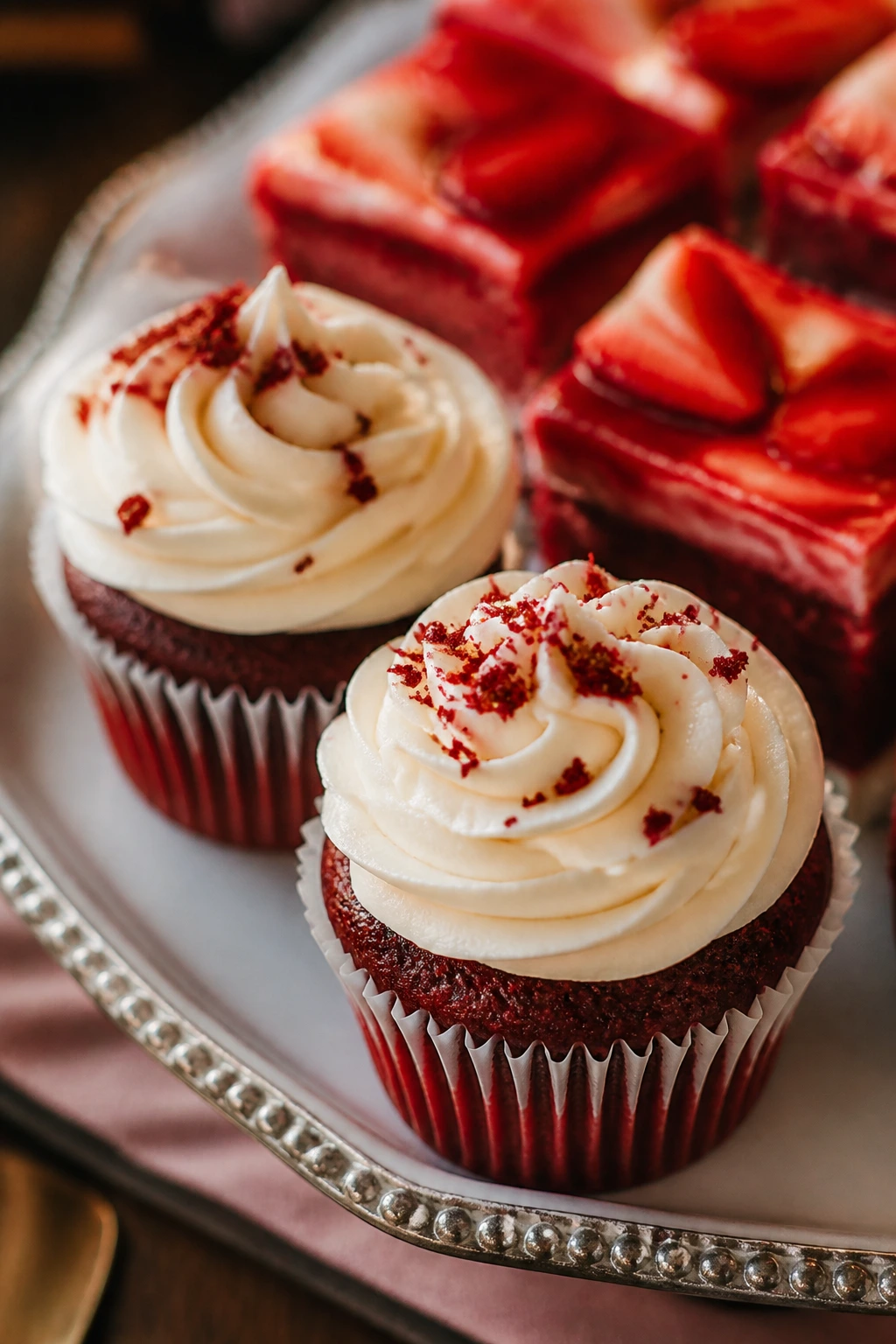
Not every dessert belongs under cream cheese frosting. Some desserts get soggy under weight, some need a sharper glaze, and some taste odd once you bury them under a thick tangy layer. The best choices are sturdy, sliceable, and not too fragile when chilled.
Red Velvet Cupcakes
This is the obvious one, and it earns the spot. A red velvet cupcake has enough cocoa to stand up to cream cheese frosting, and the crumb stays tight enough that the swirl sits neatly on top instead of sliding off the dome. Bake standard-size cupcakes at 350°F for about 18 to 20 minutes, and let them cool completely before frosting.
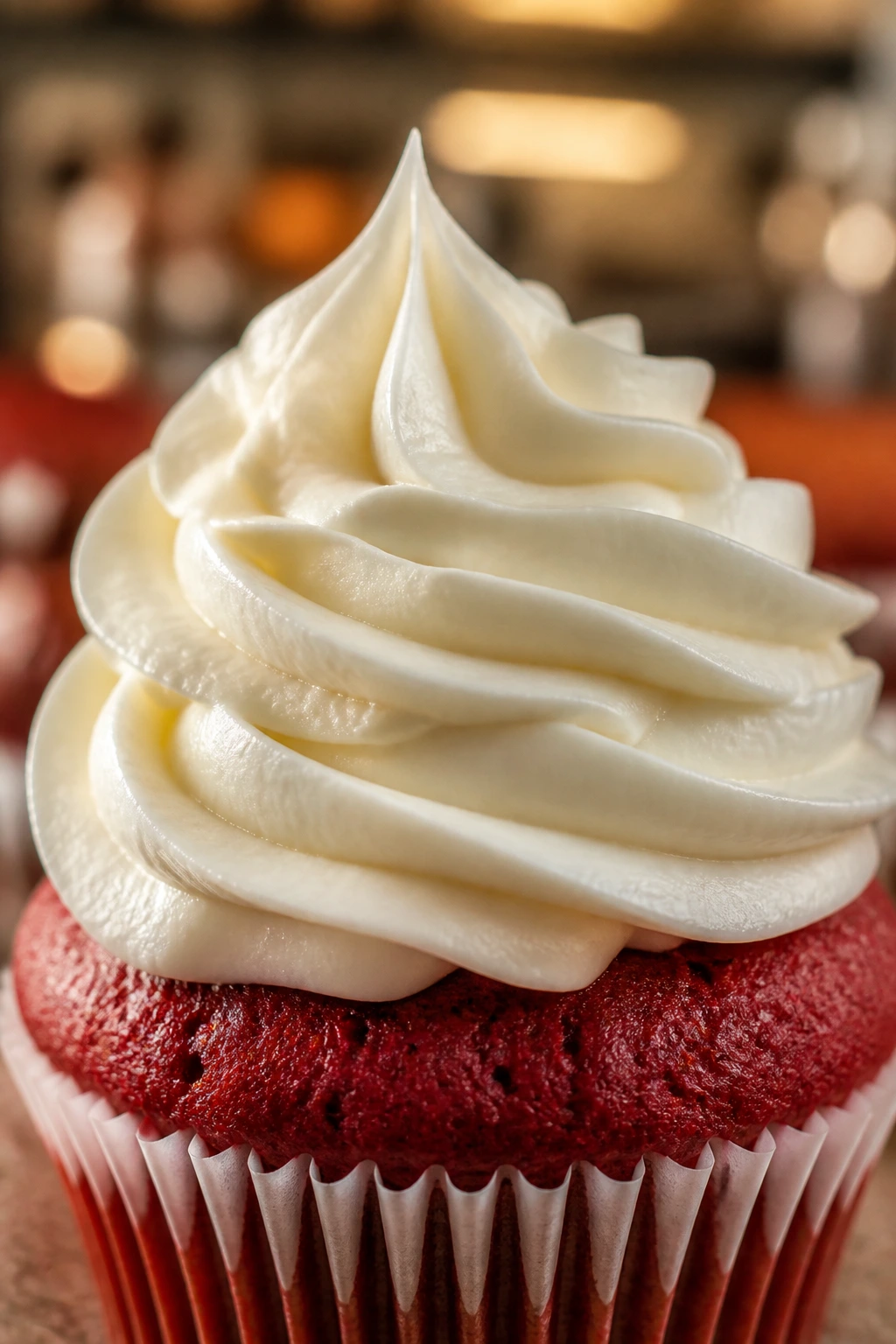
I like a tall star tip here. The ridges catch a little shadow, which makes the frosting look more finished without piling on extra decorations. Add one raspberry or a half strawberry on top if you want the color to read instantly.
Strawberry Sheet Cake Bars
Sheet cake bars are the practical move when you want clean serving and no fuss. A 9×13 pan cuts into tidy rectangles, and each piece can take a thin, even layer of frosting without becoming awkward to pick up.
They also solve the “how do I serve twenty people without turning each dessert into a project” problem. Chill the cake before slicing. Use a sharp knife wiped clean between cuts. A little crushed freeze-dried strawberry over the frosting gives you color without adding wet fruit that bleeds into the topping.
Fudgy Brownie Hearts
Brownies are where cream cheese frosting gets a little dramatic, and I mean that in a good way. A dense brownie base can handle a thick swoop of frosting, and if you cut the brownies with a heart cutter after chilling, you get a shape that belongs on a Valentine table without any extra work.
Go for fudgy, not cakey. Cakey brownies get dry under frosting, while fudgy ones stay plush. If you want a sharper finish, dust the top with a pinch of cocoa before adding the frosting; it gives the white swirl more contrast and keeps the plate from looking too sweet.
Vanilla Sugar Cookies with Jam
Sugar cookies give the table a crisp edge, which is useful when a lot of the other desserts are soft. A thin cookie, about 1/4 inch thick, bakes into something sturdy enough to hold a small ribbon of frosting or a round dollop in the center.
I like to add a spoonful of raspberry jam to the middle of some cookies and leave others plain. That little split makes the table feel varied without forcing you into a dozen recipes. Bake until the edges are barely golden — not blond, not dark — and cool them fully before you frost or sandwich them.
Mini Chocolate Loaf Squares
Mini loaf cakes sliced into squares are underrated. They look neat, they portion easily, and they give you the dark backdrop that cream cheese frosting loves. A simple chocolate loaf, cut into bite-size blocks, feels more elegant than a messy slab cake and still gives people enough to hold.
If the chocolate flavor is deep enough, the frosting tastes brighter. That contrast matters. Finish with a few chocolate curls or shaved dark chocolate, but keep them small. You want texture, not a gravel road.
I would skip meringues, fragile sponge cakes, and anything that weeps in a warm room. They are fine desserts. They are not the right furniture for this table.
A Valentine Color Story That Keeps the Spread from Looking Busy
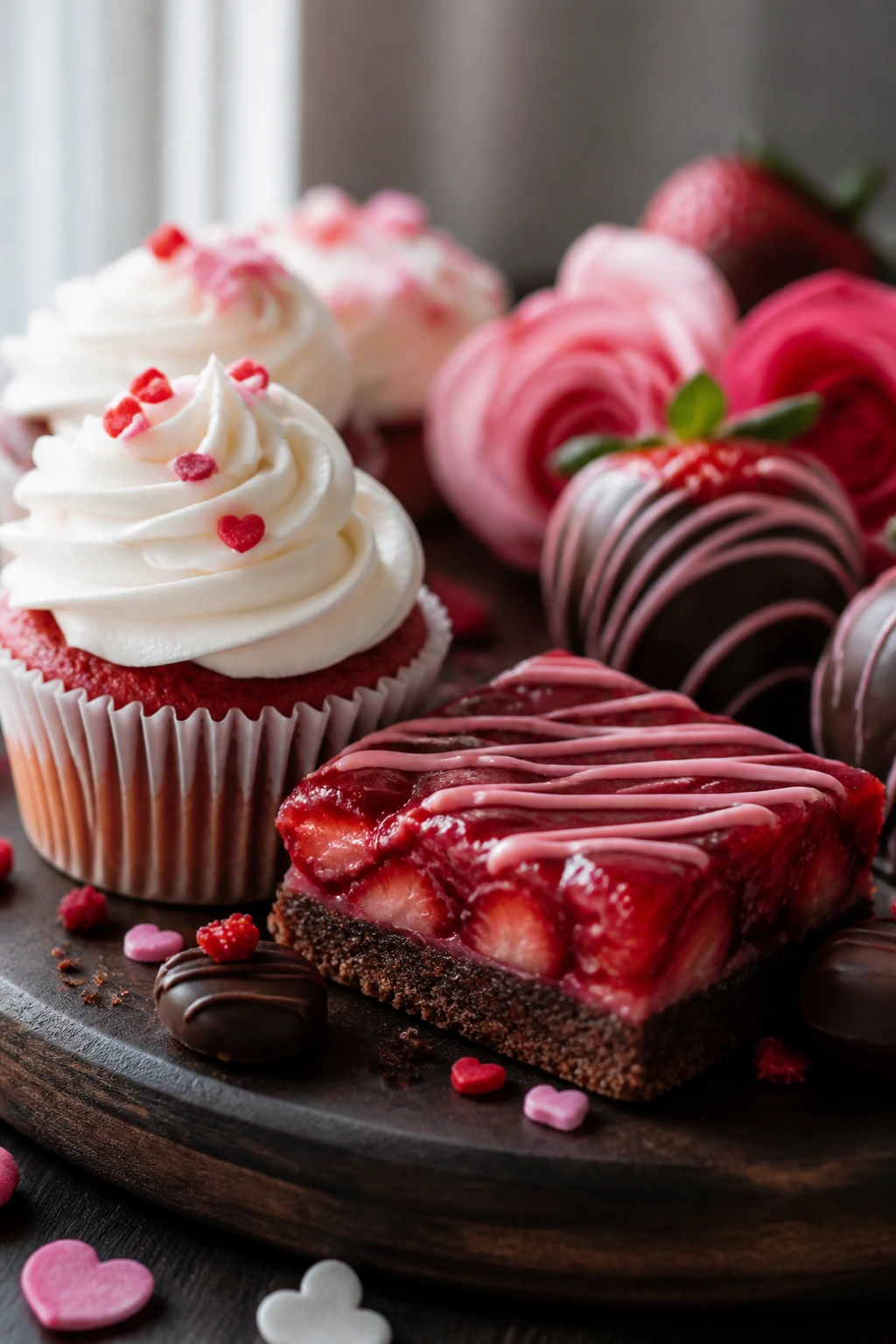
A Valentine’s table gets messy fast when every piece is trying to be louder than the next one. Too much red, too much pink, too many sprinkles, and the eye never lands anywhere. The food starts looking like a craft bin.
I prefer a tighter color story: deep berry red, soft blush pink, clean cream white, and one dark anchor like chocolate brown. That gives you enough romance without pushing everything into the same note.
The 3-color rule I trust
Keep the base mostly white and cream. Let the frosting do the pale work, then bring in red through berries, jam, or cocoa-red velvet crumbs. Add pink only where it helps, usually in a small tint of frosting, a napkin, or one cluster of fruit.
A table does not need eight different shades of red. It needs one or two strong notes repeated on purpose.
Edible accents that look natural
Fresh strawberries still feel like the cleanest move if they are dry and firm. Raspberries add a softer shape. Chocolate curls give you the dark break that keeps the table from becoming too sweet. If you want a little shine, a few pomegranate seeds scattered in a tiny bowl can work, but keep them contained; loose seeds roll everywhere and they pick up frosting fast.
I also like a dusting of crushed freeze-dried raspberries. The color is strong, the texture is dry, and they do not bleed into the frosting the way juicy fruit can. That matters more than people expect.
What I would skip
Skip neon sprinkles unless the rest of the table is very simple. Skip every piece being heart-shaped. Skip shiny red foil wrappers on top of everything. One or two heart-shaped pieces are enough; after that, it starts feeling like a costume, not dessert.
A little restraint makes the whole table look more expensive, which is a funny thing to say about sugar, but there it is.
Building a Frosting That Pipes, Spreads, and Holds
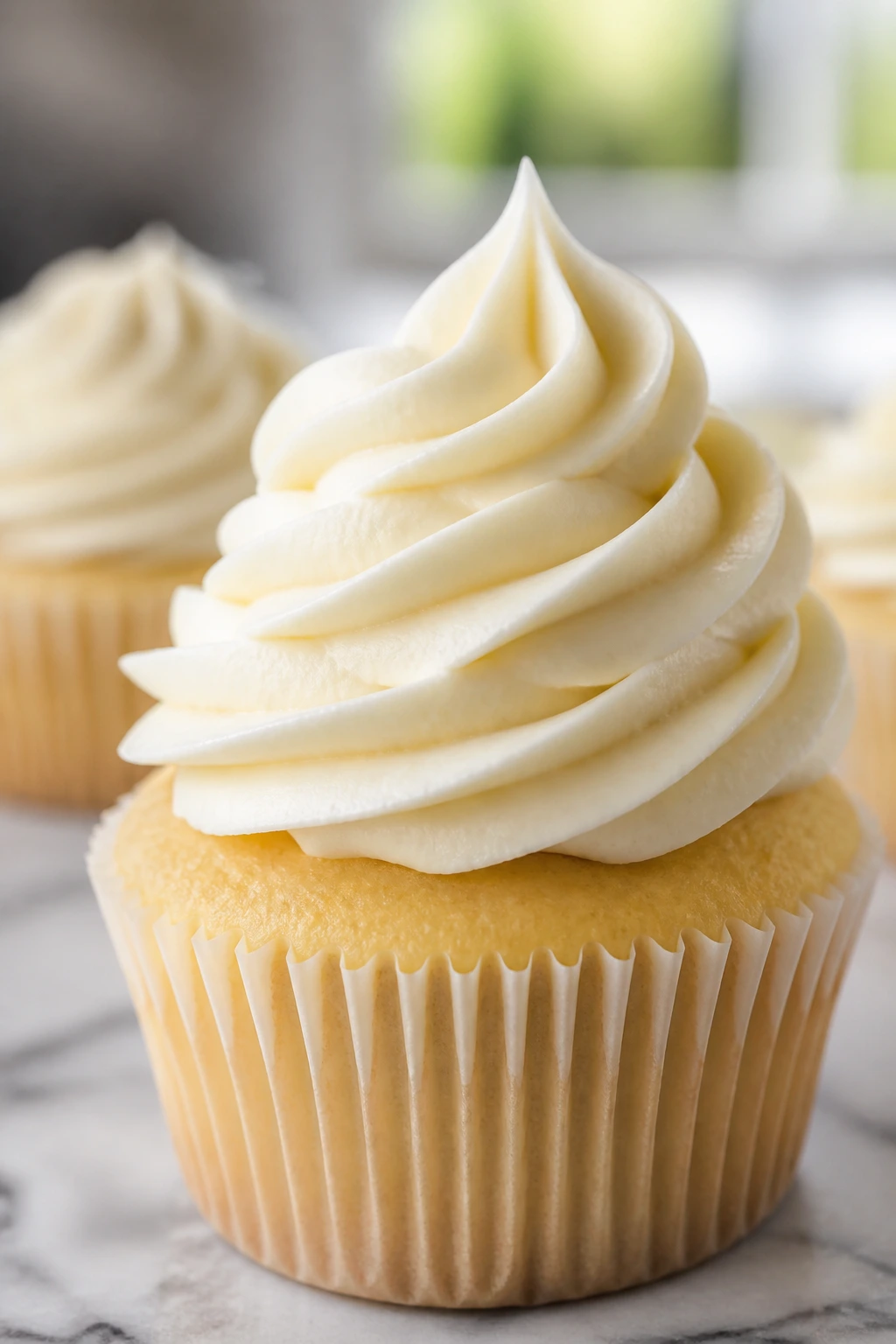
A cream cheese frosting for a dessert table has to survive more than one job. It needs to spread cleanly over bars, pipe into a tall cupcake swirl, and hold its shape long enough for people to admire it before they eat it. That means the texture has to be intentional from the start.
The base batch
-
8 ounces full-fat block cream cheese, cool room temperature
-
1/2 cup unsalted butter, softened
-
3 1/2 cups powdered sugar, sifted
-
1 teaspoon vanilla extract or vanilla bean paste
-
1/4 teaspoon fine salt
-
1 to 2 tablespoons heavy cream, only if the frosting needs loosening
This amount will frost about 12 cupcakes with generous swirls or a small two-layer cake. If the frosting is the centerpiece of the table and not just a topping, I usually make 1 1/2 batches. Nobody complains when there is extra frosting.
The mixing rhythm
-
Beat the butter first for about 30 to 45 seconds until smooth and pale. You are not trying to make it fluffy yet; you just want the texture even.
-
Add the cream cheese and mix for another 20 to 30 seconds, just until the mixture looks uniform. Stop there. If you beat it for minutes, the frosting can get loose and glossy.
-
Add the powdered sugar in thirds, mixing on low speed at first so the sugar does not puff out of the bowl. Scrape the sides after each addition.
-
Add the vanilla and salt, then beat for 10 to 15 seconds only. The frosting should look satiny and hold a little peak when lifted.
-
Chill for 15 to 20 minutes if you plan to pipe tall swirls or use it on a warm day. If it gets too firm, let it sit at room temperature for 5 minutes and stir once.
What to do if it misbehaves
If the frosting looks too soft, chill it before you panic. Cold fixes more frosting problems than extra sugar does. If it looks grainy, it may need another short mix, but stop as soon as the sugar disappears; overmixing can make it worse.
If you want a subtle berry color, fold in a spoonful of freeze-dried strawberry powder. That gives you flavor and color without adding water. Liquid food coloring is the wrong move here unless you want to loosen the frosting for no good reason.
Styling the Table So It Looks Full Without Looking Crowded
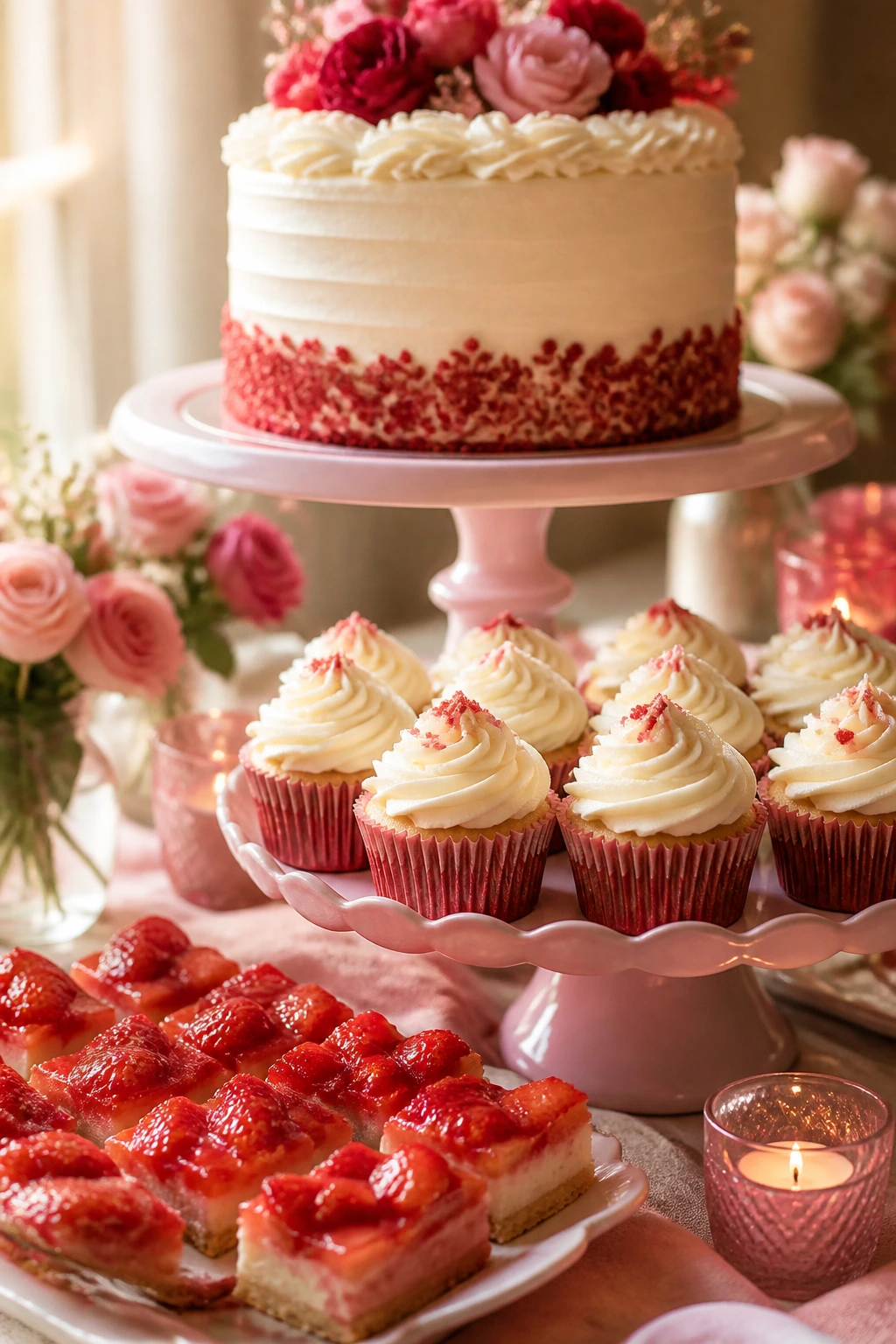
The prettiest dessert tables are edited. That’s the word I keep coming back to. Edited. Not empty, not bare, just edited so every piece has room to breathe.
The easiest way to make the table feel intentional is to use three heights: one tall centerpiece, one medium tray, and one low group of bite-size pieces. That gives the eye somewhere to land and keeps the frosting from getting knocked around when people reach in.
Height
A frosted cake or a tray of cupcakes usually belongs in the middle. Put bars on a low board or platter beside them. Cookies can sit in a small pile or fan shape on a flat plate. If everything is the same height, the table looks flat, and flat is the enemy of a dessert spread.
I like one centerpiece, two side groups, and a small bowl of berries or chocolate shavings tucked into the empty space. That empty space matters. Leave it there. Cramming every inch of the table with food makes the frosting look careless.
Spacing
Give frosted pieces an inch or two between them when possible. That little bit of air keeps swirls from bumping into each other and makes serving easier. If the frosting is soft, line the platters with parchment circles or squares so the bottoms do not drag when someone lifts a piece.
And yes, it helps to chill the finished desserts before they go on the table. A cold swirl is a stable swirl.
Garnishes
Use one garnish per dessert, maybe two. Strawberries on the cupcakes. Cocoa dust on the brownie hearts. A thin ribbon of jam on the cookie tray. When you pile on berries, candy, sprinkles, and chocolate all at once, the desserts stop looking like desserts and start looking like a mixed bin.
A small table can still look generous. It does not need to look crowded.
How to Serve the Desserts Without Losing Their Shape
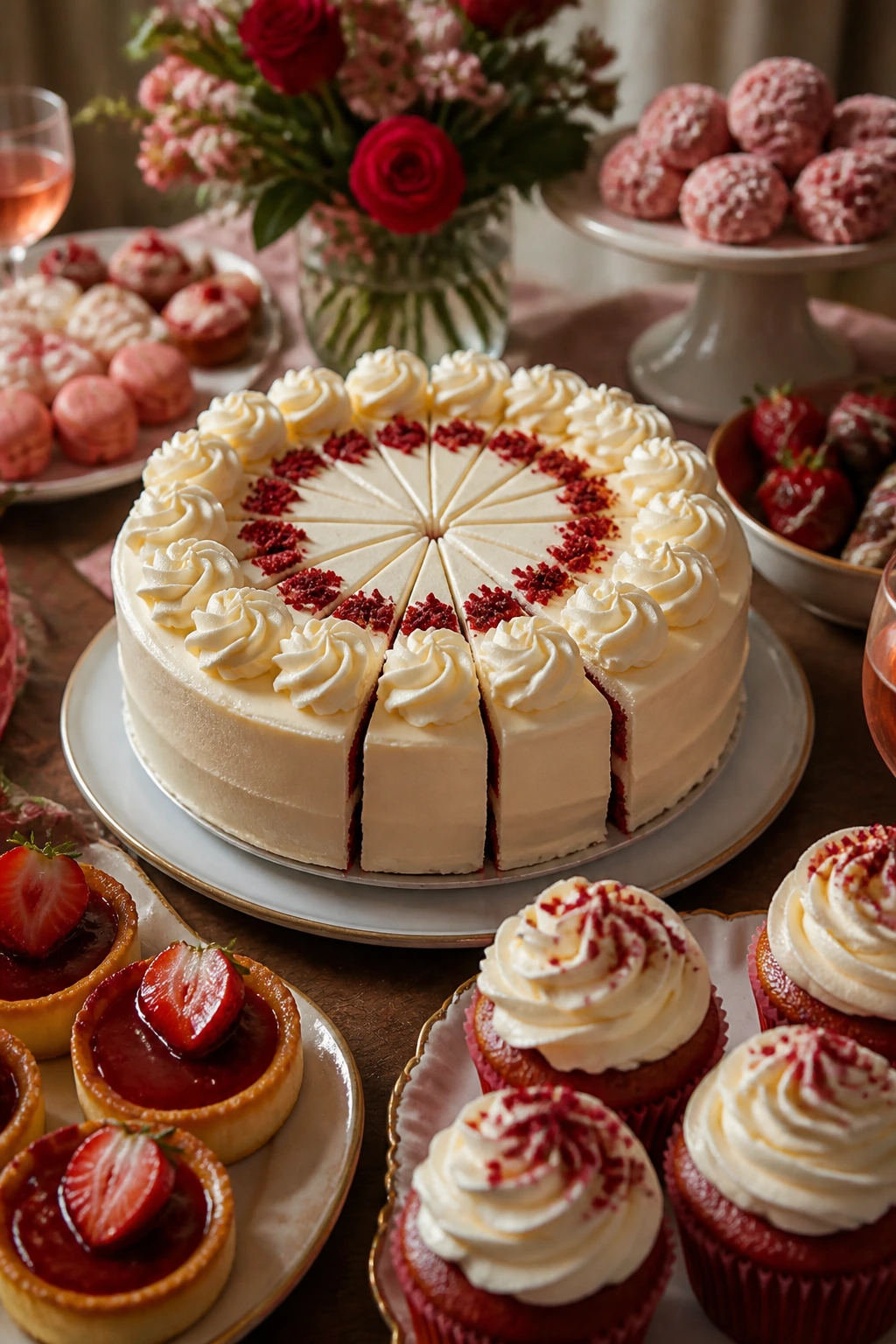
Presentation: Serve the most delicate pieces from the center of the table and keep the sturdier bars and cookies on the edges, where people can grab them without disturbing the frosting on the taller desserts. If you have a centerpiece cake, cut it into slim wedges first so the first slice does not turn into a wrestling match with the icing.
Accompaniments: Hot coffee, espresso, cold milk, and sparkling water with lemon all work here. If the table leans berry-forward, black tea or a lightly sweetened iced tea keeps the sweetness from stacking up. A small bowl of extra berries on the side is useful too — people like to add one more strawberry to their plate when the frosting is rich.
Portions: For a dessert table after dinner, count on two to three small pieces per guest rather than one enormous slice of cake. A cupcake, a brownie heart, and a cookie is a sensible plate. If dessert is the whole event, bake about 10 to 15 percent extra, because people always take a second small piece when the portions are neat and bite-size.
Beverage Pairing: I like espresso with chocolate-heavy pieces and chilled milk with red velvet or vanilla-forward desserts. If you want something a little more polished, a dry sparkling rosé or a plain sparkling wine works with berries and cream cheese frosting because it cuts through the richness instead of fighting it.
The key is not to serve everything at room temperature for hours. Put out part of the table, keep the backup chilled, and refill in waves. That keeps the frosting looking good and keeps the fruit from going soft and wet.
Small Moves That Make the Whole Spread Taste More Finished
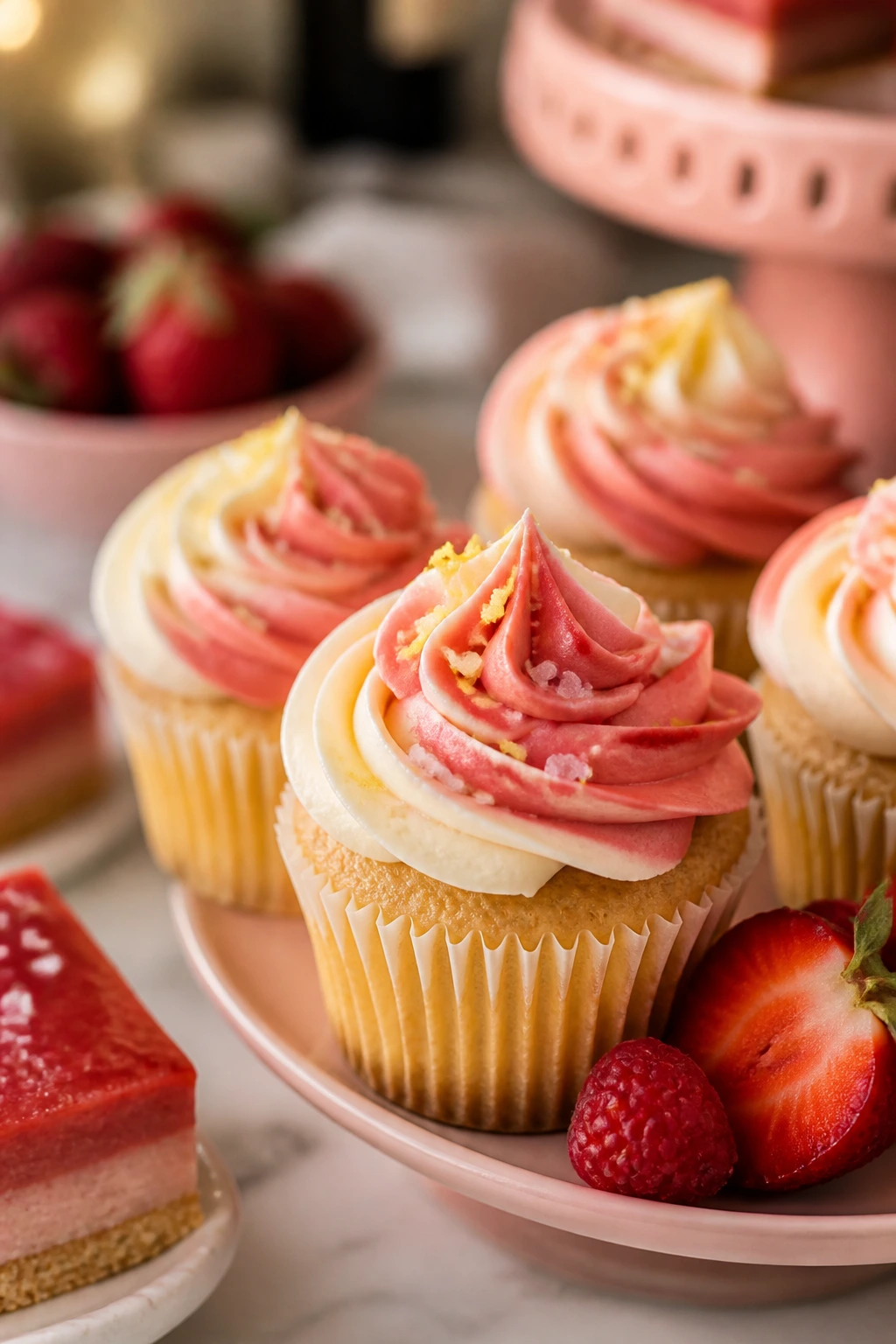
A dessert table can feel a little plain even when the recipes are solid. The fix is not more sugar. It is a handful of small finishing moves that sharpen flavor and make the pieces taste like they were meant to sit together.
Flavor Enhancement: Add a pinch of salt to the frosting and, if the table leans berry-heavy, a little lemon zest. That small bit of acid makes cream cheese frosting taste brighter and keeps it from settling into one soft note after a few bites.
Customization: Fold freeze-dried strawberry powder into a third of the frosting if you want pink swirls without watery dye. You can also stir a spoonful of cocoa into part of the batch for a two-tone effect on cupcakes or a border on the cake. Keep the colors separate until the last minute if you want the table to feel layered instead of matched.
Serving Suggestions: Use fresh strawberries only if they are dry and cut right before serving. If you cut them early, the juice runs into the frosting and leaves pink streaks that look sloppy. Chocolate curls, shaved dark chocolate, and a dusting of cocoa are safer garnish choices because they stay put.
Time-Saver: Bake bars and sheet cakes in advance, chill them, then cut them cold. Cold cake slices cleaner, and a chilled crumb takes frosting more neatly. That one habit saves more time than any fancy piping trick.
Make-It-Yours: If you need a lighter table, use one frosted cake as the centerpiece and let the smaller items stay plain. A bowl of berries, a few cookies, and one well-frosted cake often looks more deliberate than four different desserts all trying to shout at once.
I also like keeping one spare bowl of frosting back in the fridge. Guests always ask for “just a little more” on the side. A cold backup bowl makes that request easy instead of messy.
Common Mistakes That Flatten the Look or Flavor
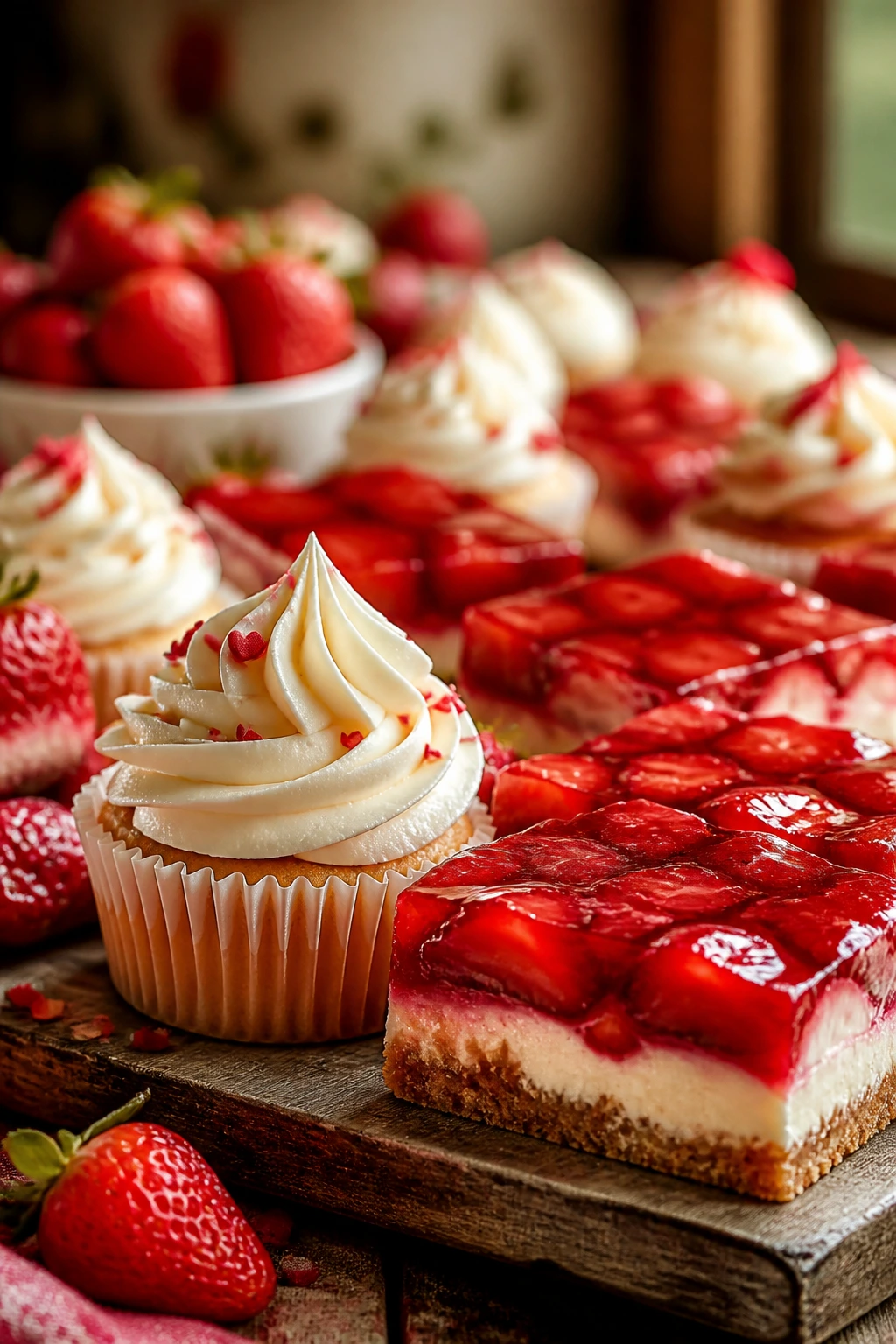
Using spreadable cream cheese from a tub: This is the fastest way to get frosting that looks smooth for ten minutes and then relaxes into a soft smear. Tub cream cheese carries more water and stabilizers, which is fine for bagels and not fine for a dessert table. Use block cream cheese if you want the frosting to hold its shape.
Beating the frosting into a cloud: Too much mixing warms the fat and drags air into the batch, which can make it loose and glossy. The sign is simple: the frosting looks fluffy in the bowl but starts slumping as soon as you pipe it. Stop mixing as soon as the sugar disappears and the texture looks satiny.
Putting fruit on too early: Sliced strawberries, raspberries, and cherries leak juice. If they sit on frosting for hours, they stain the white topping and create wet patches where the fruit touches the cream. Add fresh fruit at the last minute, or keep it whole until the table is nearly ready.
Choosing only soft desserts: If every item is a soft cake or tender cupcake, the table feels mushy after the first few bites. You need contrast. A brownie, a sugar cookie, or a crisp-edged bar gives the table a little structure and makes the frosting taste better because the texture changes.
Serving the table straight from the fridge and leaving it there too long: Cold cream cheese frosting tastes stiff and a little dull, but leaving it out too long creates a food-safety problem. Bring the desserts out for a short window, then rotate in chilled backups. That way the frosting softens enough to taste good without drifting into danger.
Overloading the table with color and garnish: Too many toppings turn the spread into visual noise. One garnish per item is enough. The eye likes repeatable shapes more than chaos, and people can eat faster when they are not trying to brush half a pound of sprinkles off their plate.
Variations for Different Tastes and Dietary Needs
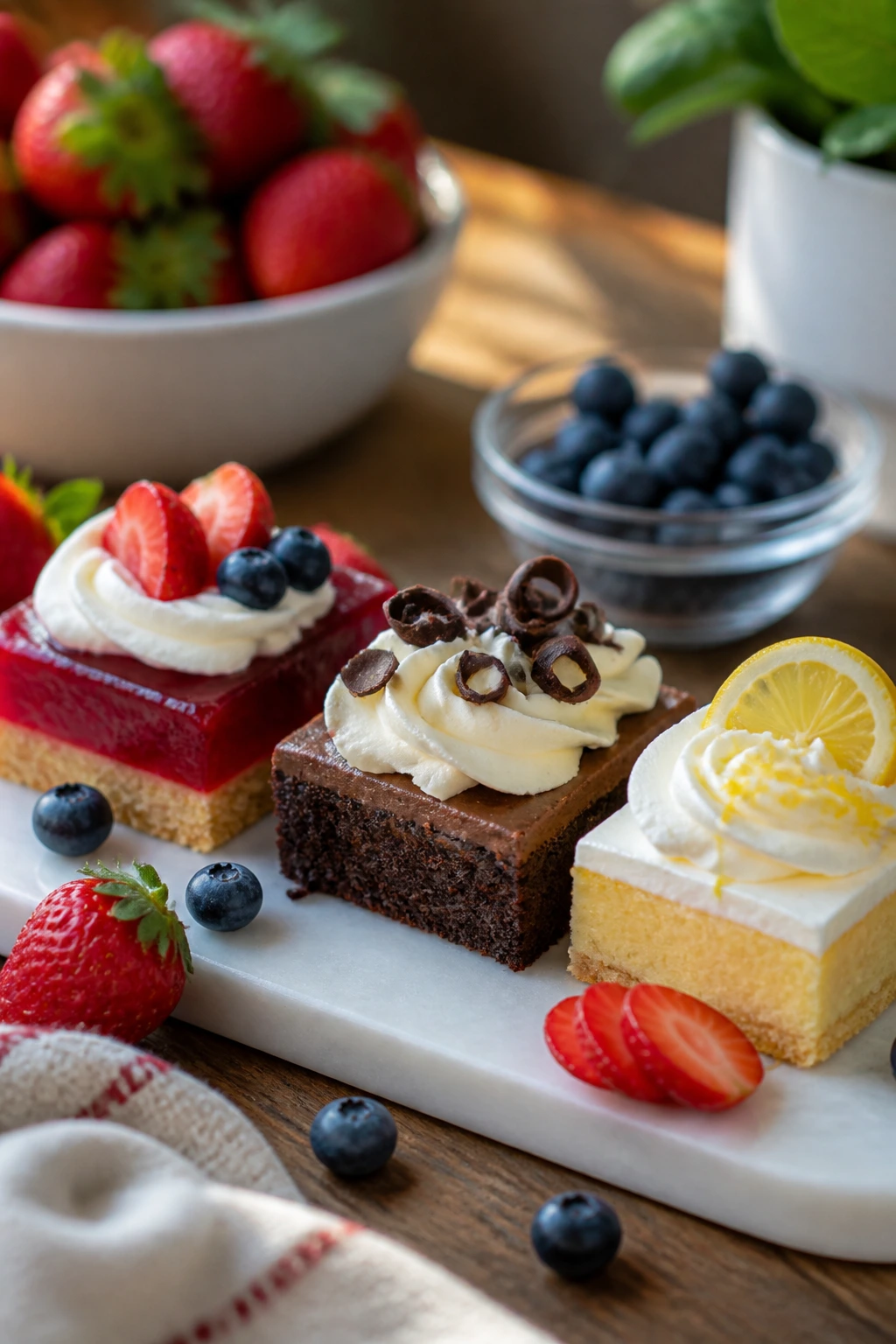
Berry Bright Table: Keep the frosting plain, then build the table around strawberries, raspberries, and a little raspberry jam brushed over sheet cake bars. This version tastes lighter because the fruit gives the sweetness a sharp edge. It works best when you want the table to feel fresh and not too heavy after dinner.
Deep Cocoa Table: Add 2 tablespoons of sifted cocoa powder to half the frosting and use it on brownies, chocolate cupcakes, and chocolate loaf squares. The cocoa makes the frosting taste more like a truffle filling and less like a standard swirl. A tiny pinch of flaky salt on top makes the chocolate taste deeper.
Lemon-Edge Table: Stir lemon zest into the frosting and pair it with vanilla sugar cookies, lemon loaf squares, and a few strawberries for color. The citrus keeps the frosting from tasting too rich, which is useful if you know your guests do not want a heavy dessert plate. It is also the cleanest swap if you want a table that still reads romantic without leaning too dark.
Dairy-Free Soft Landing: Use plant-based cream cheese and a dairy-free butter substitute, then chill the frosting longer than usual before piping. The texture will be a little softer, so keep the decorations simple and lean on bars and cookies instead of tall swirls. Taste the frosting before you serve it; some plant-based versions need an extra pinch of salt to keep the flavor from going flat.
Cookie-Heavy Spread: If you want something easier to pass around, shift the table toward thumbprints, sandwich cookies, and frosted cutouts. Use the frosting as filling or as a small top dollop rather than a thick coat. That keeps the table neat and makes it easier for guests to pick up pieces without forks.
A good variation changes the mood, not just the color. If the swap only changes the tint and nothing else, it is not doing much work.
Tools That Save Time and Mess
-
Stand mixer or hand mixer — a hand mixer works fine if you keep the cream cheese cool and stop as soon as the frosting turns smooth.
-
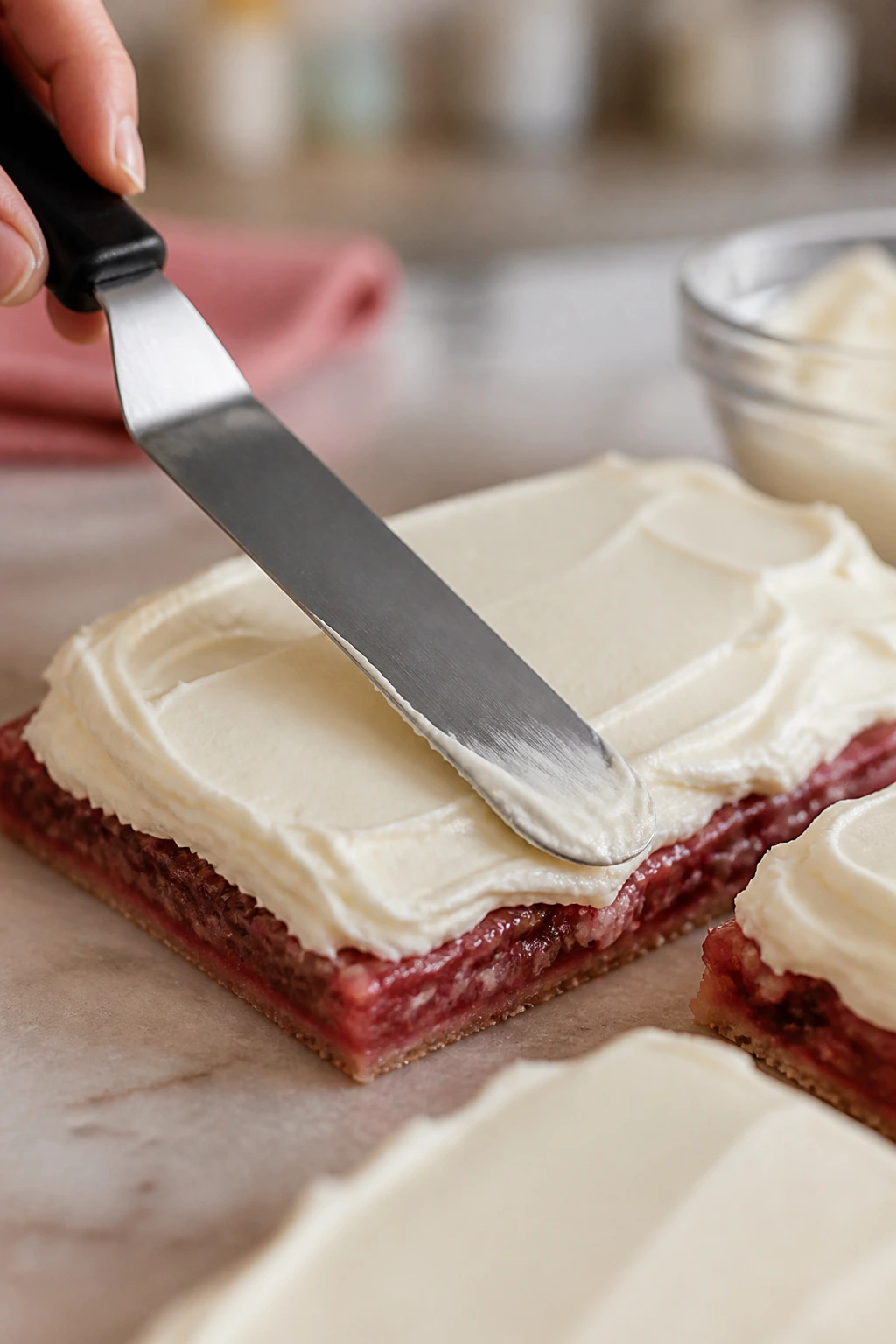
Offset spatula — the cleanest way to spread frosting on bars, cakes, and cookie tops without dragging crumbs through the bowl.
-
Piping bags and a large open-star tip — useful for tall cupcake swirls that need to look neat after sitting on the table.
-
Cake stands or low risers — these create height without making the table unstable or cluttered.
-
Sheet pans with parchment paper — the safest way to chill brownies, bars, and cookies before slicing.
-
Serrated knife — helps with cake layers and sheet cake bars, especially when you want sharp edges instead of smashed crumbs.
-
Small offset spatula or butter knife — handy for smaller cookies and quick touch-ups on the frosting.
-
Airtight containers with flat lids — important for keeping finished desserts from picking up fridge smells or getting their frosting bumped.
-
Fine-mesh sieve — worth having for powdered sugar, cocoa, or freeze-dried berry powder if you want a smooth finish.
-
Disposable or reusable piping bags — faster than spooning frosting and much cleaner if you are splitting one batch into plain and tinted portions.
-
Parchment squares — useful under sticky bars and frosted pieces so they lift cleanly without leaving crumbs on the platter.
-
Kitchen scale, if you like precision — not required, but helpful when you want the frosting batch to behave the same way every time.
Make-Ahead, Storage, and Food Safety
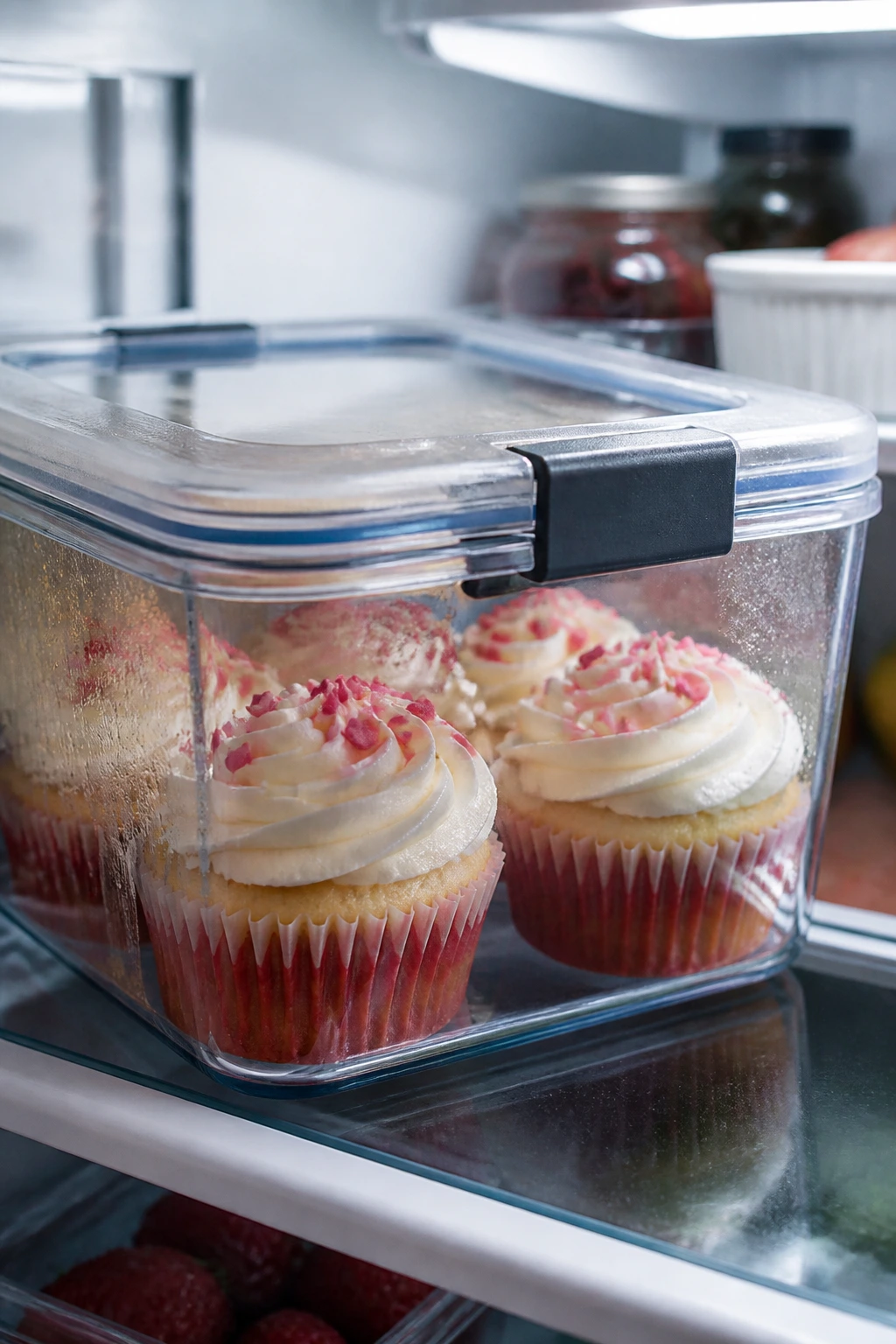
Cream cheese frosting buys you convenience, but not freedom from the fridge. That is the tradeoff. The flavor is worth it, though, and if you plan ahead, the whole table can be made in pieces without losing texture.
What to make ahead
Bake cupcakes, cake layers, brownies, bars, and cookies one to two days ahead. Keep them wrapped tightly once they are fully cool. Unfrosted cake layers freeze well for up to 2 months; wrap each layer in plastic wrap, then foil, and thaw overnight in the refrigerator before using.
Cream cheese frosting itself can be made 2 to 3 days ahead and kept in an airtight container in the refrigerator. It will stiffen in the cold, so let it sit at room temperature for 10 to 15 minutes and stir gently before piping or spreading. If it looks too firm, do not hammer it with the mixer. A short stir usually brings it back.
How long it can sit out
Perishable cream cheese frosting should not sit out for more than 2 hours total at room temperature. If the room is warm, cut that window down to about 1 hour. That means you should stage the dessert table, not dump everything out at once and hope for the best.
The easiest fix is simple: keep a chilled backup tray in the refrigerator and swap it in when the first tray starts to soften. This works especially well for cupcakes, bars, and cookies. Fresh fruit should be added as late as possible, because sliced berries and moisture are the fastest route to a sticky table.
Freezing the finished desserts
You can freeze unfrosted cakes and brownies for up to 2 months, and you can freeze some frosted pieces for about 1 month if they are well wrapped and the decoration is not delicate. Thaw them in the refrigerator, not on the counter, so condensation does not bead up on the frosting.
Once thawed, bring the desserts to a cool room temperature before serving. Cold cream cheese frosting tastes tight and dull; a short rest softens the crumb and brings the vanilla back. That little wait is worth it.
Frequently Asked Questions
Can I make the cream cheese frosting the day before?
Yes. Keep it in an airtight container in the refrigerator and stir it gently before using it. If it seems stiff, let it sit at room temperature for 10 to 15 minutes first; that keeps you from overbeating the frosting into something loose.
Will cream cheese frosting hold up on a dessert table for hours?
Not all day, and not in a warm room. It is best treated as a perishable topping with a short serving window, then rotated back into the fridge. If you need the table out for a long event, put out smaller batches in waves instead of exposing everything at once.
Can I use whipped or spreadable cream cheese instead of block cream cheese?
I would not if structure matters. Whipped and spreadable versions contain more air or water, and the frosting can get soft faster. Block cream cheese gives you a firmer, cleaner finish, which matters when the frosting is supposed to sit on cupcakes and bars.
What desserts travel best with this frosting?
Brownies, sheet cake bars, cookies, and small loaf cakes travel well because they have sturdy edges. Tall layer cakes are fine too, but they need a box that keeps the frosting from getting bumped. Skip anything that sweats easily or collapses under its own weight.
How do I make the frosting less sweet without ruining it?
Use the lower end of the powdered sugar range, then add a pinch more salt and a little vanilla. If the frosting still tastes too sweet, a touch of lemon zest or freeze-dried berry powder can sharpen it without thinning the texture. That works better than trying to cut the sugar too far.
What if my frosting turns runny?
Chill it for 15 to 20 minutes first. If it still feels loose, add a small handful of sifted powdered sugar and mix briefly, but stop as soon as the texture firms up. If you used tub cream cheese or overmixed it, chilling may help more than extra sugar.
Can I tint the frosting pink for the table?
Yes, but use gel coloring and add it a tiny bit at a time. Liquid coloring can loosen the frosting, and pink that is too bright makes the table feel more like a birthday party than a Valentine spread. A pale blush is easier to pair with berries and chocolate.
Can I frost everything the night before?
You can frost many of the pieces, but I would not add fresh berries or fragile garnishes until the last possible moment. The frosting itself holds well when chilled, yet fruit and moisture are what usually spoil the look. Keep the finished desserts covered and cold, then decorate the top layer just before serving.
A Sweet Table Worth Setting
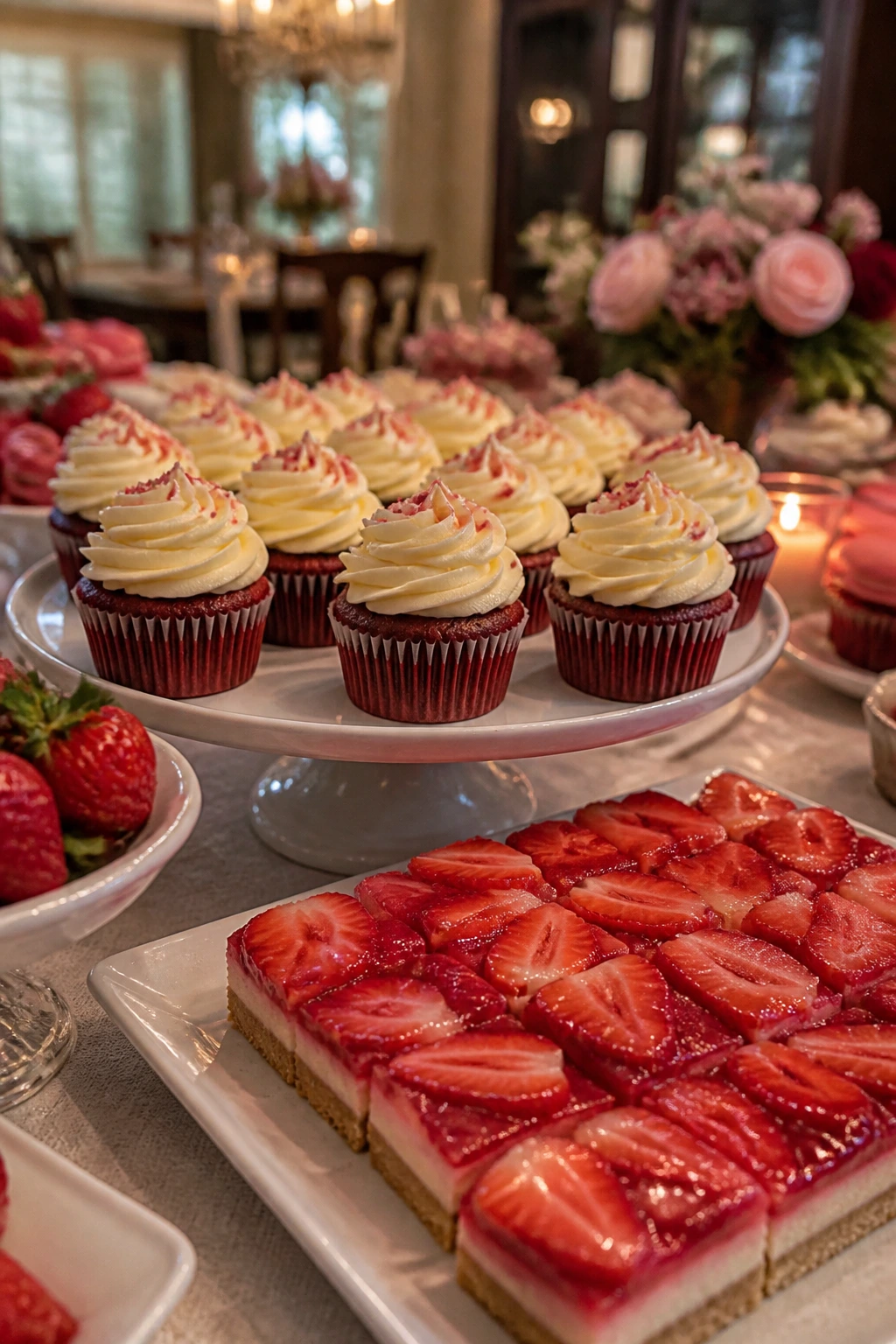
The nicest thing about a dessert table built this way is how calm it feels once it is out in the room. The frosting ties the pieces together, the colors stay on the right side of elegant, and the whole spread reads as one thought instead of a pile of sweets.
That is what cream cheese frosting gives you when you treat it well. It is not flashy. It is useful. It gives red velvet a cleaner finish, makes strawberries taste sharper, and keeps chocolate from taking over the room.
Start with one good frosting, choose desserts that can handle a fork and a chill, and let the berries and cocoa do the rest. The table will take care of itself more than you expect.