



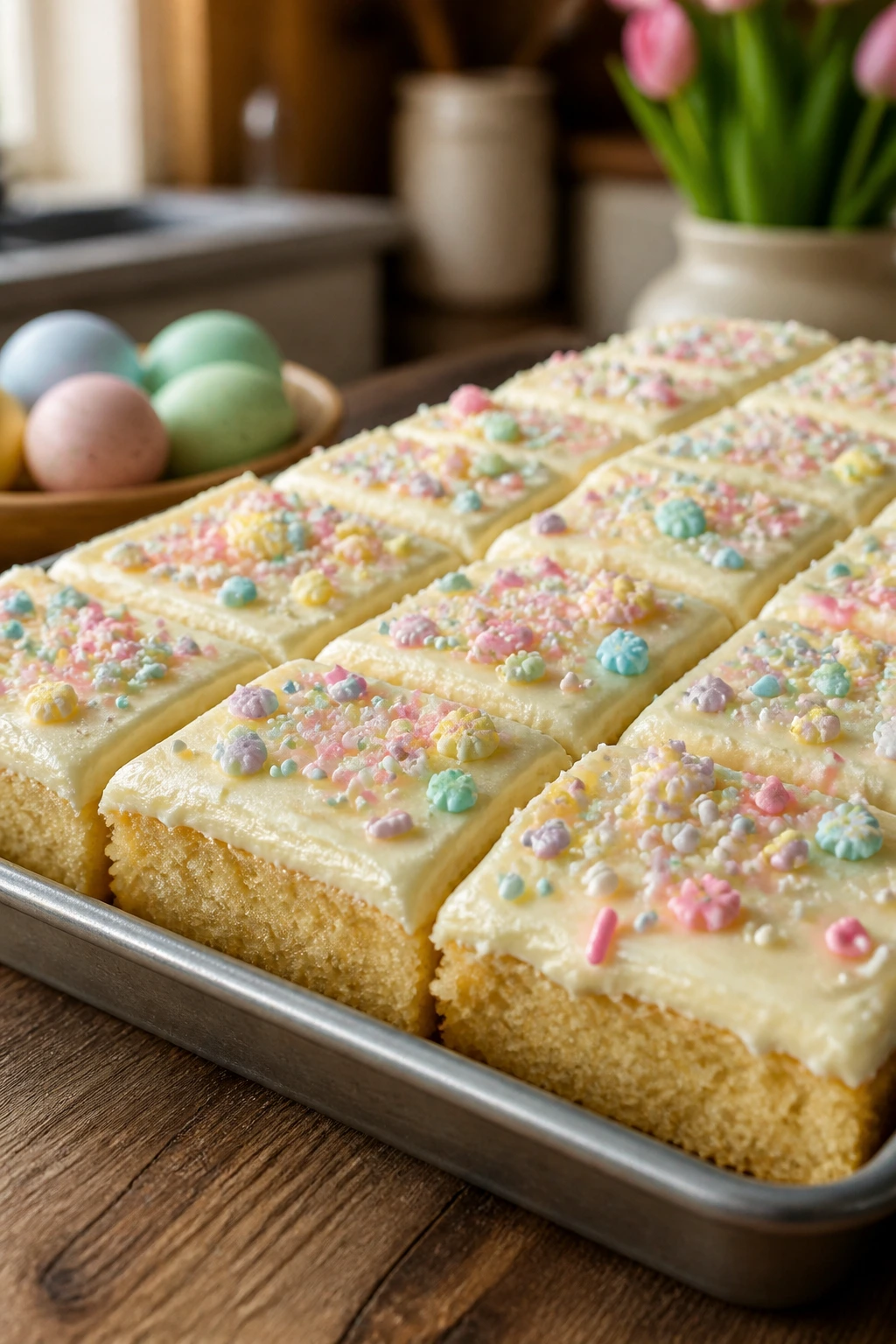
The first thing you notice is the frosting. It starts cold and thick, then spreads into a smooth, pale layer over the vanilla bars, and the sprinkles sit on top like confetti that actually stays put. These fluffy Easter sugar cookie bars with cream cheese frosting are the kind of dessert that makes a plain 9×13 pan feel a little ceremonial without asking you to roll, chill, and cut forty tiny shapes.
I love a cut-out cookie as much as anyone, but for a holiday table I want something that bakes evenly, slices neatly, and still tastes like sugar-cookie nostalgia. Bars do that job better than a tray of bunny shapes with burnt ears. The crumb stays tender because the dough is rich with butter and sour cream, and the frosting adds enough tang to keep the sweetness from flattening out.
The trick is treating them like a cake in bar form, not a sheet of raw cookie dough. A metal pan, a light hand with the flour, and a full cool-down make the difference between plush and dense. Get those pieces right, and the last square tends to disappear faster than the first.
Why These Sugar Cookie Bars Belong on the Easter Table
-
Soft crumb, not a dry snap: The butter, sour cream, and eggs work together to make a thick, tender bar that stays plush after chilling.
-
No cutters, no scraps, no rerolling: One pan does the work of an entire cookie sheet, which is a gift when the oven is already busy.
-
The frosting carries the whole look: Cream cheese frosting hides small imperfections on the top, so you do not need bakery-level precision to make the pan look neat.
-
Easy to decorate in a way that actually reads “Easter”: Pastel sprinkles, sanding sugar, or a few candy eggs turn the bars into a holiday dessert in minutes.
-
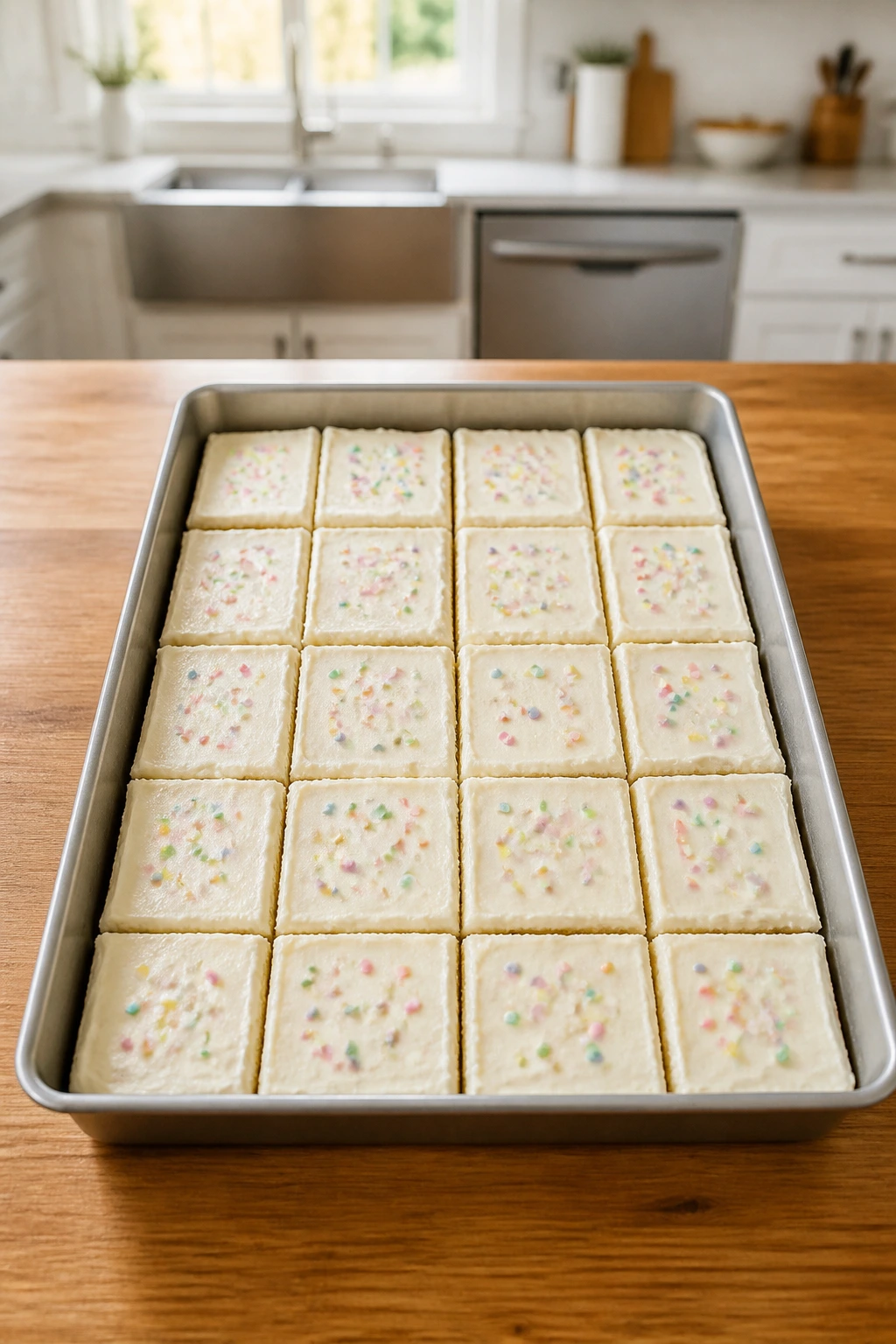
Better for serving a group than individual cookies: You can cut the pan into 16 larger bars or 24 smaller squares, and the slices stack cleanly on a platter.
-
They travel well once chilled: A cooled, frosted pan slices into squares that hold their shape in a container, which matters if you are carrying dessert somewhere else.
Timing, Yield, and the Pan That Gives You Neat Slices
Yield: 16 generous bars or 24 smaller squares
Prep Time: 25 minutes
Cook Time: 18 to 22 minutes
Total Time: About 1 hour 45 minutes, including cooling and frosting set
Difficulty: Beginner — the steps are straightforward, but the bars need a proper cool-down before frosting so they slice cleanly.
Chill/Rest Time: 45 to 60 minutes cooling, plus about 20 minutes after frosting for the neatest cuts
Best Served: Cool or at room temperature, after the frosting has had time to settle
What to Gather for Soft Bars and Tangy Frosting
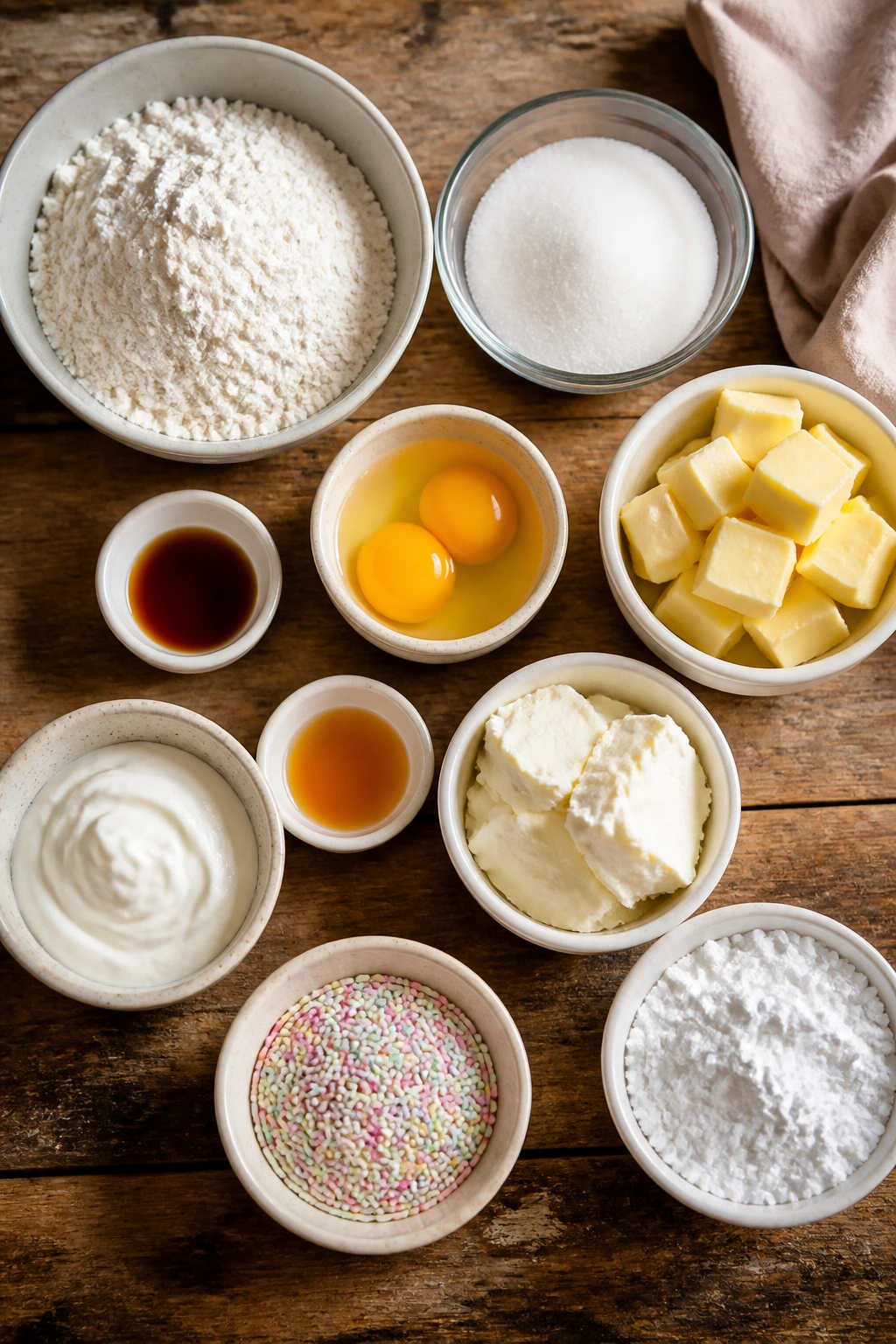
For the Sugar Cookie Bars:
- 2 3/4 cups all-purpose flour, spooned and leveled
- 1 teaspoon baking powder
- 1/2 teaspoon fine sea salt
- 1 cup (2 sticks) unsalted butter, softened to cool room temperature
- 1 1/2 cups granulated sugar
- 2 large eggs, room temperature if possible
- 2 teaspoons pure vanilla extract
- 1 teaspoon almond extract
- 2 tablespoons sour cream, full-fat if you have it
For the Cream Cheese Frosting:
- 8 ounces cream cheese, softened
- 1/2 cup (1 stick) unsalted butter, softened
- 3 1/2 cups powdered sugar, sifted if lumpy
- 1 teaspoon pure vanilla extract
- Pinch of fine salt
- 1 to 2 tablespoons heavy cream or milk, only if needed for spreading
For the Finish:
- 1/4 cup pastel sprinkles or sanding sugar
What Each Ingredient Is Doing in the Bowl
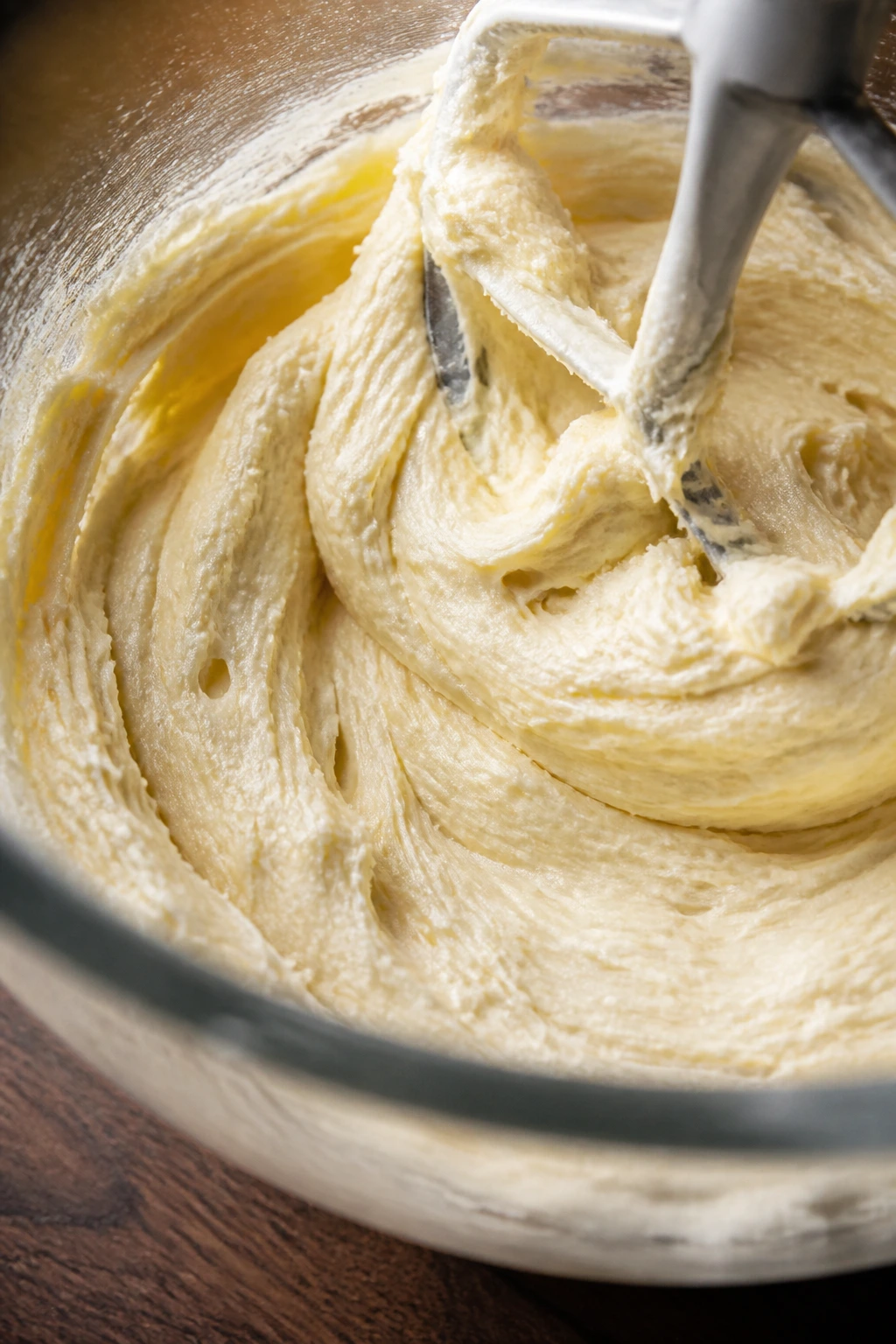
The ingredient list is short, which is exactly why each piece matters. There is nowhere for a sloppy measurement to hide here.
For the Bars
-
What to use: 2 3/4 cups all-purpose flour, 1 teaspoon baking powder, 1/2 teaspoon fine sea salt, 1 cup butter, 1 1/2 cups sugar, 2 eggs, 2 teaspoons vanilla, 1 teaspoon almond extract, and 2 tablespoons sour cream.
-
Preparation: Spoon the flour into the cup and level it off, then let the butter soften until it yields to a finger press without looking greasy. The eggs mix in more smoothly if they are not cold.
-
Substitutions: If almond extract is not your thing, use an extra teaspoon of vanilla instead. Whole-milk Greek yogurt can stand in for sour cream if that is what you have.
-
Tips: Sour cream is not there for tang alone; it keeps the bars soft after they cool. Skip the temptation to add more flour if the dough looks thick — thick is exactly what you want in a cookie bar base.
For the Cream Cheese Frosting
-
What to use: 8 ounces cream cheese, 1/2 cup butter, 3 1/2 cups powdered sugar, 1 teaspoon vanilla, a pinch of salt, and 1 to 2 tablespoons cream or milk if the frosting needs loosening.
-
Preparation: Soften both the butter and cream cheese fully before mixing. Cold cream cheese leaves tiny lumps that never quite disappear, no matter how long you beat.
-
Substitutions: Neufchâtel works in place of cream cheese if you want a slightly lighter frosting, though the flavor will be a touch less rich. Dairy-free cream cheese can work in a pinch, but the frosting will need extra chilling.
-
Tips: Beat the cream cheese and butter together before the sugar goes in. That first minute breaks up the fat and gives you a smoother finish than dumping everything together at once.
For the Finish
-
What to use: 1/4 cup pastel sprinkles or sanding sugar.
-
Preparation: Add the sprinkles right after frosting so they settle into the surface before it starts to crust.
-
Substitutions: Mini chocolate eggs, pastel confetti sprinkles, or a little shredded coconut all fit the Easter theme.
-
Tips: Use jimmies or sanding sugar if you want color that stays put. Nonpareils bleed faster and can make the frosting look muddy if the bars sit too long.
The Tools That Keep the Pan Flat and the Frosting Smooth
-
9×13-inch metal baking pan: A metal pan bakes the bars more evenly than glass; the edges and center finish at about the same pace.
-
Parchment paper: Leave a sling over two sides so you can lift the whole slab out in one piece. It makes cutting much easier.
-
Hand mixer or stand mixer: Either one works for creaming the butter and sugar and for smoothing the frosting.
-
Large mixing bowl: You need room to add the dry ingredients without sending flour over the edge.
-
Rubber spatula: Useful for scraping the bowl and pressing the dough into the pan without tearing the parchment.
-
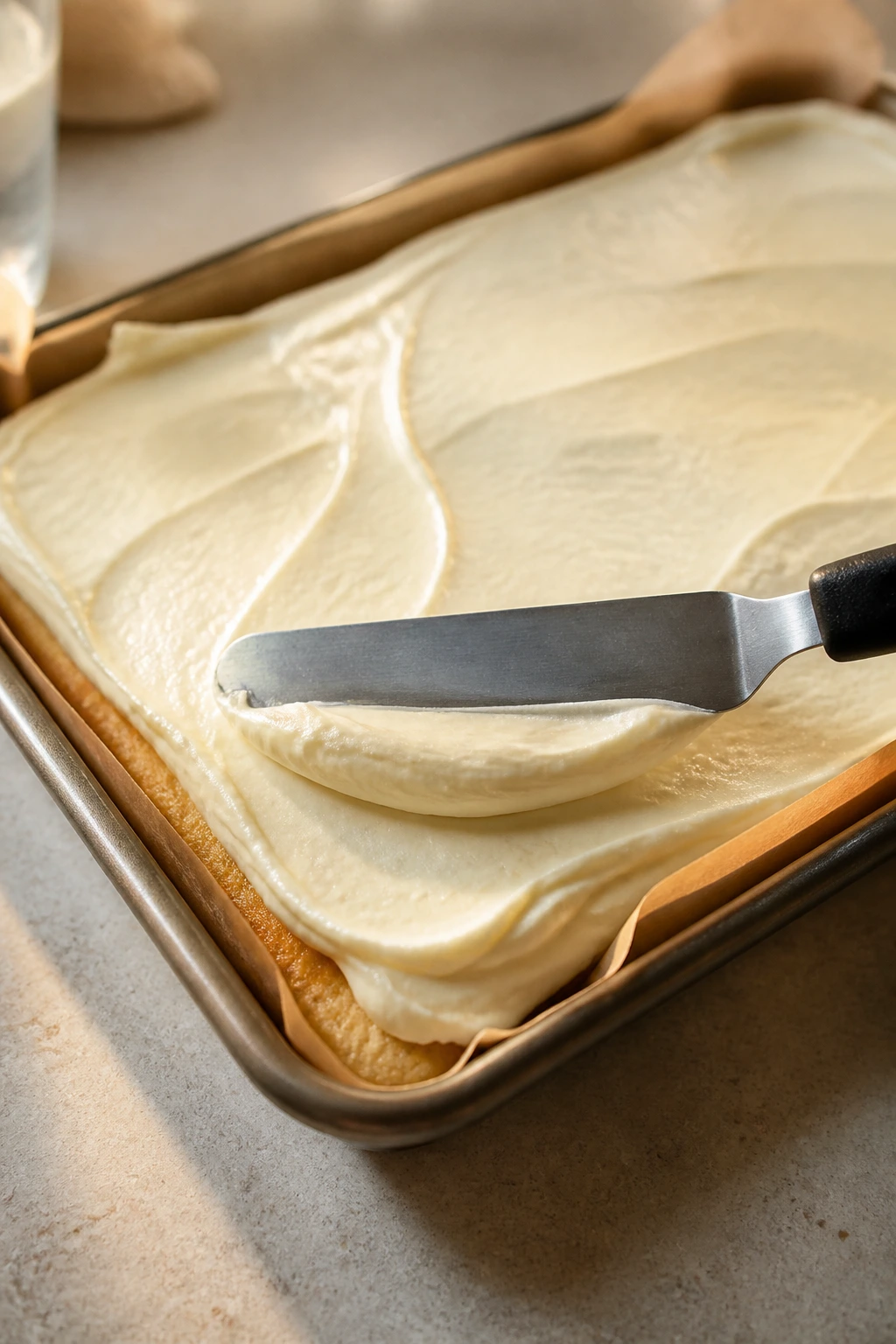
Offset spatula or butter knife: An offset spatula gives the frosting a smooth, even layer, but the back of a spoon can handle it.
-
Wire cooling rack: The pan needs airflow underneath so the bars cool evenly instead of steaming in the bottom.
-
Sharp knife or bench scraper: A clean blade gives neat bars, especially after a short chill.
Mixing the Dough So It Stays Plush
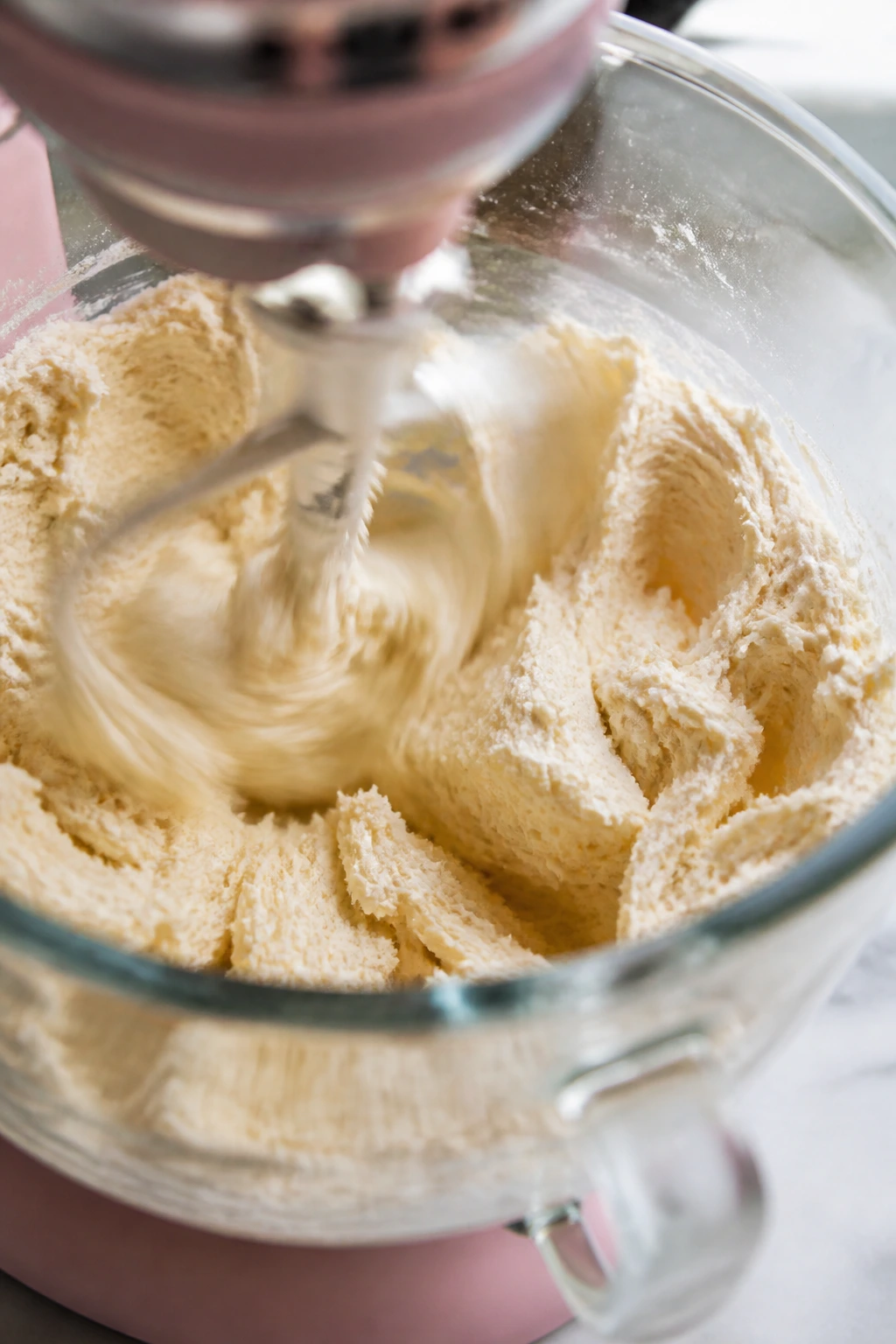
Creaming matters more than people think here. If you beat the butter and sugar until it looks like whipped frosting, the bars can bake up airy in a way that loses the dense, tender bite you want. You are looking for pale, fluffy, and slightly expanded — not mousse.
Prep the Pan and Dry Ingredients
-
Preheat the oven to 350°F (175°C) and position a rack in the center. Line a 9×13-inch metal baking pan with parchment paper, leaving overhang on two opposite sides, then lightly grease the parchment and the exposed pan edges.
-
Whisk together the flour, baking powder, and salt in a medium bowl until the mixture looks evenly combined. Set it aside.
Build the Dough
-
In a large bowl, beat the butter and granulated sugar on medium speed for 2 to 3 minutes, until the mixture looks lighter in color and a little fluffy around the edges. It should hold soft ridges when you pull the beaters through it.
-
Add the eggs one at a time, beating just until each disappears into the butter mixture. Mix in the vanilla, almond extract, and sour cream. The batter may look slightly curdled for a moment. That is fine.
-
Reduce the mixer to low speed and add the dry ingredients in two additions, mixing only until the last streaks of flour disappear. Do not keep beating to “make it smoother” — that is how the bars turn tight and cakey.
Baking the Bars Until the Center Sets
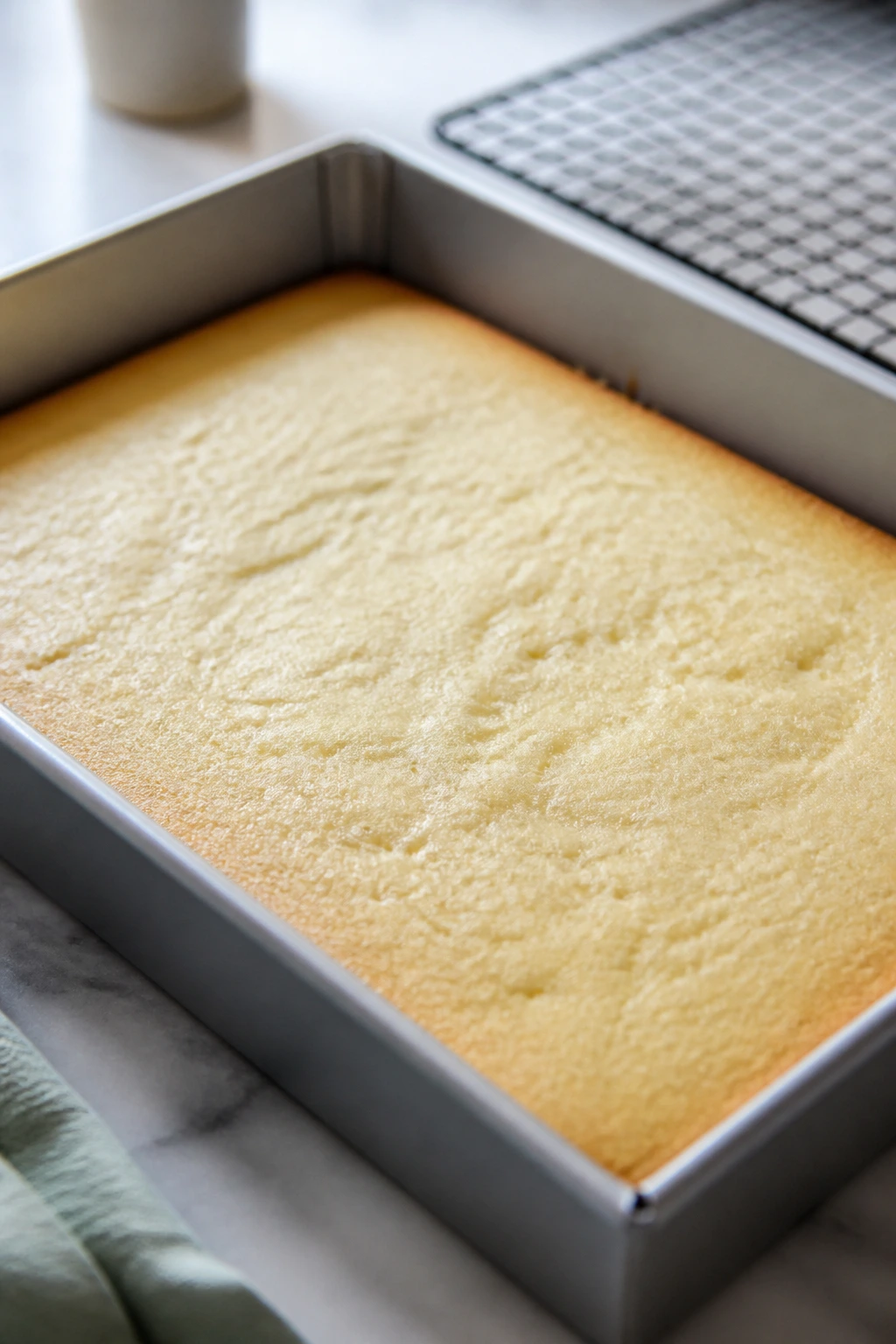
The bars should not look deeply browned when they come out. Pale is good here. The edges should pick up a little gold, and the center should lose its wet shine, but it will still feel soft if you touch the top lightly.
Spread and Bake
-
Scrape the dough into the prepared pan and press it into an even layer with lightly damp fingertips or an offset spatula. Pay attention to the corners, which tend to stay thicker than the middle if you rush this step.
-
Bake for 18 to 22 minutes, rotating the pan at the halfway point if your oven has hot spots. The bars are done when the top looks set, the edges are just turning light gold, and the center springs back when tapped gently. Pull the pan before the top turns dark; overbaking is the fastest way to lose the soft, plush texture.
-
Set the pan on a wire rack and let the bars cool for 45 to 60 minutes, until the pan is only slightly warm. If you frost too soon, the topping melts and slips toward the edges.
Whipping the Cream Cheese Frosting
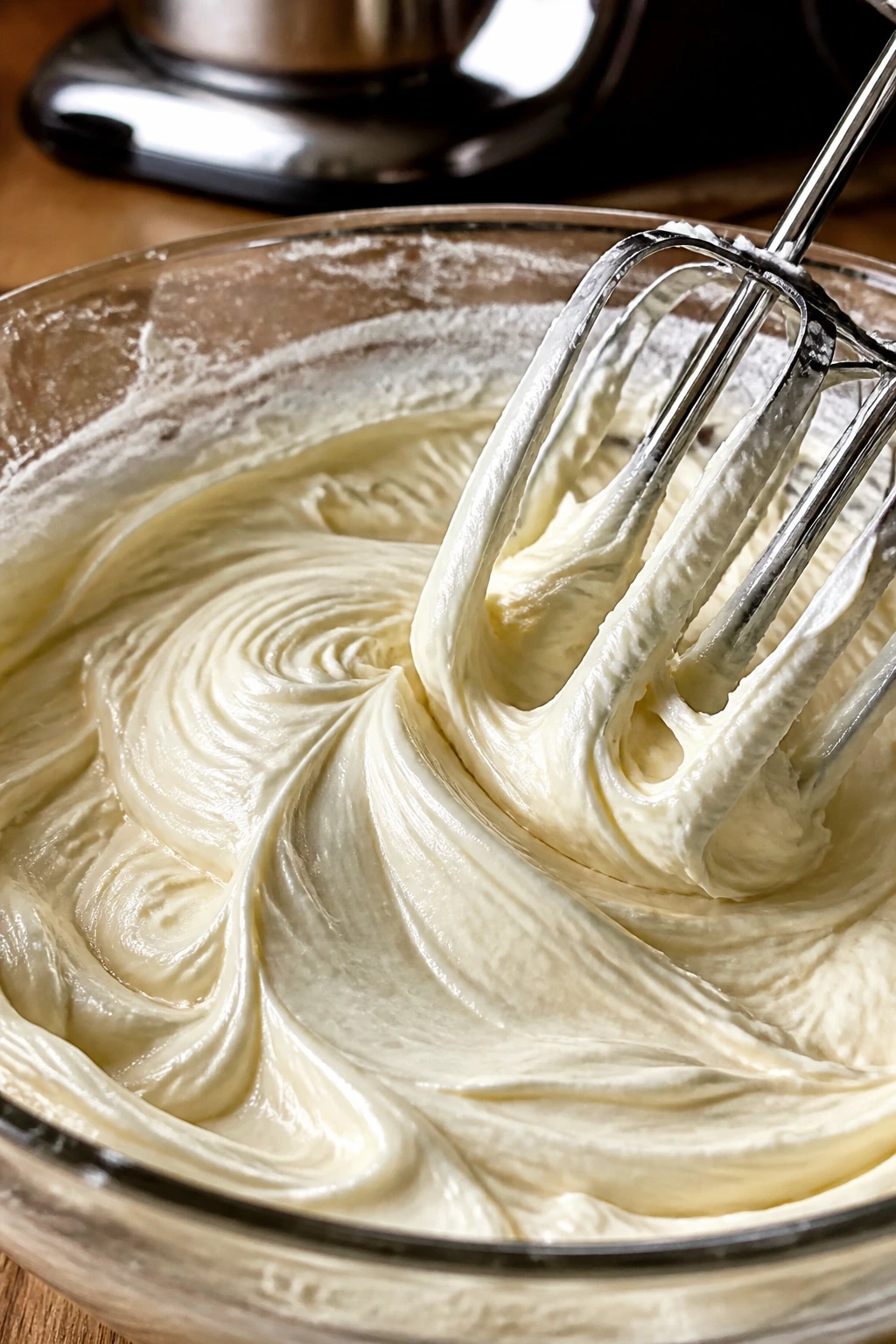
Cream cheese frosting has a little drama built into it. Too cold and it stays lumpy. Too warm and it goes slack. The sweet spot is soft enough to beat smooth, but still firm enough to hold a swoop from the spatula.
Make the Frosting
-
In a medium bowl, beat the cream cheese and butter together on medium speed for 1 to 2 minutes, until smooth and fluffy with no visible lumps.
-
Add the powdered sugar, vanilla, and salt in two additions, beating on low at first so the sugar does not fly everywhere, then on medium for 2 to 3 minutes until the frosting looks thick and satiny. If it seems too stiff to spread, beat in 1 teaspoon of cream or milk at a time.
-
Spread the frosting over the completely cooled bars, using an offset spatula to create a smooth layer or a few loose swirls. Shower the top with pastel sprinkles while the frosting is still soft, then chill the pan for 20 to 30 minutes before lifting it out and cutting it into squares.
How to Cut, Plate, and Decorate Them
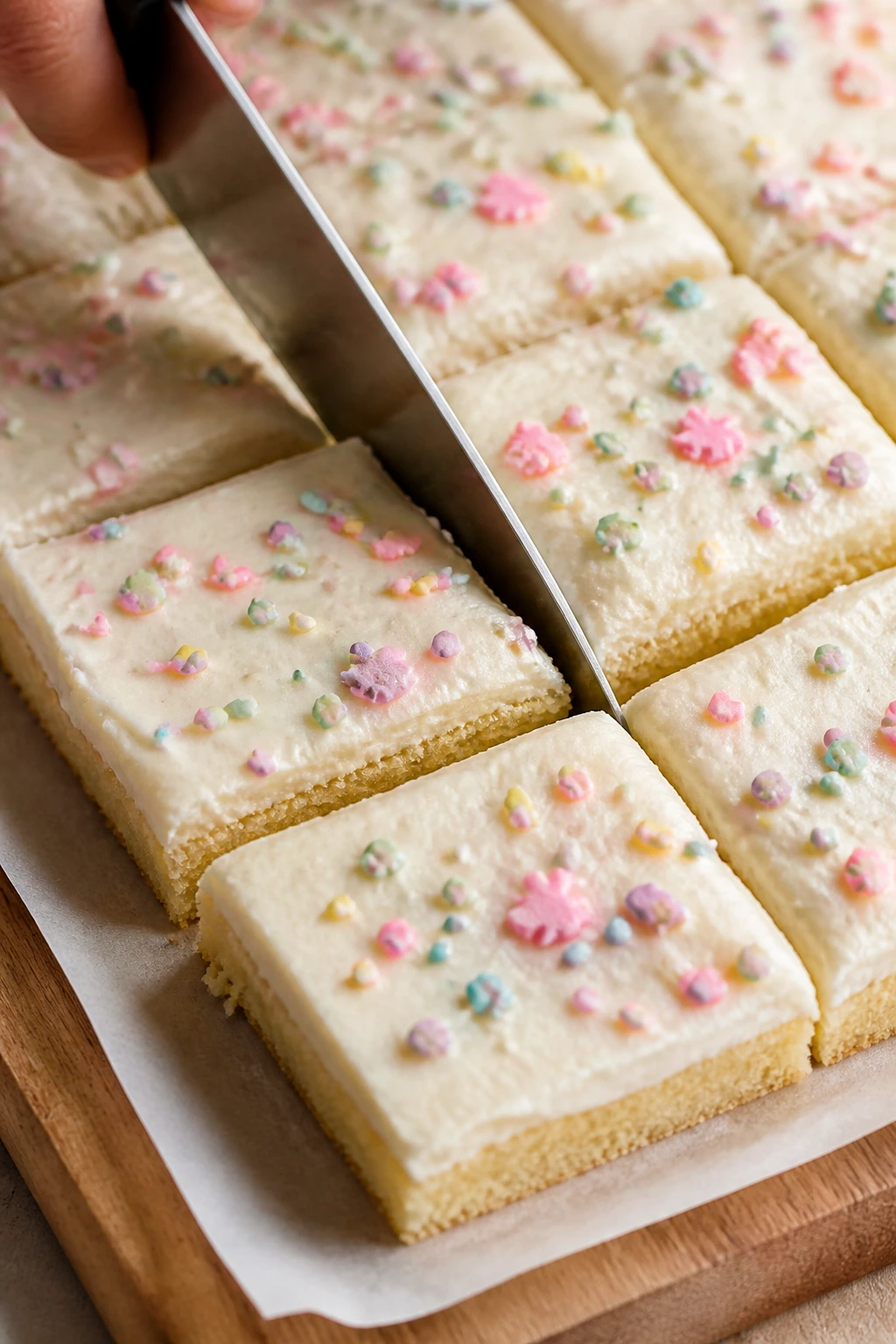
Presentation: Lift the slab out with the parchment sling, set it on a cutting board, and use a long sharp knife to cut clean squares. Wiping the blade between cuts sounds fussy, but it gives you those crisp edges that make the bars look neat on a platter.
Accompaniments: These bars sit nicely beside sliced strawberries, a bowl of berries with a spoonful of sugar, or a simple fruit salad. On a brunch table, they make sense next to savory food because the tangy frosting pulls back some of the sweetness.
Portions: Cut 16 large bars if the dessert is serving after a meal, or 24 smaller squares for a buffet where people are taking a little of everything. If you want taller bars, use the 16-piece cut and let the frosting be generous.
Beverage Pairing: Strong coffee is the cleanest match because it cuts through the sugar and cream cheese. Cold milk works too, especially if children are at the table. A light cup of Earl Grey or chamomile keeps the vanilla flavor front and center.
Extra Tips for a Cleaner Slice and Better Flavor
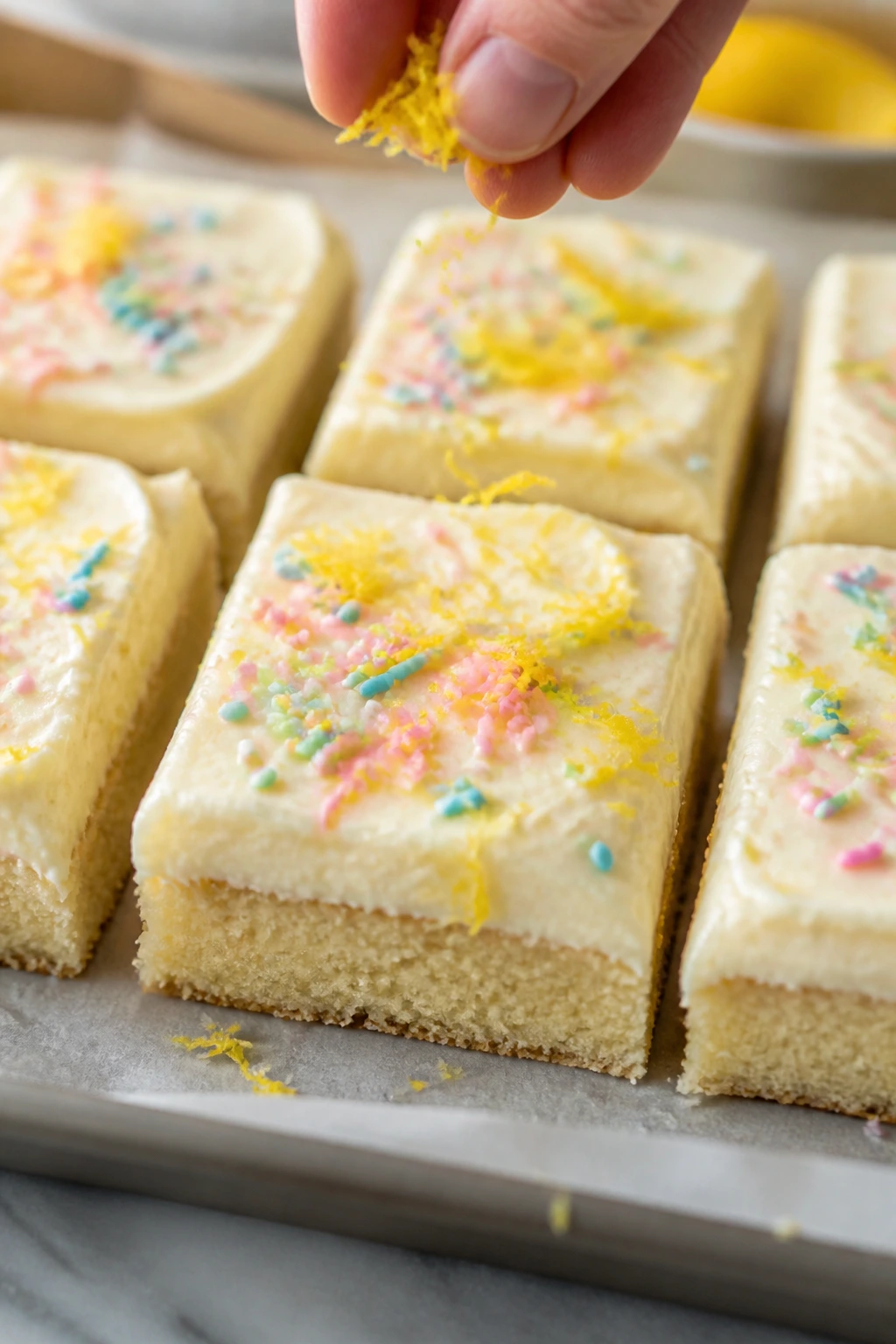
Flavor Enhancement: A little lemon zest in the frosting — about 1 teaspoon — gives the bars a brighter finish without turning them into lemon bars. I also like the almond extract in the dough because it makes the kitchen smell like a bakery the second the bars come out of the oven.
Time-Saver: Bake the bars the day before, leave them unfrosted overnight, and frost them when you have time the next day. The crumb firms up a touch in the fridge, which makes slicing easier, not harder.
Texture Fix: If the dough feels sticky when you press it into the pan, chill it for 10 to 15 minutes before spreading it the rest of the way. If it feels dry, keep pressing with lightly damp fingers instead of dusting in more flour.
Serving Suggestion: A few extra sprinkles on the cutting board make the plate look finished with almost no effort. If you want a more polished holiday look, add a few mini chocolate eggs in the center of each bar right before the frosting sets.
Make-It-Yours: Swap the vanilla frosting for orange-vanilla frosting, fold toasted coconut into the topping, or add tiny pastel candy pieces to the top. The base is sturdy enough to handle those changes as long as you do not mess with the flour-to-fat balance.
Common Mistakes That Make the Bars Dense or Dry
-
Packing in too much flour: This is the fastest way to lose the soft crumb. If you scoop flour straight from the bag, you can end up with a heavy bar that feels more like bread than dessert. Spoon and level, or weigh it if that is how you bake.
-
Overbaking for color: The bars should not look deeply golden across the top. If you wait for a big brown finish, the edges dry out and the middle loses that soft sugar-cookie texture. Pull them when the top is set and the center springs back.
-
Frosting while the bars are still warm: Warm bars turn frosting into a sliding mess. The cream cheese layer will loosen, the sprinkles will sink, and the edges will look ragged when you try to cut them.
-
Using cold cream cheese: Small lumps survive the mixer and show up in the finished frosting. Let the cream cheese soften until a finger presses in easily, but stop short of melting it.
-
Cutting the pan too soon: Even if the frosting looks set, the bars slice better after a short chill. A 20-minute rest in the fridge makes the knife glide instead of drag.
Variations That Fit Different Tastes
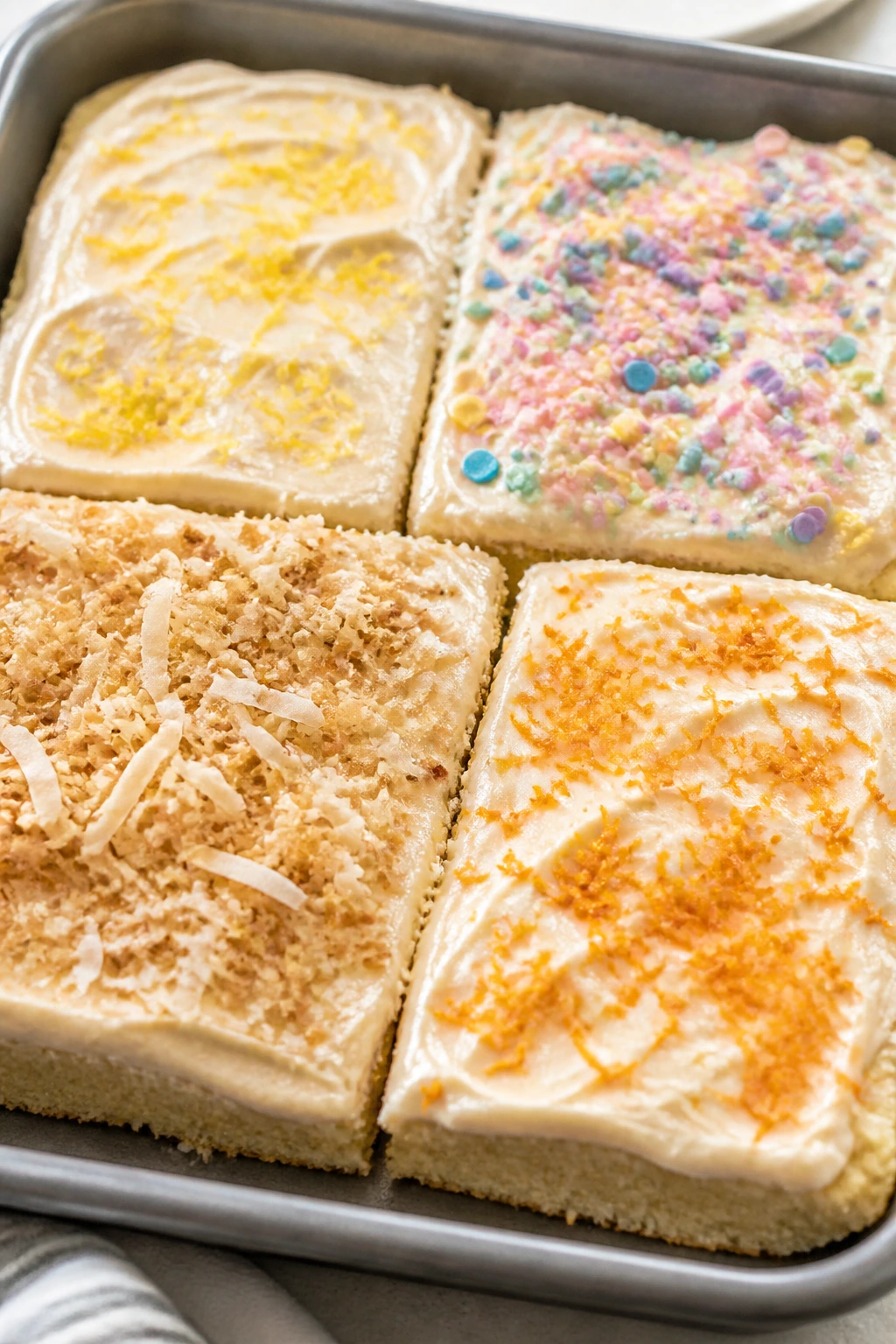
Lemon Ribbon Bars: Add 1 teaspoon lemon zest to the dough and another teaspoon to the frosting. The citrus sharpens the cream cheese and gives the bars a springy finish without changing the texture.
Pastel Funfetti Bars: Fold 1/3 cup pastel jimmies into the dough before pressing it into the pan, then add extra sprinkles on top. Skip nonpareils in the batter; they bleed into the dough and make the crumb look muddy.
Coconut Nest Bars: Stir 1/2 cup toasted shredded coconut into the frosting and top each square with a few candy eggs. The coconut adds a toasted edge that tastes good with the vanilla base.
Gluten-Free Easter Bars: Swap the flour for a 1:1 gluten-free baking blend that already includes xanthan gum. Let the dough rest for 10 minutes before pressing it into the pan so the starches hydrate and the bars bake more evenly.
Orange Cream Bars: Replace the almond extract with 1 teaspoon orange extract and finish the frosting with a little orange zest. That version tastes brighter and a little more old-school bakery counter.
Storage, Make-Ahead, and Freezing Notes
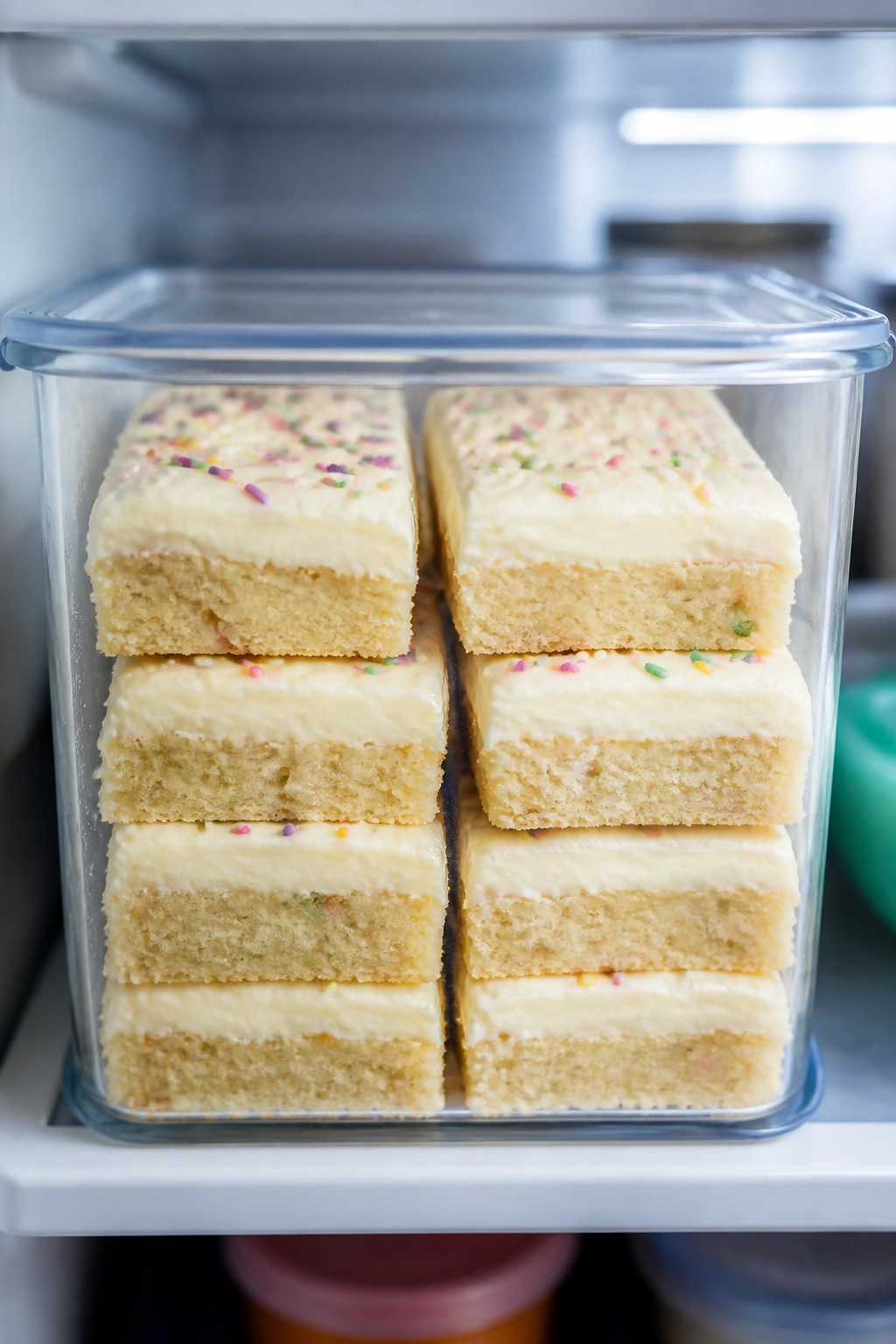
Because the frosting contains cream cheese, these bars follow the same basic food-safety rule as other dairy-heavy desserts: do not leave them out for more than 2 hours at room temperature. After that, they belong in the fridge.
Store the bars in an airtight container in the refrigerator for 4 to 5 days. They actually slice more cleanly after a night in the fridge, though the frosting tastes best if you let the bars sit at room temperature for 15 to 20 minutes before serving.
For the freezer, the unfrosted bars are the better bet. Wrap the cooled slab or individual bars tightly in plastic wrap, then place them in a freezer bag or container for up to 2 months. Frosted bars can be frozen too, but the frosting texture softens a little when thawed, and the sprinkles may bleed if they sit too long.
If you want to make the whole dessert ahead, bake the bars one day, frost them the next, and chill briefly before slicing. The frosting can also be made up to 2 days ahead and kept in the fridge; just beat it for a few seconds before spreading so it loosens up again.
There is no real reheating step here. These bars are a serve-cold-or-cool dessert. If you want the crumb to feel softer, let an unfrosted square sit on the counter for 10 minutes, then eat it. Microwaving frosted bars is a bad trade.
Easter Sugar Cookie Bar Questions, Answered
Can I use a glass pan instead of a metal one?
You can, but the bake will run a little differently. Glass holds heat longer, so the bottom can brown before the center is set; if that is the pan you have, drop the temperature to 325°F and start checking a few minutes earlier.
Do I have to chill the bars before cutting them?
You do not have to, but you will like the slices more if you do. A short chill firms the frosting and gives the bars those sharp edges that make a platter look tidy.
Can I leave out the almond extract?
Yes. Replace it with the same amount of vanilla, or use a touch of orange extract if you want a brighter flavor. The almond extract is there for bakery-style aroma, not because the recipe depends on it.
What if my frosting is too thin?
Beat in a little more powdered sugar, 2 tablespoons at a time, and chill the bowl for 10 minutes if it still looks soft. Too much cream or a warm kitchen can loosen cream cheese frosting fast.
Can I make these a day ahead for a brunch?
Absolutely. Bake the bars ahead, cover them once cool, and frost them either later that day or the next morning. They cut better after they have had time to rest.
How do I know the bars are done if they still look pale?
Pale is what you want. Press the center lightly with a fingertip; if it springs back and the top no longer looks shiny, they are ready. Deep browning means they stayed in too long.
Can I freeze the frosted bars?
You can, but the texture is better if you freeze the base first and frost after thawing. If you freeze already frosted bars, freeze them on a tray until firm, then wrap them so the topping stays neat.
A Tray Worth Putting Out First
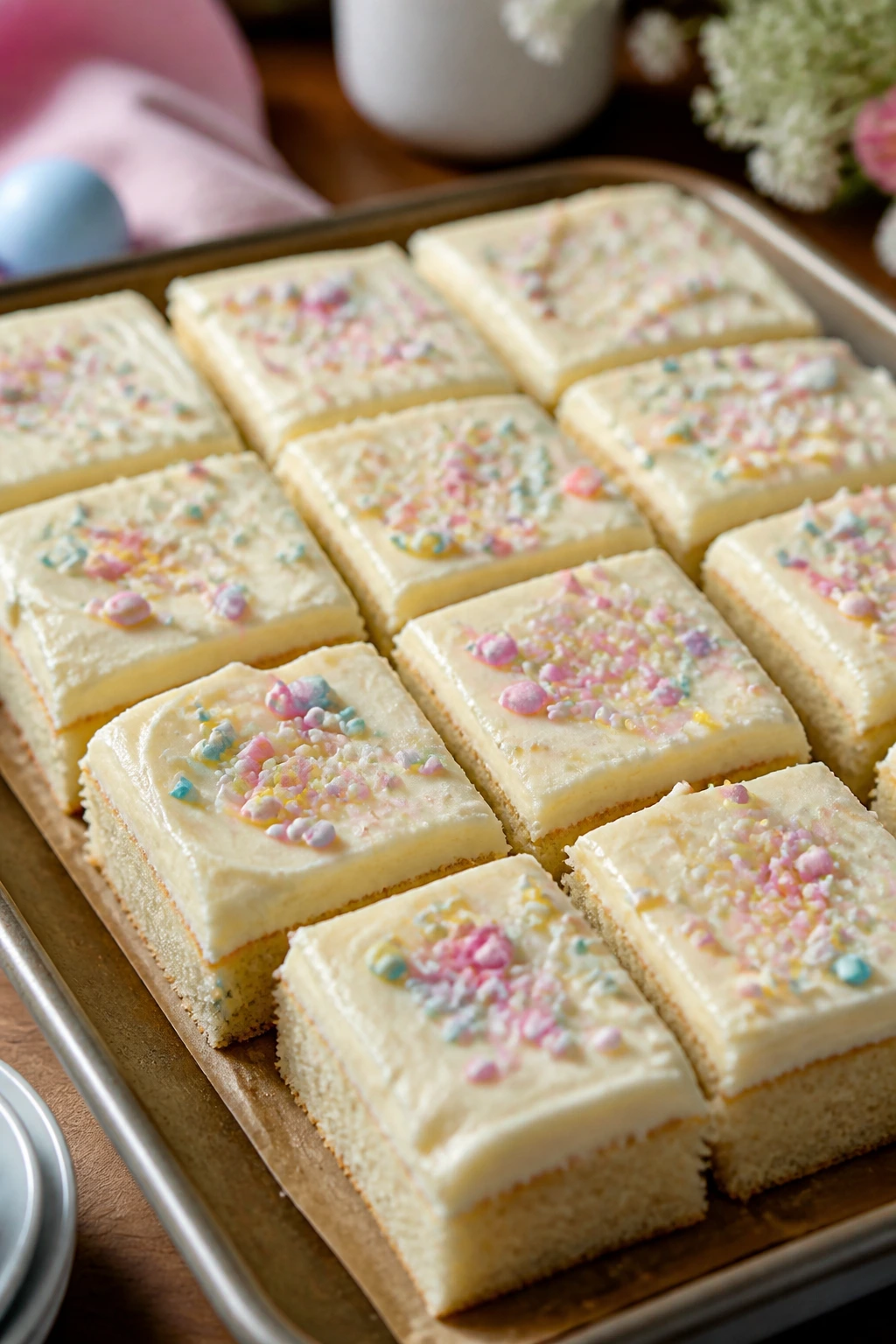
These bars are never trying to be fancy, and that is part of the charm. They give you the soft middle people want from a sugar cookie, the clean slices people want from a bar dessert, and the tangy frosting that keeps the whole thing from tipping into pure sugar.
I like recipes that earn their place on a holiday table by being both easy and specific. This one does. If you keep the pan lined, the butter soft, and the bars fully cooled before frosting, you get a dessert that looks tidy, tastes like vanilla and cream cheese, and disappears at the exact speed you hoped it would.
Fluffy Easter Sugar Cookie Bars with Cream Cheese Frosting — Recipe Card
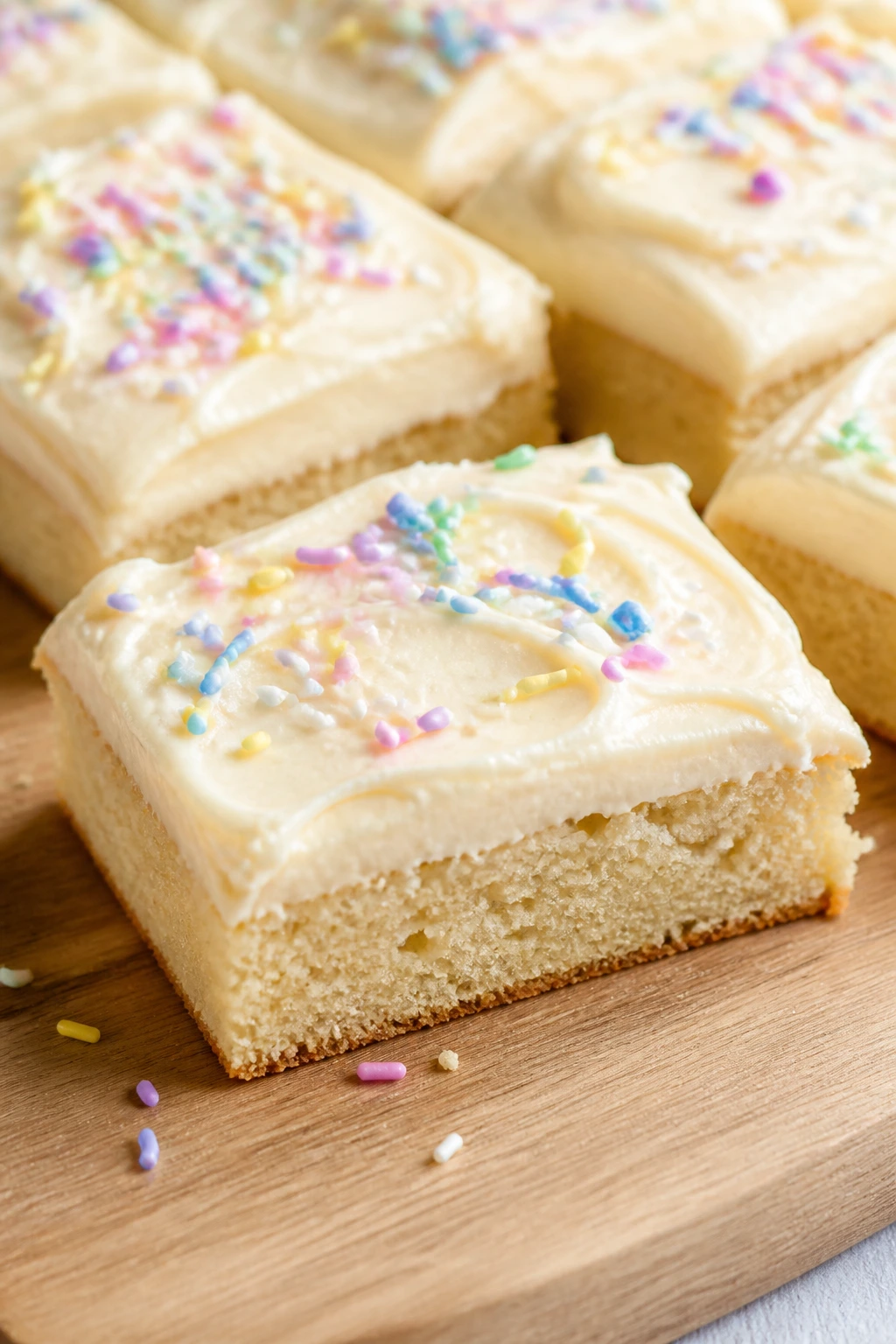
Recipe Name: Fluffy Easter Sugar Cookie Bars with Cream Cheese Frosting
Description: Thick vanilla sugar cookie bars baked in a 9×13 pan and topped with tangy cream cheese frosting and pastel sprinkles. They slice cleanly after chilling and fit a spring dessert table without extra work.
Prep Time: 25 minutes
Cook Time: 18 to 22 minutes
Total Time: About 1 hour 45 minutes, including cooling and frosting set
Course: Dessert
Cuisine: American
Servings: 24 bars
Calories: About 340 kcal per bar
Ingredients
For the Sugar Cookie Bars:
- 2 3/4 cups all-purpose flour, spooned and leveled
- 1 teaspoon baking powder
- 1/2 teaspoon fine sea salt
- 1 cup (2 sticks) unsalted butter, softened to cool room temperature
- 1 1/2 cups granulated sugar
- 2 large eggs, room temperature if possible
- 2 teaspoons pure vanilla extract
- 1 teaspoon almond extract
- 2 tablespoons sour cream, full-fat if possible
For the Cream Cheese Frosting:
- 8 ounces cream cheese, softened
- 1/2 cup (1 stick) unsalted butter, softened
- 3 1/2 cups powdered sugar, sifted if lumpy
- 1 teaspoon pure vanilla extract
- Pinch of fine salt
- 1 to 2 tablespoons heavy cream or milk, only if needed for spreading
For the Finish:
- 1/4 cup pastel sprinkles or sanding sugar
Instructions
-
Preheat the oven to 350°F (175°C) and line a 9×13-inch metal baking pan with parchment paper, leaving overhang on two sides. Lightly grease the parchment and exposed pan edges.
-
Whisk together the flour, baking powder, and salt in a medium bowl.
-
Beat the butter and sugar on medium speed for 2 to 3 minutes, until pale and fluffy.
-
Beat in the eggs one at a time, then mix in the vanilla, almond extract, and sour cream.
-
Add the dry ingredients in two additions and mix on low speed just until combined.
-
Press the dough evenly into the prepared pan.
-
Bake for 18 to 22 minutes, until the edges are lightly golden and the center springs back when touched. Cool completely in the pan.
-
Beat the cream cheese and butter until smooth, then add the powdered sugar, vanilla, and salt. Beat until fluffy, adding a little cream or milk only if needed.
-
Spread the frosting over the cooled bars, top with sprinkles, chill for 20 to 30 minutes, and cut into squares.
Notes: Use a metal pan for the most even bake. Frost only after the bars are fully cool. Chill before slicing for the cleanest edges.