



A bad orange tart tastes like citrus perfume sprayed over dry cake. A good one is a different creature entirely: the zest smells sharp and almost floral, the crumb gives way without crumbling into rubble, and the cream cheese frosting lands with enough tang to keep the sweetness honest. This fluffy orange tart with cream cheese frosting lives in that better place, where orange shows up in the batter itself instead of hiding in a syrup or a thin glaze.
What makes it worth baking is the texture game. Whipped egg whites keep the middle light, cake flour keeps it tender, and the tart pan gives the whole thing a clean edge that slices neatly instead of collapsing into a heap on the plate. It’s the sort of dessert that looks like you worked harder than you did, which is a useful quality in any recipe, and especially in one that depends on citrus.
I like this style of tart because it doesn’t need theatrics. No pastry lattice. No layer-cake ceremony. Just a bright crumb, a cool tangy top, and orange oil rubbed into sugar so the whole kitchen smells like the peel of a ripe fruit knocked open with a knife. The details matter here, and they start before the oven even turns on.
Why This Fluffy Orange Tart Keeps Getting Requested
-
Orange flavor inside the crumb: Rubbing the zest into the sugar wakes up the citrus oils, so the tart tastes orange all the way through instead of only on top.
-
Light enough to eat after dinner: The whipped egg whites keep the center airy, so a slice feels soft and springy instead of heavy and bready.
-
Cream cheese frosting gives it shape: The frosting brings tang and a little salt, which keeps the sweetness from running away with the whole dessert.
-
Clean slices from a tart pan: A removable bottom makes the tart easy to release, which matters when you want neat wedges and not broken edges.
-
Easy to make ahead: The tart base and frosting both behave well in the fridge, so you can bake first and finish later without stress.
-
Looks finished with very little fuss: A few orange curls or thin slices on top do the job fast. No piping bag required unless you want one.
Baking Window and Yield at a Glance
The active work here is short. The cooling time is where patience pays off, and it’s worth waiting because a warm tart will smear the frosting and crush the crumb.
Yield: 10 slices
Prep Time: 25 minutes
Cook Time: 28 minutes
Total Time: 53 minutes active + 1 hour cooling
Difficulty: Intermediate — the steps are straightforward, but whipping and folding the egg whites takes a little care.
Chill/Rest Time: 20 minutes after frosting for cleaner slices
Best Served: Slightly chilled or at cool room temperature
What Goes Into the Tart and Frosting
For the Tart:
- 1 1/2 cups cake flour, spooned and leveled
- 1 1/2 teaspoons baking powder
- 1/2 teaspoon fine sea salt
- 4 large eggs, separated and at room temperature
- 3/4 cup granulated sugar, divided
- 2 tablespoons finely grated orange zest, from 2 medium oranges
- 1/3 cup neutral oil
- 1/4 cup fresh orange juice
- 1/4 cup whole milk
- 1 teaspoon vanilla extract
For the Cream Cheese Frosting:
- 8 ounces block cream cheese, softened
- 4 tablespoons unsalted butter, softened
- 2 cups powdered sugar, sifted
- 1 tablespoon fresh orange juice
- 1 teaspoon orange zest
- 1 teaspoon vanilla extract
- Pinch fine salt
For the Finish:
- Orange zest curls or thin orange slices, patted dry
- 1 tablespoon chopped pistachios, optional
Why These Ingredients Pull Their Weight
Orange Batter
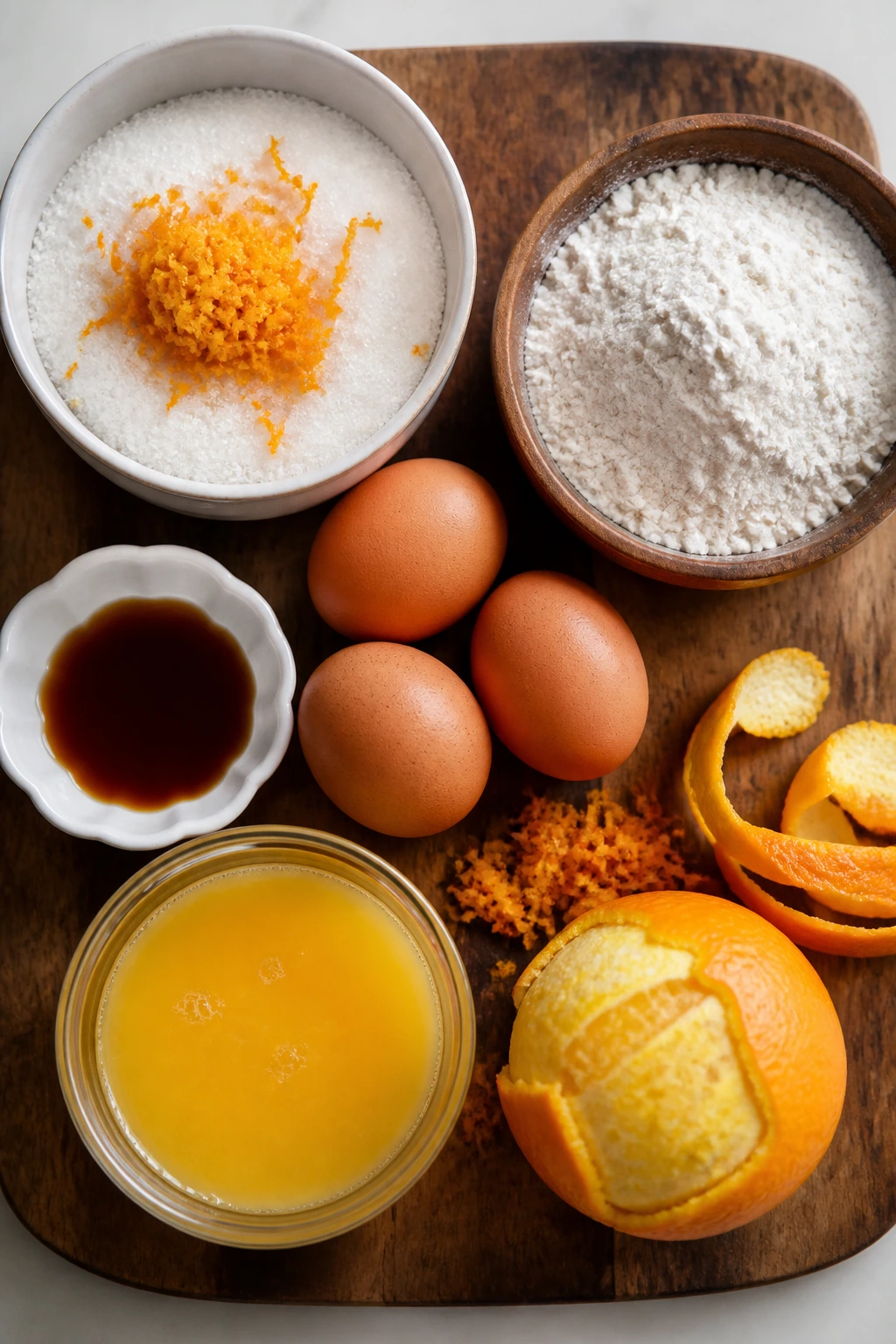
What to use: 1 1/2 cups cake flour, 1 1/2 teaspoons baking powder, 1/2 teaspoon salt, 4 eggs, 3/4 cup sugar, 2 tablespoons orange zest, 1/3 cup oil, 1/4 cup orange juice, 1/4 cup whole milk, and 1 teaspoon vanilla.
Preparation: Separate the eggs while they’re cold, then let them sit until they’re room temperature; zest the oranges before you juice them; and whisk the flour, baking powder, and salt so you don’t end up with a pocket of baking powder in one bite.
Substitutions: If cake flour is missing from the pantry, use 1 1/2 cups all-purpose flour minus 3 tablespoons, plus 3 tablespoons cornstarch. A mild olive oil can replace neutral oil if you want a softer, fruitier note.
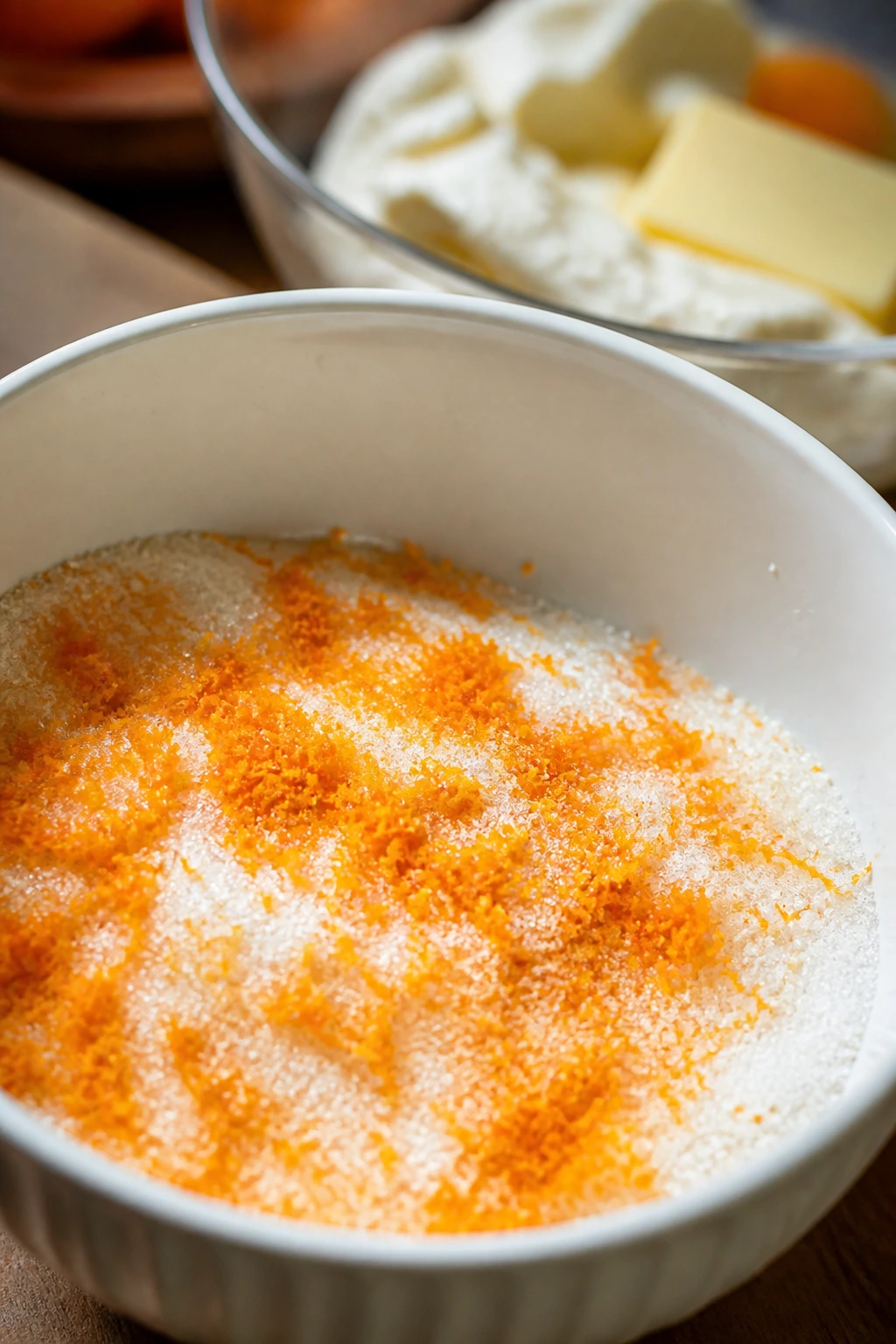
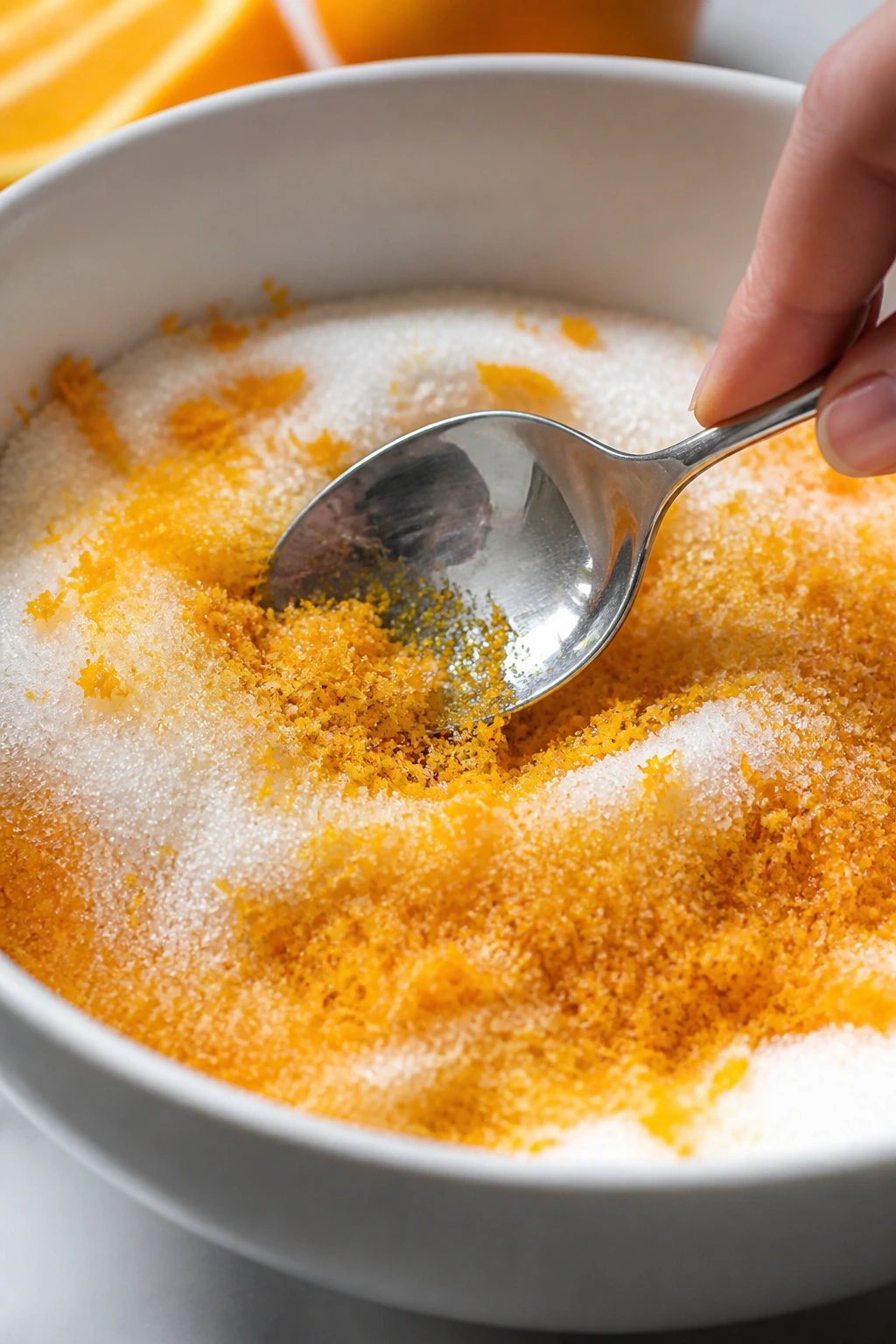
Tips: Rub the orange zest into the sugar with your fingertips before anything else hits the bowl. That small move gives you more orange flavor than an extra splash of juice ever will, and the smell is the first clue the tart is going the right way.
The batter depends on air, not brute force. The whipped whites hold it up, but the flour still has to stay tender, which is why cake flour makes more sense here than all-purpose. It gives a finer crumb, the sort that feels almost silky on the tongue.
The oil is doing a quiet job too. Butter would bring a richer flavor, sure, but oil keeps the crumb soft after chilling. That matters once the cream cheese frosting goes on and the tart spends some time in the fridge.
Fresh juice gives the batter brightness, but the zest is the real engine. Juice alone tastes thin. Zest tastes like the part of the orange you can smell before you even cut it open.
Cream Cheese Frosting
What to use: 8 ounces block cream cheese, 4 tablespoons unsalted butter, 2 cups powdered sugar, 1 tablespoon orange juice, 1 teaspoon orange zest, 1 teaspoon vanilla, and a pinch of salt.
Preparation: Soften the cream cheese and butter until they dent when pressed, but don’t let them get greasy or shiny. Sift the powdered sugar if it has clumps; little lumps show up fast in frosting this pale.
Substitutions: If you want a sharper edge, swap 1 tablespoon of the orange juice for lemon juice. If you need a dairy-free direction, use a sturdy dairy-free cream cheese and a plant butter that sets firm when chilled.
Tips: Use block cream cheese, not the soft spreadable tub kind. The tub version is too loose, and the frosting turns slack in a hurry.
I prefer this frosting a bit thick. Thin frosting slips into the crumb and disappears into the tart, which is a waste of the orange base below it. Thick enough to spread in soft swoops is the sweet spot.
Salt earns its place here. A small pinch pulls the frosting away from plain sweetness and toward something that tastes deliberate. You notice it in the second bite, when the orange starts to pop instead of flattening out.
Finish and Garnish
What to use: Orange curls, thin slices, or a small pinch of extra zest; chopped pistachios if you want crunch.
Preparation: Pat any orange slices dry before laying them on top so they don’t leak onto the frosting. If you’re making zest curls, use a vegetable peeler and trim away the bitter white pith.
Substitutions: Toasted almonds can replace pistachios, or you can skip nuts entirely and finish with zest alone. A few edible flowers work too if you’re aiming for a softer, bakery-window look.
Tips: Add garnishes after the frosting has had a few minutes to settle. If you decorate too early, the toppings slide around and the clean top starts looking messy.
The Tools That Make the Tart Behave
-
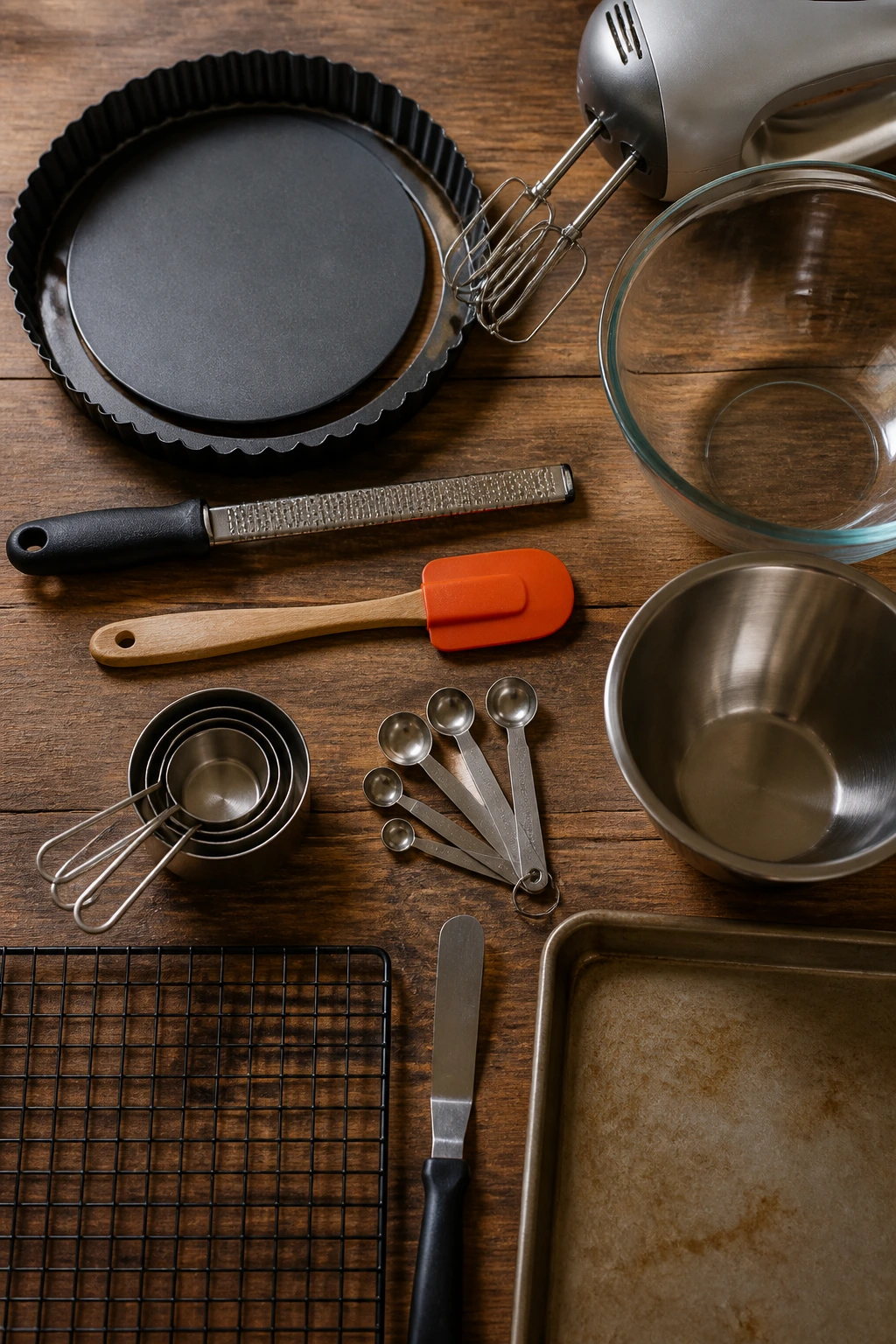
10-inch tart pan with a removable bottom — The removable base makes release easier and gives the tart its clean edge.
-
Electric hand mixer or stand mixer — You need enough power to whip the egg whites to medium peaks and beat the frosting smooth.
-
Two large mixing bowls — One for the yolk batter and one for the whites; a spotless bowl matters more than people think.
-
Microplane or fine zester — This gives you fine orange zest that blends into sugar instead of sitting in little curly strips.
-
Rubber spatula — Essential for folding the whites in without knocking out the air you worked to build.
-
Measuring cups and spoons — The batter is forgiving, but not so forgiving that rough measurements won’t show up in the crumb.
-
Cooling rack — The tart needs airflow underneath or the bottom stays damp longer than you want.
-
Offset spatula or butter knife — Helpful for spreading frosting in an even layer without digging into the tender top.
-
Baking sheet — Put the tart pan on one before baking so it’s easier to move in and out of the oven.
Mixing the Orange Batter
Prepare the Pan and Oven:
- Preheat the oven to 350°F (175°C) and position a rack in the center. Grease a 10-inch tart pan with a removable bottom, line the bottom with a parchment round, and set the pan on a baking sheet.
- In a medium bowl, whisk together the cake flour, baking powder, and salt until the mixture looks evenly blended. Set it aside.
Build the Orange Base:
3. In a large bowl, add the orange zest to the granulated sugar and rub them together with your fingertips for 20 to 30 seconds, until the sugar smells strongly of orange.
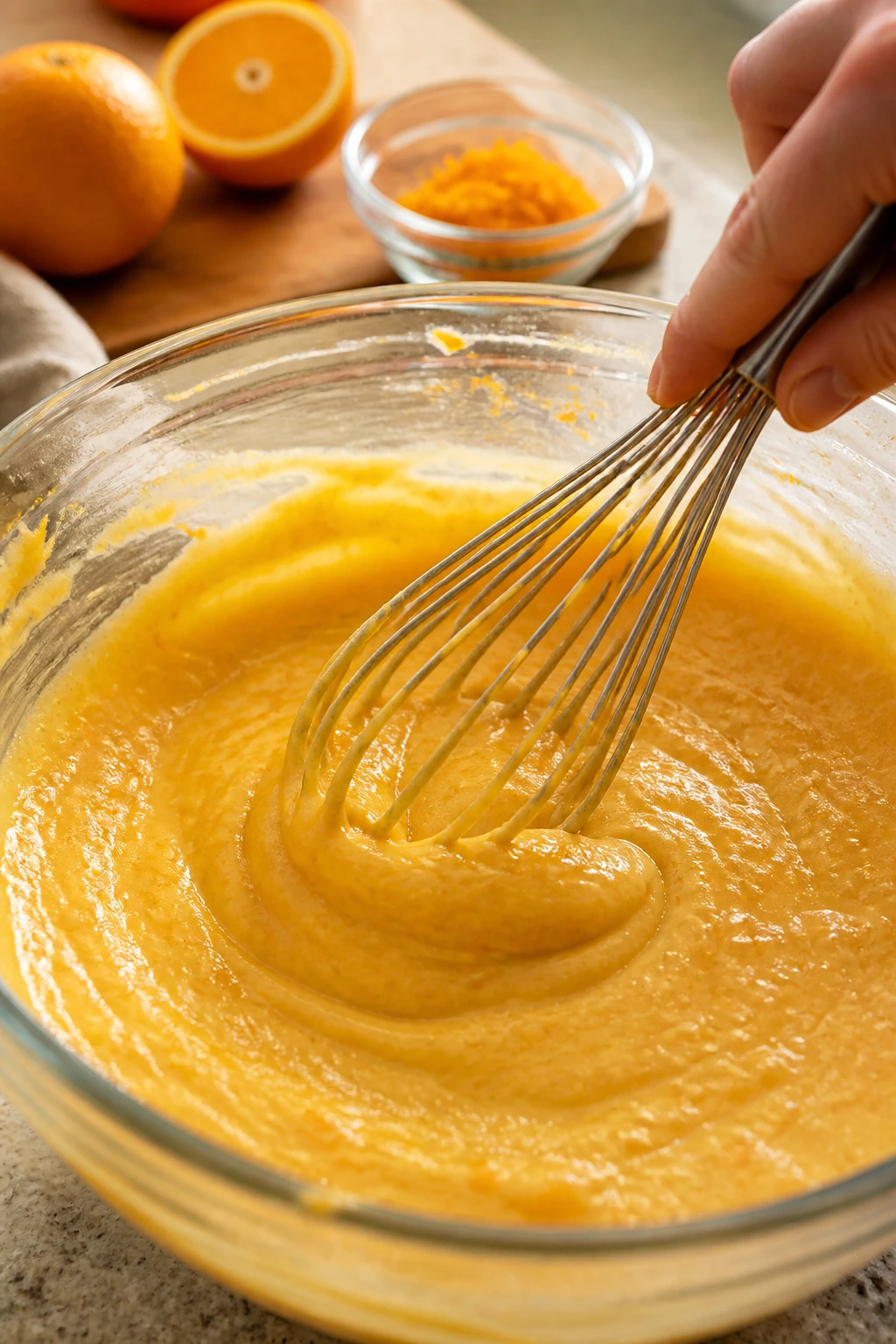
4. Add the egg yolks and 1/2 cup of the sugar mixture to the same bowl, then whisk for 1 to 2 minutes until the mixture turns paler and slightly thick. Whisk in the oil, orange juice, milk, and vanilla until smooth.
5. Add the dry ingredients and whisk just until the flour disappears. The batter will look thick and a little glossy. Stop as soon as you no longer see dry flour; overmixing makes the tart tight and heavy.
Whip and Fold:
6. In a second clean, dry bowl, beat the egg whites on medium speed until foamy. Add the remaining 1/4 cup sugar slowly, then keep beating until you reach medium peaks — the whites should hold shape, but the tips should still curl over when you lift the beaters.
7. Fold one-third of the whites into the yolk batter to loosen it, then fold in the rest in two more additions. Use a spatula and move through the center of the bowl, then around the edge, turning the bowl as you go. Do not stir or beat.
8. Scrape the batter into the prepared tart pan and smooth the top gently with the spatula. Give the pan one light tap on the counter to settle any large bubbles, but do not slam it.
Baking, Cooling, and Frosting the Tart
Bake the Tart Base:
9. Bake for 25 to 30 minutes, until the top is pale gold, the center springs back when touched lightly, and a toothpick inserted in the middle comes out with a few moist crumbs. If the top browns deeply, you’ve gone too far; the tart should stay light in color.
10. Set the pan on a cooling rack and let the tart cool in the pan for 15 minutes. Then release the outer ring carefully and let the tart cool completely on the rack for about 1 hour. Do not frost a warm tart. The frosting will melt, slide, and soak into the crumb.
Make the Frosting:
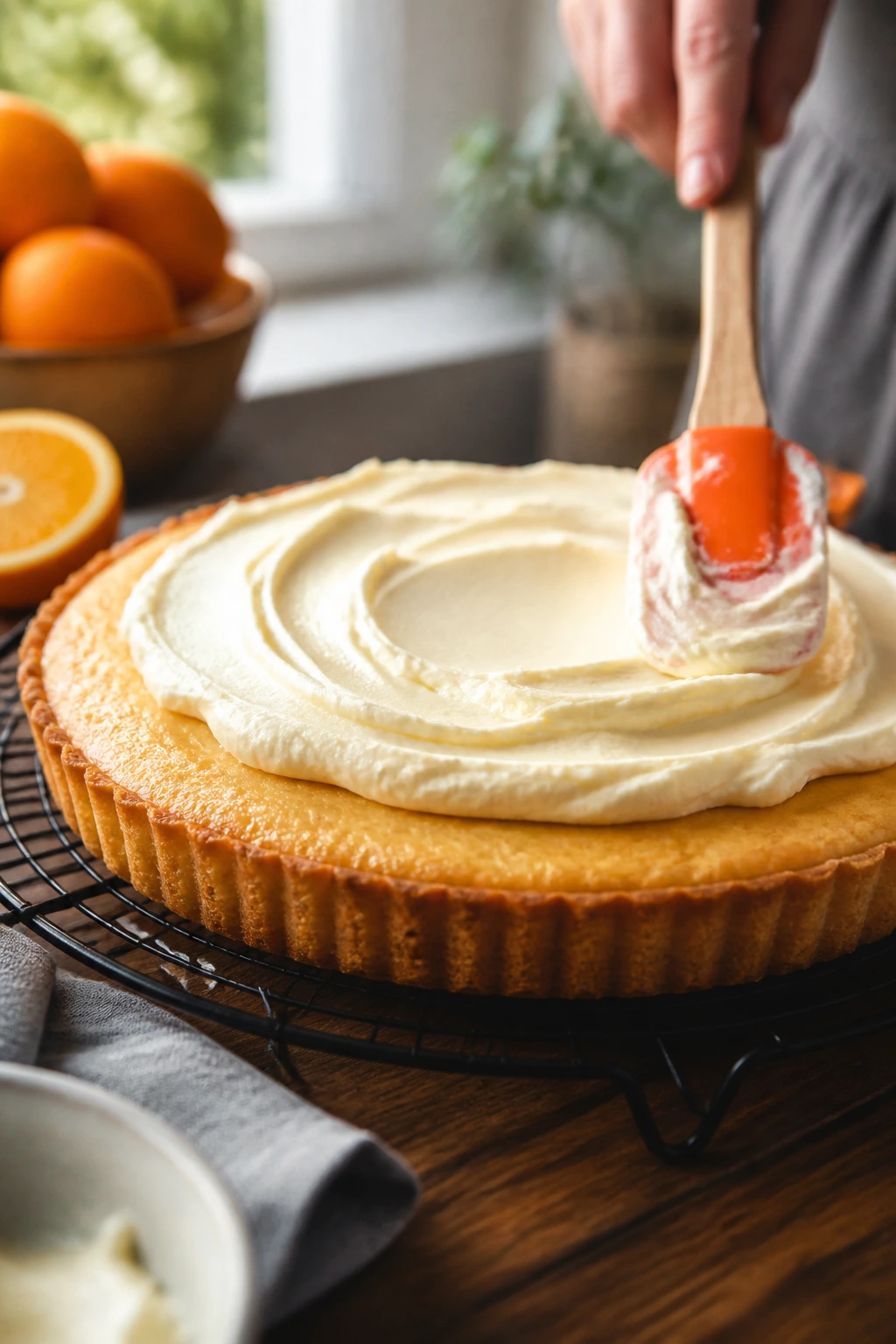
11. In a medium bowl, beat the cream cheese and butter together on medium speed until completely smooth, 1 to 2 minutes. Add the powdered sugar, orange juice, orange zest, vanilla, and salt, then beat again until the frosting is fluffy and spreadable. If it feels too soft, chill it for 10 minutes before using.
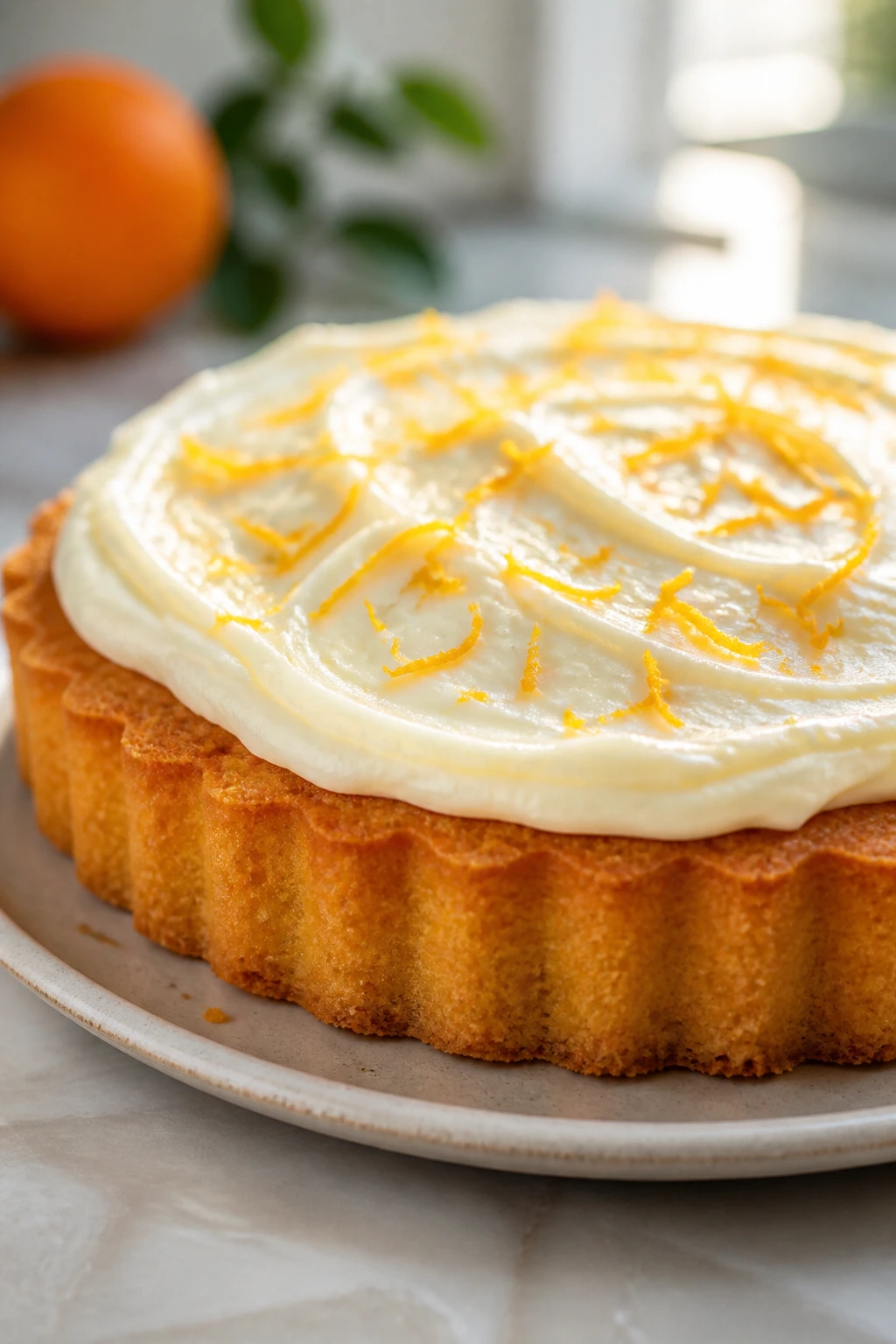
12. Spread the frosting over the cooled tart in a thick, even layer. Use the back of a spoon or an offset spatula to make soft ridges if you want a more bakery-style finish.
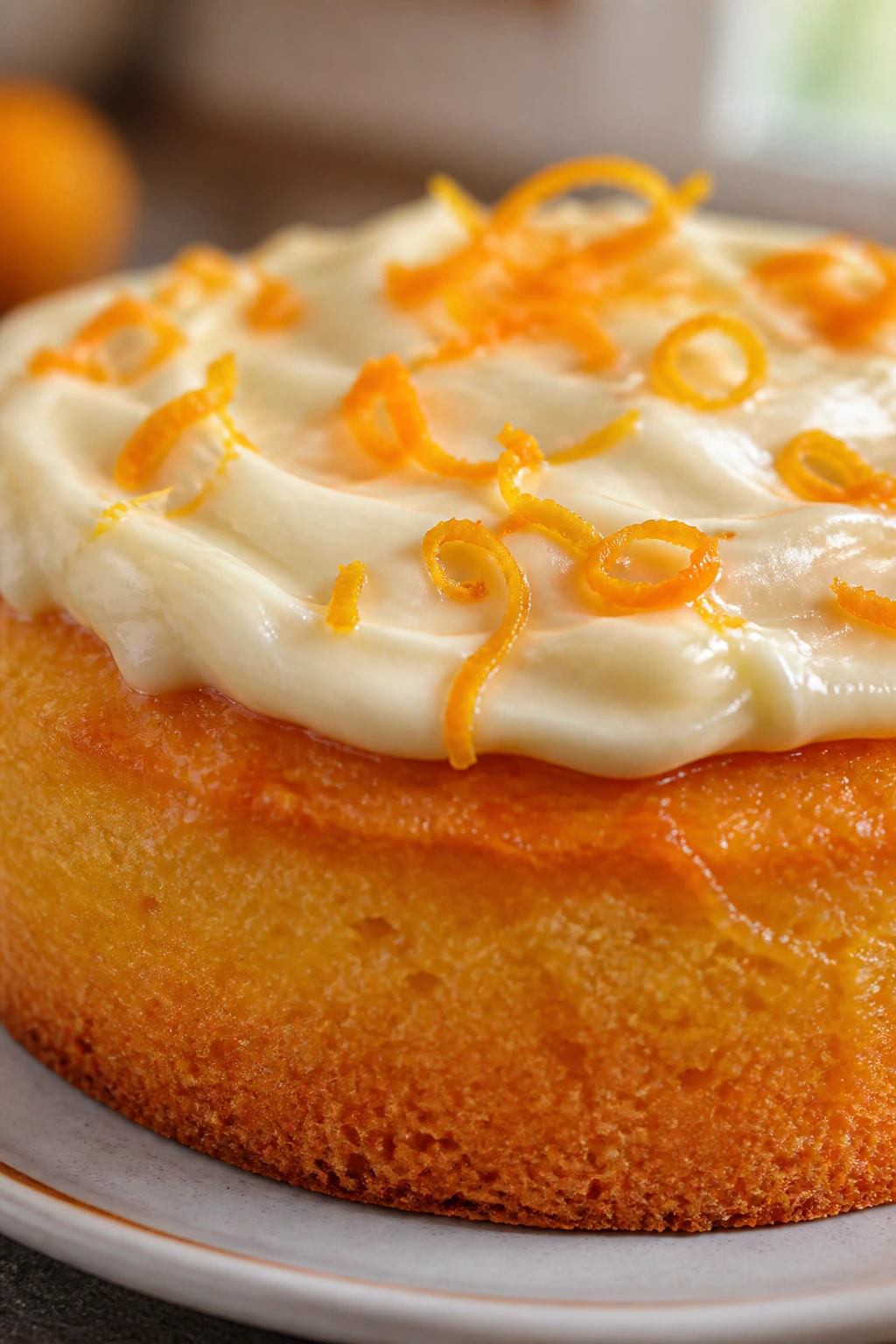
13. Add the orange zest curls, thin orange slices, or chopped pistachios on top. Chill the finished tart for 20 minutes if you want especially clean slices, or serve it right away if the room is cool.
How I’d Plate a Slice
Presentation:
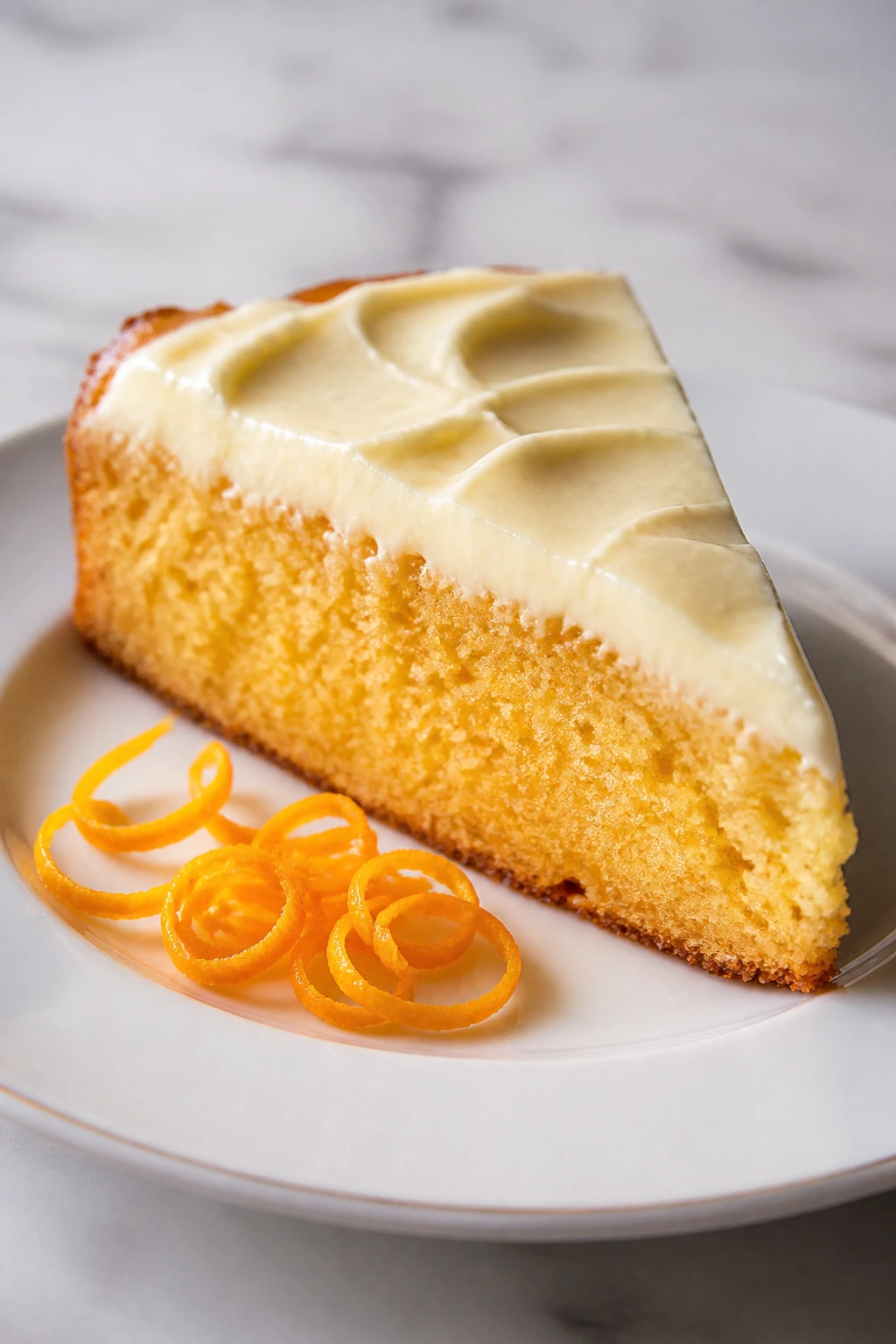
Use a thin knife dipped in hot water and wiped dry before each cut. That small ritual keeps the frosting neat and stops the crumb from tearing. I like to plate the slice with the frosting side facing the room, then add one extra curl of orange zest or a few pistachios right beside it so the top doesn’t feel bare.
Accompaniments:
Fresh raspberries are the best sidekick here because they bring a sharper edge that snaps the sweetness into place. If you want something richer, add a spoonful of lightly whipped cream, though I usually skip it because the cream cheese frosting already covers that lane. A small cup of espresso or a strong black tea works well too, especially if you’re serving the tart after a meal.
Portions:
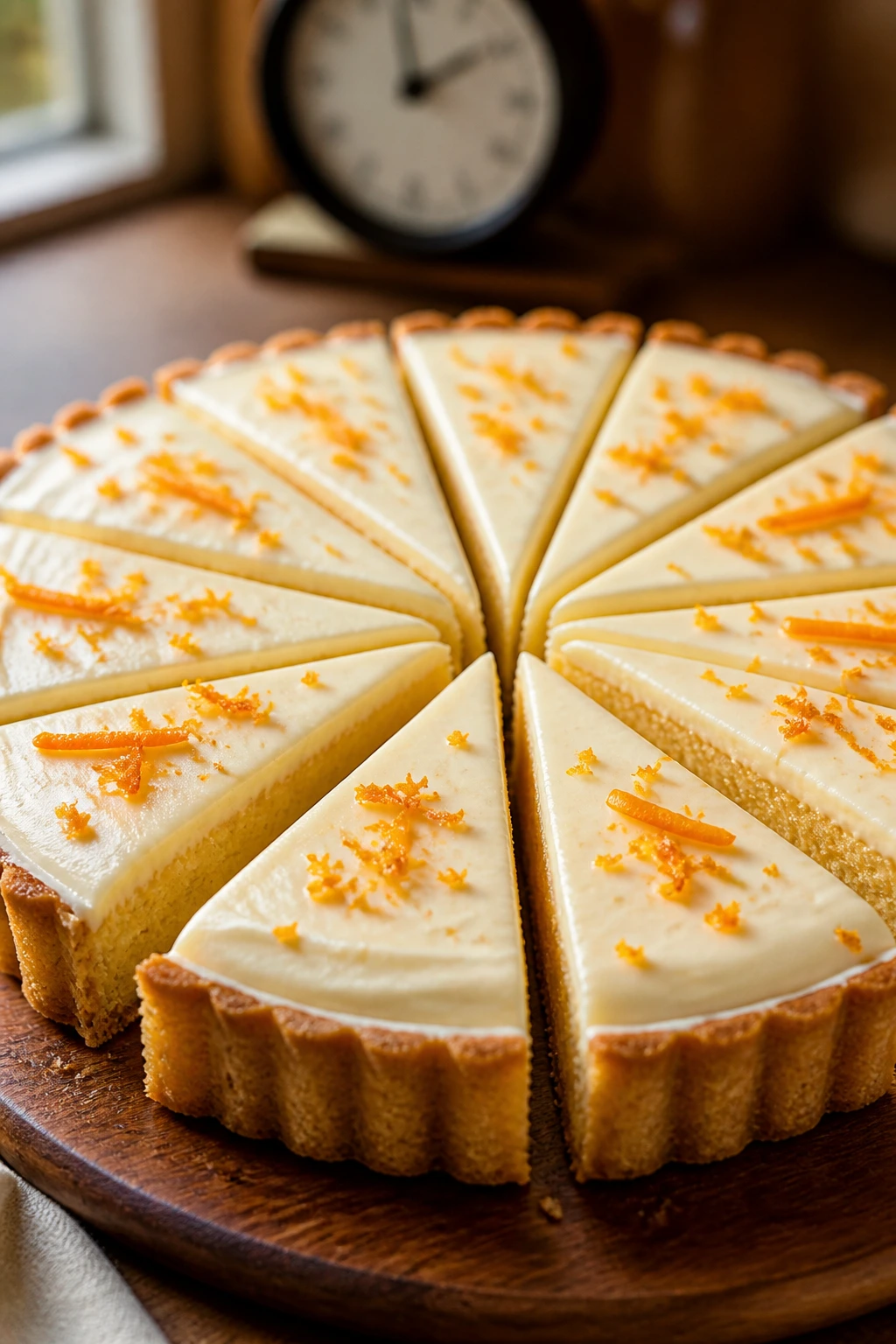
Ten slim slices is the sweet spot if the tart is part of a bigger dessert spread. If it’s the only dessert on the table, cut eight larger wedges and let people lean into it. The tart is rich enough that oversized slices can feel like a lot after dinner, so I’d rather cut a little narrower and invite seconds.
Beverage Pairing:
Earl Grey tea brings out the orange oil in a way plain tea doesn’t. For something colder, a small glass of sparkling water with a strip of orange peel keeps the whole plate bright. If you want something celebratory, a dry sparkling wine has enough lift to match the frosting without making the dessert taste heavier.
Small Moves That Change the Result
Flavor Enhancement:
Mix the orange zest into the sugar before you add anything liquid. That one move changes the whole tart because the sugar grinds the zest and pulls more oil out of it. The frosting can get the same treatment too; a little zest beaten into the sugar gives the top a fresher smell.
Time-Saver:
Bake the tart base the day before and keep it wrapped at room temperature once it has cooled completely. The crumb actually slices cleaner after it rests overnight, and the frosting takes less time because the whole structure is already stable.
Pro Move:
If your kitchen runs warm, chill the mixing bowl and beaters for 10 minutes before whipping the egg whites. Cold metal helps the whites hold air faster, and you’ll reach medium peaks with less fuss. The same trick helps the frosting stay firm while you spread it.
Make-It-Yours:
Swap 1 tablespoon of the orange juice in the frosting for lemon juice if you want a sharper finish. Use chopped toasted almonds instead of pistachios for a softer, toastier note. If you like a deeper orange scent, tuck a tiny bit more zest into the garnish right before serving; it perfumes the first bite.
Where Orange Tarts Usually Go Sideways
-
Folding too aggressively: If the batter turns streaky and then starts looking dense, the egg whites got knocked flat. Fix it by folding with a wide spatula and stopping the second the streaks disappear.
-
Frosting a warm tart: The frosting will look fine for the first minute, then go glossy and slide toward the edges. The fix is simple: wait until the tart is fully cool to the touch, not merely lukewarm.
-
Using loose cream cheese: Spreadable cream cheese from a tub makes frosting that never really sets. Block cream cheese gives structure, which matters when the tart sits in the fridge.
-
Overbaking to chase color: A brown top does not mean the tart is done; it usually means the crumb is drying out. Pull it when it springs back lightly and the center is set but not hard.
-
Skipping the zest step: If you toss zest straight into the batter without rubbing it into sugar, the orange flavor stays thin. Rub it first. The aroma changes immediately, and so does the taste.
-
Cutting too soon: A fresh-frosted tart that gets sliced right away tends to smear at the center. Give it 20 minutes in the fridge if you want clean wedges, or use a warm knife and a light hand.
Other Ways to Dress the Orange
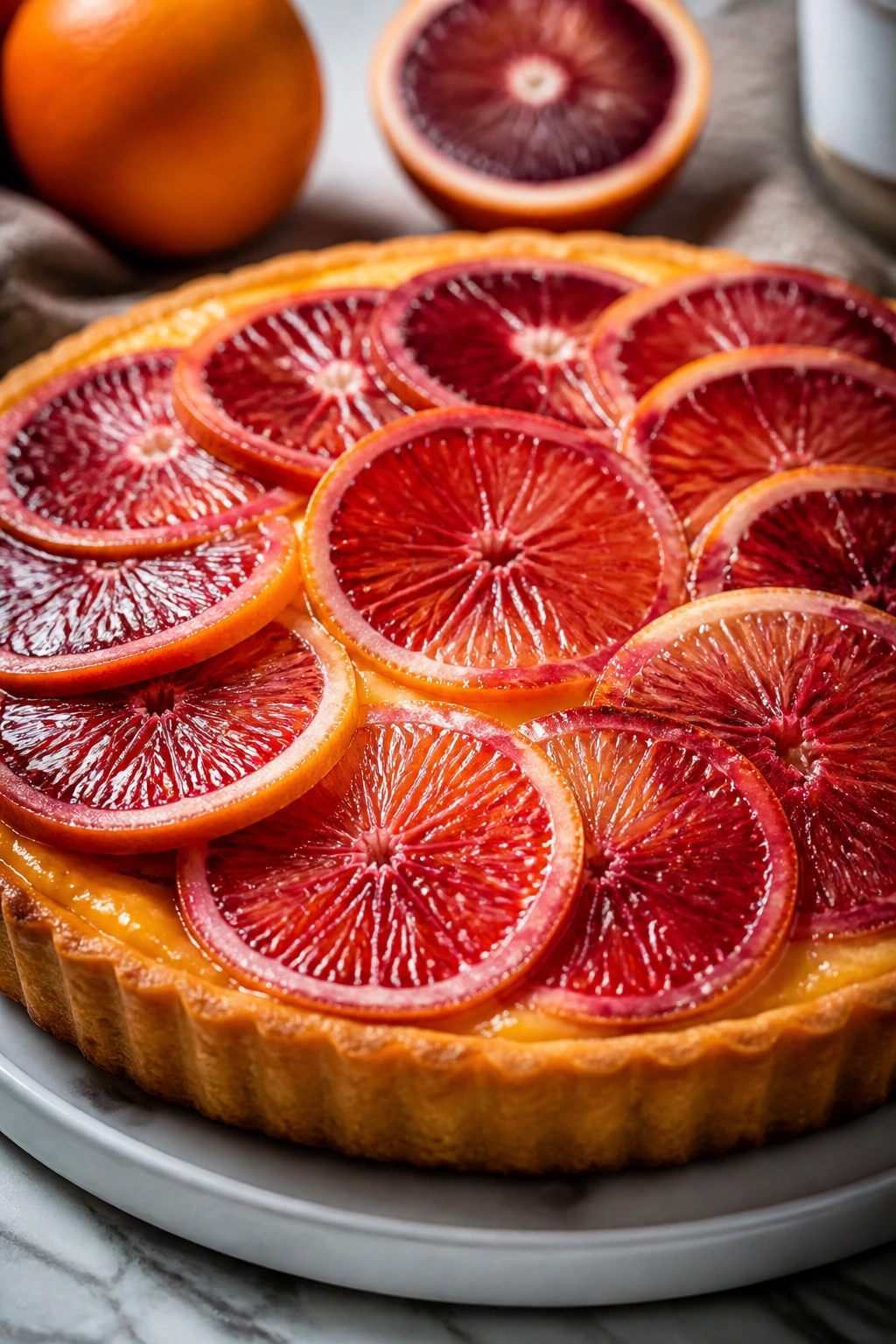
Blood Orange Satin
Swap the fresh orange juice for blood orange juice and use thin blood orange slices on top. The batter stays soft, but the frosting picks up a deeper, slightly berry-like note that looks striking against the pale crumb.
Almond Peel Tart
Replace 1/4 cup of the cake flour with 1/4 cup almond flour and add 1/2 teaspoon almond extract to the frosting. The result feels a little more bakery-counter and a little less classic citrus cake, with a softer, rounder flavor.
Cardamom Citrus
Add 1/2 teaspoon ground cardamom to the flour mixture. Cardamom sits behind the orange instead of competing with it, and the tart gets a warm spice note that feels especially good with tea.
Gluten-Free Citrus Tart
Use a 1:1 gluten-free baking flour that already contains xanthan gum. Let the batter rest for 10 minutes before baking so the flour hydrates, and cool the tart completely before you release it from the pan because the crumb will be more delicate.
Orange Creamsicle Finish
Beat an extra 1/2 teaspoon orange extract into the frosting and finish with a little more zest than usual. That pushes the tart toward a sweeter, nostalgic flavor, the kind that reads more like a creamsicle than a sharp citrus dessert.
Keeping the Tart Fresh in the Fridge and Freezer
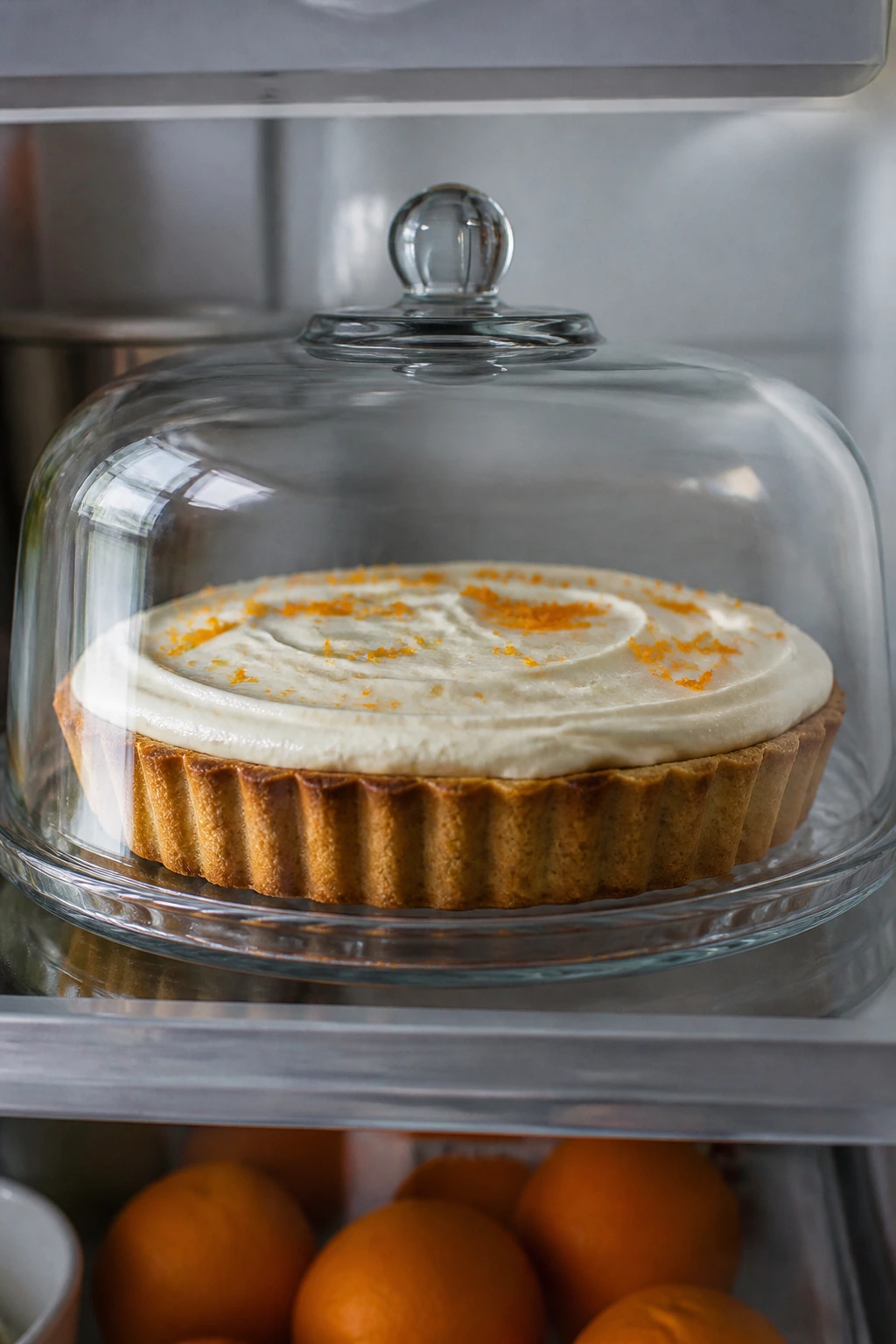
A tart like this keeps well, but not forever. The frosting is made with cream cheese, so room temperature is a short visit, not a place to linger. If the dessert will sit out for a party, keep it under two hours outside the fridge and move it back in when the room starts getting warm.
In the refrigerator, the tart holds for 3 to 4 days when covered well. I like to chill it on the tart pan base for the first few hours, then move it to a cake dome or loosely tent it with plastic wrap once the frosting has firmed up. The flavor actually improves after a few hours in the fridge because the orange settles in and the frosting firms just enough to slice cleanly.
For freezing, the best move is to freeze the unfrosted tart base. Wrap it tightly in plastic wrap, then foil, and freeze for up to 2 months. Thaw it overnight in the refrigerator, bring it to cool room temperature, and frost it the day you plan to serve it.
You can freeze frosted slices in a pinch, but the texture changes a little on thawing. The frosting may weep a touch and lose some of its smooth finish. If you have to go that route, freeze slices on a tray first, then wrap them once firm so they don’t smear together.
For make-ahead work, the tart base can be baked 1 day ahead, and the frosting can be made up to 2 days ahead and kept covered in the refrigerator. Give the frosting a quick beat before spreading if it has stiffened in the cold. That little whip brings it back to a spreadable texture.
Let chilled slices sit on the counter for 15 to 20 minutes before serving if you want the crumb softer and the orange flavor brighter. Straight-from-the-fridge tart is fine, but it eats firmer and the frosting tastes quieter.
Questions That Come Up Before the First Slice
Can I use all-purpose flour instead of cake flour?
Yes. Use 1 1/2 cups all-purpose flour minus 3 tablespoons, plus 3 tablespoons cornstarch to mimic the lighter texture of cake flour. Whisk the cornstarch in well so it doesn’t clump.
Do I really need to separate the eggs?
For this tart, yes, because the whipped whites are what give the crumb its lift. If you skip that step and use whole eggs only, the tart will bake up denser and closer to a tea cake than a fluffy tart.
Can I bake this in a springform pan if I don’t own a tart pan?
You can, and it works better than a standard cake pan because the ring releases cleanly. Line the bottom with parchment, grease the sides, and expect the center to need a couple more minutes in the oven since springform pans are often deeper.
Will bottled orange juice work?
It will work in a pinch, but the flavor tastes flatter and less fragrant. If bottled juice is all you have, lean harder on the zest and do not skip the sugar-rubbing step, because that’s where the orange wakes up.
Why did my frosting get too loose?
Usually the cream cheese was too soft, the butter was almost melted, or the kitchen was warm. Chill the bowl for 10 minutes and beat in 2 to 4 tablespoons more powdered sugar if needed; that usually pulls it back into shape.
Can I make the tart a day ahead for guests?
Yes, and I would. Bake the base ahead, frost it once the tart is fully cool, then refrigerate it overnight or for a few hours. Add the orange garnish close to serving so it stays fresh-looking.
How do I keep the orange flavor from disappearing under the frosting?
Rub the zest into the sugar first, and use fresh zest again on top. That gives you orange in two places, so the flavor shows up both in the crumb and in the first smell when the slice hits the plate.
A Tart Worth Repeating
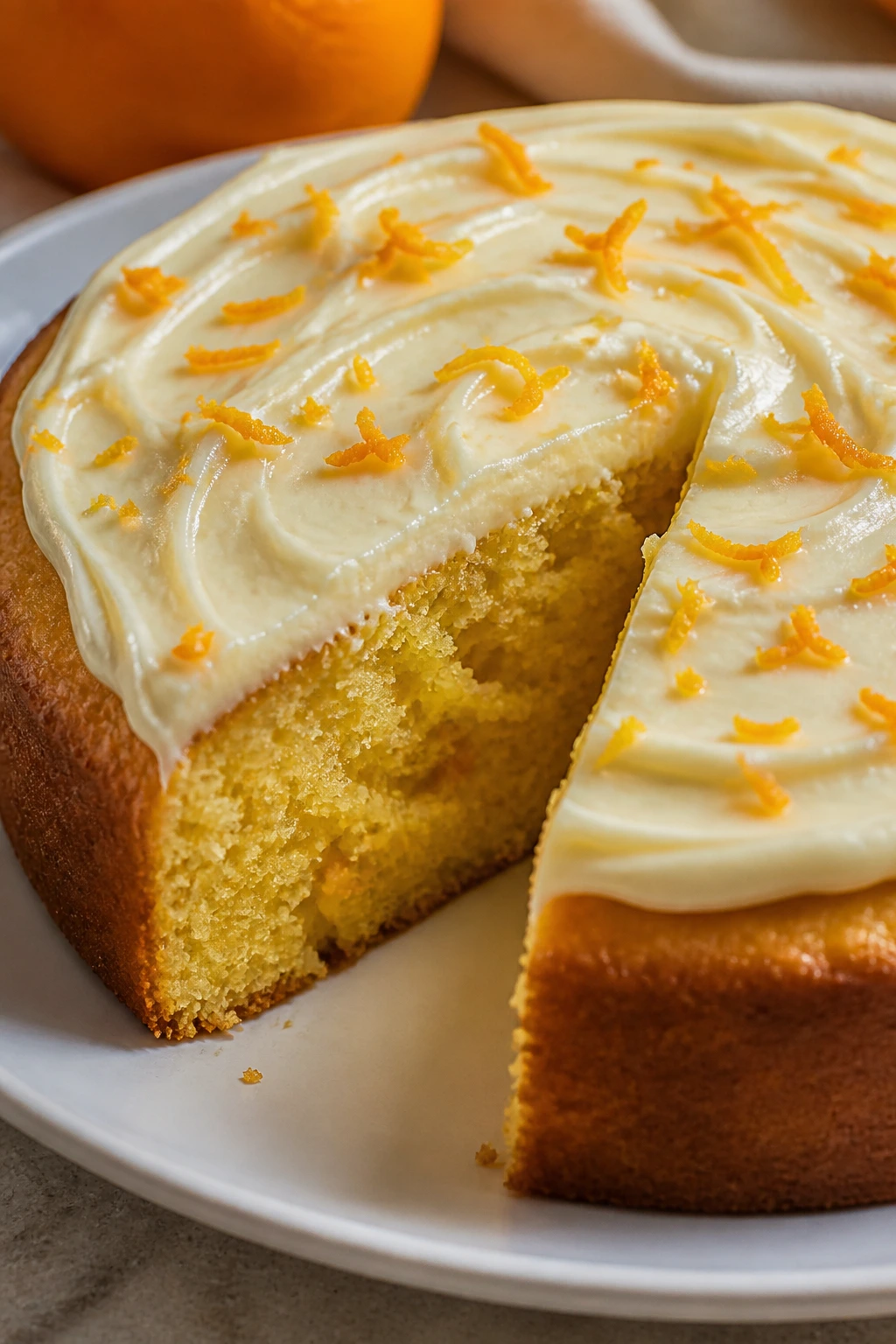
There are desserts that rely on size and desserts that rely on restraint. This one wins by being balanced. The crumb is soft without feeling flimsy, the orange stays bright without turning sour, and the cream cheese frosting gives each slice a cool, tangy finish that keeps the whole thing from leaning too sweet.
That balance is why I like it so much. It tastes like a bakery dessert that still remembers it came from a home kitchen, which is a narrower and more interesting lane than most cakes try to occupy.
Bake it once with a good orange and a clean zester, and you’ll probably keep oranges in the fruit bowl for the next round.
Fluffy Orange Tart with Cream Cheese Frosting — Recipe Card
Recipe Name: Fluffy Orange Tart with Cream Cheese Frosting
Description: A light orange tart baked in a removable-bottom tart pan and topped with tangy cream cheese frosting. The crumb stays soft and airy, while the frosting keeps the orange flavor from feeling flat.
Prep Time: 25 minutes
Cook Time: 28 minutes
Total Time: 53 minutes active + 1 hour cooling
Course: Dessert
Cuisine: American
Servings: 10 servings
Calories: About 390 kcal per serving
Ingredients
For the Tart:
- 1 1/2 cups cake flour, spooned and leveled
- 1 1/2 teaspoons baking powder
- 1/2 teaspoon fine sea salt
- 4 large eggs, separated and at room temperature
- 3/4 cup granulated sugar, divided
- 2 tablespoons finely grated orange zest
- 1/3 cup neutral oil
- 1/4 cup fresh orange juice
- 1/4 cup whole milk
- 1 teaspoon vanilla extract
For the Cream Cheese Frosting:
- 8 ounces block cream cheese, softened
- 4 tablespoons unsalted butter, softened
- 2 cups powdered sugar, sifted
- 1 tablespoon fresh orange juice
- 1 teaspoon orange zest
- 1 teaspoon vanilla extract
- Pinch fine salt
For the Finish:
- Orange zest curls or thin orange slices, patted dry
- 1 tablespoon chopped pistachios, optional
Instructions
-
Preheat the oven to 350°F (175°C) and prepare a 10-inch tart pan with a removable bottom by greasing it and lining the base with parchment.
-
Whisk together the cake flour, baking powder, and salt in a medium bowl.
-
Rub the orange zest into the granulated sugar, then whisk the egg yolks with 1/2 cup of the sugar mixture until pale. Whisk in the oil, orange juice, milk, and vanilla.
-
Add the dry ingredients and whisk just until combined. In a clean bowl, beat the egg whites with the remaining 1/4 cup sugar to medium peaks, then fold them into the batter in three additions.
-
Scrape the batter into the tart pan and bake for 25 to 30 minutes, until the top is pale gold and springs back lightly. Cool in the pan for 15 minutes, then release and cool completely.
-
Beat the cream cheese and butter until smooth, then add the powdered sugar, orange juice, orange zest, vanilla, and salt. Spread over the cooled tart, add the garnish, and chill for 20 minutes before slicing if you want cleaner edges.
Notes: Use block cream cheese, not spreadable cream cheese. The tart slices best after it has cooled fully and chilled briefly. Extra orange zest on top makes the flavor pop.