



The lid comes off and the first thing you smell is ginger, soy, and garlic turning sweet in steam. That is the whole point of an easy Asian crockpot dinner: a short prep window, a long quiet cook, and a sauce that tastes as if you stood there stirring it, even though the slow cooker did the heavy lifting.
I reach for chicken thighs here because the slow cooker can be rude to lean meat. Thighs stay plush, the sauce has enough honey and hoisin to turn glossy instead of flat, and the onions soften into the base rather than sitting there like they were added as an afterthought.
This is Asian-inspired on purpose. It borrows the sweet-salty balance of soy, honey, rice vinegar, garlic, and sesame oil without pretending that one pot can stand in for a whole continent of cooking. The finished chicken is sticky at the edges, savory in the middle, and deep enough in flavor that a plain bowl of jasmine rice stops feeling plain.
The trick is using ingredients that can sit under a lid for hours and still come out polished. That’s where this one earns its place.
Why This Crockpot Chicken Earns Its Place in the Rotation
The slow cooker works best when it’s given ingredients with a little backbone. Garlic softens, ginger mellows, hoisin folds in, and the chicken absorbs the sauce instead of sitting on top of it like a separate layer. The result is not flashy. It’s better than flashy. It’s dinner that tastes settled.
Fifteen minutes of work: The prep here is mostly whisking, slicing, and dropping things into the pot. If you can measure soy sauce and honey without spilling half of it on the counter, you’re already almost done.
Chicken thighs stay forgiving: Thighs handle the long, enclosed heat of a crockpot without drying out as fast as breasts. That extra bit of fat matters here because it keeps the meat silky after shredding.
The sauce comes from pantry staples: Soy sauce, hoisin, rice vinegar, honey, sesame oil, garlic, and ginger do the whole job. No special trip, no obscure bottle that lives in the back of the fridge until it expires.
Leftovers hold their shape: The shredded chicken soaks up more sauce overnight instead of going limp. It’s one of the rare slow cooker dishes that tastes even more organized the next day.
It scales without drama: Double the batch if your cooker is large enough, and the flavor still lands the same way. Just keep the chicken in a fairly even layer so the pieces cook at the same pace.
A little heat is easy to control: The red pepper flakes add a nudge, not a slap. If you want more fire, chili crisp at the table does the job without changing the base sauce for everyone else.
The whole thing feels like a smarter version of takeout-night chicken. Not copied. Not fussy. Just the kind of dinner that makes the rice bowl look intentional.
The Time, Yield, and Difficulty at a Glance
A slow cooker recipe lives or dies on whether the timing is honest. This one is straightforward, but it still rewards paying attention to the finish. The sauce needs a few minutes after the chicken comes out so it can thicken and cling instead of pooling around the rice like broth.
Yield: Serves 6
Prep Time: 15 minutes
Cook Time: 4 hours 15 minutes on Low, or 2 hours 45 minutes on High
Total Time: 4 hours 30 minutes on Low, or about 3 hours on High
Difficulty: Beginner — the work is mostly measuring, whisking, shredding, and giving the sauce a short finish.
Chill/Rest Time: 10 minutes after thickening
Best Served: Right after cooking, over steamed rice with scallions and sesame seeds
Low heat gives the chicken the gentlest texture, and I usually prefer it when I have the time. High works fine when dinner needs to happen sooner. The only part that really needs care is the last step: thickening the sauce after the chicken is cooked.
The Short Ingredient List That Makes the Whole Dish Work
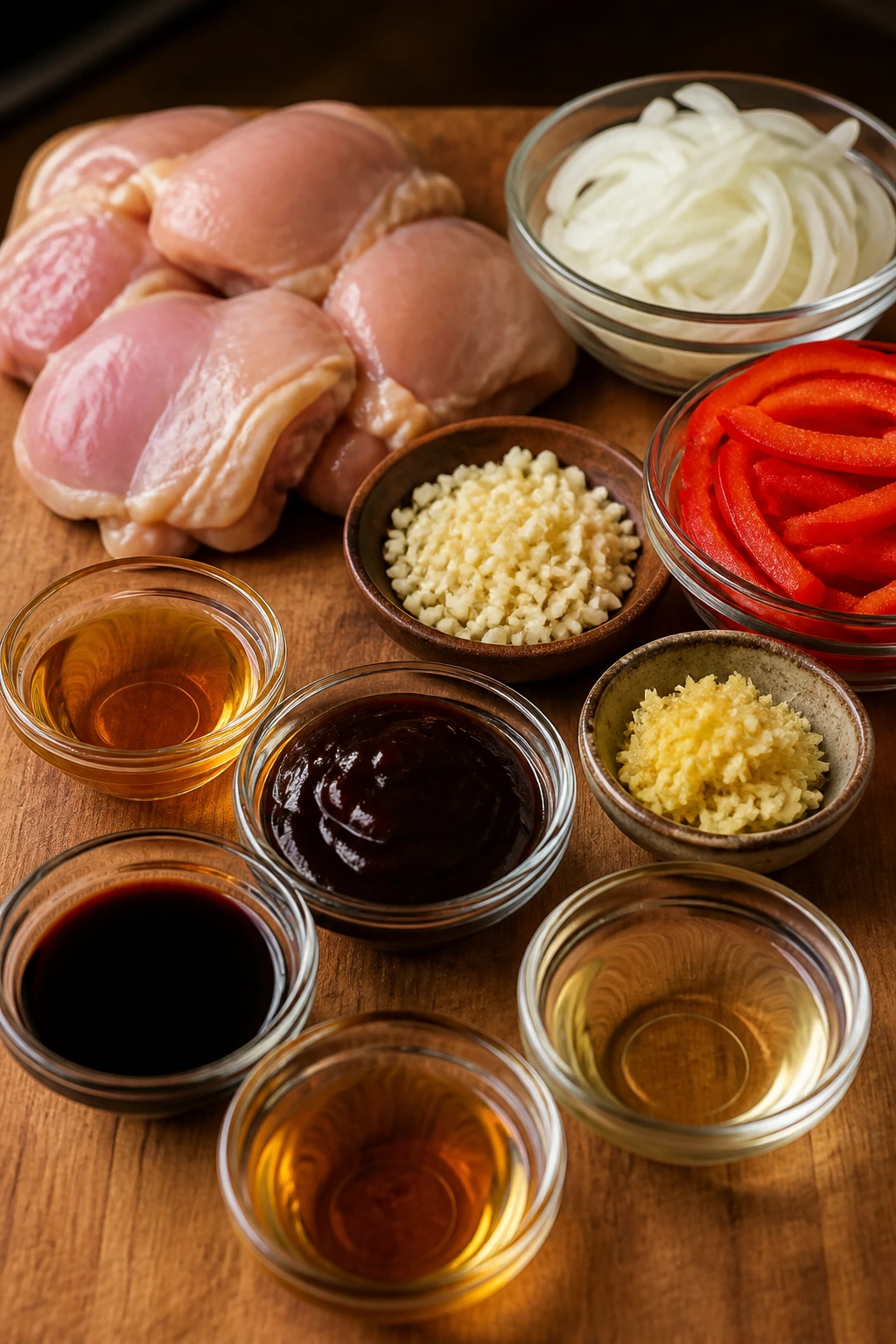
Short ingredient lists can hide a lot of nuance. This one looks simple, but the ratios matter. Too much soy and the sauce goes muddy-salty; too much honey and it turns sticky in a one-note way; too little acid and the whole thing tastes like it needs a squeeze of something.
For the Chicken and Sauce:
- 2 1/2 lbs boneless, skinless chicken thighs
- 1/2 cup low-sodium soy sauce
- 1/3 cup honey
- 1/4 cup hoisin sauce
- 1/4 cup rice vinegar
- 2 tbsp toasted sesame oil
- 6 garlic cloves, minced
- 1 tbsp fresh ginger, grated
- 1 medium yellow onion, thinly sliced
- 1 red bell pepper, thinly sliced
- 1/2 tsp crushed red pepper flakes
For Thickening and Finishing:
- 2 tbsp cornstarch
- 3 tbsp cold water
- 3 scallions, thinly sliced
- 1 tbsp toasted sesame seeds
If you want the cleanest, glossiest finish, use low-sodium soy. Regular soy can work, but once the sauce reduces and the chicken juices join in, the salt has a way of getting louder than you meant it to be.
What Each Ingredient Does, and Why I’d Keep It There
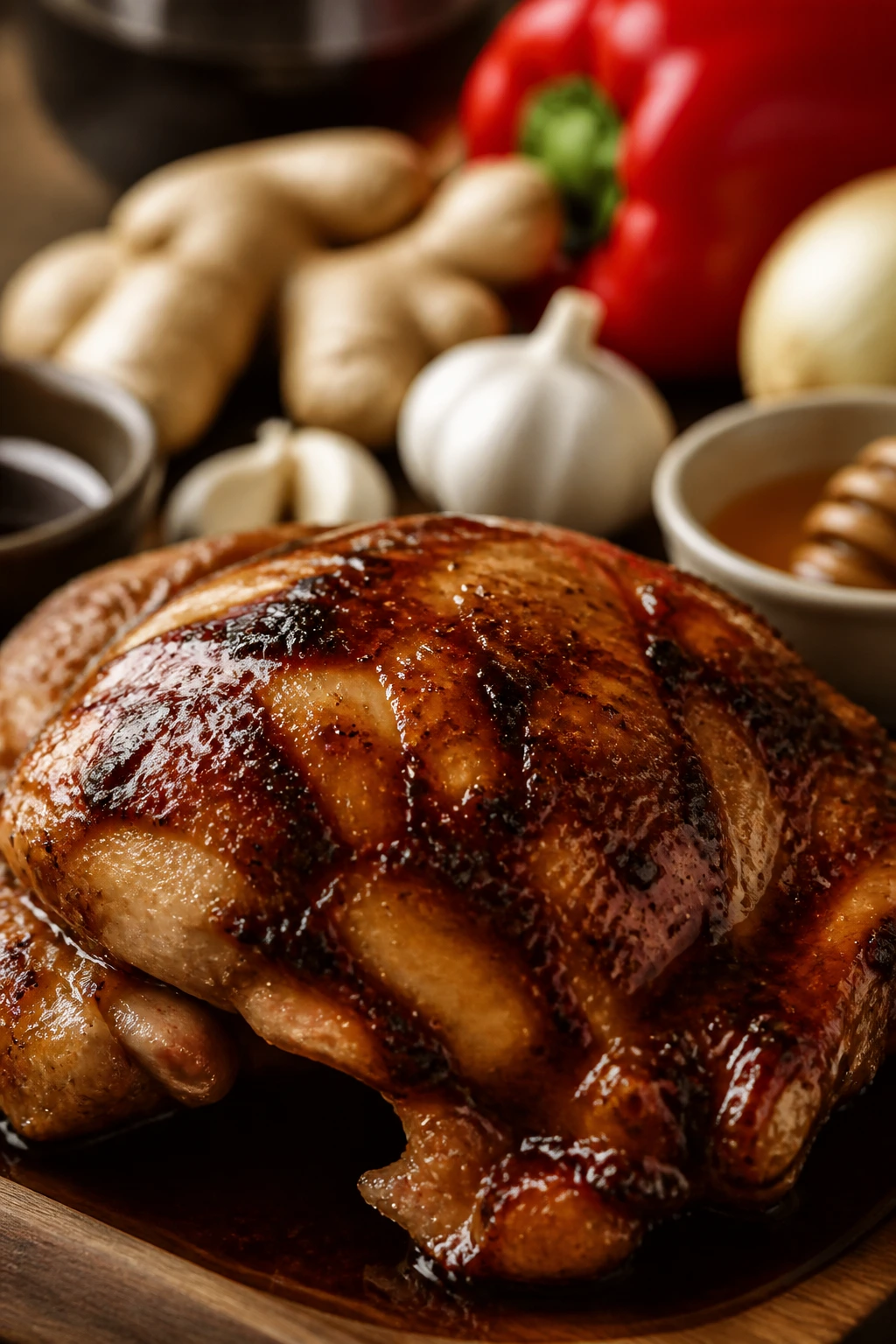
Chicken
What to use: 2 1/2 lbs boneless, skinless chicken thighs.
Preparation: Trim loose pockets of fat, but do not fuss over every small bit; leave the thighs whole so they shred in long, juicy strands later.
Substitutions: Boneless, skinless chicken breasts work in a pinch, though they need less time and a closer eye.
Tips: Thighs can sit a little longer without drying out, which is exactly why they belong in a slow cooker.
Sauce Base
What to use: 1/2 cup low-sodium soy sauce, 1/3 cup honey, 1/4 cup hoisin sauce, 1/4 cup rice vinegar, and 2 tbsp toasted sesame oil.
Preparation: Whisk the sauce well before it goes into the pot so the honey doesn’t sink in a sticky ribbon at the bottom.
Substitutions: Tamari can replace soy sauce, maple syrup can stand in for honey, and apple cider vinegar can replace rice vinegar in a pinch.
Tips: Sesame oil is there for aroma, not bulk, so don’t add extra unless you want it to dominate the whole bowl.
Aromatics
What to use: 6 garlic cloves, 1 tbsp fresh ginger, 1 medium yellow onion, 1 red bell pepper, and 1/2 tsp crushed red pepper flakes.
Preparation: Mince the garlic finely, grate the ginger so it disappears into the sauce, and slice the onion and pepper thinly so they soften fast.
Substitutions: Shallot can replace onion, and jarred ginger or garlic paste can work when speed matters more than brightness.
Tips: Fresh ginger tastes cleaner after hours of heat; dried ginger can feel dusty and oddly flat here.
Thickener and Finish
What to use: 2 tbsp cornstarch, 3 tbsp cold water, 3 scallions, and 1 tbsp toasted sesame seeds.
Preparation: Stir the cornstarch into cold water until it looks smooth and milky, then add it only after the chicken is cooked.
Substitutions: Arrowroot starch works if you want a slightly glossier finish, and cilantro can replace scallions if you like a greener, sharper finish.
Tips: The sauce will look a bit thin before the slurry goes in. That is normal. The thickening happens at the end, not at the beginning.
A lot of slow cooker recipes rely on one big flavor trick. This one doesn’t need one. It works because every piece is doing a small, useful job.
The Tools That Make the Job Easier
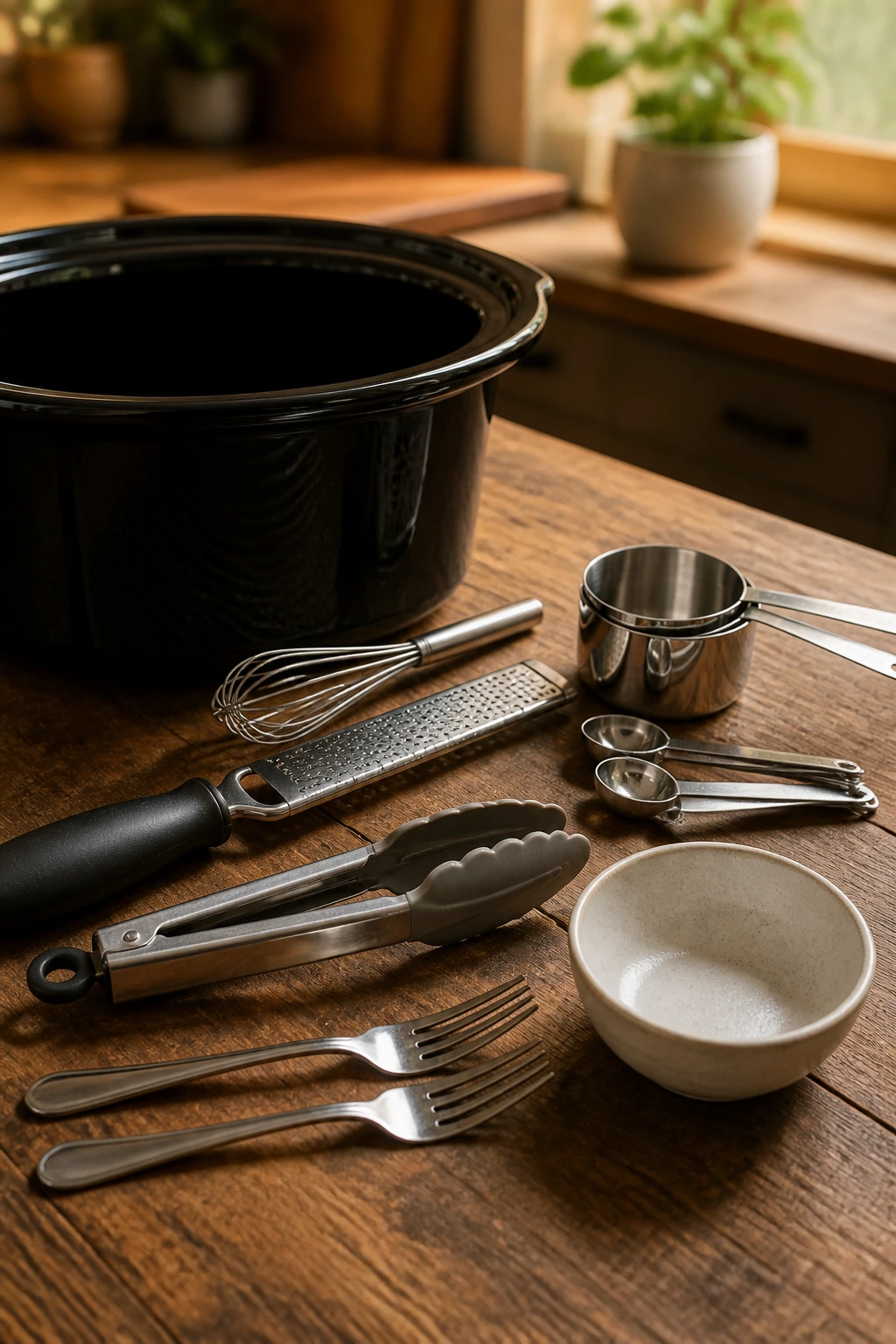
You do not need a kitchen full of gear for this. A handful of ordinary tools does the whole job, and one or two of them matter more than people think.
- 6-quart slow cooker: Big enough for 2 1/2 pounds of chicken without piling it into a dense mound.
- Small whisk: Helpful for dissolving the honey into the soy sauce before everything goes in.
- Microplane or fine grater: The easiest way to get ginger into the sauce without fibrous bits.
- Measuring cups and spoons: The sauce depends on ratios more than intuition.
- Tongs: Useful for lifting and turning the chicken without tearing it apart too soon.
- Two forks: The fastest way to shred the cooked thighs cleanly.
- Small bowl: Needed for the cornstarch slurry.
- Rice cooker or saucepan with a tight lid, optional: Handy if you want jasmine rice ready at the same time.
If your slow cooker runs hot or the insert is shallow, keep an eye on the liquid level toward the end. Most standard machines handle this recipe without complaint, but every appliance has its own mood.
How to Set Up the Slow Cooker
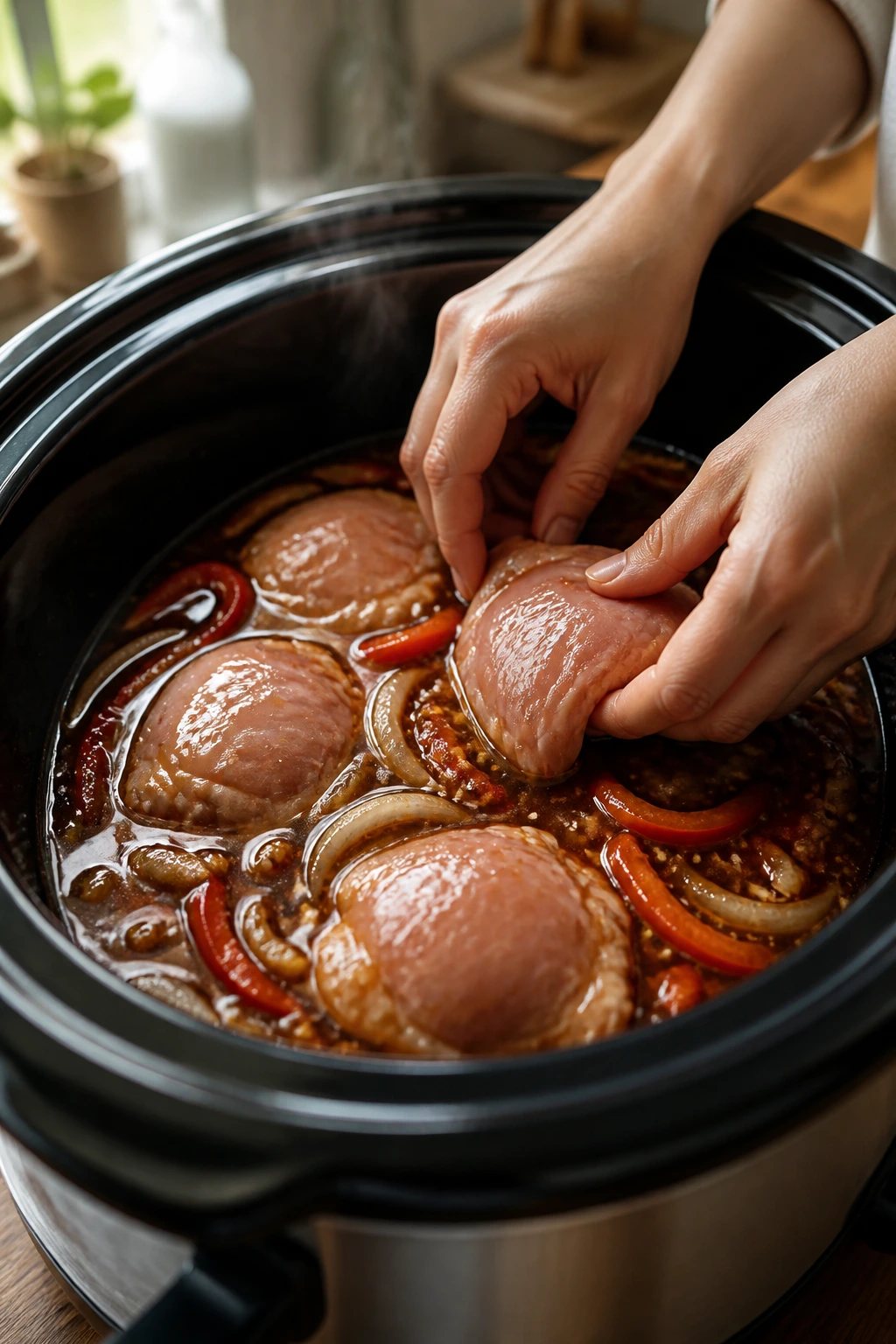
Build the Sauce:
- In the bottom of a 6-quart slow cooker, whisk together the soy sauce, honey, hoisin sauce, rice vinegar, toasted sesame oil, minced garlic, grated ginger, and crushed red pepper flakes until the honey is fully blended and the sauce looks smooth.
- Add the sliced onion and red bell pepper, then stir once so they’re coated in the sauce and sitting in a loose layer.
Add the Chicken and Cook: 3. Nestle the chicken thighs into the sauce, turning them once with tongs so they’re lightly coated on both sides. Do not worry if the tops are not submerged; the lid will trap enough steam to cook them through. 4. Cover and cook on Low for 4 to 5 hours or on High for 2 1/2 to 3 hours, until the chicken reaches 165°F / 74°C and shreds easily with a fork. Do not keep lifting the lid to check; every peek drops heat and drags out the cooking time.
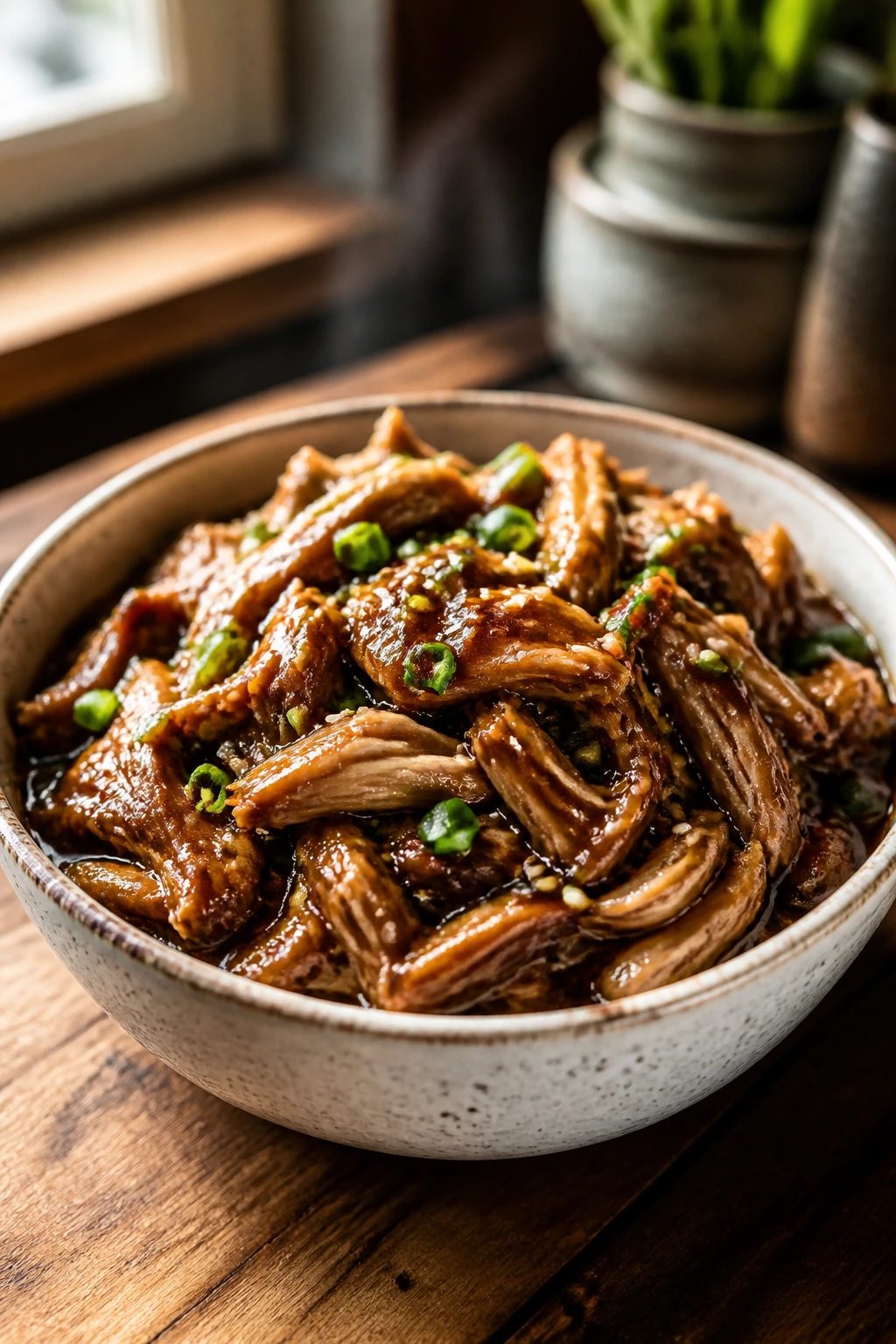
Shred and Thicken: 5. Transfer the chicken to a cutting board or large bowl and shred it with two forks, removing any obvious fatty pieces. 6. Stir the cornstarch and cold water together in a small bowl until no dry lumps remain, then whisk that slurry into the sauce in the slow cooker. 7. Cover again and cook on High for 10 to 15 minutes, until the sauce turns glossy and thick enough to coat the back of a spoon. Return the shredded chicken to the pot and toss everything together. 8. Let the pot sit off heat for 5 minutes, then top with sliced scallions and toasted sesame seeds before serving.
If the sauce tastes a little sharp after thickening, that is a good sign you haven’t oversweetened it. A minute or two of resting usually rounds it out.
How to Serve It Like a Real Dinner
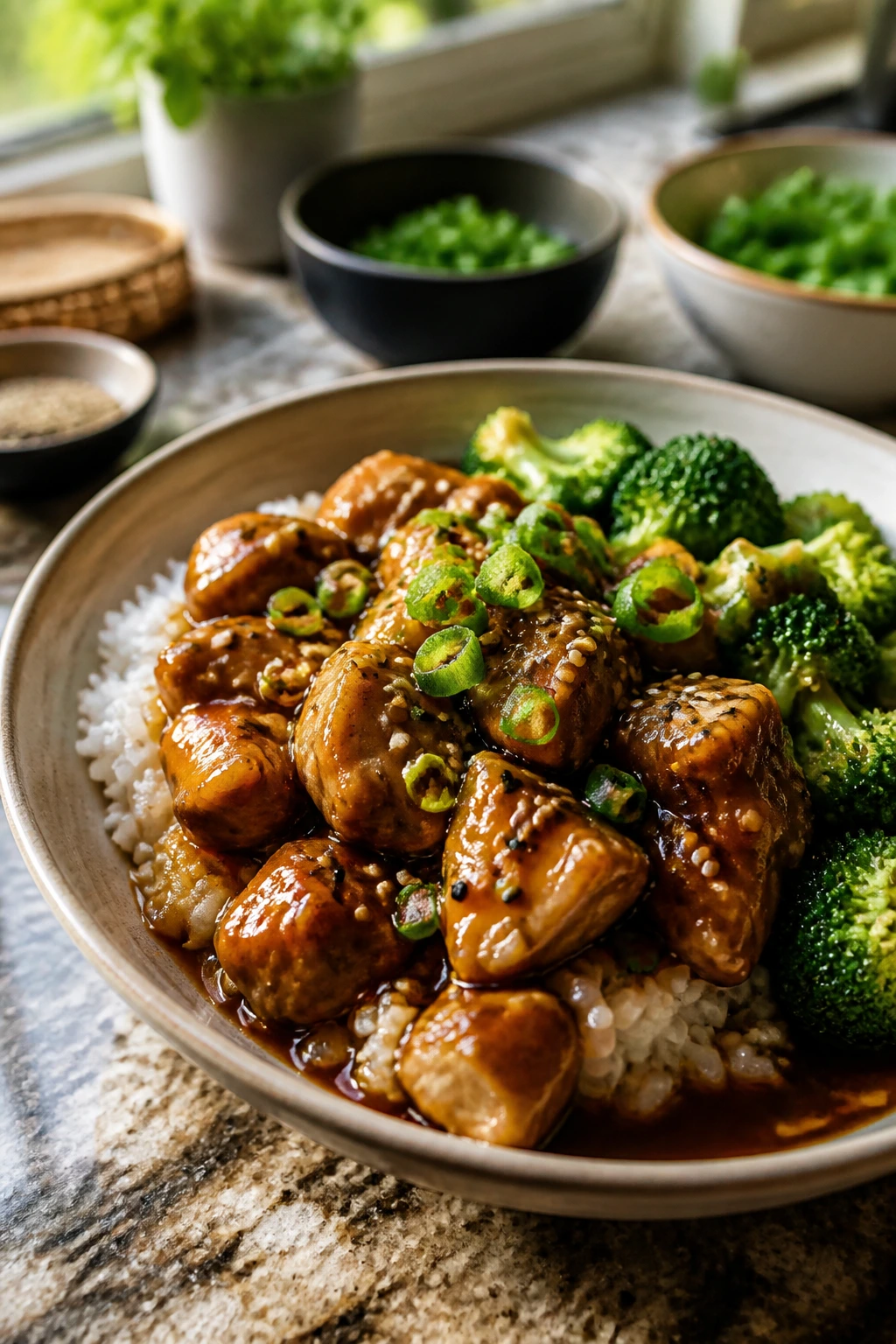
Presentation: Spoon the chicken over a mound of steamed jasmine rice, then let the sauce spill down the sides rather than burying the whole bowl. A scatter of scallions and sesame seeds in the middle gives the plate a finished look without making it fussy.
Accompaniments: Steamed broccoli, snap peas, or quick cucumber salad fit here because they give the bowl some crunch and freshness next to the soft chicken. If you want something warmer, sautéed bok choy or garlicky green beans are the right kind of side.
Portions: Plan on about 1 cup of the chicken and sauce per person, which usually lands around 6 ounces cooked chicken. For hungry eaters, build the bowl with 3/4 to 1 cup rice underneath and let the sauce soak in.
Beverage Pairing: I like iced jasmine tea or a dry lager with this because both keep the honey and hoisin from feeling too heavy. An off-dry Riesling also works if you want something a little more polished without turning the meal into a wine project.
If you’re serving guests, keep the rice in one bowl, the chicken in another, and the garnishes on the side. People always make their own version anyway.
Small Moves That Make the Sauce Better
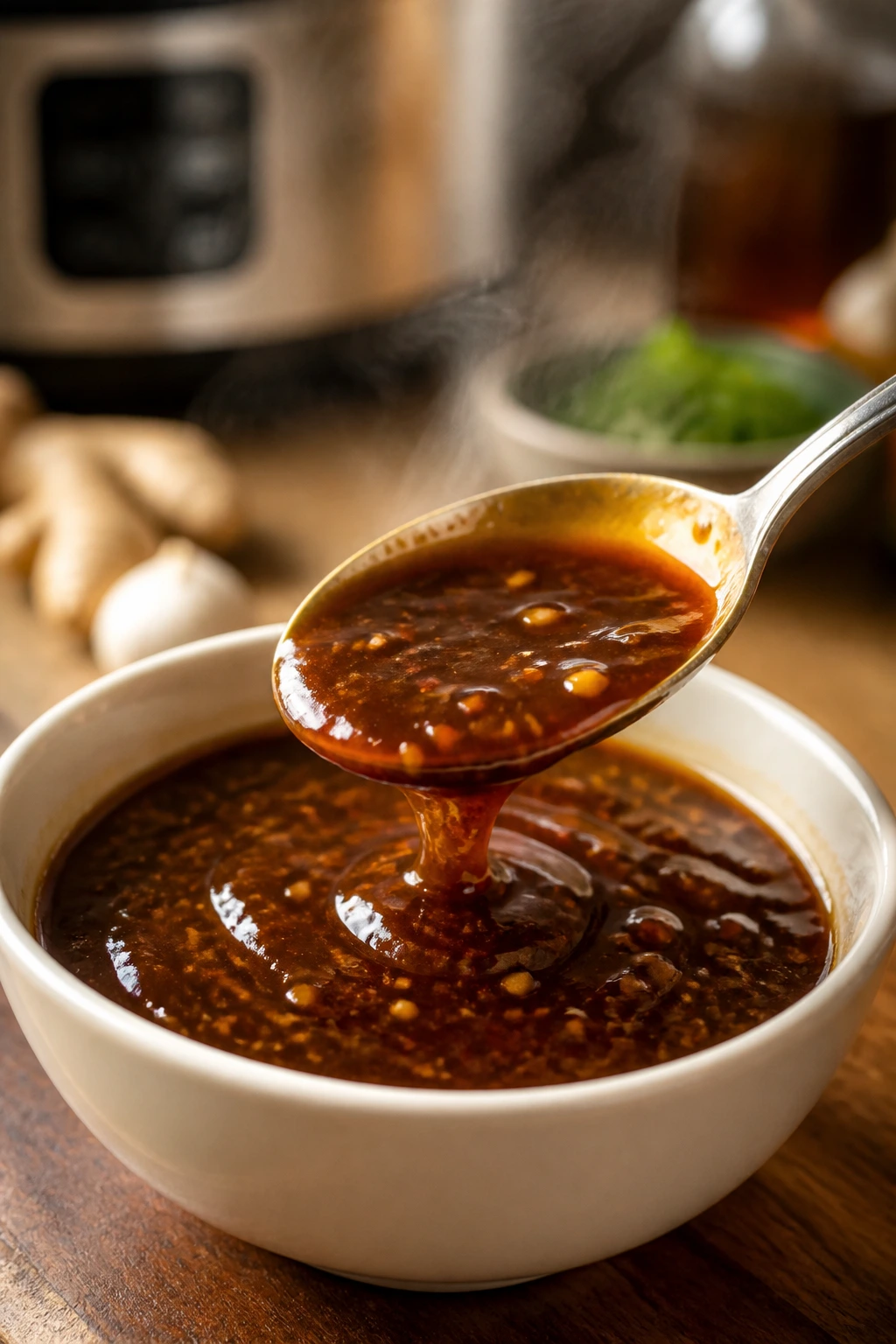
Flavor Enhancement: Stir in an extra teaspoon of toasted sesame oil after the sauce thickens, not before. Off heat, the sesame smell opens up more clearly, and you get that nutty, warm finish without making the whole pot taste oily.
Time-Saver: Mix the sauce ingredients the night before and keep them in a jar in the fridge. In the morning, all you have to do is slice the onion, drop in the chicken, and start the cooker.
Texture Fix: If the sauce still looks thin after the cornstarch step, cook it uncovered on High for another 5 to 10 minutes. Some slow cookers hold moisture tightly; others vent more, and the difference shows up right at the end.
Make-It-Yours: A spoonful of chili crisp on each bowl gives the chicken more edge without changing the base recipe. For a calmer version, skip the red pepper flakes and finish with extra scallions instead.
Cost-Saver: Use chicken thighs from a family pack and freeze what you won’t cook right away. Thighs are usually less expensive than breasts, and here they’re also the better textural choice.
Bright Finish: A teaspoon of rice vinegar stirred in at the end can wake up the sauce if the honey feels a little heavy. That tiny hit of acid is often the difference between “good” and “I want seconds.”
Common Mistakes That Make Crockpot Chicken Fall Flat
-
Using chicken breasts and cooking them as long as thighs: The chicken turns stringy and dry at the edges before the sauce has time to finish thickening. If you want to use breasts, start checking early and pull them as soon as they reach 165°F.
-
Adding the cornstarch straight into the pot: Dry starch clumps fast in hot liquid and leaves little pale lumps in the sauce. Mix it with cold water first so it disperses evenly and thickens cleanly.
-
Using full-sodium soy sauce without adjusting anything else: The sauce can end up salty once the chicken juices reduce into it. Low-sodium soy gives you more room to finish the dish without rescue moves.
-
Opening the lid every hour because you want to check progress: The chicken cooks fine, but the pot loses heat each time and the timing stretches out. Trust the process and wait until the minimum cook time before checking.
-
Stopping before the sauce thickens: Shredded chicken in thin sauce feels underfinished, even if the flavor is good. Let the slurry bubble for 10 to 15 minutes on High so the sauce turns glossy and clings to the meat.
-
Adding scallions too early: They lose their bite and turn limp if they sit in the hot sauce for a long stretch. Save them for the end so the top of the bowl stays fresh and sharp.
Most of the failures here are not dramatic. They are tiny timing mistakes that flatten the final bowl. Conveniently, they are also easy to fix next time.
Variations That Still Make Sense
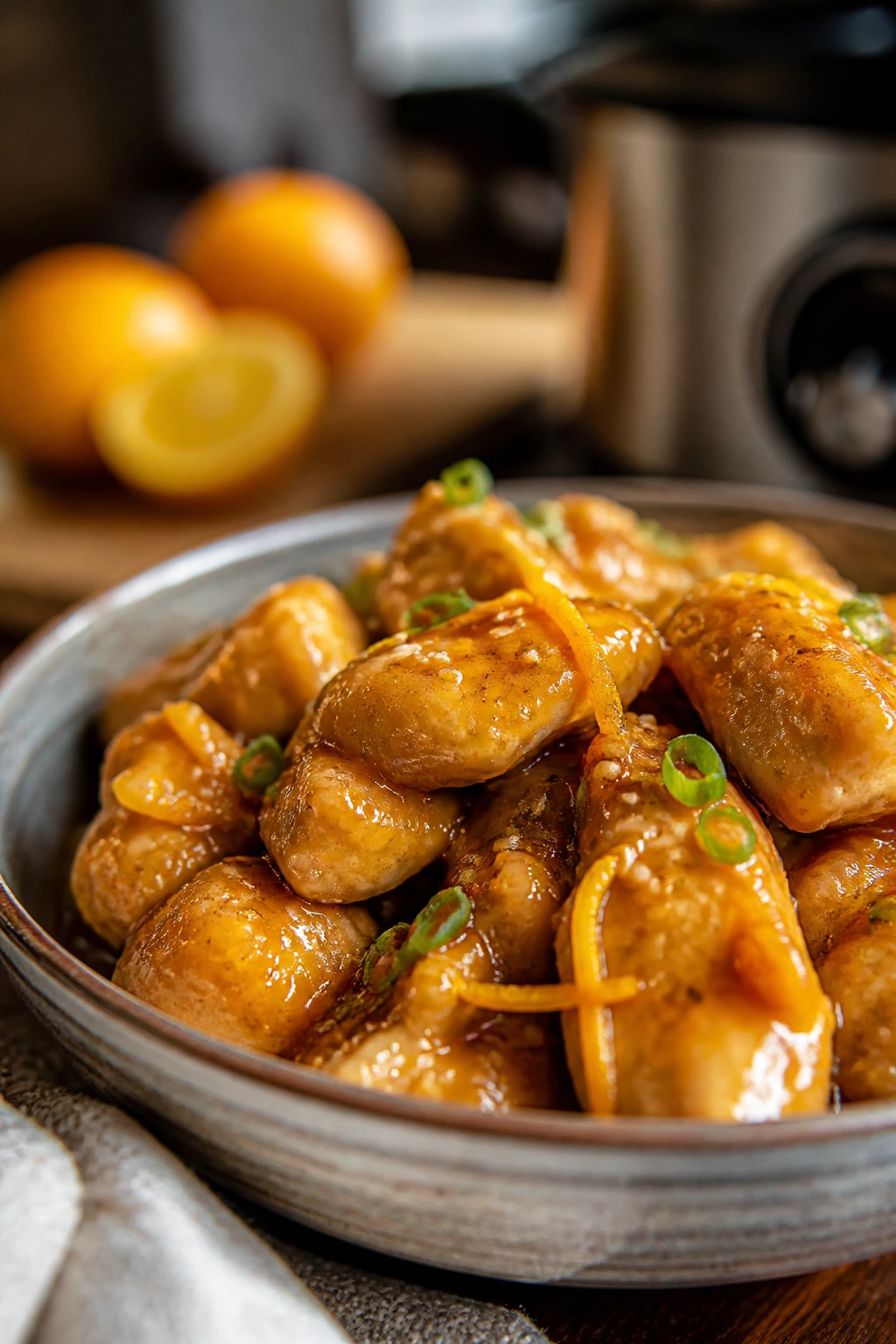
Sticky Orange Sesame: Swap 2 tablespoons of the rice vinegar for fresh orange juice and add 1 teaspoon of orange zest at the end. The sauce gets brighter and a little more fragrant, which works well if you want the bowl to feel less dark and more citrusy.
Chili Crisp Heat: Stir 1 to 2 tablespoons of chili crisp into the finished sauce or spoon it over each bowl at the table. That gives you crunchy heat and extra savory oil without turning the whole pot into a spice bomb.
Pineapple Ginger Bowl: Add 1 cup drained pineapple chunks during the last 45 minutes of cooking and reduce the honey to 1/4 cup. The pineapple softens just enough to soak up sauce and gives the dish a sharper sweet-sour edge.
Gluten-Free Tamari Swap: Use tamari in place of soy sauce and choose a gluten-free hoisin if you can find one. The rest of the recipe stays the same, and the finished sauce still gets the same sticky, lacquered look.
Veggie-Heavy Weeknight Version: Add sliced mushrooms and extra bell pepper at the start, then stir in a handful of snap peas during the last 10 minutes. The mushrooms absorb sauce like little sponges, and the snap peas keep their snap instead of fading into mush.
Milder Family Version: Leave out the red pepper flakes entirely and finish each bowl with toasted sesame seeds and a few extra scallions. You still get depth from the soy, garlic, and ginger, just without the heat.
Keeping Leftovers Tasty
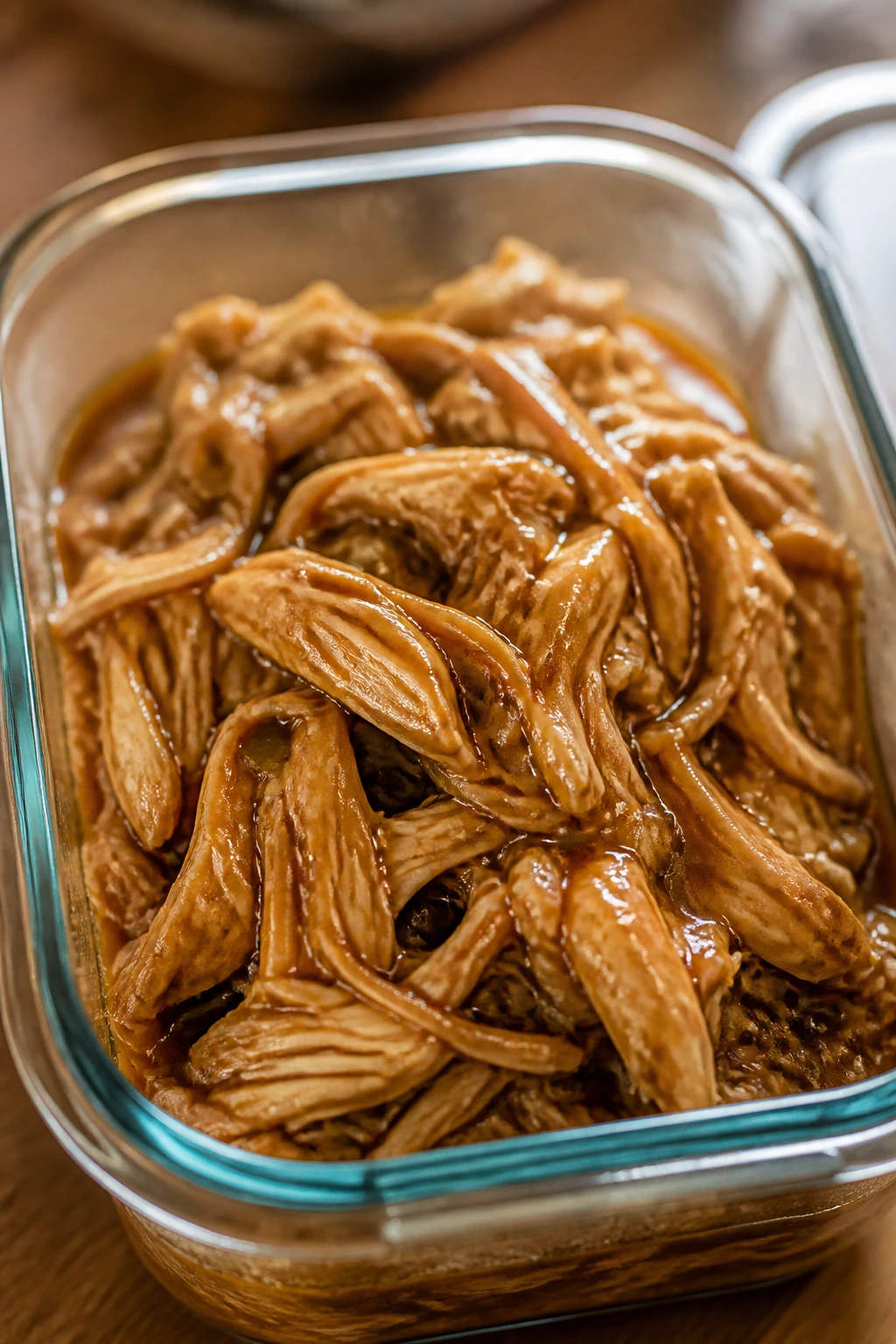
This recipe is one of the better arguments for making more than you need. The chicken sits in the sauce, so the leftovers don’t dry out as quickly as plain shredded meat would. The flavor also settles in overnight and tastes more integrated the next day.
Do not leave the finished chicken at room temperature for more than 2 hours. Once it has cooled a bit, get it into shallow containers and into the fridge. That keeps the sauce from sitting warm in the middle of a big deep bowl, which is where food safety gets sloppy.
In the refrigerator, the chicken keeps for 3 to 4 days in an airtight container. In the freezer, it holds for up to 2 months if you pack it in meal-size portions and include plenty of sauce. I freeze the chicken and sauce by themselves, not with rice, because rice gets a dry, odd texture after thawing.
For reheating, the stovetop is best. Put the chicken in a small saucepan with 1 to 2 tablespoons of water or chicken broth, cover it loosely, and warm it over low heat until steaming hot. The microwave works too; use a covered bowl, 50% power, and short bursts with a stir in between so the sauce doesn’t splatter.
If you want to make part of it ahead, whisk the sauce ingredients together up to 24 hours in advance and keep them chilled. You can also slice the onion and bell pepper ahead of time. What you should not do is cook the whole batch, cool it halfway, and forget about it on the counter while you wait for the rice to finish.
Questions People Ask Before They Start
Can I use chicken breasts instead of thighs?
Yes, but you’ll need to watch the timing more closely because breasts dry out faster. Start checking them early, and pull them as soon as they hit 165°F and shred without resistance. Thighs still win here for texture.
Do I have to sear the chicken first?
No. Searing adds a little browning, but it is not worth the extra pan for this recipe unless you enjoy that step. The sauce and the long cook time already bring plenty of flavor.
Can I cook this on High the whole time?
You can, and the recipe is written for that option. For thighs, 2 1/2 to 3 hours on High is usually enough, but go by the chicken temperature and shredding feel more than the clock alone.
Why is my sauce thin when the chicken is done?
Slow cookers trap moisture, and the chicken releases its own juices, so the sauce often looks loose at first. That is what the cornstarch slurry is for, and it needs those 10 to 15 minutes on High to thicken properly.
Can I add more vegetables to the crockpot?
Yes, but choose vegetables that can handle the long cook: onions, bell peppers, and mushrooms are safe bets. Add quick-cooking vegetables like snow peas or broccoli florets near the end so they keep some shape.
Can I freeze the leftovers with rice?
I wouldn’t. The chicken and sauce freeze well, but rice gets grainy after thawing. Freeze the chicken separately and cook fresh rice when you reheat it.
How can I make it less sweet or less salty?
Cut the honey by 2 tablespoons if you want a sharper, less sticky sauce. If it tastes salty after cooking, add 1 to 2 tablespoons of water and a small splash of rice vinegar, then toss and taste again.
Can I assemble everything the night before?
Yes. Mix the sauce and prep the vegetables ahead of time, then keep them chilled separately. In the morning, put everything into the slow cooker and start the cycle; that keeps the whole setup simple without risking weird texture.
Why This One Belongs in the Weekly Dinner Stack
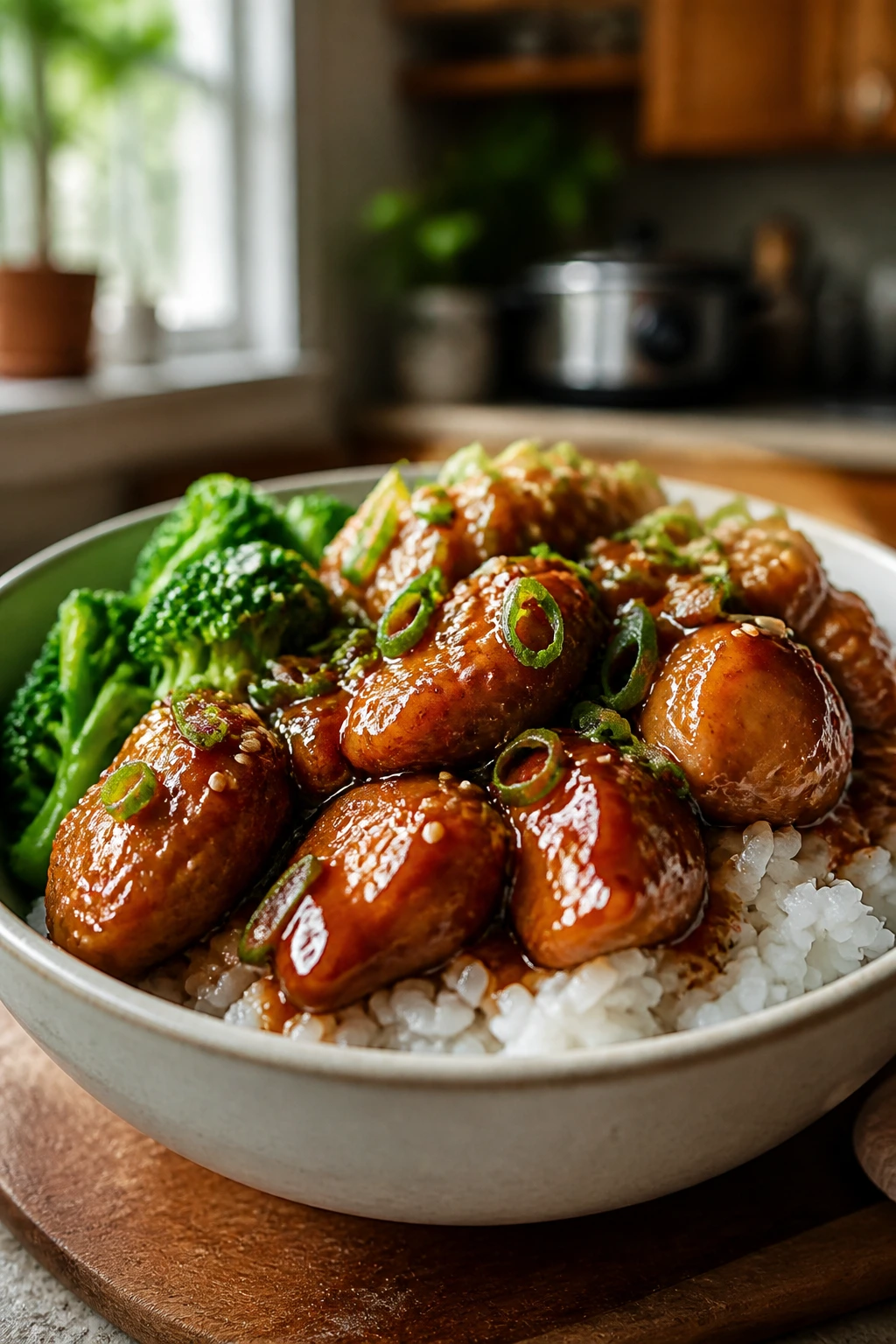
This is not the kind of dinner that wins points for drama. It wins because it tastes like you paid attention, even when the slow cooker did most of the work. The sauce comes out glossy, the chicken stays tender, and the whole thing lands in that useful middle ground between takeout and a full homemade production.
Serve it over rice, pile something green next to it, and it stops feeling like a random slow cooker meal. It feels like a plan. Once you make it once, the ratios settle into memory, and the next round gets even easier.
Easy Asian Crockpot Chicken — Recipe Card
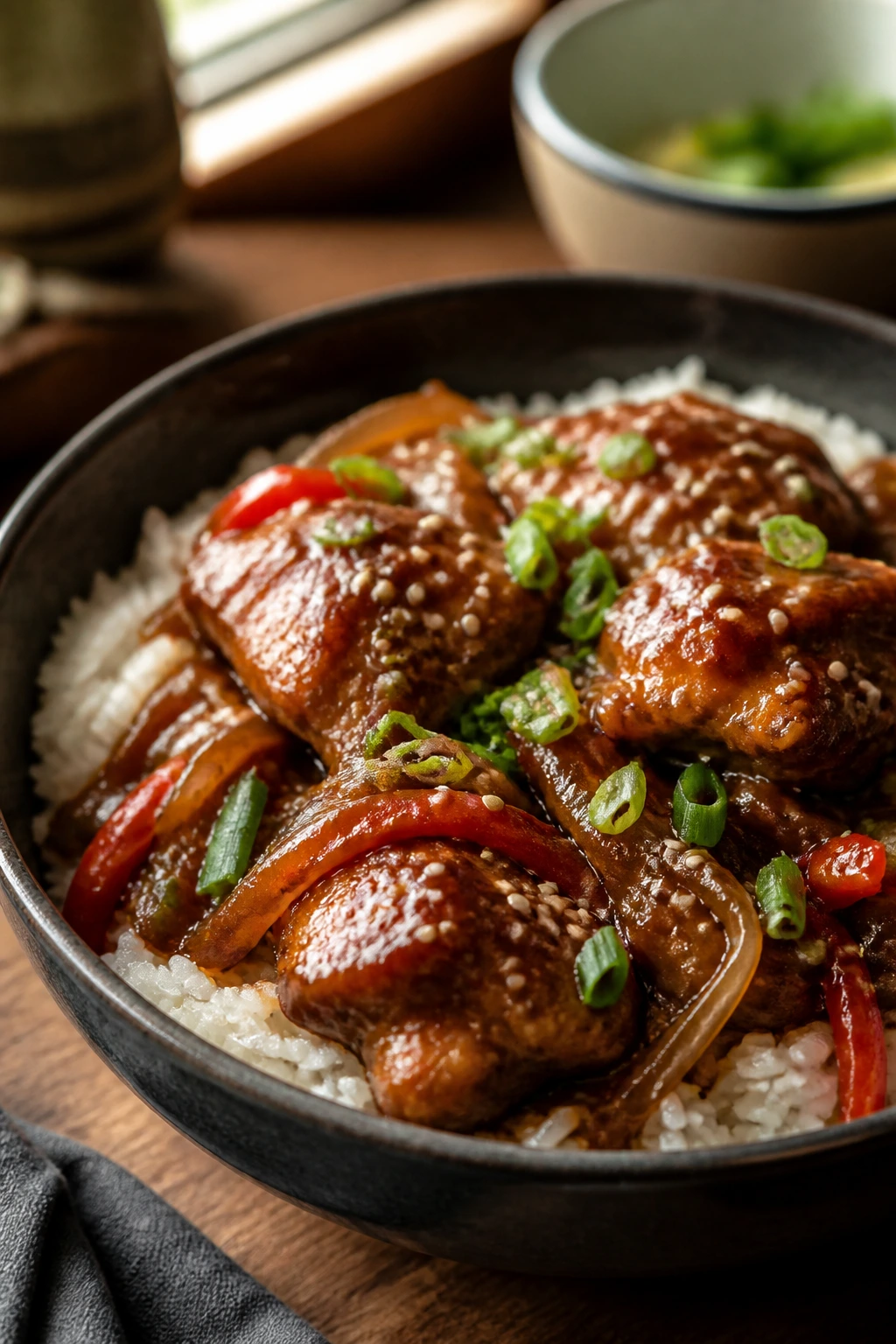
Recipe Name: Easy Asian Crockpot Chicken
Description: Tender chicken thighs cook low and slow in a glossy soy-honey sauce with garlic, ginger, hoisin, and sesame oil. It’s built for rice bowls, quick leftovers, and the kind of dinner that still tastes organized after a long day.
Prep Time: 15 minutes
Cook Time: 4 hours 15 minutes on Low, or 2 hours 45 minutes on High
Total Time: 4 hours 30 minutes on Low, or about 3 hours on High
Course: Main Course, Dinner
Cuisine: Asian-inspired
Servings: 6
Calories: About 430 kcal per serving
Ingredients
For the Chicken and Sauce:
- 2 1/2 lbs boneless, skinless chicken thighs
- 1/2 cup low-sodium soy sauce
- 1/3 cup honey
- 1/4 cup hoisin sauce
- 1/4 cup rice vinegar
- 2 tbsp toasted sesame oil
- 6 garlic cloves, minced
- 1 tbsp fresh ginger, grated
- 1 medium yellow onion, thinly sliced
- 1 red bell pepper, thinly sliced
- 1/2 tsp crushed red pepper flakes
For Thickening and Finishing:
- 2 tbsp cornstarch
- 3 tbsp cold water
- 3 scallions, thinly sliced
- 1 tbsp toasted sesame seeds
Instructions
-
Whisk the soy sauce, honey, hoisin, rice vinegar, sesame oil, garlic, ginger, and red pepper flakes in the slow cooker until smooth.
-
Add the onion and bell pepper, then nestle in the chicken thighs and turn them to coat.
-
Cook on Low for 4 to 5 hours or High for 2 1/2 to 3 hours, until the chicken reaches 165°F / 74°C and shreds easily.
-
Remove the chicken, shred it with two forks, and return it to the pot.
-
Stir the cornstarch and cold water together, whisk the slurry into the sauce, and cook on High for 10 to 15 minutes until glossy and thick.
-
Toss the chicken through the sauce, top with scallions and sesame seeds, and serve over rice.
Notes: Use thighs for the best texture. The sauce thickens more after a short rest, and leftovers freeze best without rice.