



Fresh raw vegetables for a healthy dinner sound plain until you put them on the plate the right way.
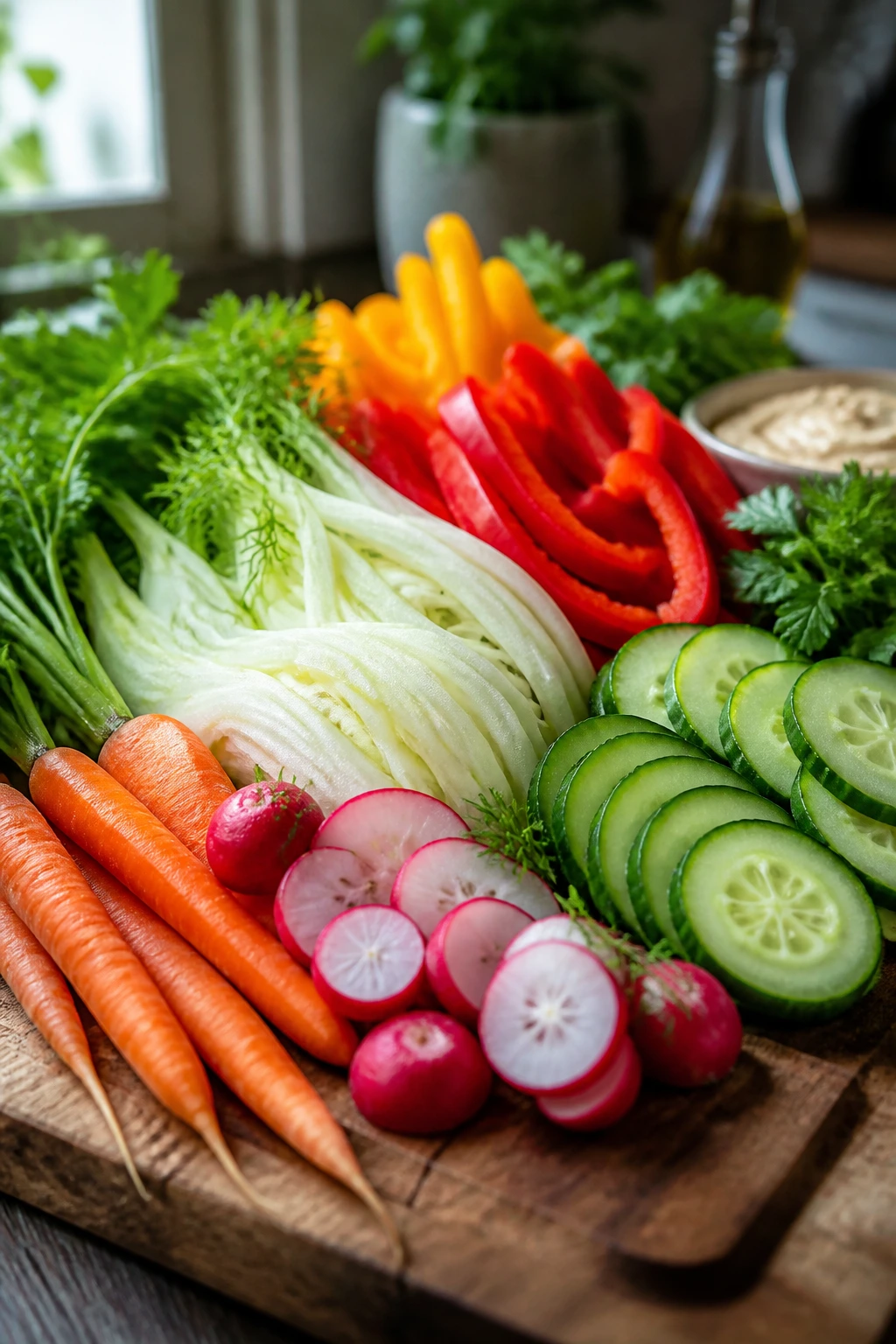
A cold cucumber on its own is a snack. Slice that cucumber beside shaved fennel, radishes, sweet peppers, a spoonful of hummus, and a few torn herbs, and it starts behaving like dinner instead of something you mindlessly eat standing at the counter. The difference isn’t magic. It’s structure.
Most people give up on raw vegetables because they stop at the produce bowl. That’s the trap. Dinner needs crunch, salt, acid, fat, and enough substance that you can sit down, eat slowly, and feel finished at the end. Raw vegetables can absolutely carry that kind of meal, but only when you stop treating them like a side note and start building around what they already do well: snap, freshness, color, and a kind of clean, bright flavor that cooked food can’t quite copy.
The useful part is how quickly this style of dinner comes together. No oven. No pan. No waiting for water to boil. If the vegetables are crisp and the dressing is awake, you can make something that feels deliberate in the time it takes to wash a cutting board and sharpen your knife.
Why Fresh Raw Vegetables Deserve a Spot at Dinner
-
They keep their crunch all the way to the last bite. A raw carrot still snaps, a radish still bites back, and that clean texture gives dinner a shape that soft food can’t always provide.
-
They’re fast without tasting rushed. If the vegetables are washed, dried, and stored well, you can turn them into a plated meal in 10 to 20 minutes without pretending you “cooked” anything.
-
They make room for real flavor. Raw fennel tastes faintly of licorice, bell peppers go sweet and grassy, and cucumbers carry a cool, almost melon-like note when they’re sliced thin.
-
They work in heat or in a tiny kitchen. A raw dinner is one of the few respectable meals that doesn’t ask you to heat up the room or dirty three pans.
-
They are easy to scale up. One bowl, one board, or one tray can feed one person or four, which is useful when appetite changes from day to day.
-
They still need balance. A pile of unseasoned vegetables is not dinner. The meal starts working once you add salt, acid, fat, and usually a protein or bean-based element.
What a Healthy Raw-Vegetable Dinner Looks Like on the Plate
A real dinner has weight to it. Not necessarily heaviness, but presence.
That means you want a plate or bowl that has a base, a few strong textures, one creamy or rich element, and a sharp finish. A naked salad bowl full of chopped lettuce can be fine for lunch, but dinner usually wants more than that. The raw vegetables should feel like the main event, not the thing hiding under the real meal.
Think in layers. Start with sturdy greens or a crisp base, add 2 or 3 vegetables with different textures, then give the whole thing one thing that holds flavor — hummus, tahini, avocado, yogurt dip, nut dressing, olive oil, or a handful of cheese if you eat dairy. If you want the meal to last, add beans, eggs, tofu, tempeh, nuts, seeds, or another protein you actually like. Not huge portions. Just enough that your stomach doesn’t start complaining half an hour later.
Here’s the part people miss: the vegetables should not all taste the same. A bowl made of cucumber, iceberg lettuce, and celery is watery in three different ways. Better to mix one sweet vegetable, one peppery one, one leafy one, and one that brings weight or starchiness, like carrots, kohlrabi, cabbage, or snap peas.
One sentence sums it up. Dinner needs contrast.
Choosing Produce With the Best Crunch and Sweetness
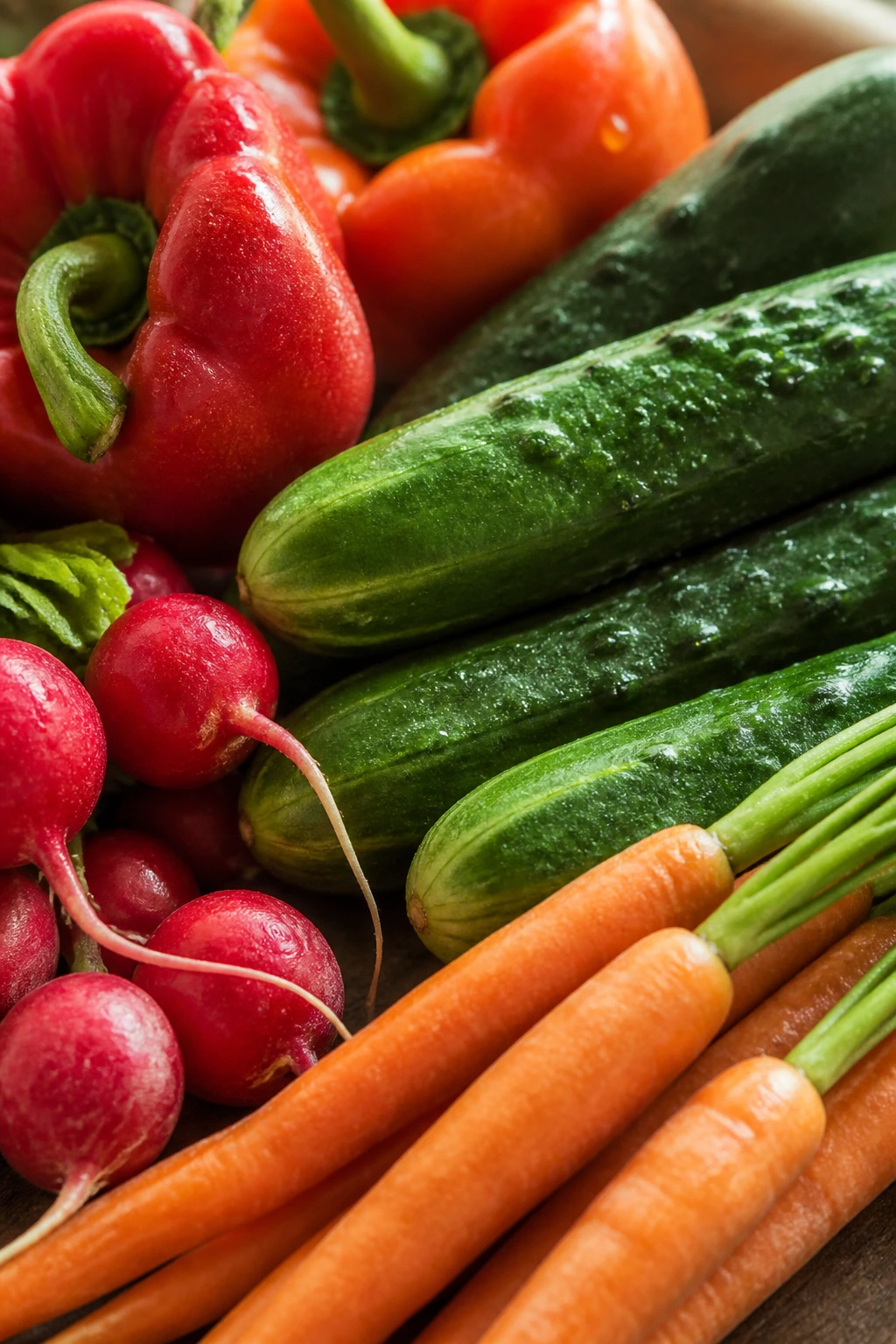
The produce aisle tells you a lot if you’re willing to look closely.
Pick vegetables that feel dense for their size, smell like something, and have tight skins or crisp edges. Cucumbers should be firm, not soft near the stem. Bell peppers should feel heavy and should not wrinkle when you press them. Radishes should look bright and smooth, not cracked or puffy. Carrots should bend very slightly before they snap; limp carrots belong in soup, not on a dinner plate.
The market test
If a vegetable looks tired before you even buy it, it will taste tired later.
That goes especially for lettuce, herbs, and anything cut in a bag. If the leaves are wet in the bag or if you can see brown edges collecting in the corners, leave them there. Fresh raw vegetable dinners live or die on texture, and texture dies fast when produce sits in its own moisture.
What to skip
Avoid vegetables that bruise at a glance. Soggy celery, soft cucumbers, wrinkled peppers, and rubbery carrots all make the plate feel flat. You can sometimes rescue them with dressing, but that’s not a good place to start.
Go easy on anything that gets woody when raw unless you slice it very thin. Broccoli stems, cauliflower, daikon, and kohlrabi can all work, but thick chunks ask too much from your teeth. Thin slices, ribbons, or a quick ice-water bath help. So does honesty: if a vegetable tastes better cooked, cook it. Not every vegetable needs to prove a point.
Best buys for a raw dinner
- Cucumbers: Persian or English cucumbers have fewer seeds and a cleaner crunch.
- Radishes: Peppery, crisp, and a little sharp; slice them thin so they don’t dominate.
- Bell peppers: Sweet, juicy, and easy to eat in strips.
- Carrots: They bring sweetness and hold up well when cut ahead.
- Celery: Grassy and cold; good for bite and volume.
- Snap peas: Sweet, tender, and useful when you want a vegetable that feels almost snack-like but still counts.
- Fennel: Thinly shaved fennel gives a crisp, anise edge that wakes up the rest of the plate.
- Kohlrabi and jicama: Both are sturdier, milder, and useful when you want crunch that lasts longer than 10 minutes.
- Romaine, butter lettuce, and endive: Better than floppy greens when you need a base that can actually support toppings.
The Vegetables That Carry a Raw Dinner
Some vegetables play backup. Others carry the meal.
Carrots, cucumbers, peppers, snap peas, and fennel are the workhorses because they bring flavor and texture with almost no effort. They can be eaten plain, dipped, shaved, chopped, or layered into a bowl without complaining. That matters more than people think. A raw dinner isn’t about using every vegetable in the drawer; it’s about picking the ones that still taste good after a little salt and a little acid.
Radishes deserve more respect than they get. Slice them thin and they turn crisp and peppery. Leave them in big chunks and they can taste harsh. Celery does a similar job, though it’s more grassy than spicy, and it’s useful when you want a cooling note.
Tomatoes are a little different. Cherry tomatoes and grape tomatoes work best because they’re sweet, portable, and less watery than big slicing tomatoes. If you do use larger tomatoes, salt them lightly and give them five or ten minutes to release a little juice. That tiny step keeps the plate from turning into a sloppy puddle.
Cabbage and romaine are excellent when you want more structure. Shredded cabbage brings crunch that lasts longer than lettuce, and romaine hearts can hold dressings and toppings without collapsing. Endive is one of my favorites for dinner boards because the leaves act like little boats. They hold fillings instead of slumping into them. That’s worth a lot when you’re trying to make raw vegetables feel composed.
And yes, raw broccoli and cauliflower can work, but only if you treat them well. Cut the florets small. Shave the stems. Dress them enough to soften the edges. Otherwise they taste like homework.
How to Build a Healthy Dinner Around Raw Vegetables Without Boredom
Boredom usually shows up when everything is cut the same way.
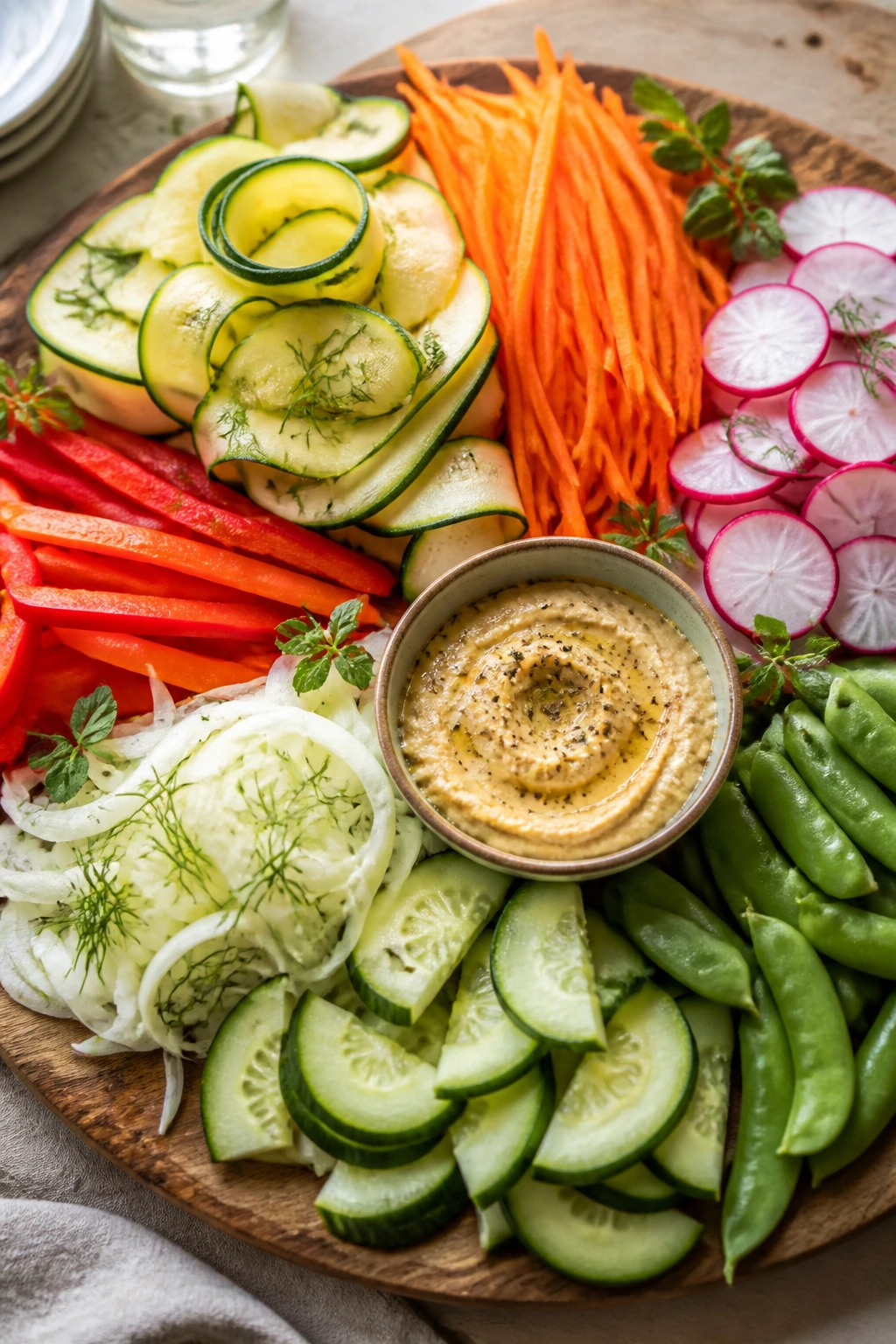
A bowl of evenly diced vegetables looks neat for about 30 seconds, then it starts tasting like a spreadsheet. Better to mix shapes. Ribboned zucchini. Matchstick carrots. Sliced radishes. Whole snap peas. Thick cucumber half-moons. Shaved fennel. Each shape changes the bite, which keeps your mouth paying attention.
Think in contrasts
A raw dinner should have at least three kinds of texture.
You want something watery, something firm, and something with a bit of chew. Cucumber gives water and coolness. Carrot or jicama gives crunch. Cabbage or romaine gives body. Add a creamy element and the whole thing stops feeling thin.
A one-texture plate gets old fast. A mixed-texture plate asks your teeth to do a little work, which is exactly what keeps dinner interesting. That’s true whether you serve it as a bowl, a platter, or lettuce cups.
Don’t confuse “light” with “small”
This is where people go wrong.
A healthy dinner built from raw vegetables can still be generous. In fact, it often should be. Two packed cups of vegetables is a starting point, not a brag. More matters if the vegetables are mostly water. If dinner is just three cucumber coins and a lonely lettuce leaf, the meal will feel like a performance instead of food.
Build from the edges inward
Start with the base. Add the strong crunchy vegetables. Then place the softer pieces where they won’t get crushed. Put the dressing or dip on the side if the vegetables are delicate. If you’re using herbs, seeds, cheese, or nuts, add them at the end so they stay sharp and don’t vanish into the bowl.
Raw vegetables are not the problem. Flat assembly is.
The Fats, Proteins, and Acid That Make It Satisfying
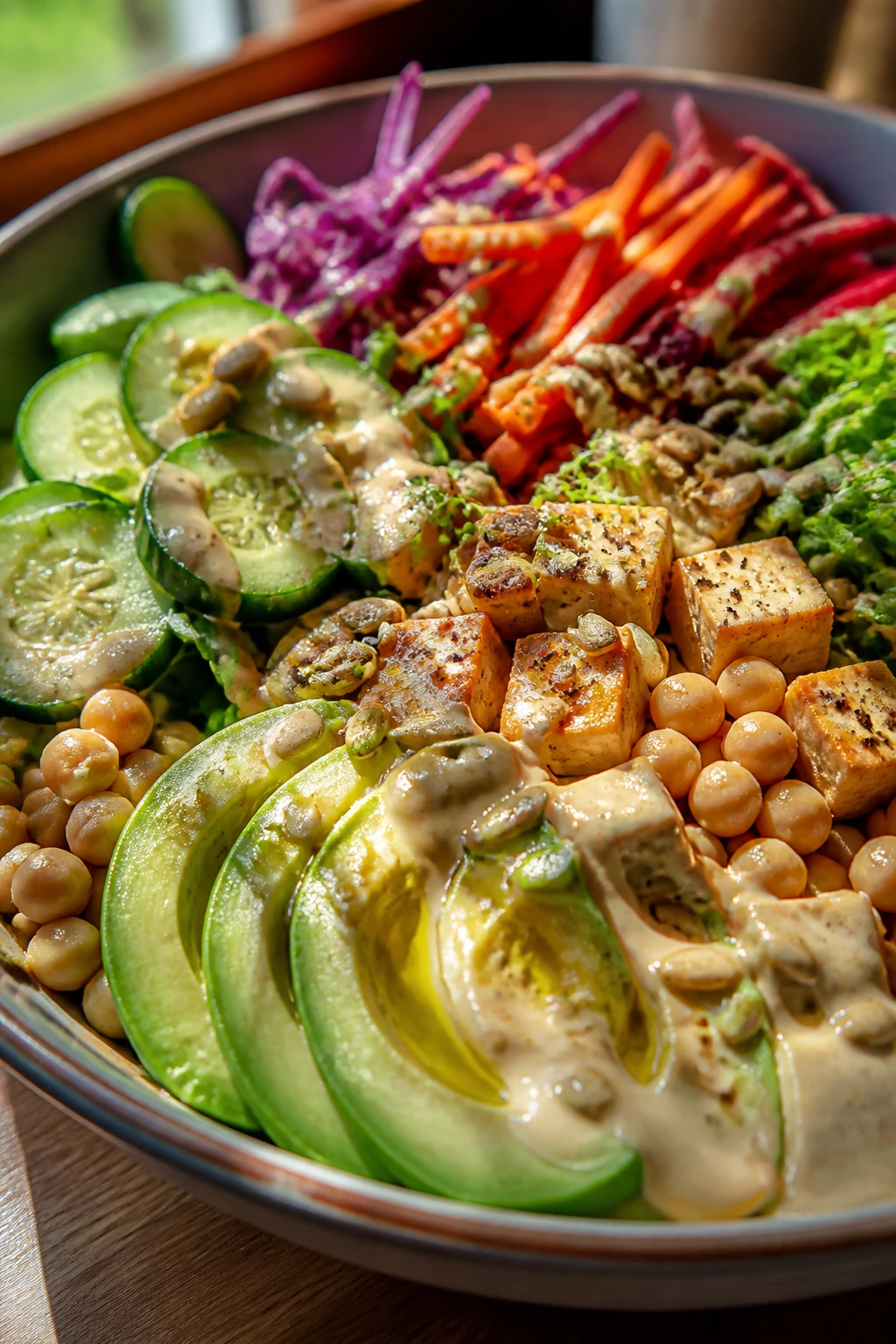
Vegetables bring freshness. Fat, protein, and acid turn that freshness into a meal.
Fat carries flavor across the tongue. A spoonful of tahini, a few slices of avocado, olive oil, seeds, olives, or a little cheese gives the vegetables something to cling to. Protein keeps the dinner from ending too soon. That can be beans, lentil spread, Greek yogurt, cottage cheese, eggs, tofu, tempeh, nuts, or seeds, depending on what you eat and what you have around.
Acid matters more than people realize. Lemon juice, lime juice, vinegar, pickled onions, or even a sharp yogurt dressing wakes up raw produce that might taste bland on its own. Raw carrots become sweeter with lemon. Cucumbers get brighter with salt and rice vinegar. Radishes calm down when you give them a little lime and flaky salt. That edge is the whole point.
A raw dinner doesn’t need all three in every bite, but it does need all three somewhere on the plate.
If you skip protein, the meal can still taste good, but it will feel like an oversized appetizer. If you skip fat, the vegetables can taste harsh and a little empty. If you skip acid, everything blends into one cool, bland temperature zone. That’s the usual mistake with healthy dinners — too much restraint, not enough intention.
My own preference is to keep one creamy thing on the plate at all times. Hummus, tahini sauce, yogurt dip, avocado mash, white bean spread. Pick one. It gives raw vegetables a place to land.
Dressings, Dips, and Seasonings That Pull the Plate Together
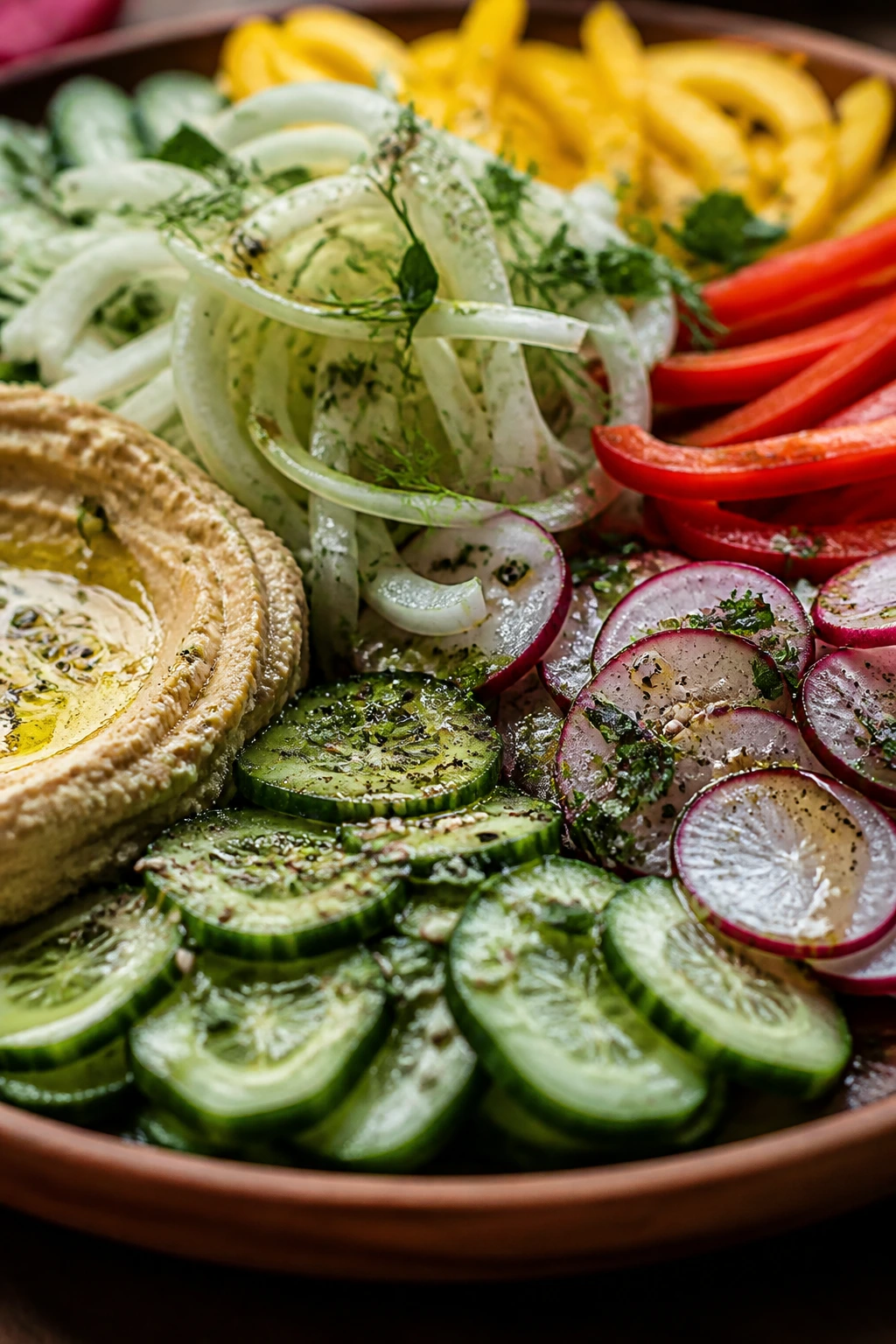
A raw vegetable dinner doesn’t need a dozen condiments. It needs one or two that make sense.
Creamy dressings work best when the vegetables are sturdy. Tahini-lemon, yogurt-dill, avocado-lime, miso-sesame, or a simple olive oil and mustard vinaigrette all do the job differently. Tahini gives a nutty, slightly bitter back note. Yogurt brings tang and a cool finish. Olive oil makes sharp vegetables taste rounder. Miso adds salt and depth without turning the plate heavy.
Creamy, sharp, or oily
That’s the real choice.
Creamy dressings suit carrots, cauliflower, broccoli, cabbage, and fennel. Sharp vinaigrettes work better on cucumbers, tomatoes, and lettuce because they keep the plate from feeling soggy. Oil-based dressings are useful when you want the vegetables to stay crisp and separate instead of soaked.
A good rule: dress sturdy vegetables early and delicate ones late. Shredded cabbage can sit in dressing for a while and improve. Lettuce cannot. Cucumbers can take a light hand. Tomatoes often need only salt, pepper, and a drizzle of oil.
Seasonings that matter more than people think
Salt is not optional. Flaky salt on tomatoes. A pinch on cucumber slices. Salt on avocado. A little black pepper or toasted sesame seeds where the plate needs roughness. Fresh herbs help too, but use them for their green bite, not as decoration.
Dried spices can work, but keep them targeted. Cumin suits carrots and chickpeas. Sumac wakes up cucumbers and onions. Aleppo pepper or chili flakes bring warmth to creamy dips. Za’atar makes a raw vegetable plate taste more finished with almost no effort.
Skip the impulse to bury everything in sauce. Raw vegetables need to still taste like themselves. That’s the point.
Washing, Drying, Slicing, and Chilling Without Losing Crunch
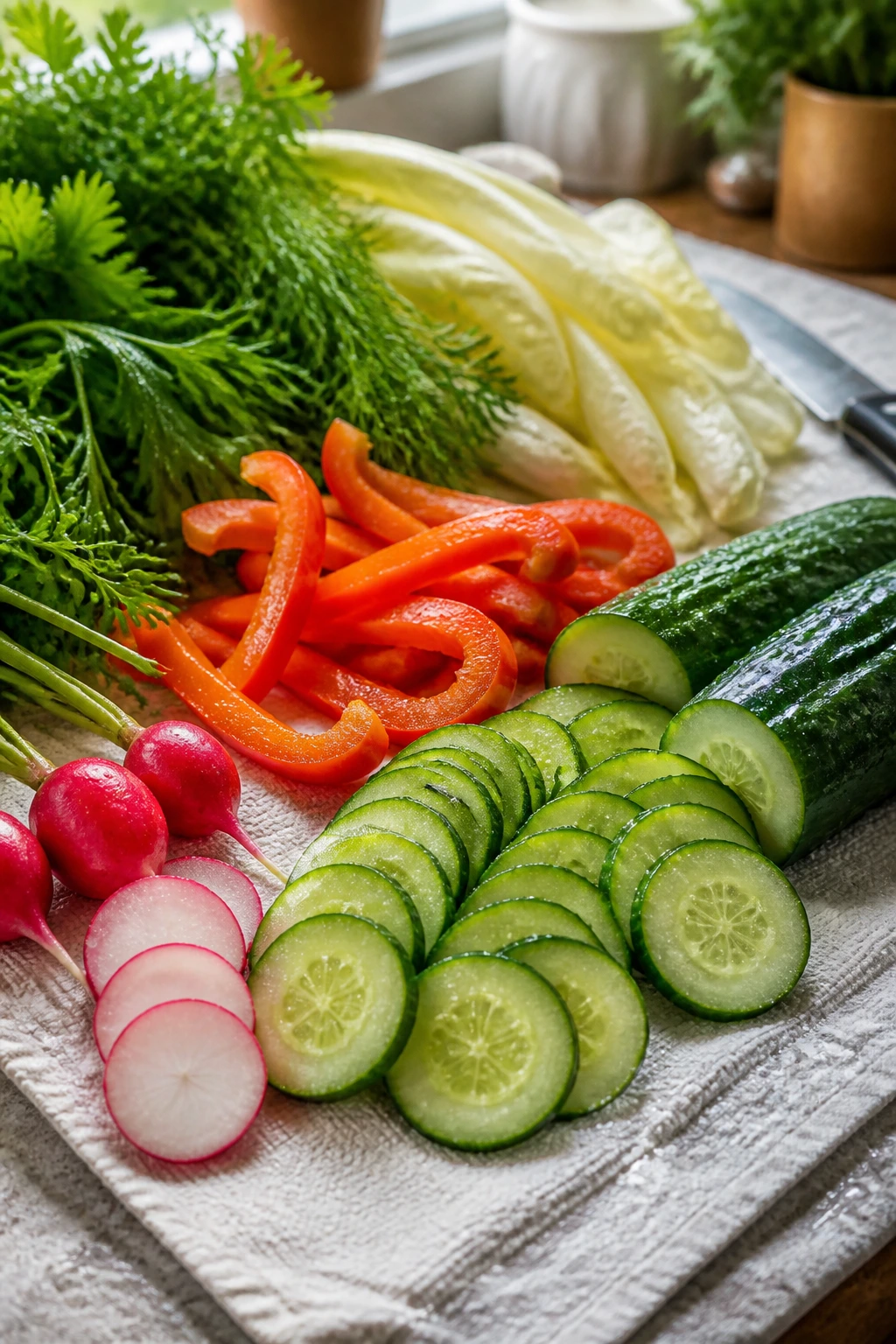
Dry vegetables taste better than wet ones. It’s that simple.
A vegetable can be washed clean and still ruin dinner if it’s dripping water. Wet greens dilute dressing. Wet cucumbers make dips slide. Wet carrots feel cold and flat. After washing, dry the produce well with a clean towel or a salad spinner if you’ve got one. The extra minute is worth more than people expect.
The rinse
Rinse produce under cool running water and rub firm vegetables with your hands or a soft brush if the skins are dusty. You do not need soap. You do need to get rid of grit, especially on leafy greens, celery, cucumbers, and herbs.
The dry
Lay greens on a towel or spin them until they stop flinging water across the kitchen. For chopped vegetables, pat them dry before storing or serving. If you’re making a board or a composed plate, this step matters even more because the dressing won’t be fighting puddles.
The cut
Sharp knives matter. Dull blades crush cucumbers and bruise herbs. Thin slices help tougher vegetables taste sweeter and less stubborn. Shave fennel. Slice radishes into coins. Cut peppers into broad strips. Keep cabbage thin enough that it folds instead of fights.
If you want extra crispness, a short ice-water soak can help carrots, celery, and snap peas perk up. Just dry them afterward. Very dry. If you skip the drying, you’ve only traded one problem for another.
One more thing: cut just enough. Prepping everything in the morning sounds clever until the cucumber starts sweating in the container and the lettuce turns limp. Some vegetables can wait. Some shouldn’t.
Food Safety and Produce Handling for Raw Suppers
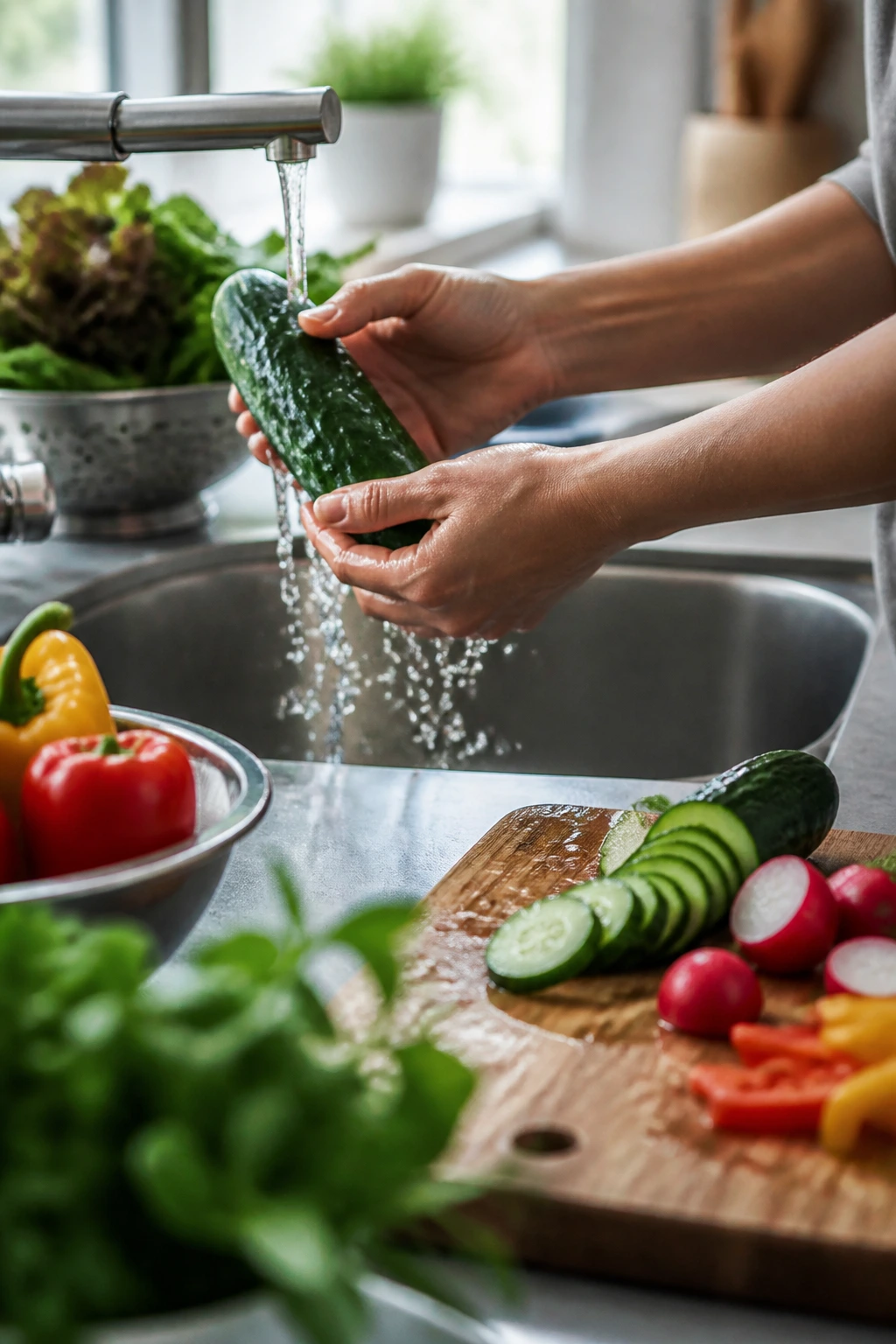
Raw vegetables are safe when you handle them with normal care, not panic.
Wash your hands before you touch the produce. Use a clean cutting board and knife. Keep raw vegetables away from boards or knives that just touched meat, poultry, or fish. That seems obvious, but kitchens get sloppy fast when dinner is being thrown together in a hurry.
The usual food-safety rule still applies: don’t leave cut produce sitting out for hours. A raw vegetable dinner should be assembled close to serving, and leftovers should go into the fridge promptly. If the room is warm, shorten the window. Food safety guidance from public-health agencies is consistent on this point for all perishables, and raw vegetables are not an exception just because they seem harmless.
Sprouts deserve extra caution
Sprouts are the one raw “vegetable” I treat with respect.
They can carry a higher food-safety risk than most other produce because of how they’re grown. If you use them raw, buy them from a cold case, keep them refrigerated, and rinse them well. Pregnant people, older adults, and anyone with a weak immune system should be especially careful. When in doubt, leave sprouts out and use shredded cabbage or snap peas instead.
Bagged greens need a second look
Bagged salad greens are convenient, but they are also the easiest place to get lazy. If the package smells off, if the greens feel slimy, or if you see wet browning at the edges, toss them. A bad bag of greens can sink an otherwise clean dinner in one bite.
Raw dinner doesn’t mean careless dinner. Clean produce, dry hands, separate boards, quick refrigeration. Boring habits. Useful habits.
Bowls, Boards, Wraps, and Lettuce Cups
Presentation changes how raw vegetables feel when you eat them.
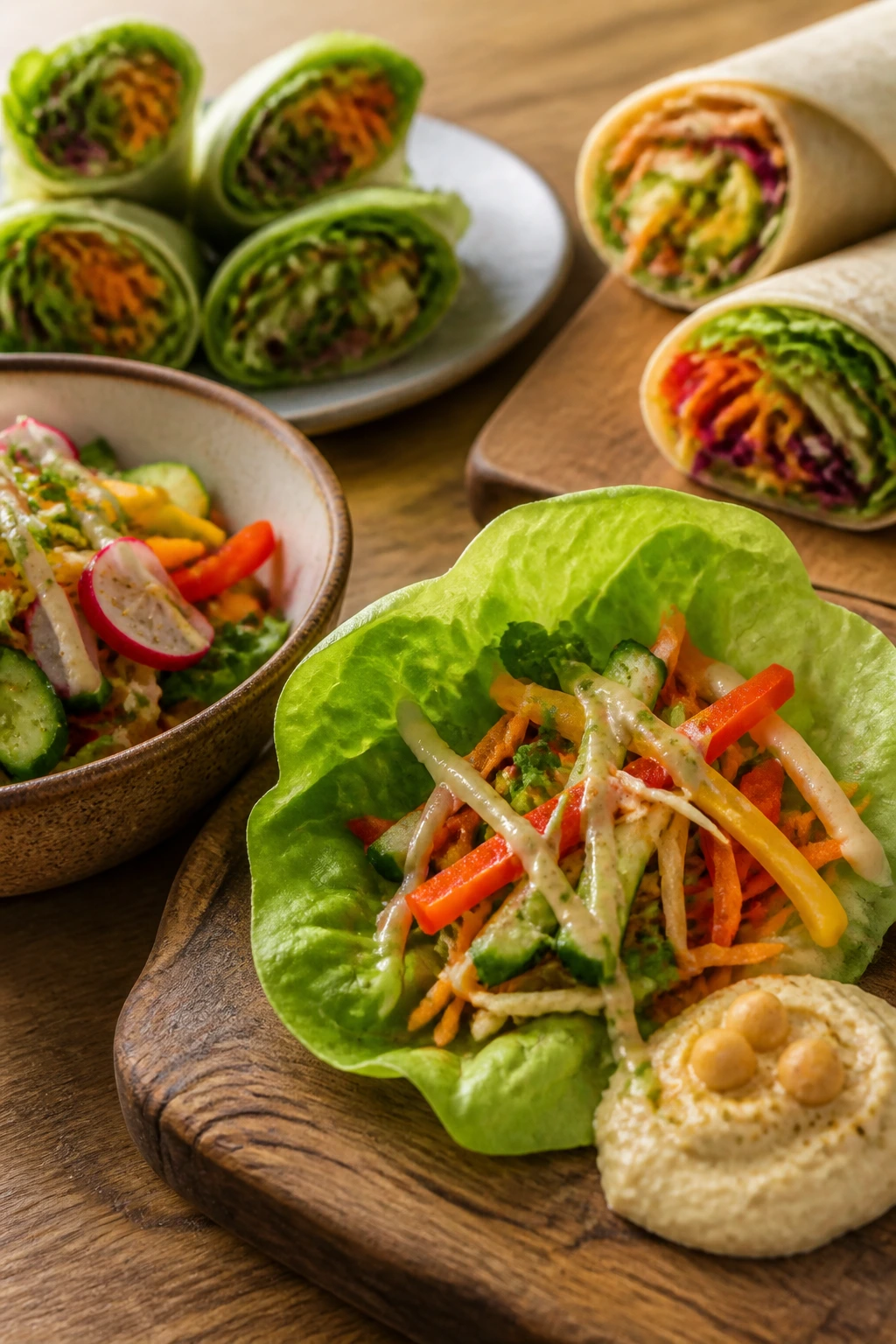
A bowl suggests a fuller meal. A board feels social and lets everyone build their own plate. Wraps and cups give the vegetables structure and keep the meal from becoming a pile of chopped things. The format matters because raw vegetables are so texture-driven; the right container can make them feel deliberate instead of accidental.
Bowls
Use a bowl when you want the dressing to gather at the bottom and coat everything lightly. Start with greens or shredded cabbage, add the crunchy pieces, then tuck the protein and sauce on top. Bowls work well when you want a raw dinner that leans a little more filling and a little less finger-food.
Boards
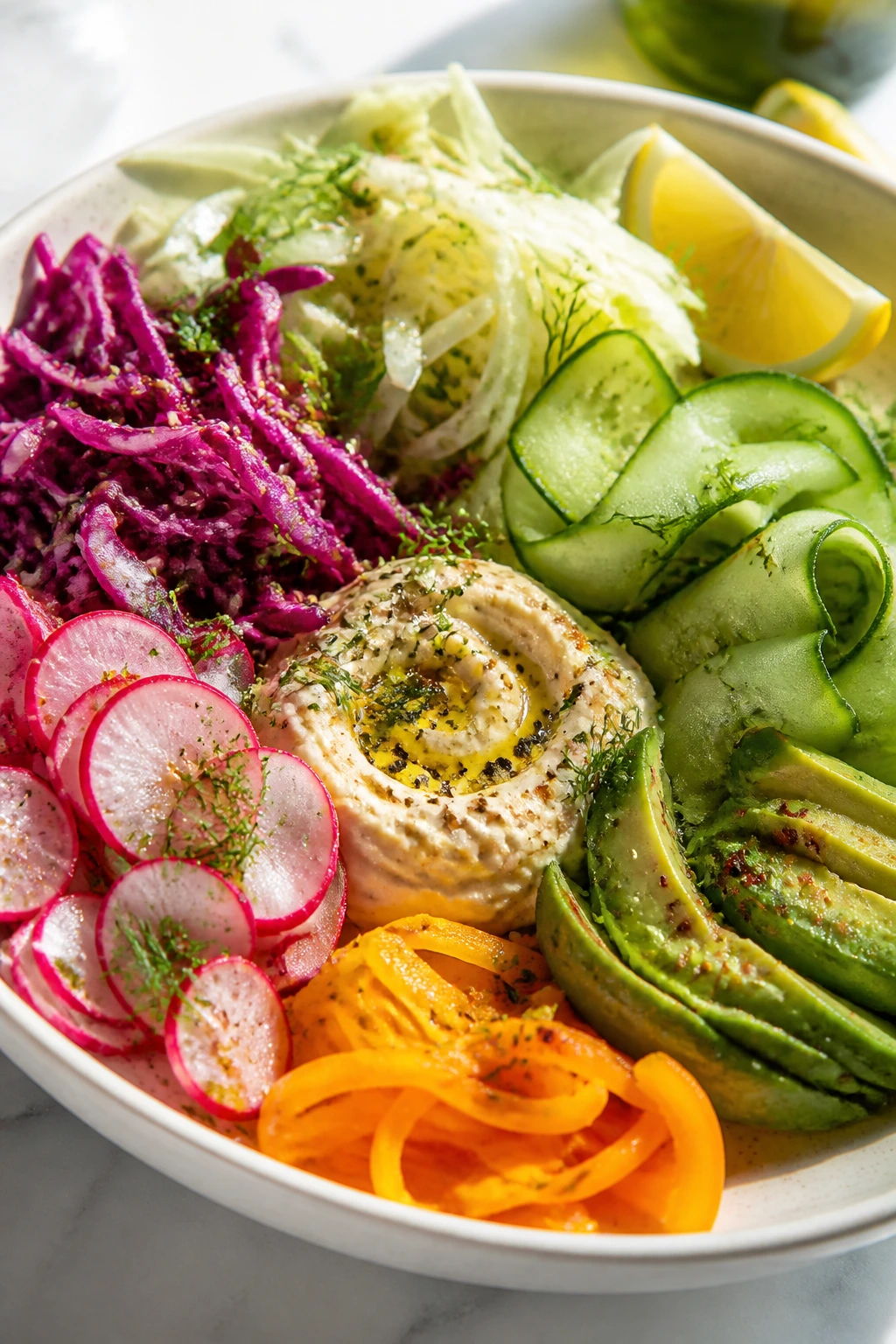
A board is the best move when you want dinner to feel relaxed. Arrange cucumbers, radishes, peppers, fennel, carrots, olives, nuts, cheese, and two dips on a large tray or cutting board. Leave space between the items. Crowding makes it look like leftovers. Space makes it look intentional.
Wraps and cups
Lettuce cups, endive leaves, and large romaine leaves are the easiest way to make raw vegetables feel like dinner without cooking anything. They hold fillings, and they force you to eat in layered bites instead of snacking randomly. Put the most flavorful filling at the base — hummus, bean spread, avocado, or chopped herb salad — then top with sliced vegetables and seeds.
A raw vegetable dinner usually lands better when it gives the eater some control. Boards and cups do that best.
Practical Tips for Better Raw Vegetable Dinners
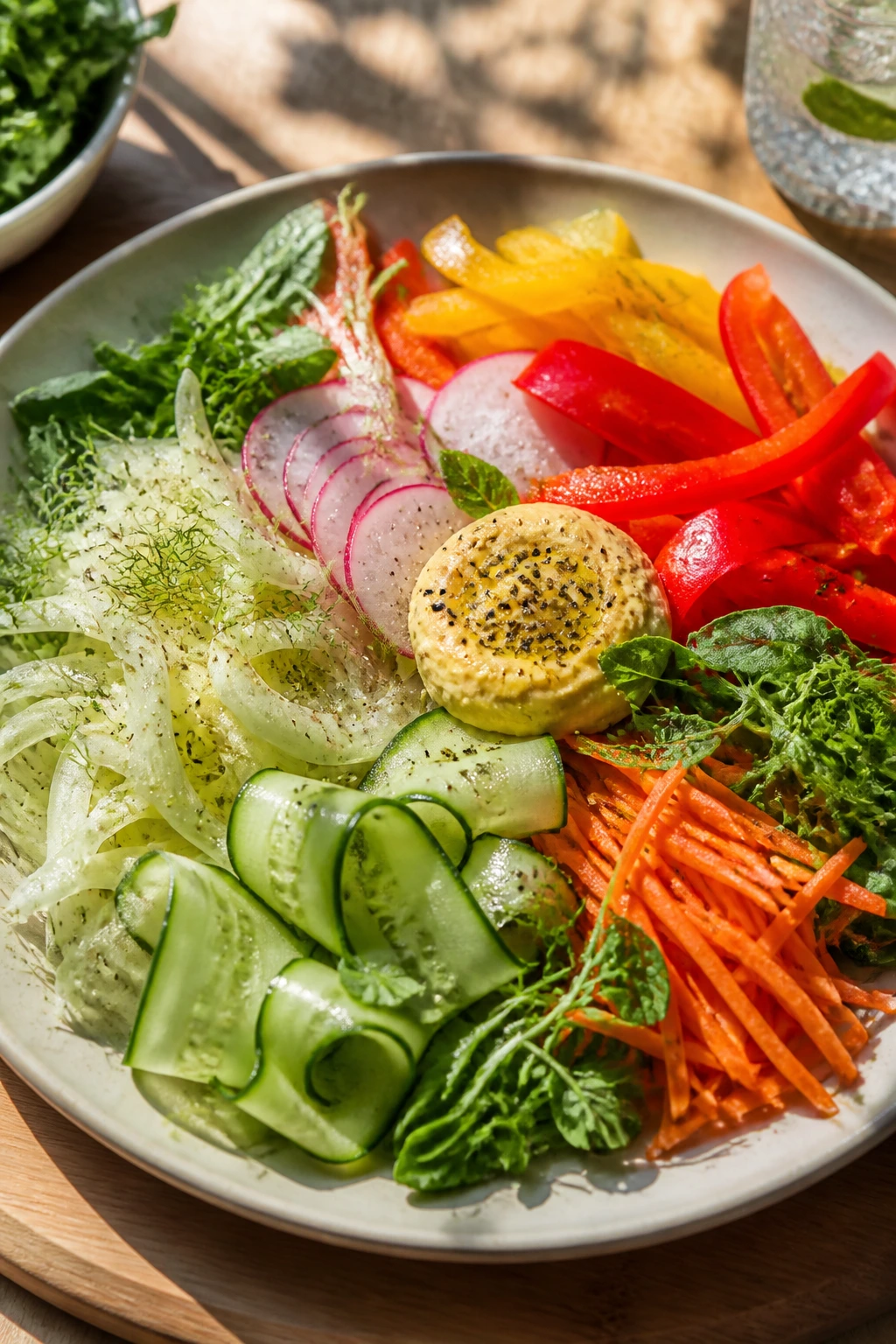
A few small moves change the whole plate.
Use salt more than once. Salt the tomatoes, then taste the dressing, then finish with a pinch if the vegetables still seem flat. A single early pinch is usually not enough for raw produce, especially if the plate is mostly watery vegetables.
Keep one creamy element in reserve. A little hummus, yogurt dip, tahini, or avocado should stay visible on the plate, not disappear into the bowl. When you can still see the sauce, you know the dinner has enough richness to feel complete.
Cut vegetables to match their personality. Thick sticks suit carrots and celery. Thin slices suit radishes and fennel. Broad strips suit peppers. Tiny pieces suit stronger vegetables like onion or raw broccoli stem. The shape changes the way bitterness, sweetness, and crunch show up.
Think about temperature. Ice-cold vegetables can taste dull. Let them sit for 5 to 10 minutes after pulling them from the fridge so the flavor comes forward a little. You do not want warm produce. You want produce that tastes like itself.
Save the most delicate greens for the top. Lettuce, herbs, and microgreens collapse fast under weight. Stack them last, and they’ll stay perky long enough to matter.
A good raw dinner is rarely about more ingredients. It’s about fewer mistakes.
Common Mistakes That Make Raw Veggie Dinners Feel Thin
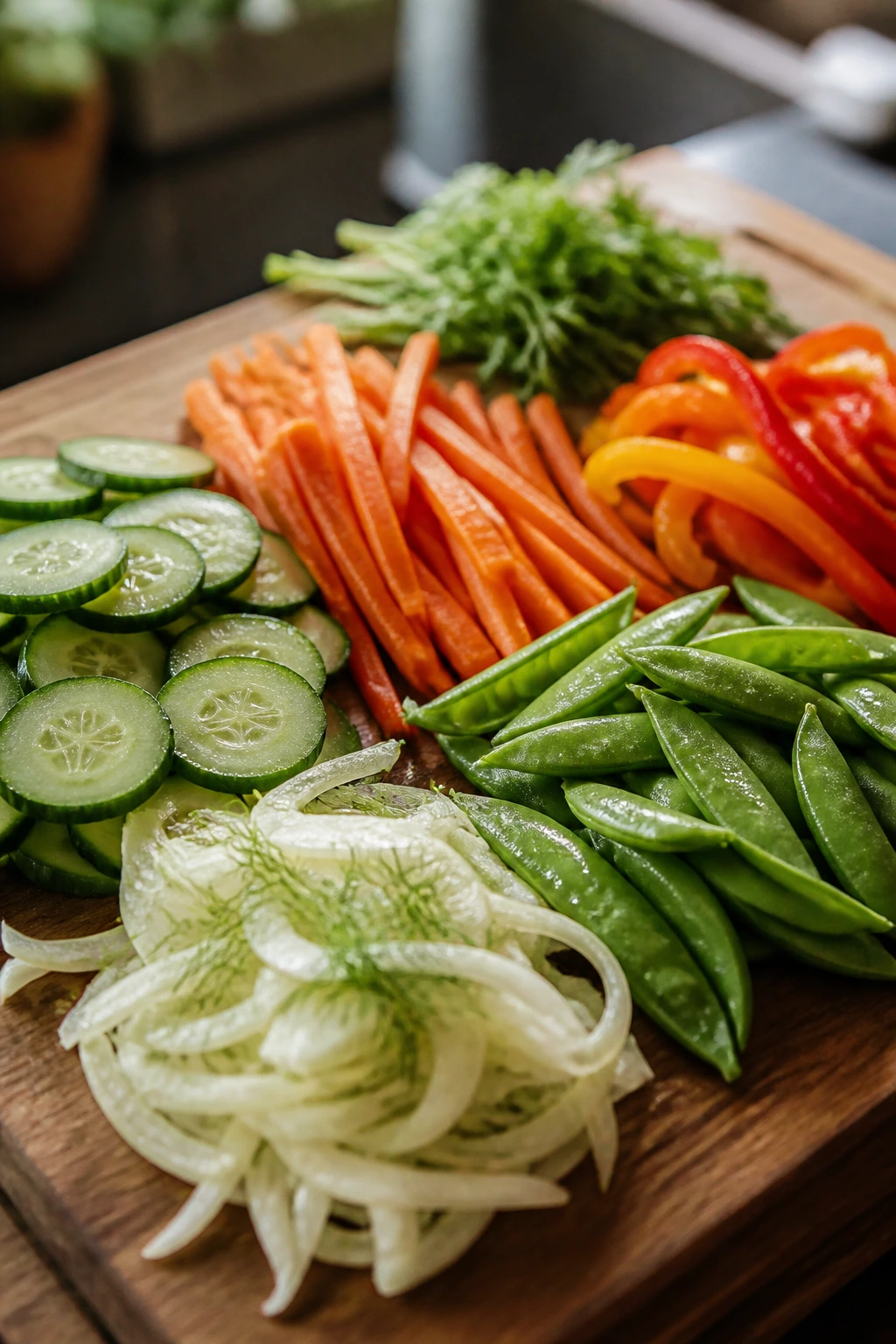
The biggest mistake is treating every vegetable like it belongs in the same bowl.
Mistake 1: Using only watery vegetables. Cucumbers, lettuce, and celery can taste fresh, but together they fade fast. The plate feels hollow because there’s no chew or density. Fix it by adding carrots, cabbage, jicama, fennel, snap peas, or something with more body.
Mistake 2: Skipping fat and protein. A raw plate without a rich element gets old halfway through. You’ll keep eating, but the meal won’t feel finished. Add hummus, tahini, avocado, nuts, seeds, cheese, beans, eggs, or whatever fits your diet.
Mistake 3: Dressing too early. Delicate greens collapse, cucumbers weep, and everything gets soggy. If the vegetables are tender, dress them right before serving. If they’re sturdy, you have more leeway.
Mistake 4: Cutting everything into the same shape. A board full of tiny cubes is tidy and boring. Mix ribbons, coins, batons, and whole leaves so the mouth has more to do.
Mistake 5: Forgetting salt. Raw vegetables need help. Even sweet ones need salt to taste like something instead of like cold water with edges. Taste the plate before serving and finish with a pinch if needed.
Mistake 6: Treating raw dinner as an afterthought. That’s the mistake that causes all the others. When dinner gets assembled with no plan, the vegetables end up mismatched, underseasoned, and too cold. Give the plate one clear idea and it will behave better.
Five Flavor Variations Worth Repeating
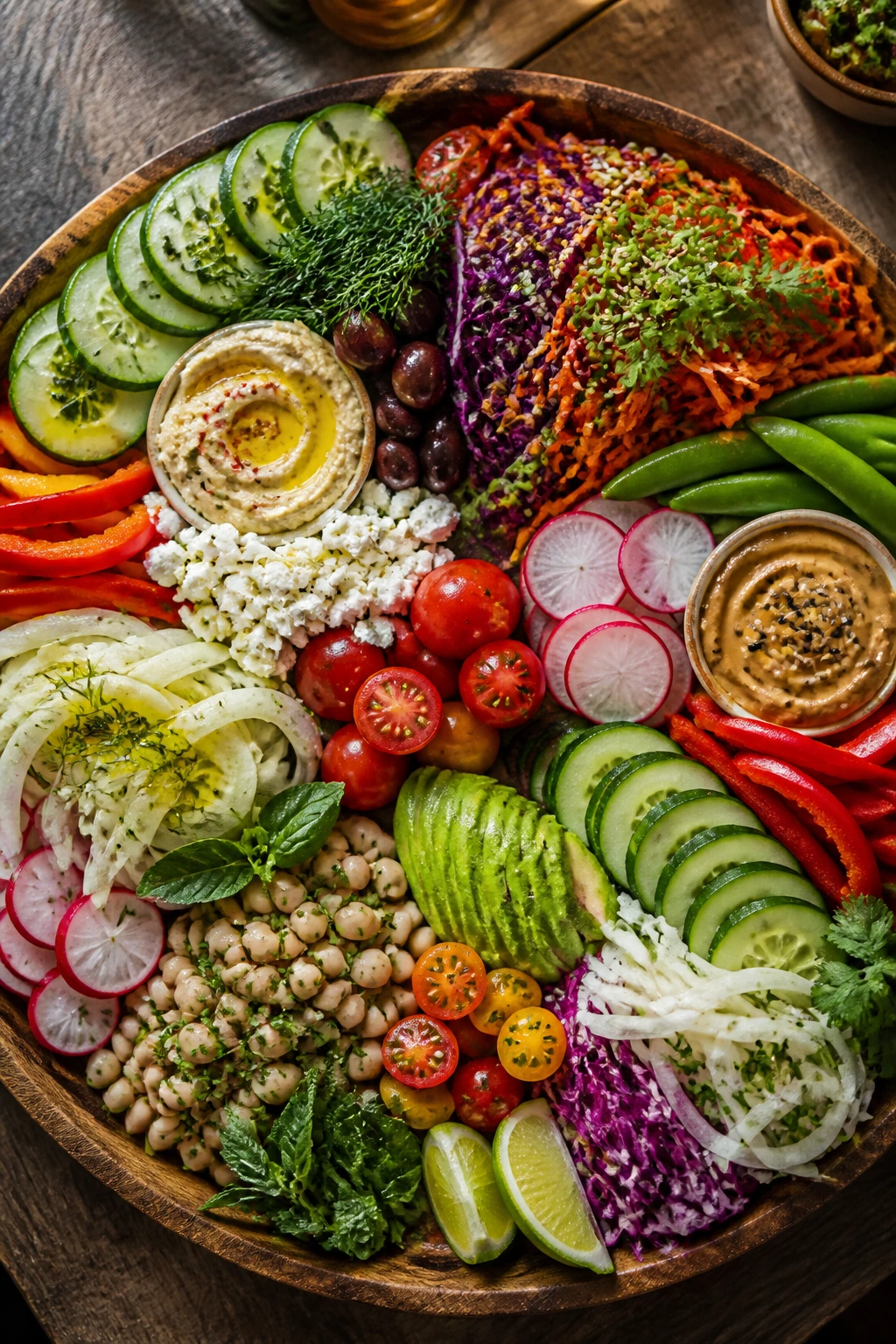
Mediterranean Mezze Plate
Build around cucumber, cherry tomatoes, radishes, peppers, fennel, olives, hummus, and a little feta if you eat dairy. Add lemon, olive oil, oregano, and a pinch of sumac. This one works when you want a dinner that feels casual but still reads as composed.
Sesame-Ginger Crunch Bowl
Use shredded cabbage, carrots, snap peas, cucumber, scallions, and a sesame-tahini or peanut-lime dressing. A sprinkle of sesame seeds and chopped peanuts gives the bowl more bite. It’s a smart direction when you want the raw vegetables to taste sharper and a little more savory.
Herb-and-White-Bean Board
Pair endive, romaine hearts, celery, radishes, and shaved fennel with white bean spread, dill, parsley, and lemon. The bean spread does the heavy lifting, and the herbs keep the plate from tasting monotonous. This one feels especially good when you want dinner to lean cool and green.
Taco-Style Veg Plate
Go with shredded cabbage, sliced radishes, cucumber, avocado, lime, cilantro, jalapeño, and a cumin-spiced yogurt or cashew sauce. Add black beans or chickpeas if you want more staying power. The lime and spice keep raw vegetables from feeling too polite.
Late-Season Crunch Bowl
Use kohlrabi, jicama, carrots, cabbage, apples, and toasted seeds with a mustardy vinaigrette. It’s the variation that proves raw vegetable dinners don’t have to be spring-green or summer-bright. Sturdy roots and crisp fruit make the plate feel deeper and more filling.
Tools and Equipment That Make Prep Faster
-
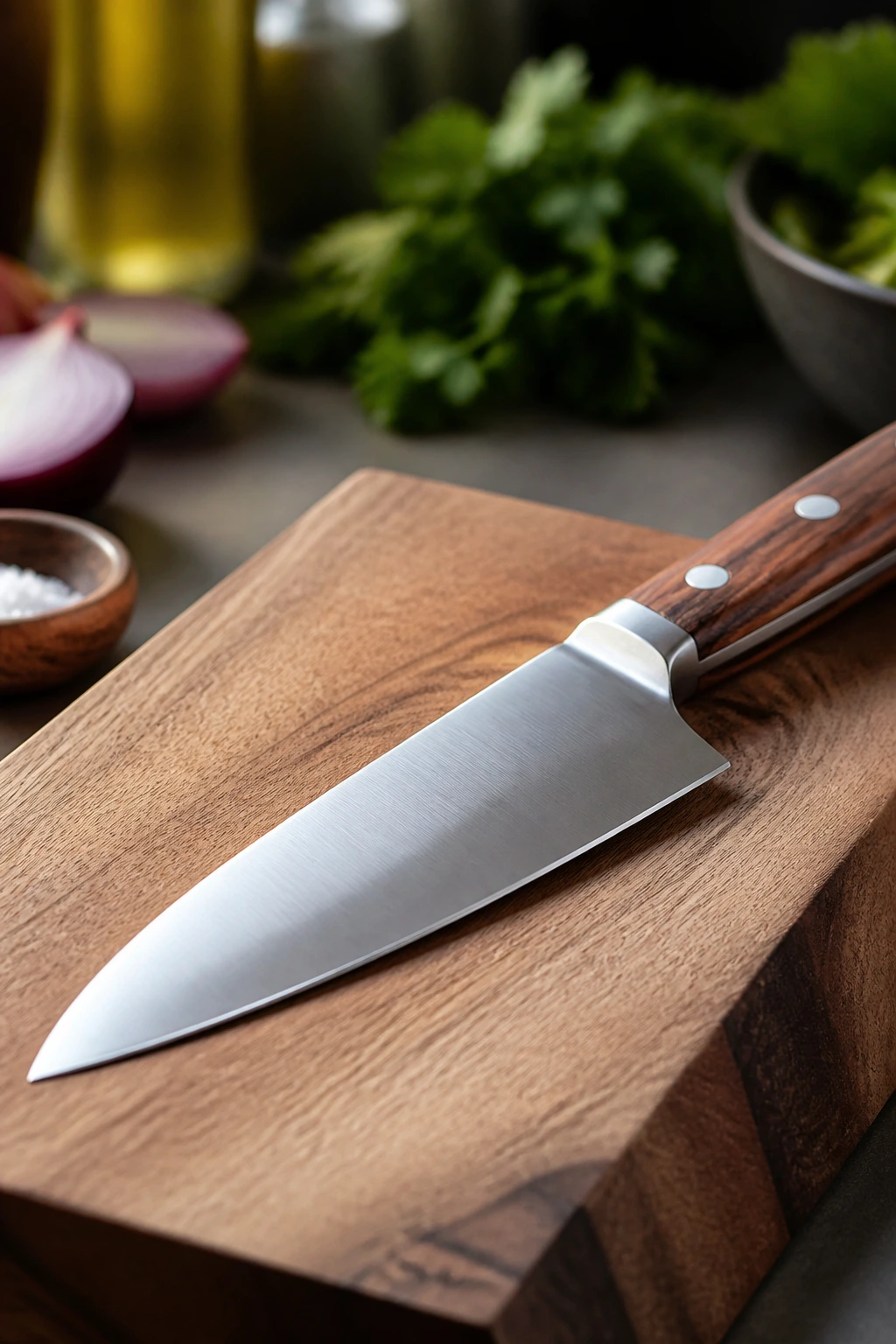
Sharp chef’s knife: The one tool that matters most; clean cuts keep vegetables crisp instead of bruised.
-
Large cutting board: Bigger boards make raw prep less fussy and give you room to separate vegetables by type.
-
Salad spinner: Worth owning if you use leafy greens, herbs, or washed cabbage often; it removes water faster than towels alone.
-
Vegetable peeler: Handy for carrots, cucumbers, and long ribbons of zucchini or radish.
-
Mandoline with hand guard: Optional, but useful for paper-thin fennel, cabbage, or radish slices; use the guard every time.
-
Mixing bowls: One for washing, one for tossing, one for serving. Small bowls feel cramped fast.
-
Airtight storage containers: The best way to keep cut vegetables crisp and separate until dinner.
-
Microplane or citrus juicer: Useful for zest and lemon or lime juice, both of which brighten raw vegetables fast.
-
Clean kitchen towels or paper towels: You need them for drying produce properly. Skipping this makes the rest of the prep sloppy.
-
Tongs or salad servers: Optional, but nice when you’re plating a board or tossing a bowl without crushing the delicate greens.
Storage, Make-Ahead, and Leftover Strategy
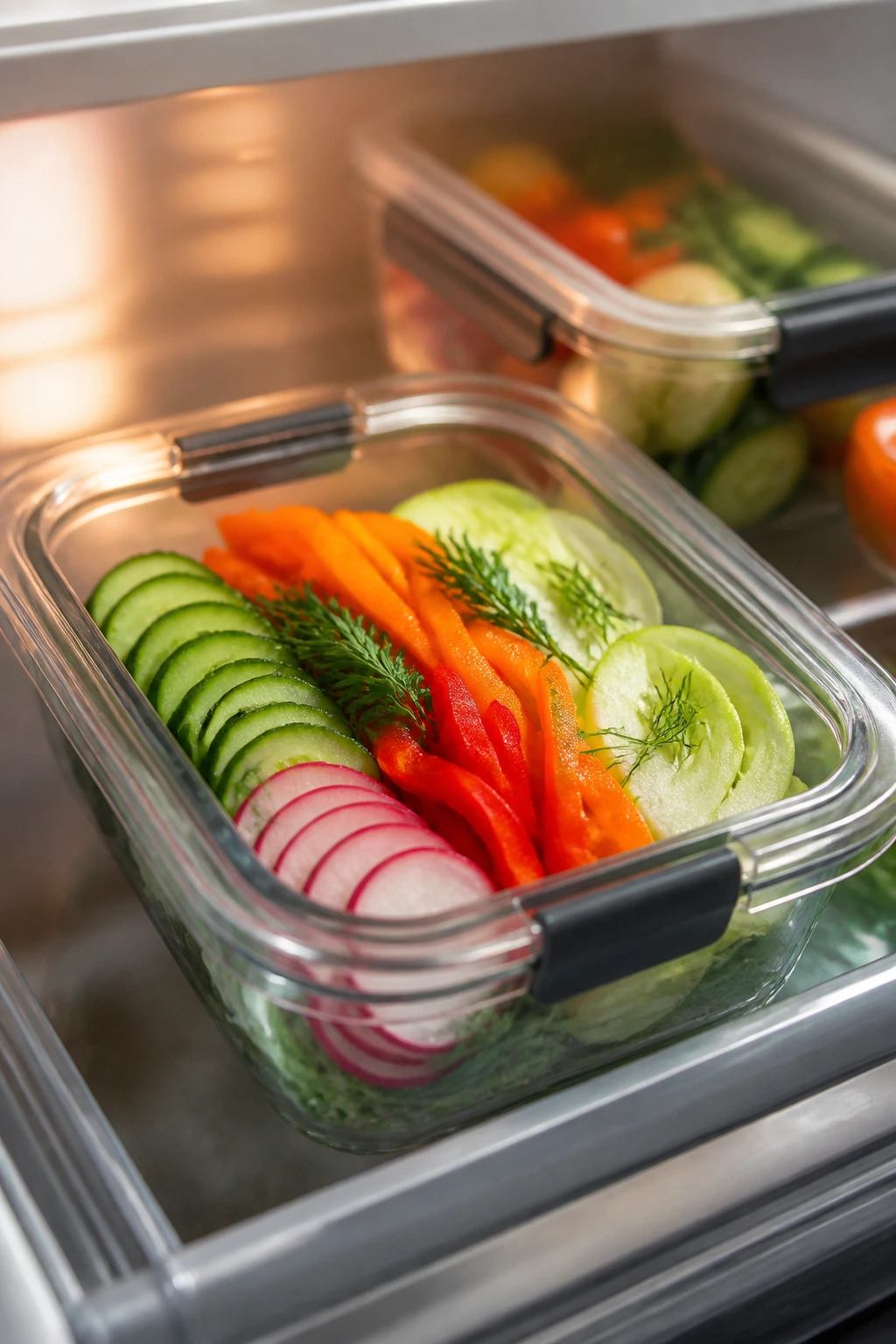
Whole vegetables keep longer than cut ones. That sounds obvious, but it’s the detail that saves dinner.
Carrots, celery, radishes, peppers, cucumbers, fennel, and cabbage usually hold well in the fridge for several days to more than a week when left whole and kept dry. Leafy greens are fussier. Romaine, butter lettuce, and herbs need more attention, and a damp paper towel or clean kitchen towel in the container can help them stay crisp longer.
Whole produce
Keep whole vegetables unwashed until you’re ready to prep if your fridge habit allows it. Dry produce lasts longer than wet produce. If you wash everything the minute you bring it home, make sure it’s dried thoroughly before it goes back into the fridge.
Cut produce
Cut vegetables are best within 3 to 4 days, and often sooner for watery ones like cucumber and tomato. Store them in airtight containers lined with a dry towel if they tend to weep. Keep the dressing separate unless you’re dealing with cabbage, carrots, or another sturdy vegetable that can handle sitting in acid for a while.
Make-ahead strategy
Wash and dry the vegetables a day or two ahead if that helps you actually eat them. Slice carrots, radishes, cabbage, and peppers ahead of time. Leave delicate herbs, avocado, and lettuce for the last minute. If you’re making a raw vegetable board, prep the sturdy pieces first and hold the soft pieces until serving.
Leftovers
Leftover raw vegetable plates are fine, but they need a little care. Dressed lettuce turns limp fast. Undressed vegetables stay useful longer. If you know you’ll have leftovers, store the components separately and assemble a fresh plate the next day. That is the difference between a second dinner and a sad lunch.
Frequently Asked Questions
Can raw vegetables really be dinner, or are they just a side?
They can be dinner if you build the plate with enough structure. A bowl of plain cut vegetables is a side, yes. Add a base, a creamy element, a protein, and a strong dressing, and the same vegetables turn into a meal that holds up.
Which raw vegetables are easiest to eat for dinner?
Carrots, cucumbers, peppers, snap peas, radishes, celery, fennel, and romaine are the easiest starting points because they bring crunch without much prep. Cabbage and kohlrabi are especially useful if you want a plate that feels more substantial. If a vegetable is tough or bitter raw, slice it thinner.
How do I keep raw vegetables from feeling boring?
Use contrast. Mix sweet and sharp, crisp and creamy, pale and bright, thick and thin. The other fix is salt — more of it than you think, but still in small, careful amounts. A good dressing helps, but the real trick is not letting every bite taste identical.
Do I need protein with a raw vegetable dinner?
Not strictly, but it usually helps the meal feel finished. Beans, hummus, yogurt, cheese, eggs, tofu, nuts, and seeds all work in different ways. If you skip protein, you may enjoy the plate and still feel hungry again too soon.
How far ahead can I prep the vegetables?
Sturdy vegetables can be washed and cut a day or two ahead. Lettuce, herbs, cucumber, and avocado are better closer to serving time. Keep dressing separate until the last minute unless you’re working with cabbage or another hardy vegetable that can handle sitting in it.
What if my vegetables taste bland even after I dress them?
Add salt in layers, not all at once. Then add acid — lemon, vinegar, lime, or pickled onions — and taste again. If the plate still feels flat, the issue is usually not the vegetables. It’s that the dinner needs a sharper dressing or a richer element.
Are bagged salad greens okay for a raw vegetable dinner?
Yes, if they’re fresh, dry, and smell clean. The catch is that bagged greens lose texture fast once the package is opened. Use them quickly, and pair them with sturdier vegetables so the meal doesn’t collapse into a limp pile.
Can I make a raw vegetable dinner if I don’t like salad?
Absolutely. Build a board, use lettuce cups, or make a bowl with sliced vegetables and dip on the side. The point is not to create a giant salad. The point is to eat fresh vegetables in a format that feels like a meal.
Are raw cruciferous vegetables a bad idea at night?
Not necessarily, but they can be rough on some stomachs. Raw broccoli, cauliflower, and cabbage often feel better when shaved thin or used in smaller amounts alongside softer vegetables. If they leave you bloated, switch to carrots, cucumbers, peppers, and fennel instead.
Can I use frozen vegetables raw?
Usually no. Frozen vegetables thaw soft, and the texture that makes raw dinner work is gone. Frozen peas are the closest exception after a quick thaw, but they still behave differently from fresh produce. For this style of meal, fresh is the point.
Crisp, Bright, and Dinner-Worthy
Raw vegetables only seem like a compromise when the plate hasn’t been thought through.
Once you give them a sturdy base, enough salt, a little acid, and one creamy element, they stop feeling like a snack tray and start feeling like a real dinner. That’s the quiet trick here. Not more cooking. Better building.
Keep one or two strong dressings ready, keep your vegetables dry and cut to size, and keep at least one crunchy thing in the fridge at all times. Then a healthy dinner made from fresh raw vegetables is never a project. It’s just there, waiting to be assembled, which is about as useful as dinner gets.