



Fresh vegetable chow mein is one of those dinners that looks humble in the bowl and then surprises you the second the wok heat hits it. The noodles go glossy, the carrots keep a little bite, and the cabbage softens just enough to wrap around everything without collapsing into mush.
That balance matters more than people think. A lot of homemade chow mein turns heavy because the pan is crowded, the vegetables are chopped unevenly, or the sauce is thick enough to weigh the whole thing down. When you keep the sauce light, the vegetables dry, and the heat high, the dish lands where it should: satisfying, bright, and sturdy enough to count as a proper healthy dinner without feeling like a compromise.
I like this kind of stir-fry because it treats vegetables like the main event instead of a garnish. Mushrooms soak up the savory sauce, cabbage turns sweet at the edges, scallions wake up the whole pan, and the noodles carry just enough seasoning to make every bite feel complete. It is one of those meals that rewards a little order up front and then moves fast once the burner is on.
The rhythm is simple, but it is not casual. Once the sauce is mixed and the vegetables are cut to roughly the same shape, the rest is all about heat, timing, and not getting greedy with the pan. That is the part worth getting right.
Why This Bowl Earns Its Spot on a Weeknight Table
-
Fast, not fussy: The vegetables cook in minutes, and the whole pan comes together in about the same time it takes to answer a few texts and set the table.
-
Built around crunch: Cabbage, carrots, snap peas, and mushrooms each bring a different texture, which keeps the bowl from tasting flat or soft.
-
Easy to keep lighter: A soy-based sauce with broth, vinegar, and sesame oil gives you depth without turning the noodles into something slick and heavy.
-
Flexible with what’s in the fridge: This style of chow mein accepts small amounts of many vegetables, so the half-bag of cabbage and lone pepper in the crisper finally have a job.
-
Good leftovers, if you treat them right: The noodles do soften a little after sitting, but the flavor actually settles in overnight, and a quick skillet reheat brings them back.
-
Friendly to meatless dinners: There is enough umami from mushrooms, soy sauce, and vegetarian oyster sauce to make the bowl feel complete without leaning on anything else.
What Fresh Vegetable Chow Mein Means, and Why the Pan Matters
“Chow mein” literally points to stir-fried noodles, and that simple idea gets interpreted a few different ways depending on who’s cooking. Some versions lean dry and crisp, some go saucier, and some hover in the middle. I prefer the middle, because it gives you gloss without sludge.
The vegetables matter just as much as the noodles. Cabbage is the backbone here because it shrinks quickly and soaks up sauce without turning limp in the first minute. Mushrooms are the quiet workhorse; they brown a little, then drink up the savory liquid that would otherwise disappear into the noodles. Carrots and snap peas bring shape and snap, which is the whole reason this kind of dinner feels alive instead of tired.
There is also a practical reason this version works so well at home: the ingredient list is ordinary. No hunting for specialty produce, no complicated marinating, no deep frying, and no long simmer. You are mostly managing temperature and sequence. That sounds small, but it is the difference between a pan of noodles that tastes like takeout and one that tastes like you actually paid attention.
I usually think of this dish as a lesson in restraint. You do not need a heavy sauce to make a noodle bowl feel satisfying. You need enough salt to wake up the vegetables, enough acid to keep the cabbage bright, and enough oil to carry the aromatics. Everything else is texture.
Timing, Yield, and What the Pan Should Look Like
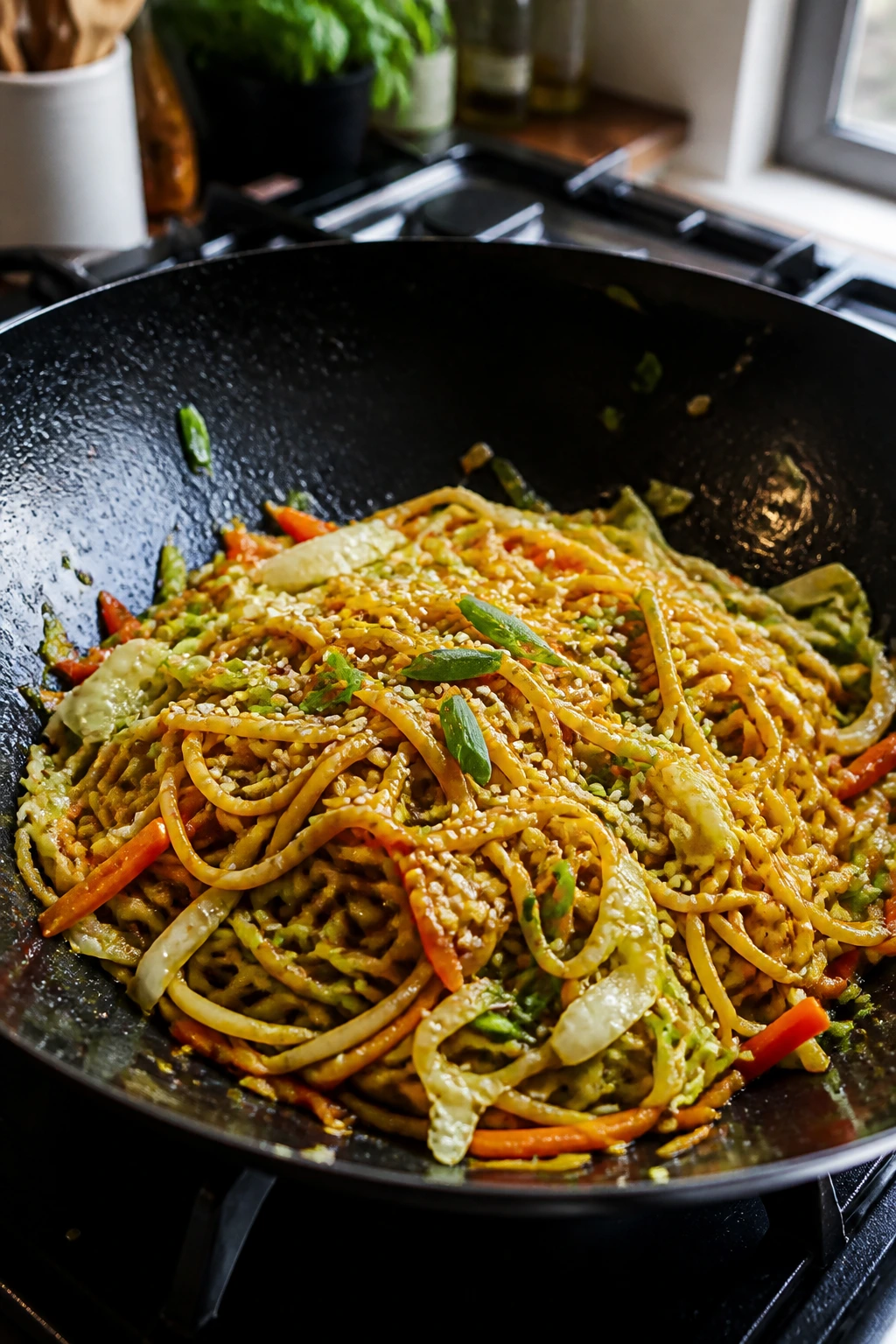
If you want the recipe to feel smooth instead of hectic, get the vegetables cut first and the sauce mixed before you boil the noodles. Stir-fry cooking moves fast, and once the wok is hot there is no good reason to stop and measure soy sauce with one hand while a carrot piece burns in the corner.
The finished dish should look glossy, not wet. You want the sauce clinging to the noodles in a thin sheen, with a few sesame seeds and scallion greens scattered on top. If you can see puddles under the noodles, the pan probably needed more heat or less liquid. If the vegetables look dull and soft, they stayed on the heat a minute or two too long.
Yield: Serves 4 as a main dish
Prep Time: 20 minutes
Cook Time: 15 minutes
Total Time: 35 minutes
Difficulty: Beginner — the steps are straightforward, but the stir-fry moves fast, so a little organization matters.
Best Served: Right away, while the noodles are still glossy and the vegetables still have a little bite.
The Ingredients That Make the Noodles Shine
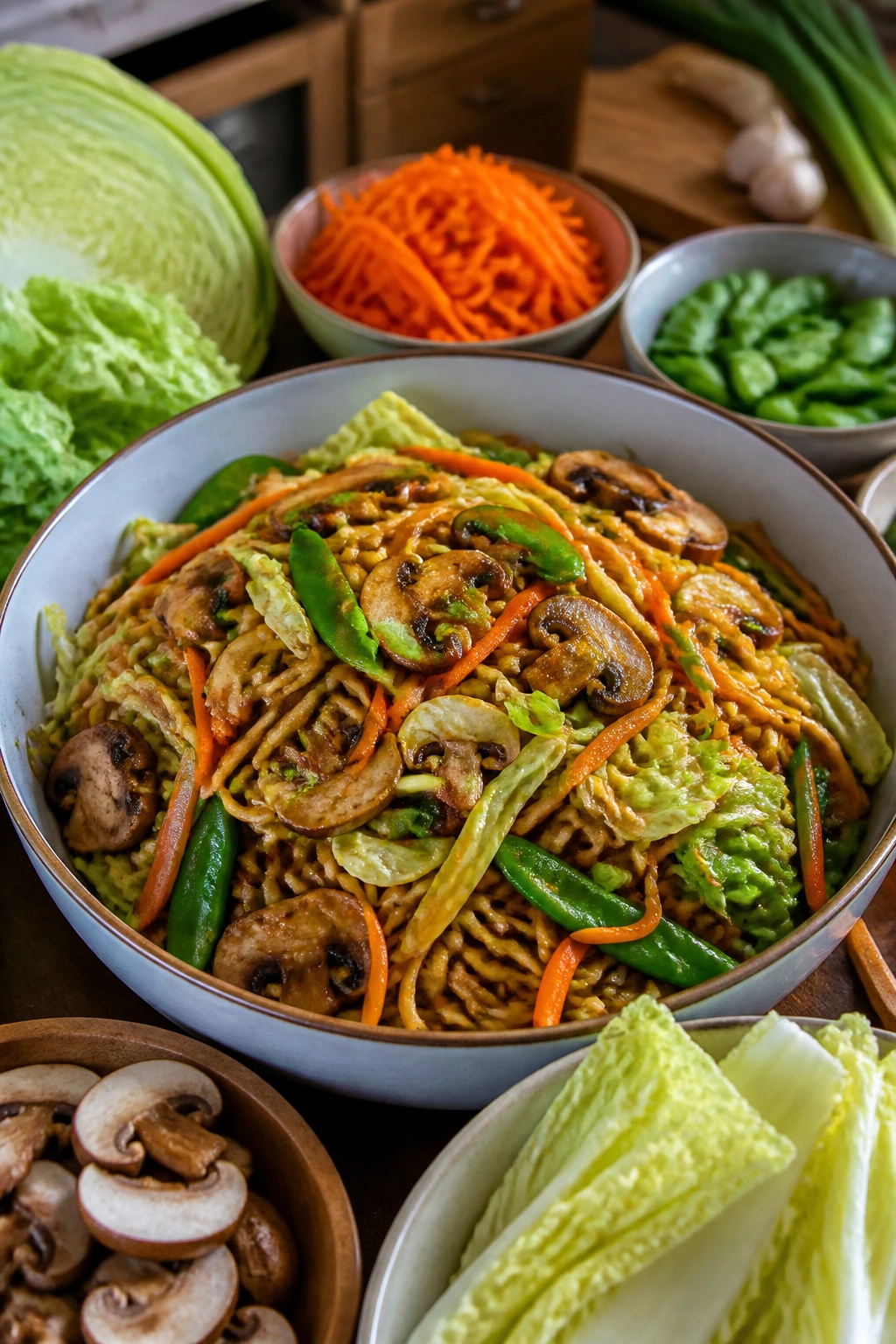
For the Noodles
- 8 ounces chow mein noodles or thin dried egg noodles — these give you the springy base that carries the sauce.
- 1 teaspoon neutral oil, optional — useful if the noodles need a light toss after draining so they do not clump.
For the Vegetables
- 2 tablespoons neutral oil, divided — enough for high-heat stir-frying without making the pan greasy.
- 8 ounces cremini mushrooms, thinly sliced — they add umami and hold onto sauce well.
- 2 medium carrots, cut into matchsticks — thin cuts keep them crisp-tender in the short cook time.
- 1 red bell pepper, thinly sliced — it adds sweetness and color without turning soft too quickly.
- 2 cups napa cabbage, thinly sliced — this is the soft, sweet backbone of the bowl.
- 1 cup green cabbage, thinly sliced — a little firmer than napa and useful for extra crunch.
- 1 cup snap peas, trimmed and halved — they keep their shape and bring a fresh snap.
- 3 scallions, whites and greens separated and thinly sliced — the whites go in early, the greens finish the bowl.
- 3 garlic cloves, minced — the garlic should smell sweet in the pan, not bitter.
- 1 tablespoon fresh ginger, grated — it sharpens the sauce and keeps the flavors from going muddy.
For the Sauce
- 3 tablespoons low-sodium soy sauce — this gives the salt and the deep savory edge.
- 1 tablespoon vegetarian oyster sauce or mushroom stir-fry sauce — the easiest way to build real body without meat.
- 1 tablespoon rice vinegar — the little spark that keeps the bowl from feeling heavy.
- 1 teaspoon toasted sesame oil — strong stuff; a small amount goes a long way.
- 1 teaspoon maple syrup — just enough sweetness to round out the soy and vinegar.
- 1/2 cup low-sodium vegetable broth — loosens the sauce so it coats instead of glues.
- 1 teaspoon cornstarch — gives the sauce a light cling.
- 1/4 teaspoon white pepper or black pepper — a small amount, but it lifts the whole pan.
For Finishing
- 1 teaspoon toasted sesame seeds — for a bit of crunch and a nutty finish.
- Chili crisp or sliced fresh chile, optional — use this if you want heat at the end instead of in the base sauce.
How Each Ingredient Behaves in the Pan
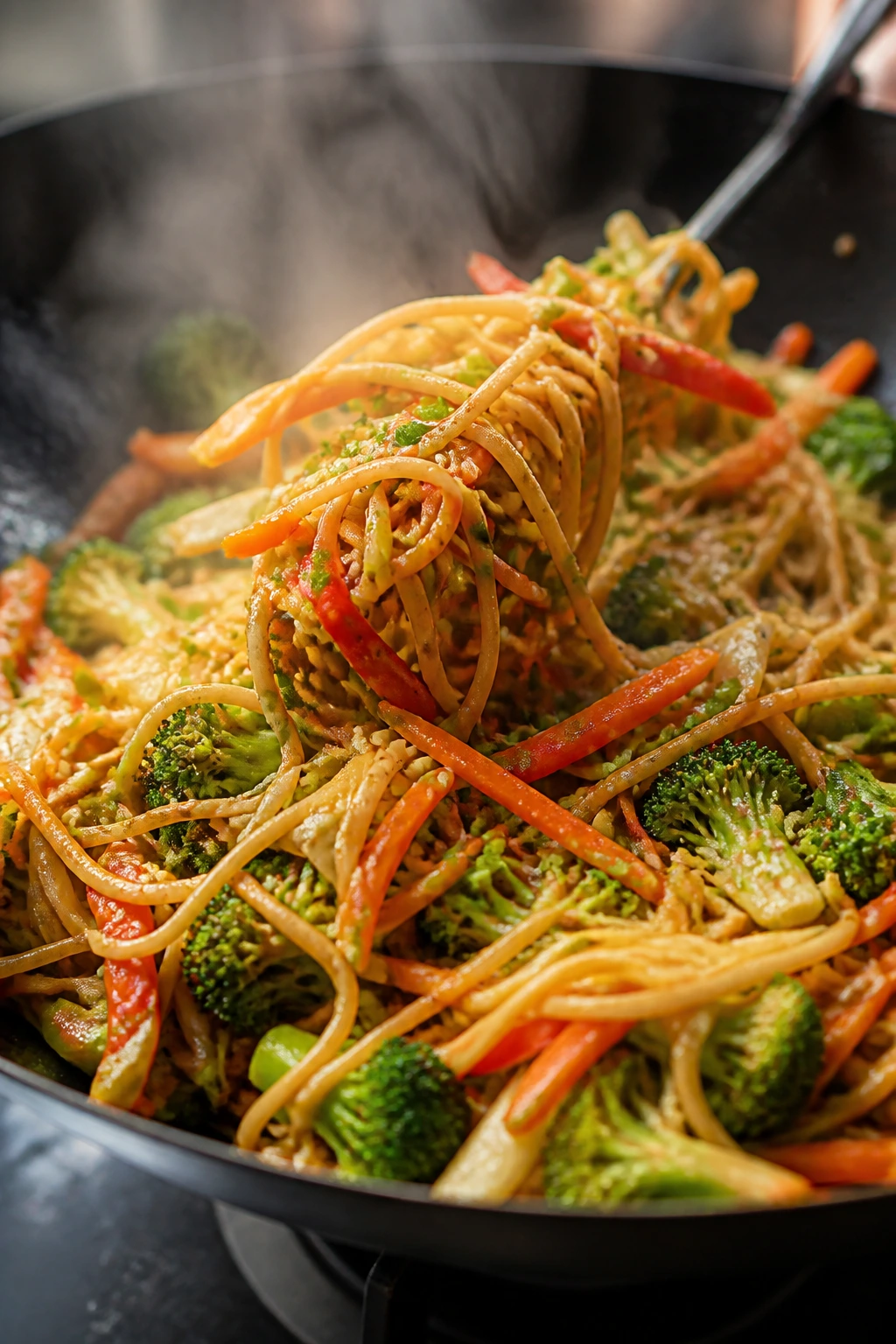
Noodles
What to use: 8 ounces chow mein noodles or thin dried egg noodles are the backbone of the dish, and either one gives you a springy bite that holds onto the sauce.
Preparation: Cook them until just shy of al dente, then drain them thoroughly. If they sit wet, they will dump water into the wok and thin out the sauce right when you want it to cling.
Substitutions: Thin spaghetti, ramen noodles without the seasoning packet, or rice noodles can all work if chow mein noodles are hard to find. Fresh refrigerated noodles are also excellent if you can get them; they need less boiling and have a softer chew.
Tips: I like to test a noodle a minute before the package says it’s done. It should still feel a little firm in the center because it will finish cooking in the pan.
Cabbage
What to use: Two cups napa cabbage and one cup green cabbage give this stir-fry a mix of tenderness and structure.
Preparation: Slice both cabbages thinly so they wilt quickly. If the ribbons are too chunky, they stay awkwardly stiff and do not blend with the noodles the way they should.
Substitutions: Bok choy, savoy cabbage, or even shredded Brussels sprouts can step in. Coleslaw mix works in a pinch, though the texture is a little drier and less sweet.
Tips: Cabbage likes high heat and short time. If it smells steamed instead of fragrant and lightly sweet, it stayed on the stove too long.
Mushrooms and Crisp Vegetables
What to use: Eight ounces of cremini mushrooms, two medium carrots, one red bell pepper, and one cup snap peas build the dish’s texture and color.
Preparation: Slice the mushrooms thin, cut the carrots into matchsticks, and keep the pepper strips narrow. The snap peas should be trimmed so the stringy seam does not pull loose in the pan.
Substitutions: Shiitake mushrooms bring a deeper flavor, baby corn adds crunch, and broccoli florets work if you cut them small enough to cook fast. Zucchini can work too, but it should go in at the end because it releases water quickly.
Tips: Dry mushrooms with a paper towel before cooking if they seem damp from the package. A wet mushroom steams; a dry mushroom browns.
Aromatics
What to use: Three minced garlic cloves, one tablespoon grated fresh ginger, and the white parts of three scallions.
Preparation: Keep the garlic and ginger small enough that they hit the hot oil and perfume the pan in seconds. The scallion greens should wait until the end or they’ll lose their brightness.
Substitutions: Garlic paste and ginger paste can work if that is what you have. Garlic powder is not the same thing here, and it tastes flatter in a stir-fry.
Tips: Add aromatics after the sturdier vegetables have started to soften. Garlic burns fast, and burnt garlic tastes sharp in a bad way.
Sauce
What to use: Low-sodium soy sauce, vegetarian oyster sauce or mushroom stir-fry sauce, rice vinegar, toasted sesame oil, maple syrup, vegetable broth, cornstarch, and pepper.
Preparation: Whisk the sauce until the cornstarch disappears completely. If it sits in a clump at the bottom of the bowl, it will not thicken evenly in the pan.
Substitutions: Tamari works for gluten-free cooking, and coconut aminos can step in if you want a slightly sweeter profile, though you may need a bit more salt. Black vinegar can replace rice vinegar if you want a sharper, darker note.
Tips: Keep the sesame oil small. It is a finishing oil with a strong smell, not the main cooking fat, and too much can make the bowl taste perfumed instead of balanced.
Finishing Ingredients
What to use: Toasted sesame seeds and optional chili crisp or sliced fresh chile.
Preparation: Keep these for the very end so they stay fresh and visible.
Substitutions: Crushed peanuts, thinly sliced nori, or a quick scatter of cilantro can play a similar role if sesame is not your thing.
Tips: A finishing ingredient should give the bowl a final note, not a second sauce. Use enough to notice, not enough to cover the vegetables you just cooked.
The Tools That Keep Stir-Frying Easy
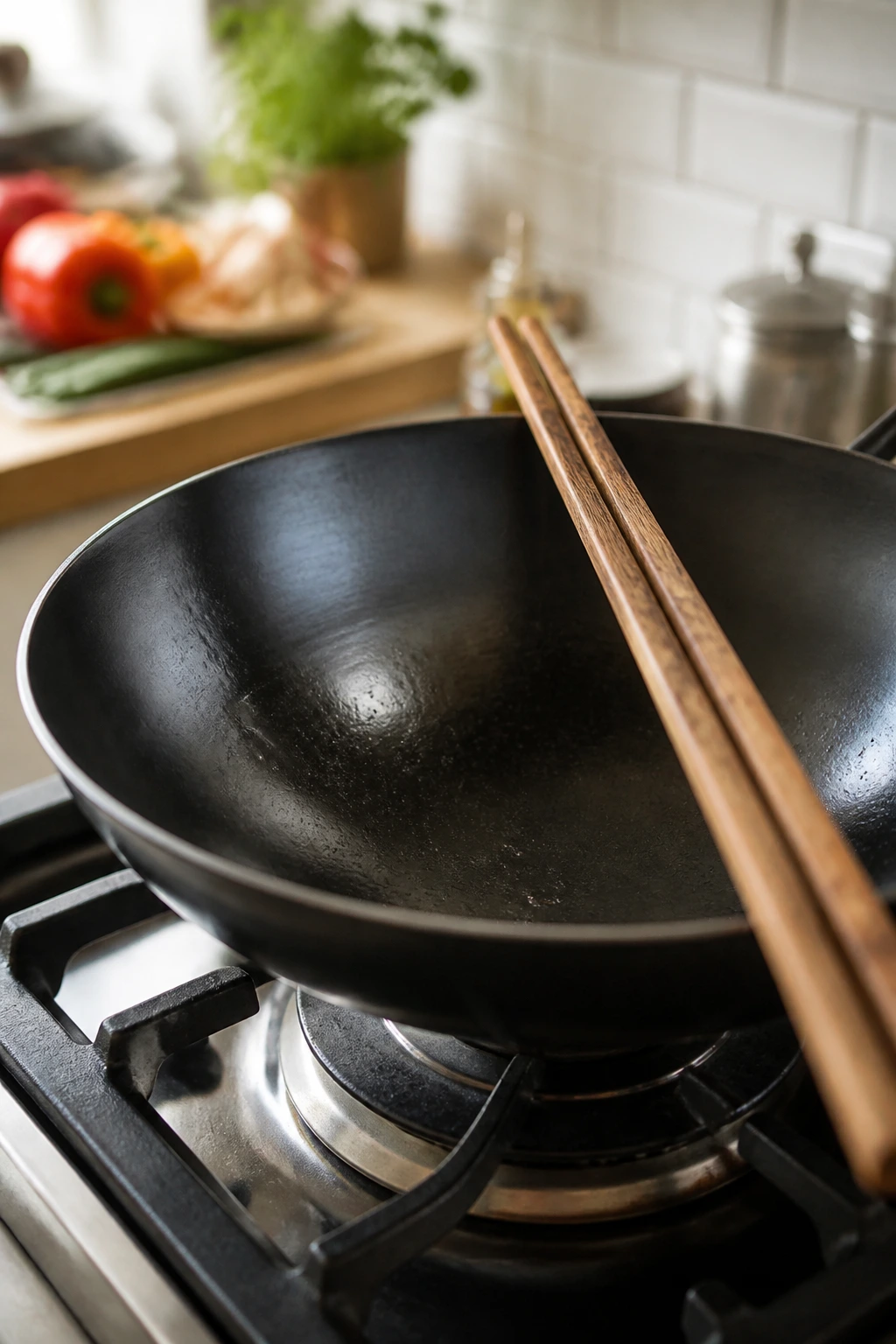
- Wok or 12-inch skillet: A wok is ideal because it gives the ingredients room to move, but a large skillet works if the heat is high and you cook in batches.
- Large pot: You need one for boiling the noodles without crowding them.
- Tongs or chopsticks: Either one makes it easier to lift and turn the noodles without smashing the vegetables.
- Fine-mesh strainer or colander: Drain the noodles well so they do not drag excess water into the pan.
- Small whisk: This is the easiest way to keep the cornstarch from clumping in the sauce.
- Cutting board with a damp towel underneath: A small thing, but it keeps the board from sliding while you slice vegetables into thin strips.
- Microplane or box grater: Helpful for ginger if you do not want to mince it by hand.
- Rimmed sheet pan or large tray: Handy for lining up prepped vegetables before cooking; stir-fry goes better when the ingredients are already sorted.
Cooking Fresh Vegetable Chow Mein Step by Step
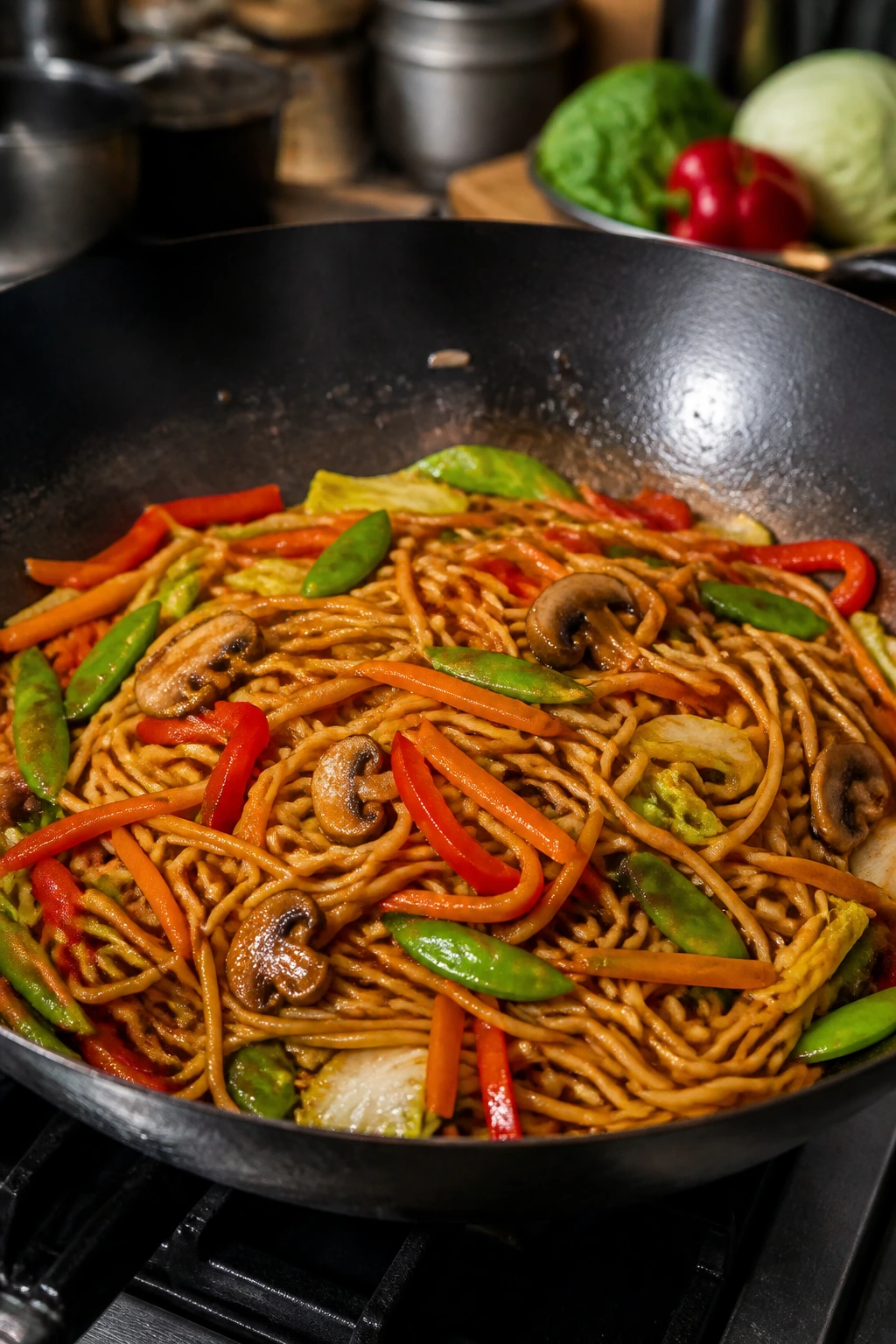
Prep the Sauce and Noodles
-
In a small bowl, whisk together the soy sauce, vegetarian oyster sauce, rice vinegar, toasted sesame oil, maple syrup, vegetable broth, cornstarch, and pepper until the mixture looks smooth and the cornstarch disappears. Set it near the stove so you can grab it without pausing the stir-fry.
-
Bring a large pot of salted water to a boil and cook the chow mein noodles until just shy of al dente, usually 1 minute less than the package direction. Drain them well, then toss with 1 teaspoon neutral oil if they look sticky. Do not leave them wet in the colander — water is the enemy of a glossy stir-fry.
Build the Vegetable Base
-
Heat a wok or large skillet over high heat until a drop of water sizzles on contact. Add 1 tablespoon neutral oil, then add the mushrooms and carrots. Stir-fry for 2 minutes, tossing often, until the mushrooms soften and the carrots lose their raw edge.
-
Add the bell pepper, snap peas, napa cabbage, green cabbage, and scallion whites. Keep the vegetables moving for 2 to 3 minutes, until the cabbage starts to wilt at the edges but still looks bright. If liquid gathers in the bottom of the pan, keep cooking over high heat until it evaporates; if you stop too early, the dish will taste steamed instead of stir-fried.
-
Add the garlic and ginger and stir for 15 to 20 seconds, just until the kitchen smells sharp and sweet. The garlic should smell fragrant, not brown. If it darkens, it will turn bitter.
Toss and Finish
-
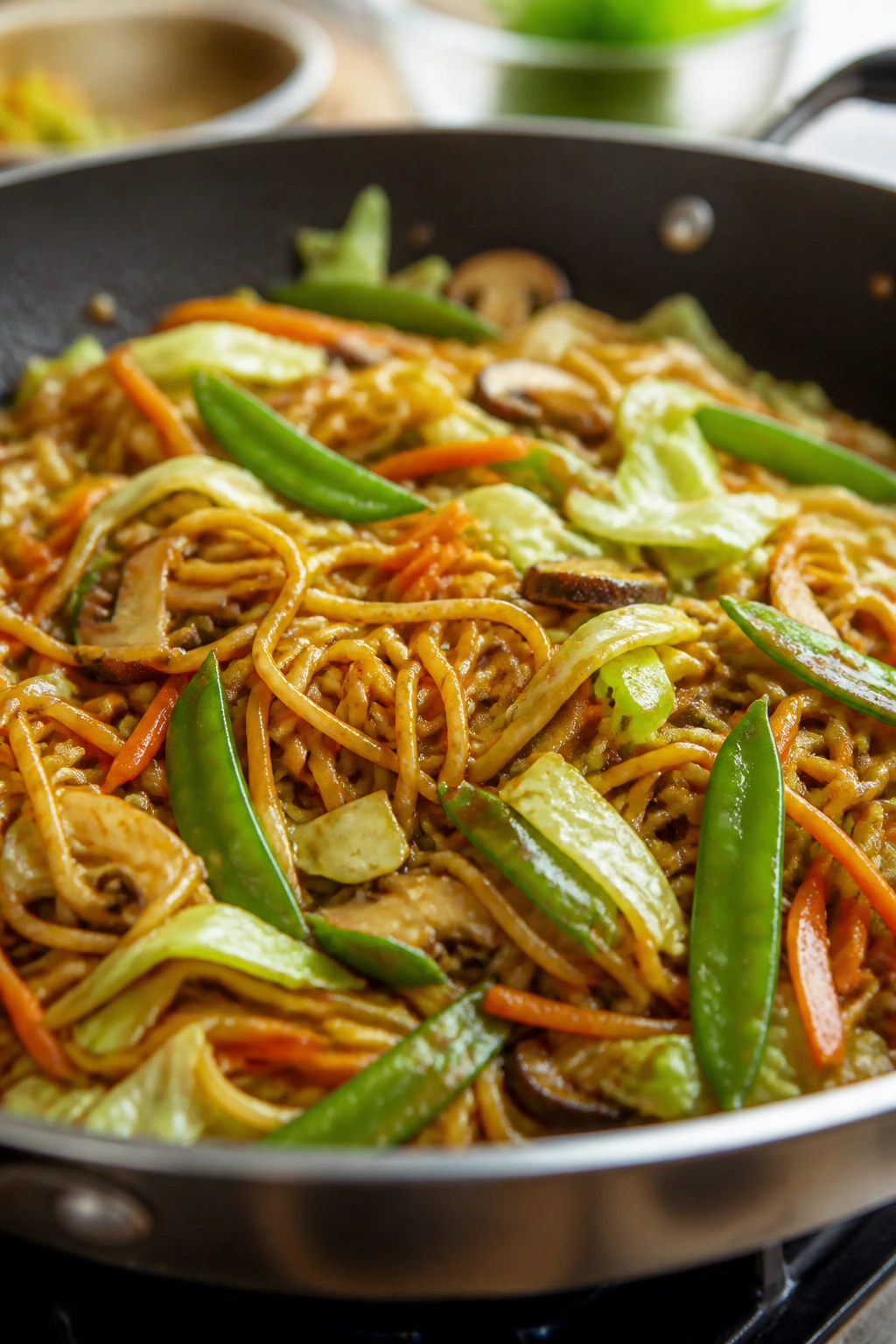
Add the noodles to the pan, then pour in the sauce around the edges so it hits the hot metal before it settles on the noodles. Toss constantly for 1 to 2 minutes until the noodles turn glossy and the sauce lightly thickens. The sauce should cling in a thin sheen, not collect in a puddle.
-
Turn off the heat, add the scallion greens, and toss once more. Sprinkle with sesame seeds and chili crisp or fresh chile if using, then taste and adjust with a small splash of soy sauce or rice vinegar if it needs more salt or brightness.
How to Serve It So the Texture Stays Alive
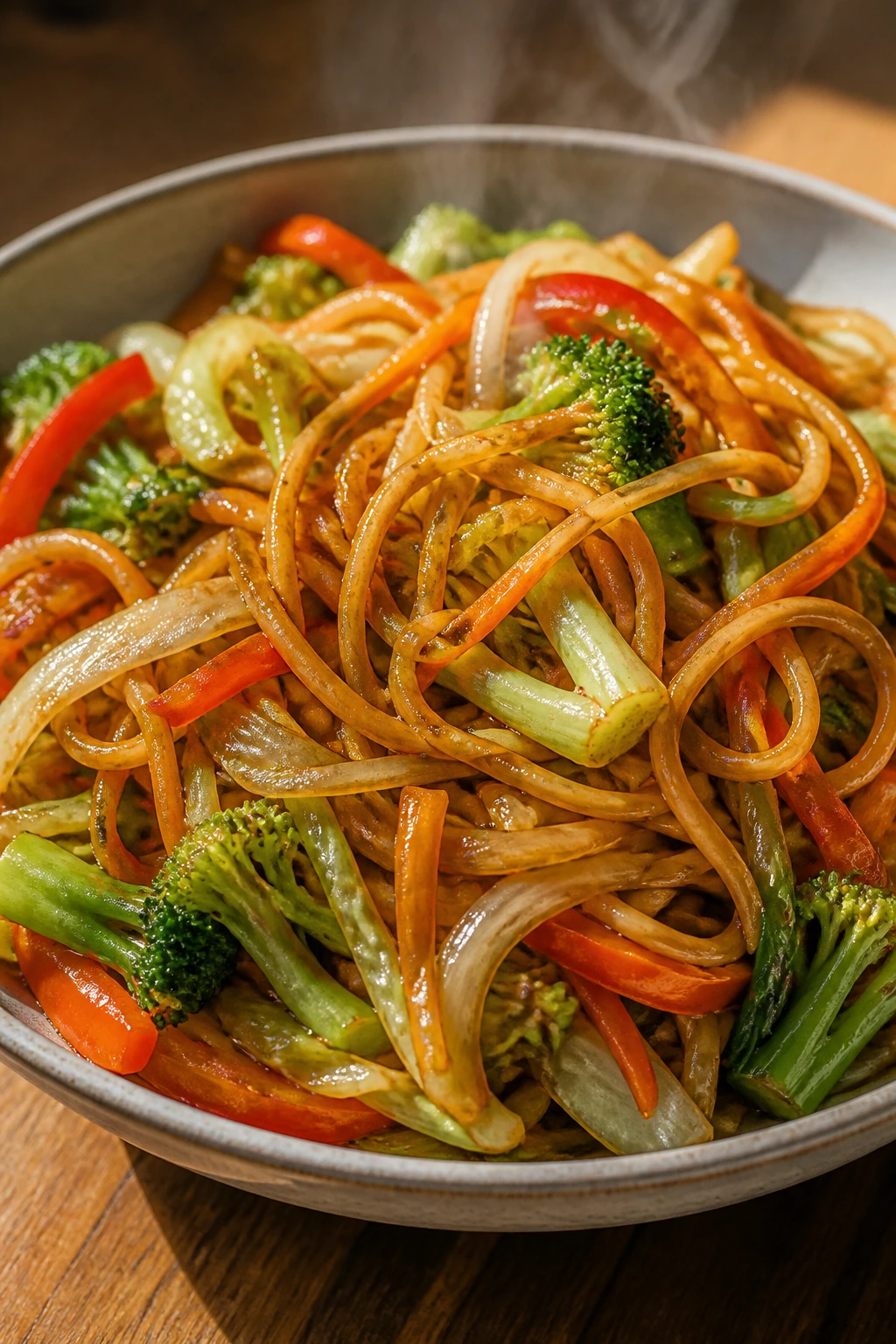
Presentation: Spoon the chow mein into shallow bowls instead of deep ones. That gives the noodles room to show off the vegetables, and it keeps the scallion greens and sesame seeds from disappearing under the surface.
Accompaniments: A crisp cucumber salad, steamed edamame, or a small bowl of miso soup sits nicely beside it. If you want more bulk, a simple tofu side or a fried egg on top works without turning the meal heavy.
Portions: Four main-dish servings is the sweet spot here, though it can stretch to six if you serve it alongside another vegetable dish. For a bigger appetite, add extra mushrooms or a block of seared tofu rather than piling on more noodles.
Beverage Pairing: Unsweetened jasmine tea is my favorite here because it clears the sesame and soy without fighting them. Sparkling water with lime works too, and if you want something colder and sharper, a light pilsner or dry lager is an easy match.
Small Tweaks That Add More Flavor Without Heaviness
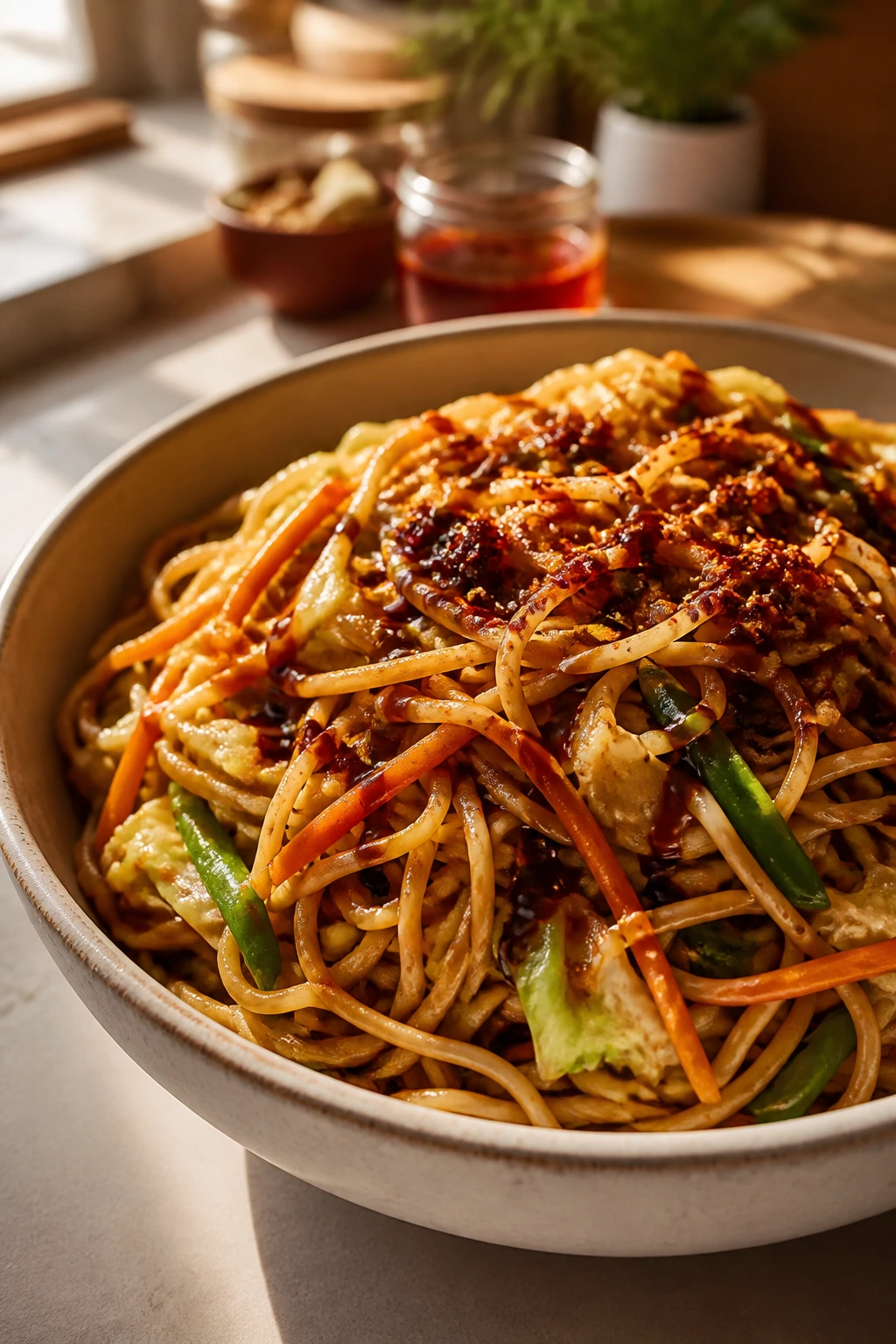
Flavor Enhancement: A tiny splash of black vinegar at the end adds a deeper, rounder tang than rice vinegar. If you like heat, a teaspoon of chili crisp stirred in off the heat gives the noodles a savory edge and a little crunch from the chili bits.
Customization: If you want more color and bulk, add a cup of broccoli florets or a handful of baby spinach near the end. Spinach wilts in a minute, so it is useful when you want more greens without changing the shape of the dish.
Serving Suggestions: Toasted sesame seeds are the obvious finish, but sliced scallion greens and a few crushed peanuts are what make the bowl feel finished. You can also add a small wedge of lime if you want the sauce to feel cleaner on the tongue.
Make-It-Yours: For a gluten-free version, use tamari and rice noodles or certified gluten-free noodles. For extra protein, add pressed tofu or shelled edamame, and for a softer, sweeter bowl, swap maple syrup for a little more vegetable broth and rely on the mushrooms for depth.
Mistakes That Turn a Good Stir-Fry Limp
-
Crowding the pan: If the vegetables pile up too thick, they steam instead of stir-fry. The fix is simple: cook in two batches or use a larger pan, because high heat can only do its job when the ingredients have room.
-
Cooking the noodles all the way through before they hit the wok: Fully cooked noodles soften even more once the sauce goes in, and the result is a bowl that turns soft halfway through dinner. Stop the boil early and let the pan finish the job.
-
Adding sauce to wet noodles: This makes the sauce thin and slippery instead of glossy. Drain the noodles well, and if they seem damp, let them sit for a minute in the strainer before they go into the pan.
-
Letting garlic burn: Garlic needs only a few seconds in the hot pan. If it turns brown before the noodles go in, it will taste harsh no matter how good the rest of the ingredients are.
-
Using too much sesame oil: It is easy to overdo because the smell is so good. Keep it at one teaspoon in the sauce, then taste before adding any more at the end.
-
Chopping vegetables in different sizes: Big carrot coins and tiny cabbage shreds do not cook at the same speed, which means some pieces will be raw while others collapse. Keep the cuts close in size so the pan cooks evenly.
Useful Variations and Easy Swaps
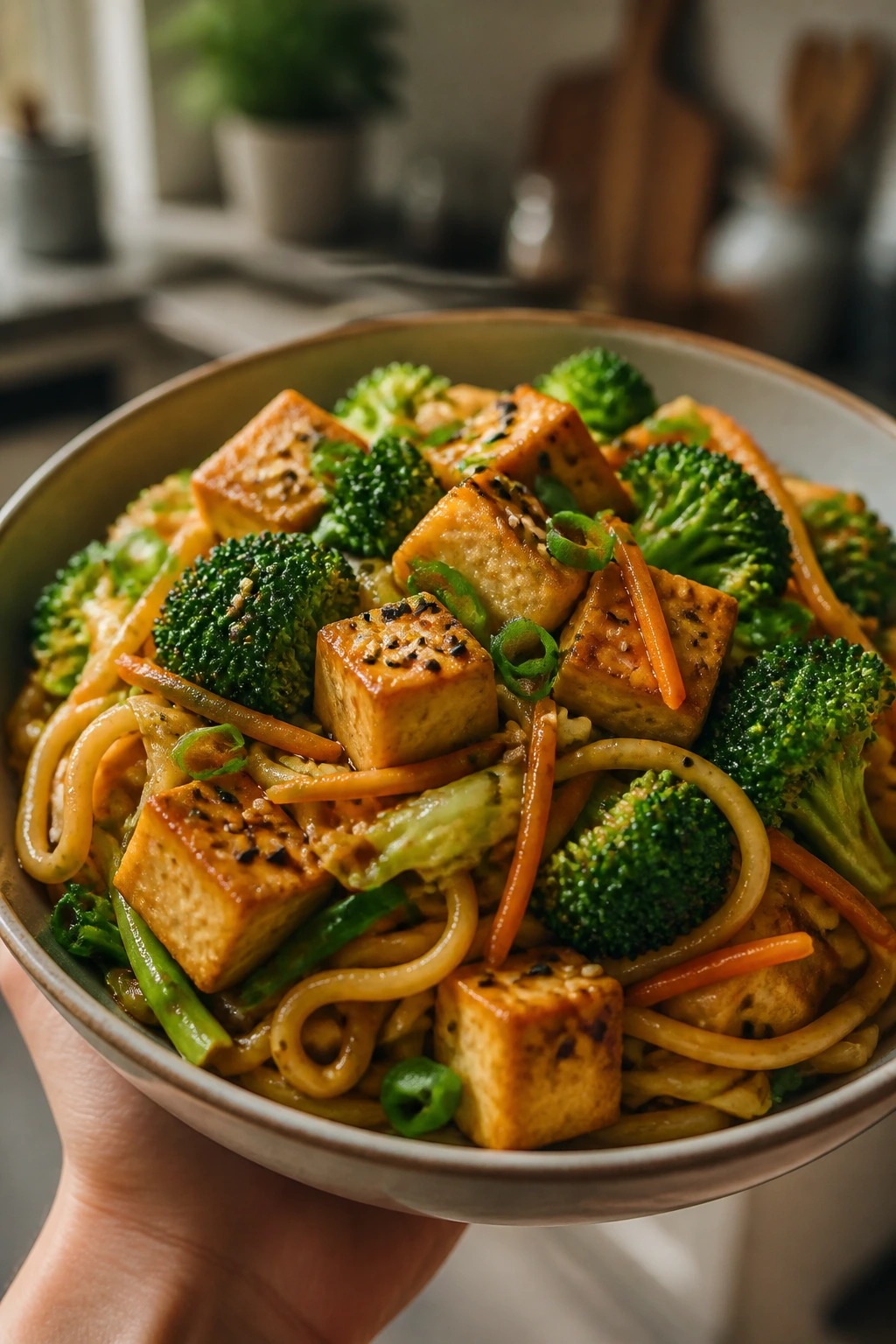
Tofu and Broccoli Wok Bowl
Press 12 to 14 ounces of firm tofu, cube it, and sear it in the wok before the vegetables go in. Add 2 cups small broccoli florets with the cabbage, and you have a fuller dinner with a little extra chew.
Spicy Chili Crisp Chow Mein
Stir 1 to 2 teaspoons of chili crisp into the sauce, then add another spoonful on top before serving. This version is especially good with mushrooms because the heat pulls more flavor out of the savory bits in the pan.
Gluten-Free Rice Noodle Swap
Use flat rice noodles instead of chow mein noodles and replace the soy sauce with tamari. Rice noodles need gentle handling, so soak or cook them only until pliable and then toss them carefully in the sauce.
Peanut-Sesame Dinner Bowl
Whisk 1 tablespoon smooth peanut butter into the sauce and add an extra splash of vegetable broth to loosen it. The result is richer and a little more filling, which works well if you want the bowl to lean more toward comfort food.
Make-Ahead, Storage, and Reheating
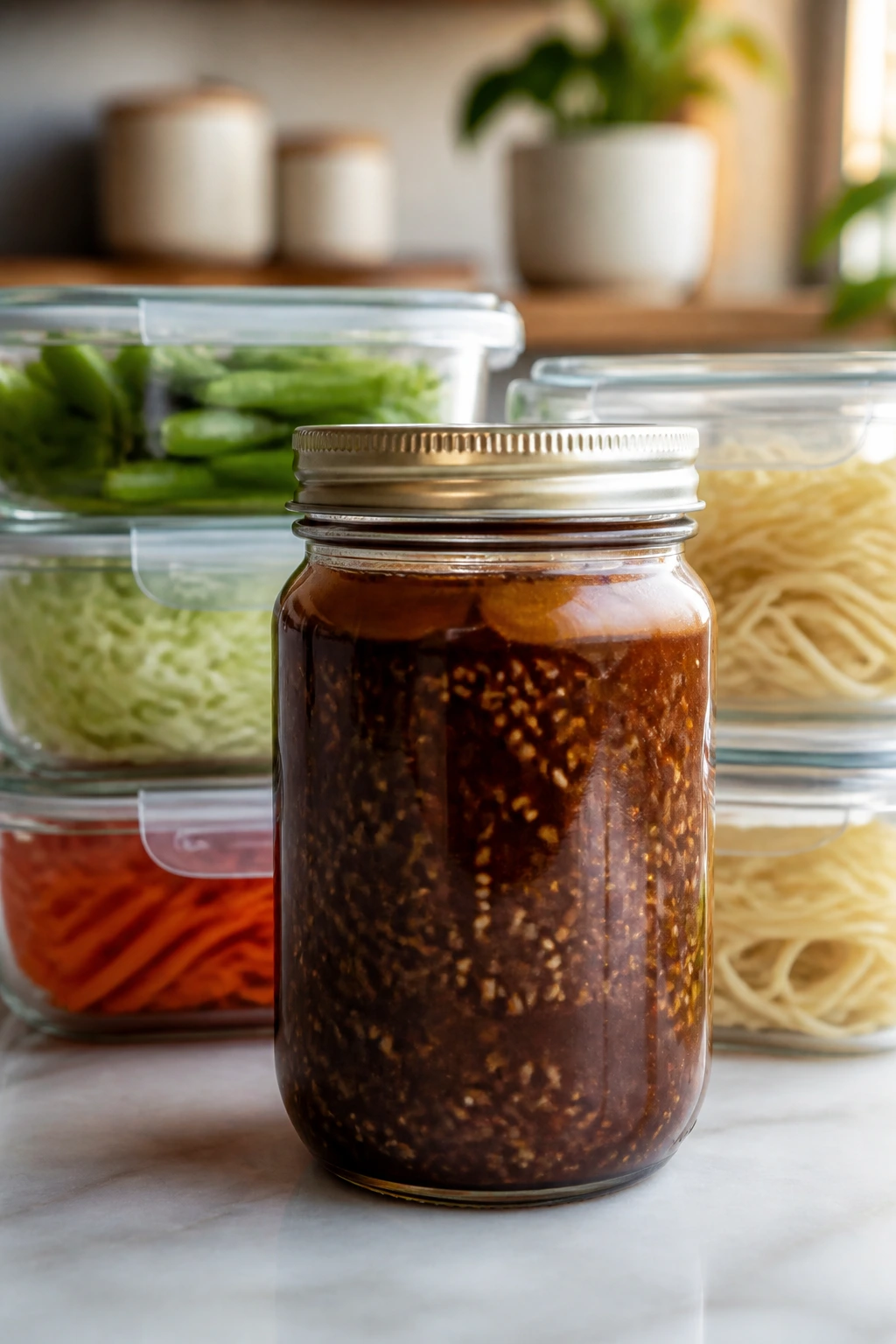
The sauce can be mixed up to 3 days ahead and kept in a sealed jar in the refrigerator. Give it a quick whisk before using, because the cornstarch settles at the bottom and needs to go back into suspension.
The vegetables can be washed, trimmed, and sliced a day ahead, though cabbage stays nicest if it is cut the day you cook. Store the chopped vegetables in separate containers lined with a paper towel if they are damp; that keeps the mushrooms and cabbage from getting slimy.
Leftover vegetable chow mein keeps well in the refrigerator for 3 to 4 days in an airtight container. If you want the best texture, reheat it in a skillet over medium heat with 1 to 2 tablespoons of water or broth, then toss for 3 to 5 minutes until the noodles loosen and the sauce comes back to life.
The microwave works in a pinch, but it is not my first choice. Cover the bowl loosely, add a teaspoon or two of water, and heat in 45- to 60-second bursts, stirring between rounds so the noodles warm evenly instead of drying at the edges.
Freezing is possible for up to 1 month, though the cabbage and noodles will soften when thawed. If you freeze it, cool it fully first, portion it into flat containers, and thaw it in the refrigerator before reheating in a skillet. The texture will not be as crisp as day one, but the flavor still holds.
Questions People Ask About Fresh Vegetable Chow Mein
Can I use spaghetti if I cannot find chow mein noodles?
Yes, and honestly, it works better than people expect. Use thin spaghetti or linguine, cook it to just under al dente, and toss it with a tiny bit of oil so it does not clump; the texture will be a little different, but the sauce clings nicely.
What vegetables can I swap in without ruining the dish?
Broccoli florets, bok choy, snow peas, celery, baby corn, and even thin zucchini strips can work well. The main rule is size: cut everything so it cooks in the same time window, and add watery vegetables later so they do not turn the pan soupy.
How do I keep the chow mein from getting soggy?
Three things matter: a hot pan, dry vegetables, and noodles that are not fully cooked before they go in. If the pan starts steaming, give it a minute of hard heat before adding the sauce, and do not be afraid to cook in batches if the skillet looks crowded.
Can I make this vegan?
Yes. Choose a vegetarian oyster sauce that is made without fish, or use a mushroom stir-fry sauce, and use maple syrup instead of honey. The rest of the ingredient list already leans vegan-friendly.
Can I add tofu or another protein?
Absolutely. Pressed tofu is the easiest choice because it sears well and soaks up sauce without getting heavy. Cook it first, remove it from the pan, then fold it back in at the end so the cubes keep their edges.
Why does my sauce taste flat even when I follow the recipe?
Flat stir-fry sauce usually needs one of three things: more salt, a sharper acid, or a little heat. Add a small splash of soy sauce, a few drops of rice vinegar, or a spoonful of chili crisp, then taste again before deciding whether it needs more.
Can I double this recipe for a larger group?
You can, but I would not crowd a single wok with doubled ingredients. Either cook the vegetables in batches or use two pans; otherwise the vegetables will steam, and the whole dish will lose the texture that makes chow mein worth making.
A Hot Pan, A Better Bowl
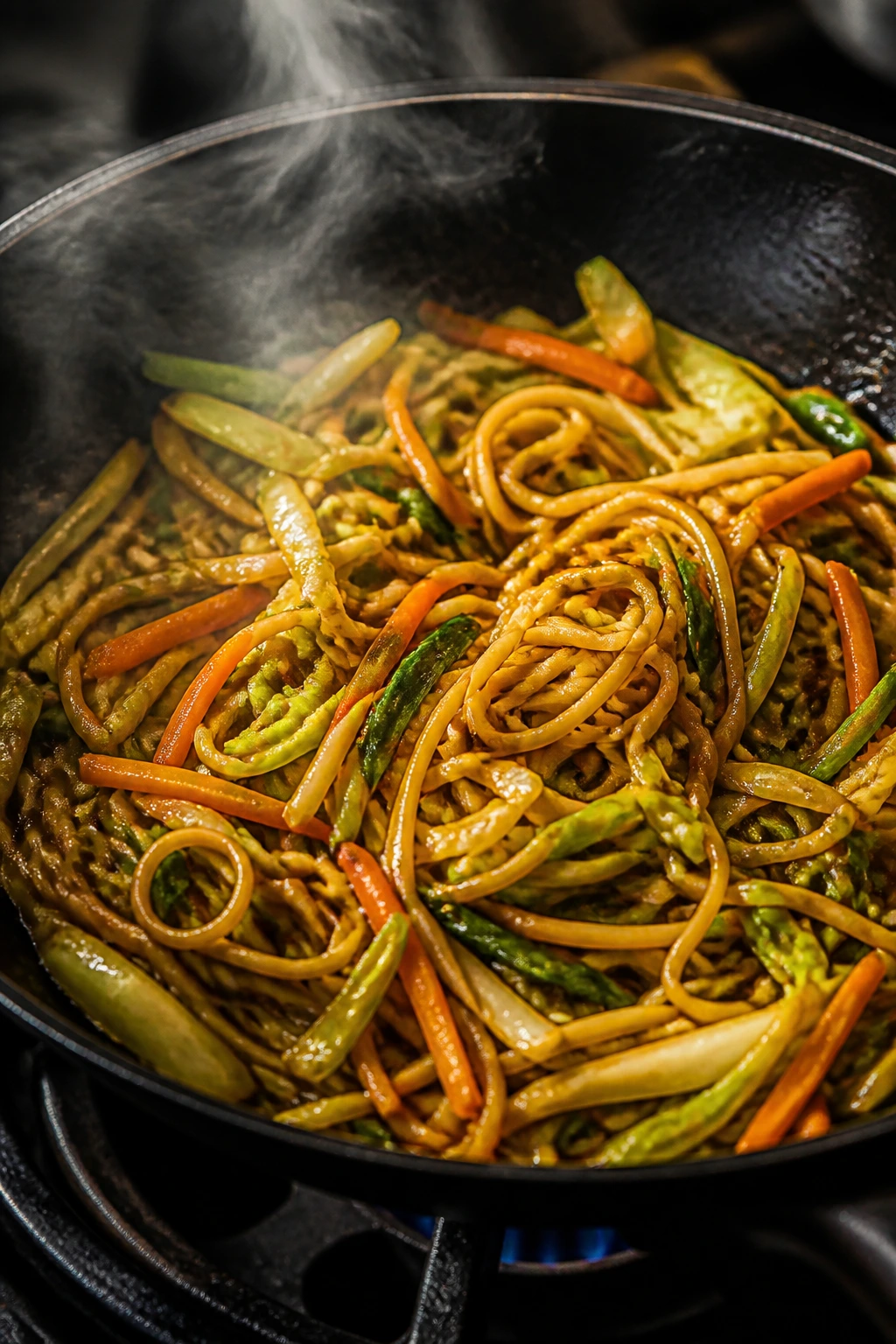
Fresh vegetable chow mein works because it respects the ingredients instead of burying them. The cabbage still tastes like cabbage, the carrots still have bite, and the noodles only carry enough sauce to tie everything together. That is the sweet spot.
The dish also gives you room to cook with what you already have, which is part of why it belongs in the regular dinner rotation. Keep the noodles, the soy sauce, and a head of cabbage around, and you are already most of the way there.
Fresh Vegetable Chow Mein — Recipe Card
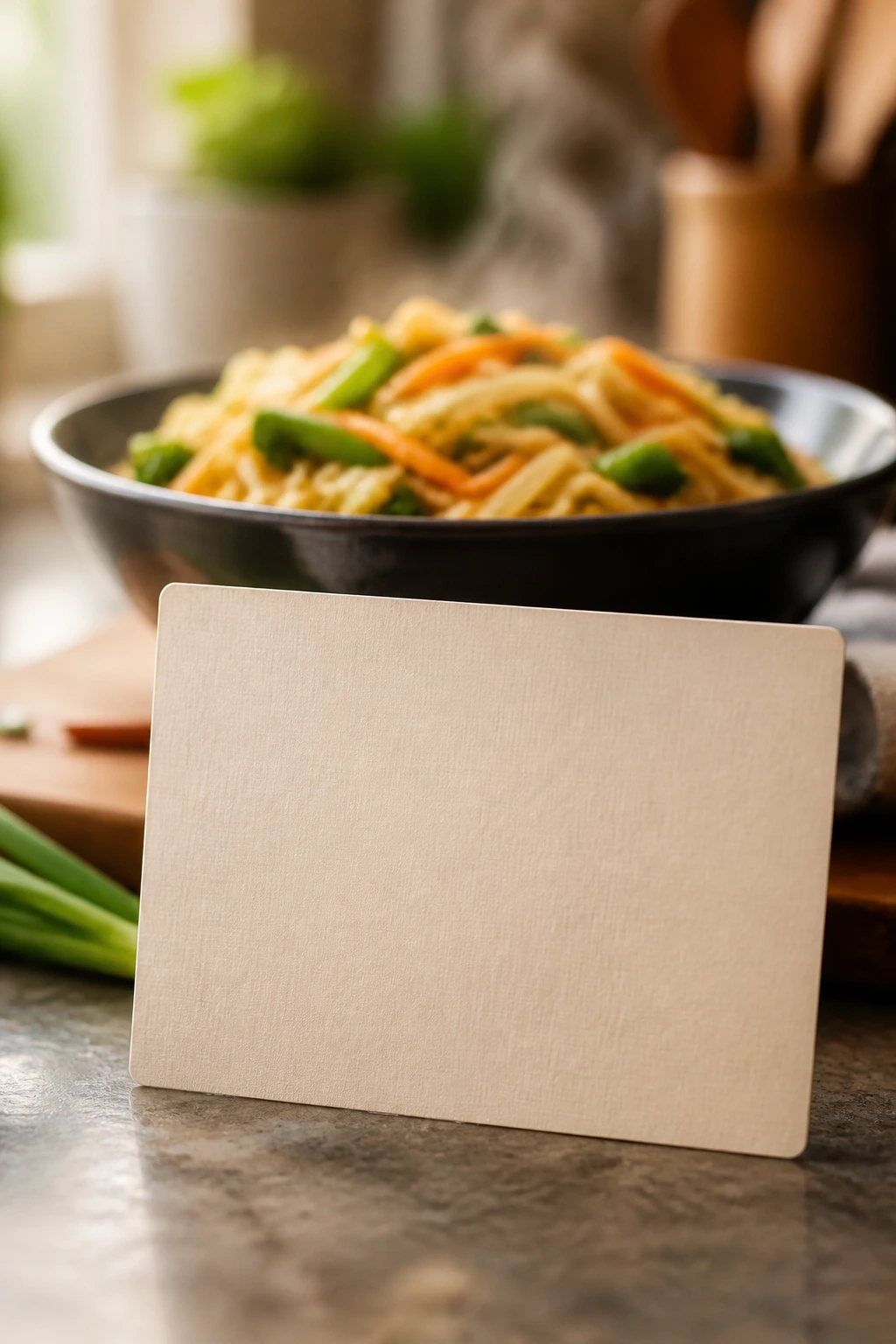
Recipe Name: Fresh Vegetable Chow Mein
Description: A glossy, vegetable-heavy chow mein with tender noodles, crisp cabbage, mushrooms, carrots, and a light soy-sesame sauce. It tastes bright, savory, and complete without feeling heavy.
Prep Time: 20 minutes
Cook Time: 15 minutes
Total Time: 35 minutes
Course: Main Course
Cuisine: Chinese-American inspired
Servings: 4 servings
Calories: About 340 kcal per serving
Ingredients
For the Noodles
- 8 ounces chow mein noodles or thin dried egg noodles
- 1 teaspoon neutral oil, optional
For the Vegetables
- 2 tablespoons neutral oil, divided
- 8 ounces cremini mushrooms, thinly sliced
- 2 medium carrots, cut into matchsticks
- 1 red bell pepper, thinly sliced
- 2 cups napa cabbage, thinly sliced
- 1 cup green cabbage, thinly sliced
- 1 cup snap peas, trimmed and halved
- 3 scallions, whites and greens separated and thinly sliced
- 3 garlic cloves, minced
- 1 tablespoon fresh ginger, grated
For the Sauce
- 3 tablespoons low-sodium soy sauce
- 1 tablespoon vegetarian oyster sauce or mushroom stir-fry sauce
- 1 tablespoon rice vinegar
- 1 teaspoon toasted sesame oil
- 1 teaspoon maple syrup
- 1/2 cup low-sodium vegetable broth
- 1 teaspoon cornstarch
- 1/4 teaspoon white pepper or black pepper
For Finishing
- 1 teaspoon toasted sesame seeds
- Chili crisp or sliced fresh chile, optional
Instructions
-
Whisk the soy sauce, vegetarian oyster sauce, rice vinegar, toasted sesame oil, maple syrup, vegetable broth, cornstarch, and pepper in a small bowl until smooth.
-
Cook the noodles in boiling salted water until just shy of al dente, then drain well and toss lightly with neutral oil if needed.
-
Heat a wok or large skillet over high heat. Add 1 tablespoon neutral oil, then stir-fry the mushrooms and carrots for 2 minutes.
-
Add the bell pepper, snap peas, napa cabbage, green cabbage, and scallion whites. Stir-fry for 2 to 3 minutes until the cabbage starts to wilt but still looks bright.
-
Add the garlic and ginger and stir for 15 to 20 seconds until fragrant.
-
Add the noodles and pour in the sauce. Toss for 1 to 2 minutes until the noodles are glossy and the sauce lightly clings.
-
Turn off the heat, add the scallion greens, sesame seeds, and optional chili crisp or sliced chile. Taste and adjust with a splash more soy sauce or rice vinegar if needed.
Notes: Keep the pan hot and the vegetables dry for the best texture. Leftovers reheat best in a skillet with a splash of water or broth. For gluten-free cooking, use tamari and rice noodles or certified gluten-free noodles.