



A good fresh summer salad with homemade dressing should taste like cold cucumber, ripe peaches, sweet corn, and a lemony vinaigrette that wakes up the tongue instead of coating it in oil. If the bowl feels wet, heavy, or vaguely tired, it needs more thought. I want crunch from the vegetables, creaminess from avocado and feta, and enough acid in the dressing to make the whole thing taste sharper than the sum of its parts.
I’ve never loved salads that behave like garnish. Too many of them are a pile of greens with three shy toppings scattered around like they were afraid to commit. This one does the opposite. It leans on contrast: cool and warm, sweet and salty, soft and crisp, juicy and leafy. That balance matters more than any fancy trick, and it’s the reason a simple salad can still feel like a proper meal.
The dressing is the part people usually rush. Don’t. A homemade lemon-Dijon vinaigrette gives the bowl a backbone, and a small shallot plus a little garlic make the whole thing taste finished instead of assembled. Keep the avocado for the very end, toast the nuts or seeds, and let the corn pick up a little color in the pan. That’s where the salad stops tasting like a side dish and starts tasting like something you’d actually make again tomorrow.
Why This Salad Deserves a Little More Care
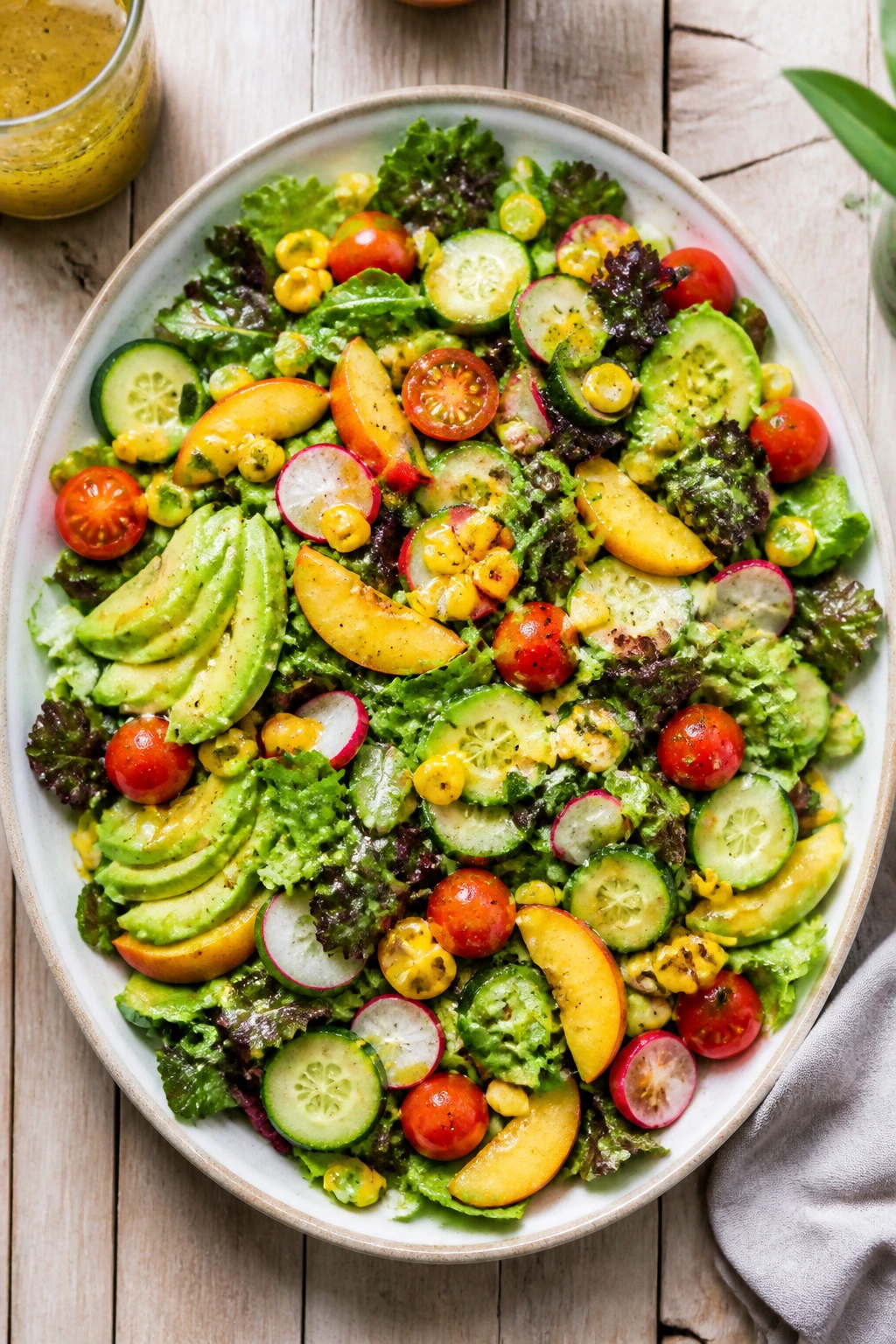
- Bright, not bland: The lemon, vinegar, and Dijon cut through the avocado and feta so the salad doesn’t sink into creaminess.
- Built for texture: Crisp cucumber, tender greens, juicy tomatoes, and a little char on the corn keep every bite moving.
- Flexible with what’s on hand: Peaches can become nectarines, feta can become goat cheese, and pepitas can become almonds without upsetting the bowl.
- No soggy drama: The dressing is mixed separately and added at the end, which keeps the greens from collapsing before they hit the table.
- Looks abundant with a modest amount of food: Layered properly, the salad fills a platter fast, so you don’t need a mountain of ingredients to make it feel generous.
Why This Fresh Summer Salad with Homemade Dressing Works
A salad like this works because every ingredient is solving a problem. Greens bring volume, but they need acid. Corn brings sweetness, but it needs salt. Peaches give softness and perfume, but they need something crisp next to them so the whole bowl doesn’t feel mushy. That’s the real trick here: the ingredients are not decorative. They’re in conversation with each other.
The homemade dressing matters because bottled dressing usually shows up too thick, too sweet, or too flat for a salad built on ripe produce. Lemon juice and white wine vinegar keep the flavor clean, while Dijon helps the oil and acid emulsify into a vinaigrette that clings to leaves instead of sliding off. A spoonful of minced shallot softens in the dressing as it sits for 10 minutes, which means the raw bite fades and what you get instead is a gentle onion note.
I like that this salad can be put together without turning on the oven. That’s not a small thing when the kitchen already feels warm and the produce at the market looks good enough to eat raw. One quick skillet for the corn, a bowl for the dressing, a knife, a cutting board, and you’re done. Clean ingredients. Clean flavors. No theatrics.
Timing, Yield, and the Best Moment to Toss It
Yield: Serves 4 as a main salad or 6 as a side
Prep Time: 25 minutes
Cook Time: 5 minutes
Total Time: 30 minutes
Difficulty: Beginner — the steps are straightforward, and the only cooking is a short skillet turn for the corn.
Chill/Rest Time: 10 minutes optional for the dressing
Best Served: Right after tossing, while the greens are crisp and the avocado still looks bright
A salad is often ruined by bad timing, not bad ingredients. If you prep everything and let it sit dressed for half an hour, the lettuce starts to droop, the tomatoes leak, and the avocado loses its fresh edge. You want the bowl ready, the dressing mixed, and the final toss to happen close to serving.
If you’re making this for guests, the smart move is to do all the chopping first, whisk the dressing, and cook the corn at the last minute. The salad comes together fast once the cutting board is clear. That last-minute assembly matters more than people think.
What Goes Into the Bowl
For the Salad:
- 8 cups mixed salad greens, such as romaine, butter lettuce, and baby arugula, washed and dried
- 2 ears fresh corn, kernels cut off the cob
- 1 tablespoon extra-virgin olive oil, for the corn
- 1 medium English cucumber, halved lengthwise and sliced into half-moons
- 1 pint cherry tomatoes, halved
- 2 ripe peaches or nectarines, pitted and sliced
- 1 avocado, diced just before serving
- 4 radishes, thinly sliced
- 1/2 small red onion, very thinly sliced and soaked in ice water for 10 minutes
- 1/2 cup crumbled feta or goat cheese
- 1/4 cup toasted pepitas or sliced almonds
- 1/3 cup fresh basil leaves, torn
For the Homemade Dressing:
- 3 tablespoons fresh lemon juice
- 1 tablespoon white wine vinegar
- 1 teaspoon Dijon mustard
- 1 teaspoon honey
- 1 small shallot, finely minced
- 1 small garlic clove, finely grated
- 1 teaspoon lemon zest
- 1/2 teaspoon kosher salt
- 1/4 teaspoon black pepper
- 1/3 cup extra-virgin olive oil
The ingredient list is short enough to shop for in one trip, but specific enough to make the salad taste finished. Don’t swap in every leftover vegetable you can find. Three or four excellent produce items beat a crowded bowl that tastes like the refrigerator drawer.
Why Each Ingredient Matters
Greens and crunchy vegetables
- What to use: 8 cups mixed greens, 1 cucumber, 4 radishes, and 1/2 small red onion.
- Preparation: Wash and dry the greens thoroughly, slice the cucumber into thin half-moons, cut the radishes paper-thin, and soak the onion slices in ice water for 10 minutes before draining.
- Substitutions: Butter lettuce, little gem, or chopped romaine all work well. If you hate radishes, use shaved fennel for a cleaner, sweeter crunch.
- Tips: Dry greens matter more than people expect. If they’re wet, the dressing thins out and slides to the bottom of the bowl.
Sweet summer produce
- What to use: 2 ears of corn, 1 pint cherry tomatoes, and 2 peaches or nectarines.
- Preparation: Slice the kernels from the corn, halve the tomatoes, and cut the peaches into thin wedges right before assembly so they don’t brown.
- Substitutions: Frozen corn can stand in if fresh corn is out of reach; thaw it and blot it dry before it hits the pan. Strawberries can replace peaches if you want a sharper, berry-forward bowl.
- Tips: Corn should smell sweet when it hits the skillet. Tomatoes taste better at room temperature than cold from the fridge, so let them sit out while you prep the rest.
Creamy and salty finish
- What to use: 1 avocado and 1/2 cup feta or goat cheese.
- Preparation: Dice the avocado last, and crumble the cheese by hand so the pieces stay uneven and visible on the plate.
- Substitutions: For a dairy-free salad, skip the cheese and add extra pepitas plus a few olives for salt. If you want a richer finish, use torn burrata in place of feta.
- Tips: Avocado bruises fast once it’s cut. Add it right before serving so the green stays clean and the texture stays intact.
The dressing that holds the bowl together
- What to use: Lemon juice, white wine vinegar, Dijon, honey, shallot, garlic, lemon zest, salt, pepper, and olive oil.
- Preparation: Whisk the acid, mustard, honey, shallot, garlic, zest, salt, and pepper first, then stream in the oil slowly so the vinaigrette emulsifies.
- Substitutions: Champagne vinegar or apple cider vinegar can replace white wine vinegar. Maple syrup can replace honey if you want a deeper sweetness.
- Tips: Let the dressing sit for 10 minutes before using it. That short rest softens the shallot and pulls the raw edge off the garlic.
The Dressing That Keeps the Bowl Awake
A homemade vinaigrette is worth more than its ingredient list looks on paper. Lemon juice gives the dressing a fast, clean brightness. White wine vinegar adds another layer of acid without making it harsh. Dijon isn’t there for show; it helps the dressing emulsify, which means the oil and acid stay blended long enough to coat the greens instead of separating into an oily puddle at the bottom of the bowl.
Honey is the quiet balancing move. You don’t want a sweet dressing here. You want enough sweetness to smooth the sharp edges of the lemon and vinegar, especially because the peaches and corn already bring their own sugar. Too much honey and the salad starts tasting sticky. Too little and the bowl can feel sharp in a way that overwhelms the fruit.
I like the shallot more than raw onion in the dressing because it spreads the onion flavor through the bowl without leaving giant punchy bites behind. Garlic goes in too, but only a small clove and preferably grated fine. A clove that’s too big turns the vinaigrette bitter and aggressive, which is not what this salad needs. You want the dressing to taste awake, not loud.
The Tools That Make Assembly Easy
- Large salad bowl or wide serving platter: A wide surface helps you layer the ingredients without crushing the greens.
- Sharp chef’s knife: Clean cuts matter here, especially for peaches, radishes, and cucumber.
- Cutting board with a stable surface: A damp kitchen towel under the board keeps it from sliding.
- Salad spinner: Optional, but it saves the greens from carrying water into the dressing.
- Small bowl or jar with a tight lid: Good for whisking or shaking the vinaigrette until it turns glossy.
- Medium skillet: Use this to blister the corn kernels quickly.
- Tongs or clean hands: Hands are fine for the final toss, and sometimes they’re better because they won’t bruise the peaches as much as aggressive tongs can.
A salad doesn’t need a full drawer of equipment. It needs a sharp knife, a dry bowl, and one vessel for the dressing. The rest is mostly restraint.
How to Build a Fresh Summer Salad with Homemade Dressing Without Soggy Greens
Make the Dressing First:
- In a small bowl or jar, combine the lemon juice, white wine vinegar, Dijon mustard, honey, minced shallot, grated garlic, lemon zest, kosher salt, and black pepper.
- Whisk for about 20 seconds, then slowly stream in the olive oil while whisking continuously, or cover the jar and shake hard for 10 to 15 seconds. The dressing should turn glossy and slightly thickened, not fully creamy. Let it sit for 10 minutes so the shallot softens and the garlic calms down.
Cook the Corn and Prep the Produce: 3. Heat the 1 tablespoon olive oil in a medium skillet over medium-high heat. Add the corn kernels and cook for 4 to 5 minutes, stirring once or twice, until the kernels pick up light brown spots and smell sweet and nutty. Do not walk away here; corn can go from lightly caramelized to dry in a minute. 4. Transfer the corn to a plate and let it cool for 5 minutes. While it cools, wash and dry the greens, slice the cucumber, halve the tomatoes, cut the peaches, slice the radishes, and drain the red onion. Keep the avocado whole until the end.
Assemble the Salad: 5. Add the greens to a large bowl or arrange them on a wide platter. Scatter the cucumber, tomatoes, corn, peaches, radishes, and red onion over the top in separate pockets rather than dumping everything in one pile. That keeps the bowl looking intentional and helps each forkful pick up more than one texture. 6. Sprinkle on the feta, torn basil, and toasted pepitas or almonds. Add the avocado last, either in chunks or slices, depending on how you want the salad to look on the plate. 7. Drizzle about two-thirds of the dressing over the salad and toss gently with clean hands or tongs until the leaves are lightly coated. Taste a leaf, then add more dressing only if needed. Stop as soon as the greens are glossed — drowning them kills the crisp edge. Serve right away.
The final toss should be quick. If you overwork the bowl, the peaches break down, the avocado smears, and the whole thing starts to look tired. A light hand is not a cute idea here. It’s the difference between a salad that feels fresh and one that feels pre-mashed.
How to Serve It So the Plate Looks Generous
Presentation:
Spread the greens over a wide platter instead of piling everything into a deep bowl if you want the salad to look full without being crushed. The tomatoes, peaches, and avocado look better when you can see them in separate clusters. A few basil leaves scattered over the top at the very end make the whole thing smell like a garden when you bring it to the table.
Accompaniments:
Serve this with grilled chicken, seared shrimp, or a thick slice of toasted sourdough if you want it to become lunch or dinner. For a lighter table, a bowl of chilled melon or a simple tomato sandwich fits the same mood. If you want to keep the plate sharp and clean, skip heavy sides and let the salad do the work.
Portions:
As a side dish, this makes 6 modest servings. As a main salad, it feeds 4 people if you pair it with bread or a protein. To scale up, keep the dressing ratio the same and use a bigger platter rather than doubling the greens and leaving the produce sparse.
Beverage Pairing:
A chilled Sauvignon Blanc handles the lemon and herbs without flattening them. If you’d rather skip alcohol, sparkling water with a squeeze of lime and a few mint leaves keeps the meal feeling crisp. I also like unsweetened iced tea with this, especially if the salad has been dressed heavily with peaches and corn.
Practical Tips for Better Texture and Brighter Flavor
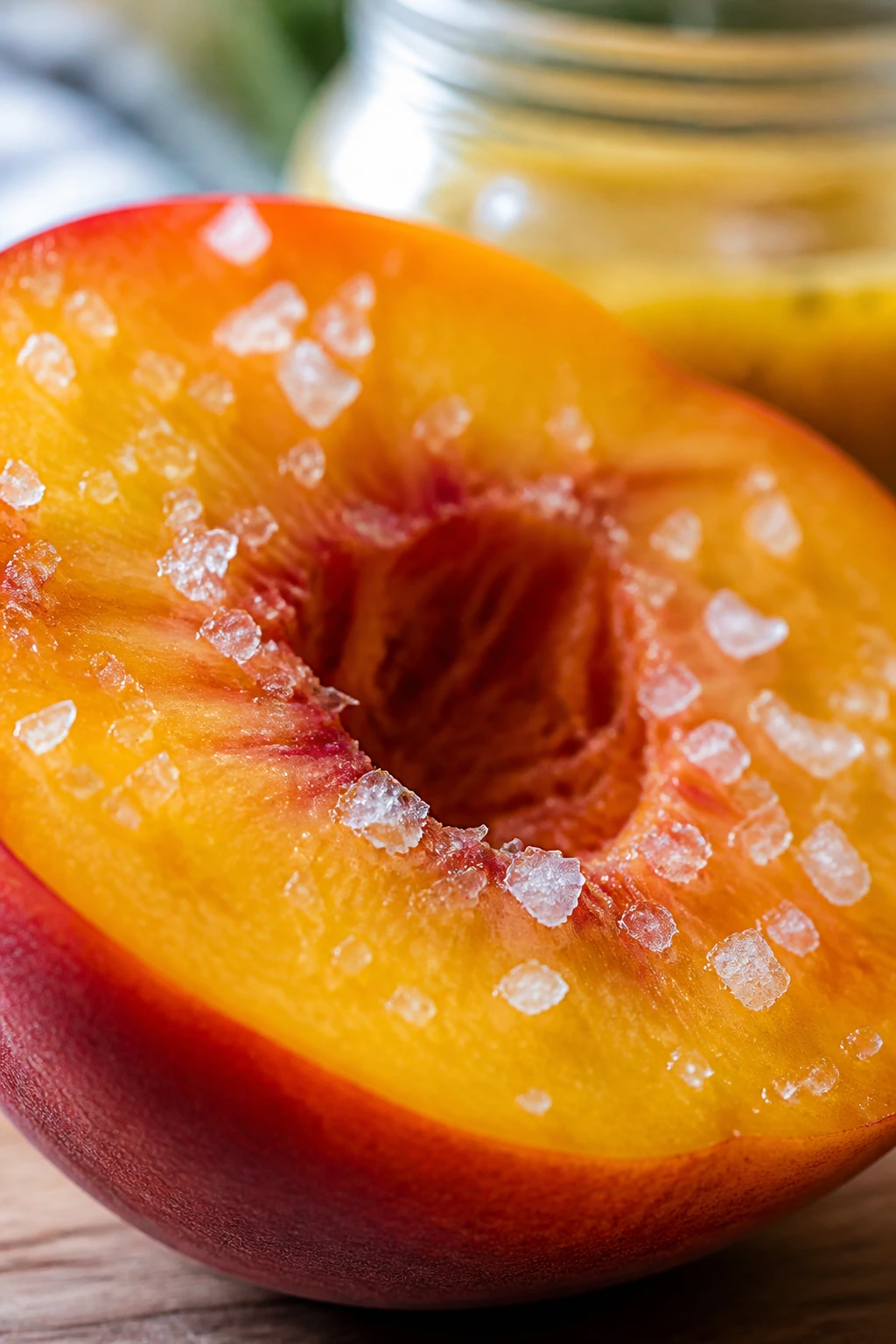
Flavor Enhancement: A tiny pinch of flaky salt over the peaches right after slicing can make them taste sweeter without adding sugar. It sounds fussy, but it works because salt pulls the fruit flavor forward before the dressing even lands.
Time-Saver: Whisk the dressing in a jar and keep it in the fridge for up to 5 days. It saves time, and when you already have the greens washed and the corn cooked, the salad takes about 10 minutes to assemble.
Pro Move: Soak the sliced red onion in ice water for 10 minutes, then pat it dry. That one step cuts the sharp bite and keeps the onion from taking over the rest of the bowl. I do this even when I think I can skip it.
Make-It-Yours: Add grilled chicken for a more filling dinner, or swap in chickpeas if you want a vegetarian protein boost. If you want extra crunch, a few cucumber seeds removed before slicing will keep the salad from feeling watery, and toasted almonds give a firmer bite than pepitas.
The best tip, though, is simple: taste before you serve. A salad like this changes a lot once the dressing hits it. Sometimes it needs a pinch more salt. Sometimes it needs one more squeeze of lemon. Don’t guess. Taste.
The Mistakes That Flatten a Good Summer Salad
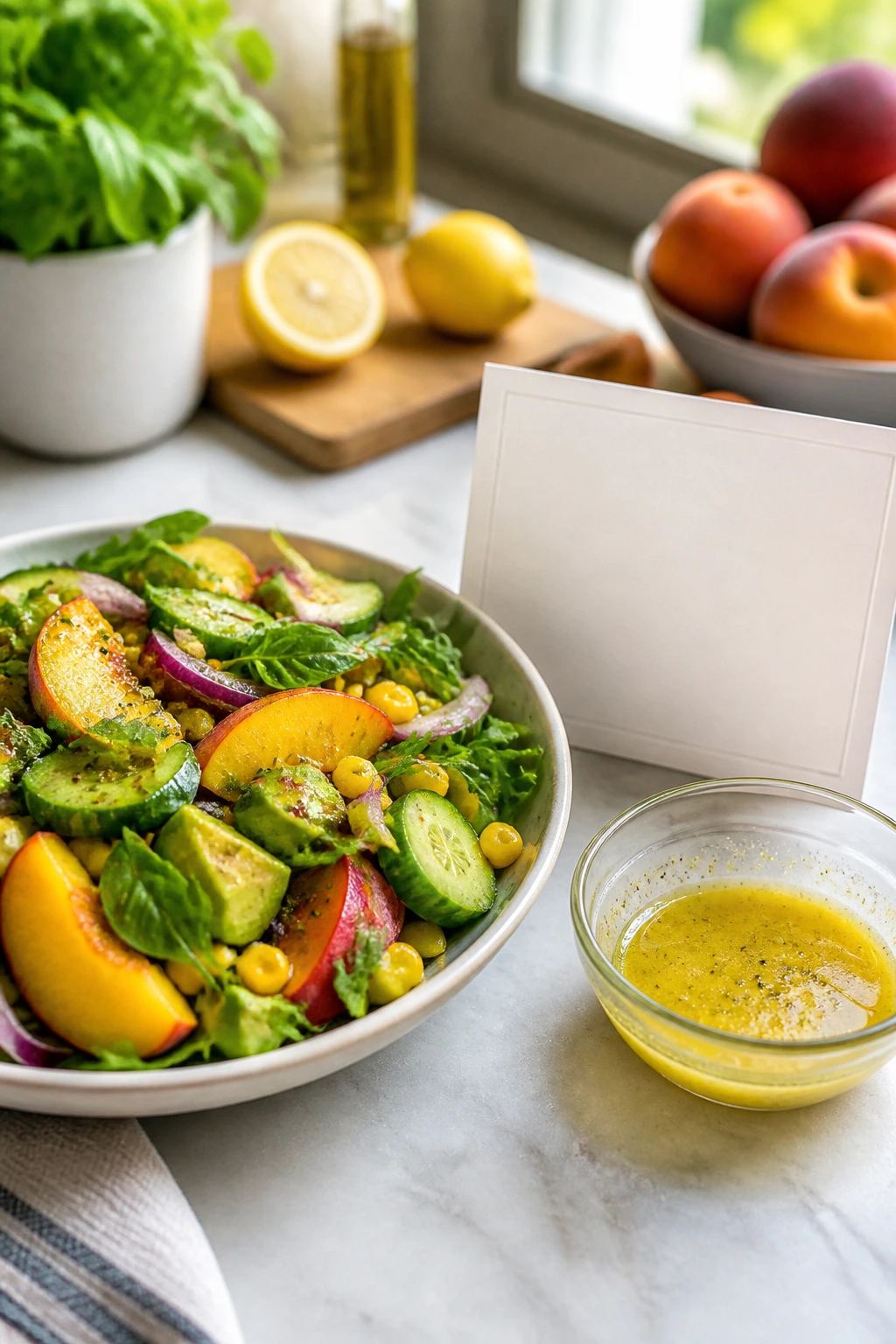
- Wet greens: If the lettuce is damp, the dressing gets diluted and the flavor slides off the leaves. Spin it dry or pat it carefully with clean towels before it ever reaches the bowl.
- Adding the avocado too early: Avocado turns soft and dull after a few minutes in acid. Cut it at the end, add it last, and give the bowl one gentle toss.
- Overdressing the salad: More dressing does not mean more flavor. If the bowl looks glossy but tastes heavy, you’ve probably gone too far. Start with less and add only if the leaves still look dry.
- Using cold, flavorless produce: Tomatoes straight from the fridge and hard peaches from the counter both taste flat. Let the tomatoes warm up, and wait until the peaches give slightly when pressed near the stem.
- Skipping the corn step: Raw corn can be fine, but a quick turn in the skillet gives sweetness and a little browned edge that changes the whole salad. Five minutes is enough. You do not need to cook it until soft.
- Cutting everything too small: Tiny pieces disappear into the greens and turn the salad into a uniform pile. Keep the cucumber in half-moons, the peaches in visible wedges, and the radishes thin but not shaved to nothing.
A salad fails fastest when it loses contrast. Too much dressing, too little salt, or vegetables cut into anonymous bits all push it in the same boring direction. The fix is almost always a matter of restraint.
Variations That Still Taste Like the Same Salad
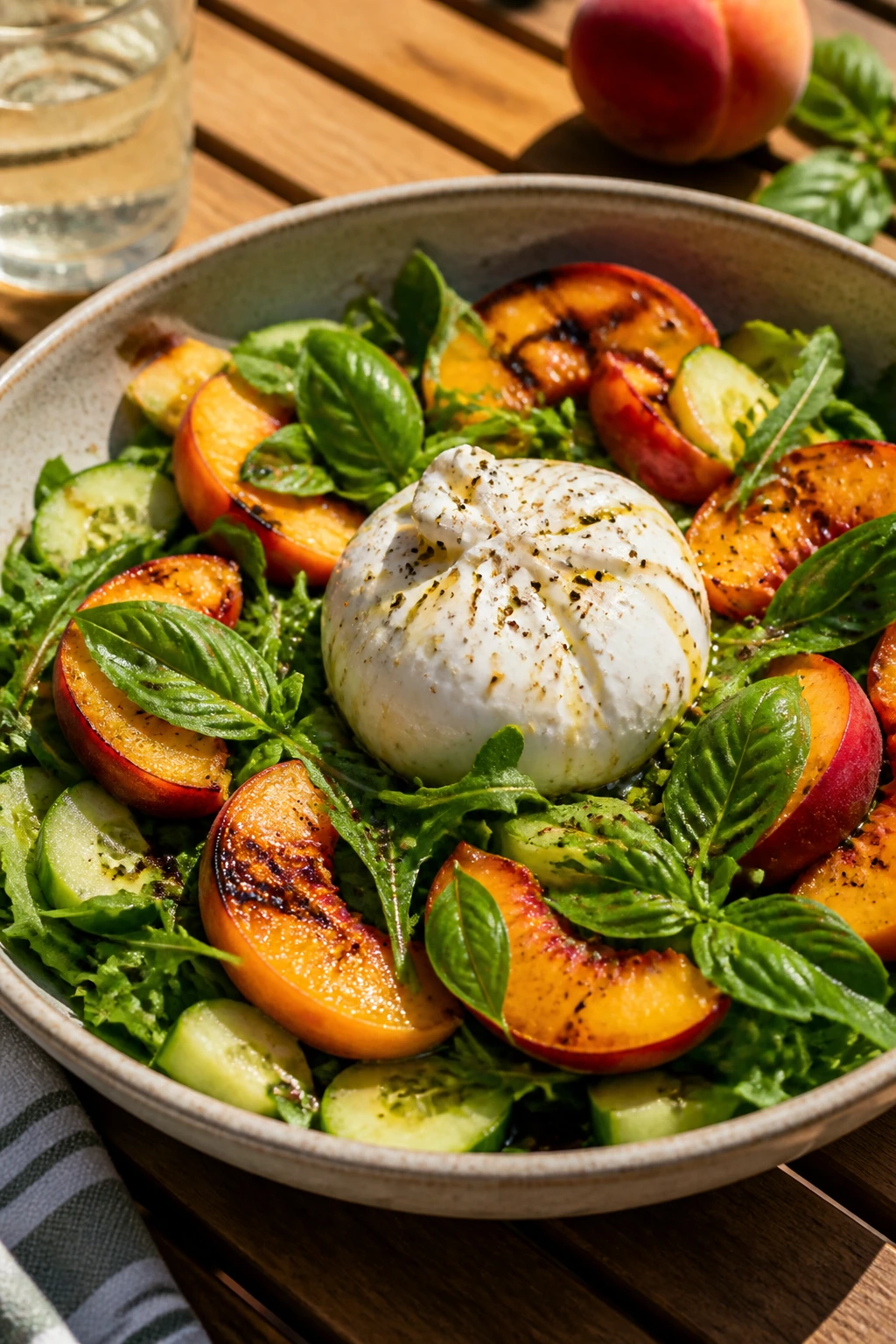
Grilled Peach and Burrata Bowl
Swap the sliced peaches for halved grilled peaches and replace the feta with torn burrata. The result is softer and richer, with a creamy middle that turns the salad into something closer to an appetizer course. Keep the vinaigrette sharp so the burrata doesn’t take over.
All-Green Crisp Version
Skip the peaches and tomatoes and lean into crunch: romaine, cucumber, radish, avocado, herbs, and extra pepitas. This version feels cleaner and a little more savory, which makes it good next to grilled fish or roast chicken. It’s also the version I’d make when the fruit at the market isn’t worth buying.
Berry-and-Basil Swap
Use strawberries or blueberries in place of peaches, and keep the basil in the bowl. The dressing stays the same, but the salad turns brighter and slightly more tart. Strawberries work best sliced lengthwise so they don’t vanish among the greens.
Hearty Chicken Dinner Salad
Add sliced grilled chicken breast or thighs and increase the dressing by 1 to 2 tablespoons so the extra protein doesn’t make the bowl feel dry. This variation holds up well for lunch meal prep if you keep the avocado separate until serving. A cold leftover chicken cutlet also works if you’re not in the mood to grill.
Dairy-Free Garden Bowl
Leave out the feta and use a few extra tablespoons of pepitas plus a handful of sliced olives for salt. The salad stays bright and layered, and nothing feels missing because the dressing and avocado still provide enough richness. If you want a creamier finish, a spoonful of mashed avocado stirred into the dressing can stand in for cheese.
Keep It Crisp: Storage, Make-Ahead, and Leftovers
The best way to store this salad is to keep the parts separate. The dressing keeps in a sealed jar in the refrigerator for up to 5 days. Shake it before using, because the olive oil will firm up a little when chilled. The toasted pepitas or almonds stay crisp for about 1 week in an airtight container at room temperature.
The greens, cucumber, radishes, tomatoes, and corn can be prepped 1 day ahead and stored in separate containers in the refrigerator. Line the vegetable containers with a paper towel if your fridge tends to collect condensation. The peaches are the one ingredient I would cut as late as possible; if you must slice them ahead, toss them with a squeeze of lemon and keep them covered for no more than 1 day.
Once the salad is dressed, eat it right away. A lightly dressed salad can hang on for a short while, but by the next day the greens have usually started to wilt and the avocado loses its clean color. There is no reheating step for the salad itself. If you add grilled chicken or shrimp, cook those separately, cool them before storing, and warm them briefly in a skillet or low oven before serving the next day. Keep the salad cold and the protein warm only if you’re assembling at the last second.
If you want to make the whole thing ahead for a potluck, do everything except the final toss. Build the platter, cover it loosely, and refrigerate it for a few hours. Bring the dressing in a jar on the side and add the avocado just before the bowl hits the table. That tiny bit of delay keeps the texture crisp.
Questions People Ask Before They Make It
Can I make the dressing in a blender instead of whisking it by hand?
Yes. A blender or small food processor will make the dressing a little more emulsified, which means it stays blended longer. I still like the jar method because it’s fast and gives you fewer dishes, but if you want a smoother finish, blend the shallot and garlic right into the vinaigrette.
Which greens hold up best if I’m serving this salad later?
Romaine and little gem hold their shape better than tender spring mix. If the salad has to sit for a short time, use a firmer base and keep the arugula or butter lettuce as a smaller part of the mix so the bowl doesn’t collapse fast.
Can I use frozen corn instead of fresh corn?
You can, and it’s the best swap when fresh corn isn’t sweet enough to bother with. Thaw it completely, blot it dry, and give it the same quick skillet treatment so it still gets a little color. Straight-from-the-freezer corn tends to steam instead of brown.
What if my peaches are firm and not quite ripe?
Leave them on the counter for a day or two until they give slightly at the stem. If you need to use them sooner, slice them thinner and let them sit in the dressing for a minute or two before tossing the salad; the acid softens the edges a bit. Do not use hard peaches that crunch like apples. The texture feels off in this bowl.
How do I keep avocado from browning if I need to serve the salad later?
Keep the avocado whole until the final minutes, then cut and add it right before serving. If you absolutely need to cut it ahead, brush the exposed flesh lightly with lemon juice and cover it tightly with plastic wrap pressed against the surface. That slows browning, though it won’t stop it completely.
Can this salad be a full meal?
Yes, if you add a protein and a starch or bread. Grilled chicken, shrimp, chickpeas, or even a warm piece of sourdough changes it from a side salad into a proper dinner. Without a protein, it’s still filling for a light lunch, but most people will want more than one bowl.
What if the dressing tastes too sharp?
Add 1 teaspoon of honey and 1 to 2 tablespoons more olive oil, then whisk again. Sharpness usually means the acid is outpacing the fat, which is easy to fix. Taste after each small adjustment so you don’t swing the dressing too far in the sweet direction.
A Bowl Worth Repeating
This is the kind of salad that rewards good produce and a little patience. Nothing here is complicated, but the order matters: dry greens, sharp dressing, ripe fruit, salted cheese, and the avocado at the end so it still looks alive when it hits the plate. That’s the whole trick, really. Not more ingredients. Better timing.
I like recipes like this because they hold up in real life. You can make the dressing ahead, cut the corn while dinner finishes in a pan, and still end up with a salad that tastes bright instead of thrown together. Keep the components crisp, taste the dressing before it touches the leaves, and the bowl will take care of the rest.
Fresh Summer Salad with Homemade Dressing — Recipe Card
Recipe Name: Fresh Summer Salad with Homemade Dressing
Description: A crisp, colorful salad with mixed greens, charred corn, cucumber, tomatoes, peaches, avocado, feta, basil, and a lemon-Dijon vinaigrette. It’s bright, salty, sweet, and built to be eaten right after tossing.
Prep Time: 25 minutes
Cook Time: 5 minutes
Total Time: 30 minutes
Course: Salad, Side Dish
Cuisine: American
Servings: 4 to 6 servings
Calories: about 280 kcal per serving
Ingredients
For the Salad:
- 8 cups mixed salad greens, washed and dried
- 2 ears fresh corn, kernels cut off the cob
- 1 tablespoon extra-virgin olive oil, for the corn
- 1 medium English cucumber, halved lengthwise and sliced into half-moons
- 1 pint cherry tomatoes, halved
- 2 ripe peaches or nectarines, pitted and sliced
- 1 avocado, diced just before serving
- 4 radishes, thinly sliced
- 1/2 small red onion, very thinly sliced and soaked in ice water for 10 minutes
- 1/2 cup crumbled feta or goat cheese
- 1/4 cup toasted pepitas or sliced almonds
- 1/3 cup fresh basil leaves, torn
For the Dressing:
- 3 tablespoons fresh lemon juice
- 1 tablespoon white wine vinegar
- 1 teaspoon Dijon mustard
- 1 teaspoon honey
- 1 small shallot, finely minced
- 1 small garlic clove, finely grated
- 1 teaspoon lemon zest
- 1/2 teaspoon kosher salt
- 1/4 teaspoon black pepper
- 1/3 cup extra-virgin olive oil
Instructions
- Whisk the lemon juice, vinegar, Dijon, honey, shallot, garlic, lemon zest, salt, and pepper together in a small bowl or jar.
- Slowly add the olive oil while whisking or shaking until the dressing looks glossy and slightly thickened. Let it sit for 10 minutes.
- Heat the 1 tablespoon olive oil in a skillet over medium-high heat, add the corn, and cook for 4 to 5 minutes until lightly browned. Cool for 5 minutes.
- Add the greens to a large bowl or platter, then layer on the cucumber, tomatoes, corn, peaches, radishes, and drained red onion.
- Top with feta, basil, pepitas or almonds, and the avocado.
- Drizzle on about two-thirds of the dressing and toss gently. Add more dressing only if needed, then serve right away.
Notes: Dress the salad at the last minute so the greens stay crisp. Keep the avocado for the end. The dressing keeps up to 5 days refrigerated in a sealed jar.