



A tray of vegetables can look promising and taste forgettable. Roasted vegetable combinations for a healthy dinner work when the pieces finish at the same pace, brown in the same hot oven, and get the right finish at the end. A pan of carrots, broccoli, and red onion at 425°F smells sweet within minutes; the onions slump at the edges, the carrots darken, and the broccoli turns nutty instead of wet.
The trouble starts when the fridge decides the menu. Zucchini, beets, mushrooms, potatoes, and green beans all behave differently in heat, and if you treat them like they don’t, one part will be mush while another stays stubborn. I’ve ruined enough trays to know the difference between a good roast and a pile of steamed vegetables wearing olive oil.
The fix is mostly judgment, not effort. Choose vegetables that share a roast window, cut the dense ones smaller, give the pan room, and finish with salt, acid, or a creamy sauce if the tray needs it. That half-plate vegetable habit from USDA-style meal planning makes a lot more sense once the vegetables come out bronzed and savory rather than plain or raw.
Why These Combinations Work
Timing stays sane: The best combinations share a roast window, or they can be staged so the faster vegetables join the pan later. A carrot cut into 1-inch pieces and a Brussels sprout halved through the stem can live together; a carrot and a sliced zucchini usually cannot.
Fat does more than stop sticking: A thin coat of olive oil helps browning, keeps edges from drying out, and helps your body absorb fat-soluble compounds in carrots, squash, tomatoes, and peppers. I usually think in terms of 1 to 1½ tablespoons of oil per pound of cut vegetables, which is enough to coat without leaving puddles.
Texture matters as much as flavor: A tray gets interesting when one vegetable is sweet, one is crisp-edged, and one brings a little bitterness or bite. Broccoli with red onion does that. So does sweet potato with fennel, or cauliflower with chickpeas and lemon.
Dinner needs a center of gravity: Vegetables can absolutely be the star, but they usually eat like a full meal when you add chickpeas, tofu, eggs, beans, or a grain. A tray of roasted vegetables plus 4 to 6 ounces of protein and a simple sauce is dinner, not a side dish pretending.
Two pans are not cheating: If a crowded pan is the difference between browned and sweaty, use the second pan. The oven does not award points for cram-it-in efficiency.
How to Build Roasted Vegetable Combinations for a Healthy Dinner
The oven is a bad roommate. It punishes overcrowding, ignores wishful thinking, and rewards the person who understands heat, distance, and timing. That sounds fussy until you do it once and realize the tray is doing half the planning for you.
Match the clock
Dense vegetables need more time, and that’s the first filter I use. Carrots, potatoes, sweet potatoes, parsnips, and beets usually need 35 to 50 minutes at 400°F to 425°F, depending on size. Broccoli, cauliflower, Brussels sprouts, and fennel usually fall in the 20 to 35 minute range, while zucchini, asparagus, mushrooms, and green beans are often done in 12 to 22 minutes.
That means a good roasted vegetable combination is less about taste in the abstract and more about the oven clock. A tray of carrots and onions works because both hold up. A tray of zucchini and potatoes only works if the potatoes are cut into small cubes and start first.
Cut by density, not by habit
A thick carrot baton and a thin carrot coin are not the same ingredient once heat hits them. Cut the dense vegetables smaller, and leave the soft ones larger so they don’t disappear before the rest of the tray catches up. I like 3/4-inch cubes for sweet potatoes, 1-inch chunks for squash, 1/2-inch wedges for onions, and medium florets for broccoli and cauliflower.
If a vegetable has a hard core, give it more exposure by splitting it. Brussels sprouts are the obvious example: halved through the stem, they roast with a caramelized cut side and keep the leaves from collapsing into mush. Broccoli stems work the same way if you peel the outer layer and slice them into coins.
Keep moisture in mind
The oven browns by drying the surface, and watery vegetables fight that process. Mushrooms, zucchini, tomatoes, and eggplant all release moisture as they heat, which means they need space and a hot pan. If you’re mixing them with drier vegetables, don’t crowd the tray. Better yet, stage them: start the dense vegetables first, then add the quicker ones halfway through.
That’s also why I’m suspicious of any recipe that tosses every vegetable from the crisper drawer onto one pan and hopes for magic. Water is the enemy of browning. Not the ingredient itself. The water.
Salt, oil, and acid each have a job
Salt draws out flavor and keeps vegetables from tasting flat. Oil helps the cut surfaces blister and brown. Acid belongs at the end, when the tray comes out of the oven and the edges are set. Lemon juice, red wine vinegar, or sherry vinegar wakes up roasted vegetables in a way that more salt never quite can.
For most trays, I start with about 3/4 teaspoon kosher salt per pound of cut vegetables, then adjust after roasting. If the tray includes olives, capers, feta, or a salty sauce, back off a bit. The vegetables should taste seasoned, not brined into submission.
Fast Roasted Vegetable Combinations for 20-Minute Dinners
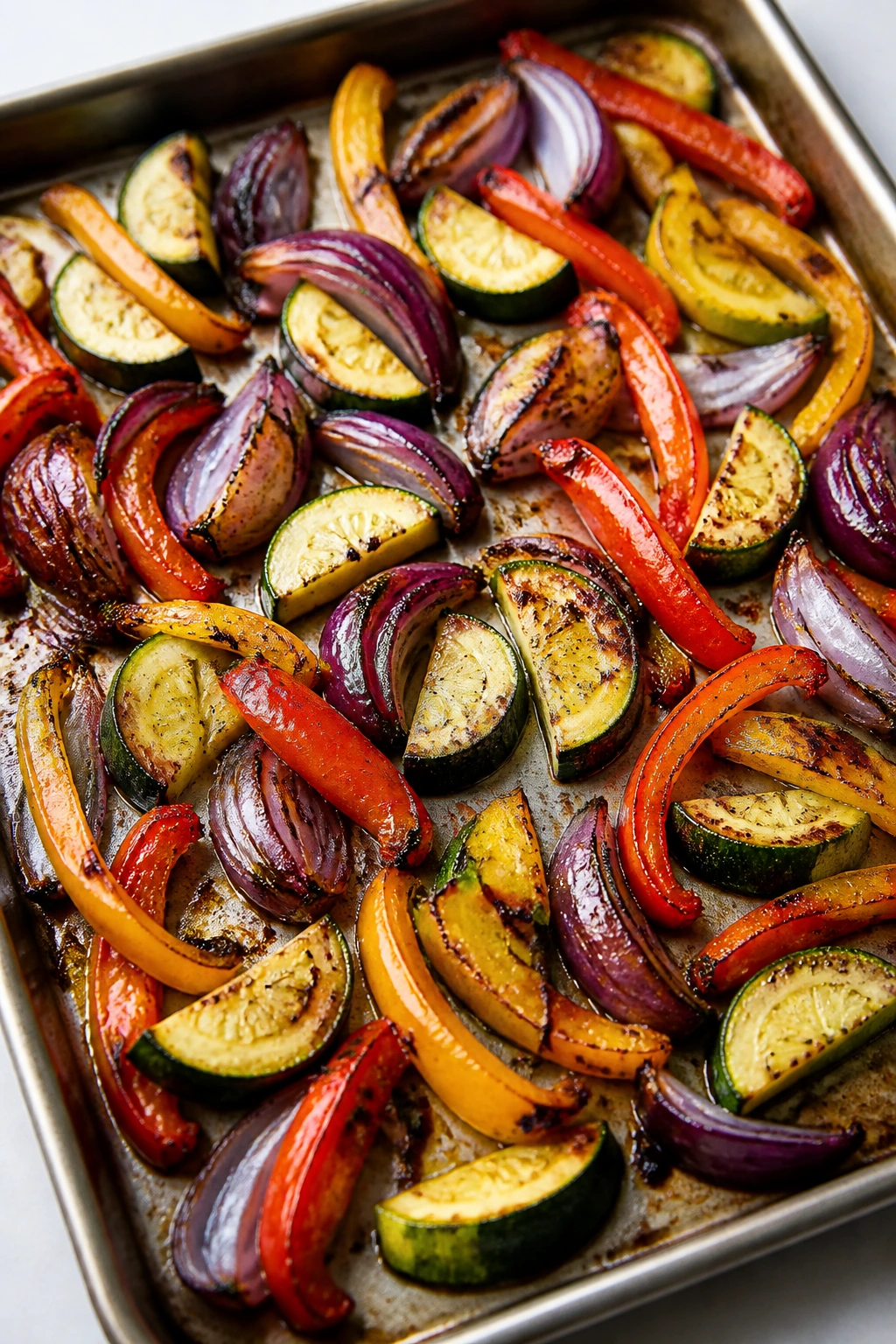
A tray of zucchini, peppers, and onions smells sweet before it looks done. That’s one reason this combination is such a dependable weeknight move: the vegetables soften at roughly the same pace, and the edges go bronze without much babysitting. At 425°F, you usually need about 18 to 22 minutes.
Zucchini, Bell Peppers, and Red Onion
Cut the zucchini into thick half-moons, not paper-thin slices. Thin zucchini goes soft too fast and turns watery before the peppers get any color. Bell peppers should be in 1-inch strips, and red onion works best in wide wedges so the outer layers char before the whole piece collapses.
I like oregano, black pepper, and a squeeze of lemon here. If you want to make it dinner, add a handful of white beans on the side or fold the finished vegetables into warm farro with feta.
Asparagus, Mushrooms, and Shallots
This is the tray I make when I want dinner to feel lighter without feeling punishing. Thick asparagus spears and halved mushrooms roast nicely together if the mushrooms are cut large enough to hold their shape. Shallots, sliced into petals, melt into the pan and give you those sticky browned edges that make people think you did more than you did.
The trick is to keep the mushrooms dry before they go on the pan. Rinse them fast, dry them well, and don’t pile them up. If your asparagus is thin, add it after the mushrooms have had 5 minutes of head start.
Broccoli, Brussels Sprouts, and Garlic
Broccoli and Brussels sprouts are almost always good candidates for one tray because they share a fondness for heat. The broccoli florets need some stem attached, and the sprouts should be halved through the stem so the cut side gets direct contact with the pan. Toss in whole peeled garlic cloves, not minced garlic, unless you enjoy bitterness.
This combination likes olive oil, salt, pepper, and a finish of grated Parmesan or toasted sesame seeds. I often serve it with eggs—soft-boiled if I’m being organized, fried if I’m not.
Green Beans, Cherry Tomatoes, and Fennel
This is the one that feels a little brighter and a little less heavy. Thin-sliced fennel brings a soft licorice note, green beans blister along the edges, and cherry tomatoes burst into a hot, sweet puddle. Because green beans cook faster than fennel, either slice the fennel very thin or give it 8 minutes alone before adding the beans and tomatoes.
A handful of chopped almonds or pistachios gives the tray more bite. If you want a complete dinner, spoon the vegetables over couscous or quinoa and add a dollop of yogurt.
Medium-Roast Vegetable Combinations for 30-Minute Plates
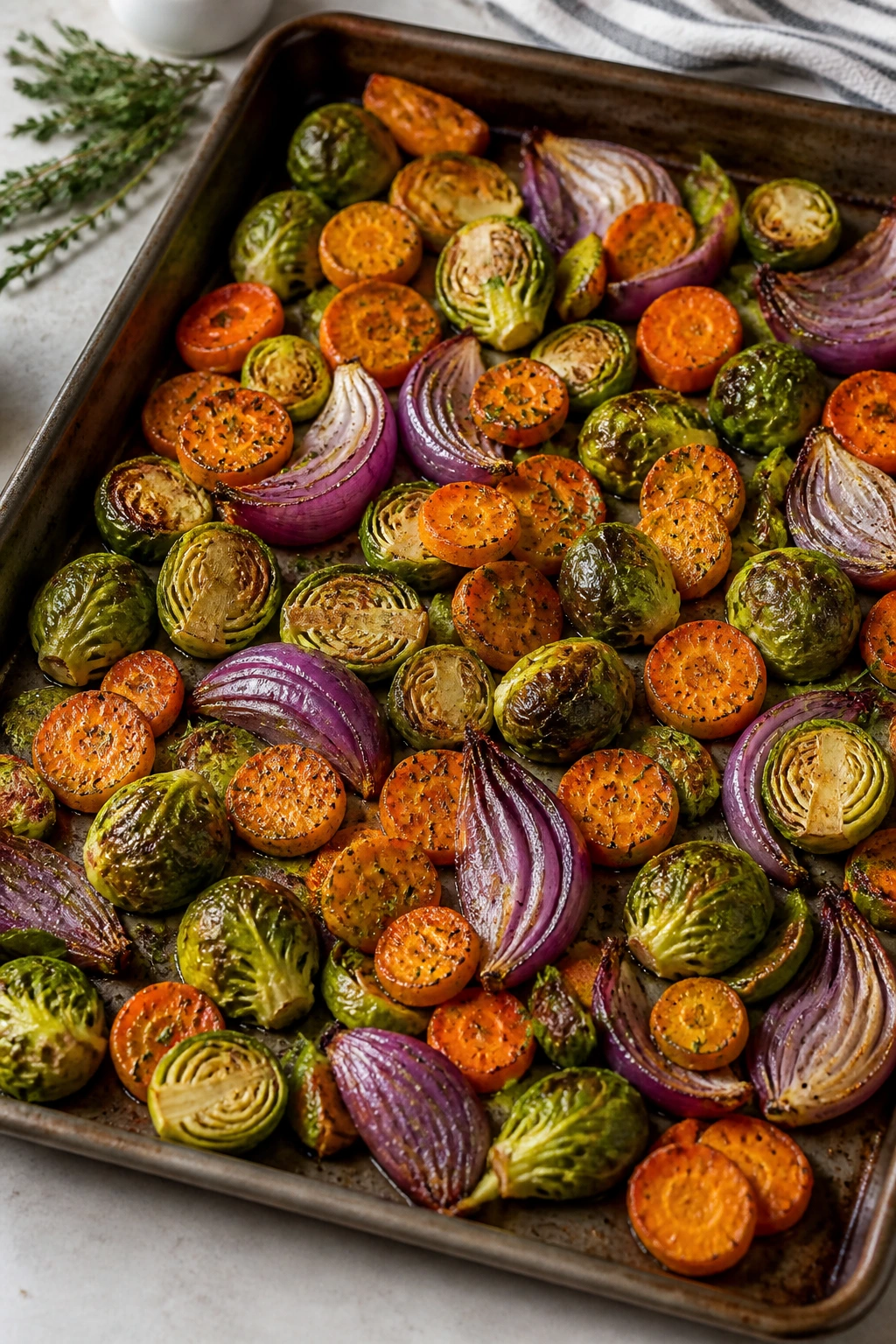
These are the trays that carry most of the dinner load in my kitchen. They brown well, hold their shape, and don’t need weird timing tricks unless you chop them badly. At 425°F, most of them land around 30 to 35 minutes.
Carrots, Brussels Sprouts, and Red Onion
This combination tastes like the oven was working harder than it really was. Carrots turn sweet and a little sticky, Brussels sprouts pick up crisp edges, and red onion goes soft enough to smear if you press it with a fork. A light sprinkle of thyme or rosemary works, though I prefer thyme because rosemary can be bossy.
Cut the carrots into 1-inch diagonal pieces or split thick carrots lengthwise. If the sprouts are large, halve them; if they’re tiny, leave them whole and just trim the stem. The red onion should be cut into wide wedges so the layers stay intact.
Cauliflower, Chickpeas, and Cumin
This is a sturdy tray and one of the easiest ways to turn vegetables into dinner. Cauliflower florets brown around the edges, chickpeas crisp if they’re patted dry first, and cumin pulls the whole thing toward earthy and savory. I like a pinch of smoked paprika here too, but don’t overdo it.
Canned chickpeas work fine, and honestly they’re what I reach for most often. Drain them, rinse them, dry them on a towel, and toss them with the vegetables before roasting. If you leave them wet, they steam and you lose the crunchy bits.
Sweet Potatoes, Bell Peppers, and Thyme
Sweet potatoes bring the sugar; bell peppers bring the color; thyme keeps the whole tray from leaning dessert-ward. Dice the sweet potatoes into 3/4-inch cubes so they cook in the same window as the pepper strips. If you cut them bigger, you’ll be waiting while the peppers slump.
This combination works well with black beans, salsa, or a garlicky yogurt sauce. I also like it with fried eggs on top, because runny yolk plus caramelized sweet potato is one of those combinations that feels unfairly easy.
Fennel, Carrots, and Shallots
Fennel gets sweeter in the oven, and carrots keep it from feeling too delicate. Shallots bridge the gap; they melt into jammy little arcs and fill in the spaces between the bigger pieces. A little orange zest at the end makes the tray feel brighter, not fancier.
This is one of those combinations that looks elegant but doesn’t require much. It’s good with lentils, baked tofu, or a spoonful of ricotta. If you want to keep it simple, roast it plain and finish with fennel fronds and flaky salt.
Hearty Vegetable Trays That Need a Longer Roast
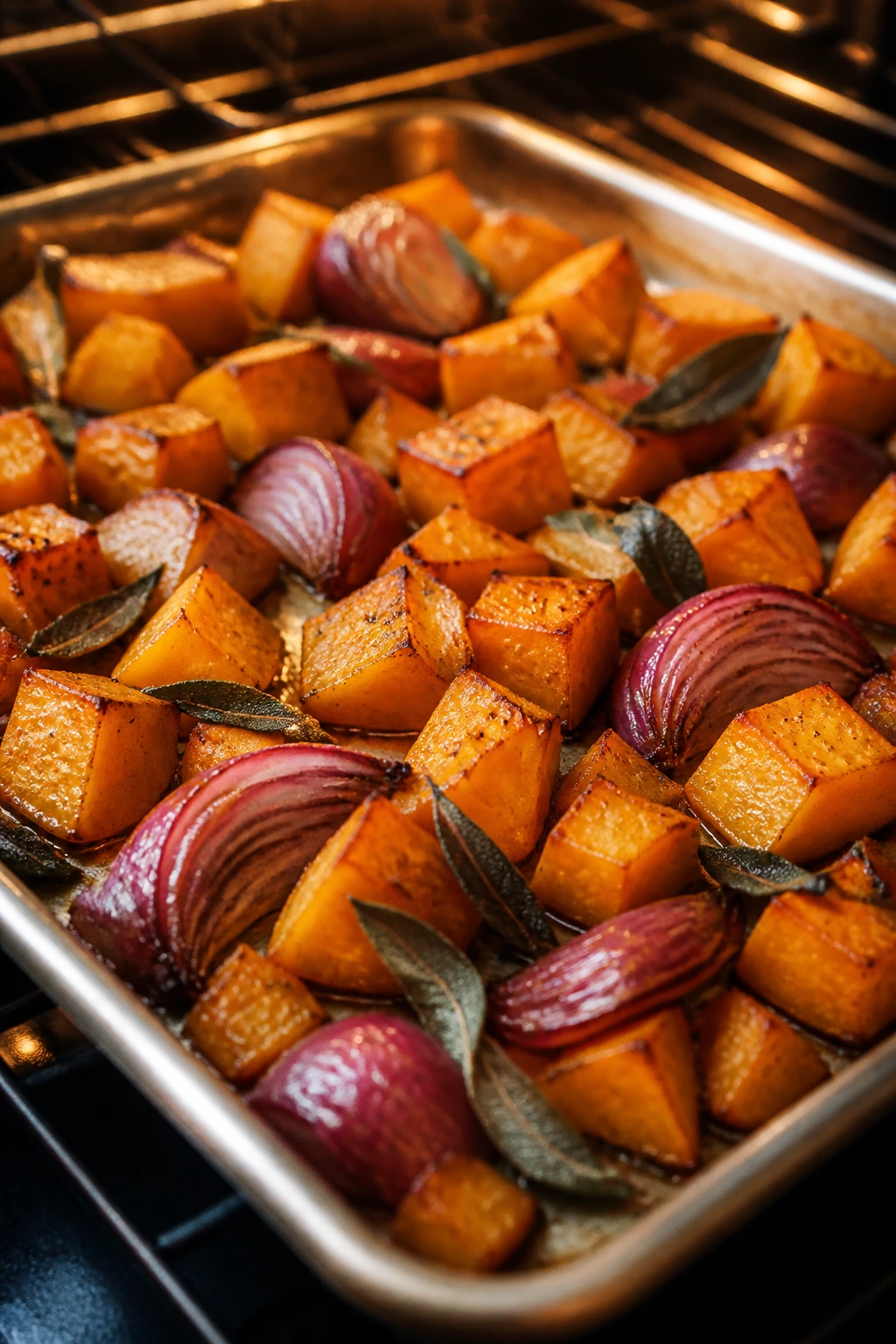
The vegetables that need the longest time are often the easiest to live with. They’re dense, reliable, and built for a hot oven. If dinner has gotten late and the kitchen smells like hunger, this is the zone I reach for.
Butternut Squash, Red Onion, and Sage
Butternut squash roasts into soft, sweet cubes with edges that cling to the pan if you don’t oil them properly. Red onion gives the tray some sharpness, and sage brings the whole thing toward the nutty, savory end of the spectrum. Cut the squash into 1-inch cubes; smaller pieces can dry out, and larger ones drag the tray out past the point of comfort.
If you want extra browning, preheat the sheet pan for 10 minutes before adding the vegetables. Be careful when you pour them onto the hot metal. The first sizzle is worth it.
Beets, Carrots, and Fennel
This tray is for when you want something earthy and sweet with a little perfume. Beets take the longest, especially if they’re raw and hard, so cut them into smaller wedges or cubes than you would carrots. If the beets are particularly dense, give them a 15-minute head start before adding the carrots and fennel.
I like this combination with dill, goat cheese, or a spoonful of yogurt mixed with lemon. If you’re worried about staining, line the pan with parchment. If you don’t care, skip the parchment and let the beets kiss the metal directly for more browning.
Potatoes, Cauliflower, and Garlic
Potatoes turn this into the most dinner-like tray of the group. Cauliflower browns into little nutty clusters, and garlic cloves roast into something sweet enough to smear on bread. The potatoes should be cut into 3/4-inch cubes or thick wedges so they finish when the cauliflower does.
A little cornstarch—about 1 teaspoon per pound, tossed with the dry vegetables before oil—can make the potato edges craggier. It’s optional, but I like it. The tray gets less glossy and more crisp.
Mediterranean Vegetables With Olive Oil, Lemon, and Herbs
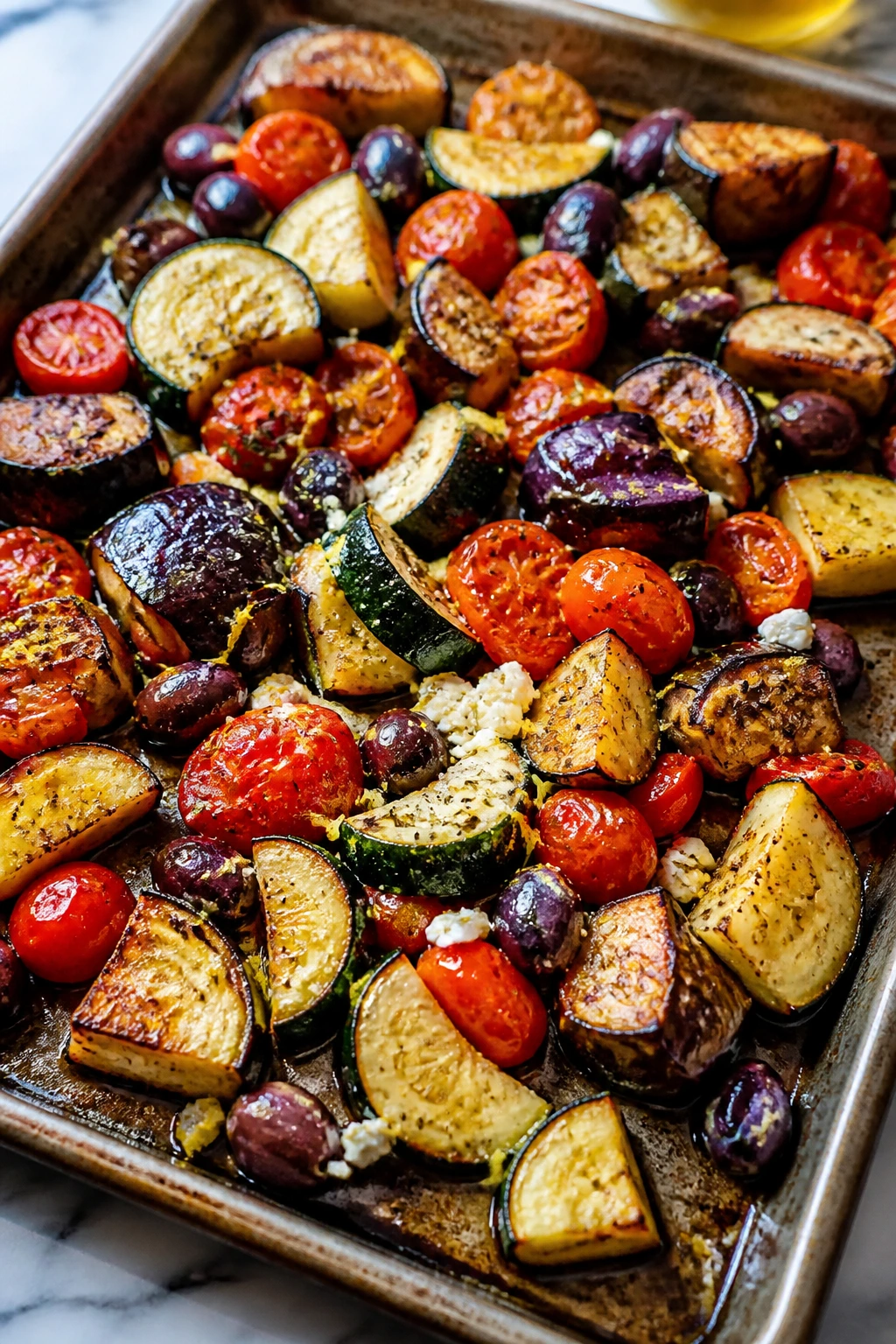
Eggplant, cherry tomatoes, olives, and oregano behave like a meal, not a side dish. This is the tray I make when I want something that tastes bright but still has enough body to stand on its own. It’s also the one where a small amount of good olive oil matters more than people think, because eggplant drinks it up and tomatoes reward it.
Eggplant, Zucchini, Cherry Tomatoes, and Olives
Cut the eggplant into 1-inch cubes and toss it with oil first so it doesn’t dry out. Zucchini can go in thick half-moons, and cherry tomatoes should be left whole or halved if they’re very large. Olives go on toward the end or after roasting so they keep their shape and don’t turn bitter.
This tray wants oregano, black pepper, lemon zest, and crumbled feta. If you’re using a lot of olives, keep the salt lighter than usual.
Cauliflower, Chickpeas, Red Onion, and Lemon
This one moves a little closer to the middle of the map: warm spices, sharp lemon, and enough crunch from the chickpeas to make the tray feel composed. Cauliflower takes color nicely at 425°F, and red onion gives the tray some sweetness after it roasts. Chickpeas should be dried well so they don’t turn mushy under the cauliflower.
Finish with parsley and lemon juice after roasting. If you want a richer finish, add tahini thinned with warm water and a touch of garlic.
Bell Peppers, Artichokes, and Capers
This is the salty, savory tray that tastes expensive even when it isn’t. Bell peppers bring sweetness, artichoke hearts give you a soft bite, and capers punch little bursts of brine through the whole thing. Go easy on the salt because the capers and artichokes already do some of the work.
I like this with a sprinkle of chopped basil or parsley after roasting. If you’re serving it with grains, couscous is the easiest match. If you’re serving it with bread, toast the bread first so it doesn’t go limp under the vegetables.
Smoky and Earthy Combinations That Eat Like a Bigger Meal
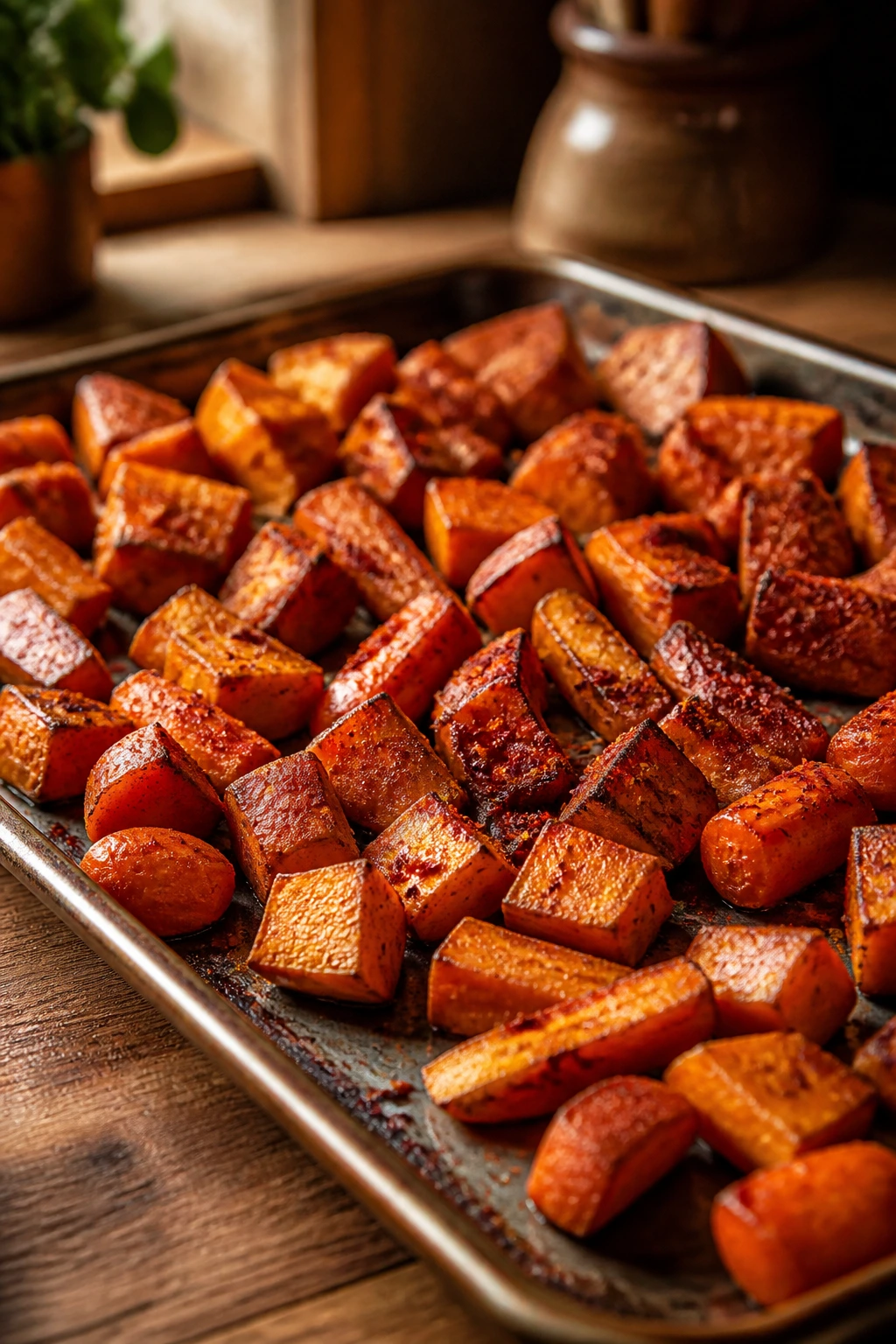
Smoke belongs in roasted vegetables more often than sugar does. A little smoked paprika, cumin, or ground coriander can make a tray feel deeper without turning it into barbecue cosplay. Keep the amounts modest. A teaspoon per pound is usually enough.
Carrots, Sweet Potatoes, and Smoked Paprika
This combination tastes warm and rounded. The carrots and sweet potatoes brown at the edges, and smoked paprika adds that faint grill-like note that makes the tray feel more substantial. A pinch of chili flakes helps if you want it to land with a little heat.
I like this with a spoonful of Greek yogurt and chopped chives. If you want more crunch, add toasted pumpkin seeds after roasting. A little maple syrup can help browning, but keep it to about 1 teaspoon per pound or the sugars will darken too fast.
Cauliflower, Mushrooms, and Cumin
Cauliflower and mushrooms both love high heat, though for different reasons. Cauliflower gets nutty and crisp at the tips, while mushrooms shrink, brown, and concentrate in flavor. Cumin keeps the tray from tasting like two separate vegetables tossed by accident.
You can add a little garlic powder here, but I’d skip raw garlic until the end. Raw garlic can burn before the cauliflower is fully tender. If you want a stronger savory note, finish with a little miso-thinned tahini instead of more salt.
Beets, Shallots, and Thyme
This is the earthy, almost winey tray. Beets become sweeter and denser, shallots collapse into soft layers, and thyme keeps the whole thing from feeling heavy. A small splash of balsamic vinegar after roasting works well, but use it sparingly or the tray turns syrupy.
If you’re making this for dinner, add lentils or farro and call it done. If you want a little freshness, top it with arugula or parsley just before serving.
Bright, Herb-Heavy Trays That Stay Light
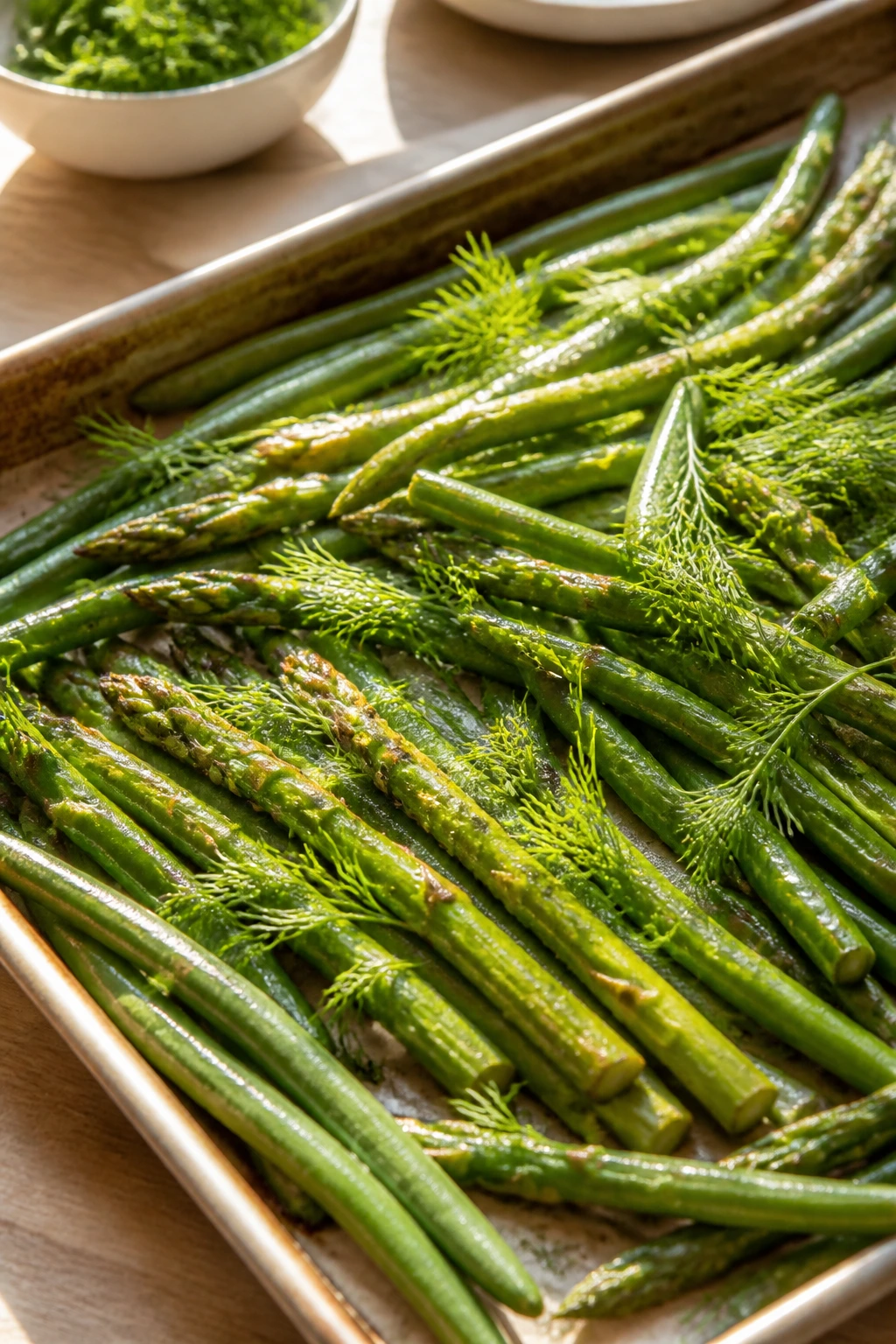
Bright does not mean undercooked. It means the vegetables finish with enough acid, herbs, or sharpness to keep the plate lively. I like this style when the tray is going alongside eggs, grains, or a creamier sauce.
Asparagus, Green Beans, and Dill
This is one of the most useful combinations when you want speed and freshness in the same pan. Asparagus and green beans both roast quickly, though the asparagus will usually finish first if the spears are thin. Dill belongs on top after roasting; heat flattens it fast.
I like a squeeze of lemon here and a handful of toasted almonds for crunch. A spoonful of yogurt or labneh on the side makes the plate feel complete without making it heavy.
Broccoli, Zucchini, Parsley, and Capers
Broccoli carries the char, zucchini softens into the background, parsley gives freshness, and capers give little bursts of salt and acid. That combination works because it keeps the tray from leaning too far in one direction. The broccoli should be dry and cut into medium florets; the zucchini should be thick enough not to fall apart.
If you’re nervous about zucchini going soft, roast the broccoli for 10 minutes first, then add the zucchini. That staging trick is worth remembering any time a fast vegetable threatens to drown a slow one.
Cauliflower, Fennel, and Mint
Mint sounds unexpected until you taste it with roasted fennel. The fennel goes sweet and soft, cauliflower picks up a little toast on the edges, and the mint sharpens the finish. Keep the mint off the heat. Scatter it on at the end with lemon.
This tray works well with couscous or quinoa, especially if you drizzle on a tahini-lemon sauce. It’s a good example of how a few herbs can keep roasted vegetables from feeling heavy without stripping away the browning that makes them worth roasting in the first place.
How to Turn a Tray of Vegetables Into a Full Dinner
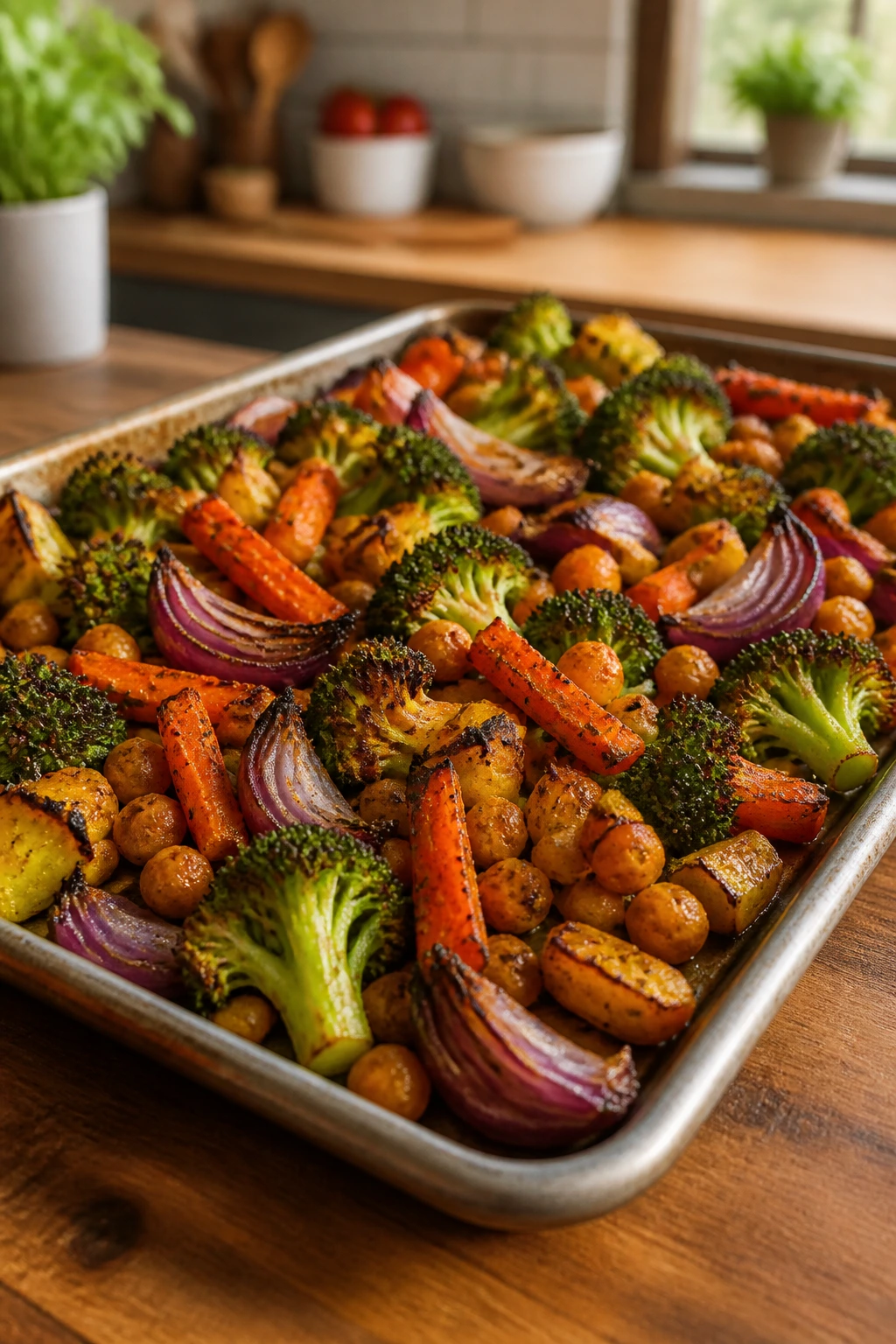
Three ingredients are enough to build dinner on a tray, but four is where I start feeling generous. A good plate usually has about 2 cups of roasted vegetables, 4 to 6 ounces of protein or a generous scoop of legumes, and something starchy or saucy to tie it together. The vegetables are the main event. The rest is structure.
Add a Protein
Chickpeas are the easiest choice because they roast right alongside the vegetables if they’re dried well. Pressed tofu is a close second; cut it into 1-inch cubes, toss it with oil and a little cornstarch, and roast it until the edges are firm. White beans and lentils usually work better warmed separately or stirred in after roasting, since they don’t need the oven and can turn dry if left too long.
Eggs are the fastest dinner fix. A fried egg over roasted vegetables works with almost anything. A jammy soft-boiled egg does the same thing with less mess.
Add a Starch
Quinoa, farro, brown rice, and couscous all pick up roasted vegetables nicely. If the vegetables are sweet-heavy—squash, carrots, sweet potatoes—I like a grain with some chew so the plate doesn’t feel one-note. Farro is especially good with mushrooms and cauliflower. Couscous is best when you want the whole thing assembled in about 20 minutes.
Bread counts too. A thick slice of toasted sourdough or a piece of warm pita makes the tray feel finished, especially when there’s a sauce involved.
Add a Sauce
Tahini-lemon sauce is the one I probably make most often because it works with almost everything. Yogurt with garlic and dill is better when the vegetables lean Mediterranean. Pesto thinned with olive oil or water works with broccoli, zucchini, and tomatoes. Chimichurri brings the kind of sharpness that makes sweet vegetables taste more balanced.
A useful plate formula: 2 cups roasted vegetables, 1/2 to 3/4 cup cooked grain, and 4 ounces tofu, chickpeas, or eggs on top. Once you get used to that shape, dinner gets much easier to improvise.
The Equipment That Keeps Vegetables Crisp Instead of Steamed
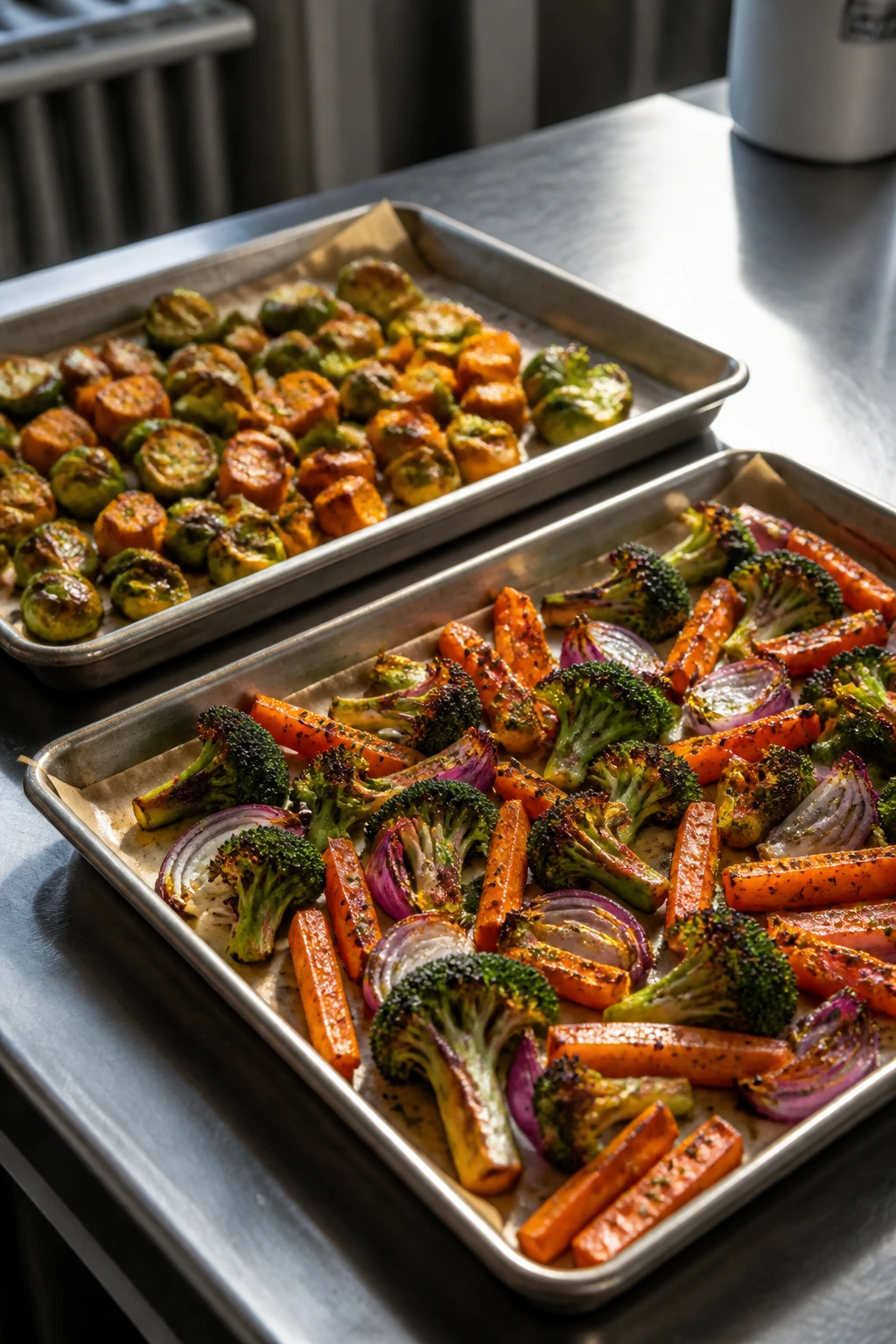
If you have ever pulled a tray out and found half the vegetables steamed, the pan may be the problem. Good equipment doesn’t make the meal for you, but it stops the vegetables from fighting the oven.
-
Two rimmed half-sheet pans: One crowded pan is the fastest way to lose browning. Two pans give vegetables room, and room is what keeps edges crisp.
-
Parchment paper: Best for sticky vegetables like squash and sweet potatoes. Bare metal browns harder, but parchment makes cleanup easier and prevents delicate pieces from tearing.
-
A large mixing bowl: Tossing in a shallow bowl creates oil streaks and uneven seasoning. A big bowl lets you coat the vegetables without crushing them.
-
Sharp chef’s knife: Uneven cuts are the silent reason one tray finishes before another. A sharp knife makes it easier to cut vegetables to the same size.
-
Sturdy cutting board with a damp towel underneath: Carrots and onions can skate around on a slick counter. The towel keeps the board put.
-
Thin spatula or tongs: Useful for turning broccoli, mushrooms, and cauliflower without smashing the browned sides.
-
Microplane or citrus juicer: Not essential, but lemon zest and juice are often what make the tray taste awake instead of merely cooked.
-
Vegetable peeler: Handy for thick carrots, parsnips, and beets, especially if the skins are tough or dirty.
How to Serve Roasted Vegetables So They Feel Like Dinner
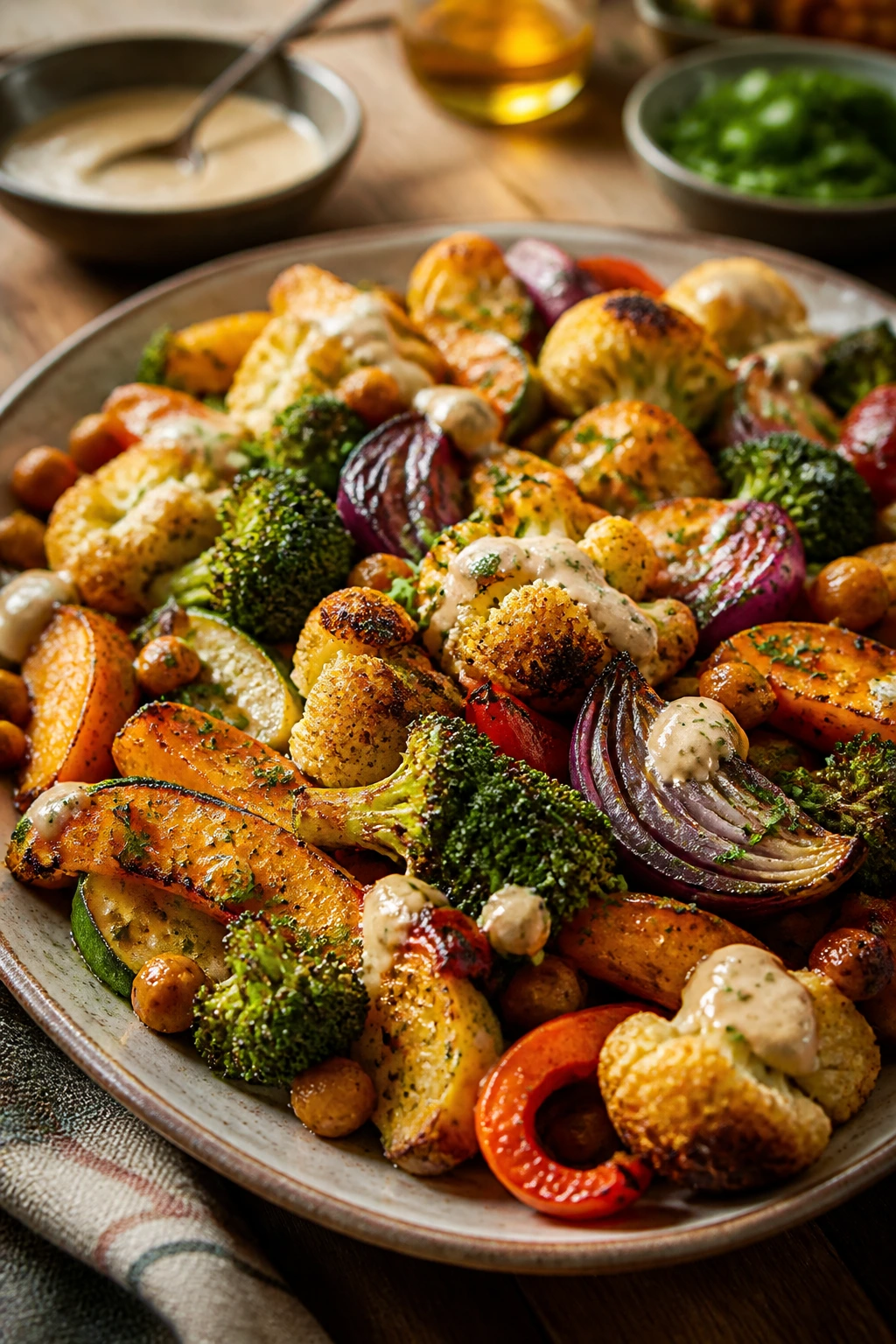
Presentation: Pile the vegetables in a shallow bowl or on a warm platter instead of spreading them flat. You want the browned sides visible. That’s the best-looking part, and it’s also where the flavor lives.
Accompaniments: Pair a tray with quinoa, farro, brown rice, warm pita, or toasted sourdough. Add hummus, tahini sauce, yogurt with herbs, or a fried egg if you want the plate to feel more complete. For a lighter dinner, set the vegetables over arugula or spinach and let the heat wilt the greens just a little.
Portions: Plan on about 2 cups of roasted vegetables for a main course and about 1 cup if they’re going beside another protein. A pound of raw vegetables usually serves 2 as a main or 3 as a side, depending on how much they shrink in the oven. For a family meal, I’d rather roast too much than too little.
Beverage Pairing: Sparkling water with lemon keeps the meal bright. If you want wine, a dry white or a light rosé handles browned edges and sweet vegetables without stepping on them. Unsweetened iced tea with citrus works well too.
The Finishes That Lift a Tray Without More Cooking
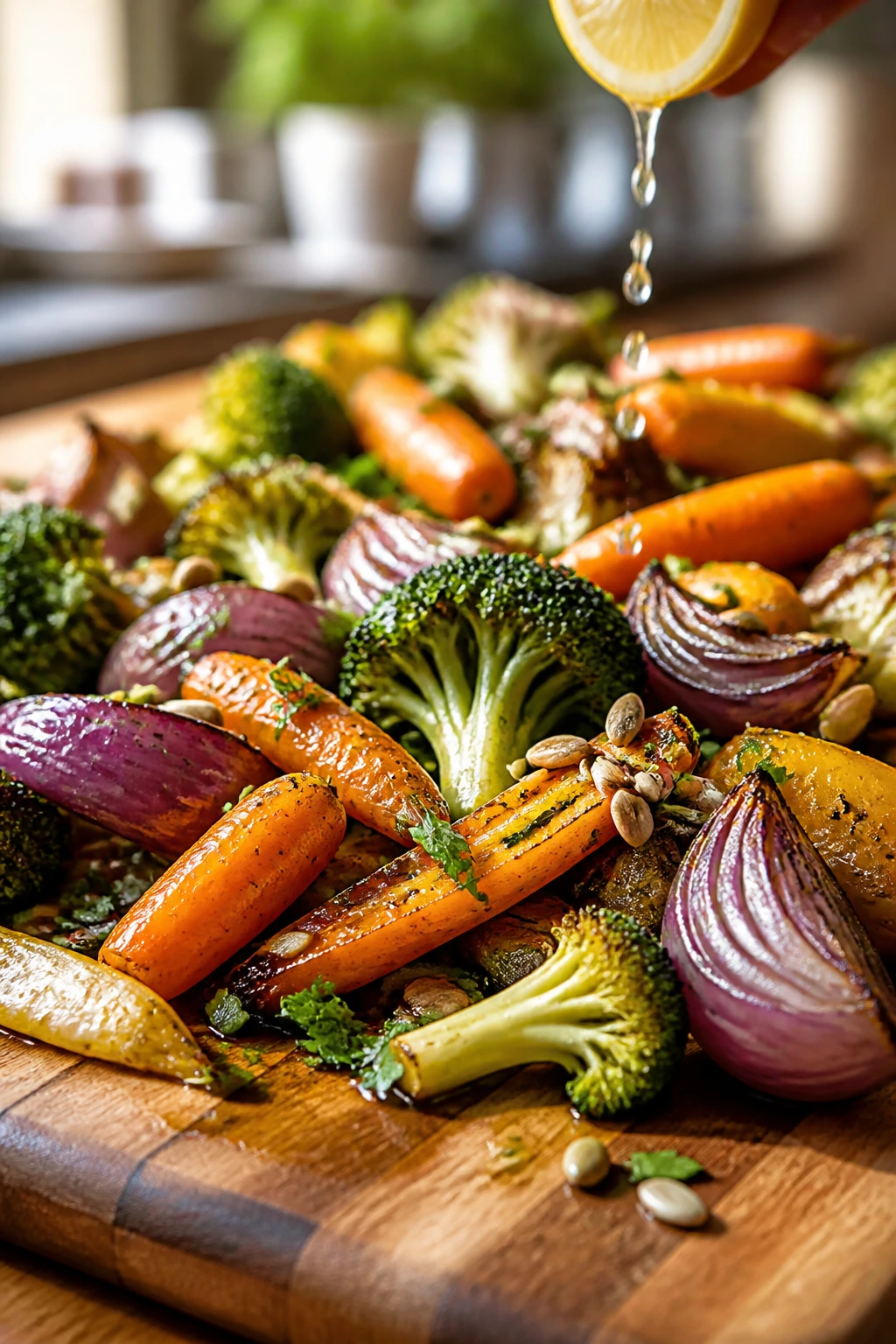
A spoonful of vinegar can do more than another tablespoon of oil. This is the part of the meal where a tray stops tasting merely roasted and starts tasting planned.
Flavor Enhancement: Finish with 1 to 2 teaspoons of lemon juice, red wine vinegar, or sherry vinegar per tray. The acid sharpens sweetness and keeps carrots, squash, and onions from tasting too heavy.
Customization: Add a spoonful of tahini, pesto, yogurt, or hummus depending on the flavor direction. A little harissa gives the tray heat; chili crisp gives it depth and a crunchy edge if you drizzle it after roasting.
Serving Suggestions: Toasted pumpkin seeds, chopped almonds, sesame seeds, parsley, dill, mint, or crumbled feta all work as finishing touches. I like a mix of soft and crunchy at the end, because roasted vegetables already give you plenty of softness.
Make-It-Yours: Vegan cooks can lean on tahini and beans. Dairy-free plates work well with herb oil or vinaigrette. Higher-protein dinners get easier with tofu, chickpeas, or eggs. Lower-carb plates can skip grains and lean on extra greens or a bigger serving of vegetables.
A small trick that’s worth the minute: toast nuts or seeds in a dry skillet before adding them. The difference is not subtle. Raw almonds are fine. Toasted almonds are better.
Common Mistakes That Make Roasted Vegetables Soft or Flat
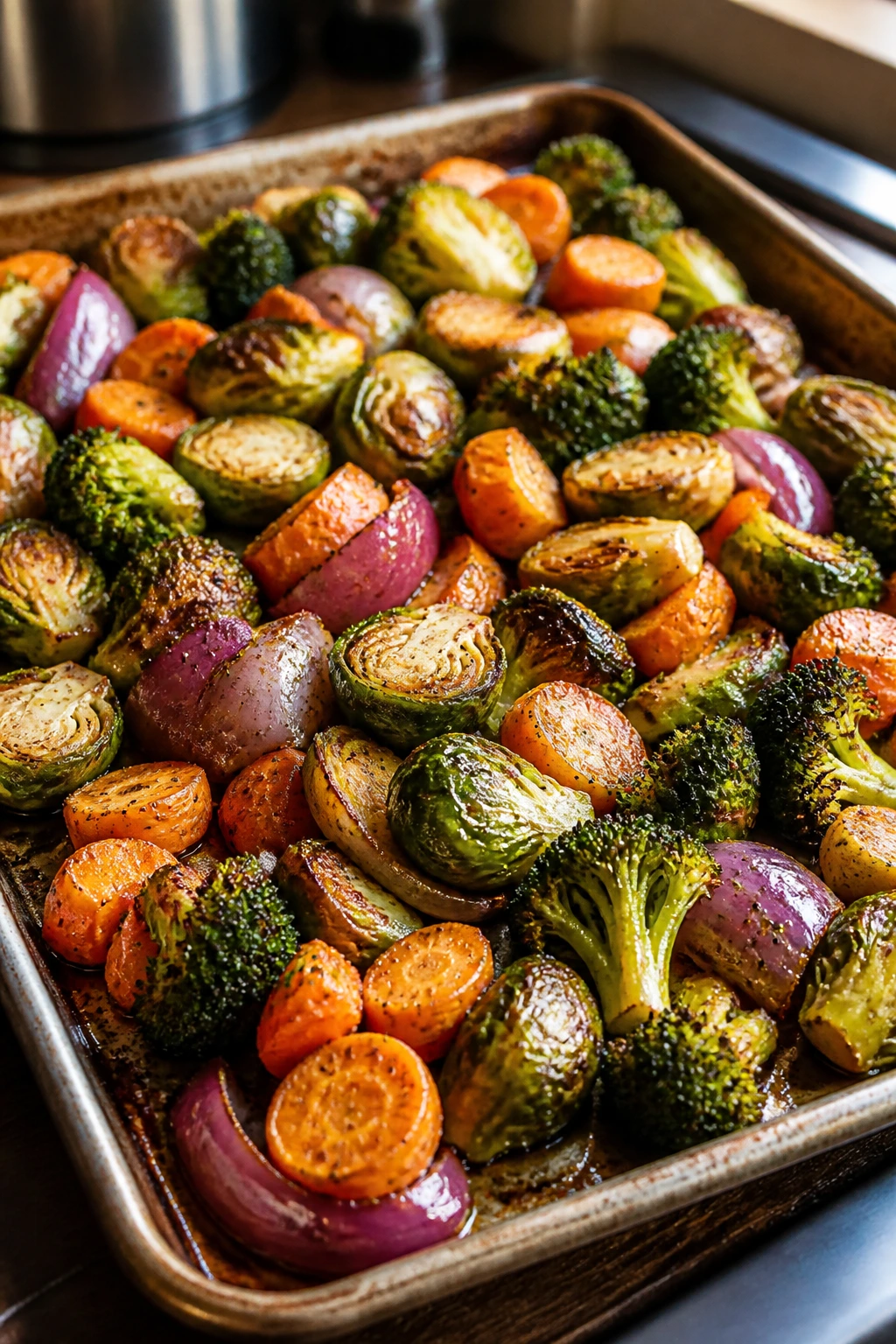
Crowded pans and bland trays usually come from the same few errors. The good news is that each one is easy to fix once you know what it looks like.
-
Crowding the pan: If the vegetables are piled on top of each other, they steam instead of roast. The symptom is pale color and slippery texture. Fix it by using two pans or roasting in batches.
-
Cutting everything the same size: A sweet potato cube and a zucchini slice do not need the same treatment. If the cut sizes don’t match the roast times, one vegetable will be mush while the other stays raw. Match the cut to the vegetable’s density.
-
Starting with wet vegetables: Water on the surface stops browning. If the tray looks glossy before it goes in, or mushrooms have been rinsed and left damp, the vegetables will soften instead of crisp. Pat everything dry, especially mushrooms, zucchini, and tomatoes.
-
Using minced garlic too early: Small bits of garlic burn before the vegetables finish. The tray comes out bitter and brown in the wrong way. Use whole cloves or add minced garlic during the last 5 to 10 minutes.
-
Skipping the finish: A tray can be browned and still taste flat. If it needs a squeeze of lemon, a splash of vinegar, herbs, or a pinch of flaky salt, add it. Roasting builds depth; finishing wakes it up.
-
Running the oven too cool: At 375°F, vegetables soften before they brown. If you want color, use 400°F to 425°F for most trays, and 450°F only when the cut pieces are small and the pan isn’t crowded.
Named Variations to Try on the Same Basic Tray
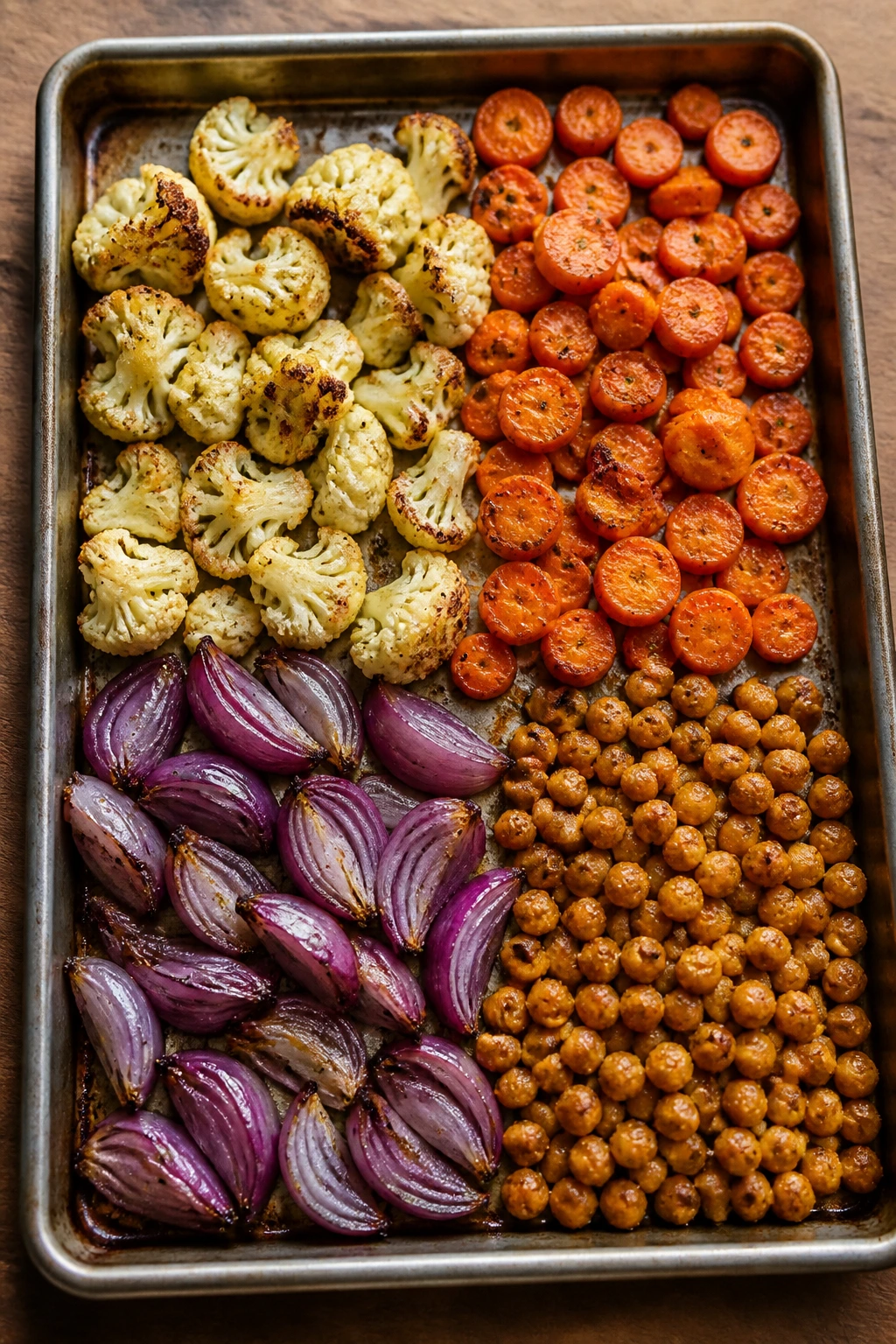
Tahini-Lemon Chickpea Tray: Roast cauliflower, carrots, red onion, and chickpeas with cumin and olive oil, then finish with tahini thinned with lemon juice and warm water. It’s the easiest route to a dinner that feels complete without needing a separate sauce.
Harissa Sweet Potato Sheet Pan: Toss sweet potatoes, cauliflower, and red onion with harissa, olive oil, and a pinch of salt. Add a spoonful of yogurt on the plate if you want to tame the heat a little. This one has the deepest flavor when the sweet potatoes are cut small enough to caramelize at the edges.
Garlic-Parmesan Broccoli and Brussels Sprouts: Roast broccoli, Brussels sprouts, and a few garlic cloves until the edges are crisp, then shower the tray with Parmesan right after it comes out. The cheese clings to the hot vegetables and gives the whole thing a savory finish.
Miso-Sesame Mushroom Pan: Toss mushrooms, broccoli, and cauliflower with a little oil, then brush on a thin mixture of miso and water during the last 5 minutes. Finish with sesame seeds and scallions. Miso burns if you use too much, so keep the coating thin.
Herb Garden Tray: Roast asparagus, fennel, and green beans with olive oil, salt, and pepper, then finish with parsley, dill, lemon zest, and a few capers. This one is bright enough to serve with eggs, fish, tofu, or a slice of good bread.
Make-Ahead, Storage, and Reheating
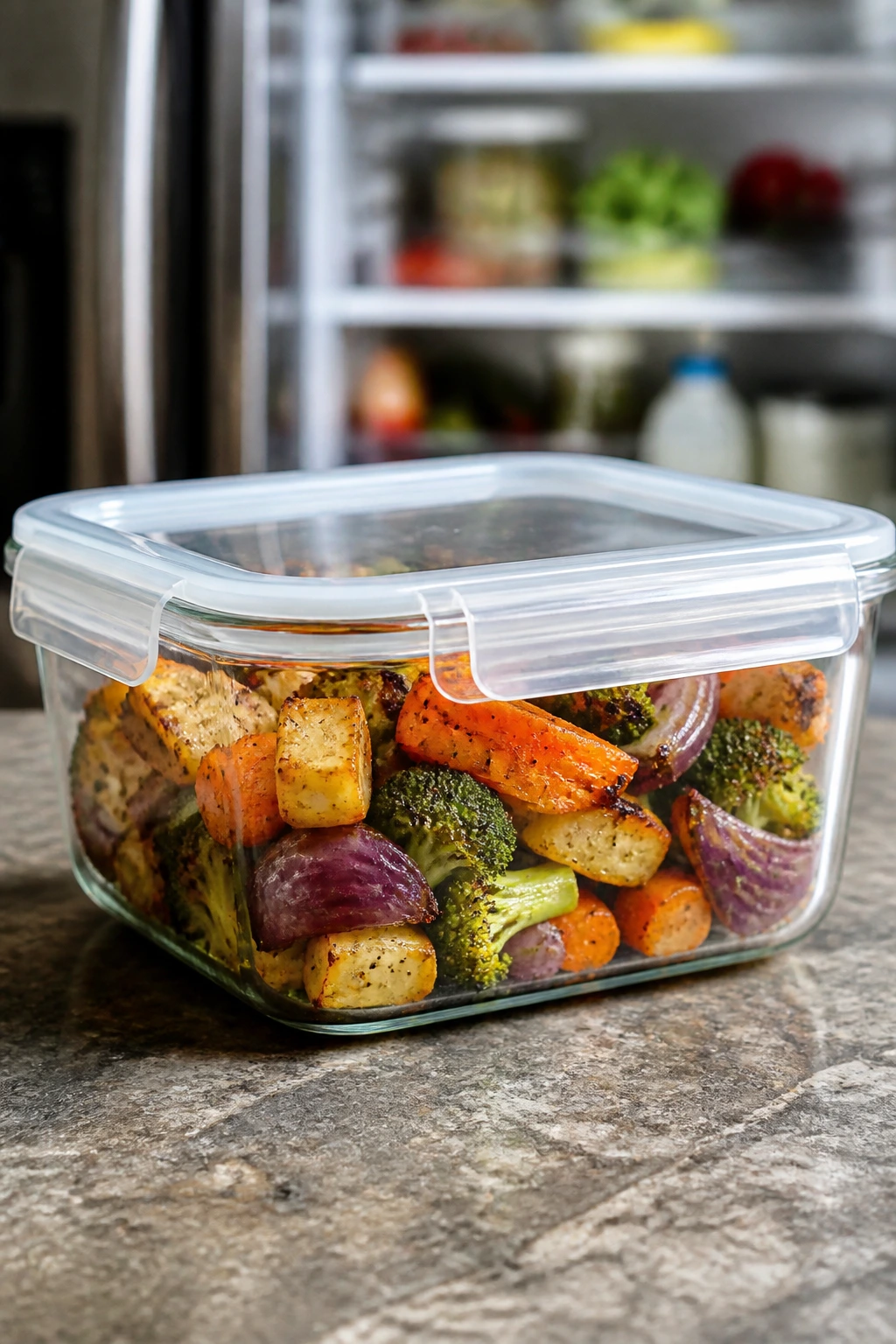
Can roasted vegetables be made ahead without turning limp? Yes, but some vegetables behave better than others.
In the fridge
Roasted vegetables keep well in a shallow airtight container for 3 to 4 days. Sturdy vegetables like carrots, Brussels sprouts, cauliflower, squash, and potatoes usually hold the best texture. Zucchini, tomatoes, and mushrooms soften faster, so I try to eat those within 1 to 2 days.
If you’re meal prepping, store the sauce separately. A tray that’s already dressed in tahini or vinaigrette will taste fine, but the vegetables lose their edges sooner.
In the freezer
Freeze only the sturdier vegetables if texture matters to you. Carrots, cauliflower, Brussels sprouts, butternut squash, and potatoes can be frozen for up to 2 months, though the texture will be softer after reheating. Zucchini, tomatoes, and eggplant don’t freeze well for crisp texture. They go floppy.
To freeze, cool the vegetables completely, spread them on a tray to freeze in a single layer, then move them to a freezer-safe container or bag. That keeps them from sticking together in one sad clump.
To reheat
The oven is still the best choice. Spread the vegetables on a sheet pan and reheat at 400°F to 425°F for 8 to 12 minutes, depending on thickness. An air fryer works too, usually at 375°F to 400°F for 4 to 6 minutes in a small batch. A skillet over medium-high heat with a teaspoon of oil brings back some edge in about 5 to 8 minutes.
The microwave is the fallback, not the hero. It’s fine if you don’t mind softness. If you use it, reheat in short bursts and finish with something sharp—lemon, vinegar, or herbs—so the vegetables don’t taste stale.
Make-ahead prep
Raw vegetables can usually be cut 1 to 2 days ahead if they’re stored dry and cold. Keep mushrooms separate if you can, and don’t salt zucchini or tomatoes until just before roasting or they’ll leak water into the container. If you want to get ahead on dinner, chop the dense vegetables first and leave the delicate ones for the day you cook.
Questions People Ask Before They Roast a Tray
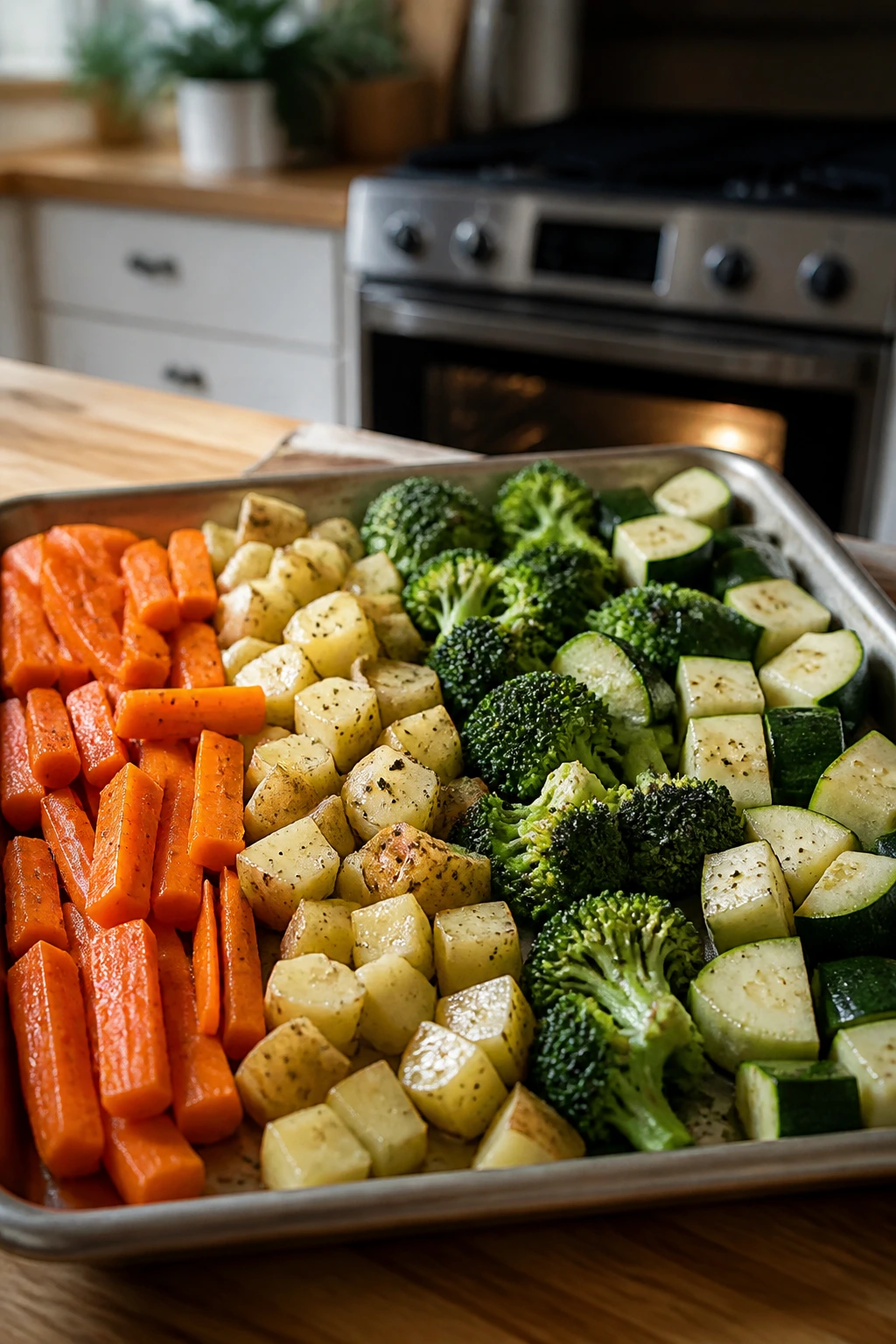
Which vegetables roast best together?
Vegetables that share a roast window are the easiest match: carrots with onions, broccoli with Brussels sprouts, cauliflower with chickpeas, or sweet potatoes with peppers. If two vegetables need very different times, cut the slow one smaller or give it a head start.
What temperature should I use for mixed vegetables?
For most trays, 425°F is the sweet spot. It gives browning before the vegetables collapse, which matters more than people think. If the tray includes a lot of sugar-heavy vegetables like squash or carrots, 400°F can be better; if the pieces are small and dry, 450°F works well.
Can I roast frozen vegetables?
Yes, but they’ll give off more steam than fresh ones. Frozen broccoli, cauliflower, and Brussels sprouts are the best bets, especially if you roast them on a very hot pan and keep the batch small. Skip frozen zucchini if you care about texture; it almost always turns soft.
How do I keep vegetables crisp instead of soggy?
Dry them well, don’t crowd the pan, and use enough heat. A preheated sheet pan helps too, because the vegetables start browning the moment they hit the metal. Finish with acid after roasting, not before.
Should I peel vegetables before roasting?
Not always. Thin-skinned potatoes, carrots, and squash can often be roasted with the peel on if they’re scrubbed clean. Beets and some winter squash are easier to eat if peeled, especially when you want a softer texture.
What protein goes best with roasted vegetables?
Chickpeas are the easiest choice because they can roast on the tray. Tofu works well when it’s pressed and cut into cubes. Eggs, white beans, lentils, and feta all help the tray feel more like a full dinner, but they play different roles: eggs add richness, beans add heft, feta adds salt.
What if one vegetable is done before the others?
Pull it off the tray and set it aside while the slower vegetables finish. You can also add faster vegetables halfway through roasting, which is often the better move. The oven rewards patience more than optimism.
Do I need to flip the vegetables?
Not always, but turning them once halfway through helps with even browning, especially on crowded trays or with vegetables that have one flat side. Broccoli, cauliflower, and Brussels sprouts usually benefit from the flip. Mushrooms can be left alone if they’re cut large enough and the pan is hot.
A Better Way to Build Dinner
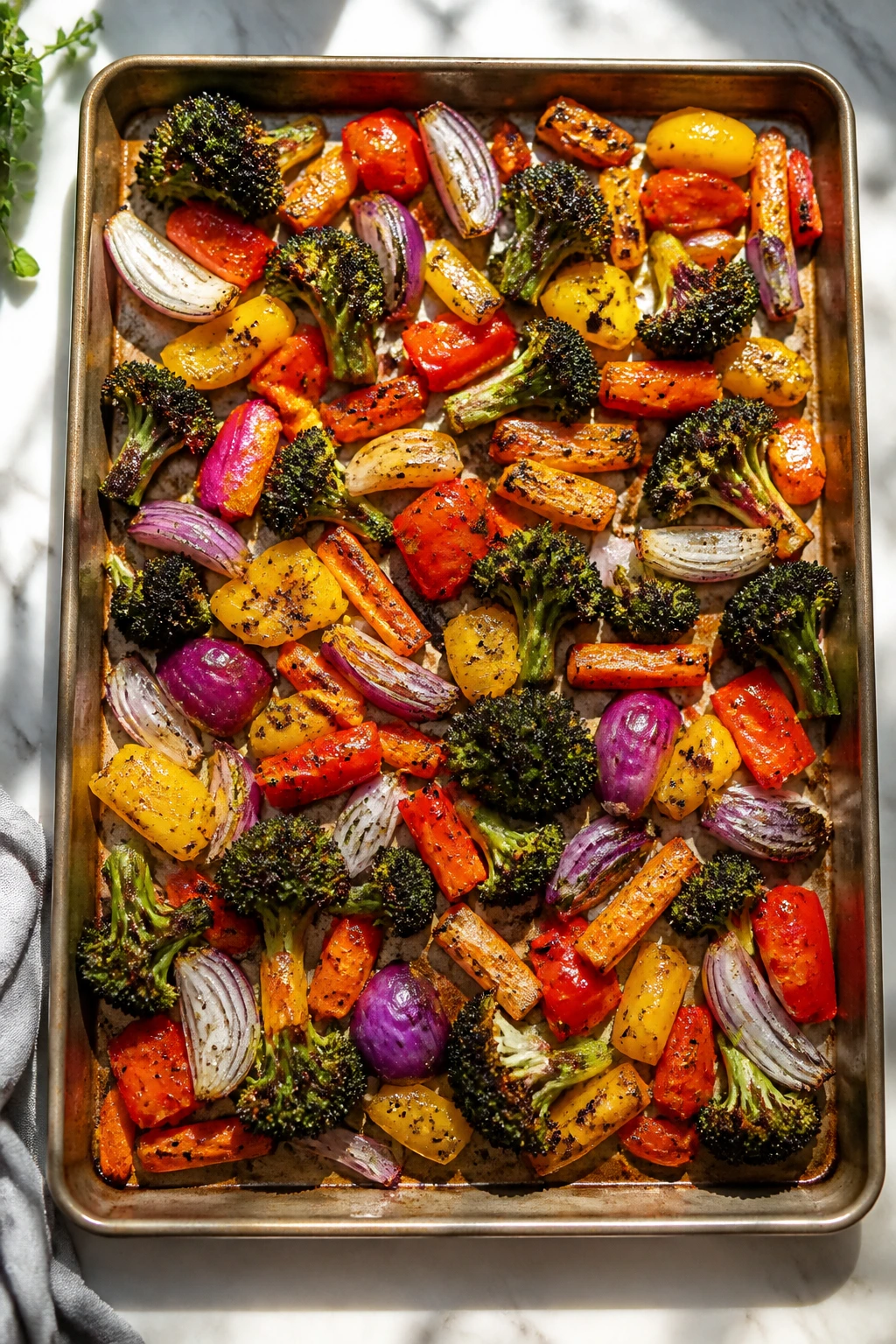
The oven is better at dinner than people give it credit for. It makes vegetables sweeter, sharper at the edges, and easier to eat as a meal instead of a token side. That only happens, though, when the tray is built with some thought: match the timing, leave room for browning, and finish with something acidic or creamy so the flavors don’t stall out.
A good roasted vegetable tray does not need a complicated sauce or a dramatic list of ingredients. It needs vegetables that belong together and a little respect for the heat. Once you start choosing by roast time instead of by whatever is left in the crisper drawer, dinner gets calmer fast.
Keep one hot pan, one lemon, and one protein nearby, and the rest becomes a matter of assembly. The next time the kitchen feels thin, that’s enough to make it feel deliberate.