



Roasted vegetarian comfort food has a way of making a kitchen smell like dinner has already won. A tray of carrots, onions, cauliflower, and chickpeas going deep gold at the edges can feel richer than something twice as fussy, and it doesn’t need cream, bacon, or a heavy sauce to get there. The heat does the work; your job is to keep the vegetables dry, cut them to the right size, and give them room.
That combination matters because a healthy dinner has to do more than check a box. It needs enough salt, fat, texture, and starch to make you want a second forkful. If the plate is all steamed broccoli and a tired grain, nobody feels excited, and the fridge becomes a guilt museum.
The best roasted vegetarian meals solve the problem with a hot oven, a smart mix of vegetables, and one sharp finish — lemon, yogurt, vinegar, herbs, or a spoon of tahini loosened with warm water. Once those pieces are in place, you get food that eats cozy but still leaves you feeling steady, not sluggish. The trick is learning which vegetables want 425°F, which ones need a little staging, and where the flavor comes from when there’s no meat in the pan.
Why Roasted Vegetarian Comfort Food Earns a Spot on the Table
Fast cleanup: One rimmed sheet pan can handle the vegetables, and a single bowl often does the seasoning job too, which keeps the sink from turning into a second project.
Real dinner energy: Roasted squash, cauliflower, potatoes, beans, and grains eat like a meal, not a garnish pretending to be one.
Flexible pantry cooking: A half bag of carrots, the last onion, a can of chickpeas, and a spoonful of spice paste can turn into something that feels planned.
Leftovers work hard: Cold roasted vegetables tuck into wraps, grain bowls, fried rice, omelets, and toasted pita the next day without much fuss.
Comfort without heaviness: Olive oil, toasted seeds, yogurt, tahini, and acid give you the roundness people want from comfort food without leaning on cream or a mountain of cheese.
Why a Hot Tray Feels Like Real Dinner
Roasting changes vegetables in a way boiling never will. Water softens things. Heat, dry air, and a little space in the pan pull out sweetness, build browning, and turn edges crisp while the middle stays tender. That contrast is the whole trick. It’s the reason a tray of broccoli can taste faintly nutty instead of just green, and why carrots start to taste like carrots with their volume turned up.
The Maillard reaction — the browning process that happens on dry surfaces under enough heat — is doing a lot of the heavy lifting here. So is evaporation. When moisture leaves the pan, flavor concentrates. Garlic smells sweet instead of sharp, onions collapse into jammy layers, and cauliflower gets those almost cheesy browned spots that make people keep picking at the tray before dinner is even plated.
A hot tray also works because it gives you a rhythm. Chop, toss, roast, finish. That rhythm matters on a weeknight when your attention is split between a chopping board, a timer, and maybe a person asking when dinner will be ready. Roasting is hands-off in the right places, but it doesn’t feel lazy. It feels deliberate.
What the oven does better than the stovetop
A skillet can brown vegetables well, but it asks you to stand over it and stir. A roasting pan gives you a larger surface, steadier heat, and a chance to cook more than one thing at once. If you want cauliflower, chickpeas, and red onion to share a pan without collapsing into one mushy texture, the oven is the cleaner move.
And it’s not just about texture. Roasting lets spices bloom in oil. Cumin goes warm, smoked paprika gets rounder, rosemary turns woodsy instead of harsh. Put those same spices into a cold salad and they sit there. Put them on vegetables heading into a 425°F oven and they wake up.
One sentence answer: roasting gives vegetarian comfort food its backbone.
The Vegetables That Roast Best on a Weeknight
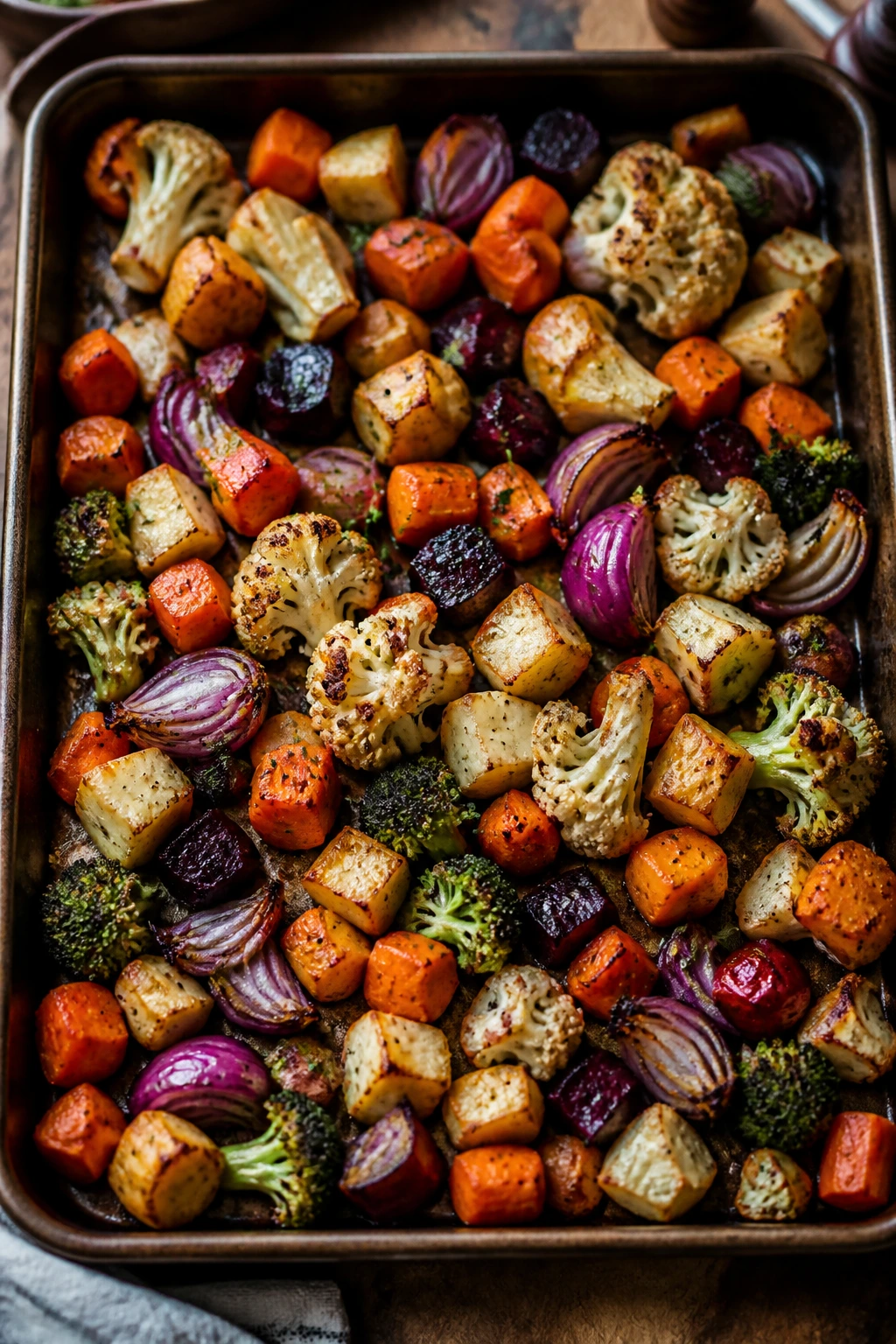
Some vegetables were built for the oven. Others need more babysitting than they’re worth. If you want a healthy dinner that lands with actual flavor, choose vegetables that can brown at the edges before they turn limp in the middle.
Root vegetables are the obvious winners. Carrots, parsnips, sweet potatoes, beets, and turnips all hold shape, caramelize well, and give the plate some heft. Cut them into pieces that look roughly the same size — usually 1 to 1½ inches for dense roots — so they finish around the same time. A fat carrot coin and a tiny cube of parsnip will not politely agree on a cooking schedule.
Brassicas belong here too. Cauliflower is the standout, followed by broccoli and Brussels sprouts. Their cut surfaces catch heat fast, which means you get those browned edges people always seem to love more than they expect. Cauliflower florets should be big enough to stay meaty, not confetti. If you break them too small, they dry out before the cores get tender.
Onions and alliums do something different. They soften, sweeten, and fuse the whole tray together. Red onion wedges, shallots, and thick slices of leek can all pull a tray from “vegetables cooked in the oven” to “I would eat this for dinner again tomorrow.” Garlic needs more caution. Whole cloves can roast right alongside everything else, but minced garlic burns fast at high heat. Toss it in near the end or tuck it under sturdier vegetables.
Fast-roasting versus slow-roasting
Mushrooms, zucchini, cherry tomatoes, and asparagus are useful, but they’re fussier. They give up moisture fast and can turn slack if you crowd them with potatoes or carrots. That doesn’t mean they’re off-limits. It means they’re best added late or roasted on a separate section of the pan.
Winter squash sits in the middle. Butternut and kabocha roast beautifully if the cubes are cut evenly and the pan isn’t overloaded. They go soft and silky, with edges that look almost candied if the heat is right.
A practical rule: dense vegetables want the hottest part of the oven and the longest time; watery vegetables want a later arrival. That single habit saves a surprising number of disappointing dinners.
Grains, Beans, and Eggs That Make It Stick
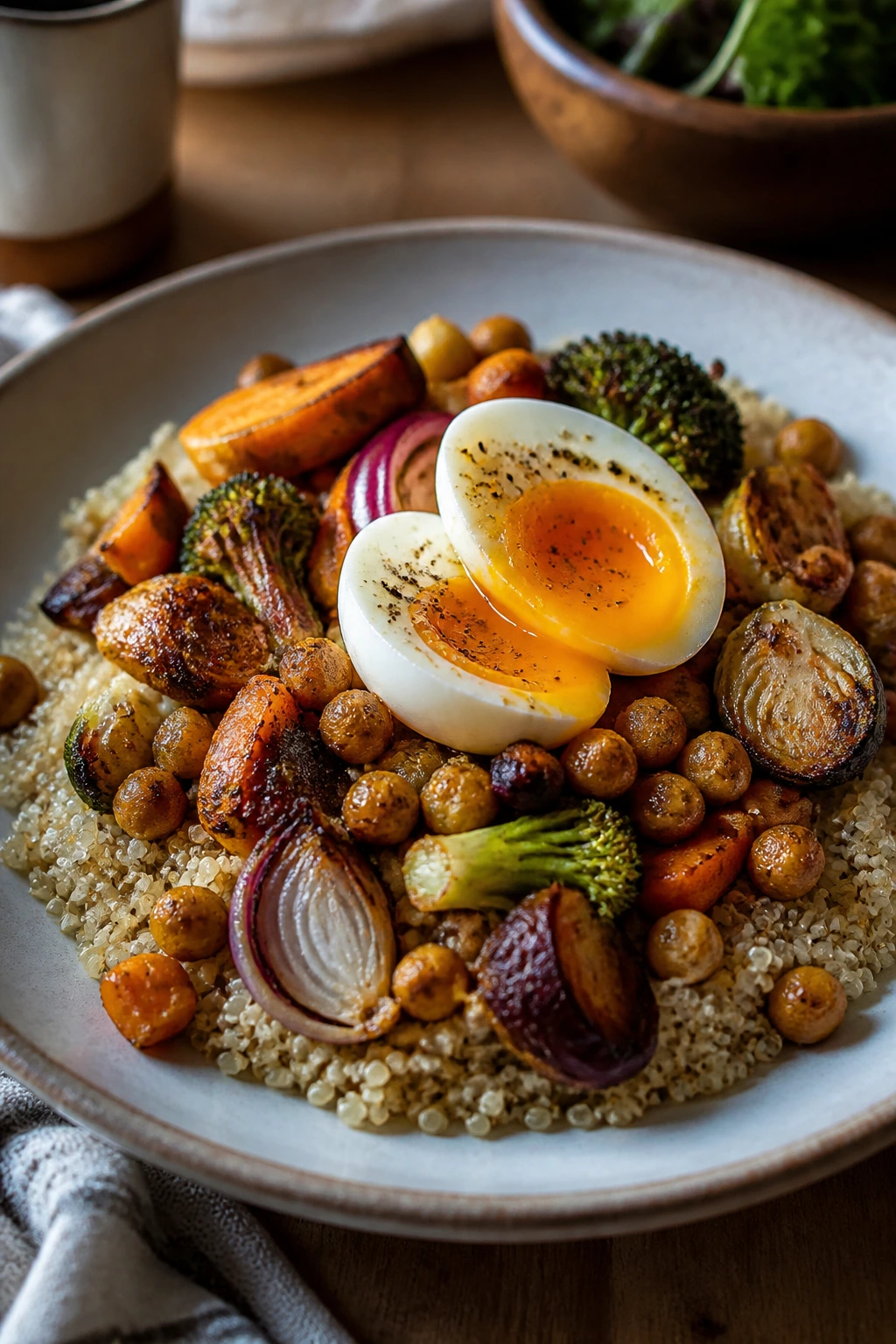
Roasted vegetables on their own can taste wonderful and still leave you rummaging in the pantry an hour later. To make the meal hold, you need something with staying power. Beans, grains, eggs, and a few dairy options do that job without turning the dinner into a brick.
Chickpeas are the easiest move. They’re sturdy, cheap, and happy in a hot oven. Canned chickpeas, drained and patted dry, can crisp around the edges while staying creamy inside. A pan of roasted cauliflower with chickpeas is already halfway to dinner. Toss in lemon and herbs and you’re most of the way there.
Lentils work when you want something soft and earthy underneath the vegetables. Green or brown lentils keep their shape and sit nicely under roasted carrots or mushrooms. Red lentils are better for soups and mashy sauces; they disappear too easily for this kind of dinner. Farro, barley, brown rice, quinoa, and bulgur all do useful work too, each with a different texture. Farro has chew. Barley goes plump. Quinoa turns lighter and drier. Pick the one that matches the vegetables instead of forcing a single grain into every meal.
Eggs can be a clean finishing move. A jammy egg on roasted broccoli and potatoes gives the plate a simple, comforting richness. Fried eggs work too, especially if the yolk runs into a garlicky pan sauce. And if you’re not in the mood for eggs, tofu or halloumi fills the same role in a different key.
A dinner formula that keeps showing up
Here’s a pattern that works more often than it fails:
- 2 to 3 cups roasted vegetables
- ¾ to 1 cup cooked grain or beans
- 1 creamy element
- 1 bright element
- 1 crunchy finish
That five-part setup is plain on paper and excellent on a plate. A bowl of roasted sweet potato, black beans, yogurt, pickled red onion, and toasted pumpkin seeds tastes more thought-through than the ingredient list suggests. And it doesn’t need much more than that.
The Fat, Acid, and Crunch That Keep It Cozy
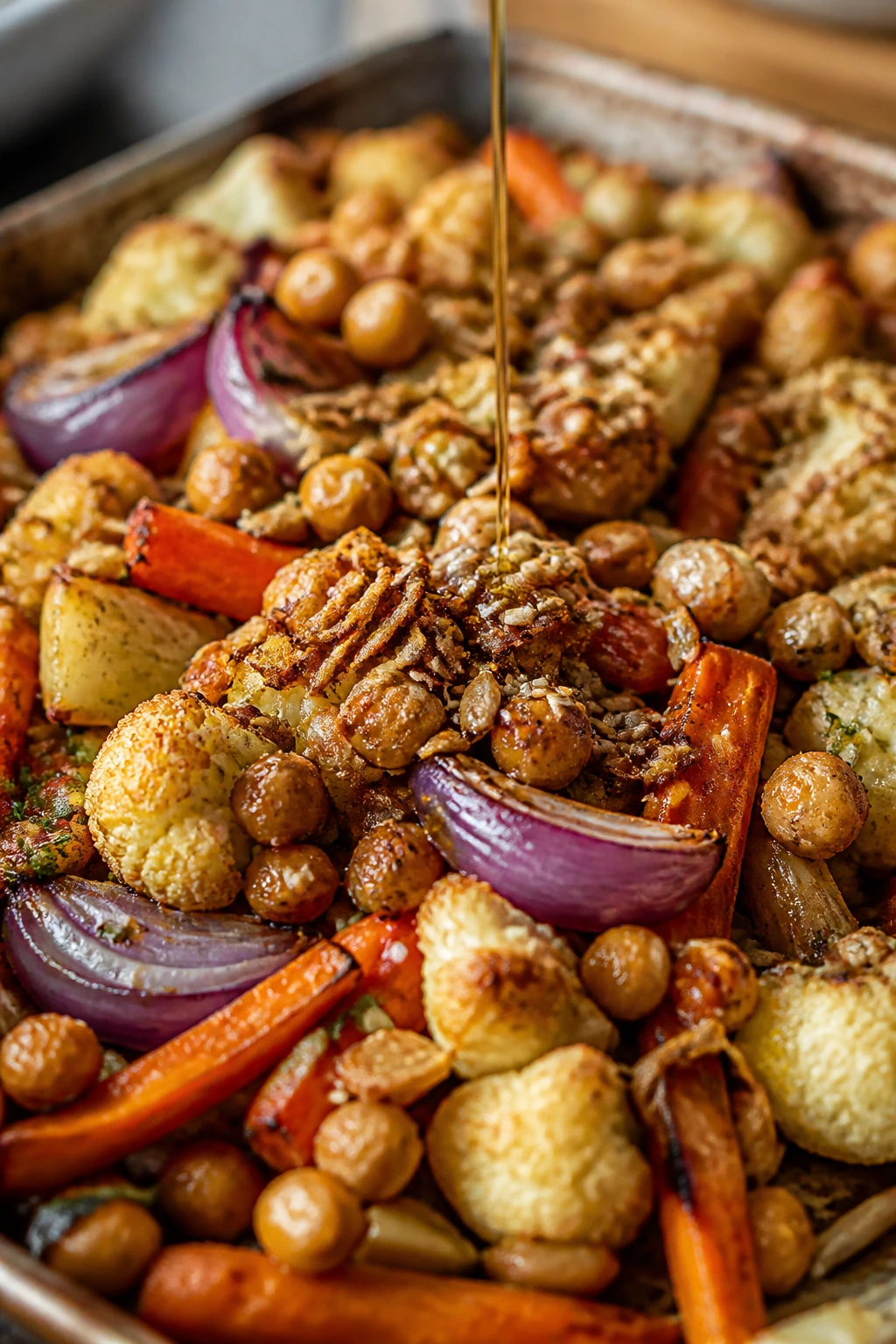
A tray of roasted vegetables without a finish can taste a little one-note. Good. Warm. Fine. Then you add acid, creaminess, or crunch, and the whole thing starts sounding like dinner again.
Fat is where the comfort lives. Olive oil is the obvious choice, and it’s usually the right one. It helps browning, carries spice, and coats the vegetables so they don’t taste dry on the edges. A drizzle of tahini, a spoon of pesto, or a little melted butter can work too, but olive oil stays the most flexible. If the goal is a healthy dinner that still tastes rich, a modest amount of fat is your friend, not the problem.
Acid wakes everything up. Lemon juice, red wine vinegar, sherry vinegar, pickled onions, or even a splash of brine from a jar of pepperoncini can cut through roasted sweetness and make the food taste brighter. That little hit of sharpness matters more than people think. Roast vegetables and beans often lean sweet by the time they’re done. Acid keeps them from sagging.
Crunch gives the final bite some life. Toasted almonds, pumpkin seeds, sesame seeds, panko crumbs browned in olive oil, or crisp fried shallots all make sense here. So do fresh herbs, if they’re added at the end and not buried in the heat for 30 minutes. Parsley, dill, mint, and chives all bring a clean finish. Basil is better on tomato-heavy trays. Rosemary and thyme fit the root vegetables.
The finishing move I keep coming back to
A creamy sauce plus a sharp top note is hard to beat. Think tahini thinned with warm water and lemon, or Greek yogurt loosened with olive oil and garlic. Then add something crunchy on top. That trio — creamy, sharp, crisp — is what makes a tray dinner feel rounded.
No single sauce fixes every pan. Still, if your vegetables taste a little flat, the problem is usually not the roasting. It’s the finish.
Sheet Pan, Baking Dish, or Dutch Oven?
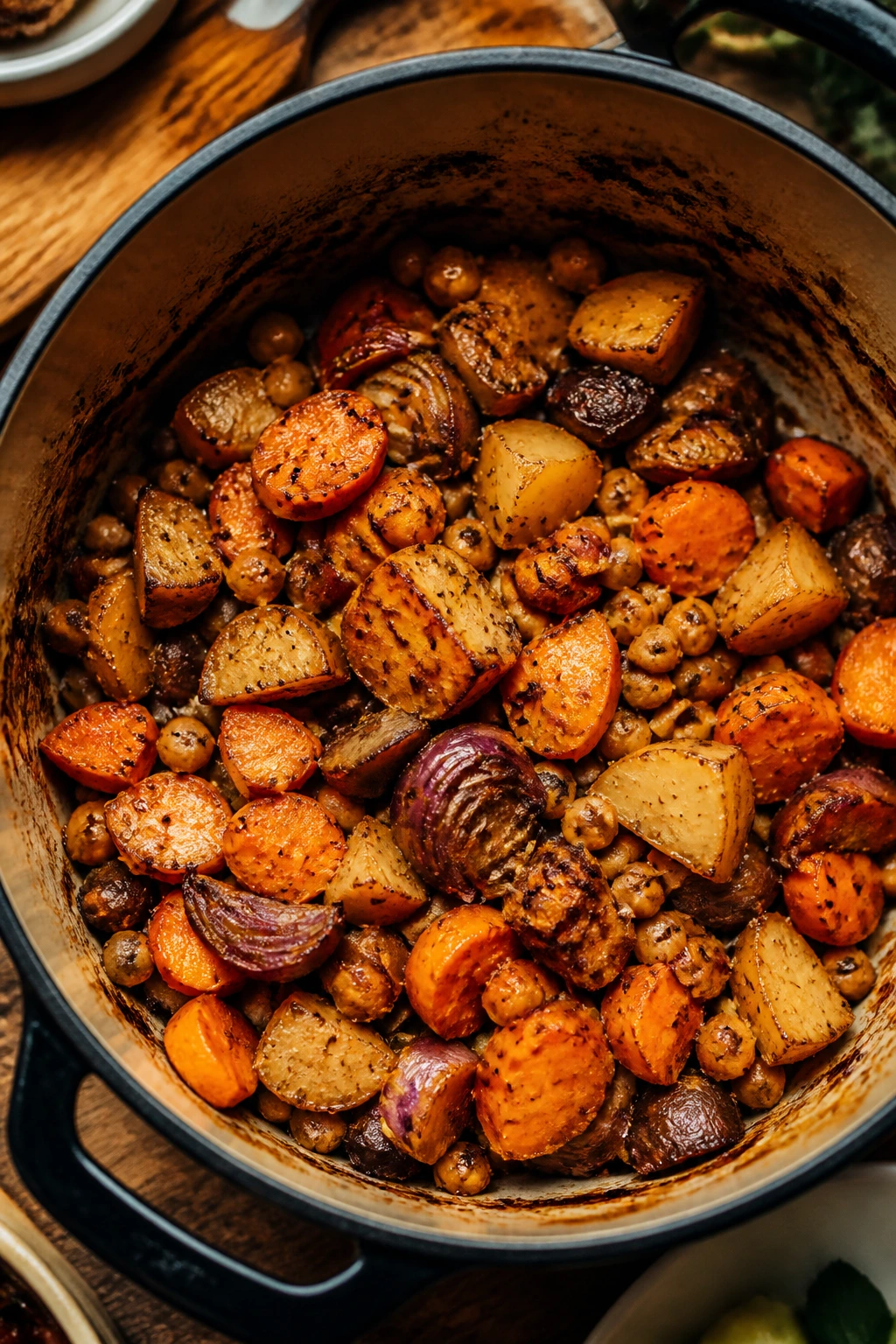
A lot of roasted vegetarian comfort food lives on a sheet pan, but that isn’t the only useful vessel. The container changes the result. If you’ve ever wondered why one roast feels crisp and another feels soft and stew-like, the answer is usually in the pan.
A rimmed sheet pan is the cleanest choice when you want browning. Its wide surface lets steam escape, which means vegetables dry out enough to take on real color. This is the tool for cauliflower florets, chickpeas, broccoli, carrots, and anything you want to look bronzed at the edges. If you crowd it, the whole thing slips toward steaming. Use two pans if you need to.
A baking dish keeps ingredients closer together, which is useful for things that want to mingle in their own juices. Eggplant, tomatoes, onions, and white beans can turn almost saucy in a shallow casserole dish. That’s not a failure. It’s a different dinner. Add breadcrumbs or cheese and you’re in gratin territory.
A Dutch oven is the answer when you want a roasted braise. It’s ideal for onions, root vegetables, garlic, canned tomatoes, beans, and broth if you’re making a one-pot vegetarian stew that starts with oven heat and finishes soft. It won’t brown like a sheet pan unless you give it a strong start, but it does build tenderness and depth.
When to choose what
- Sheet pan: best for crisp edges, quicker cook times, and separate textures.
- Baking dish: best when you want juices, softening, and a more spoonable finish.
- Dutch oven: best for deeper, cozier, almost stew-like results.
If you only own one thing, buy the sheet pan first. It does the widest job. But the truth is that the right vessel changes how roasted vegetables taste before they ever hit the plate.
Four Dinner Templates I Reach for Often
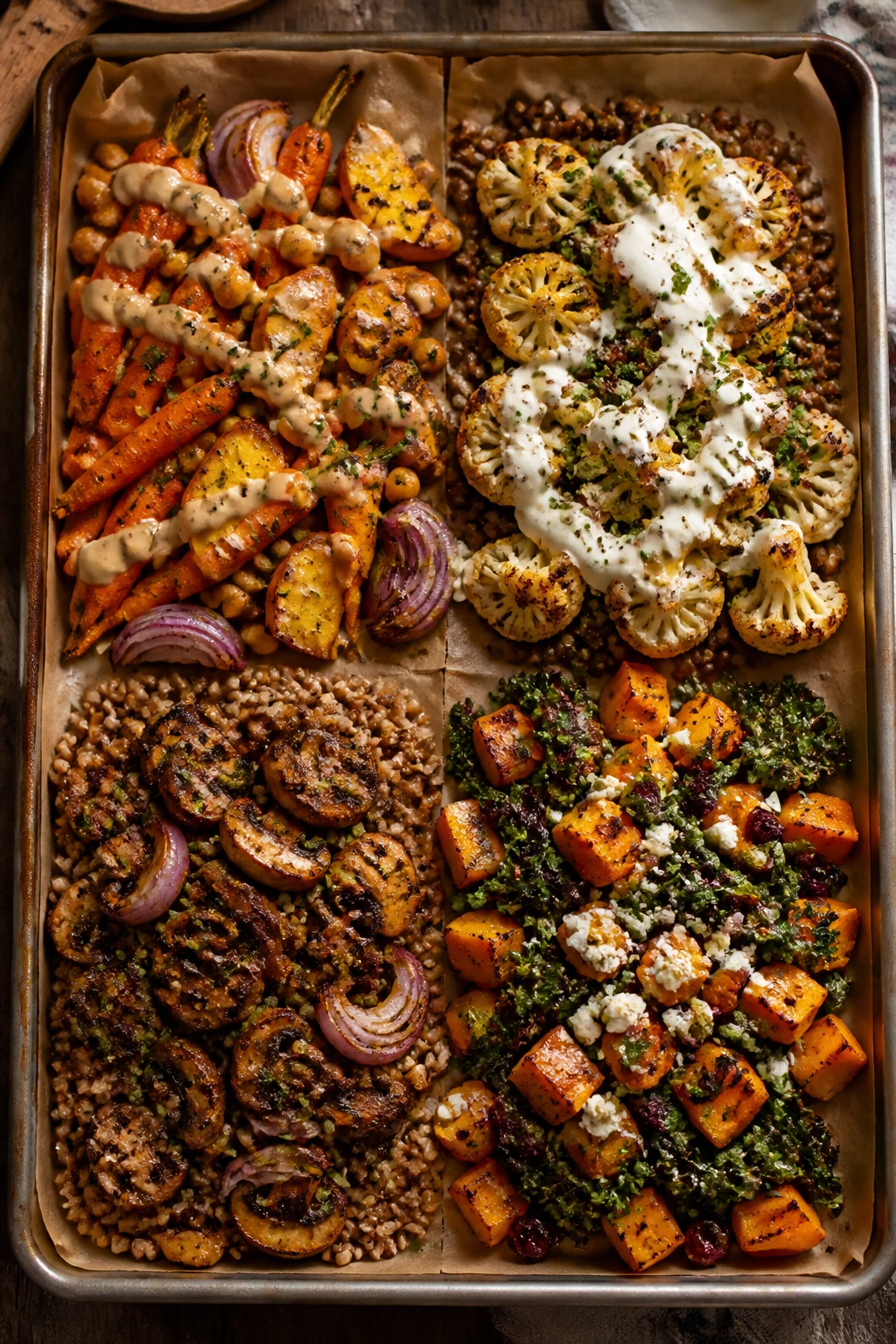
Templates are useful because they cut down on decision fatigue. Nobody needs a new personality every night. A reliable pattern, though, is worth its weight in dish towels.
Root vegetables, chickpeas, and tahini
This is the easiest route to a sturdy vegetarian dinner. Roast carrots, sweet potatoes, and red onion with cumin, coriander, garlic powder, and olive oil at 425°F until the edges darken and the centers go soft. Add chickpeas for the last 15 minutes if you want them to crisp a little, then finish with tahini, lemon, parsley, and sesame seeds. It eats like something much more assembled than it is.
Cauliflower, lentils, and yogurt
Cauliflower browns fast and takes on spice well. Serve it over warm lentils with a spoon of garlic yogurt and a handful of chopped dill or mint. A squeeze of lemon keeps the earthy lentils from feeling dull. If you want more heat, a pinch of chili flakes in the yogurt does the job better than dumping hot sauce over everything.
Mushrooms, onions, and farro
Mushrooms are one of the few vegetables that can bring a meaty feeling without pretending to be meat. Roast them with onions until the pan smells deep and savory, then spoon everything over farro and finish with Parmesan or a soft cheese like goat cheese. A little balsamic at the end makes sense here, but go light. Too much and the mushrooms start tasting sticky.
Brussels sprouts, white beans, and breadcrumbs
Brussels sprouts need high heat and enough room to brown cut-side down. Pair them with white beans, garlic, lemon zest, and toasted breadcrumbs tossed with olive oil. That breadcrumb topping matters; it gives the dish the dry, crunchy finish that keeps it from eating too soft. It’s one of the best ways to make a vegetable-heavy dinner feel finished.
A good template removes guesswork without trapping you. That’s the sweet spot.
How to Build a Healthy Dinner Without Making It Feel Thin
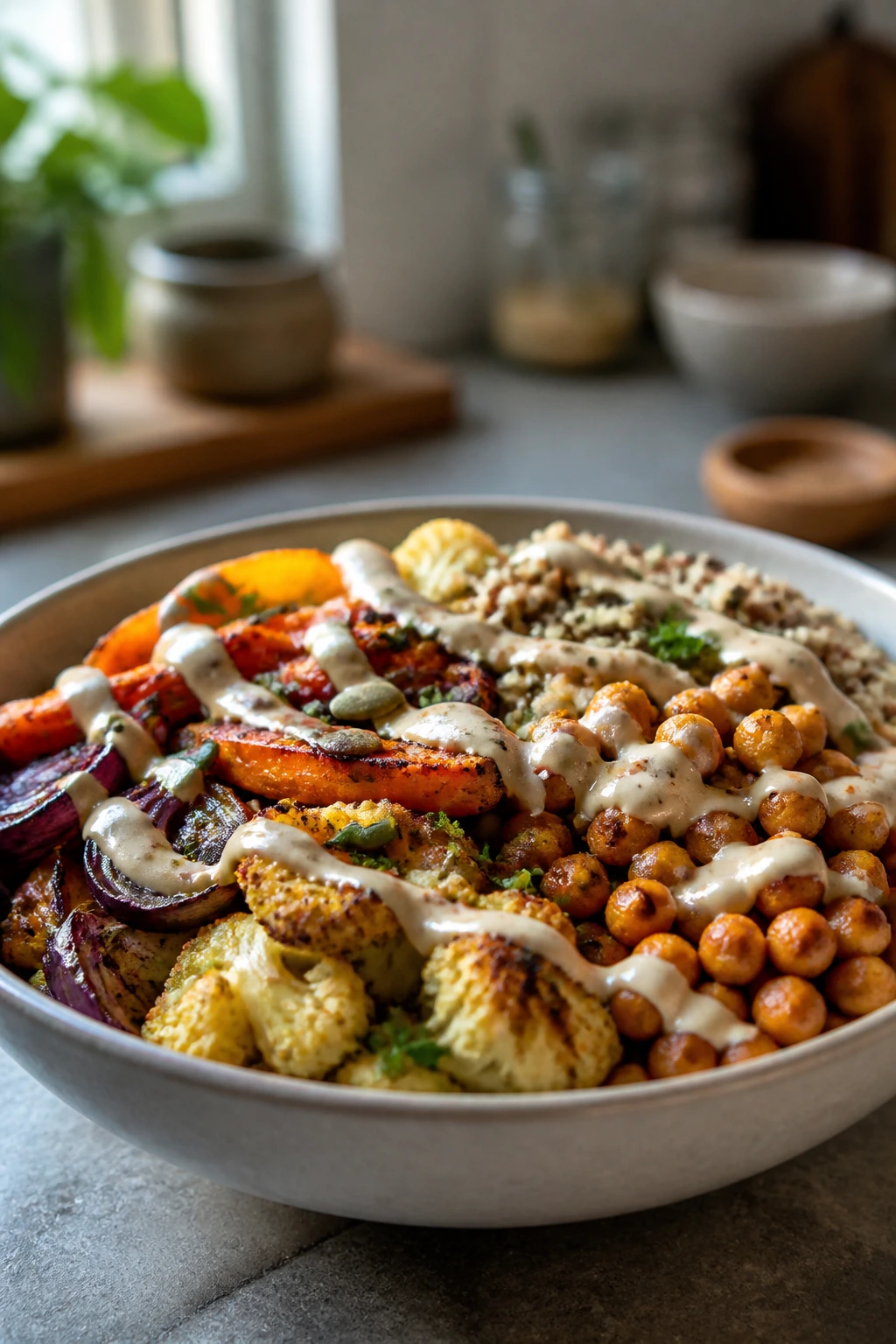
Healthy dinner gets misread all the time. People act like it has to mean small, pale, and vaguely apologetic. That’s a bad deal. A dinner can be balanced, filling, and still feel generous on the plate.
The easiest way to keep the meal satisfying is to think in layers. Start with roasted vegetables, add one source of protein, add one source of starch, then finish with something creamy or bright. That structure keeps the meal from collapsing into a single texture. It also keeps you from overeating the one interesting element because the rest of the plate is underseasoned.
A meal built from roasted vegetables, beans, grains, and a sauce usually needs less oil than people fear and more seasoning than they use. The vegetables should taste seasoned before they leave the oven, not after they arrive at the table. Salt helps draw moisture to the surface so the edges brown. Oil helps carry the seasoning and improves texture. A final spoon of yogurt or tahini adds richness in a way that doesn’t feel heavy.
Portioning that doesn’t feel restrictive
A satisfying bowl usually looks something like this:
- Half the plate: roasted vegetables
- A quarter: grains or potatoes
- A quarter: beans, tofu, eggs, or another protein
- Top it off: sauce, herbs, seeds, lemon, or pickles
That isn’t a prison. It’s a reference point. If you’re hungrier, give the beans and grains more space. If you want the vegetables to stay dominant, keep the starch smaller and use a stronger sauce. The point is to avoid the sad, watery middle ground where there’s neither enough comfort nor enough substance.
And if you want the meal to feel richer without getting greasy, do not cut fat all the way out. A tablespoon or two of olive oil per pan, plus a spoon of tahini or yogurt at the end, usually gives enough body to make the dish taste finished.
Small Moves That Add a Lot of Flavor
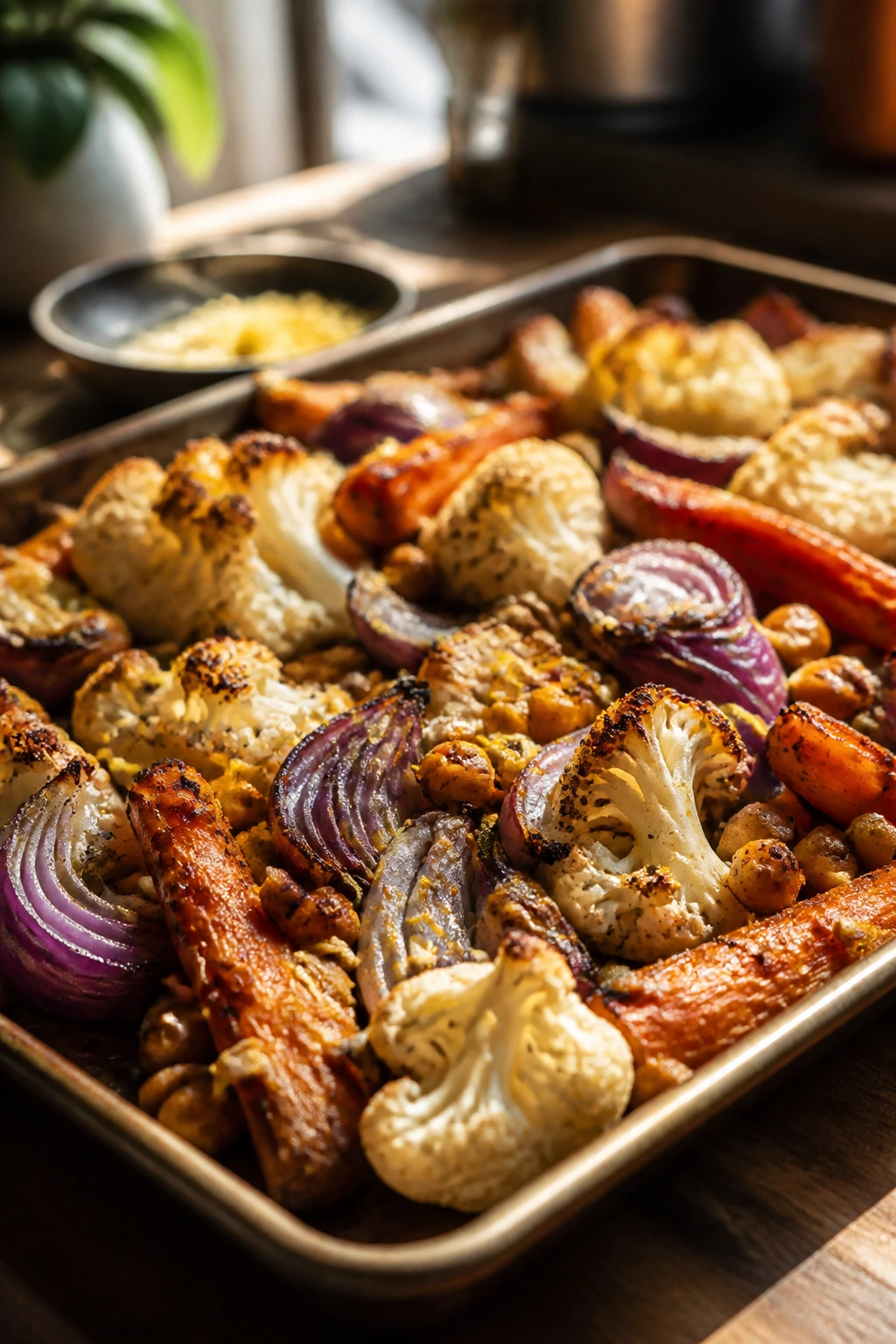
A good tray dinner usually isn’t built on one dramatic trick. It’s the smaller moves that stack up. The hot oven handles the heavy lifting, then a few quiet choices make the vegetables taste sharper, deeper, and more intentional.
Salt in layers. Season the vegetables before they go into the oven, then taste again at the end. A single pre-roast sprinkle is almost never enough, especially when the pan includes starches like potatoes or beans. Salt on the finish matters because browned food can taste oddly flat without it.
Use two heat zones. Dense vegetables need the hottest spots in the oven, so rotate the pan halfway through if your oven has hot corners. If one side browns faster, move the tray. That small shuffle prevents the half-charred, half-pale look that happens when a pan sits still too long.
Finish with something sharp. Lemon zest, vinegar, pickles, or brined capers can wake up a tray the way a bright lamp wakes up a room. Acid isn’t garnish here. It’s part of the flavor structure.
Toast the dry toppings. Seeds, nuts, and breadcrumbs taste better after a quick turn in a skillet with a spoon of oil. Raw toppings sit on top. Toasted ones bring smell and crunch.
Keep sauces warm or room temp. Ice-cold yogurt sauce on hot vegetables can drag the temperature down too fast. Let it warm slightly on the counter or thin it with warm water so it spreads cleanly.
Throw herbs on last. Parsley, dill, cilantro, mint, and chives lose their edge if they roast the whole time. Add them at the end so they stay green and loud.
One more thing. If the tray tastes bland, add salt and acid before adding more spice. That solves more problems than another shaker of paprika ever will.
Common Mistakes That Leave the Tray Flat
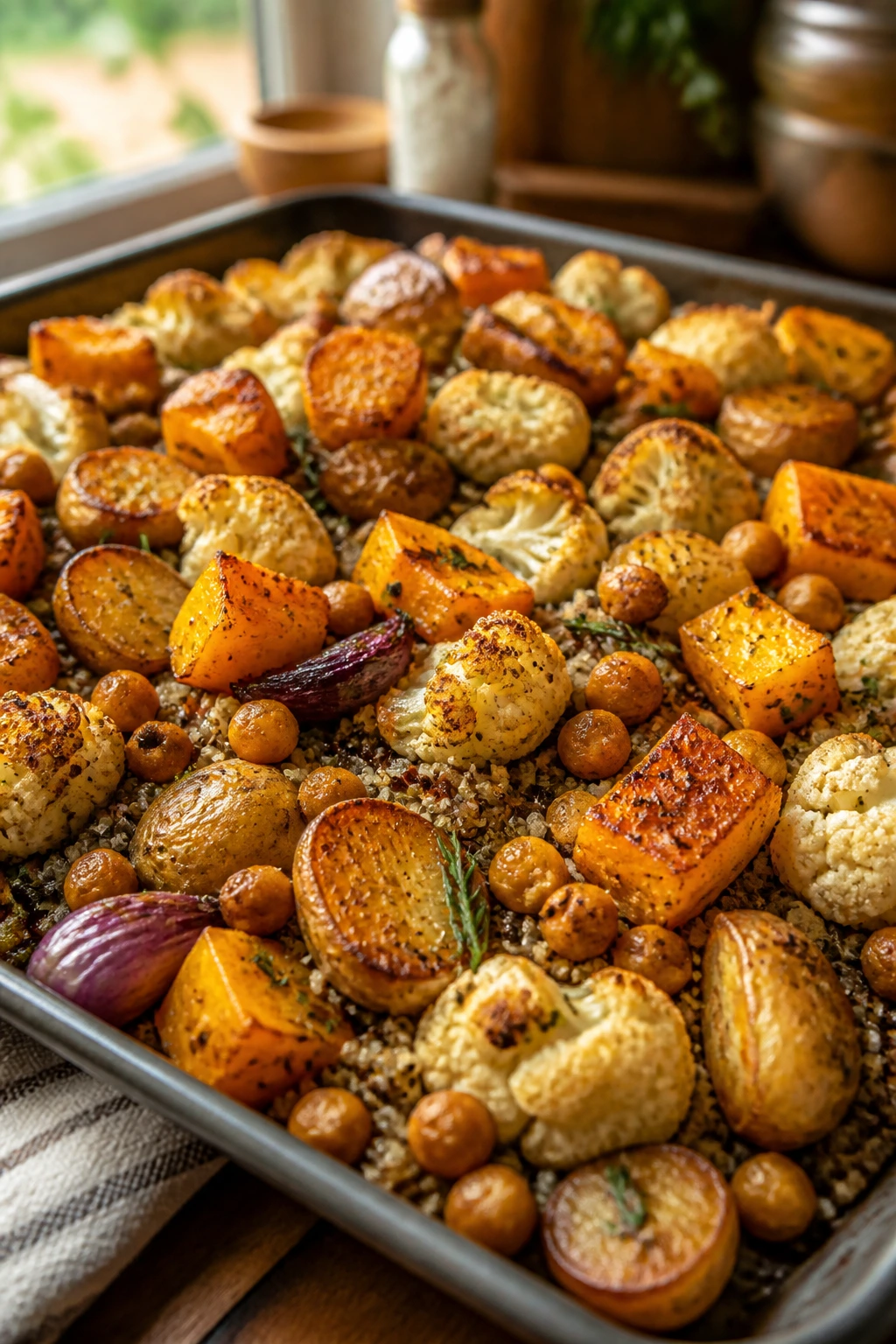
Crowding the pan is the classic mistake. Vegetables touching edge to edge trap steam, and steam is the enemy of browning. The symptom is pale, soft vegetables with no color on the cut faces. The fix is simple: use a bigger pan, split the vegetables across two pans, or roast in batches.
Cutting everything to the same size can backfire. A sweet potato cube and a thin zucchini slice do not belong on the same clock. One turns mushy while the other stays firm. Match the cut to the vegetable, and separate fast-cooking items from dense ones.
Underseasoning before roasting is another common miss. If the seasoning only lands at the table, the vegetables taste bland in the oven and flat at the end. Salt, oil, and spices need to hit the vegetables before the heat does.
Skipping acid leaves the meal heavy in a dull way. Roasted carrots and squash bring sweetness. Beans and grains bring earthiness. Without lemon, vinegar, pickles, or another sharp finish, the whole plate can feel like it’s wearing a wool coat indoors. Add brightness at the end.
Using too little fat can make the vegetables dry and chalky. Using too much can make them greasy and limp. You want a thin coating, not a slick. The vegetables should look lightly glossed, not pooled in oil.
And then there’s the overcooked herb problem. Fresh herbs tossed in too early turn dark and papery. They don’t taste fresh anymore, which defeats the whole point. Add them after roasting, when the heat won’t flatten them.
Variations Worth Trying
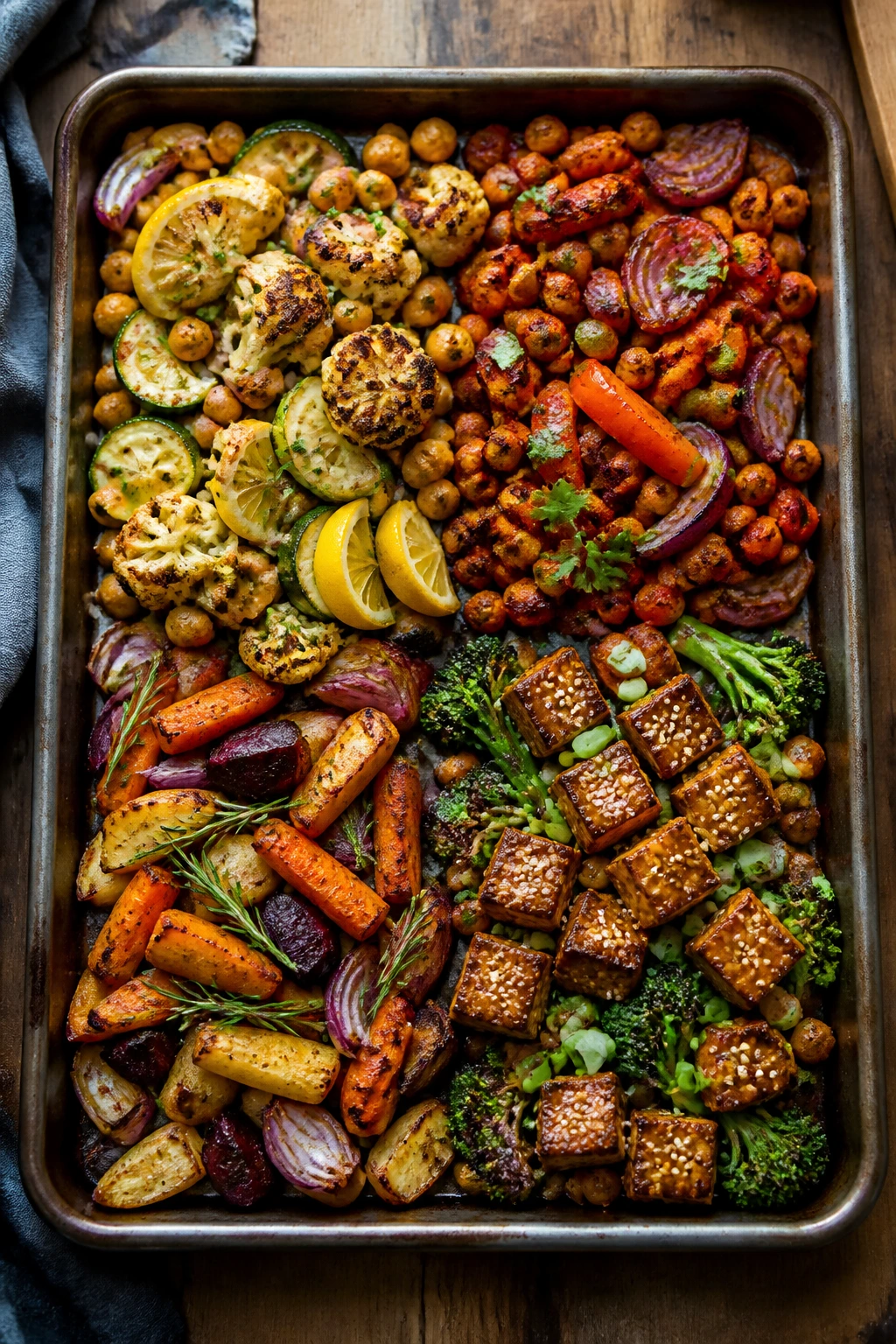
Mediterranean Lemon Tray
Roast zucchini, red onion, cherry tomatoes, and chickpeas with oregano, garlic, and olive oil. Add feta and parsley at the end, then finish with lemon juice and a few olives if you like a briny edge. This version eats lighter and feels especially good over couscous or warm pita.
Smoky Harissa Pan
Toss cauliflower, carrots, and onion with harissa paste, cumin, and a little olive oil before roasting. The harissa darkens at the edges and brings a slow burn that pairs well with yogurt or labneh. Keep the heat moderate if you’re serving people who don’t chase spice.
Winter Root Bake
Use parsnips, sweet potatoes, Brussels sprouts, and shallots, then finish with sage, toasted walnuts, and a spoon of Parmesan. This is the coziest version in the bunch, with enough sweetness to feel lush and enough bitterness from the sprouts to keep it honest.
Miso-Maple Tofu Bowl
Cube firm tofu, press it first, then roast it with broccoli and mushrooms. A glaze of white miso, maple syrup, and rice vinegar gives the tofu a sticky edge and keeps the whole bowl from tasting too dry. Serve it over brown rice with sesame seeds and scallions.
Dairy-Free Creamy Finish
Swap yogurt sauces for tahini blended with lemon, garlic, and warm water until it turns pourable. It works on nearly every roasted vegetable combination and doesn’t need much more than salt and a pinch of cumin.
These aren’t strict recipes. They’re different directions the same dinner can take without losing its shape.
Essential Tools for Roasting Vegetables
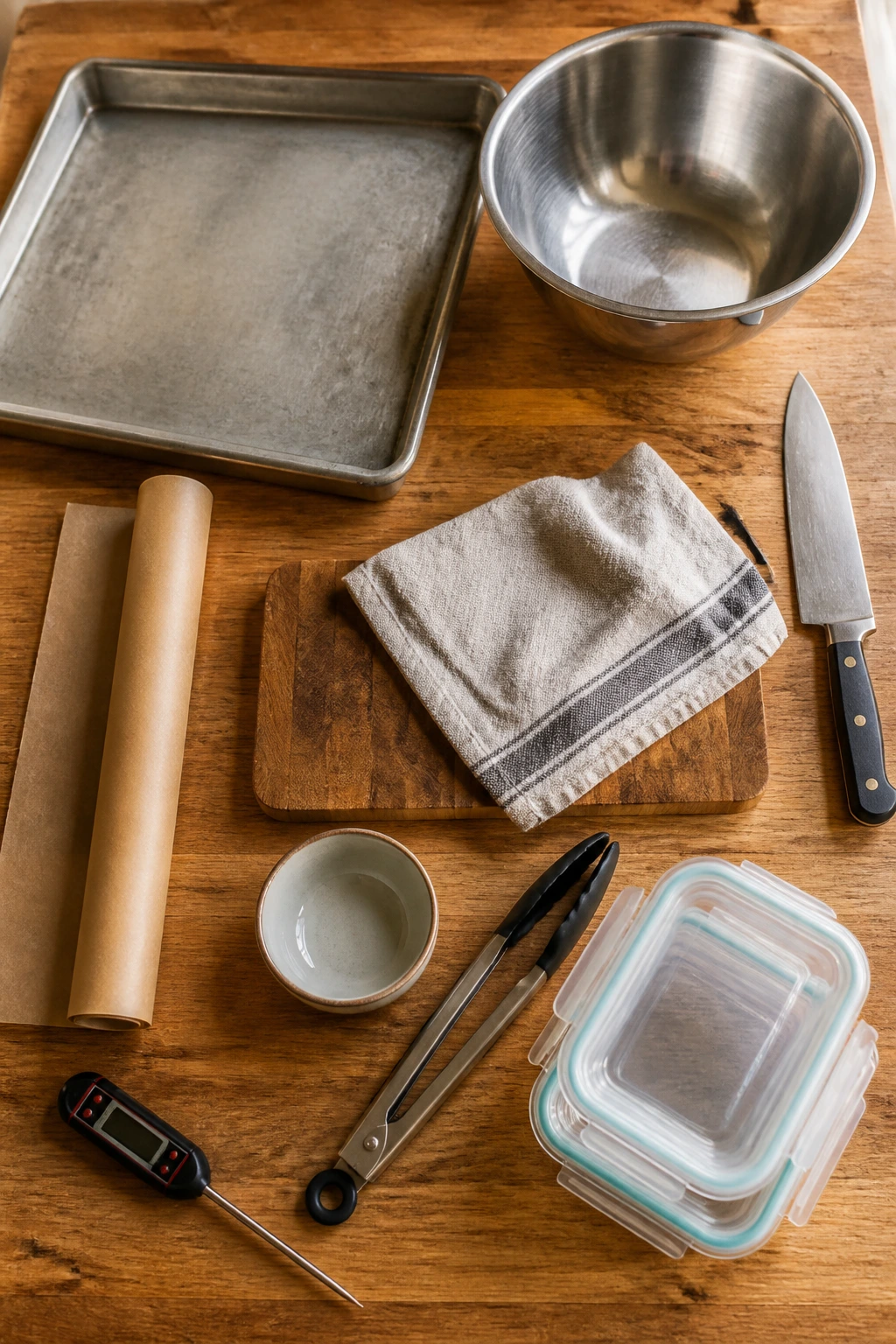
- Rimmed sheet pan: The wider surface gives vegetables room to brown instead of steam.
- Large mixing bowl: Makes it easier to coat vegetables evenly with oil, salt, and spices.
- Sharp chef’s knife: Clean cuts roast more evenly and save time on dense vegetables.
- Cutting board with a damp towel underneath: Keeps the board from skating around when you’re chopping hard roots.
- Parchment paper: Useful for easy cleanup, especially with sticky sauces or roasted chickpeas.
- Small bowl or jar for sauce: Handy for whisking tahini, yogurt, vinaigrette, or herb dressing.
- Tongs or a sturdy spatula: Makes it easier to turn vegetables halfway through roasting without tearing them.
- Airtight containers: Keep leftovers from drying out in the fridge.
- Instant-read thermometer, optional: Nice for checking tofu, reheated dishes, or any ingredient you want to get hot all the way through without overdoing it.
A heavy-duty pan matters more than people think. Thin pans warp and brown unevenly, which makes the vegetables at the edges cook faster than the middle. If your pan feels flimsy, use two thinner pans and rotate them.
Make-Ahead, Storage, and Reheating
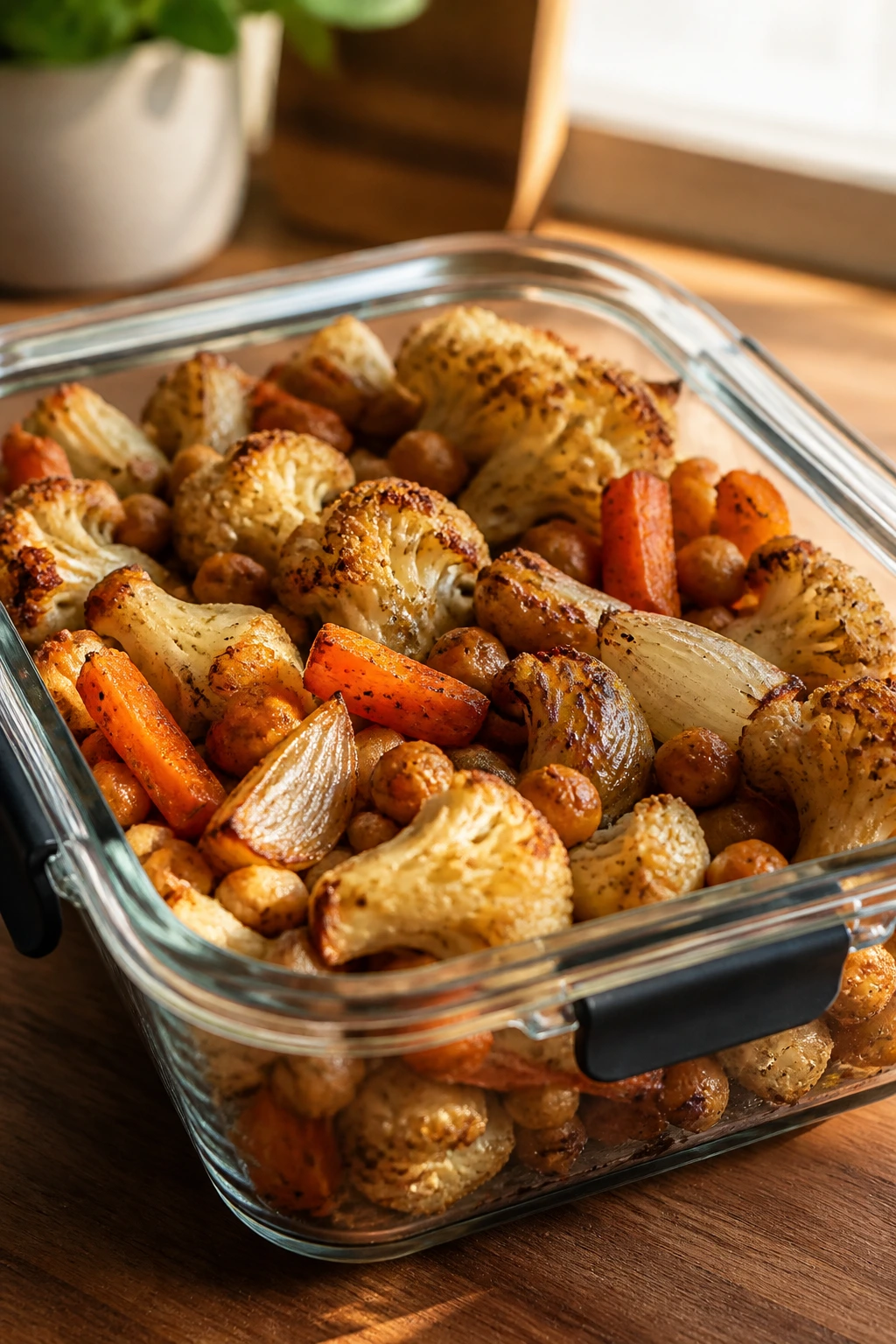
Roasted vegetarian meals keep well, but the texture changes fast if you store everything together in one wet heap. Keep sauces separate when you can. That one habit keeps the vegetables from going soft before you’re ready to eat them again.
Roasted vegetables hold in the fridge for 3 to 4 days in an airtight container. Beans and grains also keep well for that same window. If the vegetables sit under a creamy sauce, they’ll soften sooner, so store the sauce in a jar or small container on the side.
Freezing is possible for sturdier items. Roasted carrots, sweet potatoes, cauliflower, chickpeas, lentils, and cooked grains can go into the freezer for up to 2 months. Zucchini and mushrooms get watery after freezing, so I’d avoid freezing those unless you plan to turn them into soup or a soft bake later.
Reheat roasted vegetables on a sheet pan at 400°F for 8 to 12 minutes until the edges wake back up. A skillet over medium heat works too, especially for smaller portions. The microwave is fastest, but it softens the texture; use it only when speed matters more than crisp edges. If you’re reheating a bowl with grains and beans, splash in a teaspoon of water, cover loosely, and stop as soon as the center is hot.
Food safety still matters. Don’t leave cooked vegetables out for more than 2 hours at room temperature. If the room is hot, give them less time. That rule is dull, but it saves a lot of regret.
One more thing: some roasted dishes taste better the next day. Chickpeas pick up spice. Lentils absorb sauce. Onions mellow. The vegetables lose a little crunch, yes, but the flavor often gets deeper overnight.
Questions People Actually Ask
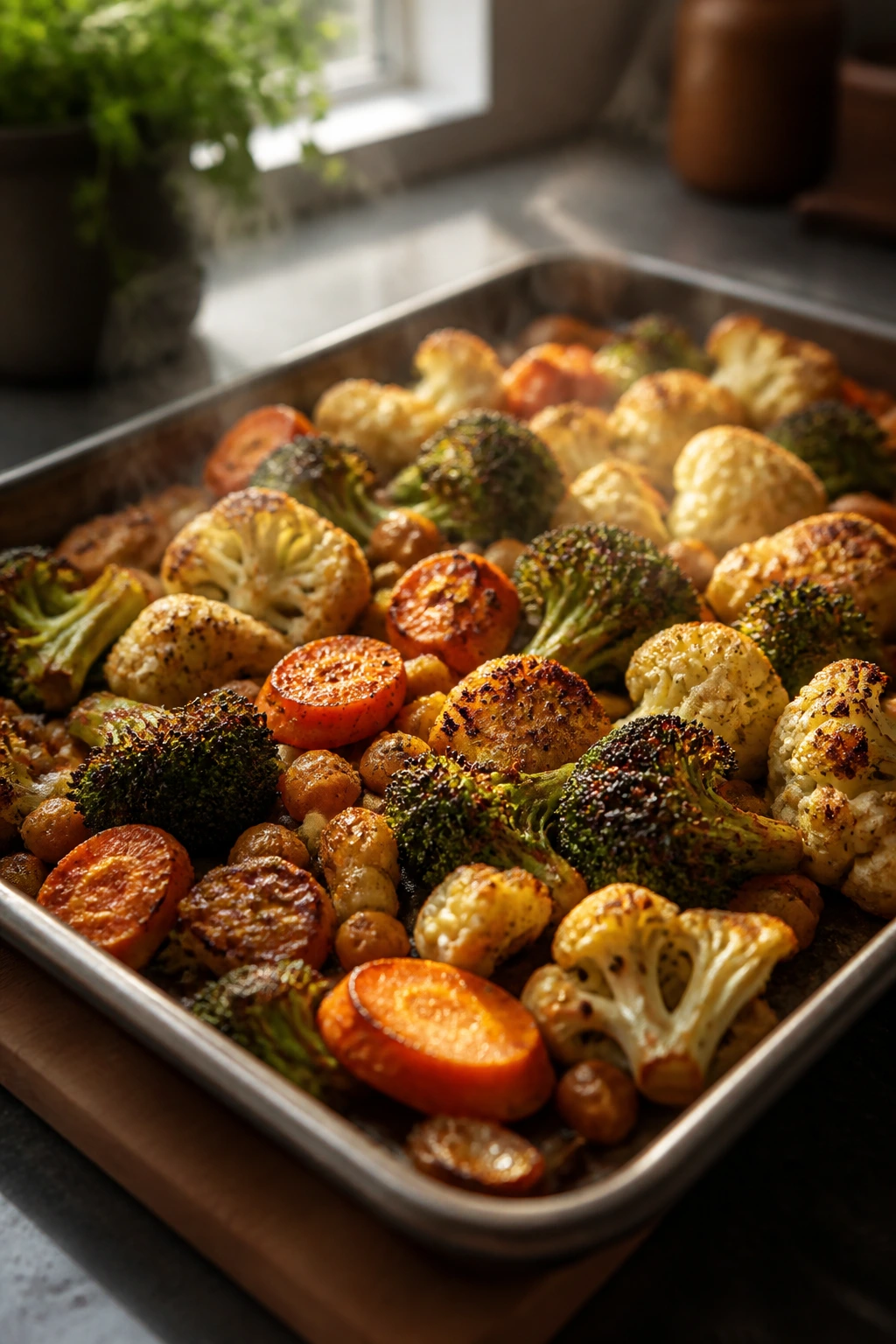
Can I make roasted vegetarian comfort food without potatoes?
Absolutely. Cauliflower, chickpeas, carrots, butternut squash, lentils, and farro can carry a tray just fine. The key is to replace the potato’s starch with another filling piece so the dinner doesn’t feel loose.
What vegetables should I avoid roasting together?
Anything with wildly different cook times can create trouble. Asparagus, zucchini, and cherry tomatoes cook much faster than carrots or sweet potatoes, so they need late arrival or a separate pan. If you mix them all at once, the quick-cooking vegetables collapse before the dense ones are tender.
How do I keep chickpeas crisp after roasting?
Dry them well before they hit the pan, and don’t drown them in sauce right away. A hot oven, a single layer, and a final toss with seasoning after roasting will keep them closer to crisp than soggy. They will soften in storage, which is normal.
Can this work as a meal prep lunch?
Yes, and it’s one of the few vegetarian dinners that keeps its shape reasonably well for lunch. Store the sauce separately, reheat the vegetables on a sheet pan or skillet, and add fresh herbs after warming. If you pack everything cold, expect softer texture but still good flavor.
What if my vegetables brown on the outside before they’re tender inside?
Your cuts are probably too large, your oven runs hot, or the pan is too close to the heating element. Lower the heat by 25°F, cut the vegetables a little smaller, and give the pan a mid-roast toss. Dense roots sometimes need a few extra minutes under foil after browning.
Is olive oil the only fat that works here?
No. Avocado oil handles higher heat well, and melted butter can add richness if you’re not keeping the dish dairy-free. Still, olive oil stays the most flexible because it carries herbs, garlic, and spice without fighting them.
How do I make the meal feel more filling without adding meat?
Add beans, lentils, tofu, eggs, or a grain with some chew. A bowl that includes roasted vegetables plus a starch and a protein source usually feels much more complete than vegetables alone. A sauce with some fat helps too.
Can I roast everything at once on one pan?
Only if the vegetables have similar cook times and the pan isn’t crowded. Broccoli, chickpeas, and cauliflower can share a tray nicely. Add zucchini, tomatoes, or delicate greens later, or you’ll end up with a pan that tastes tired instead of lively.
Final Bite
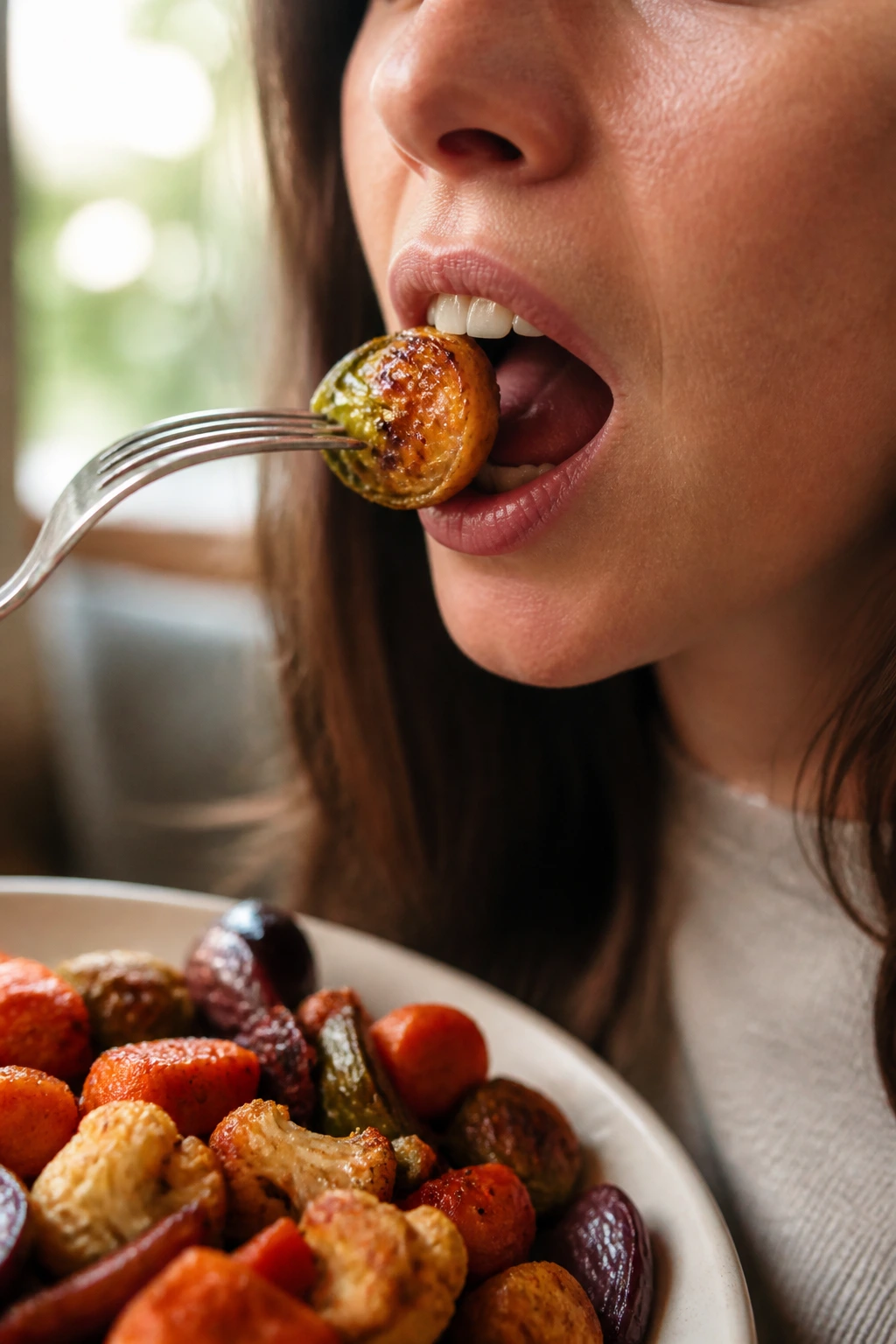
Roasted vegetarian comfort food works because it respects the way people actually eat dinner. You want warmth. You want browning. You want something that tastes like effort without demanding a sink full of pans or a complicated ingredient list.
The best part is how little this style asks for once you understand the rhythm. Hot oven, enough room, a little oil, enough salt, one bright finish. That’s the spine of the whole thing, and once it’s in place, the rest becomes a matter of taste — carrots this week, cauliflower the next, chickpeas when you need staying power, tahini when you want something creamy without turning the meal heavy.
A tray of vegetables can be plain, sure. Or it can be the kind of dinner you keep circling back to because it lands hot, satisfying, and clean every single time.