



A caramelized vegetarian sandwich can eat like dinner instead of a snack if you build it with the right bread, the right heat, and vegetables cooked until their edges go brown and sticky. The trick is that nothing on the plate is trying to pretend to be meat. It doesn’t need to.
The onions need time. The mushrooms need space. The bread needs enough backbone to hold warm filling without turning into damp paper. Once those three things are handled well, the sandwich gets a deep, savory sweetness that feels more like something you’d order from a careful café than something tossed together between errands.
I like this kind of meatless dinner because it works with ordinary ingredients, but it does not taste ordinary. Whole-grain bread adds chew, hummus brings a creamy buffer, avocado softens the edges, and a splash of balsamic at the end keeps the onions from wandering into candy territory. If you’ve ever bitten into a vegetarian sandwich that collapsed after two bites, this one fixes the structural problem instead of dressing it up.
Why This Sandwich Feels Like Real Dinner
Vegetarian sandwiches get a bad reputation when they’re treated like an afterthought. A few raw greens. A slice of tomato that floods the bread. Maybe one lonely spread. That’s lunch behavior, not dinner.
This sandwich leans the other way. The filling cooks in a skillet until the onions soften, lose their sharp bite, and turn glossy and sweet at the edges. Mushrooms bring a meaty chew without the meat, while the bell pepper and zucchini keep the whole thing from feeling heavy. It’s a warm, layered filling with enough color that you can tell, just by looking at it, that someone paid attention.
- Deep savory sweetness: The onions caramelize for 18 to 22 minutes, which gives you a jammy base instead of raw bite.
- Real dinner texture: Mushrooms and zucchini keep their shape, so every bite has some chew, not just soft mash.
- Bread that can take it: A thick slice of whole-grain bread stays sturdy under warm vegetables and hummus.
- Balanced richness: Avocado and hummus add creaminess without needing a heavy sauce or a cheese blanket.
- Flexible enough for real life: You can keep it dairy-free, add feta, or turn it into an open-face toast if you want something lighter.
And the best part? No sugar is needed. The onions bring their own sweetness once they’ve spent enough time in the pan, and the balsamic at the end sharpens that flavor instead of flattening it. That’s the part most quick versions miss.
A Quick Look at Time, Yield, and the Kind of Dinner It Makes
Yield: 4 sandwiches
Prep Time: 20 minutes
Cook Time: 30 minutes
Total Time: 50 minutes
Difficulty: Beginner — the steps are simple, but the onions and mushrooms need a little patience and a hot enough skillet to behave properly.
Best Served: Right after assembly, while the bread is still crisp and the vegetables are warm.
What Goes Into the Pan and the Bread
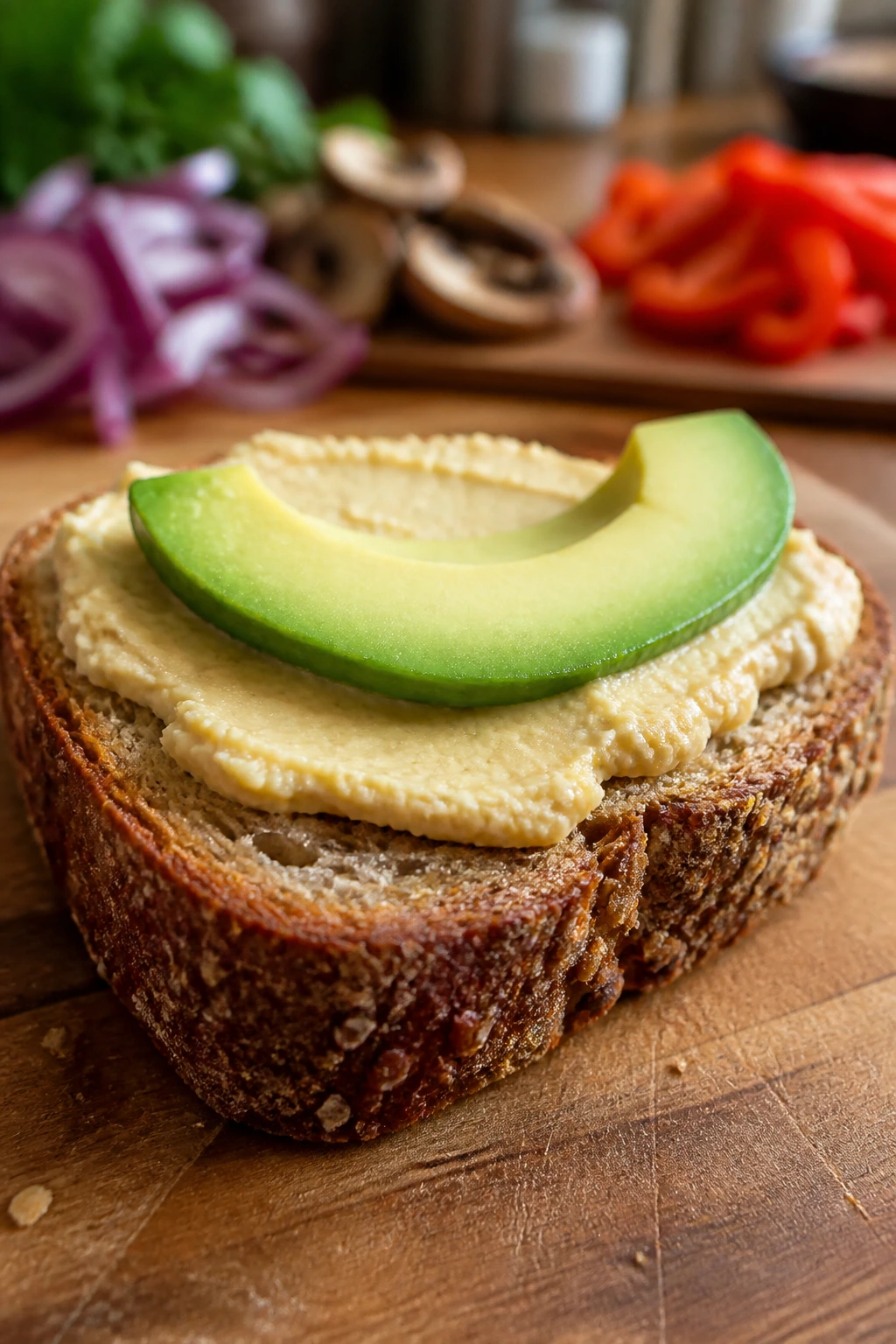
The ingredient list looks long on paper, but most of the work is slicing and stacking. Once the vegetables hit the skillet, the sandwich comes together fast.
For the Vegetable Filling:
- 2 tablespoons extra-virgin olive oil, divided
- 2 medium yellow onions, thinly sliced into half-moons
- 1 teaspoon kosher salt, divided
- 8 ounces cremini mushrooms, sliced 1/4-inch thick
- 1 medium red bell pepper, thinly sliced
- 1 medium zucchini, cut into 1/4-inch half-moons
- 2 cloves garlic, minced
- 1 teaspoon dried thyme
- 1 tablespoon balsamic vinegar
- 1 tablespoon water, for deglazing
For the Sandwich:
- 8 slices hearty whole-grain bread or sourdough, about 1/2-inch thick
- 1/2 cup plain hummus
- 1 ripe avocado, sliced
- 2 cups baby spinach, washed and thoroughly dried
- 4 ounces feta or goat cheese, crumbled, optional
- 1 tablespoon lemon juice
- 1/2 teaspoon black pepper
If your bread is flimsy enough to bend when you lift it, skip it. That sounds harsh, but it matters. This filling is warm and juicy, and the bread has to be able to hold its own.
Why Each Ingredient Pulls Its Weight
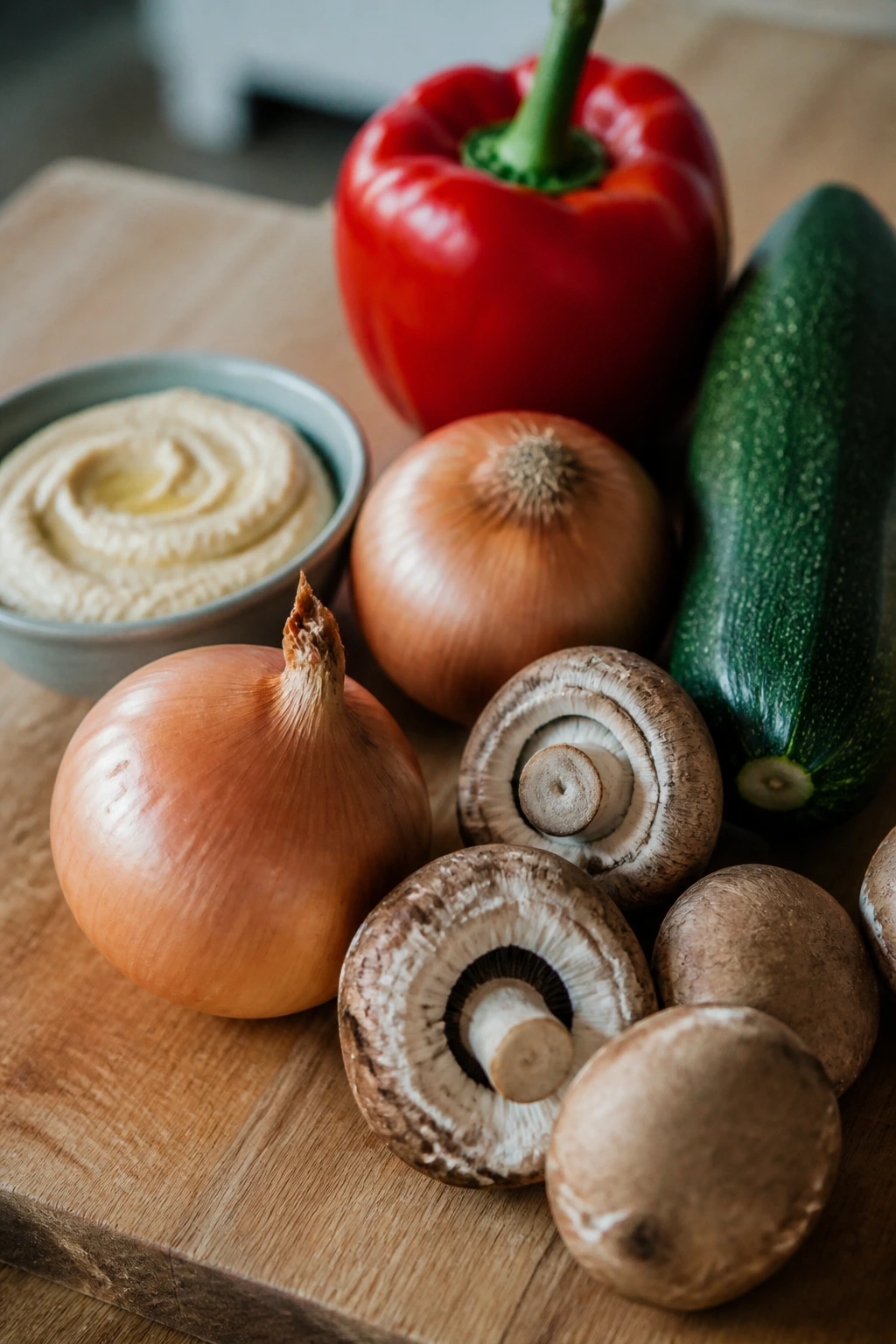
Bread and Spread
What to use: 8 slices of hearty whole-grain bread or sourdough, plus 1/2 cup plain hummus.
Preparation: Toast the bread until the surface feels dry and the edges start to firm up; you want light crunch, not a cracker.
Substitutions: Sprouted grain bread, seeded sandwich bread, or sturdy gluten-free bread all work if the slices are thick enough. Tahini mixed with a little lemon can stand in for hummus if that’s what you’ve got.
Tips: Choose bread with a tight crumb. Big holes look rustic, but they let hummus and vegetable juices slip straight through.
Onions and Mushrooms
What to use: 2 medium yellow onions and 8 ounces cremini mushrooms.
Preparation: Slice the onions into even half-moons so they soften at the same pace, and cut the mushrooms into 1/4-inch slices so they brown instead of shriveling into little rocks.
Substitutions: Red onions caramelize a bit faster and taste slightly sharper; portobellos give a deeper, steakier bite if you want the filling to feel heavier.
Tips: Don’t cram the pan. If the mushrooms sit on top of one another, they steam and turn gray before they brown.
Color, Crunch, and Freshness
What to use: 1 red bell pepper, 1 medium zucchini, and 2 cups baby spinach.
Preparation: Slice the pepper thin, cut the zucchini into small half-moons, and dry the spinach well so it doesn’t steam the bread later.
Substitutions: Thin roasted red peppers, baby kale, or even shaved fennel can take over the same role if you want a different edge.
Tips: Keep the zucchini a little firm. If it cooks until floppy, it disappears into the filling and you lose that clean vegetable bite.
Bright Finish and Creaminess
What to use: 1 tablespoon balsamic vinegar, 1 tablespoon lemon juice, 1/2 teaspoon black pepper, and 4 ounces feta or goat cheese if you want it.
Preparation: Add the balsamic at the end so it coats the vegetables instead of burning; toss the avocado with lemon juice right before assembly.
Substitutions: A small spoonful of red wine vinegar can replace the balsamic if needed, and dairy-free feta works cleanly here.
Tips: Acid keeps the sandwich from drifting too sweet. That little hit of lemon or vinegar matters more than people think.
The Skillet and Tools That Keep Everything Moving
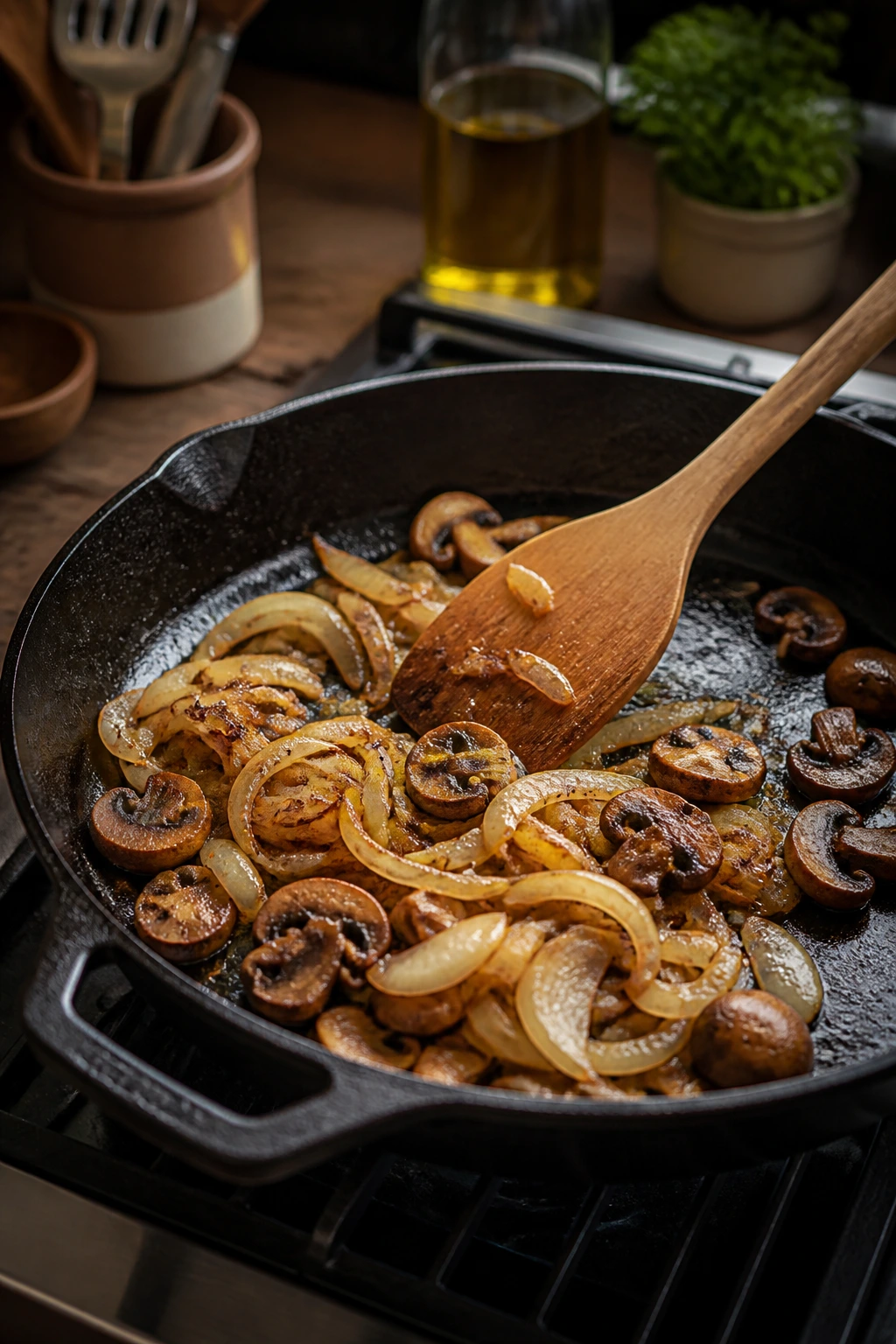
A sandwich like this doesn’t need specialty gear, but it does need the right basics. A dull knife and a cramped pan make the whole process sloppy.
- 12-inch skillet or wide sauté pan: This gives the onions and mushrooms enough surface area to brown instead of steam.
- Sharp chef’s knife: Thin, even slices cook at the same pace and keep the filling from turning ragged.
- Cutting board: A stable board matters more than people admit when you’re slicing onions and slippery zucchini.
- Wooden spoon or heatproof spatula: Useful for stirring the onions without scraping the pan harshly.
- Toaster or dry skillet: Either one works for the bread; the goal is a crisp surface, not deep browning.
- Small bowl: Handy for mixing the lemon juice, black pepper, or a quick hummus spread if you want to loosen it.
- Optional second skillet or cast-iron press: Nice if you want to lightly press the finished sandwich for extra crunch, but not required.
If your skillet is smaller than 12 inches, cook the mushrooms in two batches. That sounds fussy. It isn’t. It keeps the pan hot enough to brown the vegetables properly.
How to Build the Sandwich So It Stays Crisp
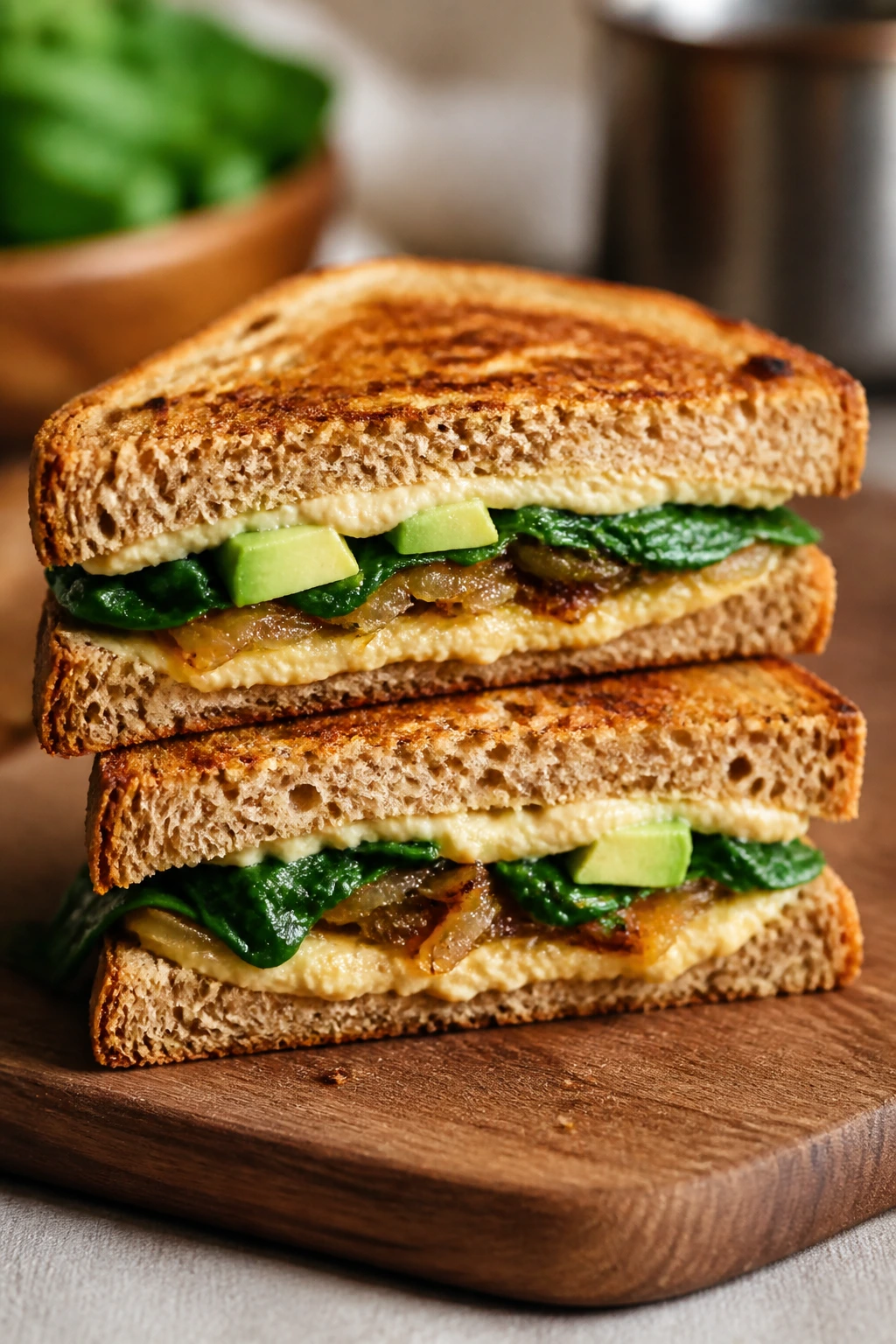
There are two jobs here: cook the vegetables until they taste deep and sweet, then assemble fast while the bread is still warm.
Prep and Slice
-
Slice the onions, mushrooms, bell pepper, and zucchini before you turn on the heat. Keep the onion slices even and the zucchini pieces around 1/4 inch thick so nothing overcooks while you’re still chopping.
-
Dry the spinach with a clean towel or salad spinner, then set it aside with the avocado, hummus, lemon juice, pepper, and cheese. Wet greens are the enemy here because they turn the bread soft in minutes.
Cook the Filling
-
Heat 1 tablespoon olive oil in a large skillet over medium-low heat. Add the onions and 1/2 teaspoon salt, then cook for 18 to 22 minutes, stirring every couple of minutes, until they turn soft, glossy, and deep golden at the edges. If the pan looks dry or the onions start to stick, add 1 tablespoon water and scrape up the browned bits.
-
Add the remaining 1 tablespoon olive oil, the mushrooms, bell pepper, zucchini, and the rest of the salt. Raise the heat to medium and cook for 8 to 10 minutes, stirring only when needed, until the mushrooms give off liquid and then reabsorb it, and the pepper softens with a few browned spots. Do not crowd the pan or everything turns watery.
-
Stir in the garlic and thyme and cook for 30 seconds, just until the garlic smells sweet rather than sharp. Add the balsamic vinegar and 1 tablespoon water, then cook for another 30 to 60 seconds until the liquid turns glossy and coats the vegetables in a thin glaze. Taste and adjust with black pepper.
Toast and Assemble
-
Toast the bread in a toaster or in a dry skillet over medium heat until the surface feels crisp and the edges are lightly browned. If you’re using sourdough, give it a little extra time so the crumb firms up.
-
Spread hummus on four slices of bread. Layer on the spinach, then the warm vegetable mixture, then the avocado. If you’re using feta or goat cheese, scatter it on top so it lands in little salty pockets instead of disappearing into the filling.
-
Finish with lemon juice and a little black pepper, then cap with the remaining bread slices. Press gently with your hand so the layers settle, and slice the sandwiches on the diagonal. If you want a warmer, crunchier finish, put the assembled sandwiches back in the skillet for 1 minute per side over medium heat.
One small note: let the vegetable filling sit off the heat for 2 minutes before assembly if it’s bubbling hot. That tiny pause keeps the bread from steaming immediately.
Serving It Hot, Sliced, and Actually Satisfying
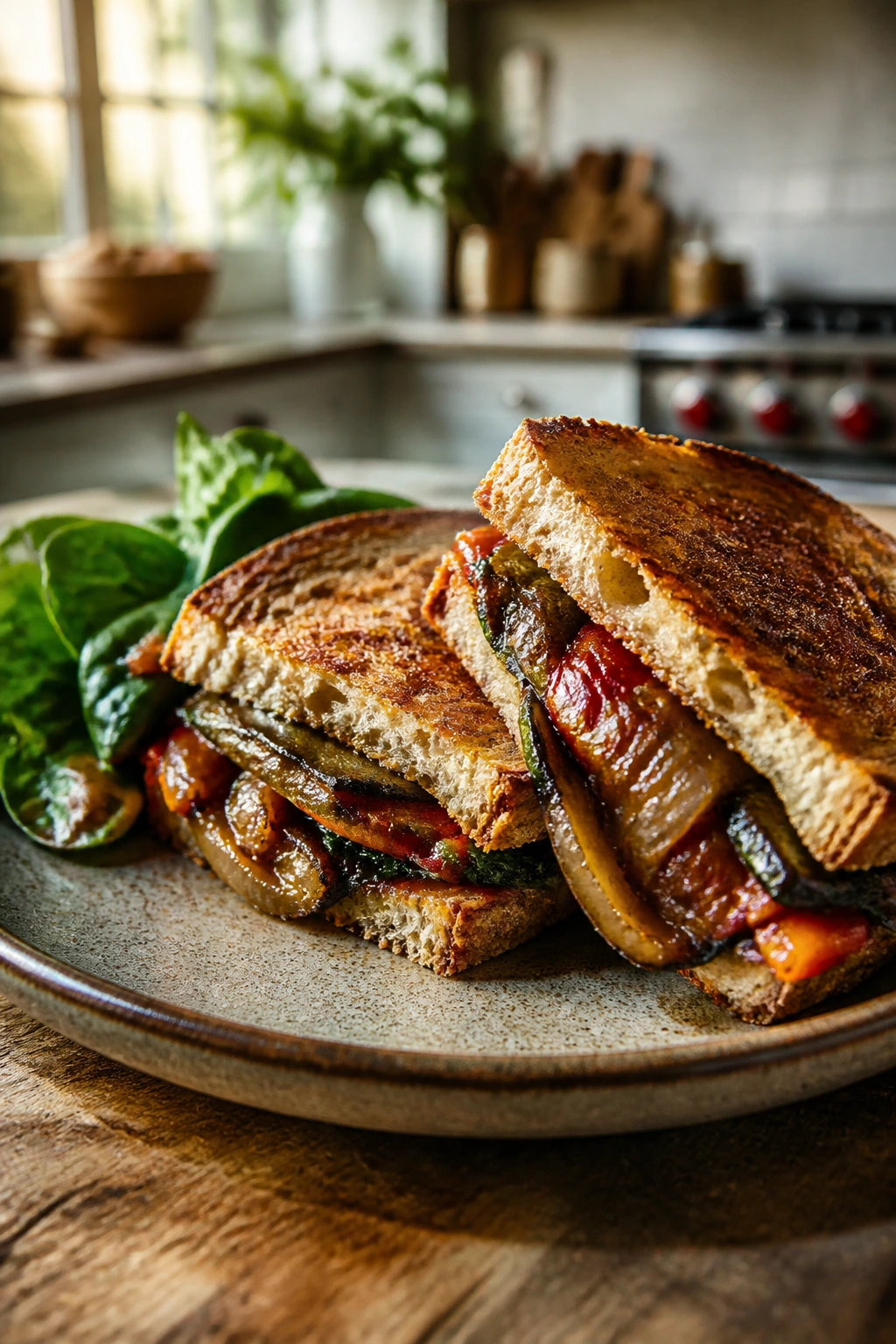
A sandwich this full deserves a little care on the plate. Cut it cleanly, and it looks more like dinner than something you made in a hurry.
Presentation: Slice each sandwich diagonally and stack the halves slightly apart so the vegetables show. A few stray spinach leaves on the side make the plate look relaxed rather than fussed over.
Accompaniments: A cucumber-tomato salad with lemon and olive oil works well because it stays crisp beside the warm filling. If you want a bigger dinner, add roasted carrots, a cup of tomato soup, or a small bowl of lentil soup.
Portions: One sandwich is a solid dinner for most people. If you’re serving it with soup or a substantial salad, half a sandwich can be enough, especially when the bread is thick and the filling is generous.
Beverage Pairing: Sparkling water with lemon keeps the sweetness of the onions in check. Unsweetened iced tea fits neatly too. If you want something with a little more character, a dry cider or a light white wine does the trick.
I usually serve this with a sharp knife nearby and a napkin that isn’t trying to be decorative. Warm vegetables and toasted bread make a crumbly mess. That’s part of the charm.
Small Tweaks That Change the Whole Sandwich
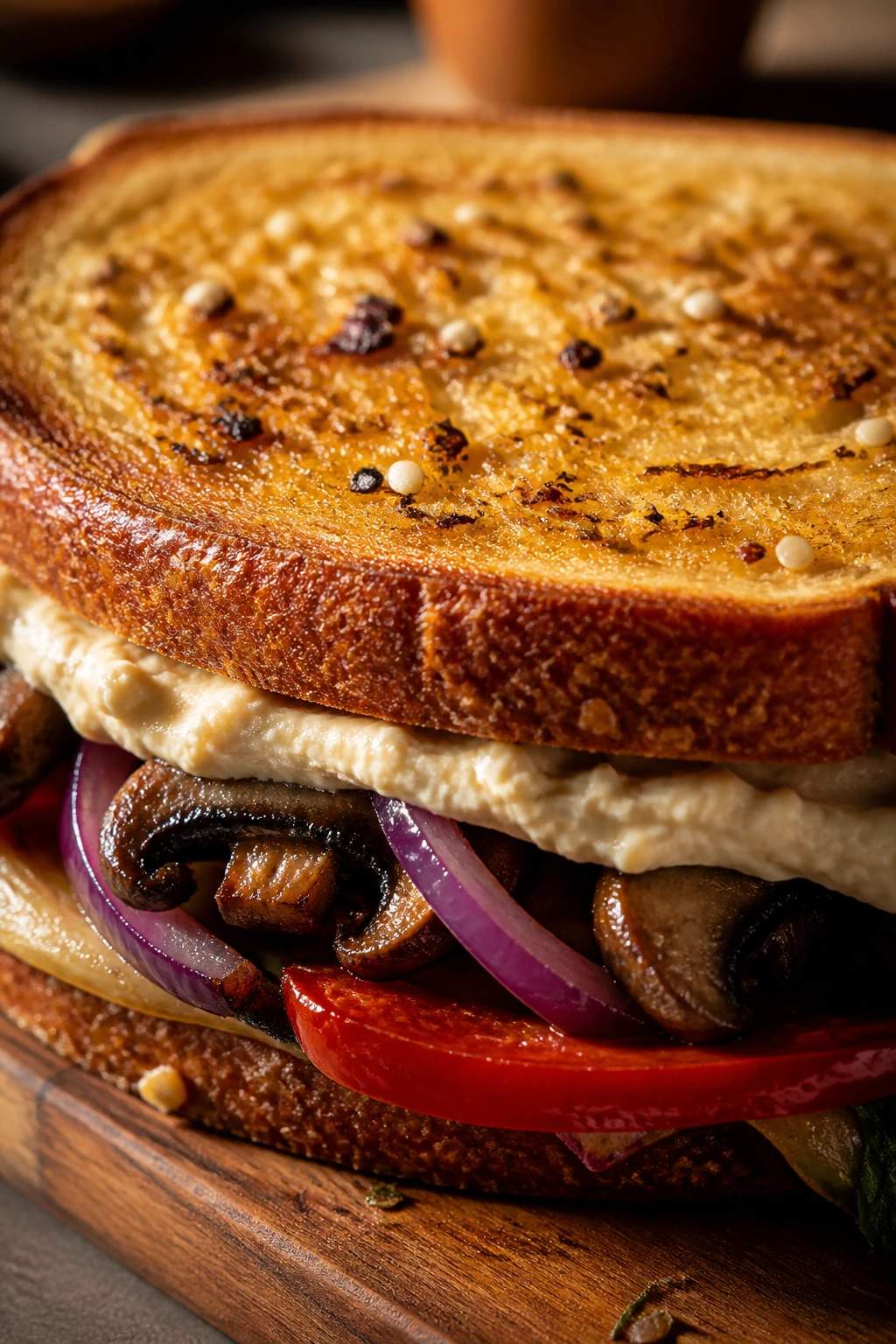
Flavor Enhancement: Rub the toasted bread with a cut clove of garlic before you spread the hummus. The garlic oil on the toast gives the sandwich a quiet edge that sits nicely under the sweet onions.
Customization: If you like heat, add a thin swipe of harissa or a pinch of red pepper flakes under the hummus. It wakes everything up without stealing the show.
Texture Boost: A spoonful of toasted pumpkin seeds or sunflower seeds adds crunch that survives the warm filling. I like this when the sandwich needs a little more bite and not more volume.
Serving Suggestions: Finish the avocado with lemon juice, black pepper, and a few flakes of salt. A scatter of chopped parsley or basil can help, too, especially if the filling feels rich.
Make-It-Yours: For a dairy-free version, skip the cheese and add a drizzle of tahini mixed with lemon. For a gluten-free version, use sturdy seeded gluten-free bread and toast it a little harder than you think you should.
This is the place to be opinionated. I’d keep the cheese optional, not mandatory. The sandwich has enough going on without it, and leaving it off makes the vegetable flavor a little clearer.
Common Mistakes That Ruin the Texture
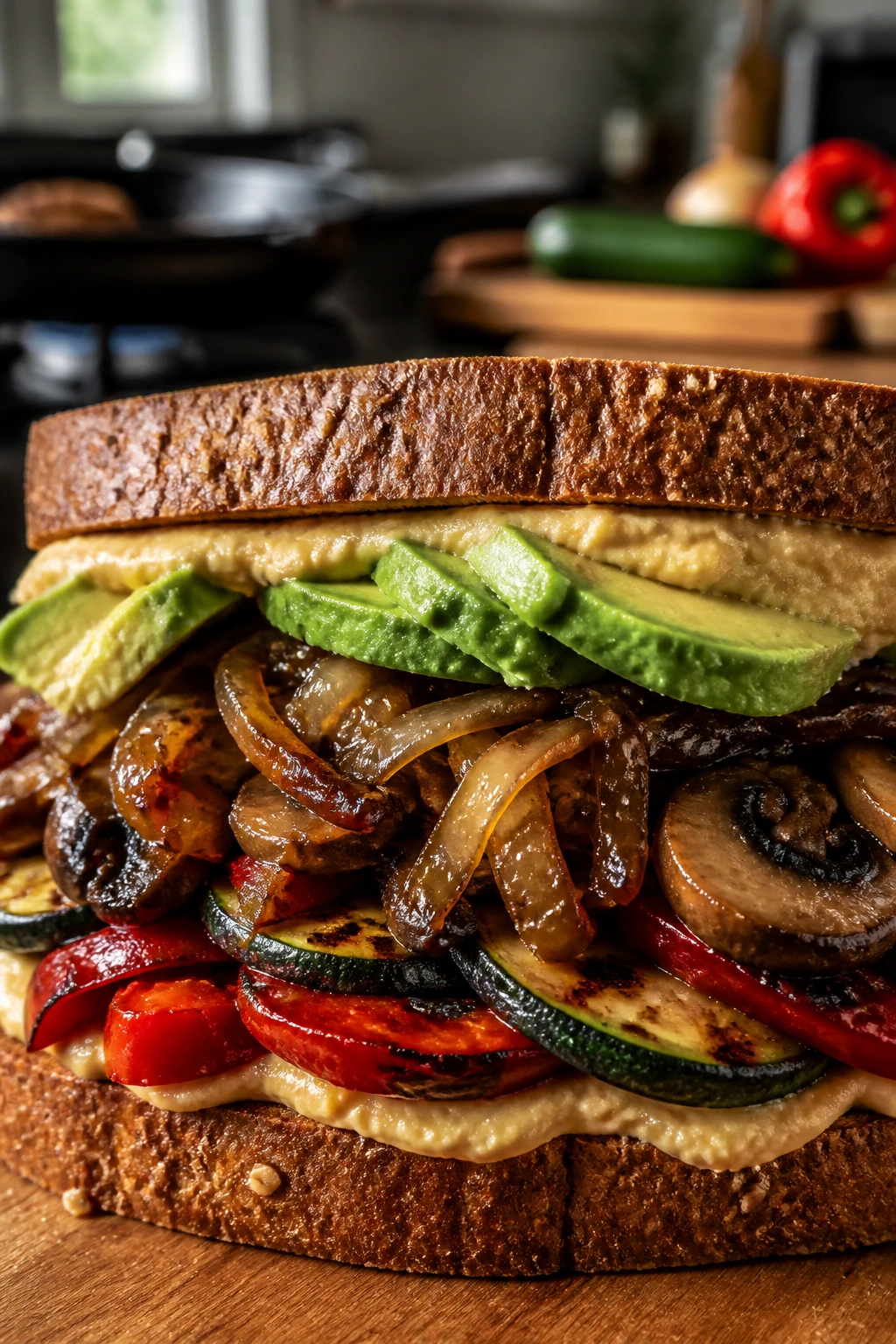
A sandwich like this doesn’t usually fail because of one dramatic disaster. It fails in small, annoying ways. The vegetables get wet. The bread gets soft. The onions taste sharp instead of sweet.
-
Cooking the onions too fast: If they hit high heat, the edges darken before the centers soften, and you get bitter little strands instead of caramelized onions. Use medium-low heat and add a spoonful of water if the pan starts catching.
-
Crowding the mushrooms: Packed mushrooms release moisture and sit there steaming in their own liquid. The fix is a wide skillet and enough space for the slices to touch the pan, not stack on top of each other.
-
Skipping the toast step: Untoasted bread absorbs the hummus and vegetable juices almost immediately. The sandwich may taste fine for the first bite, then fall apart halfway through. Toast both sides until the surface feels dry and slightly firm.
-
Assembling with soggy greens: Wet spinach or wet zucchini makes the bread soft at the seams. Dry the greens well and let the cooked filling rest for a minute or two before stacking.
-
Under-seasoning the filling: Caramelized onions taste sweet by nature, and if you stop there, the sandwich can feel flat. Salt the onions early, season the vegetables again at the end, and finish with lemon or balsamic so the sweetness has some structure.
-
Piling the filling too high: A mountain of vegetables looks generous, then slides out the first time you bite in. Keep the layers compact and even. You want a sandwich you can actually eat over a plate, not one you need a fork for after the first bite.
The mistake I see most often is bread choice. People spend all their time on the filling and then grab the softest loaf in the basket. That’s a trap.
Four Ways to Change the Filling Without Losing the Plot
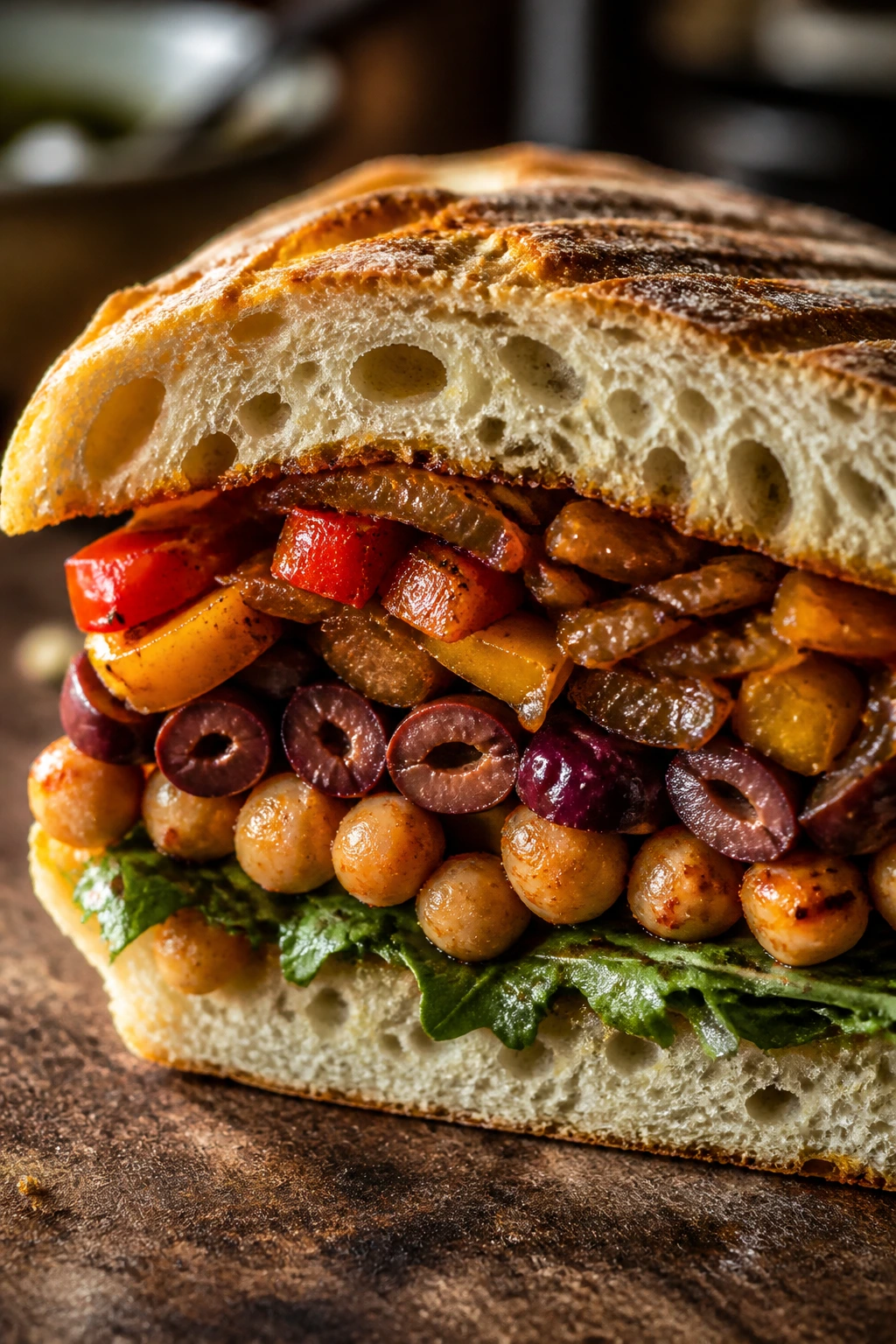
Smoky Market Stack: Add 1/2 teaspoon smoked paprika to the vegetables and swap the red bell pepper for roasted red peppers. The filling gets deeper and a little more mellow, which works nicely if you want a warmer, almost barbecue-like note without making the sandwich heavy.
Mediterranean Herb Press: Use feta, a few sliced olives, and a pinch of dried oregano instead of thyme. This version leans saltier and more briny, so I’d keep the lemon juice in place to stop it from feeling dense.
Protein-Forward Chickpea Crunch: Mash 1/2 cup cooked chickpeas with the hummus and spread that mixture thickly on the bread. Add sunflower seeds or chopped walnuts on top for crunch, and the sandwich moves closer to a full, hearty dinner without losing its vegetarian shape.
Dairy-Free Greenhouse Version: Skip the cheese and add a spoonful of tahini-lemon sauce in its place. A handful of arugula gives the sandwich a peppery edge that cuts through the sweet onions and makes the whole thing taste brighter.
Open-Face Knife-and-Fork Toast: Use two slices of bread for four open-faced toasts instead of four closed sandwiches. That’s the version I make when I want a lighter plate, a little less bread, and a lot of vegetable topping.
The nice thing about this base recipe is that the structure holds even when the flavor changes. Sweet onion, browned vegetables, creamy spread, sturdy bread. That part doesn’t need to move.
Make-Ahead, Fridge Life, and Reheating Without Soggy Bread
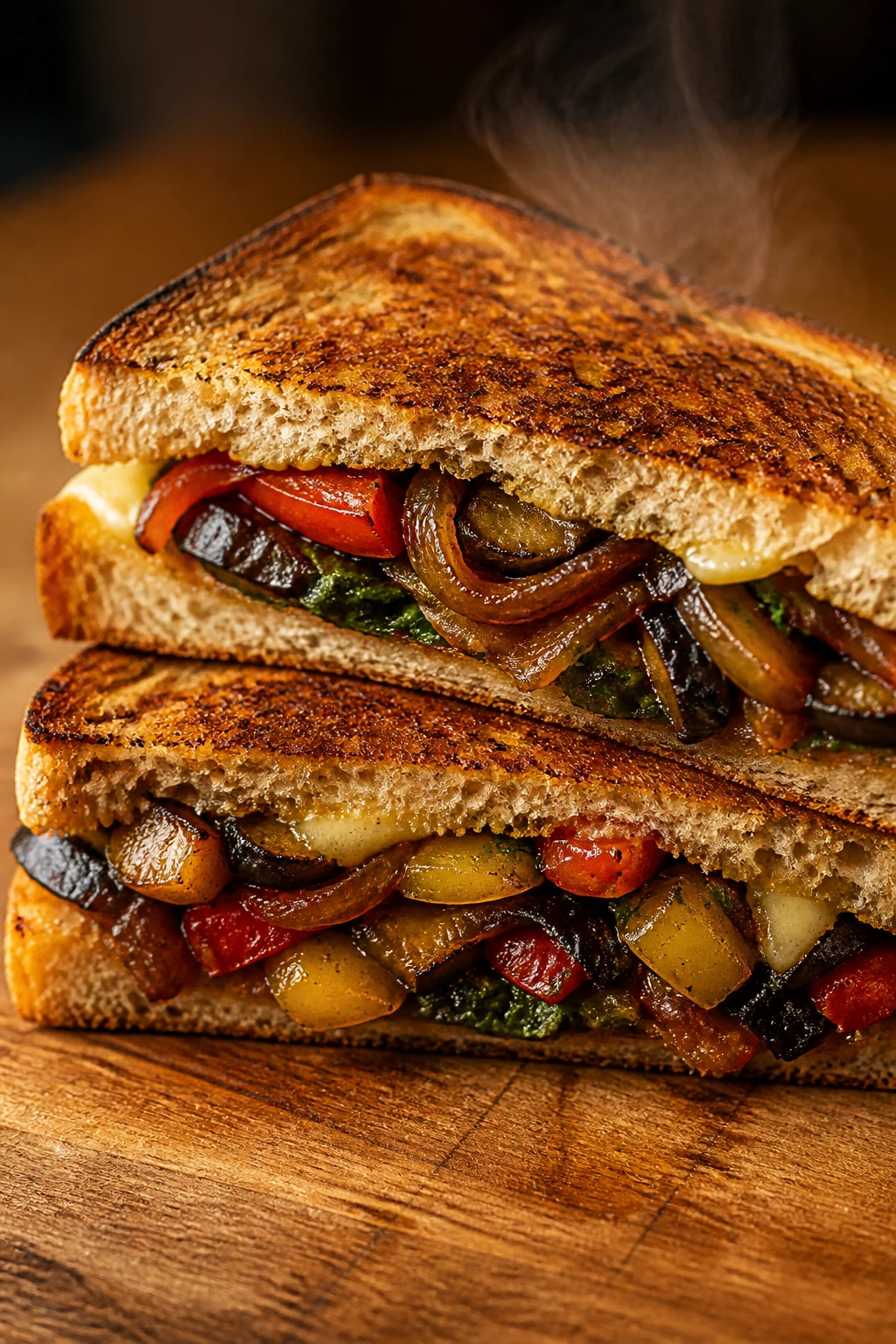
The best part of this sandwich is that the vegetable filling gets easier to live with after it sits. The bread does not.
In the fridge: Cooked onions and vegetables keep for 3 to 4 days in an airtight container. Store the bread, hummus, avocado, and spinach separately. If you assemble the sandwich ahead of time, the bread softens fast and the spinach wilts.
On the counter: An assembled sandwich is fine at room temperature for up to 2 hours, which is the usual food-safety window. After that, the filling and avocado are past the point where I’d trust them.
In the freezer: The cooked vegetable filling freezes well for up to 2 months. Let it cool completely, pack it into a freezer-safe container or bag, and press out as much air as you can. Thaw it overnight in the fridge, then reheat it in a skillet over medium heat until hot and steaming.
Reheating: For the best texture, warm the filling in a skillet over medium heat with a teaspoon or two of water so it loosens without drying out. Toast the bread fresh, then assemble right before eating. A microwave works in a pinch, but it softens the vegetables, so use it only when speed matters more than texture.
Make-ahead rhythm: If you want this for a weeknight, cook the onions and vegetables the day before. Toast the bread and slice the avocado at the last minute. That gives you almost all the flavor with none of the scramble.
The one thing I wouldn’t freeze is the assembled sandwich. Bread, hummus, and avocado all go strange once thawed together. Keep the pieces separate and the result is far better.
Questions People Ask Before They Make It
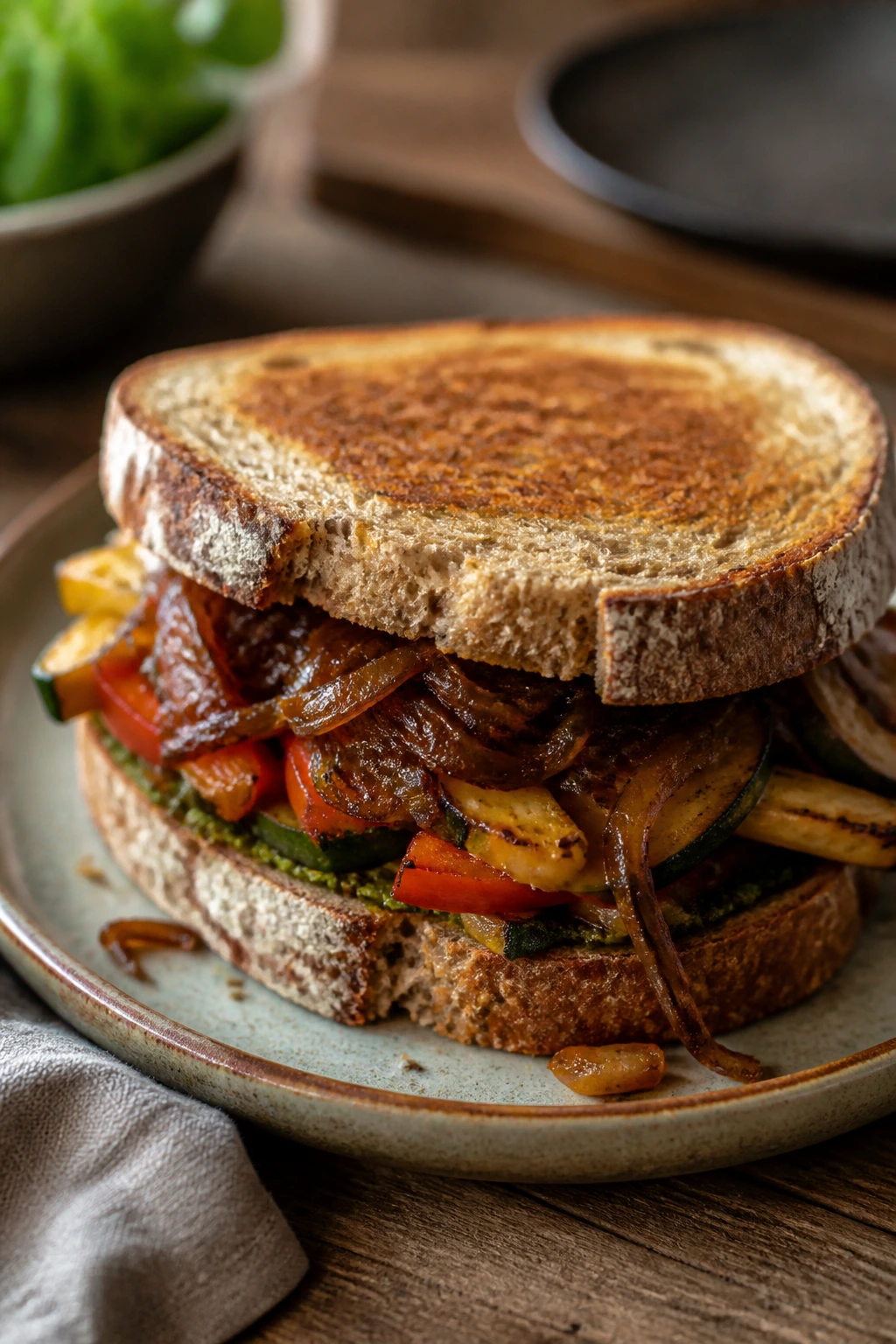
Can I make the vegetable filling ahead of time?
Yes, and I think it tastes better after a night in the fridge. The onions settle, the balsamic softens into the vegetables, and the whole mixture gets a little more unified. Just reheat it in a skillet so the moisture cooks off before you build the sandwich.
What bread works best if I don’t have sourdough?
Any sturdy bread with some chew will do the job. Whole-grain sandwich bread, seeded bread, or a dense country loaf are all better than soft white bread, which tends to collapse once the hummus and warm vegetables hit it.
Can I leave out the mushrooms?
You can, but the sandwich loses some of its depth. If mushrooms aren’t your thing, replace them with thin slices of eggplant, extra zucchini, or roasted portobello strips so the filling still has a meaty bite.
How do I keep the sandwich from getting soggy?
Toast the bread, dry the greens, and avoid loading the sandwich with wet vegetables straight from the pan. A thin, even layer of hummus acts like a barrier, and a short rest in the skillet after assembly gives the bread a chance to crisp again.
Can I make this gluten-free or dairy-free?
Yes to both. Use a sturdy gluten-free loaf and toast it more than you think you need to, because gluten-free bread softens faster. For dairy-free, skip the feta or goat cheese and use tahini, avocado, or a dairy-free feta-style crumble.
Is this sandwich good cold?
It’s edible cold, but I wouldn’t call that the best version. The onions taste flatter once chilled and the bread loses its crisp edge. If you need it for lunch the next day, keep the filling separate and assemble it after reheating.
What if the onions start browning too fast?
Turn the heat down and add a tablespoon of water. That slows the surface browning and gives the centers time to soften without burning the edges. If they’ve already gone too dark, start over; bitter onions sit on the whole sandwich like a bad note.
A Sandwich Worth Repeating
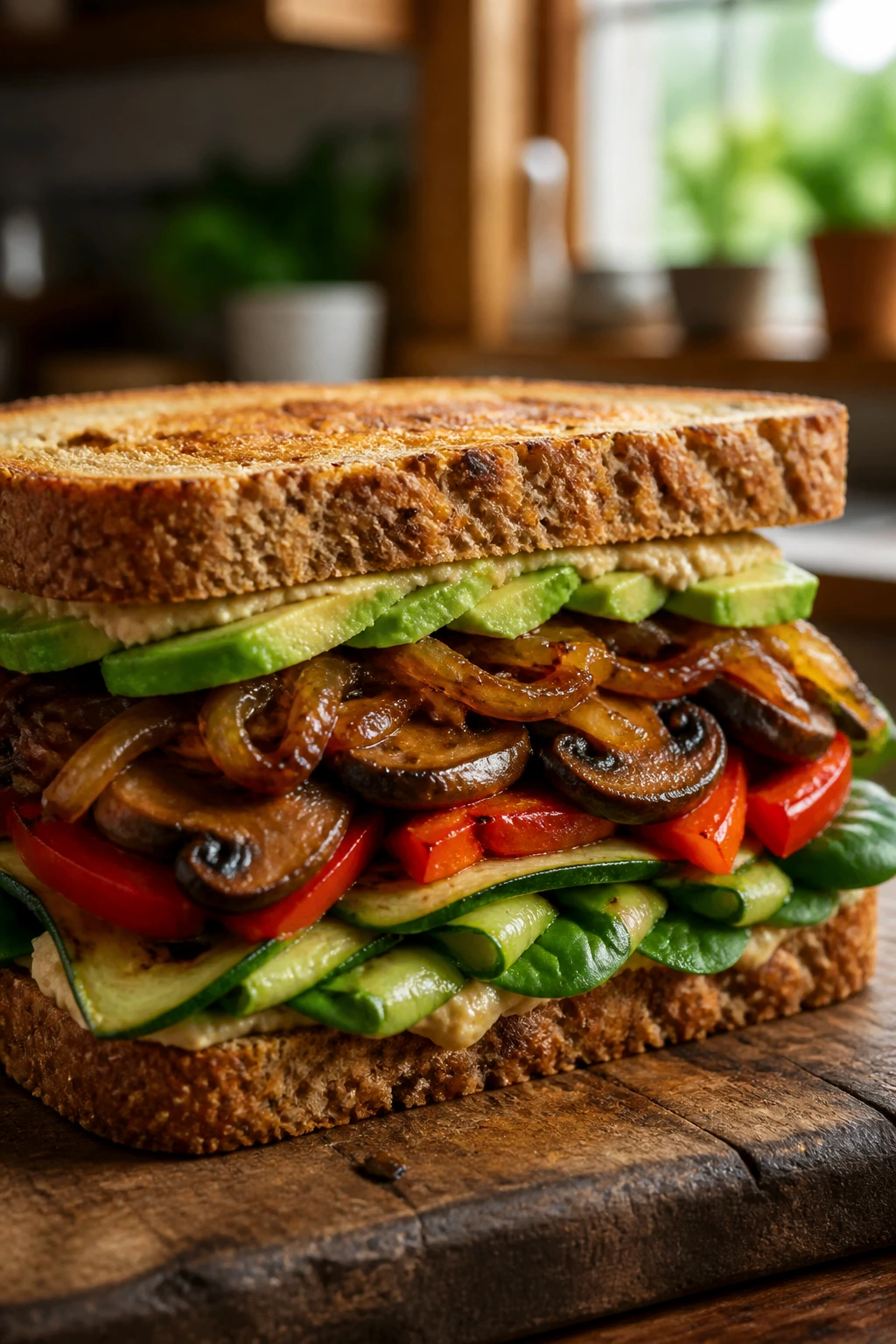
This is the kind of vegetarian dinner that feels built, not improvised. The onions are sweet because they were given time. The mushrooms taste rich because they were browned instead of crowded. The bread stays in the game because it was toasted with a job in mind.
That’s the difference between a sandwich that fills a gap and one you actually look forward to making. Keep the filling separate until the last minute, use a sturdy loaf, and don’t rush the skillet. Those three habits do most of the work.
The next time you want a meatless dinner with some weight to it, this is the one I’d make first.
Caramelized Vegetarian Sandwich — Recipe Card
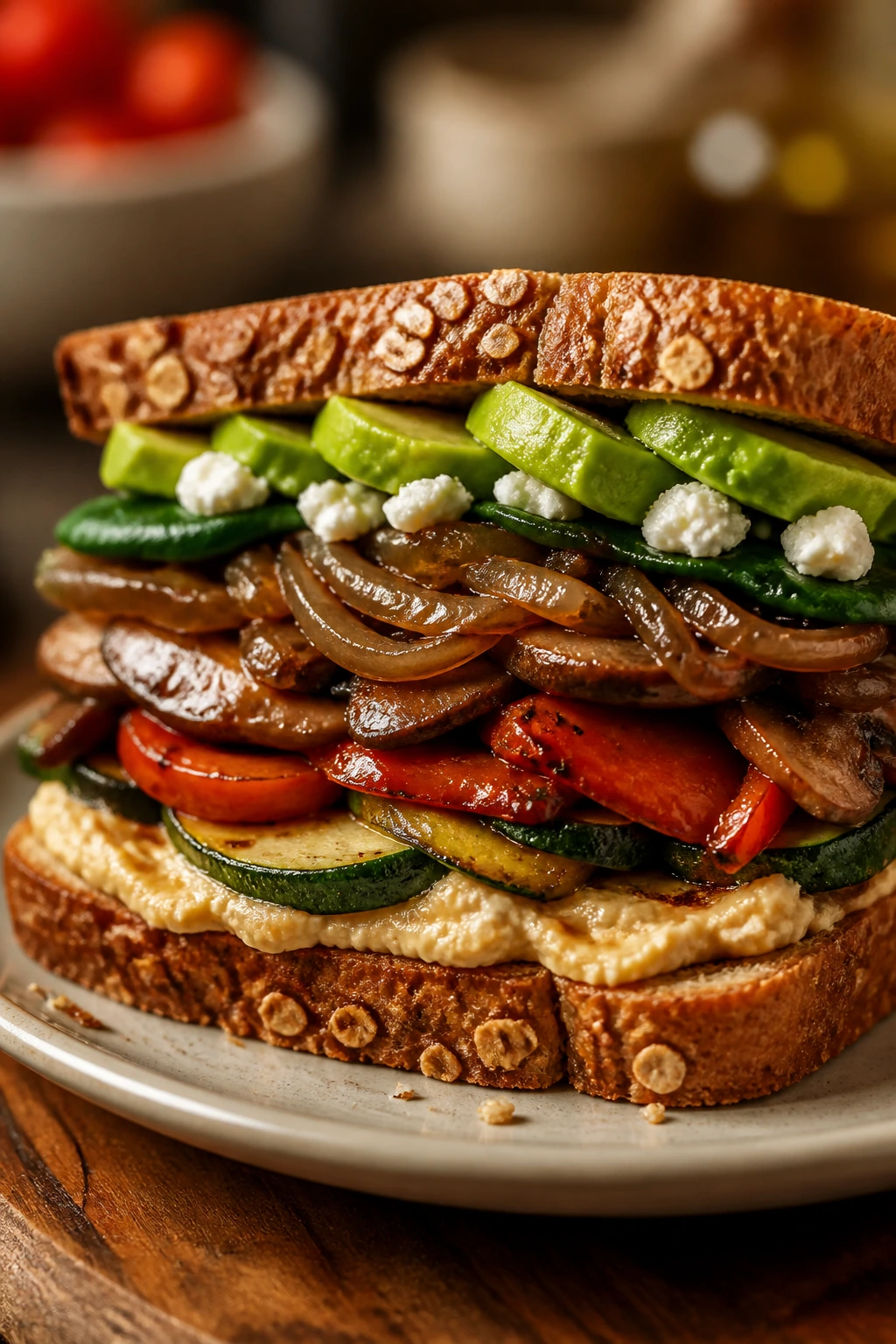
Recipe Name: Caramelized Vegetarian Sandwich
Description: A warm whole-grain sandwich layered with sweet caramelized onions, browned mushrooms, bell pepper, zucchini, hummus, spinach, and avocado, with optional feta for a salty finish. It’s sturdy enough for dinner and bright enough to keep each bite from feeling heavy.
Prep Time: 20 minutes
Cook Time: 30 minutes
Total Time: 50 minutes
Course: Dinner, Main Course
Cuisine: Vegetarian, American
Servings: 4 sandwiches
Calories: About 430 kcal per sandwich
Ingredients
For the Vegetable Filling:
- 2 tablespoons extra-virgin olive oil, divided
- 2 medium yellow onions, thinly sliced into half-moons
- 1 teaspoon kosher salt, divided
- 8 ounces cremini mushrooms, sliced 1/4-inch thick
- 1 medium red bell pepper, thinly sliced
- 1 medium zucchini, cut into 1/4-inch half-moons
- 2 cloves garlic, minced
- 1 teaspoon dried thyme
- 1 tablespoon balsamic vinegar
- 1 tablespoon water, for deglazing
For the Sandwich:
- 8 slices hearty whole-grain bread or sourdough, about 1/2-inch thick
- 1/2 cup plain hummus
- 1 ripe avocado, sliced
- 2 cups baby spinach, washed and thoroughly dried
- 4 ounces feta or goat cheese, crumbled, optional
- 1 tablespoon lemon juice
- 1/2 teaspoon black pepper
Instructions
-
Slice the onions, mushrooms, bell pepper, and zucchini, and set out the hummus, avocado, spinach, lemon juice, pepper, and optional cheese.
-
Heat 1 tablespoon olive oil in a large skillet over medium-low heat. Add the onions and 1/2 teaspoon salt, then cook for 18 to 22 minutes until soft, glossy, and deep golden at the edges.
-
Add the remaining 1 tablespoon olive oil, mushrooms, bell pepper, zucchini, and the remaining salt. Cook over medium heat for 8 to 10 minutes until the vegetables are browned and tender.
-
Stir in the garlic and thyme and cook for 30 seconds. Add the balsamic vinegar and water, then cook for 30 to 60 seconds until the vegetables are lightly glazed.
-
Toast the bread until crisp and lightly browned.
-
Spread hummus on four slices of bread. Add spinach, warm vegetables, avocado, and optional feta or goat cheese.
-
Finish with lemon juice and black pepper, then top with the remaining bread slices.
-
Press gently, slice, and serve right away. If you want extra crunch, toast the assembled sandwiches in a skillet for 1 minute per side.
Notes: Keep the filling and bread separate until the last minute for the best texture. The filling can be made 1 to 2 days ahead and reheated in a skillet. If you add feta, the calorie count rises a bit.