



The fastest way to lose a child at dinner is to set down one giant, beige casserole and ask for gratitude. The plate looks finished before anyone touches it. No choices, no crunch, no fun, and usually no second bite.
A fun dinner the whole family will love has a different shape. It gives kids something to build, dip, unwrap, stack, or stir. It keeps the flavors familiar enough that nobody panics, but lively enough that the adults don’t feel like they’re eating the same tired chicken-and-rice situation again. That’s the sweet spot: food that feels playful without turning the kitchen into a craft room.
I keep coming back to the same thing after years of feeding families with wildly different tastes: kids will eat more when dinner lets them recognize the parts. Not every part needs to be plain. Not every vegetable needs to hide. But the plate has to make sense at a glance, and it has to offer at least one win before the picky voice in the back of the head gets loud. The dinners that work best are usually the ones with crisp edges, mild sauces, and one or two pieces of control built right in.
Why This Dinner Style Gets Eaten
A little control lowers the drama: When kids can choose between tortillas, rice, pasta, or a roll, dinner stops feeling like a take-it-or-leave-it speech.
Familiar shapes beat mysterious piles: Meatballs, strips, sliders, noodles, and wedges are easier to accept than a mixed-up casserole where everything looks folded into everything else.
Crunch matters more than people admit: Toasted breadcrumbs, roasted potatoes, crisp chicken edges, and cut vegetables with dip give the mouth something to do, and that buys you a lot of goodwill.
One good sauce pulls the whole table together: A mild cheese sauce, garlic yogurt, ranch, marinara, or honey mustard can rescue plain vegetables and make simple protein feel like a complete meal.
Build-your-own dinners stretch groceries: A bowl of rice, a tray of roasted chicken, and a few toppings can become tacos, bowls, wraps, or quesadillas. That’s not a trick. It’s just a smarter way to cook.
Leftovers survive better when the parts stay separate: Sauce on the side, fillings in their own containers, and crunchy toppings added at the end keep lunch from turning into a soggy apology.
The Three-Part Plate That Stops Dinner Arguments
The best family dinner plates usually follow a pattern, even when nobody calls it that. There’s a base, a main, and one thing that changes the texture. That’s it. That’s the whole game.
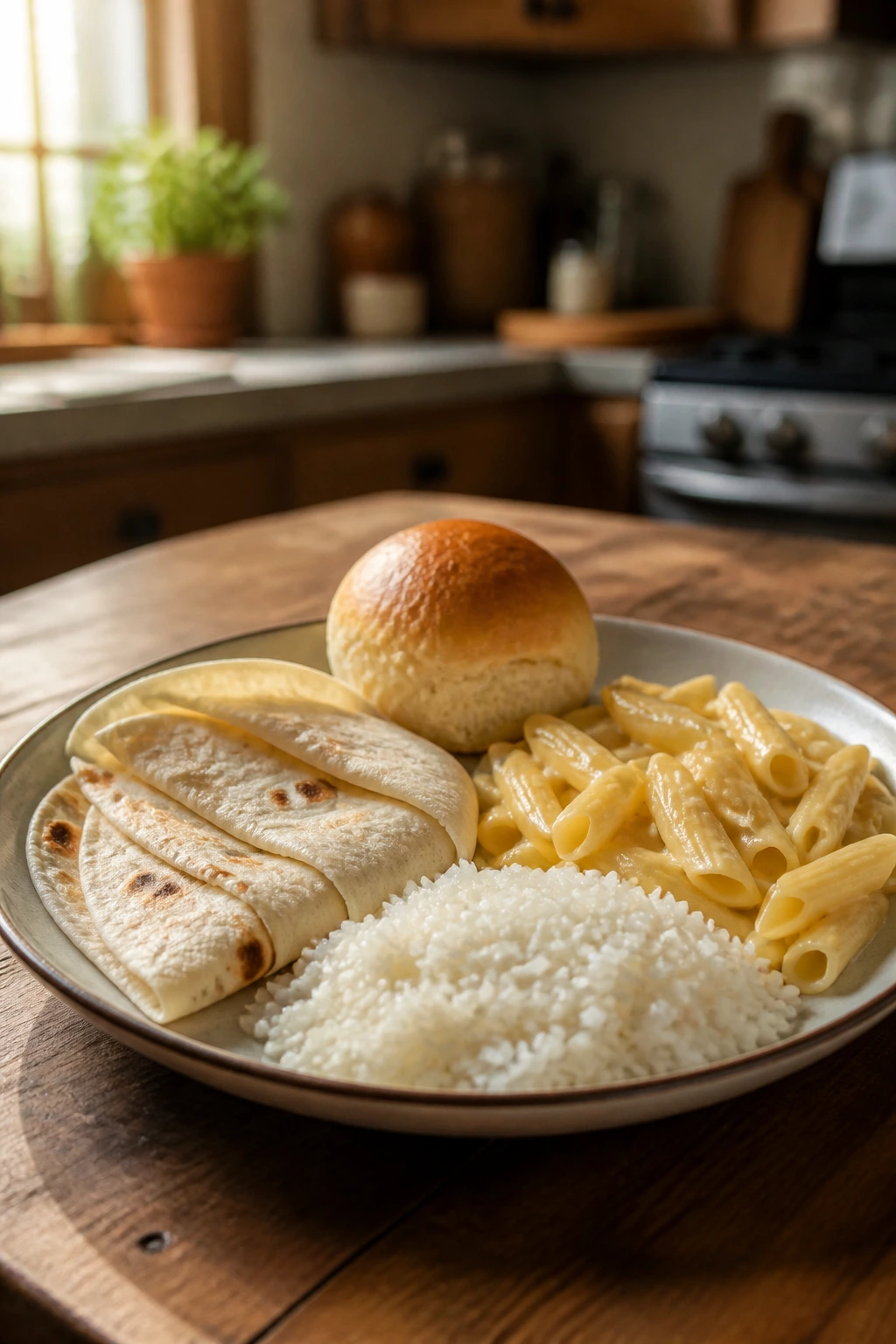
A base can be pasta, rice, tortillas, potatoes, buns, or noodles. It gives the meal shape. Kids relax when they know what the anchor is, and adults get the same comfort, even if they don’t say so out loud. A saucy main on plain rice feels calm. Crispy chicken in a tortilla feels more like an event.
Then comes the main part. Not fancy. Not fussy. Just seasoned well enough to taste like dinner instead of a vague protein situation. Chicken thighs, meatballs, turkey, eggs, beans, or beef all work here, but the trick is to keep the seasoning clear. Garlic, salt, onion, mild paprika, and a little acid beat a mudslide of random spices.
The third piece is the one most people skip: texture. A few cucumber slices, shredded lettuce, toasted breadcrumbs, corn, pickles, apple wedges, carrot sticks, or a crunchy slaw can make the plate feel finished. Kids may not tell you that’s what they wanted. They will tell you by eating it.
What I’d Put on the Plate First
Start with one obvious thing the child already trusts. Maybe that’s buttered noodles. Maybe it’s rice. Maybe it’s a roll cut in half. Then add the protein in a shape they can manage with a fork or fingers. Finish with one crisp or cool element on the side, not buried under sauce.
If you want the adult plate to feel less childish, layer in a sharper sauce, fresh herbs, hot sauce, or a more assertive vegetable for the grown-up side. Same dinner. Different attitude. No separate meal needed.
Taco Night Without the Chaos
Taco night works because it gives everyone a job. Warm the tortillas, set out the fillings, and let people build their own plate before the food goes cold. That little bit of control is often the difference between “I don’t like this” and “I made mine too full and now I’m proud of it.”
The best taco setup is not the biggest one. It’s the clearest one. Give yourself one seasoned protein, one starch, two toppings that add freshness, and one creamy finish. Ground beef, shredded chicken, black beans, or turkey all fit. Then keep the seasonings clean: cumin, garlic, onion, salt, a little smoked paprika if you want depth. Kids usually do better with a lighter hand on the chile heat and a stronger hand on the cheese.
I’m also a fan of mixing taco formats. Soft tortillas for younger eaters. Crunchy shells for kids who like a little drama. Rice bowls for the child who refuses handheld food at that moment and then asks for a tortilla after all. That’s fine. Dinner does not need to be a fixed personality.
The Toppings That Tend to Win
- Shredded cheddar or Monterey Jack
- Mild salsa
- Sour cream or plain Greek yogurt
- Diced avocado
- Corn kernels
- Shredded lettuce
- Thinly sliced cucumber or bell pepper
- Lime wedges for the adults
The toppings matter because they let a child make one small decision at a time. That’s a calmer table than asking them to eat a fully assembled taco someone else made. Plus, leftover taco components are useful the next day. A bowl of rice, a few spoonfuls of chicken, and a handful of shredded cheese become lunch before you’ve even started the dishwasher.
Pasta Dinners That Feel Like an Event
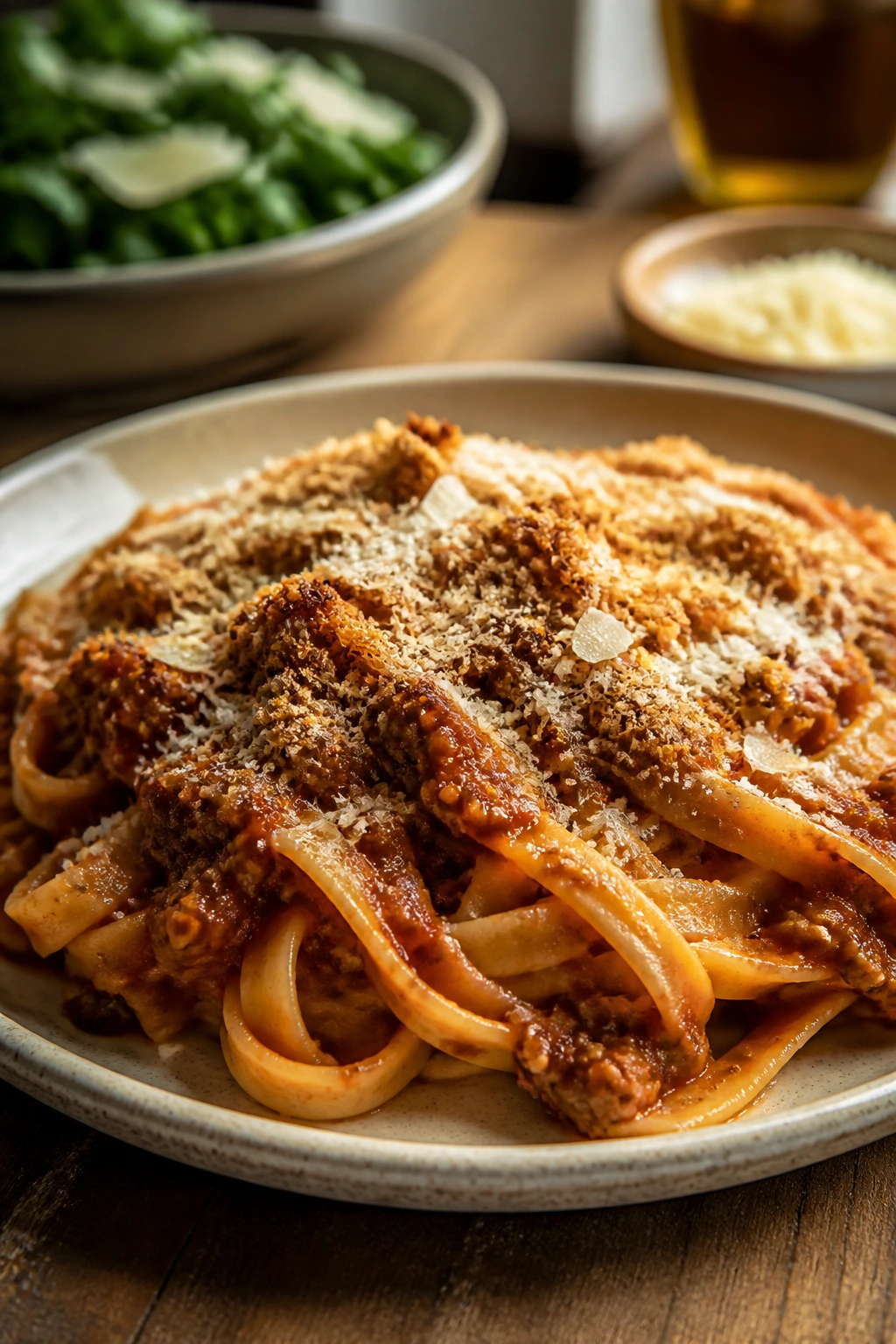
Pasta is the family dinner that has to work harder than it looks. The mistake people make is treating it like a background food. It isn’t. Pasta can be the whole show if you give it one sharp sauce, one good fat, and a topping that cracks when you bite it.
Baked ziti, buttered noodles with meatballs, spaghetti with a mellow marinara, or a creamy chicken pasta bake all hit different parts of the kid-brain. Long noodles are fun to twirl. Short shapes feel easier to handle. Baked pasta with browned cheese on top brings the sort of crunchy-soft contrast that makes second helpings happen without a speech.
What I don’t love is drowning pasta in sauce until the noodles disappear into a red swamp. Kids often eat better when they can see the shape of the food. A modest coating is enough. A sprinkle of parmesan, some chopped parsley, or a handful of toasted breadcrumbs gives it that finished feel without making it complicated.
Small Changes That Help a Lot
- Reserve ½ cup of pasta water before draining. A splash helps the sauce cling instead of pooling at the bottom.
- Salt the cooking water until it tastes like the sea. Bland pasta is hard to rescue later.
- If you’re making baked pasta, pull it from the oven when the sauce is bubbling at the edges and the top has browned in spots, not when it’s dried out.
- Serve a plain side of buttered peas or cucumber slices for the child who wants a “safe” food on the plate.
One more thing: pasta for family dinner does not need to be expensive to work. A box of penne, a jar of decent marinara, ground turkey, and a little cheese can carry a whole evening. That’s the kind of cooking that pays rent.
Mini Foods Beat Giant Portions
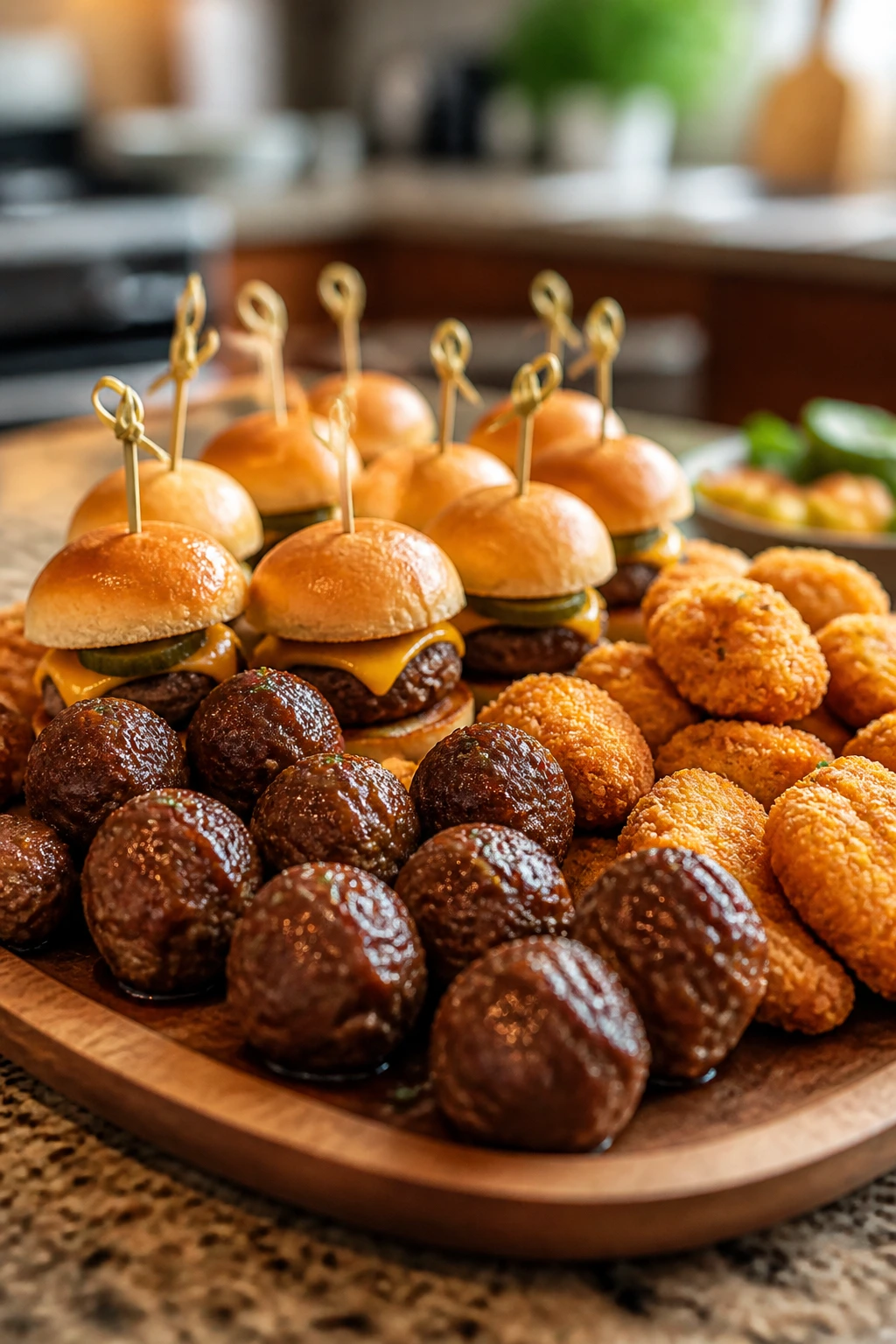
Small food lowers the stakes. That sounds almost silly until you watch a kid face down a plate of oversized chicken breast and then eat three meatballs, two slider halves, and a pile of roasted potatoes with total confidence.
Mini foods work because they look finishable. That matters. Kids are often less interested in flavor than in whether a food feels manageable. Meatballs, sliders, chicken tenders, mini quesadillas, and small baked bites give the table a sense of progress. One bite disappears. Another bite disappears. The whole plate suddenly feels like a win.
Adults benefit from this too, though we pretend we don’t care. Mini foods are easy to portion, easy to reheat, and easy to mix with different sides. Turkey meatballs with rice one night. Meatball subs the next. Chicken bites with salad later on. That’s a real dinner system, not a one-off recipe.
Best Mini Formats for Family Dinner
- Meatballs: Beef, turkey, chicken, or lentil. Bake them on a sheet pan at 400°F until they hit the right internal temperature and brown on the edges.
- Sliders: Tiny buns make food feel playful, and they hold up well to pulled chicken, burger patties, or sliced meatballs with sauce.
- Quesadilla wedges: Cut them into triangles so even younger kids can hold them without the filling sliding out.
- Chicken nuggets from scratch: Use panko for extra crunch and bake or air-fry until the coating is deeply golden.
There’s a practical side here too. Mini foods cool faster, which means less waiting. Less waiting means fewer complaints. That’s not glamorous, but it’s real.
Sheet-Pan Suppers With Crisp Edges and Less Cleanup
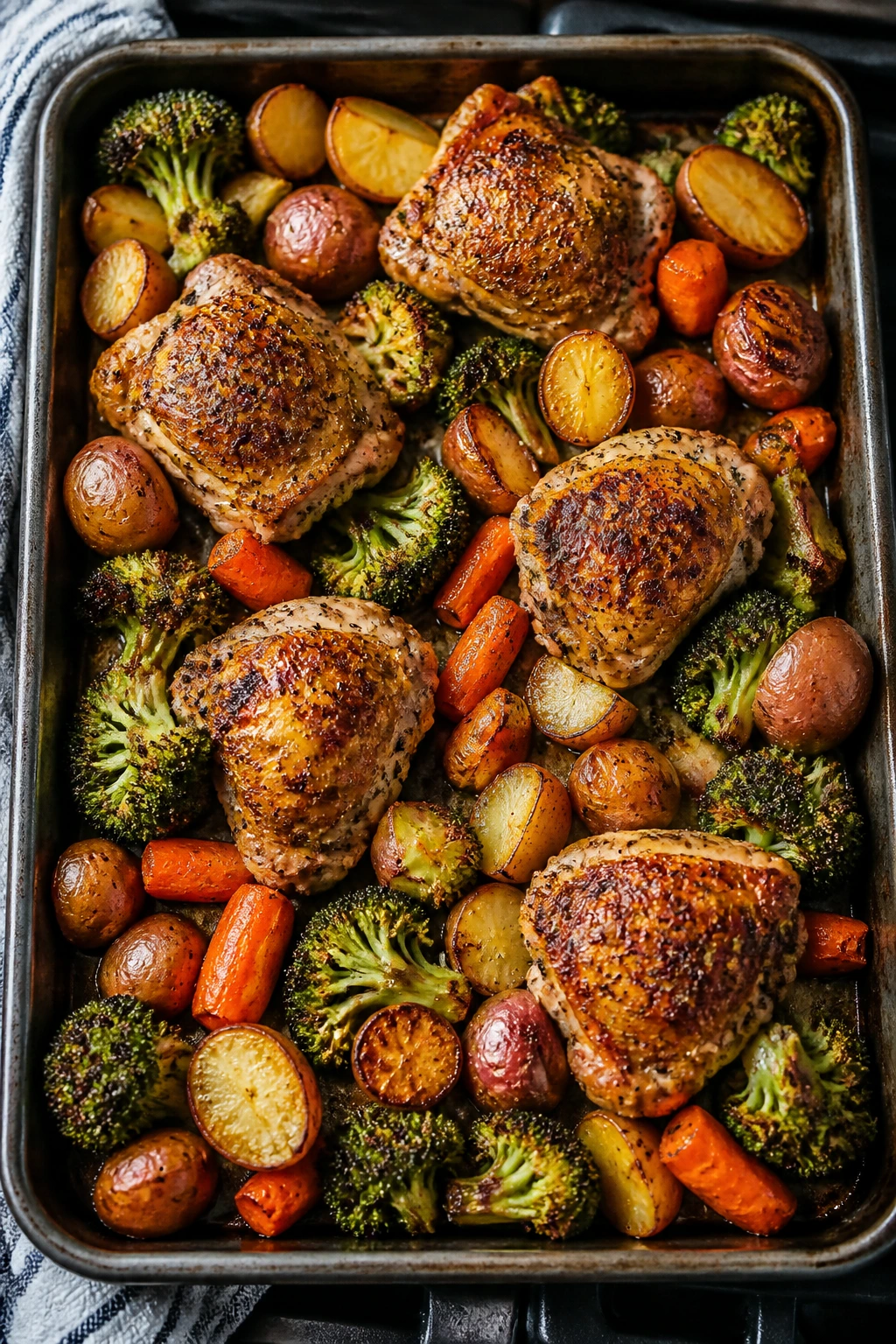
A good sheet-pan dinner gives you dinner and a hint of victory on the same tray. The vegetables brown, the protein cooks, and the oven does the part that would otherwise have you stirring three pans while a child asks whether the potatoes are “done yet” every four minutes.
This is where I’d lean into foods with edges. Chicken thighs, sausage, salmon, carrots, broccoli, potatoes, zucchini, and cauliflower all do well when roasted hot enough to color, not steam. A 425°F oven is usually the sweet spot. Lower than that and you risk soft vegetables with no personality. Higher than that and you need to watch for dry protein.
The best sheet-pan dinners keep the seasonings simple. Olive oil, salt, pepper, garlic powder, onion powder, and maybe a little paprika. Kids often prefer roasted vegetables over boiled ones because the oven sweetens them. Carrots get less carrot-y. Broccoli turns nutty. Potatoes get those browned bits everybody fights over.
How to Keep the Pan Working for Everyone
If one child hates mixed food, roast the components in separate corners of the same tray. If another child will only eat a tiny bit of seasoning, pull a portion off before adding a glaze or sauce. Adults can finish their servings with lemon, herbs, chili crisp, or parmesan at the table.
A sheet-pan dinner doesn’t have to be fancy to feel like a meal. It just has to be browned, hot, and arranged so the kids can identify the parts without a decoder ring.
Breakfast-for-Dinner That Nobody Resents
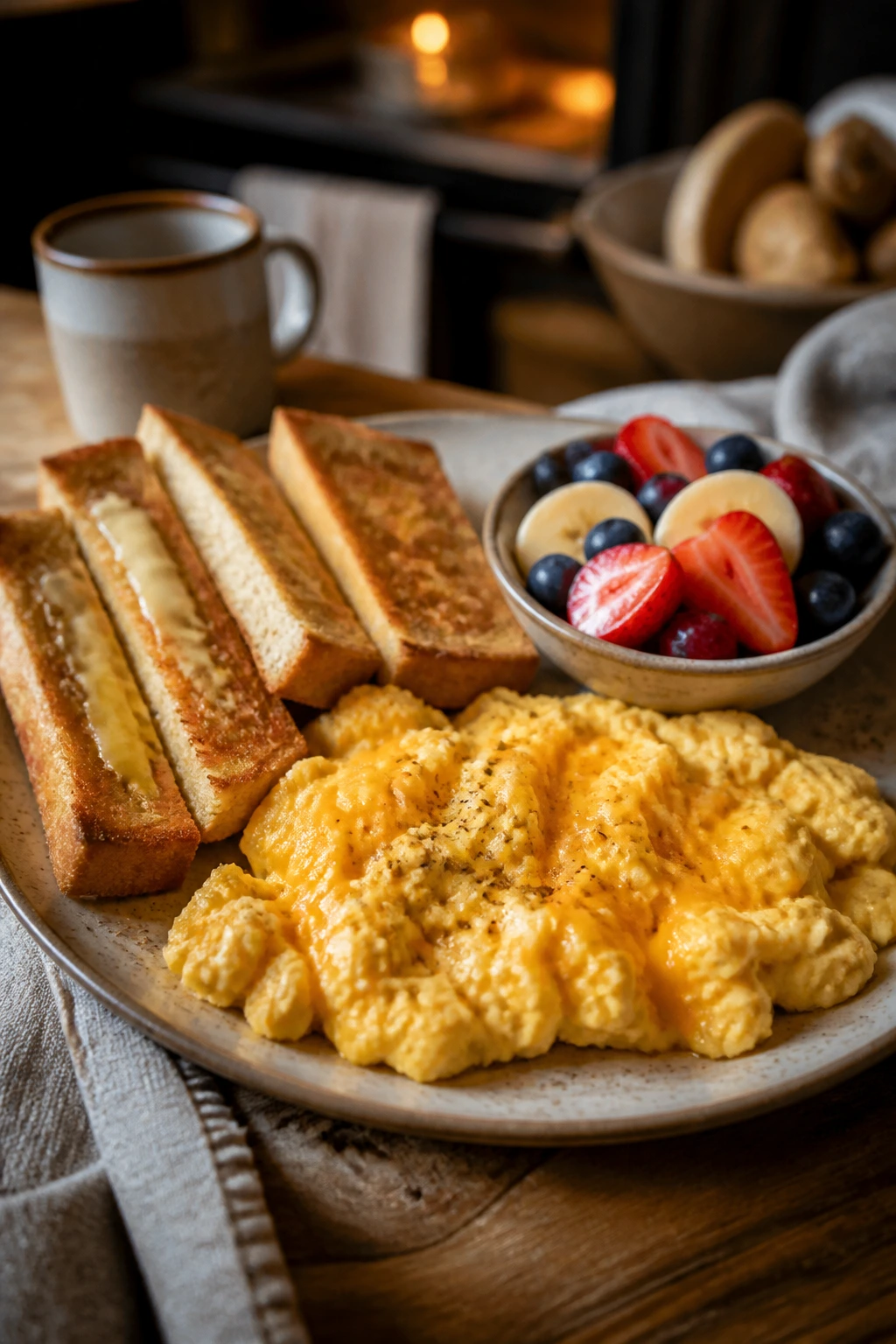
Breakfast for dinner can go one of two ways. It can feel like a lazy fallback, or it can feel like a small rebellion that everybody gets behind. The difference is effort. Not much effort. Just enough.
Eggs are the obvious anchor. Scrambled eggs with cheese. Omelets cut into strips. Frittata wedges. French toast with fruit and bacon on the side. Pancakes plus sausage and scrambled eggs. Hash with potatoes, onions, and a few pieces of ham. These dinners work because the flavors are soft, familiar, and easy to portion.
The trick is to make breakfast feel intentional. Use real butter. Brown the hash. Put the fruit in a separate bowl so it stays fresh. Don’t serve cold pancakes straight from the bag if you can help it — warm them in a low oven for a few minutes so they smell like actual dinner and not a compromise.
The Best Breakfast Dinner Moves
- Pair eggs with toast soldiers or buttered English muffins.
- Add sliced strawberries, orange segments, or banana halves on the side.
- Keep maple syrup separate so it doesn’t end up on everything.
- Add a salty bite like bacon, turkey sausage, or crisp potatoes.
Kids tend to trust breakfast foods because they already know the flavor map. Adults often like breakfast dinner because it’s fast without feeling like an apology. I’m not above that. A plate of eggs, roasted potatoes, and fruit can be a perfectly decent dinner, and sometimes that’s all you need.
Vegetables That Don’t Start a Negotiation
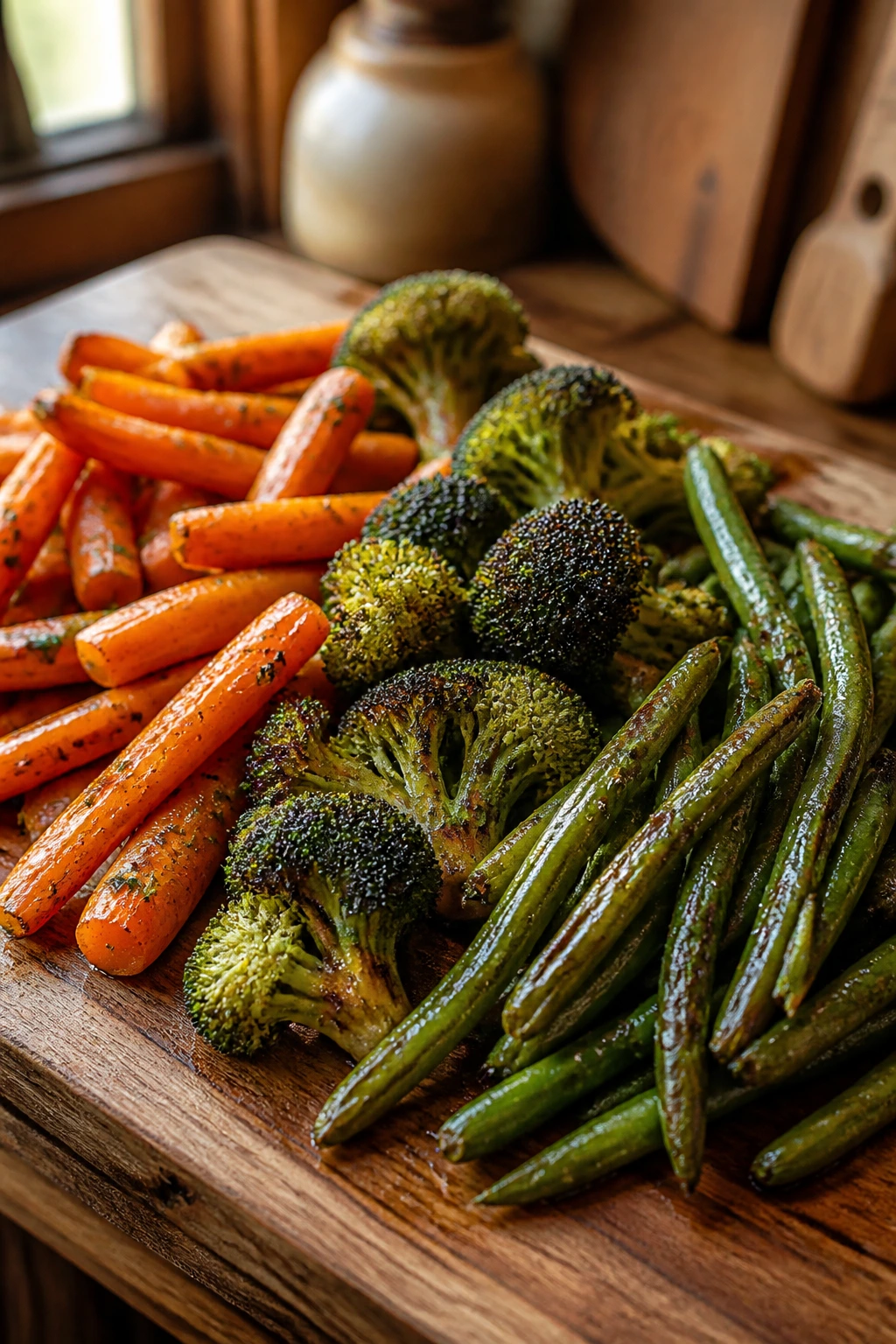
A lot of parents think they need to hide vegetables. I don’t. Hide them once in a while if it gets you through a rough night, sure. But in the long run, kids do better when vegetables look like food they can recognize.
Roasted vegetables are your friend. So are raw veggies with dip, quick-pickled cucumbers, sweet corn, and peas tossed with butter and salt. If a vegetable has a strong flavor, give it a bridge. A yogurt dip for carrots. A little parmesan on broccoli. Honey on roasted carrots. Lemon on green beans. You’re not tricking anyone. You’re making the food easier to approach.
Texture is half the problem. A limp, boiled carrot is a hard sell. A carrot that’s roasted at 425°F until the edges caramelize? Different story. It smells sweeter, tastes sweeter, and holds its shape better on the fork.
Vegetable Pairings That Usually Work
- Roasted carrots with honey and salt
- Broccoli with olive oil and parmesan
- Cucumber spears with ranch or yogurt dip
- Corn with butter and a little lime
- Snap peas tossed raw with a pinch of salt
- Green beans roasted until blistered at the edges
The adults can have a more assertive version. Add chili flakes, garlic, mustard, or herbs to the grown-up serving. Keep the kid serving calmer. That split is not a failure. It’s dinner with judgment.
The Sauces and Dips That Pull Dinner Together
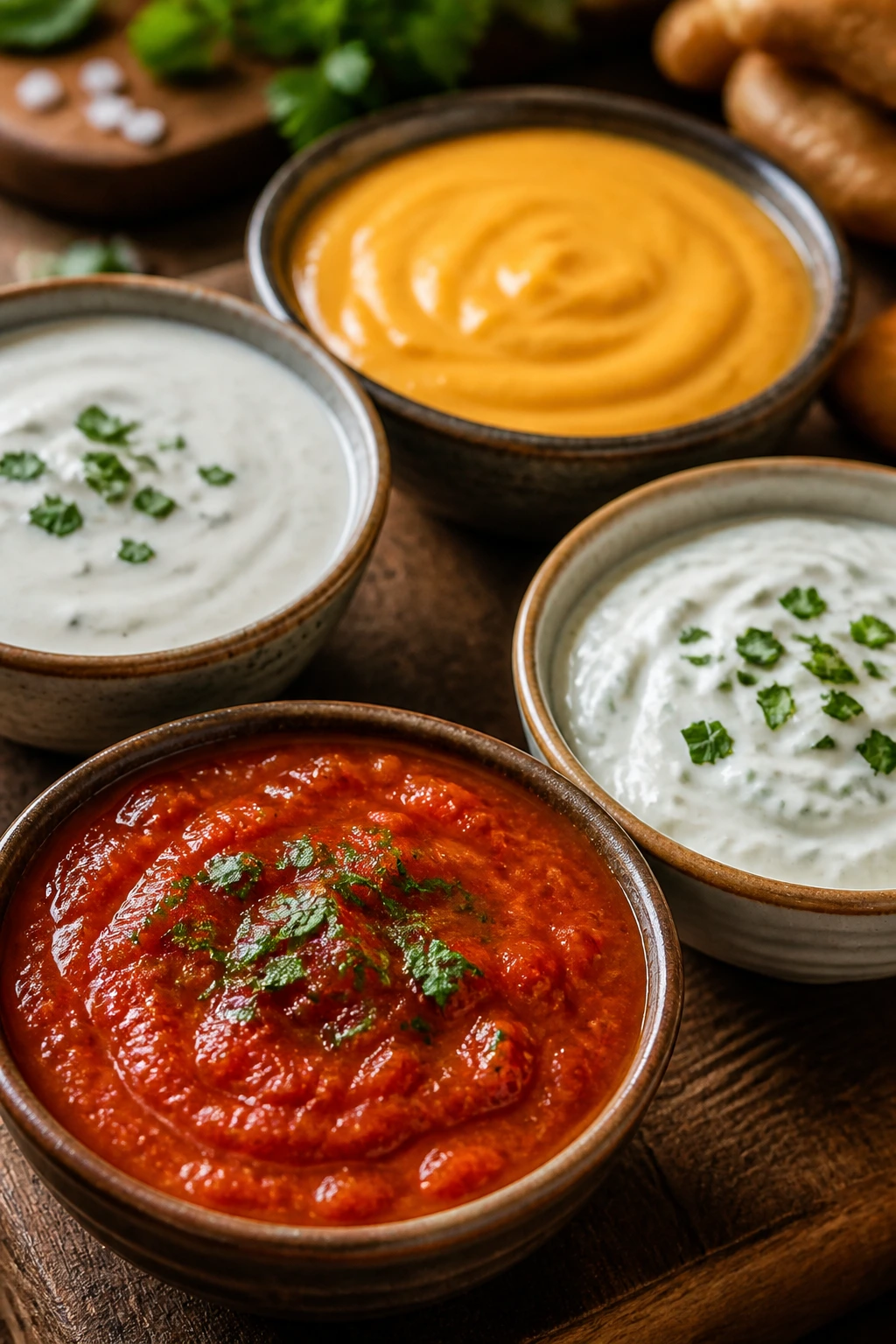
If you want kids to eat more, put something on the table they can dip into. I’d argue that sauce is underrated in family cooking. Not a huge amount. Just enough to give plain chicken, roasted potatoes, tortilla wedges, or vegetables a second personality.
Marinara is the old reliable. Ranch is the obvious crowd-pleaser. Yogurt-based garlic sauce works better than people think, especially with roasted vegetables or chicken strips. Cheese sauce can rescue broccoli and pasta in one move. Honey mustard is good with chicken bites and sliders. Mild salsa gives tacos a little lift without turning the meal into a dare.
Sauce also helps with pacing. A child who dips each bite often eats slower, which sounds bad until you realize it gives them time to trust the food. The plate feels interactive instead of forced.
Make the Sauce Count
Use thicker sauces for dipping and thinner sauces for coating. Kids hate when food slips apart in their hands. If you’re using a yogurt or sour cream dip, add a pinch of salt and a squeeze of lemon so it tastes like something, not like chilled cream with good intentions.
Keep one familiar dip on the table and one slightly bolder option for the adults. That’s usually enough. Too many sauces and the meal starts to feel like a test kitchen.
A Week of Dinner Templates That Won’t Wear You Out
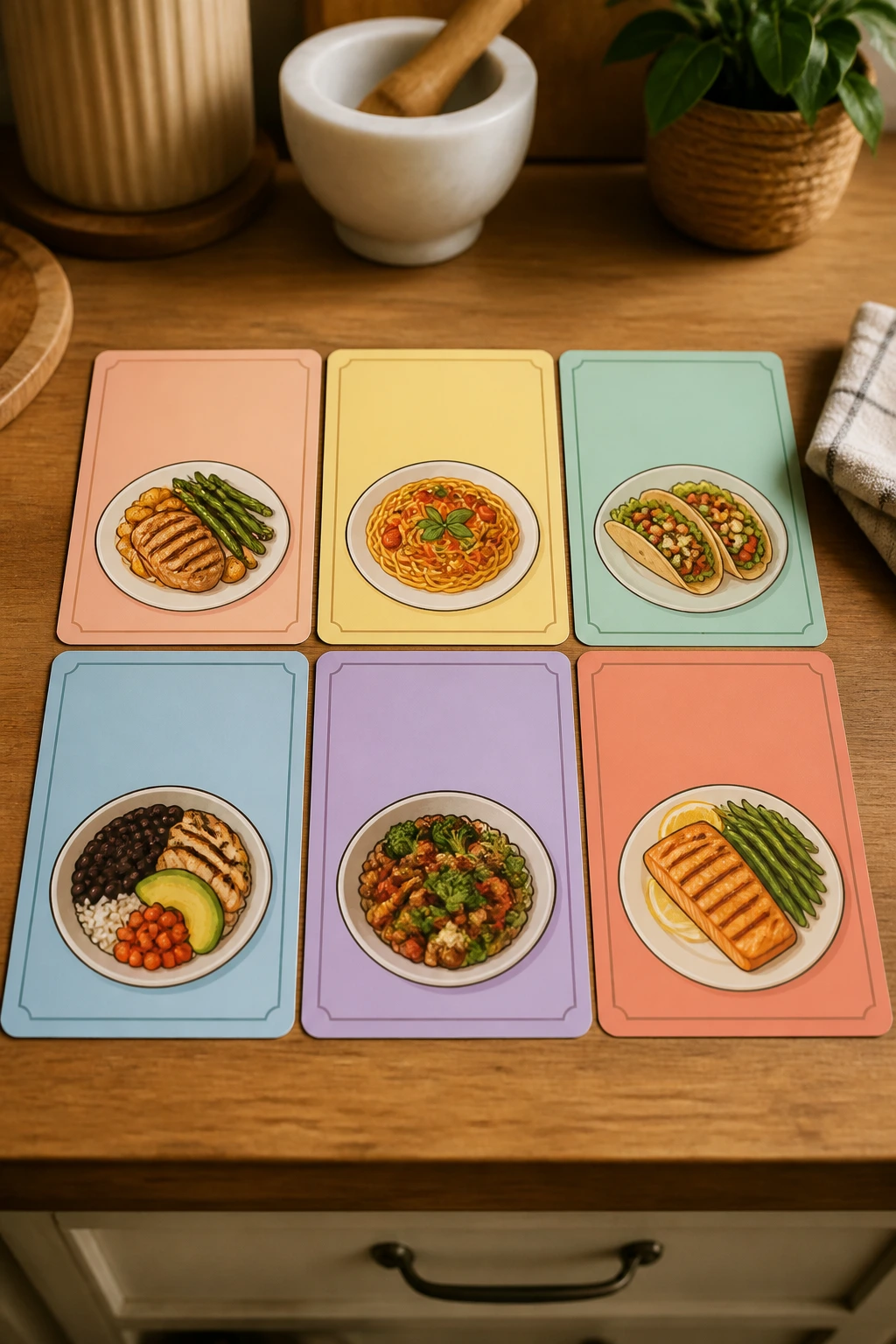
A family dinner plan doesn’t need to be rigid. It just needs a few repeatable shapes so you’re not inventing dinner from scratch while already tired.
Here’s the pattern I like: one interactive night, one sheet-pan night, one pasta night, one mini-food night, one leftover night if you’ve got it, and one breakfast-for-dinner slot to save your energy. The exact foods can shift with what’s on sale and what’s in the fridge. The shape stays the same.
A Simple Rotation That Holds Up
Taco or burrito night: Ground beef, chicken, or beans with tortillas, cheese, and a few toppings.
Pasta night: Baked ziti, meatballs, or buttered noodles with a green vegetable on the side.
Sheet-pan night: Chicken thighs or sausage with potatoes and carrots.
Mini-food night: Sliders, meatballs, nuggets, or quesadilla wedges.
Breakfast night: Eggs, toast, fruit, and potatoes.
Leftover remix night: Turn the roasted chicken into wraps, the rice into bowls, or the meatballs into subs.
Fast-cleanup night: Something like soup and grilled cheese, where the cooking is short and the cleanup is short too.
The point isn’t variety for variety’s sake. It’s reducing the number of decisions you have to make at 5:40 p.m. while also keeping dinner from feeling stale. Small structure. Less friction.
Smart Shopping for Family Dinners That Actually Get Used
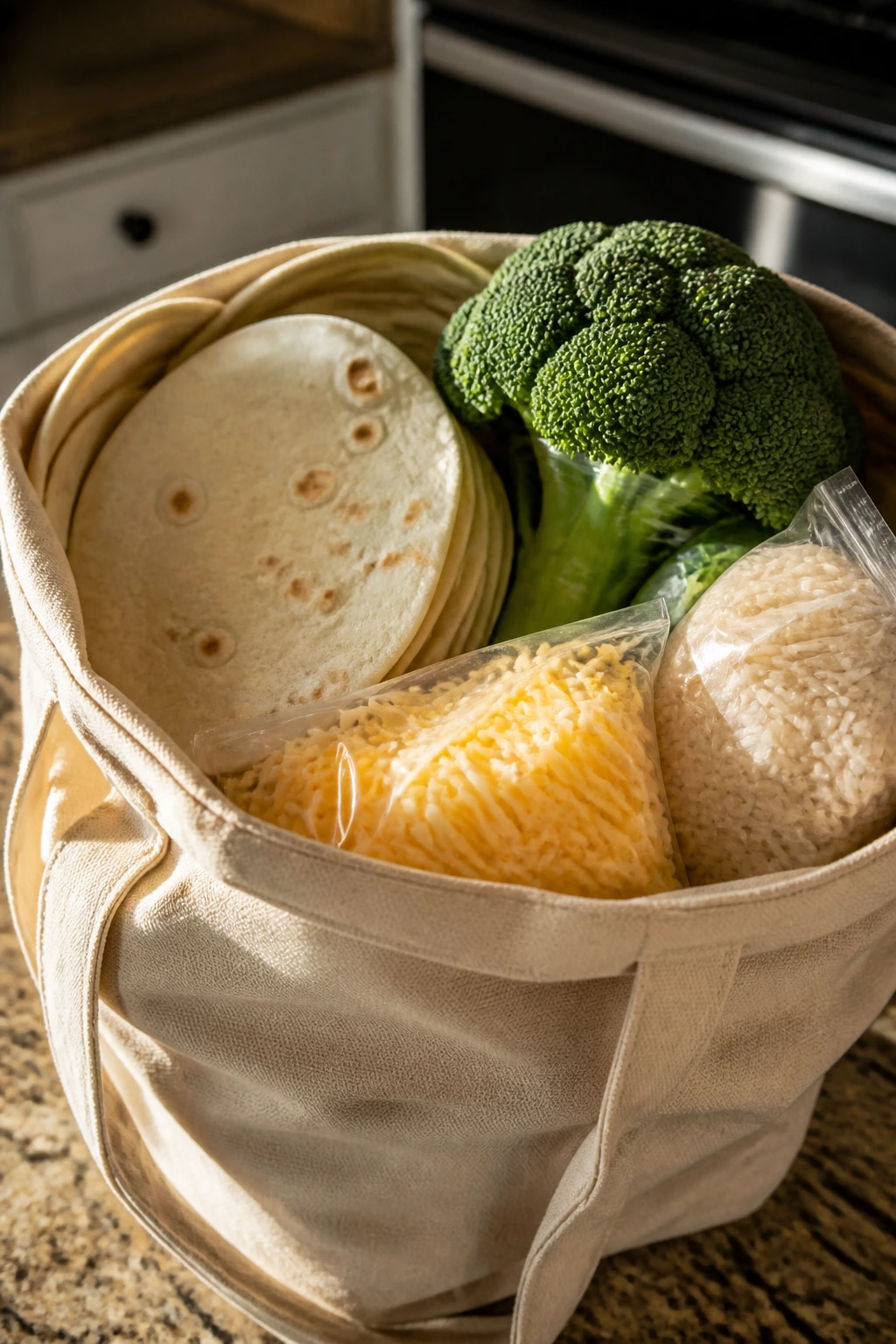
A good grocery list for kid-friendly family meals is less about finding special ingredients and more about choosing foods with overlap. One package of tortillas can become tacos, quesadillas, and wraps. A bag of rice can support stir-fry bowls, chicken bowls, and leftovers. A block of cheese turns up in pasta, eggs, potatoes, and sandwiches.
That kind of shopping saves money, but it also saves brainpower. You’re not buying a different universe for every dinner.
What to Choose at the Store
- Protein: Chicken thighs, ground turkey, ground beef, eggs, canned beans, sausage, or meatballs
- Bases: Rice, pasta, tortillas, buns, potatoes, bread
- Vegetables: Carrots, broccoli, cucumbers, bell peppers, corn, peas, salad greens
- Sauces: Marinara, salsa, ranch, yogurt, honey mustard, barbecue sauce
- Finishers: Cheese, lemons, herbs, breadcrumbs, pickles, avocado, olive oil
If you’re shopping for chicken, thighs are often more forgiving than breasts because they stay juicy longer in the oven. For ground meat, buy enough fat content to keep the flavor from going flat. For vegetables, frozen is fine. In fact, frozen peas, corn, and broccoli are often better than tired fresh produce that sat in the drawer for a week.
Food safety matters here too. Poultry should reach 165°F in the thickest part. Ground beef, turkey, and pork should hit 160°F. Whole cuts of beef, pork, lamb, and fish have their own safe targets, and a thermometer is cheaper than guessing. I’d rather use a $15 instant-read thermometer than play the “does this look done?” game at dinnertime.
Essential Tools That Keep Family Dinner Moving
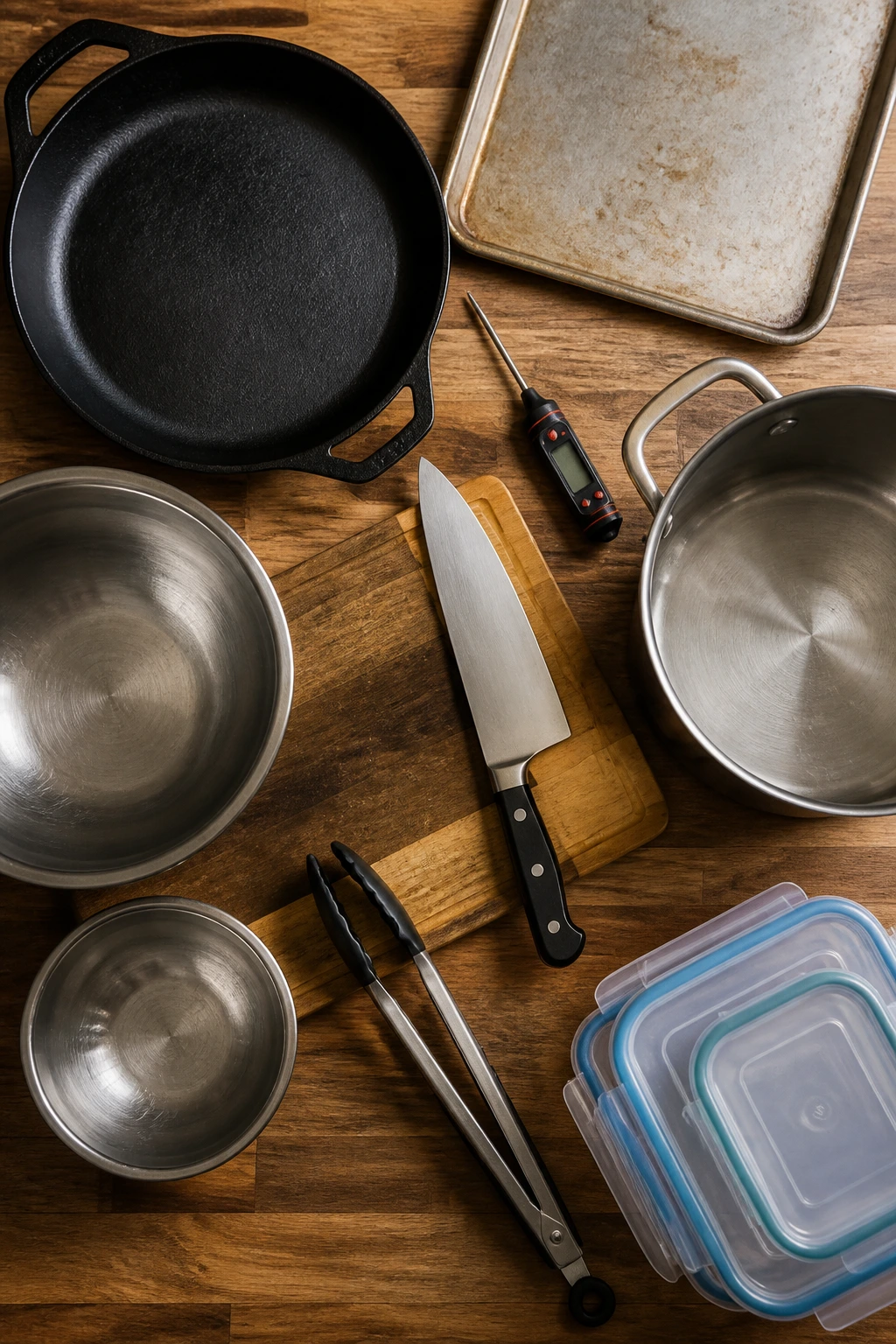
You do not need a drawer full of gadgets to make family dinners work. A handful of sturdy tools will cover most of the recipes and dinner formats that land well with kids.
- 12-inch skillet: Big enough for meatballs, quesadillas, eggs, and quick sauces without crowding.
- Rimmed sheet pans: The workhorse for roasted vegetables, chicken, sausage, and mini foods.
- Instant-read thermometer: The easiest way to stop guessing about doneness, especially with chicken and ground meat.
- Large pot: Needed for pasta, rice, potatoes, or boiling corn.
- Sharp chef’s knife: A dull knife makes prep slower and rougher, which is miserable when you’re cutting carrots and cucumbers at the same time.
- Cutting board with grip: A damp towel under the board keeps it from sliding.
- Mixing bowls: Useful for tossing vegetables, mixing meatballs, or setting up taco toppings.
- Tongs and a wide spatula: Handy for flipping, turning, and serving without shredding the food.
- A few airtight containers: Leftovers are easier to use when they’re stored in containers that stack and seal well.
If you’re cooking on a budget, skip the novelty gear. Buy the thermometer first. Then the sheet pans. Those two things will do more for dinner than a gadget shaped like a pineapple ever will.
Additional Tips and Flavor Boosters
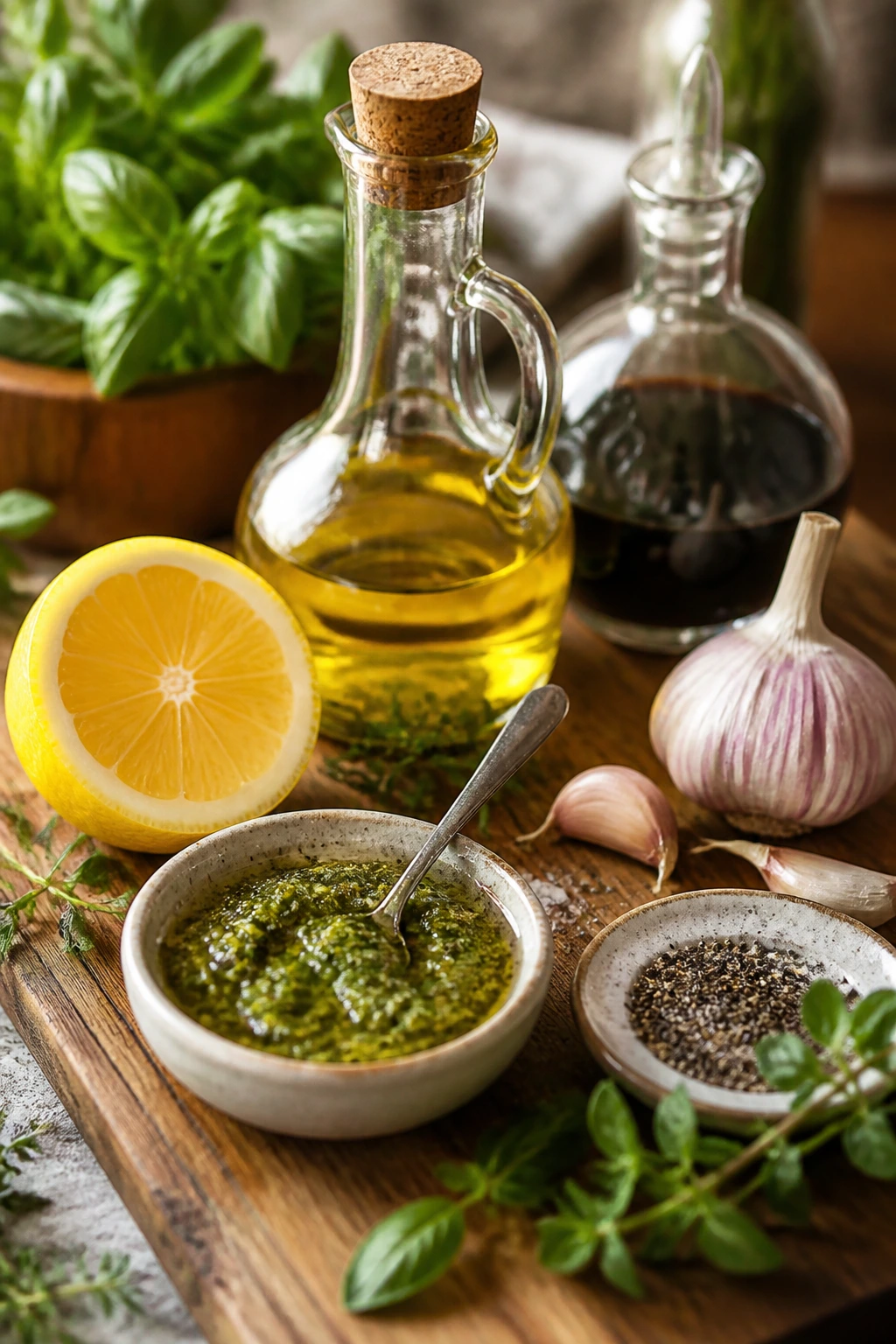
Flavor Enhancement: A squeeze of lemon, a splash of vinegar, or a spoonful of pesto at the end can wake up plain chicken, potatoes, or pasta without making the meal taste complicated.
Customization: Keep one base meal and set out different finishes. A child who hates spice can stay on the mild side while an adult adds chili crisp, hot sauce, pickled onions, or extra pepper.
Serving Suggestions: Put the most colorful items in small bowls on the table. Cherry tomatoes, cucumber rounds, shredded carrots, sliced olives, and chopped herbs make the meal look more inviting without any extra cooking.
Time-Saver: Roast vegetables and protein on two sheet pans instead of trying to cram everything onto one. Crowding makes steam, and steam makes sad vegetables.
Budget Move: Use one expensive ingredient as a topper, not the bulk of the meal. A little cheese, a few fresh herbs, or one avocado can make a tray of rice and beans feel planned instead of scraped together.
Make-It-Yours: For dairy-free dinners, lean on salsa, olive oil, lemon, and tahini-style sauces instead of cheese-heavy finishes. For gluten-free dinners, rice bowls, corn tortillas, potatoes, and polenta do the heavy lifting without making the meal feel stripped down.
Make-Ahead, Storage, and Leftover Reheating
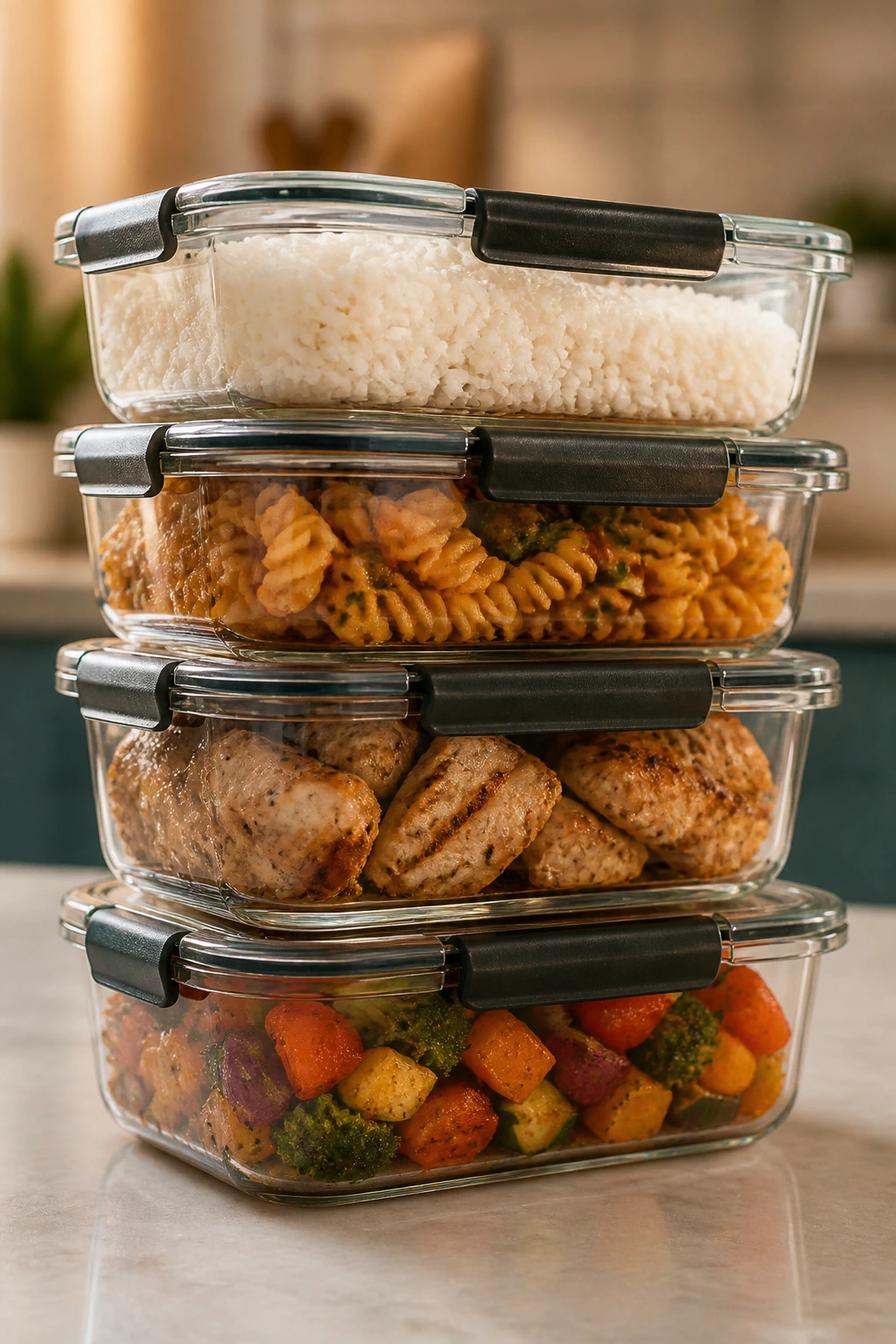
Family dinner gets easier when parts of it are done before the hunger alarm goes off. Cooked rice keeps well for about 4 days in the fridge, and it reheats best with a splash of water in a covered skillet or microwave-safe bowl. Pasta usually holds up for 3 to 5 days, though cream-based sauces can tighten up faster than tomato sauce.
Cooked chicken, turkey, beef, meatballs, and roasted vegetables generally keep for 3 to 4 days refrigerated in airtight containers. For the freezer, meatballs and shredded meats can hold for about 2 to 3 months if you wrap them well and keep air out. Sauces freeze too, though dairy-heavy sauces may separate a bit when thawed. A brisk whisk while reheating usually helps.
Room temperature is the line that matters. Don’t leave cooked food out longer than 2 hours, or 1 hour if the room is hot. That isn’t being fussy. That’s just basic food safety.
Best Reheating Moves by Meal Type
- Pasta: Reheat with a spoonful of water or sauce in a covered pan over low heat.
- Sheet-pan leftovers: Use a 375°F oven or air fryer to bring back crisp edges.
- Rice bowls: Microwave with a damp paper towel over the bowl so the rice stays soft.
- Meatballs and sliders: Warm gently in sauce or wrapped in foil in the oven.
- Breakfast-for-dinner leftovers: Eggs are best reheated slowly and not blasted dry.
Some meals improve overnight. Meatballs in sauce, taco meat, and baked pasta often taste even better the next day because the seasoning settles in. Crispy foods are the opposite. Reheat them hot and fast, or accept that they’ll be softer. That’s not failure. That’s physics.
Common Mistakes That Make Family Dinner Harder Than It Needs to Be
Making every meal too new: If dinner changes flavors, textures, and shapes all at once, kids have no entry point. Fix it by anchoring each dinner with one familiar item they already eat.
Over-seasoning the kid portion: Heavy heat or too much spice can wipe out a meal before the first bite. Keep the family version mild, then finish the adult plates with hot sauce, pepper flakes, or chili oil.
Serving everything mixed together: When every ingredient is tangled into one pile, picky eaters lose the ability to separate the parts they trust. Keep toppings, sauces, and crunchy pieces on the side when you can.
Cooking vegetables until they’re floppy: Overcooked vegetables taste louder and feel softer in the mouth, which turns kids off fast. Roast them until the edges brown and the center still has some shape.
Ignoring texture: A soft meal with no crunch feels flat, even if the flavor is fine. Add toasted breadcrumbs, fresh vegetables, crisp potatoes, or a warm tortilla with some bite.
Trying to make two different dinners every night: That’s a trap. It wears you out and teaches kids that rejection leads to a custom order. Better to build one dinner with options than to become the short-order cook.
Variations and Alternatives for Different Houses
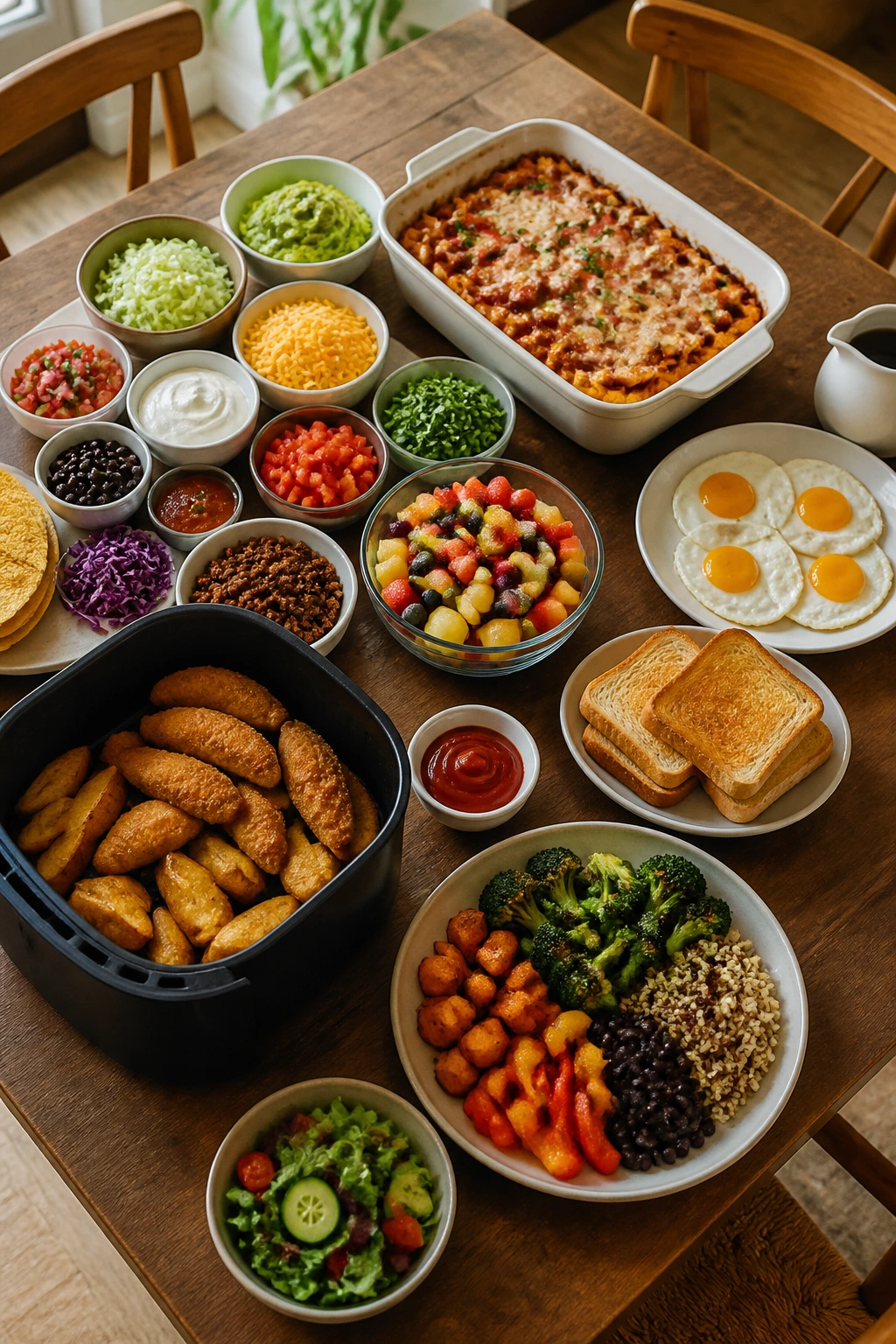
The Taco Bar Night: Swap the protein for black beans, shredded chicken, or seasoned turkey, then add rice, lettuce, cheese, salsa, and avocado. This works especially well when you need one meal that can lean gluten-free without much effort.
The Pasta-Bake Version: Turn the same family flavors into a baked pasta dish with marinara, ricotta or cottage cheese, and mozzarella on top. It’s the right choice when you want something that can sit on the table a little longer without losing its shape.
The Breakfast-For-Dinner Reset: Scrambled eggs, hash browns, toast, fruit, and sausage make a dinner that feels low-pressure after a long day. If a child has had a rough afternoon, this is often the easiest meal to get through without a battle.
The Crispy Air-Fryer Swap: Use the air fryer for chicken strips, potatoes, nuggets, or broccoli when you want fast browning with less oil. It’s especially useful when a child likes crunch more than sauce.
The Vegetarian Family Night: Lean on beans, lentils, eggs, cheese, rice, and roasted vegetables. A well-seasoned bean taco or a cheesy pasta bake can satisfy a mixed crowd without making the meal feel like a compromise.
Frequently Asked Questions
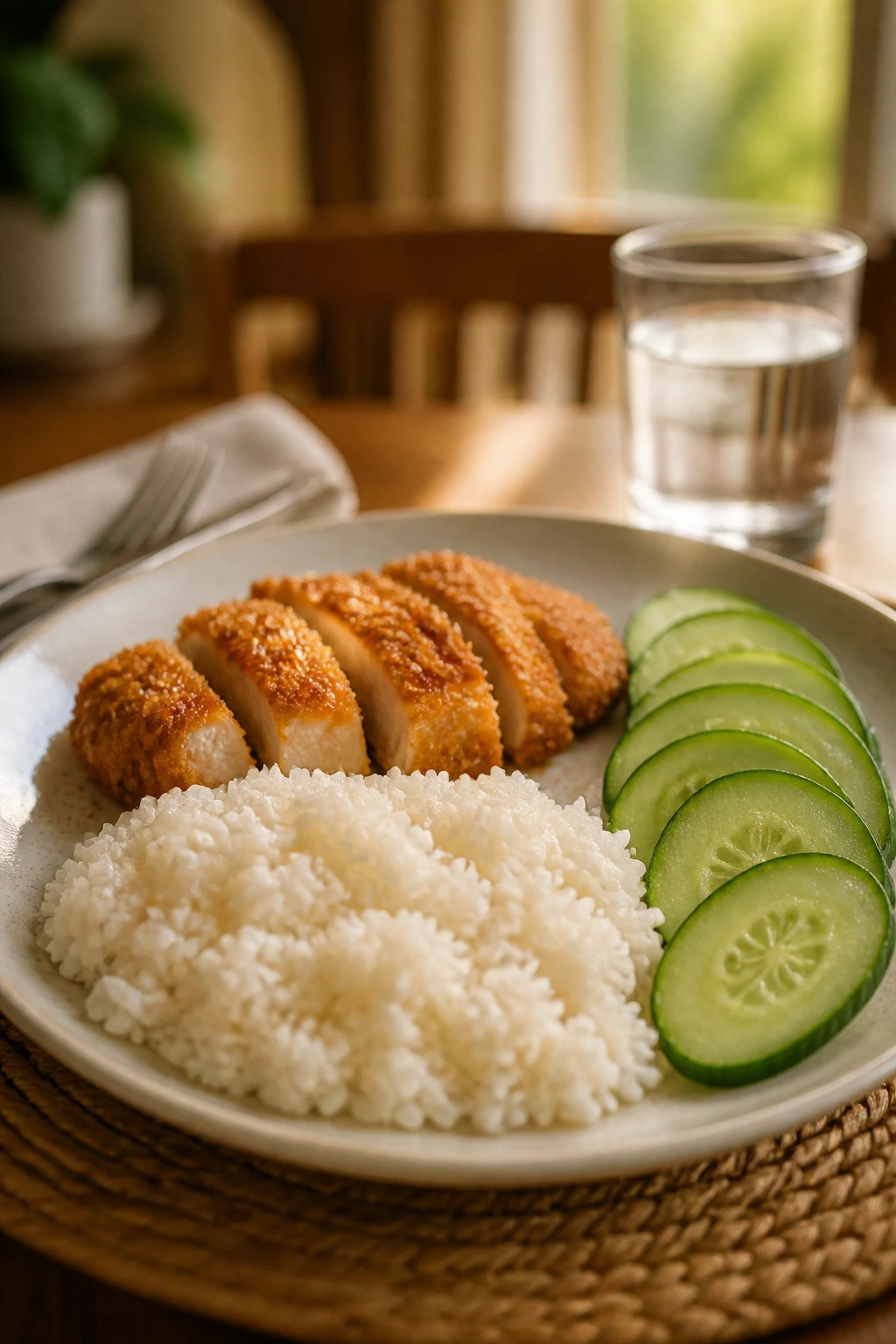
How do I make dinner fun without turning it into a circus?
Give kids one small choice and one visible win. That might mean choosing their own taco toppings, picking between two sauces, or getting a meal in a shape they can hold. Fun doesn’t need props; it needs a little control and food that makes sense at first glance.
What if my child only eats beige foods?
Start with beige foods that are actually good, not sad ones. Buttered noodles, roasted potatoes, chicken tenders, quesadillas, plain rice, and sliders give you a base to work from. Add one small color on the side — maybe cucumber, corn, or fruit — and keep serving it without a speech attached.
Are hidden vegetables a good idea?
Sometimes, yes, but I wouldn’t make that the whole strategy. Hidden vegetables can help with a tough stretch, yet kids also need practice seeing vegetables in their actual form. Roasted carrots with honey or broccoli with cheese teach familiarity in a way blended puree never can.
What’s the easiest family dinner if I’m out of energy?
Taco bowls, eggs and toast, pasta with jar sauce, or sheet-pan chicken with potatoes all require less decision-making than most dinners. The trick is not to chase perfection. Choose one protein, one base, one vegetable, and one sauce, then stop shopping for ideas.
How do I keep the food warm while everyone gets served?
Use low oven heat, covered pans, or bring the components to the table in batches instead of dumping everything out at once. Tortillas can be wrapped in foil, pasta can be held in a warm pot with a lid, and sheet-pan food does fine in a 200°F oven for a short window.
Can I make these dinners ahead for busy nights?
Yes. Cook meatballs, rice, taco meat, roasted vegetables, and sauces ahead, then store them separately. The parts reheat better when they’re not mixed, and you can turn the same prep into tacos, bowls, pasta, or wraps later in the week.
What if my kids hate sauce?
Serve sauce on the side and keep the portion small. A dry slider, plain noodle, or lightly dressed taco is easier to accept than a plate that arrives already coated. A lot of kids will try more food if they get to control the dip.
How do I make these meals work for adults too?
Give the adults a finishing layer. Fresh herbs, hot sauce, pickled onions, sharp cheese, lemon, and chili crisp can turn the same family plate into something with a little more bite. Same dinner. Different top note.
A Table Worth Coming Back To
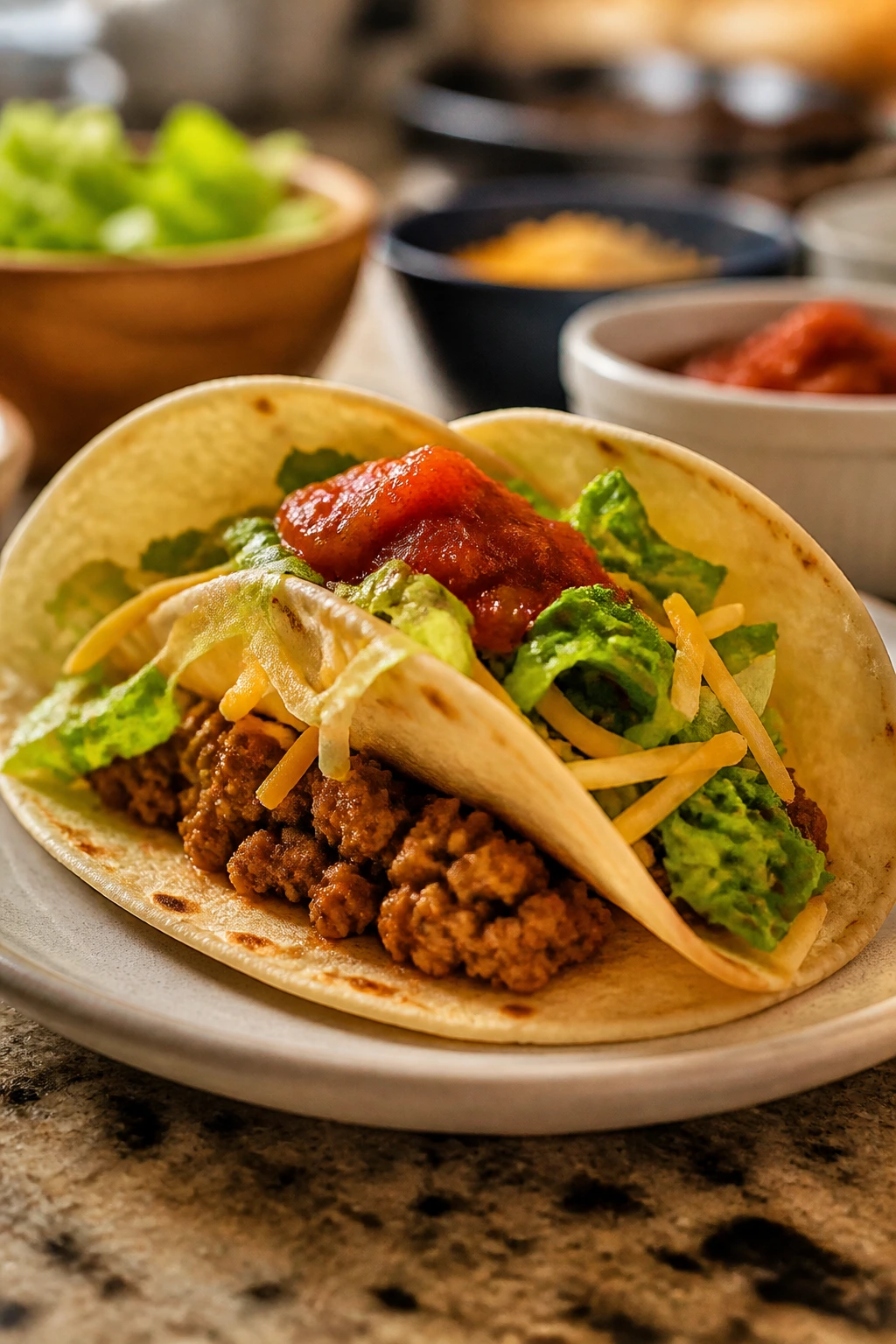
The dinners that survive real family life usually aren’t the prettiest ones on paper. They’re the ones with a strong shape, a familiar base, and one or two details that make a child reach for a second bite before they start negotiating. That’s the whole trick, and it’s a good one.
Keep the food clear. Keep the flavors calm enough to trust. Then let the table do what it’s supposed to do — feed everyone without turning the evening into a referendum on carrots.