



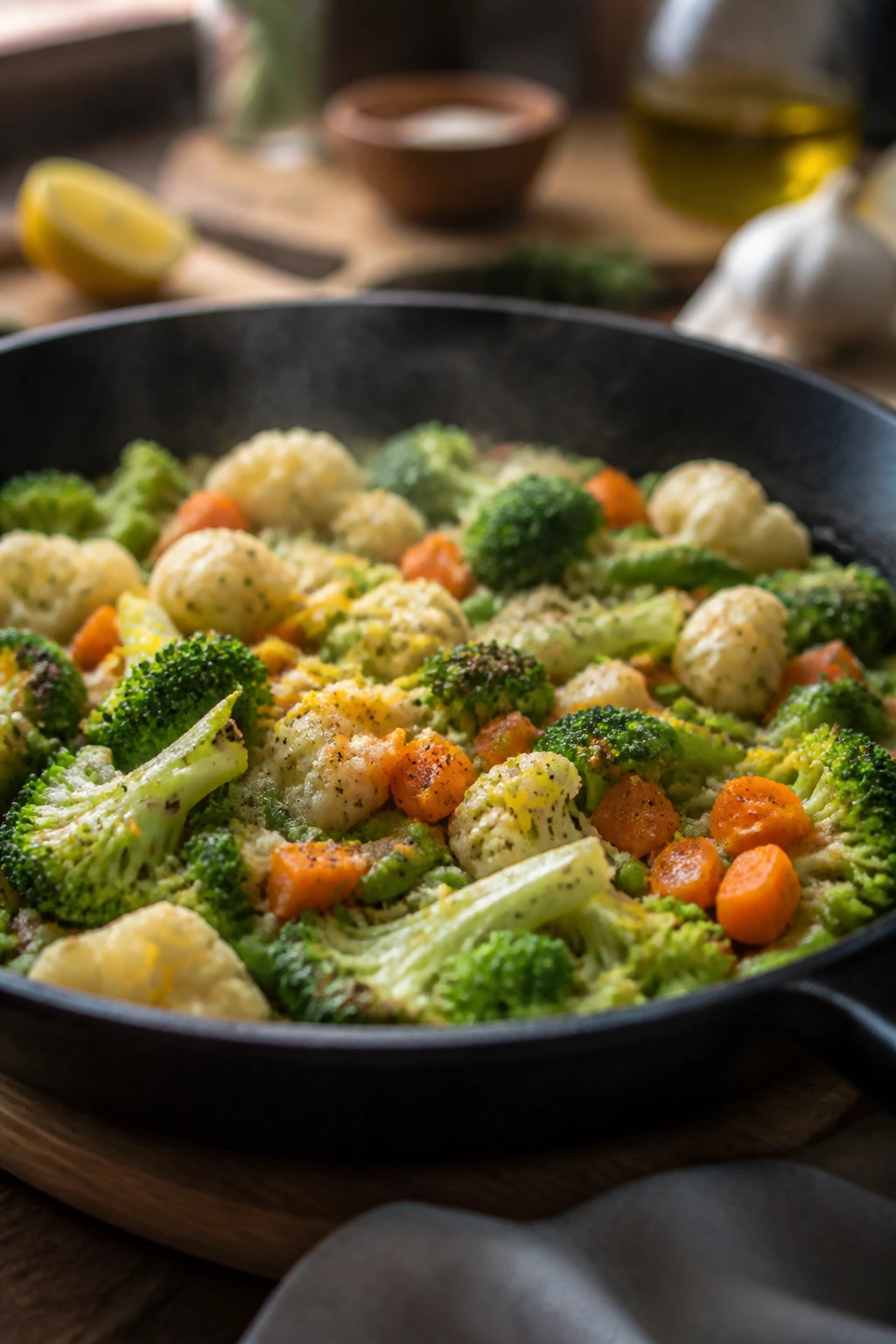
A bag of frozen vegetables can look like a backup plan. Put it in a hot skillet with garlic, onion, lemon, and a little patience, and it turns into garlicky frozen veggies that feel like dinner instead of an apology.
That’s the whole trick, and it’s a good one. Frozen vegetables don’t need rescuing so much as respect: a wide pan, enough heat to drive off the ice, and seasoning that shows up at the right moment instead of getting buried under steam. If you’ve ever cooked them straight from the bag and ended up with soft, wet, dull-tasting pieces, you already know why this matters.
I keep coming back to this kind of recipe because it does something most “healthy dinner” ideas don’t bother to do. It gives you a real texture target. The vegetables should still have bite, the garlic should smell sweet rather than bitter, and the pan should go from wet and noisy to dry and slightly toasty. That shift is the difference between a bowl of thawed freezer contents and a skillet worth serving.
Why Frozen Vegetables Deserve a Hot Skillet
Frozen vegetables have a better reputation than they used to, and honestly, that’s deserved. Most are blanched before freezing, which means they get a quick heat treatment that helps lock in color and slows the dulling you see in old fridge vegetables. That doesn’t mean they cook themselves well. It means the raw material is good, if you handle it with a little care.
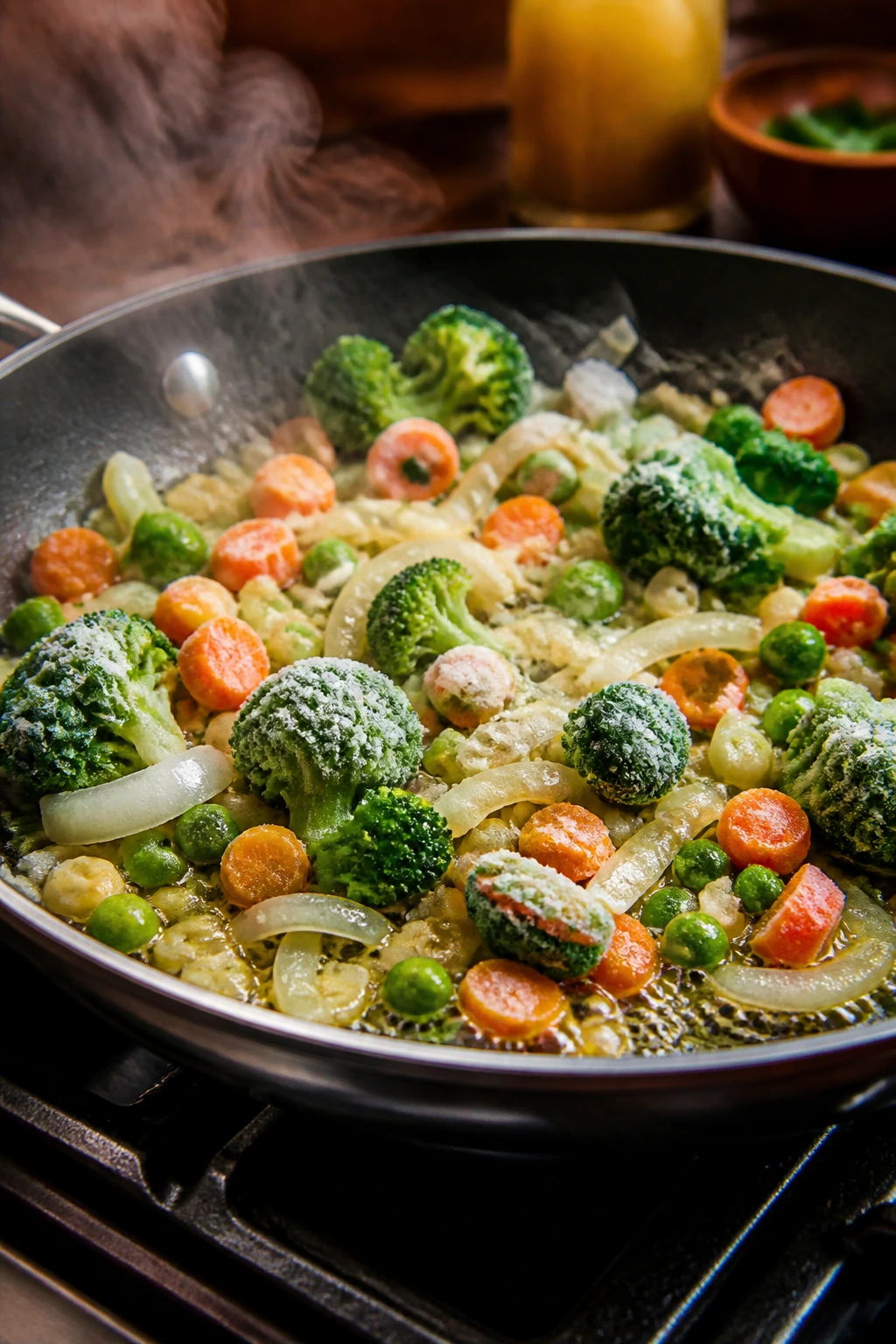
The mistake people make is treating frozen vegetables like fresh ones with an inconvenient nap on them. They’re not the same. Frozen carrots, broccoli, green beans, and peas carry extra surface moisture and a little frost from the freezer bag, and that water wants to become steam the second it hits heat. If the pan is too small or too cool, the vegetables sit there and stew in that moisture. No browning. No edge. No dinner.
The version here fixes that with a wide skillet, a little butter for flavor, olive oil for heat, onion for sweetness, and garlic added at the exact moment when it can perfume the pan without burning. Lemon goes in at the end because acid makes the vegetables taste brighter after they’ve already developed some color. Parmesan is optional, but I like it here because a small amount clings to the hot pieces and gives the whole thing a salty finish without turning the skillet into cheese sauce.
And that’s the piece most people miss. The vegetables do not need to be coddled. They need space, heat, and a few smart finishing moves. When that happens, the freezer aisle stops feeling like a compromise and starts acting like dinner insurance.
Why You’ll Love This Recipe
-
Fast from freezer to table: You can start with a bag of frozen vegetables and a few pantry staples, which means there’s no peeling, trimming, or apologizing to yourself for not having fresh broccoli.
-
The garlic stays sweet, not burnt: Fresh garlic plus garlic powder gives the skillet a deeper garlic flavor, and the timing keeps the cloves from turning bitter the moment the vegetables go in.
-
The texture stays lively: A wide pan and a dry-down period let the vegetables pick up a few browned spots instead of collapsing into soft, watery pieces.
-
It plays well with other dinners: Spoon it beside rice, tuck it under eggs, serve it with tofu, or pile it next to roasted beans. It’s a side that can grow into a meal.
-
It uses real seasoning, not a packet: Lemon, pepper, onion, and a little Parmesan do the work here. The flavor tastes built, not dumped.
-
Cleanup stays easy: One skillet, one cutting board, one knife. That matters on nights when the idea of a sink full of dishes feels like too much.
Quick Recipe Snapshot
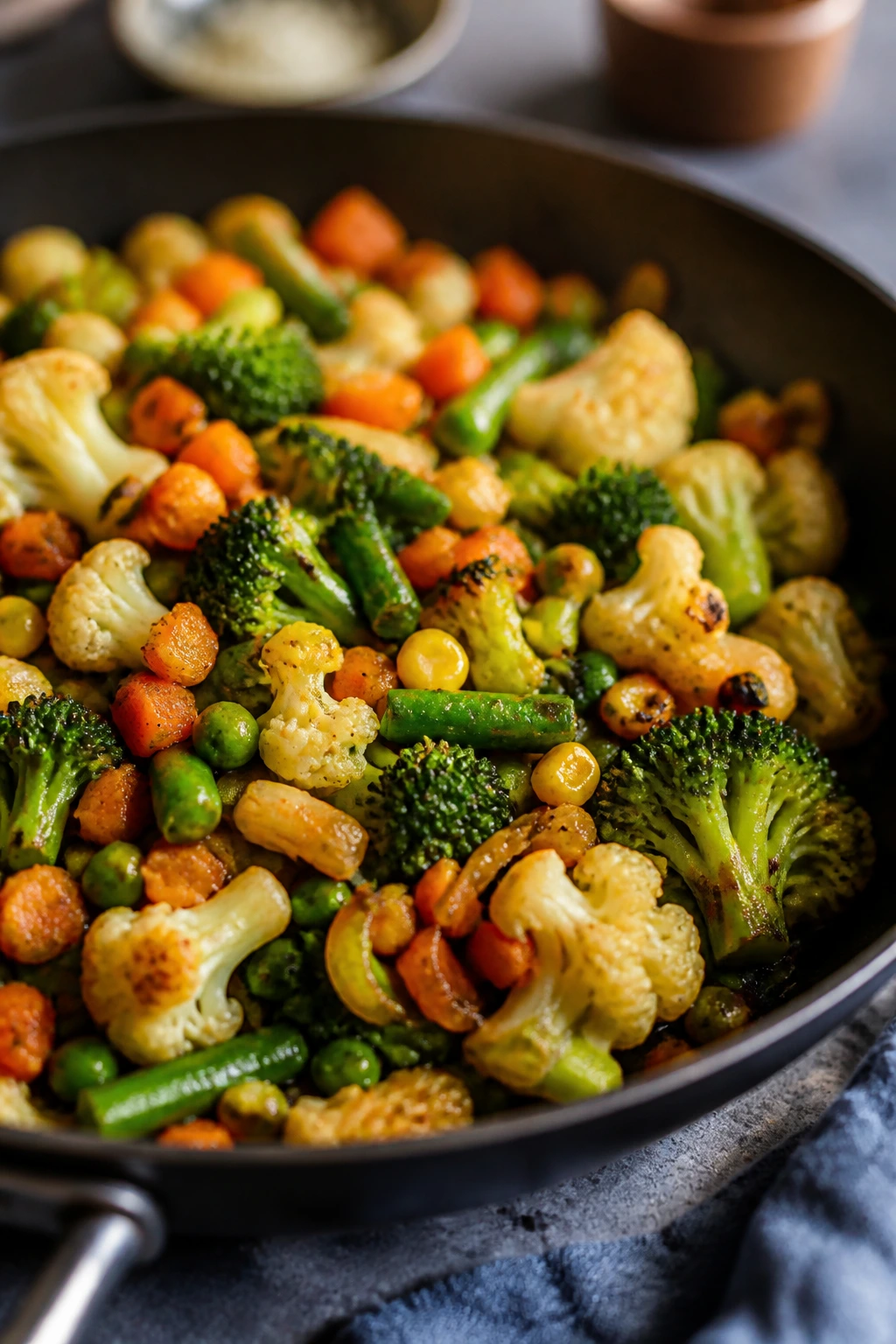
Yield: 4 servings as a light dinner or 6 servings as a side
Prep Time: 10 minutes
Cook Time: 15 minutes
Total Time: 25 minutes
Difficulty: Beginner — the method is simple, but you do need to watch the skillet so the vegetables dry out instead of steaming.
Best Served: Hot from the pan, while the edges still have a little color.
The Exact Ingredients That Make This Skillet Work
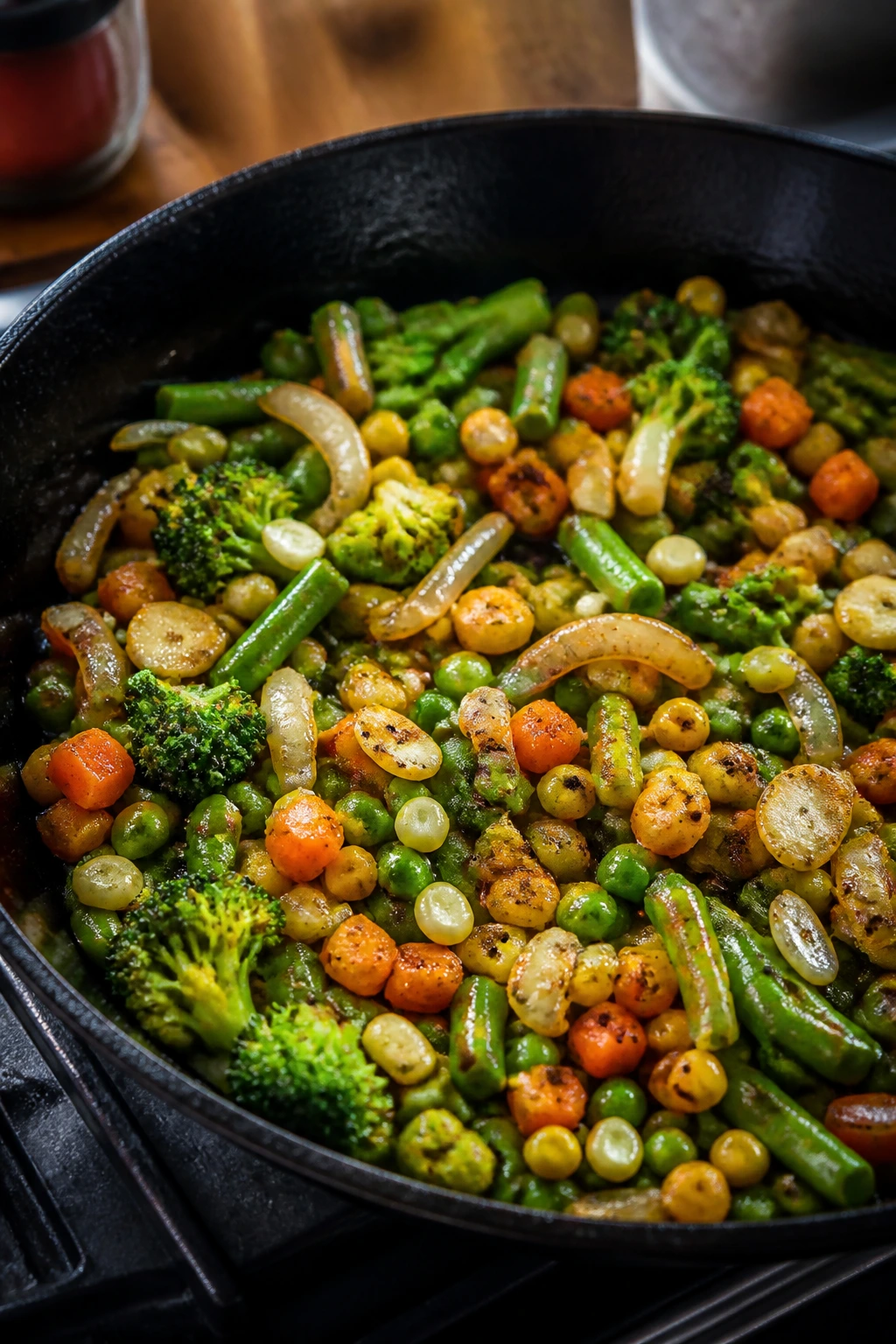
For the Skillet:
- 2 tablespoons olive oil
- 1 tablespoon unsalted butter
- 1 small yellow onion, thinly sliced
- 6 garlic cloves, minced
- 1 teaspoon garlic powder
- 2 pounds frozen mixed vegetables, such as broccoli, cauliflower, carrots, green beans, and peas
- 1 teaspoon kosher salt, plus more to taste
- 1/2 teaspoon black pepper
- 1/2 teaspoon crushed red pepper flakes
- 2 tablespoons low-sodium vegetable broth or water
For Finishing:
- 1 tablespoon lemon juice
- 1 teaspoon lemon zest
- 2 tablespoons grated Parmesan cheese, optional
- 2 tablespoons chopped fresh parsley, optional
What Each Ingredient Does in the Pan
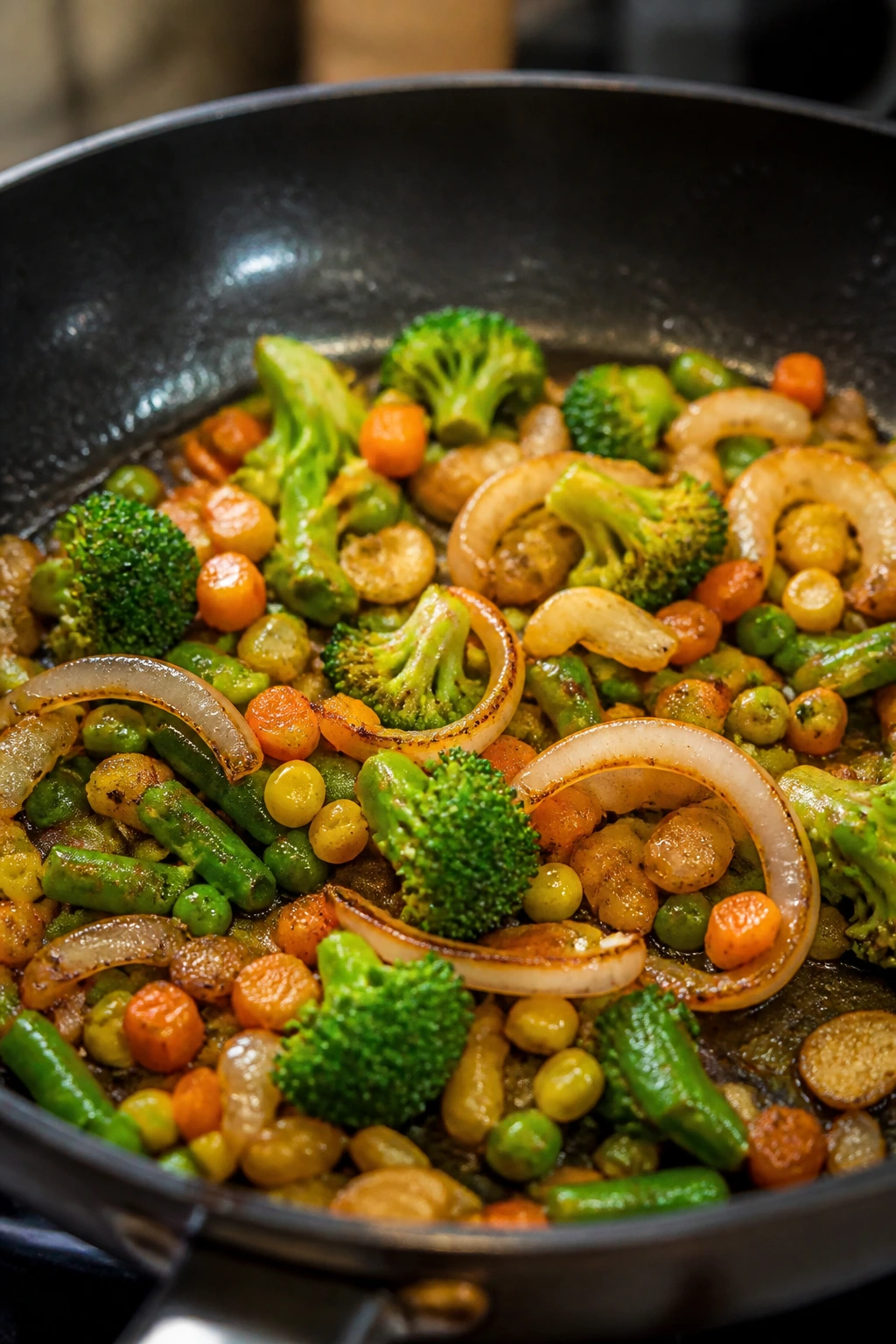
Frozen Vegetables
What to use: 2 pounds frozen mixed vegetables, ideally a mix that includes broccoli, cauliflower, carrots, green beans, and peas. A stir-fry blend works too, as long as it doesn’t come with sauce already on it.
Preparation: Keep the vegetables frozen. If the pieces are clumped together, hit the bag against the counter or squeeze it gently before opening so the pile breaks apart more easily.
Substitutions: Plain frozen broccoli florets, a broccoli-and-cauliflower mix, or frozen green beans all work. If you use a bag with very soft vegetables, like corn-heavy blends, they’ll cook faster and need even more pan space.
Tips: The more ice on the vegetables, the more steam you’ll get at the start. That’s normal. The fix is not to thaw them early; it’s to keep the skillet hot and give the moisture time to leave.
Onion and Garlic
What to use: 1 small yellow onion and 6 garlic cloves, plus 1 teaspoon garlic powder to round everything out. The onion gives the skillet a little sweetness, and the garlic gives it its name.
Preparation: Slice the onion thinly so it softens before the garlic has a chance to burn. Mince the garlic finely, but not so finely that it disappears into a paste before it hits the pan.
Substitutions: White onion works if that’s what you have. Red onion will taste sharper and a little sweeter after cooking. If you’re short on fresh garlic, use 1 1/2 teaspoons garlic powder in place of the cloves, though the flavor will be less sharp and less fragrant.
Tips: Garlic needs a short runway. Add it after the onion has softened, and keep it moving. One distracted minute is all it takes to turn a good skillet into a bitter one.
Fat and Heat
What to use: 2 tablespoons olive oil and 1 tablespoon unsalted butter. That combination gives you flavor from the butter and a little higher-heat insurance from the oil.
Preparation: Measure the fat before the stove comes on. Once the pan is hot, you want to move quickly rather than rummage around a drawer for the spoon.
Substitutions: Use all olive oil if you want a dairy-free skillet. Avocado oil also works if you want a neutral fat with a high smoke point.
Tips: Butter alone can scorch if the skillet runs hot. Olive oil alone works, but it tastes flatter. The two together are the version I’d actually keep on repeat.
Seasonings and Finishing Ingredients
What to use: 1 teaspoon kosher salt, 1/2 teaspoon black pepper, 1/2 teaspoon crushed red pepper flakes, 2 tablespoons low-sodium vegetable broth or water, 1 tablespoon lemon juice, 1 teaspoon lemon zest, and optional Parmesan and parsley.
Preparation: Mix the salt, pepper, and red pepper flakes together before cooking if you want the seasoning to go in fast. Zest the lemon before you juice it. That order saves annoyance.
Substitutions: Use tamari instead of Parmesan if you want a more savory, dairy-free finish. If you don’t have parsley, dill or basil can work, though the dish will lean in a different direction.
Tips: Acid belongs at the end. Lemon added too early can flatten the browned flavor you worked to create in the pan.
The Tools That Keep Frozen Veggies from Steaming
-
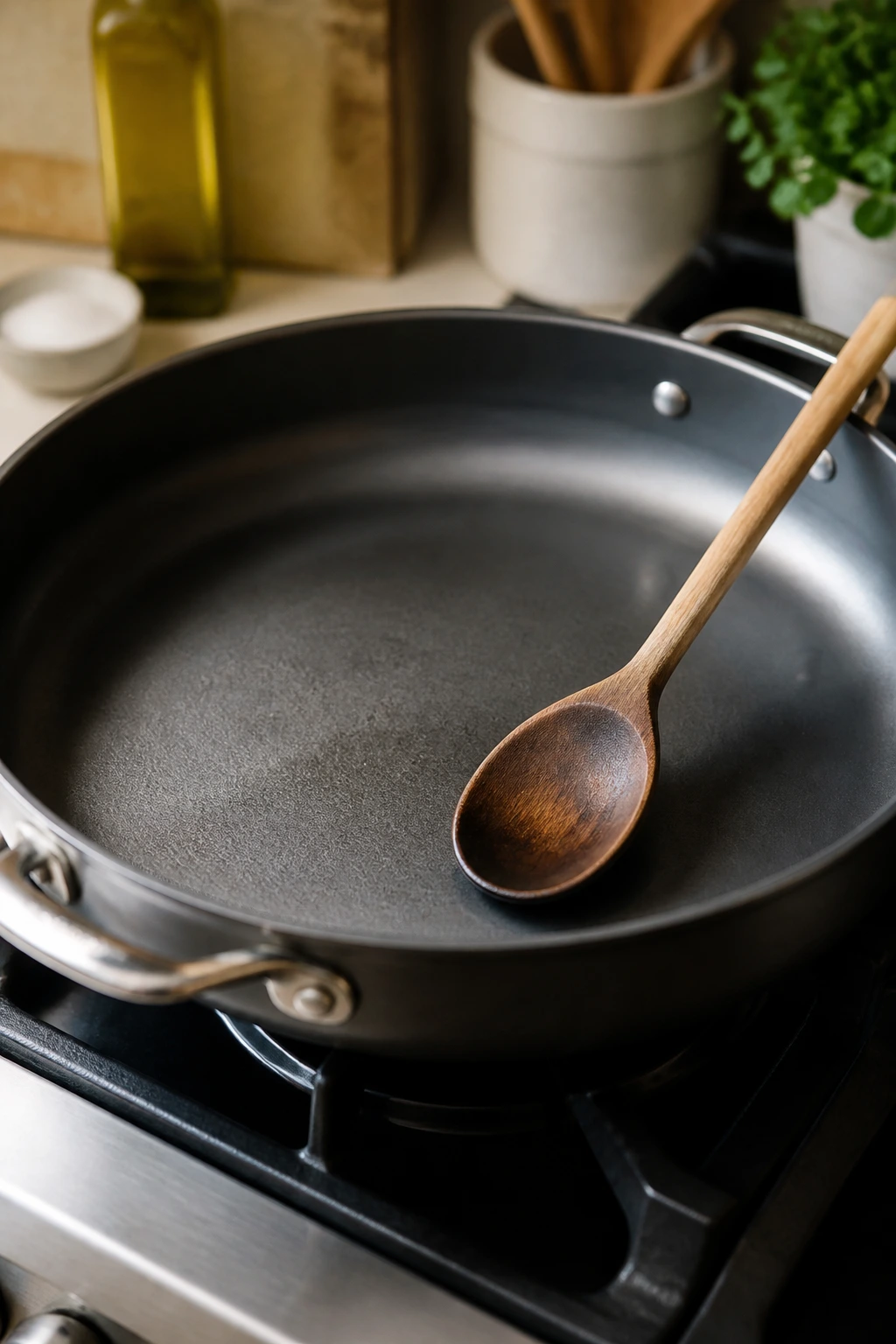
12-inch stainless-steel or cast-iron skillet: A wide pan gives the vegetables room to lose moisture. If you only have a smaller skillet, cook in two batches.
-
Wooden spoon or heatproof spatula: You need something sturdy enough to turn the vegetables without scraping the skillet to death.
-
Chef’s knife: Used for slicing the onion and mincing garlic. A dull knife makes this whole recipe feel more annoying than it is.
-
Cutting board: A stable board matters because the prep is fast, and you’ll be moving from knife to stove in one clean line.
-
Microplane or fine grater: Best for lemon zest and Parmesan. A coarse grater works for the cheese, but zest comes out cleaner with a fine tool.
-
Lid that fits the skillet, optional: Handy if your vegetables are especially icy and need a minute of steam to get going. Don’t leave it on too long, or the pan will turn watery again.
-
Measuring spoons: Garlic, salt, pepper, red pepper flakes, and lemon all matter here. Eyeballing them is where bland vegetables usually begin.
-
A plate or rimmed pan for staging: Useful if you want everything measured before the heat turns on. Once the skillet is hot, you don’t want to stop and hunt.
How to Cook the Skillet Without Losing Texture
Prep the ingredients
-
Slice the onion, mince the garlic, zest and juice the lemon, and measure the oil, butter, salt, pepper, and red pepper flakes before you turn on the stove. Keep the frozen vegetables frozen. Do not thaw them first; that extra water is exactly what makes the skillet soggy.
-
Set a 12-inch skillet over medium-high heat and let it warm for about 2 minutes. Add the olive oil and butter. When the butter melts and starts to foam, the pan is ready for the onion.
Build the flavor base
-
Add the sliced onion and cook for 3 to 4 minutes, stirring once or twice, until it looks translucent at the edges and just starts to pick up color. If the onion begins to stick, lower the heat slightly and add 1 teaspoon of water.
-
Stir in the garlic and garlic powder and cook for 30 to 45 seconds, just until the garlic smells fragrant and sweet. If the garlic browns, it will taste harsh and bitter, so keep it moving.
Cook the frozen vegetables
-
Add the frozen vegetables, salt, black pepper, and red pepper flakes. Spread them out as evenly as you can in the skillet, then leave them alone for 1 to 2 minutes so the first burst of ice can melt off and the bottoms can start to sear.
-
Stir and cook for 6 to 8 minutes, letting the vegetables sit between stirs so they can pick up a little color. The pan should go from loud and wet to a drier, sharper sizzle. If you still see a puddle of liquid, keep cooking uncovered until it disappears. If the vegetables are still icy in the center, add the broth or water, cover the pan for 1 minute, then uncover and cook off the moisture.
Finish the skillet
- Turn off the heat. Stir in the lemon juice, lemon zest, Parmesan if you’re using it, and parsley. Taste and add a pinch more salt if the vegetables still seem flat. Serve right away, while the pan is hot and the edges still have some bite.
How to Turn It Into Dinner
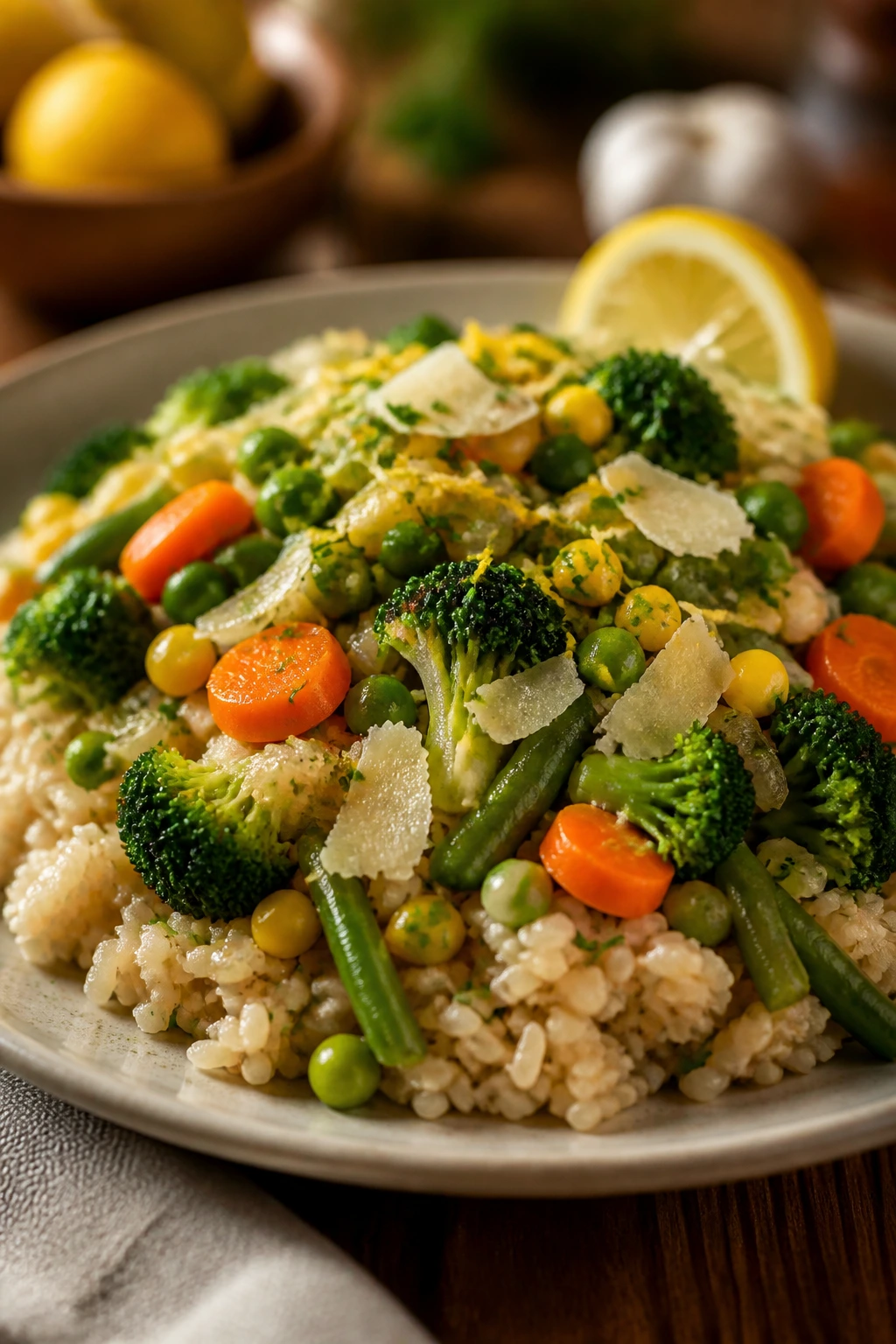
Presentation: Spoon the vegetables into a shallow bowl or a wide plate so the browned bits stay visible. I like to finish with a scatter of parsley and a little extra lemon zest, because the green flecks and yellow zest make the whole dish look freshly finished instead of tired. If you use Parmesan, let a few shavings land on top while the vegetables are still steaming so they soften just enough to cling.
Accompaniments: For a simple dinner, serve the vegetables over brown rice, quinoa, farro, or creamy polenta. They also sit nicely beside baked potatoes, toasted sourdough, or a fried egg with a runny yolk. If you want more protein without changing the recipe itself, add canned white beans on the plate or tuck in a slab of baked tofu.
Portions: As a side, plan on about 1 1/2 cups per person. As a light dinner with grains or eggs, 2 to 2 1/2 cups per person is a better target. If you’re serving hungrier people, stretch the dish by putting it over rice or couscous rather than just increasing the vegetable amount.
Beverage Pairing: A crisp Sauvignon Blanc handles the garlic and lemon nicely. If you want something nonalcoholic, sparkling water with lemon or unsweetened iced green tea keeps the plate feeling bright. A dry cider also works if you like a little orchard flavor next to the vegetables.
Small Upgrades That Make a Big Difference
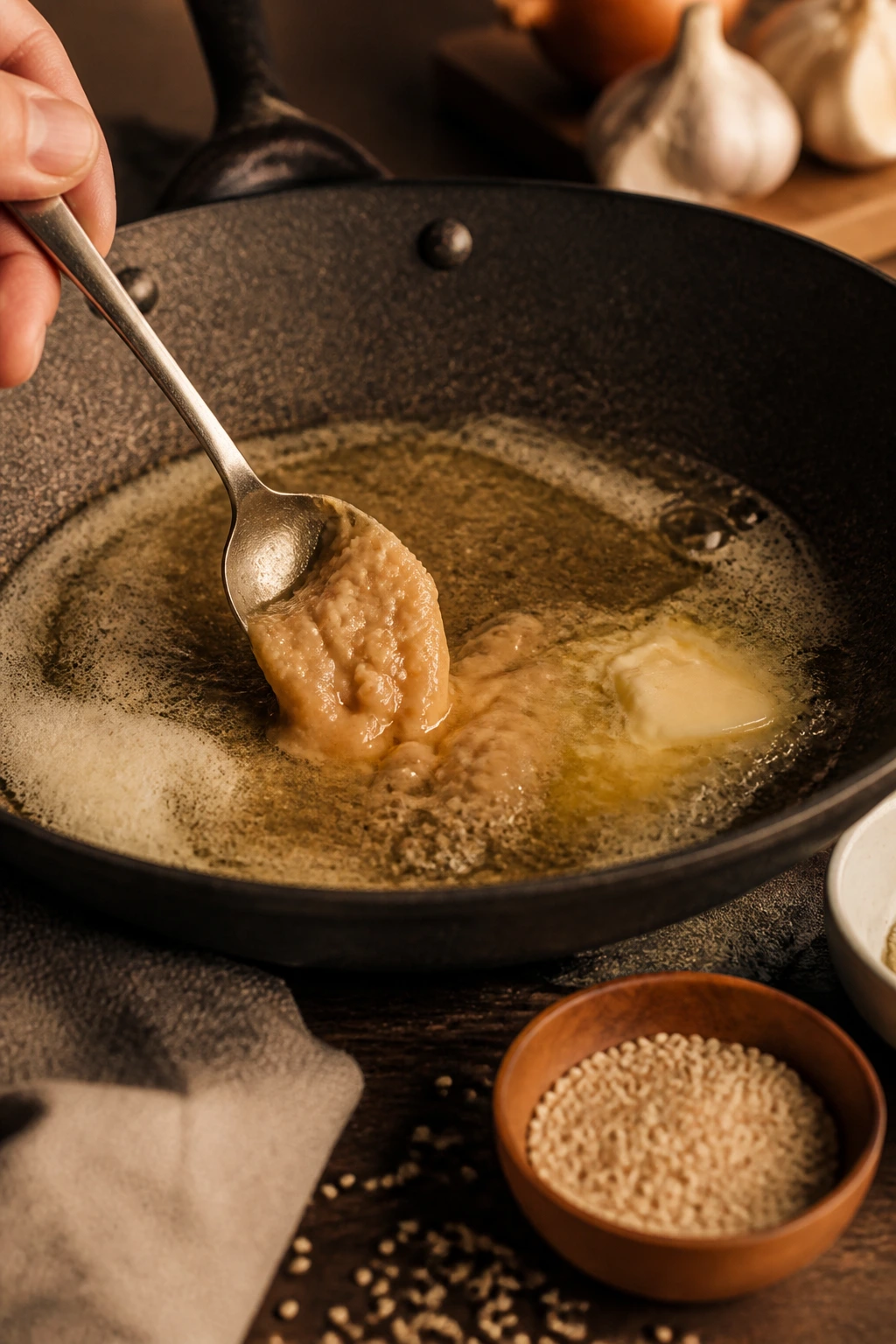
Flavor Enhancement: A tiny spoonful of white miso mashed into the butter at the start adds a savory depth that reads as richer than the ingredient list suggests. If miso isn’t in your kitchen, a splash of tamari does a similar job without turning the dish into a soy-forward skillet.
Customization: For a heartier bowl, stir in 1 cup of canned chickpeas during the last 2 minutes so they warm through and pick up the garlic. If you want more herb flavor, use dill instead of parsley, especially if your vegetable mix includes peas or broccoli.
Serving Suggestions: Toasted pumpkin seeds or sunflower seeds add crunch without making the dish heavy. A pinch of chili flakes at the table is useful if you’re serving people who like more heat than the skillet itself provides.
Make-It-Yours: For dairy-free diners, skip the butter and Parmesan and use all olive oil plus 2 tablespoons nutritional yeast. For extra richness, finish with a soft-cooked egg. For a sharper profile, add a few capers with the lemon at the end. None of those changes require a new recipe; they just steer the same pan in a different direction.
The Mistakes That Turn Good Veggies Soggy
-
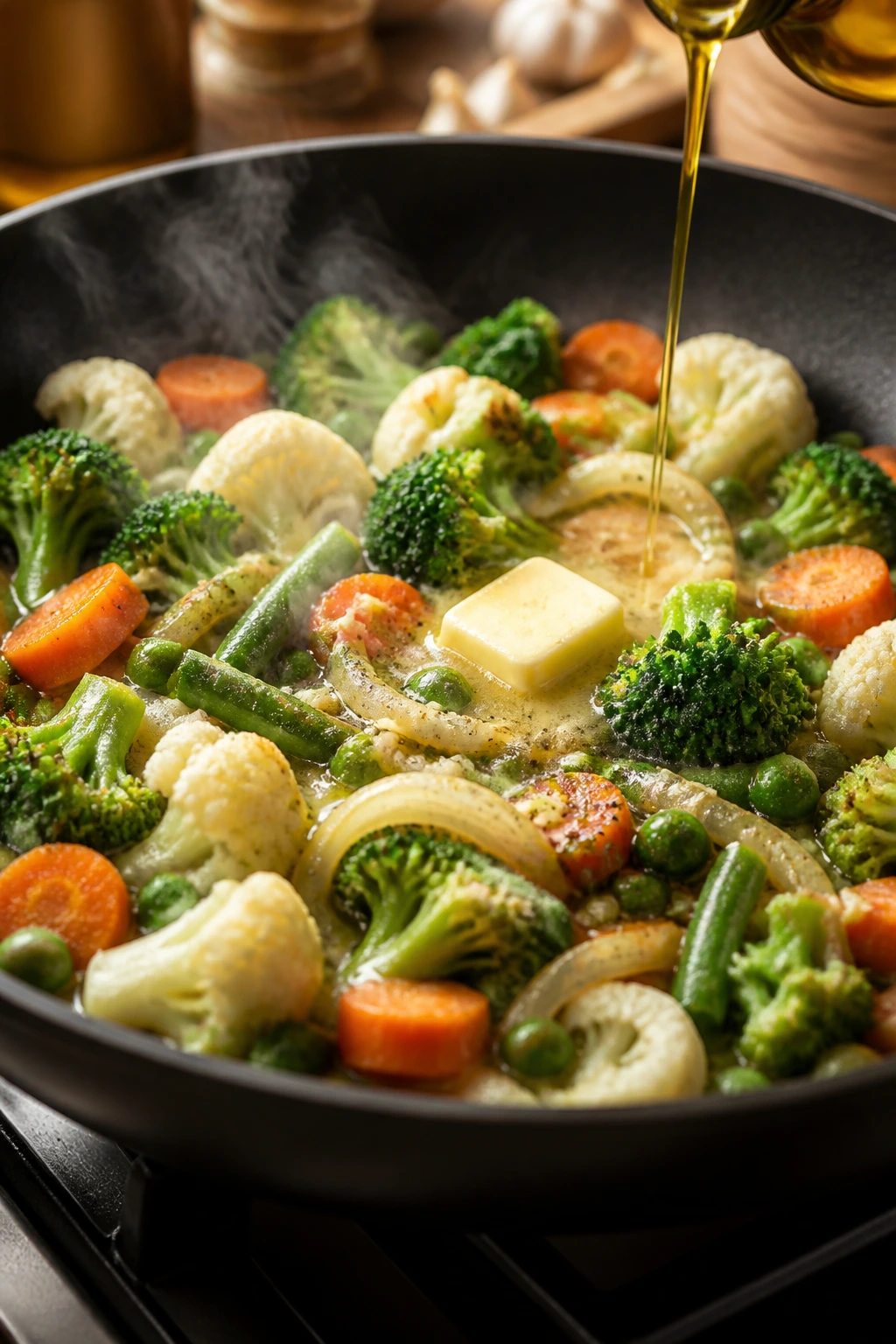
Thawing the vegetables before cooking. The symptom is a watery pan and soft vegetables that never brown. Keep the bag frozen and cook straight from the freezer so the skillet can handle the moisture as it escapes.
-
Using a pan that’s too small. If the vegetables pile up in a thick layer, they steam instead of sautéing. A 12-inch skillet gives them room to spread out; if yours is smaller, split the batch.
-
Adding garlic too early. Garlic that goes in before the onion softens can scorch while you’re still trying to dry out the vegetables. Add it after the onion is translucent, and keep the cook time short.
-
Stirring constantly. The pan needs some stillness to do its work. If you keep moving the vegetables every few seconds, they release moisture but never get the chance to pick up those little browned edges that make the dish taste cooked instead of warmed up.
-
Stopping while liquid is still sitting in the pan. If you can see a glossy puddle at the bottom, the vegetables are still steaming. Keep cooking uncovered until the sizzle sounds drier and the liquid is gone.
-
Adding lemon before the vegetables are finished. Acid is bright, but too much of it too soon can mute browning. Save the lemon juice and zest for the end, after the vegetables have already developed color.
Easy Variations for Different Dinners
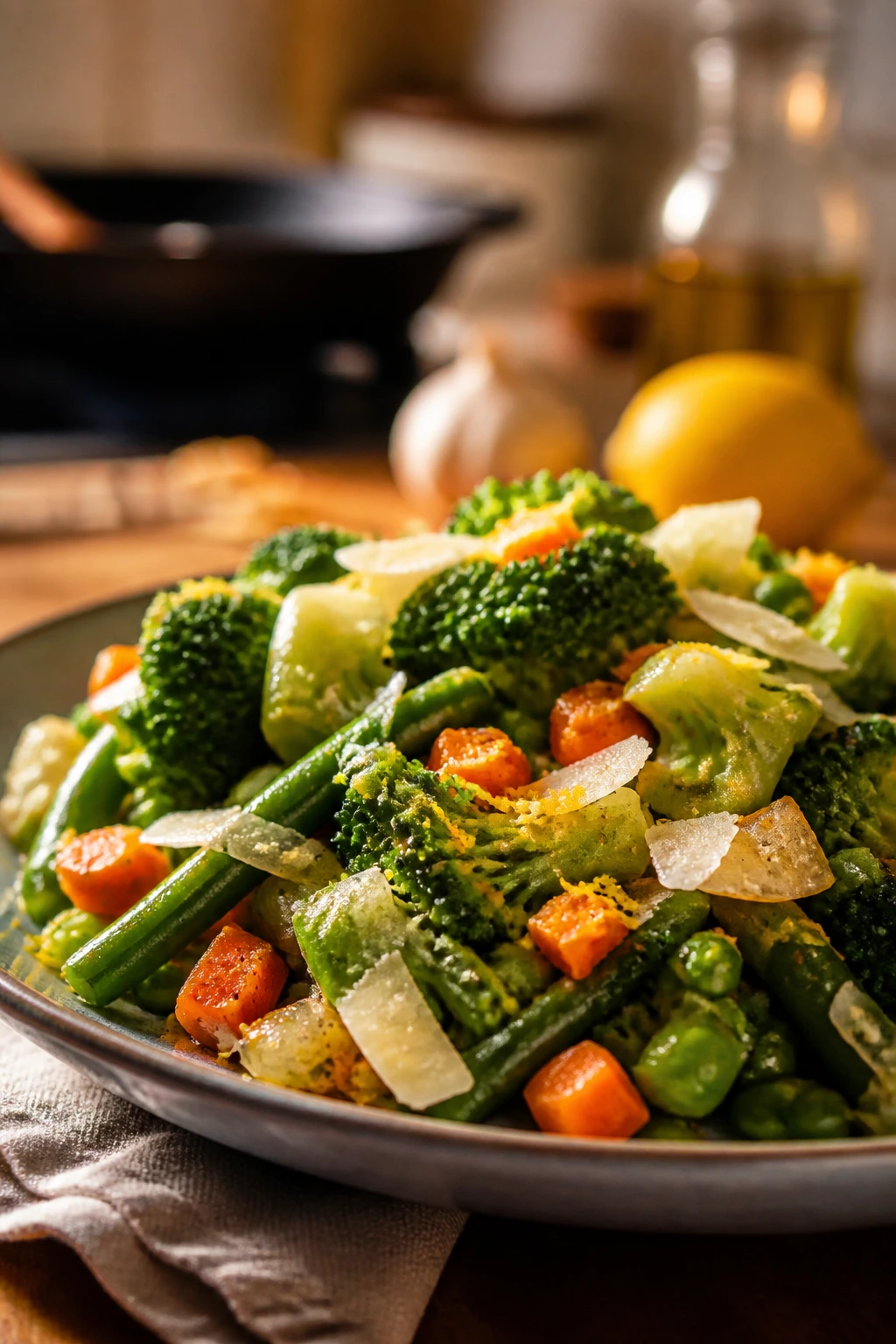
Smoky Paprika Skillet: Add 1 teaspoon smoked paprika with the garlic powder. The flavor goes deeper and warmer, which works well if you’re serving the vegetables with rice or roasted potatoes. A little extra black pepper helps keep the smokiness from feeling flat.
Lemon-Parmesan Bowl: Double the lemon zest and bump the Parmesan to 1/4 cup if you want a sharper finish. This version tastes especially good over farro or orzo, where the cheese clings to the grains and makes the whole bowl feel more complete.
Chili Crisp Version: Stir in 1 tablespoon chili crisp after the heat is off. The crisp garlic bits and chili oil coat the vegetables without making them greasy, and it’s one of the few add-ins that can make a freezer bag taste intentional in a hurry.
Herby Dairy-Free Version: Skip the butter and Parmesan, use 3 tablespoons olive oil total, and finish with parsley, dill, and a touch of nutritional yeast. It keeps the same basic shape but lands lighter and cleaner.
Beaned-Up Dinner Bowl: Add 1 drained can of white beans or chickpeas during the final 2 to 3 minutes of cooking. They warm through fast, absorb the garlic, and turn the vegetables into something that can stand alone without extra side dishes.
Make-Ahead, Storage, and Reheating That Won’t Ruin the Texture
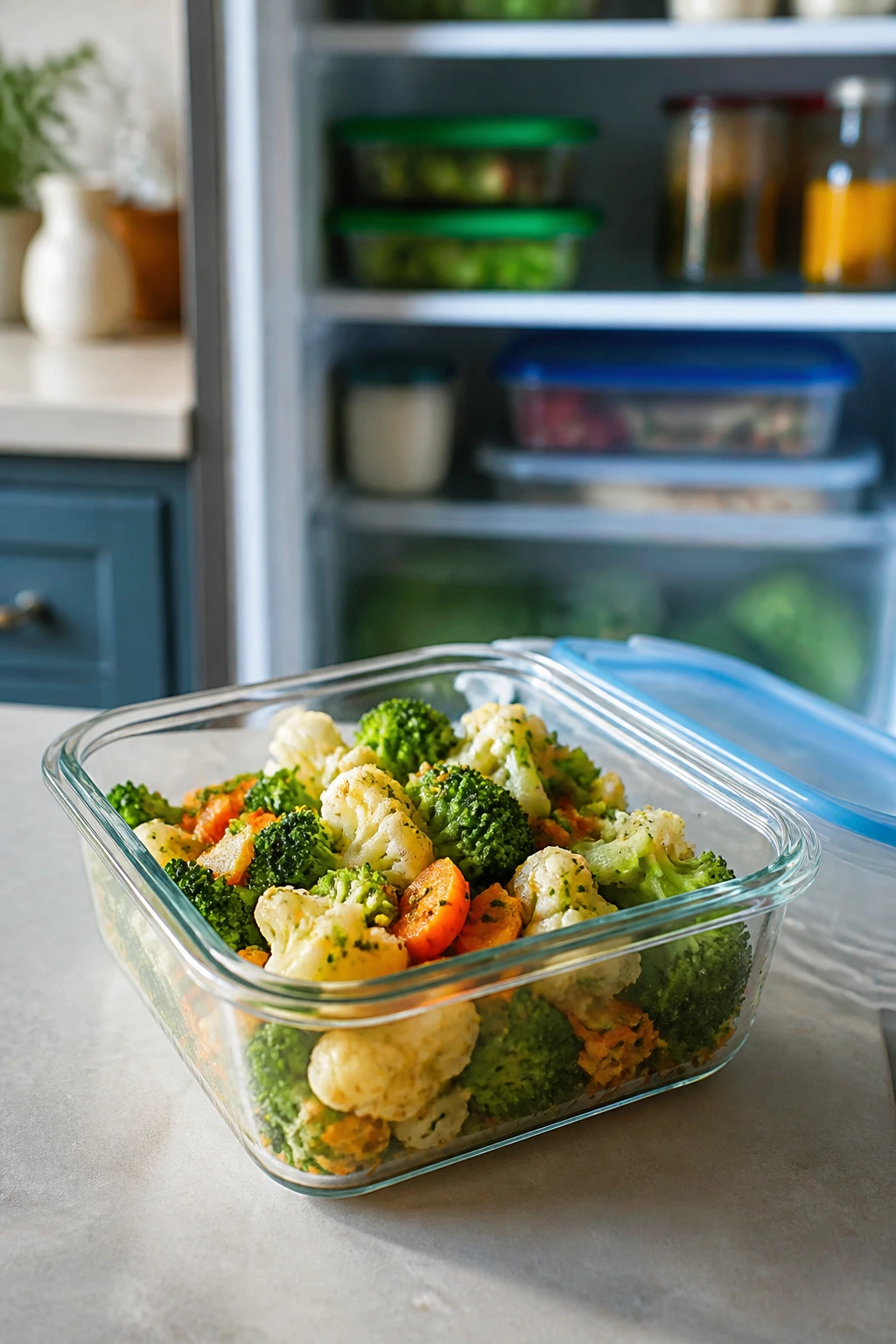
Cooked vegetables keep well enough for leftovers, but they do change a little. In the refrigerator, store them in an airtight container for 3 to 4 days. Don’t leave them on the counter for more than 2 hours. After that, the texture starts to slide, and no amount of optimism fixes food safety.
Freezing the finished skillet is possible for up to 2 months, though the vegetables will soften more when they thaw. I’d freeze this only if you plan to reuse it in a soup, a frittata, a grain bowl, or a pasta bake later. Straight-from-the-freezer reheating is not the point here. The skillet tastes best fresh, and the freezer is more of a backup plan than a main strategy.
For reheating, a skillet gives the best result. Warm a teaspoon of olive oil in a pan over medium heat, add the vegetables, and cook for 4 to 6 minutes, stirring once or twice, until hot and the moisture has cooked off again. If you’re using a microwave, go in 45-second bursts and stir between each round so the hot spots don’t overcook the edges while the center stays cool.
For make-ahead prep, slice the onion, mince the garlic, and zest the lemon up to 1 day ahead. You can also measure the seasonings into a small bowl the night before. If you want to cook the whole dish ahead, undercook it by about 1 minute so the reheating step doesn’t leave the vegetables limp.
Common Questions About Garlicky Frozen Veggies
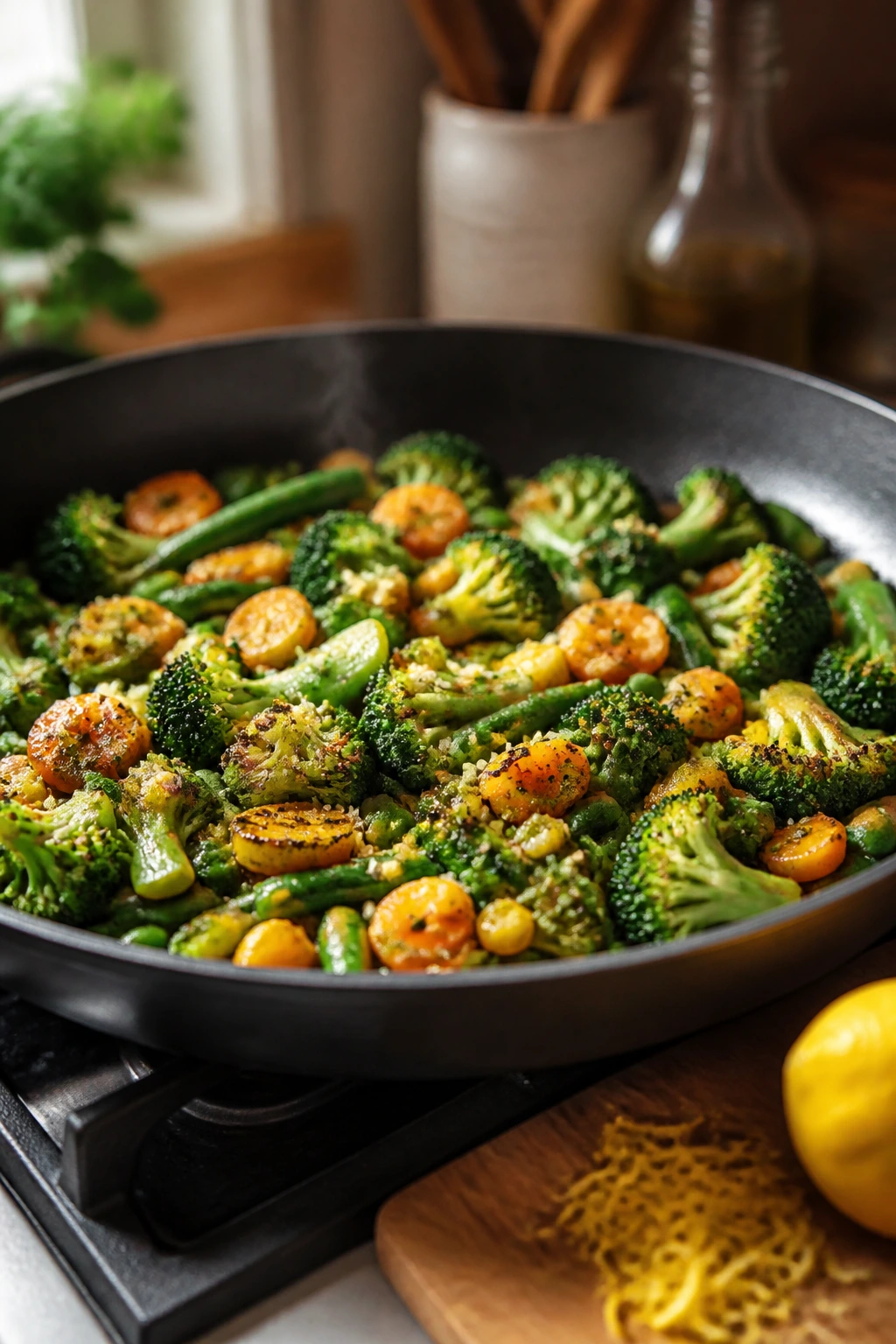
Can I use fresh vegetables instead of frozen?
Yes, but the cooking time changes and the method gets less forgiving. Fresh broccoli, cauliflower, or green beans will brown faster and won’t release as much water, which is nice, but you’ll need to cut everything into similar sizes so the pan finishes evenly. The recipe is built for frozen vegetables, so fresh ones need a little more attention.
Do I really have to cook them from frozen?
For this skillet, yes. Thawing them first adds extra water and shortens the path to mush. Frozen vegetables are already carrying enough moisture; you want the skillet to evaporate that water, not add more.
What frozen vegetable mix works best here?
A mix with broccoli, cauliflower, green beans, and carrots gives the best balance of texture and color. Peas are fine too, though they soften fast, so they’re better when they’re part of a larger blend rather than the only vegetable in the pan. Avoid mixes that come with heavy sauce or seasoning.
Can I make this without butter?
You can. Use 3 tablespoons olive oil instead, and the skillet will still taste good, just a little less round. If you want a richer finish without dairy, add a spoonful of nutritional yeast or a small splash of tamari at the end.
How do I keep the vegetables from getting soggy?
Use a wide skillet, keep the heat at medium-high, and give the vegetables room to sit still for short stretches. If they’re crowded or stirred constantly, they’ll steam. The other big move is waiting to add the lemon until the end, after the moisture has burned off.
Can I add protein to make this a full dinner?
Yes, and the easiest options are white beans, chickpeas, fried eggs, baked tofu, or even leftover rotisserie chicken if you’re not keeping it vegetarian. Add beans near the end so they warm through without breaking apart. Eggs and tofu usually go on top at serving time.
What if my garlic tastes bitter?
That usually means it browned too much or cooked too long before the vegetables went in. Next time, lower the heat a notch and add it later, after the onion has softened. If the skillet is already cooked and the garlic tastes harsh, a squeeze of lemon and a little more butter can take the edge off, though they won’t erase it.
Can I roast the vegetables instead of using a skillet?
Yes. Spread the frozen vegetables on a sheet pan, toss with oil, salt, pepper, and garlic powder, and roast at 425°F until hot and browned, usually 20 to 25 minutes. Fresh garlic should still go in near the end or after roasting, because it burns fast in the oven.
A Simple Dinner That Keeps Pulling Its Weight
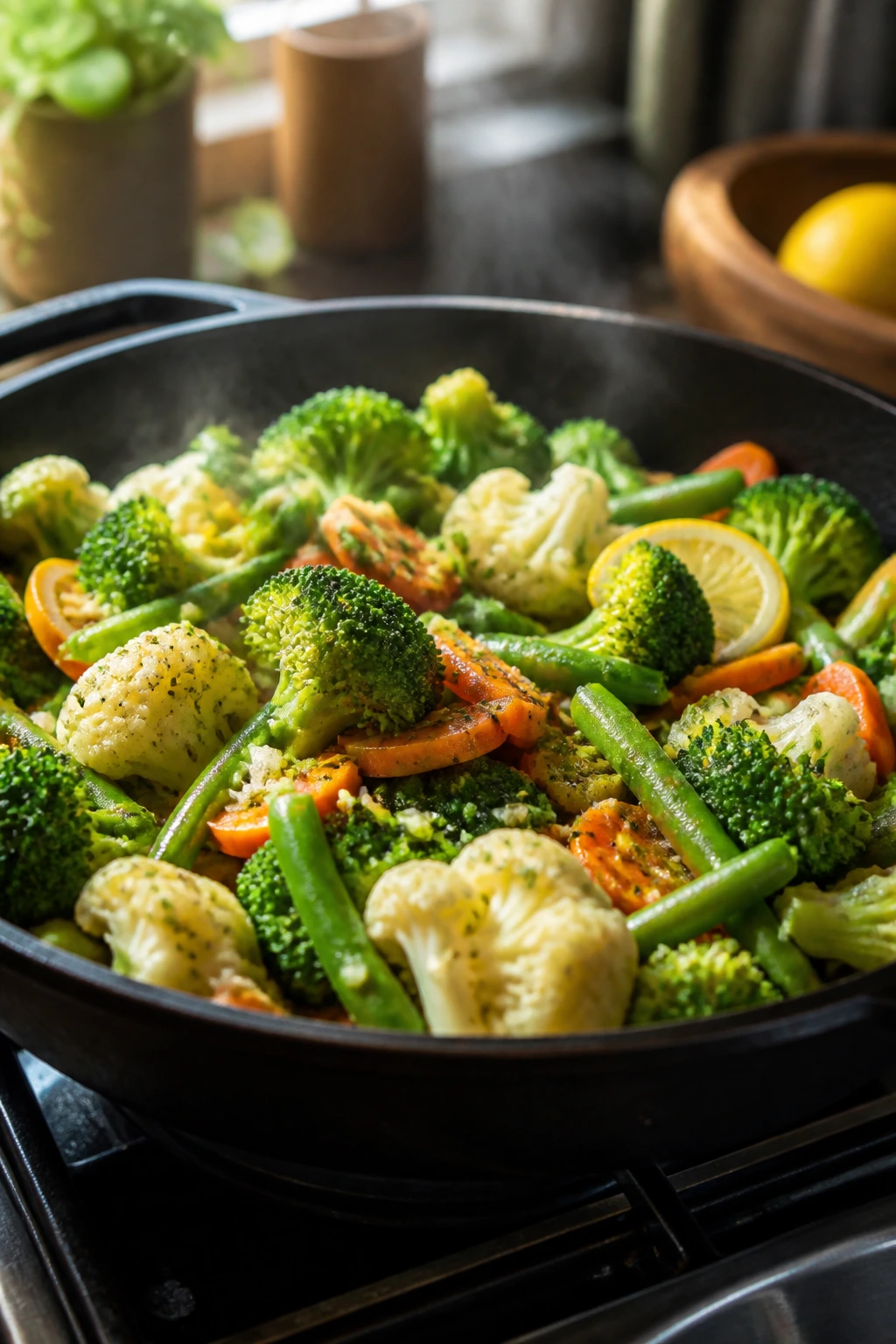
A good freezer-bag dinner should solve a problem without tasting like a compromise, and this one does that neatly. The vegetables stay bright, the garlic stays friendly, and the lemon keeps the whole pan from feeling heavy. That’s a useful combination, especially on nights when you want dinner to be hot, vegetable-forward, and done without a long list of errands.
What I like most here is the small discipline it asks for. Not much. Just a hot pan, a wide surface, and the patience to let the moisture leave before you add the bright finishing touches. Once you do it that way a few times, the method becomes muscle memory, and a bag of frozen vegetables starts looking less like an emergency and more like a plan.
Garlicky Frozen Veggies for a Healthy Dinner — Recipe Card
Recipe Name: Garlicky Frozen Veggies for a Healthy Dinner
Description: A hot skillet turns frozen mixed vegetables into garlicky, lemony vegetables with browned edges and no thawing required. Serve them as a light dinner with rice, eggs, beans, or toasted bread.
Prep Time: 10 minutes
Cook Time: 15 minutes
Total Time: 25 minutes
Course: Dinner
Cuisine: American
Servings: 4 servings
Calories: 150 kcal per serving
Ingredients
For the Skillet:
- 2 tablespoons olive oil
- 1 tablespoon unsalted butter
- 1 small yellow onion, thinly sliced
- 6 garlic cloves, minced
- 1 teaspoon garlic powder
- 2 pounds frozen mixed vegetables, such as broccoli, cauliflower, carrots, green beans, and peas
- 1 teaspoon kosher salt, plus more to taste
- 1/2 teaspoon black pepper
- 1/2 teaspoon crushed red pepper flakes
- 2 tablespoons low-sodium vegetable broth or water
For Finishing:
- 1 tablespoon lemon juice
- 1 teaspoon lemon zest
- 2 tablespoons grated Parmesan cheese, optional
- 2 tablespoons chopped fresh parsley, optional
Instructions
-
Slice the onion, mince the garlic, zest and juice the lemon, and measure the remaining ingredients. Keep the frozen vegetables frozen.
-
Heat a 12-inch skillet over medium-high heat for 2 minutes. Add the olive oil and butter, then add the onion when the butter foams.
-
Cook the onion for 3 to 4 minutes, stirring occasionally, until translucent with a few golden edges.
-
Stir in the garlic and garlic powder and cook for 30 to 45 seconds, just until fragrant.
-
Add the frozen vegetables, salt, black pepper, and red pepper flakes. Spread them out in the skillet and let them sit for 1 to 2 minutes before stirring.
-
Cook for 6 to 8 minutes, stirring occasionally, until the vegetables are hot, tender-crisp, and starting to brown. If needed, add the broth or water, cover for 1 minute, then uncover and cook off the moisture.
-
Turn off the heat. Stir in the lemon juice, lemon zest, Parmesan if using, and parsley. Taste and add more salt if needed.
Notes: Keep the vegetables frozen, use a wide skillet, and finish with lemon after the heat is off for the brightest flavor. If your skillet is small, cook the vegetables in two batches so they can brown instead of steam.