



Fresh vegetarian BBQ for a healthy dinner works best when you stop pretending vegetables are tiny steaks. A platter of blistered zucchini, charred corn, marinated tofu, and a cold herb sauce is a different kind of dinner—smokier, brighter, and, frankly, more interesting than the limp “vegetarian option” that still shows up on too many plates.
The trick is contrast. Hot and cold. Soft and crisp. Salty and sharp. A forkful of browned halloumi with cucumber salad and lemony yogurt tastes deliberate; a pile of grilled vegetables without a plan tastes like a side dish that wandered away from the main course.
And no, you do not need to make this complicated. Dry the food, preheat the grill hard, pick vegetables that can take a little punishment, and finish with something acidic—lemon, vinegar, pickled onion, chopped herbs. Once those pieces are in place, vegetarian BBQ stops feeling like a compromise and starts looking like the kind of dinner people ask for again.
Why Vegetarian BBQ Works Better Than the Stereotype
-
Smoke does the heavy lifting: A hot grill gives tofu, peppers, mushrooms, and onions a deeper, almost meaty flavor in 6 to 12 minutes, which means you do not need a sticky sauce to fake interest.
-
The plate stays satisfying without getting heavy: When the meal is built from vegetables, a sturdy protein, and one sensible starch, you get chew and depth without a plate that feels like a brick.
-
Fresh herbs fix the flat spots: Parsley, dill, mint, cilantro, and basil cut through char in a way bottled barbecue sauce never can.
-
It works on almost any heat source: Charcoal, gas, a grill pan, or even a broiler can build the same browned edges if you use them with a little discipline.
-
Leftovers still make sense tomorrow: Grilled vegetables, tofu, grain salads, and cool sauces hold up well in the fridge, so the next meal does not feel like reheated punishment.
-
You can feed mixed eaters without cooking three separate dinners: The same platter can hold tofu for one person, halloumi for another, and extra vegetables for whoever wants the lightest plate.
The Plate Formula That Keeps a Vegetarian BBQ Dinner Satisfying
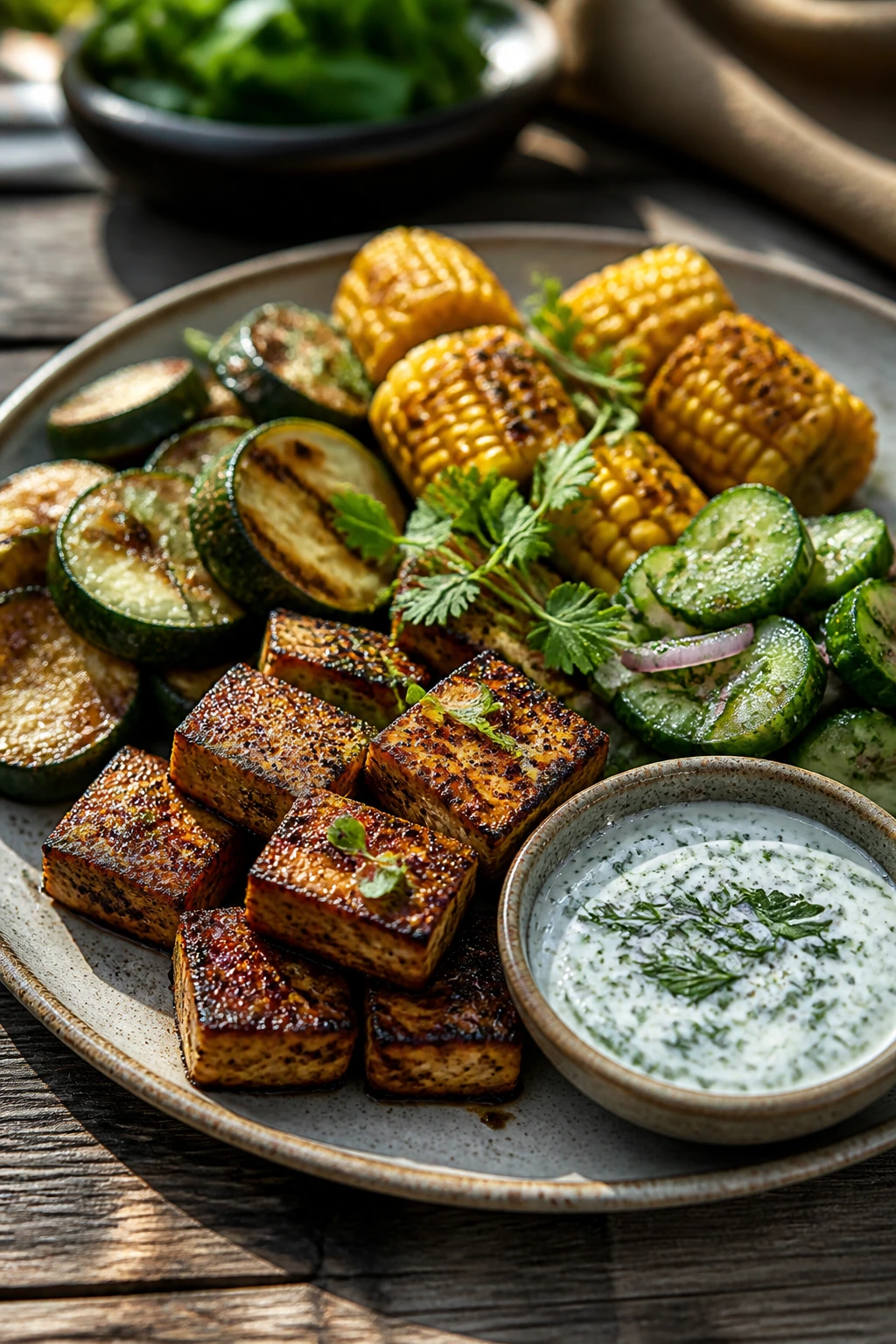
The easiest way to make a vegetarian BBQ dinner feel complete is to think in parts, not in “meat replacement” terms. One smoky protein, two vegetables with different textures, one starch with some backbone, and one sharp sauce will do more work than a random spread of grilled odds and ends.
I like to build the plate like this: a browned main, a warm vegetable, a cool crunchy side, and a finishing sauce that wakes everything up. That might be tofu, grilled zucchini, corn salad, and herb yogurt. Or halloumi, charred peppers, farro, and chimichurri. The exact ingredients can change, but the structure should not.
A good rule of thumb is this: if everything on the plate comes off the grill, the dinner usually needs one cold or room-temperature piece to keep it from tasting like smoke on smoke. A cucumber salad, a tomato salsa, or a vinegar-heavy slaw solves that fast. Freshness is not decoration here. It is the thing that keeps the whole meal from getting dull after the third bite.
For portions, think in real food amounts instead of abstract “light dinner” language. A hungry adult usually does well with 4 to 6 ounces of tofu or halloumi, 1 to 2 cups of grilled vegetables, and about 1/2 to 1 cup of grains, potatoes, or bread. If you need more fuel, increase the starch or add chickpeas, lentils, or a bean salad. If you want the meal to feel lighter, keep the starch smaller and lean harder on vegetables and sauce.
Vegetables That Hold Up to Flame and Grates
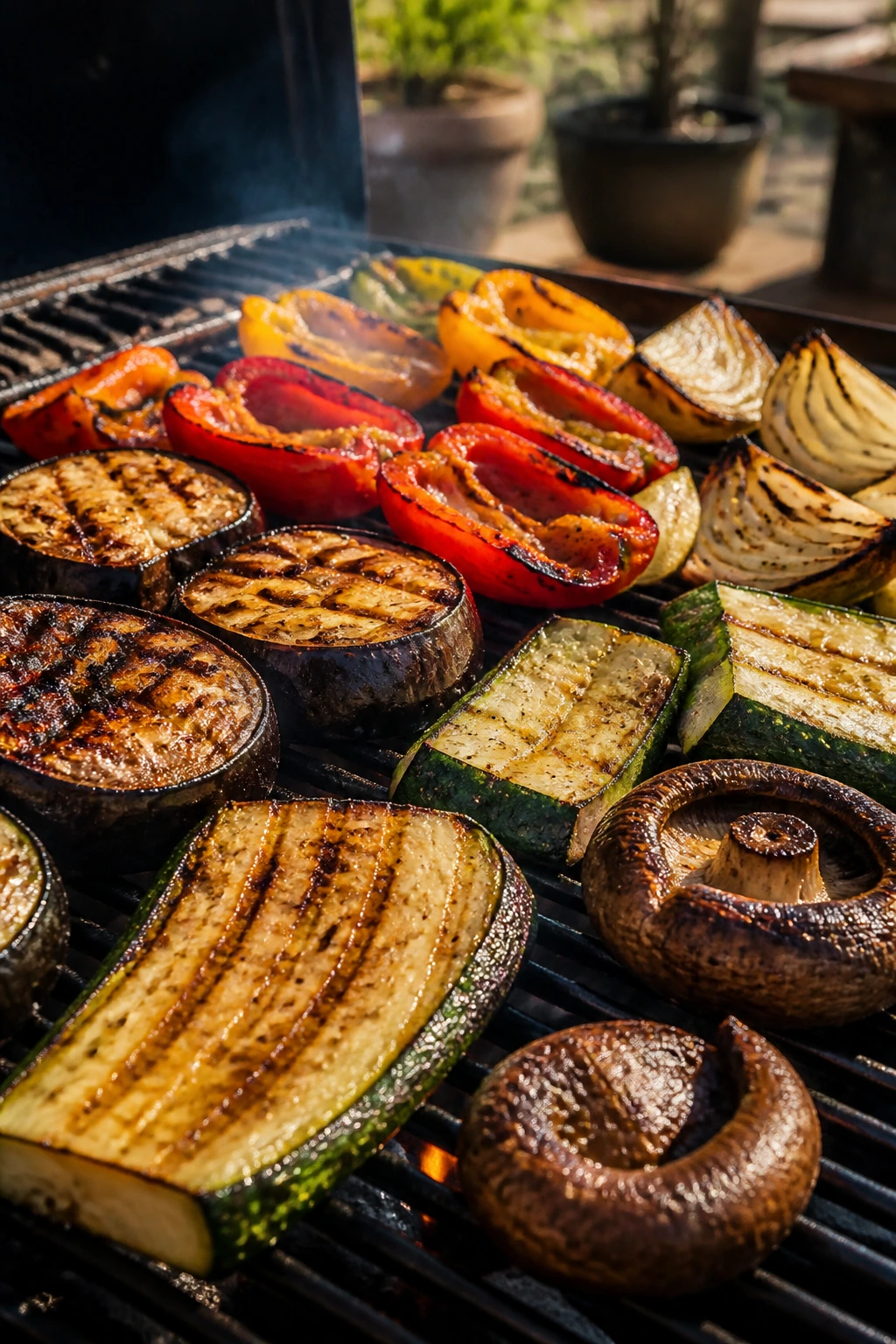
Not every vegetable belongs on a hot grill. Thin, watery, fragile things can still work, but only if you treat them carefully. The stars are the vegetables with enough structure to pick up char before they collapse.
The thick-cut vegetables that behave
Zucchini, eggplant, onions, peppers, and portobello mushrooms are the obvious place to start because they can take direct heat without turning to mush. Slice zucchini lengthwise into planks about 1/2 inch thick. Cut eggplant into rounds or long slabs around 3/4 inch thick, and salt it for 20 minutes if it looks especially watery.
Onions do better in thick rounds than in thin strips. Pepper halves or quarters char beautifully when the skin is left on and the seeds are removed. Portobellos need their stems trimmed and their gills wiped clean if they look muddy. No drama. Just a towel and a minute of attention.
Vegetables that need a little help
Corn, asparagus, cherry tomatoes, and mushrooms are more delicate, but they still work if you use smart timing. Corn on the cob likes direct heat and a bit of patience; turn it every couple of minutes until the kernels are spotted with brown and smell sweet. Thin asparagus cooks fast—usually 4 to 6 minutes total—so keep it near the edges of the grill or in a grill basket.
Cherry tomatoes are finicky, which is why skewers help. One loose tomato rolling through the grates is a bad use of your time. Thread them onto soaked skewers with basil or onion, or roast them in a grill-safe pan until the skins split and the juices go syrupy.
What to skip, or rethink
Leafy greens, tiny diced vegetables, and very thin cuts usually do better in a grill basket, a foil packet, or a quick sauté. You can grill romaine, but it needs to be halved and watched closely. Carrots work if they are cut into planks or par-cooked first. The problem is not that these vegetables cannot be used. The problem is that people throw them on the grate without adjusting the method and then act surprised when they disappear into the fire.
Plant Proteins That Eat Like a Main Course
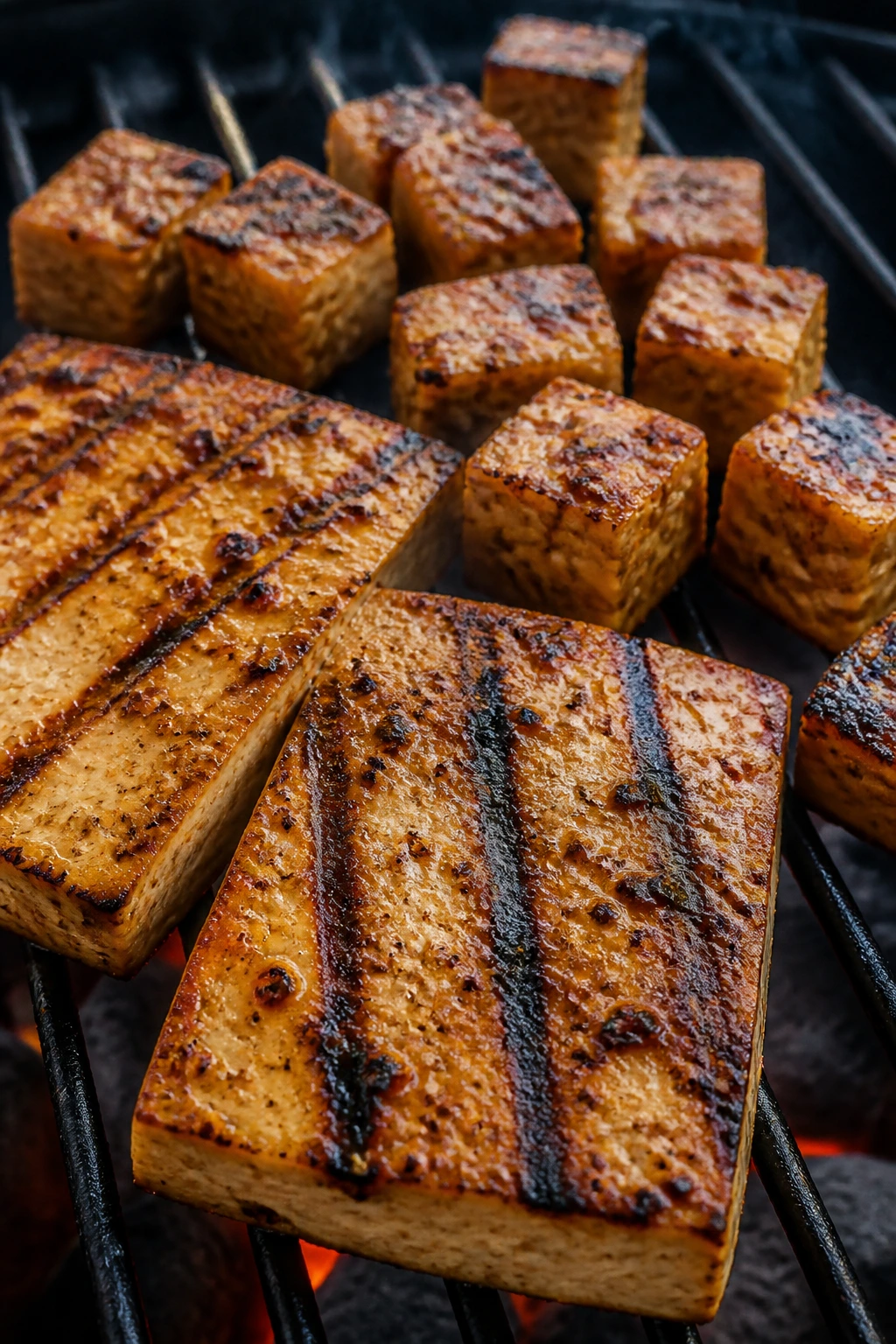
A vegetarian BBQ dinner does not need fake burgers to feel substantial. It needs texture. A little chew. A little browning. Something that holds sauce without turning soggy after the first bite.
Tofu, the reliable one
Extra-firm tofu is still the most useful starting point. Press it for 20 to 30 minutes, or wrap it in a clean towel and set a heavy skillet on top if you do not own a press. Slice it into 3/4-inch slabs, then marinate it in something salty and acidic—soy sauce or tamari, lemon juice, garlic, a little oil, maybe ginger.
The surface needs to be dry before it hits the grill. That is the whole game. Wet tofu steams and sticks. Dry tofu browns. Grill it over medium-high heat for 3 to 4 minutes per side, and do not move it too early. If it is ready, it will release on its own.
Tempeh, the one with backbone
Tempeh has more chew and a nutty flavor that works well with smoky rubs. It benefits from a short steam before marinating—about 10 minutes in a covered pan or steamer basket—to take the edge off the bitterness. After that, slice it into planks or cubes and give it at least 30 minutes in marinade.
Tempeh does not need to be disguised. It needs to be browned. If you get deep color on both sides, it turns into one of the best grilled proteins on the table. I like it best with mustard, smoked paprika, and a little maple or date syrup brushed on near the end.
Halloumi and paneer for the people who want immediate browning
Halloumi is salty, squeaky, and built for heat. Paneer is milder and more forgiving. Both need to be patted dry before grilling, and both are happiest in slices around 1/2 inch thick. You are chasing color, not a long cook time. About 1 to 2 minutes per side is usually enough.
Halloumi brings a stronger salt hit, so it likes lemon, tomatoes, herbs, and anything acidic. Paneer likes more assertive marinades—cumin, garlic, chili, yogurt, or a quick brush of barbecue sauce near the end. If you want a lighter plate, tofu or tempeh gives you more flexibility. If you want something immediately rich and salty, halloumi does the job fast.
Beans and legumes as the backup plan
Not every dinner needs a grilled protein on every plate. A smoky chickpea salad with charred scallions, white beans with herbs, or lentils tossed with grilled vegetables can hold the center of the meal if you do not feel like pressing tofu or buying specialty cheese.
This is where a lot of vegetarian BBQ ideas go wrong. They insist on one showpiece ingredient, when a sturdy bean salad plus two very good grilled vegetables would eat better. If you are feeding people who like variety, that route often works better anyway.
Sauces, Rubs, and Marinades That Bring the Smoke
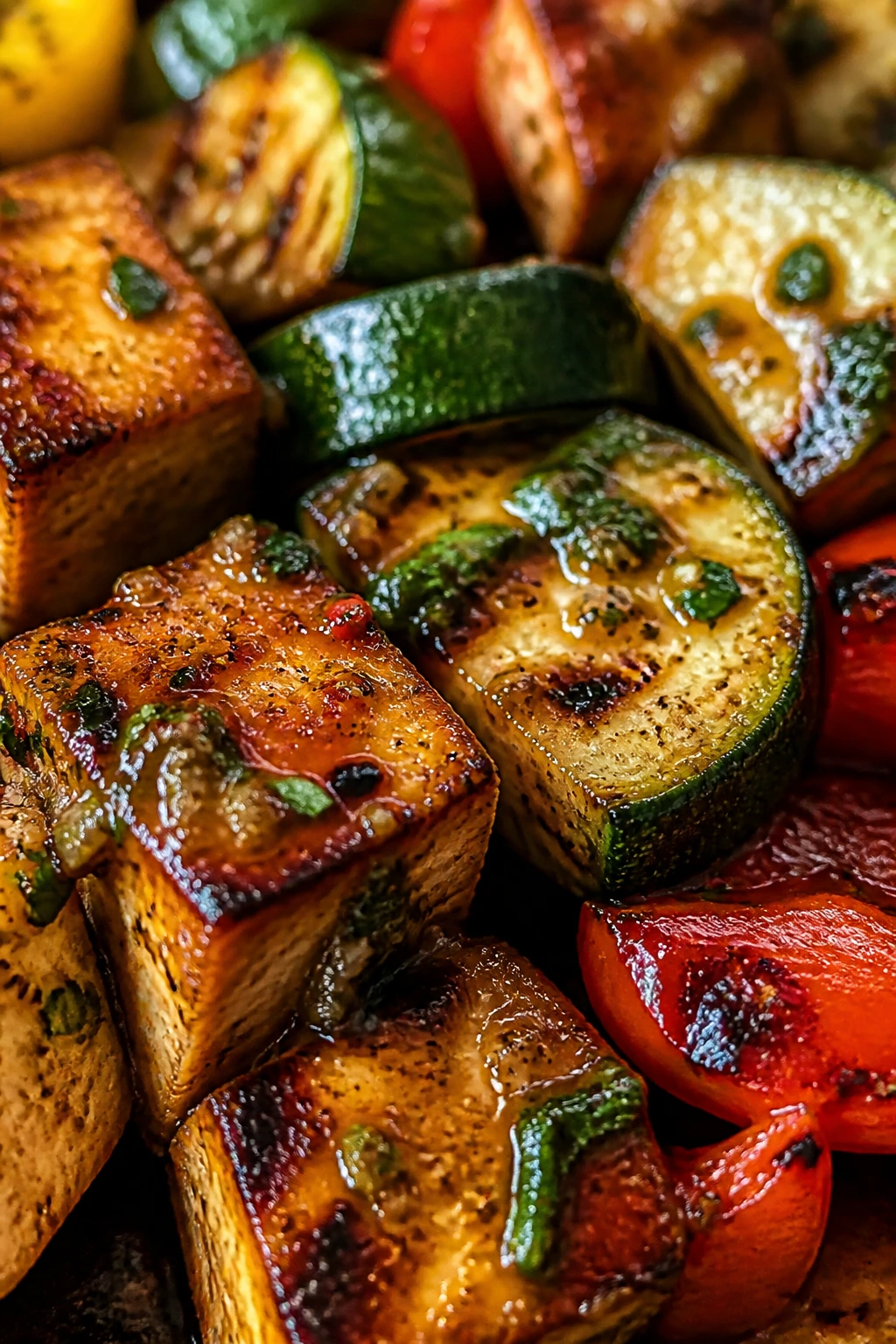
Sauce is where vegetarian barbecue earns its keep. Without a thoughtful finish, grilled vegetables can taste a little stern—browned, yes, but not fully alive. Acid, herbs, salt, and a touch of fat make the whole thing snap into focus.
Dry rubs that stick and brown
A good dry rub for vegetarian BBQ does not need a mile-long ingredient list. Smoked paprika, garlic powder, onion powder, coriander, black pepper, cumin, and a little brown sugar or maple sugar are enough for most vegetables and proteins. The sugar is useful, but not during the whole cook. It helps with browning early, then can burn if left over direct flame too long.
Keep rubs light. A thick crust of spice on zucchini turns pasty. A thin, even coat on eggplant, tofu, or mushrooms gives you depth without covering up the vegetable itself.
Marinades that add flavor without making things mushy
A good marinade balances oil, acid, and salt. Olive oil carries flavor. Lemon juice, vinegar, or yogurt brightens it. Soy sauce, tamari, miso, or a small amount of salt seasons the inside. Garlic, ginger, mustard, chili flakes, and fresh herbs fill in the edges.
For tofu and tempeh, 30 minutes is enough to notice the difference, though a few hours is even better. For vegetables, 15 to 30 minutes is usually plenty. Longer can work, but not if the marinade is very acidic and the vegetable is soft. Eggplant is happy to soak things up. Zucchini is not.
Finishing sauces that make the plate feel fresh
This is the part I care about most. A cool, sharp finishing sauce is what keeps vegetarian BBQ from tasting like one long browned note. Greek yogurt with lemon and dill, tahini thinned with water and garlic, chimichurri, salsa verde, herb vinaigrette, or even a quick cucumber raita can do the job.
Brush sweet barbecue sauce on only near the end, or serve it on the side. That keeps the sugars from burning and lets people choose how much they want. I also like pickled red onions, because they taste like someone turned the brightness up two clicks. Small thing. Big effect.
Charcoal, Gas, Grill Pan, or Broiler: Picking Your Heat Source
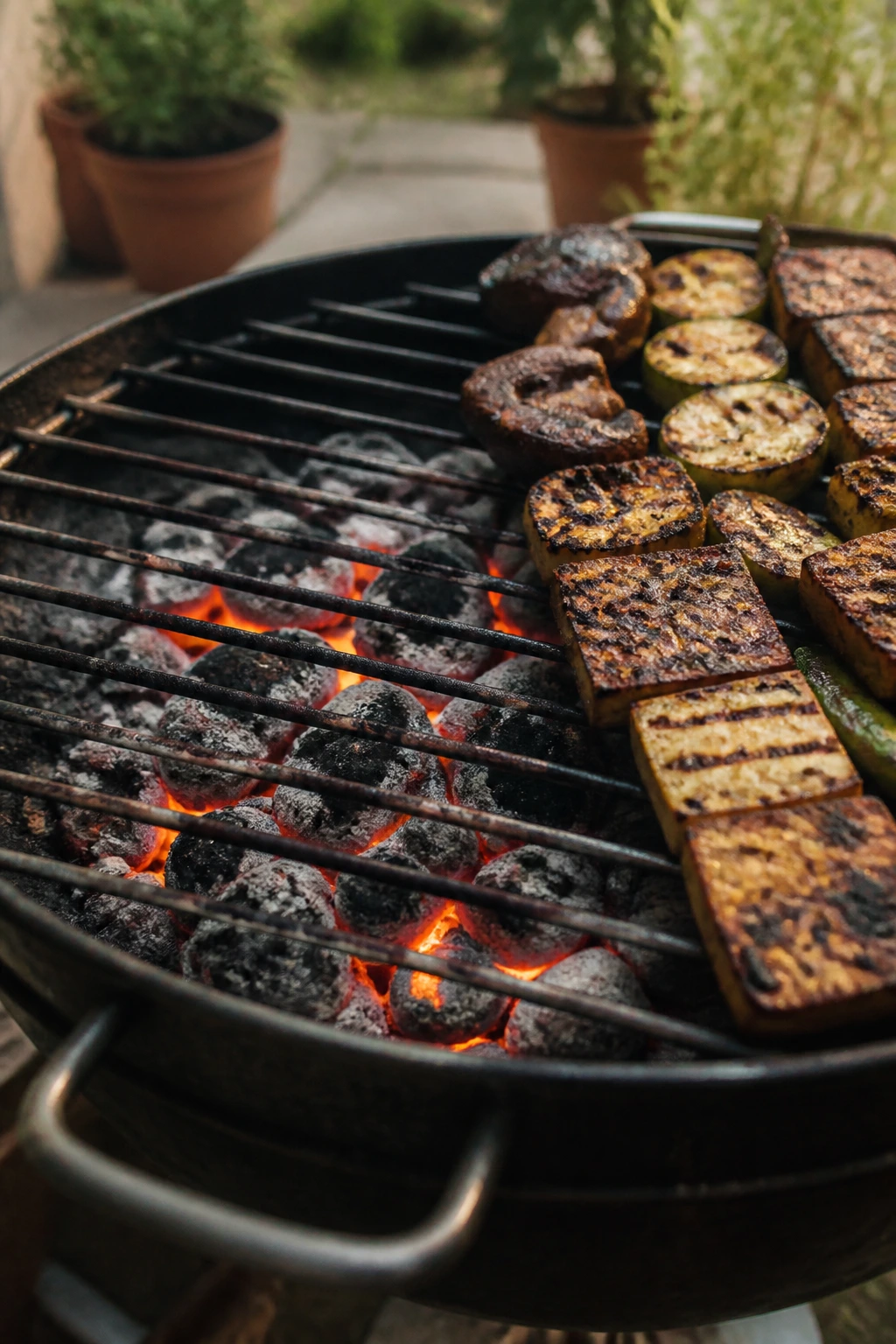
Charcoal, gas, grill pan, and broiler all produce different results, and pretending they are interchangeable is where a lot of weak vegetarian BBQ starts. They can all work. They just do not behave the same way.
Charcoal gives the deepest edge
Charcoal gives vegetables and tofu the most obvious smoke and the fastest browning. It also punishes laziness. You need to wait until the coals are covered with gray ash and hot enough to hold a hand over for just a few seconds. A two-zone fire is your friend: one hot side for searing, one cooler side for finishing thicker pieces without charring them to a crisp.
If you like a stronger barbecue flavor, charcoal is the route. If you want a softer, cleaner flavor, gas will be easier to control.
Gas is the weeknight answer
Gas grills preheat faster and are easier to manage when you are juggling several vegetables and a sauce. Give it 10 to 15 minutes with the lid closed until the grates are hot enough that a brush of oil sizzles. Aim for medium-high heat, somewhere around 400 to 450°F if you trust the built-in thermometer.
Gas is especially good for mixed plates because it gives you enough control to move food around. You can sear the tofu, slide it to a cooler spot, and keep the zucchini from going soft while the onions finish.
Grill pans and broilers are not second-rate
A heavy cast-iron grill pan is a perfectly good fix for an apartment dinner. Preheat it until it is hot enough to make oil shimmer in the ridges. Do not overcrowd it. That is the entire point. Too many pieces and you get steam instead of marks.
The broiler is the other useful indoor option. Put the rack 4 to 6 inches from the heat, line a sheet pan with foil, and watch closely. Broilers move fast. Fast enough to burn sugar in under a minute if you walk away. For vegetables with a bit of sweetness—corn, peppers, onions—broiling is excellent. For tofu, you need to flip with care and keep the surface lightly oiled.
How to Time the Cook So Everything Lands Warm
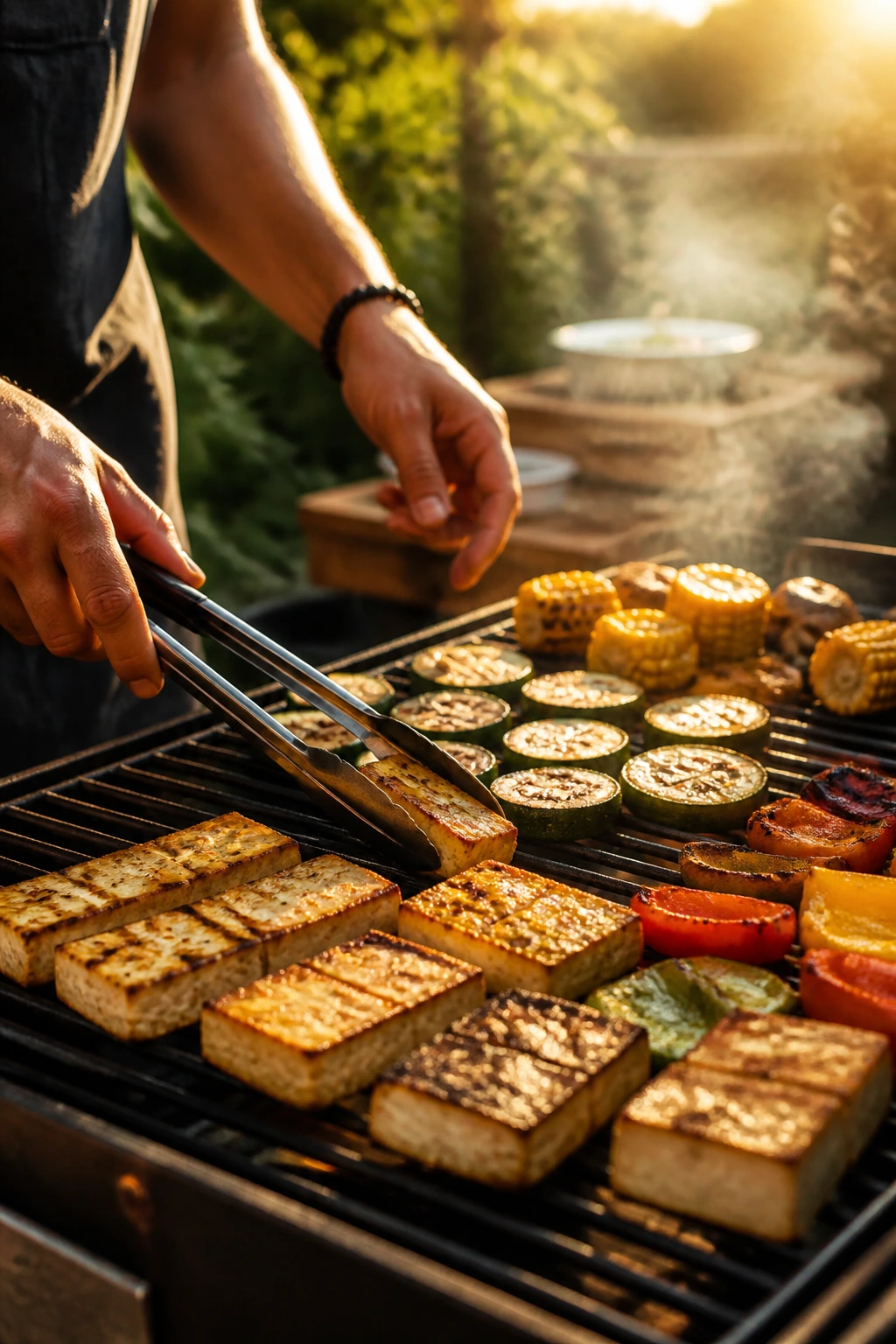
A vegetarian BBQ dinner falls apart when everything finishes at different speeds and half the plate is cold before you sit down. The fix is not a fancier recipe. It is order.
Forty minutes before serving
Press tofu if you are using it. Slice vegetables to the thickness they need. Mix the sauce. Start any grains or potatoes that need time, because farro, quinoa, or roasted potatoes will not politely appear when the grill is done. If you are making a salad, wash and dry the greens now, not after the grill is lit and your hands smell like garlic.
Twenty minutes before serving
Preheat the grill or broiler. Oil the grates or pan lightly. Toss vegetables with oil, salt, and spices. If you are making a cold sauce, taste it now and adjust the salt and acid. A sauce that tastes flat before dinner usually tastes even flatter after it sits next to smoke.
On the grill
Start with the denser items: tofu, tempeh, onions, peppers, cauliflower steaks, thick eggplant. Then move to the faster ones: zucchini, asparagus, mushrooms, corn. Delicate herbs, pickles, and salad components stay off the heat until the end. That sounds obvious. People still forget it.
If you need to hold things, use a warm oven around 200°F and keep the food on a tray, loosely covered. Do not wrap tightly or the crust softens and the whole point of grilling starts to disappear.
Final five minutes
Now comes the part that makes the meal taste finished. Spoon on the sauce, scatter herbs, add flaky salt, squeeze lemon over the top, and bring out anything cold and crunchy. If you are serving bread or pita, warm it last. Cold bread next to hot barbecue is a bad mood in carbohydrate form.
Fresh Sides That Turn Grilled Food Into a Real Dinner
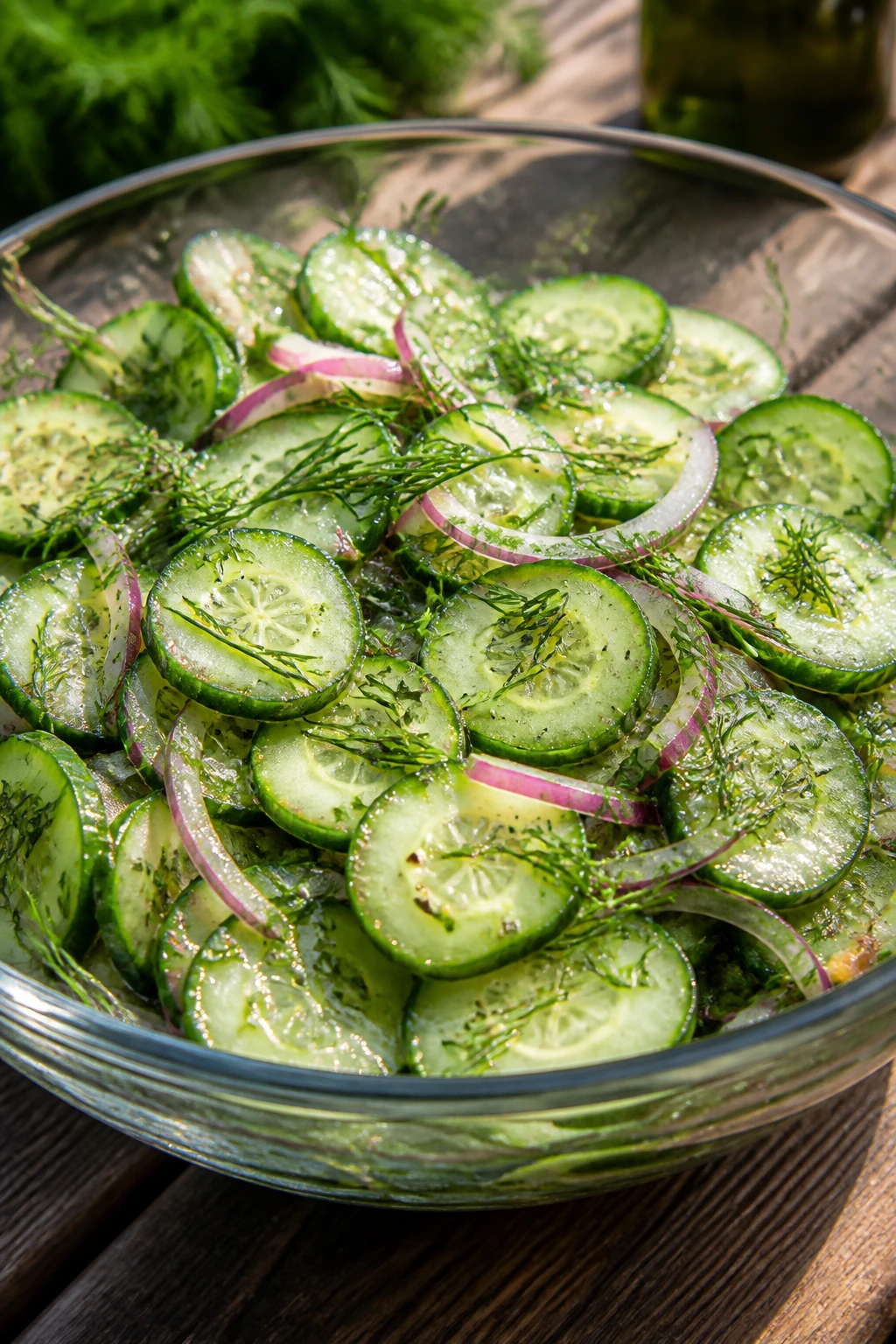
Grilled vegetables are good. A plate built from only grilled vegetables can still feel a little one-note. Fresh sides fix that. They add crunch, coolness, acid, and pace.
A cucumber and dill salad is one of the easiest wins. Slice the cucumbers thin, salt lightly, and dress them with yogurt, lemon, or vinegar. A tomato salad with basil and olive oil works just as well, especially if the tomatoes are good enough to smell like tomatoes. If you want more substance, add chickpeas or white beans to the bowl and let them soak up the dressing.
Grain salads are useful because they do not collapse under heat. Farro, couscous, quinoa, brown rice, and bulgur all carry herbs and lemon well. Toss them with chopped parsley, scallions, roasted seeds, and a little olive oil while they are still warm. They should taste alive, not like a box of beige filler.
Pickled things do a lot of work on a vegetarian BBQ plate. Pickled onions, quick-pickled cucumbers, jalapeños, or even a spoonful of store-bought giardiniera can wake up smoky food instantly. I keep saying this because it matters: if a plate tastes too dark, too browned, too heavy, it usually needs something crisp and acidic beside it.
Bread can be part of the meal, but I would rather have one good piece of warm flatbread than a basket of random slices that soak up sauce and then sit there. If you want the meal to feel a little more substantial, add grilled potatoes, corn, or a legume salad rather than another carb that does nothing but occupy the table.
A Few Practical Tips That Make the Whole Meal Better
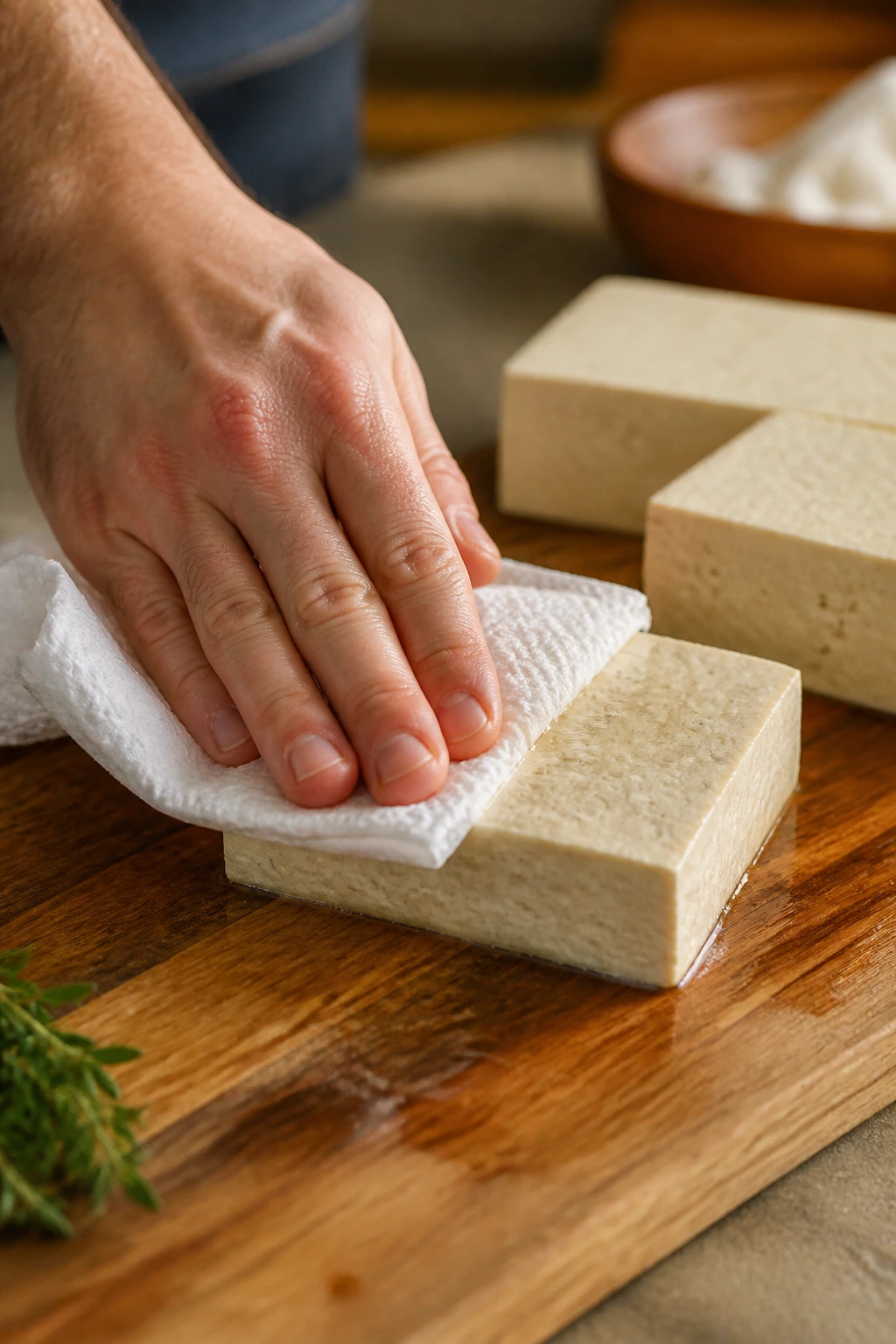
Dry the surface before it goes anywhere near the heat. Water is the enemy of browning. Pat tofu, mushrooms, zucchini, and halloumi dry with a towel, then oil them lightly. That one small move changes the sear more than any expensive sauce ever will.
Use a two-step seasoning plan. Salt and spice before grilling; acid and herbs after grilling. If you put all the lemon on early, it can mute the browning. If you add all the herbs early, they lose their brightness. Split the job, and the plate tastes cleaner.
Keep one cool, crunchy element on the table. Cucumber, radish, fennel, slaw, pickled onion, or a chopped herb salad keeps the meal from turning monotonous. Smoke is good. Smoke with no relief gets tiring fast.
Brush sweet sauces on late. Barbecue sauce, maple glazes, and anything with noticeable sugar should go on during the last minute or two, or after the food comes off the grill. That prevents burning and keeps the glaze glossy instead of black.
Give the vegetables space. Crowding a grill causes steaming, and steaming gives you limp edges instead of char. If you need to cook a lot, use two batches or a grill basket. Slow and crowded is the worst of both worlds.
Warm the serving platter. A quick 5-minute stay in a low oven keeps the first batch from cooling off while you finish the rest. Little detail. Big payoff. Hot food tastes more like dinner and less like leftovers arranged with hope.
Common Mistakes That Flatten the Flavor
-
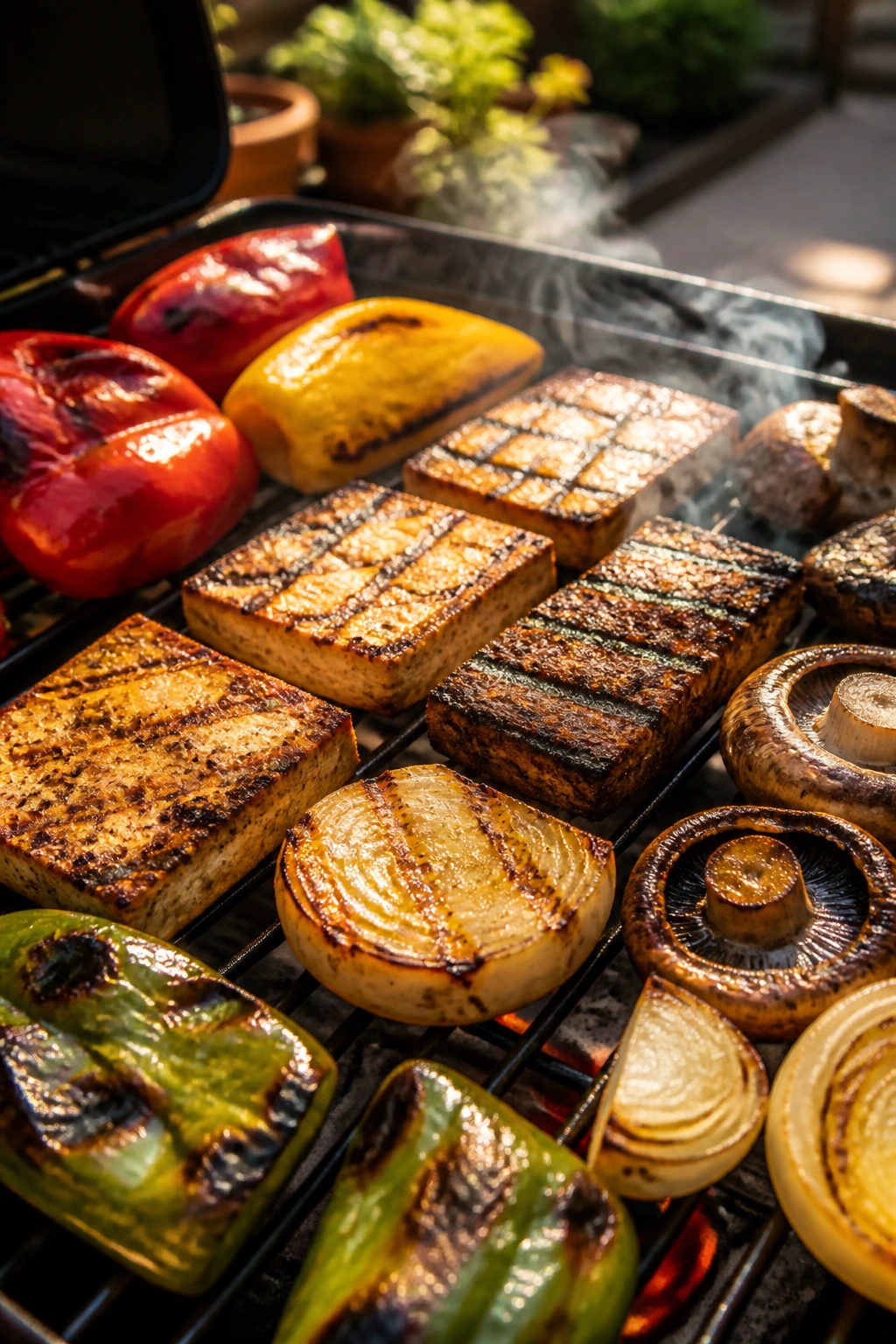
Cutting vegetables too thin: Thin slices burn before they brown, then collapse into the grate or the tray. Cut zucchini, eggplant, and onions thick enough to hold their shape, even if that means fewer pieces.
-
Saucing too early: Sweet barbecue sauce turns sticky, then scorched, if it sits over direct heat too long. Brush it on at the end, or serve it beside the food and let people dip as they like.
-
Skipping acid at the finish: If the plate tastes smoky but dull, it usually needs lemon, vinegar, pickles, or fresh herbs. Char without brightness feels heavy fast.
-
Crowding the grill: When too many pieces touch, they release steam and the surface stays pale. Cook in batches or use a basket so each piece has enough hot air around it.
-
Serving only grilled items: One-note smoke gets tiring halfway through the plate. Add a cold salad, a crunchy slaw, or a vinegary side so the meal has a reset button.
-
Forgetting to season the inside of proteins: Tofu and tempeh need more than a last-minute sprinkle on top. Salt, marinade, or rub them before grilling, or they will taste like a nice texture wrapped around nothing much.
Variations and Flavor Themes to Try
Mediterranean Grill Plate
Use halloumi, zucchini, red onion, cherry tomatoes, and eggplant, then finish with oregano, lemon, and a tahini-yogurt sauce. This version leans salty and bright, and it works especially well when you want dinner to feel structured without being heavy.
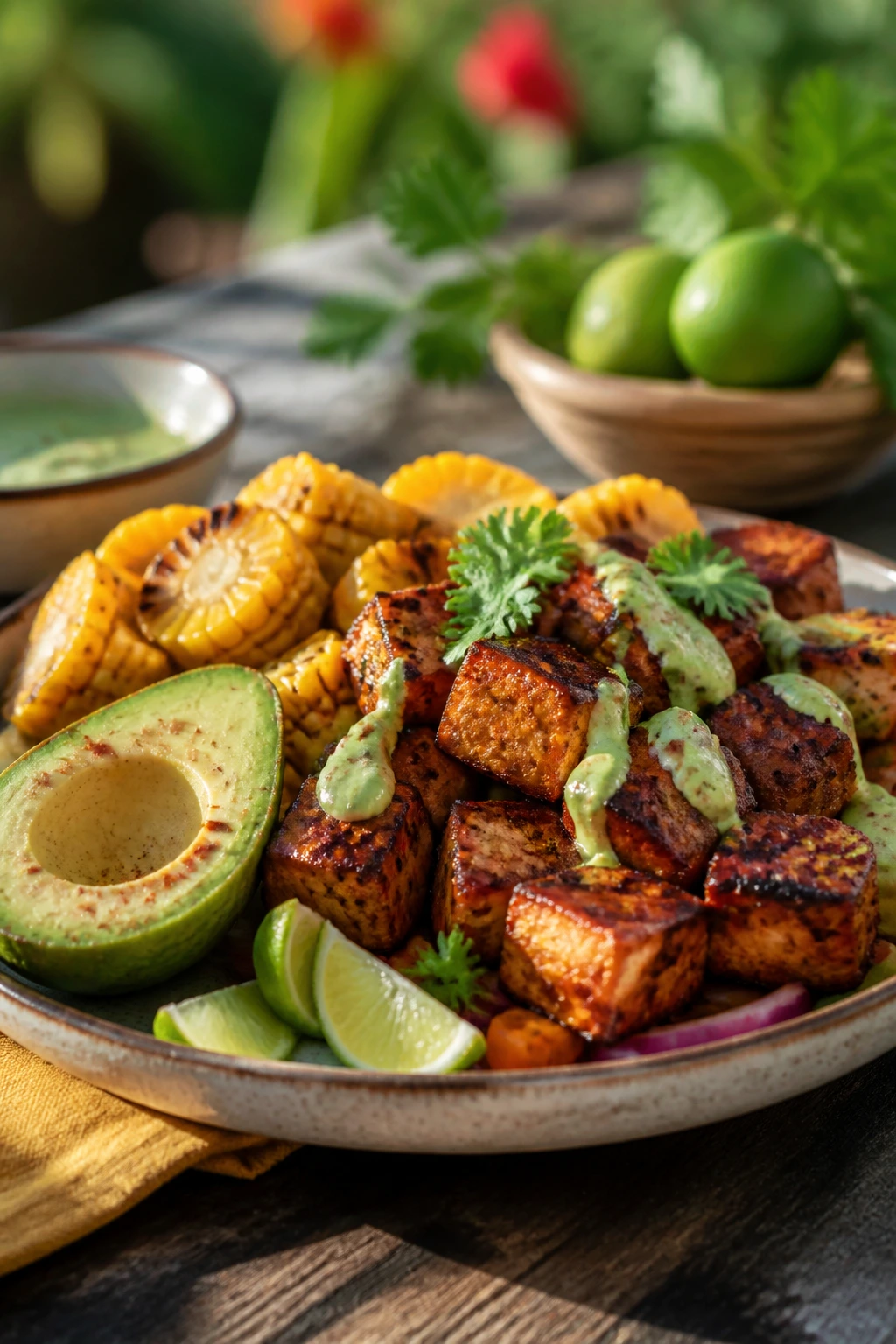
Chipotle-Lime BBQ
Marinate tofu or tempeh with chipotle paste, lime juice, garlic, and a little oil, then serve it with grilled corn, black beans, and avocado. The smoke stays in the background while the lime keeps the plate from turning flat. Good for people who like heat but do not want a sauce that tastes like candy.
Herb Garden Dinner
Pair grilled asparagus, mushrooms, new potatoes, and a white bean salad with dill, parsley, and chives. Use yogurt or sour cream if you want a creamy finish, or keep it olive-oil based if you want the plate lighter. This one feels especially fresh because the herbs do as much work as the grill.
Stone Fruit and Smoke
Grill peaches, plums, or nectarines and serve them with halloumi or tofu, plus bitter greens and a mustardy vinaigrette. The fruit softens and gets jammy at the edges, which makes it a sharp contrast to the salty, browned protein. Slightly odd. Very good.
Middle Eastern Skewer Night
Use cumin, coriander, paprika, garlic, and lemon on tofu, tempeh, cauliflower, and peppers. Serve with cucumber salad, labneh or tahini, and warm flatbread. This style is especially good when you want a vegetarian BBQ spread that feels full but not fussy.
Tools and Equipment You’ll Actually Use
-
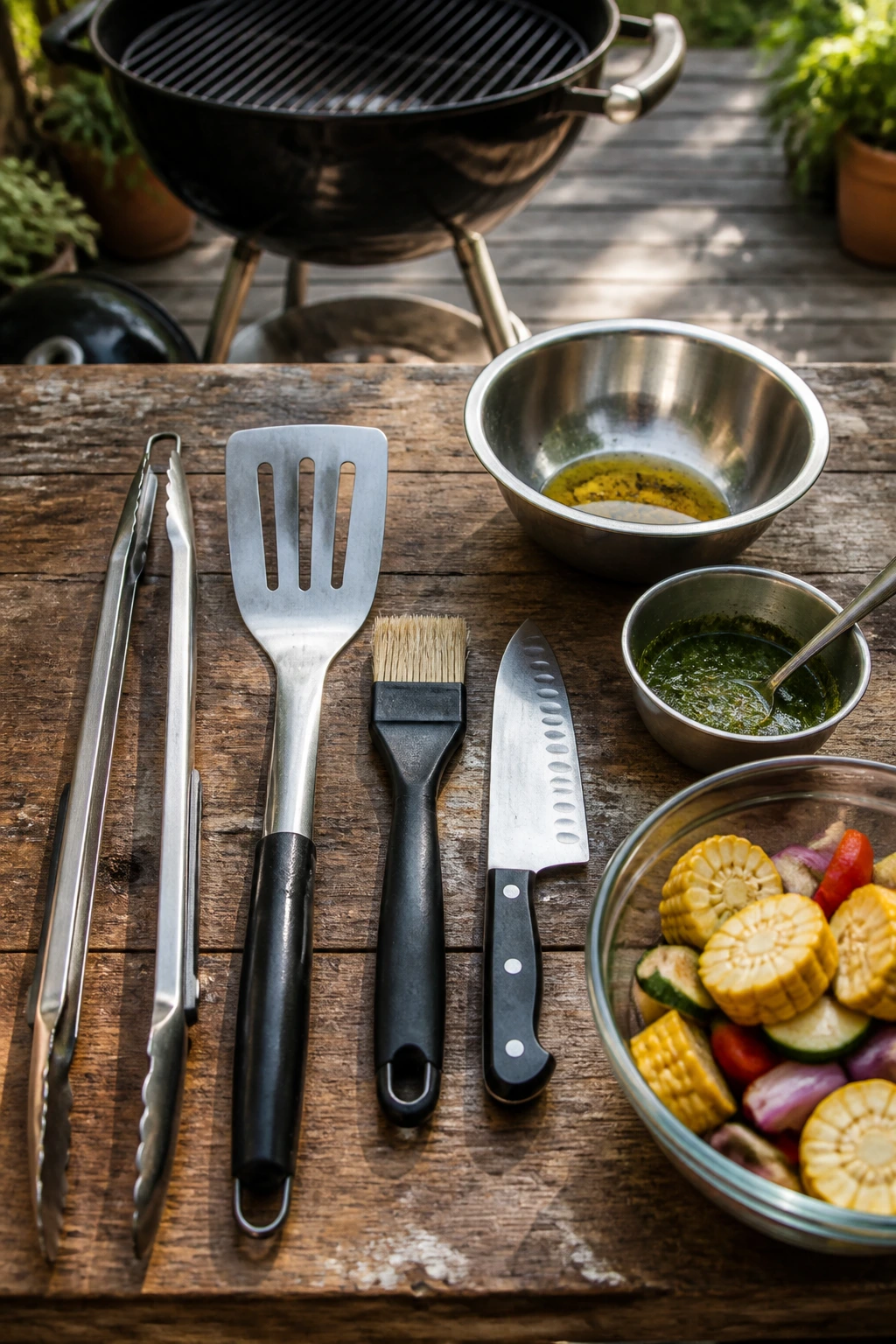
Grill or grill pan: A gas or charcoal grill is ideal, but a heavy cast-iron grill pan can do the job indoors with enough heat.
-
Long tongs: You need them for turning tofu, moving vegetables, and keeping your hands away from flare-ups.
-
Wide metal spatula: Useful for delicate items like halloumi, mushrooms, and halved peppers that can tear if you poke at them too much.
-
Mixing bowls: At least two, one for marinade or seasoning and one for salad or sauce.
-
Basting brush: Better than a spoon for brushing thin marinades or late-stage glazes on vegetables and tofu.
-
Chef’s knife and cutting board: A sharp knife matters here because thick, even cuts grill more evenly than ragged ones.
-
Sheet pan or platter: For carrying everything back and forth between kitchen and grill, and for resting finished food.
-
Grill basket or skewers: Helpful for asparagus, cherry tomatoes, mushrooms, and any small pieces that would otherwise tumble through the grates.
-
Instant-read thermometer, optional: Not required for vegetables, but handy if you are cooking seitan or want a quick check on reheated dishes.
-
Airtight containers: Make leftovers easier to save without drying out the vegetables or absorbing fridge smells.
Make-Ahead, Storage, and Reheating Notes
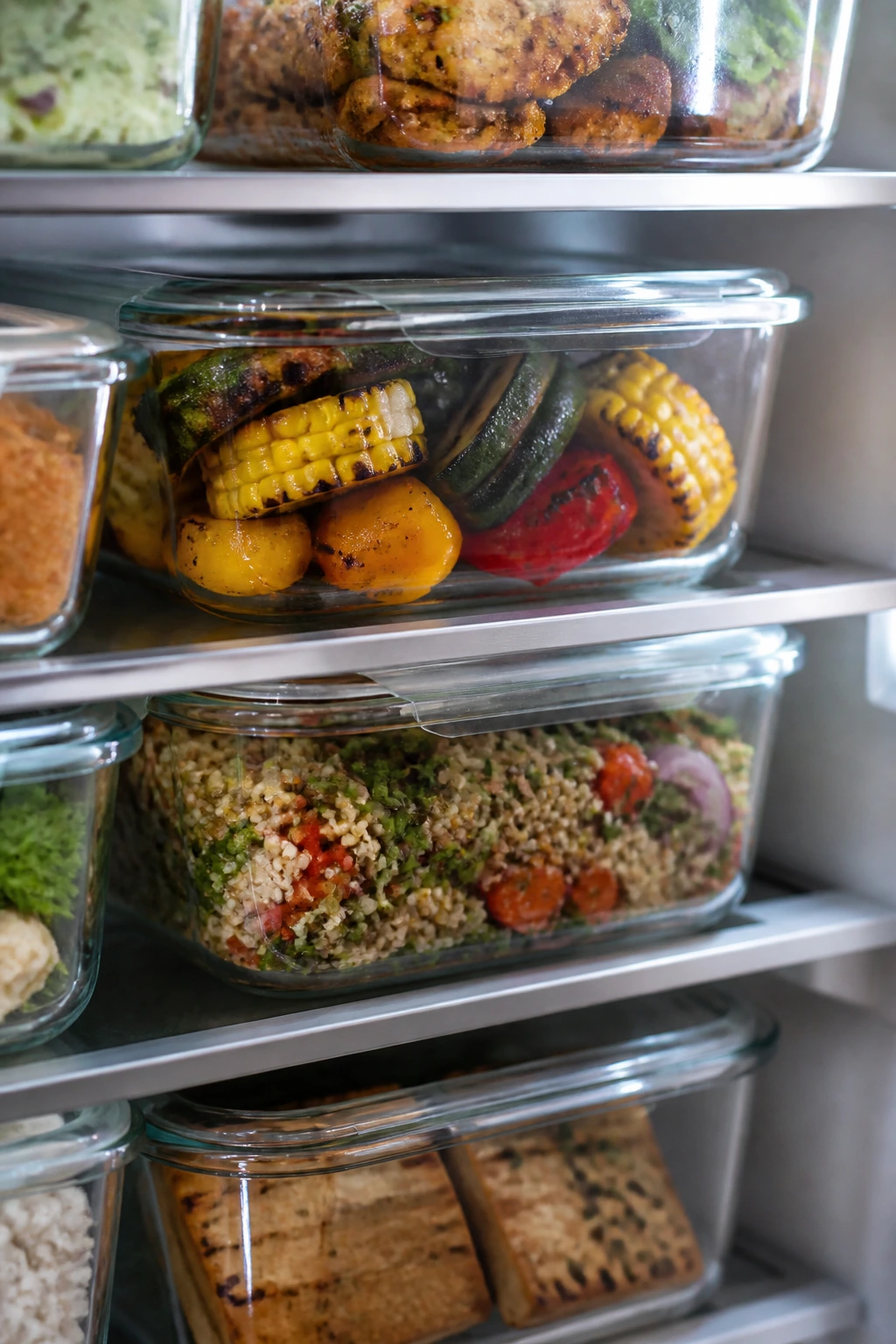
Vegetarian BBQ gets better when parts are prepared ahead, but not everything should be grilled early and forgotten. Marinades can be mixed 2 to 3 days ahead and kept in the fridge. Grain salads hold well for 3 to 4 days, especially if you keep the herbs and dressing separate until the last minute. Tofu can be pressed, sliced, and marinated up to 24 hours ahead; tempeh does fine in marinade overnight too.
Cooked grilled vegetables keep in the refrigerator for about 3 to 4 days in airtight containers. They taste best when they are stored with a little of their dressing or oil, not left bone-dry. Grilled tofu and tempeh also keep well for 3 to 4 days. Halloumi is the exception—it eats best fresh, and after a day or two it turns firmer and saltier, which is fine if you plan to chop it into a salad, less fine if you wanted that hot squeaky bite.
Freezing is mixed. Tofu freezes reasonably well for 1 to 2 months, though the texture becomes spongier in a way some people love. Tempeh can be frozen too. Grilled zucchini, peppers, and tomatoes lose a lot of their texture once thawed, so I would not freeze them unless they are destined for soup or a sauce. Grain salads freeze poorly because of the herbs and fresh vegetables mixed into them.
Reheating works best in a skillet or oven, not the microwave. A 350°F oven for 8 to 12 minutes brings grilled vegetables back to life without turning them mushy. Tofu and tempeh can be reheated in a hot skillet with a little oil for 4 to 6 minutes, which restores some of the crisp edges. If you use the microwave, do it in short bursts and accept that the texture will soften. For cold leftovers, a squeeze of lemon and a fresh handful of herbs are the fastest repair kit I know.
Can You Make Vegetarian BBQ on a Busy Weeknight?
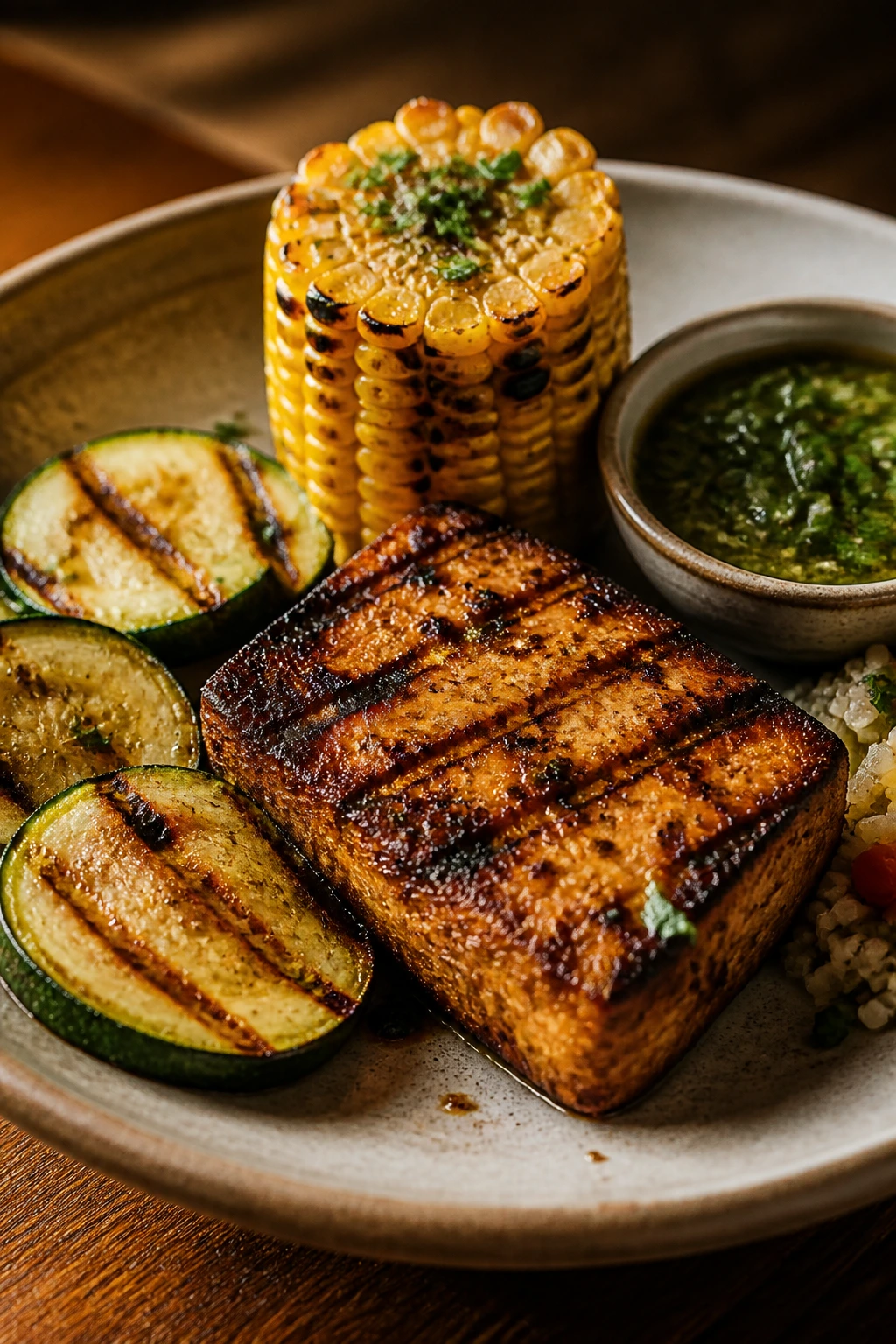
Yes, if you keep the menu narrow. A weeknight vegetarian BBQ works when you pick one protein, two vegetables, one sauce, and one quick side instead of trying to make an entire picnic table in 30 minutes. Tofu, zucchini, and corn can all move fast, especially if the tofu is pressed the day before and the sauce is already mixed.
The bigger issue is not time. It is sequencing. If your grain or potato side is already cooking, the grill only has to handle the main event. That keeps the process calm enough that you can eat at a normal hour instead of standing at the counter wondering why dinner has become a side project.
Which Vegetables Give the Best Char?
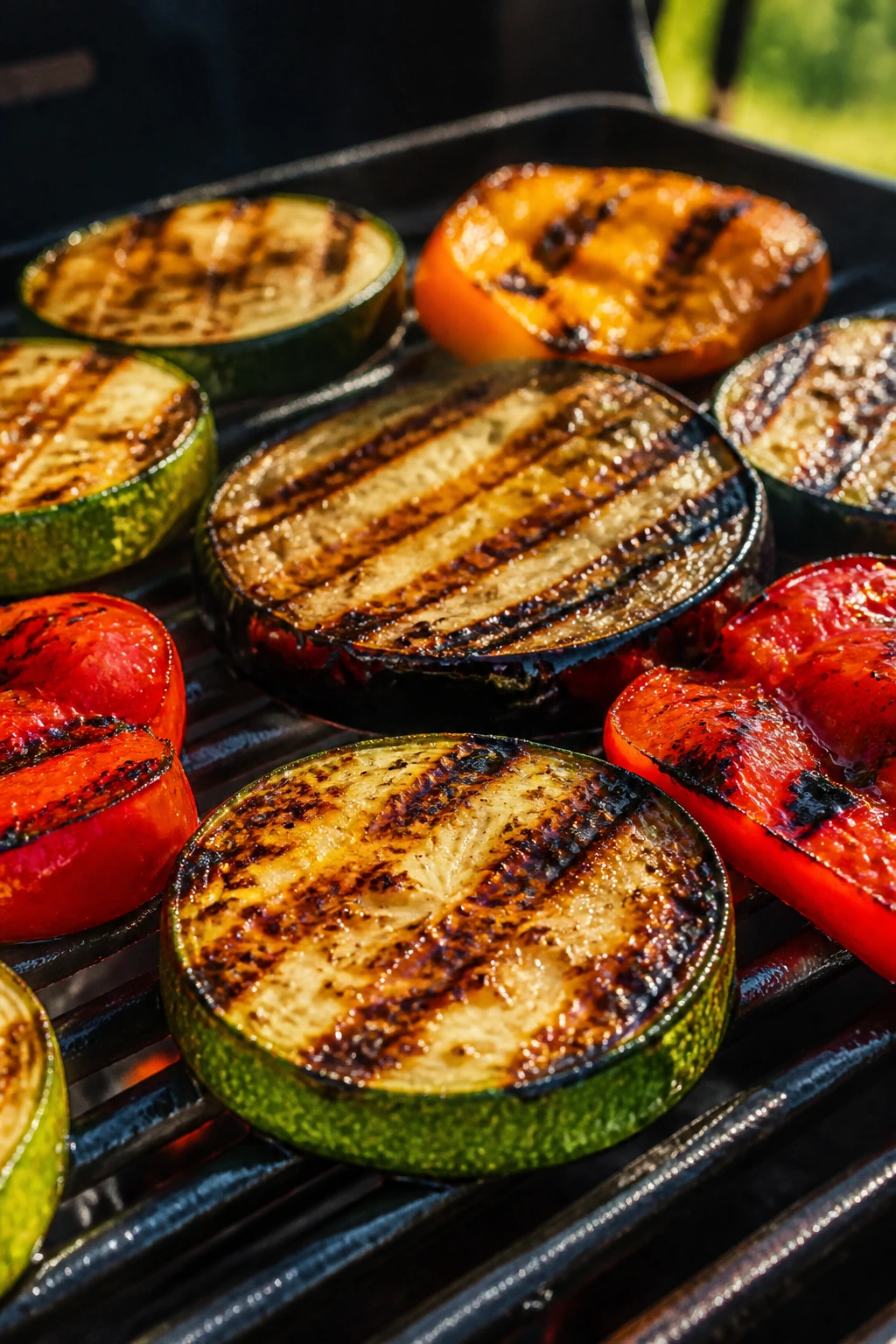
The cleanest char usually comes from vegetables with enough thickness to hold their shape over direct heat. Zucchini, eggplant, onions, peppers, portobellos, asparagus, and corn all work because their surfaces can brown before the inside turns to mush. If you want the deepest, most obvious grill marks, slice them thick and oil them lightly instead of drowning them.
Vegetables that are thin, watery, or tiny can still work, but they need baskets, skewers, or faster cooking. Cherry tomatoes, green beans, and small mushrooms are good examples. They are not bad choices. They just need a different setup so you are not chasing them across the grill with tongs.
How Do You Keep Tofu from Sticking to the Grill?
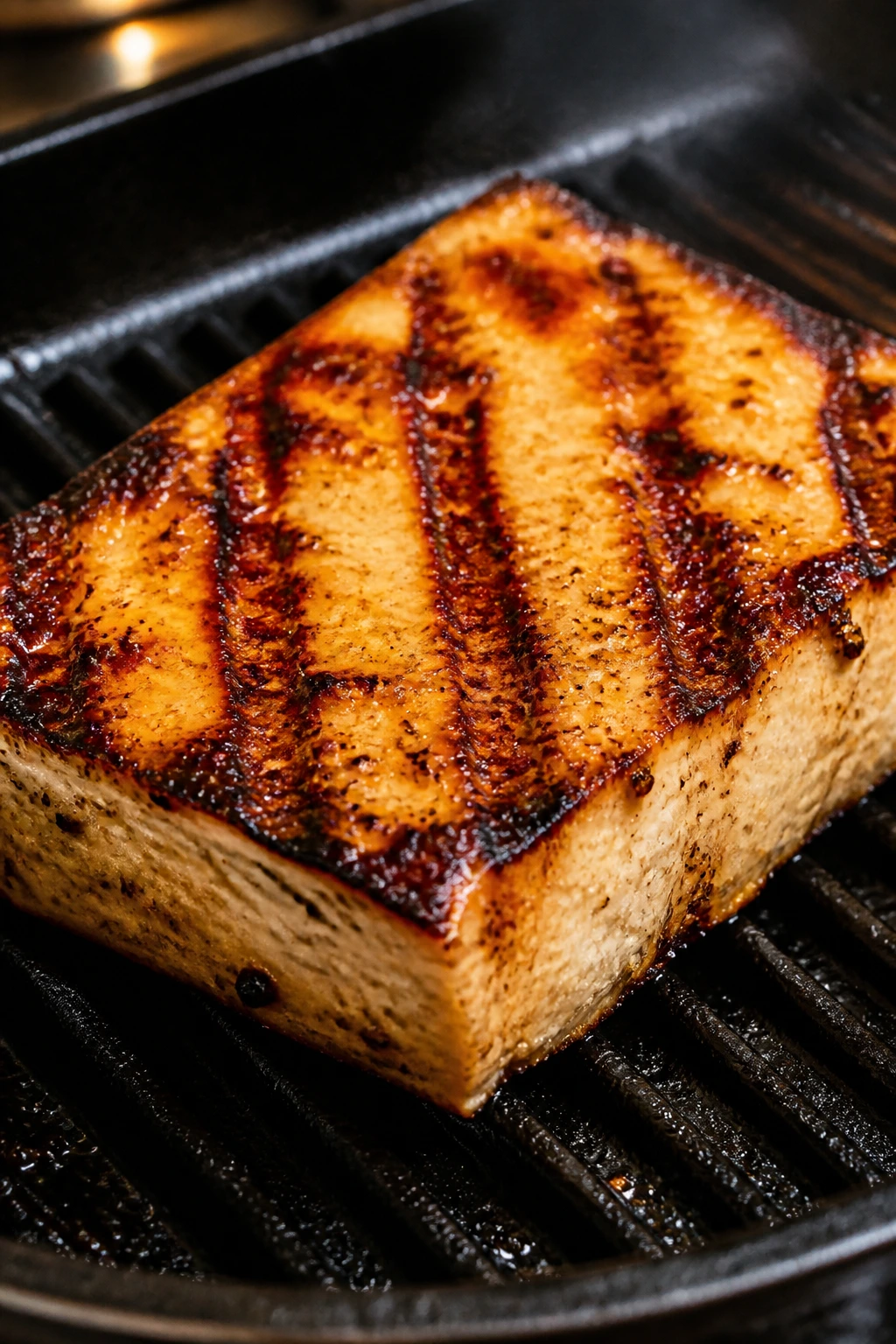
Press it first, then dry it again right before it cooks. That sounds fussy, but it is the real fix. Moist tofu clings to the grates, and if you try to flip it too early, it tears.
Use a light coating of oil on the tofu itself and make sure the grill is properly hot before it goes on. If you are nervous, a grill pan or perforated grill basket gives you a little more control. And do not poke or move the tofu every thirty seconds. Let it form a crust. Once that happens, it usually releases cleanly.
Is Halloumi Better Than Tofu for BBQ?
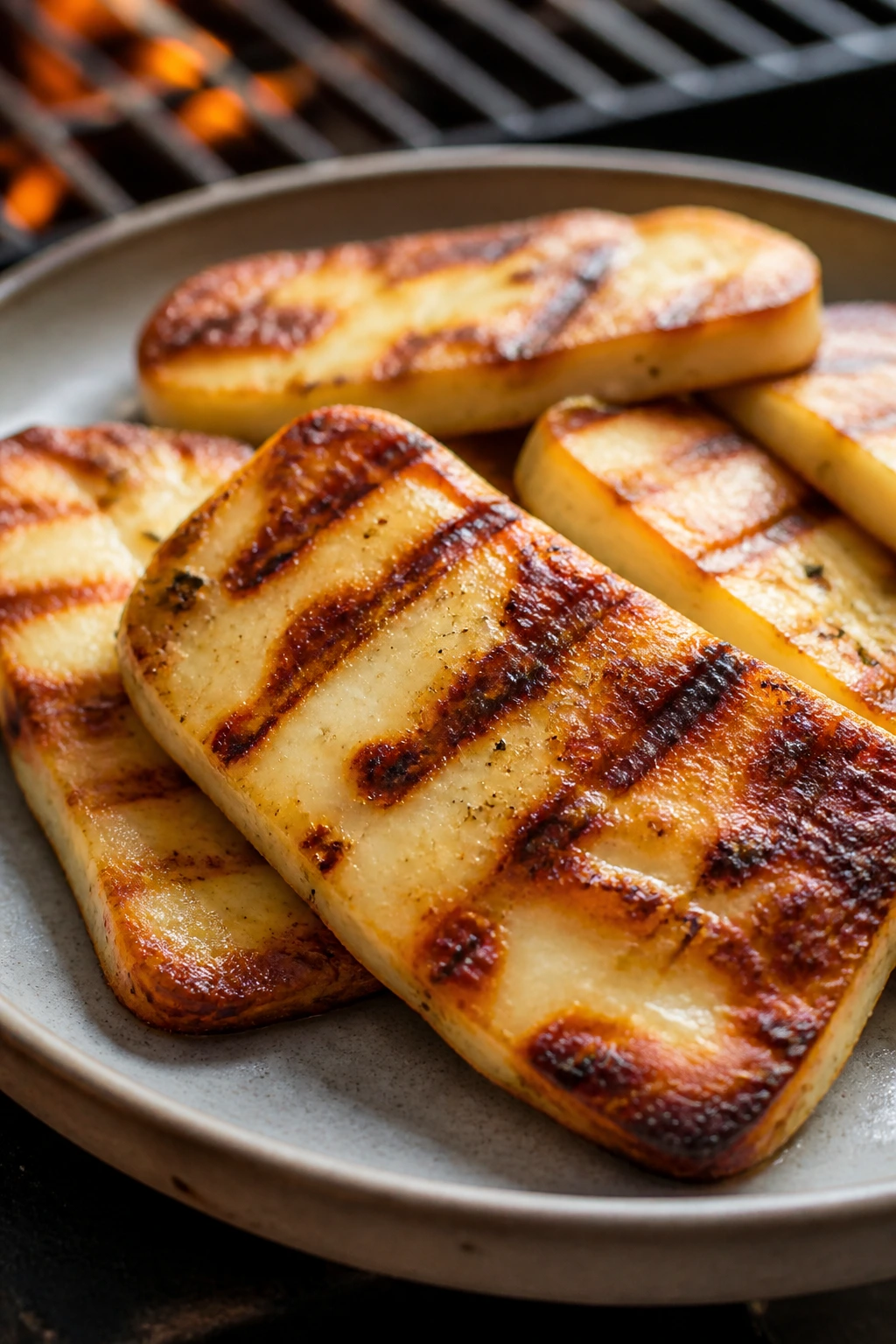
Better for what? That is the honest answer. Halloumi gives you a salty, browned, ready-in-minutes result with almost no prep, which makes it great when you want dinner to happen fast. Tofu gives you more flexibility, lower salt, and a softer canvas for bigger flavors.
If the goal is a lighter plate, tofu usually fits more easily because you can pair it with grains, herbs, and vegetables without the meal getting too salty or dense. If the goal is immediate crowd-pleasing texture, halloumi is hard to beat. I would not rank them. I would choose based on the rest of the plate.
What If You Don’t Have an Outdoor Grill?
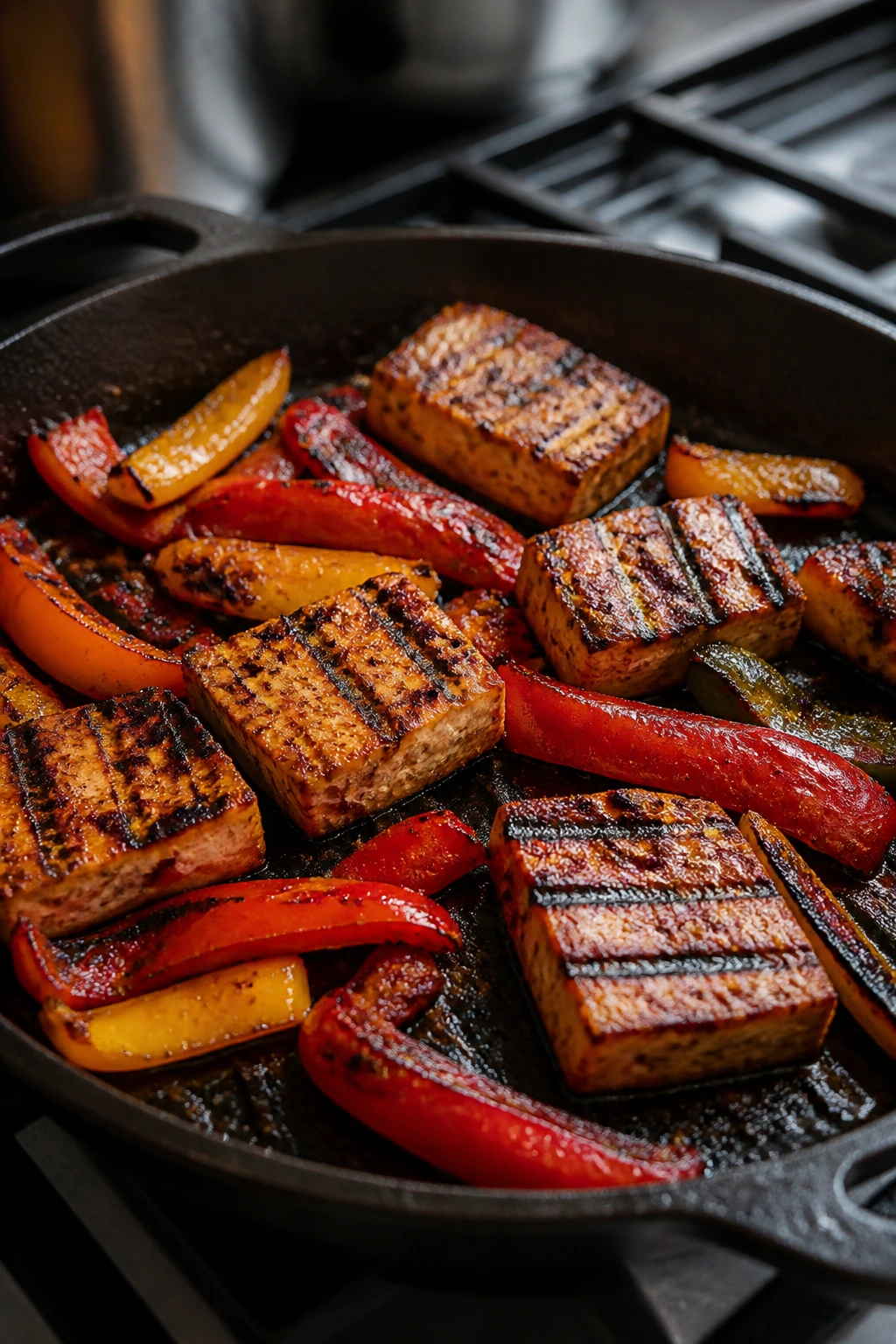
Use a heavy grill pan or the broiler. A cast-iron grill pan on the stovetop gives you enough heat for tofu, peppers, mushrooms, and halloumi, especially if you preheat it well and do not overcrowd it. The broiler works even faster, though it needs more attention because things can go from browned to burnt in a minute.
For the broiler, place the rack about 4 to 6 inches below the heat and line a sheet pan with foil for easier cleanup. Turn vegetables halfway through if they need it, and keep sweet glazes back until the end. Indoor cooking can still make a very good vegetarian BBQ dinner. It just asks you to pay attention.
How Do You Make the Meal Filling Without Meat?
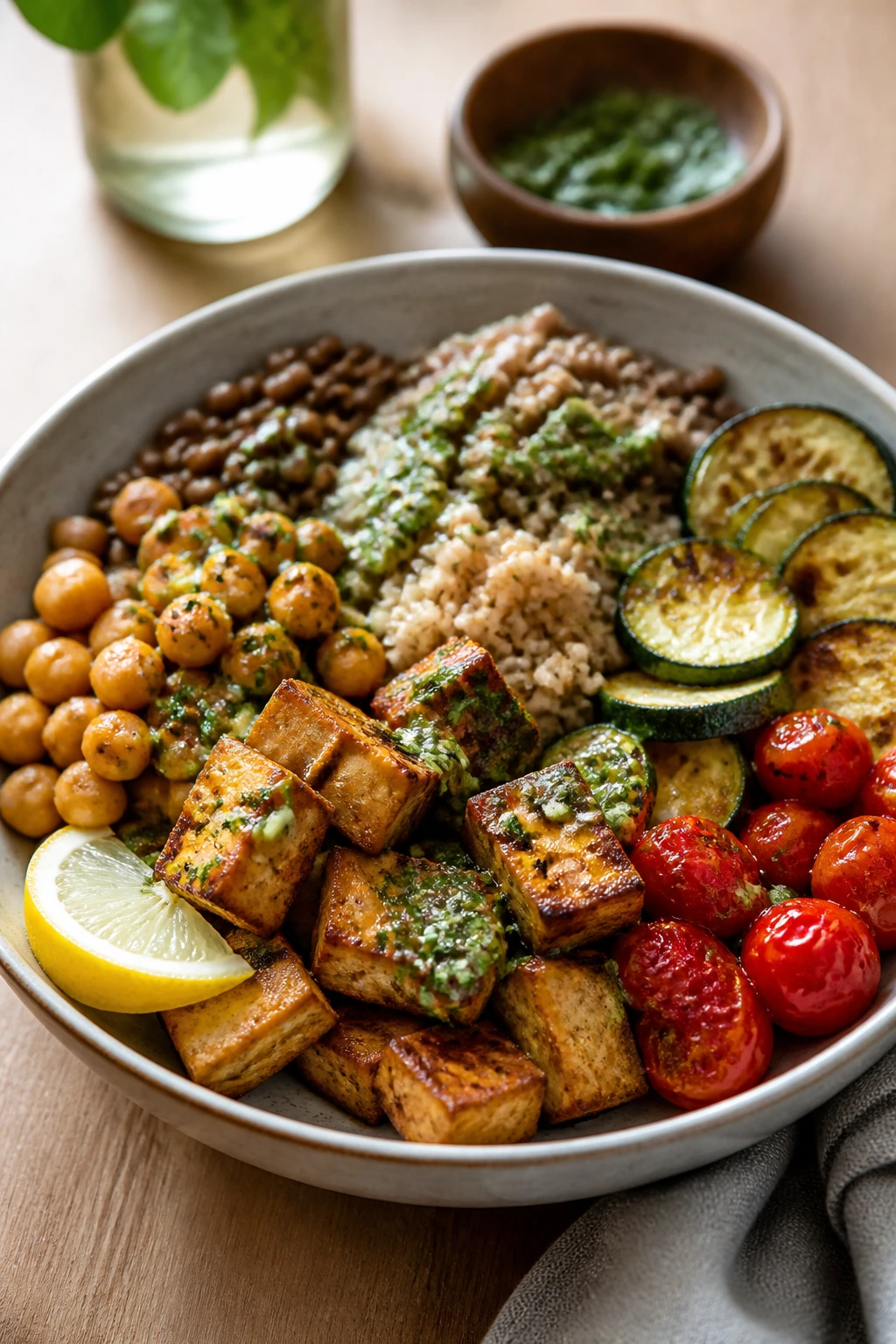
Build around protein, fiber, and a little fat instead of trying to fake a steak. Tofu, tempeh, halloumi, chickpeas, lentils, and bean salads all help. Add whole grains like farro or brown rice, plus vegetables with real texture, and the meal stops feeling light in the disappointing sense.
The mistake is making the grill the only thing that matters. A bowl of lemony grains, a bean salad, and a bright sauce often does more for satisfaction than a huge slab of grilled anything. You want chew, salt, acid, and enough volume that the plate looks intentional.
Can You Prep Vegetarian BBQ the Day Before?
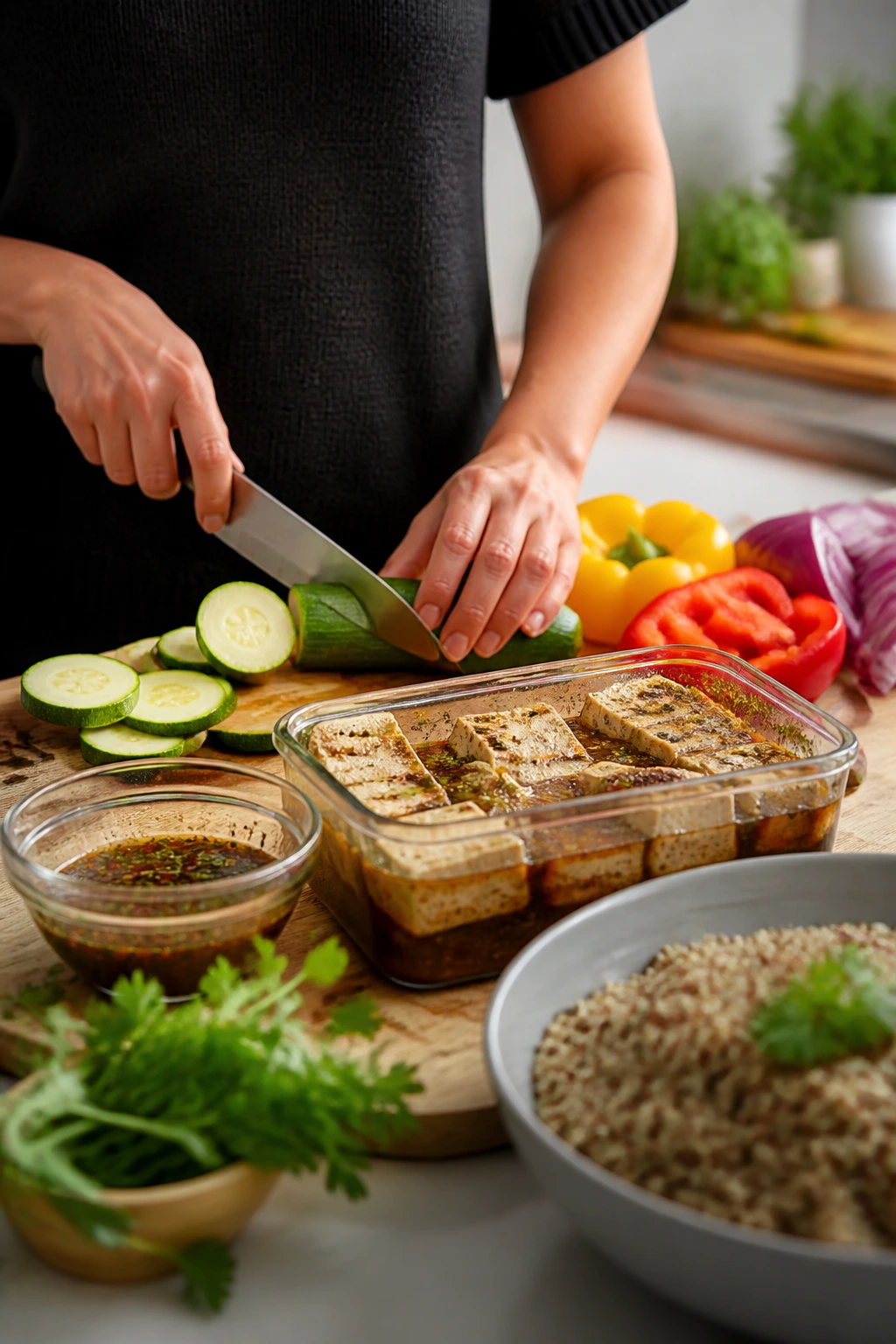
Yes, and that is one of the nicer things about this kind of dinner. You can press tofu, mix marinades, slice vegetables, and make sauces ahead of time. Grains can be cooked and chilled a day in advance, then brought back to room temperature or served slightly warm.
Keep watery vegetables like zucchini and tomatoes dry until the last minute, because they can turn soggy in a marinade overnight. Herbs should also wait if you want them bright. If you build the meal in parts, the actual grilling becomes fast and calm, which is how dinner should feel when you are hungry.
What Should You Do When the Grill Runs Too Hot?
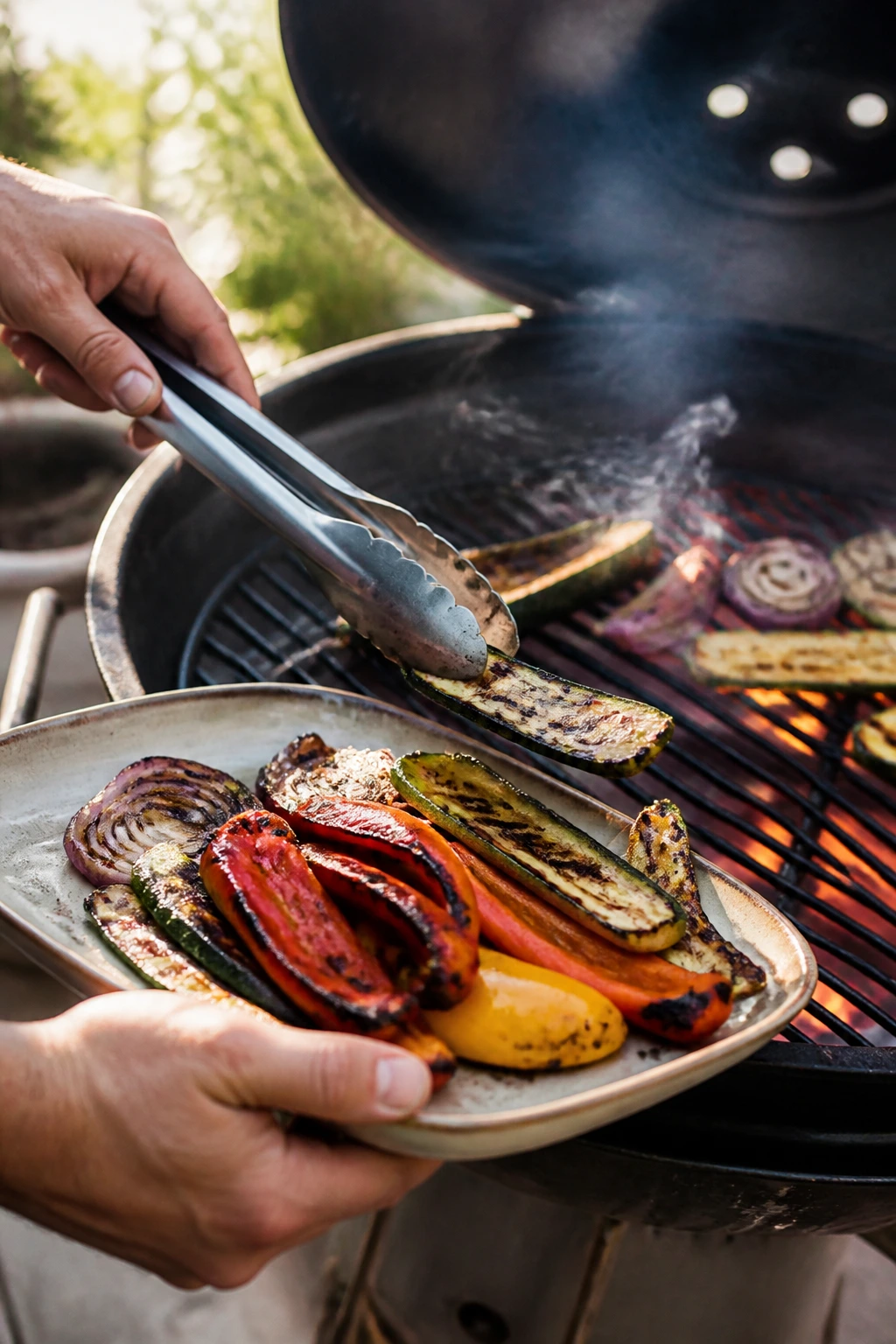
Move food to a cooler zone. That is the first fix, not the last. If the grates are scorching and the outside is dark before the inside is ready, pull the food to indirect heat or finish it in the oven at 375°F until it is cooked through.
For sauced items, hold the glaze back until the end so the sugars do not burn. For vegetables with a lot of surface area, like peppers or eggplant, lower the lid and let the trapped heat do a bit of the work. A too-hot grill is annoying, not fatal. It just means you need more control and less bravery.
A Plate Worth Lighting the Grill For
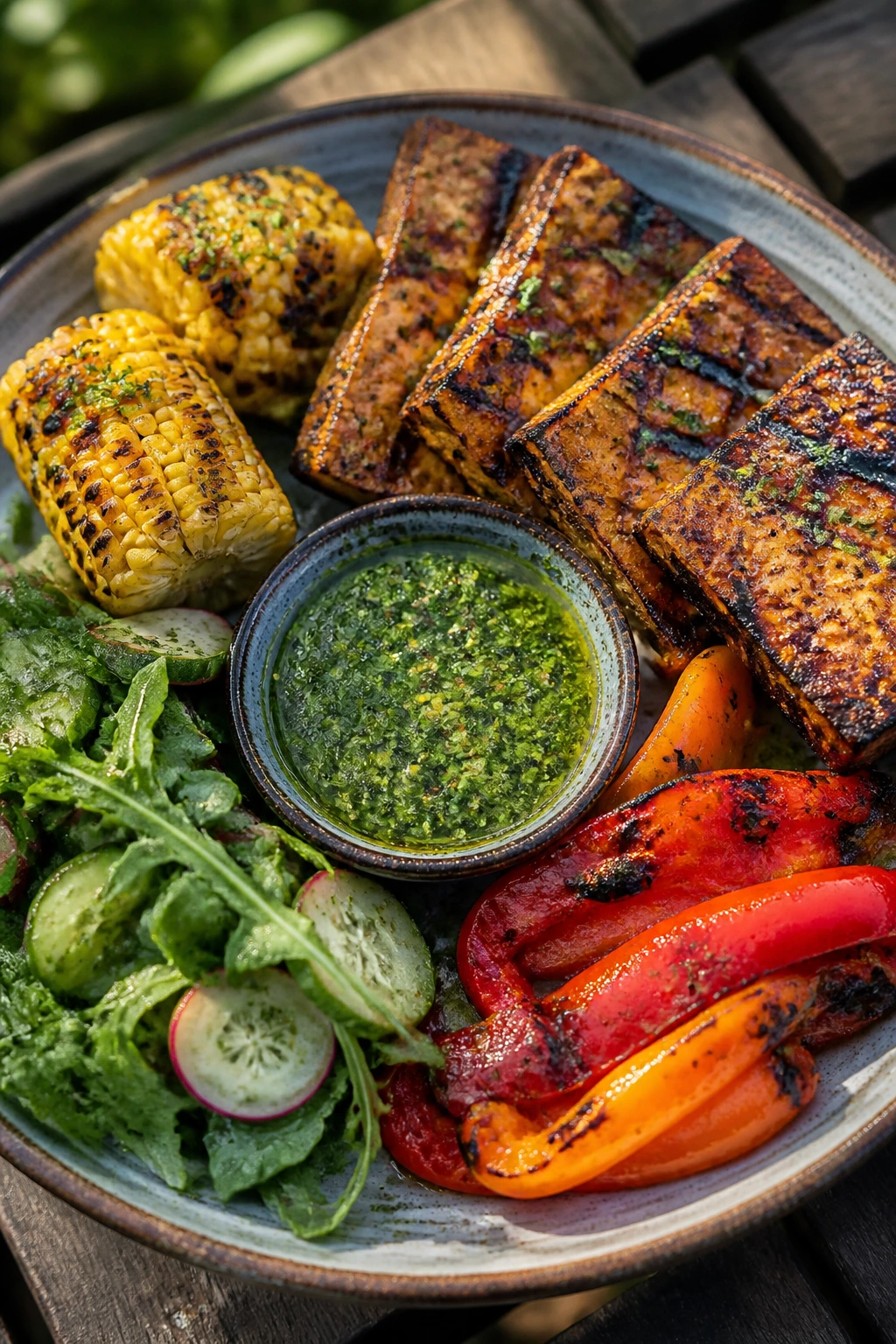
A good vegetarian BBQ dinner does not apologize for being meatless. It leans into what it does best: smoke, char, salt, acid, herbs, and the clean crunch of fresh vegetables against something browned and warm. That combination is what keeps the meal from feeling like a stack of sides and turns it into dinner with a center.
The best part is how repeatable it becomes once you understand the rhythm. One protein. Two vegetables. One sharp sauce. One cool side. After that, the rest is just choosing your mood—bright and lemony, smoky and spicy, salty and rich, or something in between.
The next time the grill warms up, skip the idea that dinner needs meat to feel complete. Start with one good protein, add vegetables with real texture, finish with something fresh, and let the smoke do what it does best.