



Roasted fried vegetables are what happen when a hot oven, a thin dusting of starch, and a little restraint all show up at the same time.
You get the bronzed edges people usually chase in a skillet, but without a pan full of oil or that stubborn grease smell that hangs around the kitchen for hours. The cauliflower turns nutty at the tips, the broccoli gets little crisp leaves, the chickpeas tighten into chewy little nuggets, and the whole tray comes out looking like it knows exactly what it’s doing.
That matters on a night when you want dinner to feel finished, not improvised. A plate of vegetables can be thrilling when the texture is right. Not steamed and apologetic. Not limp and damp. Crisp where it should be crisp, tender inside, and bold enough to stand up to a cool lemon-tahini drizzle.
I keep coming back to this style because it solves the same problem over and over: how to make vegetables feel like the main event without burying them under cheese, breadcrumbs, or a heavy sauce. The trick is less glamorous than people hope. Dry the vegetables. Give them space. Heat the oven hard. Then let the edges brown before you start fussing with them. That’s where the good stuff happens.
Why Roasted Fried Vegetables Belong on a Weeknight Plate
The best part of this method is that it borrows the part of frying people actually want: the crisp, browned surface. It skips the part nobody wants to deal with later. No sputtering oil. No fragile breading to babysit. No giant stack of paper towels trying to absorb a pan’s worth of fat.
A hot oven does more than soften vegetables. At 425°F, it pushes moisture out of the surface quickly enough that browning can start before everything turns soft. That’s why the cauliflower gets those toasted ridges instead of collapsing into mush, and why the chickpeas firm up instead of staying mealy. The cornstarch helps here, too. It forms a thin film on the vegetables and chickpeas, almost like a whisper of armor, which is exactly what gives you that fried-style edge.
The other reason this recipe works is balance. The vegetables bring sweetness and char. The chickpeas bring substance. The tahini sauce brings a cool, nutty finish that keeps the tray from eating dry or one-note. I like a dinner like this because it doesn’t ask you to choose between “healthy” and “satisfying.” It gives you both, and it does it without making a speech about it.
Crowded pan. Bad idea.
That one detail has ruined more roasted vegetables than underseasoning ever has. Give the pieces room, and they can brown. Pile them together, and they steam in their own moisture, which is how you end up with soft onions and pale cauliflower that tastes like it gave up halfway through.
Why You’ll Love This Recipe
-
Crisp edges without deep-frying: The cornstarch and high heat create a shattery, bronzed surface on the cauliflower and chickpeas with only a few tablespoons of oil.
-
Dinner-sized, not side-dish-sized: Chickpeas make the tray feel substantial enough for a main course, especially once you spoon the tahini sauce over the top.
-
One tray, maybe two: If you use two sheet pans, cleanup stays easy and the vegetables brown instead of steaming under their own weight.
-
Flexible with the crisper drawer: Cauliflower, broccoli, Brussels sprouts, and carrots all roast well here, so this recipe adapts to whatever vegetables are hanging around.
-
Bright finish, not heavy sauce: The lemon-tahini drizzle gives you tang and creaminess without turning the vegetables soggy or burying the roasted flavor.
-
Meal-prep friendly with a caveat: The vegetables soften a little after cooling, but they reheat well in a hot oven and the sauce keeps the plate lively.
Timing, Yield, and the Best Way to Serve It Hot
Yield: 4 main-dish servings or 6 smaller side servings
Prep Time: 20 minutes
Cook Time: 30 minutes
Total Time: 50 minutes
Difficulty: Beginner — the method is simple, but the vegetables need proper spacing and a hot oven to brown well.
Best Served: Right after roasting, while the edges are crisp and the tahini sauce is still cool and pourable.
This is the sort of dinner that rewards you for staying organized before the oven door ever opens. Once the vegetables go in, the main job is restraint. Don’t keep flipping them. Don’t keep checking every two minutes. Let the heat do its work.
The Clean Ingredient List
For the Roasted Vegetables:
- 1 large head cauliflower (2 to 2½ pounds), cut into 1½-inch florets
- 12 ounces broccoli florets, cut into bite-size pieces
- 8 ounces Brussels sprouts, trimmed and halved
- 2 medium carrots, peeled and cut on a sharp diagonal into ½-inch coins
- 1 red onion, cut into 8 wedges
- 1 (15-ounce) can chickpeas, drained, rinsed, and dried very well with a clean towel
- 3 tablespoons olive oil
- 2 tablespoons cornstarch
- 1½ teaspoons kosher salt
- 1 teaspoon smoked paprika
- 1 teaspoon garlic powder
- ½ teaspoon onion powder
- ½ teaspoon ground cumin
- ¼ teaspoon black pepper
- Pinch cayenne, optional
For the Lemon-Tahini Drizzle:
- ¼ cup tahini
- 2 tablespoons fresh lemon juice
- 1 small garlic clove, finely grated
- 2 to 4 tablespoons warm water
- ¼ teaspoon kosher salt
- 1 tablespoon chopped parsley
Why Each Ingredient Pulls Its Weight
Cauliflower, Broccoli, Brussels Sprouts, and Carrots
What to use: 1 large head cauliflower, 12 ounces broccoli florets, 8 ounces Brussels sprouts, and 2 medium carrots give you enough volume for a real dinner, not a dainty tray that disappears in ten minutes.
Preparation: Cut the cauliflower into florets that are all about the same size, keep the broccoli bite-sized, halve the Brussels sprouts, and slice the carrots on a diagonal so they cook through without turning floppy.
Substitutions: Parsnips, sweet potatoes, green beans, or even thick asparagus spears can step in, but the cut needs to match the vegetable. Dense roots need smaller pieces and a longer roast; quick-cooking vegetables need to go in later or on a second pan.
Tips: Dryness matters more than most people think. If the vegetables come out of the wash with water clinging to the florets, the cornstarch turns patchy and the oven spends the first ten minutes steaming off moisture instead of building color.
Chickpeas
What to use: One 15-ounce can of chickpeas adds heft and gives the tray those chewy, crisp little bites that make the dish feel finished.
Preparation: Drain and rinse them, then dry them thoroughly in a towel. If a few skins slip off while you rub them, that’s fine; the loose skins actually crisp up nicely.
Substitutions: Cannellini beans are too soft for the same result, but cubes of extra-firm tofu, pressed well, can work if you want a different protein. If you skip chickpeas, add more cauliflower or Brussels sprouts so the tray still has enough bulk.
Tips: Wet chickpeas are the enemy of crunch. You want them dry enough to rattle when you toss them in the bowl, not clump together in little damp patches.
Olive Oil, Cornstarch, and Seasonings
What to use: Three tablespoons olive oil and 2 tablespoons cornstarch are enough for the whole tray. The spice mix — salt, smoked paprika, garlic powder, onion powder, cumin, black pepper, and a pinch of cayenne — gives the vegetables flavor before they ever touch the sauce.
Preparation: Toss the dry vegetables and chickpeas with the cornstarch and seasonings first so the coating distributes evenly, then add the oil and toss again until everything looks lightly dusted, not pasty.
Substitutions: Arrowroot can stand in for cornstarch if that’s what you have, though cornstarch gives a slightly sturdier crust. Avocado oil can replace olive oil if you want a more neutral taste, and coriander can replace cumin for a softer, citrusy note.
Tips: Too much starch turns chalky. Too much oil turns glossy and soft. The amounts here are deliberate, and they’re part of why the tray comes out crisp rather than greasy.
Lemon-Tahini Drizzle
What to use: A quarter cup of tahini, lemon juice, garlic, water, salt, and parsley makes a sauce that’s nutty, bright, and thin enough to spoon over hot vegetables without turning gluey.
Preparation: Whisk the tahini, lemon juice, garlic, and salt first. It will seize and look alarmingly thick. That’s normal. Add warm water a tablespoon at a time until it loosens into a silky sauce.
Substitutions: Plain Greek yogurt can replace tahini if you want a cooler, tangier sauce. Olive oil and lemon with a pinch of salt also works in a pinch, though you lose the nutty depth that makes the drizzle so good here.
Tips: Tahini varies a lot from jar to jar. Some brands are smooth and mild; some are bitter. Taste before you serve, because a squeeze more lemon or a pinch more salt can pull a flat sauce back into line.
The Tools That Keep the Tray Crisp
-
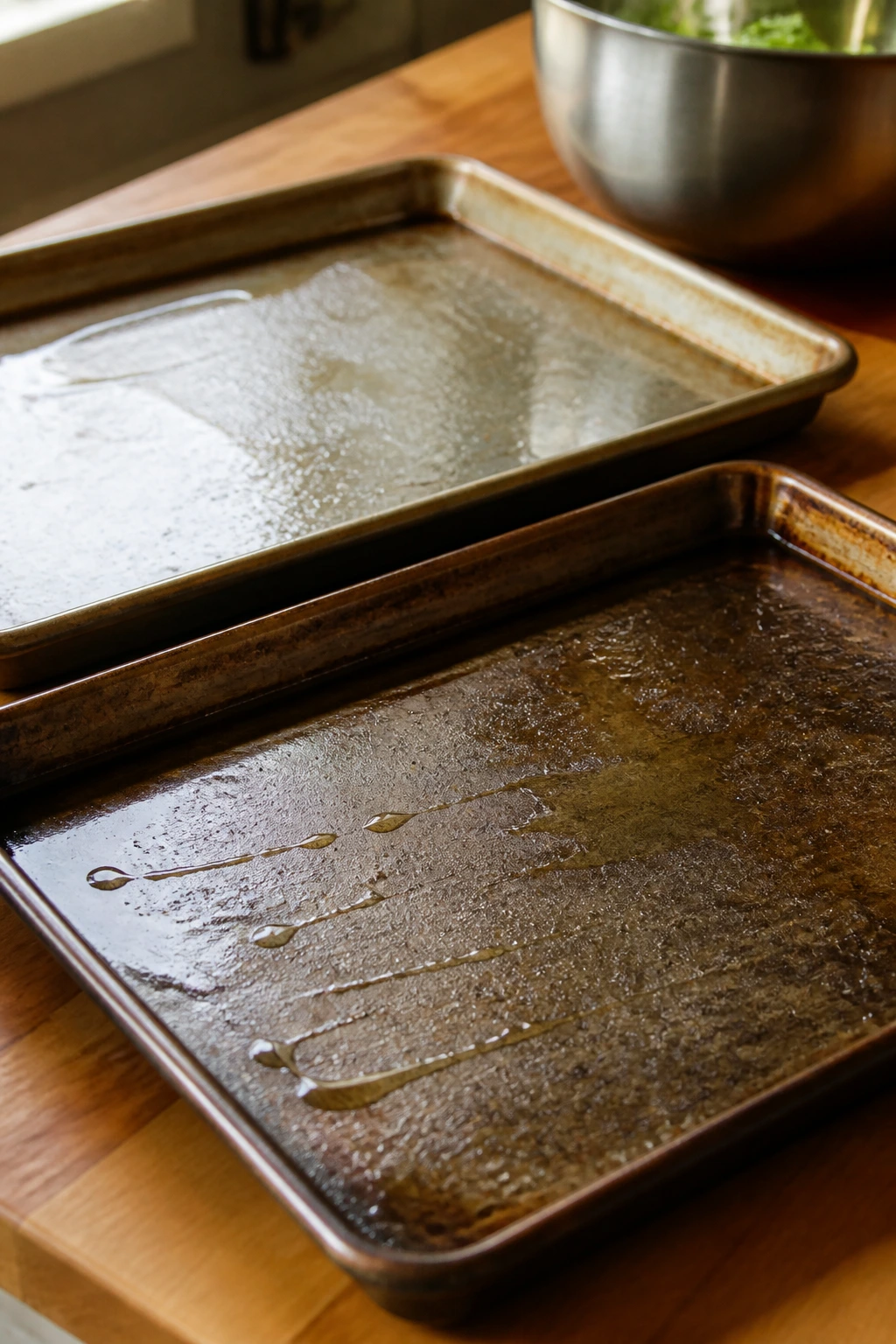
Two rimmed sheet pans — This is the biggest anti-soggy tool in the recipe. If everything is jammed onto one pan, you’ll steam the vegetables instead of browning them.
-
Large mixing bowl — Big enough to toss the vegetables without flinging paprika across the counter. If your bowl is cramped, the coating clumps.
-
Small bowl and whisk — For the tahini sauce. A fork works in a pinch, but a whisk makes the sauce smooth faster.
-
Sharp chef’s knife — Uneven cuts mean uneven roasting. Thick florets stay pale while thin ones burn.
-
Clean kitchen towel or paper towels — Chickpeas need to be dry before they hit the bowl.
-
Microplane or fine grater — This is the easiest way to get the garlic into the sauce without little raw chunks.
-
Spatula — Useful for flipping the vegetables after the first roast without breaking the cauliflower into crumbs.
-
Measuring spoons and cups — The cornstarch and seasoning amounts matter here. Eyeballing is how people end up with a dusty tray or a bland one.
From Raw to Bronzed: Step-by-Step Method
Prep the Oven and Pans
-
Preheat the oven to 425°F (220°C) and position racks in the upper and lower thirds. If you’re using parchment, line two rimmed sheet pans; if you want the deepest browning, lightly oil bare pans instead.
-
Drain the chickpeas, rinse them, and dry them very well with a clean towel. Do not skip this step — a wet chickpea stays soft and can’t crisp the way you want it to.
Season and Coat the Vegetables
-
In a large bowl, combine the cauliflower, broccoli, Brussels sprouts, carrots, red onion, and chickpeas. Sprinkle over the cornstarch, salt, smoked paprika, garlic powder, onion powder, cumin, black pepper, and cayenne, then toss until the dry seasonings cling to the cut surfaces.
-
Drizzle the olive oil over the vegetables and toss again until the coating looks even and thin. You should see a light, dusty sheen, not a wet glaze.
Roast for Color and Crunch
-
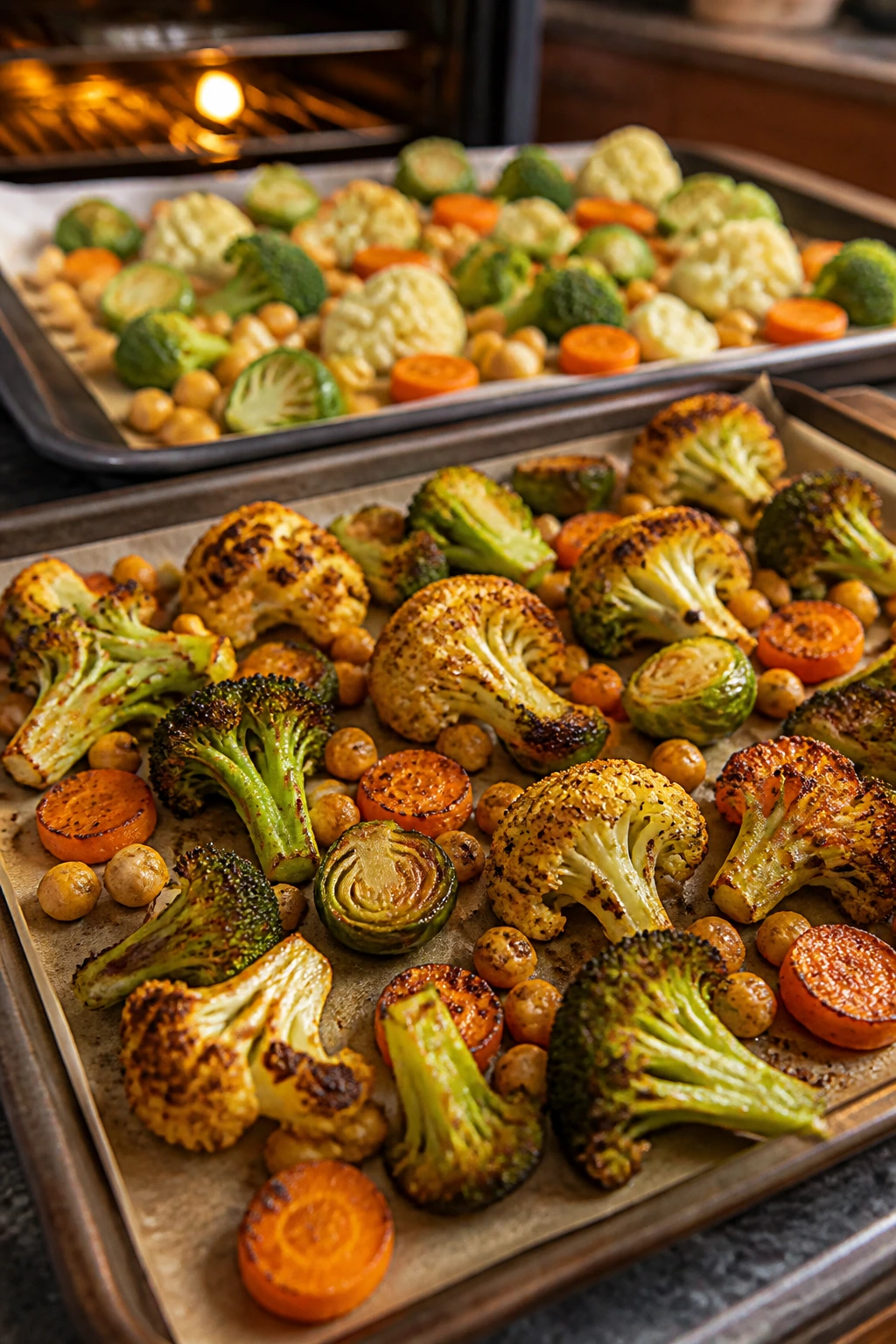
Divide the vegetables between the two sheet pans and spread them in a single layer with space around each piece. If the pan looks crowded, use a third pan. Crowding is the fastest route to soft vegetables.
-
Roast for 15 minutes without disturbing them. This is when the bottoms start to brown and the chickpeas firm up. The broccoli edges should begin to darken and the cauliflower should look a little dry on top.
-
Remove the pans, flip the vegetables with a spatula, and rotate the pans from top to bottom rack. Roast for 10 to 12 minutes more, until the Brussels sprouts are crisp at the cut sides, the carrots are tender at the edges, and the cauliflower is deeply golden in spots.
-
If you want extra char, broil for 1 to 2 minutes at the end. Stay close. The broiler goes from useful to scorched in a flash.
Mix the Sauce and Finish
-
While the vegetables roast, whisk together the tahini, lemon juice, grated garlic, salt, and 2 tablespoons of warm water in a small bowl. Add the remaining water a teaspoon or tablespoon at a time until the sauce runs off the whisk in a thick ribbon.
-
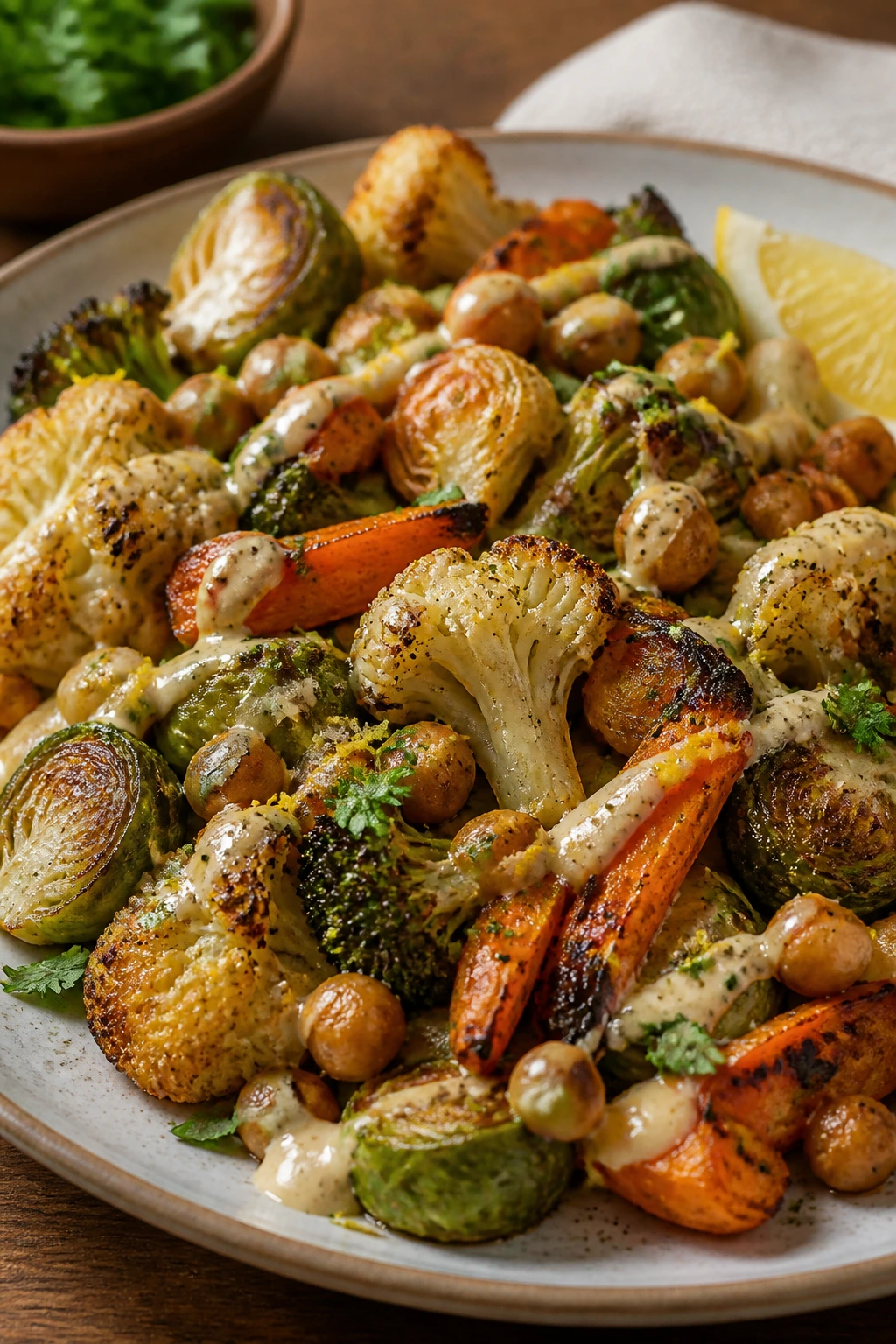
Transfer the vegetables to a platter or wide bowls, drizzle with the tahini sauce, and scatter over the parsley. Serve right away, while the hot tray still smells nutty and the chickpeas still have a little bite to them.
How to Plate It as Dinner, Not a Side Dish
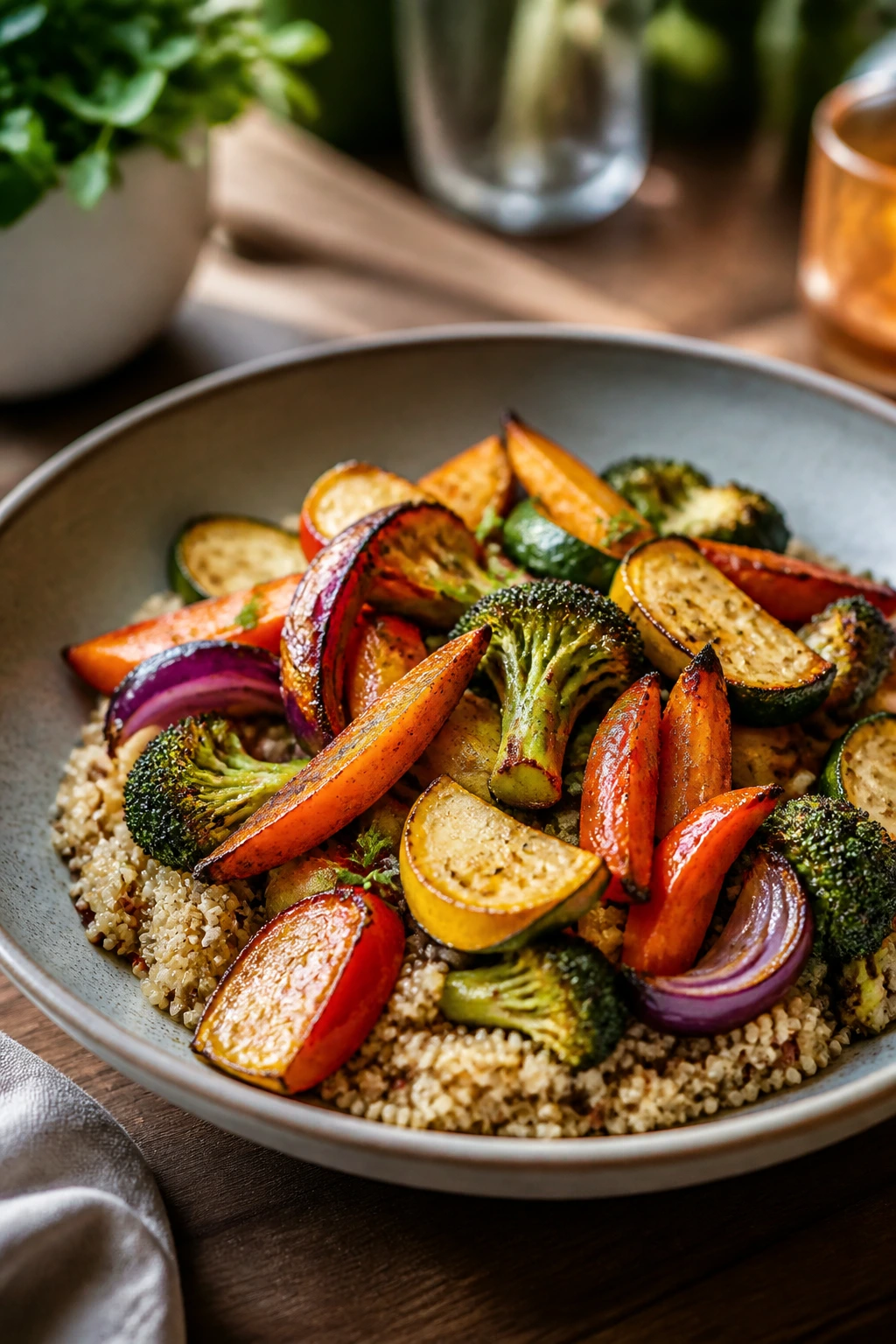
Presentation: Spoon the vegetables over a shallow bed of warm quinoa, brown rice, or farro if you want the plate to feel more substantial. A wide bowl works better than a tall pile; it lets the sauce settle across the vegetables instead of running straight to the bottom.
Accompaniments: A chopped cucumber salad, warm pita, or a simple green salad with lemon vinaigrette all play nicely here. If you want a little extra richness, crumble a little feta over the top, but don’t bury the roasted flavor under a snowstorm of cheese.
Portions: Plan on about 1½ to 2 cups per person for dinner, or 1 cup per person as a side. If you’re serving it with grains, keep the vegetable portion generous and the grain portion modest so the tray still tastes like the main event.
Beverage Pairing: Sparkling water with lemon keeps the meal bright. If you want something with more character, a dry Sauvignon Blanc or an unsweetened iced tea with mint works well with the tahini and smoked paprika.
The Little Fixes That Improve Color and Crunch
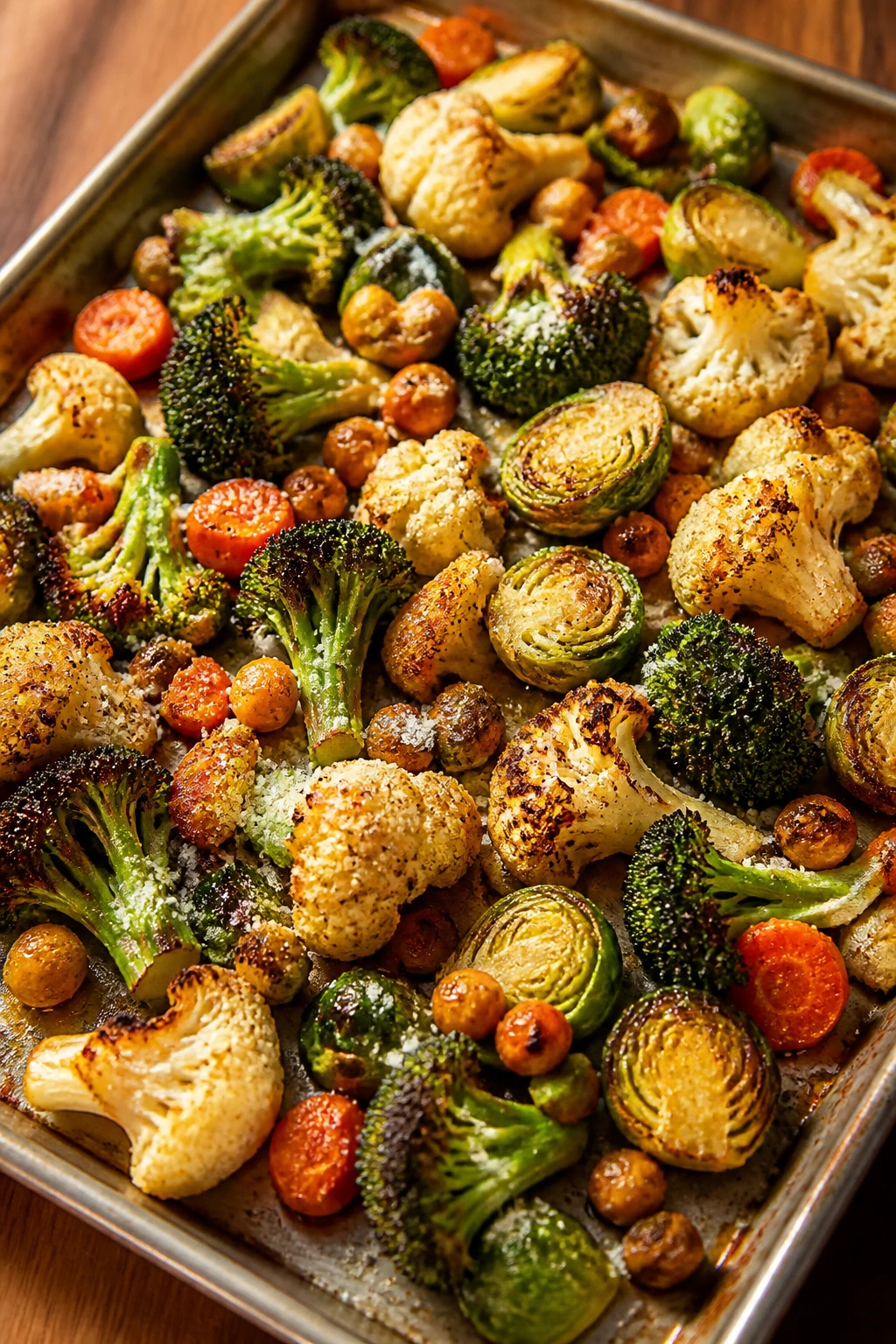
Flavor Enhancement: A pinch of sumac at the end adds a lemony edge that wakes up the cauliflower and Brussels sprouts. I also like a little lemon zest stirred into the tahini sauce when I want the whole dish to feel sharper.
Time-Saver: Wash and chop the vegetables a day ahead, then store them in airtight containers lined with paper towels. Dry chickpeas and a pre-whisked sauce make the final assembly fast enough for a weeknight, even if the vegetables themselves take their time in the oven.
Pro Move: Warm the sheet pans in the oven for five minutes before you add the vegetables. That extra heat helps the bottoms start browning sooner, which matters more than people think when you’re chasing a fried-style texture from dry heat.
Cost-Saver: Use broccoli stems instead of tossing them. Peel off the tough outer layer, slice the stems into coins, and roast them with the florets. They come out sweet, especially around the edges, and they save money that would otherwise disappear into the compost bin.
Make-It-Yours: If you want more richness, add crumbled feta or toasted sesame seeds after roasting. If you want a dairy-free dinner that still feels complete, keep the tahini sauce generous and serve the vegetables over grains so the sauce has something to soak into.
Mistakes That Make Roasted Vegetables Go Limp
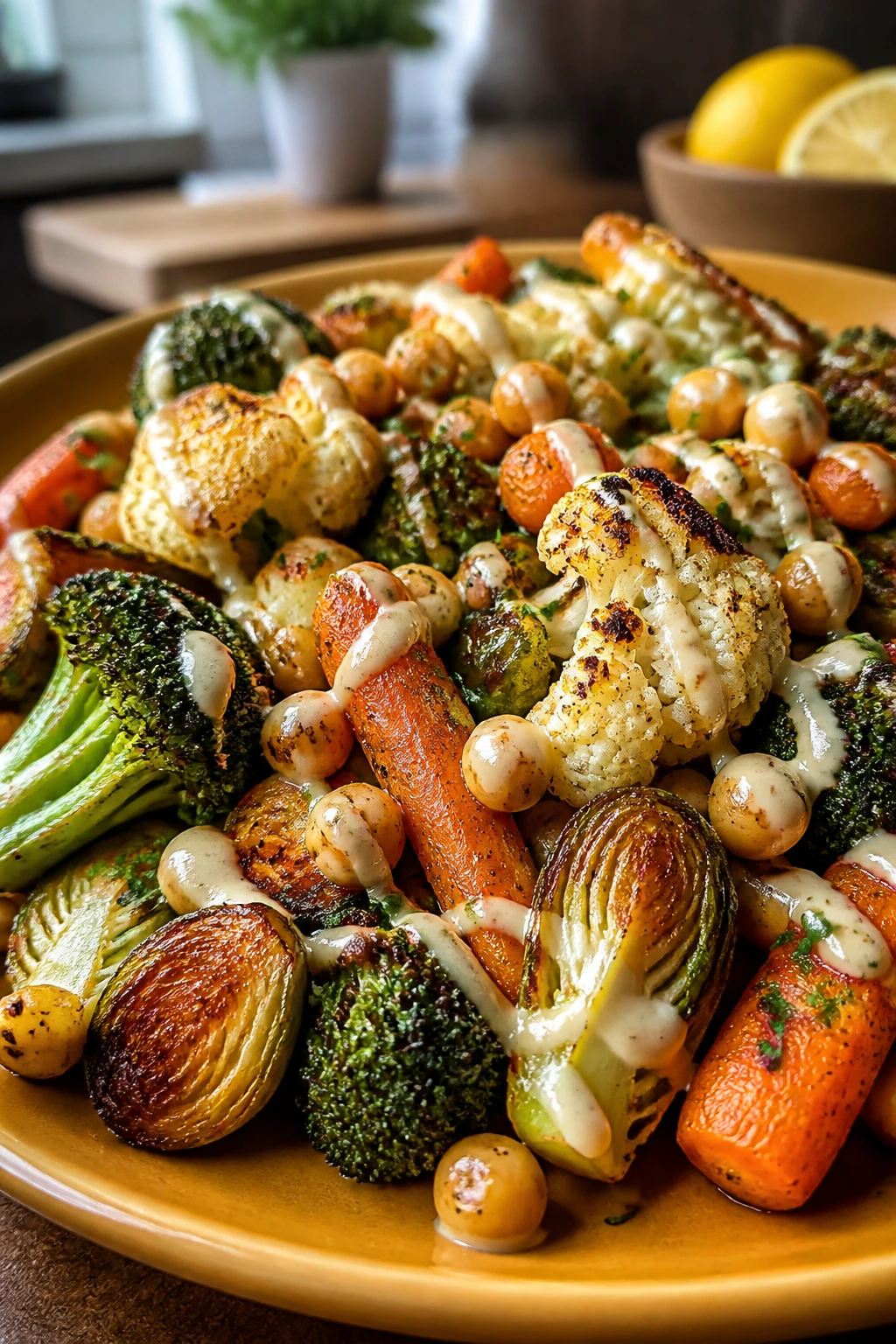
Crowding the tray: This is the classic one, and it’s still the worst. If the vegetables are stacked or touching in thick layers, steam builds up and the edges stay pale. The fix is boring but effective: use two sheet pans, or three if that’s what the volume requires.
Skipping the drying step: Chickpeas and washed vegetables bring water into the oven, and water steals browning time. The symptom is a tray that smells cooked but looks beige. Dry the vegetables with a towel, dry the chickpeas until they feel almost chalky, and the coating will behave.
Cutting everything to one size without thinking: A cauliflower floret and a carrot coin do not roast at the same pace. If the pieces are matched by habit instead of by density, something burns while something else is still firm. Dense vegetables should be smaller; quick-cooking vegetables should be larger or added later.
Saucing too early: Tahini on raw vegetables sounds efficient. It is not. The sauce turns the crust soft within minutes, and what should be crisp becomes slick. Keep the drizzle for the very end, or serve it on the side for people who like to control their own sauce situation.
Underseasoning to keep it “light”: Vegetables need salt, and cornstarch needs salt even more. If you back off too hard, the tray tastes flat, which usually pushes people to drown it in sauce. A properly salted vegetable tray needs less sauce to taste complete.
Leaving the broiler unattended: One minute of broiler time can add exactly the right char. Two extra minutes can turn the Brussels sprout leaves into little black scraps. Stand there. Watch it. Open the oven the second you see the color you want.
Flavor Swaps That Still Keep the Crispy Edge
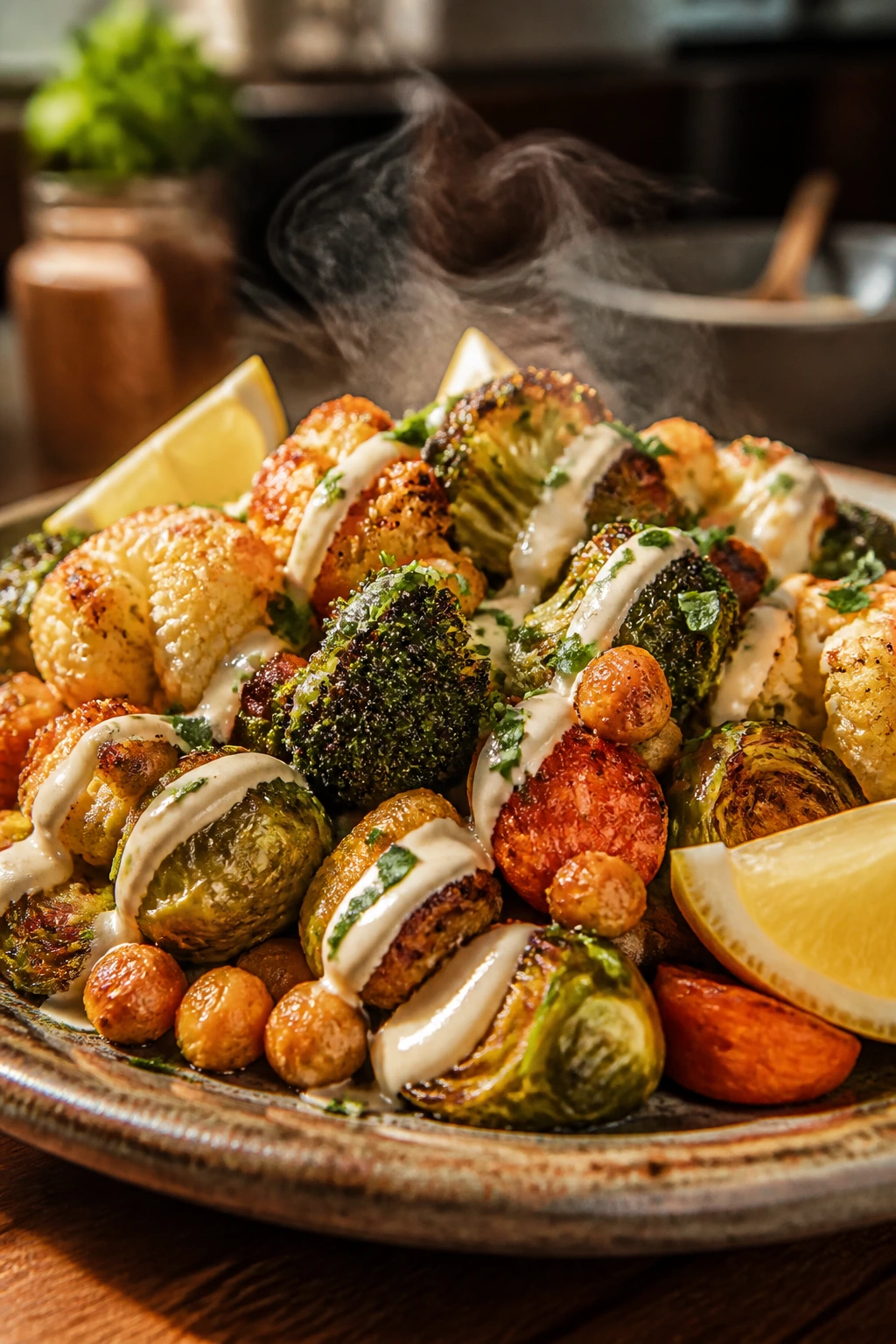
Mediterranean Pantry Pan: Swap the cumin for dried oregano and add a handful of cherry tomatoes during the last 8 minutes of roasting. Finish with feta, chopped parsley, and a few sliced olives. The tomatoes collapse into little sweet pockets that play well with the tahini.
Smoky Chipotle Chickpea Tray: Replace the smoked paprika and cayenne with chipotle powder, then add a squeeze of lime to the sauce instead of, or alongside, the lemon. This version tastes a little deeper and a little hotter, and it suits people who want more smoke than sesame.
Green Herb and Yogurt Finish: Trade the tahini drizzle for plain Greek yogurt mixed with lemon juice, grated garlic, and chopped dill. The yogurt keeps the plate cool and tangy, which is a good move when you’re serving the vegetables with warm grains or flatbread.
Root Vegetable Winter Mix: Use sweet potatoes, parsnips, and carrots in place of the broccoli and Brussels sprouts. Cut the sweet potatoes into ¾-inch chunks so they roast at the same pace, and give the tray 5 to 8 extra minutes. The result is sweeter and heavier, which is nice when you want the dinner to eat like a full meal.
Sesame-Ginger Twist: Add 1 teaspoon toasted sesame oil to the tahini sauce and a little grated ginger to the bowl. It pulls the dish in a more savory direction, and it works especially well if you serve the vegetables over rice with scallions on top.
Make-Ahead, Storage, and Reheating
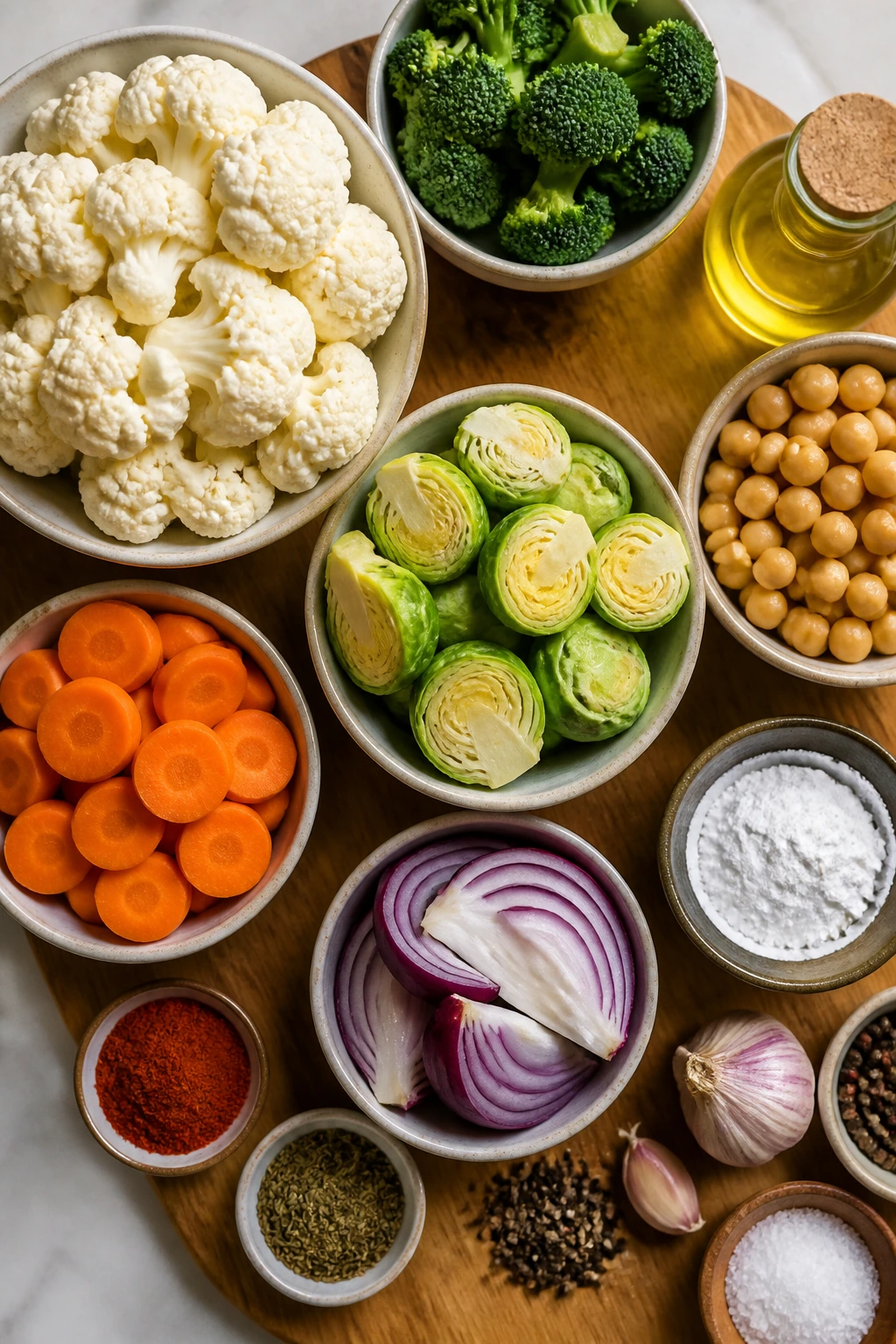
Roasted vegetables taste best the day they’re made, when the edges are still crisp and the sauce hasn’t had time to sink in. That said, the leftovers are worth keeping if you handle them the right way.
Store the vegetables and sauce separately in airtight containers. The vegetables keep in the refrigerator for 3 to 4 days, and the tahini sauce keeps for about the same amount of time. If you mix them together before storing, the vegetables soften faster and the sauce turns the tray damp.
At room temperature, don’t leave the finished dish out for more than 2 hours. After that, the texture starts slipping, and food safety becomes the more important issue. No drama. Just get it tucked away.
For reheating, the oven wins. Spread the vegetables on a sheet pan and warm them at 425°F (220°C) for 8 to 10 minutes until the edges wake back up. An air fryer at 375°F (190°C) for 4 to 6 minutes also works if you’re heating a smaller portion. A skillet over medium heat with a teaspoon of oil can revive the chickpeas and broccoli fast, though you’ll lose a little of the sheet-pan look.
The freezer is possible, but not ideal. Freeze the roasted vegetables without sauce for up to 2 months, then thaw them in the refrigerator before reheating. They’ll be softer than fresh, especially the broccoli, but the flavor stays good enough for grain bowls or a quick lunch.
If you want to get ahead, chop the vegetables and mix the sauce a day in advance. That’s the move that saves the most time without ruining texture.
Questions Readers Usually Ask About Roasted Fried Vegetables
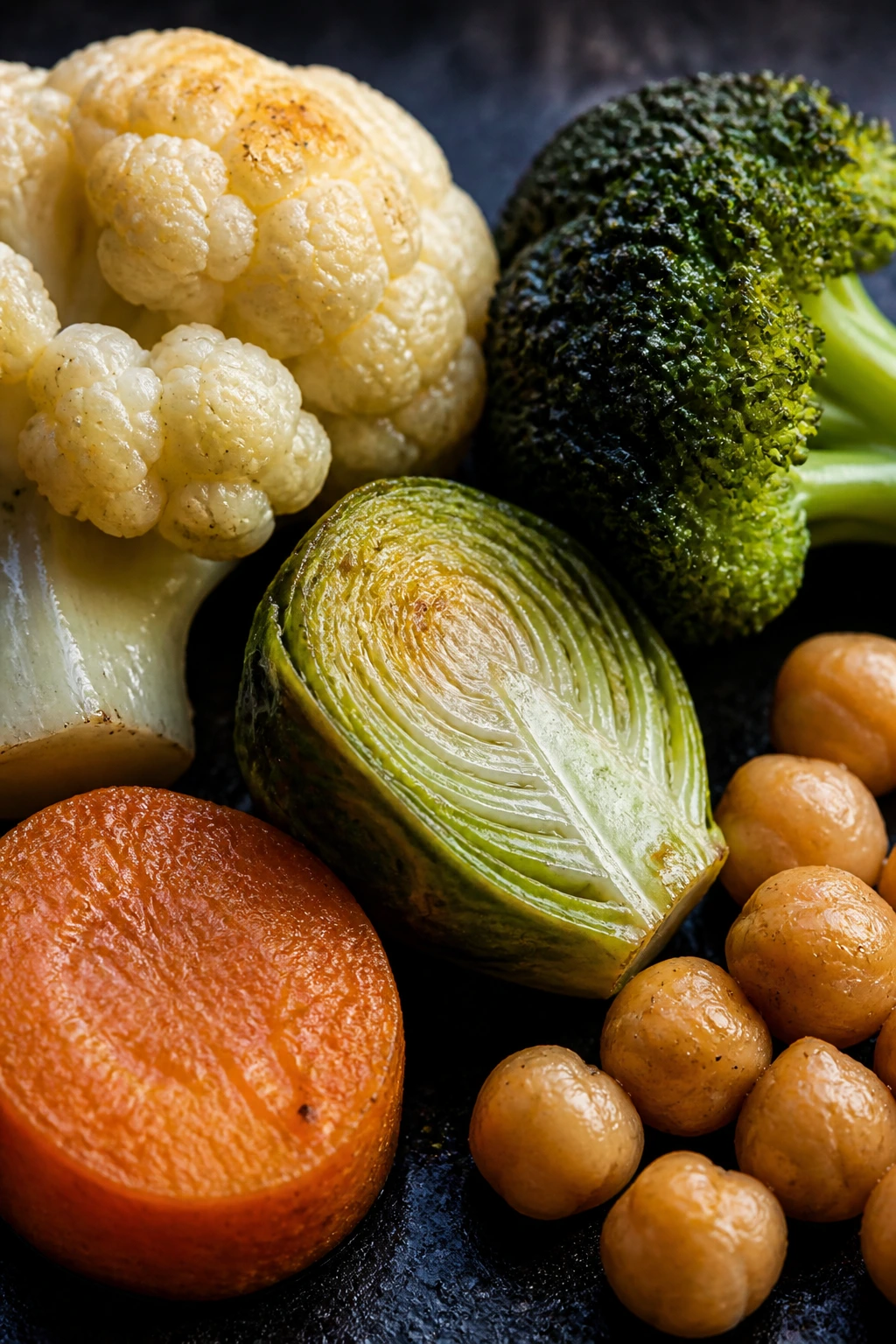
Can I use frozen vegetables instead of fresh?
Yes, but the result changes. Frozen vegetables release more water as they thaw, which makes browning harder, so they’re better for quick lunches than for the crispiest version of this dish. If you use them, roast straight from frozen, skip the rinse, and give them extra time on a hot pan.
Do I have to use tahini sauce?
No, but you do need some kind of finishing sauce if you want the plate to feel complete. Lemon yogurt, garlic aioli, or even a simple olive oil and lemon dressing can fill that role. Tahini is my favorite here because it clings to the vegetables and doesn’t fight the roasted flavor.
How do I keep the chickpeas crisp?
Dry them well before seasoning, and don’t drown them in sauce until the last second. They’ll soften as they sit, especially once they cool, so if crisp chickpeas matter most, hold back a handful and add them fresh to each serving.
Can I make this without chickpeas?
Absolutely. The tray still works with more cauliflower, broccoli, and Brussels sprouts, or with cubes of pressed tofu if you want a different protein. If you skip chickpeas, add a grain on the side so the meal still has enough substance.
What if my oven runs hot or cool?
If it runs hot, check the vegetables a few minutes early and move the sheet pans down a rack if the tops brown before the centers soften. If it runs cool, give the tray an extra 5 to 8 minutes and keep the oven door shut as much as possible so the heat doesn’t keep leaking out.
Can I make this in an air fryer?
Yes, in batches. Air fry at 375°F (190°C) for about 12 to 15 minutes, shaking halfway through, and keep the pieces in a single layer. You’ll get stronger crisping on smaller portions, but you’ll also need to cook in rounds instead of all at once.
Is this good for meal prep?
It is, with one caution: the vegetables won’t stay crisp all week. The flavors hold up well, and the sauce keeps the tray from feeling dry, but the best texture comes from reheating in a hot oven or skillet rather than the microwave. Think of it as good leftovers, not a clone of the original plate.
A Tray Worth Keeping Around
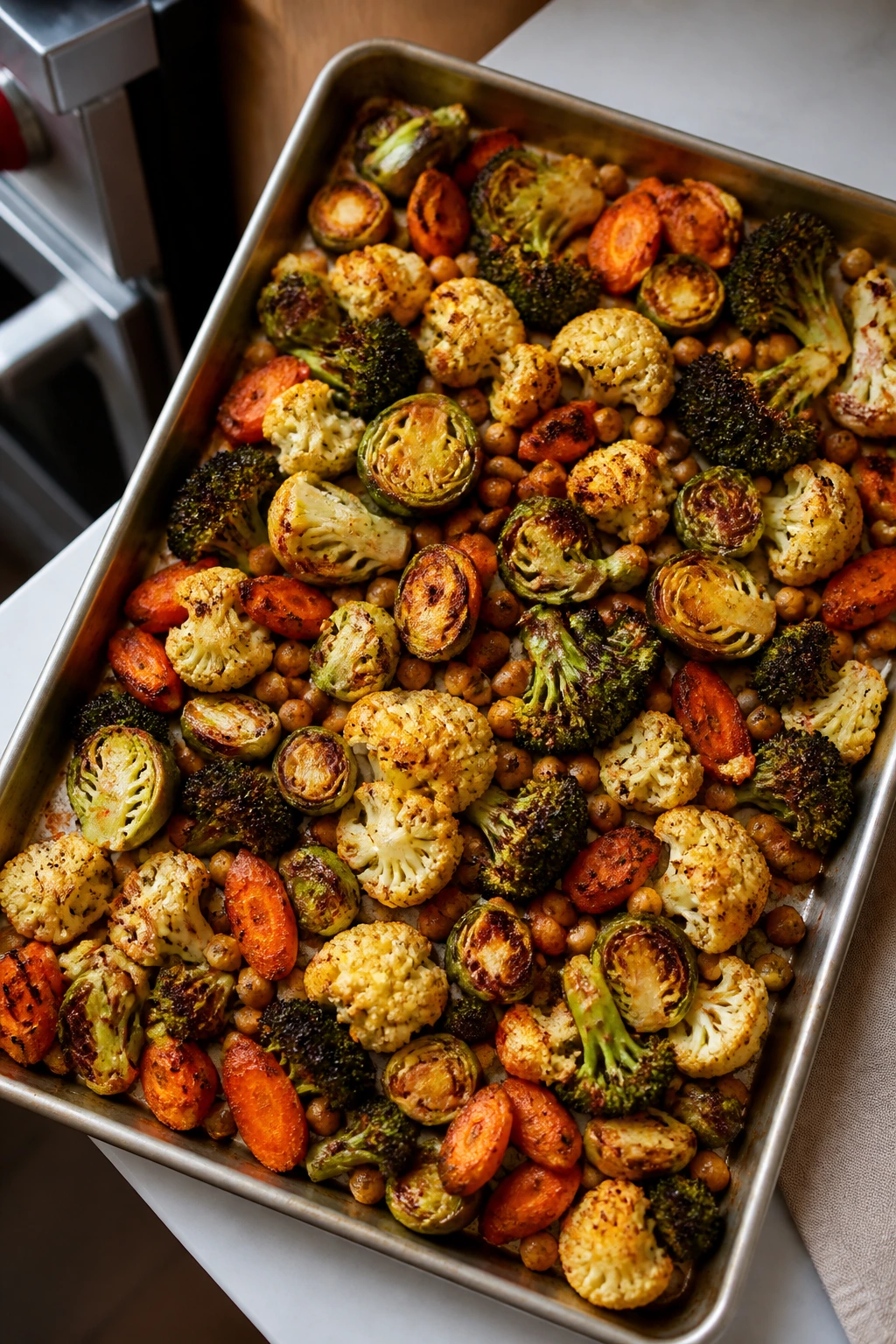
There’s a reason this style keeps showing up in my kitchen: it gives vegetables enough heat, salt, and crunch to feel like an actual dinner. Not a polite side. Not a sorry compromise. A plate with color, texture, and a sauce that makes each bite worth lifting.
The other reason is less poetic and more practical. You can work with what you already have, scale it up, and still get something that tastes deliberate. That’s a useful kind of recipe to keep in your back pocket, especially when the crisper drawer is full of odds and ends that need a plan.
Make the vegetables dry. Give them room. Let the oven brown them before you start poking around. That’s the whole trick, and it’s a good one to keep using.
Roasted Fried Vegetables for a Healthy Dinner — Recipe Card
Recipe Name: Roasted Fried Vegetables for a Healthy Dinner
Description: Mixed cauliflower, broccoli, Brussels sprouts, carrots, and chickpeas roast at high heat until the edges turn bronzed and crisp, then get finished with a bright lemon-tahini drizzle. The result eats like a full vegetarian dinner, not a timid side dish.
Prep Time: 20 minutes
Cook Time: 30 minutes
Total Time: 50 minutes
Course: Main Course
Cuisine: Vegetarian / Mediterranean-inspired
Servings: 4 servings
Calories: About 300 kcal per serving
Ingredients
For the Roasted Vegetables:
- 1 large head cauliflower (2 to 2½ pounds), cut into 1½-inch florets
- 12 ounces broccoli florets, cut into bite-size pieces
- 8 ounces Brussels sprouts, trimmed and halved
- 2 medium carrots, peeled and cut on a sharp diagonal into ½-inch coins
- 1 red onion, cut into 8 wedges
- 1 (15-ounce) can chickpeas, drained, rinsed, and dried very well with a clean towel
- 3 tablespoons olive oil
- 2 tablespoons cornstarch
- 1½ teaspoons kosher salt
- 1 teaspoon smoked paprika
- 1 teaspoon garlic powder
- ½ teaspoon onion powder
- ½ teaspoon ground cumin
- ¼ teaspoon black pepper
- Pinch cayenne, optional
For the Lemon-Tahini Drizzle:
- ¼ cup tahini
- 2 tablespoons fresh lemon juice
- 1 small garlic clove, finely grated
- 2 to 4 tablespoons warm water
- ¼ teaspoon kosher salt
- 1 tablespoon chopped parsley
Instructions
-
Preheat the oven to 425°F (220°C) and position racks in the upper and lower thirds. Line two rimmed sheet pans if you want easy cleanup, or use lightly oiled bare pans for deeper browning.
-
Drain, rinse, and dry the chickpeas very well. Combine the cauliflower, broccoli, Brussels sprouts, carrots, red onion, and chickpeas in a large bowl.
-
Add the cornstarch, salt, smoked paprika, garlic powder, onion powder, cumin, black pepper, and cayenne. Toss until the vegetables look lightly dusted.
-
Drizzle in the olive oil and toss again until the coating looks even and thin.
-
Divide the vegetables between the sheet pans and spread them in a single layer with space around each piece. Roast for 15 minutes.
-
Remove the pans, flip the vegetables, and rotate the pans between racks. Roast for 10 to 12 minutes more, until the edges are browned and the chickpeas are firm.
-
Broil for 1 to 2 minutes if you want extra char, watching closely so nothing burns.
-
Whisk together the tahini, lemon juice, garlic, salt, and warm water in a small bowl until smooth and pourable. Stir in the parsley.
-
Transfer the vegetables to a platter or bowls, drizzle with the sauce, and serve immediately.
Notes: Dry the chickpeas well for the best crisp texture, and don’t crowd the pans. Keep the sauce separate until serving if you want the vegetables to stay as crisp as possible.