



The best low-carb vegetable dinners don’t feel like an apology for skipping pasta or potatoes. They feel like dinner because the vegetables get treated like the main event: cut with intention, salted properly, and given enough heat to brown instead of wilt. That’s the whole trick here. A tray of broccoli, cauliflower, Brussels sprouts, mushrooms, and zucchini can taste almost luxurious when the garlic is handled the right way and the oven is hot enough to do its job.
Garlicky vegetable recipes fail for one predictable reason. The garlic gets burnt, the zucchini dumps water, and everything ends up soft in a way that looks healthy but eats tired. This version avoids that mess by separating the sturdy vegetables from the quick-cooking ones, then finishing the whole pan with lemon, Parmesan, and parsley so the flavor lands bright instead of flat. It’s the kind of dish that makes a skillet of chicken, a piece of salmon, or even a fried egg feel like a proper dinner.
I love recipes like this because they don’t demand a pantry full of special ingredients. They ask for a hot oven, a sharp knife, and enough discipline to keep the vegetables in a single layer. That’s it. The reward is a pan with crisp edges, tender centers, and a garlic aroma that smells sweet rather than burnt. The rest is just timing.
Why This Pan Earns Its Spot on the Table
- The garlic stays sharp without turning bitter: half of the garlic goes in with the softer vegetables, then the lemon and herbs finish the dish after roasting, which keeps the flavor clean.
- The vegetables keep their own texture: broccoli and cauliflower get browned edges, mushrooms get meaty and savory, and zucchini stays tender if you cut it thick enough.
- It plays well with a real dinner plate: this isn’t a side that disappears under a roast chicken or salmon fillet; it has enough body to sit next to protein without feeling like filler.
- The carb count stays low without feeling skimpy: cauliflower, broccoli, Brussels sprouts, zucchini, and mushrooms give you volume and bite without leaning on starch.
- You can make it with what’s in the crisper drawer: the method matters more than the exact mix, which is handy when the produce bin has a little of everything.
- Cleanup stays civilized: two sheet pans, one bowl, one cutting board. That’s a small price for vegetables that taste like they were cooked by somebody paying attention.
Timing, Yield, and the Ingredient List at a Glance
Yield: Serves 4 as a side or 2 as a light dinner
Prep Time: 20 minutes
Cook Time: 22 to 25 minutes
Total Time: 42 to 45 minutes
Difficulty: Beginner — the steps are straightforward, but the timing matters if you want browned vegetables instead of soft ones.
Best Served: Hot from the oven, right after the lemon and herbs go on
Chill/Rest Time: None, though a 2-minute rest helps the flavors settle
For the Vegetables:
- 4 cups broccoli florets, cut into 1½-inch pieces
- 4 cups cauliflower florets, cut into 1½-inch pieces
- 10 ounces Brussels sprouts, trimmed and halved
- 8 ounces cremini mushrooms, halved if small or quartered if large
- 2 medium zucchini, cut into ½-inch half-moons
For the Seasoning and Finish:
- 3 tablespoons olive oil, divided
- 1 teaspoon garlic powder
- 1 teaspoon kosher salt, plus more to taste
- ½ teaspoon black pepper
- 1 teaspoon dried oregano or Italian seasoning
- 5 cloves garlic, finely minced
- 1 tablespoon lemon zest
- 2 tablespoons lemon juice
- 2 tablespoons grated Parmesan
- 2 tablespoons chopped fresh parsley
- ¼ teaspoon red pepper flakes, optional
Why a Hot Oven Beats Steam Every Time
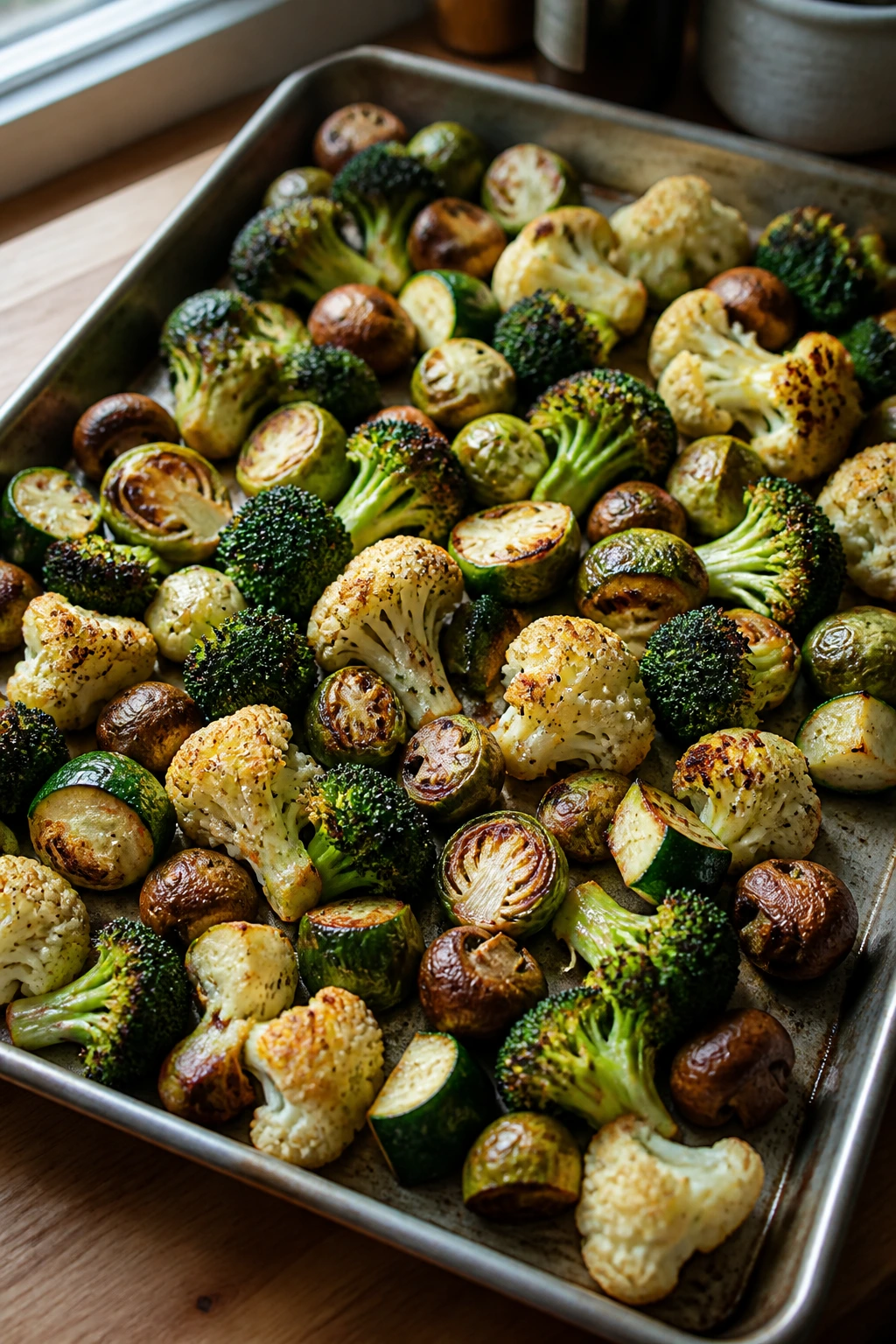
A lot of vegetable dishes fail before the first bite because the cooking method is wrong for the job. If you pile damp vegetables into a pan and hope for flavor, you get steam. Steam is fine for broccoli when you’re blanching it for a salad. It is not what you want here.
High heat is doing the heavy lifting in this dish. At 425°F, the natural sugars in the vegetables start to brown at the edges, and that browning is where the flavor lives. Cauliflower gets nutty. Brussels sprouts pick up a faint sweetness. Mushrooms shrink and turn savory in a way that feels almost steak-like. Zucchini needs more caution, because it turns soft quickly, which is why it goes on the tray later and gets a shorter roast.
I also prefer this version because it respects the different jobs each vegetable is doing. Broccoli and cauliflower bring structure. Mushrooms bring depth. Zucchini brings softness, but only if you don’t overdo it. That’s the whole pan in one sentence, really: sturdy vegetables first, fragile vegetables second, garlic at the right moment, lemon at the end.
The result is far more satisfying than a bowl of steamed vegetables with olive oil drizzled over the top. There’s color on the tray. There’s texture. There’s a little crunch. That matters more than most people admit.
What the Vegetables Need to Roast Properly
Broccoli, Cauliflower, and Brussels Sprouts: the sturdy core
What to use: Use 4 cups broccoli florets, 4 cups cauliflower florets, and 10 ounces Brussels sprouts, all cut into pieces that are close in size.
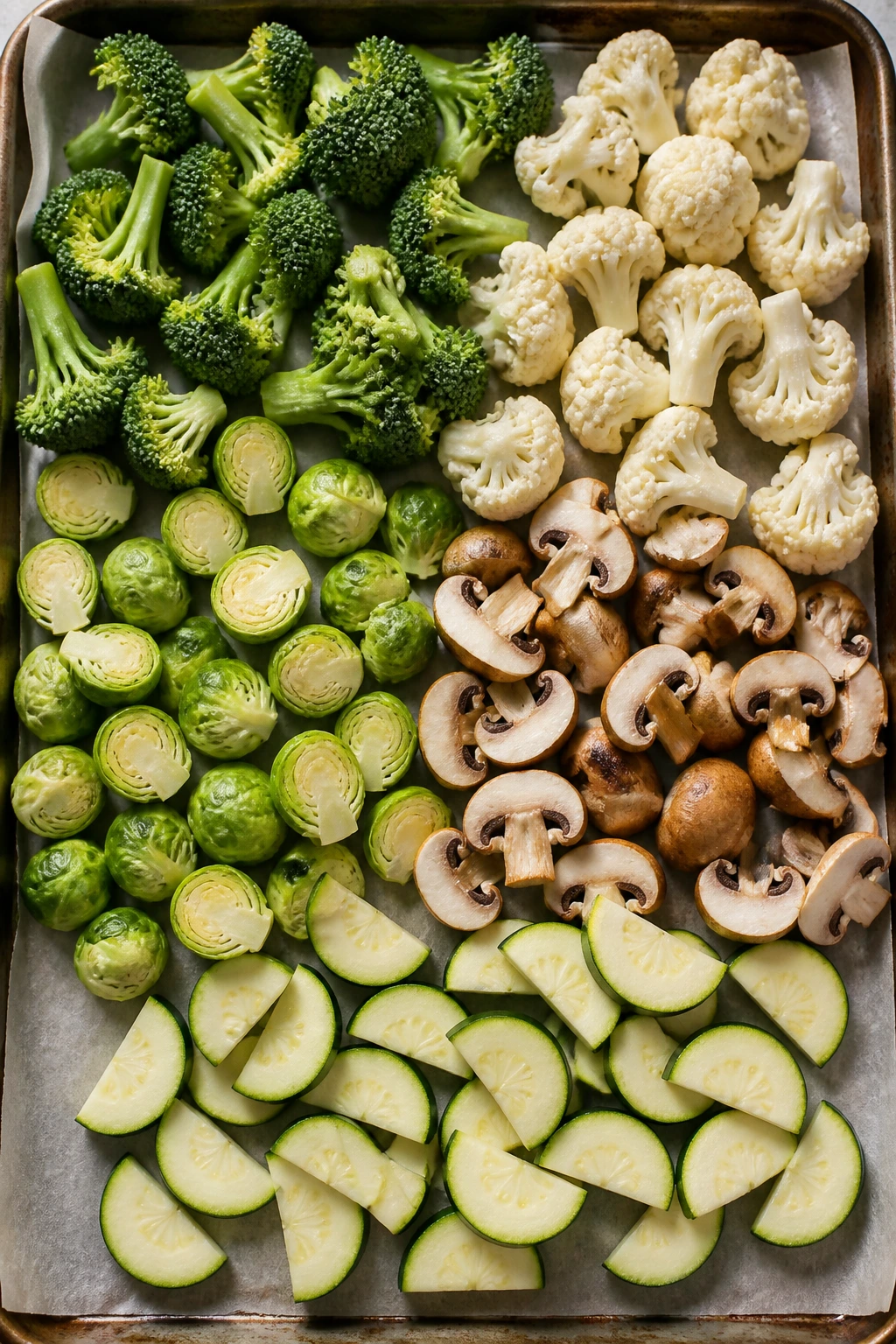
Preparation: Cut the florets into 1½-inch pieces so the edges can brown before the centers collapse. Trim the Brussels sprouts, remove any ragged outer leaves, and halve them through the stem so they hold together on the tray.
Substitutions: Broccolini, Romanesco, or green beans can stand in for part of the mix. If you swap in green beans, reduce the first roast by about 3 minutes because they cook faster than cauliflower.
Tips: Dry these vegetables after washing them. A few drops of water on the surface turn into steam in the oven, and steam is the enemy of browning.
Mushrooms and Zucchini: the quick-cooking middle layer
What to use: Use 8 ounces cremini mushrooms and 2 medium zucchini.
Preparation: Halve the mushrooms if they’re small; quarter them if they’re wide. Slice the zucchini into ½-inch half-moons so they don’t collapse into ribbons halfway through roasting.
Substitutions: Yellow squash works exactly the same way as zucchini. If you want a deeper, meatier flavor, use baby bell mushrooms instead of cremini.
Tips: Keep mushrooms and zucchini on their own pan or add them later than the hard vegetables. They cook faster and release more moisture, which means they can soften the rest of the tray if you crowd them in too early.
Garlic, Oil, and Seasoning: the flavor base
What to use: Use 3 tablespoons olive oil, 1 teaspoon garlic powder, 1 teaspoon kosher salt, ½ teaspoon black pepper, and 1 teaspoon dried oregano or Italian seasoning. Add 5 cloves finely minced garlic for the finishing roast.
Preparation: Mix the garlic powder with the oil and seasonings before the vegetables go into the oven. Mince the fresh garlic very fine so it distributes evenly and doesn’t sit in a bitter clump on the pan.
Substitutions: Avocado oil works if you want a neutral fat with a slightly higher smoke point. If you don’t want oregano, use thyme or rosemary, but keep the amount modest because those herbs can take over fast.
Tips: Don’t skip the garlic powder just because fresh garlic is in the ingredient list. The powder seasons the vegetables from the inside of the oil coating, while the fresh garlic gives the finished pan a louder, sharper edge.
Lemon, Parmesan, and Parsley: the finishing layer
What to use: Use 1 tablespoon lemon zest, 2 tablespoons lemon juice, 2 tablespoons grated Parmesan, and 2 tablespoons chopped fresh parsley.
Preparation: Zest the lemon before you juice it. Chop the parsley right before serving so it stays bright and doesn’t slump into the bowl.
Substitutions: Nutritional yeast can stand in for Parmesan if you want a dairy-free finish. Dill or basil can replace parsley, though dill pushes the dish in a brighter direction and basil makes it feel a little more Mediterranean.
Tips: Add the lemon after roasting, not before. Acid can soften the vegetables and make the browning look dull, which is a shame after you’ve done the hard part.
Why the Garlic Goes In Twice
Fresh garlic is the reason this dish tastes alive, but it’s also the ingredient most likely to misbehave. Leave minced garlic exposed to high heat for too long and it goes from sweet to acrid in a hurry. That burnt-garlic bitterness has a way of taking over the whole pan, and once it’s there, no amount of lemon can cover it.
So the recipe uses garlic in two forms. Garlic powder goes in at the start, where it can coat the vegetables evenly and survive the roast without scorching. Fresh minced garlic goes in later, with the mushrooms and zucchini, so it has enough time to perfume the tray without blackening at the edges. That one change is the difference between a pan that smells inviting and a pan that smells like a mistake.
If you’ve ever wondered why some roasted vegetable recipes seem strangely flat even when the ingredients are good, this is usually the reason. The garlic was either burned off or buried. Here, it stays noticeable from the first bite to the last. The lemon wakes it up at the end. Parmesan gives it a salty finish. Parsley keeps the whole thing from feeling heavy. That’s a lot of work for one vegetable pan, but that’s also why it works for dinner.
The Tools That Make the Job Easier
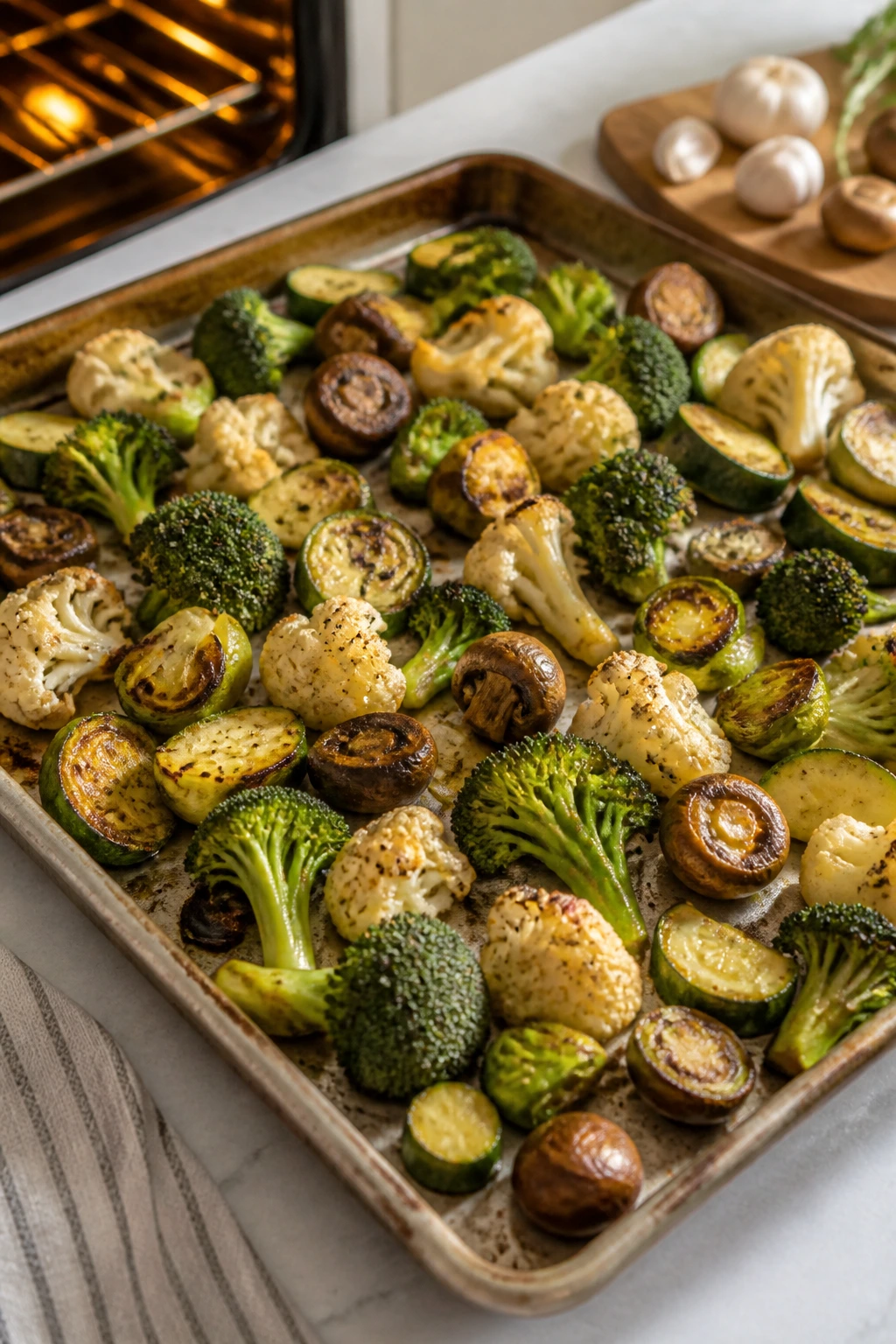
- Two rimmed sheet pans, 18 x 13 inches if you have them: This recipe roasts more evenly when the vegetables aren’t piled on top of each other.
- Large mixing bowl: Useful for tossing the vegetables with oil and seasoning before they hit the pans.
- Sharp chef’s knife: A dull knife crushes the florets and makes zucchini slices irregular, which hurts even cooking.
- Cutting board: A large board gives you room to separate the vegetables by type without mixing them too soon.
- Tongs or a wide spatula: Handy for turning the vegetables halfway through roasting and moving them to a serving bowl without breaking them apart.
- Microplane or fine grater: Best for the lemon zest and Parmesan. The finer the zest, the more evenly it disappears into the finished dish.
- Measuring spoons: The seasonings matter here; eye-balling salt and oil is how vegetable trays drift into bland or greasy territory.
Roast the Tray, Step by Step
Prepare the Oven and Pans:
-
Preheat the oven to 425°F (220°C) and position racks in the upper and lower thirds of the oven. Line two rimmed sheet pans with parchment paper if you want easier cleanup, or leave them bare for a little more browning.
-
Pat the broccoli, cauliflower, Brussels sprouts, mushrooms, and zucchini dry with a clean kitchen towel. Wet vegetables steam; dry vegetables roast. Cut everything to the sizes listed in the ingredient section so the tray cooks at the same pace.
Season the Vegetables: 3. In a large bowl, toss the broccoli, cauliflower, and Brussels sprouts with 2 tablespoons of the olive oil, the garlic powder, salt, black pepper, and oregano. Spread them on one sheet pan in a single layer, with a little space between the pieces.
- In the same bowl, toss the mushrooms and zucchini with the remaining 1 tablespoon olive oil and the minced fresh garlic. Add the red pepper flakes now if you want a little heat. Spread these on the second sheet pan in a separate single layer.
Roast in Stages: 5. Place the pan of broccoli, cauliflower, and Brussels sprouts on the upper rack and roast for 10 minutes. The edges should start to color, and the cauliflower will look drier and slightly matte on the surface.
- Move the second pan of mushrooms and zucchini into the oven on the lower rack. Swap the positions of the pans so both get even heat. Roast both pans for 10 to 12 minutes more, until the broccoli has browned tips, the Brussels sprouts are tender at the stem, the mushrooms have collapsed slightly, and the zucchini is just tender without going limp. If the zucchini looks glossy and slumped, it has gone too far.
Finish and Serve: 7. Transfer all the vegetables to a large serving bowl or platter. Toss gently with the lemon zest, lemon juice, Parmesan, and parsley. Taste and add a small pinch more salt only if needed.
- Let the vegetables rest for 2 minutes before serving. That short pause lets the lemon settle into the oil and keeps the tray from tasting sharp in the first bite.
How to Serve It for a Healthy Dinner
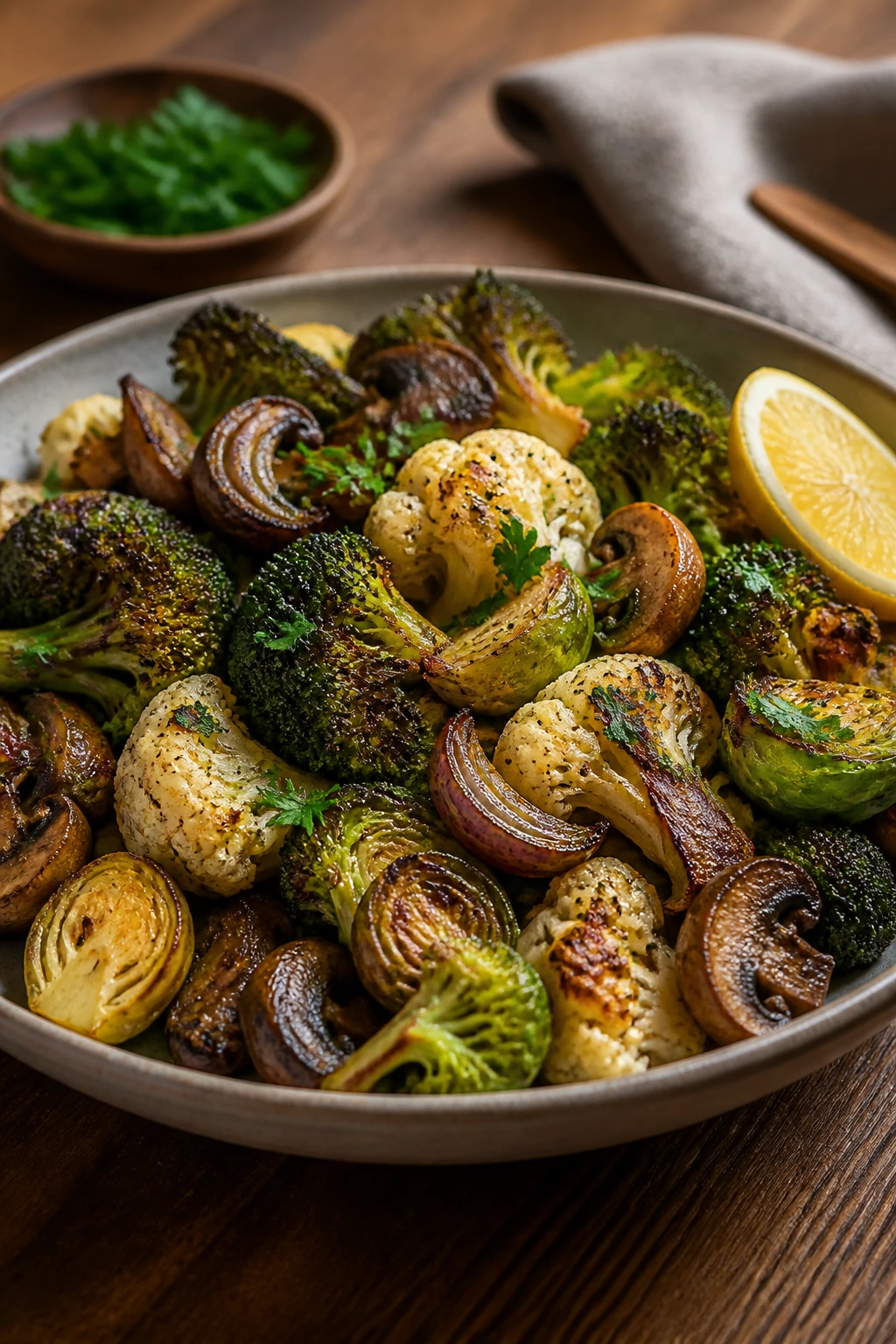
Presentation: Pile the vegetables into a shallow serving bowl or onto a wide platter so the browned bits stay visible. A final sprinkle of Parmesan, a few extra parsley leaves, and one wedge of lemon on the side make the whole thing look intentional instead of thrown together.
Accompaniments: This plays well with roasted chicken thighs, baked salmon, grilled shrimp, or a simple pan-seared steak. If you want the plate to stay low carb, serve it with cauliflower rice or a spoonful of mashed cauliflower rather than bread or couscous. A fried egg on top works better than people expect.
Portions: As a side, plan on about 1½ to 2 cups per person. As a light main, figure closer to 3 cups per person and add a protein if you want the meal to hold you through the evening. The vegetables shrink in the oven, so don’t be stingy when you load the trays.
Beverage Pairing: Sparkling water with lemon keeps the meal crisp. A dry Sauvignon Blanc or a light, unsweetened iced tea fits the garlic and lemon without making the plate feel heavier than it is.
Practical Ways to Get More Flavor Without More Fuss
Flavor Enhancement: A teaspoon of lemon zest at the end does more than people think. It lifts the garlic and makes the Parmesan taste saltier, which means you can get away with less cheese if you want to keep the dish lighter.
Customization: If you like heat, add ¼ teaspoon more red pepper flakes or a pinch of Aleppo pepper before roasting. If you want a deeper savory note, swap the Parmesan for Pecorino Romano, which brings a sharper, saltier finish and holds up well against the broccoli.
Serving Suggestions: A drizzle of good olive oil over the finished bowl gives the vegetables a glossy look and softens the sharper edges of the lemon. Toasted pumpkin seeds are a nice add-in if you want crunch, though I’d keep the handful small so the tray still tastes like vegetables and not trail mix.
Make-It-Yours: For dairy-free cooking, use nutritional yeast instead of Parmesan and add another pinch of salt at the end. For a Mediterranean version, add chopped olives and a little crumbled feta. For a more herb-forward plate, use dill with the zucchini and parsley with the broccoli; that split keeps the flavors from colliding.
The Mistakes That Turn Good Vegetables Soft
-
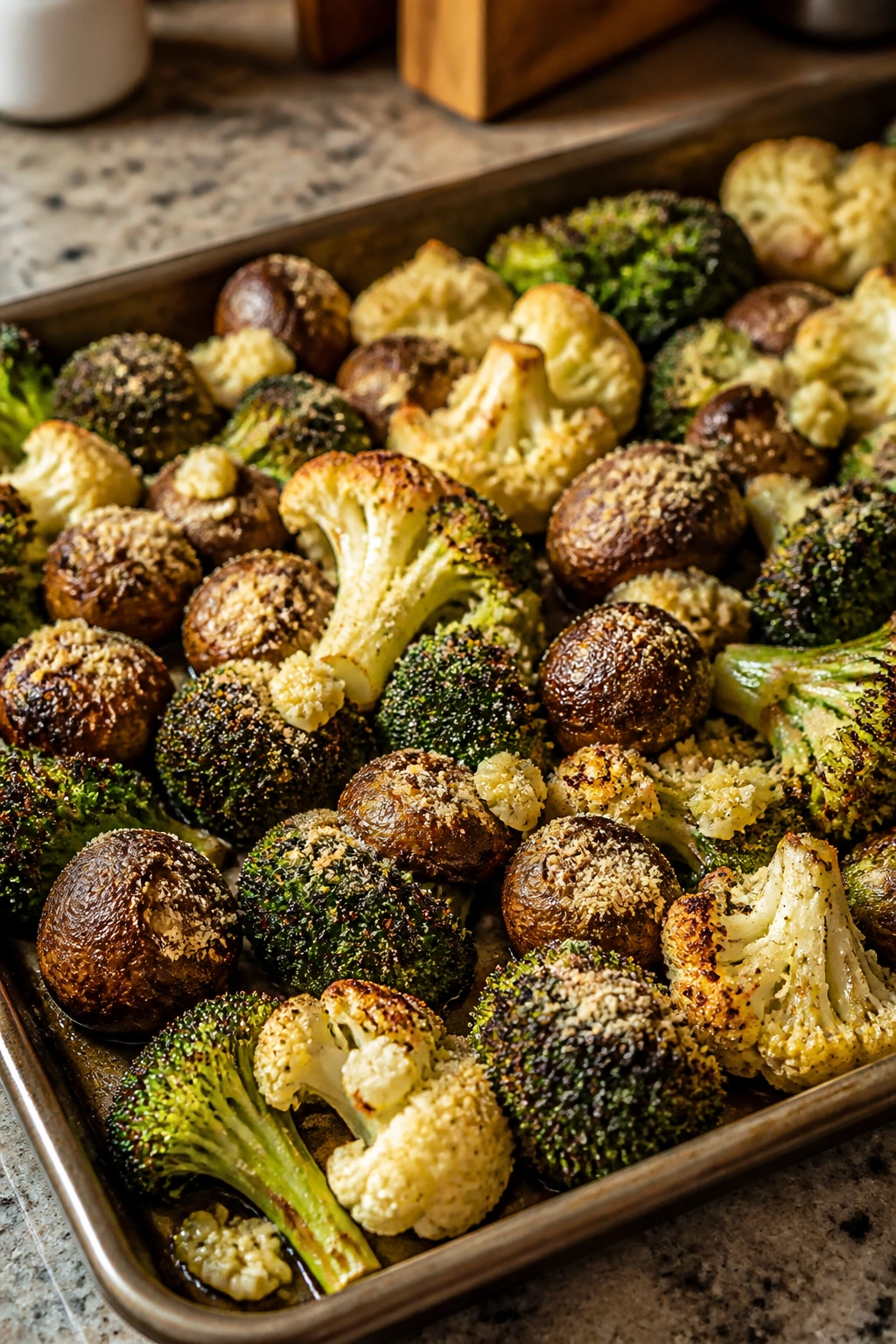
Crowding the pans: If the vegetables sit on top of each other, they’ll steam and come out pale instead of browned. Use two pans or roast in batches if the vegetables don’t have room to breathe.
-
Cutting the pieces too small: Tiny florets and paper-thin zucchini slices burn or collapse before the rest of the tray catches up. Keep the broccoli and cauliflower in chunky pieces and the zucchini thick enough to hold shape.
-
Adding fresh garlic too early: Garlic that goes in with the first roast can scorch on the edges and taste harsh. The fix is simple: let the garlic ride in with the faster vegetables, or add it after the first 10 minutes so it has less time to burn.
-
Skipping the dry step: Water clinging to washed vegetables makes a tray look wet even when the oven is hot. Pat them dry before seasoning, especially the mushrooms.
-
Finishing before tasting: Lemon, Parmesan, and salt all change the balance at the end. Taste after the vegetables come out of the oven, then adjust. A pinch more salt or a squeeze more lemon can wake up the entire bowl.
-
Over-roasting zucchini: Zucchini goes from tender to floppy fast. Watch for the moment when the edges soften but the half-moons still hold their shape; that’s the window you want.
Four Ways to Change the Pan Without Losing the Plot
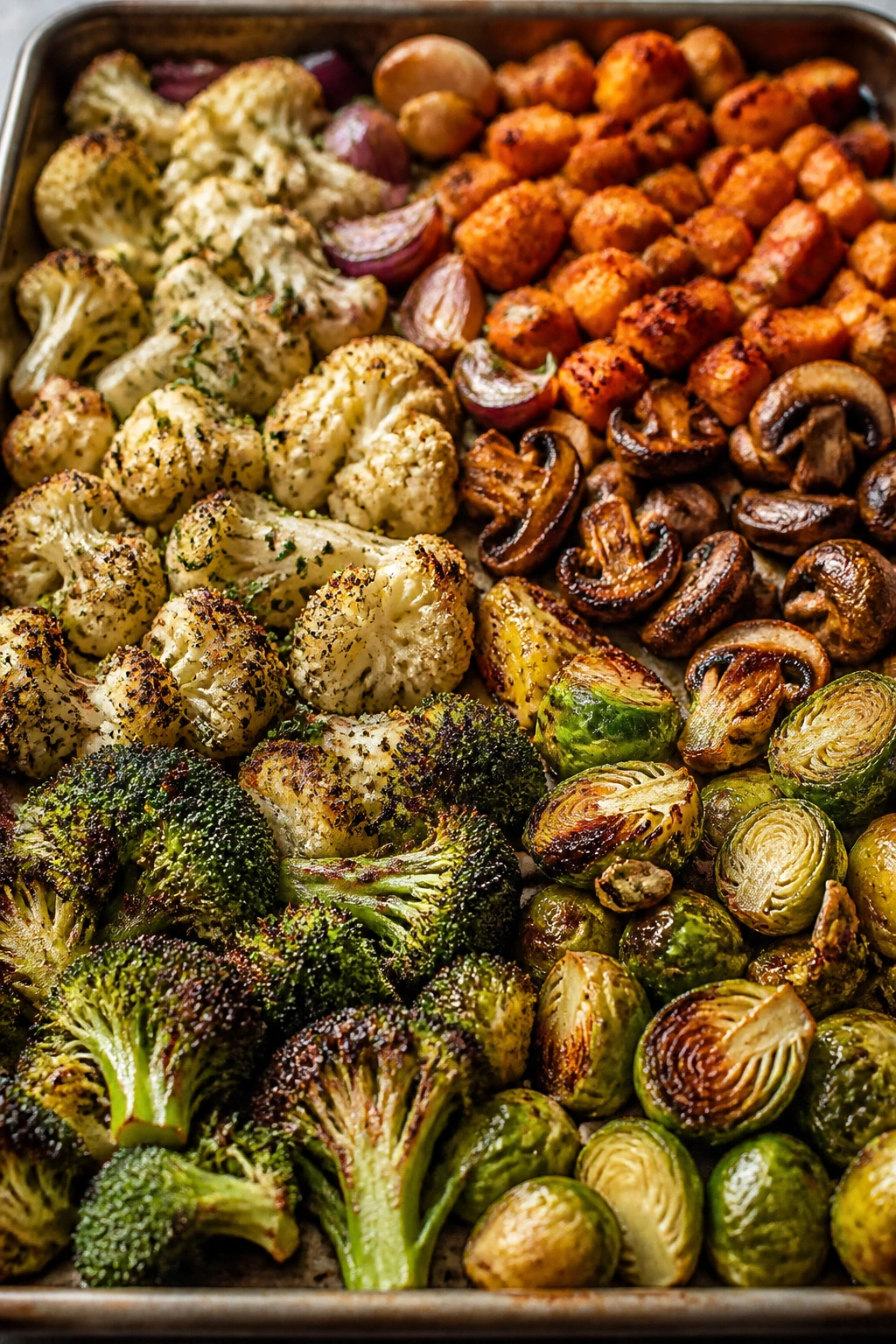
Smoky Paprika Roast: Swap the oregano for 1 teaspoon smoked paprika and add ¼ teaspoon ground cumin. The vegetables take on a deeper, almost campfire-like flavor that works especially well with grilled chicken or pork.
Mediterranean Feta Finish: Replace the Parmesan with ¼ cup crumbled feta and add a handful of sliced olives after roasting. The feta melts just enough to cling to the vegetables, and the olives bring a salty hit that leans into the lemon.
Dairy-Free Herb Pan: Leave out the Parmesan and use 2 tablespoons nutritional yeast with an extra teaspoon of olive oil. The nutritional yeast gives the dish a savory, nutty finish without making it taste fake or cheesy in a bad way.
Protein Bowl Version: Turn the roasted vegetables into dinner by serving them over cauliflower rice with sliced grilled chicken, seared shrimp, or a fried egg. The vegetables stay the same; the plate just grows up a little.
Make-Ahead, Storage, and Reheating Guidance
You can wash and cut the broccoli, cauliflower, and Brussels sprouts up to 24 hours ahead. Keep them in separate containers or zip-top bags lined with a paper towel so stray moisture doesn’t collect at the bottom. Mushrooms and zucchini are better cut closer to cooking time because they soften and weep faster than the sturdier vegetables.
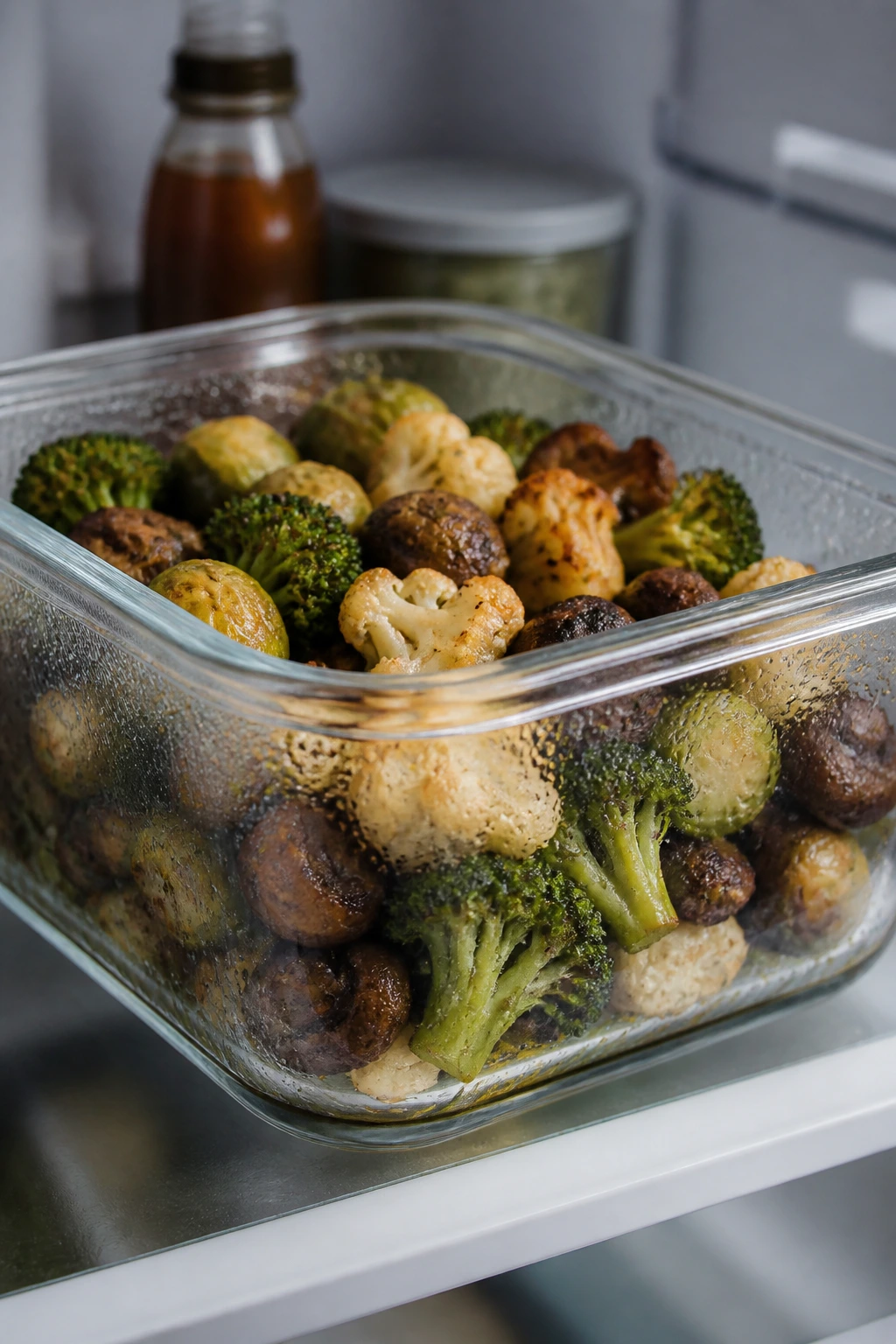
Once cooked, the vegetables keep in an airtight container in the refrigerator for 3 to 4 days. They’re fine at room temperature for about 2 hours, though I’d rather move them to the fridge sooner than later. If you want the best texture on day two, stop cooking them just shy of your ideal doneness the first time; the reheating step will finish the job.
Freezing works, but it changes the texture. You can freeze the cooked vegetables for up to 2 months, yet the zucchini and mushrooms will soften after thawing, so I prefer freezing only if I plan to stir the vegetables into eggs, soups, or a grain bowl later. For a straight reheat, the oven is better. Spread the vegetables on a sheet pan and warm them at 400°F for 8 to 10 minutes until the edges wake back up. An air fryer at 350°F for 4 to 6 minutes does a good job too.
Microwaving is fine in a pinch, but it pushes the vegetables toward limp. If you use it, reheat in 30-second bursts and stop while they still look a little firm. Add a small squeeze of lemon after reheating, because the bright note fades during storage.
Questions People Actually Ask About This Recipe
Can I use frozen vegetables instead of fresh?
Yes, but the texture changes. Frozen broccoli and cauliflower work better than frozen zucchini, which tends to turn soft and watery. If you use frozen vegetables, roast them straight from frozen on a very hot pan and expect less browning and more tenderness.
How do I keep the garlic from burning?
The easiest fix is to use garlic powder for the first roast and add the fresh minced garlic later with the quicker vegetables. If you want to use only fresh garlic, mince it very fine and give it less time in the oven, then pull the tray as soon as you smell any hint of toastiness turning sharp.
Can I make this on one sheet pan?
Sometimes, yes, but only if your pan is large enough and you don’t mind a little more crowding. I don’t recommend it for the full batch unless you’re using a very large pan, because the mushrooms and zucchini release enough moisture to soften the broccoli and cauliflower around them.
Is this recipe keto-friendly?
It’s close enough for many low-carb and keto-style meals, especially if you keep the portion reasonable and skip extra sweet vegetables. The vegetable mix here stays in the lower-carb lane, but your exact carb count depends on how much you serve and whether you add a protein or extra cheese.
What’s the best protein to serve with it?
Roasted chicken thighs are the easiest match because they’re forgiving and like the same oven temperature. Salmon is a close second if you want something a little lighter. If you need a meatless dinner, a fried egg or a slab of halloumi turns the vegetables into a plate that feels complete.
Can I make it in an air fryer?
Yes, in batches. Air fry the broccoli, cauliflower, and Brussels sprouts first, then the mushrooms and zucchini, because the basket gets crowded fast. Keep the temperature around 375°F and shake the basket once or twice so the edges brown evenly.
Why did my vegetables come out soggy?
Usually it’s one of three things: the pan was crowded, the vegetables were still wet after washing, or the oven wasn’t hot enough. Any one of those can push the tray into steaming territory, which gives you soft vegetables with very little browning.
Does this taste good cold?
Surprisingly, yes. The lemon and Parmesan hold up better than a cream sauce would, and the vegetables keep enough structure to work in a lunch box. I like it cold most when it’s chopped and folded into a salad with a few leaves of romaine or arugula.
A Vegetable Dinner That Pulls Its Weight
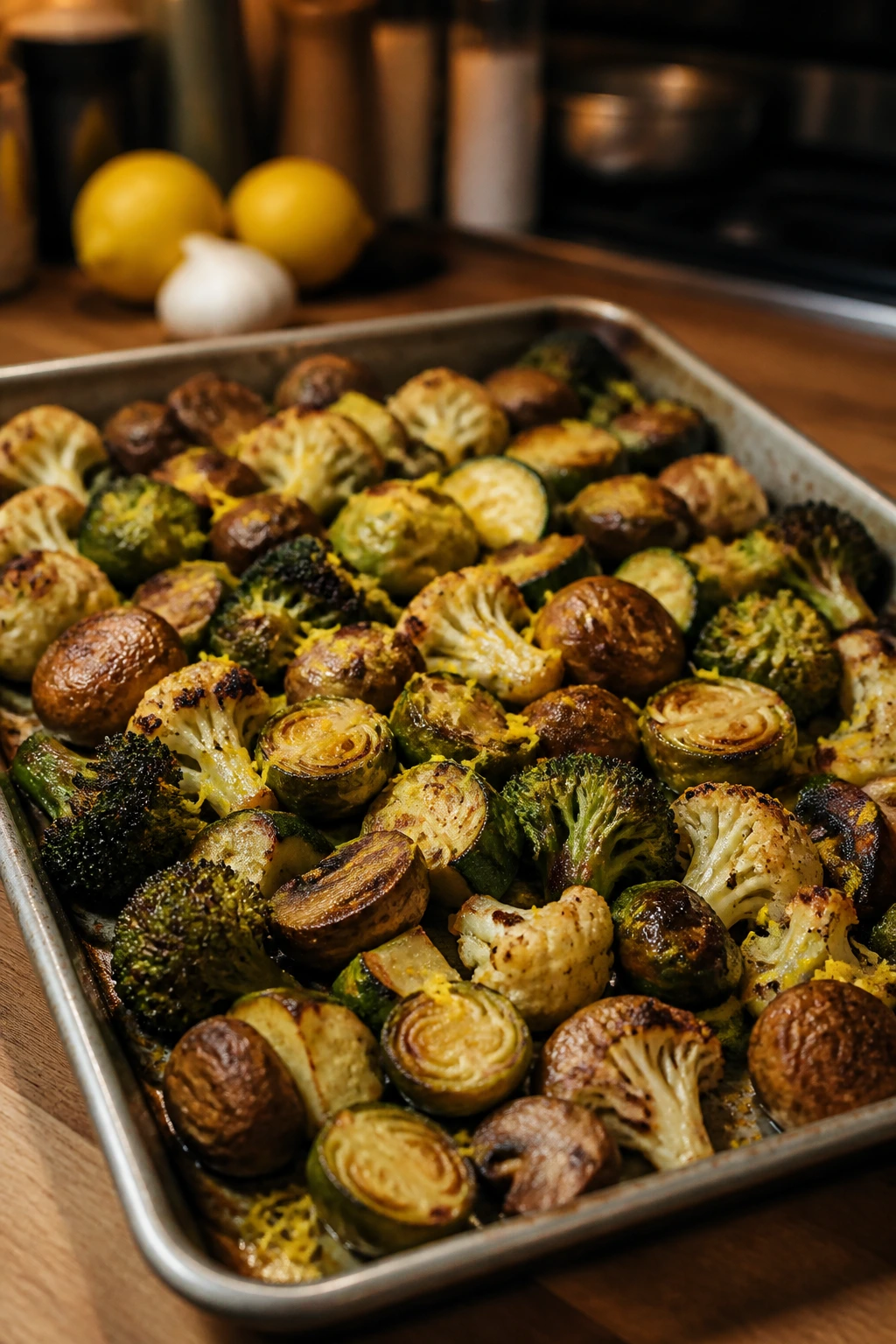
A lot of roasted vegetable recipes are content to be supporting actors. This one isn’t. The browned edges, the lemon finish, and the split garlic treatment give the tray enough personality to stand next to a roast or carry a lighter dinner on its own.
The nice part is that nothing here is fussy. You don’t need a special pan, a long marinade, or an ingredient that lives in a jar at the back of the fridge. You just need enough heat, enough space on the tray, and the discipline to stop roasting before the zucchini gives up. That’s the sweet spot.
Garlicky Low-Carb Roasted Vegetables — Recipe Card
Recipe Name: Garlicky Low-Carb Roasted Vegetables
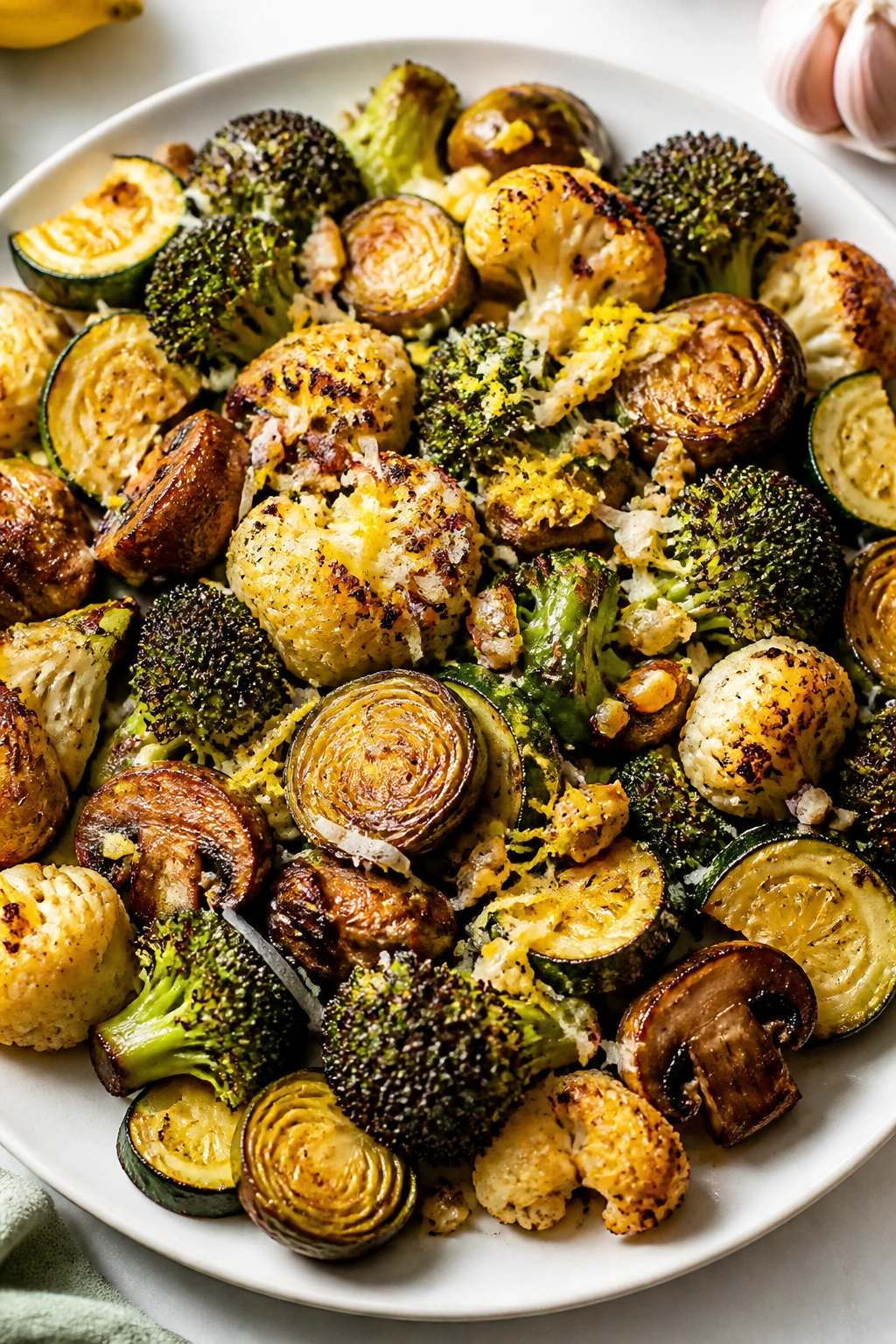
Description: A roasted vegetable medley with crisp broccoli, tender cauliflower, browned Brussels sprouts, savory mushrooms, and just-soft zucchini, finished with garlic, lemon, Parmesan, and parsley. It works as a low-carb side dish or a light vegetarian dinner with eggs or protein on the side.
Prep Time: 20 minutes
Cook Time: 22 to 25 minutes
Total Time: 42 to 45 minutes
Course: Side Dish / Light Dinner
Cuisine: American
Servings: 4 side servings or 2 light main servings
Calories: About 180 kcal per side serving
Ingredients
For the Vegetables:
- 4 cups broccoli florets, cut into 1½-inch pieces
- 4 cups cauliflower florets, cut into 1½-inch pieces
- 10 ounces Brussels sprouts, trimmed and halved
- 8 ounces cremini mushrooms, halved if small or quartered if large
- 2 medium zucchini, cut into ½-inch half-moons
For the Seasoning and Finish:
- 3 tablespoons olive oil, divided
- 1 teaspoon garlic powder
- 1 teaspoon kosher salt, plus more to taste
- ½ teaspoon black pepper
- 1 teaspoon dried oregano or Italian seasoning
- 5 cloves garlic, finely minced
- 1 tablespoon lemon zest
- 2 tablespoons lemon juice
- 2 tablespoons grated Parmesan
- 2 tablespoons chopped fresh parsley
- ¼ teaspoon red pepper flakes, optional
Instructions
- Preheat the oven to 425°F (220°C) and position racks in the upper and lower thirds. Line two rimmed sheet pans if desired.
- Pat the vegetables dry. Toss the broccoli, cauliflower, and Brussels sprouts with 2 tablespoons olive oil, garlic powder, salt, pepper, and oregano. Toss the mushrooms and zucchini with the remaining 1 tablespoon olive oil and the minced garlic.
- Spread the broccoli, cauliflower, and Brussels sprouts on one pan in a single layer and roast for 10 minutes.
- Add the second pan with the mushrooms and zucchini. Roast both pans for 10 to 12 minutes more, until the edges are browned and the zucchini is just tender.
- Transfer everything to a bowl or platter and toss with lemon zest, lemon juice, Parmesan, parsley, and red pepper flakes if using.
- Taste and adjust salt or lemon before serving.
Notes: For the best browning, don’t crowd the pans. If you want a dairy-free version, swap the Parmesan for nutritional yeast. Add the lemon only after roasting so the vegetables stay crisp.