



Nothing kills the mood of dinner faster than vegetables that look like they went through a sad steam bath. Crispy vegetables for a healthy dinner fix that problem in the most practical way possible: hot pan, a little oil, enough space, and vegetables cut so the heat can do its job. Broccoli with bronzed edges, carrots with sweet, toasty corners, Brussels sprouts with lacy leaves, cabbage with browned folds—those are not punishment food. Those are vegetables people actually reach for.
The trick is that crispness is not one thing. Broccoli behaves one way. Carrots behave another. Zucchini, bless it, behaves like a wet sponge unless you treat it with a little discipline. Once you stop expecting every vegetable to cook the same way, dinner gets easier. And better. A lot better.
I keep coming back to the same point: the difference between limp and crisp isn’t magic, and it isn’t a fancy appliance either. It’s moisture management, heat, and a little restraint. When those three line up, vegetables stop playing the role of a side note and start carrying the plate with actual texture, color, and flavor.
Why This Approach Works So Well
-
Big flavor, small oil: A tablespoon or two of olive oil per pound of vegetables is enough to help browning happen, which keeps the plate lighter without making the food taste dry or austere.
-
Different vegetables, same dinner plan: Broccoli, cauliflower, carrots, Brussels sprouts, cabbage, green beans, and asparagus all crisp well when they’re cut and cooked with their own timing in mind.
-
Less sauce is needed: Once the vegetables have browned edges and a little salt on them, you do not need to drown them in dressing to make them interesting.
-
Works with almost any protein: Eggs, salmon, chicken, tofu, beans, lentils, and chickpeas all make sense next to a tray of crisp vegetables.
-
Leftovers still feel useful: Properly reheated roasted vegetables can go into grain bowls, wraps, omelets, and warm salads without turning into mush.
Why Crisp Vegetables Make Dinner Feel Complete
Texture is half the meal. Maybe more than half.
A bowl of soft vegetables can be fine, even good, but it rarely feels finished. A tray of vegetables with browned edges, though, changes the whole plate. The outside gets a little nutty and sweet. The inside stays tender. The contrast is what makes you keep eating. That little bit of crunch or char keeps the fork coming back.
There’s also a plain old practical reason this matters. If you’re using the half-plate vegetable idea from MyPlate, the vegetables need to be pleasant enough that you actually eat them. Crisp carrots beside salmon, roasted cauliflower beside chickpeas, blistered green beans beside eggs—those are meals that feel built, not assembled in a panic.
I like crisp vegetables because they handle seasoning well. Salt sticks. Pepper wakes up. Lemon juice clings to the browned bits instead of sliding off a wet surface. Even a little grated parmesan or tahini feels more intentional when the vegetables already have structure.
And yes, vegetables can be the center of dinner. They just need enough heat and browning to stop acting like a garnish.
How Broccoli, Carrots, and Brussels Sprouts Crisp Differently

Broccoli is the dependable one.
Cut the florets with a flat side, and you get contact with the pan. That contact is where the good stuff happens. The stem, once peeled and sliced, browns beautifully too. Broccoli forgives a lot. If your oven runs a little cool or you get distracted for two minutes, broccoli usually still gives you something worth eating.
Brussels sprouts are more dramatic. Halve them through the stem, keep the loose leaves that fall away, and roast or air-fry them cut-side down. The leaves turn into crunchy little shards. The cut face caramelizes. If the sprouts are huge, quarter them. If they are tiny, leave them whole and just give them more time. I would rather cook Brussels sprouts than zucchini nine times out of ten, because they reward high heat instead of punishing you for it.
Carrots are the slow, sweet lane. They crisp at the edges more than they crisp all over, which is fine. That’s the point. Cut them into batons, thick coins, or long wedges so they can brown without turning leathery. Thin carrot coins look pretty, but they can burn before the middle softens. I prefer a cut that gives the carrot a little body. Same with parsnips and sweet potatoes.
Brassicas That Brown Fast
Broccoli, cauliflower, Brussels sprouts, cabbage, and fennel all live in the happy zone of crisping. They like heat, they like space, and they taste better when their edges go a little dark. Cabbage is especially underrated. Cut it into wedges and roast it cut-side down, or slice it into thick ribbons for a skillet. It turns sweet, almost silky in the middle, while the outer folds go lacy and browned.
Cauliflower is the quiet star here. It picks up flavor without begging for attention. If you toss it with olive oil, salt, black pepper, and maybe a little cumin or smoked paprika, it gets that roast-nut sweetness people mistake for something fancier than it is.
Roots That Need More Time
Carrots, parsnips, beets, turnips, sweet potatoes, and even small potatoes can crisp, but they need time. Their trick is surface area. The more flat sides you give them, the more browning you get. I like carrots as thick batons, sweet potatoes as wedges, and beets as small wedges rather than tiny cubes. Small cubes can dry out before they develop much character.
When you mix roots with quicker vegetables, the roots go in first. That’s the part people skip, then wonder why one vegetable is bronzed and the other is still stubbornly raw.
Watery Vegetables and Their Rescue Plan
Zucchini, eggplant, mushrooms, asparagus, peppers, and tomatoes can all taste good, but they need respect. Zucchini and eggplant are the most likely to go soft if you ignore their water content. Salt them lightly, let them sit for 10 to 20 minutes, then blot them dry before cooking. Mushrooms need a hot pan and patience; they throw off water first, then brown later. If you try to rush them, they stay pale and squeaky.
Asparagus is the opposite. It wants a quick blast of heat and then to leave the room. Thin spears can overcook in a blink. Thick spears are more forgiving, but they still do better with a high oven or a fast skillet.
The Moisture Rule That Decides Whether Vegetables Brown or Steam
The pan cannot brown wet food. That’s the whole game.
Water has to leave the surface before browning starts, because steam caps the temperature at the boiling point for a while. That’s why a tray of vegetables can look cooked on paper and still taste flat, soft, and a little tired. The surface stayed too damp for too long. The heat had nowhere to go.
Dry Them Before Oil Touches Them
If you wash vegetables right before cooking, dry them. Not with a casual swipe. Really dry them. Clean kitchen towels, paper towels, and a salad spinner all help. Broccoli florets should feel dry at the tips. Green beans should not shine with rinse water. Mushrooms should be wiped, not soaked, unless you enjoy waiting for them to stop steaming.
This is one of those steps that sounds fussy until you skip it once. Then the whole tray turns glossy and soft around the edges.
Give Each Piece Room
Crowding creates steam. Steam ruins crispness. That’s the boring, repeatable truth.
If the vegetables touch in a thick pile, the moisture they release hangs around them like a little cloud. The pan never gets hot enough at the surface. Use a larger sheet pan than you think you need, or split the batch. Two pans beat one overcrowded pan every time. I know cleanup sounds easier with one pan. It isn’t worth the tradeoff.
Salt With Intention
Salt is not the enemy. Bad timing is.
For sturdy vegetables like carrots, broccoli, and cauliflower, salt right before roasting or air-frying. For zucchini and eggplant, salt ahead of time, let them sit, then blot away the moisture they shed. That brief pause matters. It changes the whole texture. Fresh herbs, lemon, and vinegar should usually wait until the end, because acid can make crisp vegetables feel damp and confused if you add it too early.
If you see liquid pooling in the bowl after seasoning, stop. Dry the vegetables again. A towel is sometimes the most useful tool in the kitchen, and I say that with no irony at all.
Roasting Mixed Vegetables on a Sheet Pan
A sheet pan at 425°F does more for vegetables than a glossy sauce ever will.
The oven turns into a quiet browning machine when you give it the right cut sizes and enough room. For mixed vegetables, the only real challenge is timing. Carrots do not cook like broccoli. Brussels sprouts do not cook like green beans. If you throw them all on at once without thinking about size and density, one batch will burn while another still tastes undercooked in the middle.
Preheat the Pan or at Least the Oven
A fully preheated oven matters. A preheated pan helps even more. If you like a stronger sear on broccoli or cauliflower, slide the empty rimmed sheet pan into the oven while it heats, then add the oil-coated vegetables carefully. You will hear the sizzle. That sound is good. It means the pan has enough heat to start browning instead of merely warming the vegetables.
Use bare metal if you want the most browning. Parchment is easier for cleanup, and I use it often, but it softens the bottom a little. That tradeoff is real. Choose it on purpose.
Match the Cut to the Cook Time
Cut carrots into 2- to 3-inch batons if you want them to roast in the same window as cauliflower. Cut broccoli into florets with a flat face. Halve Brussels sprouts through the stem. Cut sweet potatoes into wedges or thick cubes, not tiny dice. The goal is not perfect symmetry. The goal is even cooking.
Here’s the rough timing I trust for a 425°F oven:
- Broccoli and cauliflower: 18 to 25 minutes
- Brussels sprouts: 20 to 28 minutes
- Carrots and parsnips: 25 to 35 minutes
- Sweet potatoes: 25 to 35 minutes
- Mushrooms: 15 to 20 minutes
- Green beans and asparagus: 10 to 15 minutes
Those ranges move a little with oven strength, vegetable size, and whether you use convection. A convection fan usually shaves a few minutes off. If your oven runs cool, give the tray a little more time and do not be scared of brown spots.
Leave the Vegetables Alone Long Enough to Brown
This is the hardest part for impatient cooks. Stop stirring every minute.
Vegetables need uninterrupted contact with the pan before they develop color. Move them too soon and they slide around in oil, pale and slippery. Let them sit until the undersides start to brown. Then flip or toss once. That’s usually enough. If you keep fussing, they never quite get the dry, crisp edges you wanted in the first place.
For mixed trays, add the quickest vegetables later. Put carrots and sweet potatoes in first, then add broccoli, cauliflower, or Brussels sprouts about 10 minutes later. Green beans and asparagus can go on in the final stretch. This staged method is the difference between a good tray and a tray where every vegetable actually tastes cooked on purpose.
A quick blast under the broiler can help if you want a little extra char, but stand there and watch it. Broilers are rude. They go from bronzed to bitter in a minute.
Air Fryer Vegetables That Stay Snappy

Air fryers are tiny convection ovens with opinions.
They excel when you want browning fast, especially on smaller batches of broccoli, Brussels sprouts, cauliflower, green beans, and asparagus. The hot air moves hard and fast, which means the outer layer dries out and crisps before the whole vegetable turns soft. That’s the promise. The catch is obvious: you do not get to crowd the basket and expect magic.
Basket Space Is Everything
You need room between the pieces. A single layer is not a suggestion. It is the whole point. If the basket is stuffed, the vegetables steam each other and the air fryer becomes a loud little warm box that disappoints you.
For broccoli or cauliflower, 380°F to 400°F usually works well. Start checking around 8 minutes. Brussels sprouts often need 12 to 15 minutes. Green beans can be done in 8 to 10 minutes. Asparagus may only need 6 to 8 minutes, depending on thickness. Shake the basket halfway through so the browned bits are not all trapped on one side.
A Little Oil Goes Further Than You Think
Use less oil than you would for roasting. The air fryer needs a light coat, not a slick. One to two teaspoons per pound of vegetables is often enough, though sturdier vegetables can take a little more. Too much oil pools at the bottom and softens the underside.
A teaspoon of cornstarch can help with broccoli or cauliflower if you want a drier, crisper shell. I would not bother with it for asparagus or green beans. They are too delicate for the extra coating to be useful.
Pull Faster Than You Expect
Air fryers can overshoot. The vegetables keep cooking a little after you pull the basket, and a thin spear of asparagus can collapse faster than you’d think. Pull them when the edges are browned and the centers still have a bit of tension. If you wait until they look soft in the basket, they usually turn mushy on the plate.
Do not sauce the vegetables before cooking. That’s a quick route to sticky, steamed surfaces. Add lemon, vinegar, yogurt sauce, tahini, or soy-based glaze after the vegetables are done. If you want sesame seeds or chopped herbs, finish with those too. The basket should brown the vegetables. The finishing touches should stay on top of them.
Pan-Crisped Vegetables on the Stovetop
Sometimes the stove does the job better than the oven.
A skillet gives you more control over small batches, and it handles vegetables that like direct contact: cabbage, green beans, mushrooms, asparagus, Brussels sprouts halves, sliced zucchini, and cauliflower florets if you want to start the browning fast. A cast-iron skillet is the blunt instrument. It holds heat well and gives you that hard sear. Stainless steel works too if you know how your pan behaves. Nonstick is fine for delicate vegetables, but it usually gives you less aggressive browning.
The Skillet Handles the Browning
Heat the skillet over medium-high until the oil shimmers. Not smokes. Shimmers. Add the vegetables in a single layer and leave them alone for a minute or two. That first still moment matters. It lets the cut surface grab the pan instead of sliding around in oil.
Cabbage wedges are one of my favorites here. Leave the core attached so the wedge stays together, set the cut side down, and let it sit. The edges get dark and crisp while the inside softens. Green beans blister nicely in a hot skillet too; they go wrinkled and a little charred in the best possible way.
Two-Stage Cooking for Watery Vegetables
Mushrooms need a two-stage approach. First they release water. Then, once the water is gone, they brown. That’s not a failure. That’s the path. If you stop too early, they look cooked but taste strangely flat. Keep the heat up and wait for the glossy phase to turn dry around the edges.
Zucchini is similar, though more fragile. Salt lightly, blot, then sear in a hot skillet without crowding. If you dump it in cold or pile it into a heap, you get a soft, oily mess. If you give it room and a hot pan, it stays tender with a browned rim.
Finish in the Pan or Add a Quick Sauce at the End
A skillet can carry the whole meal if you want it to. A quick splash of lemon juice, a teaspoon of tamari, a little butter, or a spoonful of pesto at the end changes the whole mood. Just do not add the wet part too early. Once the sauce goes in, the crisp edges start to soften. That is fine if you want a softer result, but it is not the same dish.
If you want the vegetables to stay snappy for serving, hold the sauce back until the very end or even serve it on the side. That tiny bit of discipline pays off.
Seasonings That Stick Without Turning the Tray Soft
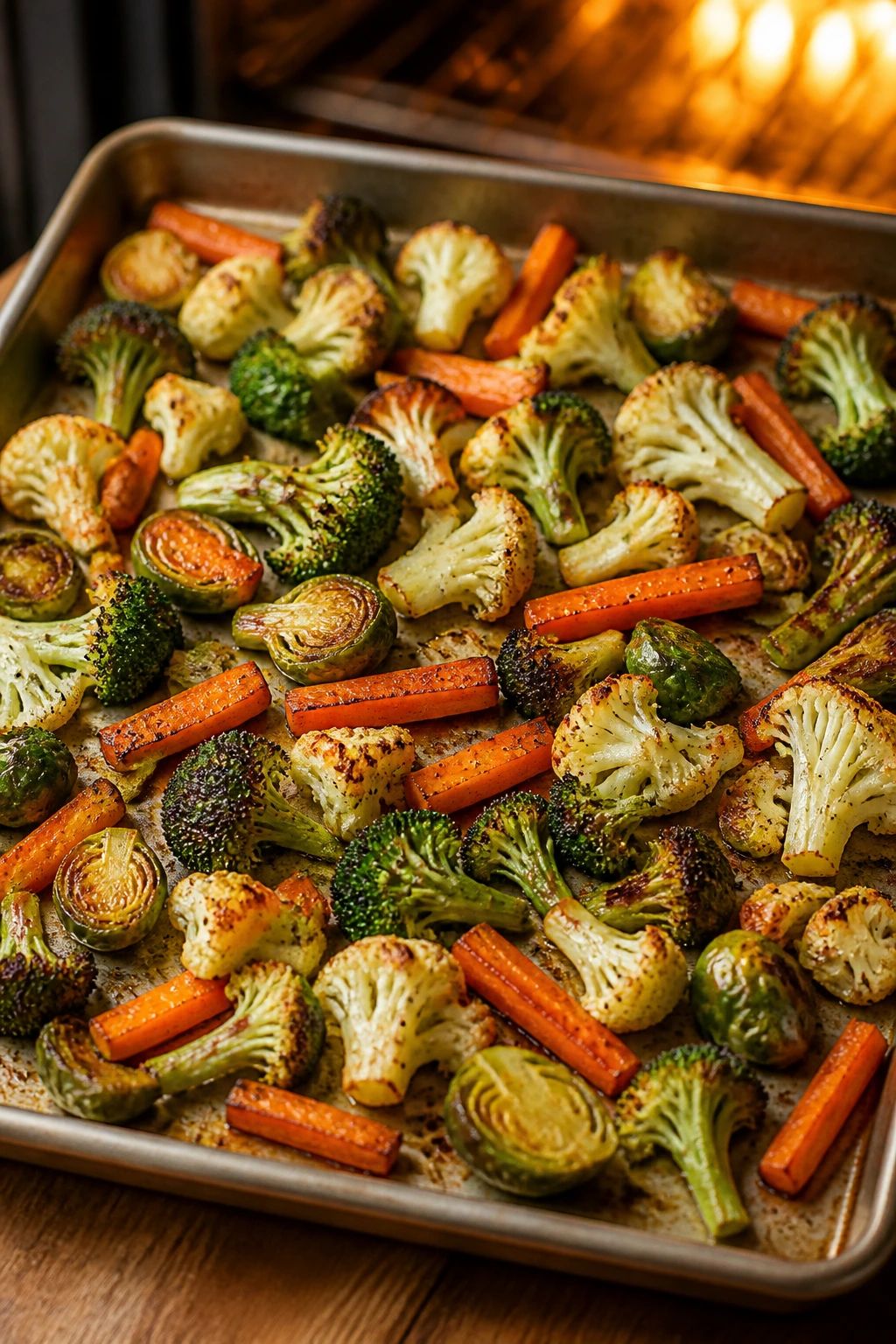
Seasoning can ruin crispness if you ask it to do too much.
Dry spices are your friends before the heat. Wet sauces are better after. That simple division saves a lot of disappointment. The vegetables need room to brown first. Once they have color, they can handle just about any finish you want.
Dry Spices Before Cooking
Smoked paprika, garlic powder, onion powder, cumin, coriander, chili flakes, curry powder, za’atar, and a little black pepper all work well on roasted vegetables. They cling to the oil and deepen in the oven or skillet. Smoked paprika is especially good on cauliflower and carrots. Za’atar loves broccoli and cabbage. Curry powder is surprisingly good on sweet potatoes and cauliflower together.
Fresh garlic is trickier. It burns faster than most people expect, especially in a hot oven. Garlic powder is safer before cooking. If you want actual garlic flavor, grate fresh garlic into a finish sauce, or toss it with lemon juice and oil after the vegetables come out. That gives you real garlic without the bitter edge.
Acid, Herbs, Cheese, and Nuts After Cooking
Lemon juice, lime juice, red wine vinegar, sherry vinegar, and even a small splash of rice vinegar brighten vegetables without weighing them down. Add those at the end. The same goes for fresh herbs like parsley, dill, basil, cilantro, and mint. They wilt fast and lose their punch if they cook too long.
Cheese works best as a finish, not a cover. A little parmesan on hot broccoli or feta over roasted carrots makes sense because the vegetables are already browned. Toasted nuts and seeds do the same thing. Almonds, sunflower seeds, pepitas, sesame seeds, and chopped pistachios add crunch that survives on the plate.
A spoonful of tahini thinned with lemon and water, or a little miso whisked into oil, can turn a tray of vegetables into a real meal. The important part is timing. If the glaze goes on before cooking, it can scorch or steam. If it goes on at the end, it tastes like a finish instead of a mask.
The Garlic Question
Garlic powder before cooking. Fresh garlic after. That is my rule.
There are exceptions, of course. Thin slices of garlic can crisp quickly in a skillet if you know what you’re doing. But for most home cooks, fresh garlic is more useful in a finishing sauce than on the tray itself. It keeps the flavor clean and avoids the burnt, bitter taste that can take over a whole pan.
Building a Healthy Dinner Around a Hot Tray of Vegetables
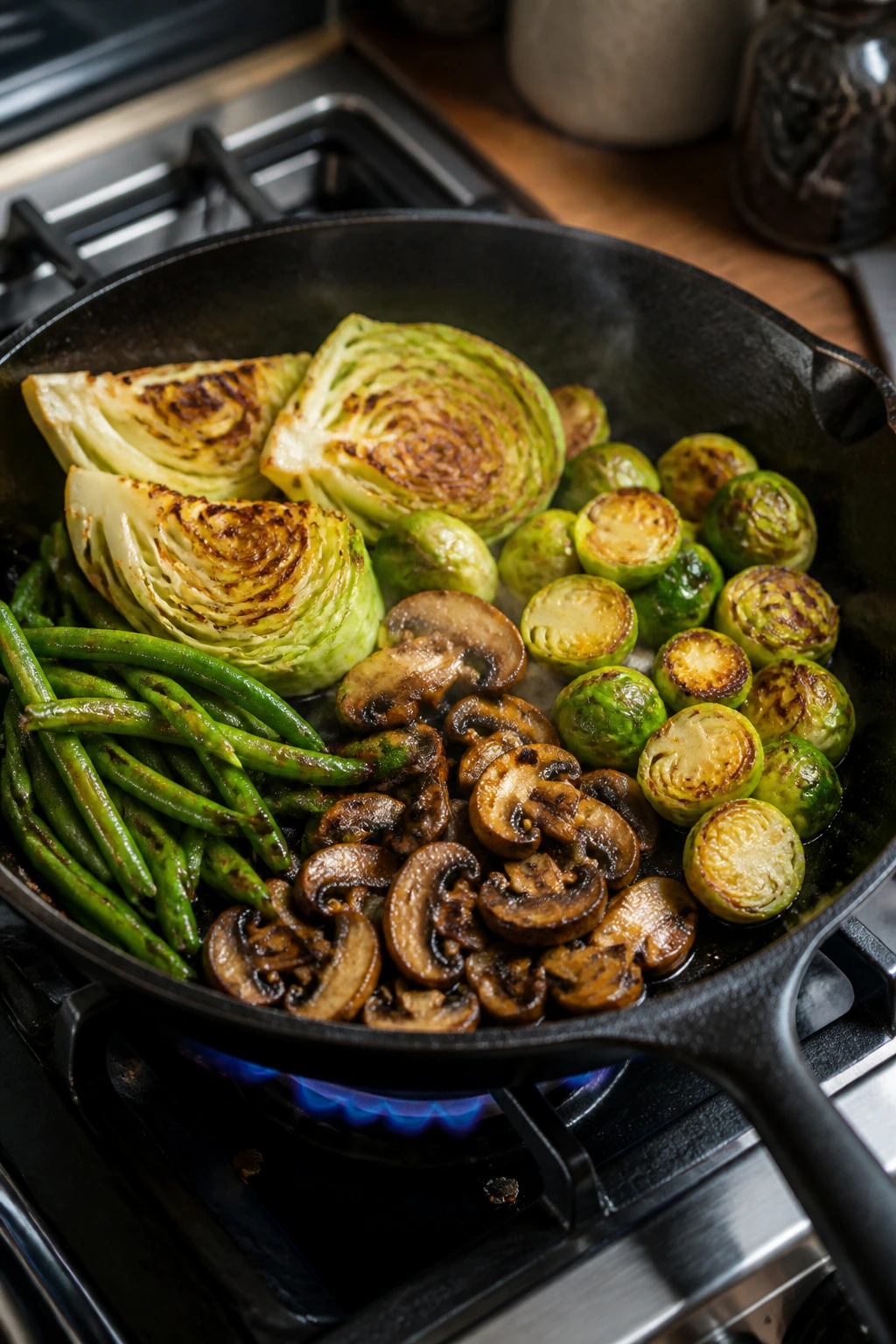
A tray of vegetables is dinner only if the rest of the plate knows what it’s doing.
That means protein, a starchy anchor if you want one, and maybe one bright sauce. If you try to make vegetables do every job at once, the meal gets muddy. Crisp vegetables are strongest when they’re allowed to stay crisp and play against something softer or richer.
The Plate Formula I Trust
For one adult dinner, I usually think in this shape:
- 2 cups crisp vegetables if they are a side
- 3 cups or more if they are the main event
- 4 to 6 ounces of protein if the meal needs one
- 1/2 to 1 cup of cooked grain or starch if you want more staying power
That might look like roasted broccoli with salmon and brown rice, or Brussels sprouts with fried eggs and toast, or cauliflower with chickpeas and couscous. You do not need all four parts every time. But you do need enough structure that the vegetables feel like part of a dinner, not a snack that wandered into the wrong bowl.
Pairings That Actually Make Sense
Broccoli likes lemon, salmon, chicken, tofu, and eggs. Cauliflower takes tahini, chickpeas, curry, yogurt, and rice. Brussels sprouts like bacon, if you eat it, but they are also excellent with mustard vinaigrette, tofu, or fried eggs. Carrots are good with miso, ginger, sesame, and beans. Green beans love almonds, garlic, and anything with a little sharpness at the end.
If you want a vegetarian dinner, give the vegetables a partner with protein. Chickpeas, lentils, tempeh, tofu, eggs, Greek yogurt, and feta all help. The vegetables bring texture and volume. The protein keeps the meal from feeling lopsided. A grain like farro, quinoa, or brown rice can help too, but it does not have to dominate the plate.
When You Want the Dinner to Feel Bigger
If the meal needs to feel substantial, add a sauce with a little fat and acid. Tahini-lemon sauce, yogurt-dill sauce, chimichurri, mustard vinaigrette, or even a simple olive oil and vinegar dressing can make a plate feel complete. Sauce is not there to hide the vegetables. It is there to connect the pieces.
And if you want the dinner lighter, keep the sauce thin and the grain portion smaller. Let the vegetables do the talking. Crisp vegetables have enough personality to carry a plate when you give them room.
Small Tweaks That Make the Biggest Difference
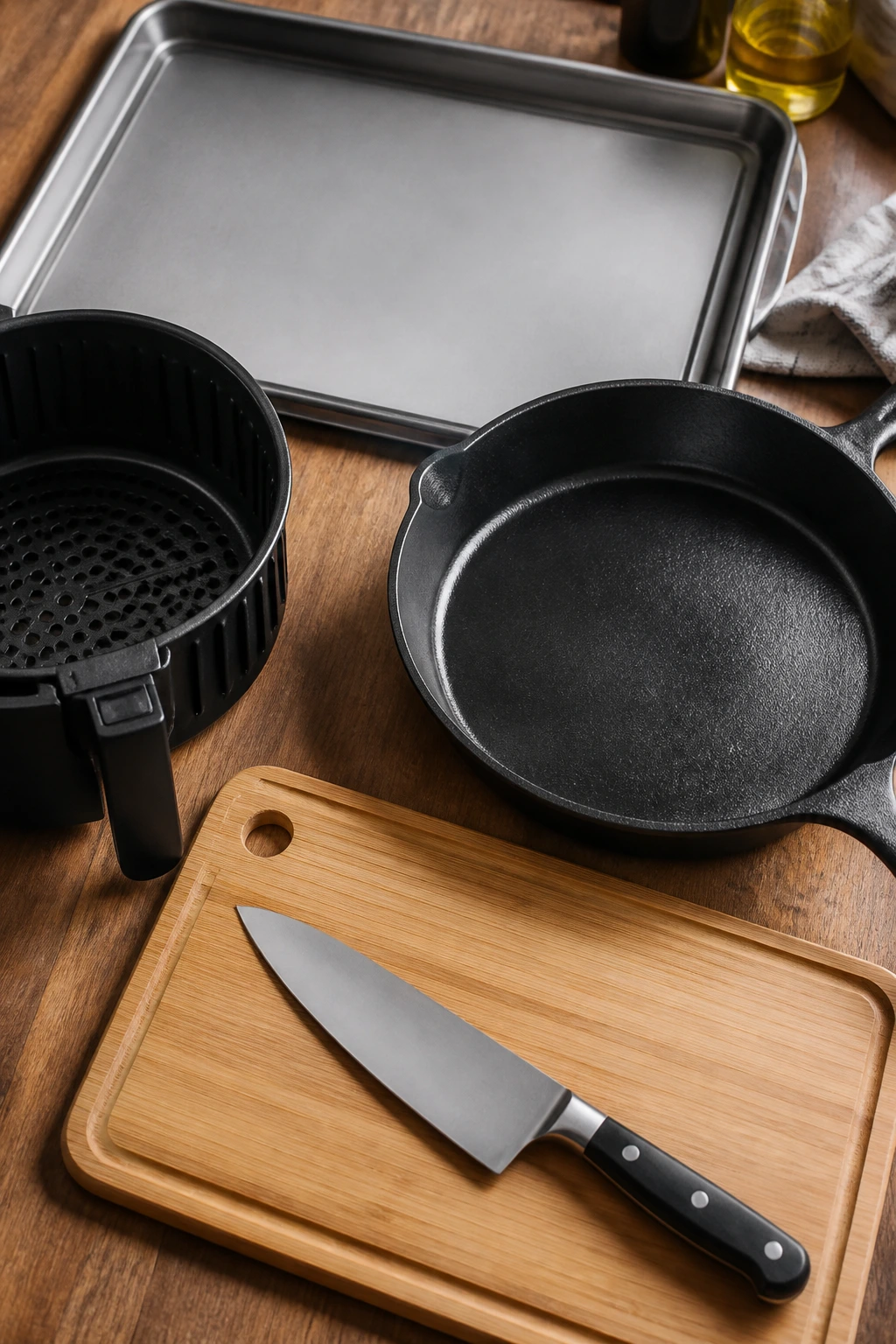
A few tiny changes do more for crisp vegetables than a fancier recipe ever will.
Flavor Enhancement: A little citrus zest at the end changes everything. Lemon zest over broccoli, lime zest over cauliflower, orange zest over carrots—each one adds aroma without making the vegetables wet. A teaspoon of toasted sesame oil drizzled over green beans or cabbage right after cooking gives them a deeper finish than plain olive oil alone.
Time-Saver: Buy pre-trimmed broccoli florets or bagged Brussels sprouts when the clock is tight, but still dry them on a towel before seasoning. Pre-cut vegetables save the knife work, and that matters on a Tuesday night. The quality drop is small if you cook them hot and do not crowd them.
Pro Move: Preheat the sheet pan for 5 minutes before adding the vegetables. That immediate sizzle jump-starts browning on the cut side. It is especially good for broccoli, cauliflower, and Brussels sprouts. Be careful when you add oil-coated vegetables to a hot pan. Use a wide spatula or tongs and move slowly.
Cost-Saver: Cabbage, carrots, onions, and cauliflower are usually kinder to the grocery bill than specialty produce. They also crisp well. A hot tray of cabbage wedges with garlic and vinegar can taste like a considered dinner for a lot less money than a tray of tender asparagus.
Make-It-Yours: For dairy-free dinners, use tahini, herbs, lemon, or toasted seeds instead of cheese. For gluten-free meals, keep an eye on sauces and soy products, then use tamari if needed. For lower-sodium meals, lean on pepper, cumin, smoked paprika, citrus, and fresh herbs rather than piling on extra salt.
If you want extra crunch that survives the table, toast panko in a skillet with olive oil and scatter it over the vegetables right before serving. That crunch lasts longer than fresh herbs. Different job. Different tool.
Mistakes That Turn Crisp Vegetables Limp
Most limp vegetable trays fail for boring reasons.
-
Crowding the pan: The symptom is pale vegetables with wet bottoms and no real browning. The fix is simple: use a larger pan, split the batch, or cook in two rounds. Two pans are cheaper than disappointment.
-
Starting with wet vegetables: If the vegetables look glossy before they hit the oil, they are probably still holding rinse water. That water turns to steam and softens the surface. Dry them with towels or a spinner first, especially after washing greens, broccoli, or green beans.
-
Adding sauce too early: A wet glaze before cooking gives you steam, not crispness. The tray goes sticky instead of brown. Save the sauce for the end, or brush it on during the last minute if you want a light coating.
-
Cutting everything the same size: Sweet potatoes and green beans do not need the same treatment. If you force one cut size onto every vegetable, some pieces will be raw while others overcook. Match the cut to the vegetable, then add the quick ones later.
-
Being too timid with heat: Low heat gives vegetables time to exhale water and sit there doing not much of anything. A hot oven or skillet gives the surface a chance to brown before the interior collapses. If the vegetables are pale and soft, turn the heat up next time.
-
Pulling the tray too early: A little dark color is not a mistake. It is flavor. If the vegetables still look blond and polite, they probably need another few minutes. Trust the edges, especially on broccoli, cauliflower, and Brussels sprouts.
Variations for Different Tastes and Diets
What if you want the same crisp texture but a different flavor direction?
Smoky Tray-Bake Mix: Toss broccoli, carrots, and cauliflower with olive oil, smoked paprika, cumin, garlic powder, and a pinch of chili flakes. Roast at 425°F until the edges darken, then finish with lemon. Add chickpeas to the pan for more protein, but dry them well first or they will soften the tray.
Lemon-Parmesan Bright Roast: Use broccoli or cauliflower as the base. Roast until browned, then toss with lemon zest, a squeeze of lemon juice, and a small shower of parmesan while the vegetables are still hot. The cheese melts into the browned bits, and the lemon keeps the whole thing from feeling heavy.
Sesame-Soy Stir-Crisp: Green beans, cabbage, mushrooms, and sliced Brussels sprouts work well in a skillet or air fryer. Finish with tamari, toasted sesame oil, sesame seeds, and sliced scallions. Keep the soy light if you want crispness to survive, because too much liquid slides straight into steam territory.
Curry-Roasted Root Bowl: Sweet potatoes, carrots, cauliflower, and red onion can all take curry powder, olive oil, and a little salt. Serve them over rice with plain yogurt or coconut yogurt on the side. This one tastes especially good with chopped cilantro and a squeeze of lime.
Herb-and-Vinegar Garden Tray: Fennel, cabbage, onions, and Brussels sprouts get better when they are hit with rosemary, thyme, black pepper, and a splash of sherry vinegar at the end. It’s a sharper, less sweet direction, and I like it with fish or fried eggs.
If you need a dairy-free dinner, skip cheese and use seeds, tahini, or herb sauce. If you want more heat, chili crisp or red pepper flakes can go on at the table. If you want a milder plate for kids, keep the seasoning to salt, pepper, and a little butter or olive oil, then let the vegetables speak for themselves.
Tools and Equipment That Help the Pan Do Its Job
A few pieces of gear make this easier without turning dinner into a project.
-
Rimmed half-sheet pan: The workhorse for roasting. The rim keeps oil and juices from running off, and a heavy pan browns better than a thin, flimsy one.
-
Cast-iron skillet: Best for cabbage wedges, mushrooms, green beans, and Brussels sprouts when you want direct contact and strong browning.
-
Air fryer basket: Great for small batches and fast weeknight cooking. It is especially handy for broccoli, cauliflower, and Brussels sprouts.
-
Sharp chef’s knife: Clean cuts matter. A dull knife tears broccoli florets and mangles carrots, which makes even cooking harder.
-
Large cutting board: Gives you room to sort vegetables by cook time. That matters more than people think.
-
Clean kitchen towels or a salad spinner: Useful for drying washed vegetables. This is one of the simplest ways to improve crispness.
-
Mixing bowl: Big enough to toss vegetables with oil and seasoning without knocking pieces onto the counter.
-
Tongs or a thin spatula: Helpful for turning vegetables without crushing the browned edges.
-
Parchment paper or foil: Optional. Parchment makes cleanup easier; bare metal browns more aggressively. Use whichever tradeoff you want.
-
Microplane or fine grater: Best for citrus zest, garlic in a finishing sauce, or a little parmesan at the end.
-
Wire rack: Optional, but useful if you need to hold vegetables for a few minutes before serving and want to keep the bottoms from steaming.
Make-Ahead, Storage, and Reheating
Leftovers are useful here, but only if you treat them like crisp food instead of soup.
Cooked vegetables should go into the fridge within two hours. That is the food-safety line worth respecting. Once they cool, move them into shallow containers so steam does not trap itself at the bottom. If you stack them in a deep container while they are still warm, the bottom layer gets soft and sad.
Most roasted or pan-crisped vegetables keep well for 3 to 4 days in the refrigerator. Broccoli, cauliflower, carrots, Brussels sprouts, cabbage, and green beans all hold up fairly well. Zucchini and mushrooms are less reliable if crispness matters, because they soften faster and lose their shape more quickly.
For the freezer, sturdy vegetables can last up to 2 months, though the texture will not be the same after thawing. Broccoli, cauliflower, carrots, Brussels sprouts, and sweet potatoes are the best bets. Zucchini and mushrooms are the ones I would skip freezing unless you plan to use them in soup or a frittata later.
Reheat in a 425°F oven for 5 to 10 minutes or in an air fryer at 375°F for 3 to 6 minutes, depending on the vegetable and how much you have. A skillet on medium-high with a teaspoon of oil also works for smaller portions. The microwave is the last resort if texture matters; it warms the food, but it does not bring the crispness back.
If you know the vegetables will be leftovers, undercook them by a minute or two on the first pass. That tiny cushion helps a lot. Also keep sauces separate. A lemon-tahini drizzle, yogurt sauce, or vinaigrette can live in a small container next to the vegetables and get added after reheating.
For make-ahead prep, wash and cut vegetables 1 to 2 days ahead if you dry them well and store them lined with a paper towel. Keep watery vegetables like zucchini or mushrooms separate from sturdier ones. If you’re planning a mixed tray, prep the pieces in separate containers so you can stagger the cooking later without guessing.
Questions People Ask About Crisp Vegetables for Dinner
Which vegetables get the crispiest with the least effort?
Broccoli, cauliflower, Brussels sprouts, cabbage, and green beans are the easiest wins. They brown well without needing special treatment beyond drying, oil, and enough space. Broccoli and Brussels sprouts are probably the most forgiving if you are new to high-heat vegetable cooking.
Can I make crisp vegetables without much oil?
Yes, but the vegetables need at least a thin coat if you want reliable browning. Too little oil makes the surface dry without helping the seasoning stick. One to two teaspoons per pound can work in an air fryer; roasted vegetables usually do better with a little more.
Why do my vegetables brown on the outside but stay hard in the middle?
The pieces are probably too big, the oven is too hot, or the vegetable is especially dense. Carrots, sweet potatoes, and beets need smaller cuts or a longer roast. For mixed trays, start those vegetables first and add quicker ones later.
Is parchment paper okay if I want browning?
Yes, but bare metal browns more aggressively. Parchment is a good trade if cleanup matters more than maximum underside browning. If you use parchment, keep the vegetables in a single layer and give them enough time.
Can I roast frozen vegetables?
You can, especially broccoli, cauliflower, and Brussels sprouts, but expect a bit less crispness. Roast them from frozen, do not thaw first, and give them extra time in a hot oven. The result is still useful, especially for weeknight dinner, though it will not match fresh vegetables.
How do I keep crisp vegetables from going limp before dinner is served?
Hold them on a wire rack or a bare plate for a few minutes instead of trapping them in a covered bowl. If you need to wait longer, a low oven around 200°F can keep them warm for a short stretch. Covering them tightly with foil too soon softens the edges.
Can crispy vegetables be the main dish for a vegetarian dinner?
Absolutely. Add chickpeas, lentils, tofu, eggs, Greek yogurt, or feta, and the plate has enough protein to stand on its own. A grain like quinoa or farro helps too, but the vegetables should still be the part with the strongest flavor and texture.
What if the vegetables come out soft after reheating?
Put them back in a hot oven or air fryer for a few minutes. A skillet also works well if you want to revive the edges fast. If they were sauced heavily before storing, the crispness may not fully return, which is why sauce on the side is such a good habit.
The Dinner Habit That Keeps On Working
Once you learn how different vegetables like to brown, dinner gets less fussy. That is the real payoff here. Not a perfect tray. Not a pristine prep list. Just a reliable way to turn broccoli, carrots, cauliflower, Brussels sprouts, cabbage, and whatever else is sitting in the crisper into something you actually want to eat.
I like this style of cooking because it respects the vegetables instead of trying to hide them. A hot tray, enough space, and a finish of lemon, herbs, cheese, or tahini can do more for a weeknight meal than a complicated recipe with twice as many ingredients. The vegetables still taste like themselves. They just taste better.
The next time dinner needs rescuing, start with the crisper drawer, a hot pan, and one vegetable you know how to brown well. The rest has a way of arranging itself.