



A roasted meatless dinner has one job: make the oven do the work while the plate still feels substantial enough that nobody starts hunting for bread after two bites.
That’s the part most people miss. A tray of vegetables on its own can lean sad and thin, especially if the pan is crowded, the heat is timid, or the only seasoning is a polite sprinkle of salt. But give those vegetables enough space, enough heat, and one sharp finishing sauce, and the whole thing turns into dinner with actual shape. Think bronzed cauliflower edges, sweet onions that collapse into silk, chickpeas with a little crunch at the seams, and a lemony drizzle that wakes everything up at the end.
If you want a healthy dinner that doesn’t feel like a compromise, roasting is one of the smartest ways to get there. The method concentrates flavor instead of washing it away, and it gives you a natural place to build fiber, protein, and slow-digesting starches on the same plate. That’s why a well-planned vegetable roast can feel so much more satisfying than a bowl of steamed odds and ends. It has texture. It has contrast. It has the kind of browned, savory edges that make people go back for “just one more piece” without thinking about it.
The trick is not to treat roasted vegetables like a side dish pretending to be a main course. Build the tray like dinner, finish it like dinner, and serve it like dinner. The rest is mostly good timing and a little confidence with the heat.
Why This Style of Dinner Earns Its Keep
-
The oven does the hard part: High heat turns carrots, cauliflower, onions, and potatoes into something deeper and sweeter than they taste boiled, steamed, or microwaved.
-
You get a real meal, not a garnish: Add chickpeas, tofu, eggs, lentils, or feta and the plate stops reading as “vegetables with hope” and starts reading as dinner.
-
The leftovers are worth keeping: Roasted components hold up better than sautéed greens, so tomorrow’s lunch can become a grain bowl, wrap, or warm salad without feeling tired.
-
The ingredient list stays sensible: A few sturdy vegetables, one protein, one starch, and a sharp sauce go much farther than a complicated recipe with twenty moving parts.
-
The flavor payoff is big: Browning, salt, acid, and a crunchy finish do more work here than fancy technique ever will. That’s the part I never get bored of.
-
It works in almost any pantry: If you keep olive oil, onions, canned chickpeas, lemons, and one or two spices around, dinner is rarely far away.
Why Roasting Makes Meatless Dinner Taste Bigger
Roasting is the opposite of shy cooking. High heat strips away some moisture, and what’s left gets concentrated: sugars deepen, edges caramelize, and the whole tray picks up a savory smell that makes the kitchen feel warmer the moment the oven door opens. That matters even more in a meatless dinner, because vegetables need contrast to feel full of personality. Soft alone is not enough. Tender, yes. Soft, no.
The browning is not decoration. It’s the point. The browned surfaces bring that roasted, almost nutty flavor that vegetables don’t show when they’re steamed or simmered. Cauliflower tastes more like itself after it has a few dark freckles on the florets. Carrots turn less carrot-cake sweet and more roasted-sugar sweet. Chickpeas, when dried well and tossed with oil, can go from chalky to crisp at the edges in a half hour.
The chemistry in plain English
What you’re chasing is the Maillard reaction, the bit of browning that happens when heat meets proteins and sugars. You do not need to memorize the science to use it. You just need to give the food enough heat, enough air, and enough time on the surface of the pan. If the pan is crowded or wet, you get steam instead of browning, and steam is what makes roasted dinners taste flat.
The other reason roasting works so well is that it’s forgiving. A carrot can roast while you finish setting the table. A pan of broccoli can sit for a minute or two without falling apart. That makes roasted meatless dinner one of the easiest ways to get from “I should cook something” to “we’re eating” without a lot of babysitting.
The Vegetables, Beans, and Starches That Belong in the Pan
Not every vegetable belongs under the broiler’s cousin. Some want high heat. Some want a later entrance. Some are better as a finish or a sidecar than as the star. Once you learn the difference, a roasted vegetable dinner starts acting less like a random mix and more like a plan.
Vegetables that roast beautifully
Root vegetables are the obvious heavy hitters: carrots, parsnips, sweet potatoes, Yukon Gold potatoes, and beets all handle a 425°F oven without complaint. Cut them into similar sizes — usually 1 to 1½-inch pieces — and they’ll soften without turning to mush.
Cauliflower, broccoli, Brussels sprouts, and cabbage wedges are excellent too, but they want enough space to brown. Cauliflower florets with flat sides can get lovely and dark. Broccoli loves a little oil and a hot pan. Brussels sprouts should be halved so the cut face can hit the sheet pan directly.
Onions and fennel are quiet flavor builders. Red onions turn jammy and sweet. Yellow onions melt even more. Fennel brings a faint anise note that works well if you finish the tray with lemon or orange.
Ingredients that need a smarter approach
Mushrooms are worth using, but they release water fast. Give them room and roast them alone if possible, or they’ll steam the vegetables beside them. Zucchini and summer squash behave the same way. They can go in, but they should show up late and in thicker slices. Thin coins turn to wet ribbons.
Cherry tomatoes are a finishing vegetable, not a base. They burst and make a fast sauce if you roast them for the last 10 to 12 minutes. Toss them in with olive oil, salt, and a little garlic, then let them collapse around the edges.
Beans and grains that make the tray feel like dinner
A can of chickpeas is the easiest protein upgrade in the pantry. Drain them, rinse them, and dry them well before they touch the pan. Cannellini beans and butter beans are softer, so they work better when tucked under vegetables or stirred in at the end rather than roasted until crisp.
For starch, you have choices. Sweet potatoes and regular potatoes can live on the tray. Cooked farro, quinoa, brown rice, or couscous are better served underneath or beside the vegetables, because grains don’t roast from raw in the same way. If you want the plate to feel fuller, that starch matters more than people admit.
How to Build a Plate That Eats Like a Full Meal
The easiest way to make a meatless roast feel complete is to stop thinking in terms of “vegetables” and start thinking in terms of plate structure. MyPlate gets this right in a very practical way: vegetables should take up serious space, but they need a protein and a starch to make the whole thing land.
A good roasted dinner has four pieces. One of them is the charred, savory vegetable base. One is protein. One is a starch or bread. The last one is the part most people skip, and that’s where dinners get dull — a sauce, dressing, or finishing acid that sharpens the whole tray.
Here’s the pattern I use when I want dinner to feel balanced without feeling heavy:
- Half the plate: roasted vegetables, usually 2 to 3 cups per person
- One quarter: protein, such as ½ to 1 cup chickpeas, a 4 to 6-ounce block of tofu, a couple of eggs, or a generous handful of feta and nuts if the rest of the meal is already dense
- One quarter: starch, like ¾ to 1 cup cooked farro, quinoa, brown rice, or 1 medium potato
- Top it off: sauce, herbs, lemon, vinegar, or yogurt
That last piece matters more than people think. Without acid and freshness, roasted food can taste broad and flat, even when it’s well salted. With a squeeze of lemon and a handful of parsley, the tray suddenly tastes sharper and more awake.
Serve it in a shallow bowl if the ingredients are mixed. Use a wide plate if you want the browning to stay visible. And if the dinner is meant to feel a little more relaxed, tuck the vegetables into warm pita or spoon them over grains so the whole thing eats like a composed bowl rather than a pile on a pan.
The Sheet-Pan Setup That Gives You Color, Not Steam
Crowding is the enemy. I’ll say it plainly because it causes more bad roasted dinners than underseasoning ever does. If the vegetables are stacked on top of one another, they’ll shed moisture, the pan will cool down, and what should have been bronzed edges turns into pale softness.
A sturdy rimmed sheet pan is the right tool for most roasted meatless dinners, and two pans are often better than one overstuffed tray. That second pan feels fussy the first time you use it. After that, it feels obvious. Space is what lets the food brown.
What the pan needs
Use a large rimmed sheet pan, not a shallow baking tray. The rim keeps oil and juices from sliding around the oven. If you’re roasting something sticky — tofu with sauce, chickpeas with spice paste, vegetables with honey or maple — line the pan with parchment for cleanup. If you want the deepest browning on potatoes, cauliflower, or carrots, bare metal browns harder than parchment.
Preheat the oven to 425°F (220°C) for most trays. If you’re working with especially robust vegetables like potatoes or Brussels sprouts and you want aggressive color, 450°F (232°C) can work, but watch the food closely. That extra heat is not a toy. It can turn the edges dark before the centers are tender.
Oil and seasoning, the right amount
You do not need to drown the food in oil. You do need enough to coat the surfaces lightly and evenly. For a standard tray of about 2 pounds of vegetables, 2 to 3 tablespoons of olive oil is usually enough. Toss the vegetables in a bowl first so the seasoning spreads well. Once they’re on the pan, they should look glossy, not soaked.
Salt should be more generous than people expect. Vegetables are mostly water. They need enough salt to taste like something once they shrink in the oven. For a large tray, 1 to 1½ teaspoons kosher salt is a good place to start, then adjust at the end once the sauce goes on.
Timing the Oven So Everything Finishes Together
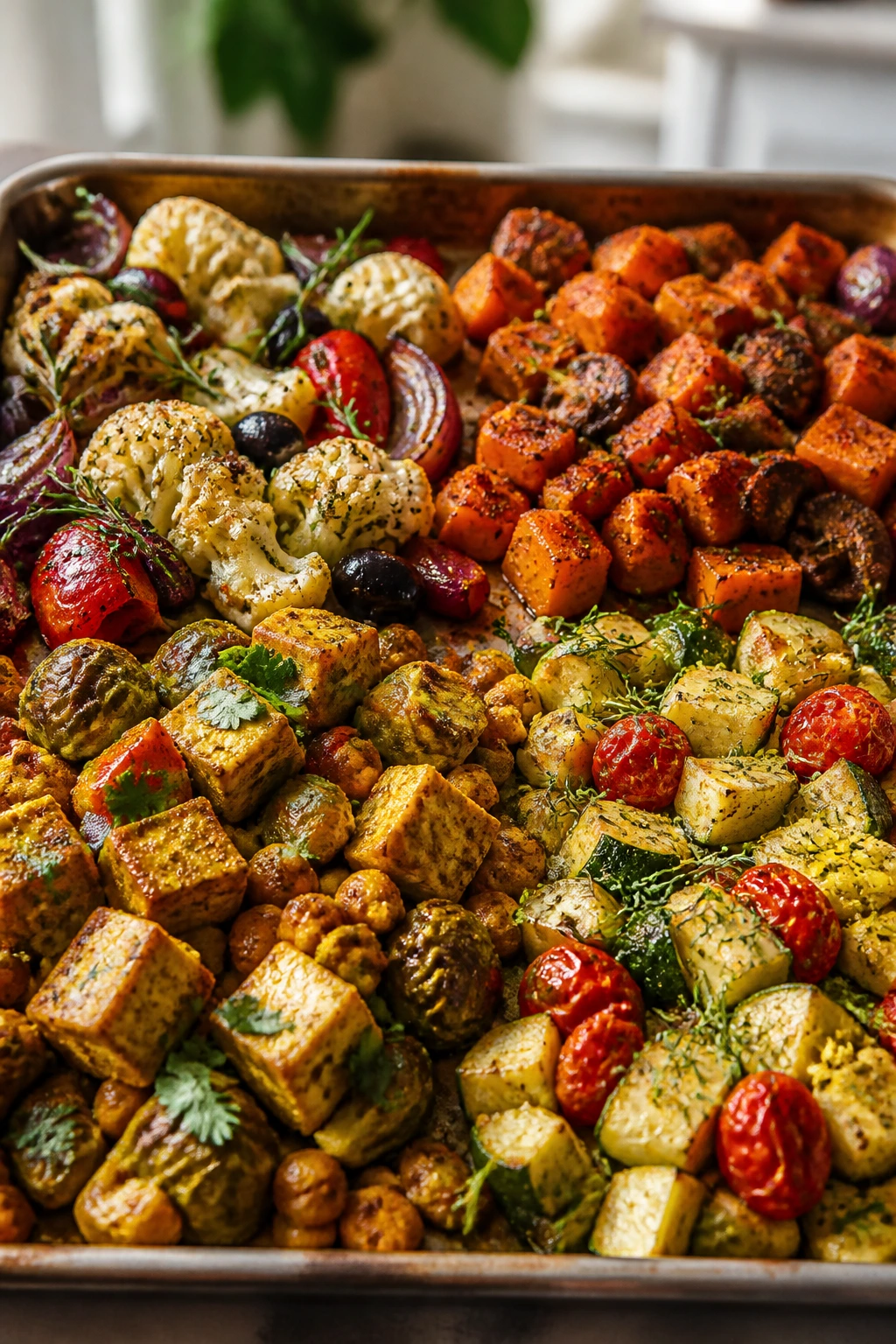
The food that roasts together doesn’t all move at the same speed. That’s where a lot of home cooks get annoyed with sheet-pan dinners. They toss everything on the pan at once and then blame the vegetables when some pieces are charred and others are hard in the middle. The real issue is timing.
Think in layers. Hard vegetables go in first. Faster vegetables join later. Delicate herbs wait until the end, always.
A simple timing map
If you’re roasting sweet potatoes, carrots, parsnips, or beets, they often need 25 to 40 minutes depending on size. Cut them small enough that they won’t still be raw when the faster items are done.
If you’re using cauliflower, broccoli, or Brussels sprouts, plan on 18 to 25 minutes at 425°F. Broccoli florets can finish a little sooner if the pieces are small. Brussels sprouts roast best when halved and placed cut-side down for at least part of the time.
Chickpeas are happiest when they roast for 20 to 30 minutes. Dry them well first. If they go in wet, they never get their moment.
Cherry tomatoes, zucchini, spinach, fresh herbs, and soft cheese all belong near the end or after the roast. Tomatoes need just enough time to blister. Spinach wilts from residual heat. Feta and goat cheese should be added after the tray leaves the oven unless you want them warm and soft rather than distinct.
The practical rhythm
For a tray with carrots, cauliflower, onions, and chickpeas, I usually start the carrots and potatoes first for 10 to 15 minutes. Then I add cauliflower, onions, and chickpeas, and keep everything moving until the vegetables have browned at the edges and the chickpeas are crisping in spots. If I’m adding broccoli or tomatoes, they usually go in later so they don’t overcook.
That staggered approach sounds slightly annoying until you do it once. Then it feels like the cleanest thing in the world.
The Sauces and Finishers That Matter Most
A roasted tray without a finish is like a song that fades out too early. The vegetables may be browned, but they still need brightness, salt, and a little contrast to feel finished. That is where sauce, herbs, and crunch earn their keep.
My favorite finishers for a roasted meatless dinner
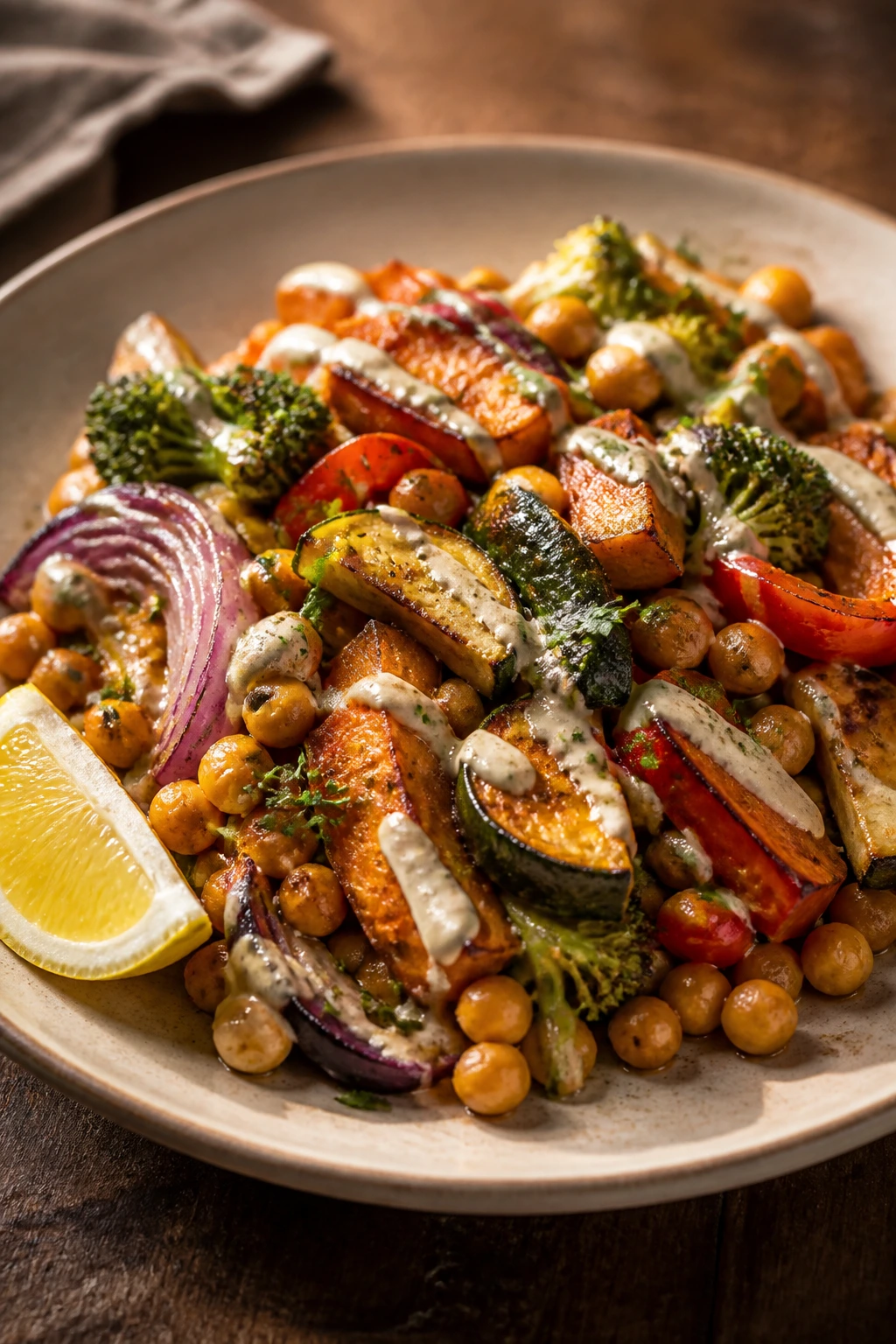
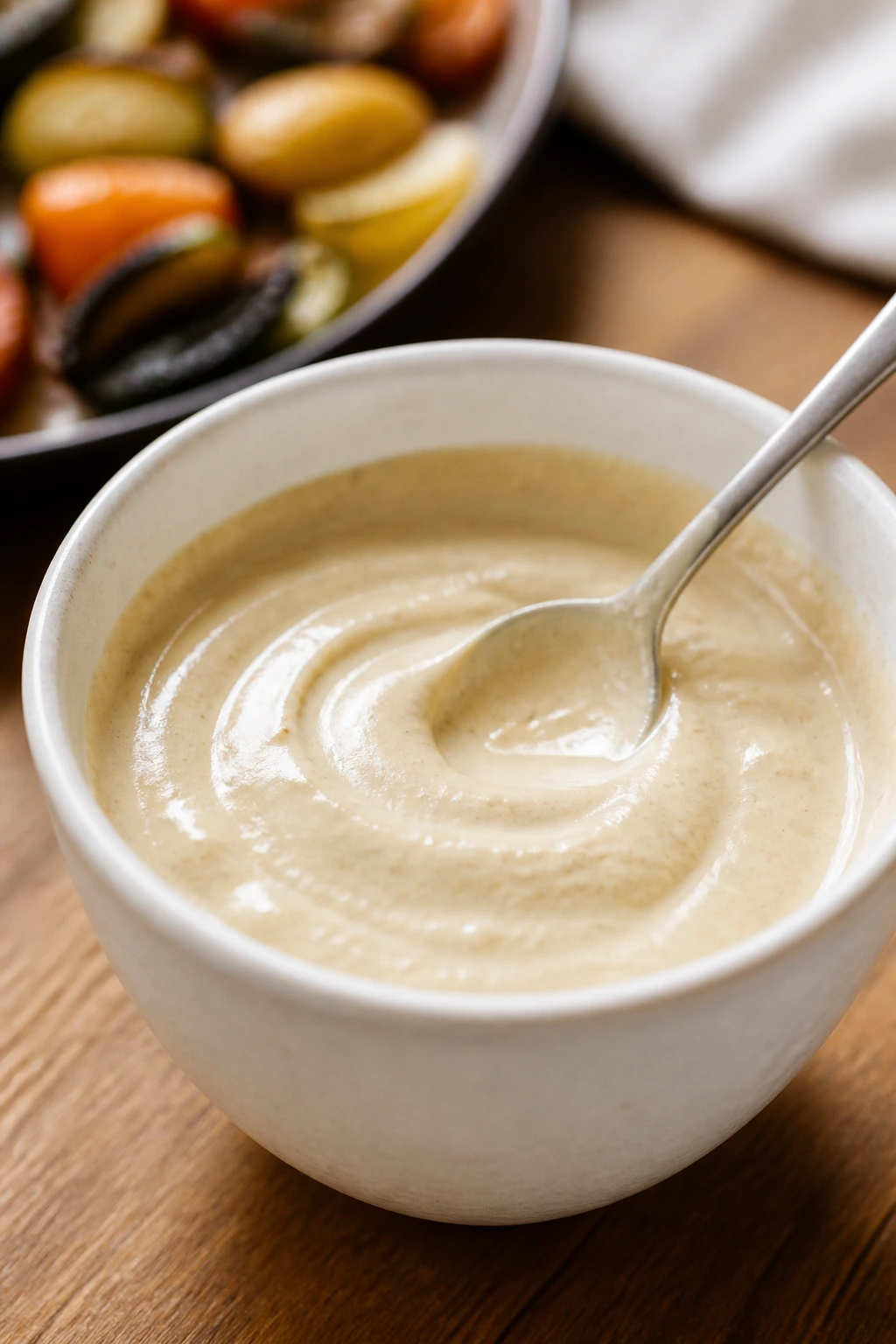
Tahini-lemon sauce is the workhorse. Stir together 3 tablespoons tahini, 1½ tablespoons lemon juice, 1 small grated garlic clove, a pinch of salt, and 2 to 4 tablespoons water until it turns creamy and pourable. It clings to roasted cauliflower, sweet potato, and chickpeas in a way that makes the whole tray feel richer without becoming heavy.
Greek yogurt with herbs does a different job. Mix ½ cup plain Greek yogurt, 1 tablespoon lemon juice, 1 tablespoon olive oil, chopped dill or parsley, and salt. It’s cool, sharp, and good against smoky or spicy vegetables. If you want a lighter version, thin it with a splash of water or cucumber juice.
Chimichurri brings parsley, garlic, vinegar, and oil into the room with no apology. It works best when the tray leans earthy — potatoes, mushrooms, cauliflower, onions. A spoonful at the end can save a tray that tastes a little too brown.
Pesto is less subtle, but it’s efficient. Toss a spoonful with warm roasted vegetables or thin it with lemon and a splash of water. If you’re using pesto, go easier on salt during roasting because pesto already carries plenty.
Add texture, not clutter
Crunch is the part that often gets forgotten. A handful of toasted pumpkin seeds, sunflower seeds, chopped almonds, or sesame seeds gives the tray some snap. Fresh herbs matter too. Parsley, cilantro, dill, mint, or chives all change the way the food tastes in the mouth, and they do it without adding heaviness.
A little acid at the end can rescue a decent roast and make it taste finished. Lemon, lime, red wine vinegar, sherry vinegar, or even a splash of pickle brine can do that work. Start with a teaspoon or two, taste, then add more if the vegetables need a sharper edge.
A Reusable Formula for a Roasted Meatless Dinner
If you want one template to keep on repeat, use this one. It’s the kind of dinner that can be built from pantry parts and still taste intentional.
A basic tray that works
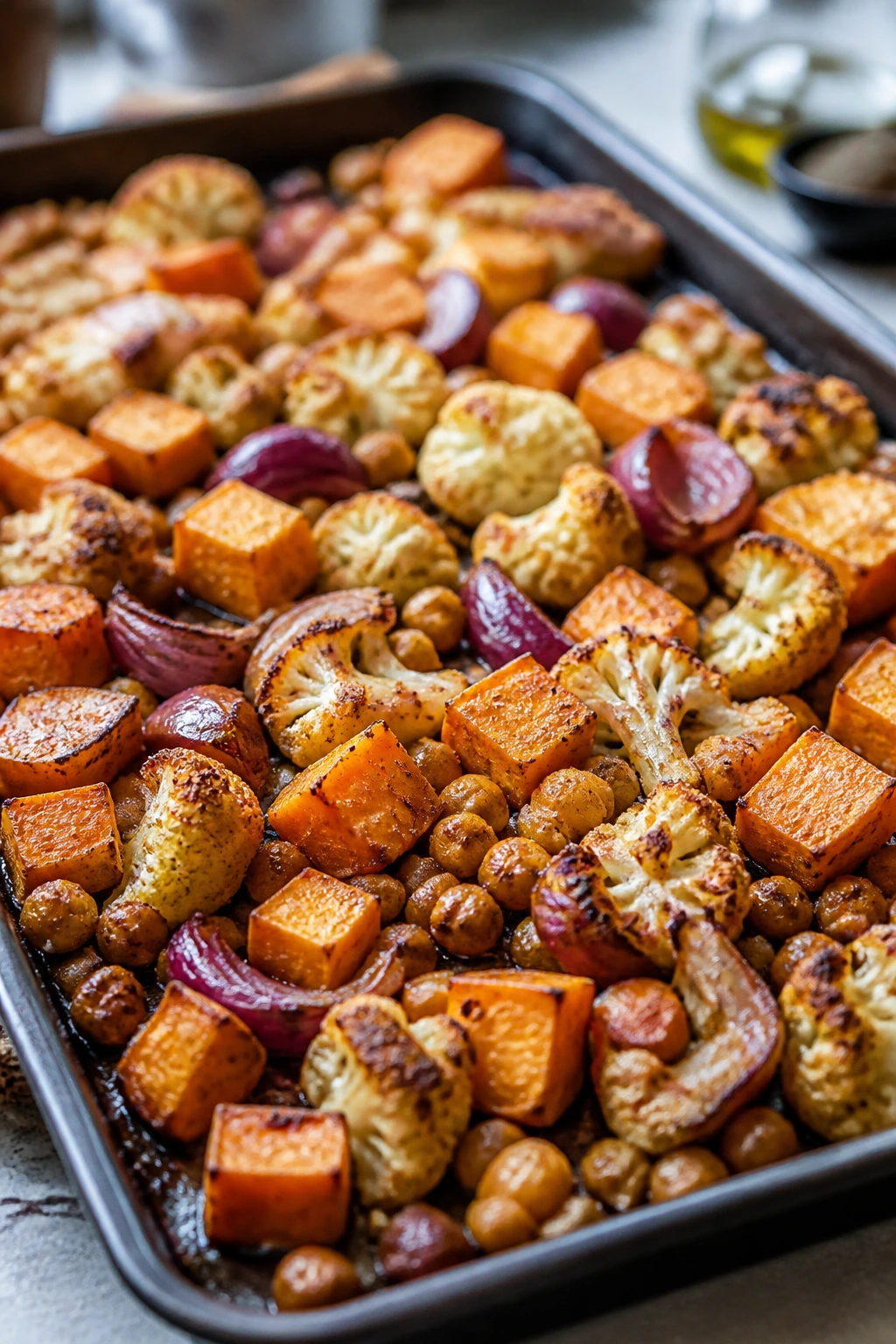
Start with 1 medium sweet potato, cut into 1-inch cubes and 1 small head of cauliflower, broken into florets. Add 1 red onion, cut into wedges, 1 can chickpeas, rinsed and dried, 2 tablespoons olive oil, 1 teaspoon kosher salt, ½ teaspoon black pepper, 1 teaspoon ground cumin, and 1 teaspoon smoked paprika. If you like garlic, add 2 minced cloves or ½ teaspoon garlic powder.
Roast the sweet potato and cauliflower at 425°F for about 10 to 12 minutes first. Add the onions and chickpeas, toss once on the pan, and roast another 18 to 22 minutes, until the cauliflower has browned spots, the sweet potato is tender, and the chickpeas feel a little crisp at the edges. Finish with 2 tablespoons tahini, 1 to 2 tablespoons lemon juice, 2 to 3 tablespoons water, and a handful of chopped parsley.
Serve it over cooked farro, quinoa, or brown rice if you want the plate to lean more filling. Spoon it into a bowl if you want the sauce to pool a little around the grains. Either way, the combination lands in the same place: warm, crisp at the edges, creamy in the middle, and sturdy enough to count as dinner.
Why this formula works
You’ve got a soft vegetable, a firmer vegetable, a protein, a spice profile, and a finish that cuts through the fat. That’s the whole game. Once you understand the pattern, you can swap the pieces without losing the structure. Use butternut squash instead of sweet potato. Use broccoli instead of cauliflower. Swap chickpeas for tofu. Keep the logic the same.
How to Make It High in Protein Without Feeling Heavy
A meatless dinner needs backbone, and protein is usually where that backbone comes from. The good news is that you do not have to load the tray with cheese or pile on a giant mound of grains to get there. A roasted dinner can be satisfying without turning into a brick.
Chickpeas are the easiest place to start. A can of them, especially when paired with vegetables and a sauce, gives the tray enough substance that you don’t feel like you’re eating garnish. They roast well, they take spices gladly, and they’re cheap enough that nobody has to overthink it. If you want a softer result, toss them in near the end. If you want a crisper result, dry them more thoroughly and let them roast longer.
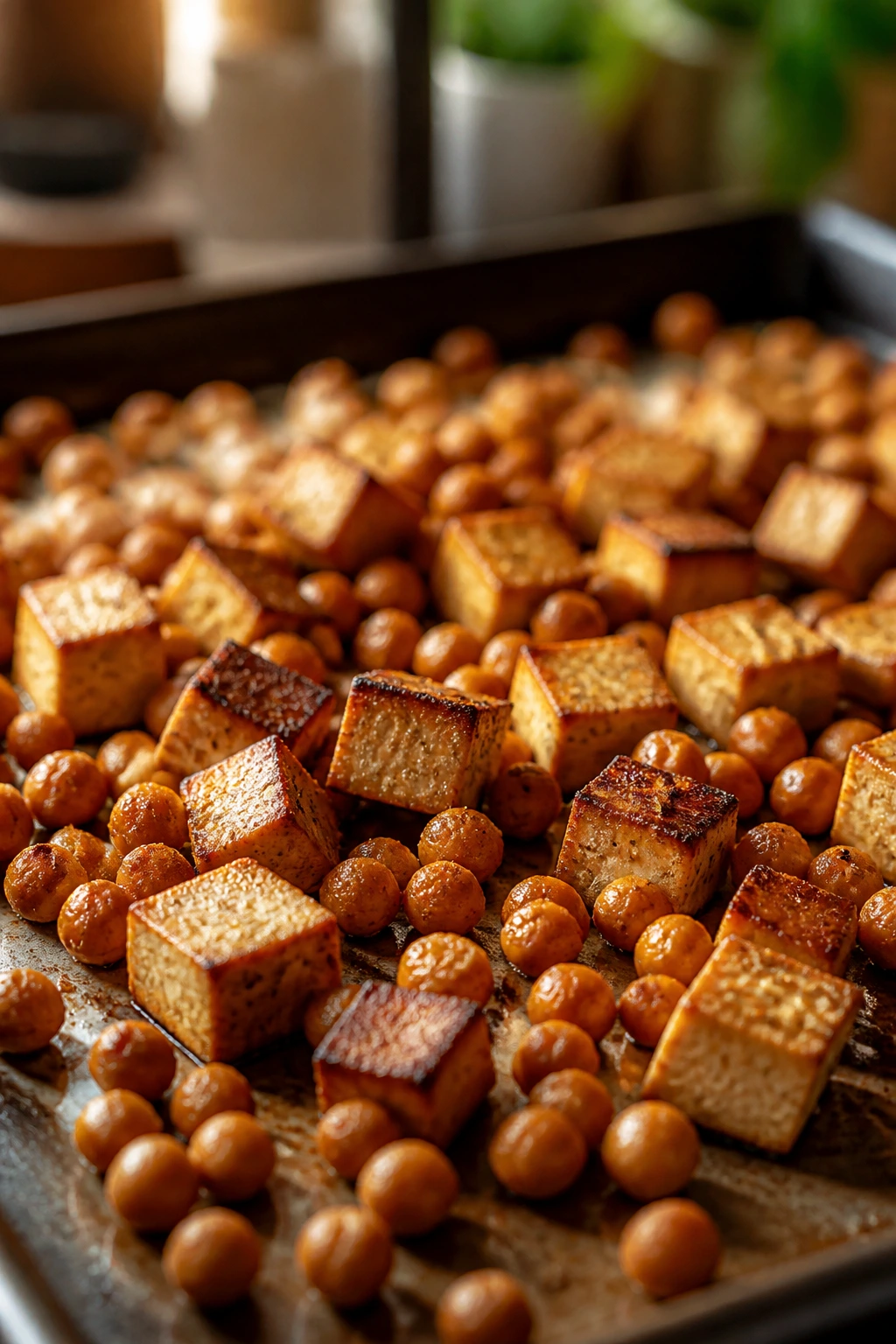
Extra-firm tofu is the other strong option. Press it for 15 to 30 minutes if you can, then cube it and toss it with oil, salt, and spices before roasting. It likes heat. It also likes a little cornstarch if you want the edges to set up with a dry, crisp surface. A 14-ounce block usually gives enough protein for two to three servings.
Other good protein choices
Tempeh works well if you like a firmer, nuttier bite. Slice it thin, marinate it briefly, then roast it beside the vegetables or on a second pan. Eggs can be baked separately and placed over the tray; a runny yolk does a lot of heavy lifting. Greek yogurt, cottage cheese, and feta help round things out too, though they’re more of a supporting protein than a full anchor.
If you’re building the dinner around vegetables and grains, the broad rule is simple: don’t let the tray lean all the way into starch and forget the protein piece. That’s when people get hungry again an hour later. The right amount of protein slows the meal down, which is exactly what a healthy dinner should do.
Flavor Paths: Mediterranean, Smoky, Curry, and Lemon-Herb
One of the reasons I keep coming back to roasted meatless dinners is that they take flavor changes so well. Change the spice mix, change the sauce, maybe swap one vegetable, and the whole dinner moves in a different direction without asking for a brand-new recipe.
Mediterranean-leaning
Use olive oil, oregano, garlic, red onion, zucchini, cherry tomatoes, and chickpeas, then finish with feta, lemon, and parsley. This version wants a little more brightness than smoke. Add olives if you like them. A spoonful of yogurt on the side makes it feel even more complete.
Smoky pantry version
Lean on smoked paprika, cumin, onions, potatoes, cauliflower, and chickpeas. A chipotle yogurt or tahini sauce works well here, especially if you want the food to feel bolder without becoming spicy-hot. This is the version I reach for when the pantry looks half empty and I still want dinner to taste deliberate.
Curry-spiced tray
Try turmeric, coriander, cumin, ginger, cauliflower, carrots, and chickpeas. Finish with cilantro, lime, and a spoonful of yogurt or coconut yogurt. The trick is not to drown the vegetables in curry powder so much that everything tastes dusty. Use enough to perfume the tray, not enough to bury it.
Lemon-herb and green
Roast broccoli, asparagus, potatoes, and onions, then finish with lemon zest, dill, parsley, and a little olive oil. This one feels lighter on the palate and works nicely when you want the meal to sit open and clean rather than deep and savory. A few capers at the end can sharpen it even more.
The point is not to memorize four recipes. It’s to see how little needs to change before dinner feels new.
Practical Tips for Getting Better Results
A few small habits make roasted meatless dinners look and taste like you actually know what you’re doing. None of them are dramatic. That’s the nice part.
Dry the ingredients first. Chickpeas, tofu, mushrooms, and even broccoli florets carry more surface moisture than you think. Pat them dry with a clean towel or paper towels before they hit the bowl. That thin layer of water is often the reason browning stalls.
Cut for timing, not symmetry. Pretty cubes are nice. Uniform cooking matters more. Hard vegetables should be a little smaller than soft ones so everything lands on the plate at the same time. If you cut sweet potato chunks the same size as onion wedges, the onions will be done long before the potatoes.
Season in layers. Salt and spice on the raw vegetables, then a little more salt or acid at the end. The first layer builds flavor. The second layer makes it taste awake. That tiny distinction matters a lot more than another teaspoon of paprika ever will.
Use a hot pan, if you want extra edge. For potatoes, cauliflower, or broccoli, slide the empty sheet pan into the oven while it preheats, then tip the vegetables onto the hot metal. It gives the food a head start on browning. Be careful when you do this. The pan will bite.
Add fresh stuff last. Herbs, yogurt, soft cheese, and lemon juice all belong at the end. If they go in too early, they lose the point of being there.
One more thing: if your oven runs cool, give the tray a few extra minutes and keep an eye on color rather than trusting the clock alone. Color is the better judge here. Always.
Common Mistakes That Flatten the Flavor
The same problems show up again and again with roasted meatless dinners. They’re easy to fix once you know what to look for.
Crowding the pan: If the vegetables look packed in shoulder to shoulder, they’re probably steaming. The symptom is pale food with soft edges and puddles of liquid. The fix is simple: use a second pan or roast in batches.
Using too much oil: A glossy coat is enough. If the vegetables look slick or the pan collects an oily film, you’ve gone too far. That leads to limp texture instead of crisp edges. Start with less, then add a teaspoon at a time if needed.
Skipping acid at the end: A roasted tray can taste strangely sleepy without lemon, vinegar, or another sharp finish. The vegetables may be fully cooked and still feel flat. Add a small squeeze or splash, taste, then decide if it needs more.
Trying to roast everything at once: Broccoli, sweet potatoes, chickpeas, and tomatoes do not all need the same time in the oven. If you ignore that, some pieces burn while others stay hard. Stagger them by firmness.
Under-salting: Vegetables need more salt than many people think, especially after roasting shrinks them down. If the tray tastes bland, the issue may be salt rather than spice. Salt first, then finish with acid, then taste again.
Forgetting texture: A tray made of only soft food can taste monotonous, even if the seasoning is good. Add crunch with seeds, toasted nuts, crisp chickpeas, or a few raw herbs. The mouth wants something to contrast with the roasted surfaces.
Ways to Change the Dinner Without Starting Over
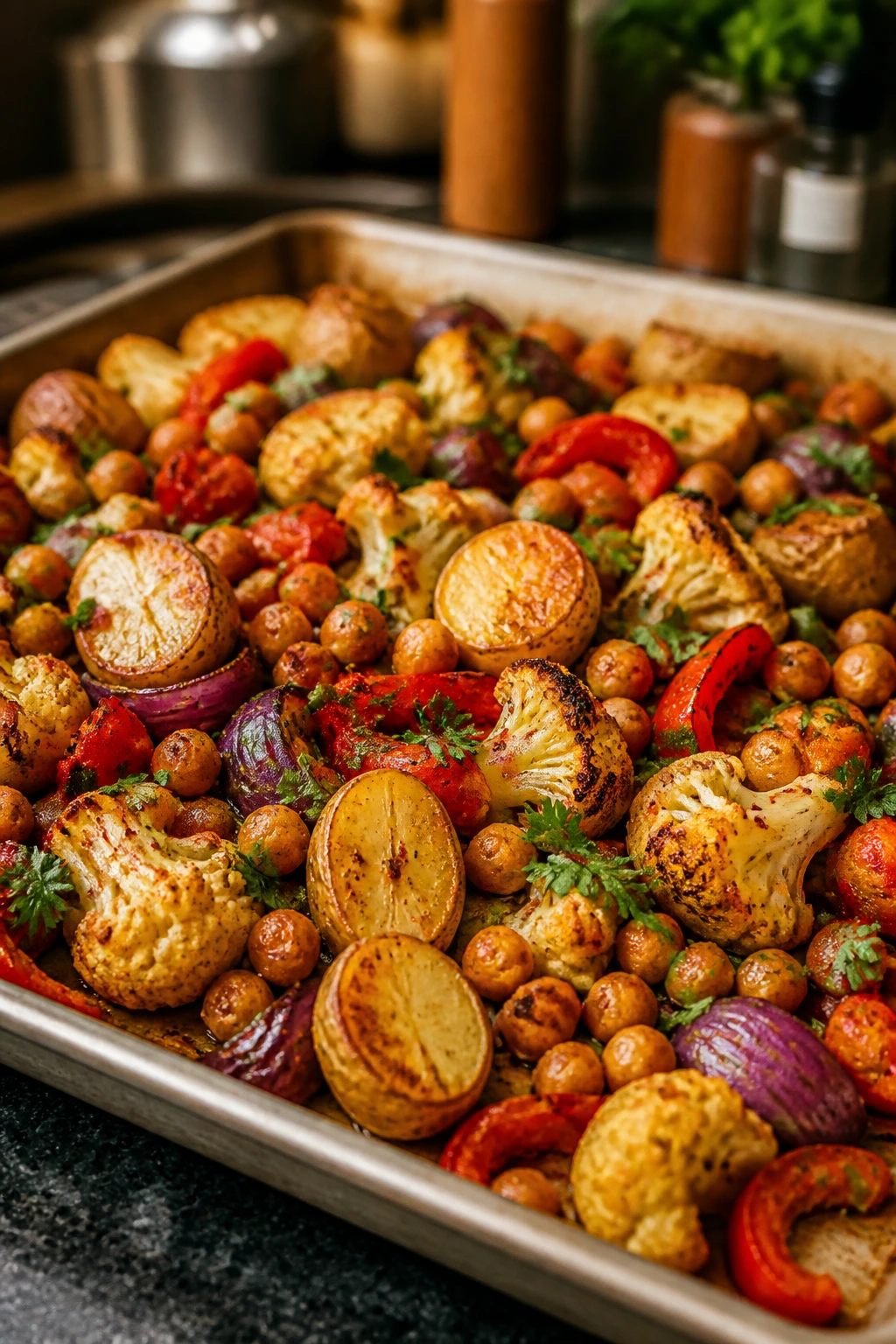
Once the basic formula is in your hands, changing the dinner becomes easy. The trick is to swap one major element at a time, not everything at once. That way the structure stays solid.
Greek Market Roast: Use cauliflower, red onion, cherry tomatoes, chickpeas, oregano, lemon, and feta. Add olives if you like that briny edge. This version works when you want the tray to feel bright and salty rather than smoky.
Smoky Sweet Potato and Chickpea Pan: Roast sweet potatoes, chickpeas, red onions, and broccoli with smoked paprika, cumin, and garlic. Finish with lime juice and a yogurt drizzle. It’s the most pantry-friendly version of the bunch, and probably the one I’d make first if I had only one can of beans and one good sweet potato.
Curry Cauliflower Bowl: Use cauliflower, carrots, onions, chickpeas, turmeric, coriander, and ginger. Serve over rice and finish with cilantro and yogurt. It tastes best when the sauce is cool and the vegetables are hot.
Green and Lemony Tray: Roast broccoli, asparagus, potatoes, and shallots, then finish with dill, lemon zest, and a few toasted almonds. This one feels lighter on the plate and works well when you want the vegetables to stay distinct rather than saucy.
Vegan Creamy Tahini Bowl: Stick with roasted vegetables and chickpeas, then pour over tahini-lemon sauce and top with pumpkin seeds and parsley. No cheese, no yogurt, no problem. The tahini carries enough richness to keep the dinner from feeling bare.
Tools and Pantry Staples for Easy Roasting
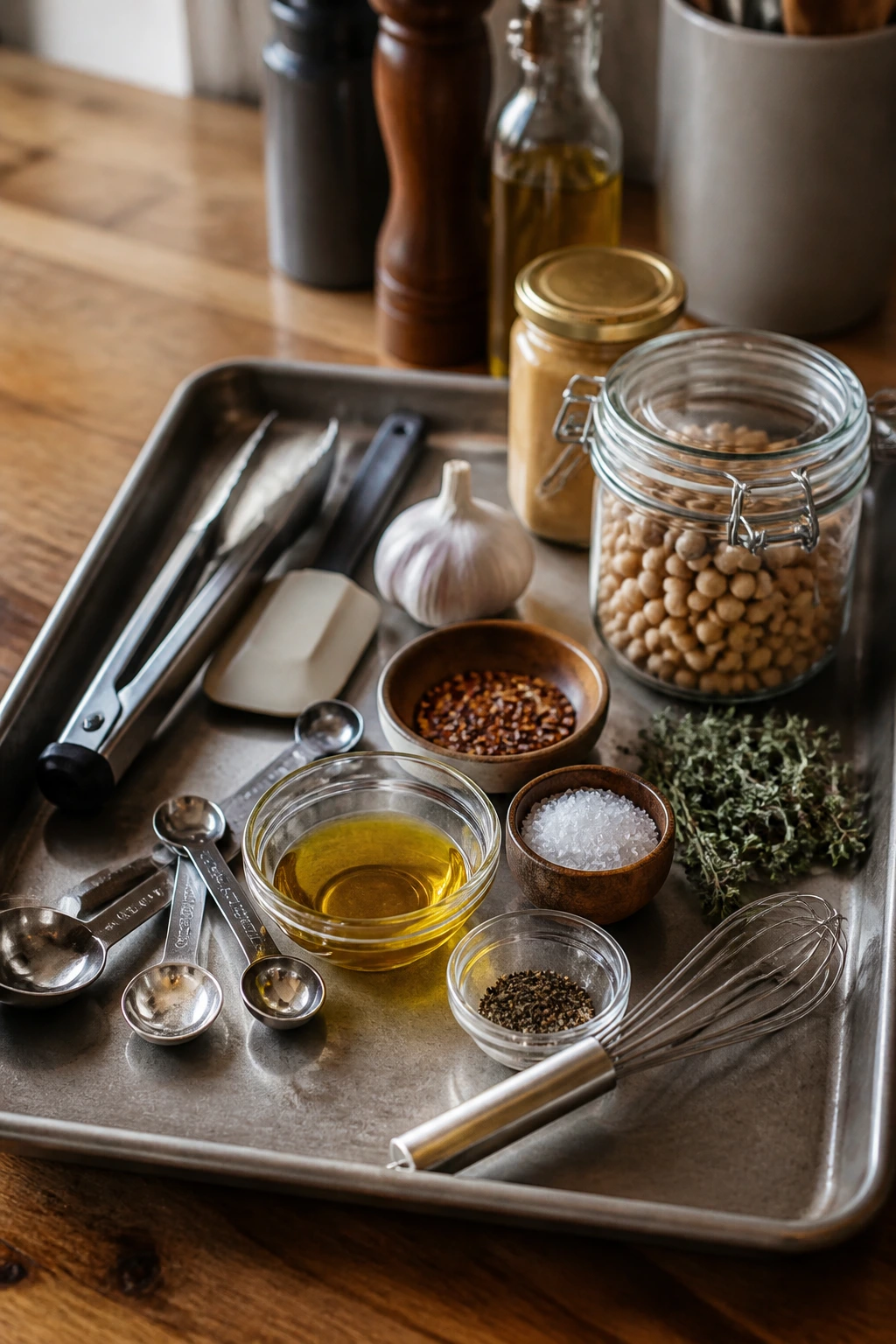
You do not need a fancy kitchen for this. You need a few sturdy basics and a pantry that can survive an ordinary Tuesday.
Tools
-
Rimmed sheet pan: The rim catches juices and keeps the vegetables from sliding around when you toss them.
-
Second sheet pan: Use this when the first pan is crowded. Two pans beat one packed tray every time.
-
Large mixing bowl: Tossing the vegetables in a bowl gives you more even seasoning than trying to season on the pan.
-
Chef’s knife: A sharp knife makes fast work of sweet potatoes, onions, and squash, which means you’re less likely to cut everything too big out of impatience.
-
Cutting board: Use one with a damp towel underneath so it doesn’t skate around while you cut.
-
Parchment paper: Helpful for sticky marinades, tofu, or chickpeas that might leave a mess behind.
-
Tongs or a wide spatula: Good for flipping vegetables partway through roasting without crushing the softer pieces.
-
Small bowl or jar for sauce: Tahini, yogurt dressing, and vinaigrettes mix better when you’re not trying to whisk in a giant bowl.
Pantry staples
-
Olive oil: The base fat for most roasted dinners. A neutral oil works too, but olive oil adds better flavor.
-
Kosher salt and black pepper: Boring to list, vital to use well.
-
Smoked paprika, cumin, coriander, oregano, turmeric: Pick two or three and rotate them instead of buying every spice at once.
-
Canned chickpeas: Rinse them, dry them, and they’re dinner-ready in minutes.
-
Tahini or yogurt: One gives richness, the other gives tang. Both are worth keeping around.
-
Lemons or limes: This is the part that saves flat food.
-
Parsley, dill, cilantro, mint, or chives: Fresh herbs turn a decent tray into something that tastes finished.
How to Store, Reheat, and Use Leftovers
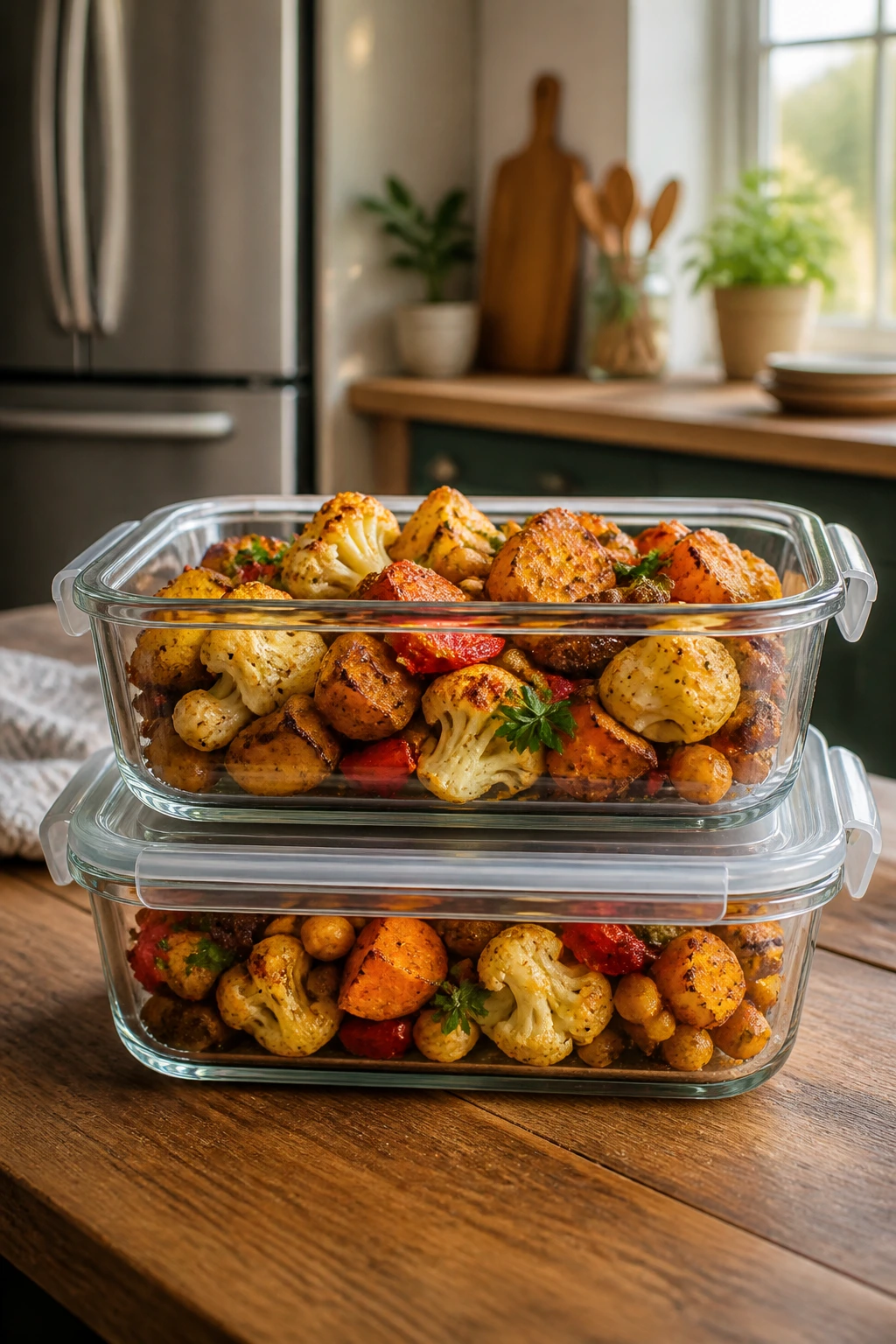
Roasted meatless dinners keep better than people expect, but the texture changes a little each day. That’s not a flaw. It’s just part of working with roasted food.
Let the food cool for no more than 2 hours before packing it away. Once it’s cool, store the vegetables, protein, and grains in airtight containers in the refrigerator for 3 to 4 days. If you’ve used delicate greens or soft herbs, keep those separate or add them fresh when serving leftovers.
Chickpeas, potatoes, cauliflower, and carrots all reheat well in a 375°F to 400°F oven for 8 to 12 minutes. Spread them out on a tray so they can re-crisp instead of steaming in a pile. A skillet works too, especially for smaller portions. Use medium heat, a teaspoon of oil, and stir once or twice until the edges wake back up.
The microwave is fine for speed, but it softens everything. If you use it, keep the sauce off until the end, then add something fresh — herbs, lemon, or a spoonful of yogurt — to restore a little life to the bowl.
Freezing is possible, but it’s not ideal for every part of the meal. Roasted potatoes and zucchini turn softer after thawing. Chickpeas, sauces, and grains hold up better. If you want to freeze leftovers, freeze the sturdier components separately for up to 2 months and plan to reheat them in a hot oven rather than the microwave.
Meal-prep-wise, the smartest move is to chop the vegetables a day or two ahead, mix the sauce ahead of time, and roast just before serving. That keeps the texture on your side.
Questions About Roasted Meatless Dinners

Can I roast everything on one pan if I cut it small enough?
Sometimes, yes, but that’s where people get sloppy. A small cube of sweet potato still won’t cook at the same pace as broccoli florets or cherry tomatoes, so the pan usually needs a little staging. If you insist on one pan, keep the hardest vegetables small and the softest ones thick.
What’s the best protein if I don’t want tofu?
Chickpeas are the easiest answer because they roast well and taste good with almost any spice blend. Eggs, feta, Greek yogurt, tempeh, and cannellini beans can all help too, depending on whether you want the dinner warm, creamy, or crunchy. If you want a more substantial bite, tempeh gives you more chew than beans.
Do I need to peel the vegetables?
Not always. Potatoes, carrots, and squash are often fine unpeeled if the skins are thin and scrubbed well. Peeling is more about texture than nutrition here. If the skin is tough or woody, peel it. If it disappears into the roast, leave it on.
Why do my roasted vegetables come out soft instead of browned?
Usually because the pan is crowded, the heat is too low, or the vegetables are wet. The fix is mechanical, not mysterious: dry the food, use a hotter oven, and give the pieces room. Soft vegetables can still taste fine, but they won’t have that roasted edge people expect.
Can I use frozen vegetables?
Yes, but use them carefully. Frozen cauliflower, broccoli, and green beans can roast decently if you spread them out and expect a little less browning than fresh. Do not thaw them first or they’ll get soggy. Frozen zucchini is a harder sell; it tends to collapse.
What if I want the dinner to feel richer?
Add a creamy element at the end: tahini sauce, yogurt, feta, goat cheese, or a soft egg. You can also toss in toasted nuts or seeds for texture. Richness does not have to mean more oil. Often it’s just a better finish.
Is parchment paper better than roasting straight on the pan?
For cleanup, yes. For browning, bare metal usually wins. If the tray has sticky sauce or delicate ingredients, parchment is practical. If you want the deepest color on potatoes or cauliflower, a preheated bare pan does the job better.
Can I turn leftovers into something else?
Absolutely. Spoon them over grains, tuck them into pita with greens, top them with a fried egg, or fold them into an omelet. Leftover roasted vegetables are one of the few things that get more useful after dinner instead of less.
A Dinner Worth Repeating
A good roasted meatless dinner doesn’t ask for drama. It asks for heat, space, salt, and a finish with enough bite to wake up the tray. That’s it. The whole point is to make the oven carry part of the load while you end up with something that feels thoughtful, warm, and fully fed.
Keep one or two sturdy vegetables, a can of chickpeas, a lemon, and a jar of tahini in the house, and dinner stops being a daily negotiation. That’s the kind of practical habit worth keeping around.