



Caramelized colorful veggies have a way of making dinner look more deliberate than it was. A sheet pan loaded with sweet potatoes, peppers, onions, broccoli, mushrooms, and tomatoes gives you sticky edges, darkened corners, and that smell of garlic and olive oil hitting hot parchment.
The trick is not a clever sauce. It’s heat, space, and restraint. Vegetables brown when their surfaces dry out, so the difference between glossy and limp often comes down to how big the pieces are, how crowded the pan is, and whether you gave the dense vegetables a head start.
That matters because roasted vegetables can go wrong quietly. One extra minute of crowding, one too-small pan, one watery zucchini shoved in too early, and the whole tray turns soft and beige instead of bronzed and lively. The version here leans on high oven heat, smart staging, and a balsamic-lemon finish so the vegetables taste fuller than their ingredient list looks.
Why This Pan Works So Well
-
It gives you real browning, not just warm vegetables. Sweet potatoes and carrots start early, peppers and mushrooms come in later, and the oven has room to do its job at 425°F instead of steaming everything into submission.
-
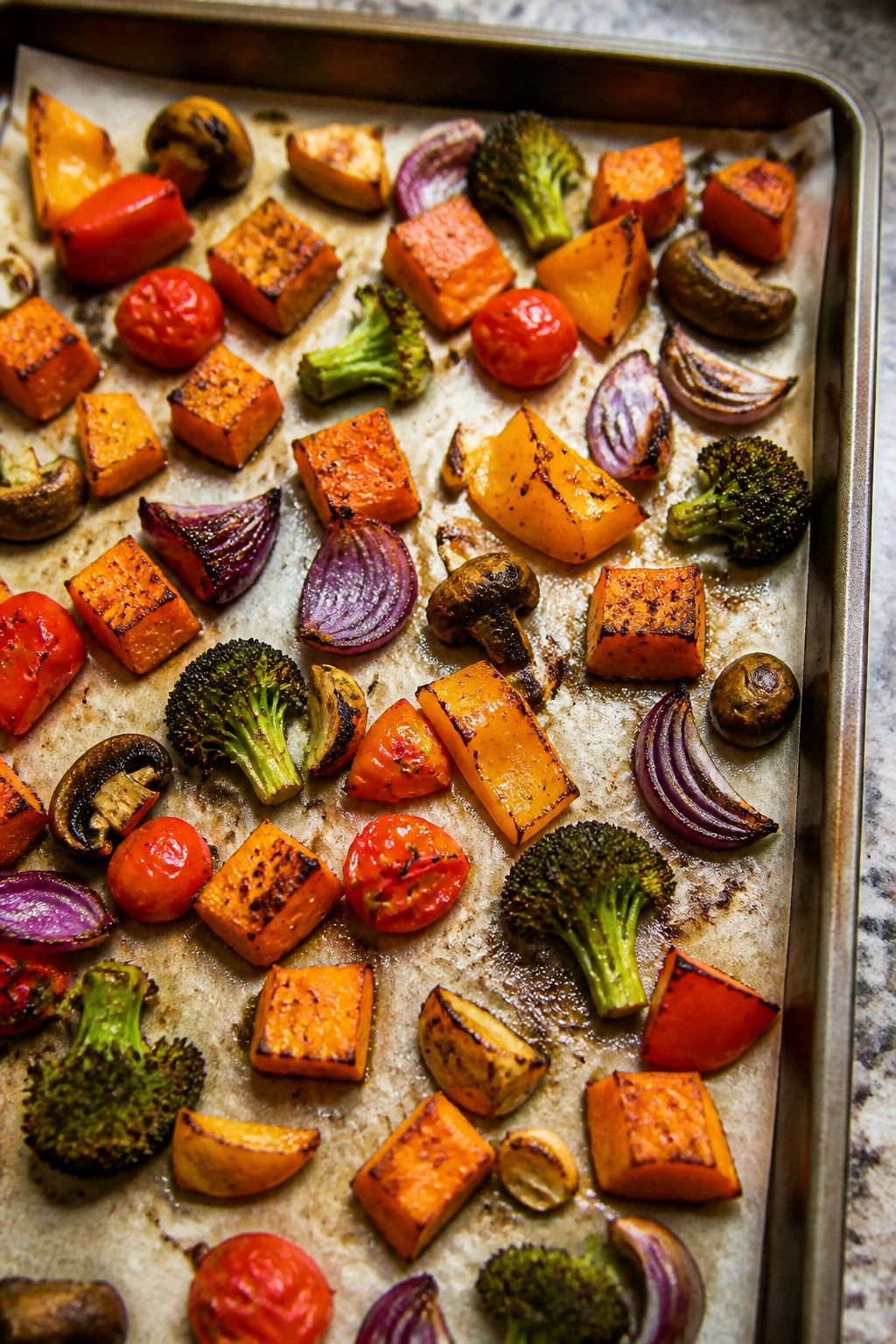
The colors stay vivid on the plate. Red onion, broccoli, yellow pepper, tomatoes, and orange sweet potato keep the tray looking alive even after roasting, which matters when the dish has to carry dinner, not just sit beside it.
-
The flavor lands in layers. Smoked paprika, thyme, garlic, balsamic vinegar, and lemon juice each do a different job: earthy, savory, toasty, sharp. None of them need to be loud.
-
It works as a side or the center of the plate. Spoon it over quinoa, farro, or lentils, and it becomes a full meal without needing a separate sauce boat or a complicated protein.
-
Leftovers stay useful. These vegetables don’t turn into sludge by the next day. They soften a little, sure, but they still hold their shape enough for grain bowls, wraps, omelets, and quick lunches.
Timing, Yield, and What the Pan Actually Gives You
Yield: Serves 4 as a main with grains or chickpeas, or 6 as a side
Prep Time: 20 minutes
Cook Time: 30 to 35 minutes
Total Time: 50 to 55 minutes
Difficulty: Beginner — the cutting takes the time, not the cooking, and the oven handles the browning.
Best Served: Warm from the oven, or at room temperature within a couple of hours
The timing matters because this isn’t a toss-everything-on-one-pan-and-hope-for-the-best situation. Dense vegetables need a head start; softer ones need a shorter stay; tomatoes need a late entrance or they burst before the edges have a chance to brown. That timing gives you a tray with contrast instead of mush.
I also like this as a dinner because it doesn’t ask for a side salad to feel complete. A scoop of chickpeas, a spoonful of tahini, or a bed of grains turns the same pan into a meal that eats like someone planned it, even if the prep happened between mail and the first hunger complaint.
Which Vegetables Brown at the Same Pace
Sweet potatoes, carrots, and onions all belong in the first wave. They’re dense enough to take the heat, and they have enough natural sugar to develop those darkened edges that make roasted vegetables taste rich instead of merely cooked. If you’ve ever pulled a tray from the oven and wondered why it tasted flat, the answer is often that the vegetables never got close enough to the heat long enough.
Broccoli, peppers, mushrooms, zucchini, and tomatoes play a different game. They contain more water, and they give that water up fast. Broccoli tips char beautifully, but the stems need a bit of time to soften. Zucchini goes from firm to floppy in a blink if you cut it too thin. Mushrooms shrink and brown only after they’ve shed some of their liquid. Tomatoes blister and collapse into little sweet bursts if you leave them whole until the end.
That’s why the cut matters more than people think. A 3/4-inch sweet potato cube and a 1/2-inch zucchini half-moon are not the same thing, and pretending they are is how you get a tray where half the vegetables are underdone while the other half look tired. Size is the quiet discipline behind good roasting.
The vegetables I’d never rush
- Sweet potatoes: They need time to soften all the way through, and their cut edges brown best once the surface dries.
- Carrots: Their edges go glossy and sweet, but only if they’re cut thick enough to stay in the pan long enough.
- Red onion: The wedge shape keeps some structure so you get caramelized layers instead of shredded bits.
- Broccoli: The florets need a later entrance or they darken before the stems soften.
The vegetables that need a later entrance
- Bell peppers: They should blister at the edges, not collapse into papery strips.
- Zucchini: It keeps a little shape when it’s cut thick and added with the quicker-roasting vegetables.
- Mushrooms: They brown after releasing moisture, which means they do better when they have room.
- Cherry tomatoes: Whole tomatoes hold together long enough to blister instead of liquefy.
Heat, Oil, Salt, and Pan Space: The Four Things Doing the Real Work
The spice blend is not the hero here. Nice as it is, smoked paprika can’t rescue a crowded tray, and thyme won’t fix a pan that never got hot enough. The real work comes from four things: enough heat, enough oil, enough salt, and enough breathing room between pieces.
Heat drives off moisture. Oil helps the surface conduct heat and brown instead of drying into leather. Salt pulls the vegetables into a more seasoned state and nudges moisture to the surface, where the oven can evaporate it. Space lets that evaporation happen quickly instead of trapping steam under a layer of cut vegetables.
Why two sheet pans are worth the counter space
One pan looks tidy. Two pans make better vegetables.
That’s the blunt version. If you pile sweet potatoes, peppers, broccoli, and mushrooms onto one pan, the pieces touch too much, the moisture has nowhere to go, and the pan starts acting like a lidded skillet instead of an oven. Two rimmed sheet pans let the cut sides face the heat, which is where the browning happens.
Why a little sweetness helps, but not much
I like 1 teaspoon of maple syrup in the seasoning mix because it gives the vegetables a touch more gloss and nudges the browning along, especially on carrots and onions. It is not there to make the pan taste sweet. If you can taste the maple as maple, you used too much.
Why acid belongs at the end
Balsamic vinegar and lemon juice wake up the roasted vegetables after they come out of the oven. Add them too early, and the acid can soften the edges before they darken. Add them after roasting, and they hit the hot cut surfaces, soak into the browned spots, and make the whole tray taste sharper and more alive.
What Goes Into the Pan
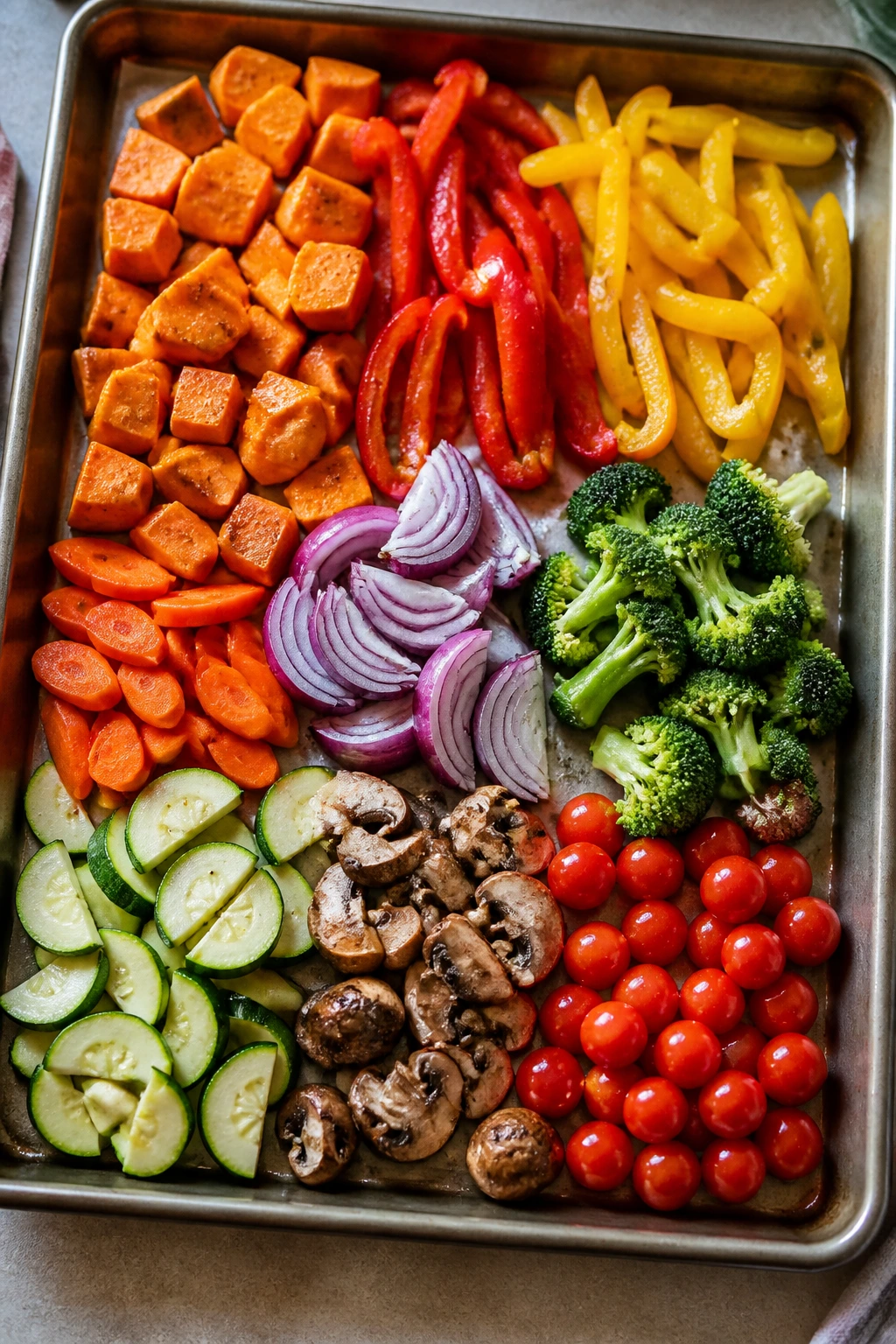
For the Vegetables
- 1 1/2 lbs sweet potatoes, peeled and cut into 3/4-inch cubes
- 3 medium carrots, sliced on a diagonal into 1/2-inch pieces
- 1 large red onion, cut into 8 wedges, root end left intact so the wedges hold together
- 2 red bell peppers, stemmed, seeded, and cut into 1-inch strips
- 1 medium yellow bell pepper, stemmed, seeded, and cut into 1-inch strips
- 1 small head broccoli, cut into about 6 cups of florets
- 1 medium zucchini, halved lengthwise and sliced into 1/2-inch half-moons
- 8 oz cremini mushrooms, halved if small or quartered if large
- 1 pint cherry tomatoes, left whole
For the Seasoning
- 3 tbsp extra-virgin olive oil
- 1 1/2 tsp kosher salt, plus a little more to finish if needed
- 1 tsp black pepper
- 1 tsp smoked paprika
- 1 tsp dried thyme
- 3 garlic cloves, finely minced or grated
- 1 tsp maple syrup, optional but helpful for browning and gloss
For the Finish
- 1 tbsp balsamic vinegar
- 1 tbsp fresh lemon juice
- 2 tbsp chopped fresh parsley
Optional to Turn It into a Fuller Dinner
- 1 (15-ounce) can chickpeas, drained, rinsed, and patted very dry
- 1/3 cup crumbled feta cheese
How Each Ingredient Pulls Its Weight
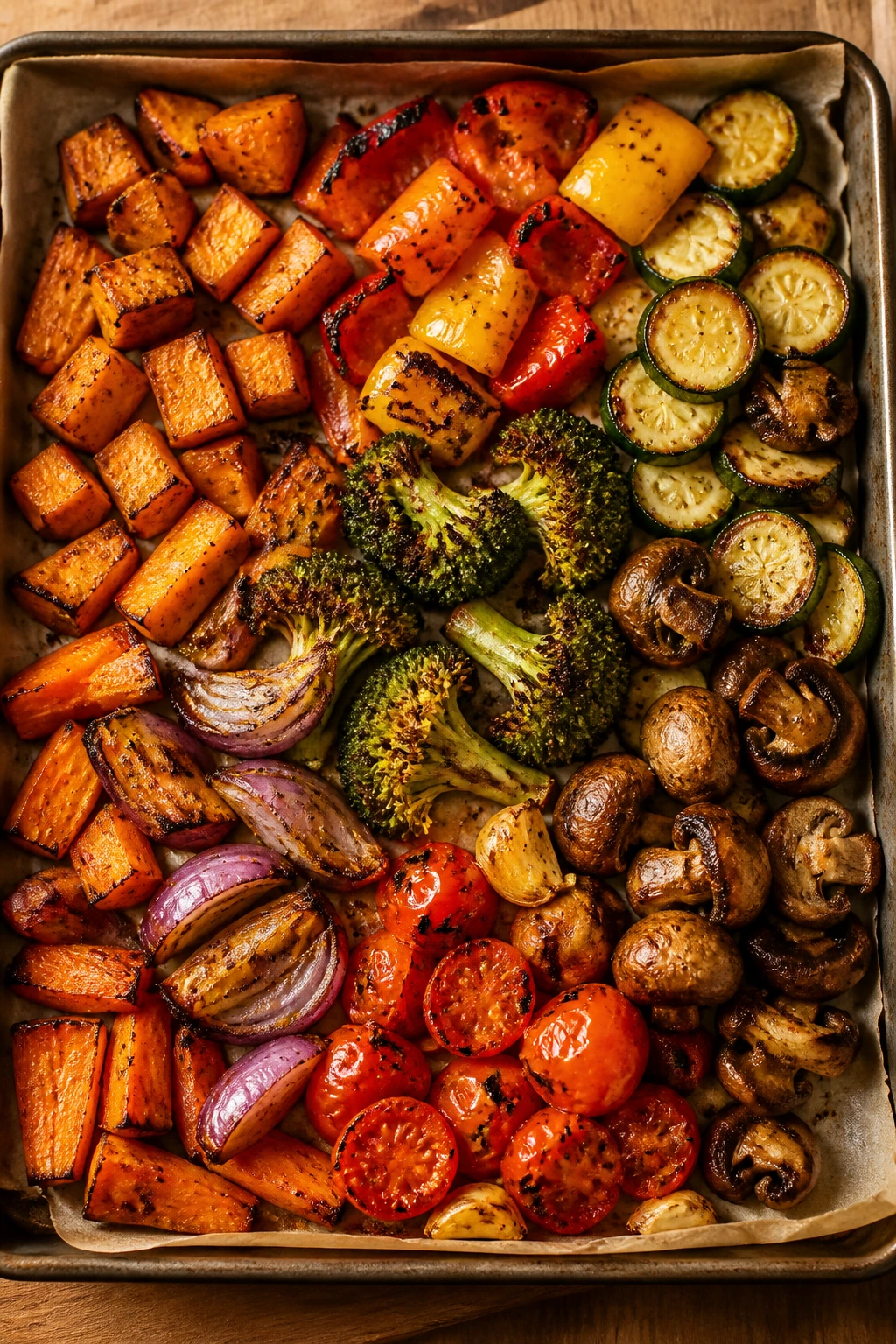
Sweet potatoes, carrots, and onion
- What to use: 1 1/2 lbs sweet potatoes, 3 medium carrots, and 1 large red onion.
- Preparation: Cut the sweet potatoes into 3/4-inch cubes, the carrots into 1/2-inch diagonal slices, and the onion into wide wedges that stay intact at the root end.
- Substitutions: Butternut squash can step in for sweet potatoes, and parsnips can replace some or all of the carrots if you want a deeper, earthier sweetness.
- Tips: These are the vegetables that benefit most from the first roast, so keep them separate from the quick-cooking pieces. If the sweet potato cubes are smaller than 3/4 inch, they’ll cook too fast and lose their edges before the onion is done.
Peppers, broccoli, zucchini, and mushrooms
- What to use: 2 red bell peppers, 1 yellow bell pepper, 1 small head broccoli, 1 medium zucchini, and 8 oz cremini mushrooms.
- Preparation: Slice peppers into wide strips, keep broccoli florets fairly large, cut zucchini into half-moons that are at least 1/2 inch thick, and halve or quarter the mushrooms so they brown rather than disappear.
- Substitutions: Cauliflower can replace broccoli, yellow squash can stand in for zucchini, and shiitake mushrooms add a more pronounced savory note if that’s your thing.
- Tips: Dry the mushrooms after rinsing them, and do not slice the zucchini too thin. Thin zucchini goes soft before it picks up any browning, which is a waste of a good pan.
Olive oil, salt, pepper, paprika, thyme, garlic, and maple syrup
- What to use: 3 tbsp olive oil, 1 1/2 tsp kosher salt, 1 tsp black pepper, 1 tsp smoked paprika, 1 tsp dried thyme, 3 garlic cloves, and 1 tsp maple syrup.
- Preparation: Whisk the oil and seasonings together before tossing the vegetables so the spices stick to the cut surfaces instead of falling to the bottom of the bowl.
- Substitutions: Avocado oil can replace olive oil if you prefer a higher smoke point, and dried oregano can stand in for thyme without changing the spirit of the dish.
- Tips: Garlic burns faster than the rest, so use it in the oil mix and keep the oven at 425°F rather than pushing hotter. The maple syrup is optional, but it gives the carrots and onion a slightly deeper bronzing.
Balsamic vinegar, lemon juice, parsley, and feta
- What to use: 1 tbsp balsamic vinegar, 1 tbsp lemon juice, 2 tbsp chopped parsley, and 1/3 cup crumbled feta if using.
- Preparation: Add the vinegar and lemon after roasting; chop the parsley just before serving so it stays bright instead of wilted.
- Substitutions: White balsamic, red wine vinegar, or even a squeeze of orange can replace the balsamic if your pantry is thin. Dill or mint can replace parsley for a different herbal finish.
- Tips: Acid on hot vegetables is a good thing. Acid in the oven is a bad thing. Keep the finish separate until the pan comes out.
Chickpeas for a heartier dinner
- What to use: 1 (15-ounce) can chickpeas, drained, rinsed, and patted dry.
- Preparation: Dry them well with a kitchen towel; the drier they are, the better they roast.
- Substitutions: White beans can work, though they stay softer. Cubed tofu is another option if you want more protein, but it needs its own pan or a very careful place on the tray.
- Tips: Chickpeas can go on the second pan with the quick vegetables, but only if they’re dry. Wet chickpeas steam, and steamed chickpeas are a disappointment.
The Tools That Make Roasting Less Annoying
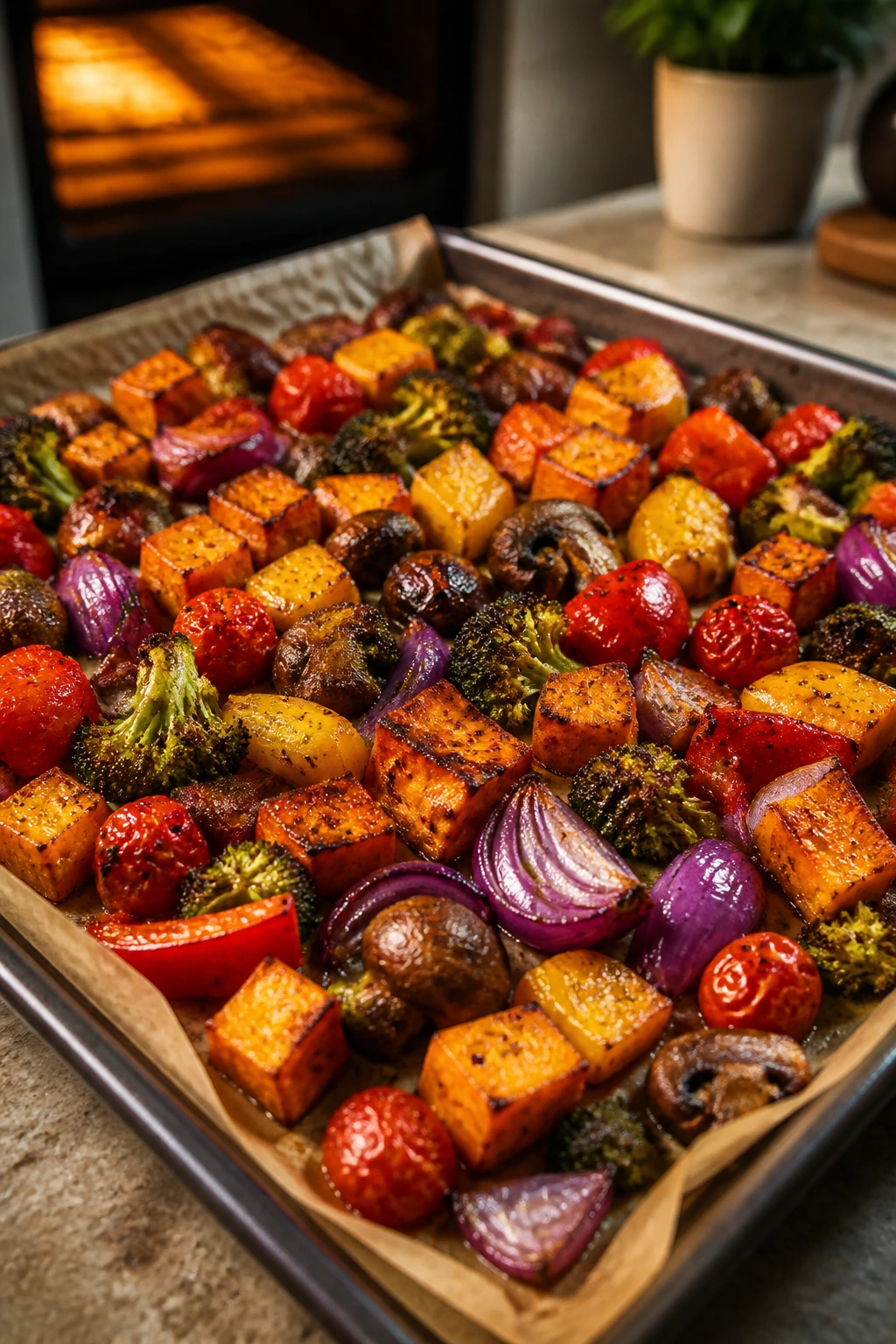
- 2 rimmed sheet pans: The extra pan gives the vegetables room; a crowded tray is the fastest way to lose browning.
- Parchment paper: Keeps cleanup easy and helps the vegetables release without tearing.
- Large mixing bowl: Big enough to toss the vegetables without sending paprika across the counter.
- Chef’s knife: A sharp blade matters here because clean cuts roast more evenly than ragged ones.
- Cutting board with a damp towel under it: Small thing, big difference. The board stays put while you slice.
- Thin metal spatula or fish spatula: Useful for turning broccoli, peppers, and mushrooms without smashing them.
- Microplane or fine grater: Handy for grating garlic into the oil or zesting lemon over the finished pan.
- Airtight storage containers: Needed if you plan to keep leftovers, and you probably should.
Roasting the Pan in Stages
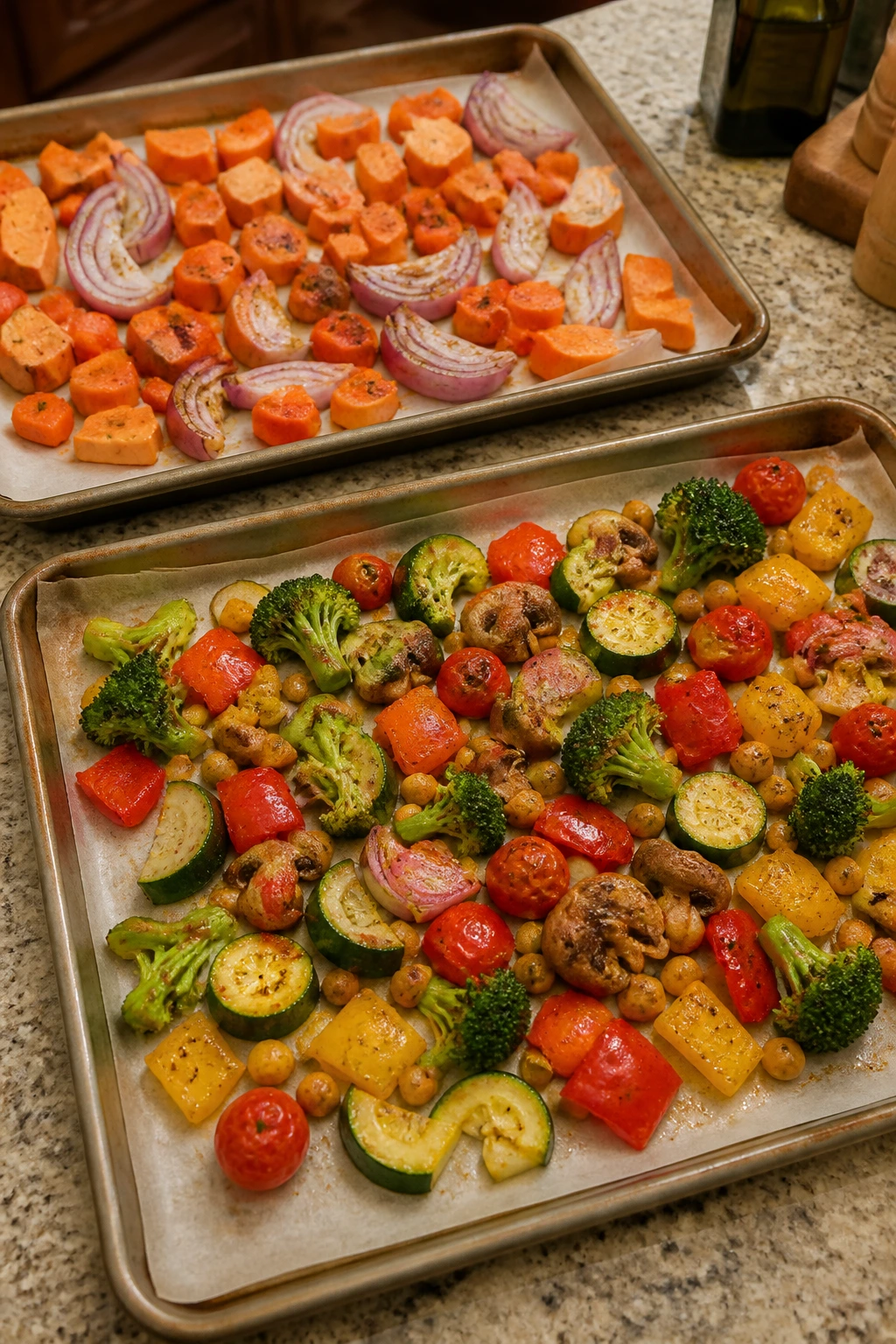
Prep and Preheat
-
Set two oven racks in the upper and lower thirds of the oven, then preheat to 425°F (220°C). Line two rimmed sheet pans with parchment paper. Do not crowd the pans; crowding traps steam and steals the browning.
-
Cut the vegetables into the sizes listed in the ingredient section. Keep the sweet potatoes and carrots in one pile, the peppers, broccoli, zucchini, mushrooms, tomatoes, and chickpeas in another. If the pieces look wildly different in size within the same vegetable, trim the bigger ones down now. That extra minute pays off in the oven.
Season and Arrange
-
In a large bowl, whisk together 2 tablespoons of the olive oil, 1 teaspoon of the salt, the black pepper, smoked paprika, thyme, garlic, and maple syrup if using. Add the sweet potatoes, carrots, and onion wedges, then toss until every cut surface looks lightly coated. Spread them on one prepared sheet pan in a single layer.
-
In the same bowl, toss the peppers, broccoli, zucchini, mushrooms, tomatoes, and chickpeas if using with the remaining 1 tablespoon olive oil and 1/2 teaspoon salt. Spread them on the second sheet pan in a single layer. Leave a little open space between pieces so the edges can dry and brown.
Roast in Stages
-
Roast the dense vegetables for 15 minutes, then remove the pan and stir them, flipping the pieces that have one cut side pressed against the pan. Return that pan to the oven. Put the second pan on the other rack at the same time.
-
Roast both pans for 12 minutes, then swap their positions if your oven browns unevenly. The lower rack often runs hotter, and most home ovens have a favorite side; this is the point where you make up for both.
-
Roast for 5 to 8 minutes more, until the sweet potatoes are fork-tender, the carrots have browned edges, the peppers have softened and blistered a little, the broccoli tips look dark at the ends, and the mushrooms have shrunk and turned glossy. The tomatoes should just be splitting at the skin.
Finish and Serve
- Transfer everything to a warm serving platter or keep it on the pan if that’s easier. Drizzle with the balsamic vinegar and lemon juice, then scatter the parsley and feta over the top if using. Toss once or twice so the acids coat the browned bits. Taste before adding extra salt; feta can make the whole tray saltier than you expect.
How I’d Turn This Into Dinner
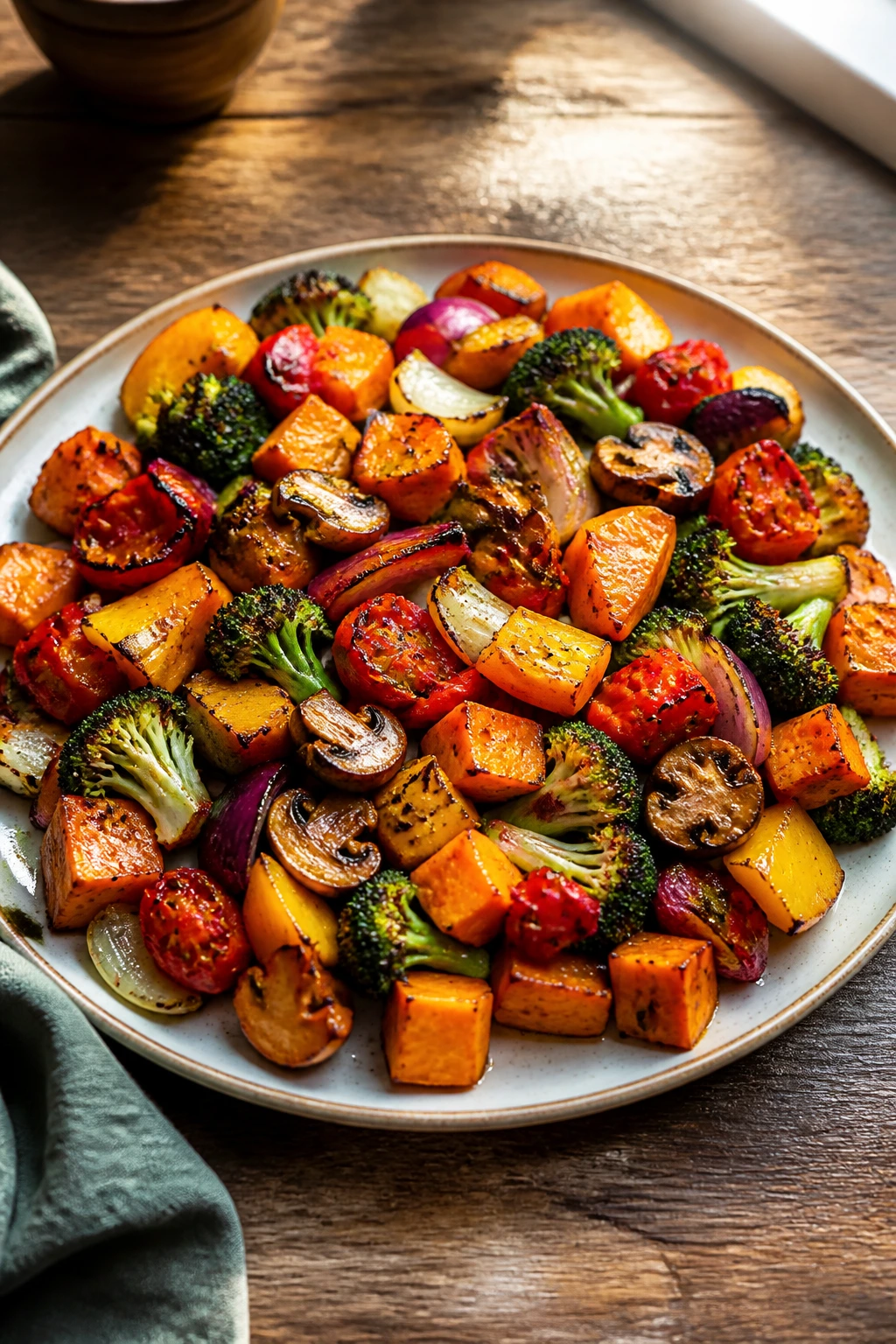
Presentation: Spoon the vegetables onto a wide platter instead of serving them in a deep bowl. A shallow layer shows off the colors and keeps the browned edges from disappearing under the weight of the pile. If you’re using feta, let it land in uneven crumbles so some bites are creamy and some stay crisp at the corners.
Accompaniments: For a full dinner, I like these over quinoa, farro, brown rice, or a spoonful of hummus on warm pita. They also sit well next to lentils, a fried egg, or a simple yogurt-tahini sauce. If you want a cleaner plate, add a lemony green salad and stop there.
Portions: Count on about 1 1/2 cups per person as a side and 2 to 2 1/2 cups per person as a main when you add grains or chickpeas. If you’re feeding bigger appetites, make the tray bigger, not the portions tighter. Roasted vegetables disappear fast when people are hungry.
Beverage Pairing: Sparkling water with lemon keeps the meal bright without interfering with the herbs and balsamic. If you want wine, a dry white like Sauvignon Blanc or a light red with low tannin works better than anything heavy.
Small Tweaks That Change the Pan
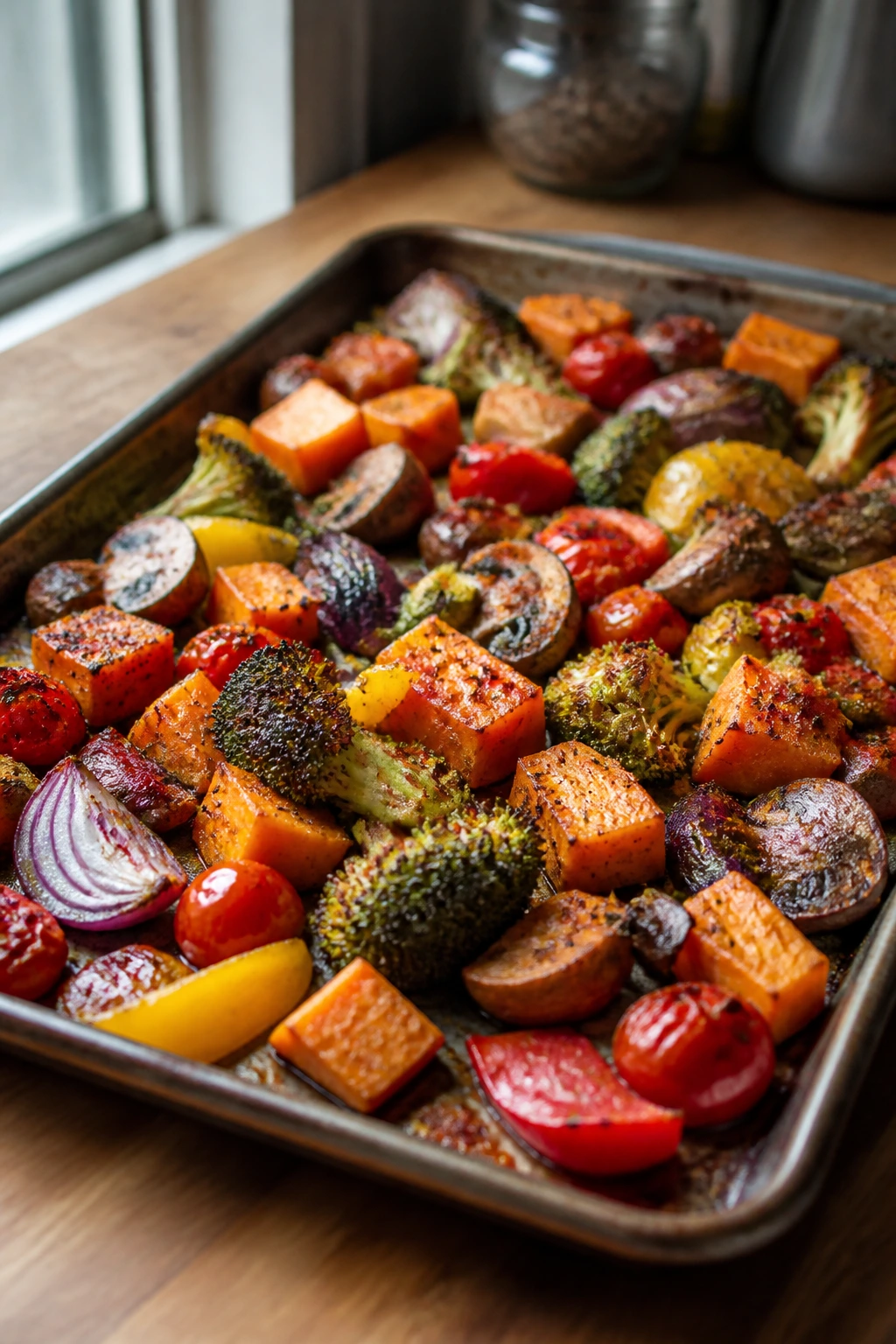
Flavor Enhancement: A dusting of sumac right at the end gives the tray a tart, lemony snap that feels sharper than more vinegar and doesn’t add extra moisture. I reach for it when I want the vegetables to taste brighter without turning them into salad.
Customization: If you like heat, add 1/4 teaspoon red pepper flakes to the oil mixture or use a spoonful of harissa in place of the maple syrup. If you want more savoriness, a tiny splash of soy sauce in the oil mix works too, but keep the salt a little lighter if you go that route.
Serving Suggestions: Toasted pumpkin seeds, chopped dill, mint, or parsley all work as finishing herbs and crunch. A spoonful of tahini thinned with lemon juice and warm water turns the tray into a proper bowl meal. Little details matter here.
Make-It-Yours: For a vegan version, skip the feta and add chickpeas or tofu. For a gluten-free dinner, serve the vegetables over rice, quinoa, or polenta. For a lower-sodium plate, pull back the salt and lean on lemon, paprika, and herbs to keep the flavor from going flat.
Mistakes That Leave the Vegetables Pale or Limp
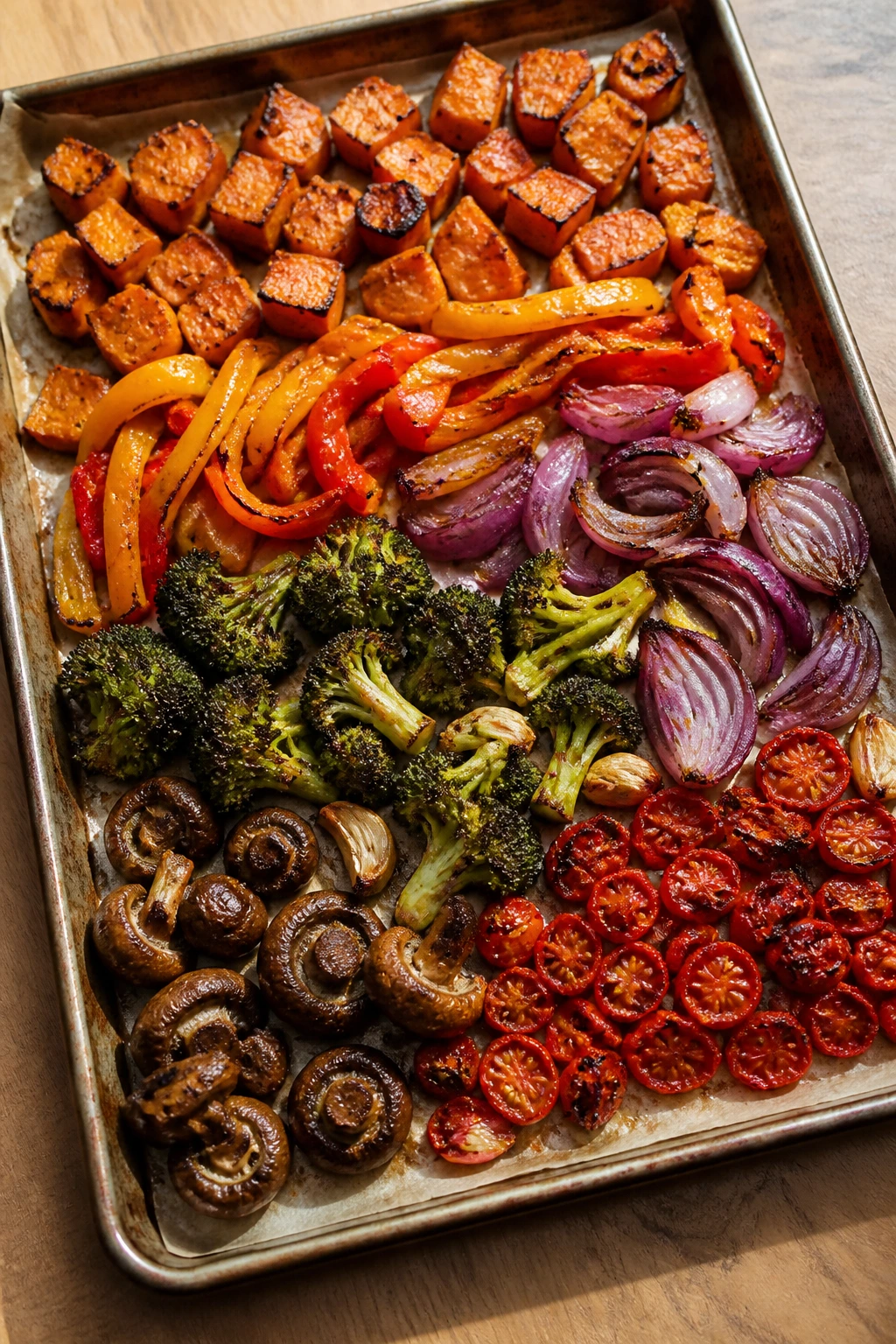
Crowding the pan. This is the big one. If the vegetables are piled into a mound, they’ll steam, and steaming gives you soft edges instead of brown ones. Use two pans, or roast in batches if that’s what it takes.
Cutting everything the same size. Sweet potato cubes and zucchini half-moons do not roast the same way, and pretending they do gives you a mix of raw centers and soggy corners. Keep dense vegetables thicker and watery vegetables larger than you think they need to be.
Adding the acid too early. Balsamic and lemon belong at the end. If they go in before roasting, the vegetables soften before they brown and the balsamic can darken too fast. Finish the tray after it comes out of the oven.
Using wet vegetables. Mushrooms, broccoli, and even rinsed chickpeas need a quick pat dry before they hit the bowl. Extra water delays browning and leaves the tray gray at the edges.
Overstirring. A single stir halfway through is useful. Constant tossing is not. Let the vegetables sit long enough to make contact with the hot pan, or the brown spots never form.
Pulling the tray too early. The sweet potatoes should be tender all the way through, and the peppers should have some blistered edges. If the carrots still feel hard in the middle, give the pan another 5 minutes instead of calling it done early.
Variations That Still Taste Like the Same Dinner
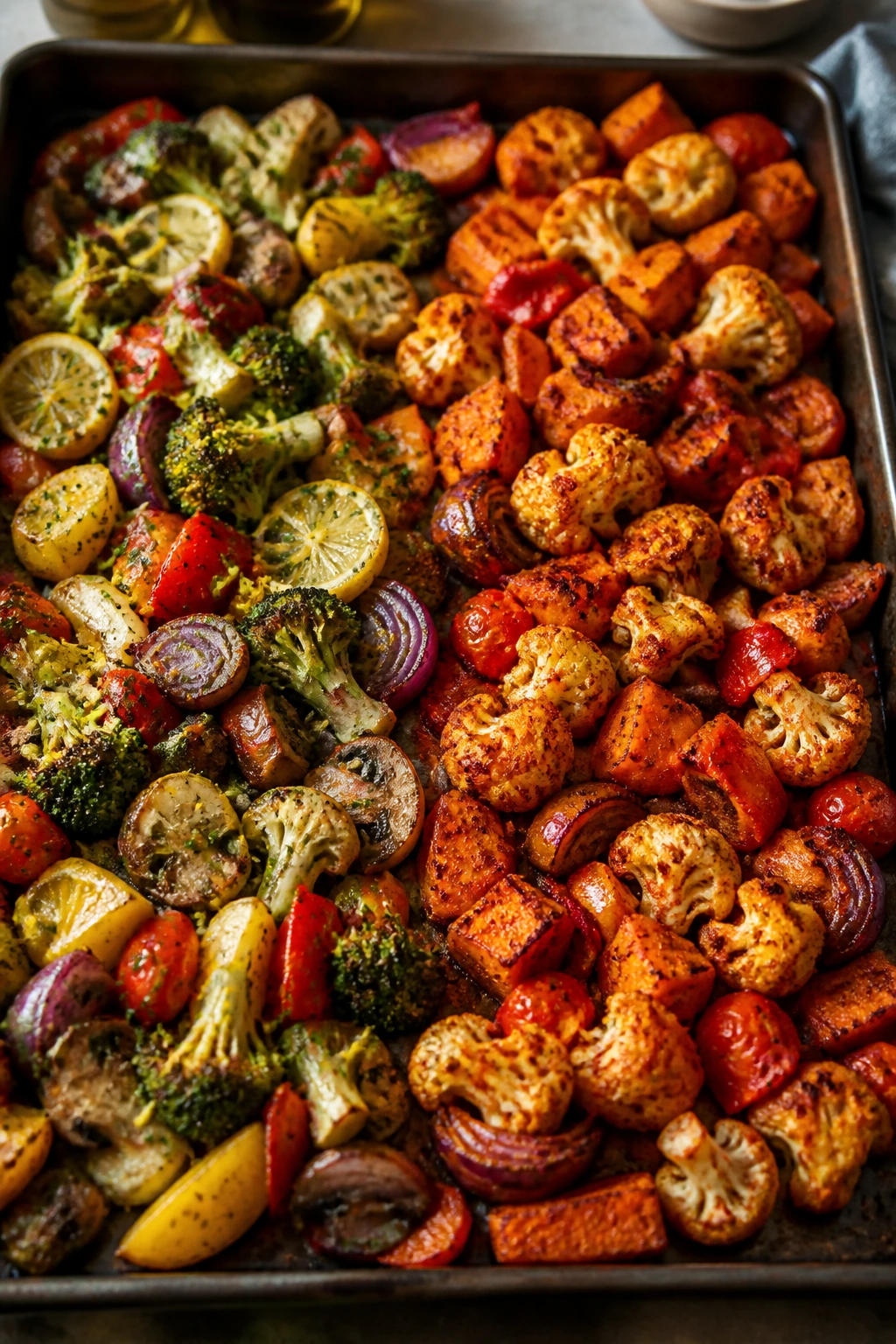
Mediterranean Lemon-Herb Pan
Swap the smoked paprika for 1 teaspoon dried oregano and finish with extra parsley, feta, and a handful of kalamata olives. The olives bring salt and a little chew, which works especially well if you’re serving the vegetables over farro or couscous.
Smoky Harissa Tray
Mix 1 tablespoon harissa paste into the oil instead of the maple syrup and add cauliflower florets alongside the broccoli. The harissa clings to the cut surfaces and gives the tray heat without needing a separate sauce. It’s my pick when the vegetables need to feel more dinner-like than side-dish-like.
Spring Green Version
Use asparagus, zucchini, peas, and baby potatoes instead of the heavier root vegetables. Add the asparagus late, in the last 8 to 10 minutes, so the tips stay snappy. Finish with lemon zest and dill.
Protein-Packed Grain Bowl Base
Keep the core recipe but roast the chickpeas with the quick vegetables and serve everything over quinoa or brown rice with tahini drizzle. This version eats like a full meal and holds up well for lunches the next day.
Warm Fall Swap
Replace the bell peppers with Brussels sprouts and the zucchini with butternut squash. The pan gets deeper and a little earthier, and the browning feels denser. It’s not the same tray, but it belongs to the same family.
How to Keep the Leftovers Worth Eating
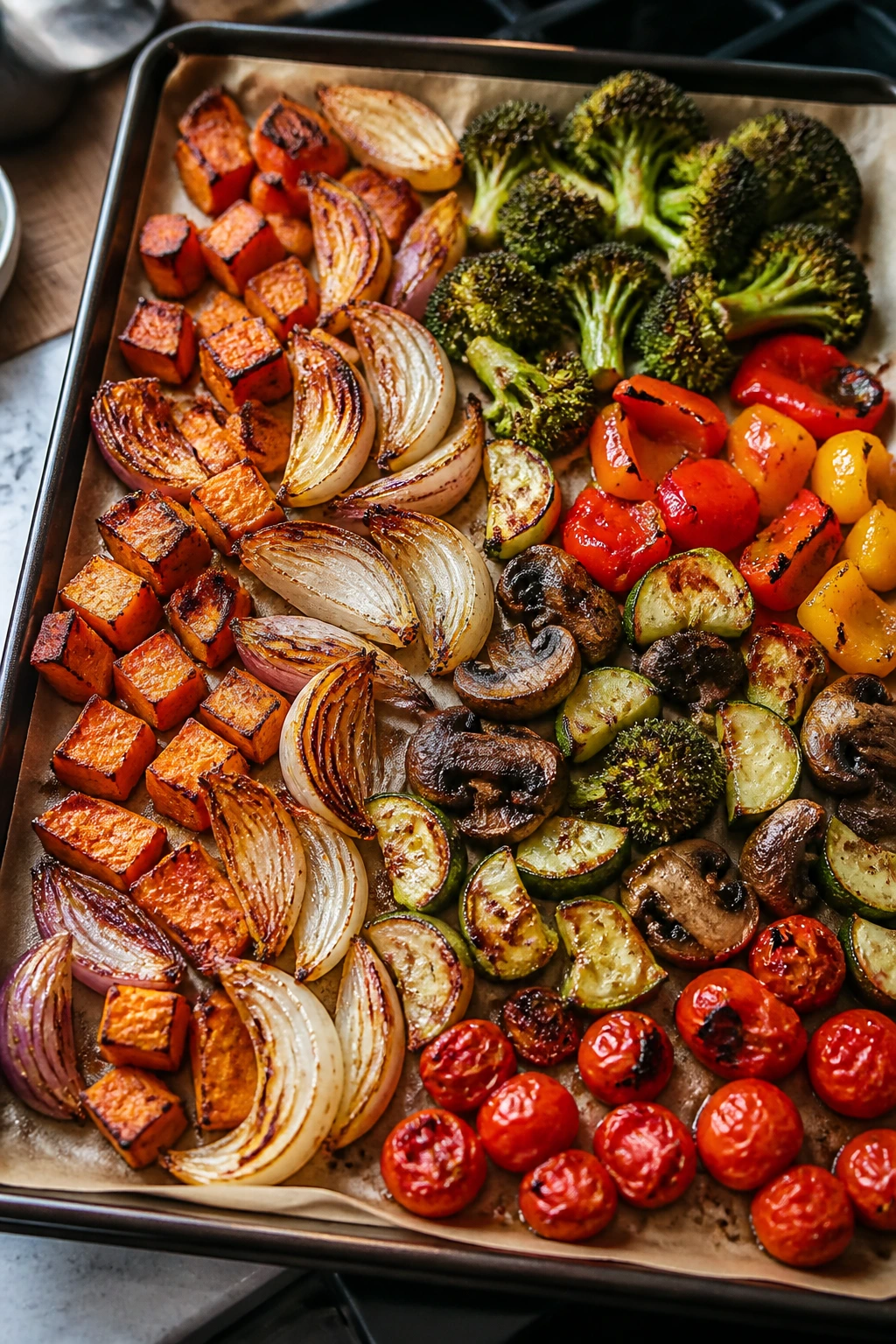
Store leftovers in an airtight container in the refrigerator for 3 to 4 days. If you’ve already added the balsamic and lemon, the vegetables will soften a little faster, so I try to eat those first. Keep any extra feta separate if you can; it stays cleaner that way.
Freezing works, but only if you accept that the texture will soften when it comes back. Roasted vegetables freeze for up to 2 months, but they’re best used in soups, frittatas, grain bowls, or pasta after thawing, not served as a crisp tray again. Zucchini and tomatoes are the softest after freezing, so don’t expect them to come back with the same shape.
For reheating, use a 425°F oven for 8 to 12 minutes on a sheet pan if you want to bring back some edge. A skillet over medium-high heat works too; just let the vegetables sit undisturbed for a minute or two before stirring so they can pick up a little browning again. The microwave is fast, but it makes everything soft, and soft is not the point here.
If you want to make this ahead, chop the sweet potatoes, carrots, onion, peppers, and broccoli up to 1 day in advance and store them separately in the fridge. I would not salt them early or soak the sweet potatoes in water unless you enjoy sacrificing browning. Keep the wet vegetables like zucchini and tomatoes cut closer to roasting time.
Questions People Ask Before They Roast the Pan
Can I roast everything on one sheet pan?
You can, but only if the pan is large enough that the vegetables sit in a single layer with obvious space between them. If they overlap, the edges won’t brown the way you want. Two pans are better than one crowded tray.
Can I use frozen vegetables?
A few can work, but frozen zucchini, peppers, and mushrooms tend to release too much water. If you use frozen broccoli or cauliflower, roast them from thawed and patted dry, and expect softer edges than you’d get from fresh. Fresh wins here for texture.
What if my oven runs cool?
Give the vegetables another 5 to 10 minutes and keep the pans on the upper third and middle rack if possible. Cooler ovens still roast vegetables; they just need more time to drive off the moisture. Watch for color, not just the clock.
How do I keep zucchini from turning mushy?
Cut it thicker than you think you should and add it with the second wave of vegetables. Zucchini needs short, hot exposure to stay in shape. Thin slices are where most people go wrong.
Can I make this oil-free?
You can reduce the oil, but if you want real browning, some fat helps. Oil carries heat and coats the cut surfaces, which matters a lot when you’re trying to get caramelized edges. If you cut the oil way back, expect softer vegetables and less color.
What protein fits best with this?
Chickpeas are the easiest, but white beans, cubed tofu, or a fried egg on top all work. Chickpeas roast with the vegetables and hold their own. Tofu needs pressing first, and it does better if you give it a separate corner of the pan or a second tray.
Can I serve this cold?
Yes, and that’s one reason this tray earns repeat appearances. Cold roasted vegetables over greens or grains make a solid lunch, especially if you add a little extra lemon or a spoonful of yogurt dressing. The texture softens, but the flavor stays.
What’s the best way to reheat leftovers without losing the browned edges?
Use the oven or a skillet. The oven revives the surfaces, and the skillet gives you a few fresh brown spots. The microwave warms fast, but it gives you a softer texture and wipes out the crisp corners.
The Last Hot Toss
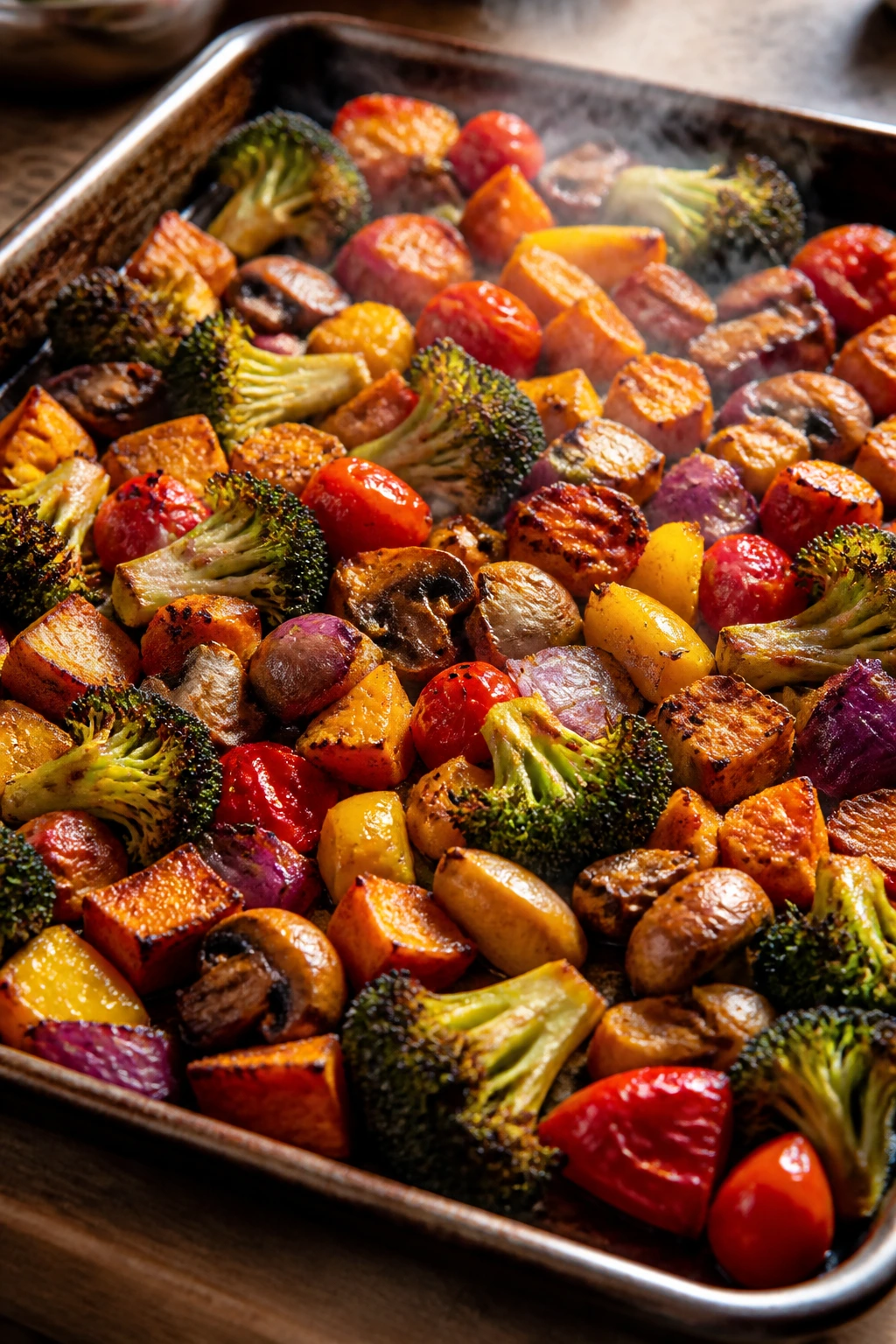
A good tray of roasted vegetables doesn’t need to pretend it’s something else. It doesn’t need cheese buried under sauce, and it doesn’t need a trick to feel complete. It needs space, heat, salt, and enough patience to let the edges go brown.
That’s the part I keep coming back to. Once you treat vegetables like they deserve the same attention you’d give meat or bread — a hot pan, thoughtful timing, a finish that adds brightness — dinner gets easier to build and better to eat. Keep the cuts even, keep the pans uncrowded, and the rest takes care of itself.
Caramelized Colorful Veggies for a Healthy Dinner — Recipe Card
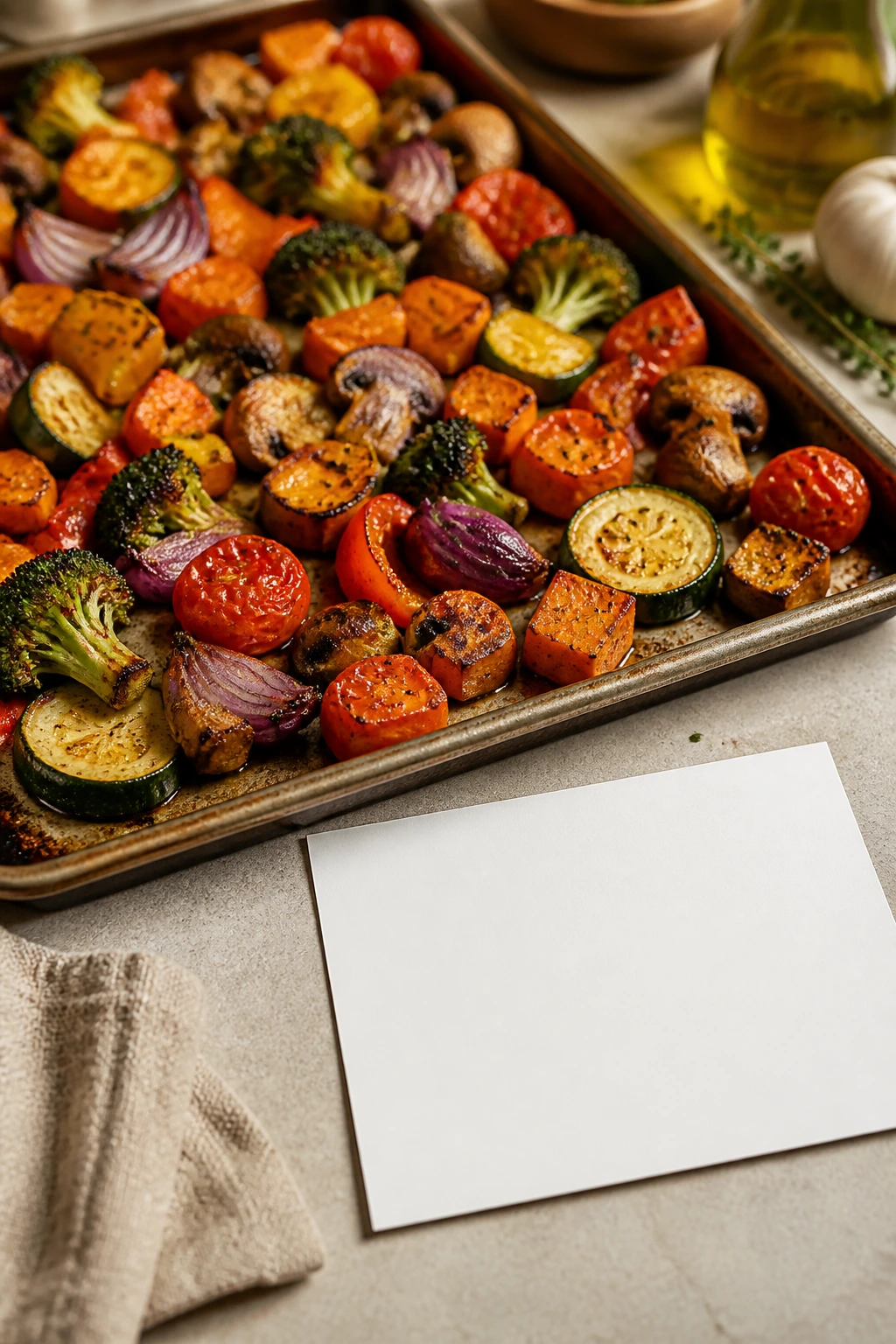
Recipe Name: Caramelized Colorful Veggies for a Healthy Dinner
Description: A sheet-pan mix of sweet potatoes, carrots, peppers, broccoli, zucchini, mushrooms, and tomatoes roasted until the edges brown and the vegetables taste sweet, savory, and bright. Finished with balsamic, lemon, parsley, and optional feta for a dinner-worthy pan.
Prep Time: 20 minutes
Cook Time: 30 to 35 minutes
Total Time: 50 to 55 minutes
Course: Dinner, Main Course, Side Dish
Cuisine: American-style, Mediterranean-inspired
Servings: 4 servings as a main, 6 servings as a side
Calories: About 260 kcal per serving
Ingredients
For the Vegetables
- 1 1/2 lbs sweet potatoes, peeled and cut into 3/4-inch cubes
- 3 medium carrots, sliced on a diagonal into 1/2-inch pieces
- 1 large red onion, cut into 8 wedges, root end left intact
- 2 red bell peppers, stemmed, seeded, and cut into 1-inch strips
- 1 medium yellow bell pepper, stemmed, seeded, and cut into 1-inch strips
- 1 small head broccoli, cut into about 6 cups of florets
- 1 medium zucchini, halved lengthwise and sliced into 1/2-inch half-moons
- 8 oz cremini mushrooms, halved if small or quartered if large
- 1 pint cherry tomatoes, left whole
For the Seasoning
- 3 tbsp extra-virgin olive oil
- 1 1/2 tsp kosher salt, plus more to taste
- 1 tsp black pepper
- 1 tsp smoked paprika
- 1 tsp dried thyme
- 3 garlic cloves, finely minced or grated
- 1 tsp maple syrup, optional
For the Finish
- 1 tbsp balsamic vinegar
- 1 tbsp fresh lemon juice
- 2 tbsp chopped fresh parsley
Optional to Turn It into a Fuller Dinner
- 1 (15-ounce) can chickpeas, drained, rinsed, and patted very dry
- 1/3 cup crumbled feta cheese
Instructions
-
Preheat the oven to 425°F (220°C) and line two rimmed sheet pans with parchment paper.
-
Cut the vegetables into the sizes listed in the ingredient section. Keep the dense vegetables and the quicker-cooking vegetables separate.
-
Whisk together 2 tablespoons olive oil, 1 teaspoon salt, black pepper, smoked paprika, thyme, garlic, and maple syrup if using. Toss the sweet potatoes, carrots, and onion with the mixture and spread them on one sheet pan.
-
Toss the peppers, broccoli, zucchini, mushrooms, tomatoes, and chickpeas if using with the remaining 1 tablespoon olive oil and 1/2 teaspoon salt. Spread them on the second sheet pan in a single layer.
-
Roast the dense vegetables for 15 minutes, then stir and flip them. Put the second pan in the oven at the same time.
-
Roast both pans for 12 minutes, swapping their positions halfway through if needed for even browning.
-
Roast for 5 to 8 minutes more, until the sweet potatoes are tender, the peppers are blistered at the edges, the broccoli tips are dark, and the mushrooms are glossy and browned.
-
Transfer the vegetables to a platter or keep them on the pan. Drizzle with balsamic vinegar and lemon juice, then scatter with parsley and feta if using. Toss gently and serve warm.
Notes:
If the pans are crowded, split the vegetables onto a third pan rather than lowering the oven temperature. Add extra lemon or balsamic at the end if you want a brighter finish.