



Cold air changes the way soup tastes. A pot of creamy bean soup with sausage does not need theatrics; it needs browned sausage, soft onions, beans that surrender a little starch, and a finish of cream plus lemon so the whole thing lands rich instead of heavy.
That balance is the thing people miss. Bean soup gets dull when it relies on cream alone, and sausage soup gets greasy when the meat never browns enough to leave a crust in the pot. Here, the beans are not a side note. They are the body of the soup, and once a cup or so gets mashed into the broth, the spoon starts leaving a trail that closes slowly behind it.
The broth should smell like onion, thyme, pepper, and the faint sweetness that comes from carrots cooked until they soften at the edges. I like a soup that feels thick enough to cling to the spoon but still loose enough to ladle without needing a fight. This one does that if you give it five things: heat, salt, browning, time, and a little restraint at the end.
That balance is why the first bowl matters. Not too thin. Not pasted into a mash. The rest is mostly about choosing the right beans and not rushing the pot.
Why This Bowl Earns a Spot in Rotation
-
The creaminess comes from beans, not flour: Mashing part of the beans gives the broth body in under a minute, so the soup turns velvety without tasting gluey or heavy.
-
The sausage seasons the whole pot: Browning the slices leaves a dark fond on the bottom of the Dutch oven, and that browned layer is where a lot of the flavor lives.
-
The pantry list stays short: Canned beans, broth, and a few vegetables are enough to build dinner; there is no long shopping trip hiding behind this pot.
-
The leftovers settle in nicely: The beans drink up broth overnight, so the second bowl often tastes even more balanced after a gentle reheat and a splash of water or stock.
-
It bends without breaking: You can tilt this toward smoky, herby, spicy, or milder without changing the core method, which matters when the fridge is working with odd leftovers.
-
It eats like a meal: Between the sausage, beans, and cream, you do not need much on the side unless you want bread for swiping the bowl clean.
The Serving Numbers and the Short Shopping List
Yield: Serves 6
Prep Time: 20 minutes
Cook Time: 40 minutes
Total Time: 1 hour
Difficulty: Beginner — the steps are straightforward, but browning, seasoning, and the final simmer all need attention.
Chill/Rest Time: 5 minutes
Best Served: Hot from the stove, after the pot has rested long enough for the broth to settle.
The ingredient list looks short, but the order matters. If you want the soup to taste rounded instead of flat, the sausage has to brown, the aromatics have to soften, and the beans have to simmer long enough to give up some starch. Skip any one of those, and the bowl feels thinner than it should.
For the Soup
- 1 tablespoon olive oil
- 12 ounces smoked sausage or kielbasa, sliced into 1/4-inch coins
- 1 large yellow onion, diced
- 2 medium carrots, diced small
- 2 celery stalks, diced small
- 4 garlic cloves, minced
- 1 teaspoon dried thyme
- 1/2 teaspoon smoked paprika
- 1/4 teaspoon red pepper flakes, optional
- 3 cans (15 ounces each) white beans such as cannellini or Great Northern, drained and rinsed
- 4 cups low-sodium chicken broth
- 2 cups water
- 1 bay leaf
- 1 tablespoon Dijon mustard
- 1 Parmesan rind, optional
- 3/4 cup heavy cream
- 1 teaspoon kosher salt, plus more to taste
- 1/2 teaspoon black pepper
- 1 tablespoon lemon juice
- 2 tablespoons chopped fresh parsley, for serving
The Beans That Give the Broth Its Body
Three cans of beans sound humble until they start breaking apart in the pot. Then the whole soup changes. The broth stops looking watery and starts looking like it has a plan.
Canned Beans Are the Fast Route
What to use: Three 15-ounce cans of white beans — cannellini, Great Northern, or navy beans all work, though cannellini keep a soft, buttery texture that I like here. Drain and rinse them well so the canning liquid does not muddy the broth.
Preparation: Rinse under cool water until the foam disappears and the water runs mostly clear. I also like to keep one cup of the beans separate so I can mash them at the end, which gives the soup body without turning the whole pot into paste.
Substitutions: If you have butter beans, use them. If all you have is navy beans, they will work too, though they break down a little faster and give the soup a thicker feel.
Tips: Canned beans vary more than people expect. Some brands are saltier, some are softer, and some hold their shape better, so taste after the simmer before you add extra salt.
Dried Beans Give You More Control
What to use: About 1 pound dried white beans, soaked overnight or quick-soaked, then cooked until tender before they go into the soup.
Preparation: Cook the beans separately in unsalted or lightly salted water until they are soft enough to crush between two fingers. That usually takes 60 to 90 minutes after soaking, sometimes longer if the beans have sat around a while.
Substitutions: If you already have cooked beans in the freezer, use those instead of starting from dry. They save time and behave much like canned beans, just without the metallic edge that some canned beans carry.
Tips: Dried beans give the soup a deeper bean flavor, but they also slow everything down. If you want that route, cook the beans the day before and treat the soup like a quick assembly job.
The Mash That Makes the Soup Creamy
What to use: About 2 cups of the finished soup, mashed with a potato masher, or 5 to 8 short pulses with an immersion blender.
Preparation: Mash only part of the pot. The goal is a broth that looks silky and clings lightly to the spoon, not a puree with sausage coins floating in it like an afterthought.
Substitutions: If you prefer a looser soup, mash just one cup. If you want it thicker, mash closer to 3 cups, but stop before the beans lose all shape.
Tips: This is the point where a lot of people overdo it. The texture you want is half whole beans, half broken beans, with a broth that has body from the starch rather than from cream alone.
Choosing Sausage That Adds Real Flavor
A soup like this only works if the sausage earns its place. Bland sausage is a waste of skillet space. Good sausage browns, gives off a little fat, and leaves enough flavor behind to season the beans without needing a spice cabinet raid.
Smoked Sausage or Kielbasa
What to use: Twelve ounces of smoked sausage or kielbasa, sliced into 1/4-inch coins. I like a firm, fully cooked sausage because it browns quickly and keeps its shape in the broth.
Preparation: Slice before it goes into the pot. Thin coins pick up more surface browning, and that browned edge matters more than people think.
Substitutions: Smoked turkey sausage works if you want something leaner. It brings a cleaner flavor, but it gives the soup less fat and less fond, so the vegetables need a little more attention in the pot.
Tips: Choose a sausage that tastes seasoned on its own. Garlic, pepper, or mild smoke all help. A sausage that tastes flat straight from the package will taste even flatter in soup.
Fresh Sausage Changes the Job
What to use: If you want to use fresh Italian sausage or breakfast sausage, buy 12 ounces and remove the casing before cooking.
Preparation: Break it into rough chunks in the pot and brown it hard enough that the outside takes on color. If the sausage is raw pork, cook it to 160°F; if it is poultry sausage, cook it to 165°F.
Substitutions: Hot Italian sausage pushes the whole pot toward spice, while sweet Italian sausage gives it a gentler, fennel-heavy smell. Both work, but they change the soup more than smoked sausage does.
Tips: Fresh sausage gives off more fat than smoked sausage. Spoon off excess fat before the vegetables go in, leaving about 1 tablespoon in the pot so the onions can actually cook instead of swimming.
Lean Sausage Needs More Help
What to use: Turkey or chicken sausage if you want a lighter bowl.
Preparation: Brown it well and add the garlic, thyme, and paprika with a little more care, because lean sausage does not season the pot as aggressively as pork.
Substitutions: If the sausage is very lean, add an extra teaspoon of olive oil before the vegetables go in. It keeps the aromatics from sticking and helps the spices bloom instead of clumping.
Tips: Lean sausage often needs more salt at the end and a little more smoke in the form of smoked paprika or a pinch of cayenne. Otherwise the soup can taste thin even when the texture is fine.
The Aromatics, Herbs, and Cream That Hold It Together

Beans and sausage are the structure. The vegetables and seasonings are what make the soup feel finished instead of assembled. This is where the pot starts smelling like dinner instead of ingredients.
Onion, Carrot, and Celery Need Time
What to use: One large yellow onion, two medium carrots, and two celery stalks, all diced small.
Preparation: Dice the vegetables a little finer than you would for a roast. Smaller pieces soften more evenly and disappear into the broth better, which is exactly what you want in a creamy soup.
Substitutions: Leeks can stand in for part of the onion if that is what you have. Parsnips can replace one carrot if you want a slightly sweeter base.
Tips: If the dice is too large, the vegetables will still be crunchy when the beans are ready. That makes the soup feel rushed, and it is a rough bite against the soft beans.
Thyme, Paprika, and Bay Leaf Do Quiet Work
What to use: One teaspoon dried thyme, half a teaspoon smoked paprika, a quarter teaspoon red pepper flakes if you like a little heat, and one bay leaf.
Preparation: Add the thyme and paprika after the garlic has softened for about 30 seconds. That little pause lets the spices bloom in the fat instead of sinking straight into broth.
Substitutions: Rosemary can replace thyme, though it is louder and a little piney, so use less. Sweet paprika can replace smoked paprika, but I would add a pinch of cumin or more black pepper if you go that route.
Tips: Smoked paprika matters here. Regular paprika can taste soft and a little sleepy; smoked paprika gives the broth a deeper edge that plays well with sausage.
Cream, Dijon, Lemon, and Parmesan Build the Finish
What to use: Three-quarters of a cup of heavy cream, one tablespoon Dijon mustard, one tablespoon lemon juice, and one Parmesan rind if you have it.
Preparation: Stir the cream in only after the soup has simmered and the beans are tender. Add the lemon after the cream goes in, not before, so the dairy stays smooth.
Substitutions: Half-and-half works if you want a lighter broth, though it will not feel as lush. For a dairy-free pot, skip the cream and blend more of the beans; a final drizzle of olive oil helps replace some of the richness.
Tips: Dijon does not make the soup taste like mustard. It sharpens the bean flavor and keeps the cream from tasting flat. The lemon does something similar at the end — one tablespoon is enough to wake the whole bowl up.
Tools That Make the Pot Easier to Manage

A soup like this does not ask for fancy gear. It does ask for tools that make chopping, browning, and mashing less annoying.
-
6- to 8-quart Dutch oven: The heavy bottom gives you room to brown sausage and simmer the soup without scorching the beans on the base.
-
Sharp chef’s knife: Small dice on onion, carrot, and celery make a noticeable difference here. A dull knife turns prep into a wrestling match.
-
Cutting board with a damp towel underneath: It keeps the board from skidding when you chop the sausage or mince garlic.
-
Wooden spoon or heatproof spatula: Good for scraping up browned bits after the sausage and for stirring the beans without smashing everything.
-
Potato masher or immersion blender: One of these turns part of the beans into body. I reach for the masher first because it is easier to stop before the pot gets too smooth.
-
Measuring cups and spoons: The broth-to-bean ratio matters more than people expect in a creamy soup.
-
Ladle: Not glamorous. Still necessary. A soup this thick looks better when you can control the pour.
The Step-by-Step Stovetop Method
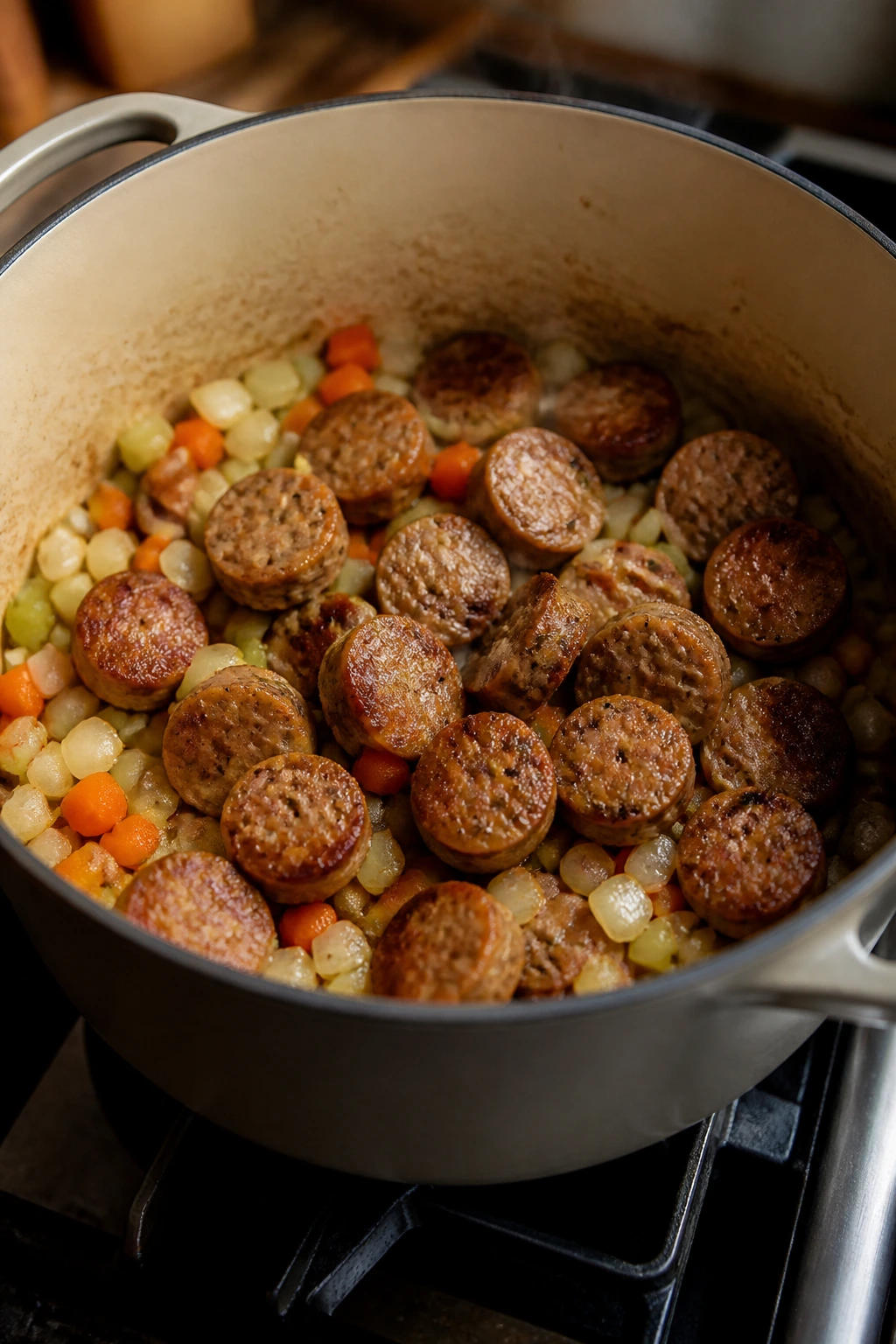
This is the part where the soup stops being a pile of separate ingredients and starts tasting like something you would happily eat twice.
Prep the Ingredients
-
Slice and chop everything first. Drain and rinse the beans, slice the sausage into 1/4-inch coins, dice the onion, carrots, and celery, and mince the garlic. If you are using a Parmesan rind, keep it nearby. Having the prep done before the heat goes on keeps the garlic from burning while you hunt for a spoon.
-
Set aside some beans for mashing. Scoop about 1 cup of the drained beans into a small bowl and set them aside. You can mash these directly into the soup later, or use them as a backup if the pot needs more body.
Brown the Sausage
-
Heat the Dutch oven over medium-high and brown the sausage for 5 to 7 minutes. Add the sausage slices in a single layer and let them sit long enough to build deep color on one side before stirring. Do not crowd the pot; if the sausage steams instead of browns, the soup loses a lot of depth before the vegetables even start.
-
Remove the sausage to a plate and leave the drippings behind. If there is more than about 1 tablespoon of fat in the pot, spoon out the excess. A little fat is useful. A slick is not.
Build the Base
-
Lower the heat to medium and cook the vegetables for 6 to 8 minutes. Add the onion, carrots, and celery to the pot with the olive oil if the pot looks dry. Stir often until the onion turns translucent and the carrots begin to soften at the edges.
-
Add the garlic, thyme, smoked paprika, and red pepper flakes, then cook for 30 to 45 seconds. Stir constantly until the garlic smells sweet and the spices darken slightly. Do not let the garlic brown; once it turns bitter, the whole soup carries that note.
-
Stir in the beans, broth, water, bay leaf, Dijon, Parmesan rind, black pepper, and the browned sausage. Bring the pot to a steady simmer over medium-high heat, then lower the heat so only small bubbles break the surface. Cover the pot partly and simmer for 18 to 20 minutes, until the carrots are tender and the beans are soft at the edges.
Finish the Soup
-
Remove the bay leaf and Parmesan rind, then mash part of the soup. Use a potato masher to crush about 2 cups of the beans right in the pot, or give the soup 5 to 8 short pulses with an immersion blender. Leave some beans whole for contrast. That mix of smooth and intact is what makes the texture feel right.
-
Stir in the heavy cream and salt, then simmer gently for 3 to 4 minutes. Return the sausage to the pot if you removed it earlier, then keep the heat low enough that the surface barely moves. Do not boil after the cream goes in or the texture can separate and turn grainy.
-
Turn off the heat, add the lemon juice and parsley, and taste again. The lemon should brighten the broth, not announce itself. If the soup still tastes muted, add a pinch more salt or a crack of black pepper. Let the pot sit for 5 minutes before serving; the broth thickens a little as it rests.
How I’d Serve It on a Bitter Night

Presentation: Ladle the soup into warmed bowls so the cream does not cool too quickly on contact. Finish with chopped parsley, a twist of black pepper, and, if you like, a thin drizzle of olive oil that sits on top of the cream in glossy patches.
Accompaniments: Thick bread belongs here. Sourdough, rye, or a crusty country loaf can handle the broth and the beans without collapsing. A simple green salad with a sharp vinaigrette helps keep the meal from feeling too soft and too rich all at once.
Portions: Figure about 1 1/2 cups per person if the soup is part of a larger meal, or closer to 2 cups if it is dinner on its own. The recipe serves 6 in a normal bowl, though a hungry crowd with bread on the side can stretch it to 8 smaller servings.
Beverage Pairing: A crisp lager, a dry hard cider, or a glass of chilled white wine with enough acid to cut the cream all work. If you want something nonalcoholic, strong black tea or sparkling water with lemon keeps the palate clean between bites.
Extra Tips That Change the Bowl
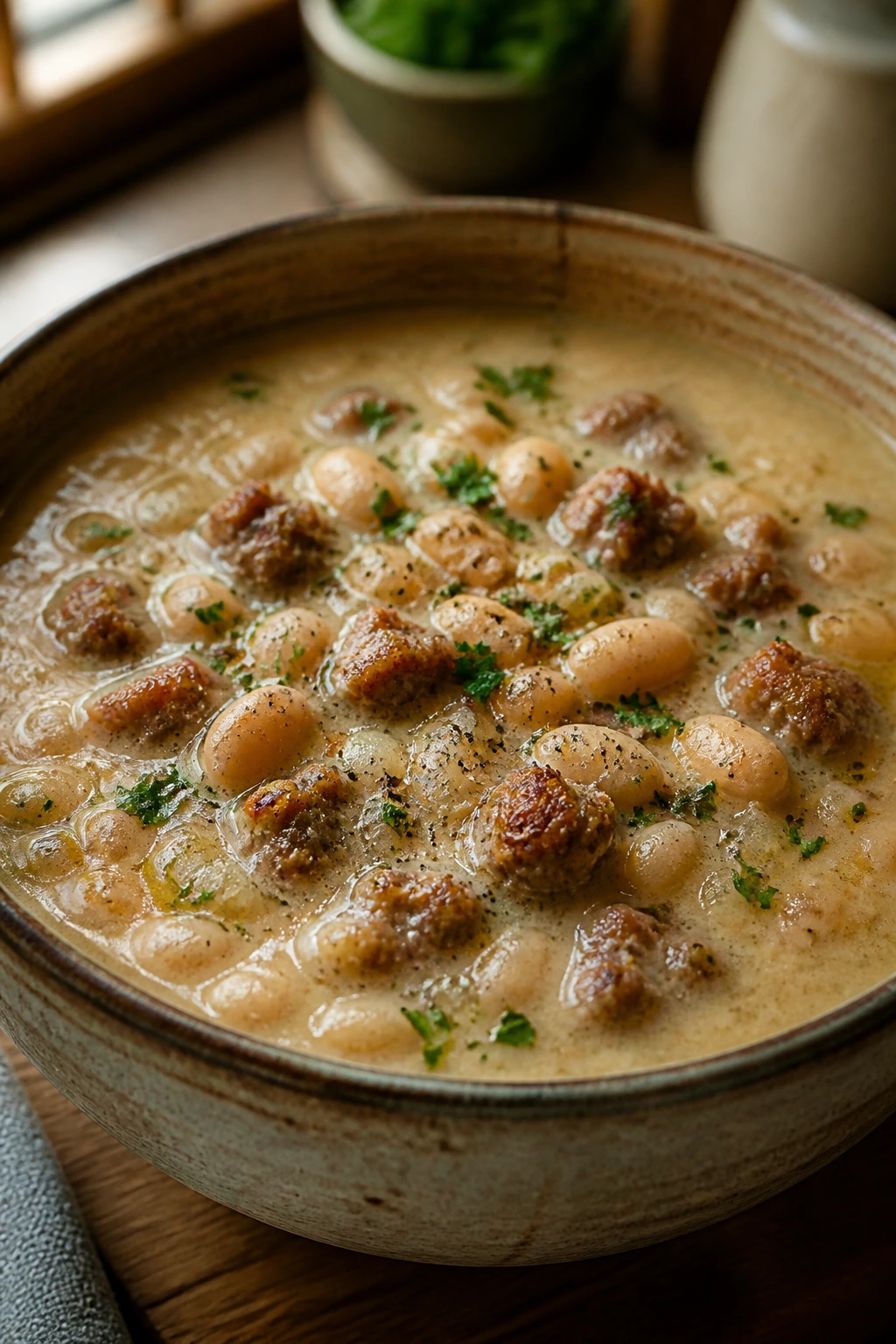
Flavor Enhancement: A Parmesan rind simmered with the beans adds a salty, savory edge that feels deeper than straight salt alone. If you do not have one, a teaspoon of miso stirred in at the end gives a similar background note, though it changes the flavor slightly.
Time-Saver: Buy pre-diced onion, carrot, and celery from the produce section if chopping is what slows you down. The soup is forgiving enough to handle that shortcut, and the saved time matters more than the tiny loss of polish.
Cost-Saver: Use Great Northern or navy beans if cannellini are pricier or harder to find. They still mash well and taste right in this style of soup, especially once the sausage and thyme are doing their work.
Pro Move: Brown the sausage in two batches if the pot is small. The extra five minutes pays for itself in better color, and color is flavor here. Pale sausage makes a pale soup.
Make-It-Yours: For more heat, finish with a pinch of red pepper flakes rather than dumping them in at the beginning. The late heat stays brighter and does not vanish under the cream.
Mistakes That Make Bean Soup Flat or Grainy

-
Skipping the browning step: If the sausage goes straight into broth, the soup tastes boiled instead of layered. Brown it until you see dark edges and a little crust in the pot, then build the rest of the soup on that base.
-
Adding cream and then boiling hard: That is how a smooth broth turns rough and slightly broken. Keep the soup at a bare simmer after the cream goes in, and turn the heat down if you see strong bubbling.
-
Under-salting after rinsing the beans: Canned beans shed a lot of their packing liquid when you rinse them, which also means some of the seasoning leaves with it. Taste at the end and add salt a pinch at a time until the broth tastes full rather than muted.
-
Pureeing the whole pot: A creamy bean soup is not bean paste. Mash or blend only part of the soup so you still get sausage coins and whole beans in each spoonful.
-
Forgetting acid at the finish: Cream, beans, and sausage can all lean heavy if nothing bright comes in at the end. Lemon juice is the simplest fix, and a teaspoon of white wine vinegar works in a pinch.
-
Using huge vegetable chunks: Big carrot and celery pieces stay firm too long and make the soup feel uneven. Small dice softens faster and melts into the broth the way this soup wants to.
Variations Worth Making

Tuscan Greens Pot: Swap the smoked sausage for mild Italian sausage, add 4 packed cups of chopped kale in the last 5 minutes, and use rosemary instead of thyme. The kale softens just enough to add green bitterness without turning into mush.
Smoky Chipotle Bowl: Stir in 1 minced chipotle pepper in adobo and 1 teaspoon of adobo sauce with the garlic and paprika. It gives the soup a darker, deeper heat that works well if you want the broth to feel a little more dramatic.
Dairy-Free Bean and Sausage Soup: Skip the heavy cream and Parmesan rind, then mash an extra cup of beans into the broth and finish with 1 tablespoon of olive oil. The texture stays rich, though the finish becomes more savory and less plush.
Chicken Sausage and Spinach Version: Use 12 ounces of chicken sausage and stir in 3 cups of baby spinach during the final minute of simmering. The spinach wilts fast, and the lighter sausage keeps the bowl from feeling too heavy.
Slow Cooker Version: Brown the sausage and vegetables on the stove first, then transfer everything except the cream, lemon, and parsley to the slow cooker and cook on low for 6 to 7 hours or on high for about 3 hours. Stir in the cream and lemon during the last 10 minutes so the finish stays smooth.
Storing, Freezing, and Reheating Without Ruining It

Cool the soup and get it into containers within 2 hours. That window matters. Once it drops into the fridge, the broth thickens and the beans firm up a little, which is normal and actually helpful for storage.
Refrigerated, the soup keeps well for 4 days in a covered container. Reheat it gently on the stove over medium-low heat, stirring now and then, and add a splash of broth or water if it has turned too thick. The microwave works too, but use shorter bursts and stir between them so the cream does not separate at the edges.
Freezing works for about 2 months, though the texture is best if you freeze the soup before adding the cream. If you know the pot is headed for the freezer, stop after the bean-and-sausage simmer, cool it fully, and freeze that base. When you reheat it, stir in the cream at the end and taste for salt and lemon.
If the soup has already been frozen with cream in it, do not panic. Thaw it overnight in the fridge, then warm it slowly over low heat while whisking or stirring often. A small splash of broth usually brings the texture back into line.
For make-ahead cooking, the vegetables can be chopped a day ahead, and the entire soup base can be made 2 days before serving if you leave out the cream, lemon, and parsley. Add those right before dinner so the finish stays bright.
Questions People Ask Before Making It
Can I use dried beans instead of canned?
Yes. Use about 1 pound dried white beans, soak them overnight or quick-soak them, and cook them until tender before they go into the soup. Once they are soft, treat them like canned beans and keep the cream for the end.
What sausage works best in this soup?
Smoked sausage or kielbasa gives the cleanest result because it browns quickly and already brings seasoning. Fresh sausage works too, but it needs to be cooked through first and can make the soup heavier if you do not drain extra fat.
How do I make the soup thicker without adding more cream?
Mash more beans into the pot, or simmer the soup uncovered for 5 to 10 minutes after the beans are tender. You can also scoop out a couple of ladles, blend them smooth, and stir them back in for a silkier finish.
Can I make this in a slow cooker?
Yes, but brown the sausage and sauté the onion, carrot, celery, and garlic first. Those first steps build the flavor that a slow cooker does not create on its own, and the cream should go in only at the end.
Will the cream split when I reheat the soup?
It can if the heat is too high. Reheat slowly over medium-low heat and stir often; if the soup starts to look rough around the edges, lower the heat and add a splash of broth.
Can I freeze creamy bean soup with sausage?
You can, but the texture is cleaner if you freeze the soup before the cream goes in. If it is already finished, freeze it anyway, then reheat gently and whisk it well. A small amount of separation is fixable.
What if the soup tastes bland at the end?
The fix is usually salt, not more cream. Add a little more kosher salt, then a squeeze more lemon if needed, because acid sharpens the beans and sausage in a way salt alone cannot.
Can I make it dairy-free without losing the creamy texture?
Yes. Blend more of the beans, use olive oil at the finish, and let the soup simmer a few extra minutes so the starch does the thickening work. It will taste a little less plush, but the bowl stays satisfying.
A Pot Worth Keeping on the Stove

This is the kind of soup that makes the kitchen smell like someone paid attention. The sausage browns, the beans soften, the broth thickens, and the final splash of lemon keeps the whole thing from sinking into heaviness. That last part matters more than people think.
A bowl like this does not need ceremony. It needs a spoon, a thick slice of bread, and enough time for the flavors to settle into each other. Keep the method in your back pocket, because once the weather turns sharp and the pantry looks ordinary, this is the sort of pot that makes dinner feel sorted without making a fuss.
Creamy Bean Soup with Sausage — Recipe Card

Recipe Name: Creamy Bean Soup with Sausage
Description: A thick, comforting bean soup built with browned sausage, soft vegetables, white beans, cream, and a bright finish of lemon. The broth stays silky without turning heavy.
Prep Time: 20 minutes
Cook Time: 40 minutes
Total Time: 1 hour
Course: Dinner, Main Course
Cuisine: American
Servings: 6 servings
Calories: 390 kcal
Ingredients
For the Soup
- 1 tablespoon olive oil
- 12 ounces smoked sausage or kielbasa, sliced into 1/4-inch coins
- 1 large yellow onion, diced
- 2 medium carrots, diced small
- 2 celery stalks, diced small
- 4 garlic cloves, minced
- 1 teaspoon dried thyme
- 1/2 teaspoon smoked paprika
- 1/4 teaspoon red pepper flakes, optional
- 3 cans (15 ounces each) white beans such as cannellini or Great Northern, drained and rinsed
- 4 cups low-sodium chicken broth
- 2 cups water
- 1 bay leaf
- 1 tablespoon Dijon mustard
- 1 Parmesan rind, optional
- 3/4 cup heavy cream
- 1 teaspoon kosher salt, plus more to taste
- 1/2 teaspoon black pepper
- 1 tablespoon lemon juice
- 2 tablespoons chopped fresh parsley, for serving
Instructions
-
Slice the sausage, dice the vegetables, mince the garlic, drain and rinse the beans, and set aside 1 cup of beans for mashing.
-
Heat a large Dutch oven over medium-high heat and brown the sausage for 5 to 7 minutes. Remove it to a plate and leave about 1 tablespoon of drippings in the pot.
-
Lower the heat to medium and cook the onion, carrots, and celery for 6 to 8 minutes, stirring often, until the onion is translucent and the carrots begin to soften.
-
Add the garlic, thyme, smoked paprika, and red pepper flakes, then cook for 30 to 45 seconds until fragrant.
-
Stir in the beans, broth, water, bay leaf, Dijon mustard, Parmesan rind, black pepper, and browned sausage. Bring to a simmer, then cook partly covered for 18 to 20 minutes.
-
Remove the bay leaf and Parmesan rind. Mash about 2 cups of the soup with a potato masher or blend briefly with an immersion blender.
-
Stir in the heavy cream and kosher salt. Simmer gently for 3 to 4 minutes without boiling.
-
Turn off the heat, stir in the lemon juice and parsley, taste for seasoning, and serve hot.
Notes: Mash only part of the beans for the best texture. Add more broth if the soup thickens too much in the fridge. If you freeze it, hold the parsley until serving.