



A tender ground beef skillet has to earn its keep fast. The good ones smell like onion softening in beef fat, mushrooms browning around the edges, and Worcestershire catching in the hot pan just long enough to go dark and savory; the bad ones smell flat, then land on the plate as dry crumbles with a thin sauce trying to hide them. Ground beef is forgiving, but it is not magic.
The trick is almost annoyingly simple: give the meat room, keep the heat high enough to brown, and stop cooking before the pan turns the beef into gravel. A lot of skillet dinners fail because the cook chases “done” too hard. By the time the sauce shows up, the meat has already lost its juiciness.
This version leans the other way. You brown the beef, pull it out, let the vegetables do their thing, and bring everything back together in a glossy gravy that clings instead of pools. It tastes like something that simmered for hours, even though the stovetop does the heavy lifting in under an hour.
Why This Ground Beef Skillet Earns Its Keep
- The beef stays juicy: Browning the meat first and bringing it back at the end keeps it tender instead of dried out and sandy.
- The sauce has real depth: Tomato paste, Worcestershire, Dijon, and beef broth give the pan a dark, savory base without relying on canned soup.
- It uses one skillet well: The browned bits from the beef become part of the gravy, so nothing tastes separate or slapped together at the last minute.
- It stretches into a full dinner: Mushrooms, carrots, celery, and peas give the pan more body, so a small scoop still feels satisfying.
- It plays nicely with starches: Mashed potatoes, buttered noodles, rice, or toast all work, which means you can build dinner from what’s already in the kitchen.
- It’s hard to mess up if you watch the heat: The whole recipe rewards steady attention more than fancy technique, and that’s a relief on a long evening.
What Makes a Ground Beef Skillet Stay Tender
The fat percentage matters
Use 80/20 or 85/15 ground beef if you want the most forgiving result. That fat keeps the meat soft while it browns and gives the skillet enough drippings to help the onions and mushrooms pick up flavor. Leaner beef can work, but it needs a little more oil and a shorter browning window.
If you go with 90/10, don’t treat it like a disaster. Just add an extra tablespoon of olive oil at the start and keep a close eye on the pan once the meat loses its pink color. Lean beef goes from “fine” to “dry” in a blink.
Browning is not the same as cooking through
A lot of people stir ground beef constantly, as if they were scrambling eggs. That’s how you get pale little pellets with no flavor. Let it sit in the hot pan long enough to sear in a few places, then break it up in chunks and keep cooking until the outside has some color.
You do not need to cook it into a brittle finish in the first round. In fact, you shouldn’t. Pull the beef when it’s mostly browned but still a little glossy, because it will finish in the sauce later. That pause is what keeps the texture soft.
Moisture control changes everything
Ground beef often gives off liquid as it cooks. Don’t panic. Keep the heat up until that moisture cooks off and the pan starts sizzling again. Once the liquid is gone, the meat can brown instead of steaming.
That same idea applies to the vegetables. Mushrooms, especially, need time to release their water and then take on color. If you rush them, the final skillet tastes wet and flat. If you wait for the pan to dry out a little, the flavor turns deeper and meatier.
Finish with a short simmer, not a long bath
The last stretch is where tenderness gets protected or ruined. Ground beef only needs a short simmer in the gravy, just long enough to reach 160°F / 71°C, the safe internal temperature for ground beef. After that, turn off the heat and stir in the sour cream off heat so the sauce stays smooth.
That’s the whole game. Brown first. Simmer briefly. Stop before the pan overworks the meat.
A Pantry-Friendly Ground Beef Skillet With Old-School Roots
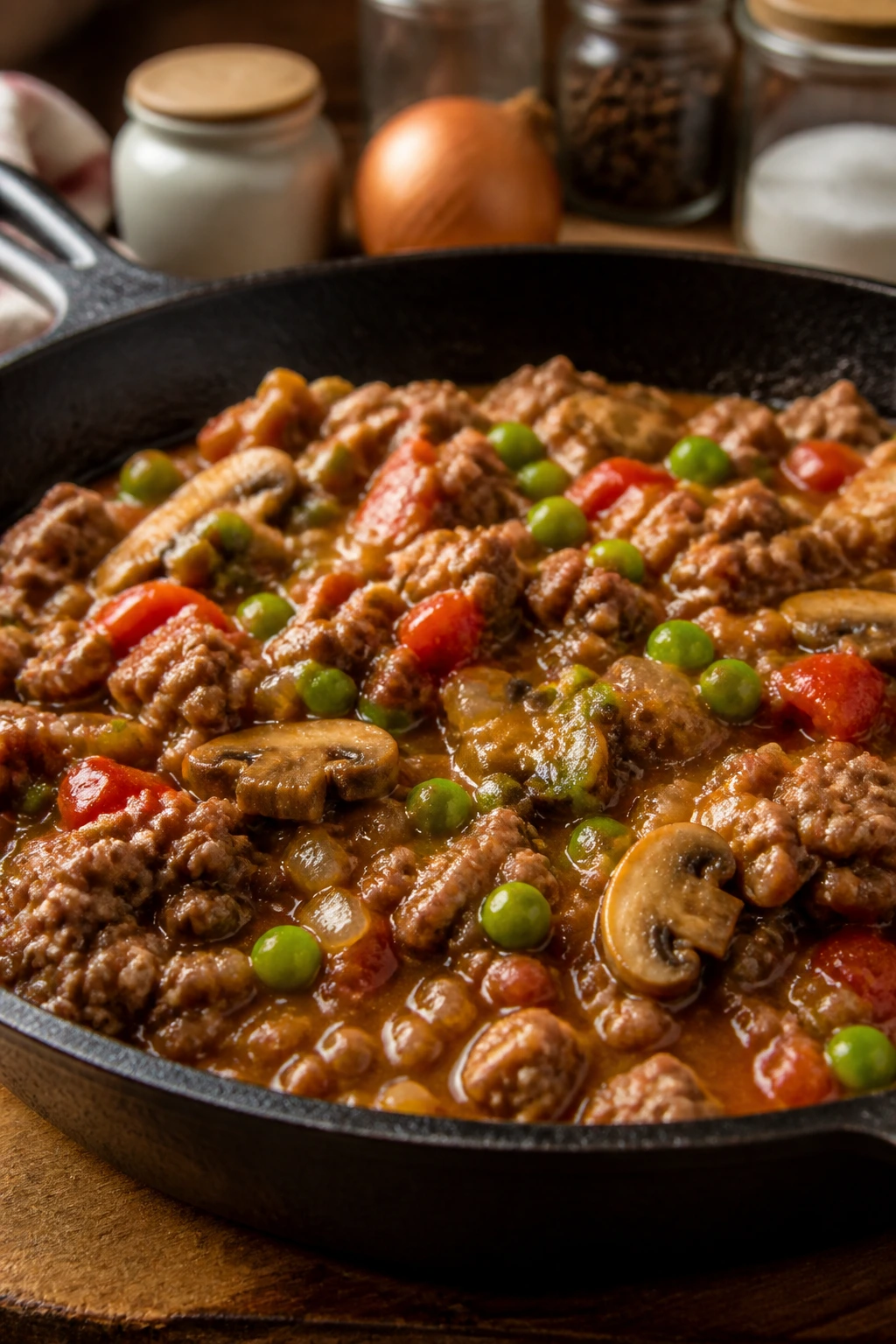
This kind of dinner sits in a very old family of meals: beef, onion, gravy, and some vegetable that was hanging around in the drawer. People made versions like this because they were practical, not precious. A pound of ground beef could feed more than one person if you gave it broth, a thickener, and something to soak up the sauce.
I like that origin story. It explains why the dish feels so familiar even when you tweak it. A skillet like this has the same backbone as hamburger gravy, beef and mushroom supper dishes, and those quiet midweek meals that never made a fuss but always got eaten.
What makes this version worth repeating is the balance. There’s enough tomato paste to deepen the pan without turning it into a tomato sauce. The Worcestershire adds that dark, beefy edge that makes the gravy taste cooked, not mixed. Mushrooms bring their own savory weight, and the peas keep the finish from feeling heavy.
And then there’s the sour cream. It does not turn the dish into stroganoff, though you could steer it there if you wanted. It just rounds the edges. A spoonful softens the sharper notes in the broth and gives the sauce that silky, slightly tangy finish that makes you go back for one more bite, then another.
What Goes Into the Pan and Why
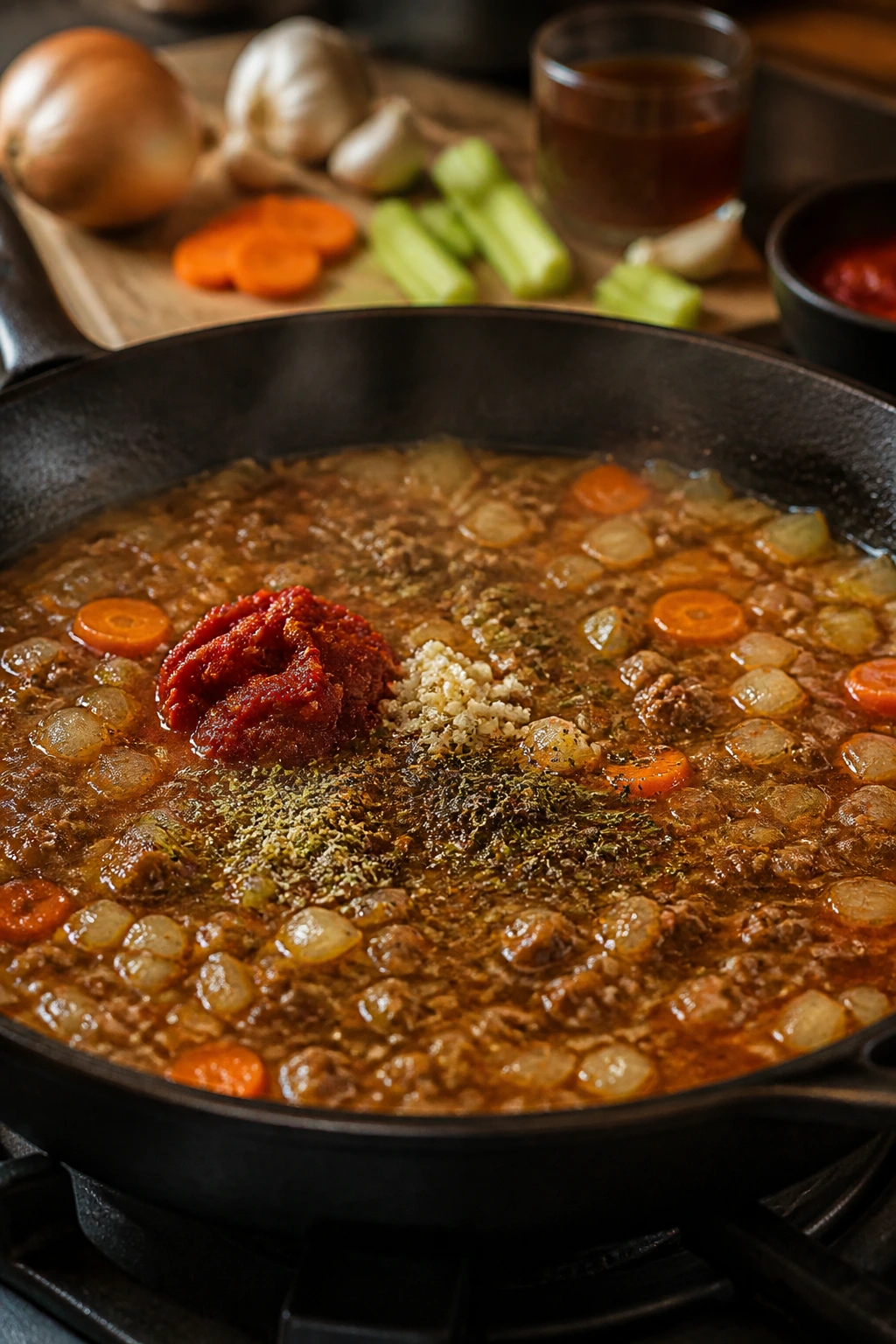
Yield: Serves 6
Prep Time: 20 minutes
Cook Time: 30 minutes
Total Time: 50 minutes
Difficulty: Beginner — the steps are straightforward, and the only real skill is knowing when to stop cooking the beef.
Best Served: Right away, while the sauce is glossy and the beef is still tender.
For the Skillet Base
- 2 tablespoons olive oil
- 1 1/2 pounds ground beef, preferably 80/20 or 85/15
- 1 large yellow onion, diced
- 8 ounces cremini mushrooms, sliced
- 2 medium carrots, finely diced
- 2 celery stalks, finely diced
- 4 cloves garlic, minced
For the Gravy
- 2 tablespoons tomato paste
- 2 tablespoons all-purpose flour
- 2 cups low-sodium beef broth
- 1 tablespoon Worcestershire sauce
- 1 teaspoon Dijon mustard
- 1 teaspoon dried thyme
- 1 bay leaf
- 1 teaspoon kosher salt, plus more to taste
- 1/2 teaspoon black pepper
To Finish
- 1 cup frozen peas
- 1/2 cup sour cream or crème fraîche
- 2 tablespoons chopped fresh parsley
Ground Beef
- What to use: 1 1/2 pounds ground beef, ideally 80/20 or 85/15, gives the skillet enough fat for flavor without turning greasy.
- Preparation: Keep the beef cold until the pan is hot, then break it into large chunks so it can sear before you start crumbling it.
- Substitutions: Ground turkey, ground chicken, or a mix of ground beef and pork can work; if you use a leaner blend, add a bit more oil at the start.
- Tips: Don’t keep smashing the meat with the spoon. Let some larger pieces stay intact early on, because they brown better and stay softer after the gravy goes in.
Vegetables and Aromatics
- What to use: 1 large yellow onion, 8 ounces cremini mushrooms, 2 medium carrots, 2 celery stalks, and 4 cloves garlic build a savory base that tastes like it took longer than it did.
- Preparation: Dice the onion, carrots, and celery small enough that they cook evenly in the same pan; slice the mushrooms about 1/4-inch thick so they soften without disappearing.
- Substitutions: Shallots can replace the onion, white mushrooms can stand in for cremini, and chopped zucchini can replace the carrots if that’s what you have.
- Tips: Let the mushrooms cook until their liquid evaporates. If the pan still looks wet, keep going a few minutes longer before adding flour.
Gravy Builders
- What to use: 2 tablespoons tomato paste, 2 tablespoons flour, 2 cups beef broth, 1 tablespoon Worcestershire, 1 teaspoon Dijon, 1 teaspoon dried thyme, and 1 bay leaf make the sauce taste rich instead of thin.
- Preparation: Measure these before you start cooking; once the flour goes in, the pan moves fast.
- Substitutions: Cornstarch can replace the flour if you need a gluten-free version, and soy sauce can step in for Worcestershire in a pinch.
- Tips: Cook the tomato paste for a full minute before adding liquid. That little step takes the raw edge off and gives the gravy a deeper color.
Finishing Ingredients
- What to use: 1 cup frozen peas, 1/2 cup sour cream, and 2 tablespoons parsley finish the skillet with color, creaminess, and a clean herbal note.
- Preparation: Let the peas thaw for a few minutes on the counter if they’re frozen solid, and let the sour cream sit out long enough to lose its chill.
- Substitutions: Baby spinach, chopped green beans, or corn can replace the peas; plain Greek yogurt can replace the sour cream if you want more tang.
- Tips: Stir in the sour cream off heat. Boiling it can make the sauce separate into little flecks, and that’s a shame after everything else behaves.
The Pan and Tools That Make the Job Easier
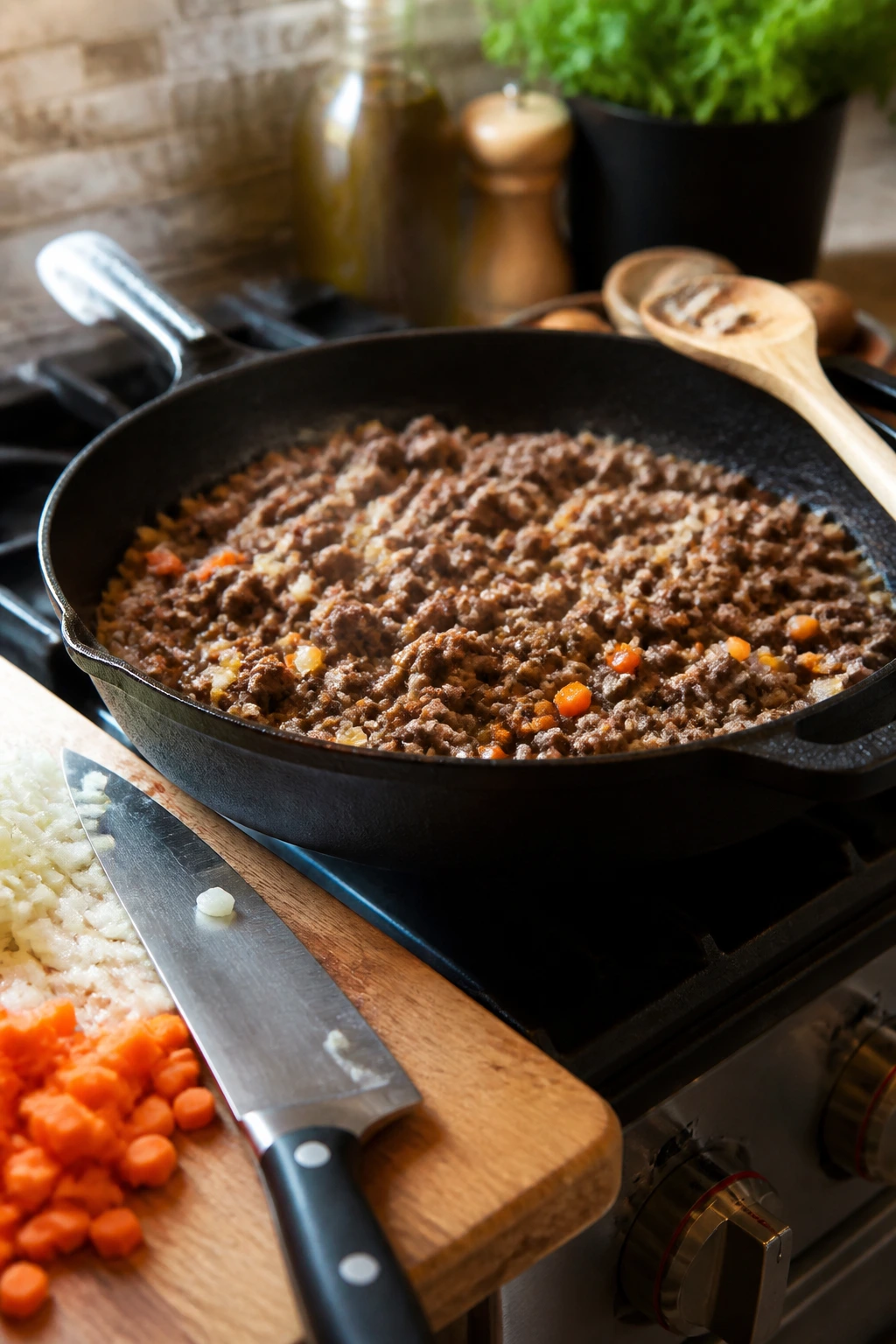
A skillet dinner like this doesn’t need a drawer full of gadgets. It does need the right pan and a few things that keep the process smooth. Once you’ve made it once, you’ll see where the rhythm lives.
- 12-inch heavy skillet or sauté pan: Gives the beef room to brown instead of steaming. A deeper skillet helps if your pan tends to splash.
- Wooden spoon or sturdy spatula: Better for breaking the beef into chunks without scraping the pan too aggressively.
- Sharp chef’s knife: The carrots, celery, onion, and mushrooms cook evenly when they’re cut to roughly the same size.
- Cutting board: A stable surface matters more than people admit. A slippery board slows everything down.
- Measuring spoons and cups: The gravy works because the balance is right; guesswork is where it starts to wobble.
- Instant-read thermometer: Not glamorous, but useful. Ground beef should reach 160°F / 71°C, and that takes the guesswork out of the final simmer.
- Small bowl or measuring cup for the broth: Helpful when you’re adding liquid slowly and scraping the browned bits from the pan.
- Spoon for skimming excess fat: If your beef is fattier, this keeps the final sauce from feeling heavy.
If your skillet is on the shallow side, a Dutch oven works too. Just keep the heat moderate once the meat has browned, because a deep pot can hold heat longer than you expect.
Browning, Simmering, and Finishing the Pan
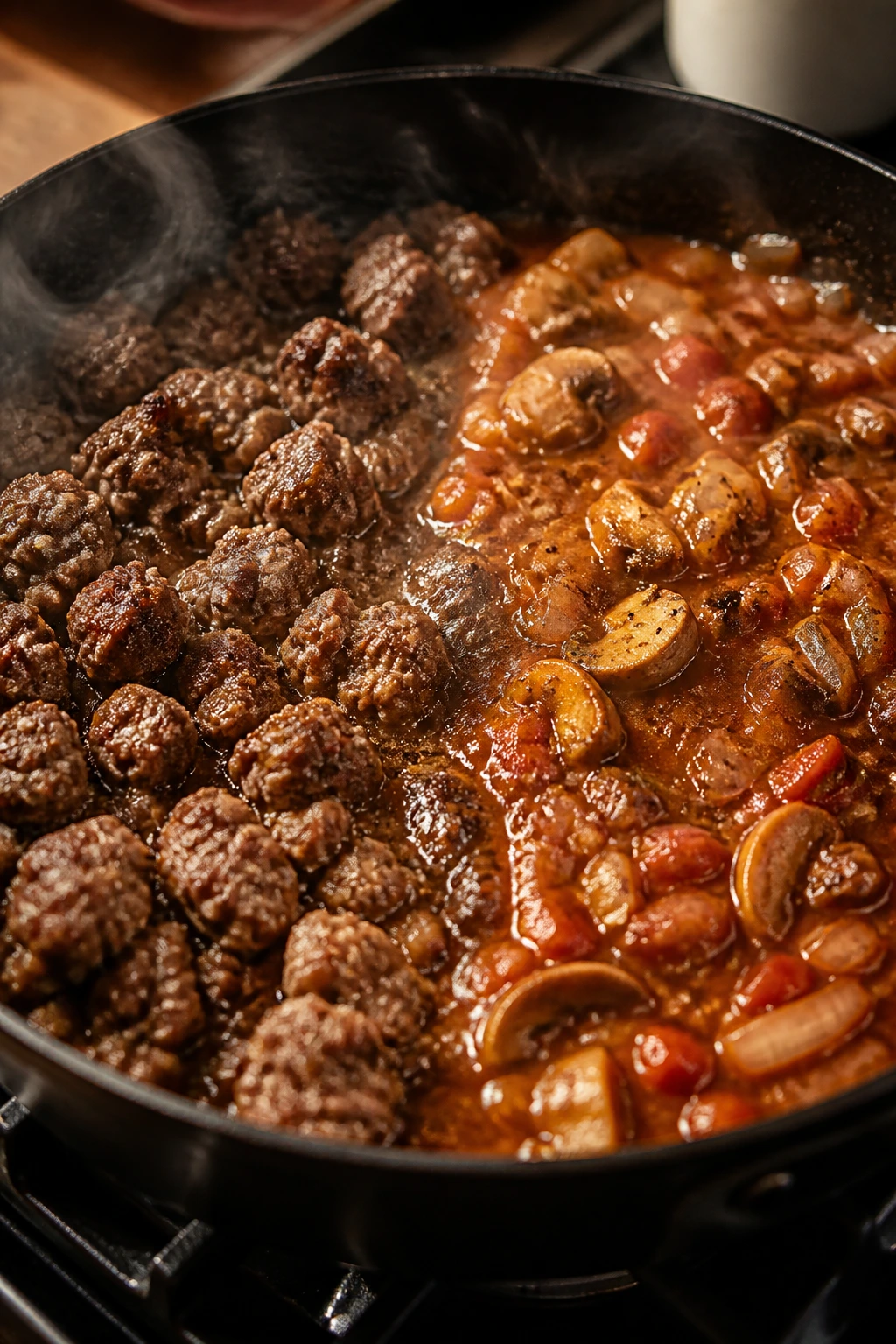
Brown the Beef
- Heat 1 tablespoon of the olive oil in a large skillet over medium-high heat until it shimmers.
- Add the ground beef in a few thick chunks instead of one loose pile. Let it sit for 1 to 2 minutes before breaking it apart so it can take on some color.
- Season with about half of the salt and pepper, then cook for 5 to 6 minutes, stirring only as needed, until the beef is browned but still looks juicy in places. Do not cook it until it looks dry and crumbly.
- Transfer the beef to a plate, leaving behind about 1 tablespoon of fat in the pan. If there’s much more than that, spoon off the extra.
Build the Vegetable Base
- Reduce the heat to medium and add the remaining olive oil, then the onion, carrots, celery, and mushrooms.
- Cook for 6 to 8 minutes, stirring occasionally, until the onions are translucent, the carrots start to soften, and the mushrooms have released their liquid and turned golden at the edges.
- Add the garlic, tomato paste, thyme, the remaining salt, and the black pepper. Stir for 1 minute until the tomato paste darkens a shade and smells sweet instead of raw.
Make the Gravy
- Sprinkle the flour over the vegetables and stir for 1 minute so every bit of vegetable gets coated. The pan will look a little dusty at first; that’s fine.
- Slowly pour in the beef broth while scraping the browned bits from the bottom of the skillet. Stir in the Worcestershire sauce, Dijon mustard, and bay leaf.
- Bring the pan to a gentle simmer over medium heat, then cook for 4 to 5 minutes, stirring now and then, until the sauce thickens enough to coat the back of a spoon.
Finish the Skillet
- Return the beef and any juices to the skillet. Simmer for 2 to 3 minutes, just until the beef reaches 160°F / 71°C and the sauce looks glossy.
- Stir in the peas and cook for 1 minute more. Turn off the heat, remove the bay leaf, and fold in the sour cream. Taste and adjust the seasoning.
- Scatter the parsley over the top and serve immediately.
If the sauce feels a little thicker than you want, splash in a tablespoon or two of broth. If it feels thin, keep it at a low simmer for another minute or two before the sour cream goes in. Little adjustments matter here.
How to Serve It Like a Real Dinner
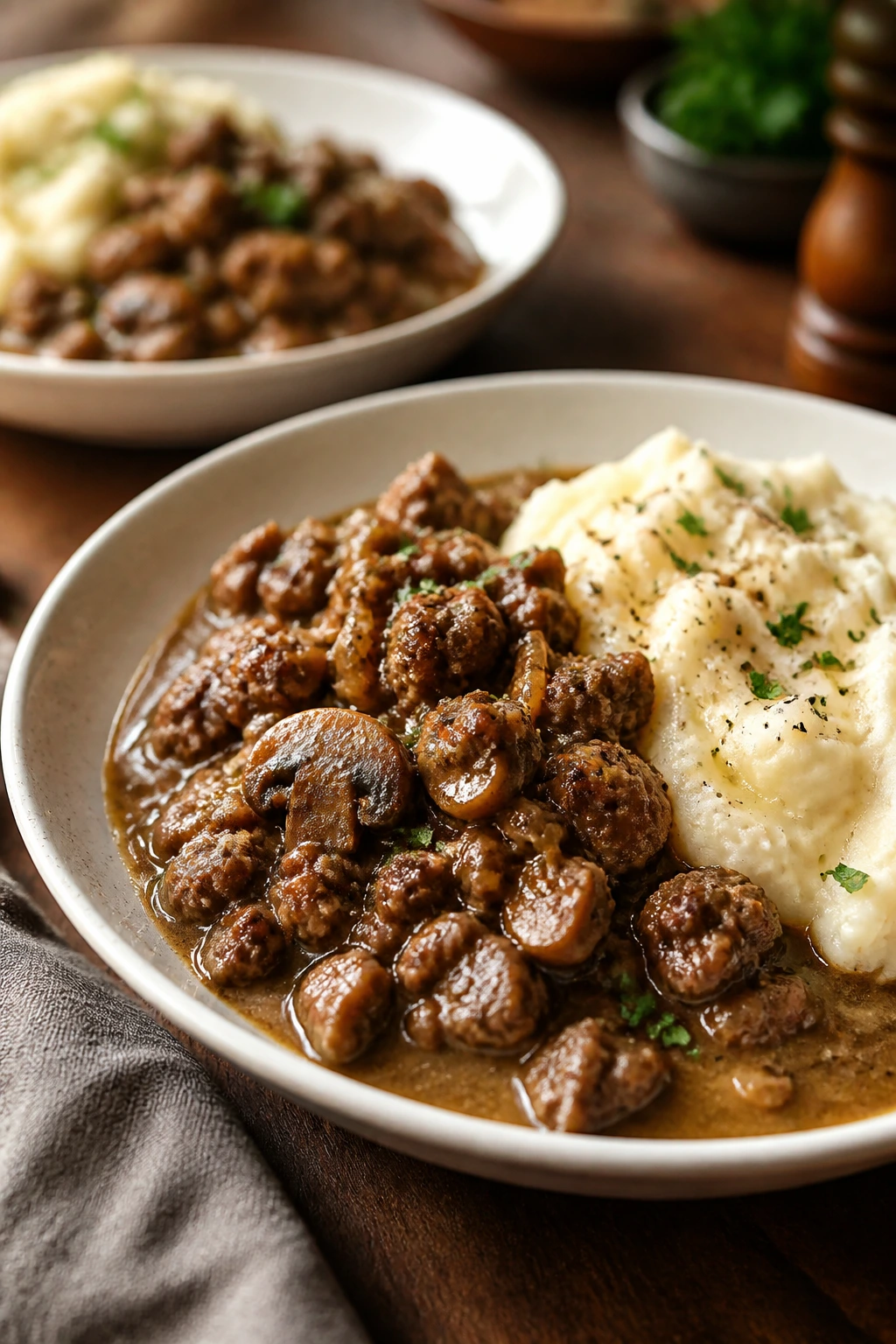
This is not a dainty plate. It wants a starch, something to soak up the gravy, and a little contrast on the side so the meal doesn’t feel heavy from first bite to last.
Presentation: Spoon the beef skillet into shallow bowls so the gravy can settle around the edges, or pile it over mashed potatoes in a wide bowl and let the sauce run down the sides. A scatter of parsley and a crack of black pepper is enough; you do not need to dress it up more than that.
Accompaniments: Buttered egg noodles are the easiest partner, but mashed potatoes are my favorite because the gravy hugs the surface. Rice works when you want something simple, and toasted crusty bread is the move when you want to chase every bit of sauce from the bowl. A sharp green salad with a lemony vinaigrette helps cut through the richness.
Portions: As written, the skillet makes 6 hearty servings. If you’re serving it over noodles, rice, or potatoes, you can stretch it to 8 smaller portions without anyone feeling shortchanged. A good adult portion is about 1 1/2 cups of the beef mixture before you add the starch.
Beverage Pairing: A dry cider or a brown ale fits the savory gravy well. If wine is more your lane, a medium-bodied red like Cabernet Franc or Merlot handles the beef without bulldozing the vegetables. For a non-alcoholic glass, cold sparkling water with lemon or unsweetened iced tea works nicely.
Small Tweaks That Make a Big Difference
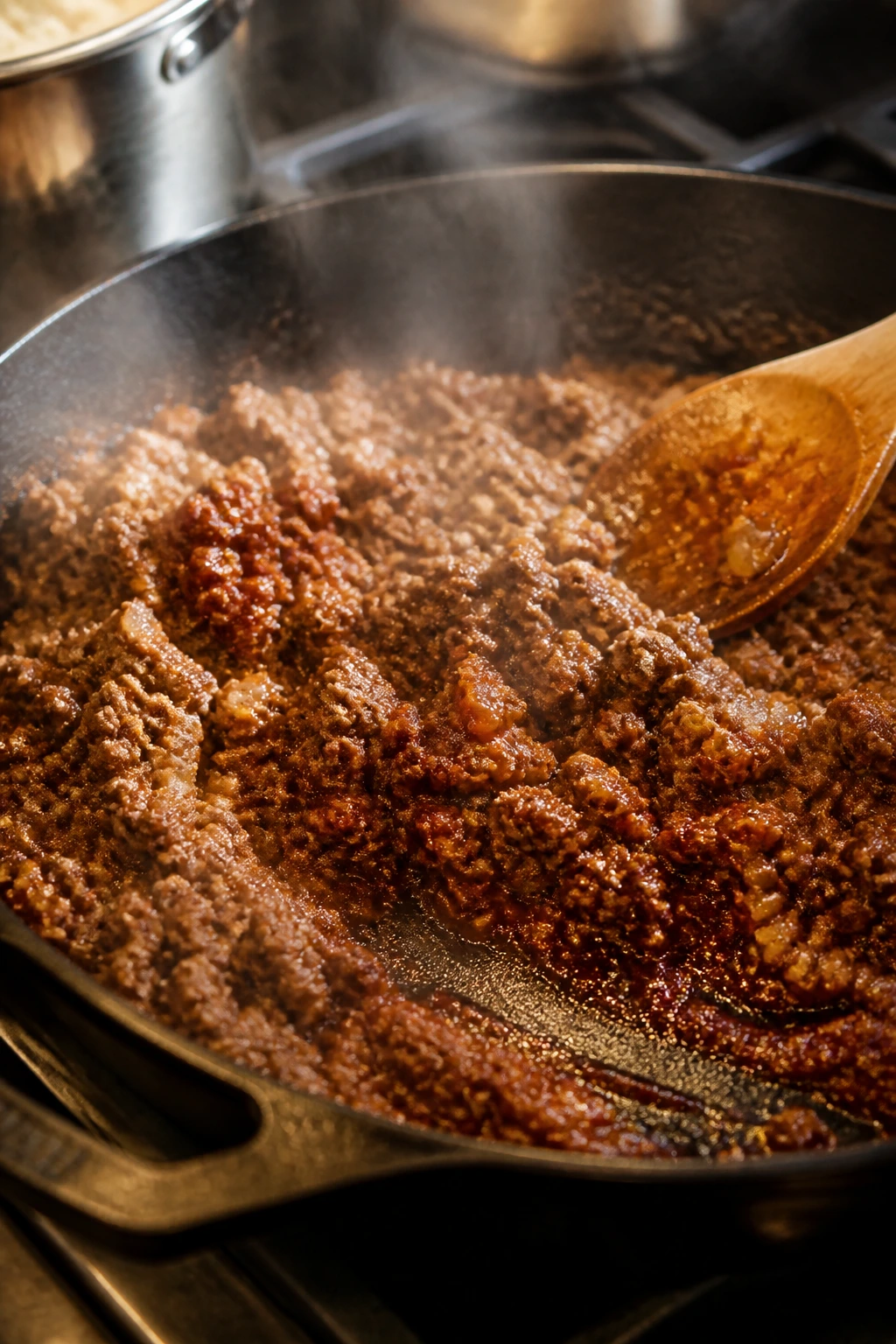
Flavor Enhancement: Let the tomato paste spend that full minute in the hot pan before any broth goes in. It stops tasting like a tube of tomato paste and starts tasting like the base of a proper gravy. I also like a small extra splash of Worcestershire at the end if the broth tastes shy.
Texture Control: If you want a thicker, clingier sauce, simmer the gravy uncovered for another 2 minutes before returning the beef. If you want it looser, add broth in 1-tablespoon splashes until it moves the way you like when you drag a spoon through it.
Customization: A handful of chopped spinach, a cup of corn, or a few chopped green beans can go in with the peas. The skillet can handle more vegetables than people think, as long as you don’t pack the pan so tightly that everything steams.
Make-It-Yours: For a dairy-free version, skip the sour cream and finish with a tablespoon of olive oil or a small splash of dairy-free cream alternative. For a gluten-free version, replace the flour with 1 tablespoon cornstarch mixed with 2 tablespoons cold broth and stir it in during the simmer. If you like a sharper finish, plain Greek yogurt works in place of sour cream, though it tastes a bit tangier.
One small habit helps more than most seasoning tricks: taste after the sauce reduces, not before. Reduction changes salt, sweetness, and intensity. A gravy that tastes under-seasoned at the start can taste spot on five minutes later.
Common Mistakes That Dry Out the Beef
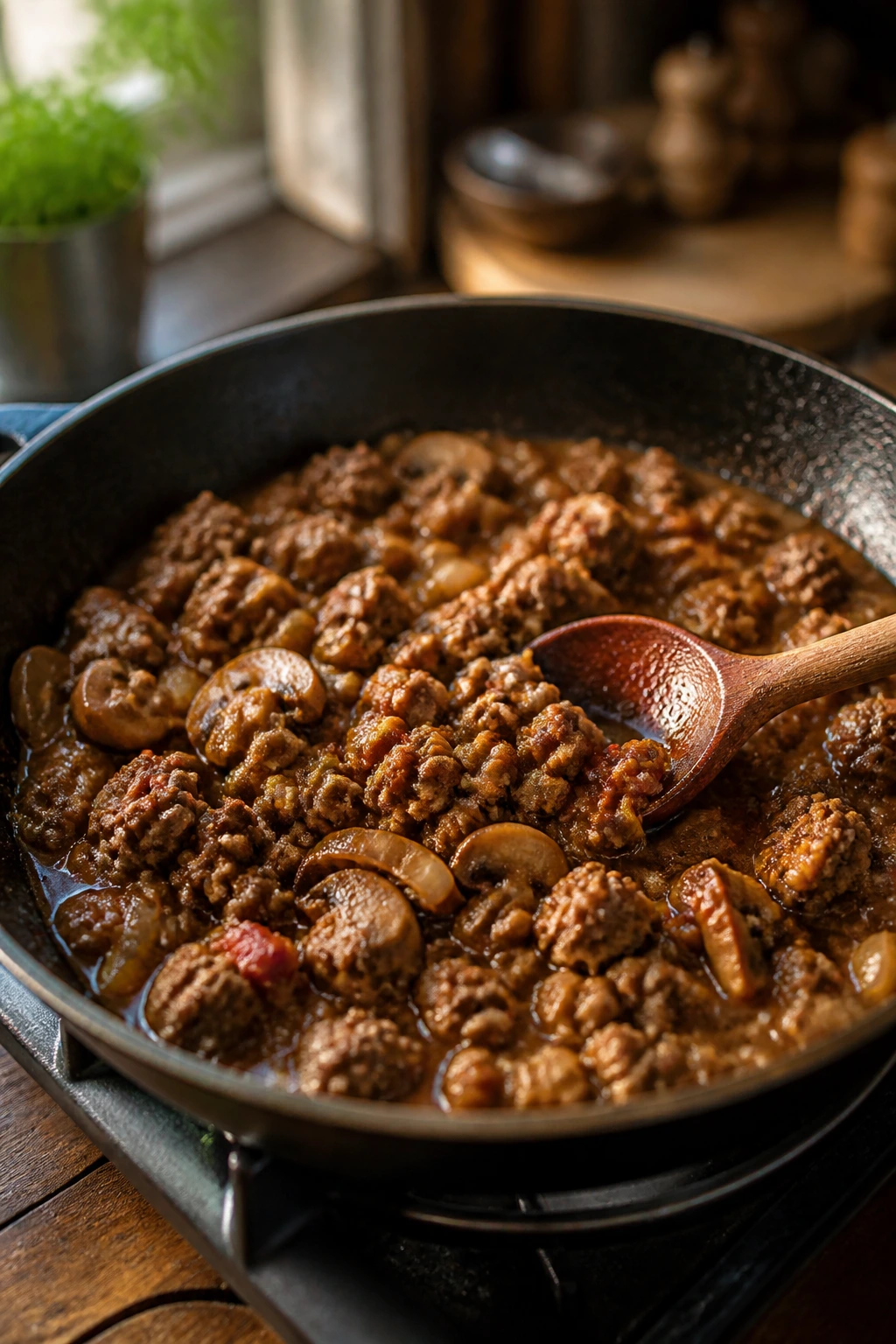
- Cooking the beef into tiny crumbs from the start. The meat turns dry and grainy, especially after it goes back into the gravy. Brown it in larger chunks first, then break it up later.
- Crowding the mushrooms and onions. If the pan is overloaded, the vegetables steam and go soft without any color. Give them room and wait for the liquid to cook off before moving on.
- Adding the flour too late or not cooking it long enough. Raw flour tastes chalky and can leave the gravy pasty. Stir it with the vegetables for a full minute before the broth goes in.
- Boiling after the sour cream is added. The sauce can split into little flecks and look broken. Turn off the heat first, then stir in the dairy gently.
- Using salty broth and seasoning aggressively at the beginning. Once the liquid reduces, the salt can jump forward hard and make the whole pan taste sharp. Season in stages and finish with small pinches at the end.
- Choosing extra-lean beef and draining away every drop of fat. The skillet loses flavor fast, and the meat can feel brittle. If you start with 90/10 beef, leave a little fat in the pan or add a tablespoon of oil back in.
Variations Worth Cooking Next
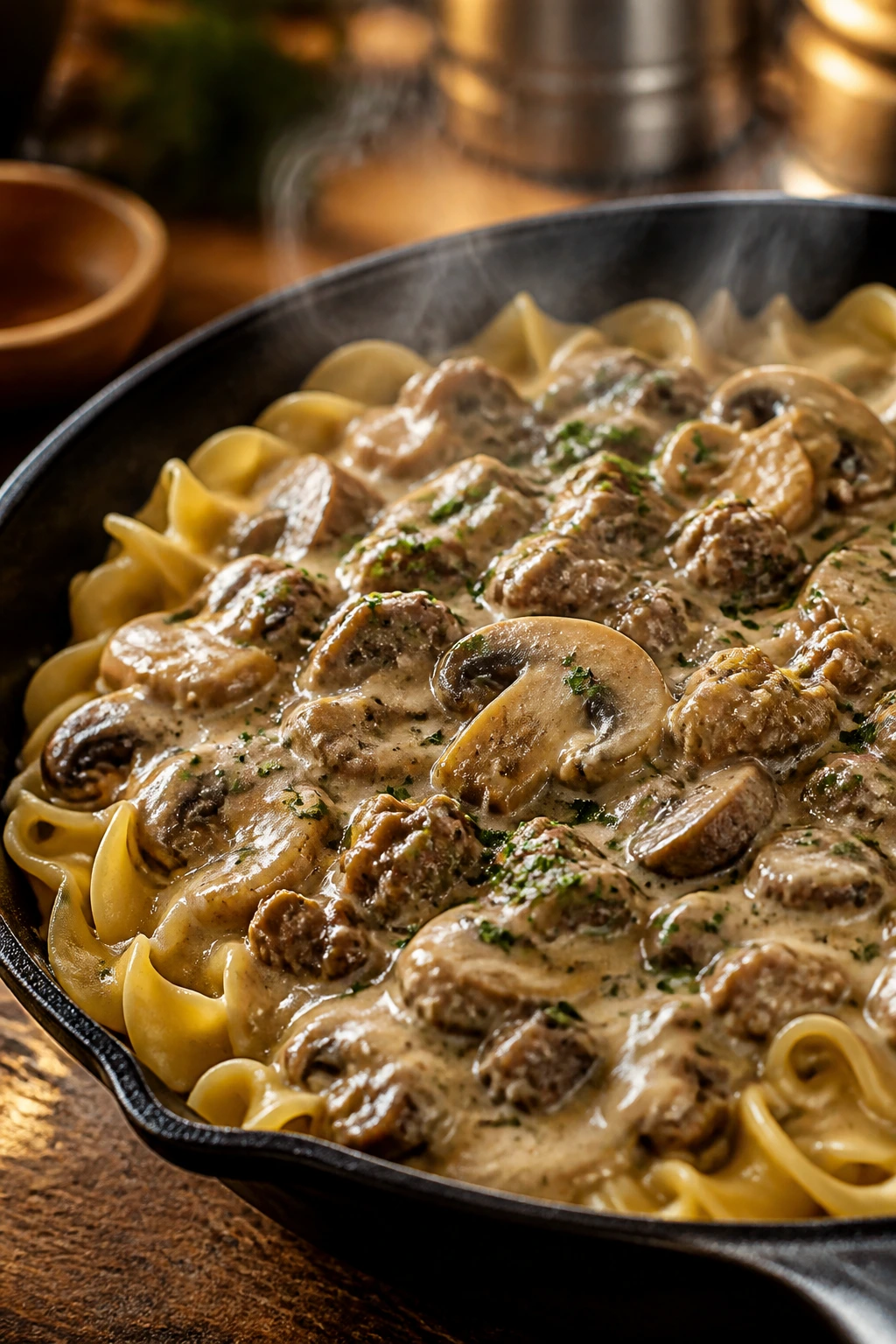
Stroganoff-Style Comfort Skillet
Skip the tomato paste and use an extra teaspoon of Dijon plus a pinch of paprika. Add another 4 ounces of mushrooms, then finish with a full 3/4 cup of sour cream and serve over egg noodles. It leans creamier and a little more old-world, which is not a bad direction at all.
Southwestern Beef Skillet
Add 1 teaspoon chili powder, 1/2 teaspoon cumin, 1 cup corn, and 1 can drained black beans during the simmer. Finish with chopped cilantro and a handful of shredded cheddar. This version is a little louder, a little more casual, and it loves tortilla chips on the side.
Dairy-Free Pantry Skillet
Leave out the sour cream and let the gravy reduce until it’s glossy on its own. A small splash of olive oil at the end gives the pan enough shine to feel finished, and a handful of parsley keeps it from tasting heavy. It’s a clean, savory version that still feels full.
Gluten-Free Gravy Skillet
Replace the flour with 1 tablespoon cornstarch whisked into 2 tablespoons cold broth. Stir that slurry into the simmering pan and cook until the sauce turns clear and thick, usually in about 1 minute. The texture is a little silkier, which I like here.
Hearty Vegetable Skillet
Add chopped zucchini, green beans, or a cup of chopped cabbage if you want more vegetable bulk. Toss in a handful of spinach at the very end so it wilts into the gravy without turning slimy. This is the version I make when there’s not much left in the crisper and I refuse to go shopping.
Make-Ahead, Storage, and Reheating
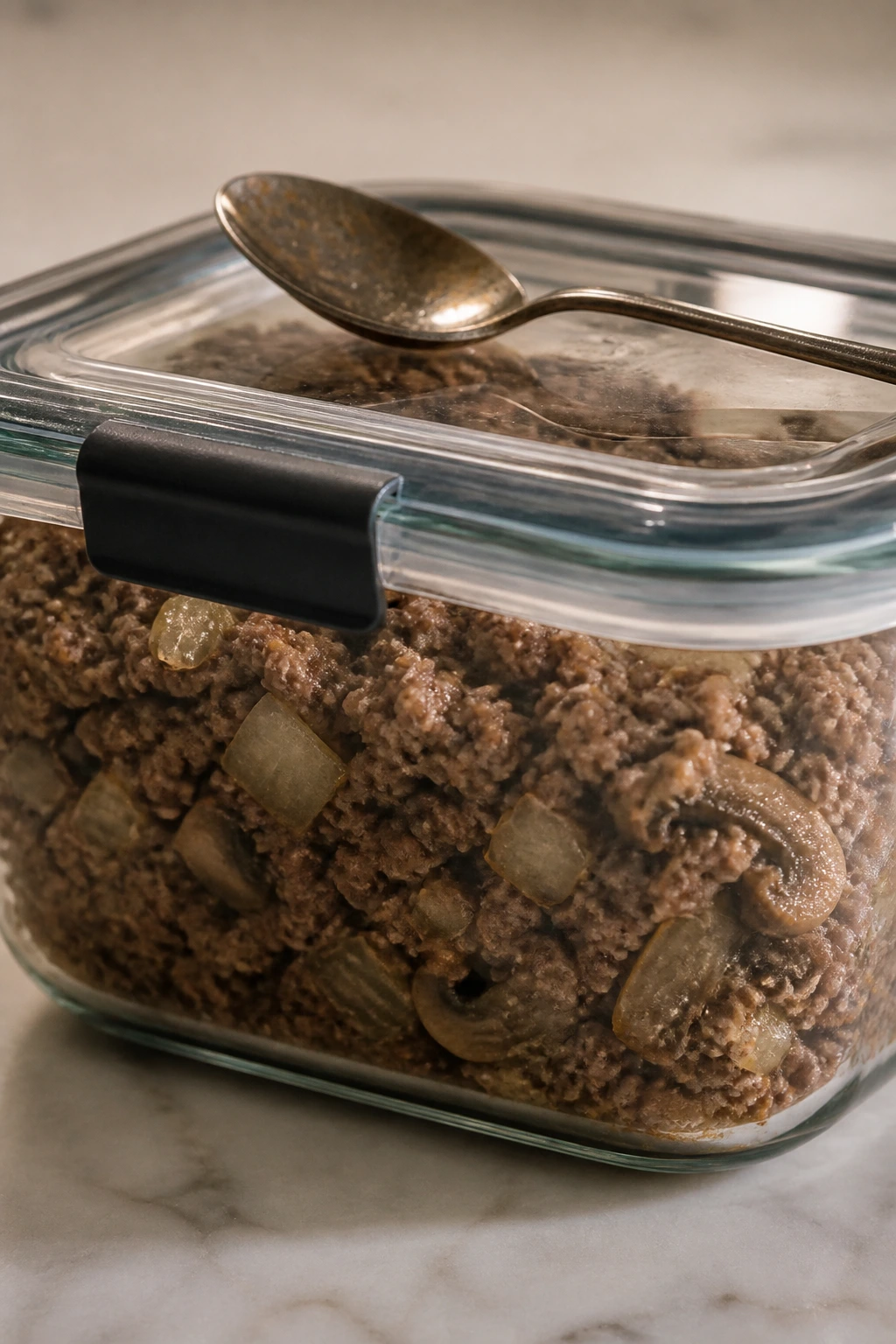
In the fridge: Cool the skillet within 2 hours of cooking, then store it in an airtight container for 3 to 4 days. If you’re serving it with mashed potatoes or noodles, keep the starch separate so it doesn’t soak up all the gravy and turn gluey.
In the freezer: The beef mixture freezes well for up to 2 months, but the texture is best if you freeze it before adding the sour cream. Freeze in a flat, sealed container or freezer bag with a little headspace, then thaw overnight in the fridge before reheating. Stir the sour cream in after the pan is warm again.
Reheating: Warm the skillet in a saucepan or skillet over medium-low heat with 2 to 4 tablespoons of broth to loosen the sauce. Stir often and stop when the beef is steaming hot and reaches 165°F / 74°C if you check it with a thermometer. In the microwave, cover the portion and heat in 60-second bursts at 50% power, stirring between each round.
Make-ahead: You can chop the vegetables a day in advance and keep them chilled in a covered container. The whole skillet can also be cooked through the gravy stage earlier in the day, then reheated gently and finished with peas and sour cream right before serving. That last-minute finish keeps the texture cleaner.
If the sauce tightens up in the fridge, that’s normal. A spoonful of broth brings it back. Don’t panic and drown it; just wake it up.
Questions People Ask Before Cooking It
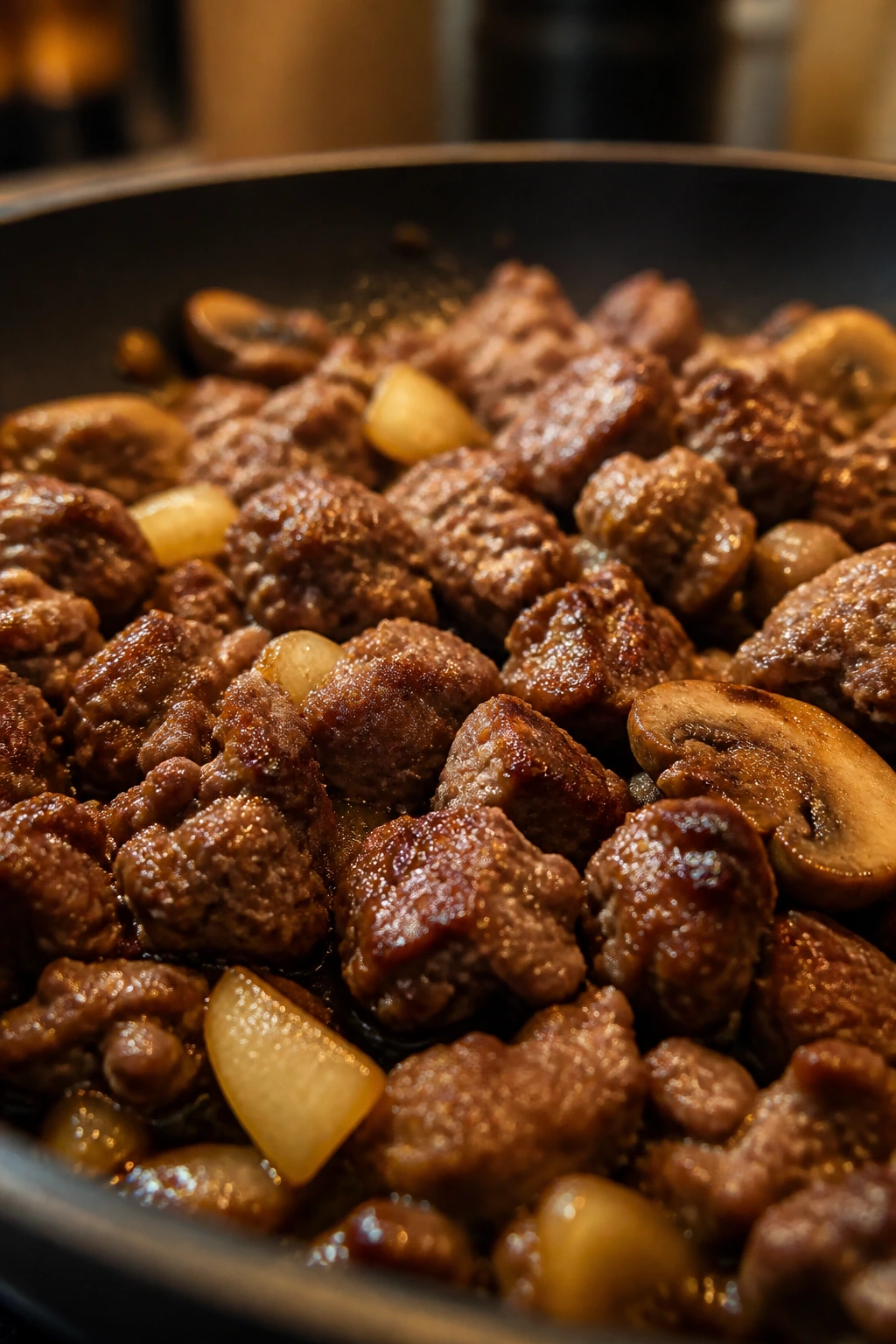
Can I use 90/10 ground beef instead of 80/20?
Yes, but add a bit more oil at the start and watch the pan more closely. Lean beef has less built-in cushion, so it dries out faster if you cook it all the way through before the sauce goes in.
Do I really need to brown the beef first?
Yes. Browning gives the skillet its savory base and keeps the texture from turning mushy. If you simmer raw beef straight in the gravy, you lose both flavor and the chance to get those browned bits into the sauce.
What if I don’t like mushrooms?
Leave them out and add more onion, carrot, or celery so the pan still has some vegetable body. You can also use chopped zucchini, which melts into the gravy more quietly than mushrooms do.
Can I make this ahead for dinner the next day?
Absolutely. Cook it through the simmer stage, cool it, then reheat gently and stir in the sour cream and peas at the end. That small change keeps the finish from turning flat overnight.
What if my gravy turns out too thin?
Keep it at a gentle simmer for another minute or two with the lid off. If it still needs help, whisk 1 teaspoon cornstarch with 1 tablespoon cold broth and stir it into the pan, then simmer until it thickens.
Can I freeze it with the sour cream already mixed in?
You can, but the texture is better if you add the sour cream after thawing. Dairy sometimes separates a little in the freezer, and this dish is polished enough to deserve the extra step.
What can I use instead of Worcestershire sauce?
Soy sauce works in a pinch, though it tastes saltier and a little less rounded. If you have balsamic vinegar, a tiny splash with a pinch of soy sauce can get close to that dark, savory edge.
Can I cook this in a cast-iron skillet?
Yes, and it browns beautifully in cast iron. Just keep the heat at medium once the vegetables go in, because cast iron hangs onto heat longer than thinner pans and can scorch the flour or tomato paste if you rush.
A Pan Dinner Worth Repeating
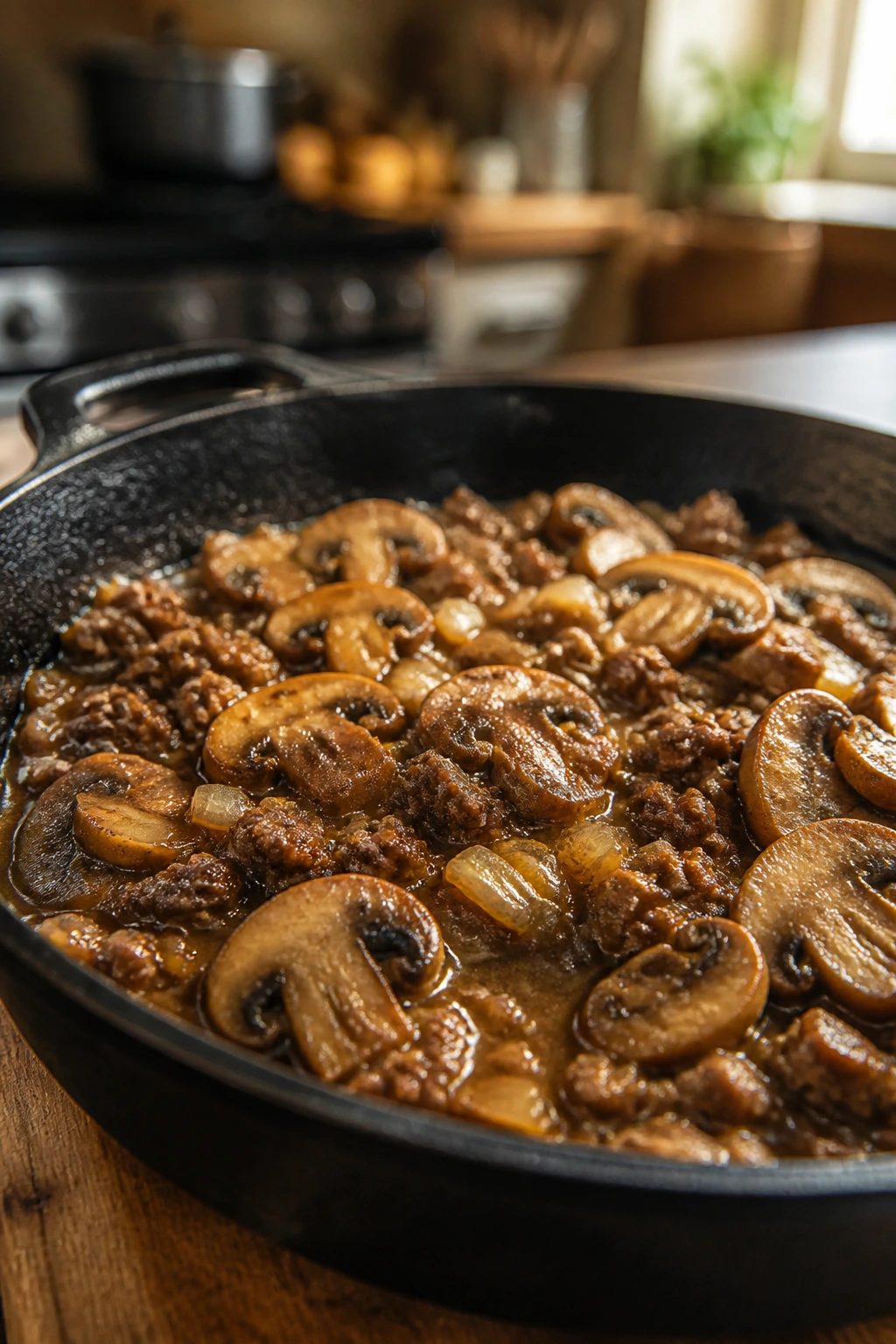
There’s a reason this kind of skillet dinner never really leaves the kitchen. It doesn’t ask for a long ingredient list, it doesn’t need a special shopping run, and it gives you something warm and substantial without turning the stove into a second job. That matters more than people admit.
Keep a pound of beef, an onion, and some broth in the house, and dinner is half built already. The rest is just timing: brown the meat, let the vegetables soften, and stop the pan before the beef loses its last bit of tenderness. That’s the part worth learning.
The next time the evening feels thin and the fridge doesn’t, I’d reach for this pan first.
Tender Ground Beef Skillet — Recipe Card
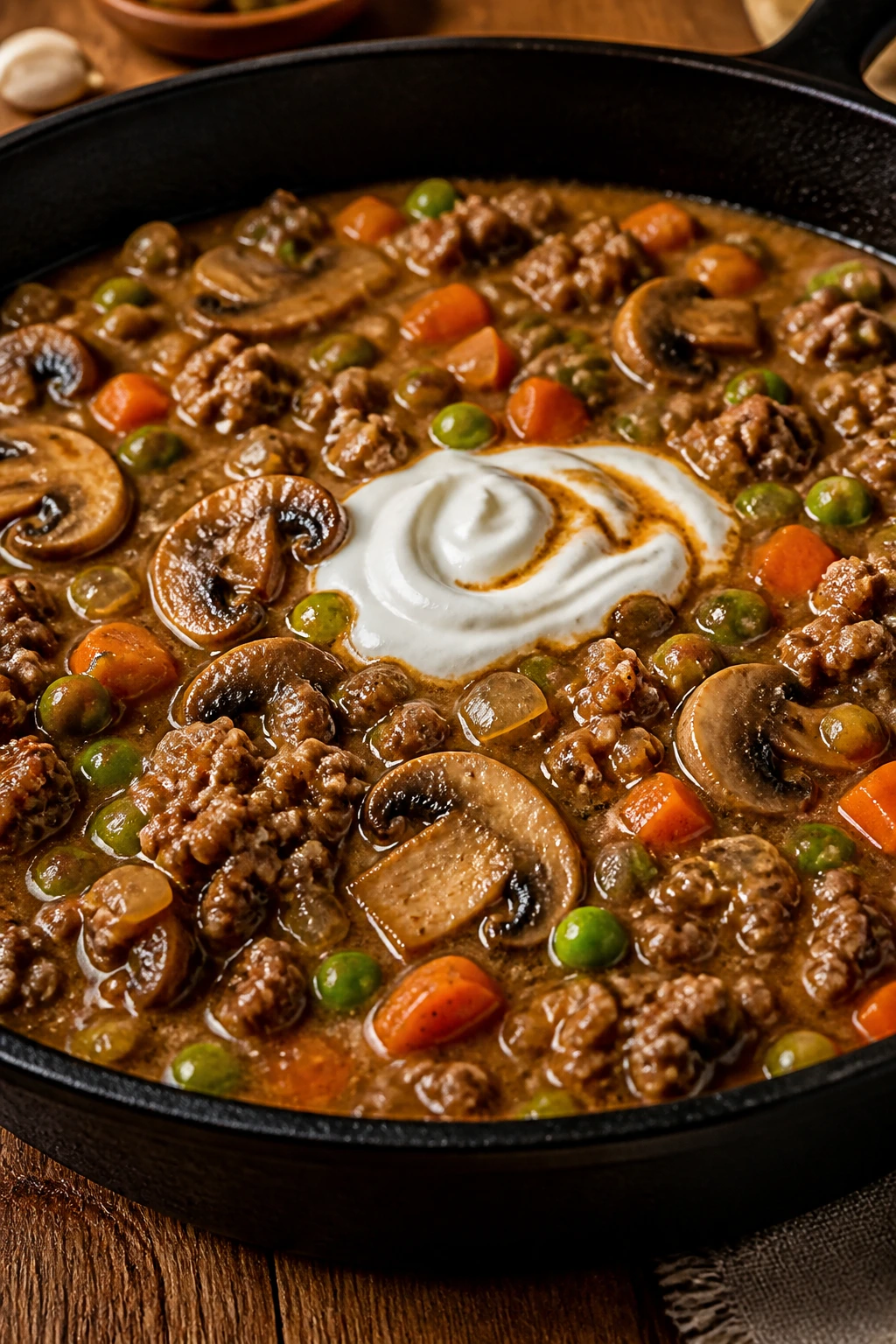
Recipe Name: Tender Ground Beef Skillet for a Hearty Dinner
Description: A savory one-skillet ground beef dinner with onions, mushrooms, carrots, peas, and a glossy beef gravy finished with sour cream. Serve it over mashed potatoes, buttered noodles, or rice for a filling meal with plenty of sauce.
Prep Time: 20 minutes
Cook Time: 30 minutes
Total Time: 50 minutes
Course: Dinner, Main Course
Cuisine: American
Servings: 6
Calories: About 420 kcal per serving
Ingredients
For the Skillet Base:
- 2 tablespoons olive oil
- 1 1/2 pounds ground beef, preferably 80/20 or 85/15
- 1 large yellow onion, diced
- 8 ounces cremini mushrooms, sliced
- 2 medium carrots, finely diced
- 2 celery stalks, finely diced
- 4 cloves garlic, minced
For the Gravy:
- 2 tablespoons tomato paste
- 2 tablespoons all-purpose flour
- 2 cups low-sodium beef broth
- 1 tablespoon Worcestershire sauce
- 1 teaspoon Dijon mustard
- 1 teaspoon dried thyme
- 1 bay leaf
- 1 teaspoon kosher salt, plus more to taste
- 1/2 teaspoon black pepper
To Finish:
- 1 cup frozen peas
- 1/2 cup sour cream or crème fraîche
- 2 tablespoons chopped fresh parsley
Instructions
-
Heat 1 tablespoon of the olive oil in a large skillet over medium-high heat. Add the ground beef in thick chunks and let it brown for 1 to 2 minutes before breaking it up. Season with half the salt and pepper, then cook for 5 to 6 minutes until browned but still juicy. Transfer to a plate.
-
Reduce the heat to medium and add the remaining olive oil, onion, carrots, celery, and mushrooms. Cook for 6 to 8 minutes, stirring occasionally, until the vegetables soften and the mushrooms lose their moisture.
-
Stir in the garlic, tomato paste, thyme, remaining salt, and black pepper. Cook for 1 minute.
-
Sprinkle the flour over the vegetables and stir for 1 minute. Slowly pour in the beef broth while scraping the browned bits from the pan. Stir in the Worcestershire sauce, Dijon mustard, and bay leaf.
-
Bring the skillet to a gentle simmer and cook for 4 to 5 minutes, until the sauce thickens enough to coat a spoon.
-
Return the beef and any juices to the skillet. Simmer for 2 to 3 minutes, until the beef reaches 160°F / 71°C. Stir in the peas and cook for 1 minute.
-
Turn off the heat. Remove the bay leaf and stir in the sour cream. Taste and adjust the seasoning. Finish with parsley and serve hot.
Notes: For the smoothest texture, add the sour cream off heat. If you want to freeze the skillet, freeze it before stirring in the sour cream and add that after reheating. A splash of broth loosens the sauce if it thickens in the fridge.