



A dry beef skillet is worse than bland. It feels like somebody promised dinner and handed you a pan of tight, crumbly regret. A juicy beef skillet for a hearty dinner has to start with the right beef, then respect the pan: hot enough to brown, gentle enough not to squeeze every drop of moisture out of the meat.
I like skillet dinners for the same reason I like a good roast chicken skin. The useful part is not mystery. It is the sequence. Brown the beef, pull it back before it turns leathery, let onions and mushrooms work in the drippings, then build a pan sauce that hangs onto noodles or mashed potatoes instead of disappearing under them. That’s the whole game, and it tastes far better than the sum of its parts.
This version borrows the comfort of an old-fashioned hamburger gravy and gives it a little more backbone: cremini mushrooms for earthiness, tomato paste for color, Worcestershire for that savory hum that makes beef taste beefier, and a finishing knob of butter so the sauce goes glossy instead of thin. The trick is not complicated, but it does ask for attention in a few places. Get those right, and the skillet comes to the table with soft onions, browned edges, and beef that still tastes like beef rather than sawdust.
Why This Beef Skillet Works So Well
-
85/15 Beef Has the Right Fat Balance: There’s enough fat to keep the crumbles tender, but not so much that the skillet turns greasy after the first simmer.
-
Mushrooms Do Real Work Here: Cremini mushrooms release their liquid, then brown in the same pan, which deepens the sauce and stretches the beef without making the dish feel thin.
-
The Tomato Paste Isn’t Decorative: A full minute in the hot pan cooks off the raw edge and gives the sauce a darker color and a more rounded taste.
-
The Sauce Clings Instead of Pooling: A little flour, a little broth, and a final piece of butter make the skillet glossy enough to coat noodles, rice, or mashed potatoes.
-
It Handles Big Servings Without Stress: The recipe scales cleanly, which matters when you want a dinner that feels substantial without switching to a casserole dish or two pans.
Yield, Timing, and Difficulty
Yield: Serves 4 generous portions
Prep Time: 15 minutes
Cook Time: 25 minutes
Total Time: 40 minutes
Difficulty: Beginner — the steps are straightforward, but the browning and sauce timing matter if you want the beef to stay tender.
Best Served: Right away, while the sauce is glossy and the beef still has a little give.
Ingredients for the Juiciest Version
For the Beef Skillet
- 1 1/2 pounds ground beef, preferably 85/15
- 1 teaspoon kosher salt
- 1/2 teaspoon freshly ground black pepper
- 1 tablespoon olive oil, only if your beef is lean
For the Vegetables and Sauce
- 1 medium yellow onion, diced into 1/4-inch pieces
- 8 ounces cremini mushrooms, sliced about 1/4 inch thick
- 1 red bell pepper, diced
- 3 cloves garlic, minced
- 2 tablespoons tomato paste
- 2 tablespoons all-purpose flour
- 1 1/2 cups low-sodium beef broth
- 1 tablespoon Worcestershire sauce
- 1 teaspoon Dijon mustard
- 1 teaspoon smoked paprika
- 1/2 teaspoon dried thyme
- 1/2 cup frozen peas
To Finish
- 2 tablespoons cold unsalted butter, cut into pieces
- 2 tablespoons chopped fresh parsley
What Each Ingredient Is Doing in the Pan
Ground Beef
What to use: 1 1/2 pounds ground beef with an 85/15 fat ratio. That’s the sweet spot for a juicy beef skillet because there’s enough fat to carry flavor without forcing you to drain off half the pan.
Preparation: Keep the beef cold until it hits the skillet, then season it before cooking so the salt starts pulling the flavor together right away. If you’re using a leaner blend, plan on the tablespoon of oil.
Substitutions: Ground turkey works, but it needs extra help from oil and a shorter cook time. Ground bison gives you a deeper flavor, though it runs lean and likes a touch more butter at the end.
Tips: Buy beef that looks fresh and feels firm through the package, not loose or watery. If the beef is packaged with a lot of liquid, cook it sooner rather than later.
Aromatics and Vegetables
What to use: One medium yellow onion, one red bell pepper, 8 ounces of cremini mushrooms, and 3 cloves of garlic. Together they build sweetness, body, and a little color so the skillet doesn’t taste like browned meat in a brown sauce.
Preparation: Dice the onion and bell pepper into small, even pieces so they soften at the same pace. Slice the mushrooms thin enough to brown, not so thin that they vanish into the pan, and mince the garlic last so it doesn’t dry out on the board.
Substitutions: White mushrooms work if cremini aren’t around, and a green bell pepper gives the dish a sharper edge. If mushrooms are not your thing, add another half onion and a diced celery stalk.
Tips: The mushrooms should go from squeaky to soft to browned. That middle step matters. If they never get past the watery stage, the sauce will taste thin.
Sauce Builders and Seasoning
What to use: Tomato paste, flour, beef broth, Worcestershire sauce, Dijon mustard, smoked paprika, and dried thyme. These are the pieces that make the skillet taste like something that cooked for longer than it actually did.
Preparation: Measure everything before the pan heats up. Once the onions and mushrooms are ready, the sauce comes together quickly, and you do not want to be hunting for the broth while the garlic is threatening to burn.
Substitutions: For gluten-free cooking, replace the flour with 1 tablespoon cornstarch whisked with 2 tablespoons cold water and add it near the end. If you want more depth, a splash of dry red wine can replace a few tablespoons of the broth.
Tips: Use low-sodium broth if possible. Worcestershire already brings salt, and tomato paste can push the savory note hard enough without making the whole pan taste like the inside of a deli counter.
Finishing Ingredients
What to use: Frozen peas, cold butter, and parsley. The peas add a little pop, the butter rounds the sauce, and the parsley keeps the final plate from looking muddy.
Preparation: Keep the butter cold and cut it into a few pieces so it melts evenly off the heat. Add the peas straight from the freezer; thawing them first only makes them limp.
Substitutions: Frozen corn, chopped spinach, or even a handful of baby kale can replace the peas. If you need a dairy-free finish, use olive oil instead of butter and a small squeeze of lemon.
Tips: Butter goes in after the heat is off. If you boil it, the sauce can split and lose that silky finish that makes the whole skillet look cared for.
Tools That Make the Skillet Easier
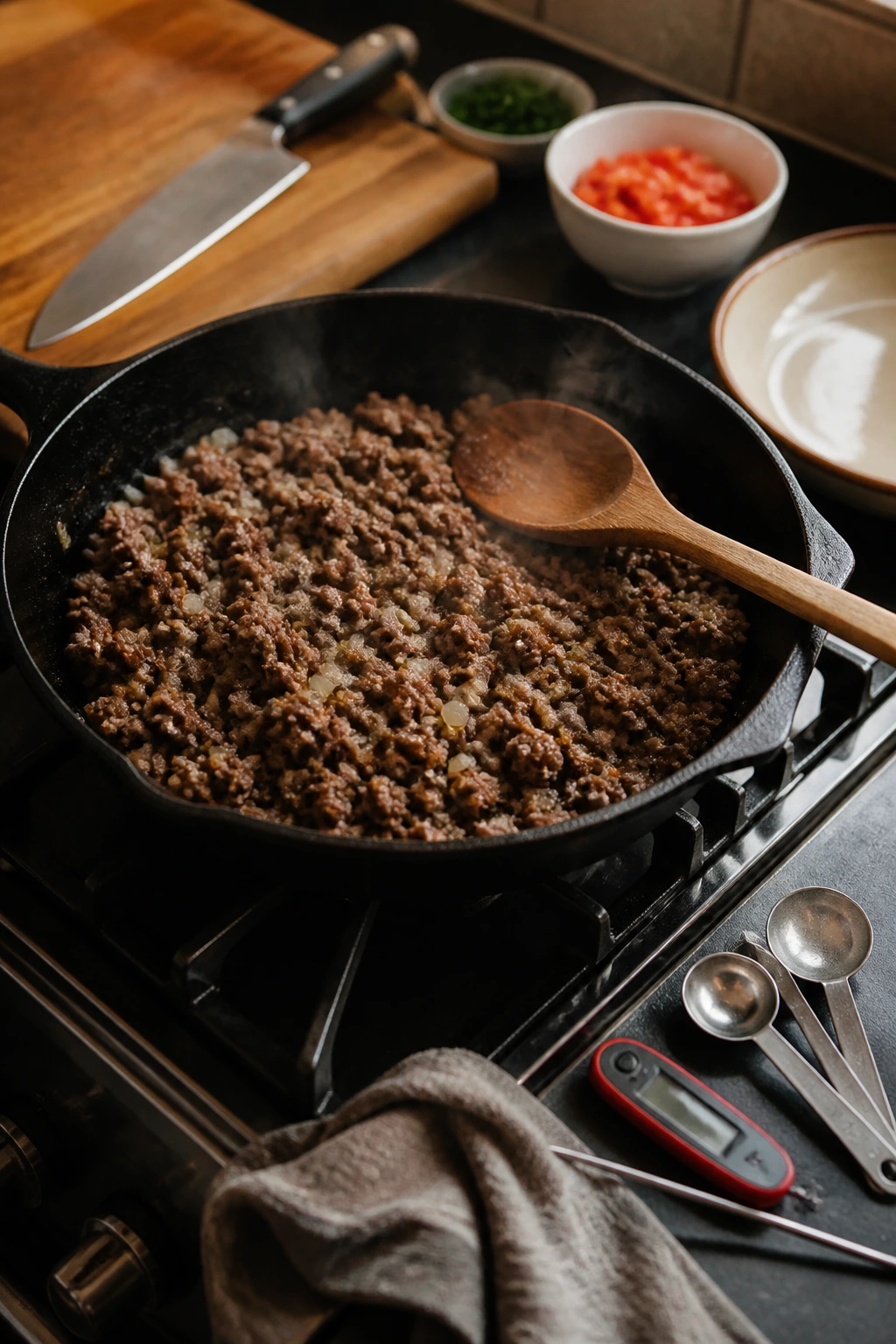
- 12-inch heavy skillet: Cast iron or stainless steel works best because it browns the beef and vegetables instead of steaming them.
- Wooden spoon or heatproof spatula: You need something sturdy for breaking up the beef and scraping the browned bits from the pan.
- Sharp chef’s knife: Clean cuts on the onion, pepper, and mushrooms help everything cook evenly.
- Cutting board: A large board gives you room to prep without knocking garlic and parsley into the sink.
- Measuring spoons and cups: The sauce depends on proportion, and eyeballing broth and flour gets messy fast.
- Instant-read thermometer: Useful if you want a clean answer on doneness; ground beef should reach 160°F / 71°C.
- Small bowl or plate for resting the beef: Removing the beef briefly keeps it from overcooking while the vegetables soften.
- Lid or sheet pan, optional: Helpful if you want to hold the finished skillet warm for a few minutes before serving.
Step-by-Step: From Browning to Sauce
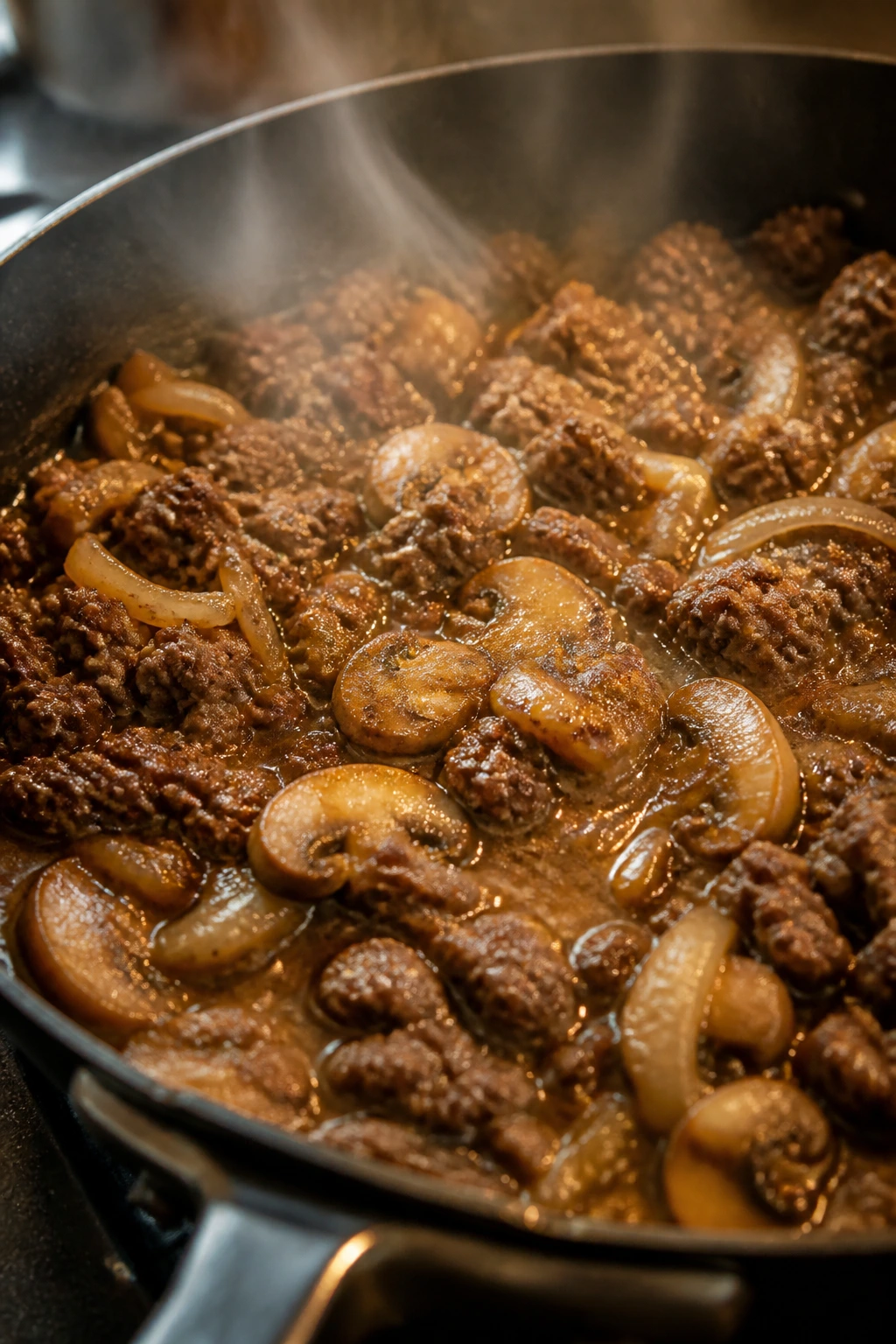
Prep the Vegetables and Season the Beef
-
Dice the onion, red bell pepper, and parsley. Slice the mushrooms and mince the garlic. Measure the broth, Worcestershire sauce, Dijon, flour, paprika, thyme, peas, and butter so everything is ready when the pan gets hot.
-
Season the ground beef with the kosher salt and black pepper. If your beef is leaner than 85/15, keep the olive oil close by for the skillet.
Brown the Beef
-
Set a 12-inch skillet over medium-high heat and let it heat for about 2 minutes. Add the olive oil only if the beef is lean. When the skillet is hot, add the beef in 4 to 5 chunks and let it sit for 2 minutes before stirring. That first pause builds browned spots.
-
Break the beef apart with a wooden spoon and cook for 3 to 4 more minutes, stirring only occasionally, until most of the pink is gone but the meat still looks moist. Transfer the beef to a plate, leaving any juices behind.
-
If there’s more than about 1 tablespoon of fat in the pan, spoon off the excess. Leave enough to coat the bottom; that thin film is what carries the vegetables.
Cook the Vegetables
-
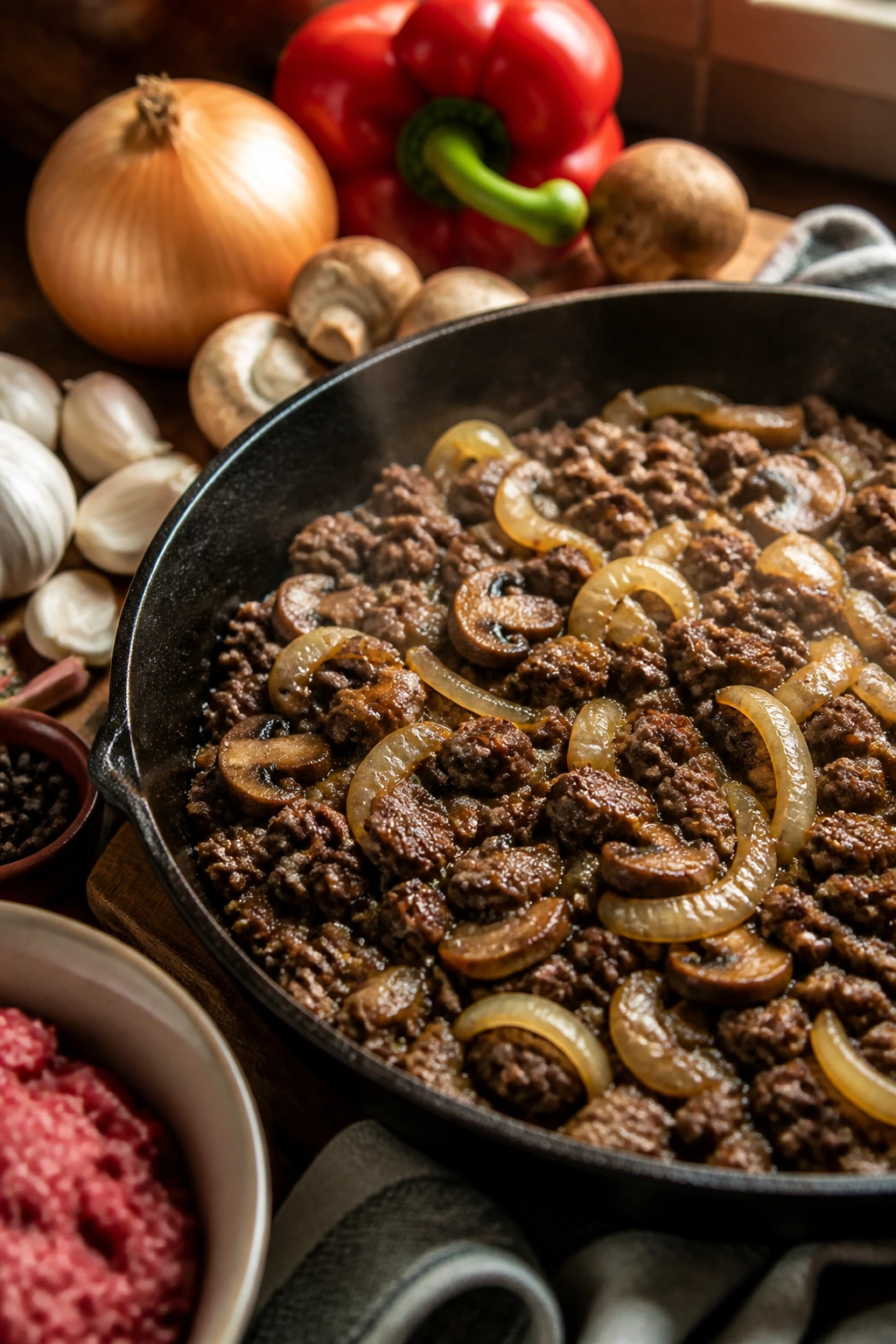
Add the onion, mushrooms, and bell pepper to the skillet. Cook for 6 to 8 minutes, stirring every minute or so, until the onions are soft, the mushrooms have released their liquid, and the edges are starting to brown. The pan should smell nutty, not wet.
-
Stir in the garlic, tomato paste, smoked paprika, and thyme. Cook for 1 minute, stirring constantly, until the tomato paste darkens a shade and the garlic smells sweet. Do not let the garlic brown hard.
-
Sprinkle the flour over the vegetables and stir for 30 to 45 seconds so it disappears into the fat and tomato paste. The mixture should look sticky and coated, not dry and powdery.
Build the Sauce and Finish
-
Pour in the beef broth slowly, followed by the Worcestershire sauce and Dijon mustard, while scraping the bottom of the skillet to lift the browned bits. Bring the pan to a simmer over medium heat and cook for 3 to 4 minutes, until the sauce lightly coats the back of a spoon.
-
Return the beef and any juices to the skillet. Stir in the frozen peas and simmer for 2 to 3 minutes, just until the beef reaches 160°F / 71°C and the peas are hot. Do not boil hard once the meat goes back in. That is how the beef turns dry.
-
Turn off the heat. Stir in the cold butter and parsley until the sauce looks glossy and smooth. Taste and adjust with a little more salt or pepper only if it needs it.
-
Rest the skillet for 2 minutes, then serve immediately over mashed potatoes, egg noodles, rice, or toasted bread.
How to Serve a Hearty Beef Skillet
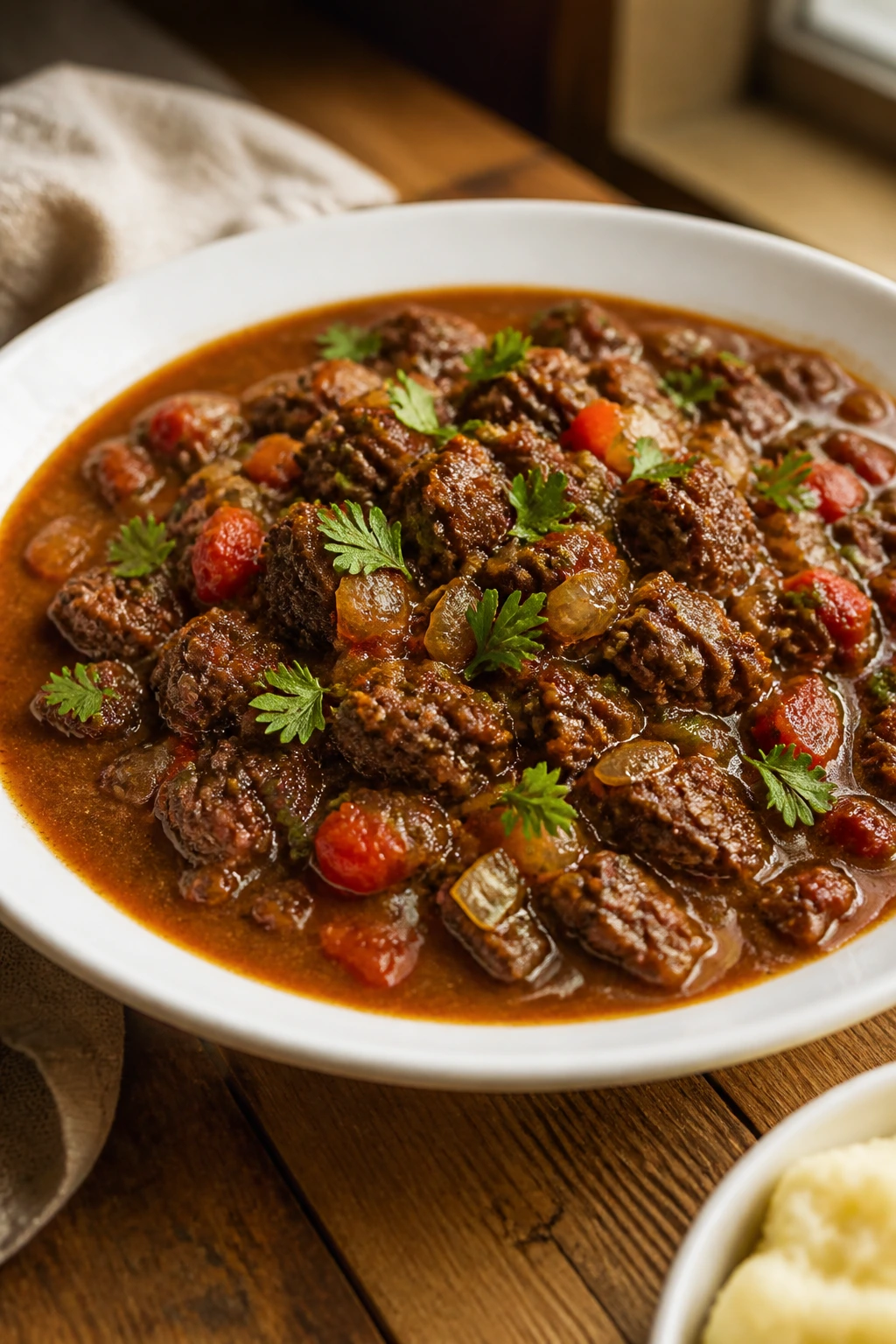
Presentation: Spoon the beef skillet into a wide bowl or shallow plate so the sauce spreads around the edges instead of disappearing into a deep pile. A little parsley on top is enough; you do not need a heavy garnish on a dish like this.
Accompaniments: Mashed potatoes are my favorite base because they catch the sauce and keep the plate soft and creamy. Buttered egg noodles work just as well, and so does rice if you want something lighter under the skillet. A simple green salad or garlicky green beans keeps the meal from feeling heavy in one direction.
Portions: Four people can eat this as a main course with a starch and a vegetable on the side. If you’re serving it with crusty bread and salad, it can stretch to 5 or 6 smaller servings without feeling skimpy.
Beverage Pairing: Unsweetened iced tea cuts through the richness cleanly, and a medium-bodied red wine like merlot or cabernet franc handles the beef without pushing the sauce aside. If you want something nonalcoholic and colder, sparkling water with a squeeze of lemon does the job.
Tips That Keep the Meat Juicy
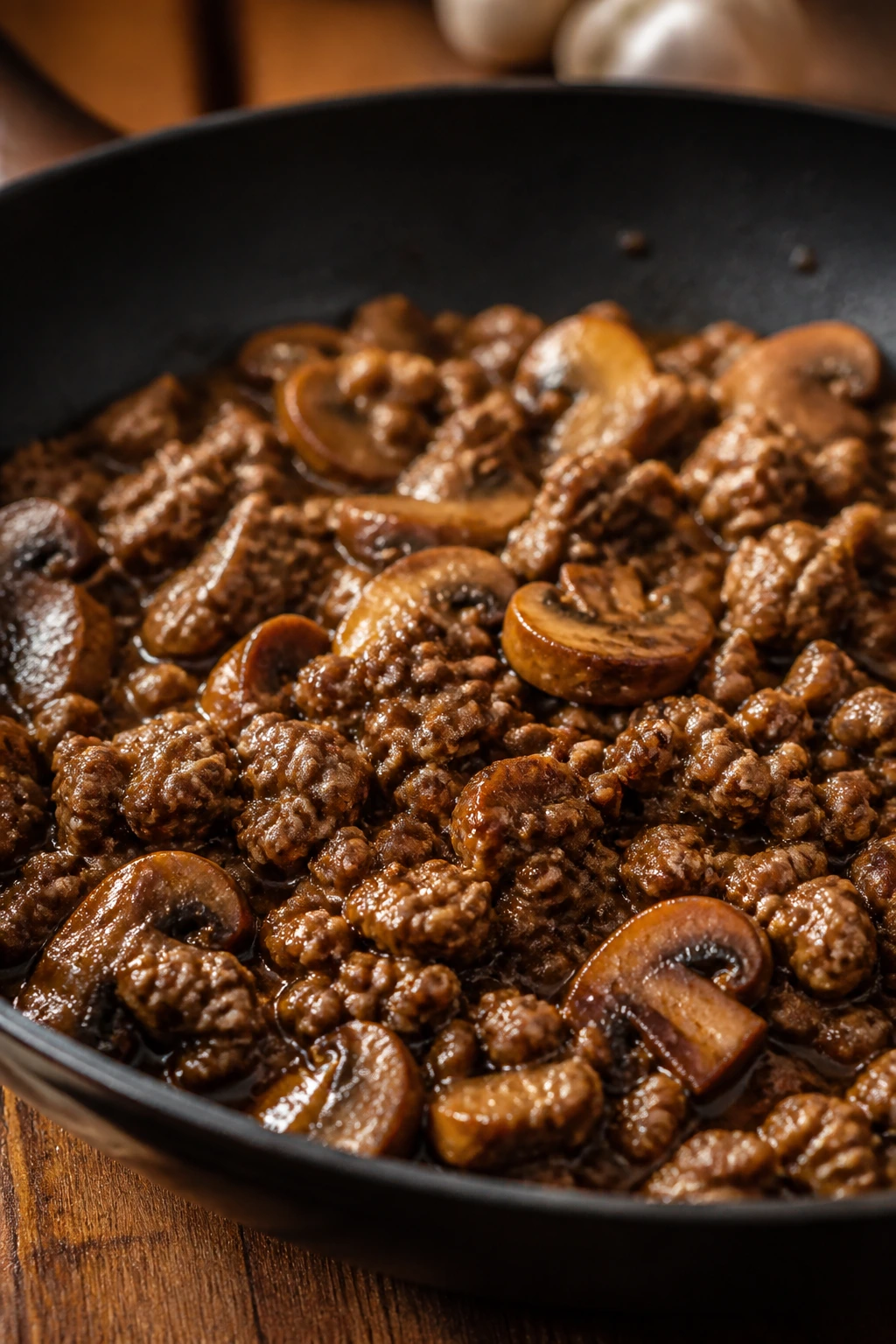
Fat Ratio: Start with 85/15 if you can. It gives you enough rendered fat to sauté the vegetables without leaning on a pile of oil, and it keeps the beef crumbles tender after the simmer.
Heat Control: Medium-high heat is for browning, not for the whole recipe. Once the broth goes in, drop the heat and let the sauce move at a gentle simmer. A hard boil is how good ground beef starts tasting like lunch meat.
Brown Before You Break: Let the beef sit in the pan for a minute or two before you really stir it apart. Those first dark spots matter. They add flavor, and they keep the meat from turning gray and soft too early.
Use the Mushrooms Fully: Don’t panic when the mushrooms dump liquid into the skillet. Keep cooking. Once that liquid evaporates and the mushrooms start to take on color, they become part of the sauce instead of a watery interruption.
Tiny Flavor Lift: A teaspoon of soy sauce stirred into the broth deepens the savory note if your beef is extra lean or your broth tastes thin. It doesn’t make the dish taste like soy sauce; it just gives the pan a darker edge.
Cost-Saver: Mushrooms are doing more than adding flavor. They stretch the skillet without making dinner feel padded, especially if you chop a few of them finely and let the rest stay sliced.
Mistakes That Dry Out the Beef
-
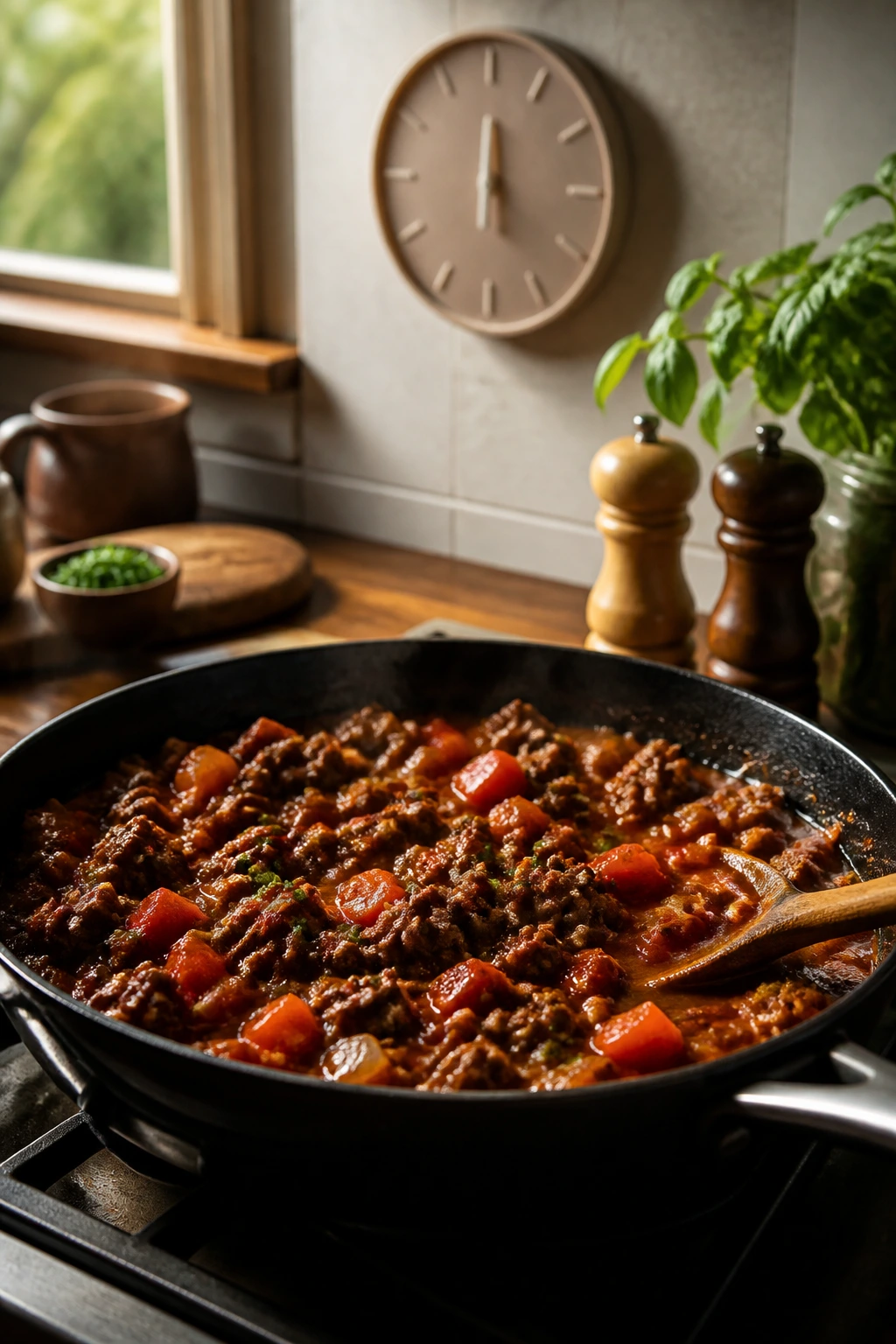
Stirring the beef constantly from the start: If you keep breaking it up before it browns, the meat steams and goes pale. Let it sit for a couple of minutes first, then break it apart once the bottom has some color.
-
Using extra-lean beef without a backup plan: 93/7 beef can work, but it needs the tablespoon of oil and a shorter cook time. Without that help, the skillet dries out fast and the sauce tastes thinner than it should.
-
Boiling the sauce after the beef goes back in: A hard simmer might not look dangerous, but it tightens the meat and makes the sauce taste sharper than it needs to. Keep it at a gentle bubble once the beef returns.
-
Adding flour in a lump: Flour wants to be dispersed. If you dump it in one pile, you get raw flour pockets or sticky clumps that never really disappear. Sprinkle it over the vegetables and stir it into the fat before the broth goes in.
-
Draining away too much flavor: A little excess fat can be removed, but don’t wipe out the pan like you’re scrubbing a roasting tray. Those browned bits and a thin film of fat are what give the sauce its body.
-
Skipping the final butter finish: The skillet will still be edible, sure. But it won’t have that soft, glossy finish that makes the sauce cling to noodles and mashed potatoes instead of slipping off them.
Flavor Variations Worth Trying
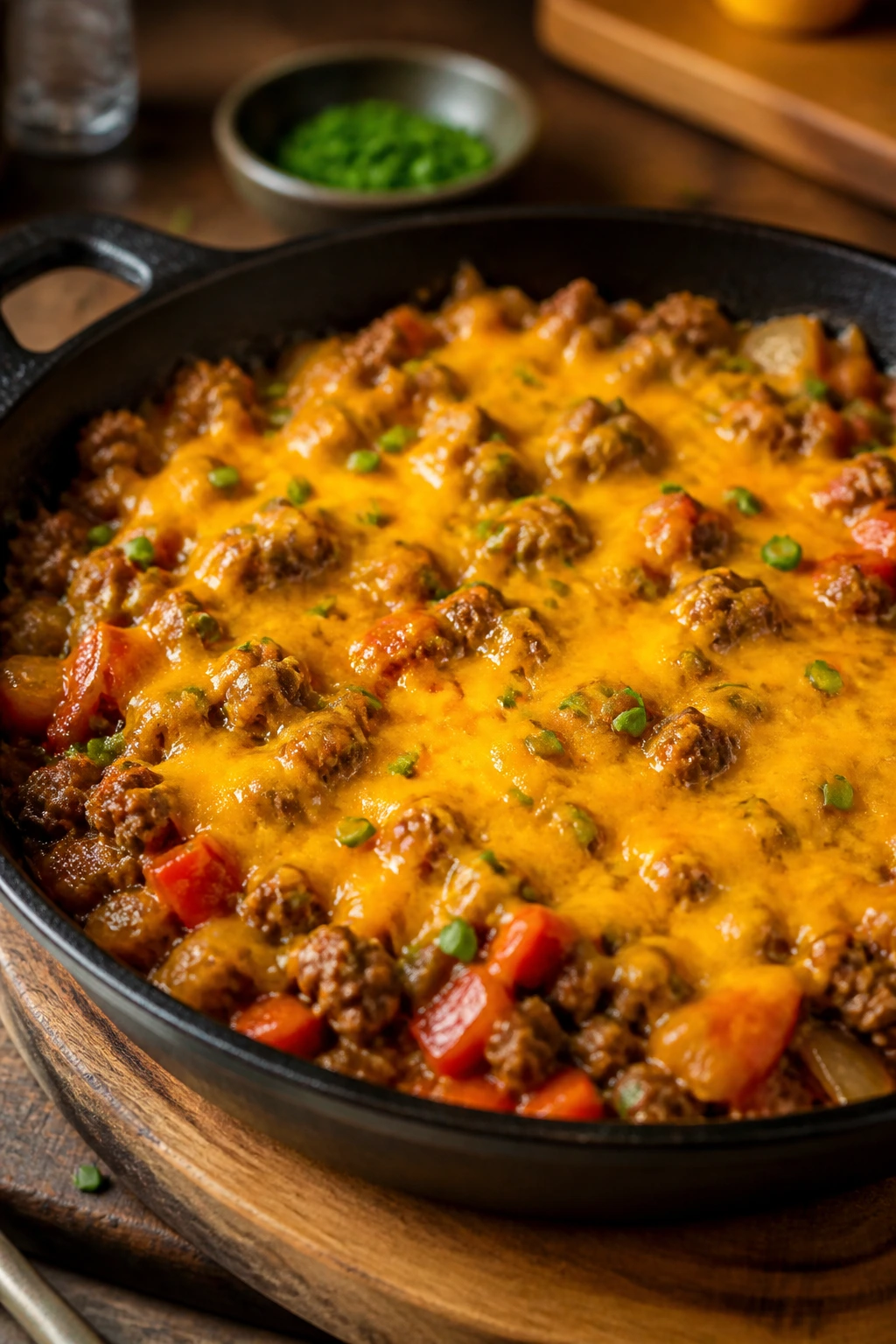
Smoky Cheddar Skillet
Stir 1 cup of shredded sharp cheddar into the finished skillet after you turn off the heat, then top with chives. It turns the dish richer and a little more casserole-like, which works well over baked potatoes or buttered toast.
Southwestern Beef Skillet
Replace the smoked paprika with 1 teaspoon chili powder and 1/2 teaspoon ground cumin, then add 1 cup corn and 1/2 cup black beans when you return the beef to the pan. Finish with cilantro and a squeeze of lime. The sauce gets brighter and a touch sweeter.
Gluten-Free Skillet
Swap the all-purpose flour for 1 tablespoon cornstarch mixed with 2 tablespoons cold water. Stir the slurry into the simmering broth near the end and cook for 1 to 2 minutes until the sauce looks lightly thickened. The texture changes a bit, but the pan still eats like a proper dinner.
Dairy-Free Herb Skillet
Use olive oil instead of butter, then finish with a teaspoon of lemon juice and extra parsley. The sauce stays glossy enough, and the lemon keeps the whole pan from leaning too heavy.
Mushroom-Heavy Country Skillet
Double the mushrooms and reduce the beef to 1 1/4 pounds. It is a smart move if you want the pan to feel earthier and a little less rich, and it also stretches the meal without making the beef part feel skimpy.
Make-Ahead, Storage, and Reheating
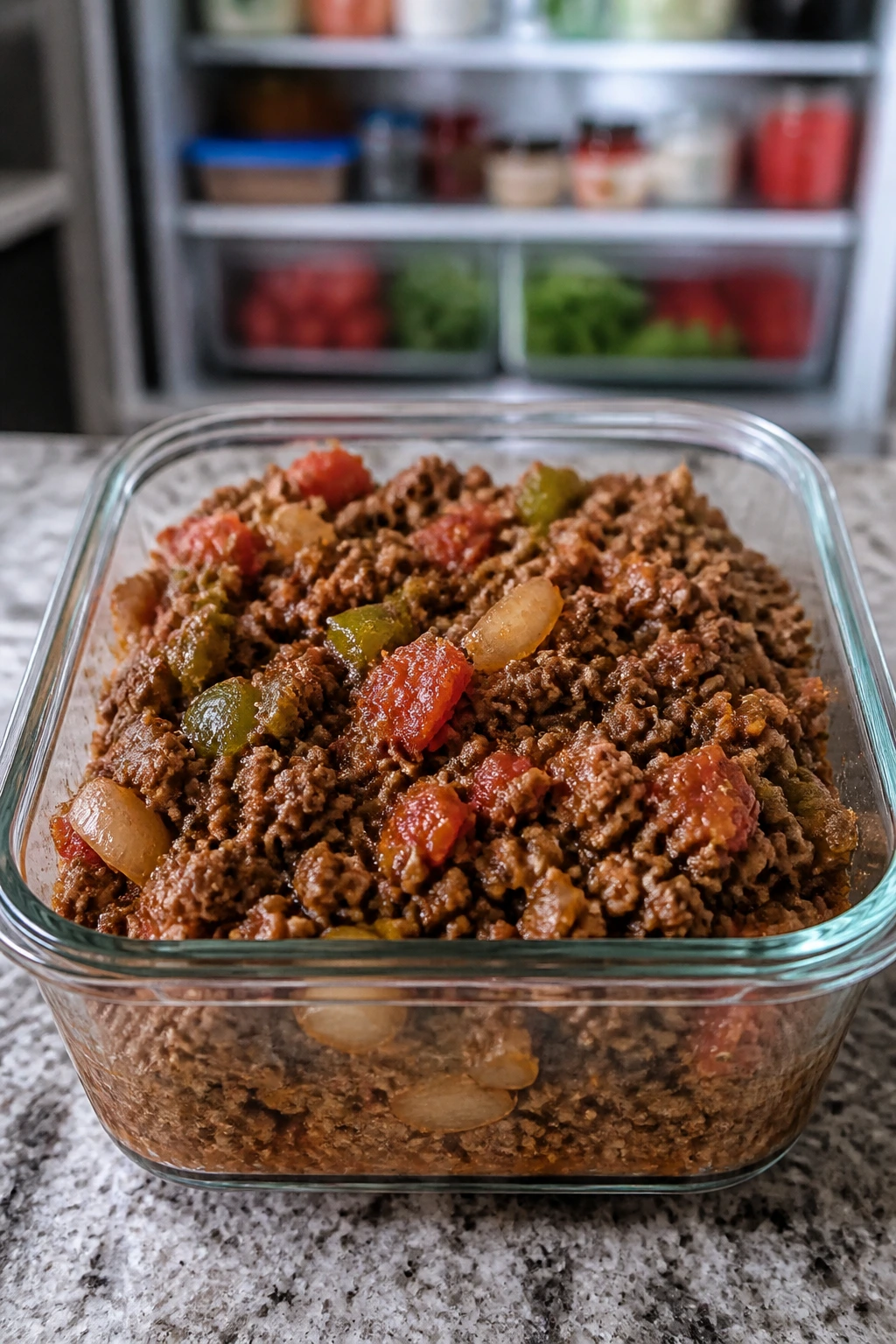
The finished skillet keeps well in the refrigerator for 3 to 4 days. Let it cool for a bit first, then move it into a shallow container so it drops in temperature faster. That matters more than most people think. Thick pans of hot food keep steaming inside their own container, and that can turn the beef soft in an unhelpful way.
If you want to freeze it, portion the beef skillet into airtight freezer containers and freeze for up to 2 months. The sauce will thicken and the vegetables will soften a little after thawing, but the flavor holds up. If you know you’re freezing it, leave the peas out and add them during reheating so they stay bright instead of wrinkled.
For reheating on the stovetop, put the skillet in a pan over medium-low heat with a splash of beef broth or water, about 2 to 4 tablespoons per serving. Cover loosely and stir every minute or so until it’s hot all the way through. In the microwave, use a covered dish and heat in 30-second bursts, stirring between rounds. That keeps the edges from drying out while the center still catches up.
This dish can be made a few hours ahead if dinner needs to wait. I would cook it through, stop before the parsley goes in, and then reheat gently with a little broth. Add the butter and parsley at the end so the finish still looks fresh. If you’re serving it over noodles or rice, keep the base separate until the last minute. Soggy noodles are nobody’s favorite compromise.
Questions People Ask About Beef Skillet
Can I use 90/10 or 93/7 ground beef instead of 85/15?
Yes, but you need to help it a little. Add the olive oil, keep the browning time short, and make sure the sauce finishes with butter so the skillet doesn’t taste lean and dry.
Do I have to use mushrooms?
No, but they do more than fill space. They add moisture and a darker, woodsy flavor that makes the sauce taste deeper. If you skip them, add another half onion and a splash more broth.
What’s the best way to know the beef is done without overcooking it?
An instant-read thermometer is the cleanest answer: 160°F / 71°C for ground beef. If you don’t use a thermometer, look for beef that’s no longer pink but still looks moist, then pull it off the heat as soon as the sauce is finished.
Can I make this into a one-pan meal with potatoes or noodles?
Yes, though the timing changes. For potatoes, par-cook small diced potatoes until they’re almost tender, then add them with the broth. For noodles, I’d cook them separately and spoon the beef skillet over the top so they don’t drink all the sauce in the pan.
My sauce got too thick. What happened?
Usually the heat ran a little high or the flour absorbed more liquid than expected. Stir in broth, one tablespoon at a time, until the sauce loosens to a spoon-coating consistency.
My sauce is too thin. How do I fix it without starting over?
Let it simmer a few minutes longer before adding the butter. If it still looks loose, stir 1 teaspoon cornstarch with 1 tablespoon cold water and add it slowly to the simmering pan until the sauce tightens.
Can I use frozen vegetables instead of fresh onions and peppers?
Frozen peas are fine because they go in at the end, but frozen onions and peppers tend to release too much water for this recipe. Fresh vegetables brown better, and browning is where the flavor comes from.
A Last Word on Getting This Dish Right
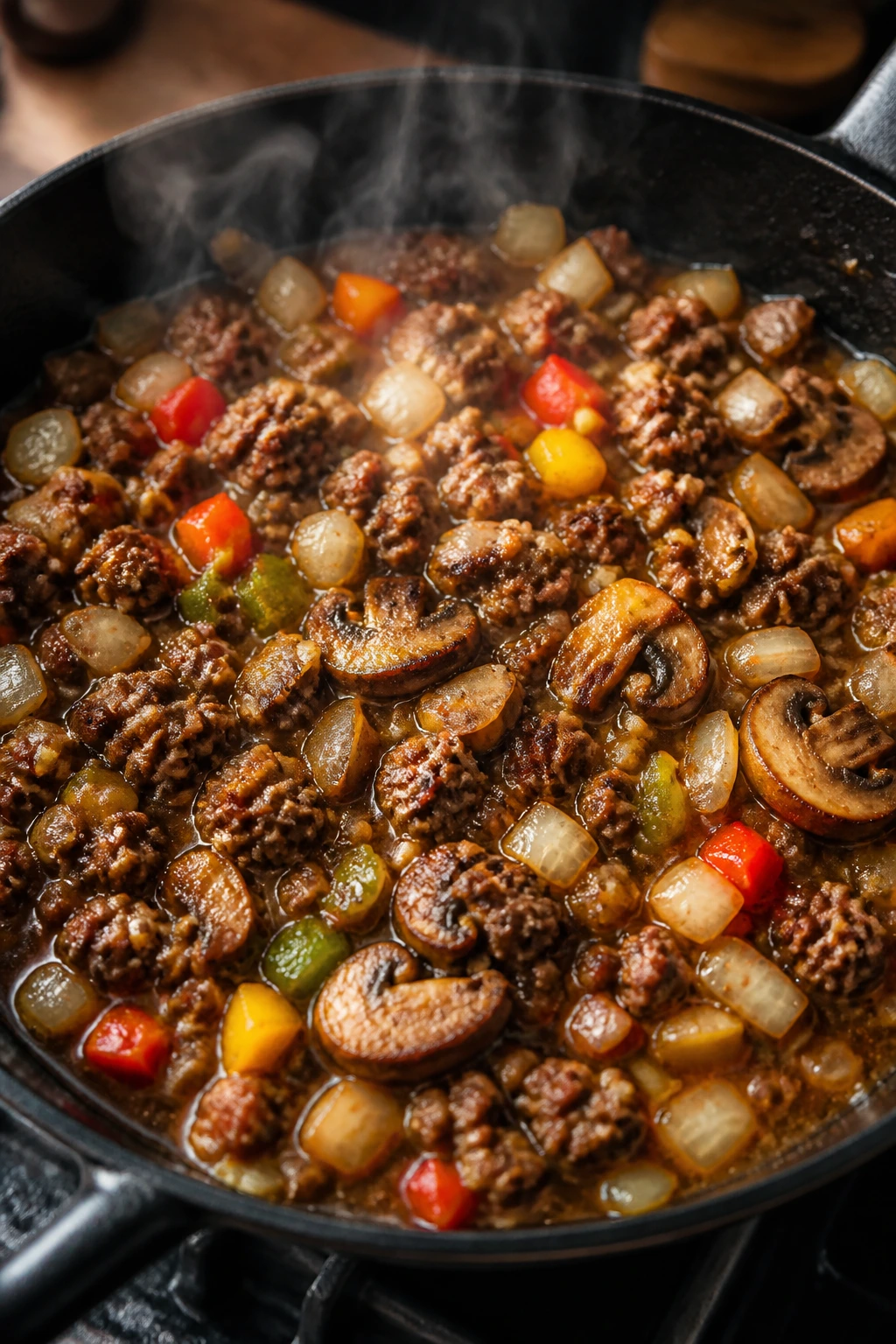
A skillet like this does not need theatrics. It needs heat, timing, and a little respect for what ground beef actually does in a pan. Brown it hard enough to build flavor, then stop before it loses its tenderness. Let the vegetables work in the drippings. Finish with a sauce that stays loose enough to spread, not a paste that sits in a lump.
That’s the part I like most. The whole dinner depends on a few small decisions, and none of them are fussy. Make it once with mashed potatoes, then try it over noodles the next time. The pan will tell you where to go from there.
Juicy Beef Skillet for a Hearty Dinner — Recipe Card
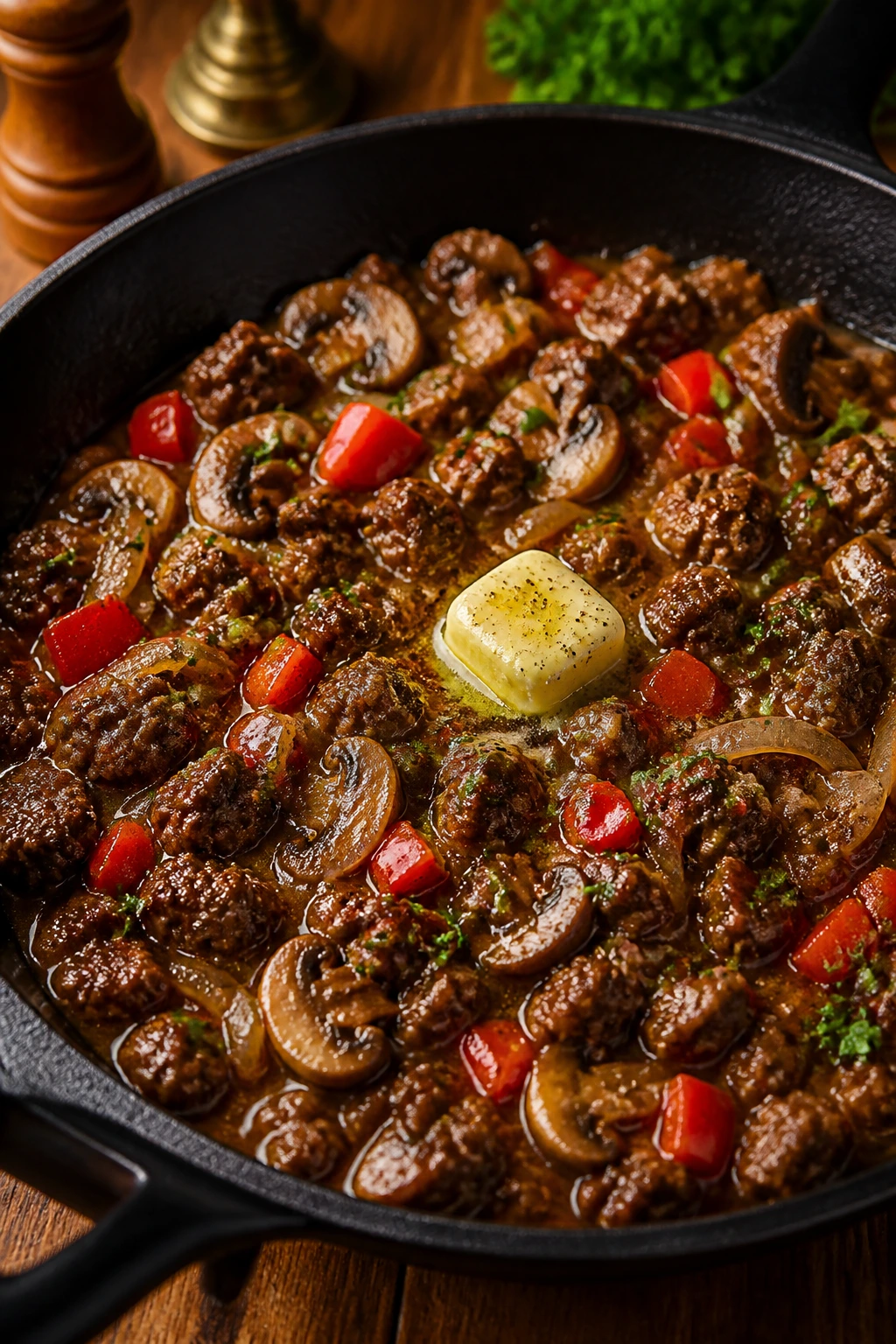
Recipe Name: Juicy Beef Skillet for a Hearty Dinner
Description: A one-pan beef skillet with browned ground beef, onions, mushrooms, bell pepper, and a glossy pan sauce that coats every bite. Serve it over mashed potatoes, egg noodles, or rice for a simple, filling dinner.
Prep Time: 15 minutes
Cook Time: 25 minutes
Total Time: 40 minutes
Course: Dinner, Main Course
Cuisine: American
Servings: 4 servings
Calories: About 450 kcal per serving
Ingredients
For the Beef Skillet
- 1 1/2 pounds ground beef, preferably 85/15
- 1 teaspoon kosher salt
- 1/2 teaspoon freshly ground black pepper
- 1 tablespoon olive oil, only if your beef is lean
For the Vegetables and Sauce
- 1 medium yellow onion, diced
- 8 ounces cremini mushrooms, sliced
- 1 red bell pepper, diced
- 3 cloves garlic, minced
- 2 tablespoons tomato paste
- 2 tablespoons all-purpose flour
- 1 1/2 cups low-sodium beef broth
- 1 tablespoon Worcestershire sauce
- 1 teaspoon Dijon mustard
- 1 teaspoon smoked paprika
- 1/2 teaspoon dried thyme
- 1/2 cup frozen peas
To Finish
- 2 tablespoons cold unsalted butter, cut into pieces
- 2 tablespoons chopped fresh parsley
Instructions
-
Dice the onion, bell pepper, and parsley. Slice the mushrooms and mince the garlic. Measure the broth, Worcestershire, Dijon, flour, paprika, thyme, peas, and butter.
-
Season the ground beef with salt and pepper. Heat a 12-inch skillet over medium-high heat for 2 minutes, then add oil if needed.
-
Add the beef in chunks and let it brown for 2 minutes before stirring. Break it up and cook 3 to 4 minutes more, then transfer it to a plate.
-
Add the onion, mushrooms, and bell pepper to the skillet. Cook 6 to 8 minutes until softened and lightly browned.
-
Stir in the garlic, tomato paste, smoked paprika, and thyme. Cook for 1 minute.
-
Sprinkle in the flour and stir until coated. Slowly pour in the broth, Worcestershire sauce, and Dijon mustard while scraping up the browned bits.
-
Simmer 3 to 4 minutes until the sauce thickens slightly. Return the beef and any juices to the skillet, then stir in the peas.
-
Cook 2 to 3 minutes more until the beef reaches 160°F / 71°C and the peas are hot.
-
Turn off the heat, stir in the butter and parsley, then serve immediately.
Notes: If your beef is leaner than 85/15, keep the olive oil in the pan. For a thicker sauce, simmer 1 to 2 minutes longer before adding the butter. If you want a gluten-free version, swap the flour for cornstarch slurry.