



A smoky pineapple glaze for ham solves a problem most ham recipes ignore: too much sweetness, not enough shape. Brown sugar alone can smear across the surface like melted candy. Pineapple juice changes the whole game, because the acid cuts through the ham’s salt and fat while the fruit flavor keeps the glaze from tasting flat.
The texture matters as much as the flavor. A good ham glaze should go on in thin coats, settle into the spiral cuts, and bake down to a sticky sheen that clings to the knife when you slice it. If it gets poured on too early, it burns; if it stays too loose, it runs off into the pan and leaves you with a sweet puddle instead of a lacquered crust. That balance is the whole point here.
Smoked paprika, Dijon, and a little vinegar do the quiet work. They don’t shout. They keep the brown sugar from turning cloying and give the pineapple something savory to lean on, which is why this ham tastes deeper on the second bite than the first. The best versions smell like caramelized fruit and warm spice before they ever leave the oven.
Why Pineapple, Smoke, and Brown Sugar Work So Well on Ham
Ham is already doing half the work before you touch a saucepan. It’s salty, a little rich, and usually fully cooked, which means your job is not to rescue it. Your job is to sharpen it.
Pineapple juice brings a bright edge that keeps the glaze from tasting like plain caramel. The acidity wakes up the fat, and the natural sugars in the juice help the glaze darken into a deep amber color without needing a heavy hand. If you’ve ever bitten into a ham glaze that tasted one-dimensional, this is the missing piece.
Brown sugar gives the glaze its body. Dark brown sugar is my preference here because the molasses notes sit closer to smoke and caramel than plain white sweetness does. It melts into the pineapple juice and creates that thick, spoon-coating syrup you want, the kind that looks thin for a minute and then suddenly starts to cling.
The smoke note matters too, but not in a loud barbecue way. Smoked paprika gives the glaze a dry, woodsy smell that reads as savory once it hits the oven. A pinch of ginger and clove rounds the edges. That combination makes the ham taste finished, not dressed up at the last second.
Why You’ll Love This Recipe
-
Sticky edges, not sugary runoff: The glaze reduces to a syrup that clings to spiral-cut slices instead of sliding straight into the roasting pan.
-
Sweetness with a spine: Pineapple juice, Dijon, and apple cider vinegar keep the brown sugar from turning into candy.
-
Smoke that stays in the background: Smoked paprika gives the glaze a cooked, wood-fired smell without taking over the whole plate.
-
Works with the ham you already bought: A fully cooked bone-in ham only needs heating and glazing, so you can focus on flavor instead of babysitting a raw roast.
-
The leftovers hold up: Cold slices keep their shape, and the glaze turns into an easy sandwich spread once it cools.
-
It looks right on the table: The surface goes from shiny amber to dark mahogany in the last stretch of baking, which is exactly what you want before you carve.
Timing, Yield, and the One Thing to Know Before You Start
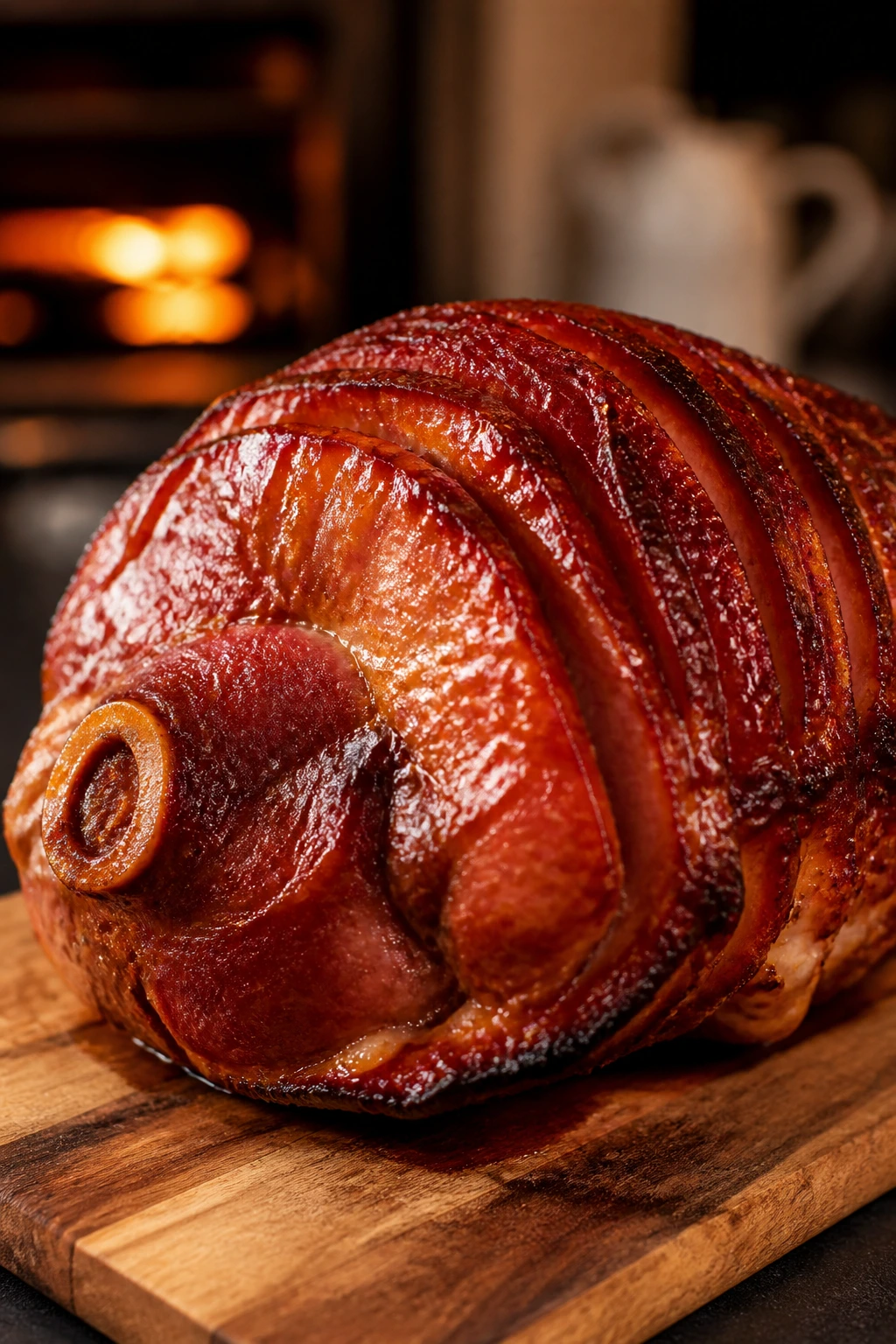
Yield: Serves 12 to 16
Prep Time: 20 minutes
Cook Time: 1 hour 45 minutes
Rest Time: 15 minutes
Total Time: 2 hours 20 minutes
Difficulty: Intermediate — the ingredient list is short, but glaze timing matters and the finish can go from glossy to burnt if you rush it.
Best Served: Warm, after a short rest, with the final glaze brushed on just before slicing
The one thing to know before you start is simple: the glaze belongs on the ham late. Not halfway through. Not from the beginning. A fully cooked ham needs time to warm through, but sugar needs restraint. That’s the line you’re balancing here.
If your ham is spiral-cut, the glaze will slip into the slices and make the whole thing feel more generous. If it’s whole and unsliced, scoring the fat cap gives the glaze more places to cling. Either way, don’t drown it. Thin coats win.
The Full Ingredient List
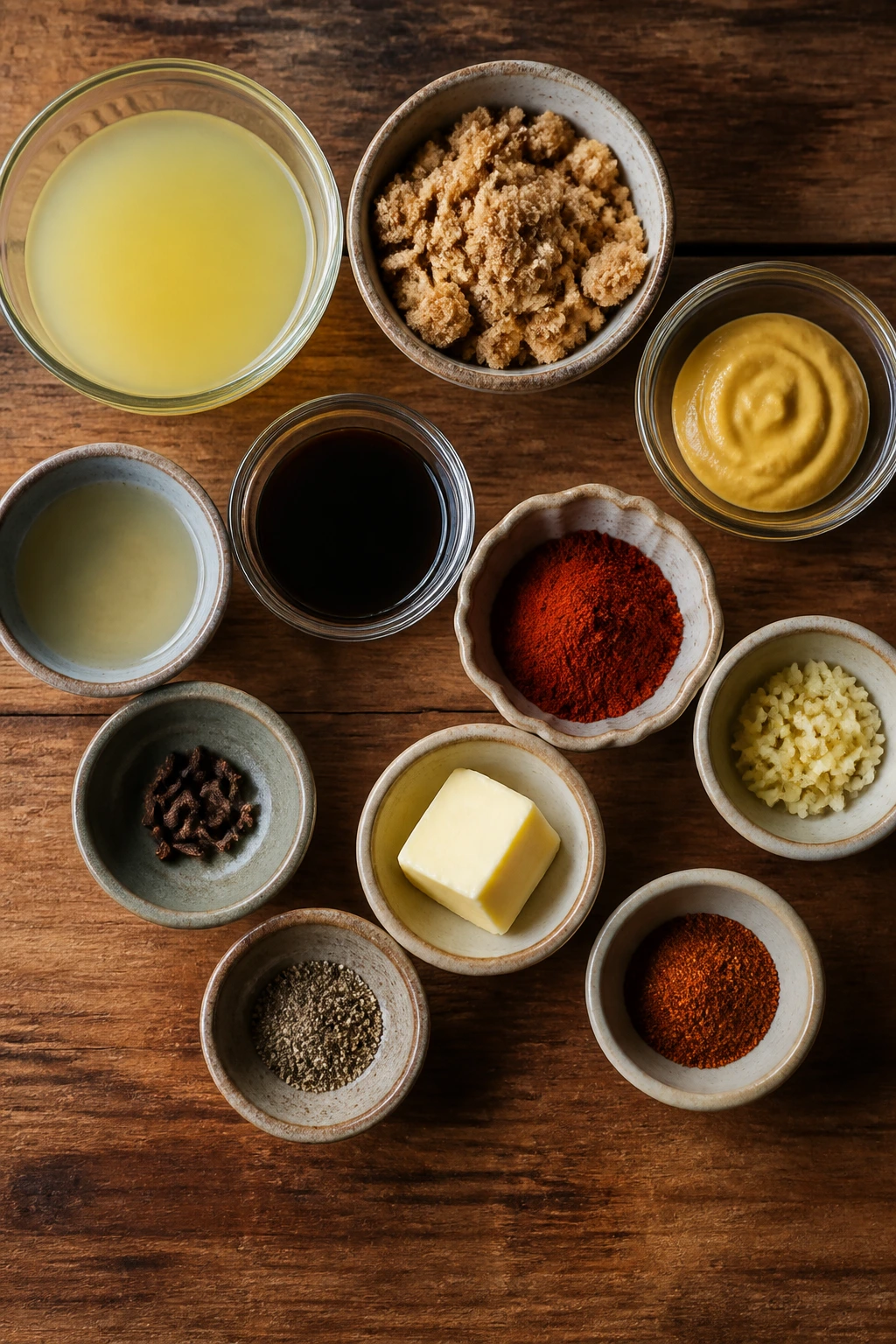
For the Ham:
- 1 (8 to 10 pound) fully cooked bone-in ham, preferably spiral-cut
- 1 cup apple juice or water, for the bottom of the pan
For the Smoky Pineapple Brown Sugar Glaze:
- 2 cups unsweetened pineapple juice
- 1 cup packed dark brown sugar
- 1/4 cup honey
- 2 tablespoons Dijon mustard
- 2 tablespoons apple cider vinegar
- 1 tablespoon low-sodium soy sauce or Worcestershire sauce
- 1 teaspoon smoked paprika
- 1/2 teaspoon ground ginger
- 1/4 teaspoon ground cloves
- 1/4 teaspoon black pepper
- 1 tablespoon cornstarch mixed with 2 tablespoons cold water, optional for a thicker glaze
- 2 tablespoons unsalted butter
- Pinch of cayenne or chipotle powder, optional
What Each Ingredient Brings to the Pan
The Ham Itself
What to use: 1 fully cooked bone-in ham, 8 to 10 pounds, preferably spiral-cut.
Preparation: Let it sit at room temperature for about 30 minutes while the oven preheats, then pat the surface dry and score the fat cap if it is not already cut.
Substitutions: A boneless ham will work, but it warms faster and does not give you the same carved slices with deep glaze pockets.
Tips: Choose a ham with a visible fat cap. That thin layer protects the meat while the glaze reduces, and it gives you better color on the outside.
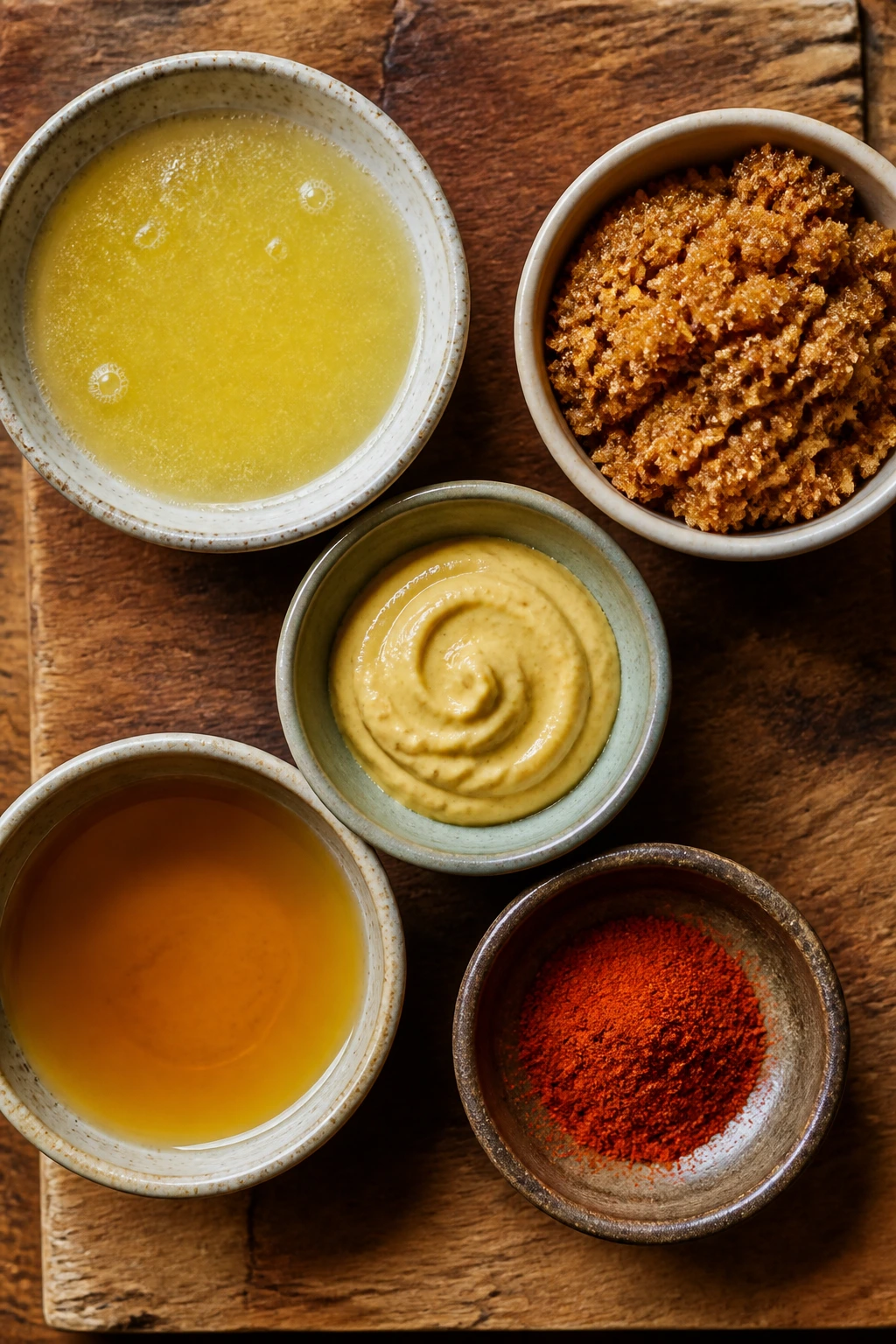
Pineapple Juice and Brown Sugar
What to use: 2 cups unsweetened pineapple juice, 1 cup packed dark brown sugar, and 1/4 cup honey.
Preparation: Whisk them together cold first so the sugar starts dissolving before the pan gets hot.
Substitutions: Light brown sugar works if that’s what you have, and maple syrup can stand in for honey.
Tips: Use unsweetened juice if you can. Sweetened juice pushes the glaze too far toward candy, and you lose the sharp edge that makes it interesting.
Dijon, Vinegar, and Salted Depth
What to use: 2 tablespoons Dijon mustard, 2 tablespoons apple cider vinegar, and 1 tablespoon low-sodium soy sauce or Worcestershire sauce.
Preparation: Measure these before you turn on the heat; the glaze moves fast once the sugar dissolves.
Substitutions: Grainy mustard gives a slightly rougher finish, and white wine vinegar can replace cider vinegar in a pinch.
Tips: Don’t add extra salt. Ham already brings plenty, and the soy or Worcestershire is there for depth, not for seasoning the whole roast into submission.
Smoke and Warm Spice
What to use: 1 teaspoon smoked paprika, 1/2 teaspoon ground ginger, 1/4 teaspoon ground cloves, 1/4 teaspoon black pepper, and a pinch of cayenne or chipotle powder if you want heat.
Preparation: Keep the spices dry and measured; once they hit the hot syrup, you want a smooth whisk, not frantic digging through a spice drawer.
Substitutions: Fresh grated ginger can replace ground ginger if you strain the glaze afterward, and chipotle powder can take the place of cayenne for a deeper smoky note.
Tips: Clove is powerful. Use the full 1/4 teaspoon and stop there unless you want the glaze to smell like a winter candle.
Butter and Thickener
What to use: 2 tablespoons unsalted butter and 1 tablespoon cornstarch mixed with 2 tablespoons cold water, optional.
Preparation: Mix the cornstarch with cold water before it hits the pan, then whisk it into the simmering glaze only if you want a thicker coating.
Substitutions: Arrowroot can replace cornstarch, and you can skip the thickener if you prefer a looser glaze for brushing.
Tips: Add the butter off the heat at the end. That keeps the glaze glossy instead of greasy.
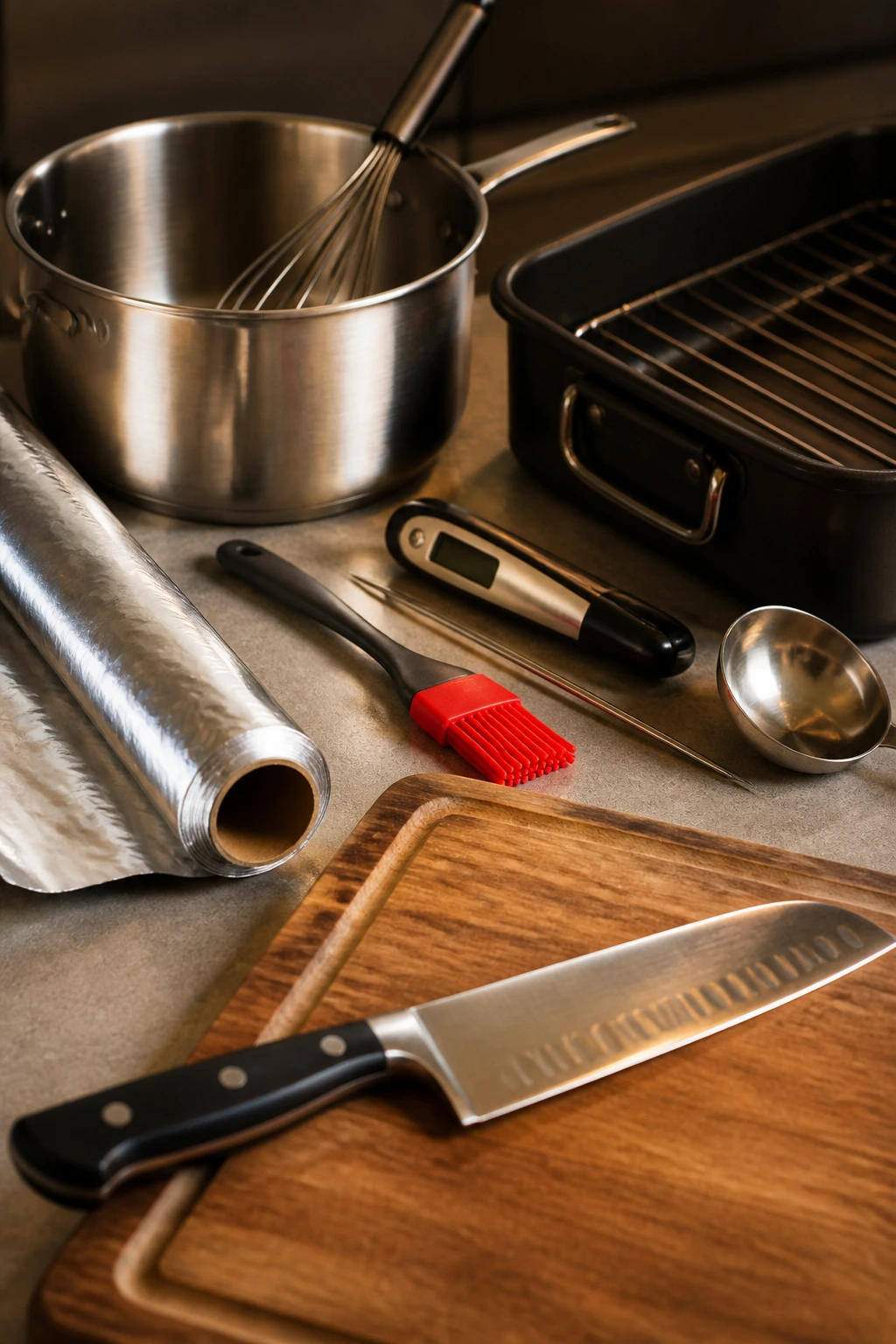
The Tools That Make Glazing Easier
-
Medium saucepan — A 2- to 3-quart pan gives the glaze room to simmer without boiling over.
-
Whisk — This helps dissolve the sugar and keeps the cornstarch slurry smooth.
-
Roasting pan with a rack — The rack keeps the ham out of the liquid so the underside doesn’t steam into softness.
-
Pastry brush or silicone brush — Silicone handles thick glaze better, especially in the last 20 minutes when the syrup starts to tighten.
-
Instant-read thermometer — The only reliable way to know when the center of the ham is warm enough.
-
Heavy-duty aluminum foil — Useful for the first covered stretch and for tenting if the glaze darkens too fast.
-
Large cutting board — A stable board makes carving safer, and a grooved one catches the juices.
-
Sharp carving knife — Long, smooth slices are easier to cut when the ham has rested.
-
Small ladle or spoon — Handy for spooning extra glaze over the sliced ham at the table.
How to Make the Glaze and Roast the Ham
Build the Glaze:
-
Combine 2 cups pineapple juice, 1 cup dark brown sugar, 1/4 cup honey, 2 tablespoons Dijon mustard, 2 tablespoons apple cider vinegar, 1 tablespoon soy sauce or Worcestershire sauce, 1 teaspoon smoked paprika, 1/2 teaspoon ground ginger, 1/4 teaspoon ground cloves, and 1/4 teaspoon black pepper in a medium saucepan.
-
Set the pan over medium heat and whisk until the sugar dissolves, about 2 to 3 minutes. Bring the mixture to a gentle simmer, not a hard boil. You want steady bubbles around the edge, not aggressive foam.
-
Simmer for 10 to 15 minutes, stirring occasionally, until the glaze reduces slightly and starts to look a shade darker. It should coat the back of a spoon in a thin, shiny layer.
-
If you want a thicker glaze, stir the cornstarch slurry once more, then whisk it into the simmering glaze. Cook for 45 to 60 seconds, just until the glaze looks glossy and lightly syrupy. Remove from the heat and whisk in the butter. Add a pinch of cayenne or chipotle powder if you want a little heat.
Prepare the Ham:
-
Preheat the oven to 325°F (163°C) and position a rack in the lower-middle part of the oven. Set the ham cut side down on a rack in a roasting pan. Pour 1 cup apple juice or water into the bottom of the pan.
-
If the ham is not spiral-cut, score the fat cap in a shallow diamond pattern, about 1/4 inch deep. Do not cut into the meat itself. The score lines give the glaze more places to cling and help the surface brown evenly.
Brush, Bake, and Finish:
-
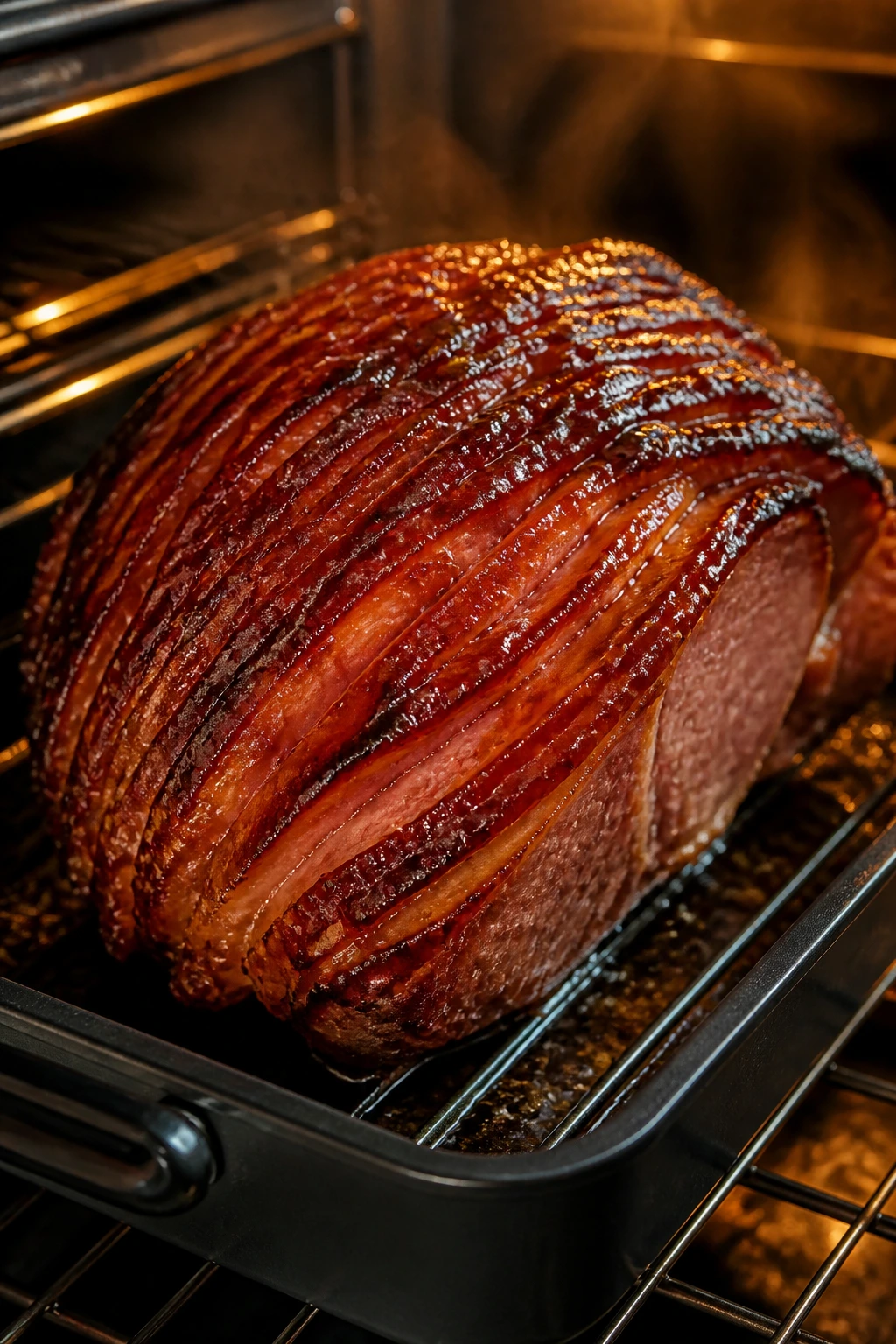
Cover the ham loosely with foil and bake for 45 minutes. Brush on about one-third of the glaze, getting it into the cut lines if the ham is spiral-sliced. Return it to the oven uncovered for 20 minutes.
-
Brush on another layer of glaze, then continue baking for 15 to 20 minutes at a time, brushing again if you have enough glaze left, until the center of the ham reaches 140°F and the surface looks deep amber to mahogany. If the glaze starts to darken too fast, tent the top with foil.
-
Transfer the ham to a carving board and rest for 15 minutes. Warm any remaining glaze over low heat with 1 to 2 tablespoons water if needed, then spoon it over the slices right before serving. That last glossy layer is the one people remember.
How to Serve the Ham So the Glaze Stays on the Plate
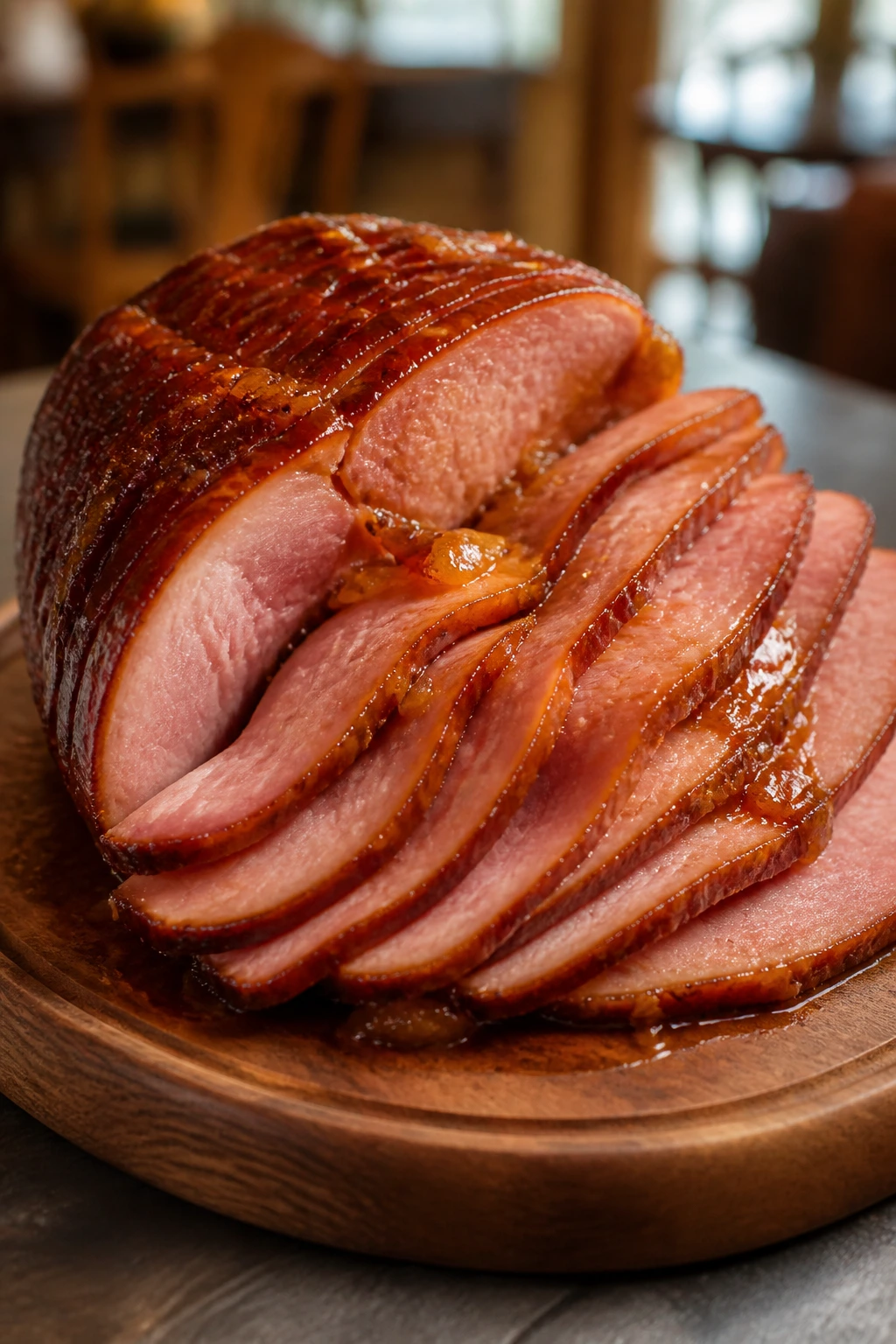
Presentation: Move the ham to a warm platter or board with a shallow rim so the juices stay where you put them. If it’s spiral-cut, fan the slices a little and spoon some of the thick glaze over the center so it settles into the cuts instead of pooling underneath. A small spoonful of glaze on the side looks better than a flooded plate.
Accompaniments: I like this ham with something creamy and something sharp. Scalloped potatoes handle the sweet glaze well, roasted green beans add a firmer bite, and a crisp cabbage slaw or shaved fennel salad keeps the plate from leaning too soft. Warm dinner rolls are useful too, mostly because people will want to swipe up the sauce.
Portions: Plan on about 6 to 8 ounces of cooked ham per person for a dinner where ham is the main event. A 8- to 10-pound bone-in ham serves 12 to 16 with room for leftovers, and if you know your crowd eats lightly, you can stretch it farther than that. Bone-in ham always looks smaller than it is once it’s carved.
Beverage Pairing: Dry cider is my favorite here because it echoes the fruit without making the meal sweeter. If you want wine, choose a Riesling that isn’t clingy-sweet or a chilled Gewürztraminer with enough acidity to stand up to the glaze. For a nonalcoholic option, iced black tea with lemon or sparkling water with a lime wedge keeps the plate from feeling heavy.
Practical Ways to Improve Color, Stickiness, and Balance
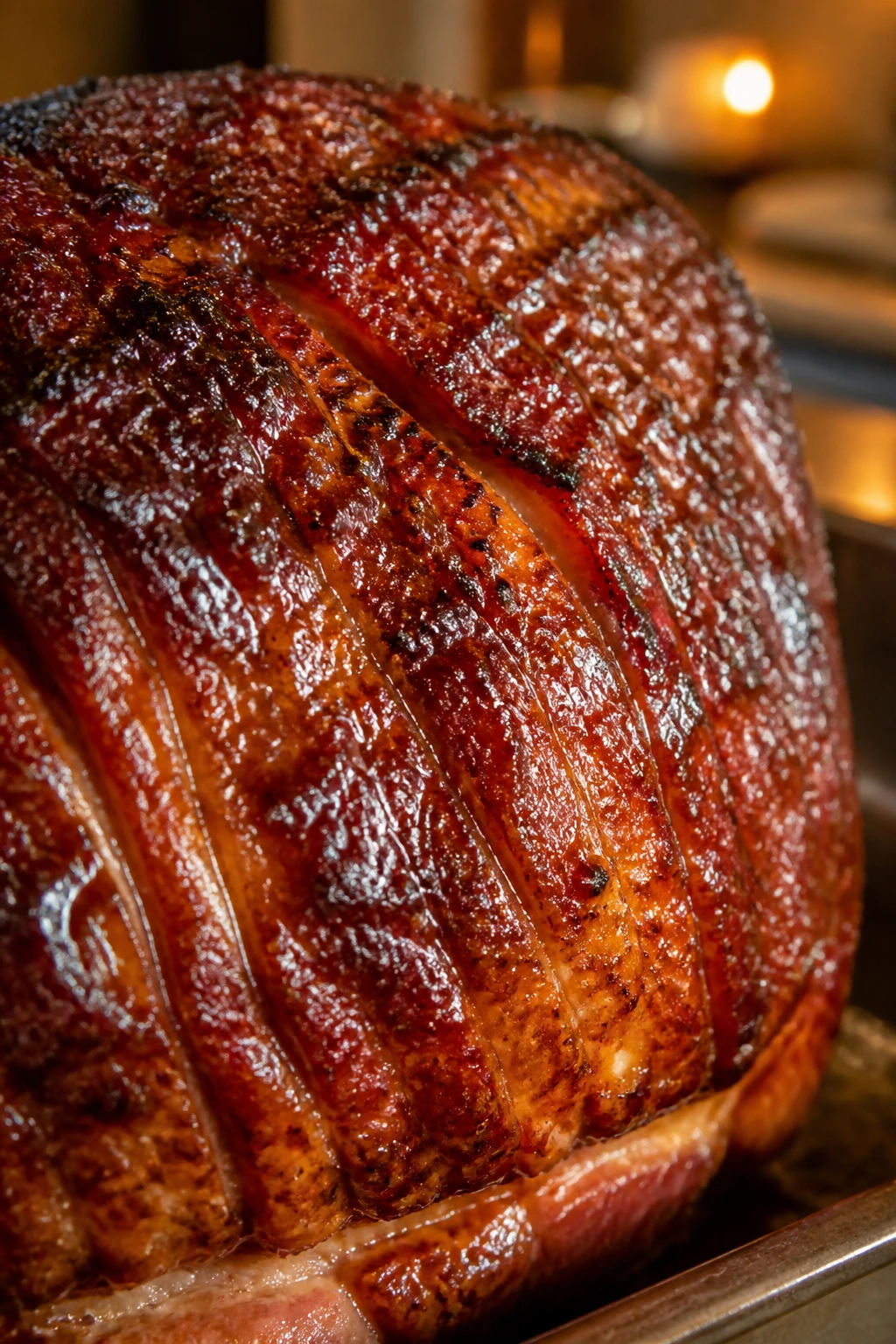
Flavor Enhancement: Stir 1 tablespoon bourbon into the finished glaze and simmer it for 30 seconds before brushing. It adds a faint oak note that sits nicely beside the smoked paprika, and it disappears into the sweetness instead of tasting boozy.
Time-Saver: Make the glaze up to 5 days ahead and store it in a jar in the fridge. It will thicken quite a bit when cold, which is fine — just warm it gently and loosen it with a tablespoon or two of pineapple juice before you brush it on.
Pro Move: Brush the ham in thin layers. Two thin coats are better than one heavy coat because the glaze grabs the surface, reduces in the oven, and leaves a smooth shine instead of a sticky slide.
Cost-Saver: Use store-brand pineapple juice and brown sugar without apology. Spend the money on a decent ham with some fat on it. The glaze is what brings the flavor; the ham is what needs to be worth carving.
Make-It-Yours: If you like a more savory result, reduce the brown sugar to 3/4 cup and add another tablespoon of Dijon. If you want heat, use chipotle powder instead of cayenne. It carries the smoke note better and doesn’t poke a hole through the sweetness.
Common Ham-Glazing Mistakes and How to Fix Them
-
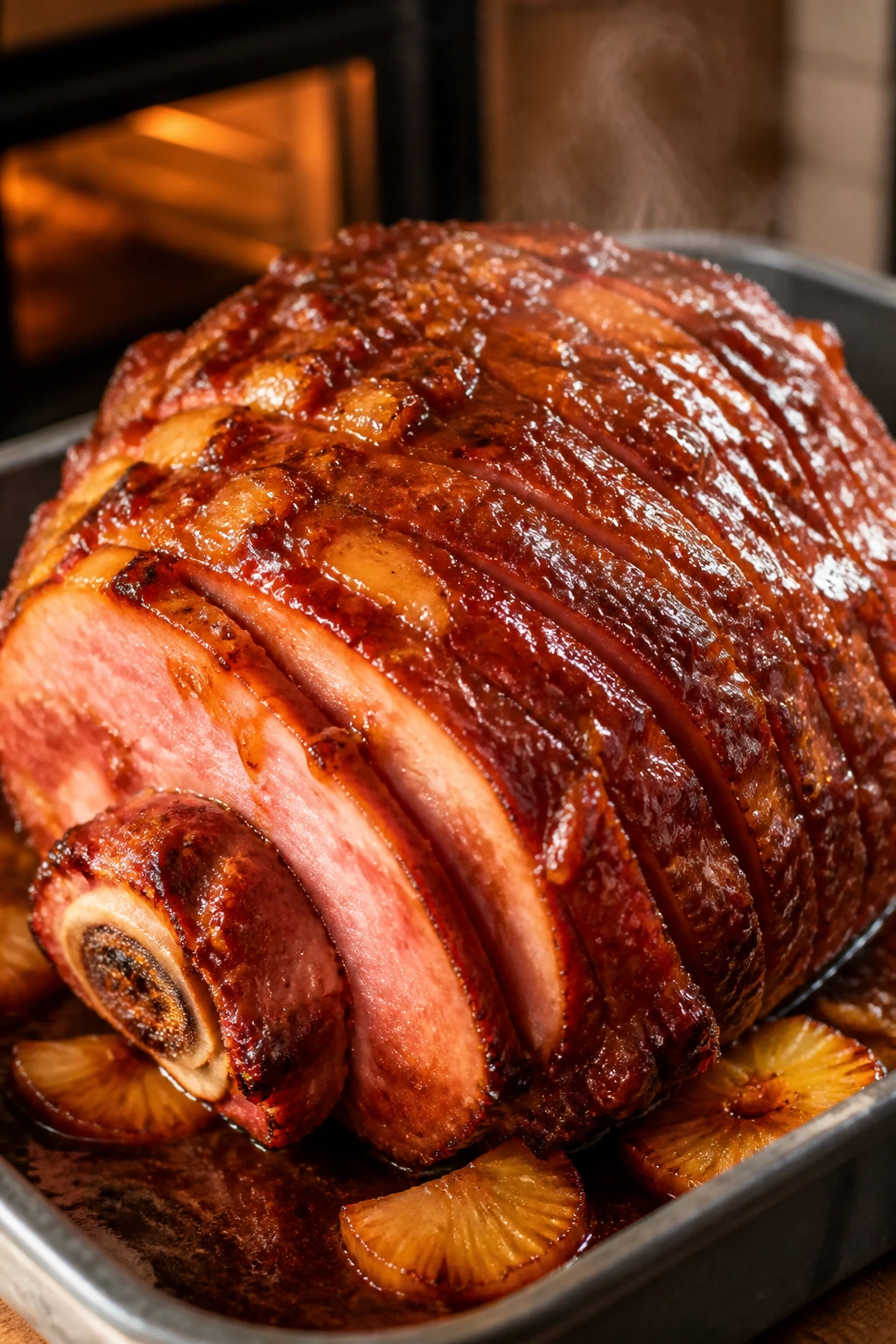
Glazing too early: Sugar burns long before the ham finishes heating. If the glaze goes on from the start, the outside turns dark and bitter while the center is still warming. Wait until the last 30 to 40 minutes and build the coating in thin layers.
-
Leaving the glaze too thin: If it looks watery in the saucepan, it will run off the ham and pool in the pan. Simmer longer until it coats a spoon, or whisk in the cornstarch slurry and cook just until it turns glossy.
-
Using sweetened pineapple juice: This is the quickest way to make the glaze taste flat and sticky in a bad way. Use unsweetened juice, or if sweetened is all you have, cut the brown sugar back a little and add an extra teaspoon of vinegar.
-
Baking at too high a temperature: A hot oven scorches the sugar before the ham has warmed through. Stay at 325°F and tent the top with foil if the edges darken faster than the center is heating.
-
Skipping the rest: Carving right away sends hot juice all over the board and leaves the slices dry. Rest the ham for 15 minutes, then carve. The glaze will settle, and the meat will slice cleaner.
-
Forgetting that ham is already salty: Extra salt in the glaze can tip the whole thing into harsh territory. Let the mustard, vinegar, soy sauce, and smoked paprika carry the savory side.
Variations That Change the Mood Without Changing the Method
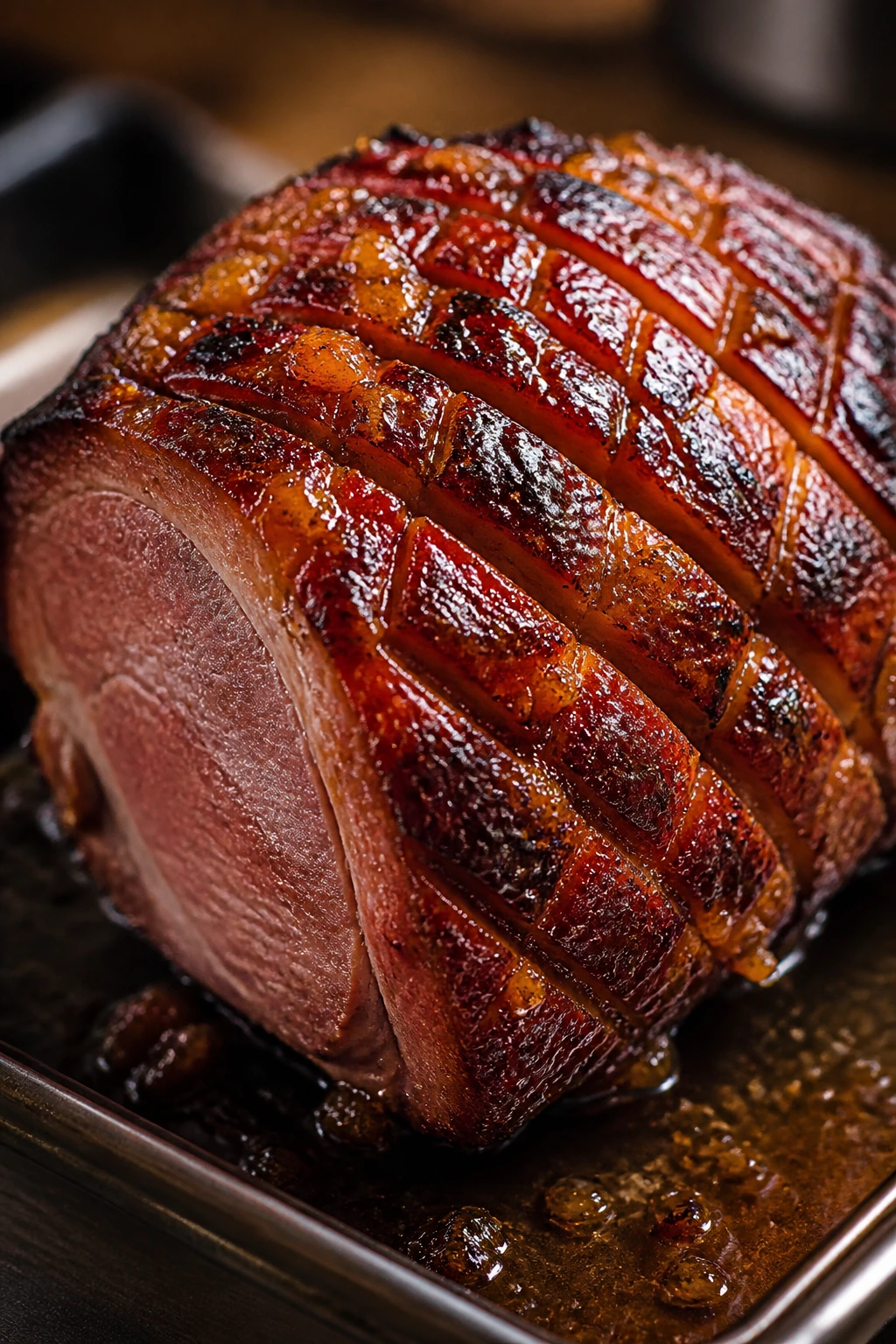
Bourbon Burnished Glaze: Add 2 tablespoons bourbon to the glaze during the last 5 minutes of simmering. It gives the finish a deeper caramel note and works especially well if the ham has a thick fat cap.
Orange-Pineapple Shine: Replace 1 cup of the pineapple juice with fresh orange juice and add 1 teaspoon finely grated orange zest at the end. The result is brighter and a little less tropical, which is useful when you want the fruit to feel fresher than candy-like.
Smoky Heat Version: Add 1/4 teaspoon chipotle powder and a small pinch of cayenne. The chipotle deepens the smoke note and makes the glaze taste more like a campfire cousin of the original without turning it into hot sauce.
Maple-Mustard Swap: Replace the honey with pure maple syrup and increase the Dijon to 3 tablespoons. That version leans more savory and works well if you’re serving the ham with potatoes, cabbage, or anything buttery that needs a sharper edge.
Make-Ahead, Storage, and Reheating
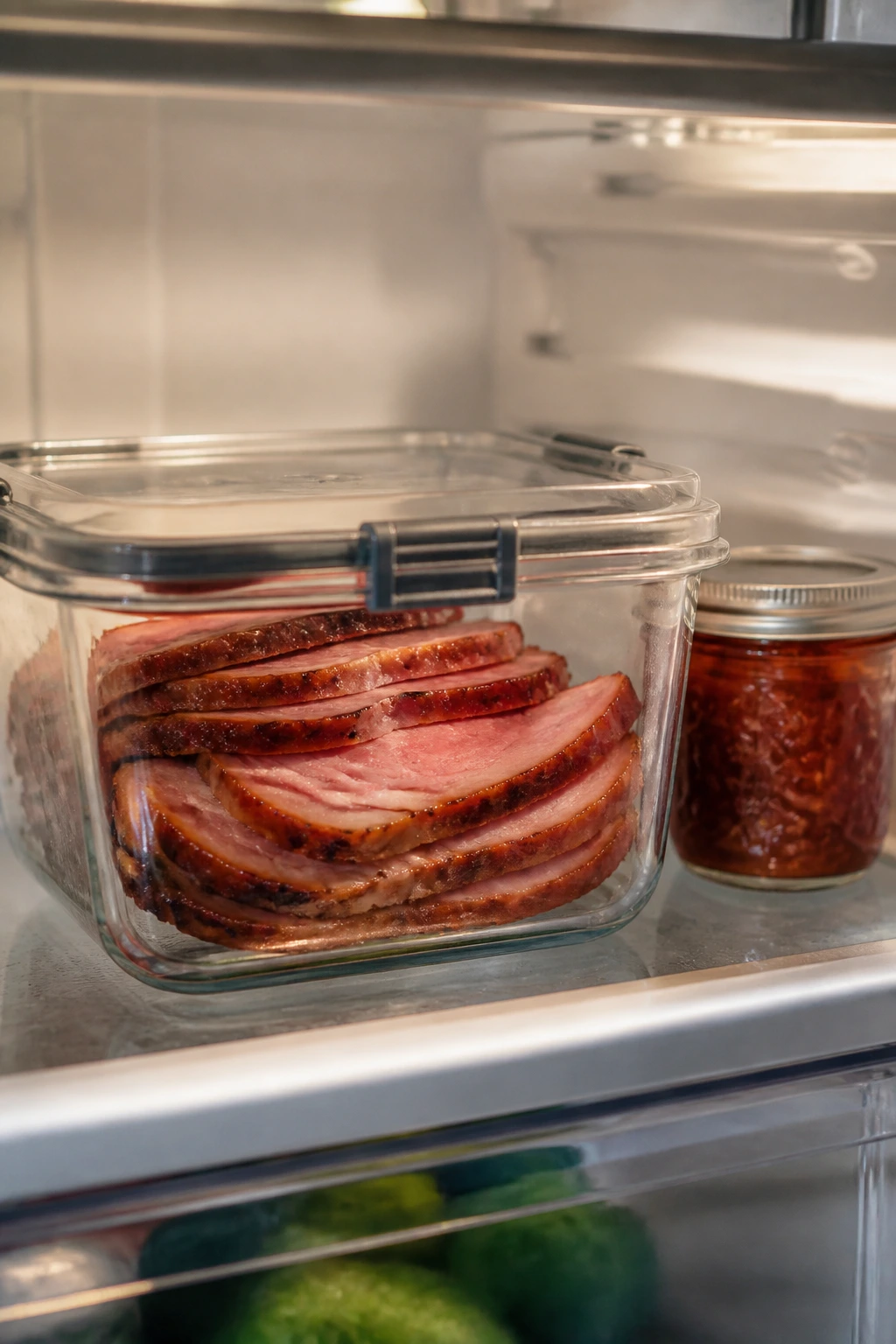
The glaze can be made up to 5 days ahead and stored in a covered jar in the refrigerator. It will thicken as it chills, almost like loose jam. Warm it over low heat and add a tablespoon of pineapple juice or water if it needs loosening before brushing.
Leftover ham keeps well in the refrigerator for 3 to 4 days if it’s wrapped tightly or stored in an airtight container. Freeze sliced ham for up to 2 months, preferably in small portions so you can thaw only what you need. A little glaze can be frozen too, though I think it’s better fresh because the sugar texture stays smoother.
To reheat slices, cover them with foil and warm in a 275°F oven with a tablespoon or two of pineapple juice in the pan. That keeps the edges from drying out. If you’re reheating a thick slice or two in a skillet, add a splash of water or juice, cover with a lid, and heat over low until the steam brings them back to life.
If you’re serving the ham the next day, slice it cold and warm only the amount you plan to eat. Cold ham with a spoonful of warmed glaze is better than reheating the whole roast until it gets tight. That’s not a compromise. It’s the easier, smarter way to handle leftovers.
Questions People Ask About Pineapple Ham Glaze
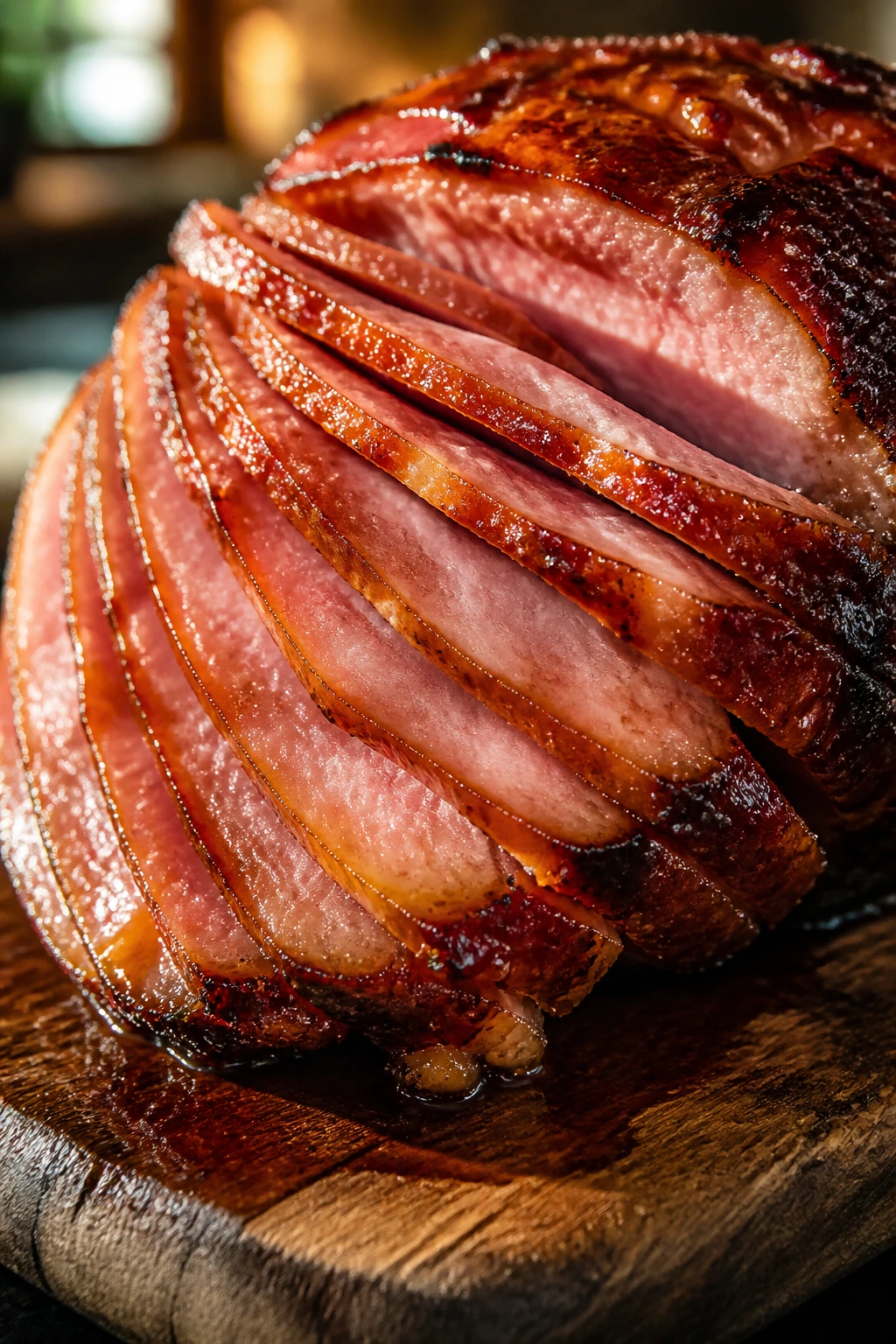
Can I use a spiral-cut ham for this glaze?
Yes, and it’s the easiest version to work with. The glaze slips between the slices and you get more surface area with every brush-on layer, which means more of that sticky edge people go looking for first.
Can I make the glaze without pineapple juice?
You can swap in orange juice or apple juice, but the flavor shifts. Orange gives a brighter finish, while apple juice is softer and less sharp, so add a little extra vinegar if you go that route to keep the glaze from tasting too sweet.
When should I start brushing on the glaze?
Wait until the last 30 to 40 minutes of baking. Earlier than that, the sugar has too much time in the heat and the surface can darken before the center is warm enough.
What if my glaze is too thin and won’t stick?
Keep simmering it until it coats a spoon, or whisk in the cornstarch slurry and cook for another minute. The glaze also thickens a bit as it cools, so don’t panic if it looks slightly loose the moment you take it off the stove.
Can I make this in a slow cooker?
You can warm the ham in a slow cooker, but the glaze will never set the same way it does in the oven. If you use the slow cooker, transfer the ham to a hot oven for the last 15 to 20 minutes so the glaze can tighten and brown.
How do I keep the glaze from burning?
Stay at 325°F, brush on thin layers, and tent the ham with foil if the top gets dark before the center reaches 140°F. Burnt sugar tastes bitter fast, and once it crosses that line, there’s no real fix.
Does this work on a boneless ham?
Yes. Boneless ham heats faster, so start checking the temperature a little earlier and reduce the bake time if needed. You may also want to use slightly less glaze, since a boneless roast has less surface texture to hold onto it.
A Ham Worth Serving Warm
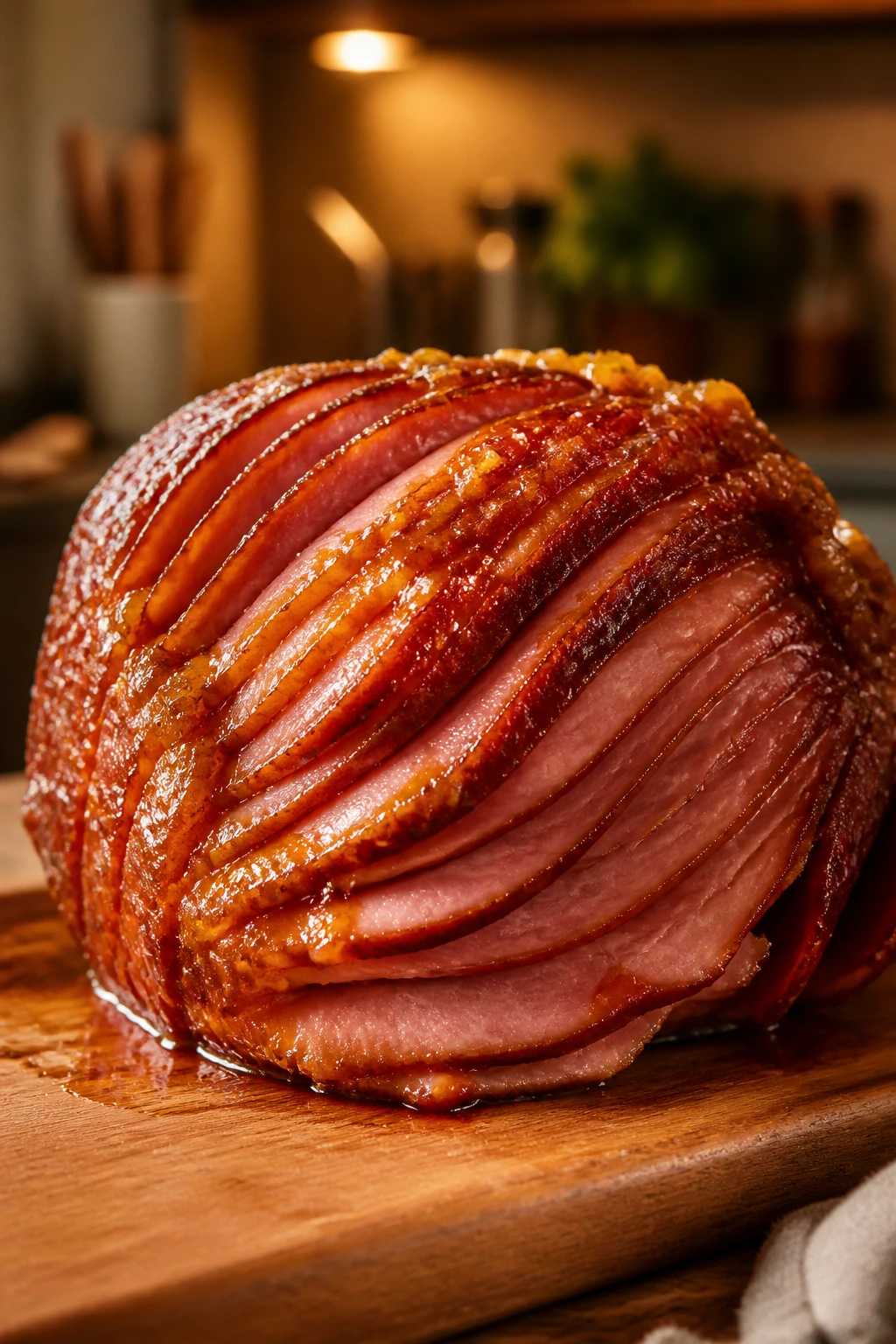
A good glazed ham doesn’t need a dozen moving parts. It needs a surface that shines, a center that stays juicy, and a sauce that knows when to stop being sweet. This version does that because the pineapple, brown sugar, and smoke keep each other honest.
The last brush of glaze is the part I’d save for the table. It gives the slices that dark, glossy finish people reach for first, and it keeps the pan from doing all the talking. Make the extra glaze. You’ll want it.
Smoky Pineapple Glaze for Ham — Recipe Card
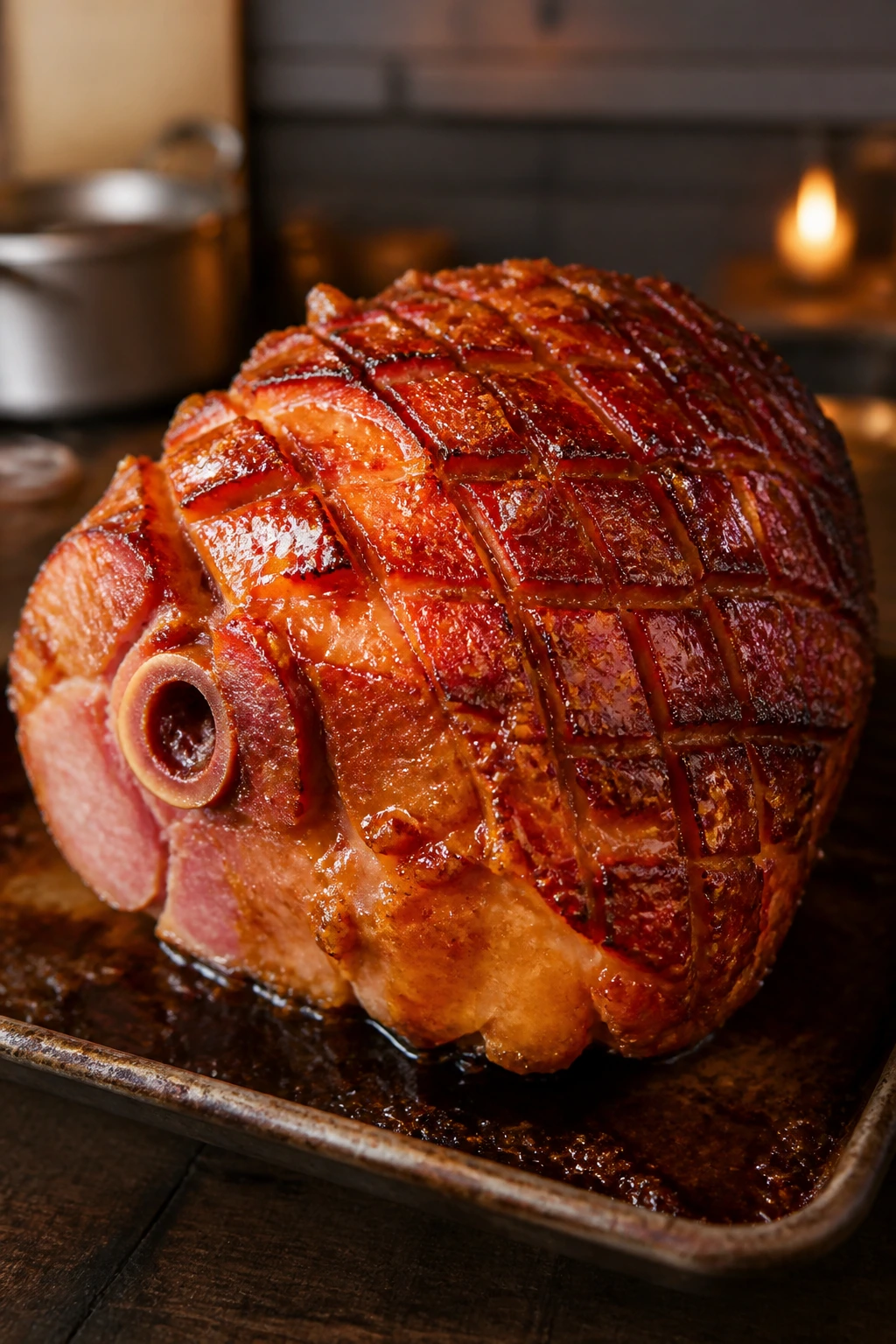
Recipe Name: Smoky Pineapple Glaze for Ham
Description: A fully cooked bone-in ham brushed with a smoky pineapple-brown sugar glaze that turns sticky, glossy, and lightly caramelized in the oven. Pineapple juice, Dijon, and smoked paprika keep the sweetness sharp and savory.
Prep Time: 20 minutes
Cook Time: 1 hour 45 minutes
Total Time: 2 hours 20 minutes
Course: Main Course
Cuisine: American
Servings: 12 to 16 servings
Calories: About 390 kcal per serving
Ingredients
For the Ham:
- 1 (8 to 10 pound) fully cooked bone-in ham, preferably spiral-cut
- 1 cup apple juice or water, for the bottom of the pan
For the Smoky Pineapple Brown Sugar Glaze:
- 2 cups unsweetened pineapple juice
- 1 cup packed dark brown sugar
- 1/4 cup honey
- 2 tablespoons Dijon mustard
- 2 tablespoons apple cider vinegar
- 1 tablespoon low-sodium soy sauce or Worcestershire sauce
- 1 teaspoon smoked paprika
- 1/2 teaspoon ground ginger
- 1/4 teaspoon ground cloves
- 1/4 teaspoon black pepper
- 1 tablespoon cornstarch mixed with 2 tablespoons cold water, optional for a thicker glaze
- 2 tablespoons unsalted butter
- Pinch of cayenne or chipotle powder, optional
Instructions
-
Combine the pineapple juice, brown sugar, honey, Dijon mustard, vinegar, soy sauce or Worcestershire sauce, smoked paprika, ginger, cloves, and black pepper in a medium saucepan.
-
Heat over medium, whisking until the sugar dissolves. Simmer 10 to 15 minutes until slightly reduced.
-
Whisk in the cornstarch slurry, if using, and cook 45 to 60 seconds until glossy. Remove from heat and whisk in the butter.
-
Preheat the oven to 325°F (163°C). Place the ham cut side down on a rack in a roasting pan and add the apple juice or water to the pan.
-
Score the ham if it is not spiral-cut, using shallow 1/4-inch diamond cuts through the fat only.
-
Cover loosely with foil and bake for 45 minutes.
-
Brush the ham with about one-third of the glaze. Bake uncovered for 20 minutes.
-
Brush with more glaze and continue baking in 15- to 20-minute intervals, until the ham reaches 140°F and the surface is deep amber to mahogany.
-
Rest 15 minutes, then warm any remaining glaze with a splash of water or pineapple juice and spoon it over the sliced ham.
Notes: Brush in thin layers for the best shine. The glaze can be made up to 5 days ahead and refrigerated. Tent with foil if the top darkens before the center is hot.