



A good Juicy Ground Turkey Skillet doesn’t taste like an apology for beef. It tastes like dinner with a point: browned turkey, sweet onion, peppers with a little bite left in them, and a tomato-rich sauce that clings to the meat instead of sliding to the bottom of the pan. If your memory of ground turkey is dry crumbles and weak seasoning, this is the version that fixes the whole reputation.
Turkey needs a wetter plan than beef. It has less fat, so it rewards a skillet that starts with onions and oil, gets a real brown on the meat, and finishes with broth, tomatoes, and a little butter to round the edges. I prefer 93% lean here because it gives enough fat for flavor without turning greasy, and it still stays tender if you stop cooking at 165°F instead of marching straight past it.
The other reason this dish earns a place in the weeknight dinner pile is simple practicality. One skillet, one cutting board, one spoon. No casserole layers, no separate sauce to babysit, no side pot multiplying on the stove like it’s paying rent. Once you know how to build the pan, you can swap the vegetables, nudge the seasoning, and still land on a dinner that feels deliberate.
And yes, an instant-read thermometer earns its keep here.
Why This Skillet Earns Its Spot on the Weeknight Menu
-
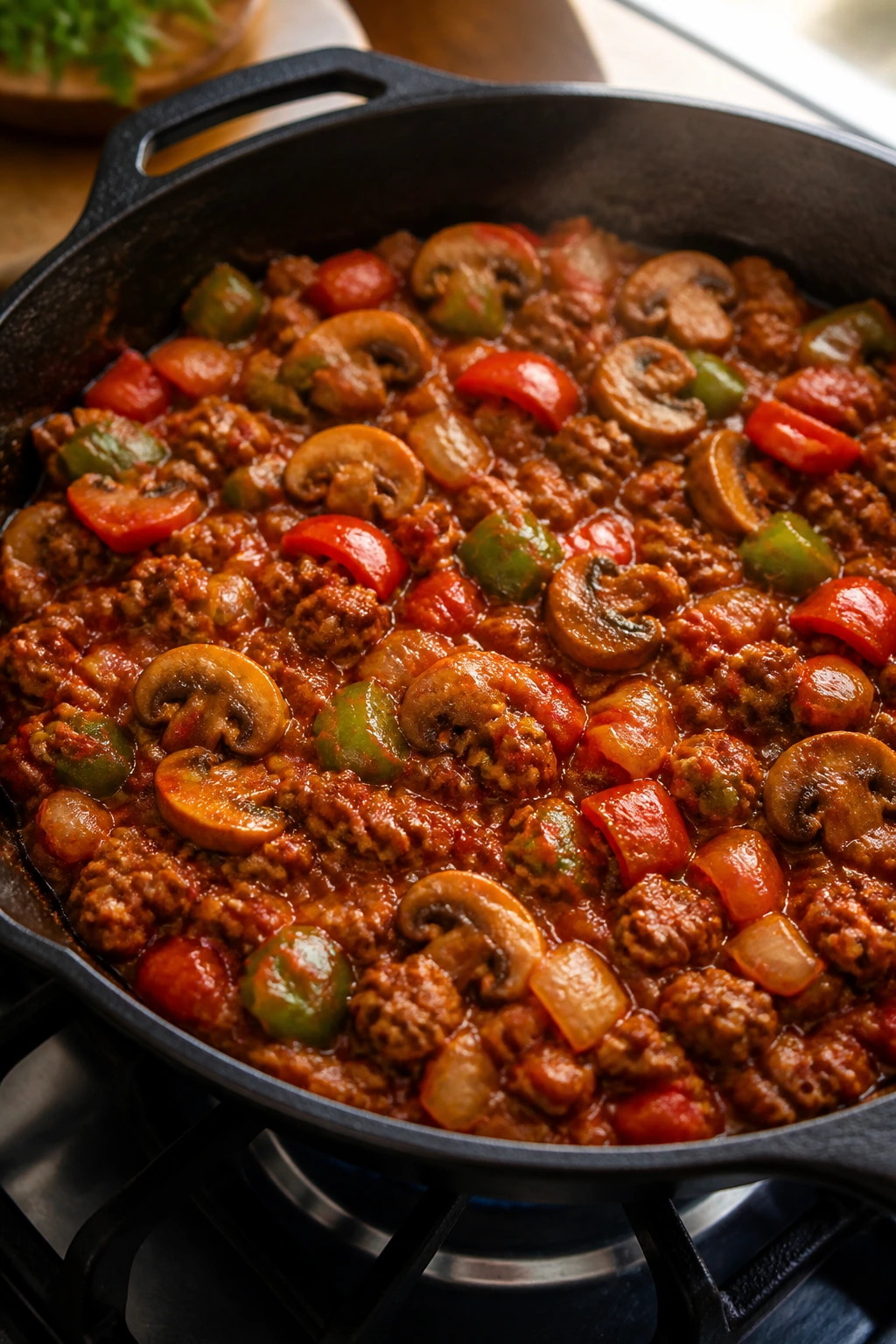
It cooks fast without tasting rushed: The whole thing lands in about 40 minutes, but the vegetables still get time to soften and brown before the turkey goes in. That detail matters more than shaving off two minutes ever will.
-
It solves the “dry turkey” problem from the start: Onion, mushrooms, tomatoes, broth, and a butter finish all give the pan moisture in layers, not as an afterthought. The sauce keeps the meat glossy instead of chalky.
-
It plays nicely with almost anything on the table: Spoon it over rice, tuck it into tortillas, pile it onto mashed potatoes, or drag it through a piece of toast. That flexibility is the difference between a recipe you make once and one you keep on repeat.
-
It uses pantry-level flavor with real payoff: Tomato paste, Worcestershire, Dijon, smoked paprika, and oregano do the heavy lifting. Nothing here is hard to find, but the combination tastes more finished than the ingredient list looks.
-
Leftovers behave themselves: The sauce protects the turkey in the fridge, so reheated portions stay moist instead of turning grainy. That’s the kind of leftover that still feels worth eating.
-
It stretches well for different appetites: Add rice for hungry adults, keep it as-is for lighter plates, or serve it with a big salad and bread. One pan, several directions.
Timing, Yield, and Difficulty at a Glance
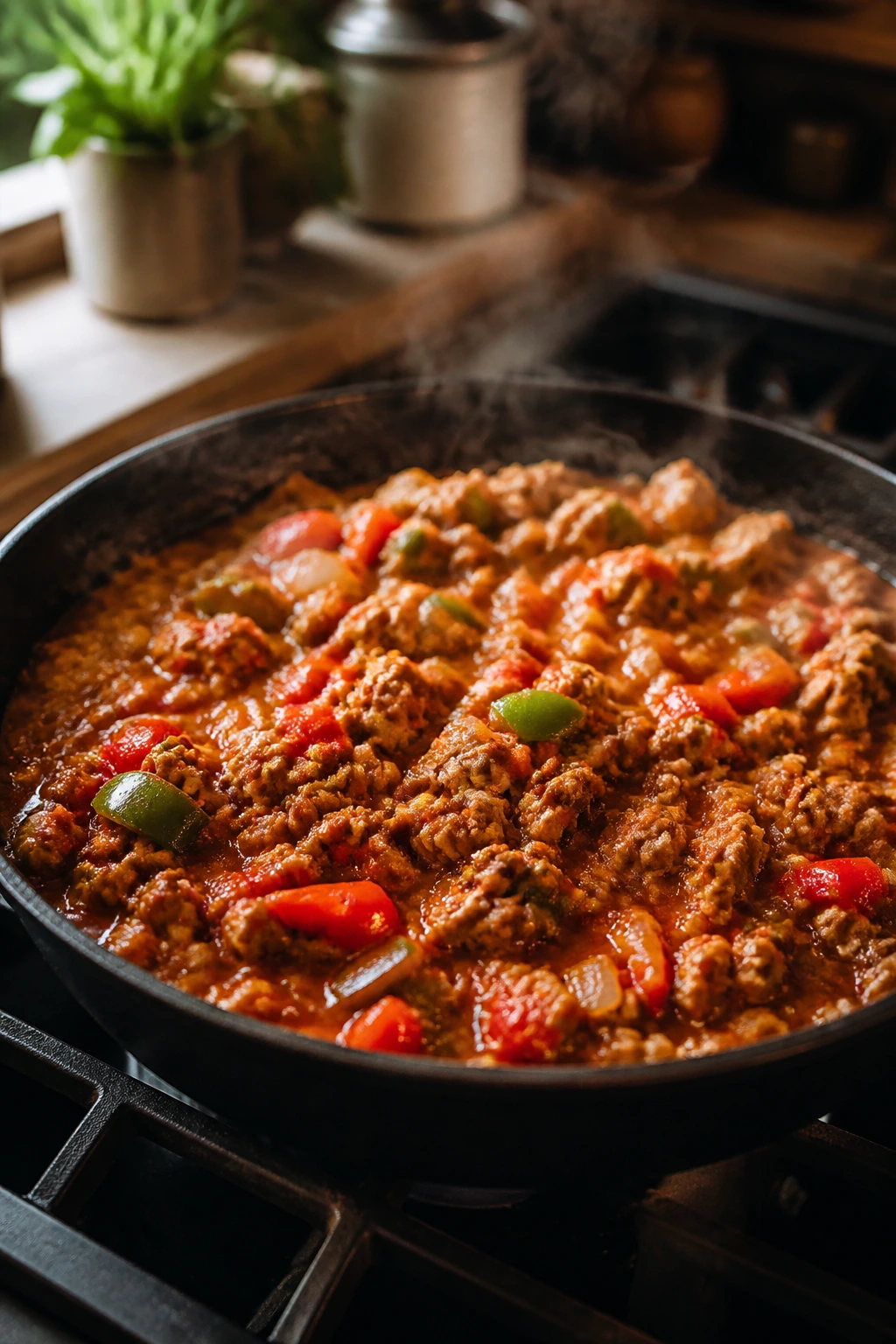
The numbers are friendly here, and that’s one reason I like this skillet so much.
Yield: Serves 4 to 6
Prep Time: 15 minutes
Cook Time: 25 minutes
Total Time: 40 minutes
Difficulty: Beginner — the steps are straightforward, and the only thing that really needs attention is browning the turkey instead of steaming it.
Best Served: Hot from the pan, ideally over rice, mashed potatoes, pasta, or toasted bread
What Goes Into the Pan
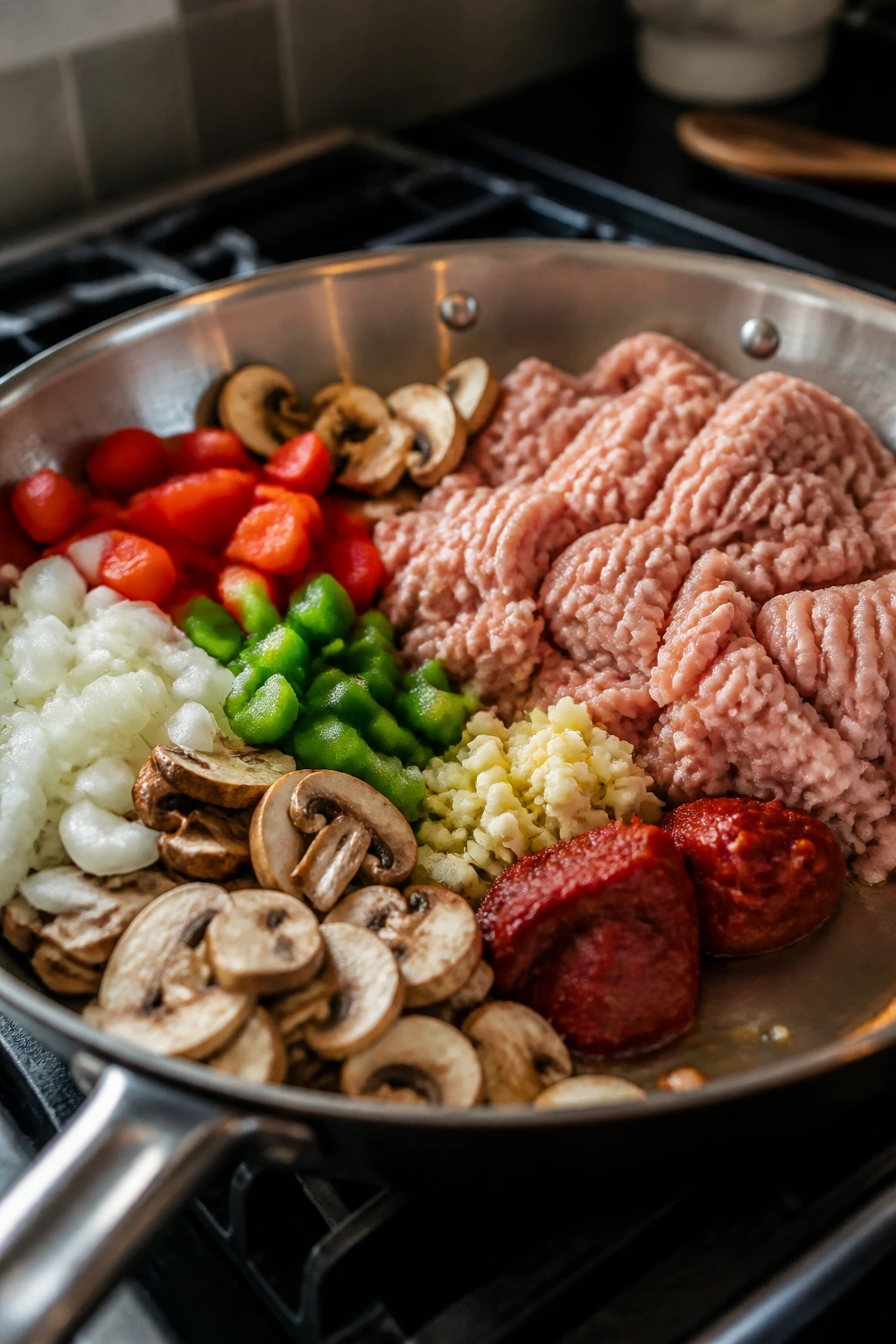
For the Skillet:
- 2 tablespoons olive oil
- 1 medium yellow onion, diced
- 8 ounces cremini mushrooms, sliced
- 1 red bell pepper, diced
- 1 green bell pepper, diced
- 1 1/2 pounds 93% lean ground turkey
- 3 cloves garlic, minced
- 2 tablespoons tomato paste
- 1 teaspoon kosher salt, plus more to taste
- 1/2 teaspoon freshly ground black pepper
- 1 teaspoon smoked paprika
- 1 teaspoon dried oregano
- 1/2 teaspoon crushed red pepper flakes, optional
- 1/2 cup low-sodium chicken broth
- 1 can (14.5 ounces) diced tomatoes, undrained
- 1 tablespoon Worcestershire sauce
- 1 teaspoon Dijon mustard
- 2 cups baby spinach
- 1 tablespoon unsalted butter
- 1 tablespoon fresh lemon juice
- 2 tablespoons chopped fresh parsley
Why These Ingredients Keep Ground Turkey Juicy
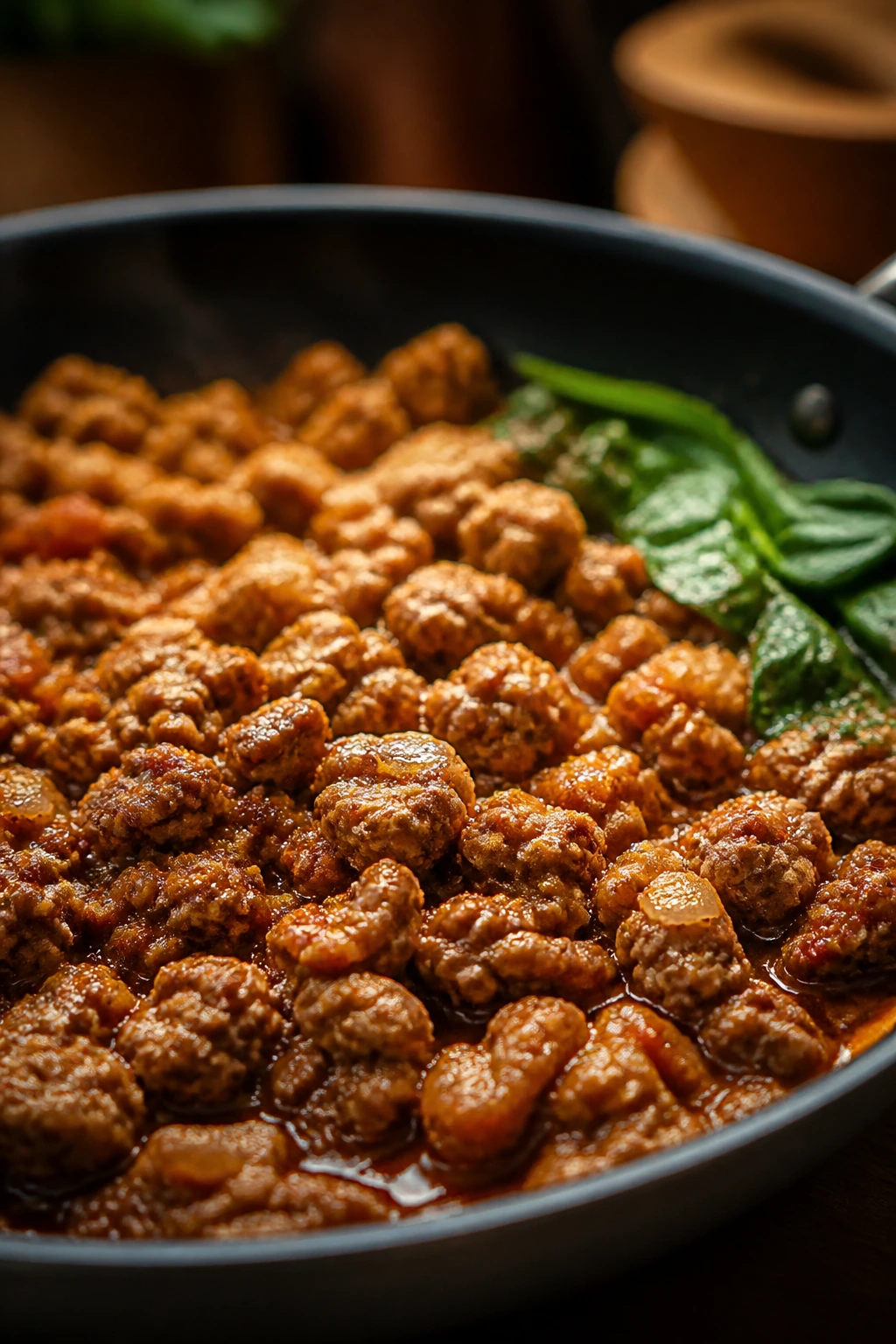
Main Protein: Ground Turkey
What to use: 1 1/2 pounds of 93% lean ground turkey gives you enough fat to brown well without flooding the pan. If you use 99% lean, the skillet needs more oil and a little extra broth to stay tender.
Preparation: Keep the turkey cold until the pan is ready, then break it into chunks in the skillet before stirring it into smaller pieces. That helps the meat brown instead of turning into a paste.
Substitutions: Ground chicken works almost the same way, and 85% lean turkey makes a richer skillet if you don’t mind a little more fat in the pan. Ground beef works too, though it changes the flavor enough that I’d call it a different dish.
Tips: Don’t obsess over tiny crumbles right away. Big pieces brown better, and brown bits are where the good flavor lives.
Vegetables and Aromatics
What to use: One onion, two bell peppers, and 8 ounces of mushrooms give the skillet body, sweetness, and moisture. The spinach at the end softens into the sauce instead of fighting it.
Preparation: Dice the onion and peppers to about 1/2 inch so they cook at the same pace. Slice the mushrooms a little thicker than paper-thin; thin slices disappear before they can help.
Substitutions: Zucchini, chopped kale, or even cauliflower florets can replace one of the vegetables if that’s what’s in the fridge. Frozen peppers work in a pinch, though they release more water and need a longer sauté.
Tips: Mushrooms deserve actual browning. If they look wet and pale after the first few minutes, keep going. The pan should smell earthy and savory, not steamed.
Sauce Base
What to use: Tomato paste, diced tomatoes, broth, Worcestershire sauce, and Dijon mustard turn the skillet from plain browned meat into a pan sauce with some backbone. The butter and lemon at the end make the whole thing taste finished.
Preparation: Measure the liquids before the turkey starts cooking. Once the meat is hot, you’ll want to move quickly and not be rooting through drawers for a measuring cup.
Substitutions: Chicken stock can replace broth, and a teaspoon of balsamic vinegar can stand in for lemon juice if that’s what you have. If you want a creamier finish, add 2 tablespoons of cream cheese or a splash of cream after the simmer.
Tips: Tomato paste needs a minute in the hot pan. If it stays raw, the sauce tastes flat and tinny. Let it darken before the liquids go in.
Seasonings and Finish
What to use: Kosher salt, black pepper, smoked paprika, oregano, crushed red pepper flakes, parsley, and lemon juice build layers instead of one blunt flavor note.
Preparation: Mix the paprika, oregano, pepper, and red pepper flakes together before the pan heats up if you like cooking without stopping to think. It keeps the seasoning even.
Substitutions: Basil can replace oregano, cilantro can replace parsley, and chili powder can replace smoked paprika if you want a different profile.
Tips: Season in stages. A little with the vegetables, more with the turkey, then a final check after the sauce simmers. Ground turkey gets dull fast if you wait until the end to salt it.
The Tools That Make Browning Easier
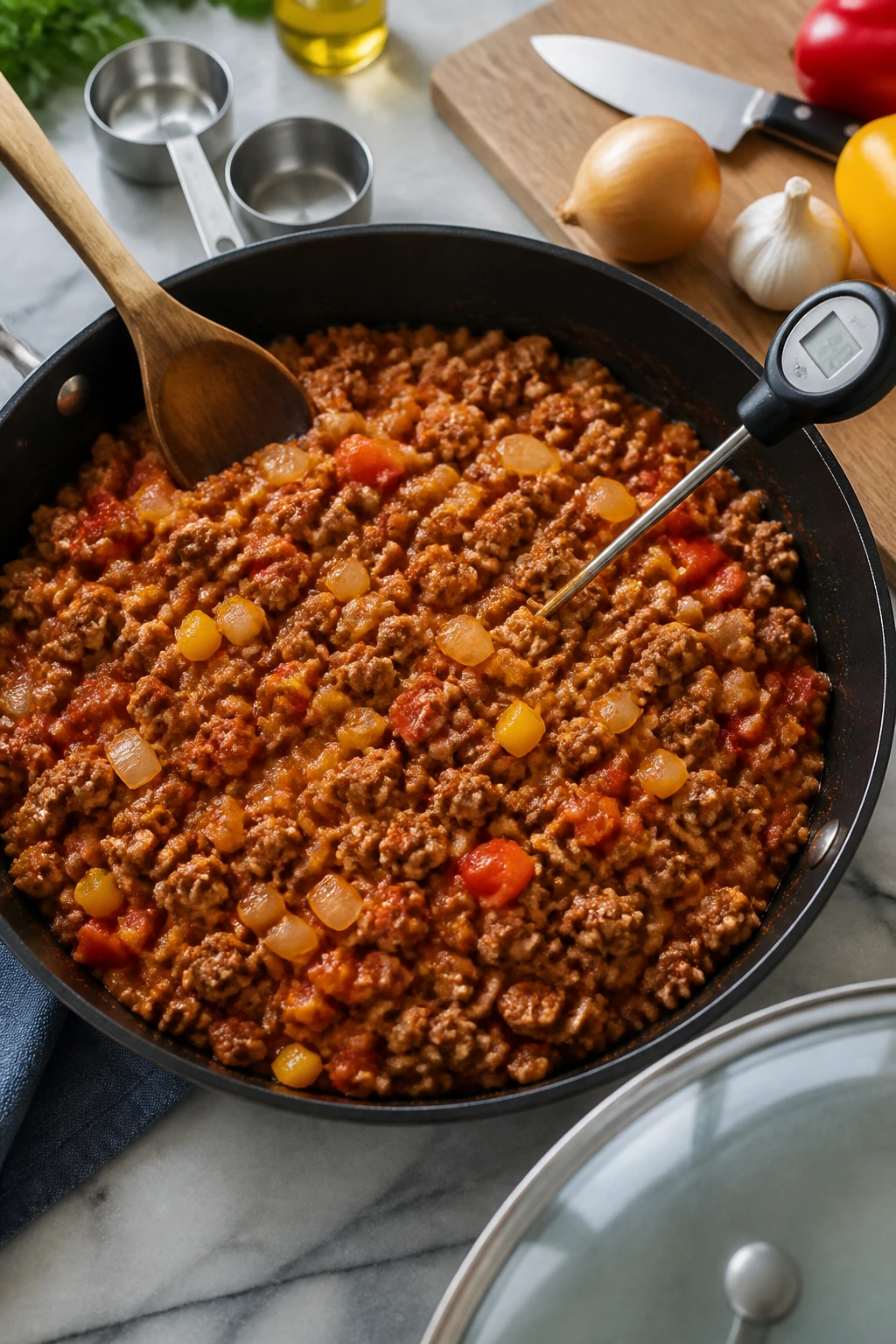
A skillet dinner like this does not need a pile of equipment, but the right pan matters more than people admit.
-
12-inch skillet with 2-inch sides: Stainless steel or cast iron both work well. You want enough surface area for browning, not a cramped pan that steams everything.
-
Wooden spoon or flat spatula: A flat edge helps scrape up browned bits from the bottom, which is where a lot of flavor sits.
-
Instant-read thermometer: Ground turkey should reach 165°F in the center. Guessing works less well than people hope.
-
Chef’s knife: A sharp knife makes the onion, peppers, and mushrooms move quickly. Dull knives slow the prep down and make uneven pieces.
-
Cutting board: One sturdy board is enough. I like to keep a damp towel underneath it so it doesn’t skate around when I’m chopping fast.
-
Measuring spoons and cups: The sauce comes together better when the tomato paste, broth, and Worcestershire are measured before the heat goes up.
-
Lid, optional: Helpful if your skillet splatters a lot or if you want to hold in a little steam near the end, though this recipe is meant to finish uncovered.
How to Build the Skillet, Step by Step
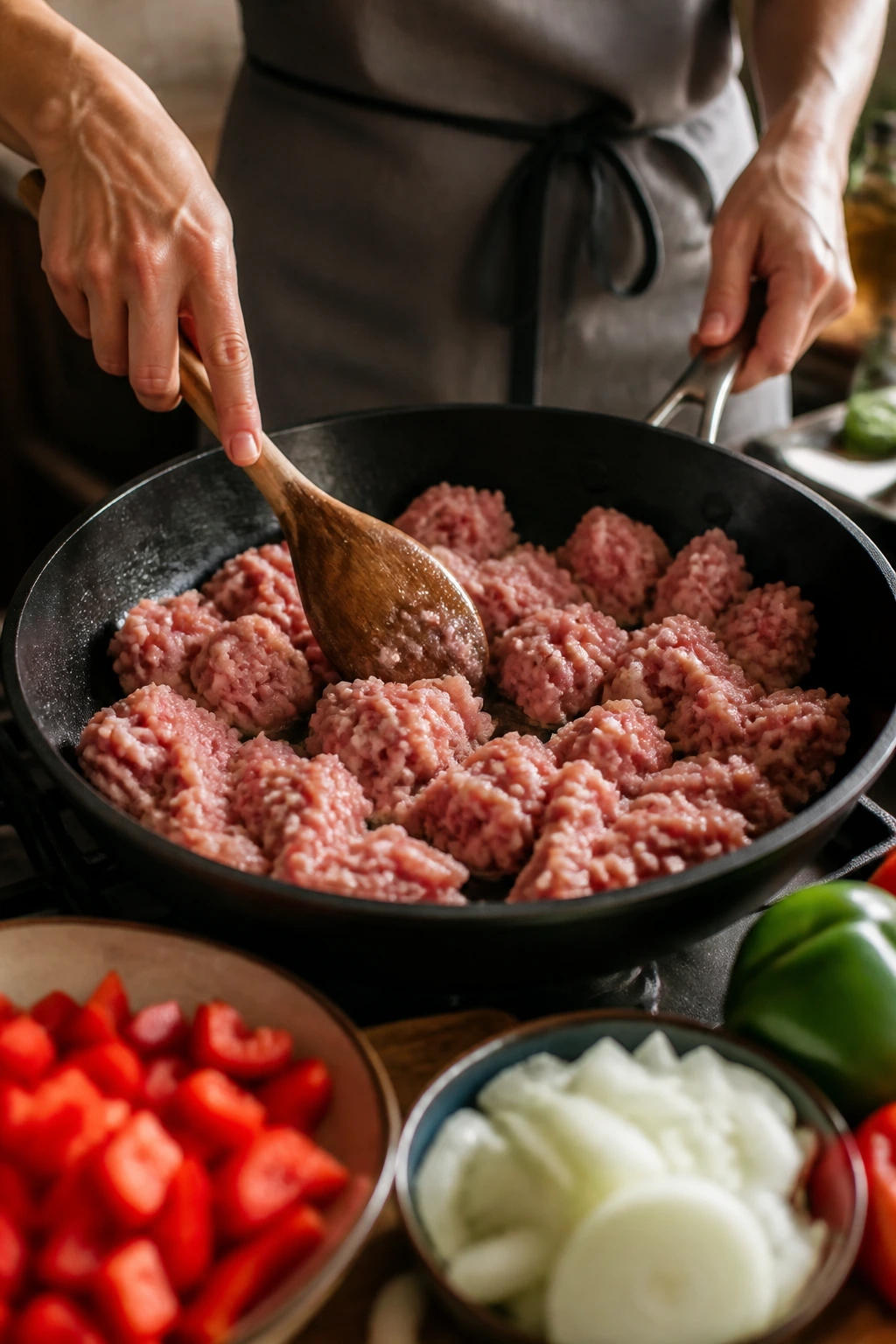
Prep the Ingredients
-
Dice the onion, red bell pepper, and green bell pepper into pieces about 1/2 inch wide. Slice the mushrooms, mince the garlic, and measure out the tomato paste, broth, tomatoes, Worcestershire sauce, Dijon, and seasonings.
-
Pat the ground turkey dry with a paper towel and keep it chilled until the skillet is hot. Dry meat browns better, and cold meat is easier to break up cleanly in the pan.
Cook the Vegetables and Turkey
-
Heat the olive oil in a 12-inch skillet over medium-high heat. Add the onion, mushrooms, bell peppers, and 1/2 teaspoon of the kosher salt. Cook for 5 to 6 minutes, stirring occasionally, until the mushrooms release their liquid, the liquid mostly cooks off, and the onions turn translucent with some browned edges.
-
Push the vegetables toward the edges of the pan and add the ground turkey to the center. Sprinkle on the remaining 1/2 teaspoon salt, the black pepper, smoked paprika, oregano, and crushed red pepper flakes, if using. Cook for 5 to 7 minutes, breaking the turkey into medium pieces with a spatula, until no pink remains and some parts have browned. Do not keep stirring nonstop — the meat needs still contact with the pan to pick up color.
-
Stir in the garlic and tomato paste. Cook for 1 minute, stirring constantly, until the tomato paste darkens from bright red to a brick-red shade and the garlic smells sweet instead of sharp. If the pan looks dry, add a splash of broth or another teaspoon of oil.
Build the Sauce and Finish
-
Pour in the chicken broth to deglaze the pan, scraping up the browned bits stuck to the bottom. Add the diced tomatoes, Worcestershire sauce, and Dijon mustard, then bring the pan to a steady simmer over medium heat.
-
Reduce the heat to medium-low and cook uncovered for 6 to 8 minutes, stirring once or twice, until the sauce thickens and lightly coats the turkey and vegetables. If a spoon dragged through the middle leaves a line that closes slowly, you’re in the right place.
-
Stir in the baby spinach and butter. Cook for 1 to 2 minutes, just until the spinach wilts and the butter melts into the sauce. Turn off the heat, add the lemon juice and parsley, then taste and adjust the salt. The turkey should reach 165°F at the thickest point before you serve it.
-
Let the skillet rest for 3 minutes off the heat. The sauce settles, the meat relaxes a little, and the whole pan tastes more cohesive after that short pause.
How to Serve It So Dinner Feels Finished
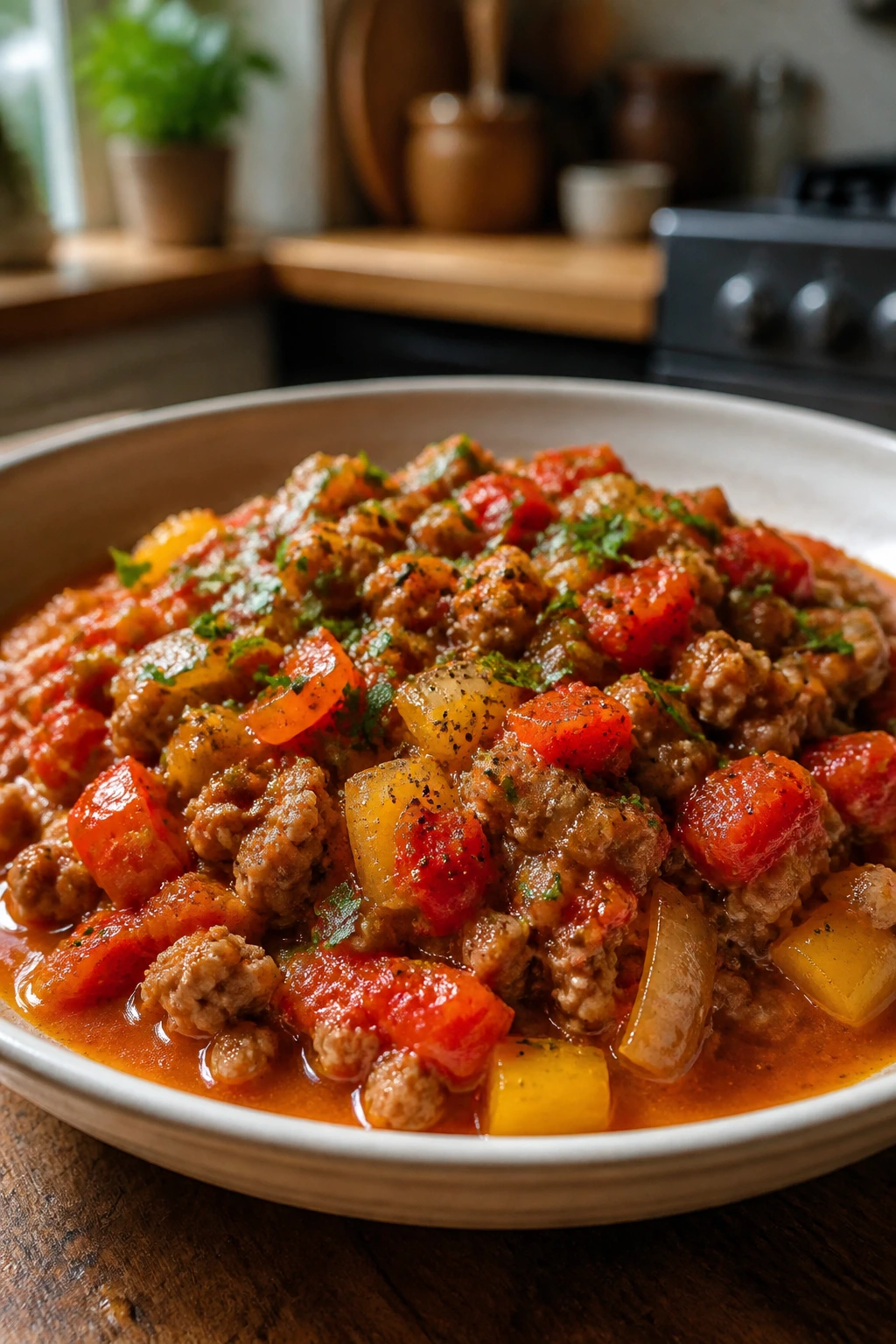
Presentation: Spoon the turkey skillet into shallow bowls so the sauce has room to pool around the edges. A scattering of parsley and a little black pepper on top makes the pan look brighter, even if you serve it straight from the stove.
Accompaniments: Fluffy white rice is the most obvious partner, and it earns its keep because it catches the sauce so well. Buttered egg noodles, mashed potatoes, roasted potatoes, cauliflower rice, crusty bread, or warm tortillas all work without fighting the flavors.
Portions: Plan on about 1 to 1 1/4 cups of the turkey mixture per adult if you’re serving it alone, a little less if there’s rice or bread alongside it. If you want to stretch the meal, a simple green salad or steamed green beans does the job without adding much work.
Beverage Pairing: A cold lager, unsweetened iced tea with lemon, or a light red wine like Pinot Noir all sit nicely next to the tomato and pepper flavors. Sparkling water with a squeeze of lemon works too, and it keeps the whole plate from feeling heavy.
Small Tweaks That Pay Off
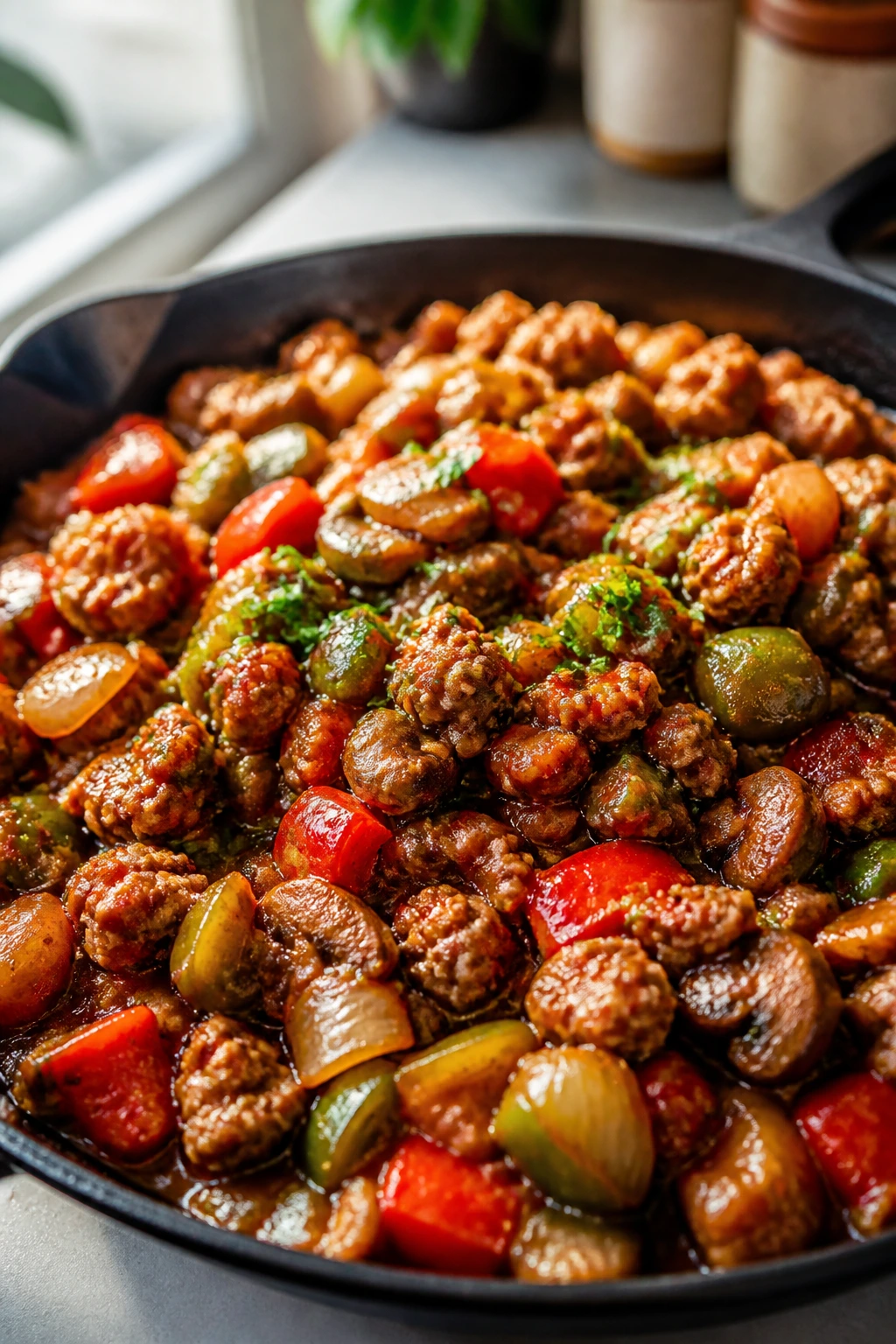
Flavor Enhancement: A teaspoon of red wine vinegar or extra lemon juice at the very end wakes up the tomato sauce and keeps the skillet from tasting flat. I use this trick often with ground turkey, because turkey likes a little acid more than beef does.
Time-Saver: Chop the onion, peppers, and mushrooms ahead of time and keep them in one container in the fridge for up to 24 hours. The actual cooking goes quickly once the knife work is done, and that is usually where weeknight dinner starts to wobble.
Texture Fix: If the skillet looks too dry, add 2 to 3 tablespoons of broth and stir. If it looks too loose, simmer it uncovered for another 2 to 3 minutes until the sauce turns glossy and clings to the meat instead of pooling.
Cost-Saver: Buy 93% lean ground turkey when it’s on sale, then build the rest of the dish around mushrooms and onions. Those vegetables stretch the pan without making it taste thin or watery.
Make-It-Yours: Add a handful of feta, a spoonful of pesto, or a dusting of grated Parmesan right before serving. Each one changes the finish in a different direction, which is handy when you want the same base recipe to feel less repetitive.
Mistakes That Dry Out Ground Turkey
-
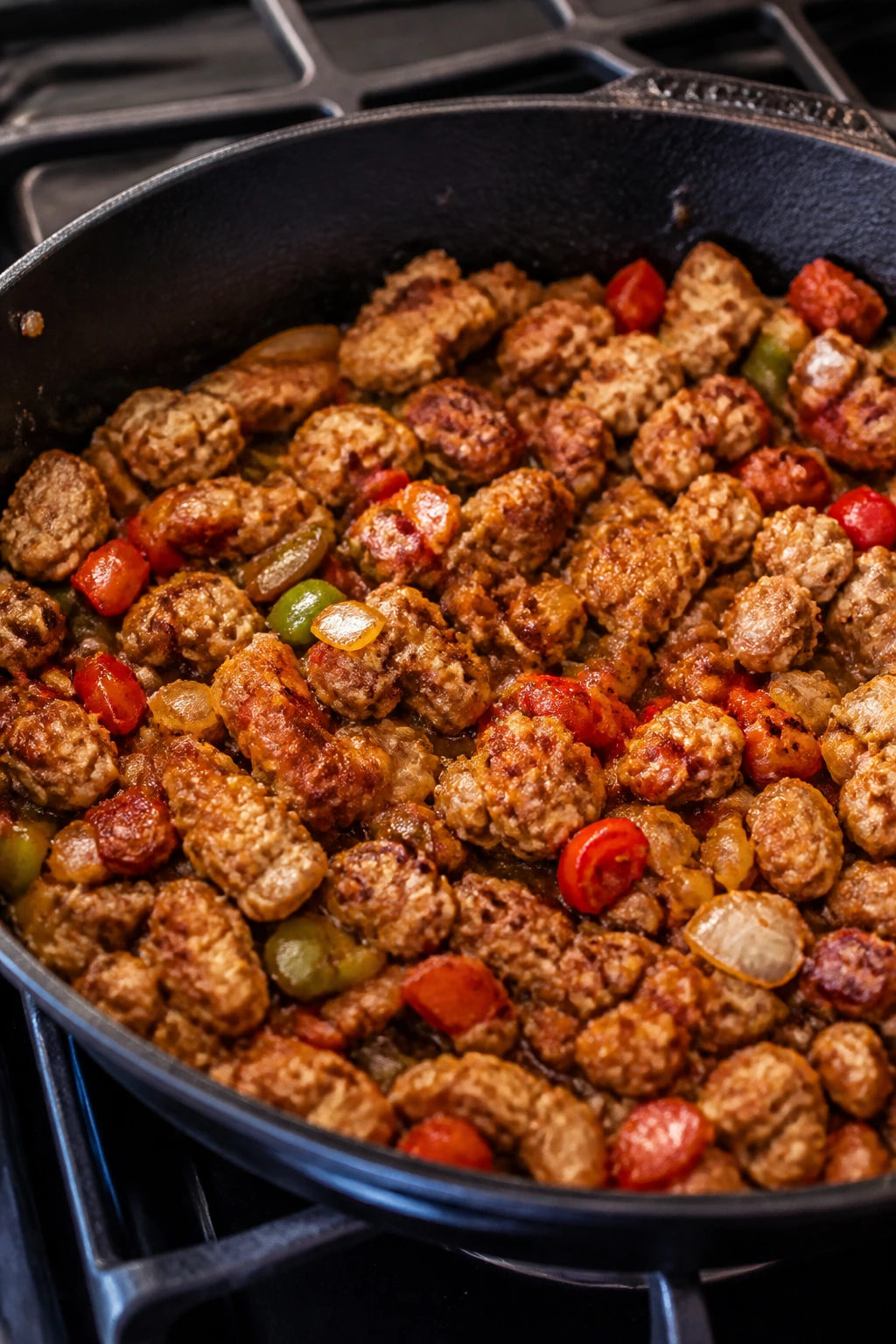
Crowding the pan: If the vegetables and turkey sit on top of each other in a small skillet, they steam instead of browning. The fix is simple: use a 12-inch pan or cook in two batches if your skillet is smaller.
-
Using ultra-lean turkey without extra moisture: 99% lean turkey can work, but it dries out fast and can taste tight by the time dinner hits the table. Add an extra tablespoon of oil and be more generous with the broth if that’s the turkey you bought.
-
Waiting until the end to season: Bland ground turkey usually isn’t a mystery problem. It just never got salted in stages. Season the vegetables, season the meat, and taste the sauce before you call it done.
-
Skipping the browning step: Gray turkey is almost always underdeveloped flavor. If the pan looks pale and wet, keep cooking until you see browned bits stuck to the skillet. That color is not cosmetic; it’s the base of the sauce.
-
Overcooking past 165°F: Turkey goes from juicy to tight faster than people expect. Pull it when it reaches 165°F, not 175°F, and let the carryover heat do the last bit of work.
-
Adding spinach too early: If the greens go in with the tomatoes and simmer forever, they lose their color and turn slimy. Stir them in at the end, right before the butter and lemon.
Variations That Change the Flavor Without Changing the Effort
Taco-Style Turkey Skillet
Swap the oregano for 1 teaspoon ground cumin and 1 tablespoon chili powder, then stir in 1 cup black beans and 1 cup frozen corn with the tomatoes. Serve it with tortillas, shredded lettuce, and avocado, and the skillet suddenly leans toward taco night without any extra drama.
Creamy Parmesan Finish
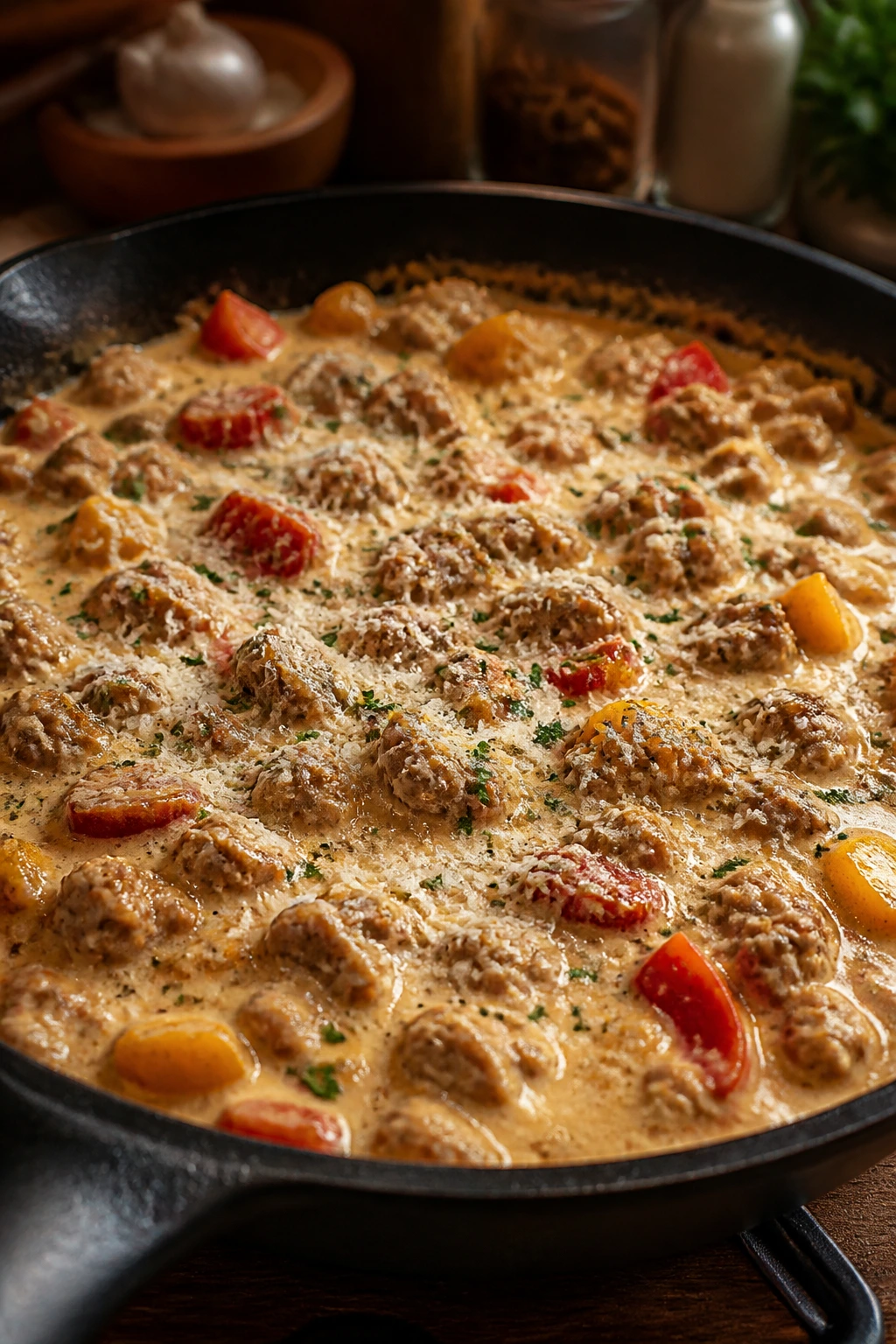
Stir in 2 ounces of cream cheese or 1/3 cup heavy cream after the simmer, then finish with grated Parmesan instead of parsley. The sauce turns richer and a little thicker, which is the version I’d make when I want the skillet to cling to pasta.
Mediterranean Tomato Pan
Use extra oregano, add 1/2 cup chopped Kalamata olives, and finish with crumbled feta and a squeeze of lemon. This version likes couscous, toasted pita, or a bowl of cucumber salad on the side, and it gives ground turkey a sharper, saltier profile.
Smoky Chipotle Skillet
Replace the smoked paprika with 1 teaspoon chipotle powder and stir in 1 tablespoon of adobo sauce from a can of chipotles. It brings heat and a little smoke, which makes the turkey taste deeper without changing the basic method.
Rice-Bowl Shortcut
Fold 3 cups of cooked rice into the finished skillet and let it heat through for 2 minutes with a splash of broth. Dinner turns into a one-bowl meal that’s easy to portion and easy to pack up for lunch the next day.
Make-Ahead, Fridge, and Freezer Notes
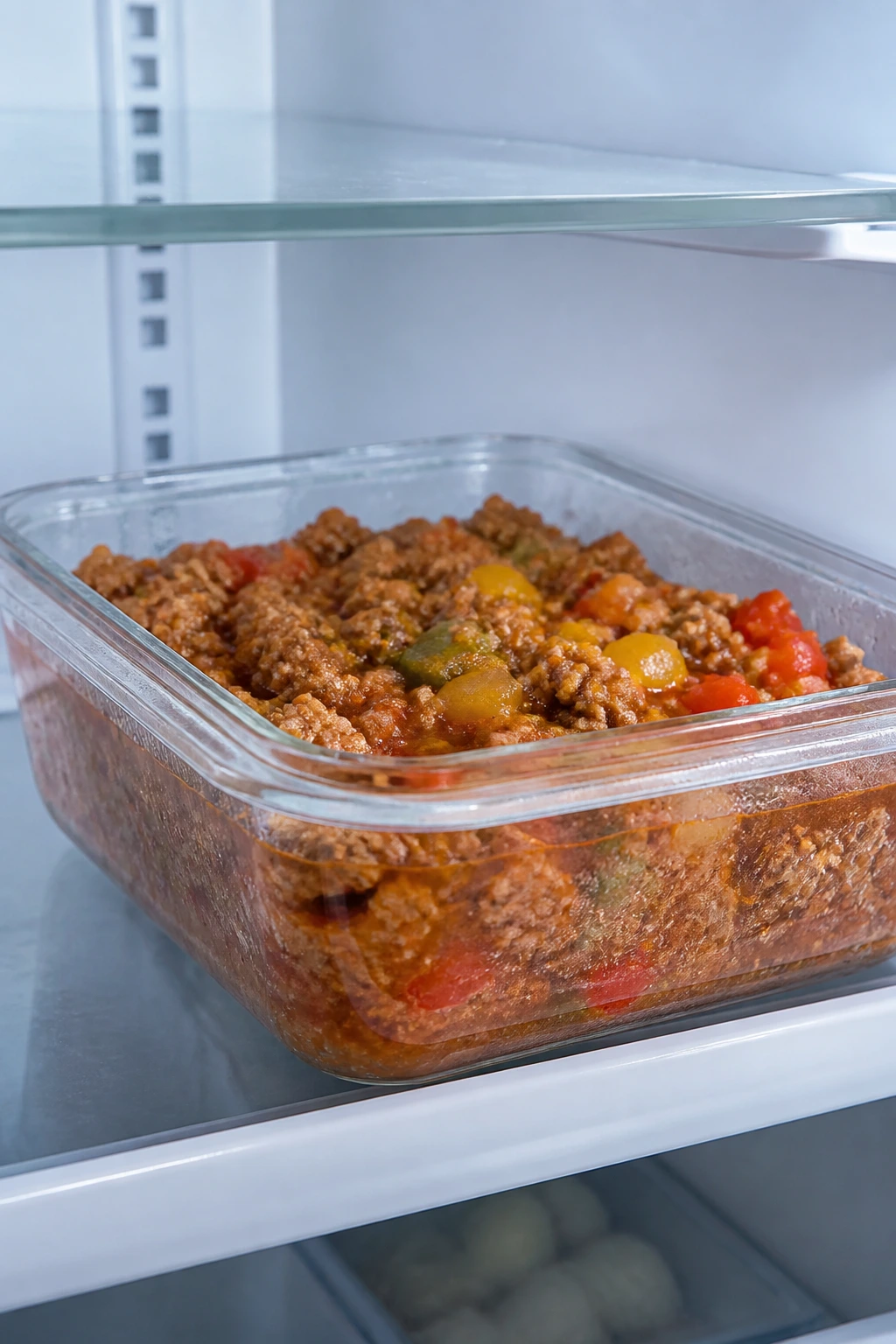
This skillet keeps well because the sauce protects the turkey. Let leftovers cool for no more than 2 hours at room temperature, then pack them into shallow airtight containers. In the fridge, they hold for 3 to 4 days.
For the freezer, portion the cooled skillet into freezer-safe containers or zip-top bags, press out the air, and freeze for up to 2 months. If you know you’ll freeze some, stop cooking the spinach a minute early so it doesn’t turn limp after reheating.
Reheat on the stovetop over medium-low heat with 1 to 2 tablespoons of broth or water to loosen the sauce. Stir often and stop once the turkey is steaming hot and the sauce has come back together. The microwave works too: cover loosely and reheat in 60-second bursts, stirring between each one so the center doesn’t overcook while the edges stay cold.
For make-ahead prep, chop the vegetables and mix the seasonings up to a day in advance. I would not brown the turkey ahead of time unless you have to, because the second cook dries it faster than people expect. If you want the best texture, cook the whole skillet fresh and eat the leftovers later.
Questions People Ask About Ground Turkey Skillets

Can I use 99% lean ground turkey instead of 93% lean?
You can, but the skillet needs more help. Add another tablespoon of olive oil at the start and keep the broth handy so the pan does not dry out while the meat cooks. The finished dish will still work, but it will need more attention.
What if I don’t like mushrooms?
Skip them and add an extra bell pepper, 1 cup diced zucchini, or 1 cup chopped celery instead. You’ll lose a little of the savory depth, so let the tomato paste cook for a full minute and do not skimp on the Worcestershire.
Can I make this with ground chicken?
Yes, and the method barely changes. Ground chicken cooks at almost the same pace as ground turkey, though it can taste a little lighter, so I’d lean harder on the paprika, lemon, and parsley to keep the flavor awake.
How do I stop the skillet from turning watery?
Brown the vegetables until their liquid cooks off, then simmer the sauce uncovered. If the pan still looks loose, keep it on the heat for 2 or 3 more minutes until the spoon leaves a visible trail through the sauce.
Can I double the recipe?
Yes, but use two skillets or cook the vegetables and turkey in batches. A crowded pan turns everything gray and soft, which is exactly what you do not want with ground turkey.
Does this taste better the next day?
The flavor does settle in overnight, yes. The turkey and vegetables soak up the tomato sauce, so leftovers taste a little deeper, though I still add a splash of broth when reheating to keep the texture loose.
What should I serve if I don’t want rice or pasta?
Try roasted potatoes, toasted sourdough, polenta, mashed cauliflower, or warm naan. The sauce is thick enough to sit on starch, but it’s also sturdy enough to spoon over vegetables if you want a lower-carb plate.
The Skillet I’d Make Again Tomorrow
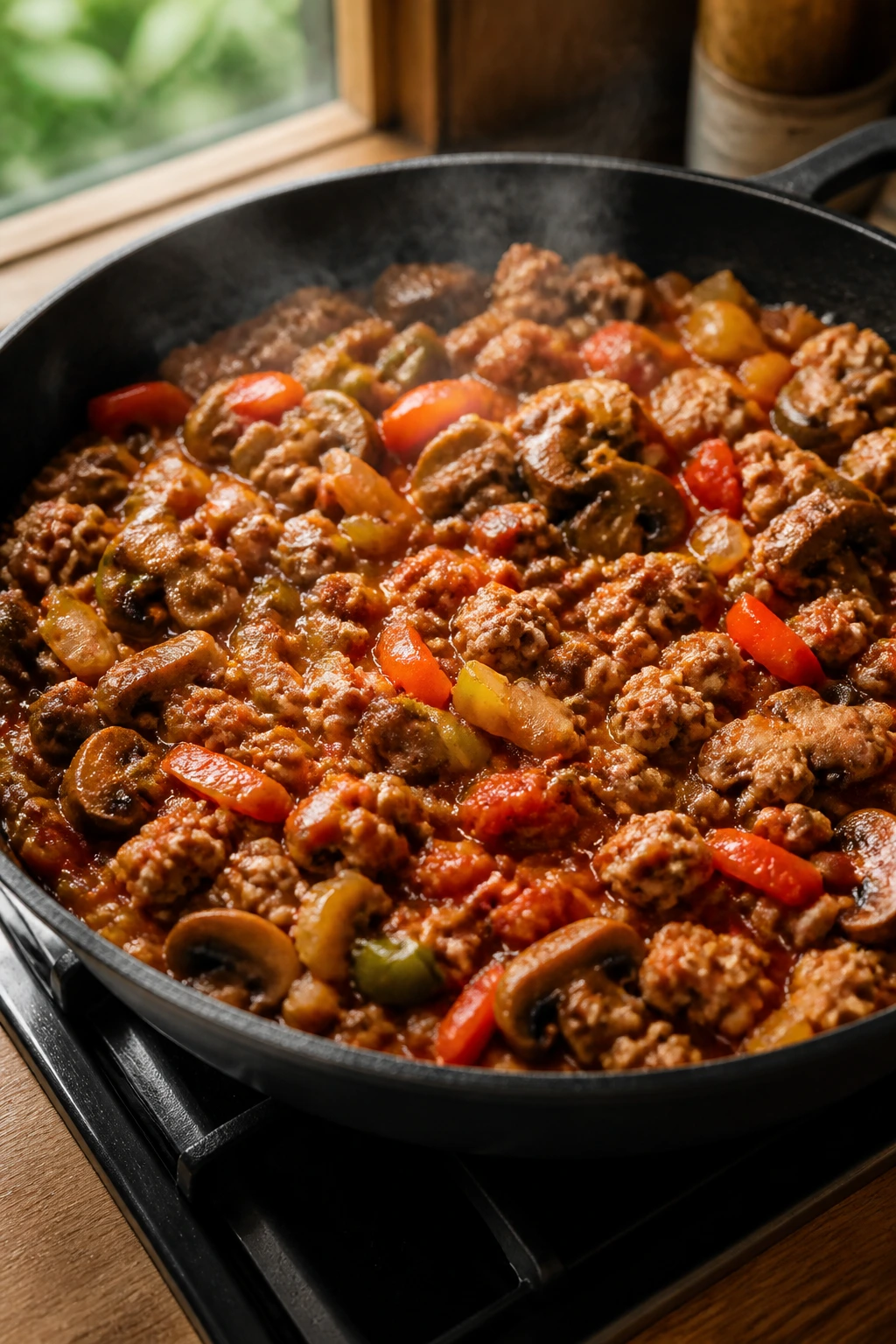
Ground turkey gets a bad rap because people treat it like a pale substitute instead of its own thing. Once you give it browning time, a little fat, and a sauce with some backbone, it stops acting like diet food and starts acting like dinner.
What I like most here is how adaptable it is without becoming vague. You can lean it toward tacos, pasta, bowls, or bread, and the core method still holds: brown the meat, build the sauce, finish with something bright. That sequence is the whole trick.
Keep a thermometer nearby, keep the pan uncovered long enough for the sauce to tighten, and this becomes one of those recipes you stop measuring by the page. You’ll know it by smell before you know it by memory.
Juicy Ground Turkey Skillet for Weeknight Dinners — Recipe Card
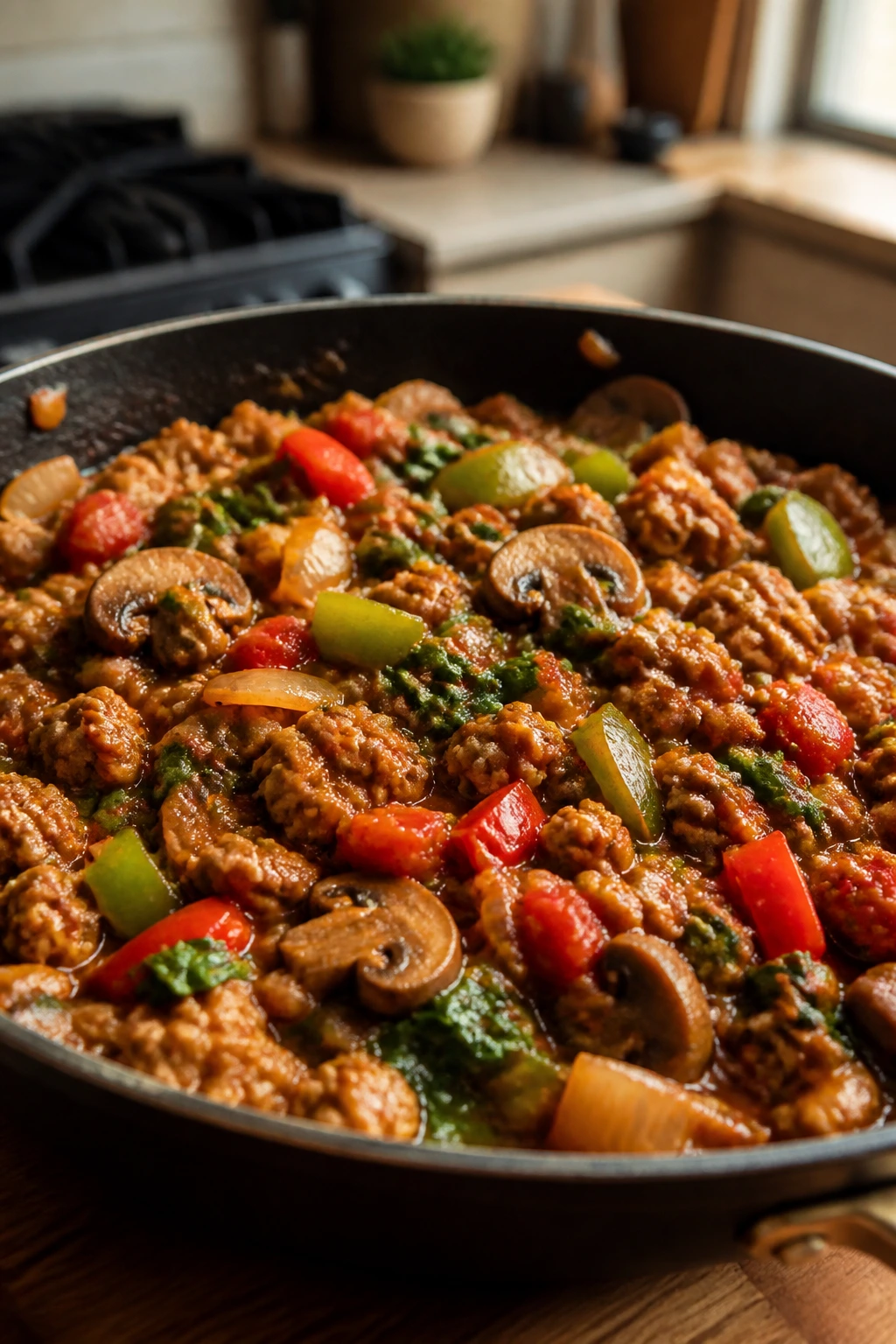
Recipe Name: Juicy Ground Turkey Skillet for Weeknight Dinners
Description: A savory one-skillet ground turkey dinner with onions, mushrooms, peppers, tomatoes, and a glossy pan sauce. It’s built to stay moist, taste full-bodied, and work with rice, potatoes, pasta, or bread.
Prep Time: 15 minutes
Cook Time: 25 minutes
Total Time: 40 minutes
Course: Main Course, Dinner
Cuisine: American
Servings: 4 to 6 servings
Calories: About 320 kcal per serving
Ingredients
For the Skillet:
- 2 tablespoons olive oil
- 1 medium yellow onion, diced
- 8 ounces cremini mushrooms, sliced
- 1 red bell pepper, diced
- 1 green bell pepper, diced
- 1 1/2 pounds 93% lean ground turkey
- 3 cloves garlic, minced
- 2 tablespoons tomato paste
- 1 teaspoon kosher salt, plus more to taste
- 1/2 teaspoon freshly ground black pepper
- 1 teaspoon smoked paprika
- 1 teaspoon dried oregano
- 1/2 teaspoon crushed red pepper flakes, optional
- 1/2 cup low-sodium chicken broth
- 1 can (14.5 ounces) diced tomatoes, undrained
- 1 tablespoon Worcestershire sauce
- 1 teaspoon Dijon mustard
- 2 cups baby spinach
- 1 tablespoon unsalted butter
- 1 tablespoon fresh lemon juice
- 2 tablespoons chopped fresh parsley
Instructions
-
Dice the onion and bell peppers, slice the mushrooms, mince the garlic, and measure the broth, tomatoes, Worcestershire sauce, Dijon, and seasonings.
-
Heat the olive oil in a 12-inch skillet over medium-high heat. Add the onion, mushrooms, bell peppers, and 1/2 teaspoon salt. Cook for 5 to 6 minutes until the mushrooms release their liquid and the vegetables begin to brown.
-
Add the ground turkey to the center of the pan. Season with the remaining salt, black pepper, smoked paprika, oregano, and red pepper flakes, if using. Cook for 5 to 7 minutes, breaking it up, until no pink remains and some browned bits form.
-
Stir in the garlic and tomato paste. Cook for 1 minute until the tomato paste darkens and smells sweet.
-
Pour in the broth to deglaze the pan, scraping up the browned bits. Add the diced tomatoes, Worcestershire sauce, and Dijon mustard. Bring to a simmer.
-
Reduce the heat to medium-low and cook uncovered for 6 to 8 minutes, stirring occasionally, until the sauce thickens.
-
Stir in the spinach and butter. Cook for 1 to 2 minutes until the spinach wilts. Turn off the heat and add the lemon juice and parsley.
-
Taste and adjust the salt. Let the skillet rest for 3 minutes before serving. Make sure the turkey reaches 165°F in the center.
Notes: Add a splash of broth when reheating leftovers. For a creamier version, stir in 2 ounces of cream cheese after the simmer. This skillet freezes well for up to 2 months.