



A whole turkey on a Tuesday feels like bringing a parade to a sandwich fight. Too much bird, too much pan, too much waiting around for a dinner that should’ve been calmer in the first place. A roast turkey breast is the smarter move: enough meat for a real meal, enough leftovers for lunches, and none of the drama that comes with a giant holiday centerpiece.
The trick is keeping the breast moist without babysitting it like it’s made of glass. Turkey breast is lean, so it dries out fast if you roast it blindly and walk away. But if you salt it properly, slide a little herb butter under the skin, and pull it at the right temperature, the slices stay pale pink at the edge, tender in the center, and glossy with pan juices. The skin gets bronzed and slightly crisp, the garlic turns sweet, and the lemon zest wakes up the whole pan.
I like bone-in turkey breast for this. The bone gives the meat a little insurance, the skin protects the top, and the roast cooks with more grace than the boneless versions wrapped in netting at the store. That matters on a weeknight. You want a roast that gives you a clean carve and a dependable result, not a nervous little guessing game.
Why This Turkey Breast Earns a Spot on a Tuesday
Fast enough for a real dinner: A 4- to 5-pound bone-in turkey breast usually roasts in about an hour, give or take, which is a very different animal from a full turkey that can swallow your entire afternoon.
Juicier than you expect from white meat: The salt does more than season the surface; it helps the meat hold onto moisture so the slices stay tender instead of crumbly and dry.
Crisp skin without a complicated setup: A hot oven at the start gives you that browned, shattery skin on top, then the lower heat finishes the meat gently so the outside doesn’t outrun the center.
Leftovers that stay useful: This roast turns into sandwiches, chopped salad, turkey-and-rice bowls, and a very respectable next-day soup. That’s not a small thing.
A lot of flavor for a short ingredient list: Garlic, thyme, rosemary, lemon, butter, and onion do the heavy lifting here. Nothing fussy. Nothing that leaves you hunting through three specialty stores.
Why a Bone-In Turkey Breast Roasts Better Than You’d Think
A bone-in turkey breast behaves differently from a whole turkey, and that difference is exactly why I reach for it when dinner needs to be practical. The breast meat sits right against the bone, which slows the heat down a little and keeps the center from racing ahead of the outer layers. That gives you a wider window between “done” and “dry.” Wider windows are good. Narrow ones are where dinner goes sideways.
There’s also the skin. On a turkey breast, the skin is not decoration. It’s a shield. It protects the lean meat underneath, holds some of the butter in place, and helps the top brown before the breast gives up its moisture. When the skin starts to blister and darken at the edges, you know the roast is developing the right kind of color. Not burnt. Not pale. That deep golden shade that tells you the fat is rendering and the surface is crisping.
I also like the size. A whole turkey asks for commitment. A turkey breast asks for a sheet pan, a thermometer, and a little common sense. If you buy a 4- to 5-pound breast, you can roast it on a regular evening and still have time to make potatoes or green beans while it rests. That’s the sweet spot. Enough ceremony to feel like dinner. Not enough to turn the kitchen into a battlefield.
One more thing: the pan drippings from a turkey breast are concentrated. Smaller pan, smaller volume, bigger flavor. That’s why a simple gravy or even a spoonful of those juices over the slices tastes like you worked harder than you did.
Ingredients for Juicy Roast Turkey Breast
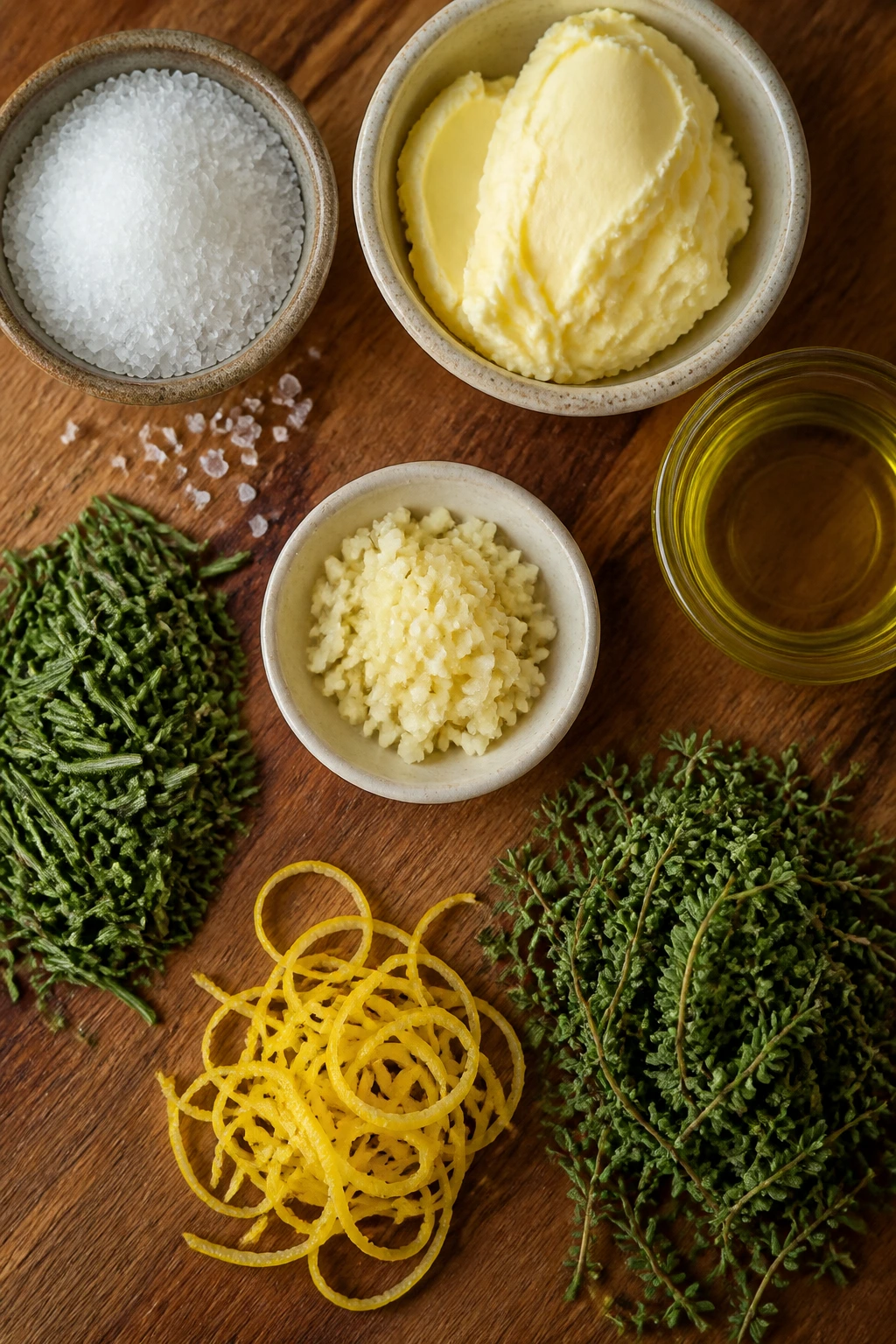
A little structure helps here, because the ingredients are doing different jobs. Salt seasons and protects. Butter carries the herbs. Onion and celery keep the breast lifted. Broth keeps the pan from scorching and gives you something worth spooning over the slices later.
Serving and Timing
Yield: 4 to 6 servings
Prep Time: 15 minutes
Cook Time: 55 to 70 minutes
Total Time: 1 hour 10 minutes to 1 hour 25 minutes, plus optional dry-brine time
Chill/Rest Time: 1 hour to overnight for dry brining, plus 15 to 20 minutes after roasting
Difficulty: Beginner — the method is straightforward, but the thermometer decides the finish.
Best Served: Warm, with pan juices or quick gravy
For the Turkey Breast:
- 1 bone-in, skin-on turkey breast, 4 to 5 pounds
- 1 tablespoon kosher salt, or 2 teaspoons fine sea salt
- 1 teaspoon freshly ground black pepper
- 2 tablespoons unsalted butter, softened
- 1 tablespoon olive oil
- 3 garlic cloves, minced
- 1 tablespoon chopped fresh rosemary, or 1 teaspoon dried rosemary
- 1 tablespoon chopped fresh thyme, or 1 teaspoon dried thyme
- 1 teaspoon finely grated lemon zest
- 1 medium yellow onion, cut into 1/2-inch slices
- 2 celery stalks, cut into 2-inch pieces
- 1/2 cup low-sodium chicken broth or turkey stock
For the Optional Pan Gravy:
- 1 tablespoon unsalted butter
- 1 tablespoon all-purpose flour
- 1 cup turkey stock or chicken broth
- Salt and pepper, to taste
Why These Ingredients Matter, One by One
The Turkey Breast Itself
What to use: A 4- to 5-pound bone-in, skin-on turkey breast gives you enough meat for dinner plus leftovers without becoming unwieldy in the oven.
Preparation: Thaw it fully in the refrigerator, then pat it dry inside and out with paper towels before seasoning. If the breast comes with netting, remove it before you do anything else.
Substitutions: A boneless turkey breast works if that’s what your store has, but it cooks faster and has less buffer against drying out. A pair of split bone-in breasts will also work if you want to feed more people.
Tips: Buy a breast with intact skin and no heavy “self-basting” label if you can help it. Those added sodium solutions can throw off the salt balance and leave the drippings a little strange.
Salt, Pepper, and Herb Butter
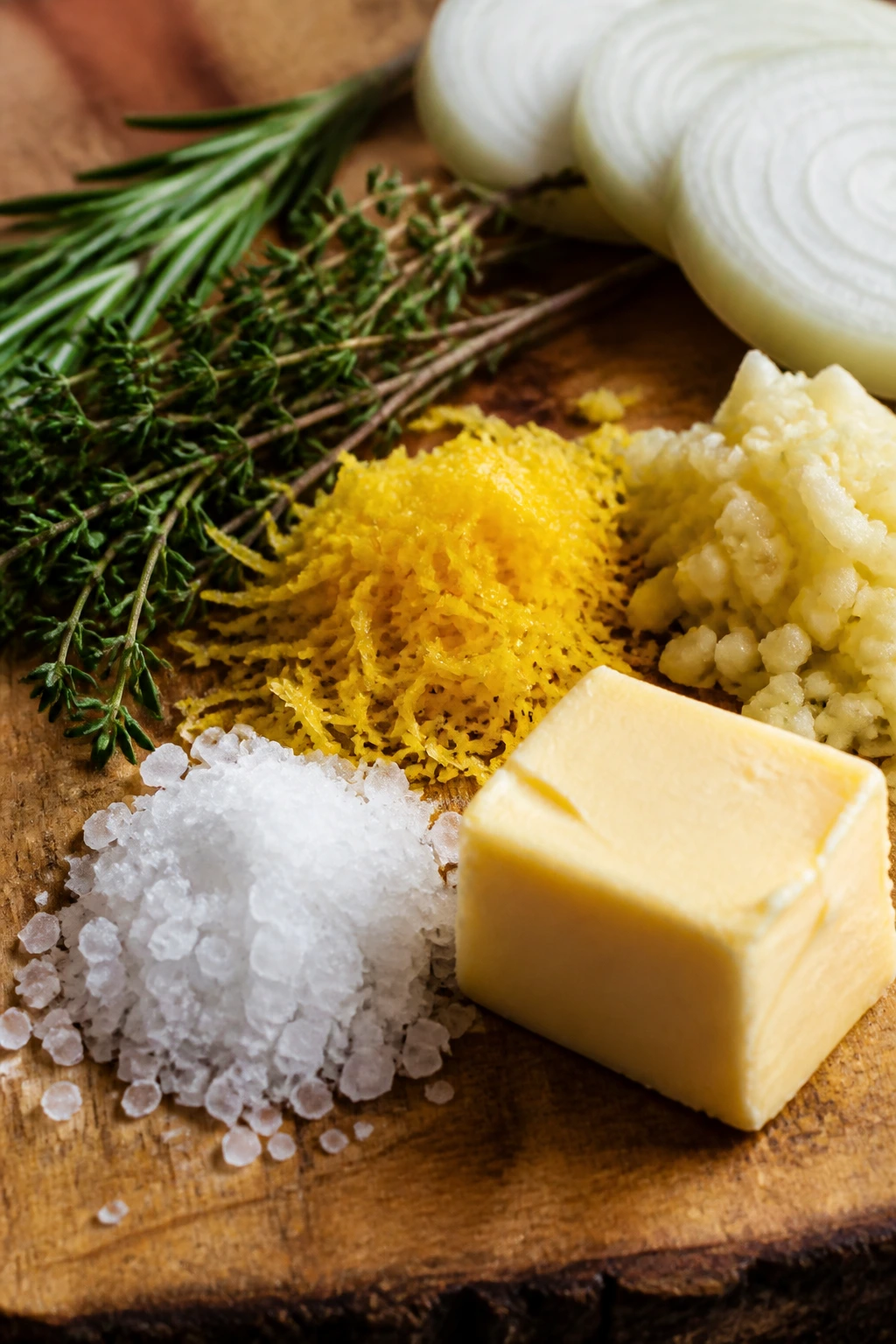
What to use: 1 tablespoon kosher salt, 1 teaspoon black pepper, 2 tablespoons softened unsalted butter, 1 tablespoon olive oil, 3 minced garlic cloves, rosemary, thyme, and lemon zest.
Preparation: Soften the butter until it spreads without tearing the skin, and mince the garlic fine enough that no big raw pieces sit on the surface and scorch.
Substitutions: If you don’t have fresh herbs, use dried rosemary and thyme, but keep the amounts smaller because dried herbs hit harder. Softened ghee can replace butter if you want a dairy-free bird with a slightly nuttier finish.
Tips: The olive oil keeps the butter mixture loose enough to spread evenly under the skin. Melted butter slides around too much and ends up on the pan instead of on the meat.
The Pan Bed and Broth
What to use: 1 medium onion, 2 celery stalks, and 1/2 cup broth.
Preparation: Slice the onion thick so it can support the bird without collapsing, and cut the celery into pieces that won’t disappear under the turkey.
Substitutions: Carrot chunks work if you like a sweeter pan drippings profile. A few fennel slices bring a faint anise note that plays nicely with lemon and thyme.
Tips: Keep the broth shallow. You’re not braising the turkey breast. You’re protecting the drippings from burning and giving yourself a base for gravy.
The Optional Gravy
What to use: Butter, flour, and a cup of stock turn the pan drippings into a quick sauce that clings to the meat instead of running off the plate.
Preparation: Strain the drippings first so any burnt herb bits or onion fragments don’t make the gravy gritty.
Substitutions: Use cornstarch instead of flour if you need a gluten-free gravy; whisk 1 teaspoon cornstarch with 1 tablespoon cold water before adding it to the simmering liquid.
Tips: If the drippings look very dark, skim a little fat and use more stock than drippings. A turkey breast pan can concentrate flavor fast, and too much of a good thing can turn bitter.
The Tools That Make Roasting Easier
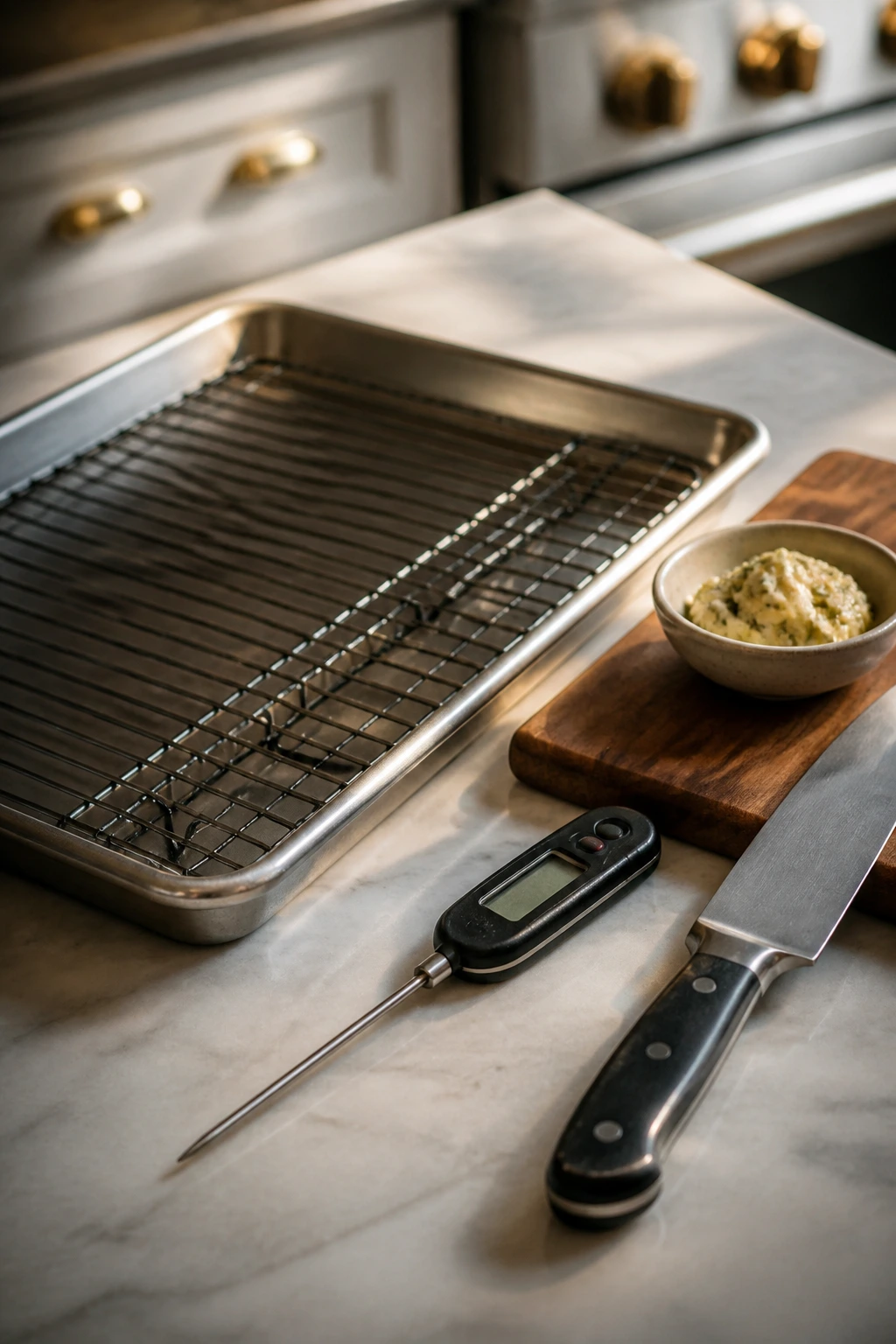
You do not need a pile of gear for this. You do need the right few things, though. A turkey breast is forgiving in flavor and not forgiving in temperature. The thermometer earns its keep.
- Rimmed baking sheet or roasting pan: This catches the drippings and gives the bird room to brown without splashing over the sides.
- Wire rack: Optional, but useful. It lifts the breast so hot air can move underneath it. If you don’t have one, the onion and celery bed works.
- Instant-read thermometer: The single most useful tool here. Aim for the thickest part of the breast, away from the bone.
- Small mixing bowl: For the herb butter. A fork or small spoon is enough to mash everything together.
- Carving knife: A long, sharp knife slices the breast cleanly instead of shredding the meat.
- Cutting board with a groove: Turkey gives off juices while it rests. A grooved board keeps the mess under control.
- Foil: For loose tenting if the skin browns before the breast finishes.
- Fine-mesh strainer: Handy for the gravy, especially if you want it smooth and clean.
How to Roast the Turkey Breast, Step by Step
Prep the Bird
-
Preheat the oven to 425°F (220°C) and set a rack in the lower third of the oven. If you’re using a roasting pan, line it with the onion slices and celery pieces, then set a wire rack on top if you have one. You want the turkey lifted, not sitting in broth.
-
Pat the turkey breast dry with paper towels and remove any netting or packaging strings. Rub the breast all over with the kosher salt and black pepper. If you have time, let it sit uncovered in the fridge for 1 hour to overnight. If dinner is happening tonight, leave it at room temperature while the oven heats, about 20 to 30 minutes.
-
Mix the herb butter in a small bowl: softened butter, olive oil, garlic, rosemary, thyme, and lemon zest. Stir until it looks like a loose paste rather than a puddle. The olive oil should keep it spreadable.
-
Loosen the skin gently with your fingers, starting at the thick end and working slowly toward the breast. Slip about two-thirds of the butter mixture under the skin, spreading it as evenly as you can without tearing the skin. Rub the rest over the top and sides of the breast. If a patch of skin splits, don’t panic. Keep going.
Roast and Finish
-
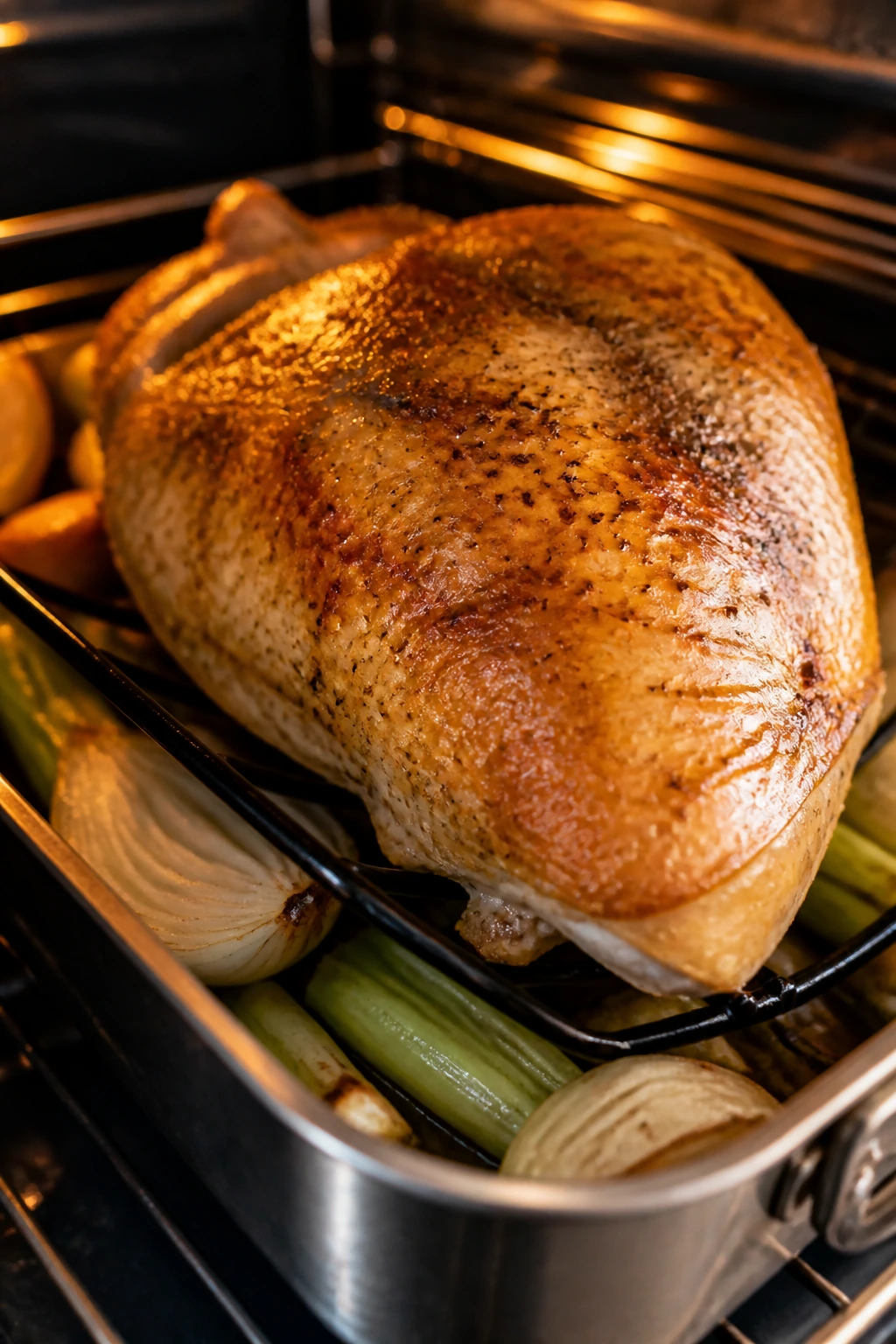
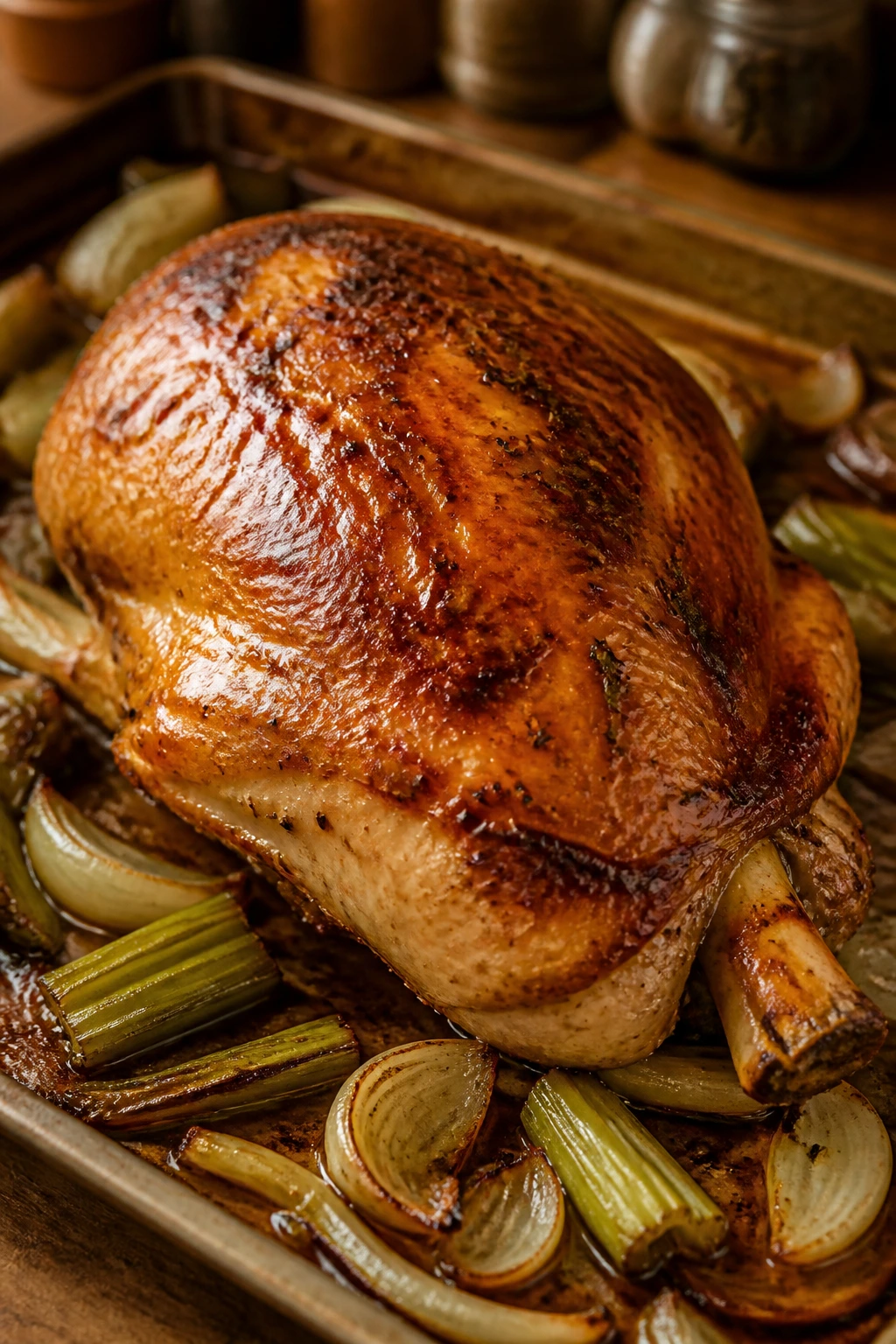
Set the turkey breast over the onion and celery in the pan and pour the broth into the bottom of the pan, not over the top of the bird. Roast at 425°F for 20 to 25 minutes, until the skin starts to turn golden and you can smell the garlic and herbs blooming in the oven.
-
Lower the oven temperature to 350°F (175°C) and continue roasting for 30 to 45 minutes more, depending on the size of the breast. Start checking the temperature at the thickest part with an instant-read thermometer after the 30-minute mark. Pull it when it reaches 160°F (71°C). The carryover heat during resting will take it to the safe zone. Do not wait for 165°F in the oven unless you want drier slices.
-
Loosely tent the turkey with foil and let it rest for 15 to 20 minutes on a cutting board. This is not optional. The juices need time to settle back into the meat, and the temperature will climb a few degrees while it rests.
Make the Gravy and Carve
- Strain the pan drippings into a measuring cup. In a small saucepan over medium heat, melt the butter, whisk in the flour, and cook for 1 minute until it smells a little nutty. Whisk in the stock and enough drippings to make 1 cup total liquid, then simmer for 3 to 5 minutes until lightly thickened. Season with salt and pepper if needed. Carve the turkey breast across the grain into slices and spoon the gravy over the top.
How to Serve It Like Dinner, Not Just Meat on a Plate
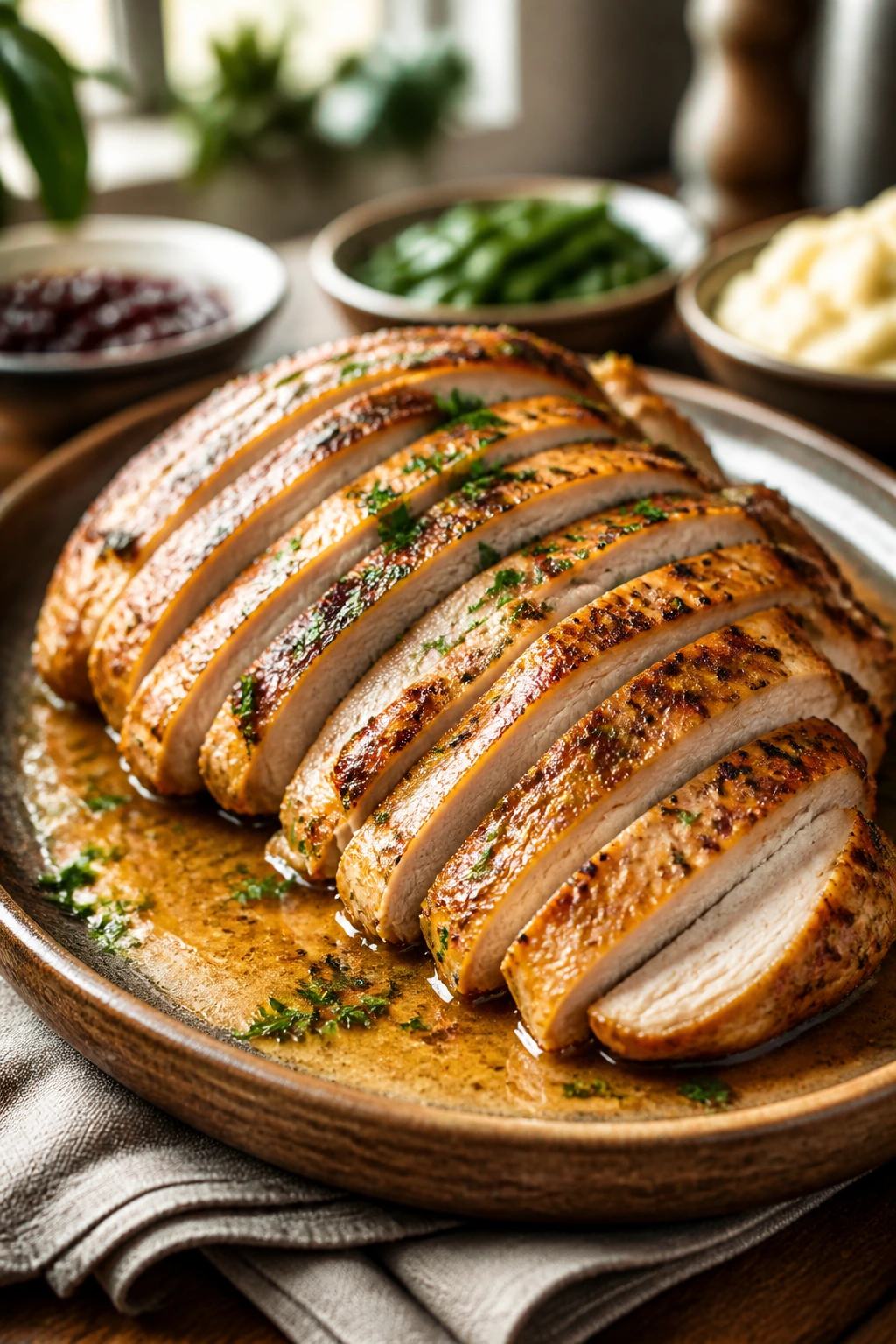
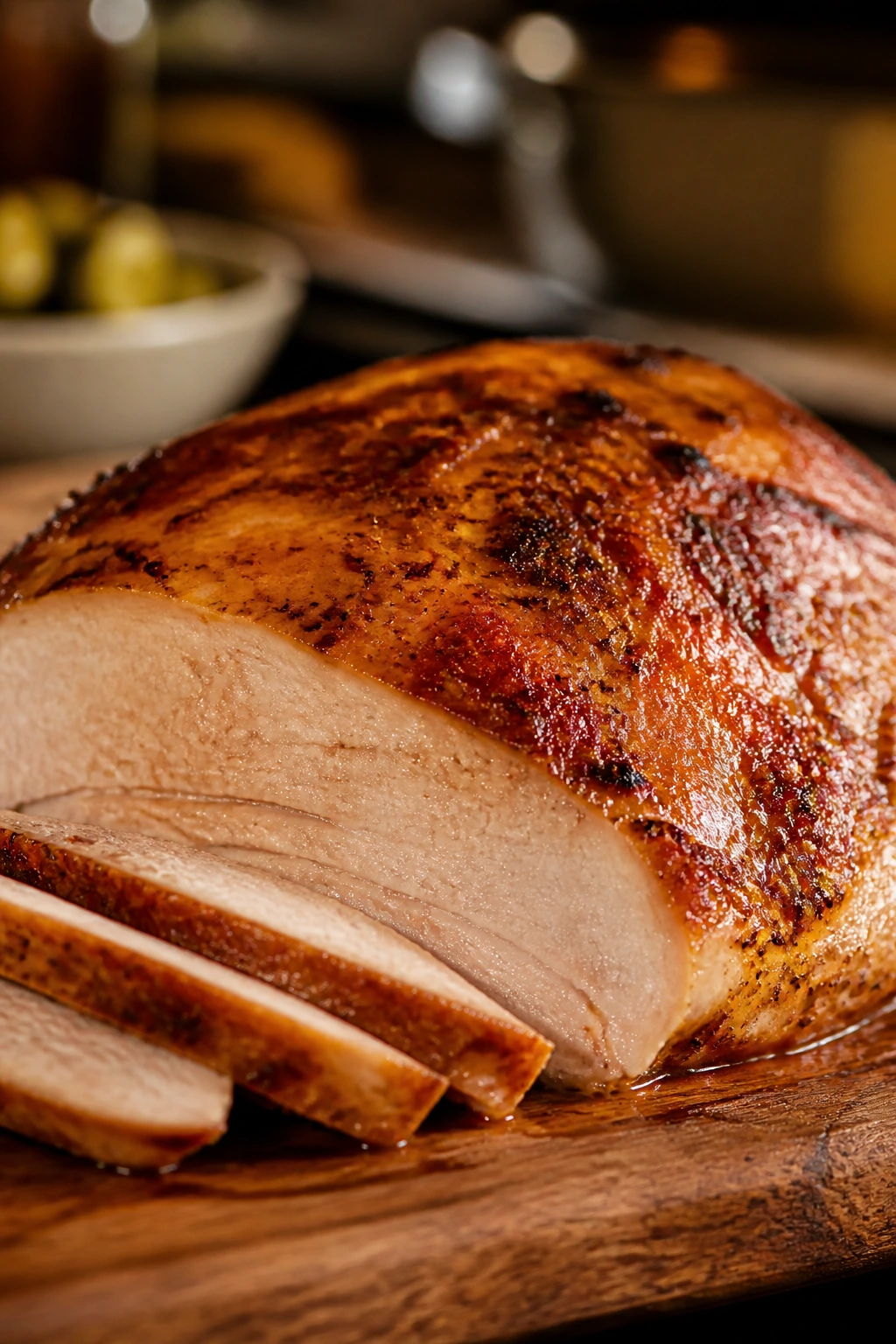
Presentation: Slice the turkey breast into 1/4- to 1/2-inch pieces and fan them across a warm platter. Spoon a few tablespoons of gravy or pan juices over the center so the slices look glossy rather than dry. A scatter of chopped parsley or thyme leaves gives the plate a finished look without making it fussy.
Accompaniments: I like this with mashed potatoes, buttered egg noodles, roasted carrots, green beans, or a simple salad with a sharp vinaigrette. Bread earns its place too, because the gravy will want something to soak into. A piece of crusty sourdough on the side is not decorative. It’s practical.
Portions: A 4- to 5-pound turkey breast usually feeds 4 to 6 people, depending on how many sides you put around it and whether anyone at the table plans to take leftovers home. For two people, serve it with one vegetable and a starch, then slice the rest for sandwiches or bowls.
Beverage Pairing: A dry white wine like Sauvignon Blanc works well with the lemon and herbs. So does hard cider or even a crisp lager if you want something less formal. For nonalcoholic pairing, sparkling water with a lemon wedge keeps the meal light and tidy.
Practical Tips That Keep the Meat Tender
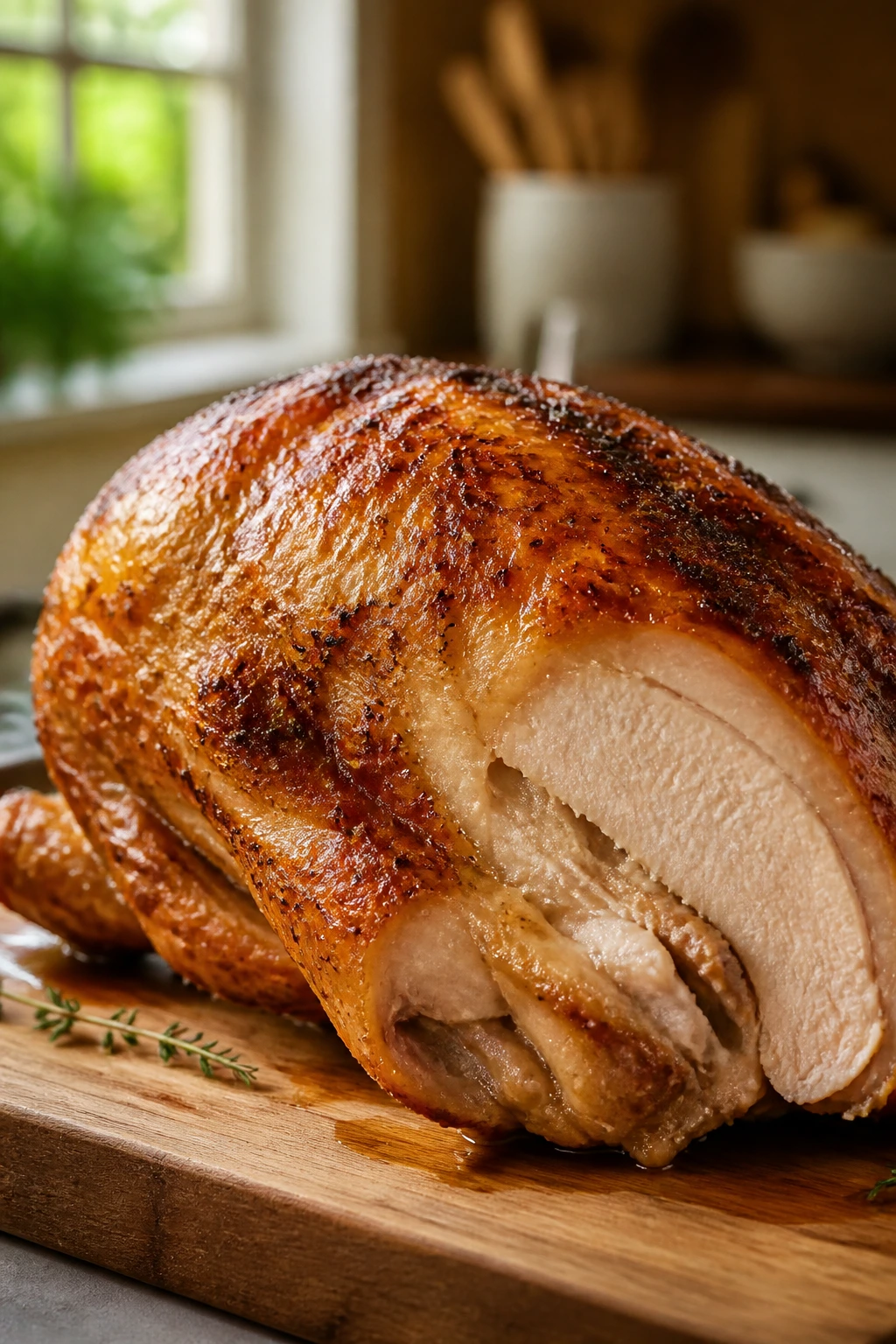
Flavor Enhancement: Rub a pinch of lemon zest into the butter and tuck a second pinch into the drippings after roasting. It doesn’t make the turkey taste “lemony” in a loud way; it just keeps the whole roast from tasting flat.
Time-Saver: If the butcher has split bone-in turkey breast, take it. It cooks a little faster and more evenly than one huge breast, and you can still carve it into those clean, dinner-plate slices.
Pro Move: After the resting time, spoon a tablespoon or two of warm pan juices over the carved slices before they hit the platter. That tiny move fixes the dried edges that show up on turkey breast no matter how careful you were.
Cost-Saver: Save every scrap of the carcass bone. Simmer it with onion, celery, a carrot, and a bay leaf for broth later in the week. One turkey breast can turn into dinner now and soup later, which makes the price feel a lot saner.
If you like a deeper herb note: Add a teaspoon of chopped sage to the butter. It pushes the roast closer to holiday territory, which is fine with mashed potatoes and a pile of green beans.
If your oven runs hot: Check the bird 10 minutes early after the temperature drop. Turkey breast overcooks fast once it crosses the 160°F mark, and some ovens are sneaky about their actual heat.
Common Turkey Breast Mistakes and How to Dodge Them
-
Starting with a wet skin: Damp skin steams before it browns, which gives you that pale, rubbery top nobody wants. Pat the breast dry until the paper towels come away mostly clean, and don’t skimp on this step.
-
Skipping the thermometer: Visual cues lie. A turkey breast can look done on the outside while the center is still undercooked, or it can look fine and already be dry. Use the thermometer and trust the number, not the color.
-
Roasting too hot the whole time: A high oven from start to finish can scorch the skin before the center has a chance to cook. The initial blast at 425°F is there for browning; the lower 350°F finish is there for control.
-
Pulling the turkey before the rest: The juices need 15 to 20 minutes to redistribute. Cut too soon and they run onto the board, leaving you with pretty slices that eat like cardboard.
-
Using too much salt with self-basted meat: Some turkey breasts are already treated with a salt solution. If the package says “enhanced” or “self-basting,” cut your added salt back and watch the broth and gravy seasoning carefully.
-
Letting the bird sit in too much liquid: Broth in the pan is good. Submerging the bottom of the breast is not. That turns the underside soft and ruins the skin protection you were trying to build.
Ways to Change the Flavor Without Losing the Juiciness
Smoky Paprika Turkey Breast
Add 1 teaspoon smoked paprika to the herb butter and skip the lemon zest. The roast picks up a deeper, red-gold color and a slightly campfire note that works well with roasted potatoes and green beans.
Maple-Mustard Glazed Turkey Breast
Brush the skin with 1 tablespoon Dijon mustard mixed with 1 tablespoon maple syrup during the last 10 minutes of roasting. The glaze caramelizes at the edges and gives the slices a tangy-sweet finish without turning sticky.
Sage-Apple Turkey Breast
Swap the rosemary for chopped sage and lay 1 cored apple, sliced thick, into the pan with the onion. The apples soften into the drippings and bring a soft sweetness that makes the whole kitchen smell like stuffing.
Dairy-Free Herb Roast
Use 3 tablespoons olive oil instead of butter and add an extra clove of garlic plus a little more lemon zest. The skin won’t taste quite as rich, but the roast still gets good color and clean herb flavor.
Storing, Reheating, and Making It Ahead
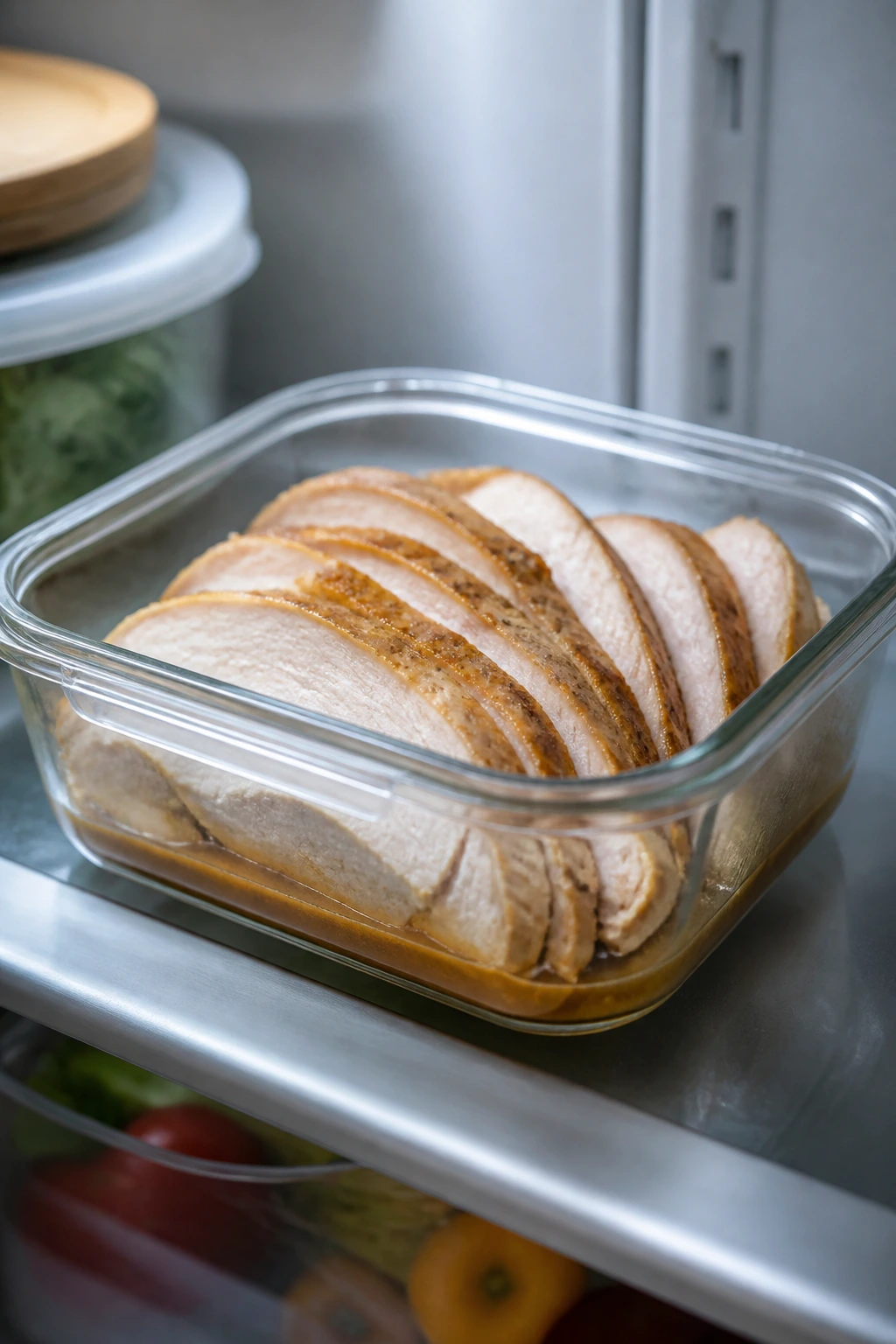
Turkey breast keeps well if you treat the leftovers like they matter. The biggest mistake is leaving the slices bare in the fridge, where they dry out and start tasting like fridge air. Don’t do that.
Fridge: Store sliced turkey in an airtight container for 3 to 4 days. Add a spoonful of pan juices or gravy over the top so the meat stays moist. A whole unsliced breast keeps a bit longer in flavor, but sliced leftovers are easier to protect from drying.
Freezer: Freeze turkey breast for up to 2 months. Slice it first, layer the slices with parchment, and tuck a little broth or gravy into the package before sealing. Flat freezer bags work well because they thaw faster and take up less room.
Reheating: The oven is better than the microwave if you care about texture. Put the slices in a baking dish with 2 to 3 tablespoons of broth, cover tightly with foil, and warm at 300°F (150°C) for 10 to 15 minutes, just until heated through. If you use the microwave, do it at 50% power in short bursts so the edges don’t turn dry and stringy.
Make-ahead: The herb butter can be mixed 2 to 3 days ahead and kept covered in the fridge. The turkey can be salted the night before and left uncovered in the fridge for a light dry brine. You can also make the gravy ahead and rewarm it gently with a splash of stock.
One honest note: turkey breast tastes best fresh from the oven, but the leftovers often taste better the next day once they’ve sat in their own juices. That’s one of the few nice things about this cut.
Questions People Ask About Roast Turkey Breast
Can I use a boneless turkey breast instead of bone-in?
Yes, and it will still work, but you need to watch it more closely. Boneless breast cooks faster and can dry out faster, so start checking temperature early and pull it when the center hits 155 to 160°F.
Do I really need to dry-brine it overnight?
No, but salt time helps. Even 1 hour of salting makes a difference in how juicy the slices feel, and an overnight dry brine gives you a little more seasoning and a drier skin surface for browning.
What temperature should I pull the turkey breast from the oven?
Pull it at 160°F in the thickest part of the breast, away from the bone. The temperature will rise during the rest, and that carryover is what keeps the meat from going chalky.
My skin is getting too dark before the meat is done. What should I do?
Loosely tent the breast with foil and keep roasting. Don’t wrap it tight or the skin will steam and soften; you just want to shield the top from direct heat while the center catches up.
Can I roast it without a wire rack?
Yes. The onion and celery bed does the job if you spread the pieces thick enough to keep the turkey lifted. You want some air under the bird, not a puddle of broth.
Can I cook it from frozen?
Not for this recipe. Turkey breast needs to thaw fully so the heat reaches the center at the same pace as the outside. A frozen breast will brown badly before the middle gets where it needs to be.
How do I keep leftovers from drying out?
Store the slices with gravy or pan juices, then reheat them covered with a little broth. If you want sandwiches, keep the bread and turkey separate until the last minute so the bread doesn’t go damp and sad.
A Roast That Makes a Tuesday Feel Calmer
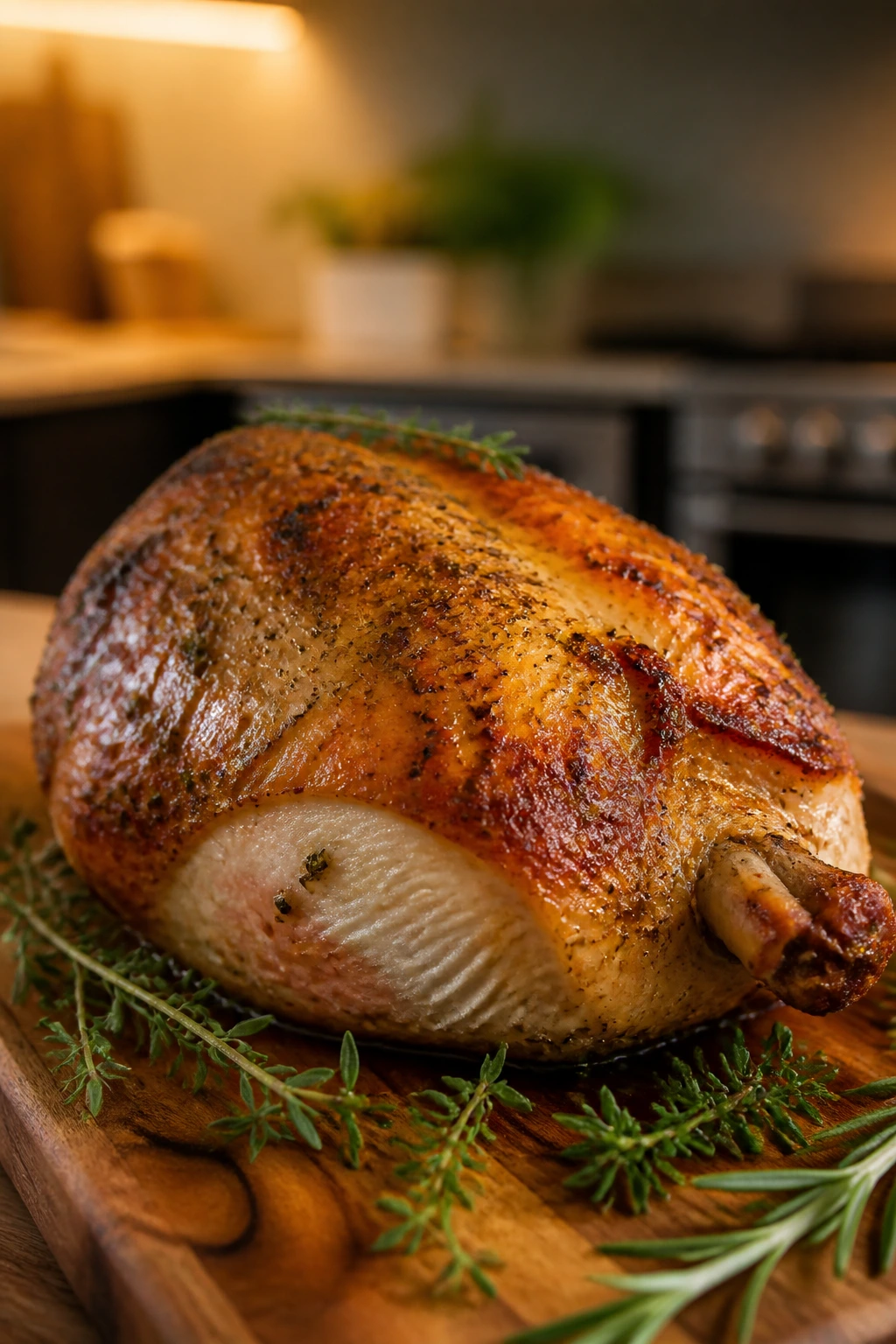
A good turkey breast doesn’t need a holiday to make sense. It just needs enough salt, a little fat, and the discipline to stop cooking it at the right moment. That’s the whole deal. The skin turns golden, the slices stay moist, and dinner arrives looking like you meant to do something nice for yourself.
I keep coming back to this cut because it solves the part of poultry that annoys people most. Not the seasoning. Not the sides. The timing. A bone-in roast turkey breast gives you a useful amount of food without asking for a full production, and that’s the kind of dinner I’ll always make room for.
Keep one in the freezer and a thermometer in the drawer, and you’re never very far from a roast that feels a little more deliberate than takeout.
Juicy Roast Turkey Breast for Weeknight Dinners — Recipe Card
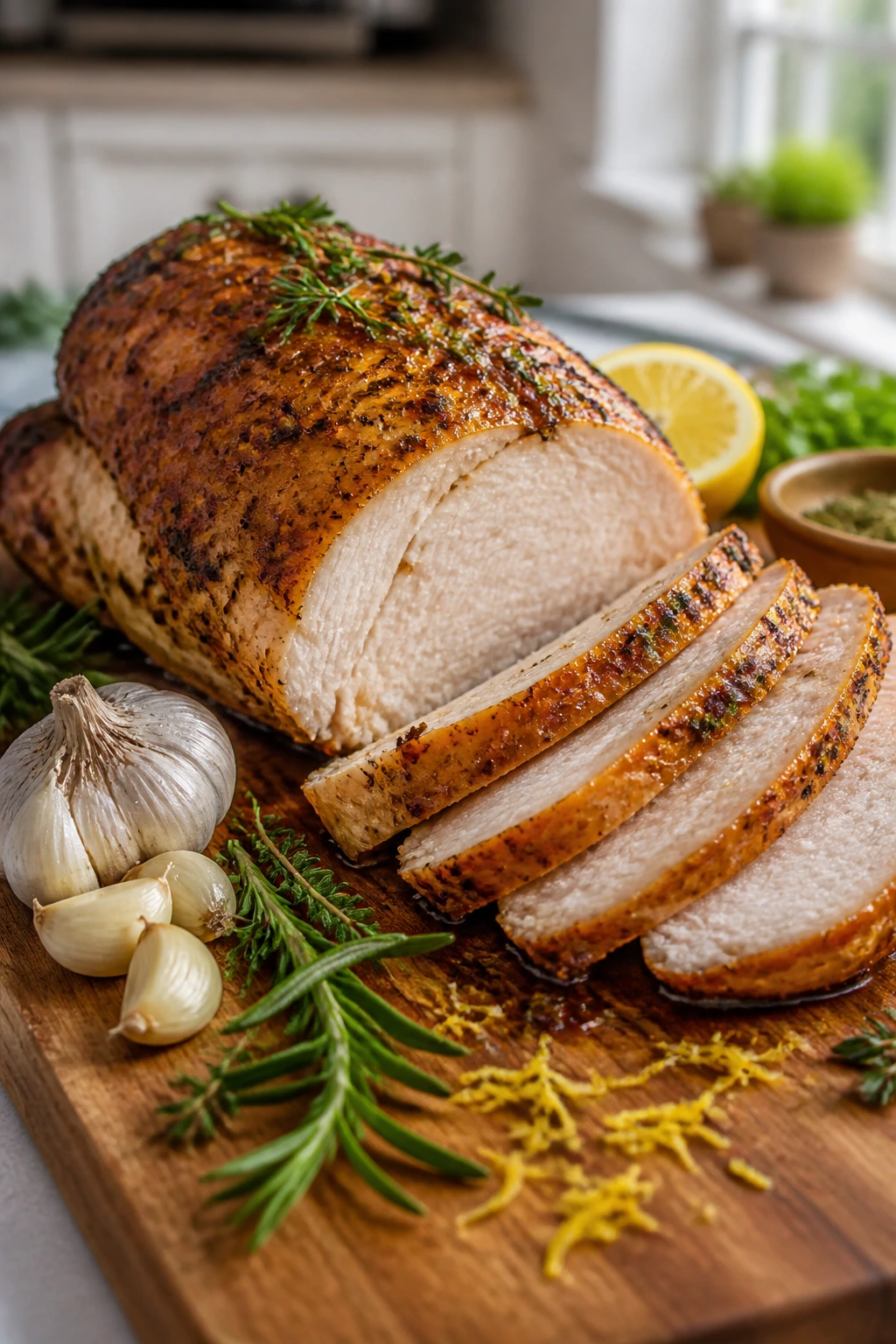
Recipe Name: Juicy Roast Turkey Breast for Weeknight Dinners
Description: Bone-in turkey breast roasted with garlic, rosemary, thyme, lemon, and butter until the skin turns golden and the meat stays tender. Served with optional pan gravy.
Prep Time: 15 minutes
Cook Time: 55 to 70 minutes
Total Time: 1 hour 10 minutes to 1 hour 25 minutes, plus optional dry-brine time
Course: Dinner, Main Course
Cuisine: American
Servings: 4 to 6 servings
Calories: Approx. 330 kcal per serving
Ingredients
For the Turkey Breast:
- 1 bone-in, skin-on turkey breast, 4 to 5 pounds
- 1 tablespoon kosher salt, or 2 teaspoons fine sea salt
- 1 teaspoon freshly ground black pepper
- 2 tablespoons unsalted butter, softened
- 1 tablespoon olive oil
- 3 garlic cloves, minced
- 1 tablespoon chopped fresh rosemary, or 1 teaspoon dried rosemary
- 1 tablespoon chopped fresh thyme, or 1 teaspoon dried thyme
- 1 teaspoon finely grated lemon zest
- 1 medium yellow onion, cut into 1/2-inch slices
- 2 celery stalks, cut into 2-inch pieces
- 1/2 cup low-sodium chicken broth or turkey stock
For the Optional Pan Gravy:
- 1 tablespoon unsalted butter
- 1 tablespoon all-purpose flour
- 1 cup turkey stock or chicken broth
- Salt and pepper, to taste
Instructions
-
Preheat the oven to 425°F (220°C) and set a rack in the lower third of the oven. Line a roasting pan or rimmed baking sheet with the onion and celery, then add a wire rack if using.
-
Pat the turkey breast dry, remove any netting, and season all over with salt and pepper. Rest for 20 to 30 minutes while the oven heats, or refrigerate uncovered for 1 hour to overnight if dry brining.
-
Mix the softened butter, olive oil, garlic, rosemary, thyme, and lemon zest in a small bowl.
-
Loosen the skin and spread most of the butter mixture under the skin, then rub the rest over the top and sides of the breast.
-
Set the turkey breast on the onion and celery bed and pour the broth into the pan. Roast for 20 to 25 minutes, until the skin starts to brown.
-
Lower the oven to 350°F (175°C) and roast for 30 to 45 minutes more, until an instant-read thermometer inserted into the thickest part reads 160°F (71°C).
-
Transfer the turkey to a cutting board, tent loosely with foil, and rest for 15 to 20 minutes.
-
For the gravy, strain the drippings. Melt the butter in a saucepan, whisk in the flour, and cook for 1 minute. Gradually whisk in the stock and enough drippings to make 1 cup total liquid, then simmer until lightly thickened. Season to taste.
-
Carve the turkey breast across the grain and serve with the gravy or pan juices.
Notes: Pull the turkey at 160°F and let it rise to 165°F while resting. For a gluten-free gravy, use cornstarch instead of flour. Save leftover slices with a little gravy to keep them moist.