



Smoke is never just smoke at a backyard cookout. It clings to the edges of potato salad bowls, drifts over the grass, and turns a simple burger supper into a small logistical exercise with a very short fuse.
The meal itself is the easy part to romanticize. The picnic is where the chaos lives. A tray that looked tidy on the counter can turn awkward once it has crossed the patio, the ice starts melting, and somebody has already opened the cooler three times looking for mustard.
I trust a backyard cookout picnic only when the menu, the grill, the table, and the timing all line up. That does not mean the spread has to be fussy. It means the food has to survive heat, smoke, and people wandering around with a paper plate in one hand and a drink in the other. The best version feels relaxed because the boring parts were handled first.
The trick is building the whole thing in the right order, and the first decision happens before the charcoal ever lights.
Why a Backyard Cookout Picnic Feels Different from an Ordinary Spread
A backyard picnic has less distance, but more moving parts. In a park picnic, you pack once and hope for the best. In a backyard cookout, the kitchen keeps reaching into the yard, the grill keeps changing the clock, and everyone expects the food to come off the heat at the exact moment they get hungry.
That is why this style of picnic planning works best when you think like a line cook for an afternoon. The grill is hot. The table is not. The food has to travel from one to the other without losing its shape, its heat, or its grip on sanity. A flimsy salad that wilts in ten minutes is not a friend here.
Smoke changes the rules too. A little wood on charcoal adds depth to chicken thighs, sausages, or corn. Too much smoke, though, and you get bitterness that sits on the tongue and makes people reach for extra sauce. I like smoke that behaves like seasoning, not fog. Thin, clean, and obvious enough to notice.
Smoke is a seasoning, not a perfume
When wood chunks are burning clean, the flavor lands like a soft edge on the food. When the fire gets starved or overloaded, the smoke turns sharp and muddy. That is the line worth respecting.
The smell should drift, not choke. If it hits you in the throat while you are still standing near the grill, that is usually a sign you are doing too much with the wood or not enough with the airflow. The difference matters more on a backyard picnic than it does on a one-off steak night, because you are feeding people for an hour or two, not sending out one plate at a time.
Heat makes the menu behave differently
A hot grill can rescue a lot of ordinary ingredients, but it also punishes lazy planning. Buns dry out in seconds. Potato salad warms fast in a shallow bowl. Greens go limp if they sit beside the grill while you answer three questions and look for a serving spoon.
A backyard cookout picnic works when each piece has a job. Some food should stay crisp. Some should stay cool. Some should arrive at the table with visible grill marks and then sit without falling apart. That last part is underrated. Food that can rest for ten minutes without becoming sad is the food you want.
The yard is part kitchen, part dining room
That sounds obvious until you are carrying a tray across uneven grass with tongs in one hand and a stack of napkins in the other. The patio, the grill, the cooler, the hand-wash spot, and the table all need their own little zone. If they overlap too much, the whole scene gets sticky fast.
And sticky is the enemy here. Not just messy sticky. The kind of sticky that makes people stop reaching for seconds because the sauced ribs are too close to the chips, or the drinks cooler is right beside the raw meat cooler, or the only trash bag is still inside the house. The layout is not decoration. It is part of the recipe.
Build the Menu Around Smoke, Heat, and Hold Time
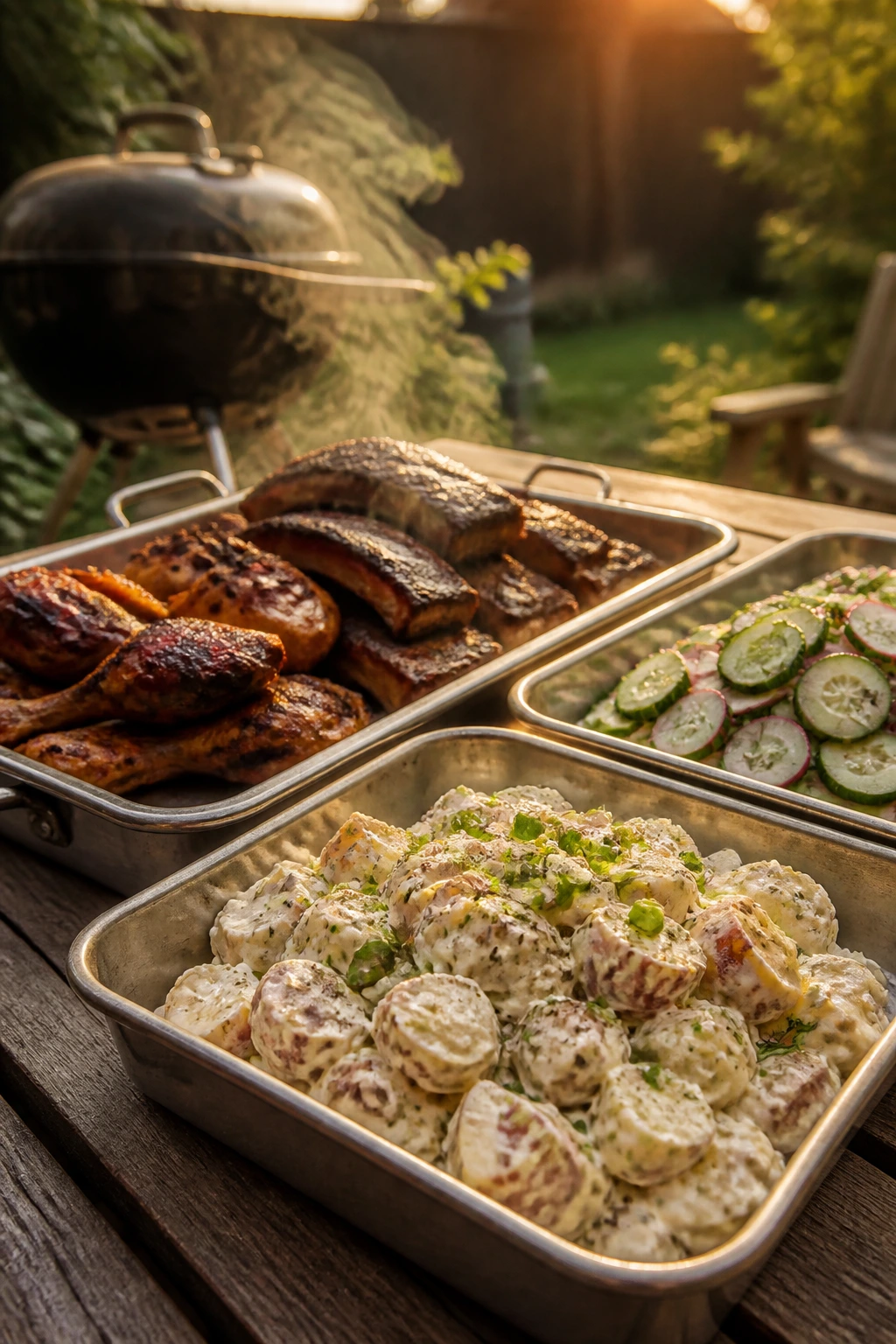
What actually belongs on a smoke-heavy picnic table? Not everything. That is the honest answer.
I trust a backyard cookout menu when it has one hot main, one cool crunchy side, one sturdy starch, one sauce, and one thing that tastes better after it has sat for a few minutes. That structure keeps the meal from collapsing into a pile of random dishes that all demand attention at the same second.
The three-bucket menu
Start with the hot main. Burgers, sausages, chicken thighs, pork chops, shrimp skewers, or thick slabs of grilled tofu all work because they can come off the grill in batches. They do not need to be plated with surgeon-level precision. They just need heat and a little confidence.
Then add a cold or room-temperature side that can handle smoke drifting over it without losing its shape. Vinegar slaw, bean salad, pasta salad with a sharp dressing, grilled corn salad, cucumber salad, or a chopped tomato salad with olive oil all sit nicely beside grilled food. If the side needs to stay creamy, keep it in a chilled bowl and set it out late.
Last, choose something that is either built for make-ahead or easy to hold warm. Baked beans, cornbread, grilled potatoes, roasted sweet potatoes, or foil-wrapped rolls all do the job. A good picnic menu has at least one thing that can be finished early and ignored for a bit.
Don’t make every dish fight for attention
Smoke and heat already do a lot. A menu full of heavy sauces, sweet rubs, and creamy salads starts to feel muddy. The plate needs contrast.
Think about it this way: if the main is smoky and browned, the side should bring acid or crunch. If the meat is rich, the vegetables should snap. If the bread is soft, the salad should be bright. That balance keeps people from reaching for a second helping and feeling like they need a nap afterward.
I would rather have three sharply chosen dishes than seven that all blur together. A backyard cookout picnic is not better because it has more bowls on the table. It is better when the bowls make sense next to each other.
Leave one slot for a no-fuss finish
This is the part people skip, then regret.
Pick one small finishing item that can sit on the table without trouble: pickled onions, sliced jalapeños, chopped herbs, lemon wedges, extra barbecue sauce, or a jar of chimichurri. That one move makes the spread feel finished, and it gives the smoke a brighter edge. You do not need a sauce boat for everything. You need one thing that wakes the plate up.
Pick the Right Grill Setup for the Food You Want
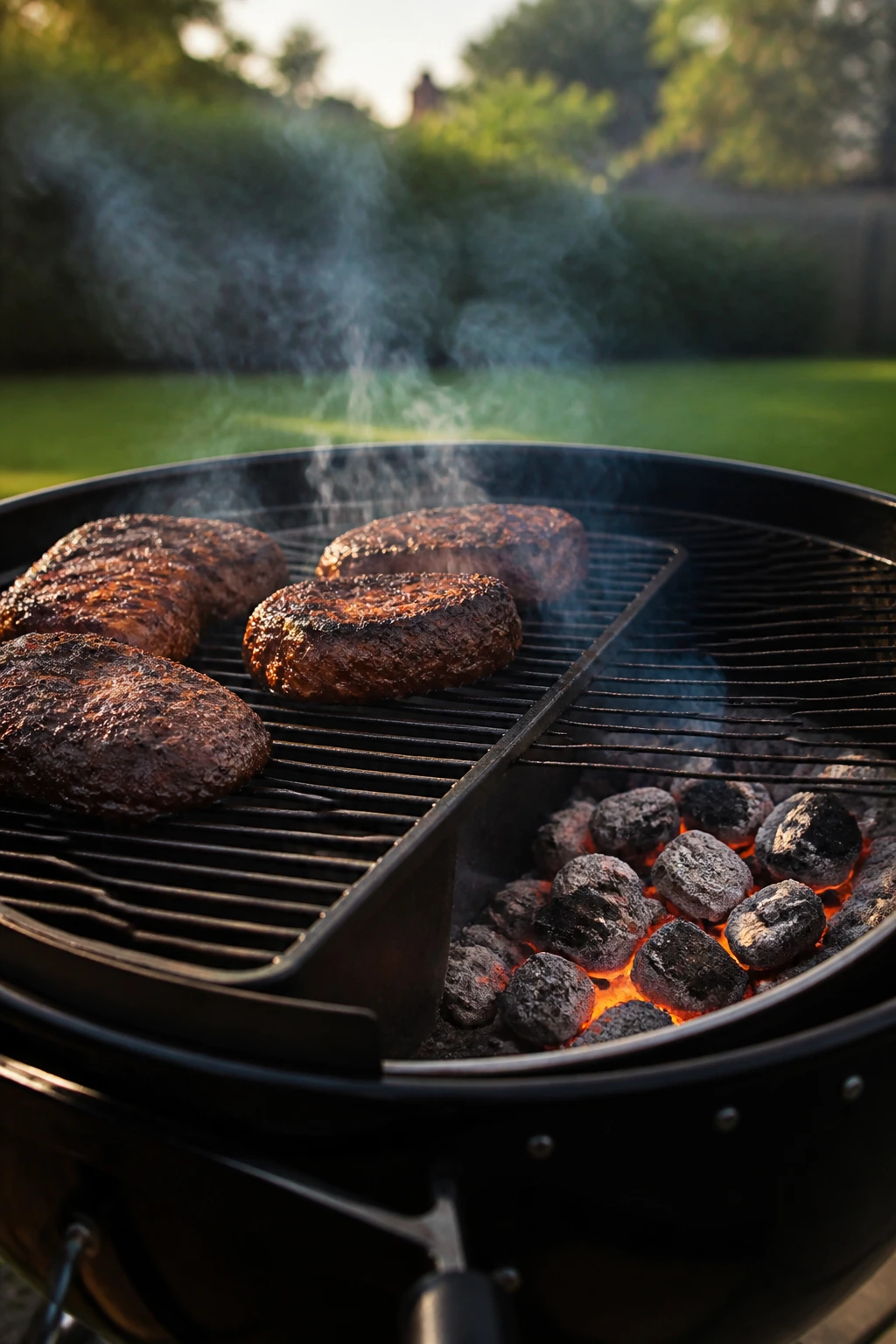
A grill is not just a grill. It is a timing decision wearing a lid.
If you are cooking burgers for eight people, the setup you choose changes how much you can relax. If you are cooking chicken thighs, corn, and sausages for a longer sit-down meal, the setup changes again. The wrong grill does not ruin the party, but it makes the afternoon feel more frantic than it needs to be.
Gas is the speed option
Gas wins when you want predictability. It heats fast, turns down fast, and gives you clean control over a crowd-pleasing menu. I reach for gas when the food is straightforward and the rest of the menu is already pulling its weight.
It is especially good for burgers, dogs, shrimp, sliced vegetables, and bread that needs a quick toast. You do not get deep smoke flavor from gas alone, so you have to decide whether that matters enough to bring a smoker box or wood chips into the equation. Sometimes it does. Sometimes it really does not.
Charcoal gives you the smoky edge
Charcoal takes longer, but the payoff is real. A two-zone fire lets you sear one side and move food to the cooler side when the flames get jumpy. That matters for chicken skin, thick sausages, and anything with sugar in the glaze.
If you like a gentle smoke note, use one or two dry wood chunks rather than burying the coals in chips. Oak is steady. Cherry is soft and slightly sweet. Hickory is stronger and can get loud fast. I use hickory carefully. Too much, and the yard starts tasting like a lumber yard.
Pellet grills are the easy long-game choice
Pellet grills suit the picnic that needs calm more than drama. They hold temperature well, which is useful if you are cooking chicken thighs, ribs, or a whole tray of vegetables while also making sure the iced tea does not melt into a sad puddle. The smoke tends to be gentler and more even.
You do need electricity and dry pellets, so they are less flexible than charcoal. Still, if you want a meal that feels measured rather than hectic, pellet smoke is a very fair trade.
The two-zone fire deserves respect
If you use charcoal, build one hot side and one cooler side. The hot side is where you start the food. The cooler side is where you save it. That simple setup gives you somewhere to retreat when a burger fat flare-up tries to eat the evening.
You can do a lot with that one trick. Thicker chicken pieces finish without burning. Buns toast without blackening. Sausages keep moving without splitting. It is the kind of practical move that looks boring until you need it, then suddenly looks brilliant.
Map the Picnic Layout Before the Fire Starts
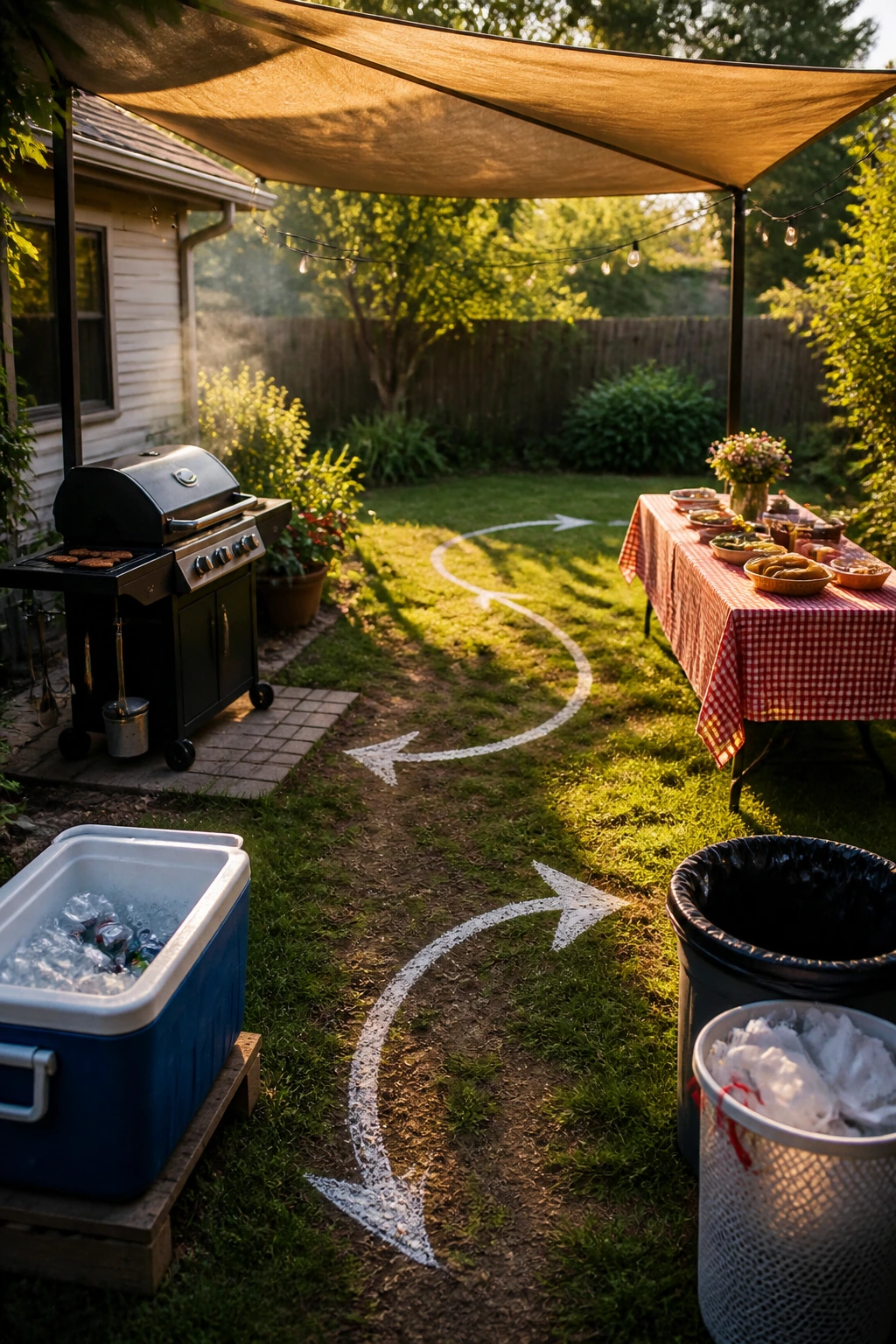
Move the table first. Seriously.
A clean backyard cookout picnic starts with walking the yard and deciding where the food will live before any heat shows up. Once the grill is lit, people will drift toward it. If the table, cooler, and trash bag are in the wrong spots, the drift turns into a traffic jam.
Create four zones
I like to think in four small zones: fire, food, cold, and cleanup.
The fire zone is the grill itself, plus a place to set hot trays for a minute without crowding the lid. The food zone is the buffet or picnic table where plates get filled. The cold zone is the cooler or iced tray for drinks, sauces, and salads that must stay cold. The cleanup zone is a trash bag, paper towels, and a place for used utensils so they do not wander back into the raw-food area.
Keep those zones close enough to make one trip useful, but not so close that heat and smoke make the cold zone miserable. A serving table six to eight feet from the grill is usually close enough for a fast handoff and far enough to keep people from standing in the smoke.
Shade beats decoration
A little shade changes everything. A canopy, umbrella, tree cover, or even a tarp clipped high enough to keep airflow open will help the food and the people. Sun on a mayonnaise bowl is a bad plan. Sun on the ice cooler is a worse one.
If there is wind, turn the grill so smoke moves away from the seating area. The afternoon feels calmer when nobody has to blink through a charcoal cloud every time the lid opens. That is not a minor detail. It changes the tone of the meal.
Build a landing zone for hot food
Do not try to plate directly from the grill if the crowd is more than four people. Put a rimmed sheet pan or large platter next to the grill as a landing zone. Hot items can rest there while the next batch finishes. That one tray prevents the “Where do I put this?” dance that eats up time and patience.
I also like a stack of clean tongs and a folded kitchen towel near the grill. One tool for raw food. One for finished food. That separation sounds fussy until you are halfway through the cook and suddenly need the clean pair.
Choose Foods That Hold Up in Heat and Stay Pleasant to Eat
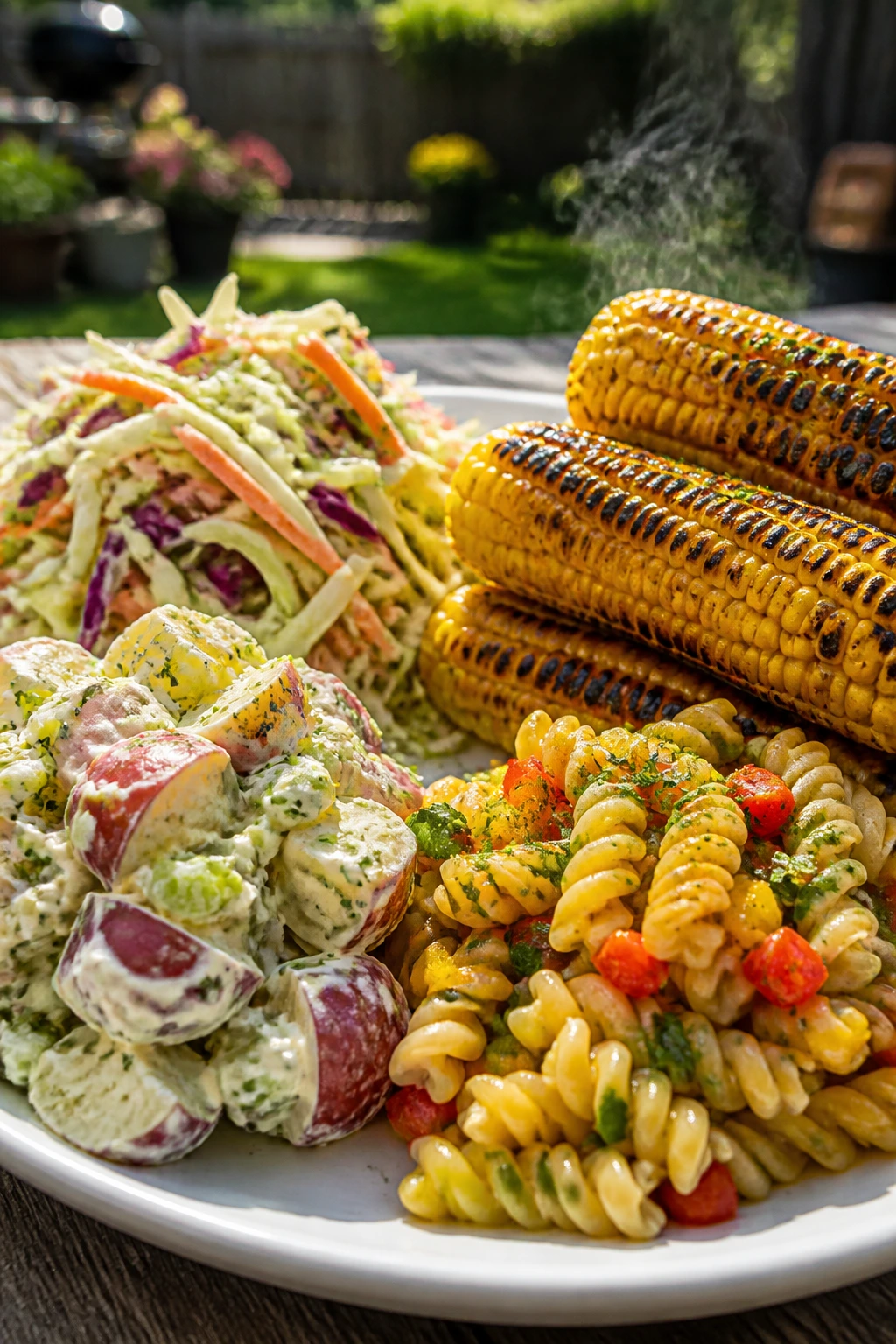
The best picnic food is the food that does not panic in warm weather.
Cold, crisp things. Sturdy things. Dishes that can sit in a shallow bowl and still look like themselves ten minutes later. Those are the ingredients that deserve space on a backyard cookout table. Delicate food has a place too, but it needs more babysitting than most hosts want to give it.
What holds up well
Here is where I put my money:
- Cabbage-based slaw: It stays crunchy much longer than lettuce and does not collapse under vinegar.
- Bean salad: Chickpeas, black beans, kidney beans, and white beans all take well to herbs, onions, and a mustardy dressing.
- Potato salad with a sharp dressing: Vinegar and mustard keep it lively; heavy mayo alone can make it sleepy.
- Grilled corn: Leave the husks on for steaming or peel them back for char. Either way, it fits the smoky theme.
- Pasta salad with vinaigrette: Short pasta, chopped vegetables, and a dressing that coats instead of puddling.
- Cornbread or rolls: They do not ask much and they soak up sauce without falling apart.
- Fruit with structure: Watermelon wedges, pineapple spears, grapes, peaches, or berries in a chilled bowl.
These foods are sturdy enough to wait while the grill catches up. They also look good on a table because they keep their edges.
What needs extra care
Creamy salads can work if they stay cold. Deviled eggs can work if they are held in a chilled carrier. Soft cheese can work if it is served in a small amount, not left out in a big bowl. But all of them need closer attention than the sturdy stuff.
Leafy greens are the least forgiving. A dressed lettuce salad near the grill turns limp fast, and nobody wants to eat wilted greens when there is smoke, meat, and corn in the air. If you want a salad with actual crunch, use cabbage, kale, romaine hearts, fennel, cucumbers, or shredded Brussels sprouts.
Build in a little acid
Smoke loves acid. That is the whole story.
A squeeze of lemon over grilled vegetables. Vinegar in the slaw. Pickled onions on the burger tray. A dill pickle beside the sandwich. These sharp notes cut the richness and make the meal feel awake instead of heavy. If the fire is doing its job, the acid should be doing its job too.
Sauces, Sides, and Condiments That Travel Well
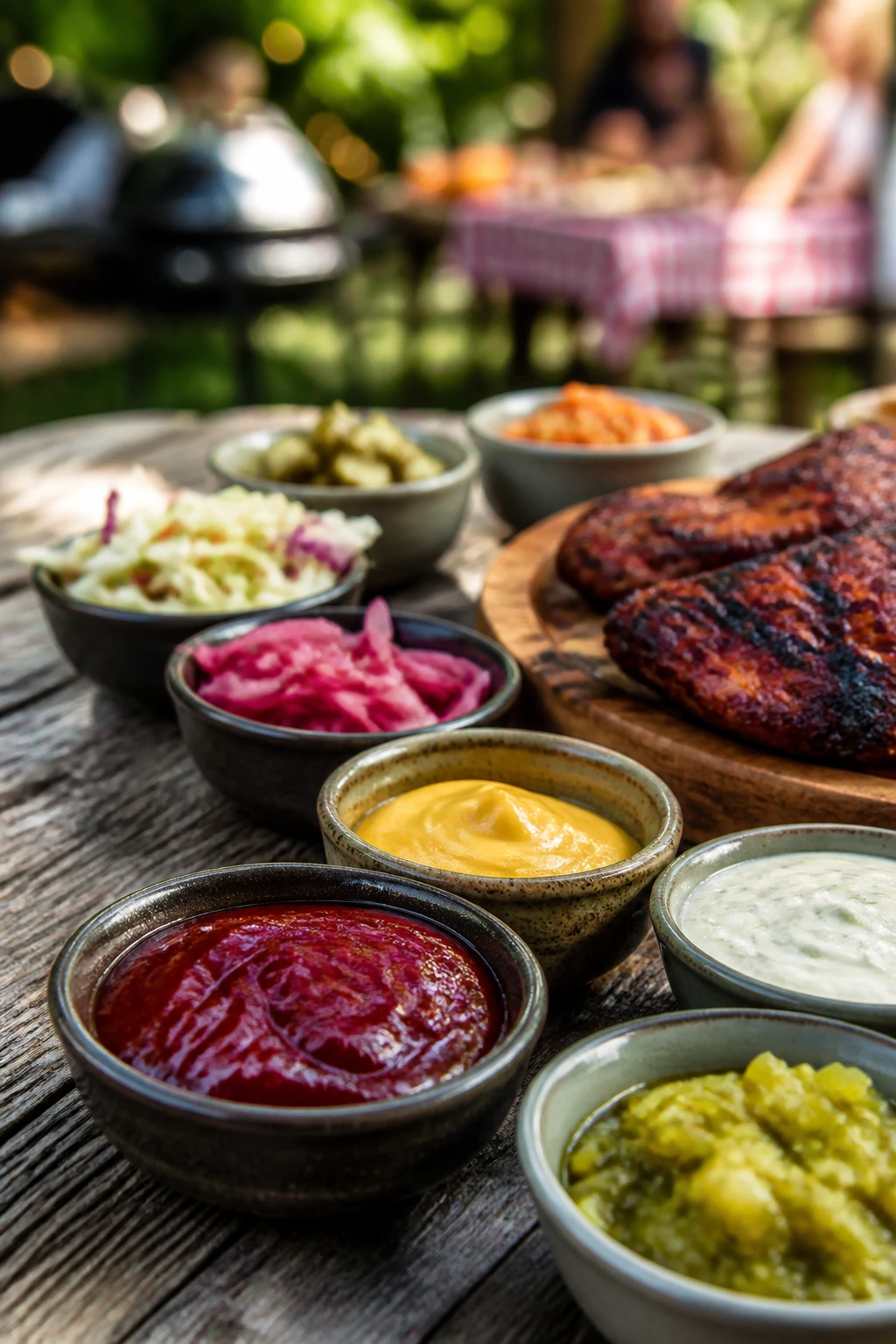
Smoke is bold. The rest of the table should know how to answer it.
That does not mean every condiment needs to shout. It means the sauces and sides should either cool things down, sharpen the plate, or add a little moisture where the grill took some away. A backyard cookout without a good sauce strategy can taste flat even when the meat is cooked perfectly.
Keep the sauce lineup simple and useful
A vinegar-based sauce stays happy outdoors much longer than a dairy-heavy one. Chimichurri, salsa verde, mustard sauce, and a bright barbecue sauce all work because they bring acid and herbs along with flavor. They also serve different jobs. Chimichurri can hit grilled steak or vegetables. Salsa verde wakes up chicken or corn. Mustard sauce sits happily next to sausage.
Creamy sauces need colder treatment. If you want ranch, aioli, yogurt sauce, or mayo-based slaw dressing, keep it in a chilled bowl and do not set it out early. A tiny ice bath under the serving bowl looks fussy, but it keeps the whole tray in the safe zone and saves you from chasing food around the yard.
Let the condiments stay separate
Do not drown the food before it reaches the table. Put ketchup, mustard, relish, hot sauce, sliced jalapeños, chopped herbs, pickles, and onions into separate containers and let people build their own plates. That keeps buns from going soggy and gives the smoked food room to stand out.
I like squeeze bottles for barbecue sauce and mustard because they stay cleaner than open bowls. Spoons in the wrong place attract grass, fingers, and random bits of everything. One squeeze bottle solves a lot of nonsense.
The sides should interrupt the smoke
A smoky main needs something cooling and crisp nearby. Cucumber salad. Vinegar slaw. Tomato salad with basil. Pickled vegetables. Even a chilled melon salad with lime and a pinch of salt works.
If you only serve heavy sides, the whole meal starts to sag. The grill has already done the hard part. Let the sides lighten the load.
Drinks, Ice, and the Small Things That Keep Everyone Happy
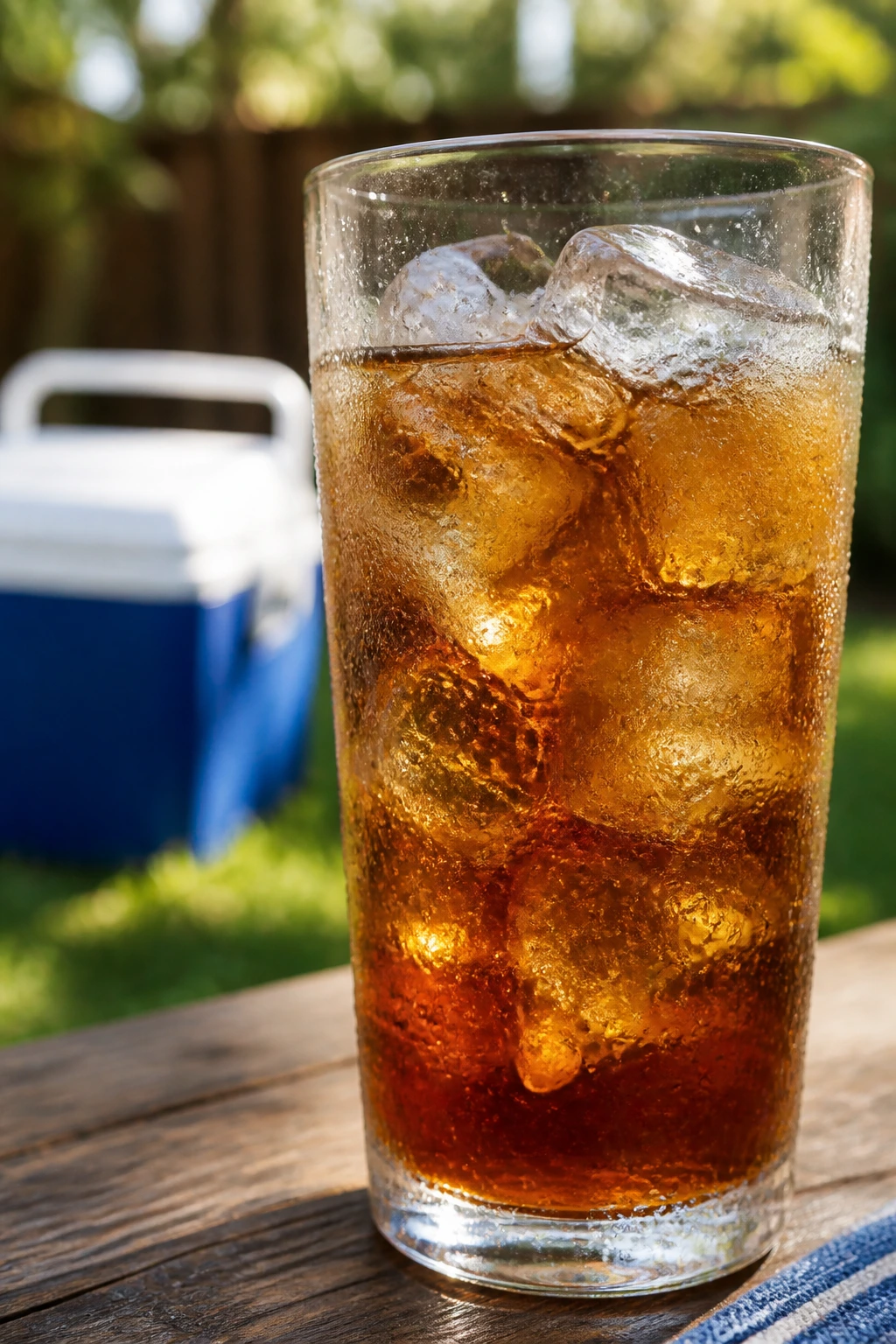
Two coolers beat one.
That is the blunt version. Drinks get opened all the time, which means they warm up the cooler fast. Food should not have to pay for that. A separate drink cooler keeps the cold zone from turning into warm sludge by the end of the first round.
Build a cooler with a job
One cooler should hold raw meats, cold salads, sauces, and ice packs. The other should hold drinks, fruit, and the things guests reach for constantly. If you have a crowd, a third small cooler for extra ice is worth its weight in saved frustration.
Pre-chill the cooler if you can. Even a 15-minute head start with a sacrificial bag of ice makes a difference. Dump the meltwater, wipe the bottom dry, then load the food. Cold things stay colder when they do not have to fight the walls of a warm cooler.
Ice should be strategic
Use block ice, frozen water bottles, or a large frozen gel pack at the bottom of the food cooler. Fill gaps with cubed ice. That mix keeps the cold longer than a loose pile of cubes alone. If the day is warm enough to make everyone sweat, pack more ice than you think you need. Always.
For drinks, cubed ice is fine. Guests open that cooler constantly, so plan for melt. I also like freezing half the water bottles and using them as edible ice. They thaw during the afternoon, then keep the cooler cold without adding extra puddles.
Give people a drink they can carry easily
A picnic is better when the drinks do not fight the hands that are already holding plates. Pilsner, lager, sparkling water, lemonade, iced tea, and ginger beer all work because they are light enough to sit beside smoky food without making the meal feel heavy.
Glass is a nuisance on uneven grass. Cans, reusable plastic cups, or sturdy tumblers are easier. If you label cups with tape and a marker, people stop abandoning half-finished drinks on the edge of the table. That tiny fix saves more cleanup than you’d think.
Timing the Cook So Dinner Lands Warm, Not Rushed
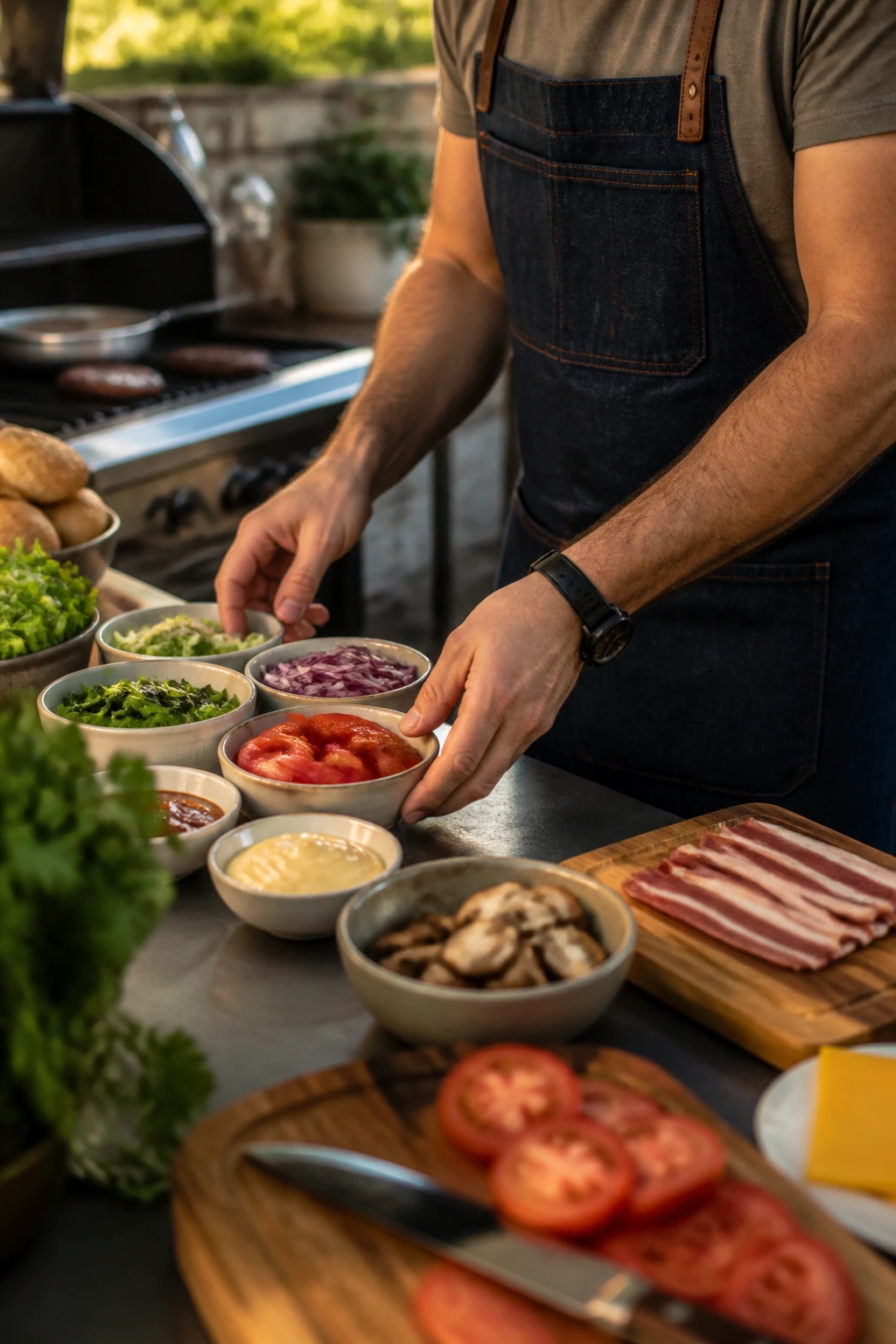
Start earlier than your instincts tell you.
That’s the simplest way to keep a backyard cookout picnic from turning frantic. Food waits badly. Guests wait badly too, but food is less polite about it. The whole point is to make the timing feel smooth, even if there are flames, tongs, and five bowls on the counter.
Work backward from the last plate
If dinner is at 6:30, the charcoal should be lit by 5:15 or 5:20. If you are using gas, preheat with enough time to get the grates properly hot, not just warm. Sides that can be served cold or room-temp should be finished before the grill gets busy. The most fragile pieces always go on last.
A simple sequence helps:
- Two hours before serving: Chill drinks, assemble sauces, set the table, and move the cooler into place.
- 90 minutes before serving: Prep raw food, trim vegetables, and season whatever needs to sit.
- 60 minutes before serving: Light charcoal or preheat the grill; start any side dishes that need baking or simmering.
- 30 minutes before serving: Toss slaw, finish cold salads, and set out serving spoons.
- 15 minutes before serving: Grill the last items, toast buns, and pull anything that needs to rest.
- At serving time: Move hot food to the platter and stop fussing with it.
That last point matters. Once the food is ready, the host needs to shift into serving mode, not continue tinkering with the grill as if another round will fix everything.
Rest the meat, but do not let it disappear
Chicken thighs need a few minutes. Sausages need a little less. Burgers need enough rest to keep their juices from running all over the cutting board. Bigger cuts need more time. A small, covered resting tray near the grill solves this cleanly.
The trick is to cover the food loosely, not seal it into a sweaty blanket. Foil tented over a platter works well. Tight wrapping softens the crust and gives you steam where you wanted texture.
Know the thermometer numbers
Do not guess on doneness when guests are waiting.
Poultry should reach 165°F. Ground meat should hit 160°F. Most pork cuts are happy around 145°F with a rest, though thicker pieces may need more time depending on texture. If you are cooking mixed batches, use the thermometer like a referee. It settles arguments fast and keeps the evening from becoming a guessing game.
How to Set the Table So the Meal Feels Intentional
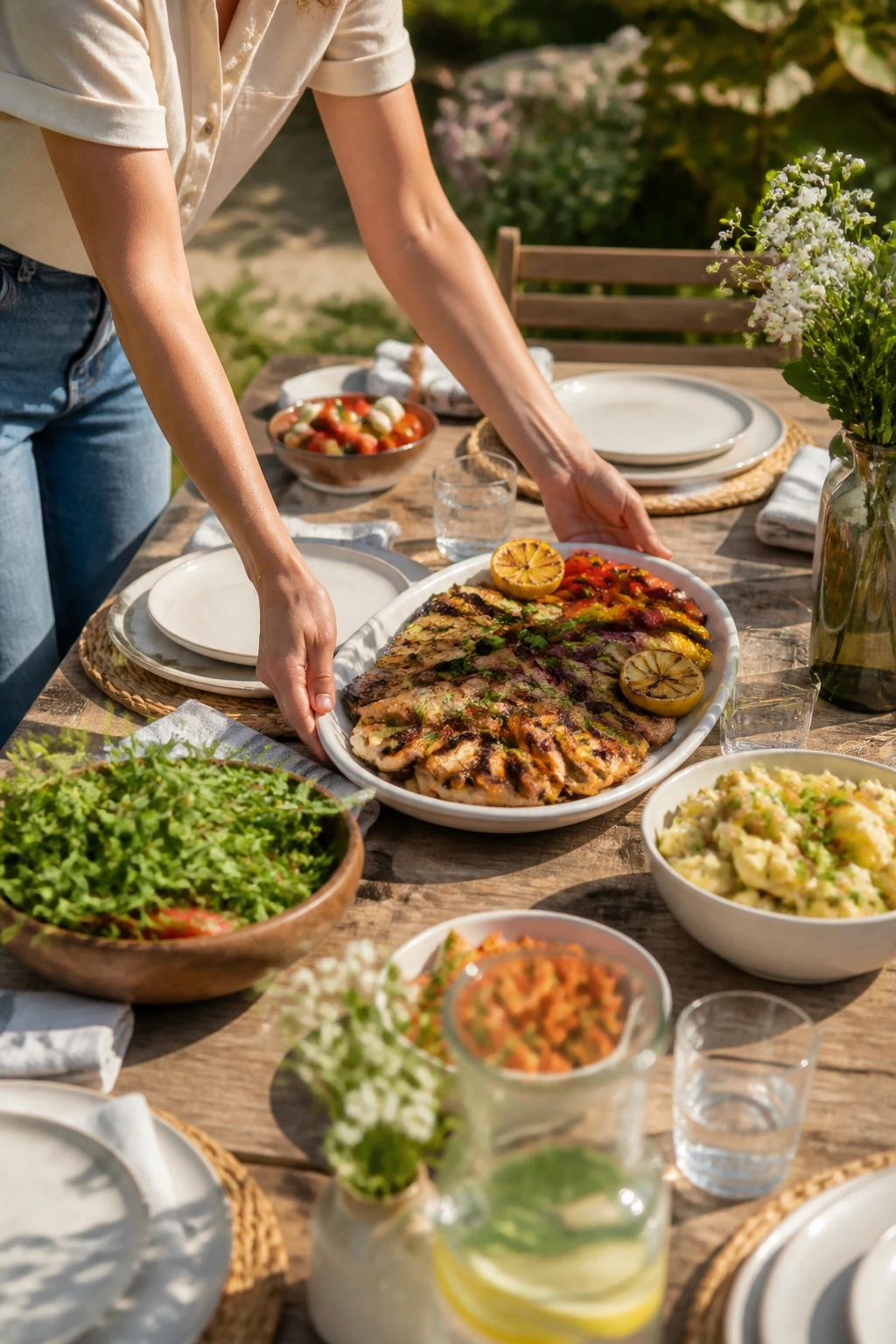
The table is where all the work shows itself.
A backyard cookout picnic does not need linen napkins and a florist. It needs clear space, easy reach, and food that looks like somebody planned the layout on purpose. That feeling does more than make the spread pretty. It keeps people moving through the meal without crowding the grill or fumbling for the serving spoon.
Presentation: Use one large platter for the main food and smaller bowls for condiments, pickles, onions, and sauces. A big tray reads calmer than a scatter of small plates, and it keeps hot food from cooling too quickly. I like to line serving trays with parchment for grilled meat and with a clean cloth or leafy greens for vegetables.
Accompaniments: Pair smoky mains with things that are crisp or sharp. Vinegar slaw, cucumber salad, grilled corn, baked beans, potato salad with mustard, cornbread, soft rolls, and pickles all fit neatly on the same table. If the main is rich, keep the sides bright. If the main is simple, one more assertive sauce will carry it.
Portions: For adults, plan roughly 6 to 8 ounces of cooked meat or the equivalent from the grill, plus about 1 cup of a starch side and 1 cup of vegetables or salad. Children usually need half that. If there are several hearty sides, the protein can shrink a little. If the crowd leans hungry, add bread before you add another complicated dish.
Beverage Pairing: A cold pilsner, a light lager, sparkling lemonade, iced tea with lemon, or dry cider all work with smoky food. The drink should refresh the mouth, not coat it. Heavy sweet cocktails can flatten the flavors of the whole meal.
Small Moves That Make the Whole Picnic Easier
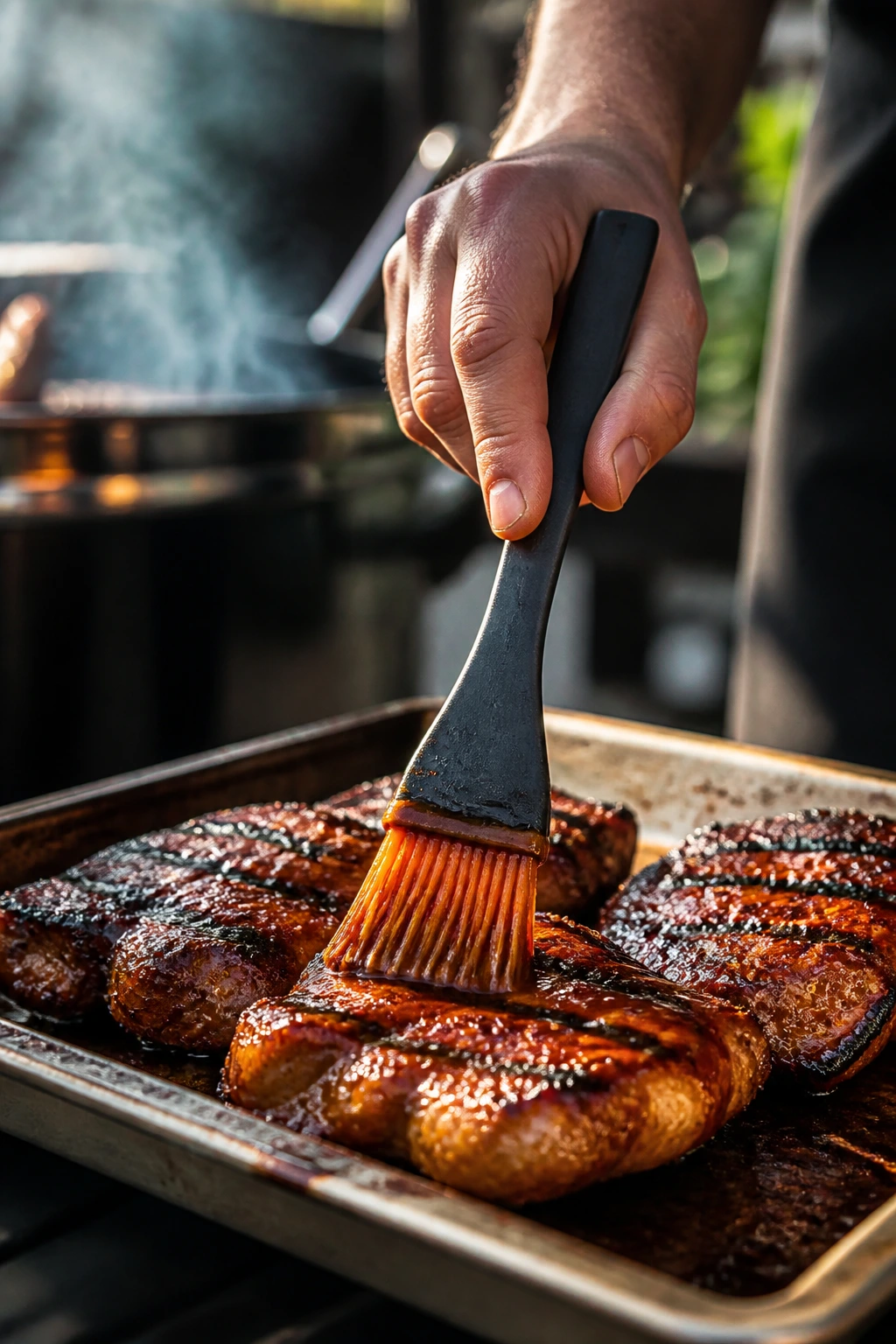
The little things are the ones that save the day.
Flavor Enhancement: Brush grilled meat with a thin vinegar-based mop or a mustard glaze in the final few minutes. That last swipe keeps the crust lively and gives smoke something sharp to push against. It is better than drowning the food in sauce after the fact.
Time-Saver: Chop onions, slice cucumbers, wash herbs, and mix dry seasonings the night before. Store each thing in its own container. When the grill gets going, you will not be using the cutting board as a parking lot for half the kitchen.
Pro Move: Bring one empty rimmed sheet pan for finished food and one for raw items. The second pan sounds unnecessary until the table gets crowded and someone needs a place to set the next batch without mixing it into the finished tray.
Cost-Saver: Cabbage slaw, bean salad, grilled corn, and cornbread feed a crowd without leaning on expensive cuts. Smoke and acid make modest ingredients taste planned. That matters when the guest list is longer than your budget.
Make-It-Yours: For gluten-free guests, use corn tortillas, lettuce wraps, or plain grilled protein with potato salad. For dairy-free plates, skip creamy dressings and lean into vinaigrette, herb sauces, and pickles. For vegetarian guests, grilled portobellos, tofu, halloumi, or thick zucchini planks can carry the smoke without asking for special treatment.
Common Mistakes That Turn a Smoke-Scented Meal into a Mess
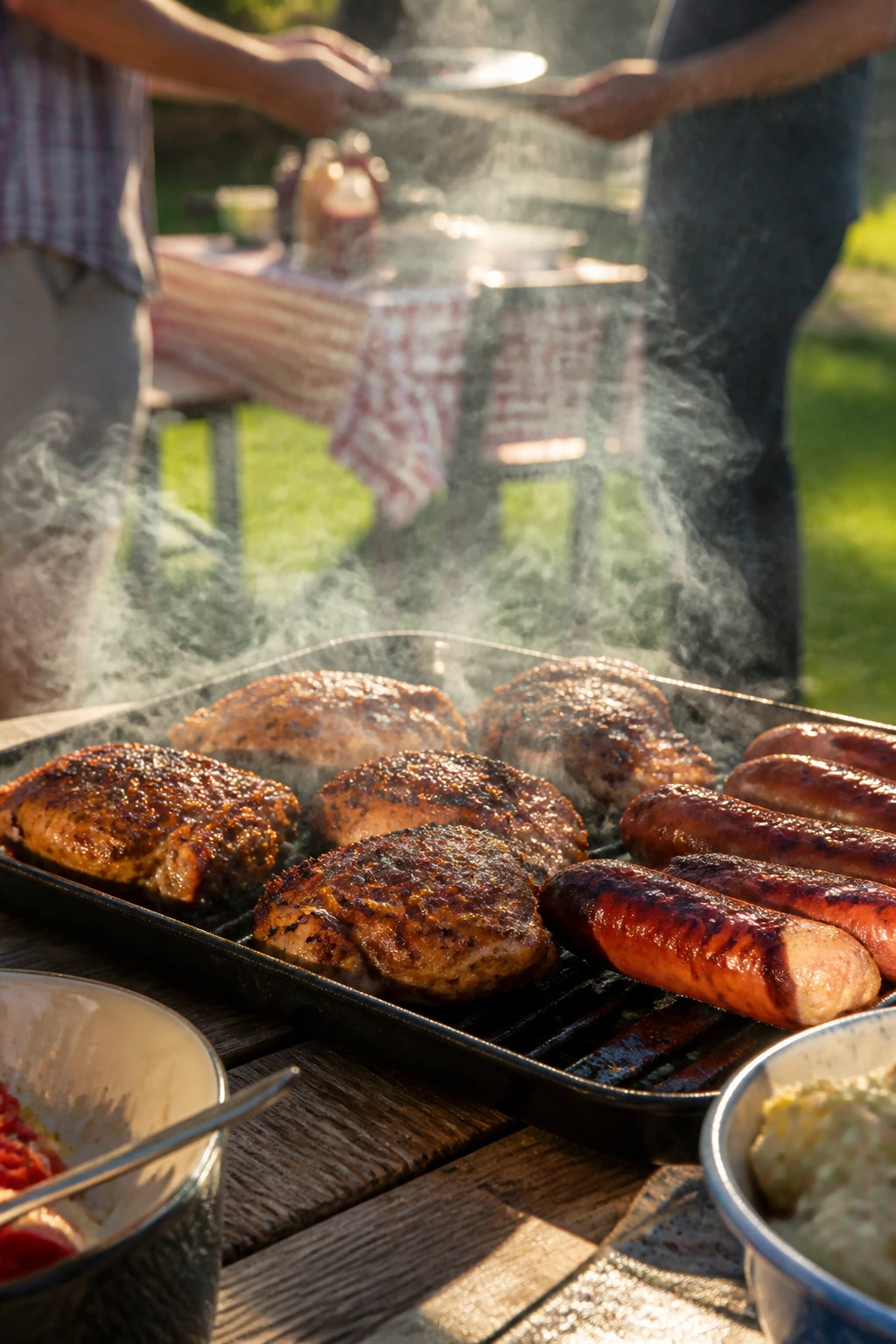
Most backyard cookout problems are not dramatic. They are annoyingly small.
A soggy side. A warm cooler. A grill that is fine for two burgers and miserable for twelve. These are the mistakes that make a picnic feel like work, and they are all preventable if you spot them before the first plate is filled.
-
Making everything at the last minute: If every side needs slicing, mixing, or grilling right before serving, the table will be full and the host will still be trapped at the fire. Fix it by making two dishes ahead and keeping one live-cooked item as the star.
-
Using one cooler for everything: Raw meat, drinks, ice, and ready-to-eat sides should not share a crowded cooler. The symptom is a warm soda next to a leaking chicken tray. Split the load. Food safety gets easier immediately.
-
Over-smoking the meat: If the food tastes bitter or the smoke is visible and thick for too long, you pushed it too far. Keep the wood moderate and the fire clean. Thin smoke is the goal, not a chimney.
-
Saucing too early: Sugary barbecue sauce burns fast, and creamy sauces get sloppy if they sit on hot food for too long. Brush sweet sauces near the end and serve delicate sauces at the table.
-
Skipping a thermometer: Guessing on poultry or thick burgers is how you get dry edges and underdone centers. An instant-read thermometer ends the guesswork. It is boring. It also works.
-
Forgetting shade and airflow: Direct sun heats the food faster than people expect, and wind can blow smoke straight into the seating area. Move the table into shade if you can and turn the grill so the smoke drifts away from the chairs.
Variations for Different Backyard Crowds
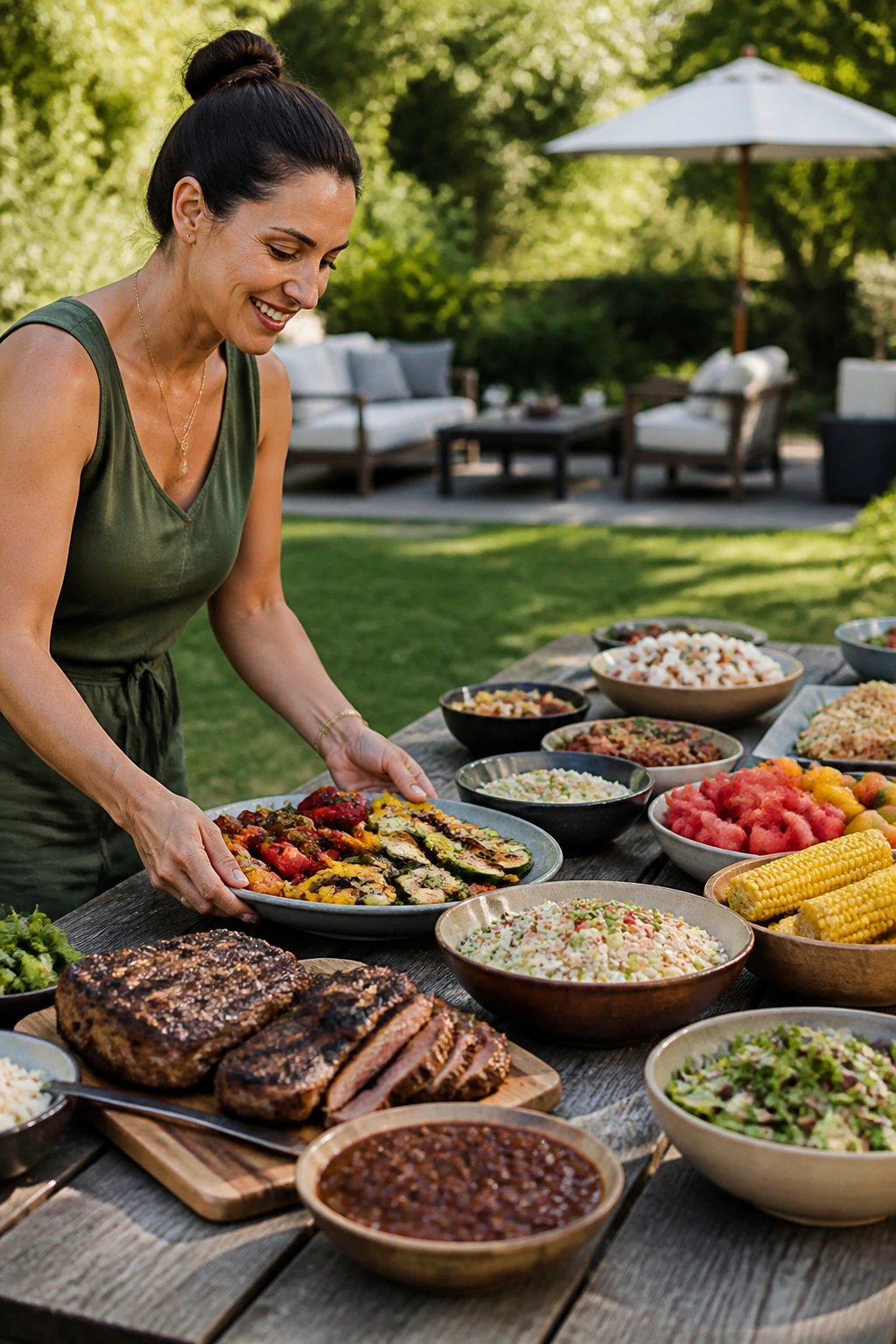
The same picnic can feel completely different depending on who is coming over.
The Quiet Family Table
Keep this version lean: one grilled main, one cold side, one warm starch, and one fruit bowl. The whole meal comes together faster, and the leftovers are easier to store. I like this setup when the point is dinner, not spectacle.
The Big Crowd Potluck
This is where you hand off the sides. Ask guests to bring one cold dish, one dessert, or one bag of ice. You keep the grill duty, the drinks cooler, and one signature sauce. That division of labor prevents you from becoming the only person who knows where anything is.
The Vegetarian Smoke Table
Lean into grilled vegetables, halloumi, tofu, bean salads, corn, pickled onions, and hearty bread. A smoke-friendly vegetarian picnic is not a consolation prize. It works because vegetables love char when they are cut thick and seasoned properly.
The Low-Lift Backyard Baseline
Burgers, hot dogs, slaw, chips, pickles, fruit, and one cold dessert. That is it. I respect this version more than people admit they do. It keeps the food budget sane and gives the host time to sit down before the second round of plates.
The Heat-Heavy Afternoon Plan
When the weather is punishing, move all the delicate prep indoors. Keep the grill run short, use more cold sides, and serve water with lemon or cucumber in plain sight. Hot weather changes the whole rhythm. The smartest plan is the one that asks less of the fire and more of the cooler.
Tools and Equipment for a Low-Stress Cookout Picnic
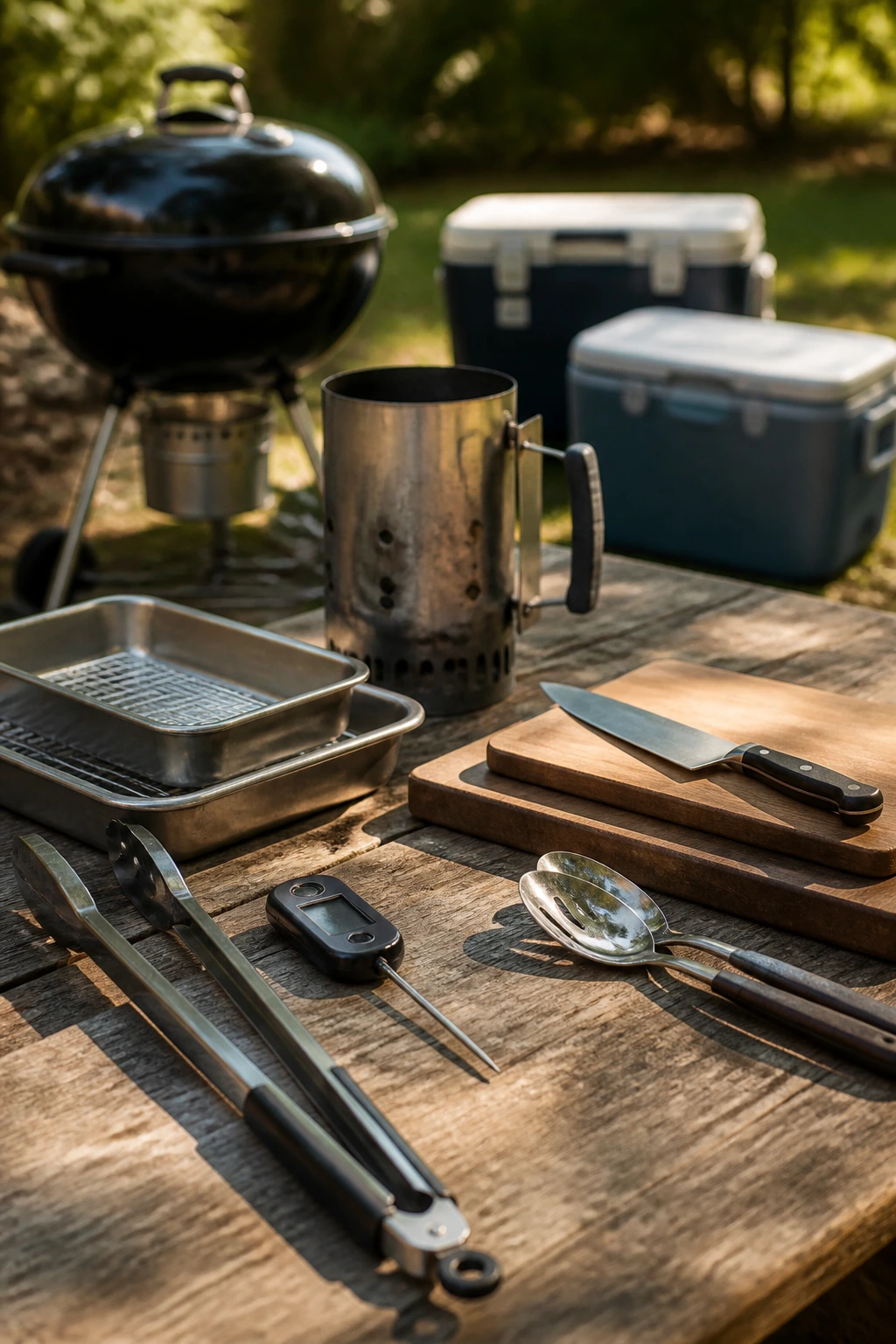
A good setup is mostly about not having to improvise with one hand while carrying a tray with the other.
- Gas grill, charcoal kettle, or pellet grill: Pick the one that fits your timing and your comfort level.
- Charcoal chimney starter: Faster and cleaner than lighter fluid when you want a charcoal fire.
- Instant-read thermometer: The quickest way to avoid guessing on meat doneness.
- Long-handled tongs: One pair for raw food, one for finished food if you can swing it.
- Rimmed sheet pans: The best carry trays for hot food, raw prep, and resting meat.
- Large serving platters: Hold heat better than a stack of small plates.
- Two coolers: One for drinks, one for food and ice packs.
- Ice packs or frozen water bottles: Helps keep the food cooler colder for longer.
- Cutting boards, one for raw food and one for vegetables or bread: Keeps the raw meat area separate.
- Sharp chef’s knife: Slices vegetables cleanly and keeps prep moving.
- Serving spoons, tongs, and a ladle: You need more utensils than you think, especially for the sides.
- Aluminum foil and parchment paper: Useful for resting, wrapping, and lining trays.
- Trash bags and paper towels: The picnic gets easier the moment cleanup has a place to go.
- Hand soap or sanitizer plus a small water jug: A simple hand-wash station saves a lot of awkwardness.
- Optional folding table or butcher-block cart: Handy when the patio table is already full.
Make-Ahead, Leftovers, and Cleanup Without a Sink Pileup
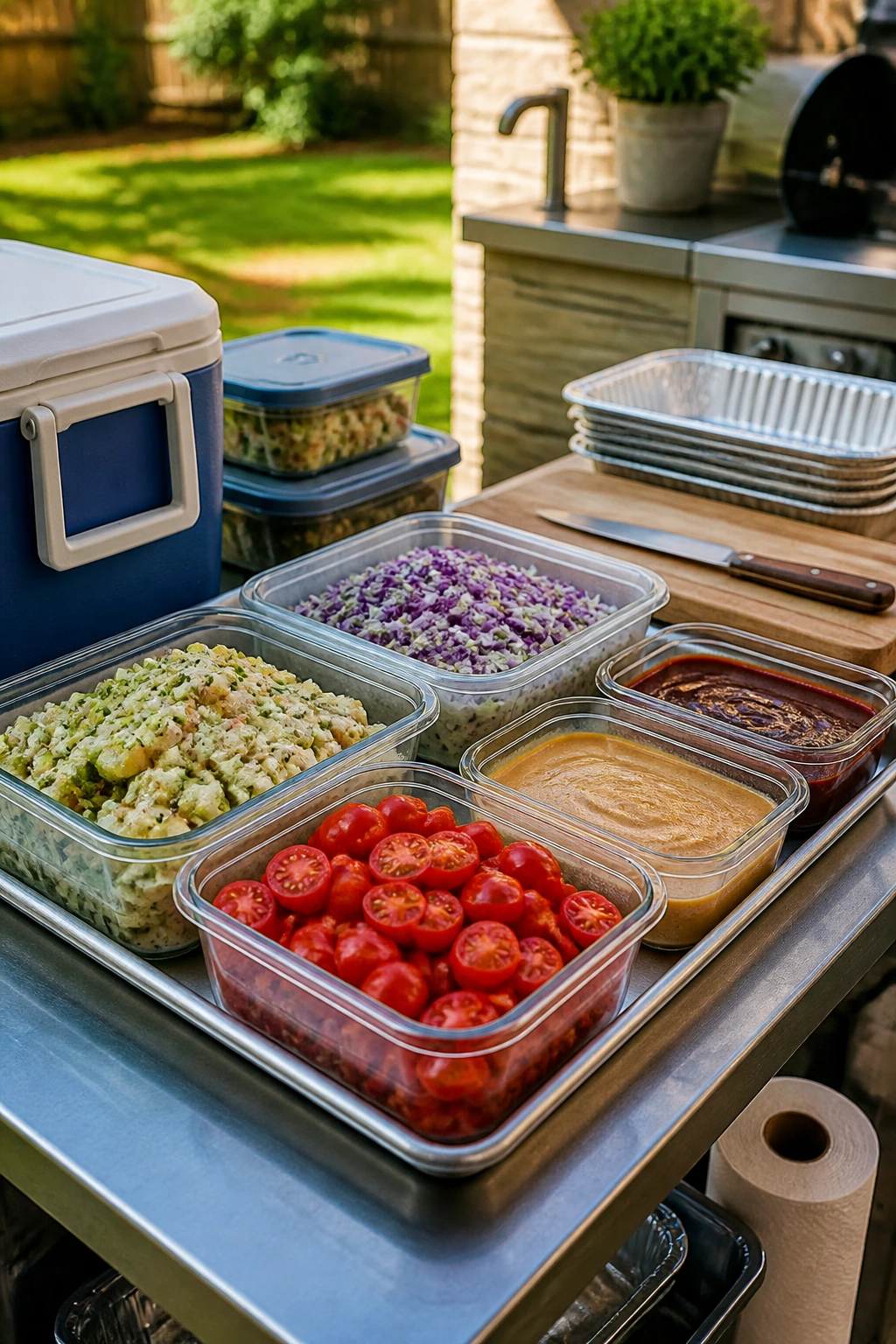
A backyard cookout picnic gets easier when the food and the mess both have a place to go after the meal.
The biggest make-ahead win is to prep anything that tastes good cold or room temperature. Slaw dressing, bean salad, potato salad, chopped herbs, sliced onions, sauces, and fruit can be handled ahead of time and tucked into shallow containers. Shallow containers chill faster than deep bowls, and that matters when you are trying to keep food out of the danger zone.
Make-ahead by time window
The day before, mix dressings, chop vegetables, season meats, and make any sauce that benefits from sitting overnight. Bean salads and vinegar-based slaws usually taste better after a rest because the flavors settle in.
The morning of the picnic, finish the cold sides, freeze water bottles, and move non-perishables into place. If you are baking cornbread or rolls, do that early and keep them wrapped so they do not dry out.
Right before guests arrive, set out plates, napkins, utensils, and serving spoons. The fewer things you need to hunt down while the grill is hot, the calmer the whole scene feels.
Leftovers need fast attention
Food safety guidance is not glamorous, but it matters. Perishable food should not sit out for more than 2 hours, and that window shrinks to 1 hour if the weather is hot enough to push the table temperature up. Cold food should stay at or below 40°F; hot food should stay at 140°F or above.
Once the meal is over, pack leftovers into shallow containers and get them into the fridge quickly. Cooked meat keeps for 3 to 4 days refrigerated. Vinegar-based slaw and bean salad usually hold well for the same stretch. Mayo-based salads are more fragile and should be eaten sooner if they were out on the table for a while. If you want to freeze cooked meat, wrap it tightly and use it within about 2 months for the best texture.
Reheating without wrecking the texture
Grilled chicken and sausage reheat well in a low oven, covered loosely with foil, until steaming hot and at least 165°F for poultry. Burgers are trickier. They dry out fast, so I prefer to slice them and warm the slices in a covered pan with a spoonful of broth or water instead of blasting the whole patty.
For cleanup, scrape the grill while it is still warm, not after it has gone stone-cold. Empty charcoal only when it is fully dead and cool, and drop ashes into a metal container, not a plastic bin. Wipe cooler handles, table surfaces, and condiment bottles before putting them away. A few extra minutes here saves you from opening sticky lids the next day.
Backyard Cookout Picnic Questions People Ask
How far ahead can I prep a backyard cookout picnic?
Most of the cold sides, sauces, chopped vegetables, and seasoning mixes can be done the day before. The live grill work should stay close to serving time, because hot food loses its edge fast once it leaves the fire.
What foods stay safe outside the longest?
Bean salads, vinegar slaw, grilled vegetables, whole fruit, and dry baked goods are the easiest to manage. Creamy salads, soft cheeses, and anything mayo-heavy need closer temperature control and should live in a chilled bowl or cooler until the last minute.
Can I use one cooler for drinks and food?
You can, but I would not if you have a choice. Drinks get opened constantly, which warms the cooler and makes the food side work harder. Two coolers, even a small one for drinks, makes the day less annoying.
What if my grill runs hotter on one side?
That is not a flaw. It is a useful tool if you notice it early. Put the hot side to work for searing, then move food to the cooler side to finish without burning. A two-zone fire on charcoal or a lower burner on gas gives you that control.
What is the best wood for a mild smoky flavor?
Cherry and oak are both easy choices. Cherry stays soft and slightly sweet, while oak gives a steady smoke that does not take over the food. I would use hickory only when I want the smoke to be more obvious and I am willing to keep it restrained.
How much food should I plan per person?
For adults, about 6 to 8 ounces of cooked meat is a solid baseline, plus sides. If the menu has several hearty sides and bread, the meat portion can shrink a little. For children, a smaller portion with fruit and a simple side tends to work better than piling on food they will not finish.
Can I keep mayo-based salad out during the whole meal?
Not if the table is warm or the meal runs long. Keep it in a chilled bowl, set out only what you think people will eat quickly, and return the rest to cold storage. That one habit keeps the texture better and makes the safety math easier.
What if it starts raining or the wind shifts?
Move the serving table under cover and change the grill angle if the smoke is blowing straight at the seats. A cookout does not need perfect weather, but it does need a quick backup plan. Folding tables, an umbrella, and a stack of towels can save the afternoon.
Can I make the meal feel special with store-bought sides?
Yes, and I have no patience for pretending otherwise. A good store-bought slaw or potato salad can be improved with chopped herbs, pickled onions, lemon juice, or a handful of sliced scallions. People remember the smoke, the timing, and the balance on the plate more than whether every side was made from scratch.
Smoke, Shade, and a Table That Actually Works
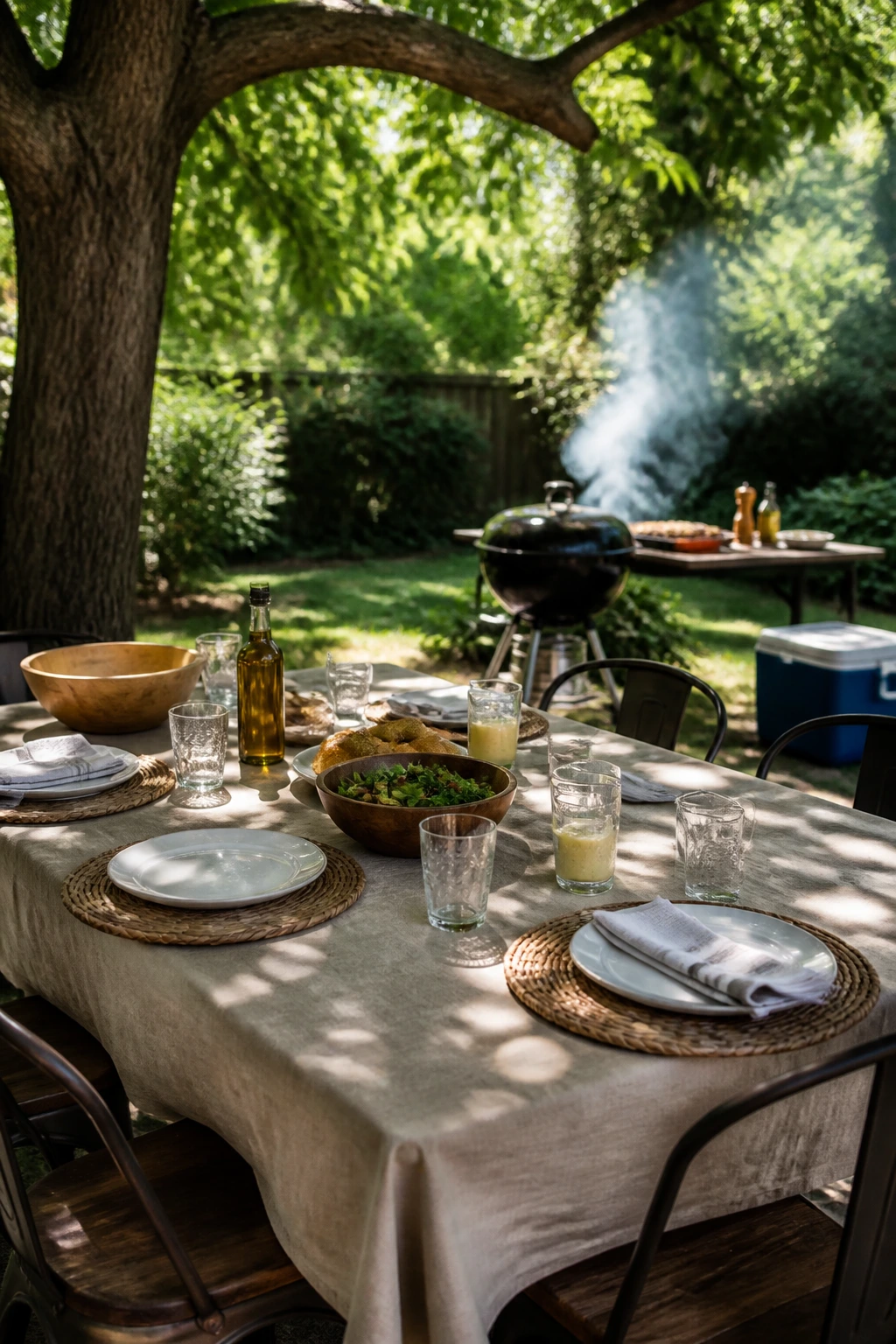
A backyard cookout picnic feels easy when the planning is doing quiet work in the background. The grill has a job. The cooler has a job. The table has a job. Nobody is standing around waiting for the whole thing to become organized by accident.
That is what makes the meal feel good. Not extravagance. Not a dozen special dishes. A clear menu, a sane layout, and food that knows how to live outdoors for more than five minutes at a time. Smoke adds the personality. The planning keeps it from turning into a chore.
Set the table before the fire starts, and the rest tends to fall into place.