



A picnic basket for backyard cookouts lives or dies on the bite of the food inside it. A basket full of dry chicken, limp lettuce, and buns that have soaked up their own steam feels tired within minutes; one loaded with glossy slaw, charred corn, and grilled thighs that still glisten when sliced feels like somebody planned the afternoon with a pulse.
The smartest picnic baskets are not packed like gift baskets. They’re built like a small, portable meal system. Hot food stays hot, cold food stays cold, and anything wet or fragile gets its own container instead of being trapped under a lid where it steams itself into mush. That sounds fussy. It isn’t. It’s the difference between a cookout that feels relaxed and one that has you apologizing over soggy bread.
Juicy food needs a little help to stay that way once it leaves the grill. Fat matters. Acid matters. Resting matters. So does the unglamorous stuff: shallow containers, tight lids, an instant-read thermometer, and a cooler that gets opened less often than your phone. Food safety guidance is blunt for a reason — keep cold foods at 40°F or below, hot foods at 140°F or above, and don’t let perishables hang out in the danger zone for hours because the table looks pretty.
A good backyard cookout basket is a collection of textures more than a pile of dishes. Something smoky. Something crisp. Something soft and absorbent. A sharp sauce. A cold side with bite. Once you start thinking that way, the basket stops feeling like a pile of leftovers and starts acting like a meal with a plan.
Why This Basket Works
- It protects moisture: Fatty cuts, sauced sides, and wrapped breads keep the first bites from drying out while the grill finishes the rest.
- It travels better than a buffet: Separate containers keep tomato juice, dressing, and grill steam from turning everything limp before guests even sit down.
- It lets you cook in stages: You can grill the protein, chill the salad, toast the buns, and finish with herbs or sauce at the last minute.
- It feeds a crowd without chaos: A basket built in parts is easier to scale up than a single tray of food that all needs the same temperature and timing.
- It stays food-safe longer: A cooler, a thermometer, and smart packing buy you time without gambling on warm potato salad.
- It looks generous on the table: Bowls of glossy slaw, stacked buns, and a carved piece of meat with a knife beside it feel abundant without being messy.
What Makes a Picnic Basket Juicy Instead of Limp
A juicy picnic basket is less about one magical dish and more about what survives the trip intact. Moisture is fragile. It leaks from sliced tomatoes, it evaporates from grilled meat, it disappears into bread, and it turns into steam the second a hot lid is shut too soon. Once you notice how fast that happens, a lot of bad picnic food starts to make sense.
The foods that hold up best are the ones with some built-in insurance. Chicken thighs have more fat than breasts. Pork shoulder stays tender when sliced after a proper rest. Burgers made with beef that isn’t too lean keep a little spring instead of drying into patties that taste like cardboard. Even vegetables need backup: a little oil, a little salt, a little acid, and a container that doesn’t trap their condensation.
Here’s the piece people skip. Juiciness is partly sensory and partly structural. A tomato salad can be full of water and still taste dry if the juices are drained away before serving. A grilled peach can be soft and scented with smoke, but if it sits next to hot meat in a closed container, it turns syrupy and loses shape. The basket has to respect each food’s nature.
Think of three kinds of moisture. First, internal moisture, which lives in meat and cooked vegetables. Second, surface moisture, which comes from dressings, glazes, and sauces. Third, release moisture, the kind that builds when food sweats in a closed box. The first two help. The third ruins lunch.
One-sentence rule: if a food gives off a lot of steam, it does not belong sealed together with something crisp.
Build the Meal Around Three Temperature Zones
Hot, cold, and room-temp food do not want the same container. Treating them like they do is the fastest way to end up with wilted herbs and lukewarm chicken. A picnic basket for backyard cookouts works best when each temperature gets its own lane.
Hot Zone
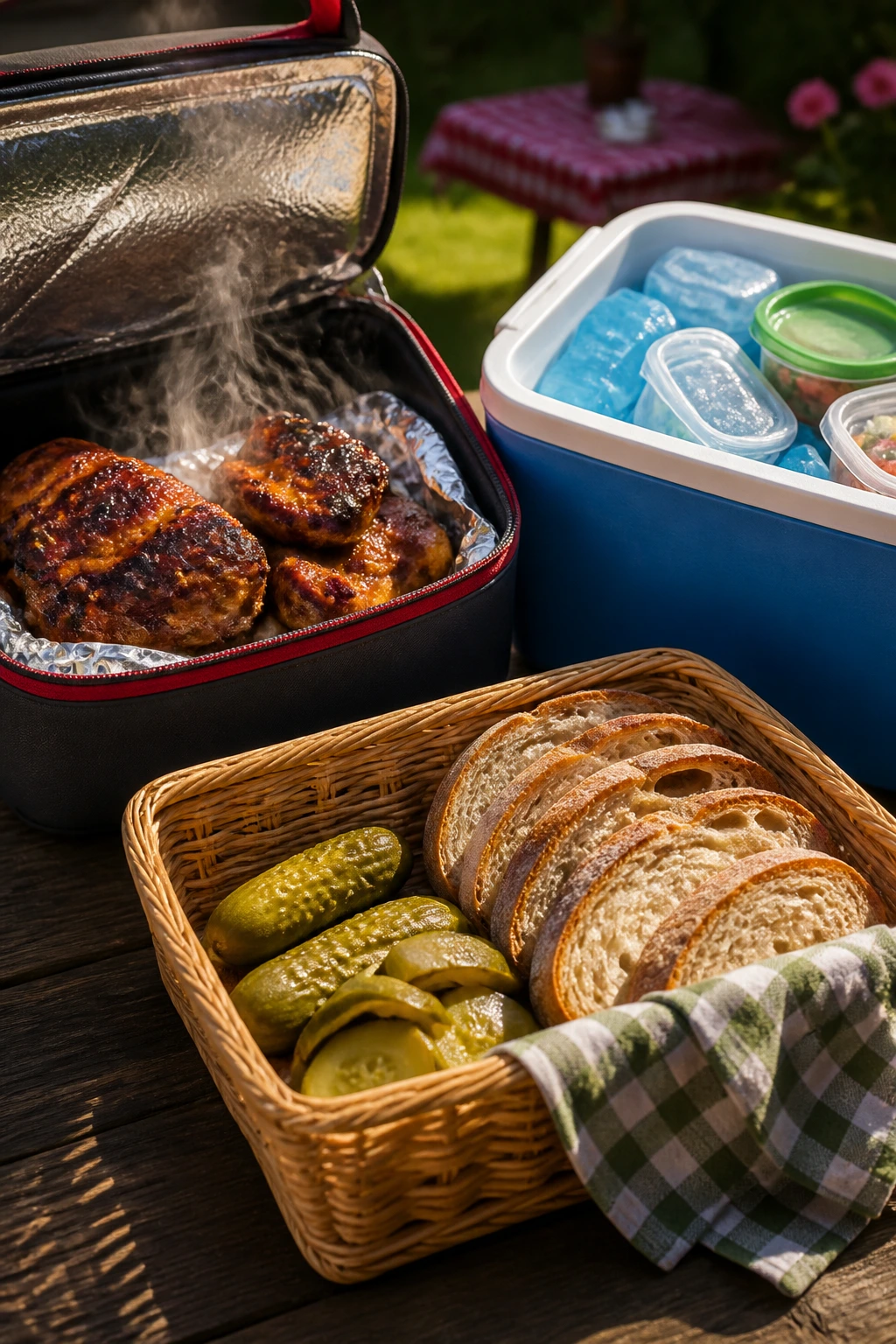
Keep grilled meats, corn, baked beans, or roasted vegetables in a covered heat-safe container lined with foil or packed in a small insulated carrier. If you’re holding them for more than a few minutes, a preheated insulated bag or a tightly wrapped pan buys time. The goal is not to keep everything screaming hot forever — that’s unrealistic — but to stay above 140°F until serving.
Cold Zone
Coleslaw, potato salad, chopped cucumbers, fruit, drinks, and any dairy-heavy sauce should live in a cooler with ice packs or frozen water bottles. Cold food needs to stay at 40°F or below. That number matters. If you don’t have a thermometer, you’re guessing, and picnic food punishes guessing fast.
Room-Temp Zone
Buns, crackers, whole herbs, pickles, onions, spice rubs, and sturdy produce like whole tomatoes or peaches can sit in the basket itself. These are the foods that make a basket feel full without being delicate. They also save you from opening the cooler every eight minutes, which is how cold food gets warm and hot food gets ignored.
A good setup is simple: one basket for presentation, one cooler for safety. The basket carries the romance; the cooler does the work. I’ll take that trade every time.
How to Shop for Ingredients That Stay Moist on the Grill
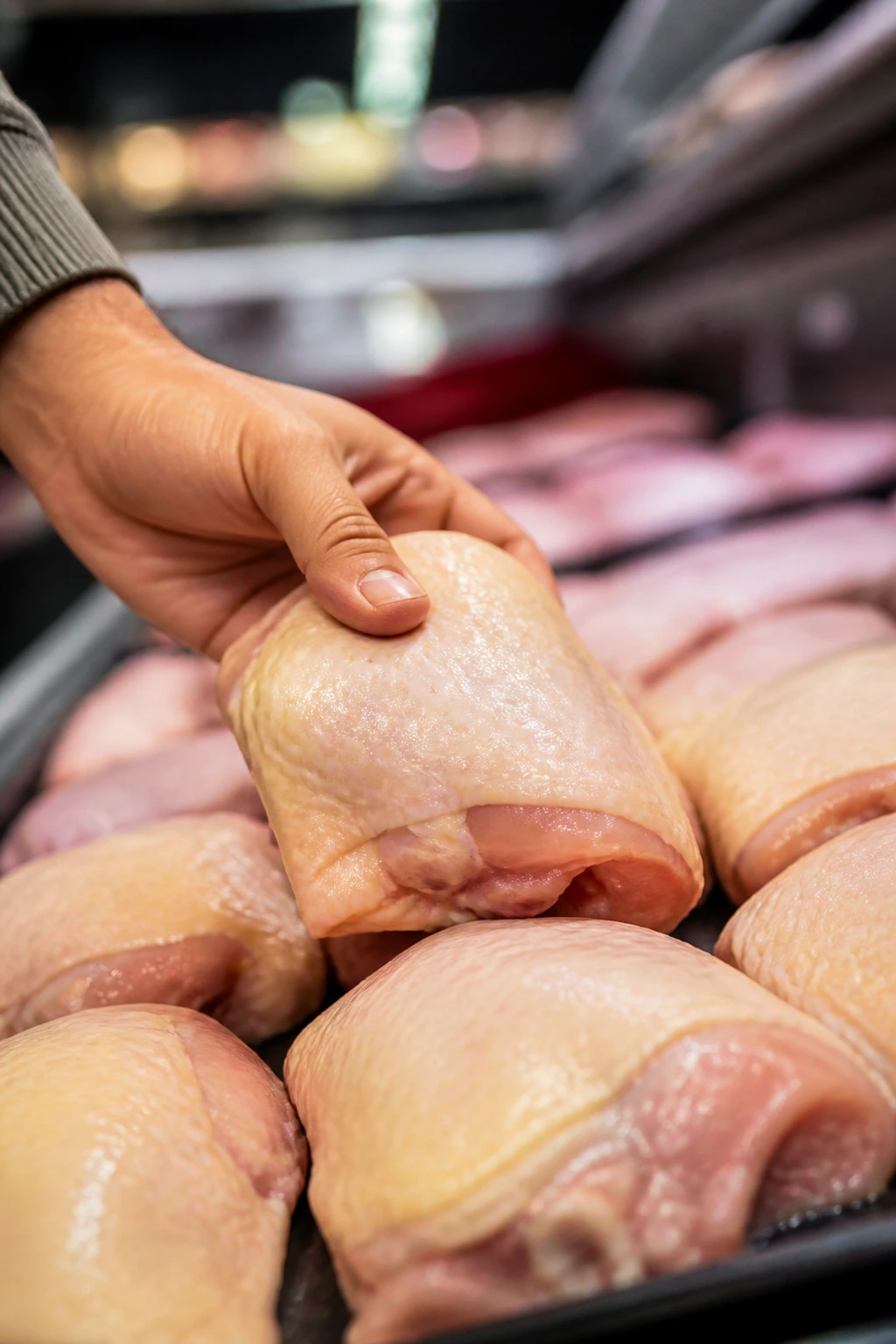
Good shopping is where juicy backyard food starts. Not at the grill. Not at the serving table. At the store, where you decide whether the basket will have real texture or just a hopeful set of labels.
Meat Counter Choices
Look for chicken thighs with skin and bone if you want the most forgiving result. Boneless thighs work too, but the skin-on version gives you a little more grace because the fat renders and bastes the meat. For burgers, choose ground beef around 80/20. Leaner than that and the patties can turn dry before the center finishes cooking. Pork shoulder, pork chops with a bit of marbling, and salmon fillets with firm flesh all bring better moisture than ultra-lean cuts.
Produce Choices
Choose vegetables that still feel heavy for their size. A soft tomato is already halfway to soup. Peaches should smell fragrant at the stem, not just look pretty. Corn with tight husks and moist silk grills beautifully and keeps some bite. If you’re buying cucumbers, peppers, or cabbage for slaw, pick the ones with a little firmness and no wrinkled skin. Wrinkles mean water loss, which you’ll taste later.
Pantry and Dairy Choices
Sauces that include yogurt, mayonnaise, mustard, vinegar, or olive oil do useful work in a basket because they keep meat and vegetables from tasting flat once the smoke fades. Whole-milk yogurt holds better than thin, low-fat versions. Real mayonnaise-based dressings are more stable than the watery substitutes people sometimes grab when they’re trying to “lighten” things up. Lighten is not the goal here. Texture is.
A practical habit: buy one ingredient whose only job is to wake everything up at the end. Pickled onions. Lemon wedges. Dill. Chopped parsley. A sharp vinegar-based relish. That last-minute hit of acid often matters more than a complicated rub.
Proteins That Hold On to Their Juices
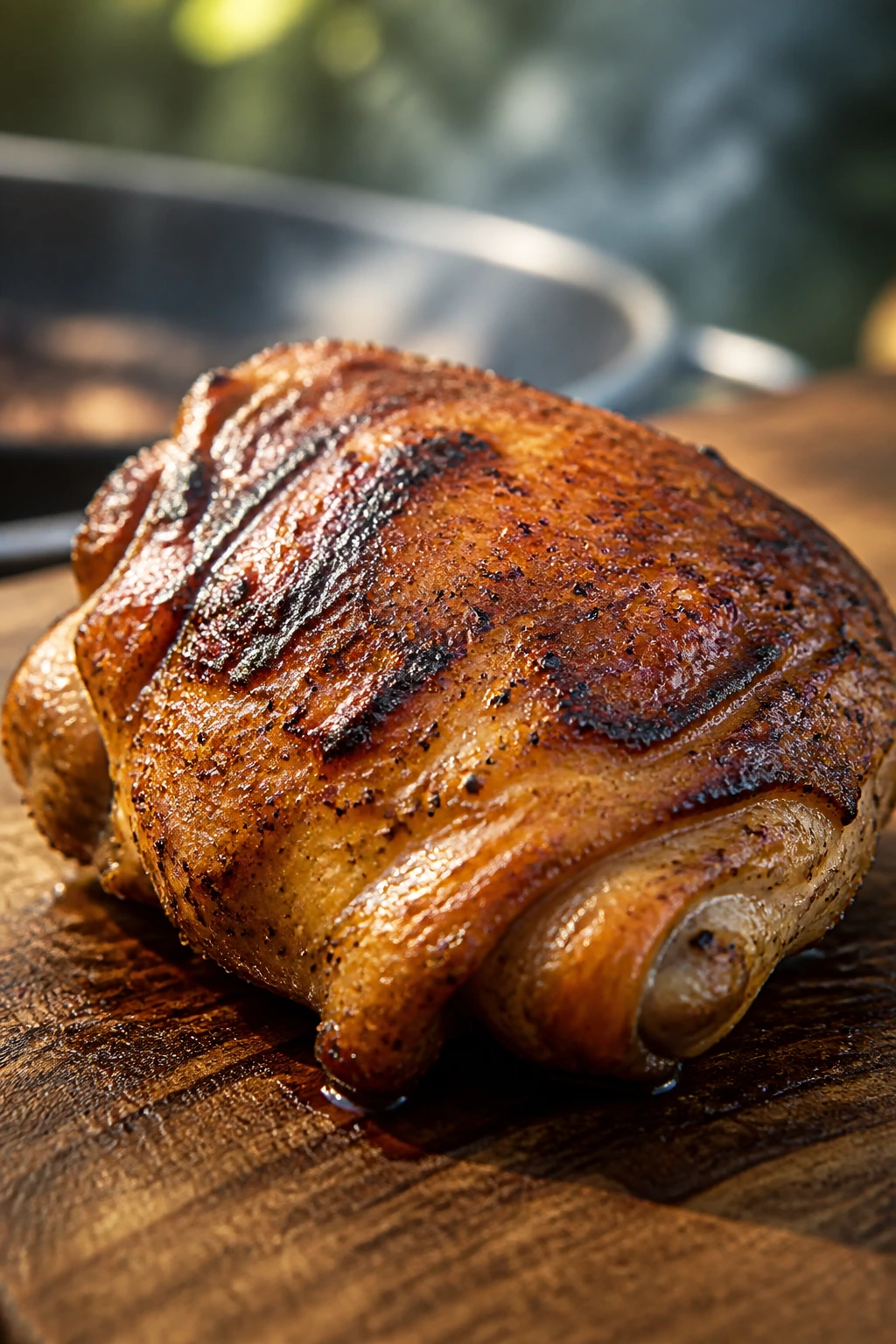
A picnic basket for backyard cookouts is only as good as the protein inside it. This is the center of the plate. If the meat dries out, nobody remembers the pretty napkin fold.
Chicken Thighs Beat Breasts More Often Than Not
I’m taking a side here: for picnic-style grilling, thighs are the safer buy. They tolerate a hotter grill, they keep some fat under the skin, and they don’t punish you the way chicken breasts do if you miss the timing by two minutes. A boneless thigh can come off the grill around 175°F and still eat tender. A breast needs a sharper eye and less forgiveness.
If you do use breasts, brine them first. Even a 30-minute saltwater bath changes the texture. Pat them dry, oil them lightly, and pull them the moment the thickest part hits 160-165°F, then let carryover finish the job. Don’t walk away.
Burgers Need Fat, Salt, and a Gentle Hand
A burger made from 80/20 beef, seasoned just before cooking, and handled lightly stays juicier than one mashed into submission. Form the patties with a shallow dimple in the center. That helps them cook flat instead of puffing up like hockey pucks. Pressing them with a spatula while they cook? Don’t. You’re squeezing out the good stuff.
Cheeseburgers belong in a picnic basket because cheese adds another layer of fat and softness. American cheese melts cleanly. Cheddar gives more bite. Choose based on the crowd, not the mood board.
Pork Shoulder, Chops, and Sausage
Pork shoulder is the quiet star if you have time to cook it slowly. Slice it, toss it with a little barbecue sauce, and it stays moist even after resting. Thick pork chops can work too, but thin ones dry out fast. Sausage is another gift: the fat is built in, the casing gives you snap, and it takes on smoke beautifully.
Vegetarian Protein That Still Feels Substantial
Halloumi, thick slabs of marinated tofu, and grilled portobello mushrooms all earn a place if you’re feeding mixed eaters. The trick is moisture management. Press tofu first. Oil mushrooms well. Grill halloumi just until browned so it softens without collapsing. Vegetarian baskets fail when they’re treated like a side dish with a fancy label. Give them the same care you’d give meat.
Side Dishes That Travel Without Going Flat
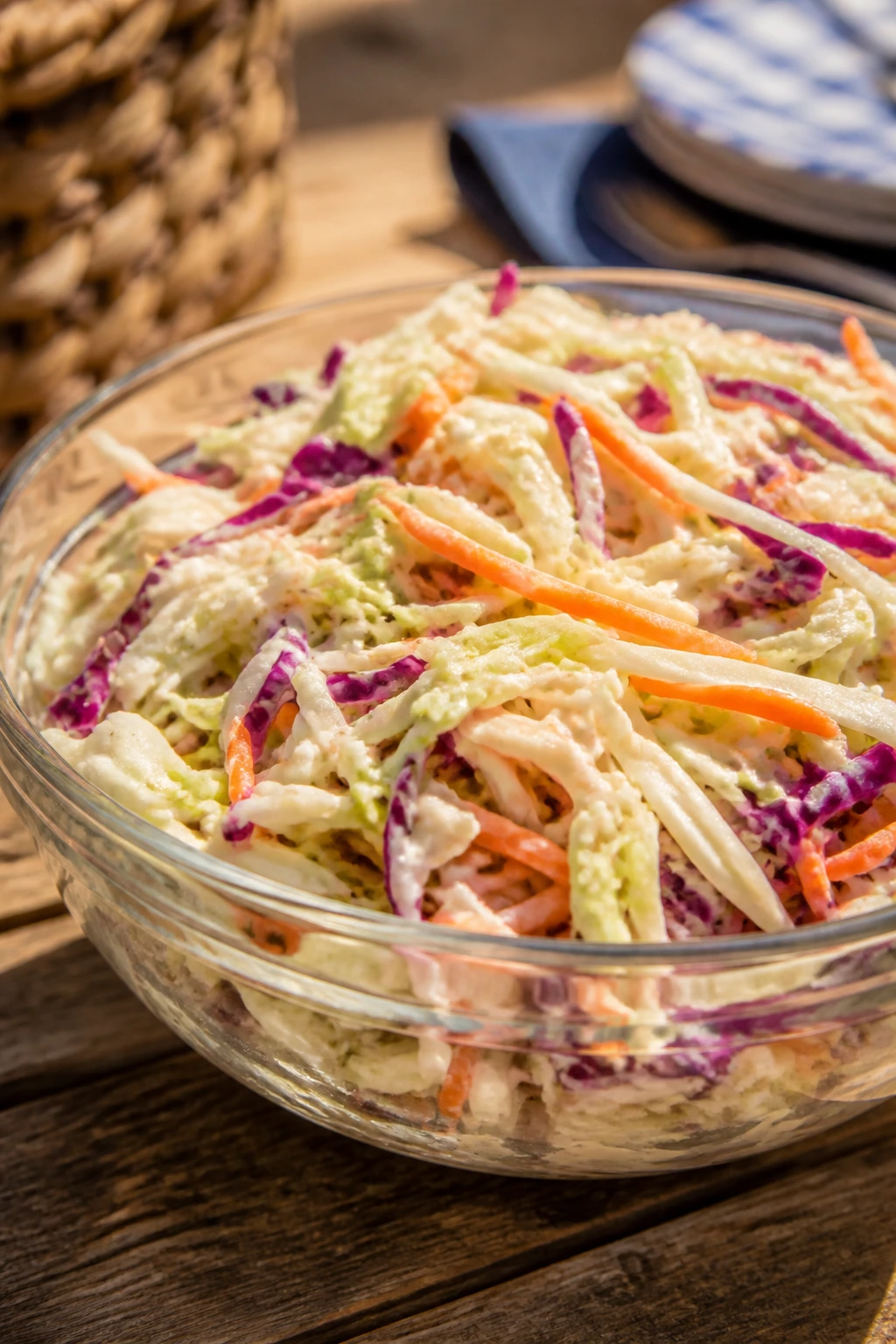
The sides are where a picnic basket can become memorable instead of merely adequate. A cold side with crunch, a starchy side with body, and one bright thing to cut through the smoke — that’s the trio I keep coming back to.
Slaws Hold Better Than Lettuce Salads
Cabbage is a survivor. It can sit dressed for a while and still have crunch, which is more than lettuce can claim once it gets anywhere near a hot afternoon. A vinegar-heavy slaw stays sharper longer than a mayonnaise-drenched one, though both can work if you keep them cold. Add carrots, radish, fennel, or scallions if you want more snap.
Potato Salad Wants Discipline
Potato salad is only good when the potatoes are cooked just until tender and then dressed while they’re still warm enough to drink in flavor. Don’t overcook them into mush, and don’t drown them in dressing. Chopped celery, dill, mustard, and thin-sliced onion give the bowl some backbone. If you make it too creamy, it goes heavy fast.
Beans, Corn, and Grilled Vegetables
Bean salad does a lot of work in a cookout basket because it brings protein, acid, and chew. Kidney beans, chickpeas, or black beans all hold together if you dress them with oil, vinegar, salt, and chopped herbs. Grilled corn cut from the cob with lime and chili is another smart move. It tastes like the grill without needing to stay piping hot.
Fruit Is Not a Filler Here
Watermelon, peaches, cherries, and grapes aren’t just a sweet ending. They reset the palate after salty meat and smoky sauce. Keep fruit cold and whole until close to serving, then cut it into pieces that won’t drown in their own juice. Watermelon cubes in a bowl are fine; watermelon wedges are easier if you want less mess.
A basket without a crisp side feels heavy. A basket without a starchy side feels thin. You need both.
Bread, Rolls, and Wraps That Stay Soft
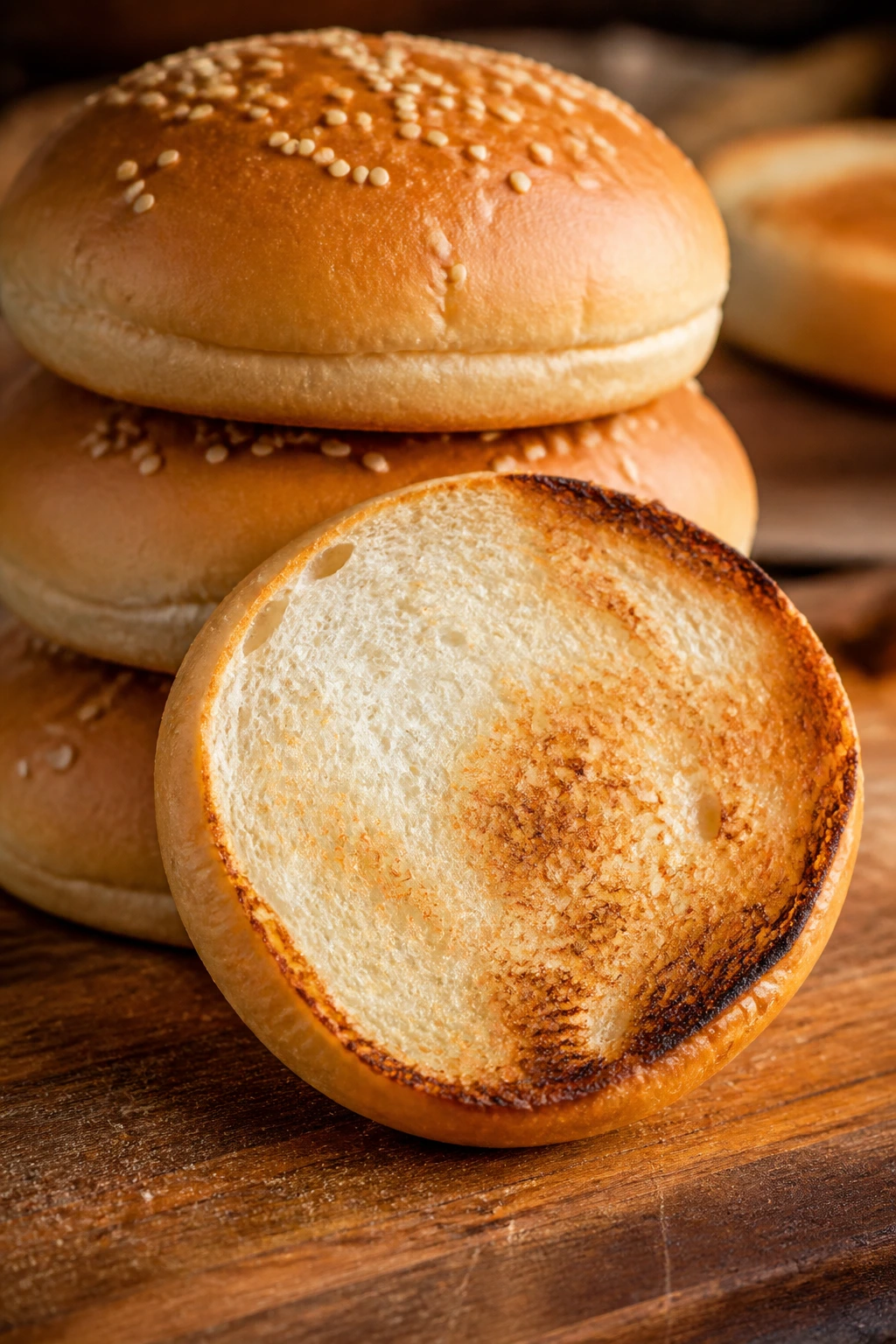
Bread is where a lot of backyard cookouts fall apart. Literally. You can grill the juiciest chicken in the county and still ruin the plate with buns that split, collapse, or turn damp from the inside out.
Choose Buns With Structure
Potato rolls, brioche-style buns, split-top rolls, and sturdy hamburger buns handle juicy fillings better than airy supermarket rolls that tear the second a burger lands on them. If you’re making sandwiches for a basket, choose bread with a little thickness and a little chew. Thin white bread soaks through and gives up.
Toast the Inside, Not the Whole Thing
A quick toast on the cut side adds a thin barrier against sauce and tomato juice. You want light color and a little crisp edge, not hard croutons. Ten seconds on a clean grill grate or in a hot skillet is enough. If the bread snaps when you bite it, you’ve gone too far.
Flatbreads and Wraps Give You More Control
Pita, tortillas, and flatbreads are useful when you need a basket that can be assembled at the table. They wrap around fillings instead of collapsing under them, which makes them a smart pick for messy slaws, sliced chicken, or grilled vegetables. Warm them briefly, stack them in a towel, and they’ll stay flexible for a while.
Pack Bread Separately
This sounds obvious. People still skip it. Bread belongs in its own bag or lidded container, with fillings nearby but not touching until serving time. A dry bun can always meet juicy meat. A soggy bun is gone forever.
Sauces, Relishes, and Dressings That Save Dry Bites
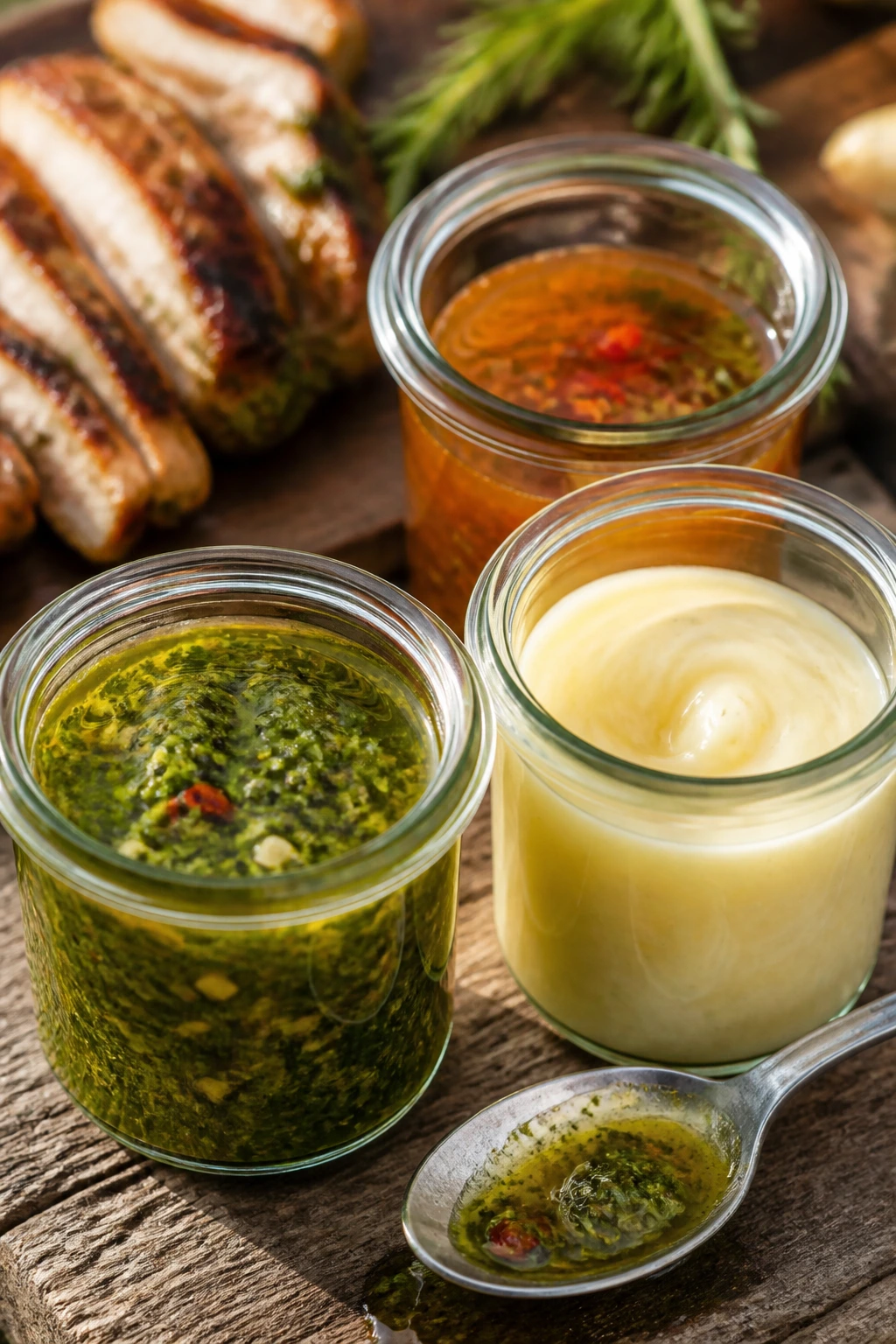
A sauce is not decoration in a picnic basket. It is moisture insurance. One spoonful can rescue a piece of grilled chicken that rested a minute too long, and a sharp relish can make plain potatoes taste like they were planned, not rescued.
Acid Keeps Things Awake
Vinegar-based sauces, mustard dressings, and citrusy vinaigrettes cut through fat and make the whole basket taste brighter. Chimichurri, herb vinaigrette, lemon aioli, and pickled onions all do useful work here. They’re not complicated, which is part of the appeal. They hit fast.
Creamy Sauces Need Cold Storage
Yogurt sauces, ranch-style dressings, and mayonnaise-based slaws should stay cold until the second they’re served. Use a small jar or squeeze bottle and keep the container in the cooler, not floating loose in the basket. The texture stays better, and the food-safe window stays wider.
Spicy and Sweet Should Be Used With Restraint
A little heat wakes up grilled food. Too much heat covers it. Same with sweetness. A barbecue sauce with brown sugar and smoke can glaze pork beautifully, but if you pour it over everything, the basket starts tasting like one note. Keep one sauce bold, one sauce sharp, and one sauce plain enough to let the grill speak.
A tiny detail I like: set out a spoon or brush for sauces, not a shared knife. It keeps the table cleaner, and people use less than they think they need, which usually means better flavor.
How to Set the Basket on the Table
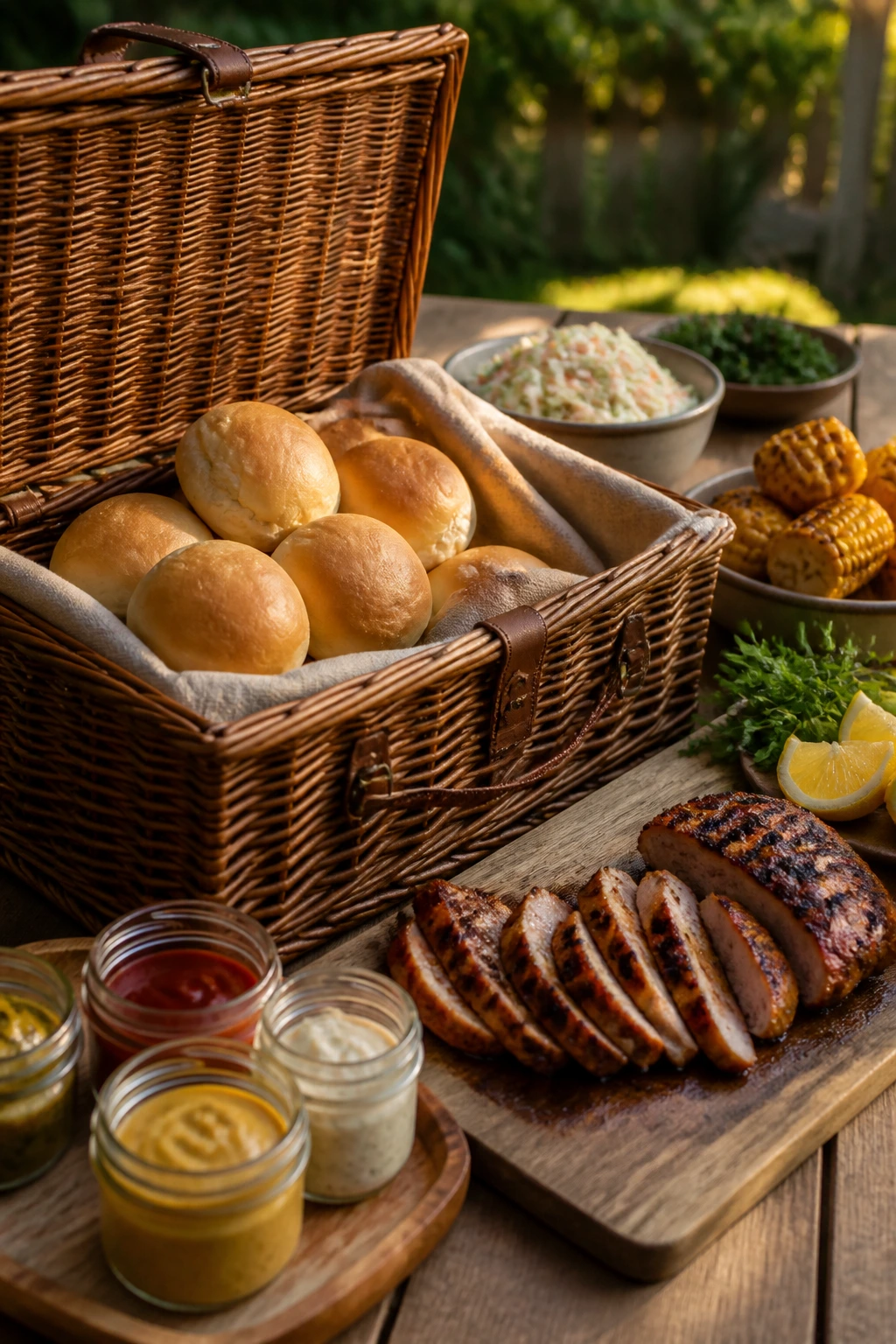
The table setup matters more than people admit. A basket that looks generous but is impossible to serve from turns into a small nuisance. A basket that’s arranged with some thought looks easy, and easy is what people remember.
Presentation: Stack buns in a shallow lined basket or a wide bowl, then put the grilled protein on a cutting board or platter instead of burying it in the basket. Keep sauces in small jars or ramekins so the colors stay visible. If you have herbs, lemon wedges, or pickles, scatter them at the edge of the plate where people can actually reach them.
Accompaniments: Serve the basket with one cold crunchy side, one starchy side, and one fresh thing with acid. That might mean slaw, potato salad, grilled corn, and a bowl of sliced cucumbers with dill. A basket built around meat and bread alone feels thin after the first few bites.
Portions: Plan on 6 to 8 ounces of cooked protein per adult if the basket is the main meal, or 4 to 5 ounces if there are several sides. For buns, count one per person and a few extras for the hungry ones who always appear near the end. Vegetables and slaw should be generous enough that nobody feels like they’re counting forkfuls.
Beverage Pairing: Cold lager, sparkling water with lemon, or unsweetened iced tea all work because they cut the fat instead of fighting it. If you want something with a little more character, a tart lemonade or a light cider plays well with smoke and grill marks.
A table that looks layered — not crowded — feels more inviting. Leave a little negative space. It helps the food stand out.
Packing the Basket So Nothing Gets Soggy
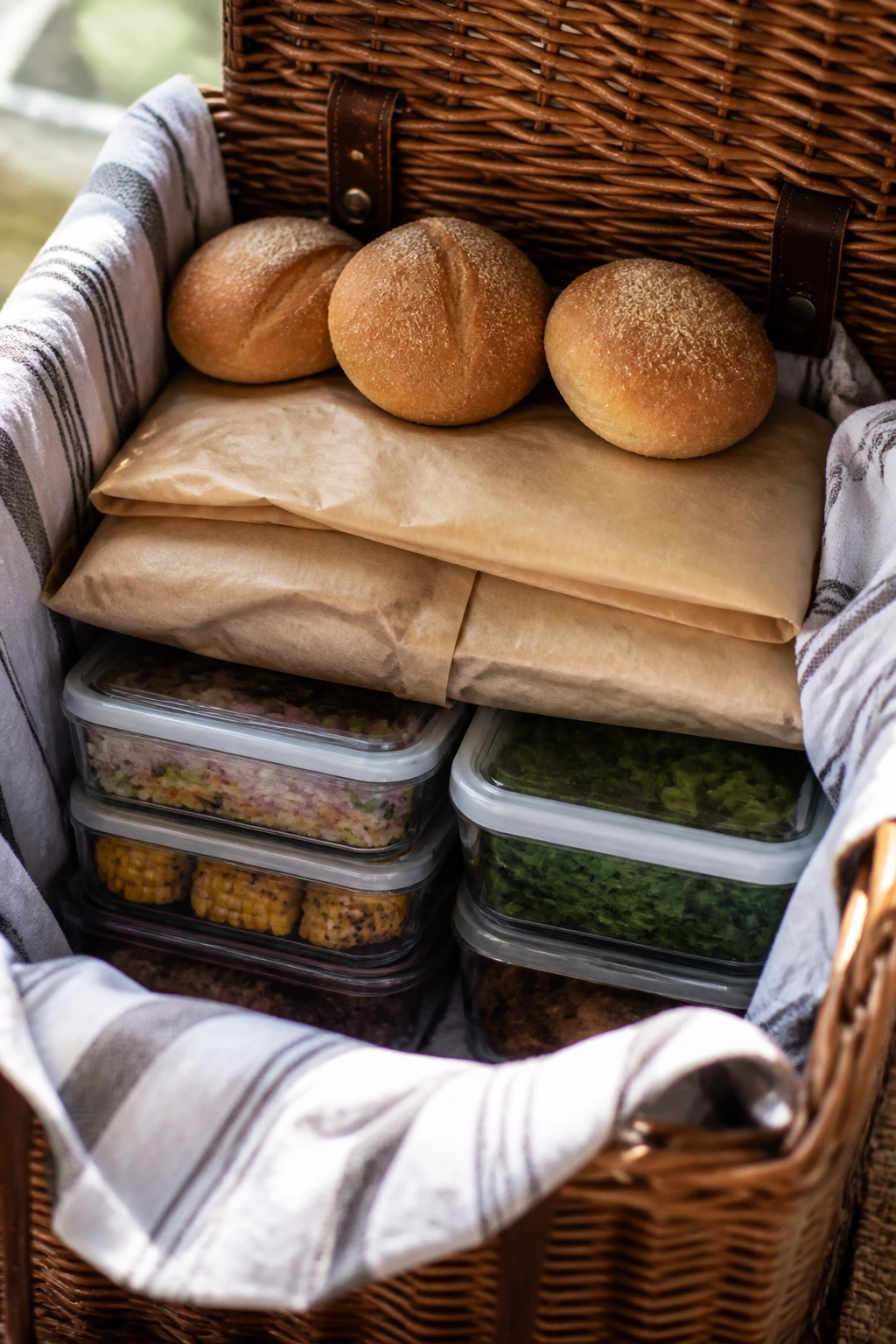
Packing is where the whole thing either comes together or collapses under its own steam. You can have beautiful food and still ruin it with bad placement.
Put the Heaviest Containers on the Bottom
A picnic basket should carry weight low and steady. Flat containers of salad, sauce jars, and sealed boxes of meat belong at the base. Bread and delicate herbs go higher up where they won’t get crushed. If you’re using a wicker basket, line the bottom with a folded towel or a rigid board so containers don’t dig through the weave.
Keep Wet and Dry Separated
Tomatoes, dressed slaw, pickles, and saucy meat should not touch buns, crackers, or grilled bread until the last minute. Use parchment, reusable deli containers, or small lidded jars. If you’ve ever bitten into a bun that smelled like warm salad dressing, you already know why this matters.
Control Steam Before You Close the Lid
Hot food should rest briefly before packing so it stops throwing off clouds of steam. Ten minutes is often enough for grilled meat or roasted vegetables. Pack it while still hot enough to stay safe, but not so hot that it turns its own container into a humid box. That balance is delicate. Mess it up once and you remember.
Use Cold Packs Strategically
Freeze a couple of water bottles overnight and tuck them beside the cold zone. They keep food cold, and when they melt you have drink water. That’s one of those small, practical tricks that feels almost too simple to mention. It still works.
One-sentence note: a basket can be beautiful and practical at the same time — you just can’t let the prettiest container do the wrong job.
Timing the Cookout So Everything Lands at the Same Moment
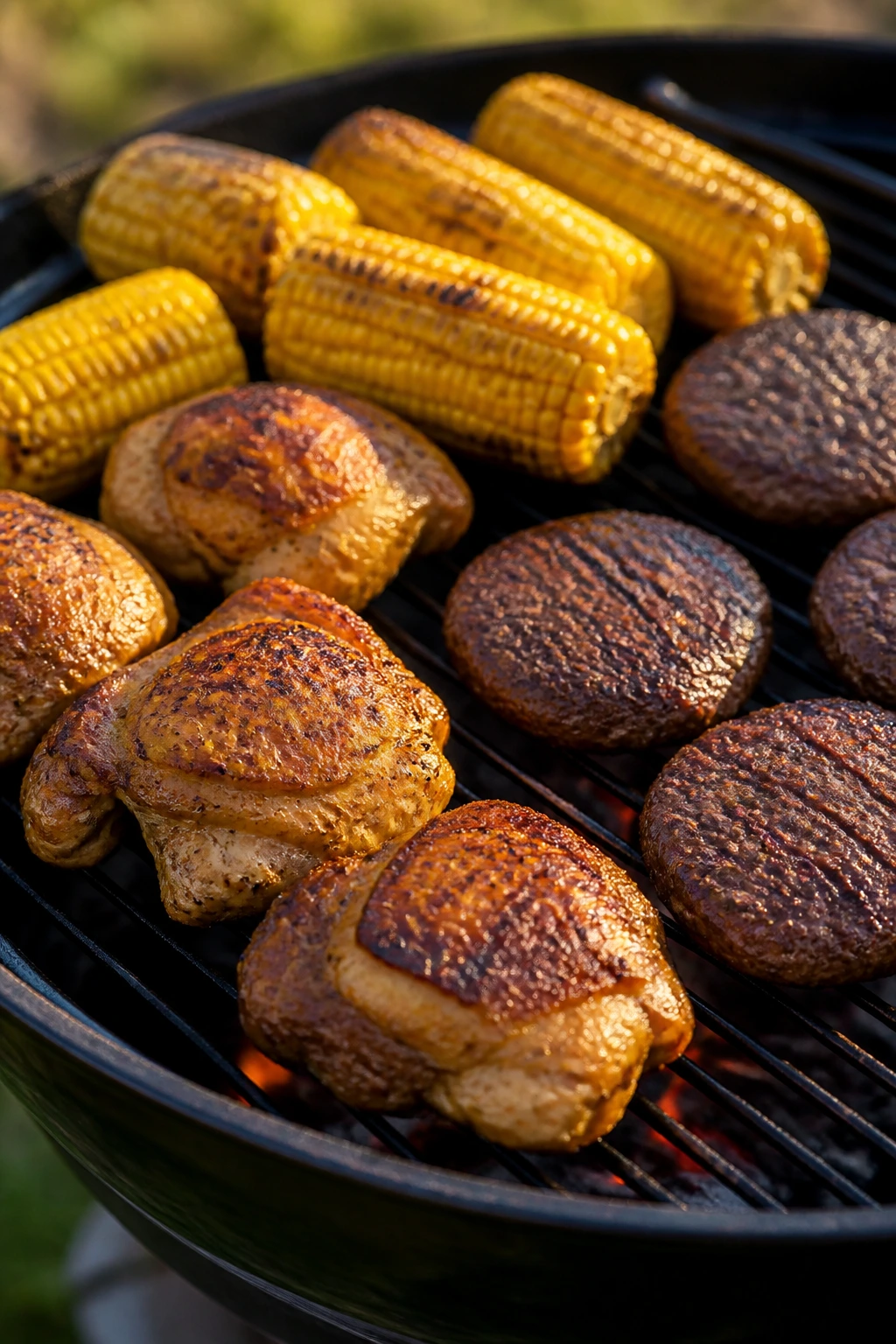
The best picnic basket for backyard cookouts is one that arrives at the table with the food still showing a little energy. Timing matters more than extra recipes. A clean sequence does half the work for you.
-
Start with the cold sides first. Make slaw, potato salad, bean salad, or fruit early so they can chill and settle. Dress what needs dressing, then refrigerate it in shallow containers.
-
Season the protein while the grill heats. Chicken thighs, burgers, pork, or vegetables should be salted ahead of time, then kept cold until they hit the grate. If you’re marinating, dry the surface before grilling so you get browning instead of puddles.
-
Preheat the grill fully. A medium-hot grill with clean grates gives you better marks and fewer sticking problems. Scrape the grate, oil it lightly, and let it heat long enough that food sears instead of clinging.
-
Cook the longest item first. Pork shoulder, bone-in chicken, or thicker vegetables need the head start. Burgers and buns come later. Nothing kills the mood faster than having the bread ready while the meat is still raw.
-
Rest the meat before slicing. Ten minutes for burgers and chops, a little longer for larger cuts. That rest keeps the juices inside the meat instead of on the cutting board.
-
Finish with quick touches. Toast buns, sprinkle herbs, add a squeeze of lemon, spoon on the sauce. Those last 60 seconds often do more than the first 20 minutes of cooking.
I’m a fan of staging the basket in phases. First the cold containers. Then the bread. Then the hot protein at the last second. It keeps everything from feeling like one long emergency.
A Few Smart Moves That Make Every Bite Better
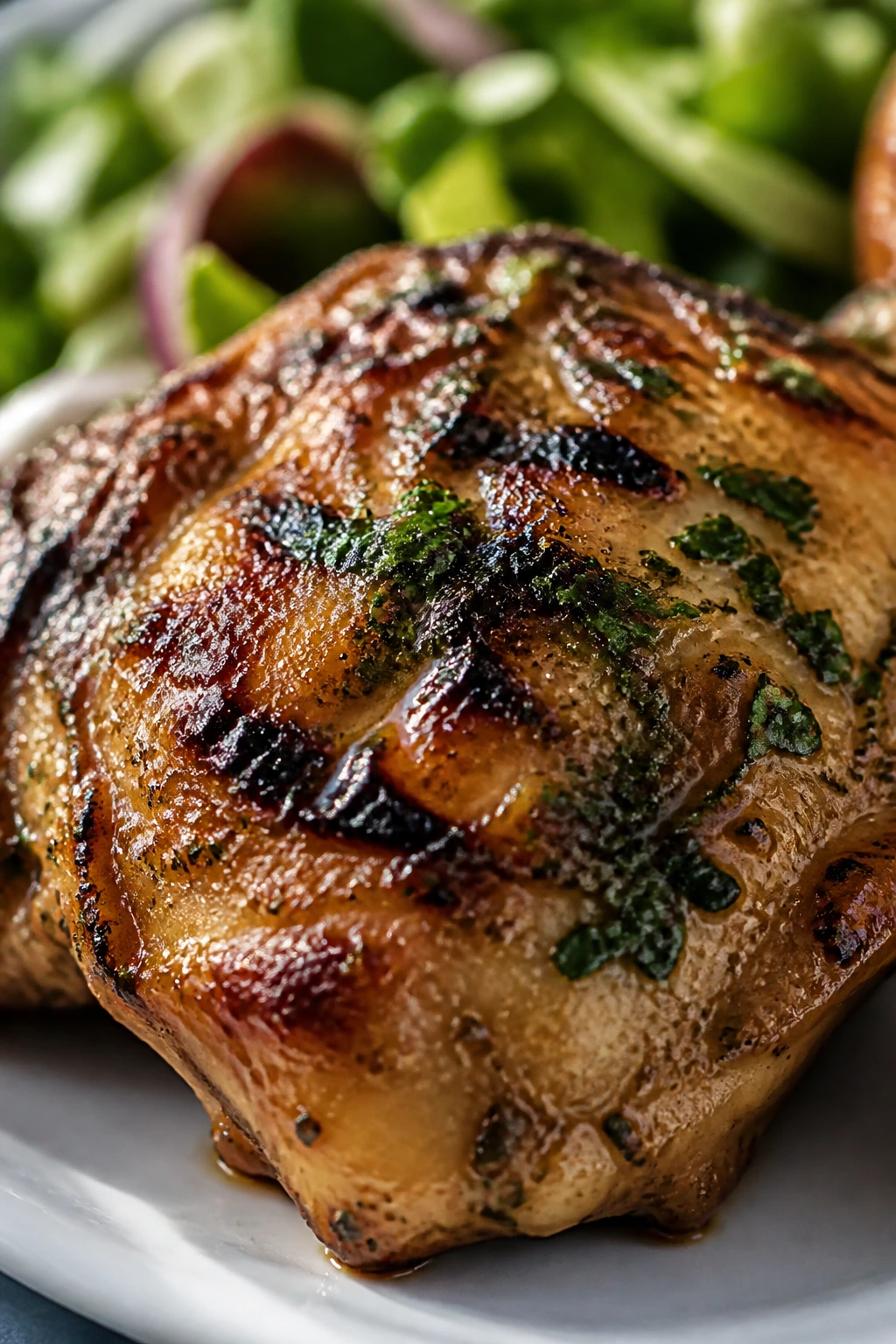
Small moves matter here. Not dramatic ones. The kind that save a sandwich from going flat or make grilled chicken taste like somebody paid attention.
Flavor Enhancement: Brush grilled meat with a thin glaze right after it comes off the heat. A spoonful of melted butter with herbs, a streak of barbecue sauce thinned with vinegar, or olive oil mixed with lemon zest gives the surface a fresh sheen and keeps the first bite from tasting dry.
Time-Saver: Slice onions, wash herbs, and portion sauces the day before. Keep the herbs wrapped in a barely damp towel and the sauces in jars. That way, when the grill is ready, you’re not scrambling for scissors and lids.
Texture Move: Add one crunchy thing to every plate. Pickled onions on burgers, cucumbers in slaw, toasted seeds on salad, or crisp lettuce under a sandwich. Soft food gets monotonous fast; crunch resets it.
Cost-Saver: Use one pricier protein and stretch the basket with sides that do real work. A tray of chicken thighs or a pound of sausages goes a long way when you pair it with beans, slaw, corn, and bread. That is money spent where people actually notice it.
Make-It-Yours: For a lighter basket, lean on grilled fish, yogurt sauce, and herb-heavy salads. For a richer one, use pork shoulder, mayo-based slaw, and buttery rolls. For a vegetarian spread, halloumi, mushrooms, and chickpea salad keep the basket from feeling like an afterthought.
You don’t need twenty extras. You need the right three or four finishing touches.
Common Mistakes That Turn a Good Basket Limp
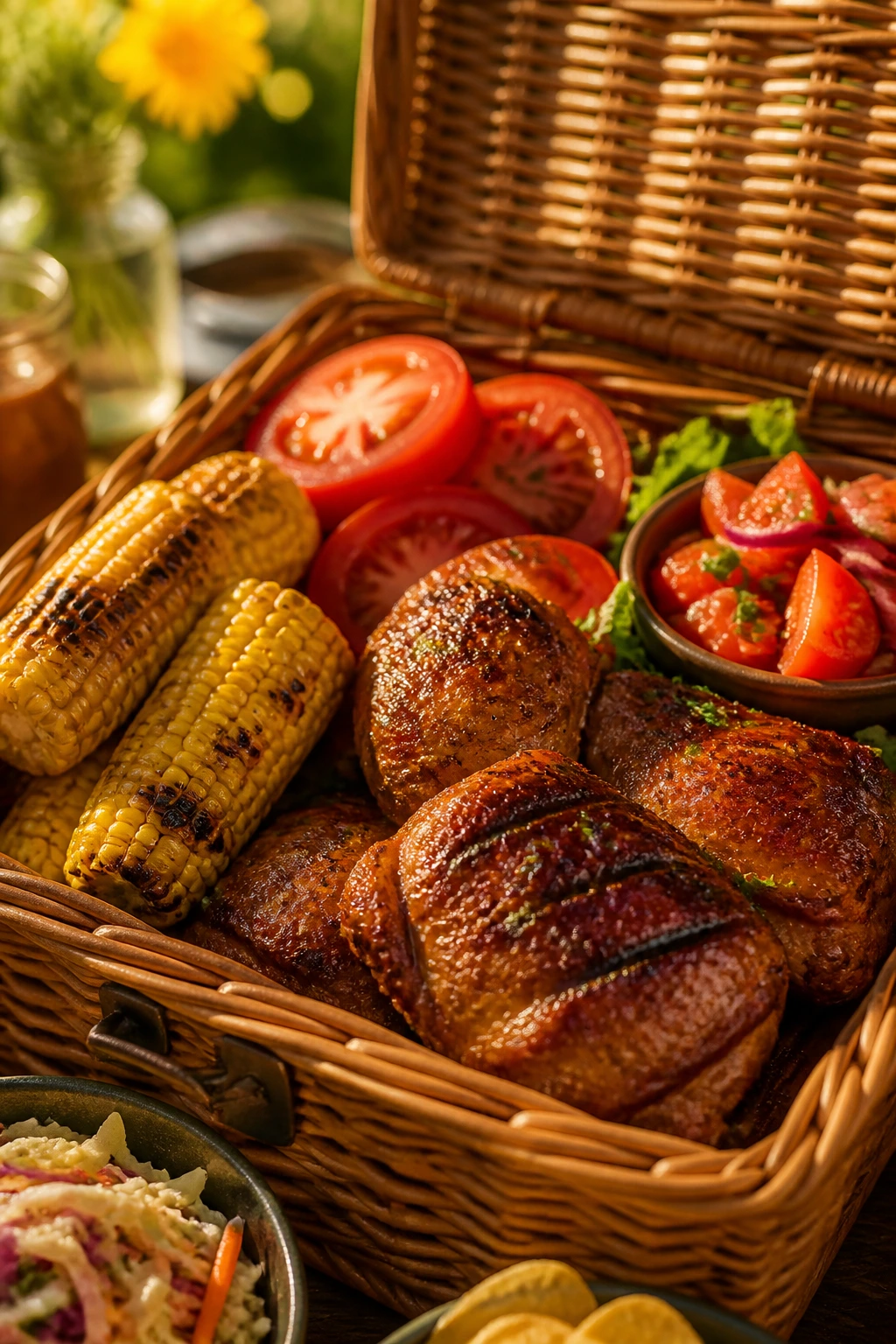
A basket can fail in boring, predictable ways. That’s the annoying part. The fixes are boring too, which is why people skip them.
-
Packing food while it’s still steaming: The symptom is condensation on the lid and bread that turns soft before anyone sits down. Let hot food rest uncovered for a few minutes, then pack it in a container with a little breathing room.
-
Using lean meat without a backup plan: Chicken breast, extra-lean burgers, and thin pork chops dry out faster than most people expect. Choose fattier cuts, brine or marinate lean ones, and pull them off the grill before they look bone-dry.
-
Dressing everything too early: Slaw that sat in dressing too long loses snap, and buns under saucy meat turn mushy. Keep wet ingredients separate and mix them at the table when you can.
-
Ignoring the temperature window: Food safety rules are not picky theater. Cold food needs to stay below 40°F, hot food above 140°F, and anything perishable that sits out too long should not go back in the basket for later. That’s not being fussy. That’s avoiding trouble.
-
Choosing flimsy containers: Thin plastic boxes warp, lids pop loose, and stacks collapse in the car. Use rigid containers with real seals, then pack them snugly so they do not slide around.
-
Slicing too soon: Cut meat the second it comes off the grill and the juices end up on the board. Resting is not downtime; it’s part of the cooking. Give it a few minutes, then slice against the grain if the cut needs it.
One detail that saves a lot of grief: keep a spare towel in the basket. It cushions containers, handles hot platters, and gives you a clean surface when the table is doing something weird.
Variations for Different Backyard Crowds
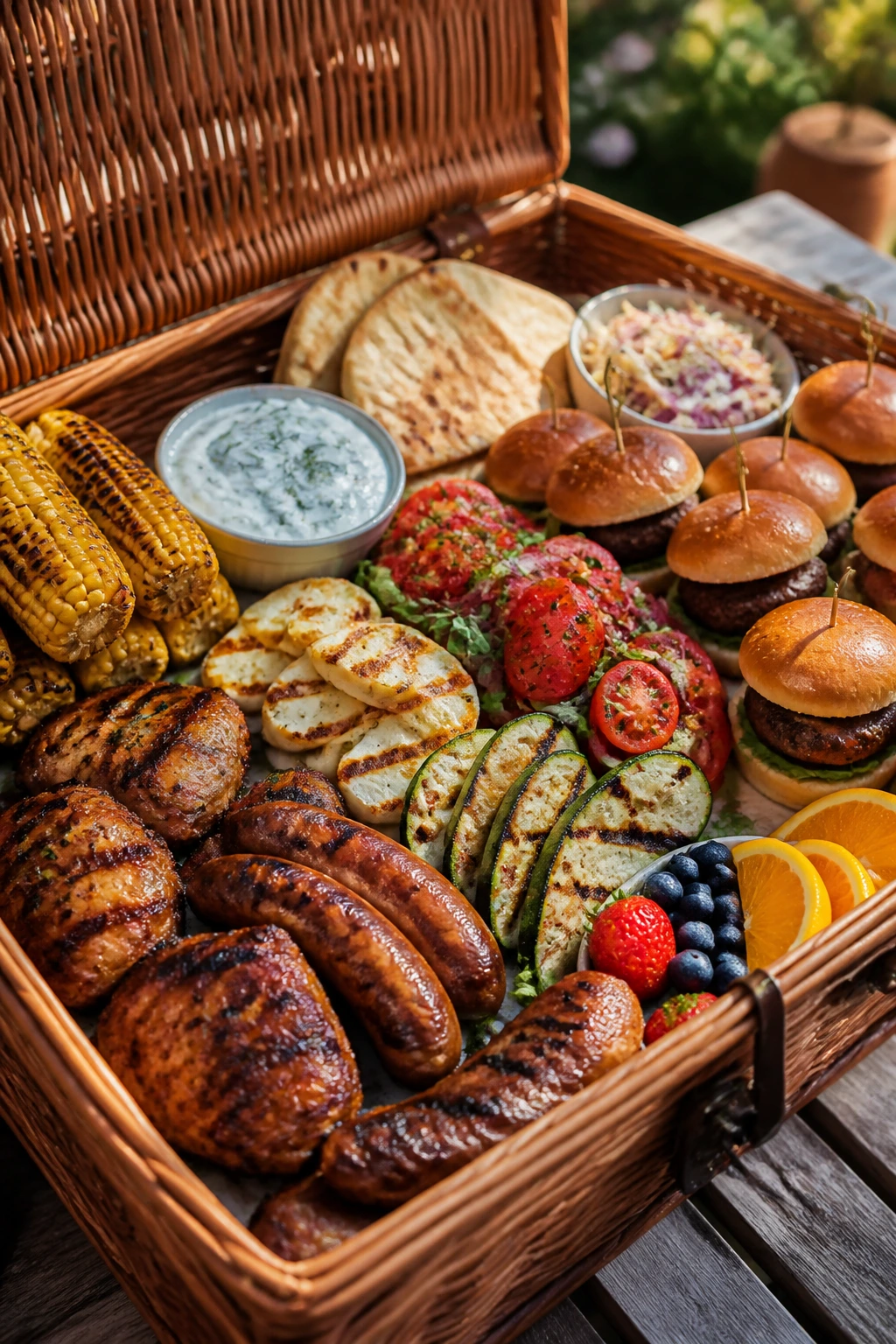
Every backyard crowd asks for a slightly different basket. The bones stay the same. The flavor story changes.
Smokehouse Basket
Use chicken thighs, sausage links, grilled corn, and a peppery barbecue sauce. Add pickles and a vinegar slaw to cut through the smoke. This version works when the grill is the main event and you want the food to taste like it spent time near the fire.
Garden-Heavy Basket
Build around halloumi, grilled zucchini, tomato salad, cucumber-dill yogurt, and flatbread. The basket stays bright and cooler-heavy, which makes sense when the day is hot and people want food that feels lighter on the plate.
Kid-First Basket
Choose small burgers, simple buns, fruit, mild coleslaw, and roasted corn cut off the cob. Keep the sauces on the side. Kids usually like food that can be held with one hand and doesn’t collapse halfway through the first bite.
Char and Citrus Basket
Lean into lemon, lime, orange, or grapefruit segments alongside grilled shrimp, fish, or chicken. The citrus keeps the basket from feeling heavy, and the acid wakes up everything else on the plate. This one is sharp and clean, and I like it when the rest of the menu is rich.
Make-Ahead Picnic Basket
Focus on bean salad, sliced smoked meats, marinated vegetables, crusty bread, and a sturdy fruit like grapes or plums. It’s the easiest version to prep early because the flavors can sit overnight without falling apart.
Each version still needs the same discipline: keep wet and dry apart, keep temperatures honest, and don’t let a pretty container make bad packing decisions for you.
Tools and Equipment That Earn Their Spot
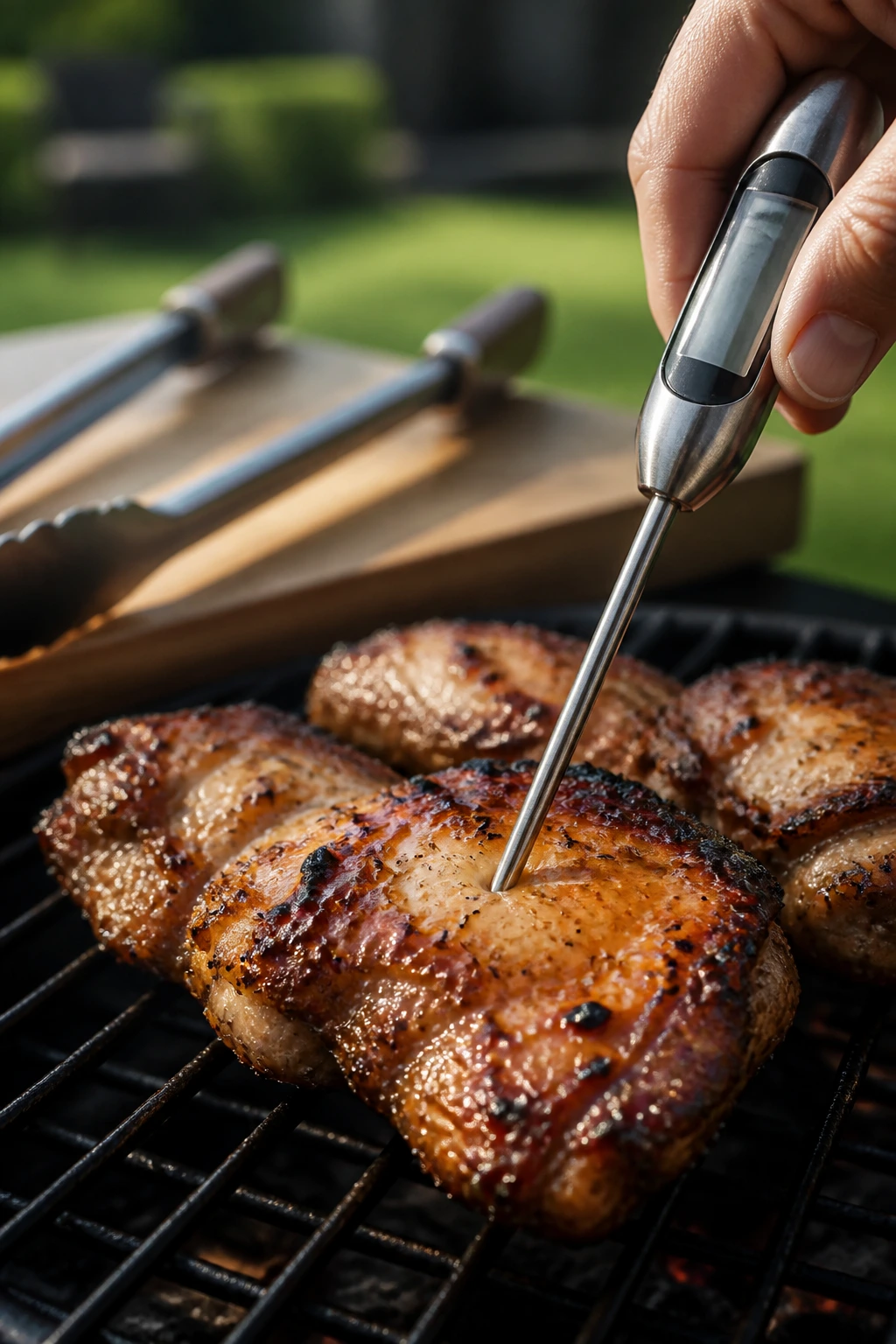
A few pieces of gear make this whole thing easier. None are glamorous. All of them pay rent.
- Insulated cooler with ice packs: Keeps cold food at safe temperatures and buys you time during transport.
- Rigid picnic basket or insulated tote: Gives the spread a clean presentation and keeps soft items from being crushed.
- Instant-read thermometer: The fastest way to know whether meat is cooked through without cutting into it.
- Long-handled tongs: Better for moving hot food without piercing it and losing juices.
- Shallow food containers with tight lids: Ideal for slaw, potato salad, fruit, and sliced meat.
- Small jars or squeeze bottles: Good for sauces, dressings, and relishes that should stay separate.
- Cutting board with a groove: Catches resting juices instead of letting them run across the table.
- Sharp chef’s knife: Slices meat and vegetables cleanly instead of smashing them.
- Foil or parchment: Useful for lining containers, wrapping bread, or keeping warm items contained.
- Clean kitchen towels: Great for cushioning containers, wrapping bread, and covering food briefly while it rests.
A basket can get by without fancy gear. It cannot get by without a thermometer and at least one solid cold container. Those are the two things I’d never leave behind.
Make-Ahead, Storage, and Leftover Care
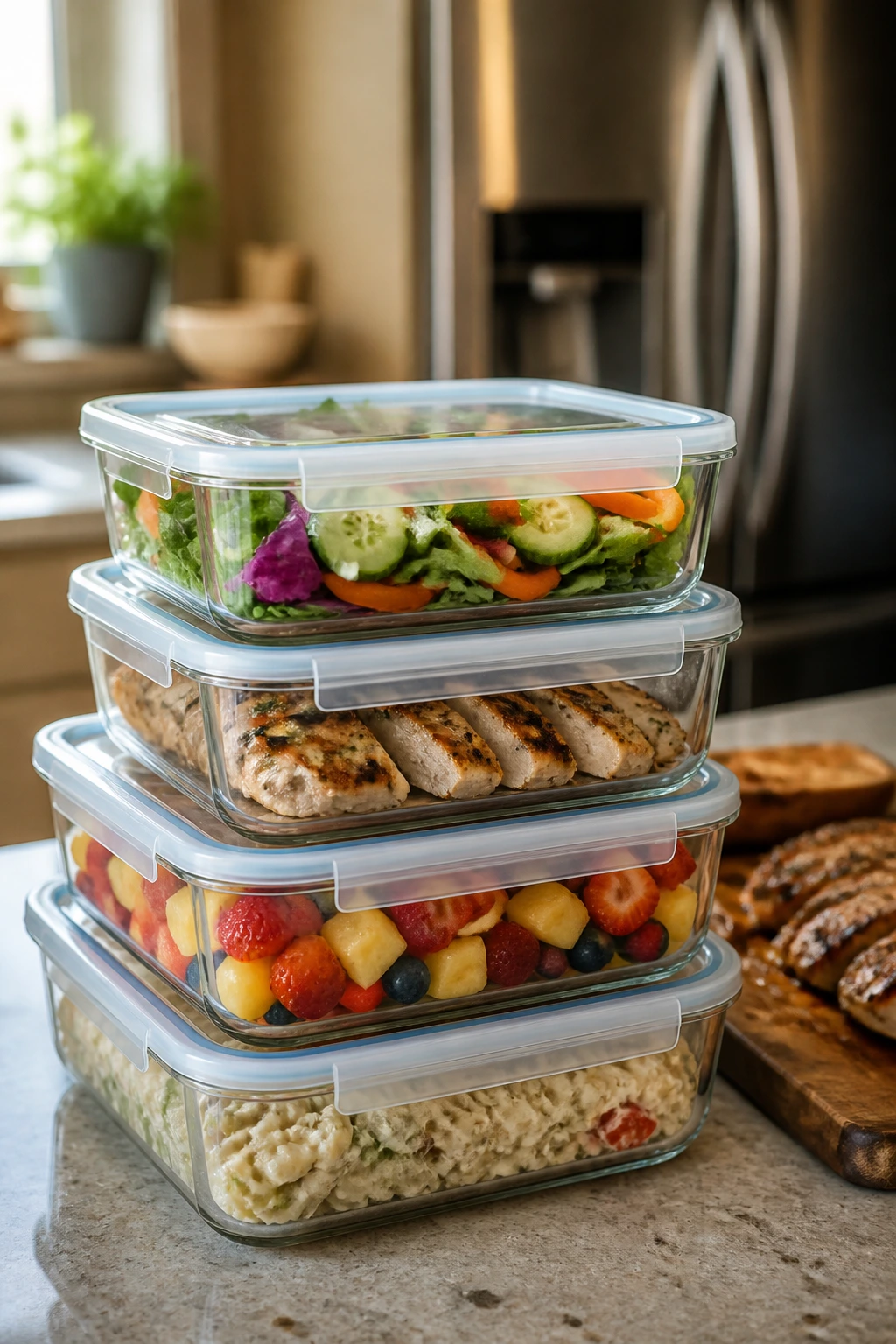
The basket is only half the story. Leftovers matter, and so does what you do before the grill gets hot.
Cooked chicken, pork, burgers, and grilled vegetables keep in the fridge for about 3 to 4 days if they’re sealed in shallow containers and chilled quickly. If you want to freeze cooked meat, wrap it tightly and freeze it for up to 2 to 3 months. Slice it only after thawing if you can help it; whole pieces dry out less than thin slices.
Salads are more specific. Vinegar-based slaws and bean salads usually hold for 2 to 3 days in the fridge. Mayonnaise-heavy potato salad is best within 3 days and should not be frozen, because the texture turns grainy and loose. Fruit keeps for 1 to 2 days once cut, though watermelon and melon pieces are best the day they’re made.
Bread is a separate problem. Store buns and rolls at room temperature if you’re using them within a day or two, or freeze them tightly wrapped if you need to hold them longer. Reheat frozen buns in a 300°F oven for a few minutes, wrapped in foil, until soft again. If you’re reheating grilled meat, use a low oven around 300°F, cover it loosely with foil, and add a spoonful of broth or pan juices if the meat looks dry.
For the basket itself, wipe the liner or washable tote with a damp cloth after each use and let it dry fully before storing. A basket that stays slightly damp starts to smell like old picnic faster than people expect. Air matters more than perfume.
One practical habit: pack leftovers in separate containers right after eating. The sauce on one side, the bread on another, the slaw by itself. Tomorrow’s lunch depends on that small bit of discipline.
Frequently Asked Questions
Can I pack the picnic basket the night before?
Yes, but only the non-perishable parts and anything that will stay cold in a sealed cooler. Bread, sauces, and cut fruit can be portioned ahead, while grilled meats and dressed salads are better cooked or mixed the day you serve them.
What’s the best protein if I want the juiciest result with the least stress?
Chicken thighs. They forgive heat swings, they stay tender after resting, and they keep more flavor than chicken breast under grill smoke. Burgers made with 80/20 beef are a close second if you want something fast.
How do I keep buns from going soggy before serving?
Toast the cut side lightly, pack buns separately, and keep them away from saucy meat until the last second. If you’re serving a lot of people, leave the buns open on a tray for a minute so any trapped steam can escape before you build sandwiches.
What foods should not go in the basket?
Anything that wilts fast, leaks heavily, or needs a long time at room temperature without refrigeration. Delicate lettuce, whipped cream desserts, and heavily dressed greens are poor choices unless they’re kept in a cold container and assembled right before eating.
Can I make the whole spread vegetarian?
Absolutely. Grilled halloumi, marinated tofu, portobello mushrooms, bean salad, grilled corn, and a sharp sauce give you enough body to make the basket feel complete. The key is to treat the vegetables like the main event, not an apology.
How long can the food sit out during the cookout?
Perishable foods should not sit in the danger zone for more than 2 hours, and if the day is hot enough that the food is getting warm quickly, that window shrinks to 1 hour. If you’re unsure, put the item back on ice or reheat it to a safe temperature.
What if I don’t have a cooler?
Use the smallest insulated bag you have, add frozen water bottles, and keep cold items packed close together. It’s not ideal, but it’s better than leaving potato salad in the open air. For a backyard setup, you can also place the cold containers in a shaded tub with ice around them.
How do I reheat leftovers without drying them out?
Use a low oven, around 300°F, and cover the food loosely with foil. For meat, add a little broth or pan juice before reheating; for buns, warm them wrapped in foil so they soften instead of turning crusty and hard.
Can I use a real wicker basket instead of an insulated tote?
Yes, if you use the basket for presentation and keep the temperature-sensitive food in separate insulated containers. A wicker basket is better at looking inviting than holding food safely for hours. It’s a stage, not a refrigerator.
A Basket That Actually Belongs on the Table
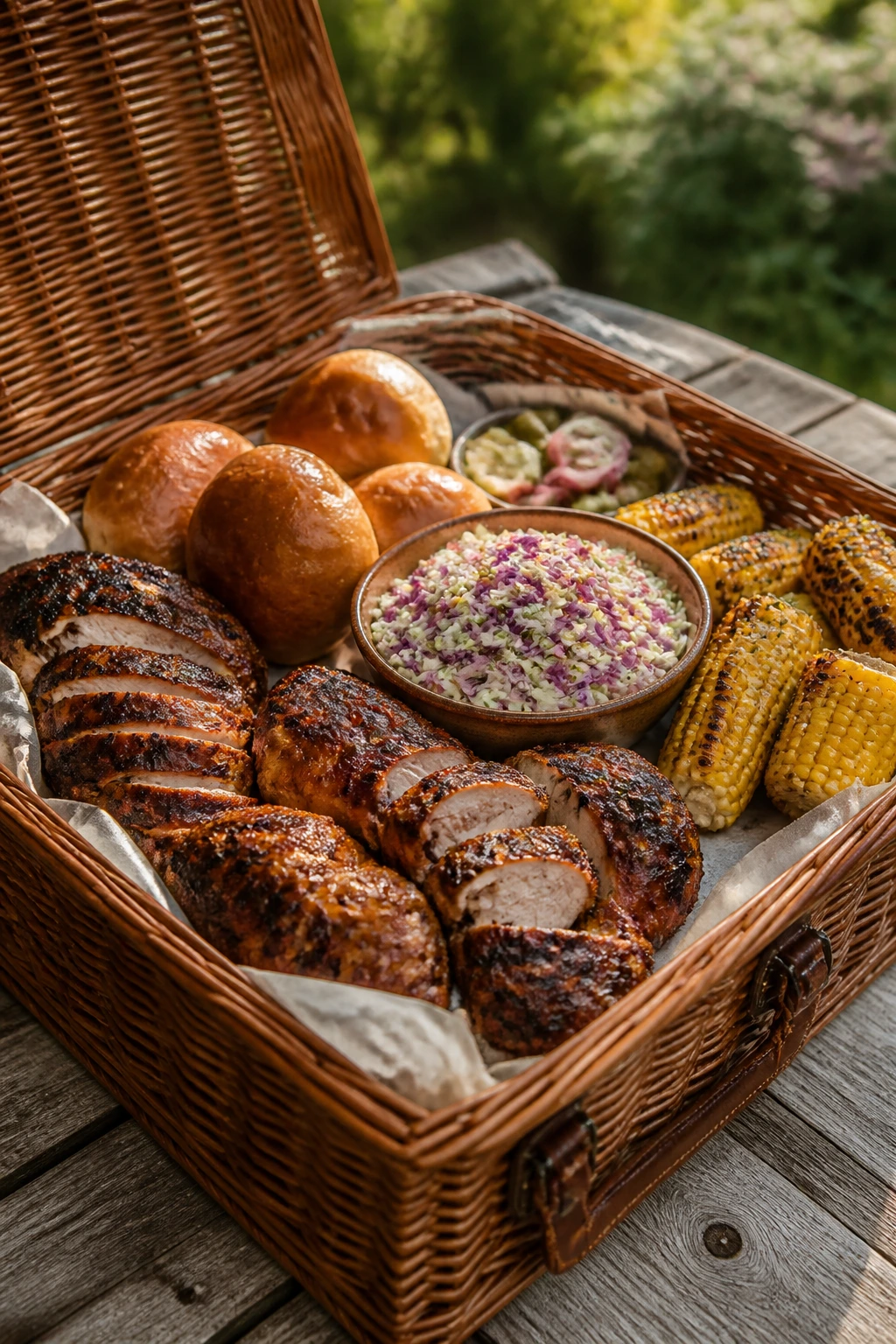
The nicest picnic basket for backyard cookouts is not the one stuffed with the most food. It’s the one that still tastes like itself when it reaches the table. The chicken is still juicy, the slaw still crunches, the buns still have a little spring, and the sauce tastes bright instead of muted by steam.
That’s the whole game, really. Good packing. Honest temperatures. Foods with enough fat, acid, and texture to survive the trip. Once you start building a basket around those rules, the cookout stops feeling improvised in the worst way and starts feeling calm in the best one.