



A good cottage cheese salad should feel cold, crisp, and a little bit bracing. Not dull. Not soupy. And definitely not like someone dumped a tub of dairy over limp lettuce and called it lunch.
The version I keep coming back to is the one that respects texture. The romaine stays snappy, the cucumber gives that cool crunch you hear before you taste it, and the cottage cheese sits in soft, salty spoonfuls instead of dissolving into the rest of the bowl. The homemade dressing matters more than people think. Once lemon, Dijon, garlic, and olive oil are balanced properly, the whole salad stops tasting like separate ingredients and starts tasting like a real meal.
That balance is the trick. Cottage cheese brings protein and creaminess, but it also brings a lot of salt and a little tang of its own, so the dressing has to be bright rather than heavy. Too much oil flattens everything. Too little acid and the bowl tastes sleepy. Get the ratio right, and you end up with a light cottage cheese salad that feels fresh enough for warm afternoons, sturdy enough for lunch, and interesting enough that you’re not poking at the same three leaves halfway through the bowl.
Why This Cottage Cheese Salad Works When You Want Something Light
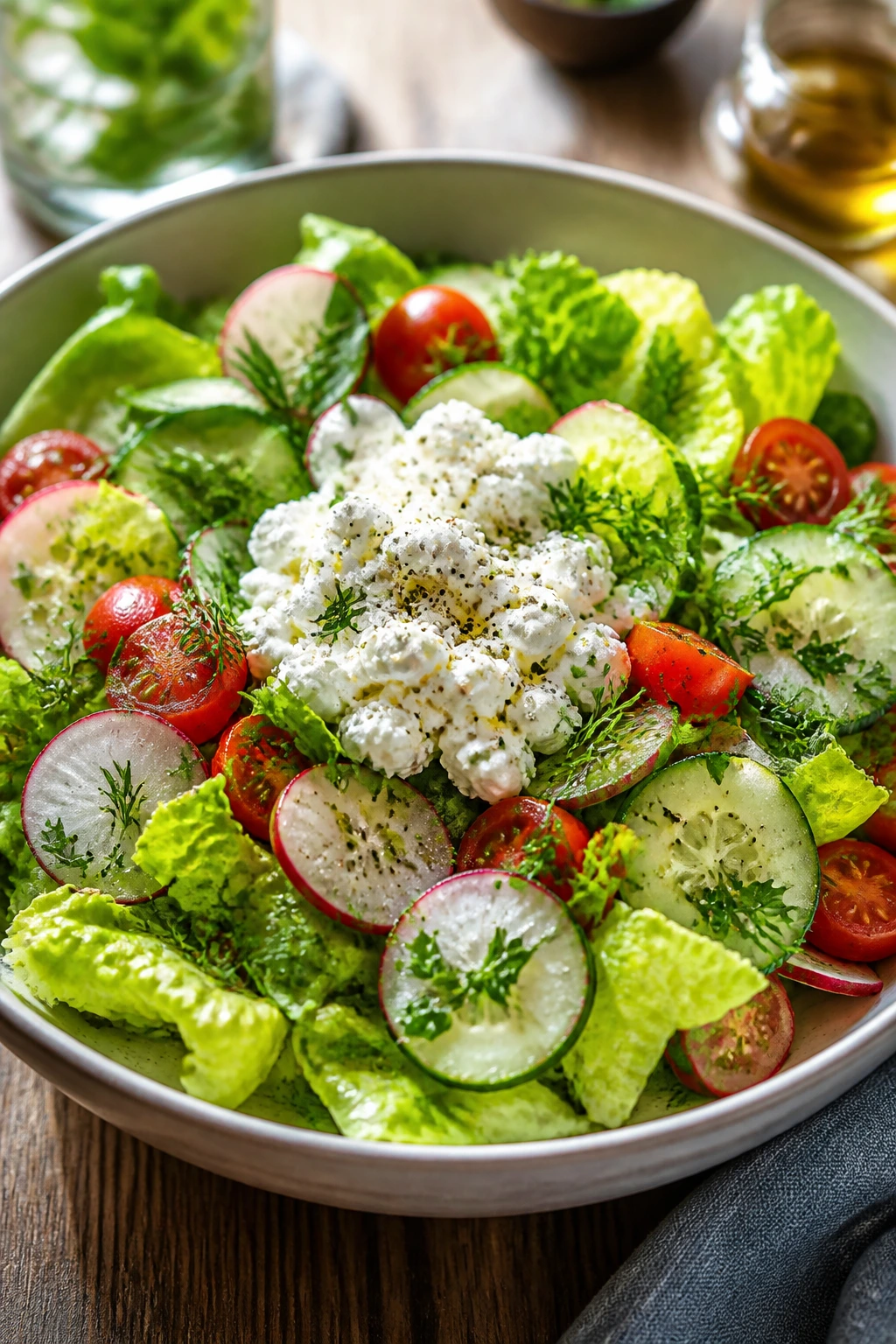
- It stays crisp longer than a dressed grain bowl: Romaine and cucumber hold their texture for a while, which matters when you want lunch to still feel fresh after a few bites.
- The cottage cheese does the heavy lifting: A measured scoop of small-curd cottage cheese gives the salad body and protein without the weight of mayo or a thick cream sauce.
- The homemade dressing actually tastes alive: Lemon juice, Dijon, vinegar, and garlic keep the dressing sharp and clean, so it wakes up the vegetables instead of coating them in grease.
- You can eat it as a side or a main: The bowl works beside grilled fish or roast chicken, but it also stands on its own if you want a lighter lunch that still feels complete.
- It tolerates small swaps well: Swap the herbs, change the greens, add seeds, skip the avocado, or toss in extra cucumber. The structure still holds.
- It’s fast without feeling lazy: There’s no stove, no blender, and no waiting around except a few minutes for the garlic to mellow in the dressing.
Timing, Yield, and the Setup on Your Counter
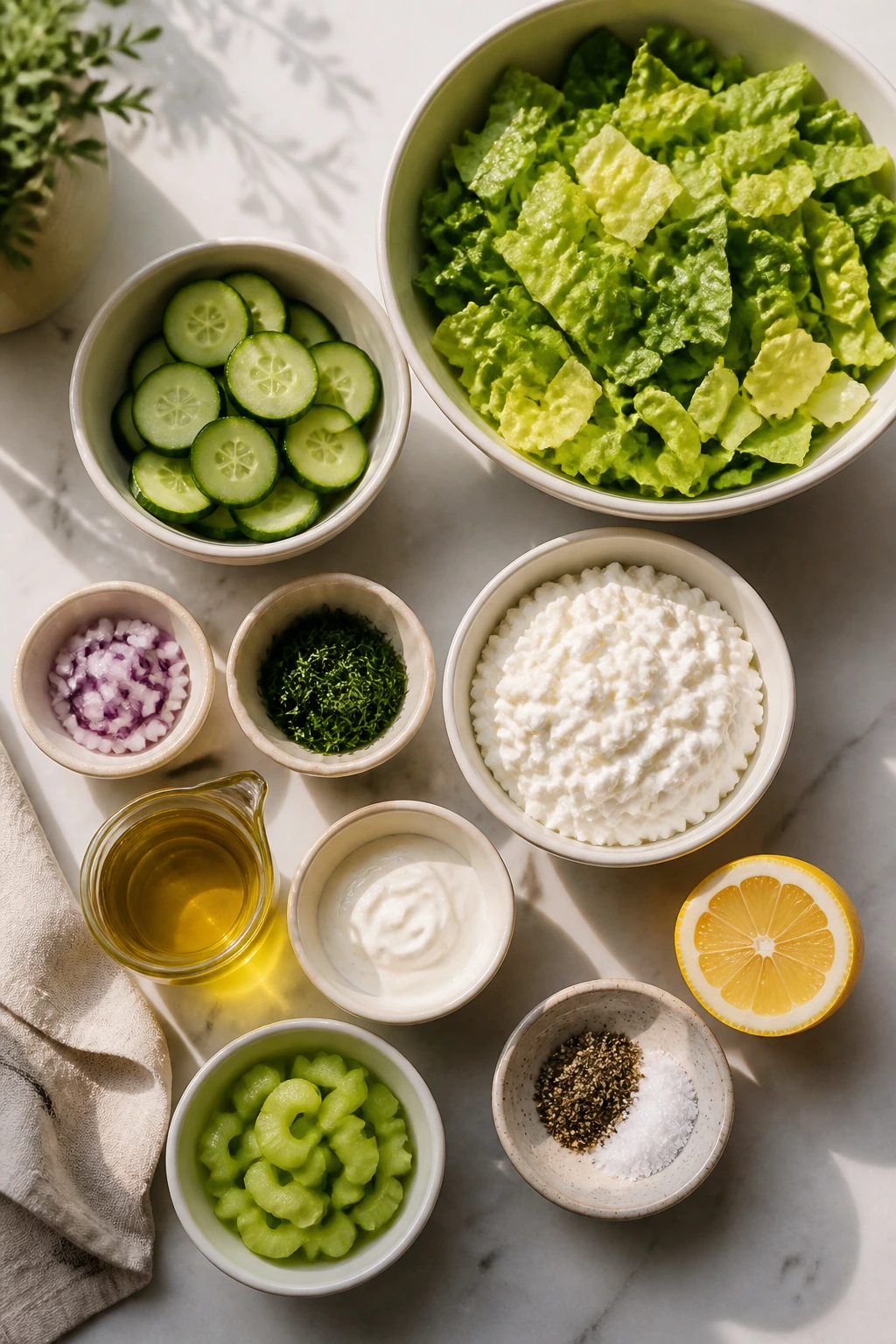
Yield: Serves 4 as a side salad or 2 as a light main
Prep Time: 20 minutes
Cook Time: 0 minutes
Total Time: 20 minutes
Difficulty: Beginner — the method is straightforward, but dry greens, balanced dressing, and careful assembly matter more than brute force.
Chill/Rest Time: 10 minutes optional for the dressing to mellow
Best Served: Immediately after tossing, while the greens are cold and the cucumbers still have their snap
The Ingredients for the Salad and the Homemade Dressing
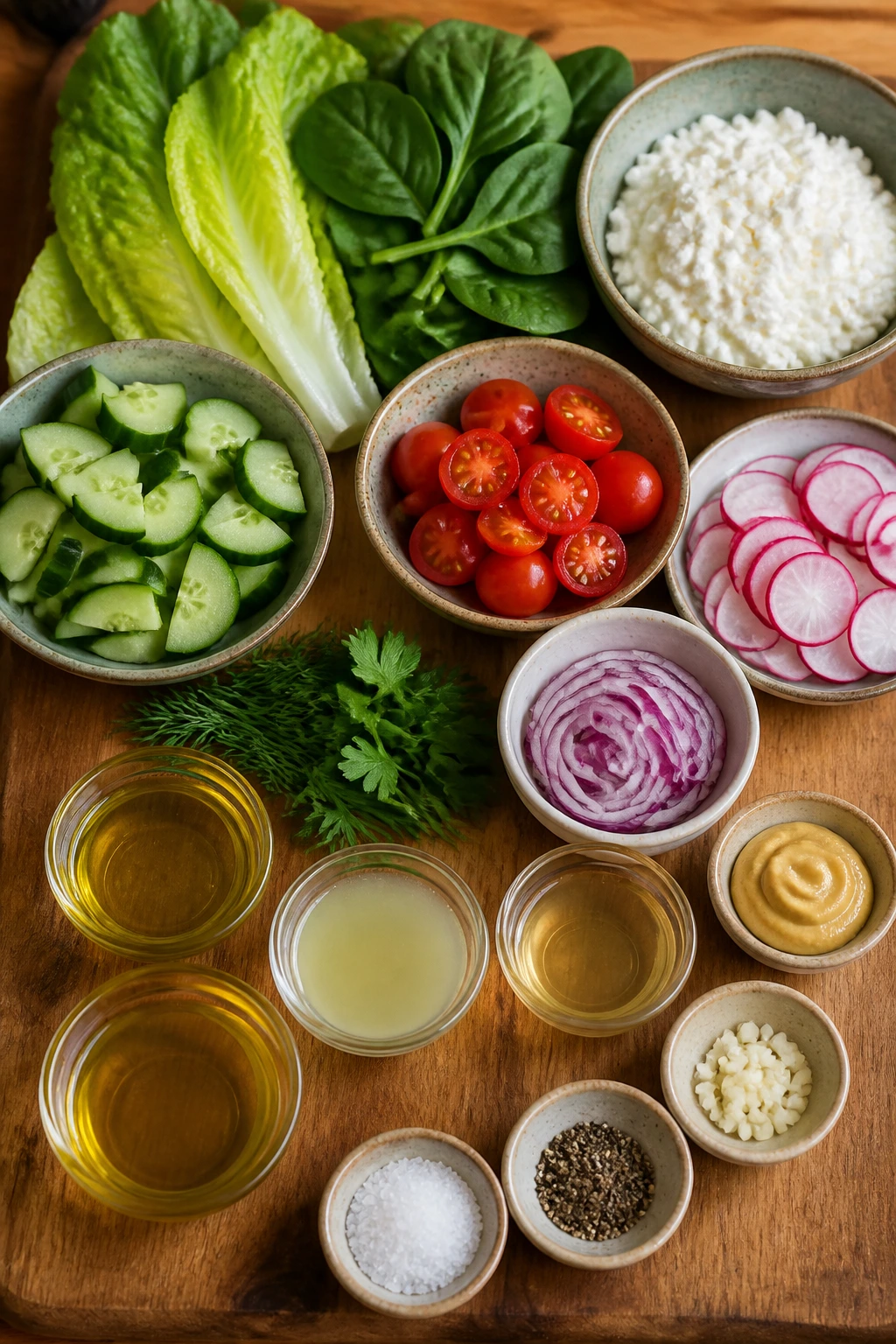
For the Salad:
- 6 cups chopped romaine lettuce, washed and thoroughly dried
- 2 cups baby spinach, stems trimmed if needed
- 1 1/2 cups small-curd cottage cheese, preferably 2% or 4%
- 1 large English cucumber, sliced into half-moons
- 1 cup cherry tomatoes, halved
- 4 radishes, thinly sliced
- 1/4 small red onion, very thinly sliced
- 1/4 cup chopped fresh dill
- 2 tablespoons chopped fresh parsley
- Flaky sea salt, for finishing
- Black pepper, to taste
For the Homemade Dressing:
- 3 tablespoons extra-virgin olive oil
- 2 tablespoons fresh lemon juice
- 1 tablespoon white wine vinegar
- 1 teaspoon Dijon mustard
- 1 teaspoon honey
- 1 small garlic clove, finely grated
- 1/4 teaspoon kosher salt
- 1/4 teaspoon black pepper
- 1 to 2 tablespoons cold water, to thin as needed
Optional Finishes:
- 1 avocado, sliced
- 2 tablespoons toasted sunflower seeds or pumpkin seeds
- 2 tablespoons crumbled feta
Why Each Ingredient Belongs in the Bowl
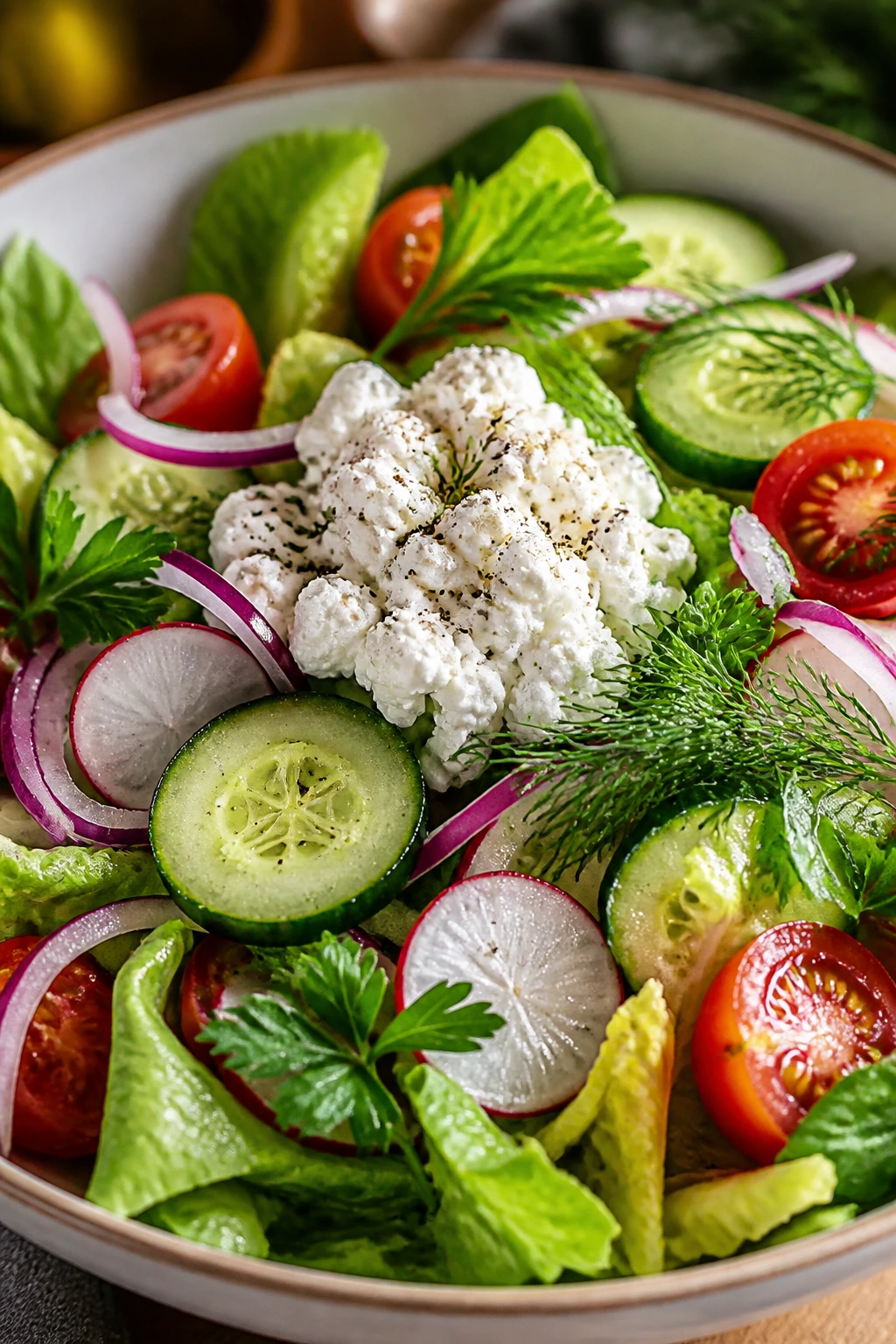
Crisp Greens and Vegetables
What to use: 6 cups chopped romaine, 2 cups baby spinach, 1 English cucumber, 1 cup cherry tomatoes, 4 radishes, and 1/4 small red onion.
Preparation: Chop the romaine into bite-sized pieces, dry the spinach well, slice the cucumber into half-moons, halve the tomatoes, shave the radishes thin, and cut the onion as finely as you can manage. If the red onion bites too hard, soak the slices in cold water for 5 minutes and dry them before adding.
Substitutions: Butter lettuce works if you want a softer bowl, while arugula gives the salad a peppery edge. If radishes are out of reach, thin celery slices or shaved fennel give a similar crunch.
Tips: Wet greens are the enemy here. If there’s water clinging to the leaves, the dressing slides off and pools at the bottom of the bowl instead of coating each bite.
The Cottage Cheese
What to use: 1 1/2 cups small-curd cottage cheese, ideally 2% or 4%.
Preparation: If the cottage cheese looks watery when you open the container, spoon off any excess liquid before measuring. Keep the curds intact; don’t whip or blend them unless you want a completely different salad.
Substitutions: Lactose-free cottage cheese works well for people who need it. Large-curd cottage cheese can be used, but the bowl will look looser and a little less neat.
Tips: Small-curd cottage cheese blends into a salad more gracefully because the spoonfuls hold their shape. That means each forkful gets a creamy pocket instead of a slippery blanket.
The Homemade Dressing
What to use: 3 tablespoons olive oil, 2 tablespoons lemon juice, 1 tablespoon white wine vinegar, 1 teaspoon Dijon, 1 teaspoon honey, 1 finely grated garlic clove, 1/4 teaspoon salt, 1/4 teaspoon black pepper, and 1 to 2 tablespoons cold water.
Preparation: Grate the garlic finely so it almost disappears into the dressing. Whisk or shake the ingredients until the mixture looks glossy and no oil streaks remain.
Substitutions: Lime juice can replace lemon if that’s what you have. Apple cider vinegar works in place of white wine vinegar, though it brings a slightly rounder, fruitier edge.
Tips: The water is not there to water things down. It loosens the dressing just enough so it clings to the greens instead of sitting on top like oil.
Herbs and Finishing Touches
What to use: 1/4 cup chopped dill, 2 tablespoons chopped parsley, flaky sea salt, black pepper, and, if you like, avocado, seeds, or feta.
Preparation: Chop the herbs at the last minute so they stay fragrant and bright. Slice the avocado only right before serving if you’re using it.
Substitutions: Chives can stand in for parsley, mint can replace part of the dill, and toasted sesame seeds can take the place of sunflower seeds if that’s what’s in the pantry.
Tips: Fresh dill and lemon are the loudest flavors in the bowl. If you skip both, the salad loses its backbone and starts tasting like a cold side dish instead of something you actually planned to eat.
The Bowl, Knife, and Whisk That Make This Easier
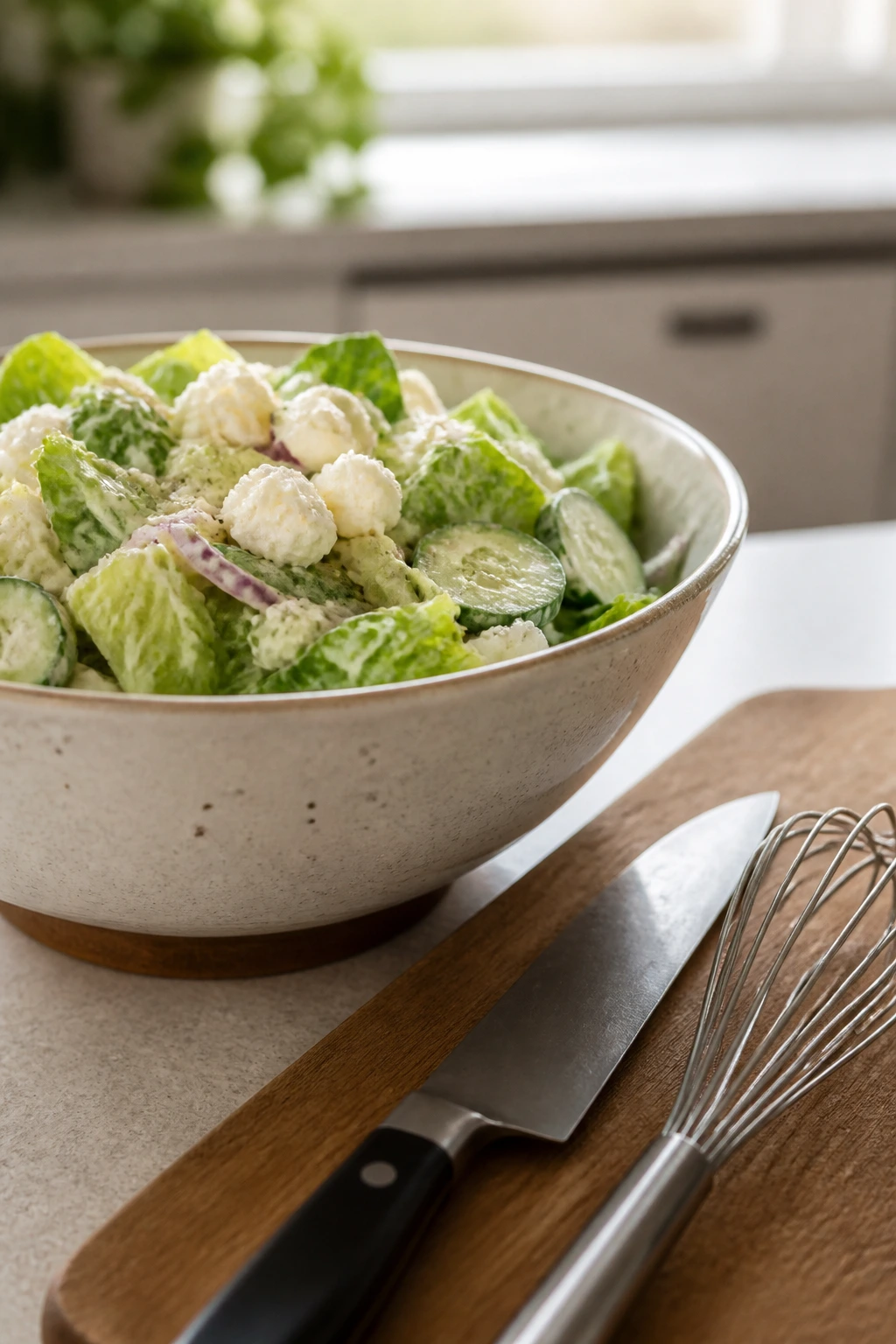
- Large mixing bowl: You need room to toss without bruising the greens or knocking cucumber slices onto the counter.
- Small bowl or jar with a tight lid: A jar is handy if you like shaking dressing instead of whisking it.
- Whisk or fork: A whisk makes the dressing smoother, but a fork works if that’s what you’ve got.
- Chef’s knife: A sharp knife keeps the cucumber, radish, and onion slices clean instead of ragged.
- Cutting board: A stable board matters more than people think; slippery boards make thin slicing annoying fast.
- Salad spinner: Not mandatory, but it helps a lot. Dry greens are the difference between a crisp salad and a soggy one.
- Microplane or fine grater: Useful for the garlic. You want it to disappear into the dressing, not sit in raw little cubes.
- Measuring spoons: The dressing depends on balance, so don’t eyeball the acid and oil unless you’ve made it before.
Whisk the Homemade Dressing Until It Tastes Bright
Make the dressing:
-
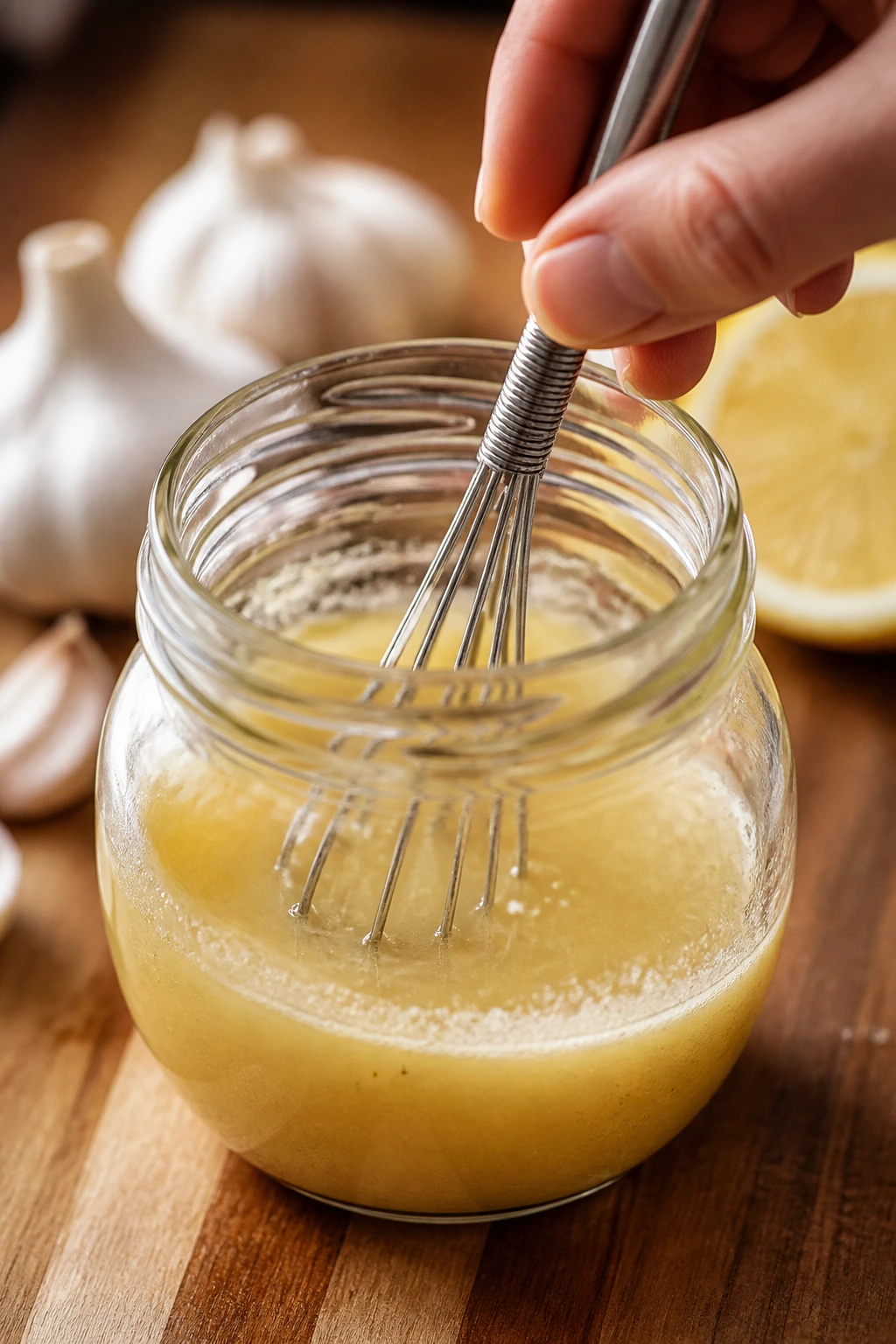
Combine the base ingredients. In a small bowl or jar, add 3 tablespoons olive oil, 2 tablespoons fresh lemon juice, 1 tablespoon white wine vinegar, 1 teaspoon Dijon mustard, 1 teaspoon honey, 1 finely grated garlic clove, 1/4 teaspoon kosher salt, and 1/4 teaspoon black pepper.
-
Whisk until the dressing looks smooth and slightly thick. The mixture should turn glossy and a little opaque, with no obvious oil streaks floating on top. If you’re using a jar, screw the lid on tightly and shake hard for about 20 seconds.
-
Thin the dressing with cold water. Add 1 tablespoon of cold water and whisk again. Taste it. If it feels sharp, thick, or hard to spread, add the second tablespoon. You’re looking for something that pours easily but still clings to a spoon.
-
Let it sit for 5 to 10 minutes. The garlic loses some of its raw edge as the dressing rests. That short pause makes a bigger difference than it sounds like it should.
Build the Salad So the Greens Stay Crisp
Assemble the bowl:
-
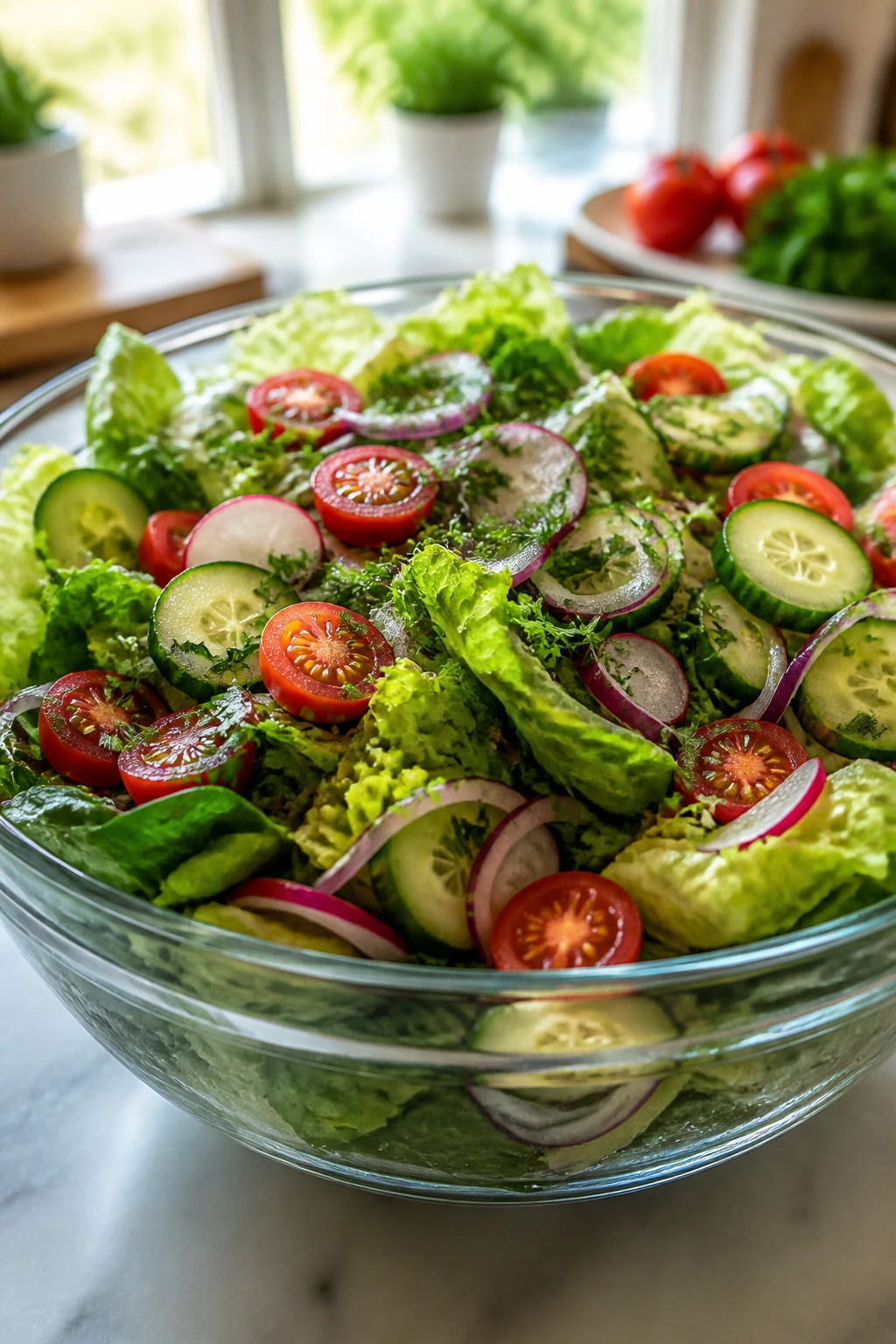
Prepare the vegetables with care. Wash and dry the romaine and spinach until no water remains on the leaves. Slice the cucumber, halve the tomatoes, shave the radishes, thinly slice the red onion, and chop the dill and parsley.
-
Build the base first. Put the romaine and spinach in a large bowl. Add the cucumber, tomatoes, radishes, onion, dill, and parsley on top. Leave the cottage cheese out for the moment.
-
Add the cottage cheese in spoonfuls. Drop in small dollops instead of stirring it through right away. That keeps the texture distinct and stops the bowl from turning cloudy.
-
Dress lightly at first. Drizzle in about half the dressing and toss gently with clean hands or salad tongs. Use a lifting motion rather than a hard stir. The leaves should glisten, not drown.
-
Finish and taste before serving. Add more dressing only if the bowl needs it. Sprinkle with flaky sea salt, add black pepper, and top with avocado, toasted seeds, or feta if you want extra richness or crunch. Serve immediately, while the greens still feel cold and crisp.
How to Serve It So It Eats Like a Meal
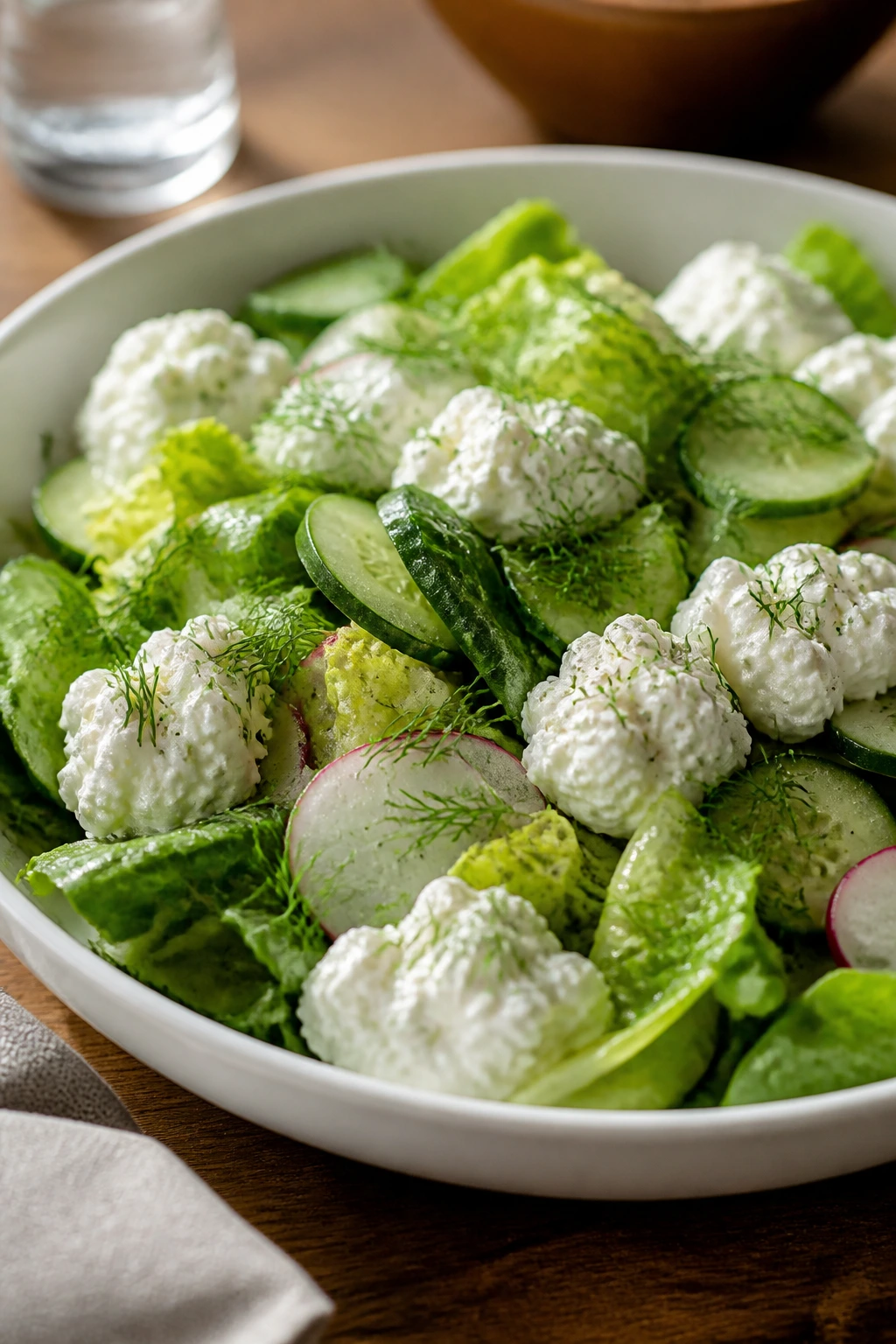
Presentation: Spoon the salad into wide shallow bowls instead of deep ones. The cottage cheese looks better when it sits in little white mounds among the greens, and the wider shape keeps the vegetables from burying themselves under each other. A final pinch of dill on top makes the bowl look finished without trying too hard.
Accompaniments: For a side dish, it sits nicely beside grilled salmon, baked chicken thighs, or a plain omelet. As a lunch, I like it with toasted sourdough, a warm pita, or a few seeded crackers for scooping up the cottage cheese and leftover dressing. If you want a more substantial plate, add sliced avocado and a boiled egg, then stop there. Don’t pile on so many extras that the salad loses its crispness.
Portions: The recipe makes 4 side servings or 2 light main-course servings. If you’re serving it as lunch, figure on about half the bowl per person, plus bread or a simple protein if you need more staying power. For a dinner plate, this is the kind of salad that works best as the fresh, cool part of the meal rather than the entire show.
Beverage Pairing: A glass of dry Sauvignon Blanc fits the lemon and herbs cleanly, while unsweetened iced tea with a lemon wedge keeps things just as sharp without getting fussy. If you don’t want alcohol, sparkling water with cucumber slices is a good match because it mirrors the salad’s cold, clean finish.
Small Tips That Make This Salad Better
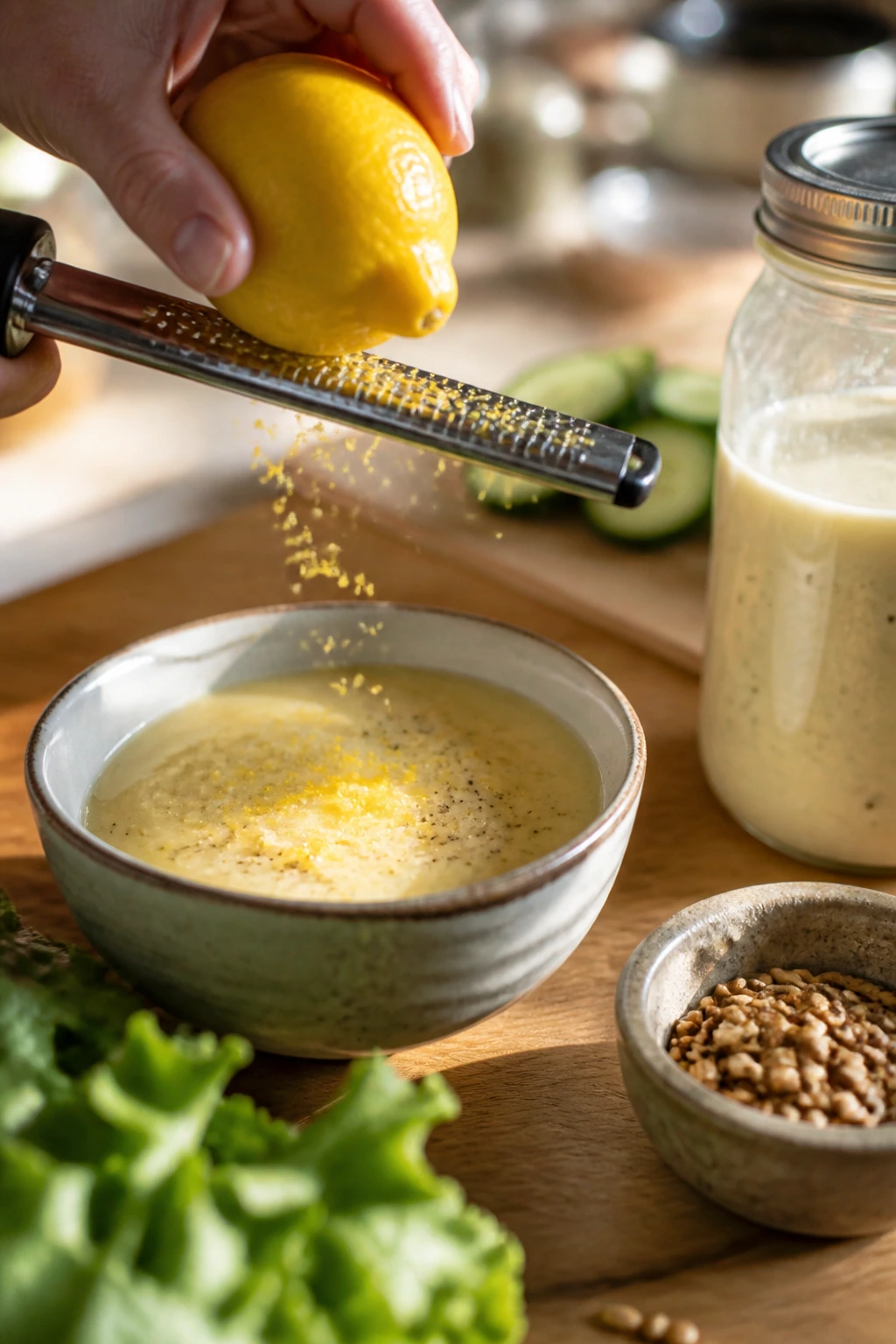
- Flavor Enhancement: Grate a little lemon zest into the dressing if you want the citrus to smell brighter when the bowl hits the table. One small strip of zest goes a long way.
- Time-Saver: Use a jar for the dressing and shake it instead of whisking. You can also buy pre-washed greens, but still dry them if there’s any visible moisture in the bag.
- Pro Move: Salt the finished salad only at the very end, after the dressing is on. Cottage cheese already carries salt, and overdoing it makes the whole bowl taste blunt.
- Cost-Saver: If dill is expensive or thin on flavor, use mostly parsley and just a smaller handful of dill. The salad still tastes fresh, and you’re not paying herb prices for decoration.
- Extra Crunch: Toast the sunflower or pumpkin seeds in a dry skillet for 2 to 3 minutes until they smell nutty. That small step adds a warm, toasted note the cold salad otherwise lacks.
Mistakes That Leave the Bowl Watery or Flat
-
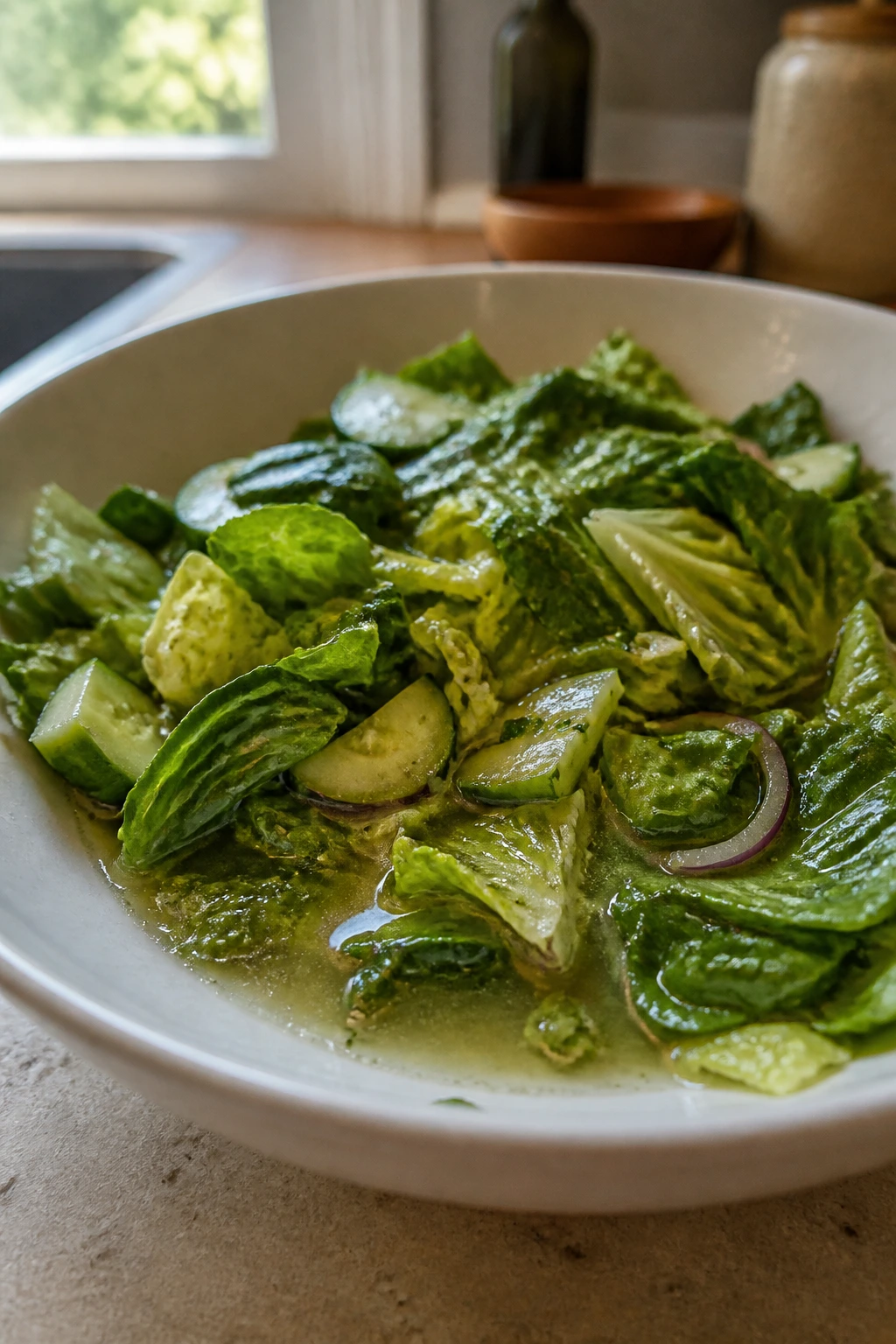
Dressing the greens too early: Once the lemon and oil hit the leaves, they start softening. If the salad sits for long after tossing, the romaine loses its snap and the cucumber drops water into the bowl. Keep the dressing separate until the last minute.
-
Skipping the drying step: Damp lettuce is the fastest route to a dull salad. The dressing won’t cling, the cottage cheese will look smeared, and the bowl will end with a puddle at the bottom. A salad spinner or clean kitchen towel fixes this in minutes.
-
Using watery cottage cheese straight from the tub: Some brands carry a lot of loose whey. If you stir that into the salad without checking, the dressing gets thin and the bowl turns slack. Spoon off the extra liquid or drain the cottage cheese for a minute in a fine sieve.
-
Cutting the onion too thick: Thick red onion slices can bulldoze everything else. They’re sharp, chewy, and hard to eat with a forkful of greens. Slice them as thinly as you can, or soak them in cold water first so they stay present without taking over.
-
Underseasoning the dressing: Cottage cheese softens salt and acid in a weird way. A dressing that tastes fine on its own can taste flat once it hits the greens and dairy. Taste the dressing before tossing, then taste the finished salad again and adjust with a pinch of salt or a squeeze of lemon.
-
Adding all the extras at once: Avocado, feta, seeds, and extra herbs can turn a clean salad into a cluttered one. Pick one or two finishers, not four. The goal here is a crisp bowl with a creamy center, not a pantry sweep.
Variations Worth Making Without Losing the Point
-
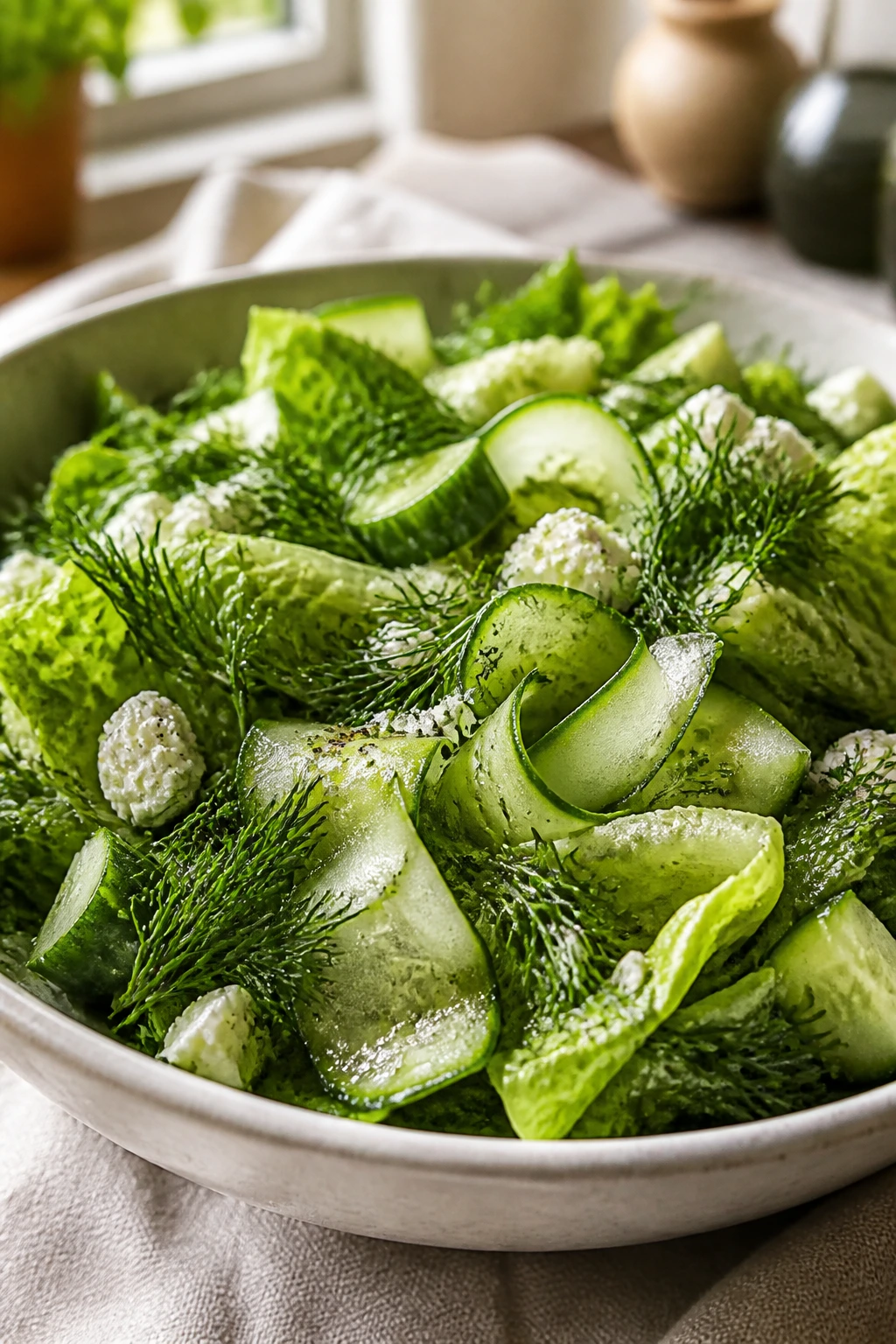
Dill Garden Bowl: Increase the dill to 1/3 cup, add 2 thinly sliced scallions, and use extra cucumber in place of some of the tomatoes. This version tastes colder and greener, which works well when you want the salad to lean more herbal than sweet.
-
Mediterranean Crunch: Add 1/4 cup chopped kalamata olives, swap half the dill for oregano, and finish with 2 tablespoons crumbled feta. Reduce the salt in the dressing slightly, since the olives and feta bring their own brine.
-
Protein-First Lunch: Add 2 chopped hard-boiled eggs or 1 cup shredded rotisserie chicken. Keep the dressing the same, but add the protein after the greens are dressed so it doesn’t get smashed while you toss.
-
Lactose-Friendly Swap: Use lactose-free cottage cheese and keep the rest of the recipe unchanged. The texture stays close to the original, and the lemon-dill dressing still does its job. This is the cleanest swap if dairy is fine but lactose isn’t.
-
Seeded Crunch Bowl: Skip the avocado and add 2 tablespoons toasted sunflower seeds plus 1 tablespoon sesame seeds. The seed mix gives the salad a dry, nutty crunch that makes it feel a little more substantial without turning it heavy.
Make-Ahead, Storage, and Leftover Rules
The salad is best assembled right before eating. That’s the short version, and honestly, it’s the right one if you care about crisp greens.
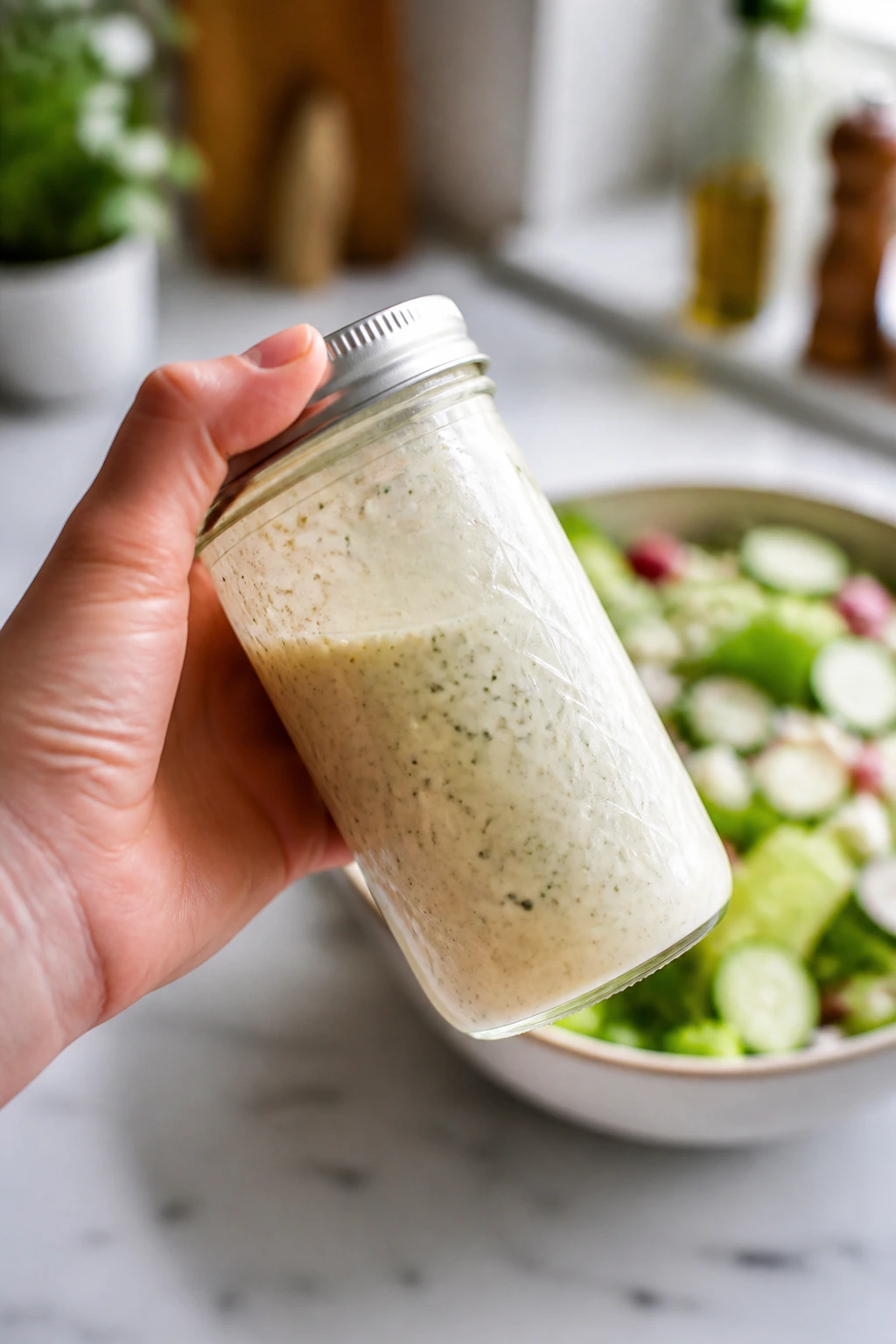
The dressing keeps well in a sealed jar in the refrigerator for 5 to 7 days. It will separate a little as it sits, which is normal. Shake it hard before using, and if it seems thicker than before, add a teaspoon of cold water and shake again. The garlic gets softer and rounder after a few hours, so the dressing often tastes better the next day than it does at the bowl.
Chopped vegetables can be stored separately for 2 to 3 days if they’re kept dry in airtight containers. A paper towel lined under the greens helps, especially if your fridge tends to run damp. The cucumber and tomato will still be usable after a day or two, but the texture is best when they’re cut close to serving time.
Opened cottage cheese should stay tightly covered and cold, and it’s smartest to use it within about 5 days once opened. If there’s a little liquid on top, stir it back in only if it smells and looks normal; otherwise, pour it off. I would not freeze this salad. Freezing ruins the texture of both the greens and the cottage cheese, and nobody needs a thawed salad with icy cucumbers.
As for leftovers, an already dressed bowl will soften fast. If you somehow end up with some, expect the greens to be tired by the next day. The better move is to store the dressing, the chopped vegetables, and the cottage cheese separately, then build a fresh bowl in a few minutes whenever you want it.
Questions People Ask Before Making Cottage Cheese Salad

Can I use low-fat cottage cheese instead of 4%?
Yes. Low-fat cottage cheese works fine here, and the salad still tastes creamy because the dressing carries the flavor. If you use 0%, just know it can feel a little thinner and saltier, so taste the salad before adding extra salt.
How do I keep the salad from getting watery?
Dry the greens well, drain any loose liquid from the cottage cheese, and don’t salt the tomatoes or cucumber too early. Also, toss with dressing right before serving. That timing matters more than any fancy ingredient swap.
Can I make this salad ahead for lunch?
You can, but keep the parts separate. Pack the dressing in a small jar, the cottage cheese in its own container, and the greens and vegetables in another container with a paper towel. Assemble right before eating so the romaine stays crisp.
What if I don’t like raw red onion?
Use scallions, chives, or shaved fennel instead. If you still want red onion, soak the slices in cold water for 5 minutes, then pat them dry. That takes the edge off without making them bland.
Can I add protein to make it a full meal?
Absolutely. Hard-boiled eggs, grilled chicken, salmon, or chickpeas all work. If you add something salty like smoked salmon or feta, cut back a little on the dressing salt so the bowl doesn’t go sharp.
Will bottled dressing work if I’m short on time?
It will, but the bowl loses some of its brightness. If you go that route, choose a lemon vinaigrette or a light Italian-style dressing and thin it with a teaspoon or two of water so it doesn’t overwhelm the cottage cheese.
Is this salad good for gluten-free eating?
Yes, the salad itself is naturally gluten-free. Just pay attention to whatever you serve alongside it. Toast, crackers, and croutons are the places where gluten tends to sneak back in.
Can I use large-curd cottage cheese?
You can, but the texture changes. Large-curd cottage cheese sits in bigger, looser spoonfuls and gives the bowl a rougher look. If that doesn’t bother you, use it; if you want a cleaner presentation, small-curd is the better choice.
A Bright Bowl That Still Feels Like Lunch
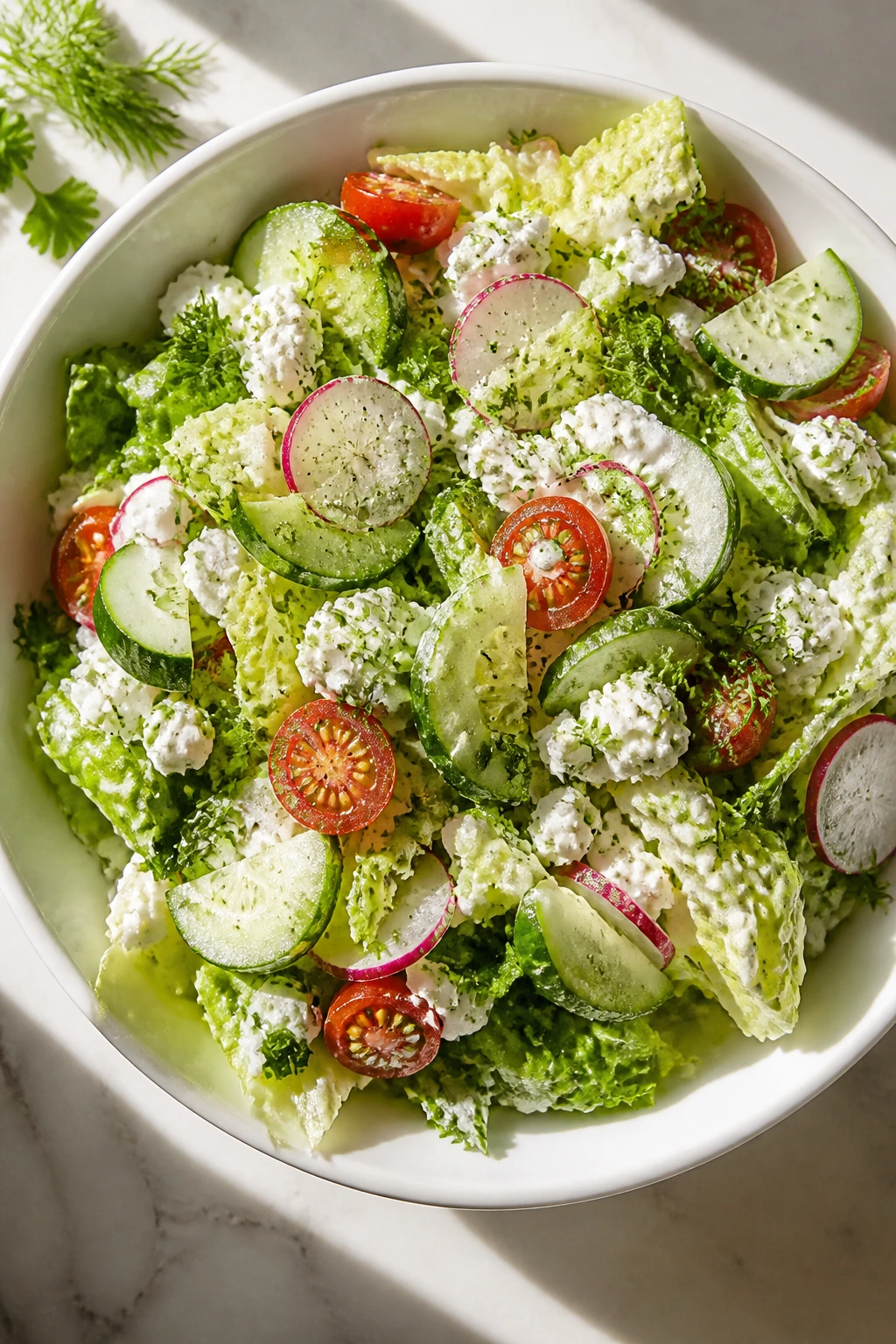
A salad like this works because it doesn’t ask cottage cheese to do something it can’t do. It stays itself. Creamy, salty, cool. The greens stay crisp, the dressing stays sharp, and the bowl keeps a clean shape from the first forkful to the last.
Keep the dressing in a jar, the vegetables dry, and the cottage cheese cold, and you’ve got one of those reliable meals that doesn’t need a lot of fuss to feel sorted. That’s the kind of salad I trust.
Light Cottage Cheese Salad with Homemade Dressing — Recipe Card
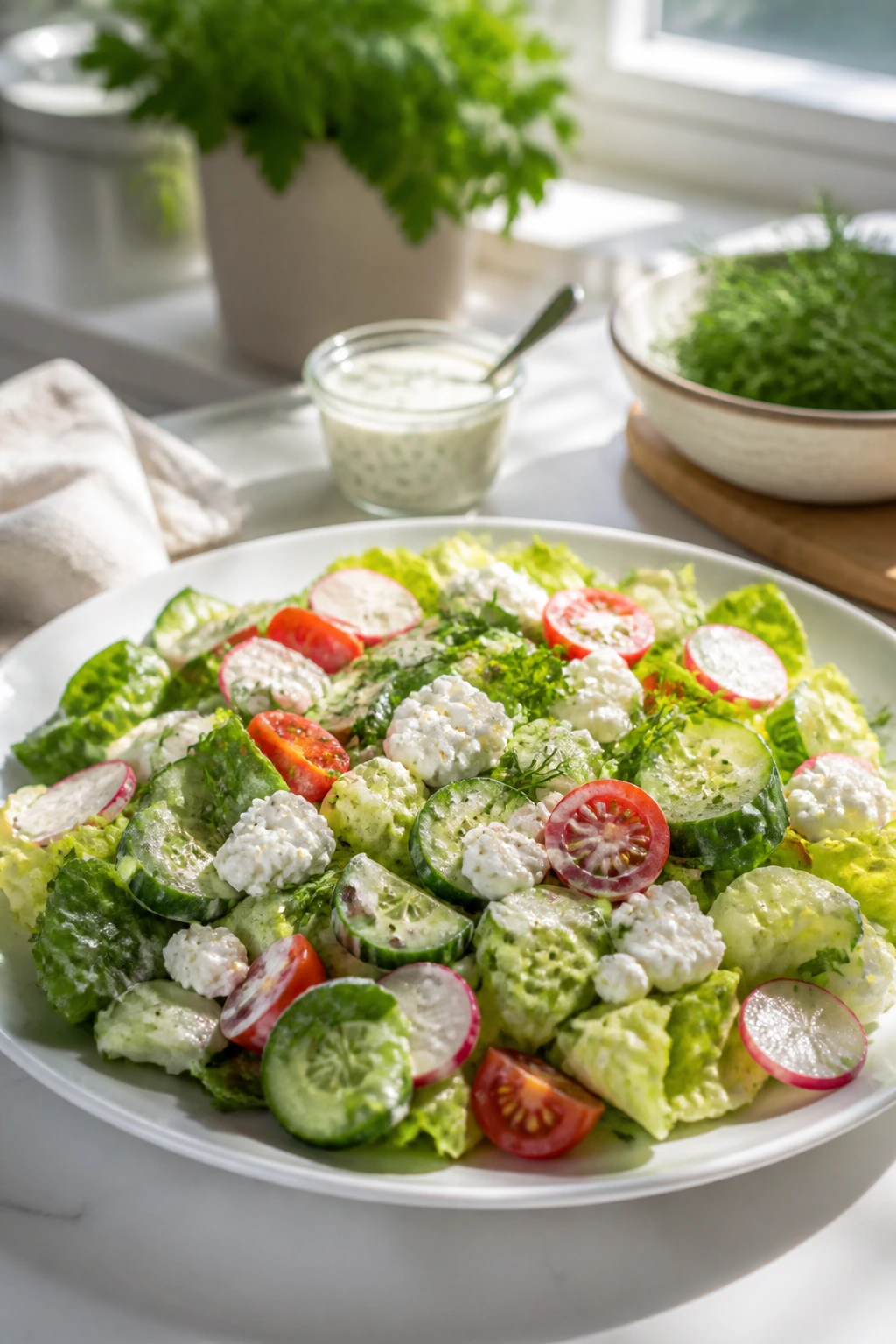
Recipe Name: Light Cottage Cheese Salad with Homemade Dressing
Description: A crisp, lemony salad with romaine, cucumber, tomatoes, herbs, and creamy cottage cheese tossed in a bright homemade dressing. It works as a light lunch or a fresh side dish.
Prep Time: 20 minutes
Cook Time: 0 minutes
Total Time: 20 minutes
Course: Salad, Lunch, Side Dish
Cuisine: American
Servings: 4 servings
Calories: About 180 kcal per serving
Ingredients
For the Salad:
- 6 cups chopped romaine lettuce, washed and thoroughly dried
- 2 cups baby spinach
- 1 1/2 cups small-curd cottage cheese, preferably 2% or 4%
- 1 large English cucumber, sliced into half-moons
- 1 cup cherry tomatoes, halved
- 4 radishes, thinly sliced
- 1/4 small red onion, very thinly sliced
- 1/4 cup chopped fresh dill
- 2 tablespoons chopped fresh parsley
- Flaky sea salt, for finishing
- Black pepper, to taste
For the Homemade Dressing:
- 3 tablespoons extra-virgin olive oil
- 2 tablespoons fresh lemon juice
- 1 tablespoon white wine vinegar
- 1 teaspoon Dijon mustard
- 1 teaspoon honey
- 1 small garlic clove, finely grated
- 1/4 teaspoon kosher salt
- 1/4 teaspoon black pepper
- 1 to 2 tablespoons cold water, to thin as needed
Optional Finishes:
- 1 avocado, sliced
- 2 tablespoons toasted sunflower seeds or pumpkin seeds
- 2 tablespoons crumbled feta
Instructions
-
In a small bowl or jar, whisk together the olive oil, lemon juice, white wine vinegar, Dijon mustard, honey, garlic, salt, and pepper until glossy.
-
Whisk in 1 tablespoon cold water, then add the second tablespoon if the dressing feels too thick or sharp. Let it rest for 5 minutes if you have time.
-
In a large bowl, combine the romaine, spinach, cucumber, tomatoes, radishes, red onion, dill, and parsley.
-
Add the cottage cheese in spoonfuls so it stays distinct in the salad.
-
Drizzle on about half the dressing and toss gently. Add more dressing only as needed.
-
Finish with flaky salt, black pepper, and any optional toppings you like. Serve immediately.
Notes: Keep the greens dry, use small-curd cottage cheese for the cleanest texture, and store dressing separately if you want leftovers to stay crisp.