



A salad that leaves you hungry an hour later is not a salad problem. It is a build problem. The vegetable salad recipes that earn a real spot on the table have heft, contrast, and a little swagger — roasted sweet potato against peppery greens, beans or lentils for substance, and a dressing sharp enough to wake up the whole bowl.
I like salads that you can cut into with a fork and feel a little resistance. A good one bends in the bowl: something warm softens the leaves at the edges, something creamy catches in the folds, and something crunchy keeps each bite from turning into paste. The difference between “light lunch” and “real meal” is usually one roasting pan, one sturdy grain or legume, and one dressing that refuses to taste timid.
That’s the standard here. These 15 salads are the ones I’d make when I want dinner to feel fresh without feeling flimsy. Some are warm and earthy, some are cold and bright, and a few do that sneaky thing where they taste even better after a short rest on the counter.
Why These Salads Eat Like Dinner
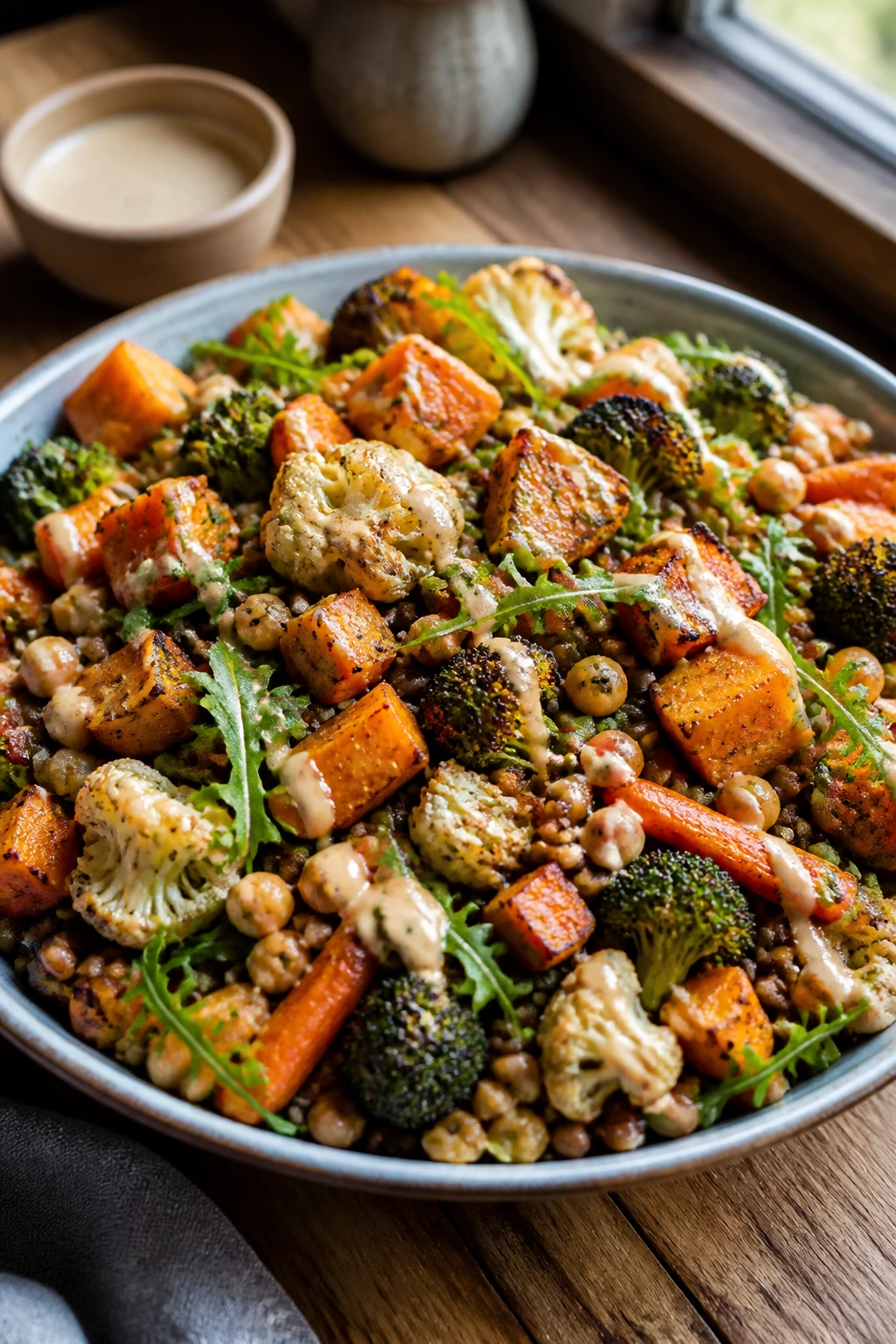
Roasted vegetables bring weight.
Raw lettuce is fine, but roasted sweet potatoes, cauliflower, carrots, and broccoli bring caramelized edges and enough substance to carry a meal on their backs.
Beans, lentils, eggs, and grains do the heavy lifting.
A salad with 3 cups of greens and nothing else is a side dish. Add 1 cup of farro, a can of chickpeas, or two eggs per person, and the whole thing changes shape.
Acid keeps the bowl from tasting flat.
Lemon juice, red wine vinegar, lime, and cider vinegar are the things that make roasted vegetables taste awake instead of sleepy.
Crunch matters more than people think.
Pepitas, walnuts, croutons, sesame seeds, radishes, and shaved cabbage keep the texture moving. Without crunch, even a well-made salad can feel soft and samey.
Most of these recipes hold up for lunch the next day.
The sturdier greens and grains keep their shape, and the roasty components taste less “leftover” than most warm dishes do. That’s not a small thing.
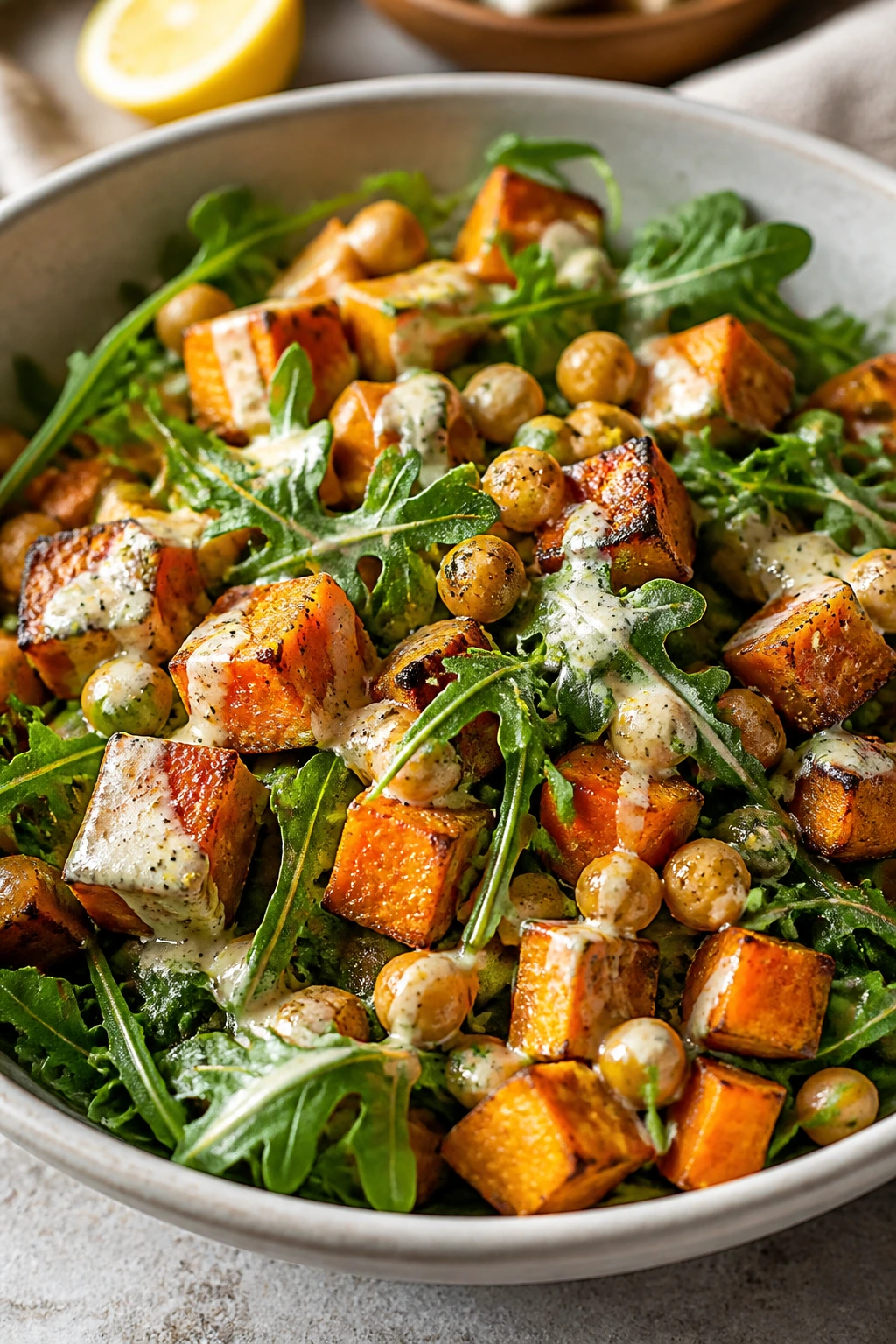
1. Roasted Sweet Potato, Chickpea, and Arugula Salad with Tahini Lemon Dressing
Warm sweet potato cubes and crisp chickpeas make arugula behave like a proper dinner green. The tahini dressing lands creamy and lemony, and it clings to the potatoes instead of slipping off the bowl.
The part I love most is the contrast: sweet, peppery, nutty, and a little salty if you finish with feta. It’s the kind of salad that still feels composed when you eat it with a fork, not a spoon.
Why It Works:
Sweet potatoes roast into soft centers with browned edges, which gives the salad actual body instead of just volume. Chickpeas, when dried well and roasted on the same pan, get that faint crunch on the outside that makes each bite less monotone. Tahini needs acid to stay lively, and lemon juice does exactly that. Arugula brings a bitter snap that keeps the whole thing from turning sugary.
Key Ingredients:
- 2 large sweet potatoes, about 2 pounds, peeled and cut into 1-inch cubes
- 1 (15-ounce) can chickpeas, drained, rinsed, and patted dry
- 3 tablespoons olive oil, divided
- 1 teaspoon smoked paprika
- 5 ounces baby arugula
- 1/2 small red onion, very thinly sliced
- 1/3 cup pepitas, toasted
- 1/2 cup crumbled feta
- 1/4 cup tahini
- 2 tablespoons lemon juice
- 1 tablespoon maple syrup
- 1 small garlic clove, finely grated
- 2 to 4 tablespoons warm water
- Salt and black pepper
Quick Steps:
- Roast the sweet potatoes and chickpeas: Heat the oven to 425°F (220°C) and line a sheet pan. Toss the sweet potatoes and chickpeas with 2 tablespoons olive oil, smoked paprika, 1 teaspoon salt, and several grinds of black pepper. Spread everything in a single layer and roast for 25 to 30 minutes, turning once, until the potatoes are browned at the edges and the chickpeas feel dry and a little crisp.
- Whisk the dressing: Stir tahini, lemon juice, maple syrup, garlic, 1/2 teaspoon salt, and 2 tablespoons warm water in a bowl. Add more water a tablespoon at a time until the dressing drips in a slow ribbon.
- Build the base: Put the arugula and red onion in a large bowl. Toss with 2 to 3 tablespoons of dressing so the leaves look lightly glossed, not soaked.
- Add the warm elements: Fold in the roasted sweet potatoes, chickpeas, pepitas, and feta while the vegetables are still warm. The heat should soften the onion slightly and make the dressing spread.
- Finish and serve: Taste for salt. Add another spoonful of dressing if the salad looks dry, then serve right away.
Equipment for This Recipe:
- Rimmed sheet pan
- Parchment paper
- Large mixing bowl
- Small whisk or fork
- Chef’s knife and cutting board
How to Serve This Dish:
Serve it in wide bowls so the sweet potatoes and chickpeas stay visible instead of sinking under the greens. A warm pita or a scoop of plain quinoa on the side makes it feel even more dinner-like.
Pro Tips for This Recipe:
- Pat the chickpeas dry with a towel. Wet chickpeas steam, and steamed chickpeas are limp.
- Don’t crowd the sheet pan. The potatoes need room for color.
- If your tahini is thick, thin it with warm water, not cold. Cold water can make the dressing seize for a moment.
- Add the feta at the end so it stays in soft crumbles instead of dissolving into the dressing.
Variations on This Dish:
- Spicy Harissa Version: Add 1 teaspoon harissa paste to the dressing and a pinch of chili flakes to the potatoes before roasting.
- Grain Bowl Upgrade: Spoon the salad over 1 1/2 cups cooked farro or quinoa for an even fuller plate.
- Green Olive Finish: Swap the feta for chopped green olives if you want something brinier and sharper.
Common Mistakes to Avoid with This Dish:
- Putting wet chickpeas on the pan: They steam instead of crisp. Dry them well before oiling.
- Using undiluted tahini: The dressing turns pasty and hard to toss. Add warm water until it loosens.
- Tossing the arugula too hard: It bruises fast. Fold, don’t churn.
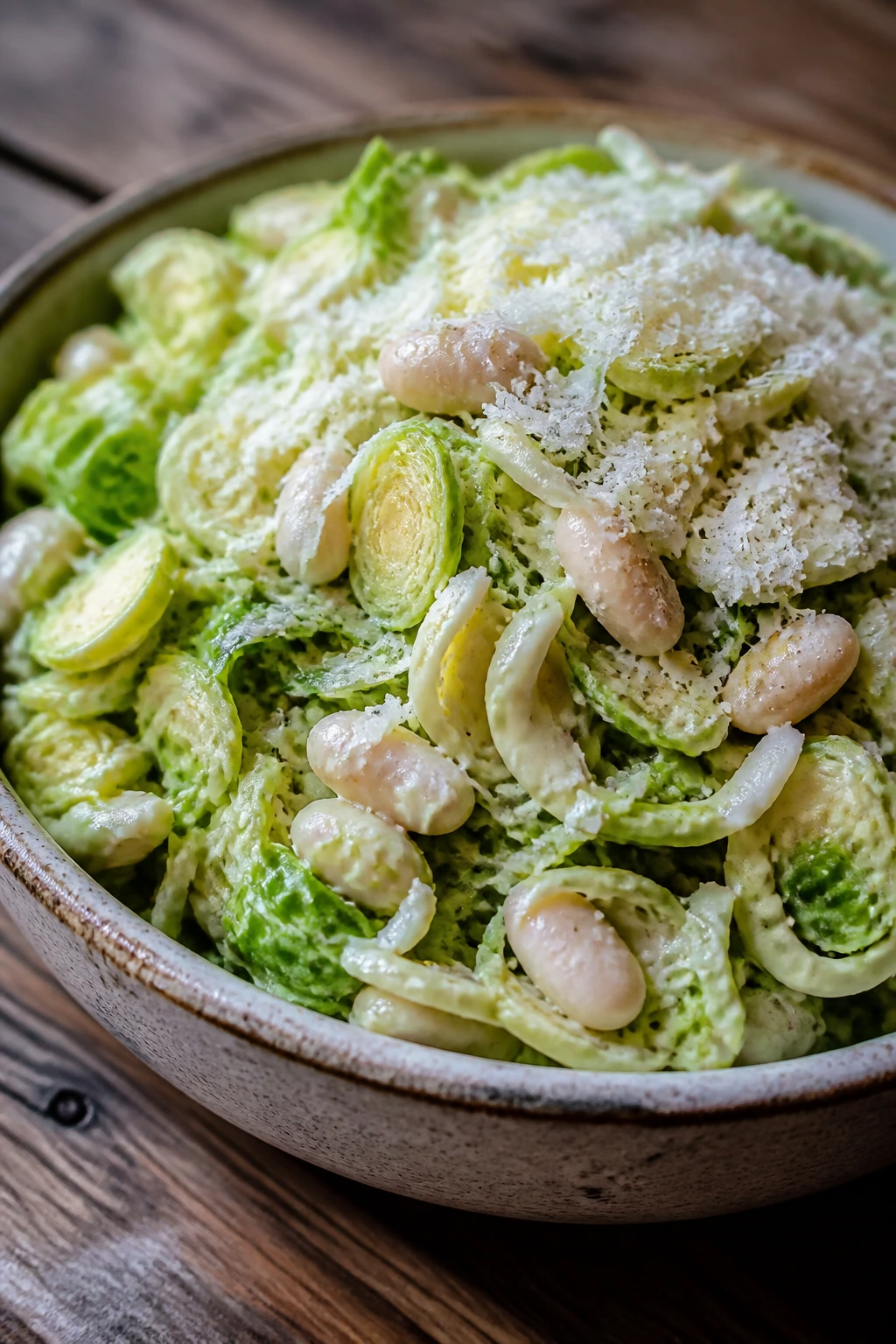
2. Shaved Brussels Sprout Caesar Salad with White Beans and Parmesan
Raw shaved Brussels sprouts are sturdy enough to survive a heavy dressing, which is why they make such a good Caesar base. White beans slide in with a soft, creamy bite, and the parmesan gives the whole bowl a salty finish that lands somewhere between lunch and dinner.
This is one of those salads that gets better after ten minutes on the counter. The sprouts relax, the beans pick up the dressing, and the croutons stay crunchy if you add them at the end.
Why It Works:
Brussels sprouts have a tighter cell structure than most leafy greens, so they don’t collapse when coated in dressing. That means you can use a thicker Caesar-style sauce without making the bowl soggy in five minutes. Cannellini beans bring a soft center that keeps the texture from feeling too sharp. Parmesan and caper brine give the dressing enough salt and tang to replace anchovy without tasting flat.
Key Ingredients:
- 1 1/2 pounds Brussels sprouts, trimmed and very thinly shaved
- 1 (15-ounce) can cannellini beans, drained and rinsed
- 1/4 cup mayonnaise
- 1/4 cup plain Greek yogurt
- 2 tablespoons lemon juice
- 1 teaspoon Dijon mustard
- 1 small garlic clove, finely grated
- 2 teaspoons caper brine
- 1/4 cup finely grated parmesan
- 1/2 cup croutons
- 1/4 cup shaved parmesan
- Salt and black pepper
Quick Steps:
- Mix the dressing: Whisk mayonnaise, Greek yogurt, lemon juice, Dijon, garlic, caper brine, grated parmesan, 1/2 teaspoon salt, and black pepper until smooth.
- Shave the sprouts: Trim the Brussels sprouts and slice them paper-thin with a knife, mandoline, or food processor.
- Massage the base: Put the shaved sprouts in a large bowl with a pinch of salt and 2 tablespoons of dressing. Rub the leaves for 30 seconds until they darken slightly and soften.
- Add the beans: Fold in the cannellini beans and another spoonful or two of dressing. The sprouts should look glossy, not drenched.
- Finish with crunch: Top with croutons and shaved parmesan just before serving.
Equipment for This Recipe:
- Large mixing bowl
- Mandoline or food processor, optional but helpful
- Sharp knife
- Whisk
- Microplane or fine grater
How to Serve This Dish:
Pile it into shallow bowls and finish with a little extra black pepper. If you want a more dinner-like plate, add a slice of toasted sourdough or a bowl of tomato soup on the side.
Pro Tips for This Recipe:
- Thin shavings matter. Thick Brussels sprout slices stay tough and stringy.
- Dress the sprouts early, but keep the croutons separate until the last second.
- If the dressing tastes flat, add a few drops more lemon before reaching for more salt.
- Use good parmesan here. The cheap powdery stuff won’t give the dressing the same edge.
Variations on This Dish:
- Roasted Sprout Version: Roast halved Brussels sprouts at 425°F for 18 to 20 minutes, then cool slightly before tossing.
- Herby Caesar: Stir 2 tablespoons chopped parsley into the dressing for a greener, fresher finish.
- Anchovy-Friendly Classic: If you eat anchovies, mash 1 fillet into the dressing for a deeper Caesar note.
Common Mistakes to Avoid with This Dish:
- Cutting the sprouts too thick: The salad turns chewy instead of crisp-tender.
- Adding croutons too early: They lose their crunch fast.
- Under-salting the dressing: Brussels sprouts need a bold dressing or they taste dusty.
3. Warm Farro Salad with Charred Broccoli, Feta, and Lemon
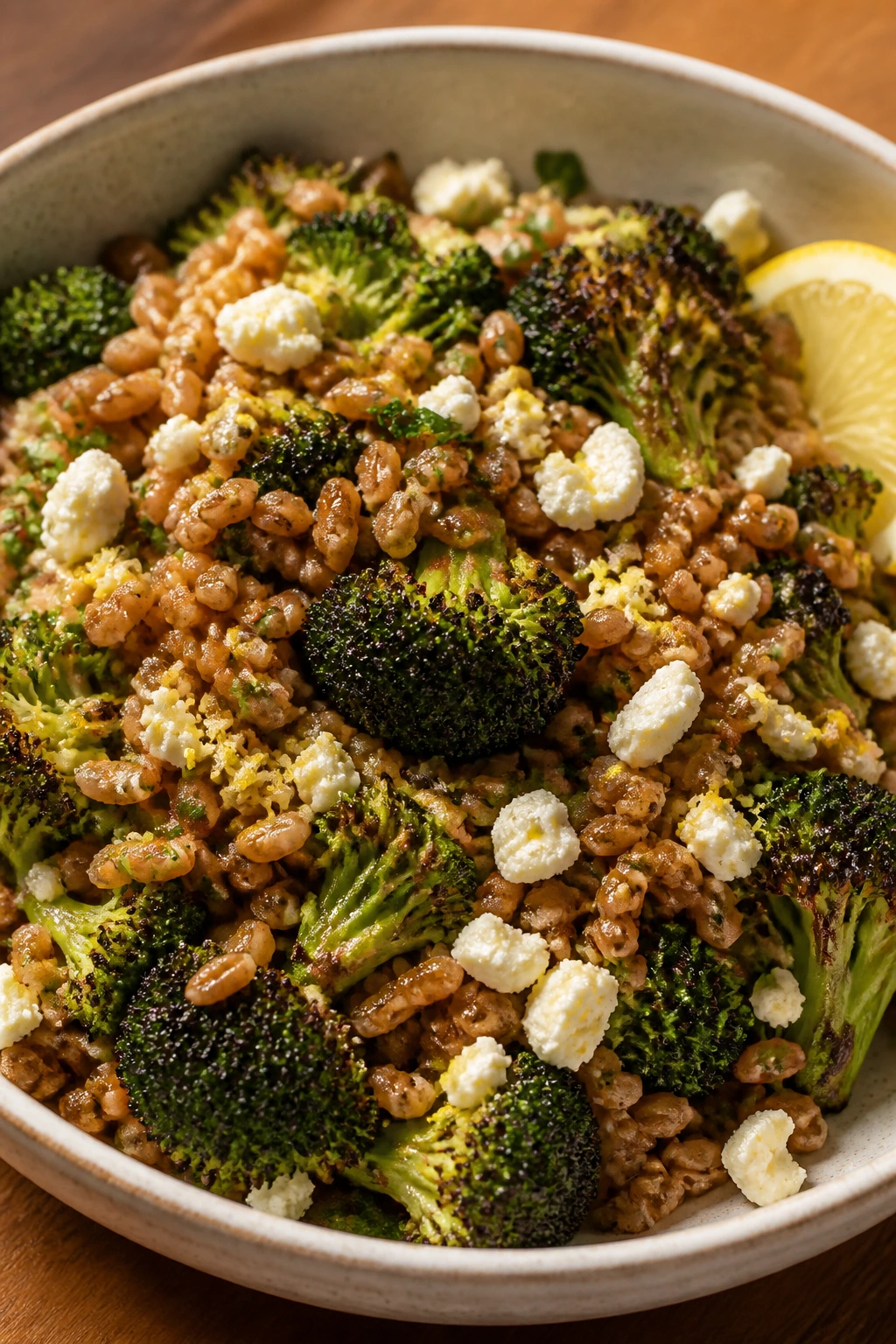
Farro is one of the few grains that still feels interesting after it cools down. It stays pleasantly chewy, which makes it a smart base for charred broccoli, chickpeas, and feta. The lemon dressing cuts through the grain’s nuttiness and keeps the whole bowl bright.
This salad tastes substantial without turning dense. That’s a hard line to walk, and farro does a lot of the work for you.
Why It Works:
Farro keeps its shape better than rice, which means the salad stays loose and forkable instead of mushing into a grain paste. Broccoli picks up real flavor when it chars at the edges, and those darker bits give the bowl a grilled note even if you never light a flame. Chickpeas add extra body, while feta brings salt and a little creaminess. The dressing uses lemon and Dijon, which stick to warm grain better than a thin vinaigrette.
Key Ingredients:
- 1 cup pearled farro
- 3 cups water or low-sodium vegetable broth
- 1 large head broccoli, cut into small florets
- 1 (15-ounce) can chickpeas, drained, rinsed, and dried
- 1/2 red onion, thinly sliced
- 3 tablespoons olive oil
- 2 tablespoons lemon juice
- 1 teaspoon Dijon mustard
- 1 small garlic clove, finely grated
- 1/2 cup crumbled feta
- 1/4 cup toasted almonds, chopped
- 2 tablespoons chopped parsley
- Salt and black pepper
Quick Steps:
- Cook the farro: Bring the water or broth to a boil, add the farro and 1 teaspoon salt, then simmer for 25 to 30 minutes until the grains are tender but still chewy. Drain any excess liquid.
- Char the broccoli and chickpeas: Heat the oven to 425°F (220°C). Toss broccoli and chickpeas with 2 tablespoons olive oil, salt, and pepper, then spread on a sheet pan. Roast for 18 to 22 minutes, turning once, until the broccoli has browned edges and the chickpeas look dry on the outside.
- Whisk the dressing: Stir lemon juice, Dijon, garlic, remaining olive oil, and a pinch of salt in a large bowl.
- Combine while warm: Add the farro, broccoli, chickpeas, onion, feta, almonds, and parsley to the bowl. Toss until the dressing coats everything.
- Taste and rest: Let the salad sit for 5 minutes before serving so the farro can soak up the seasoning.
Equipment for This Recipe:
- Medium saucepan
- Colander
- Rimmed sheet pan
- Large mixing bowl
- Wooden spoon or spatula
How to Serve This Dish:
Serve it warm or at room temperature in a deep bowl with a wedge of lemon on the side. A spoonful of plain yogurt tucked under the edge of the bowl makes it feel almost luxurious, and I mean that in the least fussy way possible.
Pro Tips for This Recipe:
- Salt the farro water. Grain cooked in plain water tastes sleepy.
- Don’t overcook the broccoli. Some browned tips are good; collapsed florets are not.
- Toss the farro while it’s still warm so it drinks in the dressing.
- Toast the almonds separately if they came raw. A dry skillet and 3 minutes make a real difference.
Variations on This Dish:
- Mediterranean Olive Swap: Replace the almonds with chopped Kalamata olives and add a handful of chopped cucumber.
- Gluten-Free Base: Use cooked quinoa or brown rice instead of farro.
- Miso-Lemon Detour: Whisk 1 teaspoon white miso into the dressing for a deeper savory note.
Common Mistakes to Avoid with This Dish:
- Turning the farro mushy: Cook until chewy, not split open and soft.
- Crowding the broccoli: Overpacked florets steam instead of char.
- Letting the salad cool before dressing: Warm grain picks up flavor better.
4. Tomato, Cucumber, and Butter Bean Panzanella
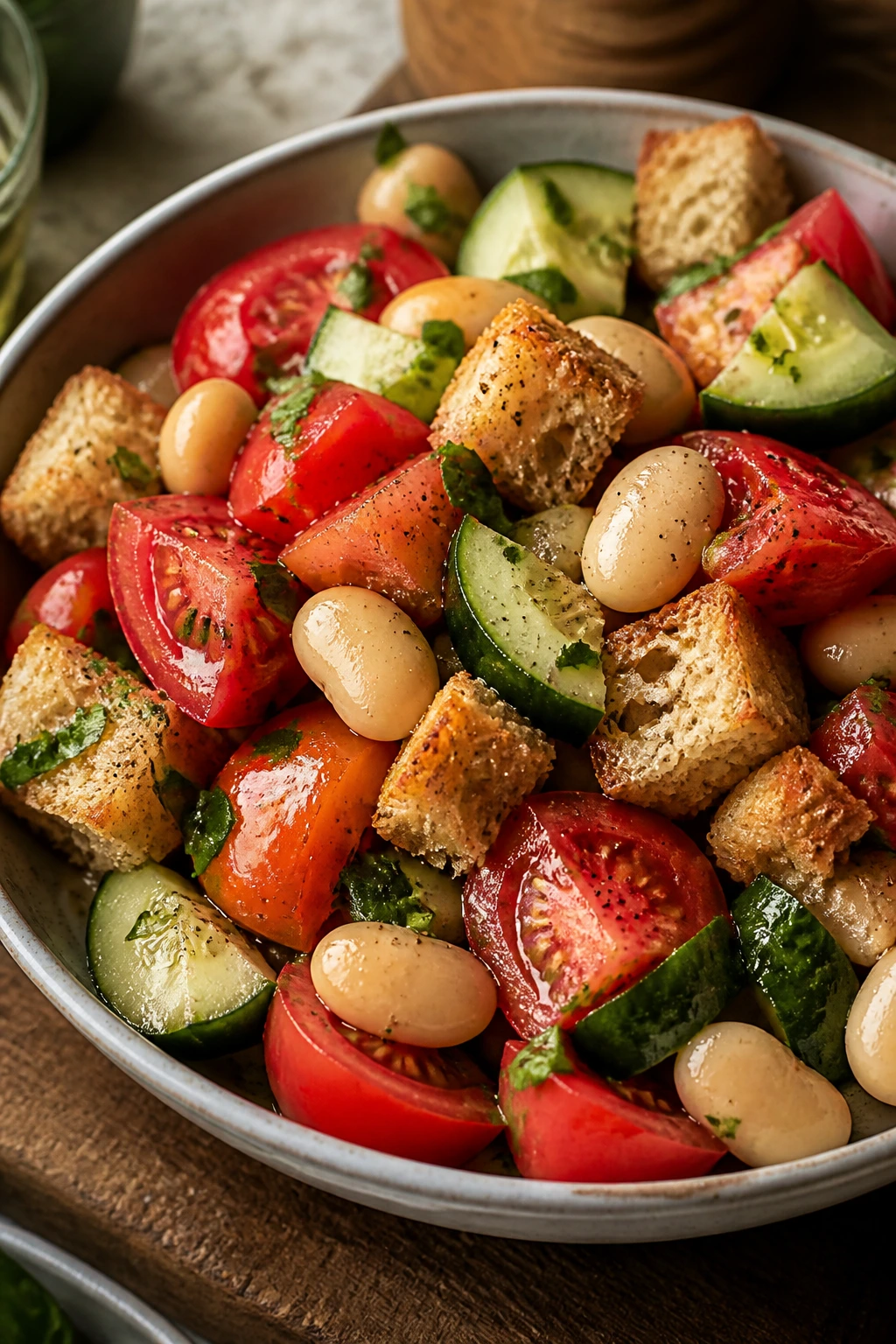
This is the bread salad I make when tomatoes are good enough to stain the cutting board. The bread soaks up their juice, the butter beans make the bowl feel full, and the cucumber keeps the whole thing from tipping into soft territory.
Panzanella only works if you give the bread something worth drinking. With ripe tomatoes, vinegar, and olive oil, it turns into something halfway between a salad and a very civilized mess.
Why It Works:
Day-old bread is dry enough to absorb tomato juice without dissolving immediately. That’s the trick. Butter beans add a creamy middle that makes the salad feel much more substantial than a typical tomato bowl, and cucumber brings clean crunch. Basil and red wine vinegar keep the flavors sharp so the bread doesn’t taste like a sponge.
Key Ingredients:
- 4 cups day-old sourdough cubes, about 1-inch pieces
- 2 tablespoons olive oil, for the bread
- 1 pound ripe tomatoes, cut into wedges or chunks
- 1 English cucumber, halved lengthwise and sliced
- 1 (15-ounce) can butter beans, drained and rinsed
- 1/2 small red onion, very thinly sliced
- 1/2 cup torn basil leaves
- 3 tablespoons olive oil, for the dressing
- 2 tablespoons red wine vinegar
- 1 teaspoon Dijon mustard
- Salt and black pepper
Quick Steps:
- Toast the bread: Heat the oven to 425°F (220°C). Toss the bread cubes with 2 tablespoons olive oil, a good pinch of salt, and black pepper. Bake for 10 to 12 minutes until the edges are crisp but the centers still have a little give.
- Season the tomatoes: Put the tomatoes in a large bowl with 1 teaspoon salt and let them sit for 10 minutes until they release juice.
- Whisk the dressing: Stir the remaining olive oil, vinegar, Dijon, and a little black pepper into the tomato juices.
- Assemble the salad: Add cucumber, butter beans, onion, basil, and toasted bread to the bowl. Toss gently until the bread starts to drink up the dressing.
- Rest briefly: Let it sit for 5 to 10 minutes, then taste again for salt before serving.
Equipment for This Recipe:
- Sheet pan
- Large mixing bowl
- Sharp knife
- Cutting board
- Whisk
How to Serve This Dish:
Serve it room temperature in a shallow platter so the tomatoes and bread stay visible. It’s good all by itself, but it also sits nicely next to grilled eggplant or a simple mozzarella salad if you want more on the table.
Pro Tips for This Recipe:
- Use sturdy bread. Soft sandwich bread turns mushy fast.
- Salt the tomatoes early. That juice is the dressing’s backbone.
- Tear the basil, don’t mince it into confetti.
- If the salad looks dry after resting, splash in a teaspoon more vinegar and a drizzle of olive oil.
Variations on This Dish:
- Roasted Zucchini Panzanella: Add roasted zucchini chunks and swap basil for mint.
- Olive and Caper Version: Fold in chopped olives and 1 tablespoon capers for a brinier bowl.
- No-Bread Version: Replace the bread with 1 1/2 cups cooked farro for a grain-based twist.
Common Mistakes to Avoid with This Dish:
- Using fresh bread: It turns gummy instead of chewy.
- Tossing too hard: The tomato chunks break down and the cucumber loses its snap.
- Skipping the rest time: The bread needs a few minutes to absorb the juices.
5. Kale Salad with Roasted Delicata Squash, Cranberries, and Pepitas
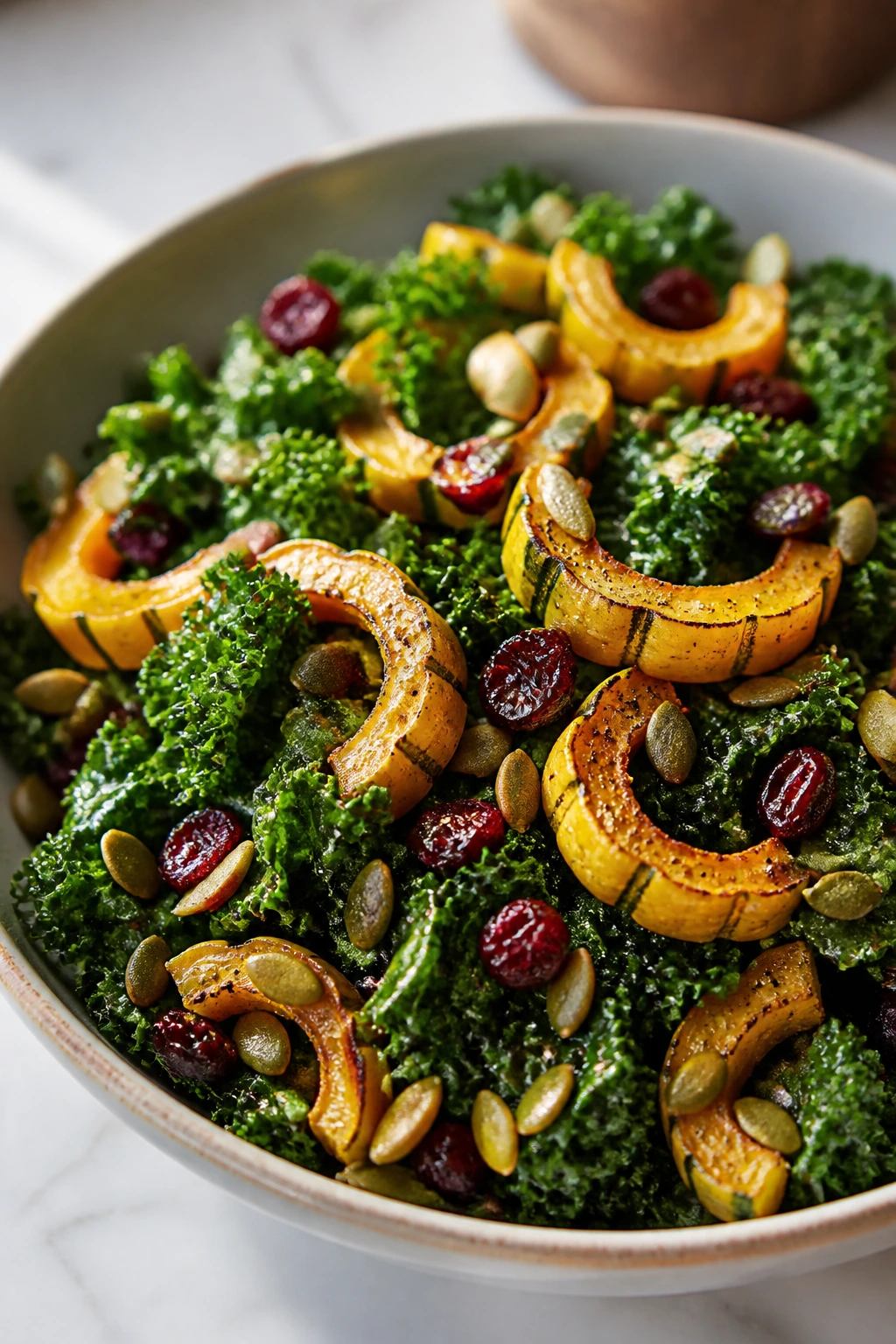
Delicata squash is the easiest squash to love because you do not have to peel it. Its skin softens in the oven, the flesh turns sweet and creamy, and it sits neatly against kale without collapsing the whole bowl.
Quinoa pushes this from “nice salad” into “actual dinner,” and the cranberries keep the bites lively. The pepitas matter too. Without them, the texture softens too much.
Why It Works:
Kale is sturdy enough to handle dressing and a short rest, which makes it a better meal base than tender lettuce. Delicata squash brings sweetness and a soft, almost buttery texture that feels richer than its ingredient list suggests. Quinoa gives the salad body without making it heavy, and the cranberries cut through the squash with tart little bursts. Pepitas give the bowl an edge of crunch that you’ll miss the second they disappear.
Key Ingredients:
- 1 medium delicata squash, halved, seeded, and sliced into half-moons
- 1 tablespoon olive oil
- 1 bunch kale, stems removed and leaves chopped
- 1 1/2 cups cooked quinoa, cooled slightly
- 1/2 cup dried cranberries
- 1/3 cup pepitas
- 1/2 cup crumbled feta
- 3 tablespoons olive oil, for the dressing
- 2 tablespoons apple cider vinegar
- 1 tablespoon maple syrup
- 1 teaspoon Dijon mustard
- Salt and black pepper
Quick Steps:
- Roast the squash: Heat the oven to 425°F (220°C). Toss the squash with 1 tablespoon olive oil, 1/2 teaspoon salt, and pepper. Roast on a sheet pan for 20 to 25 minutes until the edges are browned and the centers are tender.
- Make the dressing: Whisk the remaining olive oil, cider vinegar, maple syrup, Dijon, 1/2 teaspoon salt, and black pepper in a large bowl.
- Massage the kale: Add the chopped kale to the bowl and rub it with the dressing for 30 to 45 seconds until the leaves darken and soften.
- Build the salad: Fold in the quinoa, cranberries, pepitas, and feta.
- Finish with squash: Add the roasted delicata on top and toss lightly so some pieces stay intact.
Equipment for This Recipe:
- Sheet pan
- Large mixing bowl
- Chef’s knife
- Cutting board
- Whisk
How to Serve This Dish:
This is good warm, which is my favorite way to eat it. Put it in wide bowls and add a little extra feta on top if you want the bowl to feel more composed.
Pro Tips for This Recipe:
- Slice the squash evenly so the pieces finish at the same time.
- Massage the kale longer than you think you need to. Five extra seconds makes a difference.
- Toast the pepitas in a dry skillet if yours taste dull straight from the bag.
- Let the quinoa cool slightly before mixing so it doesn’t steam the kale into limpness.
Variations on This Dish:
- Butternut and Goat Cheese Swap: Use cubed butternut squash and crumbled goat cheese instead of feta.
- Vegan Maple-Tahini Finish: Replace feta with toasted walnuts and swap the Dijon vinaigrette for a thin tahini-lemon dressing.
- Apple and Walnut Version: Add thin apple slices and chopped walnuts for a crisper, sweeter bowl.
Common Mistakes to Avoid with This Dish:
- Skipping the kale massage: Raw kale needs help or it stays tough.
- Roasting the squash too deeply: It should brown, not char into bitterness.
- Adding the pepitas too early: They lose their snap in the dressing.
6. Corn, Avocado, and Black Bean Salad with Lime Dressing
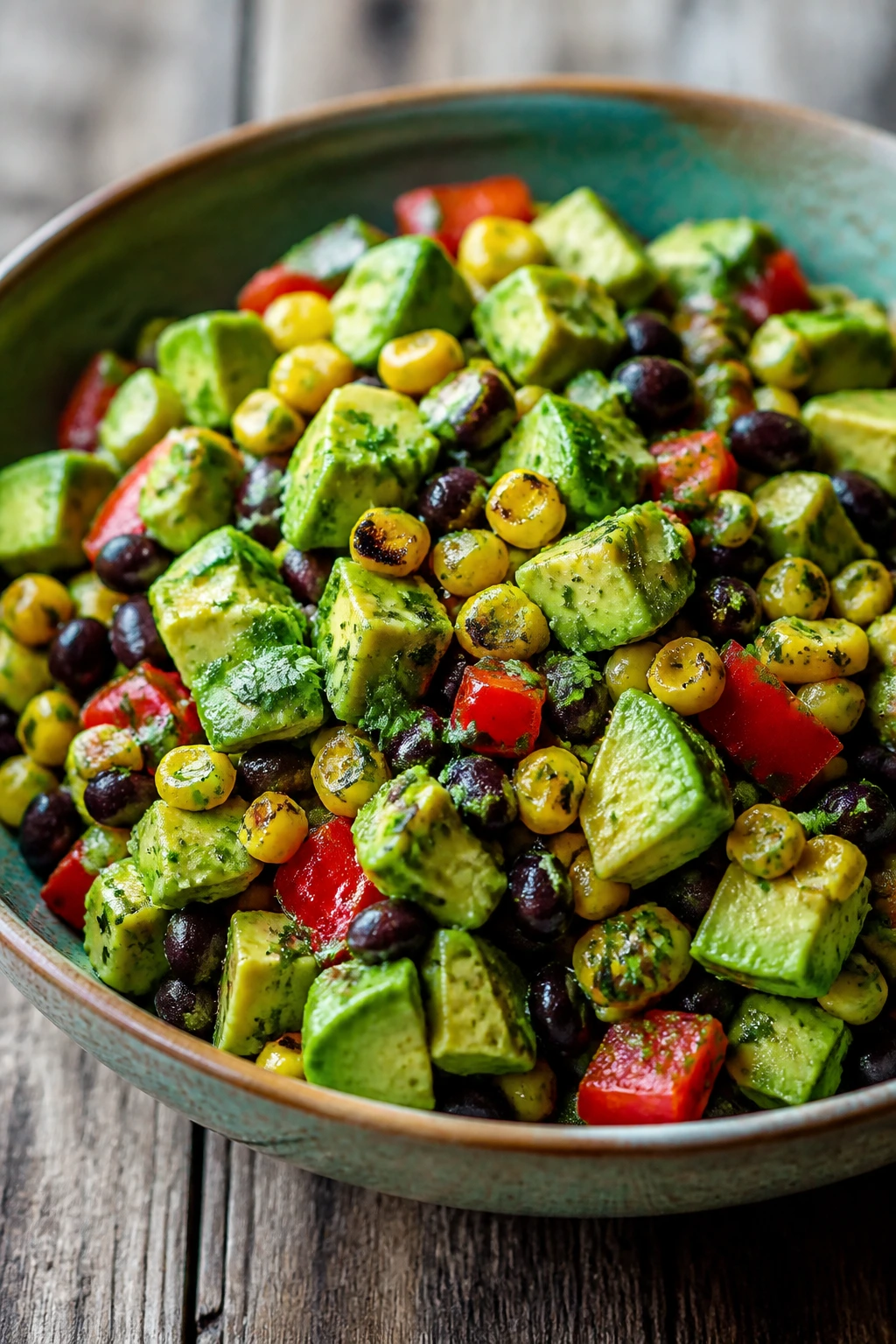
Sweet corn, creamy avocado, and black beans make a salad that eats like a burrito bowl without the tortilla. Char the corn if you can. That smoky edge is the difference between a bowl that tastes assembled and a bowl that tastes cooked.
This is the kind of salad I make when I want bright, easy, and filling in the same breath. It works as a main dish, a side, or the thing you end up scooping with tortilla chips while pretending you’re “just taste-testing.”
Why It Works:
Corn brings sweetness and a little chew, while black beans supply enough substance to make the bowl feel complete. Avocado gives the dressing something to cling to, and lime keeps the whole mix lively. A quick char on the corn adds a roasted note that makes the salad taste like more than a pile of chopped vegetables. Red bell pepper and cilantro keep the flavor crisp.
Key Ingredients:
- 3 cups corn kernels, fresh or thawed frozen
- 1 (15-ounce) can black beans, drained and rinsed
- 2 ripe avocados, diced
- 1 red bell pepper, diced
- 1/2 small red onion, minced
- 1 jalapeño, seeded and minced
- 1/2 cup chopped cilantro
- 1/2 cup crumbled queso fresco, optional
- 3 tablespoons lime juice
- 2 tablespoons olive oil
- 1 teaspoon honey
- 1/2 teaspoon ground cumin
- Salt and black pepper
Quick Steps:
- Char the corn: Heat 1 teaspoon of olive oil in a large skillet over medium-high heat. Cook the corn for 5 to 6 minutes, stirring only occasionally, until some kernels have browned spots.
- Whisk the dressing: Stir lime juice, remaining olive oil, honey, cumin, 1/2 teaspoon salt, and black pepper in a small bowl.
- Mix the vegetables: Combine black beans, bell pepper, onion, jalapeño, and cilantro in a large bowl.
- Add corn and avocado: Fold in the charred corn and diced avocado gently so the avocado stays in chunks.
- Finish: Drizzle with the lime dressing and top with queso fresco if you’re using it.
Equipment for This Recipe:
- Large skillet
- Large mixing bowl
- Small bowl or jar
- Sharp knife
- Cutting board
How to Serve This Dish:
Spoon it into bowls and serve with tortilla chips, warm corn tortillas, or over shredded romaine if you want more crunch. A little extra lime wedge on the side never hurts.
Pro Tips for This Recipe:
- Dry thawed corn before it hits the skillet. Moist kernels steam.
- Add the avocado at the very end so it doesn’t smear into paste.
- Taste after the dressing goes in. Black beans need more salt than most people expect.
- If the jalapeño is hot, soak the diced pieces in cold water for 5 minutes and drain them.
Variations on This Dish:
- Street-Corn Style: Add a dusting of chili powder and extra cotija or queso fresco.
- No-Cheese Vegan Bowl: Skip the cheese and add 2 tablespoons toasted pepitas for another layer of crunch.
- Roasted Sweet Potato Swap: Replace half the corn with roasted sweet potato cubes for a heavier winter-style bowl.
Common Mistakes to Avoid with This Dish:
- Stirring the avocado too much: It turns the salad creamy in the wrong way.
- Leaving the beans unseasoned: They’ll taste like they came from the can, because they did.
- Using pale, boiled corn: Char gives the whole bowl character.
7. Grilled Asparagus and Baby Potato Salad with Dill-Dijon Dressing
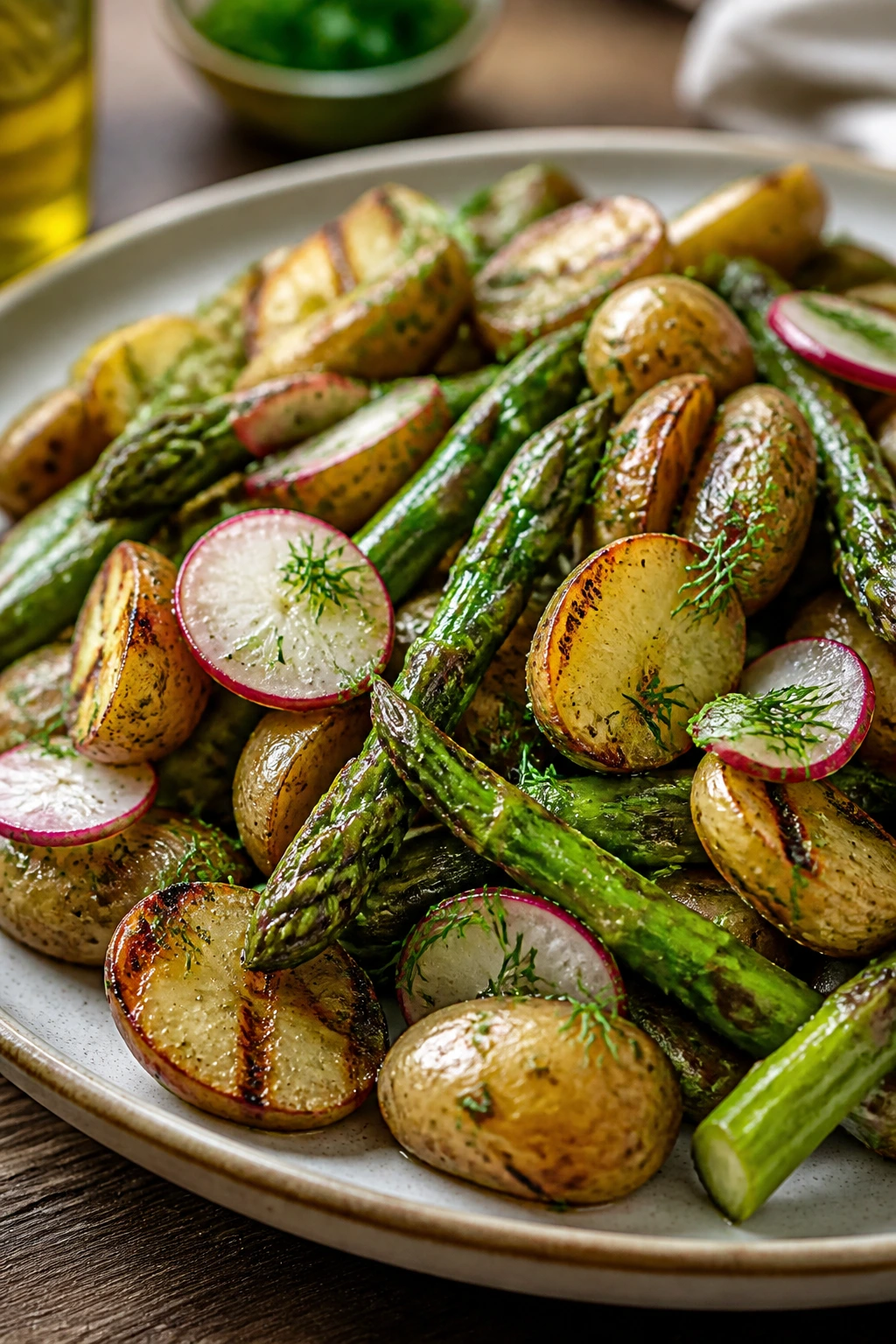
Potatoes do what potatoes always do: they make a salad feel like lunch that can hold up to real hunger. Here they’re paired with asparagus, radishes, and dill, which keeps the bowl from reading as a potato side dish in disguise.
The dressing is mustardy and sharp, which matters because warm potatoes soak up vinaigrette better than nearly anything else on the table. If you like potato salad but want something less mayonnaise-heavy, this is the direction to take.
Why It Works:
Waxy baby potatoes stay intact after boiling and slicing, which gives you pieces instead of mash. Asparagus brings a fast, grassy note, and grilling or roasting gives it a little smoke without making it limp. Dill and Dijon are a natural match with potatoes because they cut through the starch and keep every bite bright. Hard-boiled eggs add enough protein to make the bowl read as dinner instead of garnish.
Key Ingredients:
- 1 1/2 pounds baby potatoes
- 1 pound asparagus, trimmed
- 4 large eggs
- 1/2 cup thinly sliced radishes
- 1/4 cup chopped dill
- 3 tablespoons olive oil
- 2 tablespoons Dijon mustard
- 2 tablespoons white wine vinegar
- 1 teaspoon honey
- 1 small shallot, finely minced
- Salt and black pepper
Quick Steps:
- Cook the potatoes: Put the potatoes in a pot, cover with cold salted water, and simmer for 12 to 15 minutes until a knife slips in easily. Drain and let them cool just enough to handle.
- Cook the eggs: Boil the eggs for 9 minutes for firm yolks, then chill them in cold water and peel them.
- Grill or roast the asparagus: Toss the asparagus with 1 teaspoon olive oil, salt, and pepper. Grill in a grill pan or roast at 425°F (220°C) for 8 to 10 minutes until tender and lightly blistered.
- Whisk the dressing: Stir the remaining olive oil, Dijon, vinegar, honey, shallot, 1/2 teaspoon salt, and black pepper in a large bowl.
- Assemble: Halve the potatoes and toss them in the dressing while still warm. Add asparagus, radishes, dill, and quartered eggs, then fold gently.
Equipment for This Recipe:
- Medium pot
- Slotted spoon
- Grill pan or sheet pan
- Large mixing bowl
- Whisk
How to Serve This Dish:
Serve it warm or at room temperature, with the eggs cut open so the yolks show. It sits nicely beside smoked fish, but it doesn’t need anything else to count as dinner.
Pro Tips for This Recipe:
- Start the potatoes in cold water so they cook evenly from the middle out.
- Salt the water generously. Potatoes absorb more seasoning than most vegetables.
- Dry the asparagus before oiling it if you’re grilling; wet spears steam.
- Dress the potatoes while they’re warm so they soak up the mustard vinaigrette.
Variations on This Dish:
- Herb-Heavy French Style: Add chopped tarragon and parsley, plus a few capers.
- Mustard-Horseradish Kick: Stir in 1 teaspoon prepared horseradish for a sharper finish.
- No-Egg Version: Add 1 cup white beans if you want the bowl to stay fully plant-based.
Common Mistakes to Avoid with This Dish:
- Overboiling the potatoes: They split and smear when tossed.
- Cooking asparagus too long: It loses its snap and turns drab.
- Serving it ice-cold: Warm potatoes take in dressing better and taste more alive.
8. Roasted Cauliflower Tabbouleh with Herbs and Pistachios
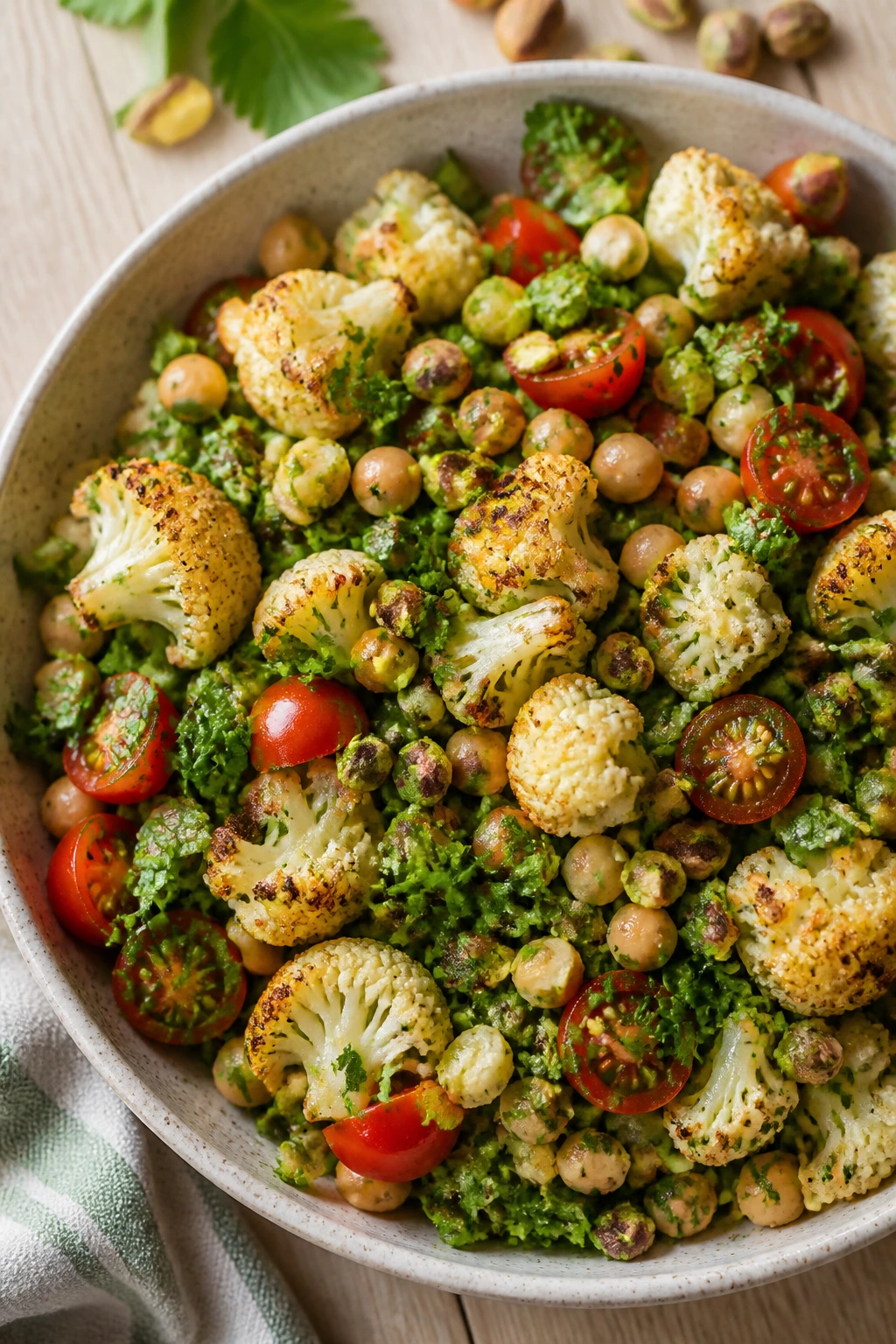
Tabbouleh usually leans on bulgur, but cauliflower gives it a looser, lighter feel while still carrying the herbs and lemon. Roasting half the cauliflower adds a nutty edge that raw cauliflower can’t fake.
Chickpeas turn this into a full meal, and pistachios keep the texture from becoming too soft. It’s one of those salads that tastes almost better after sitting for a few minutes, as long as the herbs are added with some care.
Why It Works:
Cauliflower has a clean flavor that acts like a blank page for lemon, herbs, and garlic. Roasting brings out a subtle sweetness, which helps the salad feel fuller and less watery than a purely raw version. Chickpeas provide body, while parsley and mint keep the bowl bright and sharp. Pistachios add the kind of crunch that lasts past the third bite.
Key Ingredients:
- 1 large head cauliflower, divided into florets
- 1 (15-ounce) can chickpeas, drained, rinsed, and dried
- 3 tablespoons olive oil
- 1 teaspoon ground cumin
- 1 cucumber, diced
- 1 cup cherry tomatoes, halved
- 1 cup finely chopped parsley
- 1/2 cup finely chopped mint
- 3 scallions, thinly sliced
- 1/2 cup pistachios, chopped
- 3 tablespoons lemon juice
- 1 small garlic clove, grated
- Salt and black pepper
Quick Steps:
- Roast the cauliflower and chickpeas: Heat the oven to 425°F (220°C). Toss cauliflower florets and chickpeas with olive oil, cumin, 1 teaspoon salt, and black pepper. Roast for 20 to 25 minutes until the edges brown and the chickpeas dry out.
- Cool slightly: Let the roasted vegetables sit for 5 minutes so they don’t wilt the herbs immediately.
- Mix the fresh ingredients: Combine cucumber, tomatoes, parsley, mint, scallions, pistachios, lemon juice, garlic, 1/2 teaspoon salt, and pepper in a large bowl.
- Add the roasted vegetables: Fold in the cauliflower and chickpeas.
- Taste and serve: Add another squeeze of lemon if the bowl tastes quiet.
Equipment for This Recipe:
- Large sheet pan
- Mixing bowl
- Sharp knife
- Cutting board
- Spoon or spatula
How to Serve This Dish:
Serve it at room temperature with warm pita, hummus, or a spoon of yogurt on the side. A shallow platter makes the herbs and pistachios look like part of the design instead of random toppings.
Pro Tips for This Recipe:
- Chop the cauliflower into similar sizes so the florets roast evenly.
- Don’t puree the herbs into the dressing. Keep them visible and fresh.
- Add the pistachios just before serving if you want them to stay crisp.
- Use enough salt. Cauliflower needs more than most people give it.
Variations on This Dish:
- Bulgur Backup: Stir in 1 cup cooked bulgur if you want the classic grain version.
- Tahini Drizzle Finish: Whisk tahini with lemon and water and drizzle it over the top.
- Spicy Chili-Lemon: Add a pinch of chili flakes and a little more lemon zest for sharper flavor.
Common Mistakes to Avoid with This Dish:
- Using wet cauliflower: It roasts badly and turns soft.
- Chopping the herbs too early: They lose their brightness.
- Under-seasoning the lemon dressing: Cauliflower needs bold seasoning to show up.
9. Beet, Orange, and Lentil Salad with Goat Cheese
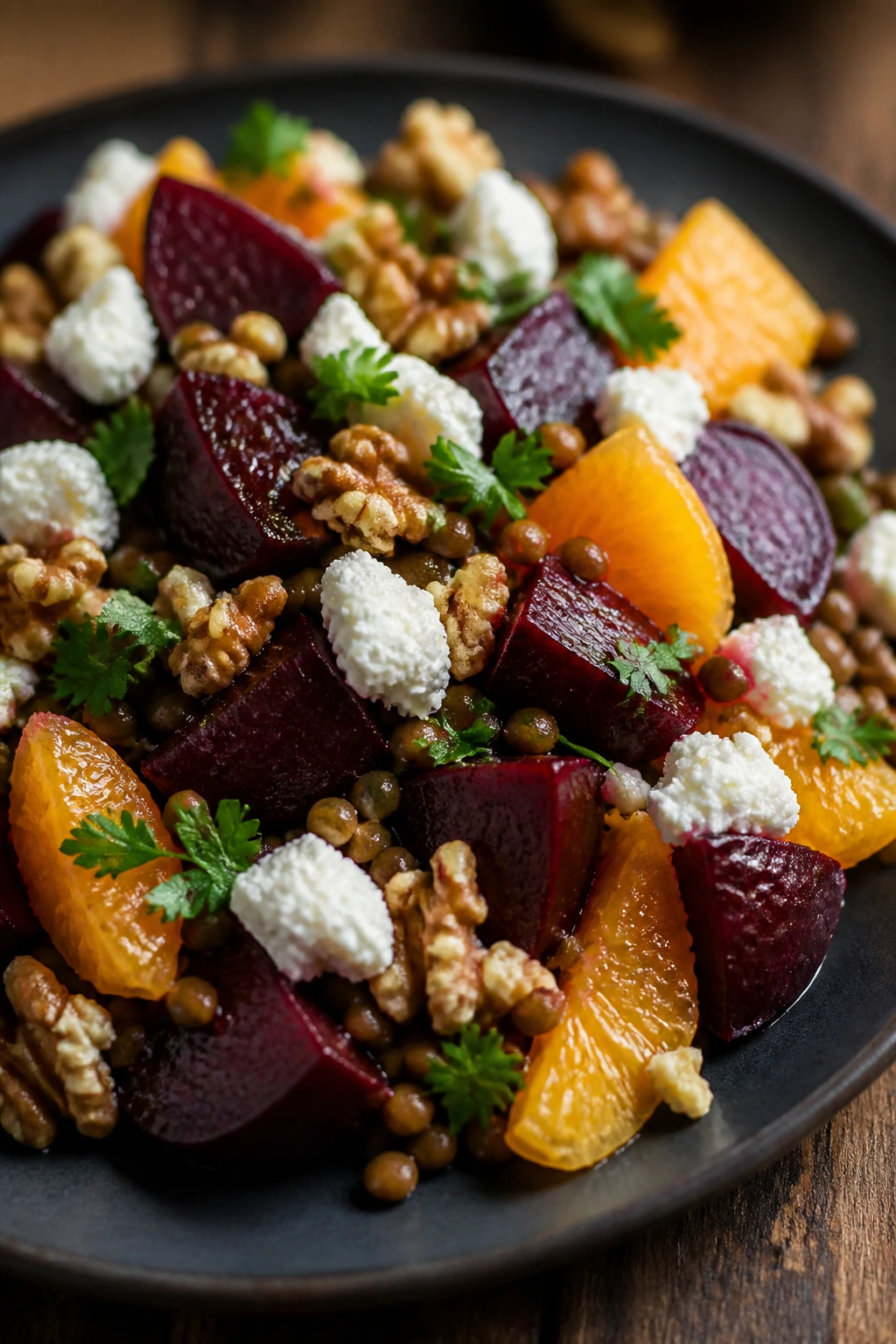
Beets bring earthiness, oranges bring snap, and lentils fill the gap between them. Goat cheese slides in with enough tang to keep the whole plate from feeling heavy, which is the only reason this salad works as well as it does.
This is the salad I make when I want something that looks dressed up but cooks like a weeknight dish. Roast the beets, simmer the lentils, segment the oranges, and you’re halfway home.
Why It Works:
Beets and oranges are a classic pair because one is deep and earthy while the other is sharp and juicy. Lentils hold their shape after cooking, so they give the salad substance without turning it gummy. Goat cheese melts a little against the warm lentils and beets, which makes the bowl taste richer than it is. Walnuts finish the job with crunch and a faint bitterness.
Key Ingredients:
- 4 medium beets, scrubbed and trimmed
- 1 cup green or brown lentils
- 2 oranges
- 5 ounces arugula
- 1/2 red onion, very thinly sliced
- 1/2 cup goat cheese, crumbled
- 1/3 cup toasted walnuts, chopped
- 3 tablespoons olive oil
- 1 1/2 tablespoons red wine vinegar
- 1 teaspoon Dijon mustard
- 1 teaspoon honey
- Salt and black pepper
Quick Steps:
- Roast the beets: Heat the oven to 400°F (205°C). Wrap the beets in foil or place them in a covered baking dish with a splash of water. Roast for 45 to 60 minutes until a knife slides in easily. Cool, peel, and cut into wedges.
- Cook the lentils: Simmer the lentils in salted water for 18 to 22 minutes until tender but not mushy. Drain well.
- Make the dressing: Whisk olive oil, vinegar, Dijon, honey, 1/2 teaspoon salt, and black pepper.
- Prep the oranges: Cut away the peel and white pith, then slice out the segments.
- Assemble: Toss arugula with a little dressing, then add lentils, beets, oranges, onion, goat cheese, and walnuts. Drizzle with the remaining dressing.
Equipment for This Recipe:
- Baking dish or foil
- Medium saucepan
- Colander
- Sharp knife
- Mixing bowl
How to Serve This Dish:
Serve it in a wide bowl so the colors stay separate instead of collapsing into a maroon heap. It’s strong enough for dinner on its own, though a piece of crusty bread doesn’t hurt.
Pro Tips for This Recipe:
- Roast beets until they feel tender all the way through. Half-done beets are annoyingly firm.
- Cool the lentils before tossing if you want the arugula to stay perky.
- Use a sharp knife for the oranges so you get clean segments, not shredded fruit.
- Dress the arugula lightly first, then add the rest. It keeps the greens from drowning.
Variations on This Dish:
- Feta Swap: Use crumbled feta instead of goat cheese for a saltier finish.
- Farro Instead of Lentils: Swap in cooked farro if you want a chewier base.
- Balsamic Citrus Version: Replace the vinegar with a splash of balsamic for a darker, sweeter profile.
Common Mistakes to Avoid with This Dish:
- Cooking lentils until they split: They turn pasty in the bowl.
- Peeling beets while they’re hot: The skins slip badly; let them cool first.
- Skipping the walnuts: Without crunch, the salad goes soft fast.
10. Green Goddess Salad with Snap Peas, Cucumbers, and Herbs
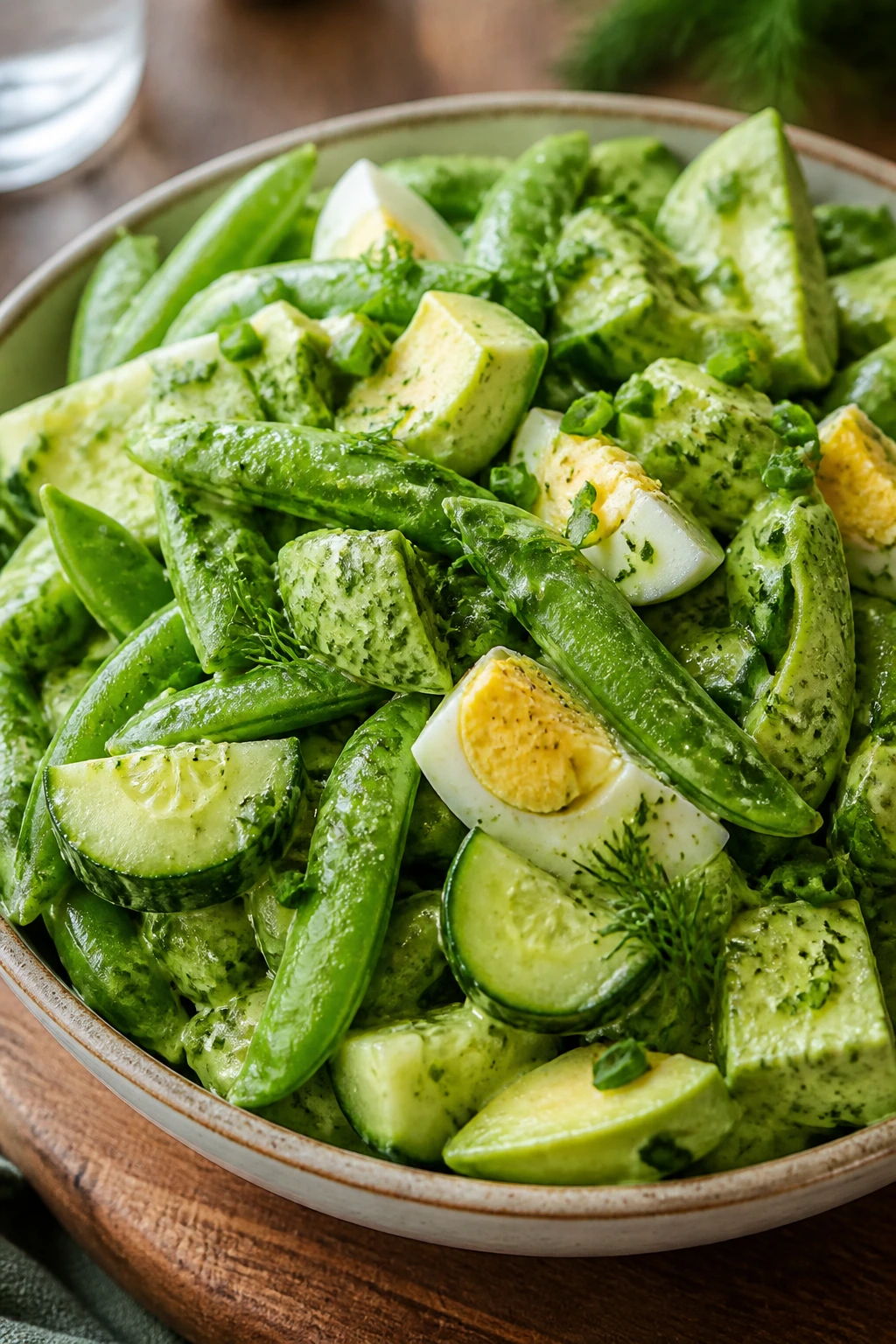
A green goddess salad should taste like herbs were chopped with purpose, not sprinkled on top as decoration. Snap peas, cucumber, avocado, and a creamy herb dressing make a bowl that’s cool, bright, and more filling than it looks.
The trick here is texture. Everything is chopped small enough to fit on a fork, but not so small that it turns into confetti. There’s a real difference.
Why It Works:
Snap peas bring sweetness and a clean snap, while cucumbers add cold crunch. Avocado gives the salad body, and hard-boiled eggs make it feel finished instead of airy. The herb dressing works because parsley, basil, dill, and chives each pull in a different direction: grassy, sweet, sharp, and oniony. A little lemon and caper keep the whole thing from tasting like a green smoothie in disguise.
Key Ingredients:
- 2 romaine hearts, chopped
- 8 ounces snap peas, strings removed and sliced
- 1 cucumber, diced
- 1 avocado, diced
- 4 large hard-boiled eggs, chopped
- 1/2 cup parsley leaves
- 1/2 cup basil leaves
- 1/4 cup dill
- 2 tablespoons chopped chives
- 1/2 cup plain Greek yogurt
- 2 tablespoons mayonnaise
- 2 tablespoons lemon juice
- 1 small garlic clove
- 1 tablespoon capers
- 2 tablespoons olive oil
- 1/4 cup sunflower seeds
- Salt and black pepper
Quick Steps:
- Make the dressing: Blend or whisk Greek yogurt, mayo, lemon juice, garlic, capers, olive oil, parsley, basil, dill, chives, 1/2 teaspoon salt, and black pepper until mostly smooth.
- Prep the vegetables: Chop the romaine, slice the snap peas, and dice the cucumber and avocado.
- Toss the base: Combine romaine, snap peas, cucumber, and enough dressing to coat lightly.
- Fold in the eggs and avocado: Add them gently so they keep their shape.
- Finish: Scatter sunflower seeds over the top and add more dressing if needed.
Equipment for This Recipe:
- Blender or food processor, optional
- Large mixing bowl
- Sharp knife
- Cutting board
- Spoon or spatula
How to Serve This Dish:
Pile it into a big shallow bowl so the chopped herbs stay visible. It makes a complete lunch on its own, but it’s also good beside soup or toast if you want a bigger spread.
Pro Tips for This Recipe:
- Dry the romaine well. Water dilutes the dressing fast.
- Add avocado at the very end so it stays in chunks.
- Taste the dressing before adding it to the bowl. Herbs can hide salt.
- If the dressing is too thick, thin it with a teaspoon of water at a time.
Variations on This Dish:
- Vegan Cashew Version: Replace the yogurt and mayo with soaked cashews blended with lemon, herbs, and water.
- Edamame Boost: Add 1 cup shelled edamame for extra heft.
- Potato-Heavy Brunch Version: Fold in 1 cup diced cooked baby potatoes and skip the eggs if you want a plant-based brunch bowl.
Common Mistakes to Avoid with This Dish:
- Over-processing the herbs: The dressing turns muddy and loses texture.
- Using watery cucumbers straight from the cutting board: Salt them lightly and blot if they seem loose.
- Letting the avocado sit too long: It oxidizes and smears.
11. Roasted Carrot and Lentil Salad with Feta and Cumin
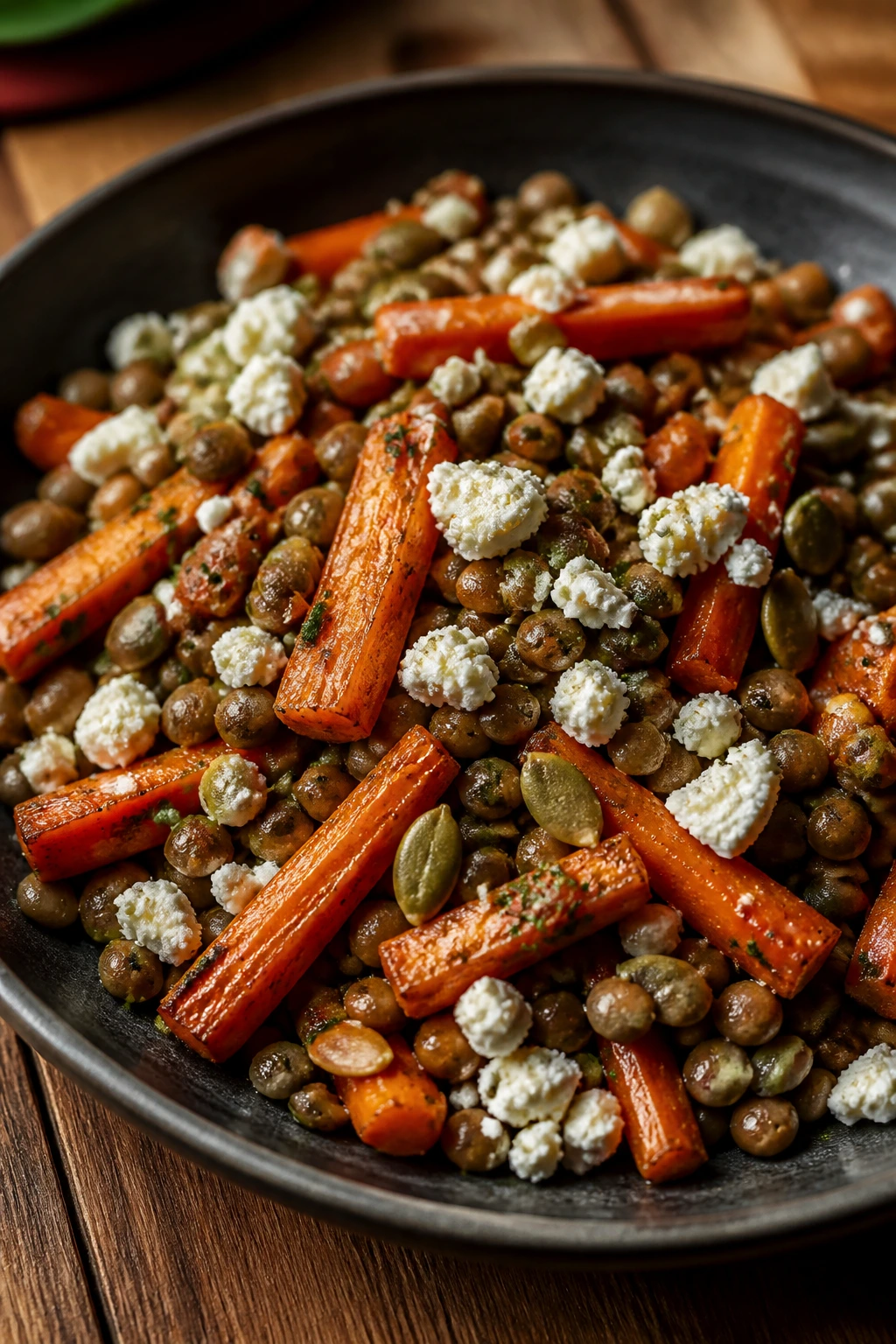
Carrots sweeten as they roast, and that sweetness plays beautifully against earthy lentils and salty feta. Cumin keeps the salad from tasting too gentle. Without it, the bowl can drift into baby-food territory, and nobody wants that.
This is the salad I reach for when I want something sturdy, cheap to build, and still interesting on the plate. It keeps well, packs well, and never feels like punishment.
Why It Works:
Lentils have a dense, earthy flavor that gives the salad enough weight to stand alone. Roasted carrots add softness and caramelized edges, which makes them taste deeper than raw carrot ever could. Feta supplies salt and creaminess, while cumin and coriander make the whole bowl smell warmer and more complete. Pumpkin seeds add the last little crackle that keeps the texture alive.
Key Ingredients:
- 2 pounds carrots, peeled and cut on a bias into 2-inch pieces
- 1 tablespoon olive oil
- 1 teaspoon ground cumin
- 1/2 teaspoon ground coriander
- 1 cup French green lentils
- 1/2 red onion, thinly sliced
- 1/2 cup crumbled feta
- 1/4 cup pumpkin seeds
- 1/4 cup chopped parsley
- 2 tablespoons lemon juice
- 2 tablespoons olive oil, for the dressing
- 1 small garlic clove, grated
- Salt and black pepper
Quick Steps:
- Roast the carrots: Heat the oven to 425°F (220°C). Toss carrots with 1 tablespoon olive oil, cumin, coriander, 1 teaspoon salt, and black pepper. Roast for 20 to 25 minutes until browned at the edges and tender inside.
- Cook the lentils: Simmer lentils in salted water for 18 to 20 minutes until just tender. Drain and let them cool for a few minutes.
- Make the dressing: Whisk lemon juice, 2 tablespoons olive oil, garlic, 1/2 teaspoon salt, and black pepper.
- Combine the bowl: Toss lentils with onion, parsley, and dressing. Add the roasted carrots and half the feta.
- Finish: Top with pumpkin seeds and the remaining feta.
Equipment for This Recipe:
- Sheet pan
- Medium saucepan
- Colander
- Large bowl
- Whisk
How to Serve This Dish:
Serve it warm or room temperature with a spoonful of yogurt or labneh on the side. It’s dense enough to stand on its own, but it also works beside roast chicken or a thick slice of toast.
Pro Tips for This Recipe:
- Cut the carrots evenly so the skinny ends don’t burn while the thick ones stay hard.
- Do not overcook the lentils. Soft lentils muddle the bowl fast.
- Toast the pumpkin seeds in a dry pan for a minute or two if they taste flat.
- Dress the lentils while they’re warm so they catch the seasoning.
Variations on This Dish:
- Harissa Carrots: Toss the carrots with 1 teaspoon harissa paste before roasting.
- Goat Cheese Swap: Replace feta with goat cheese for a creamier finish.
- Warm Grain Bowl: Add 1 cup cooked farro or barley if you want even more chew.
Common Mistakes to Avoid with This Dish:
- Cutting carrots too thick: They take forever and roast unevenly.
- Letting lentils collapse: They should hold shape.
- Adding seeds too early: They lose their crunch once wet.
12. Niçoise-Inspired Vegetable Salad with Potatoes, Green Beans, and Eggs
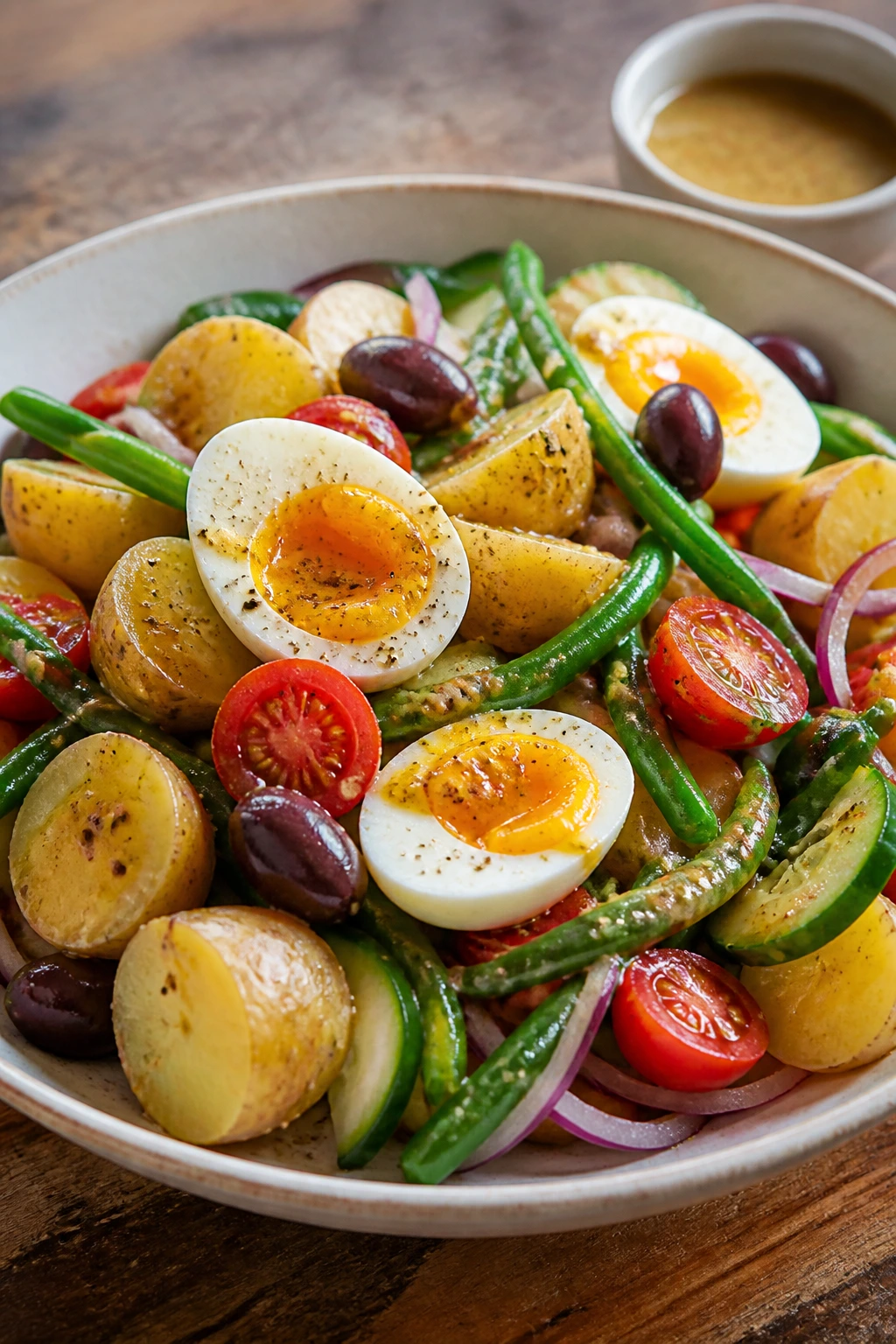
A proper Niçoise-inspired salad does not need tuna to feel complete. Potatoes, green beans, eggs, tomatoes, olives, and a sharp mustard dressing make enough of a meal on their own. The trick is balancing cooked and crisp elements so the bowl doesn’t blur together.
This is a salad with structure. You can see every part of it on the plate, and that matters more than people think.
Why It Works:
Waxy potatoes give the salad body, and green beans bring snap. Eggs fill in the middle ground with rich yolks, while tomatoes and olives cut in with juiciness and brine. The mustard dressing hits the warm potatoes first, then runs into the rest of the bowl, which is exactly what you want. Nothing in here is soft for the sake of being soft.
Key Ingredients:
- 1 1/2 pounds baby potatoes
- 1 pound green beans, trimmed
- 4 large eggs
- 1 pint cherry tomatoes, halved
- 1 cucumber, sliced
- 1/2 cup black olives or Niçoise olives
- 1/2 red onion, very thinly sliced
- 1/4 cup chopped parsley
- 3 tablespoons olive oil
- 2 tablespoons lemon juice
- 1 teaspoon Dijon mustard
- 1 small garlic clove, grated
- Salt and black pepper
Quick Steps:
- Cook the potatoes: Simmer the potatoes in salted water until tender, about 12 to 15 minutes. Drain and halve them while still warm.
- Cook the eggs: Boil the eggs for 9 minutes, then cool them in ice water and peel.
- Blanch the green beans: Drop them into boiling salted water for 2 to 3 minutes until bright green, then move them to cold water so they stay crisp.
- Whisk the dressing: Stir olive oil, lemon juice, Dijon, garlic, 1 teaspoon salt, and black pepper.
- Assemble: Toss potatoes with some dressing, then arrange the green beans, tomatoes, cucumber, olives, onion, and eggs over the top. Finish with parsley and the rest of the dressing.
Equipment for This Recipe:
- Medium pot
- Slotted spoon
- Bowl of ice water
- Large platter or shallow bowl
- Whisk
How to Serve This Dish:
Serve it on a platter so each ingredient stays visible. It’s already a full plate, but a piece of crusty bread helps catch the dressing and egg yolk.
Pro Tips for This Recipe:
- Keep the beans crisp. Soft beans make the whole bowl feel tired.
- Dress the potatoes while they’re warm.
- Use eggs that are just a little firm in the yolk if you want clean slices.
- Cut the tomatoes right before serving so they don’t puddle water across the plate.
Variations on This Dish:
- No-Tuna Classic: Keep the salad exactly as written and let the eggs and potatoes carry it.
- Roasted Pepper Version: Swap the cucumber for strips of roasted red pepper.
- Caper-Heavy Finish: Add 1 tablespoon capers for a sharper, more briny edge.
Common Mistakes to Avoid with This Dish:
- Overcooking the beans: They lose the crisp texture that makes the salad feel fresh.
- Using floury potatoes: They break apart and muddy the dressing.
- Assembling too early: The tomatoes and cucumbers will loosen the whole bowl.
13. Crunchy Cabbage, Apple, and Edamame Slaw with Sesame Dressing
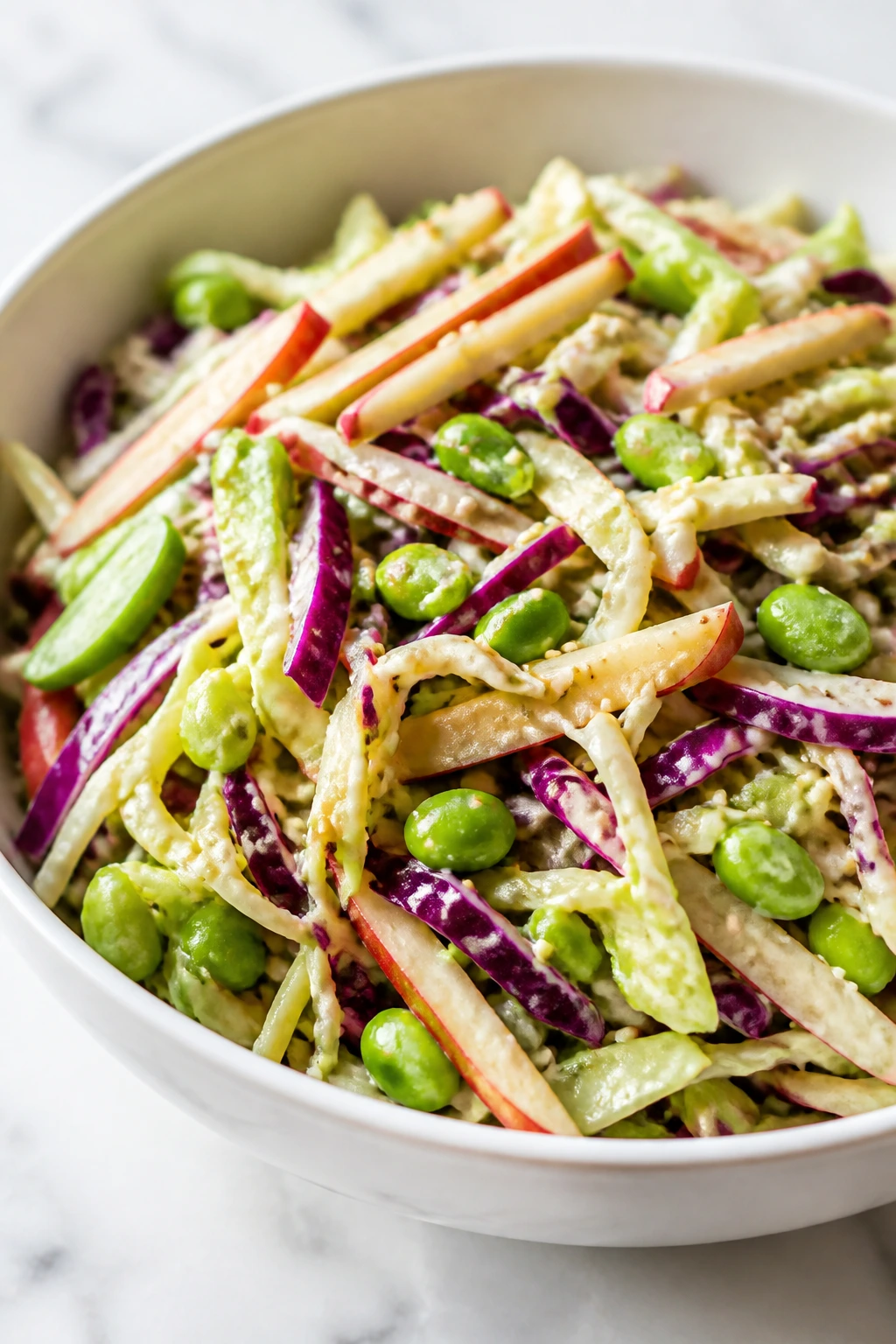
This slaw has the kind of crunch that wakes you up. Cabbage stays crisp for days, apples bring sweetness, and edamame makes the bowl feel like a full lunch instead of a garnish on the side of dinner.
The sesame dressing gives it a nutty, savory pull that keeps it from tasting like picnic food. Good slaw should feel cold, bright, and a little aggressive. This one does.
Why It Works:
Cabbage is one of the best salad bases for make-ahead eating because it holds its shape after dressing. Apples add a juicy snap, and edamame makes the texture less one-note while adding enough substance to matter. Sesame oil and rice vinegar play very well together; one brings perfume, the other brings lift. Peanut butter or tahini gives the dressing enough body to cling to the shredded vegetables.
Key Ingredients:
- 4 cups green cabbage, very thinly sliced
- 4 cups red cabbage, very thinly sliced
- 2 large carrots, grated
- 2 crisp apples, julienned or thinly sliced
- 1 1/2 cups shelled edamame, thawed if frozen
- 3 scallions, thinly sliced
- 2 tablespoons sesame seeds
- 3 tablespoons rice vinegar
- 1 tablespoon sesame oil
- 1 tablespoon neutral oil
- 1 tablespoon soy sauce
- 1 tablespoon peanut butter or tahini
- 1 teaspoon honey
- 1 teaspoon grated fresh ginger
- Salt and black pepper
Quick Steps:
- Make the dressing: Whisk rice vinegar, sesame oil, neutral oil, soy sauce, peanut butter or tahini, honey, ginger, 1/4 teaspoon salt, and black pepper until smooth.
- Shred the vegetables: Slice the cabbages as thinly as you can. Thin ribbons matter here.
- Combine the slaw: Toss cabbage, carrots, edamame, and scallions in a large bowl.
- Add the apples: Fold in the apples right before dressing so they stay crisp and don’t brown too much.
- Dress and finish: Add the dressing and sesame seeds, then toss until everything is coated lightly.
Equipment for This Recipe:
- Large mixing bowl
- Sharp chef’s knife or mandoline
- Box grater
- Small whisk
- Cutting board
How to Serve This Dish:
Serve it cold in a shallow bowl or piled next to grilled vegetables. It also makes a smart lunch tucked into a container with a handful of roasted cashews on top.
Pro Tips for This Recipe:
- Slice the cabbage thin enough to bend easily.
- Add the apples at the last minute if you want clean color and crunch.
- If the dressing seems thick, thin it with a teaspoon of water.
- Let the slaw sit for 10 minutes after dressing so the cabbage softens just enough.
Variations on This Dish:
- Peanut-Free Version: Use tahini instead of peanut butter and add a little extra ginger.
- Rice Noodle Add-On: Toss in cooked and cooled rice noodles to make it even more filling.
- Spicy Chili Crisp Finish: Drizzle a little chili crisp over the top right before serving.
Common Mistakes to Avoid with This Dish:
- Cutting the cabbage too thick: The salad gets bulky and hard to eat.
- Adding apples too early: They brown and lose their snap.
- Using a watery dressing: It slides off the cabbage instead of coating it.
14. Romaine, Charred Zucchini, and White Bean Salad with Anchovy-Free Caesar
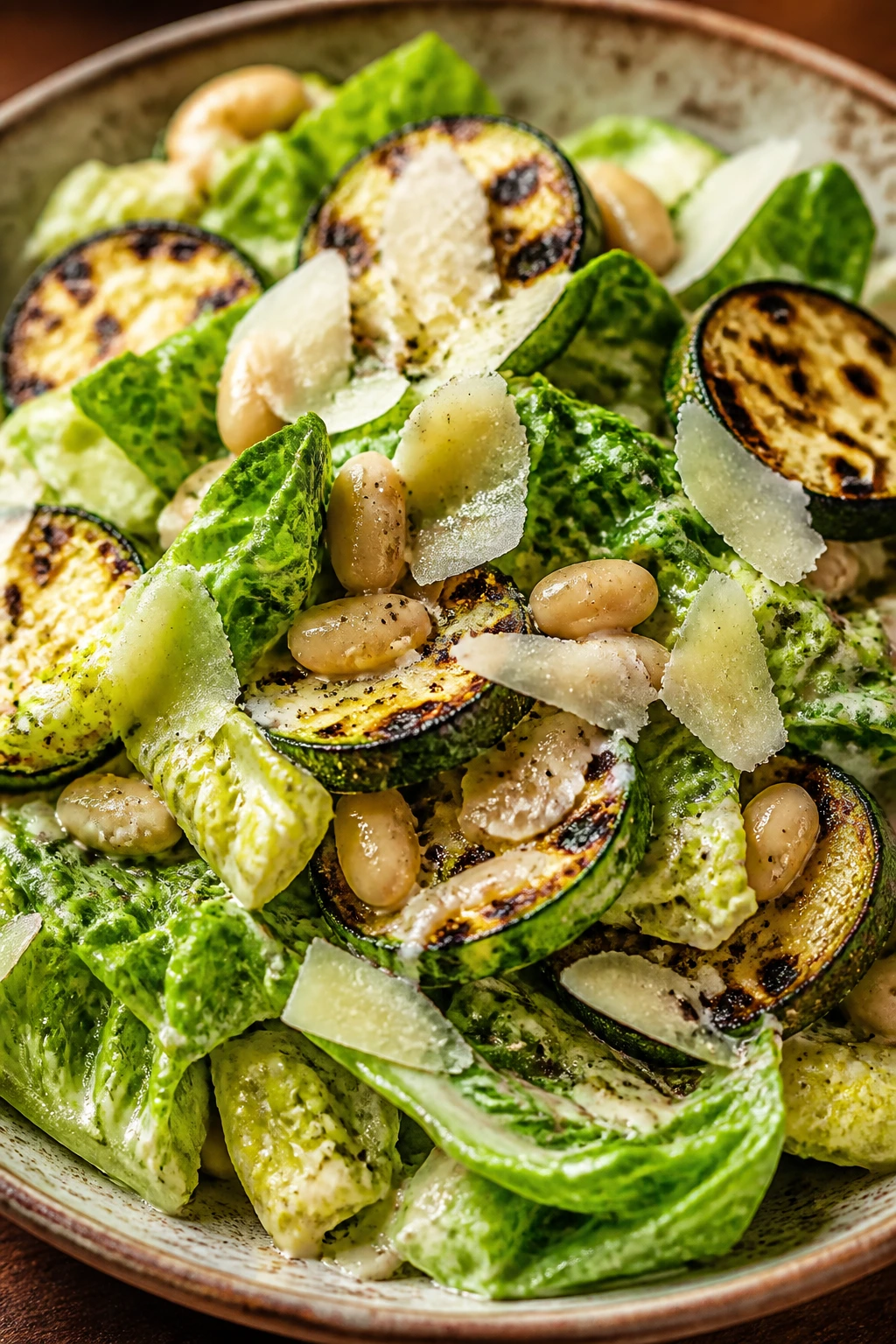
Romaine needs a little help to feel like a meal, and charred zucchini is the help it wants. White beans add heft, parmesan adds salt, and a garlicky Caesar-style dressing pulls the whole thing together without leaning on anchovies.
I like this salad because it has both cold crunch and warm edges. That tiny temperature difference makes it feel more complete than the average chopped bowl.
Why It Works:
Romaine stays crisp, which gives you a clean base. Charred zucchini adds a soft, smoky layer, and white beans bring enough creaminess to make the bowl feel substantial. The Caesar dressing gets body from yogurt and parmesan, so it clings without being greasy. Croutons bring the last bit of crunch, which matters because the salad loses a lot if everything turns soft.
Key Ingredients:
- 2 zucchini, sliced lengthwise into planks or thick half-moons
- 2 tablespoons olive oil, divided
- 2 romaine hearts, chopped
- 1 (15-ounce) can cannellini beans, drained and rinsed
- 1/2 cup croutons
- 1/3 cup shaved parmesan
- 1/3 cup plain Greek yogurt
- 1 tablespoon mayonnaise
- 2 tablespoons lemon juice
- 1 small garlic clove, grated
- 1 teaspoon Dijon mustard
- 1 tablespoon capers, finely chopped
- Black pepper and salt
Quick Steps:
- Char the zucchini: Heat 1 tablespoon olive oil in a skillet over medium-high heat. Cook the zucchini for 2 to 3 minutes per side until browned and tender but not floppy. Set aside to cool slightly.
- Whisk the dressing: Stir Greek yogurt, mayo, lemon juice, garlic, Dijon, capers, remaining olive oil, 1/2 teaspoon salt, and black pepper until smooth.
- Toss the romaine and beans: Put the romaine and cannellini beans in a large bowl and add enough dressing to lightly coat them.
- Add the zucchini: Fold in the warm zucchini so it softens the dressing a little.
- Finish: Top with croutons and parmesan right before serving.
Equipment for This Recipe:
- Large skillet
- Large bowl
- Whisk
- Tongs or spatula
- Sharp knife
How to Serve This Dish:
Serve it in a wide bowl while the zucchini is still a little warm. A piece of grilled bread on the side turns it into lunch with almost no extra work.
Pro Tips for This Recipe:
- Give the zucchini enough heat to brown. Pale zucchini tastes like homework.
- Dry the romaine after washing so the dressing doesn’t slide off.
- Add the croutons at the very end if you want them to stay crunchy.
- Taste the dressing before tossing. Capers add salt, but usually not enough on their own.
Variations on This Dish:
- Roasted Tomato Version: Add halved roasted cherry tomatoes for a sweeter Caesar.
- Vegan Miso Caesar: Replace yogurt, mayo, and parmesan with blended cashews, lemon, white miso, and nutritional yeast.
- Extra-Herb Finish: Add chopped parsley and chives to the bowl for a fresher edge.
Common Mistakes to Avoid with This Dish:
- Overcrowding the zucchini skillet: It steams instead of charring.
- Dressing the romaine in advance: It wilts before the table.
- Using stale, hard croutons without enough flavor: They read as dry chunks instead of crunch.
15. Broccoli, Chickpea, and Red Pepper Salad with Sunflower Seed Dressing
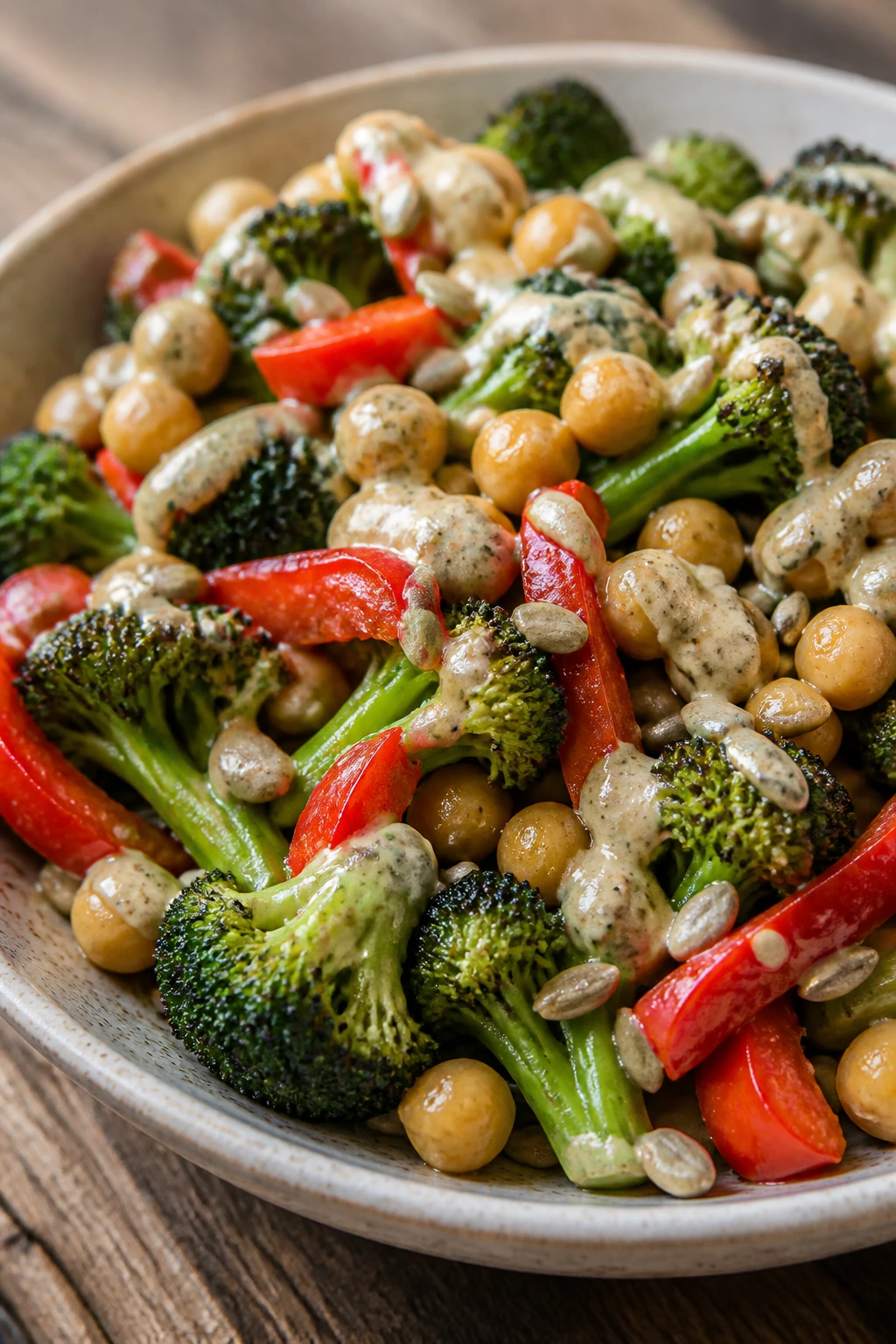
Broccoli and chickpeas are one of those combinations that look simple and eat better than they have any right to. Roasting both gives you crisp edges and soft centers, while the sunflower seed dressing brings a creamy, nutty note without dairy.
Red pepper adds sweetness, and celery keeps the bowl sharp and cold. It’s a strong finish to the list because it feels sturdy from the first bite to the last.
Why It Works:
Broccoli holds up to roasting in a way that softer vegetables cannot, and chickpeas get a lot more interesting when their skins dry and tighten in the oven. Red pepper and celery bring freshness so the roasted elements don’t flatten out the flavor. Sunflower seed butter or tahini makes a dressing with enough thickness to coat the vegetables without turning the bowl oily. It’s a smart texture salad, which is usually where the best ones live.
Key Ingredients:
- 1 large head broccoli, cut into florets
- 1 (15-ounce) can chickpeas, drained, rinsed, and patted dry
- 1 red bell pepper, sliced
- 1 celery stalk, thinly sliced
- 1/2 small red onion, thinly sliced
- 1/3 cup sunflower seeds, toasted
- 3 tablespoons olive oil
- 2 tablespoons sunflower seed butter or tahini
- 2 tablespoons lemon juice
- 1 small garlic clove, grated
- 1 teaspoon Dijon mustard
- 1 teaspoon honey
- Salt and black pepper
Quick Steps:
- Roast the broccoli and chickpeas: Heat the oven to 425°F (220°C). Toss broccoli and chickpeas with olive oil, 1 teaspoon salt, and black pepper. Roast on a sheet pan for 20 to 25 minutes until the broccoli browns and the chickpeas look dry.
- Make the dressing: Whisk sunflower seed butter, lemon juice, garlic, Dijon, honey, 2 tablespoons water, 1/2 teaspoon salt, and black pepper until smooth.
- Assemble the fresh vegetables: Combine the red pepper, celery, and red onion in a large bowl.
- Add the roasted vegetables: Fold in the broccoli, chickpeas, and toasted sunflower seeds.
- Dress and finish: Pour over the dressing and toss gently until everything is coated.
Equipment for This Recipe:
- Rimmed sheet pan
- Large mixing bowl
- Whisk
- Sharp knife
- Cutting board
How to Serve This Dish:
Serve it warm or at room temperature, with the broccoli still showing some browned spots. It works as a main dish, but it also sits neatly beside roast potatoes or a simple soup.
Pro Tips for This Recipe:
- Dry the chickpeas well before roasting or they’ll steam.
- Add the sunflower dressing a little at a time so you don’t drown the vegetables.
- Toast the sunflower seeds in a dry skillet if they taste flat.
- A squeeze of extra lemon at the end wakes up the roasted broccoli fast.
Variations on This Dish:
- Buffalo Drizzle: Stir a teaspoon of hot sauce into the dressing and add celery leaves on top.
- Sesame-Soy Direction: Swap the lemon dressing for a sesame-soy vinaigrette and add scallions.
- Quinoa Upgrade: Spoon the salad over 1 cup cooked quinoa for a more complete meal.
Common Mistakes to Avoid with This Dish:
- Broccoli that steams instead of roasts: Keep the pieces in a single layer.
- Dressing that’s too thick: Thin it with water until it coats cleanly.
- Skipping the salt on the chickpeas: They need seasoning before the oven, not just after.
Why the Slow-Down Build Works So Well in Salad
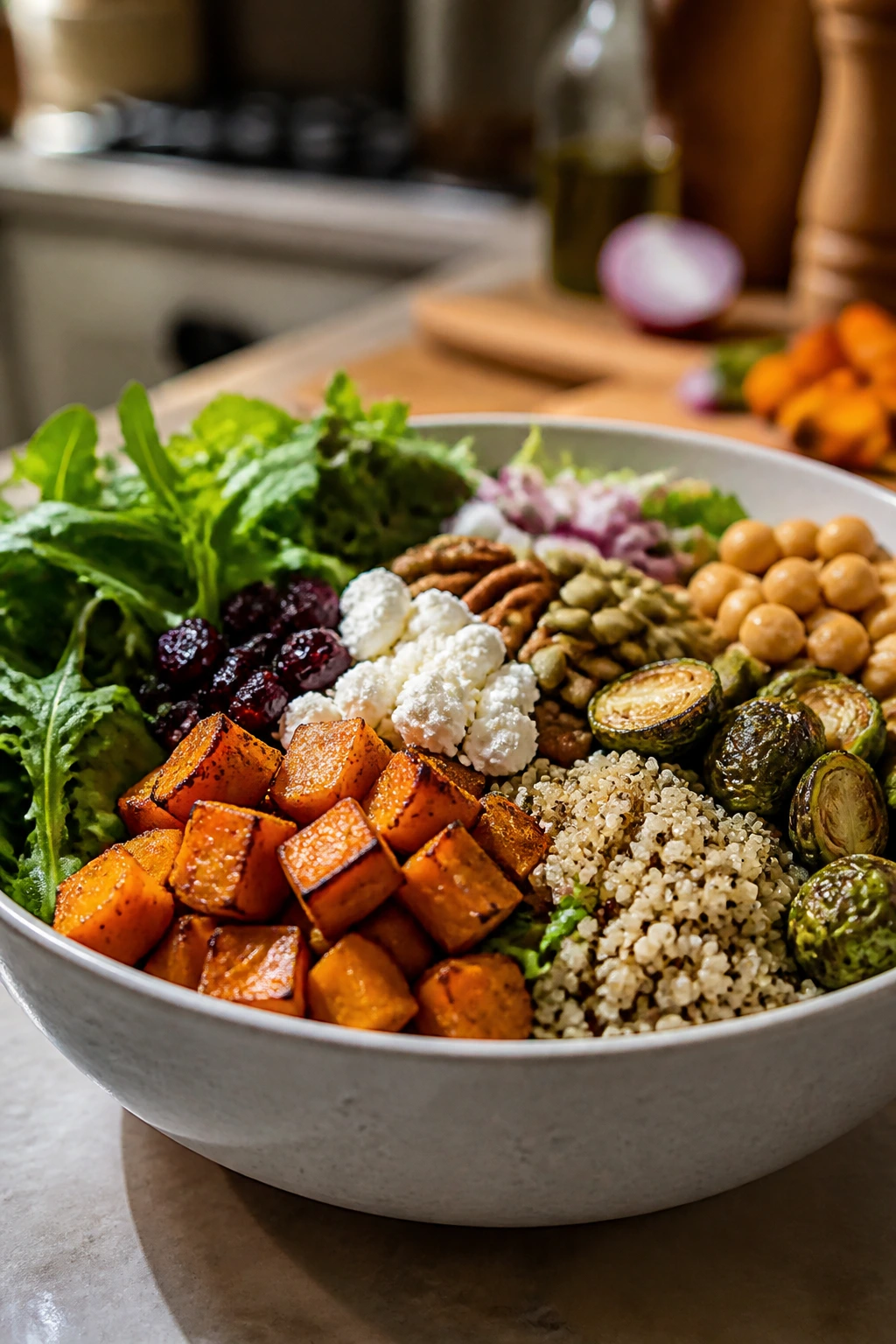
A meal-sized salad rewards a little structure. You are not tossing random vegetables into a bowl and hoping the dressing saves them. You are deciding what needs heat, what needs acid, what needs crunch, and what needs enough salt to taste awake.
That’s why these recipes work across so many moods. Some are warm and roasty. Some are crisp and cold. A few are the kind of dish you can set down at the center of the table and not hear a single complaint, which is rarer than it should be.
The real trick is balance. A salad can be full of vegetables and still feel like a side if it has no chew, no protein, or no textural contrast. Add one sturdy base, one sharp dressing, and one crunchy finish, and the whole thing changes character.
Essential Equipment for These Recipes
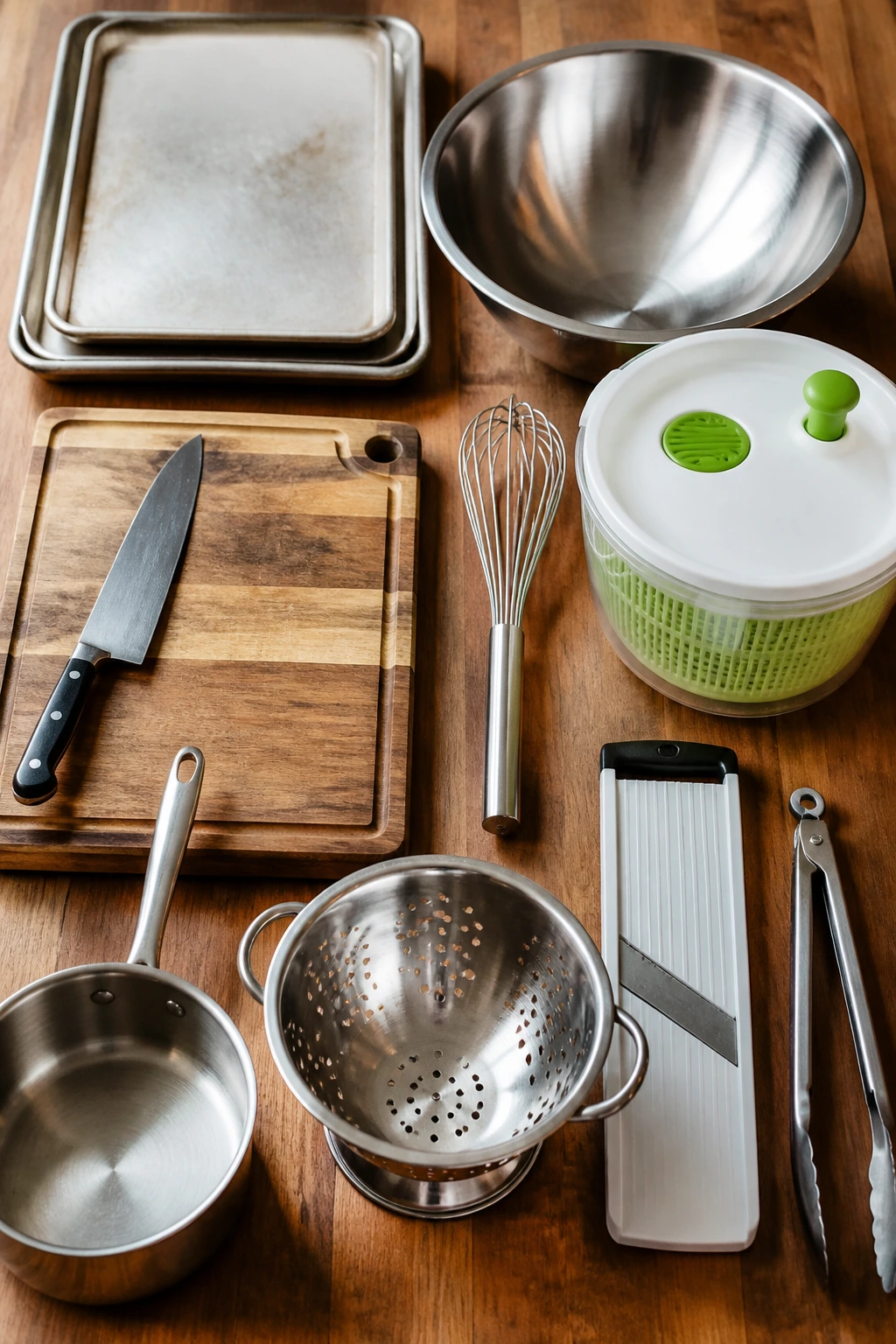
- Rimmed sheet pans — You’ll use these for roasting sweet potatoes, broccoli, cauliflower, carrots, squash, and chickpeas in a single layer.
- Large mixing bowls — Wide bowls make tossing easier and keep herbs, grains, and greens from spilling over the side.
- Sharp chef’s knife — Thin shavings, even slices, and clean tomato wedges all depend on a knife that actually cuts.
- Cutting board with room to spare — Cabbage, kale, herbs, and peppers all need space. Cramped boards make sloppy prep.
- Whisk or small jar with a tight lid — Most of the dressings here need a quick emulsion, and a jar makes shaking easy.
- Salad spinner — Not glamorous. Still worth it. Dry greens cling to dressing better and stay crisp longer.
- Medium saucepan — For farro, lentils, potatoes, and eggs.
- Colander or sieve — Lentils and beans need a clean drain so they don’t water down the bowl.
- Mandoline, optional — Handy for Brussels sprouts, cabbage, radishes, and cucumber, though a sharp knife works fine if you’re careful.
- Tongs or a wide spatula — Useful for folding warm vegetables through greens without crushing them.
Shopping for Vegetables That Hold Their Shape
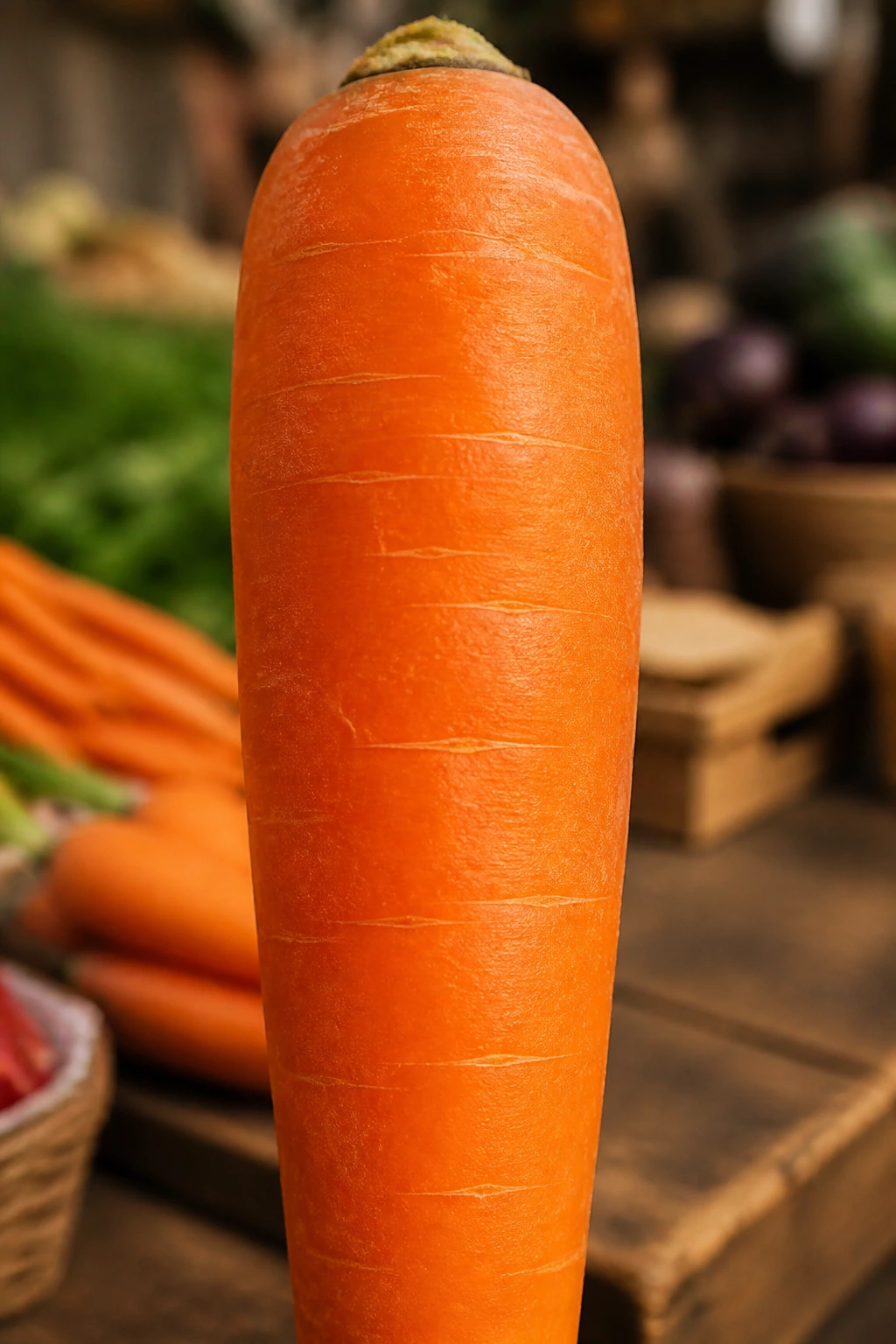
The most useful thing you can do in a salad aisle is stop buying vegetables that look tired before you even bring them home. Limp arugula, soft cucumbers, wrinkled peppers, and sad herbs turn a good recipe into a mediocre one fast. You want produce with some weight to it and, when possible, a little resistance.
For roasted salads, choose vegetables that brown well and don’t collapse. Sweet potatoes, carrots, broccoli, cauliflower, Brussels sprouts, squash, and potatoes all earn their place because they stay structurally honest in a hot oven. For cold salads, lean on cabbage, kale, romaine, snap peas, and shaved Brussels sprouts. They can take dressing without dissolving into a swamp.
Beans and grains are your insurance policy. Canned chickpeas, butter beans, cannellini beans, lentils, farro, and quinoa are what make these bowls fill out. Rinse canned beans until the water runs clear enough that they don’t taste tinny, and salt the grains or lentils while they cook so they’re seasoned from the inside.
Dressings also deserve a quick shop well. Buy lemons that feel heavy for their size, because that usually means more juice. Choose olive oil that tastes clean and a little peppery, not dusty. And if you’re buying nuts or seeds, taste one before you toast a whole batch; stale pepitas and walnuts can flatten a salad faster than weak greens.
How to Serve These Recipes
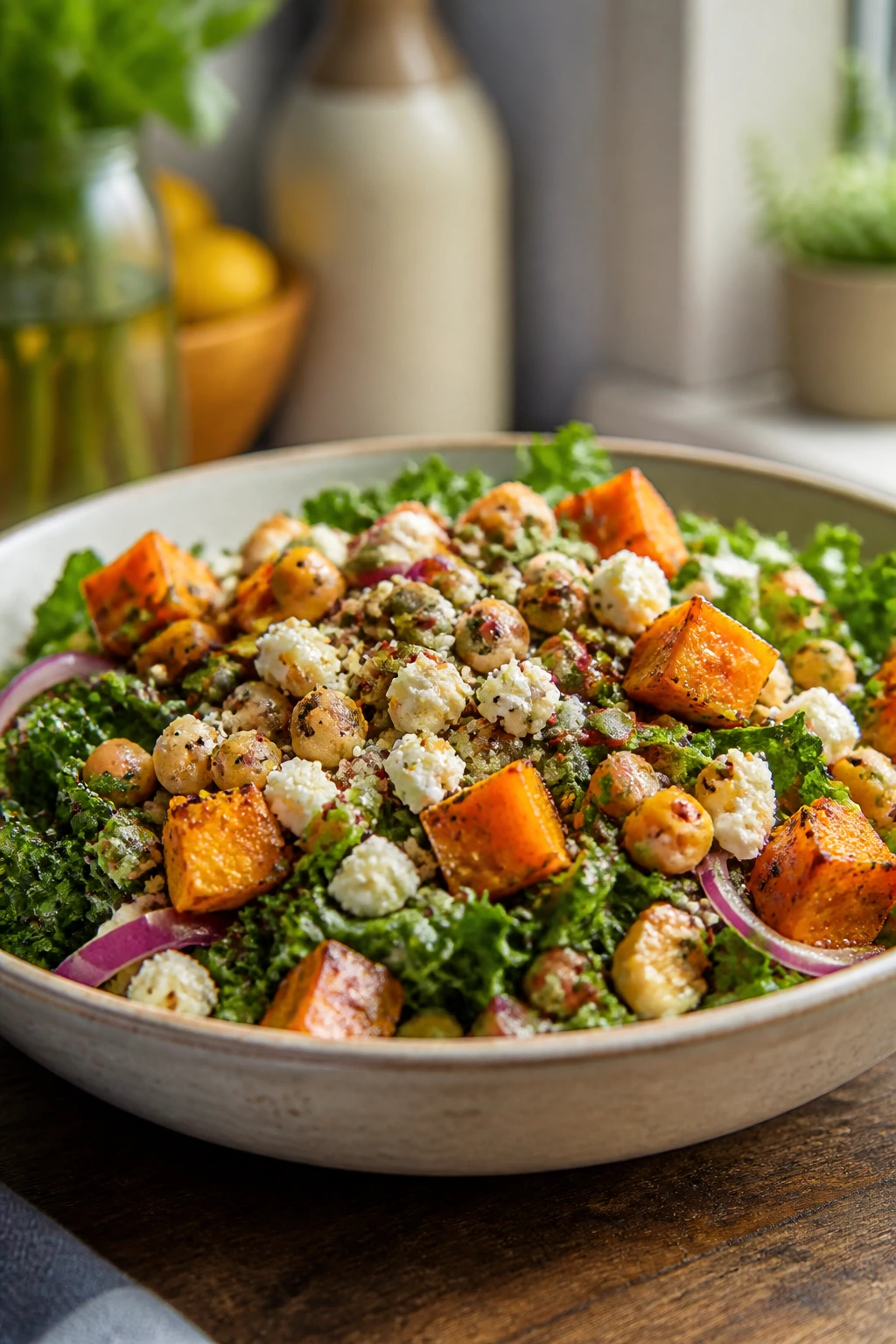
Presentation:
Use wide, shallow bowls or platters so the vegetables, grains, and toppings stay visible. A deep soup bowl hides all the interesting bits, and these salads earn better treatment than that.
Accompaniments:
Warm pita, toasted sourdough, grilled flatbread, a bowl of soup, or a simple roast vegetable tray all pair well across the collection. If the salad already has potatoes or farro, keep the side bread smaller and less essential.
Portions:
For a main-course salad, plan on about 4 to 5 cups per person once the grains, beans, or potatoes are in the mix. For a lighter lunch, 2 1/2 to 3 cups is usually enough. If you’re scaling up for guests, double the dressing before you double the greens; people always dress more generously when they’re serving themselves.
Beverage Pairing:
Sparkling water with lemon fits almost all of these. If you want something with more character, a dry white wine like Sauvignon Blanc or an unsweetened iced herbal tea keeps pace with the acid and herbs without stepping on them.
Extra Toppings and Flavor Boosters
Flavor Enhancement:
A final squeeze of citrus and a pinch of flaky salt at the end will save more salads than any fancy ingredient ever will. If a bowl tastes a little sleepy, it usually needs acid, not more olive oil.
Customization:
Add 1 cup cooked farro, quinoa, or barley to almost any of these recipes when you want more chew. Swap feta for goat cheese, or leave cheese out and use toasted seeds plus a stronger dressing to keep the bowl from feeling thin.
Serving Suggestions:
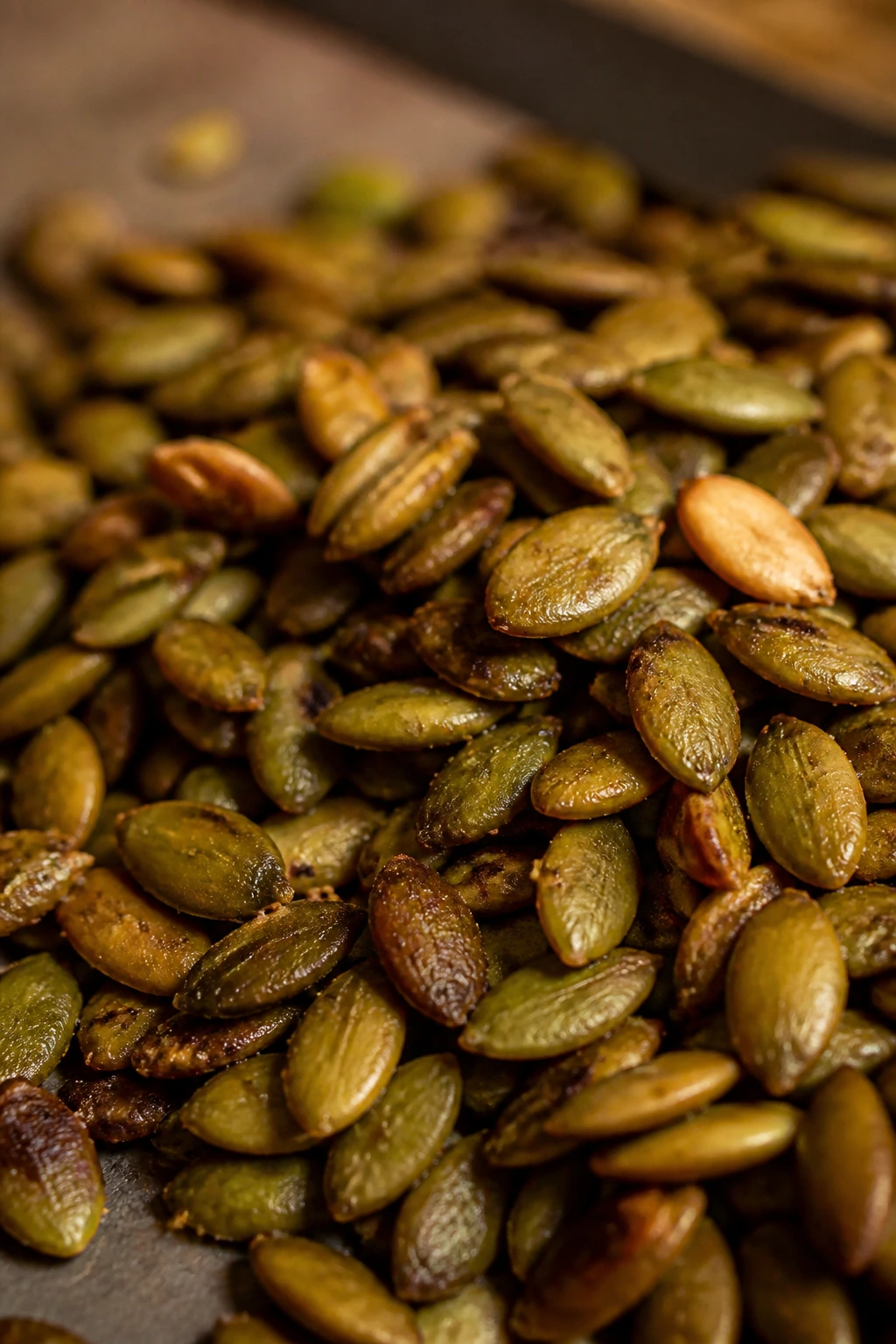
Keep crispy toppings separate until the last minute. Croutons, toasted nuts, sesame seeds, and pepitas are at their best when they still sound crunchy against the spoon.
Make-It-Yours:
For dairy-free salads, lean on tahini, sunflower seed butter, or a lemony olive oil dressing. For gluten-free versions, skip bread and use potatoes, beans, or grains that are naturally safe. For a bolder version, add pickled onions, chili crisp, or a spoonful of harissa to the dressing.
Make-Ahead, Storage, and Reheating Guidance
These salads don’t all store the same way, and that’s the point. A dressed cabbage slaw can hold for 2 to 3 days in the fridge, while a dressed romaine salad should be eaten the same day. Grain salads, potato salads, lentil salads, and roasted vegetable salads usually keep well for 3 to 4 days refrigerated in airtight containers.
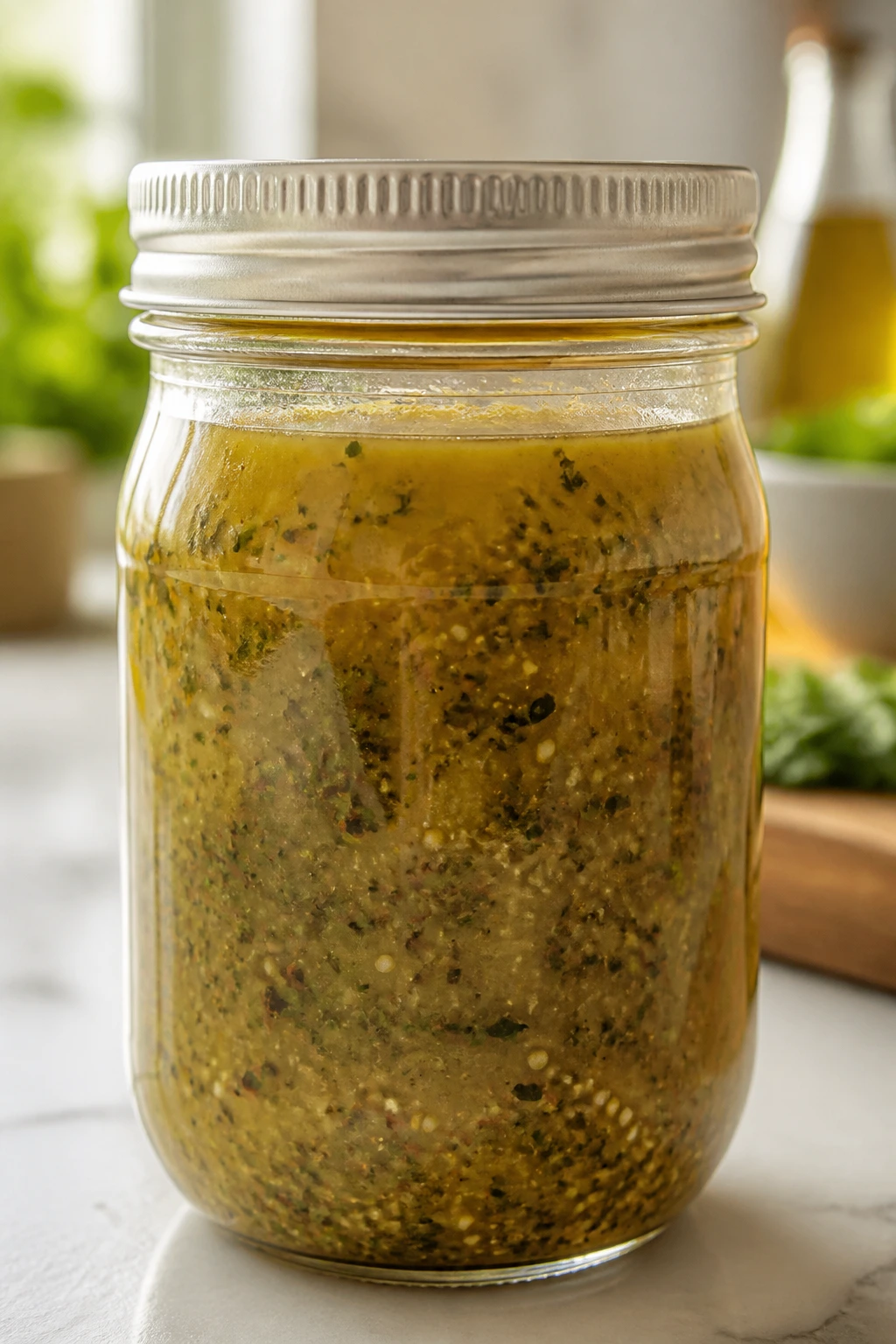
Keep the components separate whenever you can. Store dressings in jars, crunchy toppings in dry containers, and avocado or apple slices only after the bowl is assembled. If you have leftovers from a warm salad, let them cool first, then chill within 2 hours so the texture stays safe and the vegetables don’t sweat in the container.
Reheating depends on the base. Farro, potatoes, roasted squash, carrots, broccoli, and chickpeas can be warmed in a 300°F oven for 8 to 12 minutes or in a skillet over medium heat with a spoonful of water. Skip the microwave for salads with greens, herbs, or cucumbers; it turns the crisp parts floppy in a way no dressing can repair.
Dressings made with tahini, yogurt, or sunflower seed butter usually thicken in the fridge. Stir in a teaspoon or two of warm water before using them again. And if a salad is meant to be warm, reheat the vegetables before tossing them with fresh greens so the bowl keeps its shape.
Easy Swaps and Alternate Directions
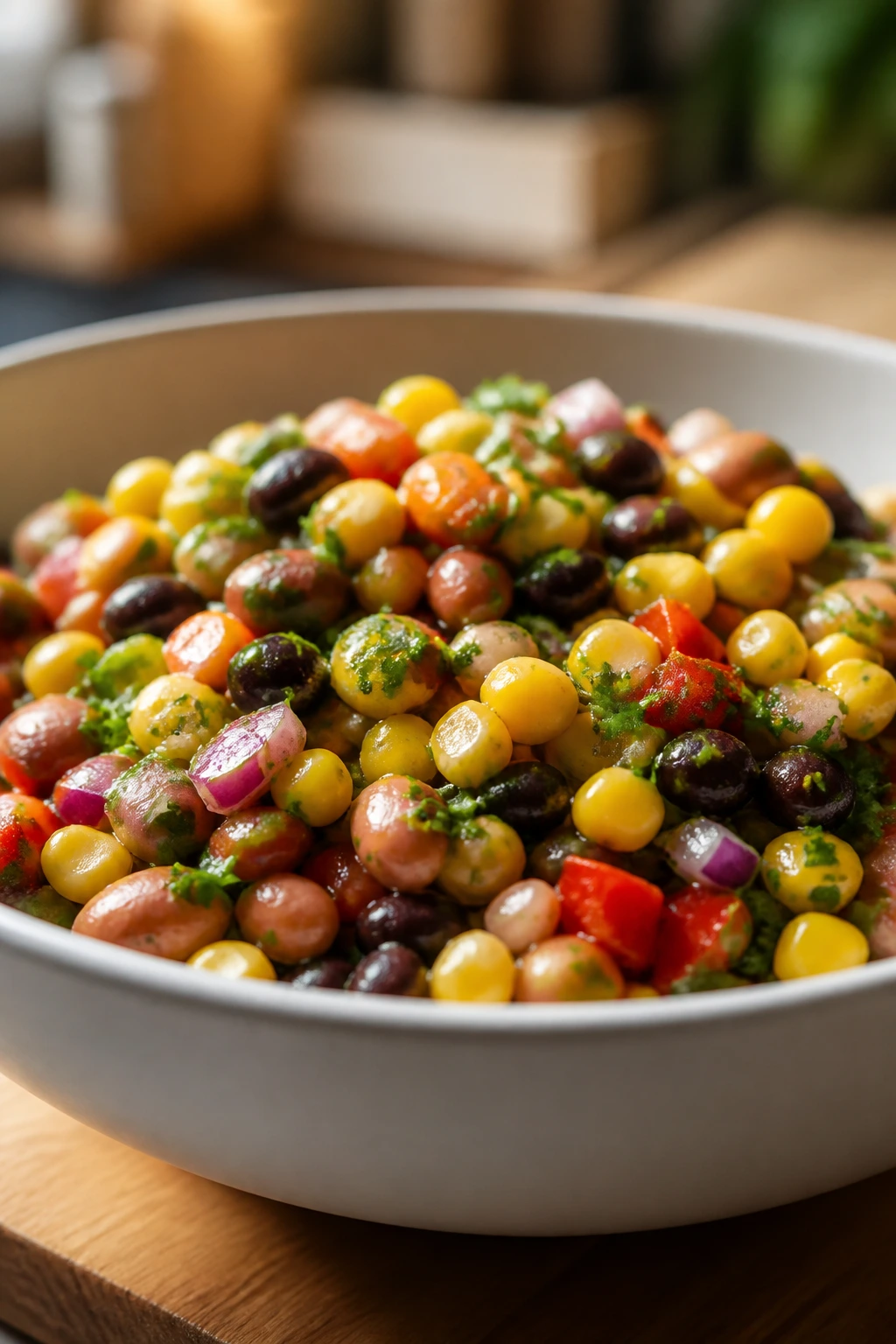
The Pantry-First Bowl:
Use canned beans, frozen corn, jarred roasted peppers, and bagged greens when the produce drawer is thin. A good dressing can make pantry ingredients taste deliberate, not improvised.
The Grain Booster:
Add cooked farro, quinoa, barley, or brown rice to roasted vegetable salads when you want more chew. This works especially well with broccoli, carrots, squash, beets, and cauliflower.
The Dairy-Free Build:
Skip feta, goat cheese, parmesan, and yogurt dressing. Use tahini, olive oil, lemon, mustard, and toasted seeds instead, and the salad will still taste complete.
The Kid-Friendly Version:
Cut everything smaller, keep onions and jalapeños on the side, and serve the dressing separately. Kids usually prefer bowls they can recognize at a glance.
The Heat-Loving Version:
Add chili crisp, harissa, pickled jalapeños, or red pepper flakes to the dressing. A little heat gives roasted vegetables more personality and keeps creamy elements from feeling heavy.
The Brunch Bowl:
Top warm vegetable salads with soft eggs, extra herbs, and a slice of toast. The same salad reads differently when it lands next to coffee instead of dinner.
Mistakes That Make Salad Feel Like a Side Dish
Not enough salt at each stage.
A bowl can look busy and still taste dull if the vegetables, beans, grain, and dressing all go in underseasoned. Taste each piece as you build it. If the broccoli tastes good on its own, the final salad has a chance.
Using only cold ingredients.
Cold tomatoes, cold grains, cold beans, cold everything — that’s the fastest path to a flat bowl. Warm potatoes, roasted vegetables, or freshly cooked farro create contrast that makes the salad feel complete.
Choosing the wrong texture base.
Butter lettuce, soft spinach, and watery cucumbers can be beautiful, but they cannot carry a heavy main-course salad by themselves. Reach for kale, romaine, cabbage, sprouts, grains, beans, or potatoes when you want staying power.
Adding the dressing too early.
Some salads can sit, but not all of them want a long soak. Croutons collapse, herbs darken, avocado smears, and romaine gets sulky fast. Dress sturdy things early and delicate things at the end.
Skipping the crunchy finish.
A salad without crunch can taste rich, but it rarely tastes interesting for long. Toasted seeds, nuts, croutons, radishes, or shaved raw vegetables solve that problem in one move.
Roasting everything in a crowded pan.
If the vegetables are piled on top of each other, they steam. Steam is not the goal when you want edges, color, and flavor.
Frequently Asked Questions
Can I make these salads ahead of time?
Yes, but the structure matters. Grain salads, bean salads, potato salads, and slaws can be made a day ahead, while leafy salads are better assembled shortly before serving. Keep dressings, croutons, nuts, and avocado separate until the end.
What makes a salad feel like a full meal instead of a side dish?
A main-course salad needs at least one of these: beans, lentils, eggs, potatoes, farro, quinoa, or a hefty pile of roasted vegetables. It also needs enough acid and salt to taste finished, not merely chopped.
How do I keep greens from getting soggy?
Dry them well after washing, and don’t drown them in dressing. Use sturdy greens like kale, romaine, arugula, or cabbage if you know the salad will sit for a while.
Can I swap one grain or bean for another?
Usually, yes. Farro can become quinoa, cannellini beans can become chickpeas, and lentils can replace grains in many of these bowls. Just watch the texture; soft grains and soft beans together can make the salad too dense.
What if my dressing tastes flat?
It probably needs one of three things: more salt, more acid, or a touch of sweetness. Add them in small amounts and taste after each change. Flat dressing is usually an easy fix.
How do I keep apples or avocado from browning?
Add them at the last minute, and toss apple slices with a little lemon juice if you need to prep them early. Avocado holds up better when it’s cut just before serving and folded gently into the bowl.
Can I roast all the vegetables on one sheet pan?
Sometimes, yes, but only if the vegetables have similar cook times. Broccoli and chickpeas can share a pan, and sweet potatoes go well with onions, but asparagus and tomatoes need much less time than carrots or squash.
What if I want to serve these cold?
Choose the salads with cabbage, kale, slaw, lentils, or farro. Those hold their shape best after chilling. If a recipe includes warm roasted vegetables, let them cool first and taste again for salt before serving.
The Bowl Worth Reaching For
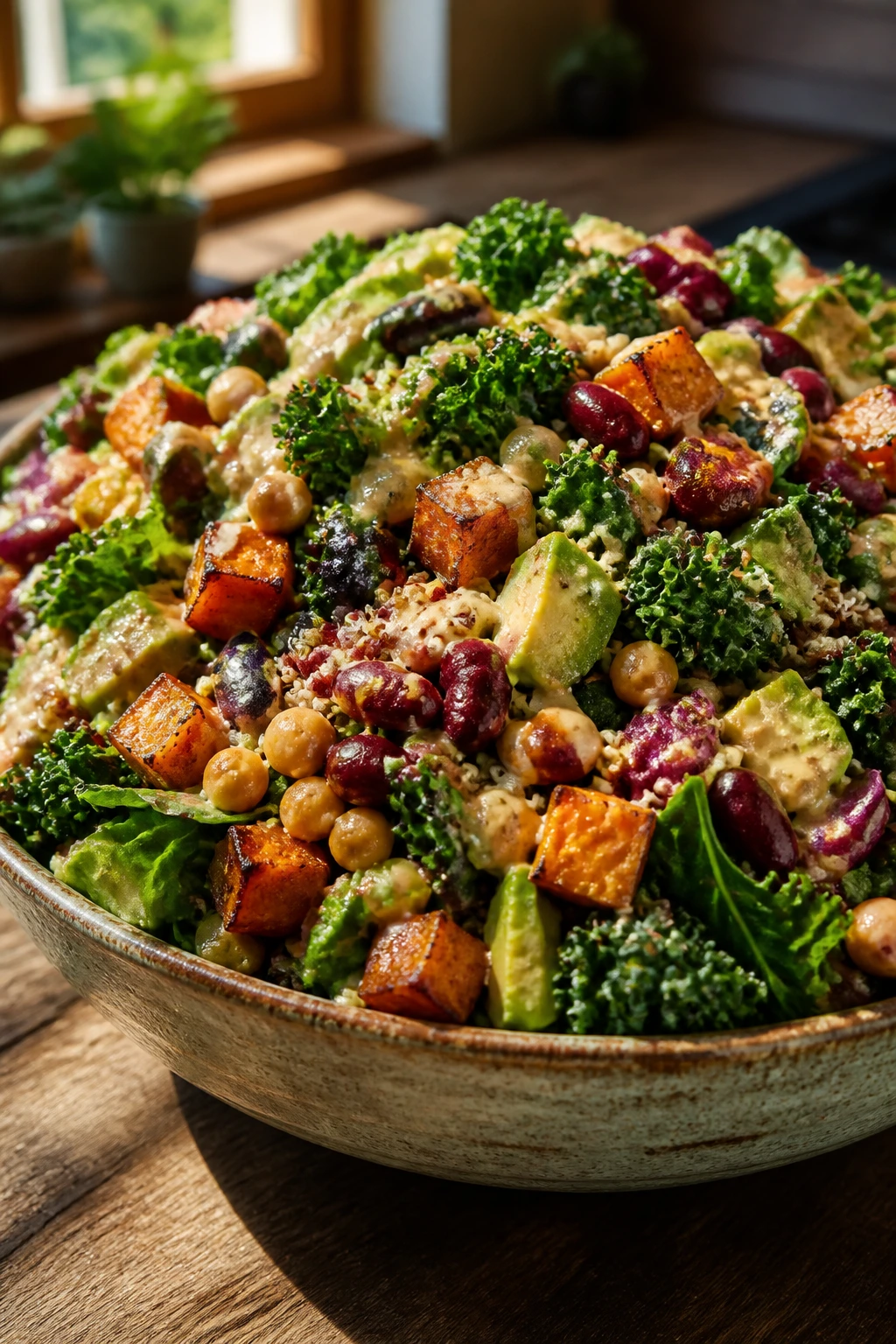
A real meal salad is not a compromise. It’s a smart construction job. Once you know how to balance roast and crunch, acid and fat, soft and crisp, the bowl stops feeling like an apology for dinner and starts feeling like dinner itself.
That’s what I like about these recipes: they don’t ask you to give up texture or satisfaction just because you want more vegetables on the plate. Keep a can of beans, a good lemon, and one sturdy green around, and you’re already halfway there.
The next time you want a salad that actually stays with you, build one of these with whatever vegetables look best in the market basket.