



A salad can look generous and still eat like wet confetti. That’s the problem with too many tossed salads: the bowl is full, the colors are bright, and the first forkful goes limp the second the dressing touches it. The fix is not more lettuce. It’s structure — crisp leaves, something creamy, something sharp, something salty, and a homemade dressing that actually tastes like it came from a kitchen instead of a shelf.
A good hearty tossed salad with homemade dressing should feel like a meal, not a side thought. I want crunch from romaine, a little chew from kale, acid from lemon and vinegar, creaminess from avocado, and enough protein and fat to keep you from hunting for a sandwich an hour later. The salad should be cold, vivid, and a little noisy when you toss it — that soft rustle of leaves, seeds hitting the bowl, the fork dragging through egg yolk and chickpeas. That’s the sound of lunch doing its job.
The homemade dressing matters more than people admit. A bland vinaigrette turns even good produce flat. A sharp, balanced one — with lemon, Dijon, garlic, and enough salt — makes cucumbers taste greener, tomatoes taste sweeter, and chickpeas taste like they were meant to be there. The bowl stops feeling like a compromise and starts feeling like the thing you actually wanted to make in the first place.
Why This Salad Earns Its Place at Dinner
-
It eats like a real meal: Hard-boiled eggs, chickpeas, feta, avocado, and pepitas give the bowl enough substance that you’re not left rummaging for toast ten minutes later.
-
The dressing has backbone: Lemon juice, red wine vinegar, Dijon mustard, and garlic give the vinaigrette enough bite to wake up every leaf in the bowl.
-
The texture stays interesting: Romaine brings crunch, baby kale brings chew, cucumber and radish bring snap, and the toasted chickpeas add a little roasted edge.
-
It works on its own terms: You don’t need to disguise it as a “light” dinner or overstuff it with extras. The base recipe already holds the plate.
-
It’s easy to shape around what you have: Swap the chickpeas for grilled chicken, use goat cheese instead of feta, or lean into whatever the crisper drawer is trying to tell you.
-
The leftovers make sense: The dressing keeps, the chickpeas keep, the eggs keep, and even the greens stay usable if you store them properly.
Yield: Serves 4 as a main course or 6 as a side
Prep Time: 25 minutes
Cook Time: 12 minutes
Total Time: 37 minutes
Difficulty: Beginner — the method is straightforward, and the only actual cooking is boiling eggs and toasting chickpeas.
Chill/Rest Time: 5 minutes for the eggs to cool
Best Served: Right after tossing, while the greens are still crisp and the avocado hasn’t browned
The Full Ingredient List, Measured and Ready
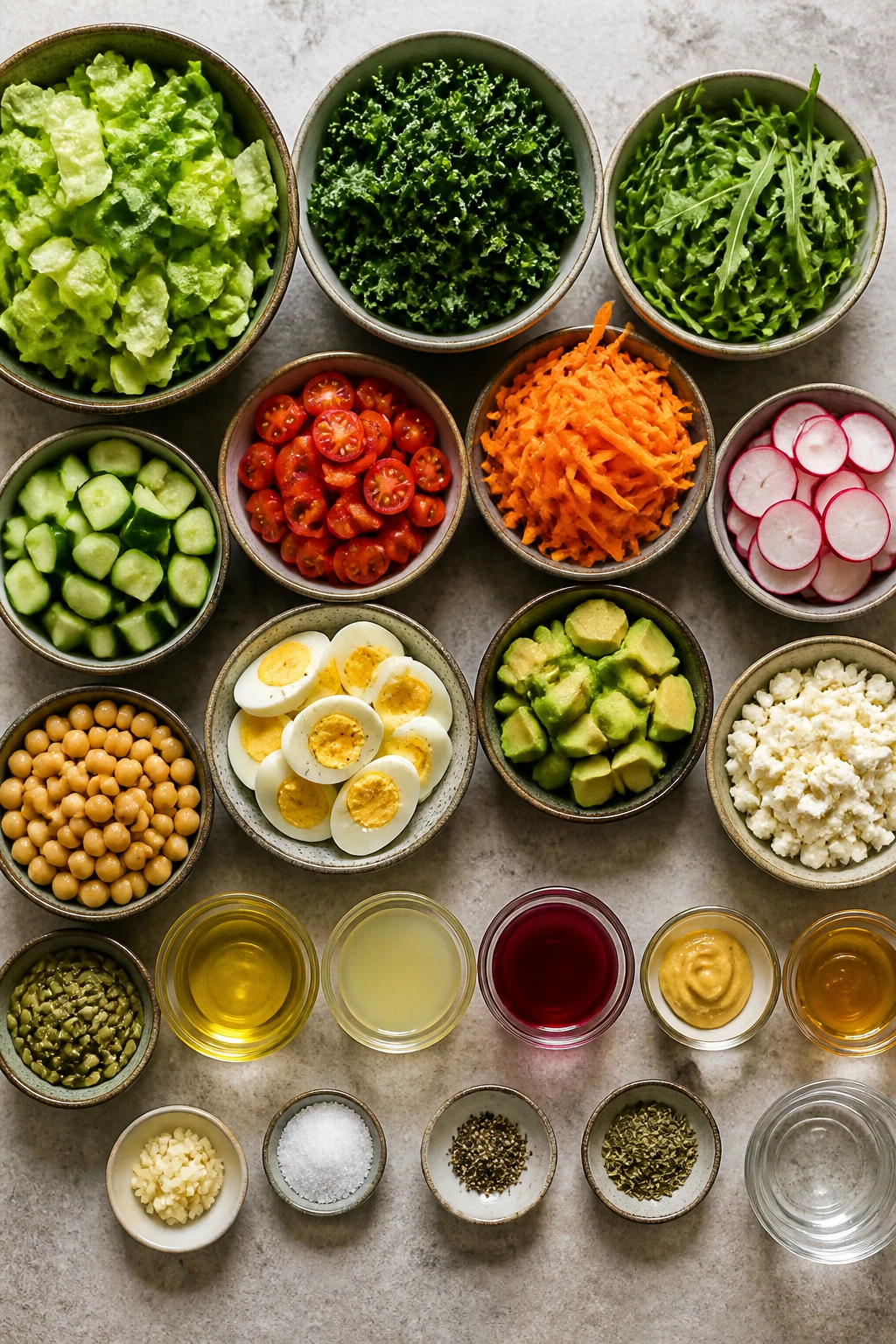
For the Salad:
- 1 large head romaine lettuce, chopped into bite-size pieces and thoroughly dried
- 4 cups baby kale or chopped lacinato kale, ribs removed if tough
- 2 cups baby arugula
- 1 medium English cucumber, halved lengthwise and sliced 1/4-inch thick
- 1 pint cherry tomatoes, halved
- 1 large carrot, peeled and shredded
- 6 radishes, thinly sliced
- 1/3 small red onion, very thinly sliced
- 1 cup canned chickpeas, rinsed, drained, and patted dry
- 1 teaspoon olive oil
- 1/2 teaspoon smoked paprika
- Pinch kosher salt
- 4 hard-boiled eggs, peeled and halved
- 1 avocado, sliced just before serving
- 1/2 cup crumbled feta cheese
- 1/3 cup toasted pepitas or sunflower seeds
For the Homemade Dressing:
- 1/4 cup extra-virgin olive oil
- 3 tablespoons fresh lemon juice
- 1 tablespoon red wine vinegar
- 1 tablespoon Dijon mustard
- 1 teaspoon honey or maple syrup
- 1 small garlic clove, finely grated or minced to a paste
- 1/2 teaspoon kosher salt, plus more to taste
- 1/4 teaspoon freshly ground black pepper
- 1/4 teaspoon dried oregano
- 1 to 2 tablespoons cold water, to thin if needed
Why Each Ingredient Pulls Its Weight
Main Greens
What to use: 1 large head romaine, 4 cups baby kale or chopped lacinato kale, and 2 cups baby arugula.
Preparation: Chop the romaine into bite-size ribbons, strip the kale from any thick ribs, and dry everything until it’s not even slightly damp.
Substitutions: Butter lettuce works if you want a softer bowl, while spinach can stand in for arugula if you want less peppery bite.
Tips: Romaine gives the salad structure, but kale is what keeps it from collapsing into a pile of soft leaves. If you use tougher kale, massage it with a tiny pinch of salt and a spoonful of dressing for 20 seconds; it should look darker and feel less stiff.
Hearty Add-Ins
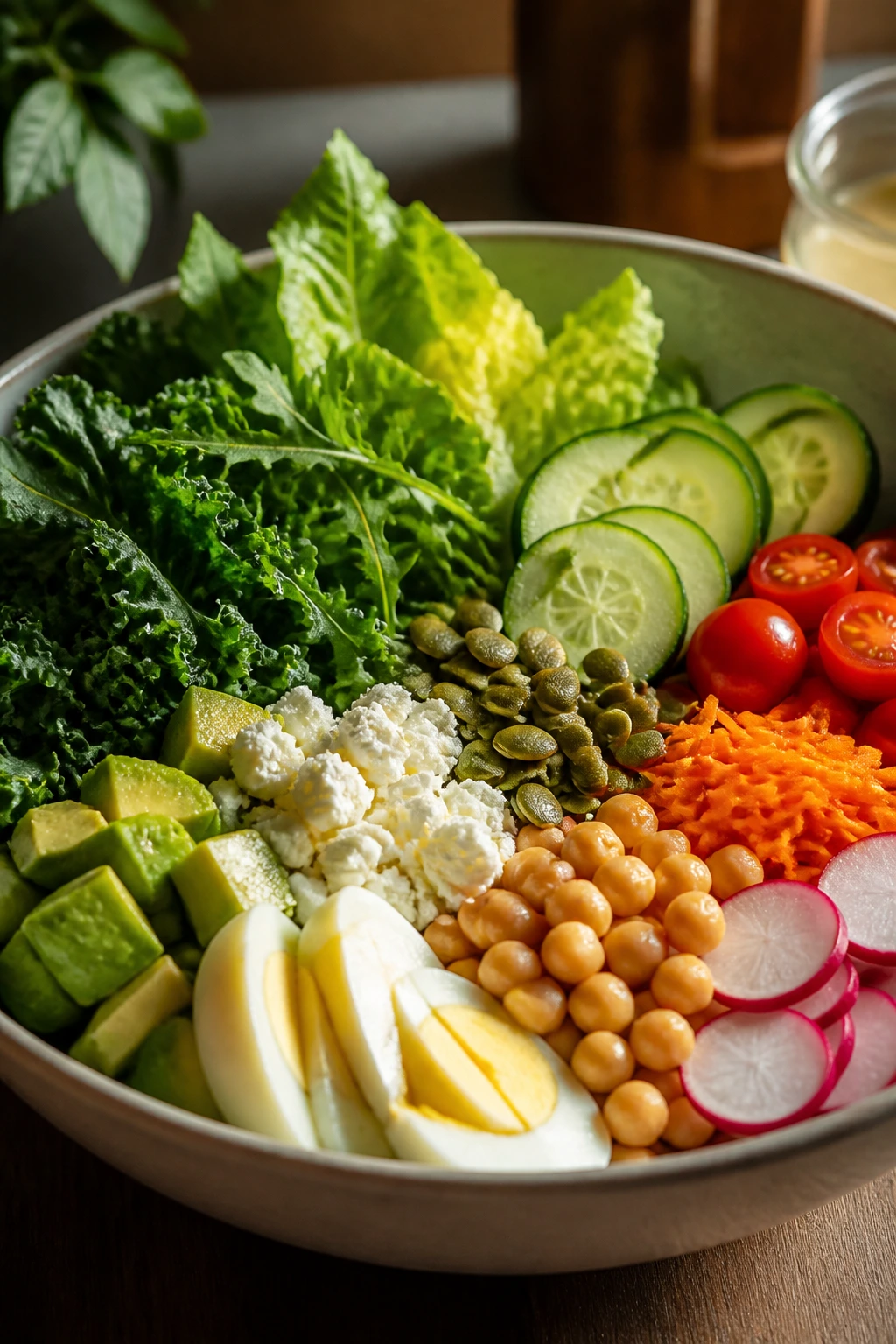
What to use: 1 cucumber, 1 pint cherry tomatoes, 1 large carrot, 6 radishes, 1/3 small red onion, 1 cup chickpeas, 4 hard-boiled eggs, 1 avocado, 1/2 cup feta, and 1/3 cup pepitas.
Preparation: Slice the cucumber thin enough to bend slightly, halve the tomatoes so they release a little juice, and cut the onion so it disappears into the bowl instead of shouting from it.
Substitutions: Swap chickpeas for white beans, use goat cheese instead of feta, or replace eggs with sliced grilled chicken if you want more protein.
Tips: The point of these add-ins is contrast. Creamy avocado, salty feta, crisp radish, and warm-spice chickpeas keep the salad from tasting like one long note.
Chickpea Seasoning
What to use: 1 teaspoon olive oil, 1/2 teaspoon smoked paprika, and a pinch of kosher salt for the chickpeas.
Preparation: Toss the drained chickpeas until they’re lightly coated, then cook them in a dry skillet with the oil and seasoning until they look dry on the outside and smell a little toasty.
Substitutions: Garlic powder or cumin can stand in for the smoked paprika if that’s what you reach for more often.
Tips: Dry chickpeas brown better. If they’re still wet from the can, they’ll steam instead of toasting, and you’ll miss the one texture in the bowl that feels halfway roasted.
Homemade Dressing
What to use: 1/4 cup olive oil, 3 tablespoons lemon juice, 1 tablespoon red wine vinegar, 1 tablespoon Dijon, 1 teaspoon honey or maple syrup, 1 small garlic clove, 1/2 teaspoon salt, 1/4 teaspoon black pepper, 1/4 teaspoon oregano, and 1 to 2 tablespoons water.
Preparation: Grate or mince the garlic very fine so it dissolves into the dressing instead of staying in little sharp bits.
Substitutions: White wine vinegar works if that’s what you have, and maple syrup gives the dressing a slightly rounder finish than honey.
Tips: The dressing should taste sharper than you think before it hits the salad. Leaves mute acidity fast, and a vinaigrette that seems bright in the bowl usually lands right on the plate.
The Bowl, Knife, and Other Tools That Matter
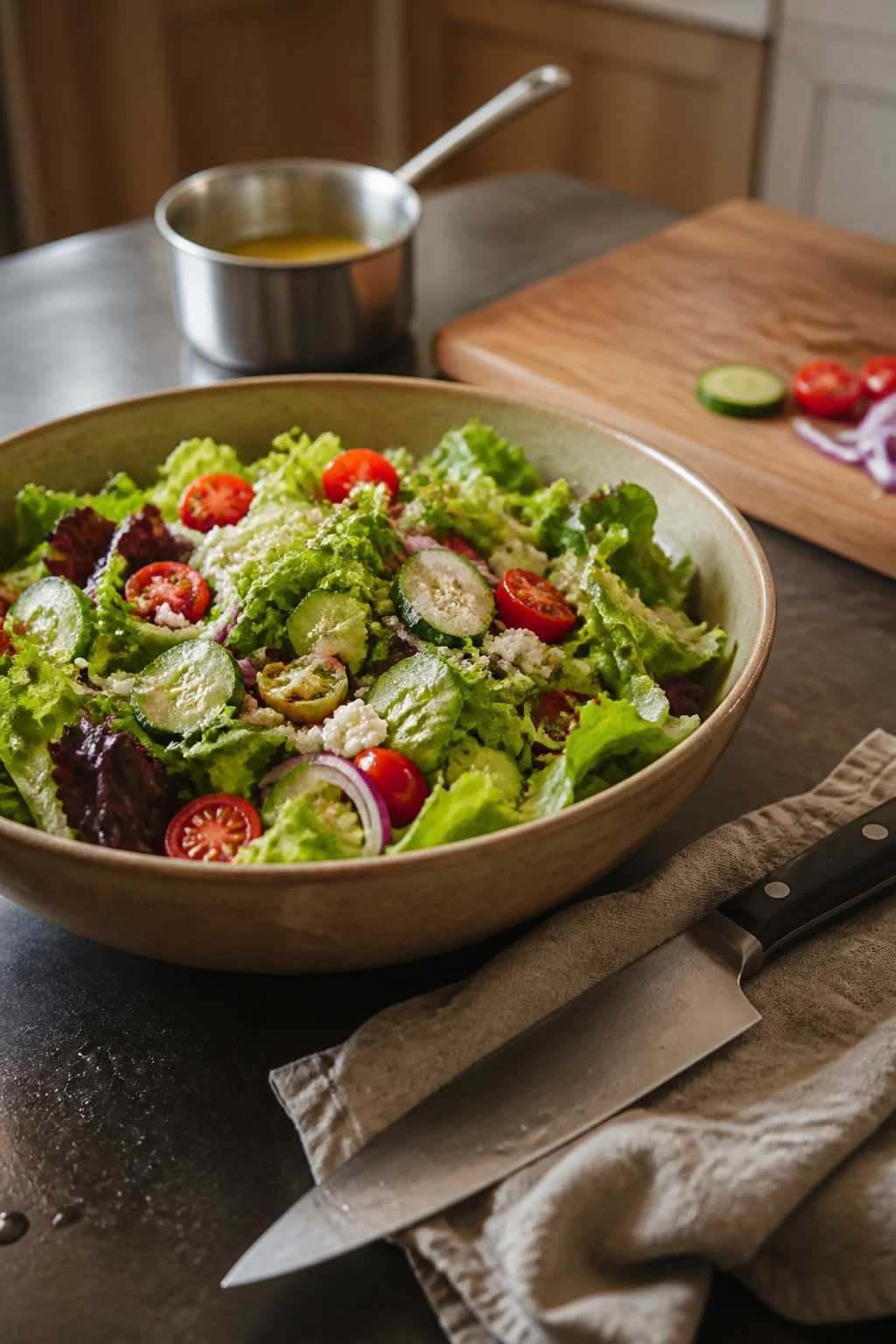
You do not need a pile of special gear for this salad, but the right few tools make the difference between a crisp bowl and a soggy one.
-
Large salad bowl: A wide bowl gives you room to toss without crushing the greens. A cramped bowl bruises the leaves and spills dressing over the rim.
-
Sharp chef’s knife: Thin slices of cucumber, onion, and radish look cleaner and eat better when the knife is actually sharp.
-
Cutting board with a damp towel underneath: This keeps the board from sliding when you’re shaving carrots or halving tomatoes.
-
Small saucepan: For boiling the eggs. A shallow pan works, but a small saucepan keeps the water level easier to control.
-
Skillet: A 10- or 12-inch skillet is enough for toasting the chickpeas without crowding them.
-
Whisk or lidded jar: Either one works for the dressing. I like a jar because I can shake it, taste it, and store what’s left in the same container.
-
Salad spinner or clean kitchen towels: Dry greens are nonnegotiable. A spinner is faster, but towels do the job if you press, not rub.
-
Tongs or salad servers: Hands work in a pinch, but tongs give you a better feel for how much dressing is actually clinging to the leaves.
Building the Salad Without Bruising the Greens
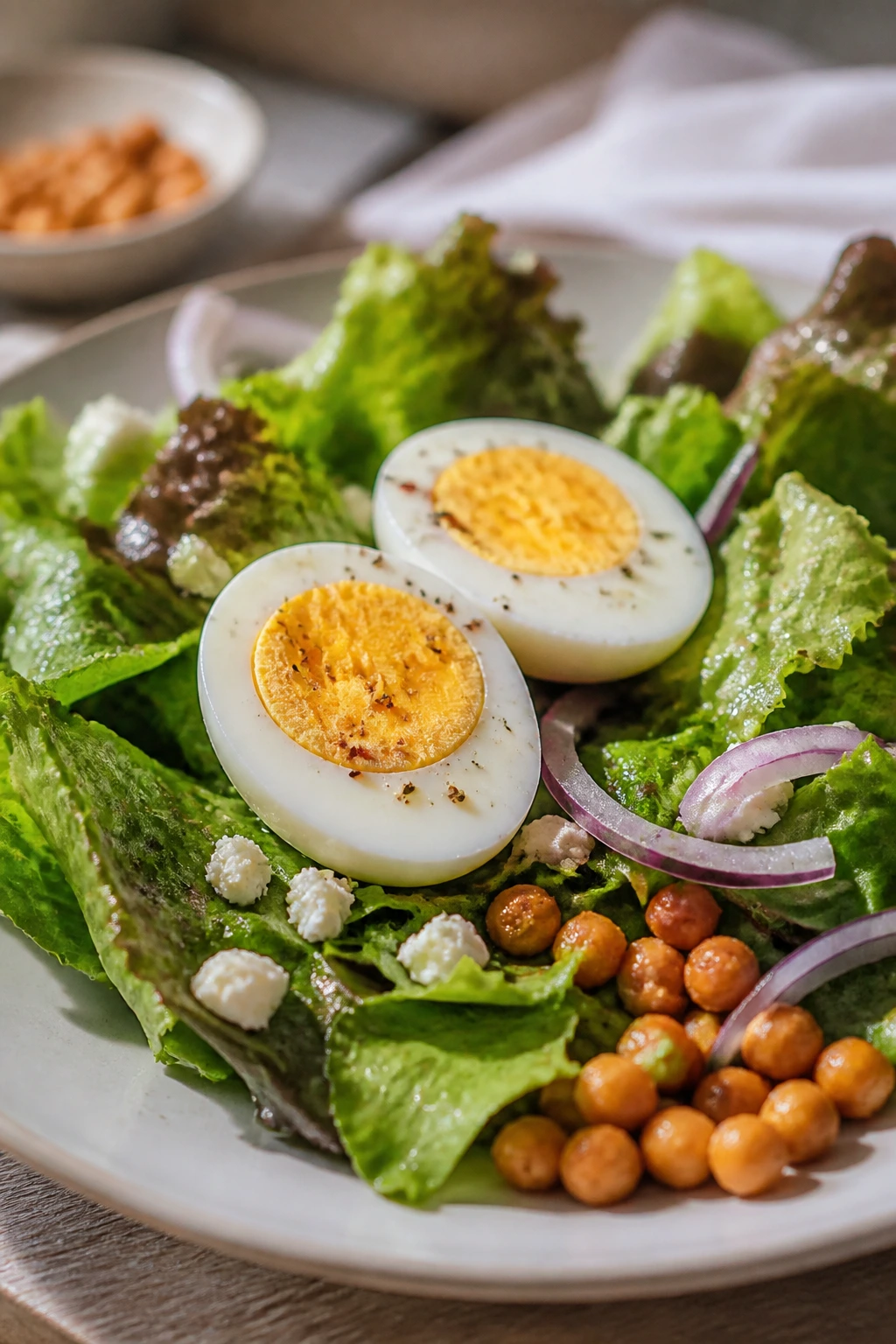
Cook the eggs and toast the chickpeas
-
Boil the eggs: Place the 4 eggs in a medium saucepan and cover them with cold water by about 1 inch. Bring the water to a full boil over medium-high heat, then turn off the heat, cover the pan, and let the eggs sit for 10 minutes.
-
Shock and peel: Transfer the eggs to a bowl of ice water for 5 minutes, until the shells feel cool and easy to handle. Peel them under a thin stream of water if the shell clings stubbornly.
-
Toast the chickpeas: Heat 1 teaspoon olive oil in a skillet over medium heat. Add the drained chickpeas, 1/2 teaspoon smoked paprika, and a pinch of kosher salt, then cook for 5 to 7 minutes, shaking the pan now and then, until the chickpeas look lightly dry, smell nutty, and have a few browned spots. Do not rush this step by turning the heat up too high — they’ll split open and scorch before they crisp.
Make the dressing
-
Whisk the vinaigrette: In a small bowl or jar, combine the 1/4 cup olive oil, 3 tablespoons lemon juice, 1 tablespoon red wine vinegar, 1 tablespoon Dijon mustard, 1 teaspoon honey or maple syrup, grated garlic, 1/2 teaspoon salt, 1/4 teaspoon black pepper, and 1/4 teaspoon dried oregano. Whisk or shake until the dressing looks glossy and slightly thickened.
-
Adjust the balance: Taste the dressing on a spoon. If it makes your mouth pucker too sharply, add 1 tablespoon cold water and whisk again. If it tastes flat, add a tiny pinch more salt or another squeeze of lemon. The dressing should taste a little louder than the finished salad. The greens will calm it down.
Assemble the bowl
-
Prepare the greens and vegetables: Put the romaine, baby kale, and arugula into the large salad bowl. Add the cucumber, tomatoes, shredded carrot, sliced radishes, and red onion. If the kale feels stiff, massage it lightly with a spoonful of dressing for 20 seconds before adding the rest of the vegetables.
-
Add the hearty pieces: Scatter in the chickpeas, halved eggs, feta, and pepitas. Slice the avocado last so it stays green and neat. If you’re serving guests, tuck a few avocado slices around the top instead of burying them; it makes the bowl look intentional instead of dumped.
-
Toss gently: Drizzle in about half the dressing and toss with tongs or clean hands, lifting from the bottom of the bowl so the leaves stay intact. Add more dressing a tablespoon at a time until the greens are lightly coated but not wet. Stop before the bowl looks glossy. A salad should look dressed, not sauced.
-
Finish and serve: Taste one bite from the edge of the bowl, then add more salt, pepper, or lemon if needed. Serve immediately while the greens are crisp and the eggs are still cool. If you let it sit for more than 10 or 15 minutes, the romaine starts softening in a way you can feel with the fork.
Whisking a Dressing That Sticks to the Leaves
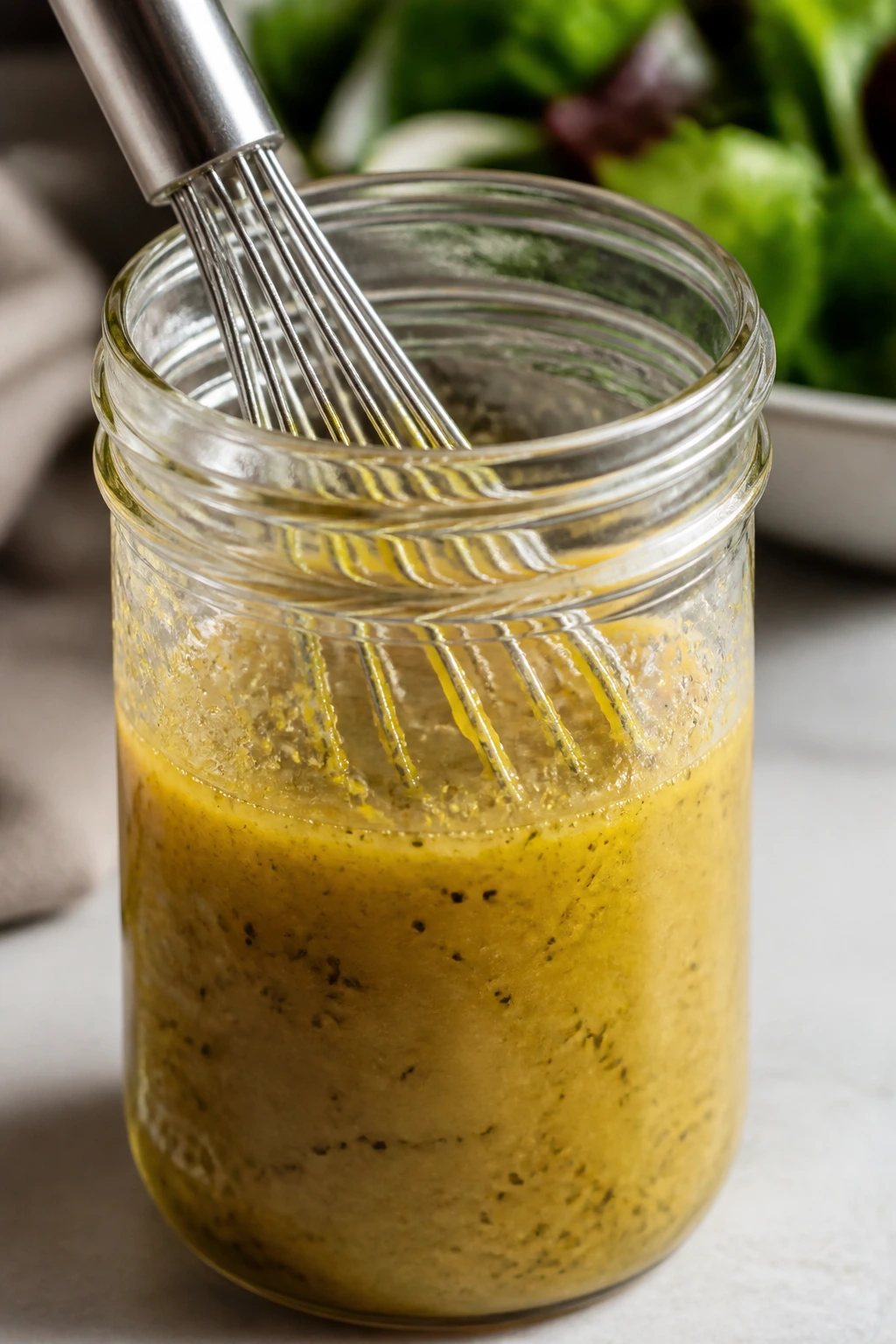
A homemade dressing only needs a few things to work: enough acid to taste alive, enough salt to make the vegetables sing, and enough oil to smooth the edges. The Dijon mustard helps the oil and lemon stay mixed for longer than a quick stir would manage. That’s the whole trick, really. Emulsify the dressing until it turns cloudy and just a little thick, and it will cling to the greens instead of pooling under them.
I like a 3-to-1-ish ratio of oil to acid for a salad like this, but not by muscle memory alone. Lemon juice varies. Vinegar varies. Some lemons are sharp and clean; some are oddly soft and sweet. Taste the dressing before it touches the bowl. If it makes your tongue pinch, that’s fine. If it tastes sleepy, the salad will taste sleepy too.
A tiny spoonful of honey or maple syrup smooths out the edges without turning the dressing sweet. I’m picky about that. The goal isn’t sweetness; it’s balance. And the garlic should be fine enough that it disappears into the liquid, because one big raw garlic chunk can take over an entire forkful.
The texture cue I trust
The finished dressing should look glossy and move slowly off the whisk. Not thick like ranch. Not watery like lemon water. Somewhere in the middle. If you shake it in a jar, you should see it cling to the glass for a second before sliding back down.
How to Serve It Like a Real Meal
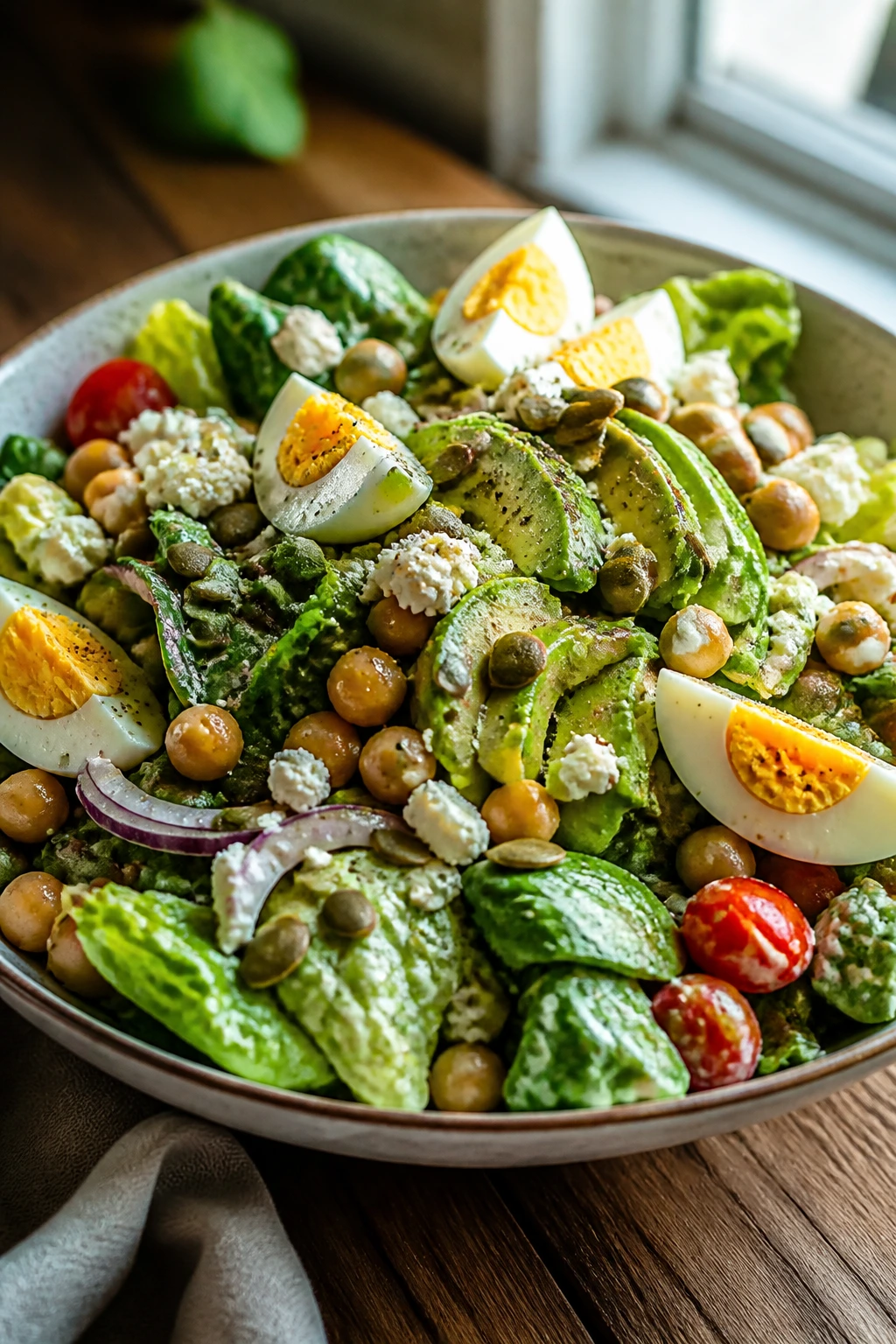
Presentation: Pile the dressed greens into a wide shallow bowl rather than a deep one. A shallow bowl lets the eggs, chickpeas, and avocado sit where you can see them instead of sinking to the bottom. If you want it to look especially tidy, keep a few tomatoes, feta crumbles, and pepitas back and scatter them over the top at the end.
Accompaniments: A thick slice of sourdough is the obvious move, and I’m not sorry about that. Roasted salmon, grilled chicken thighs, or a bowl of tomato soup all sit well beside this salad, especially when you want the plate to feel complete. If you’re serving it as a lighter lunch, a small wedge of good bread and a few olives are enough.
Portions: As written, the recipe makes 4 main-course salads or 6 side salads. For a bigger crowd, double the greens and vegetables before you double the dressing — people usually need more salad than they think, but not twice as much vinaigrette. If you want the bowl to lean more substantial, add another cup of chickpeas or another two eggs before you add extra dressing.
Beverage Pairing: Cold sparkling water with lemon fits perfectly here. If you want something with more character, a dry white wine or a crisp cucumber-mint mocktail keeps the greens feeling fresh instead of heavy.
Small Fixes That Make the Bowl Better
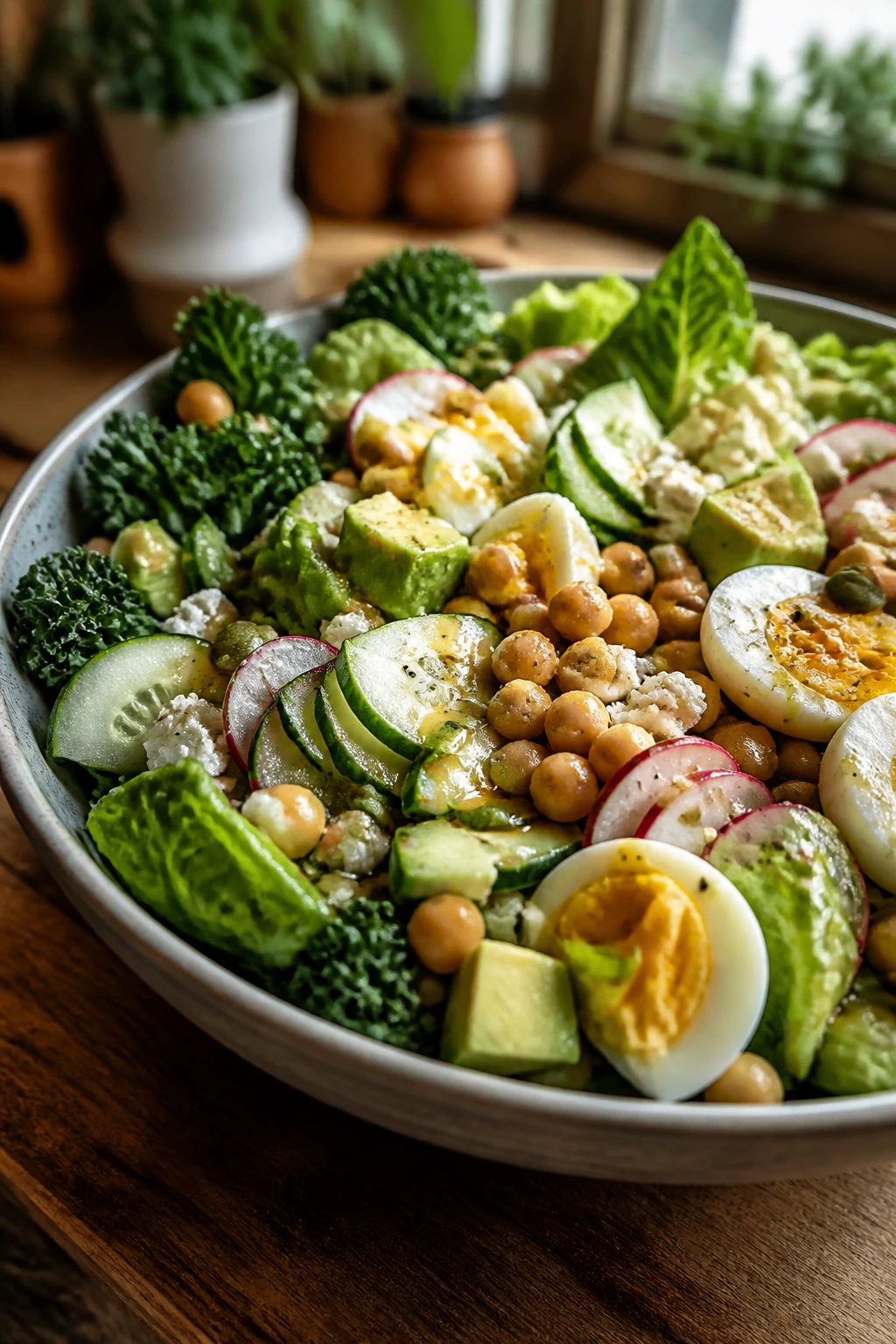
Flavor Enhancement: Zest half the lemon into the dressing before you whisk it. The zest lands differently from the juice — more floral, less sharp — and it makes the whole bowl taste brighter without another squeeze of acid.
Time-Saver: Use pre-washed greens if they’re dry enough out of the bag, but still pat them once with a clean towel. A wet clump of baby kale will water down the dressing faster than you expect. You can also boil the eggs a day ahead; chilled peeled eggs slice cleaner.
Texture Trick: Keep the pepitas and avocado out until the very end. Seeds soften if they sit in dressing, and avocado turns mushy if you toss it too hard. A salad like this lives or dies on contrast.
Cost-Saver: If avocado is expensive or unripe, skip it and add an extra half cup of chickpeas or a little more feta. You’ll lose some creaminess, but the bowl will still feel full.
Make-It-Yours: Want more protein? Add 1 cup diced grilled chicken, 1 can drained tuna, or cubes of baked tofu. Want it dairy-free? Leave off the feta and finish with a few extra olives or capers for salt.
Mistakes That Leave the Bowl Flat or Soggy
Using wet greens: This is the fastest way to ruin a salad. Wet leaves dilute the dressing and make the whole bowl slippery. Dry the greens thoroughly, even if it feels fussy, because one clump of water in the bottom changes the texture of every bite.
Dressing too early: Once the dressing hits the greens, the clock starts. The romaine softens, the cucumber leaks, and the avocado begins to slump. Dress right before serving, and if you’re waiting on guests, keep the dressing and greens separate until the last minute.
Cutting everything too large: Giant cucumber rounds and thick onion slices make the salad hard to eat. The fork should be able to catch several elements at once — a leaf, a tomato half, a bit of egg, maybe a chickpea. If the pieces are too big, you end up chasing them around the bowl.
Skipping salt in the greens: People taste the dressing and forget the vegetables still need seasoning. A small pinch of salt on the greens before tossing helps the dressing stick and makes the tomatoes taste sweeter. Don’t dump it on; a tiny pinch is enough.
Making the dressing timid: A salad this full can handle assertive acidity. If the dressing tastes weak before you use it, the bowl will taste washed out after you toss it. Salt, lemon, and Dijon are the levers here. Pull them.
Overloading the bowl with soft ingredients: Too much avocado, too much feta, too many soft tomatoes, and the whole thing starts to feel heavy in one-note fashion. Keep the crunchy vegetables in the lead and let the creamy pieces back them up.
Five Variations for Different Cravings
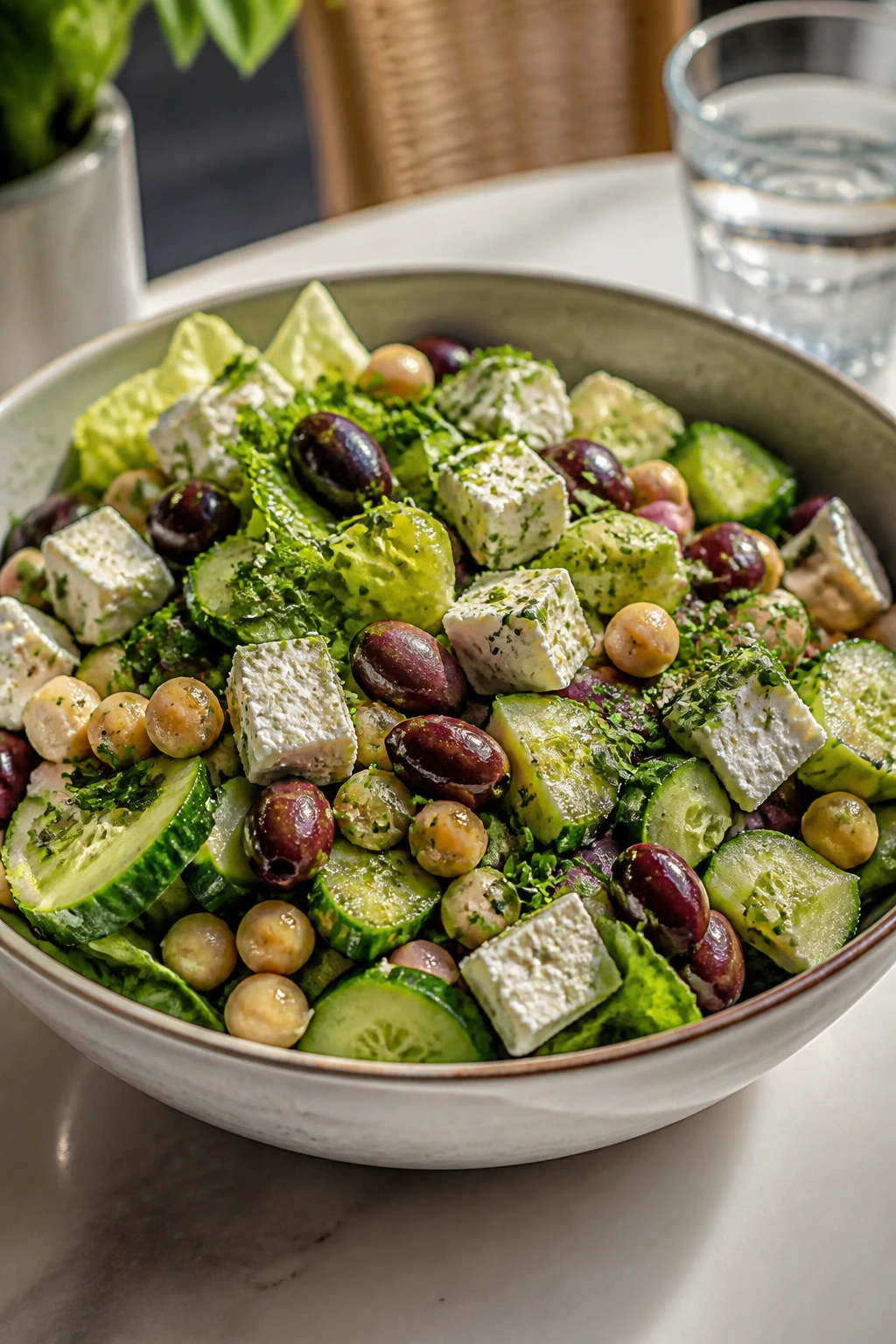
Mediterranean Market Bowl: Add kalamata olives, chopped cucumber, extra feta, and a handful of chopped parsley. Swap the smoked paprika chickpeas for plain chickpeas and use a dressing with a little more oregano and red wine vinegar. This version tastes saltier and a touch more briny, which is exactly what you want if you like your salad with a sharper edge.
Chicken and Herb Salad: Add 1 to 1 1/2 cups sliced cooked chicken breast or thigh meat and fold in chopped dill or parsley. The chicken makes the salad feel more lunch-packing-room than side-dish territory, and the herbs keep it from feeling heavy. I like this one with an extra spoonful of dressing because the meat drinks some of it up.
Vegan Power Bowl: Skip the eggs and feta, then add another cup of chickpeas and 1/2 cup diced roasted sweet potato or cucumber for more body. Use maple syrup in the dressing instead of honey. The bowl loses some richness, but the texture gets even more interesting, especially if the sweet potato is roasted until the edges brown.
Crunch-First Version: Double the pepitas and add thinly sliced celery, shredded cabbage, and a few sliced scallions. This is the version I make when I want the salad to stay snappy for longer, since cabbage holds up far better than tender greens. It eats a little louder. I mean that in the best way.
Creamier, Cooler Bowl: Add a spoonful of plain Greek yogurt to the dressing and thin it with a little water until it pours. That turns the vinaigrette into a light creamy dressing without burying the vegetables. It’s especially good if you’re serving the salad with grilled fish or simple roast chicken.
Make-Ahead, Storage, and Leftover Care
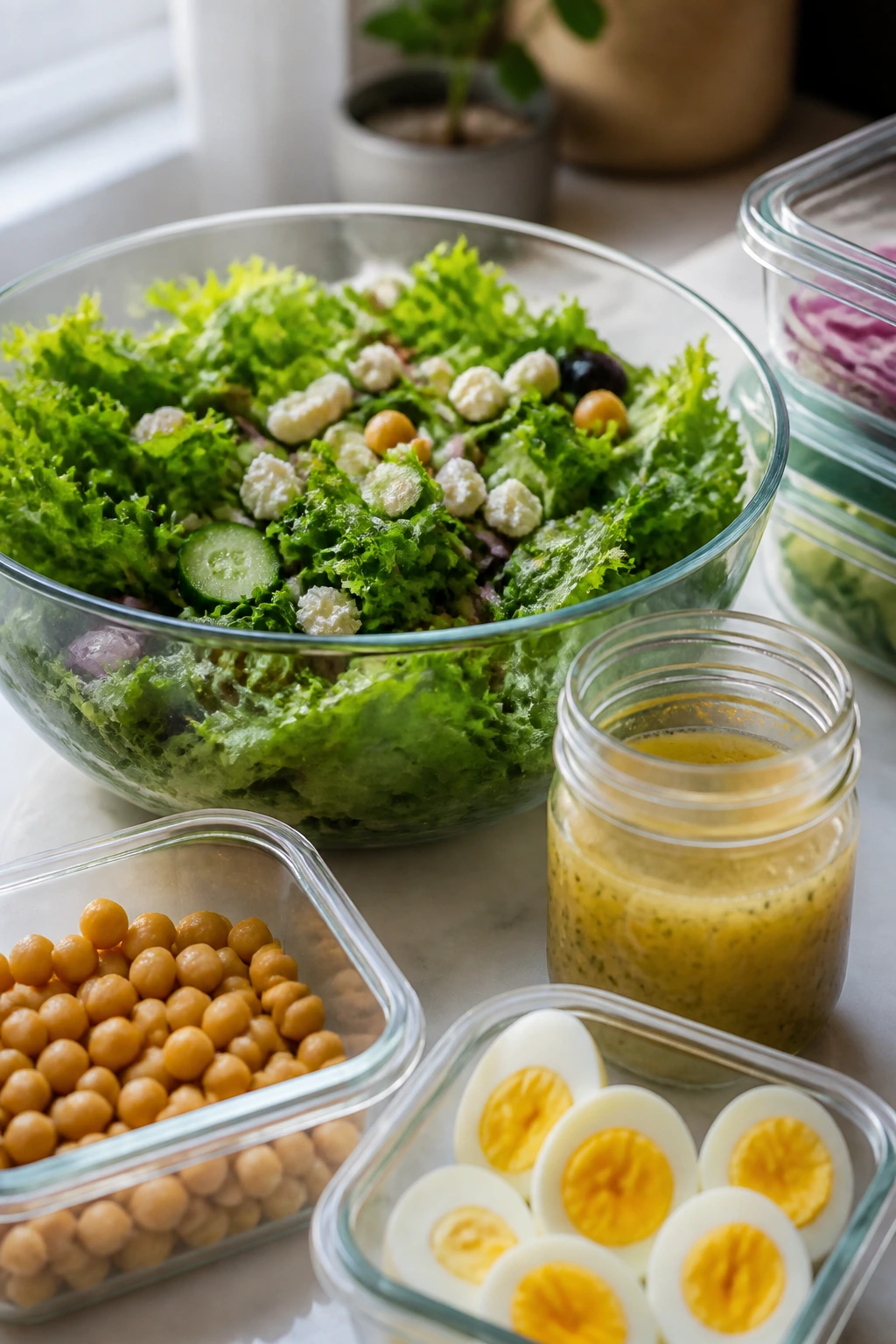
The best move is to store the parts separately. Greens keep for 3 to 4 days in the fridge if they’re washed, dried, and tucked into a container lined with paper towels. If the towels get damp, swap them. That small habit keeps the leaves crisp longer than most people expect.
The dressing keeps for up to 1 week in a sealed jar in the refrigerator. It will separate, and that’s normal. Shake it hard for 10 to 15 seconds, or whisk in 1 teaspoon warm water if the oil has tightened up in the cold. If the garlic flavor gets stronger after a day, thin it with a splash more lemon or water.
Hard-boiled eggs keep for up to 4 days refrigerated, peeled or unpeeled. Chickpeas can be made ahead and stored for 3 to 4 days in the fridge, though they lose a little of their toasted edge. If you want them crisp again, give them a quick pass in a dry skillet for 1 to 2 minutes before serving.
An assembled salad is a different animal. Once dressed, it’s best eaten within 10 to 15 minutes. If you absolutely must save leftovers, expect the lettuce to soften and the avocado to brown a bit. It’s still edible the next day, but it won’t feel fresh. For lunch prep, pack the greens in one container, the dressing in another, and the chickpeas, eggs, and vegetables in separate compartments if you can manage it. That extra minute in the morning pays off by noon.
I do not recommend freezing this salad or the dressing. The greens go limp, the tomatoes weep, and the avocado turns strange in the freezer. Not worth it.
Questions People Ask Before Making This Salad
Can I make the dressing without Dijon mustard?
You can, but the dressing won’t emulsify as well and it will separate faster. If you have to skip it, use a little mayonnaise or even a spoonful of yogurt to help the oil and acid stay mixed.
What greens work best if I don’t have romaine?
Little gem, butter lettuce, green leaf, and chopped escarole all work. I’d avoid very delicate baby lettuces as the only base, because they collapse fast once the dressing hits them. The salad needs at least one sturdy green.
Can I use bottled chickpeas straight from the can?
Yes, and in a pinch that’s fine. The quick skillet toast adds texture and a roasted note, though, so if you have the extra 5 minutes, it’s worth doing. The chickpeas should taste warm and seasoned, not plain and canned.
How do I keep avocado from browning?
Slice it at the very last second and toss it gently with the salad, or brush the cut surface with a little lemon juice if you need a short delay. Browned avocado is safe to eat, but it loses that clean, buttery look the bowl depends on.
Can I make this salad dairy-free?
Absolutely. Leave off the feta and, if you want a salty finish, add a few olives, capers, or an extra pinch of salt to the dressing. The bowl still has plenty of richness from the avocado and eggs.
What if my dressing tastes too sharp?
Add 1 teaspoon more olive oil or a splash of cold water, then taste again. If it still feels harsh, a tiny bit more honey or maple syrup will round it out without making it sweet.
How can I turn this into a higher-protein meal?
Add sliced chicken, tuna, salmon, baked tofu, or an extra two eggs. If you go with a lean protein like chicken breast, keep the dressing bright and don’t skimp on salt — lean protein tends to dull the whole bowl if the vinaigrette is too timid.
A Bowl I Keep Coming Back To
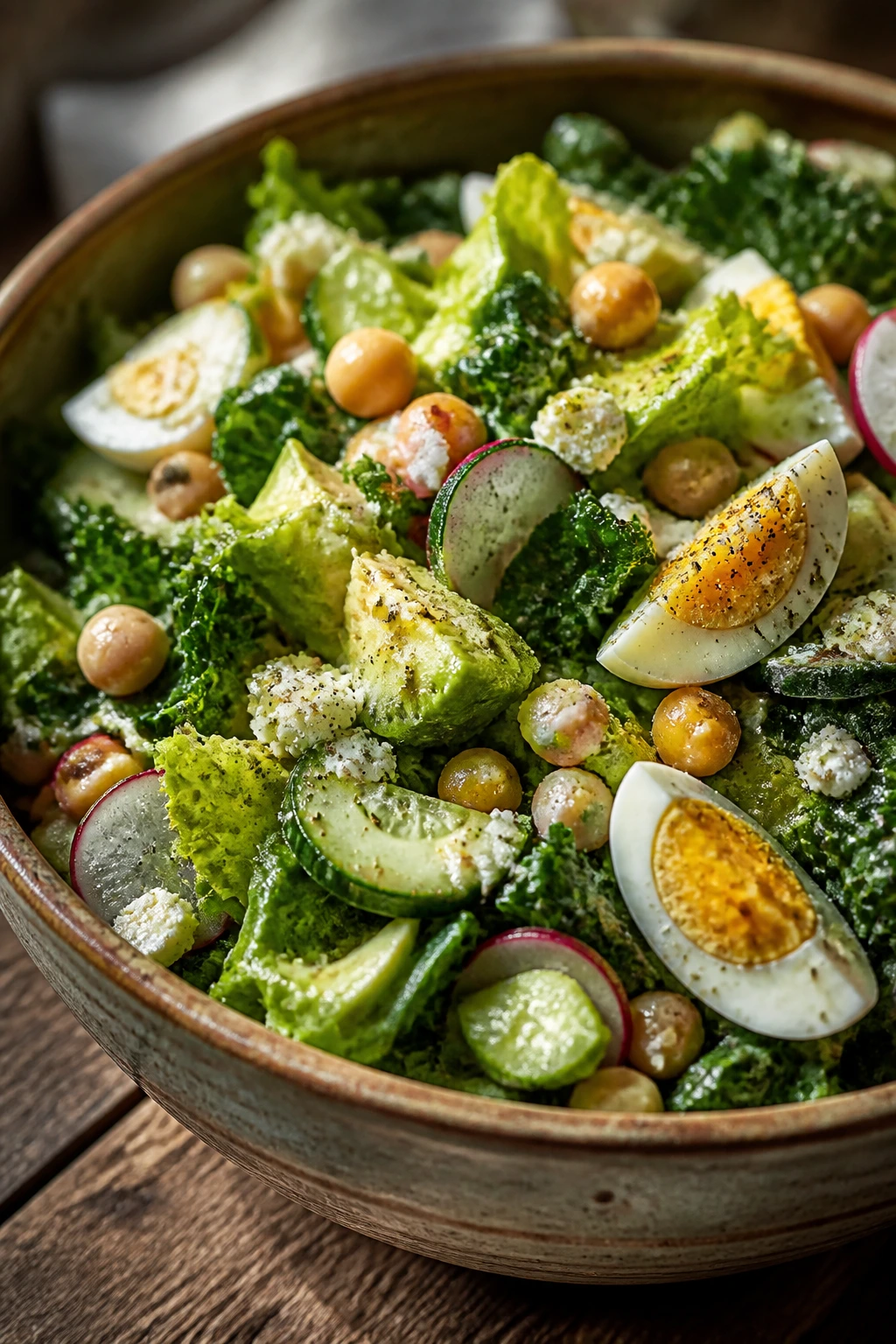
A salad like this works because it has shape. Nothing in it is accidental. The romaine keeps it crisp, the kale gives it chew, the chickpeas and eggs make it substantial, and the dressing has enough acid to keep your mouth awake from the first bite to the last.
I like recipes that let produce stay recognizable. You can still see the cucumber, still taste the radish, still feel the peppery bite of arugula under the lemony dressing. That’s the whole pleasure of a well-built tossed salad — it doesn’t hide the ingredients. It gives them a place to argue a little.
Hearty Tossed Salad with Homemade Dressing — Recipe Card
Recipe Name: Hearty Tossed Salad with Homemade Dressing
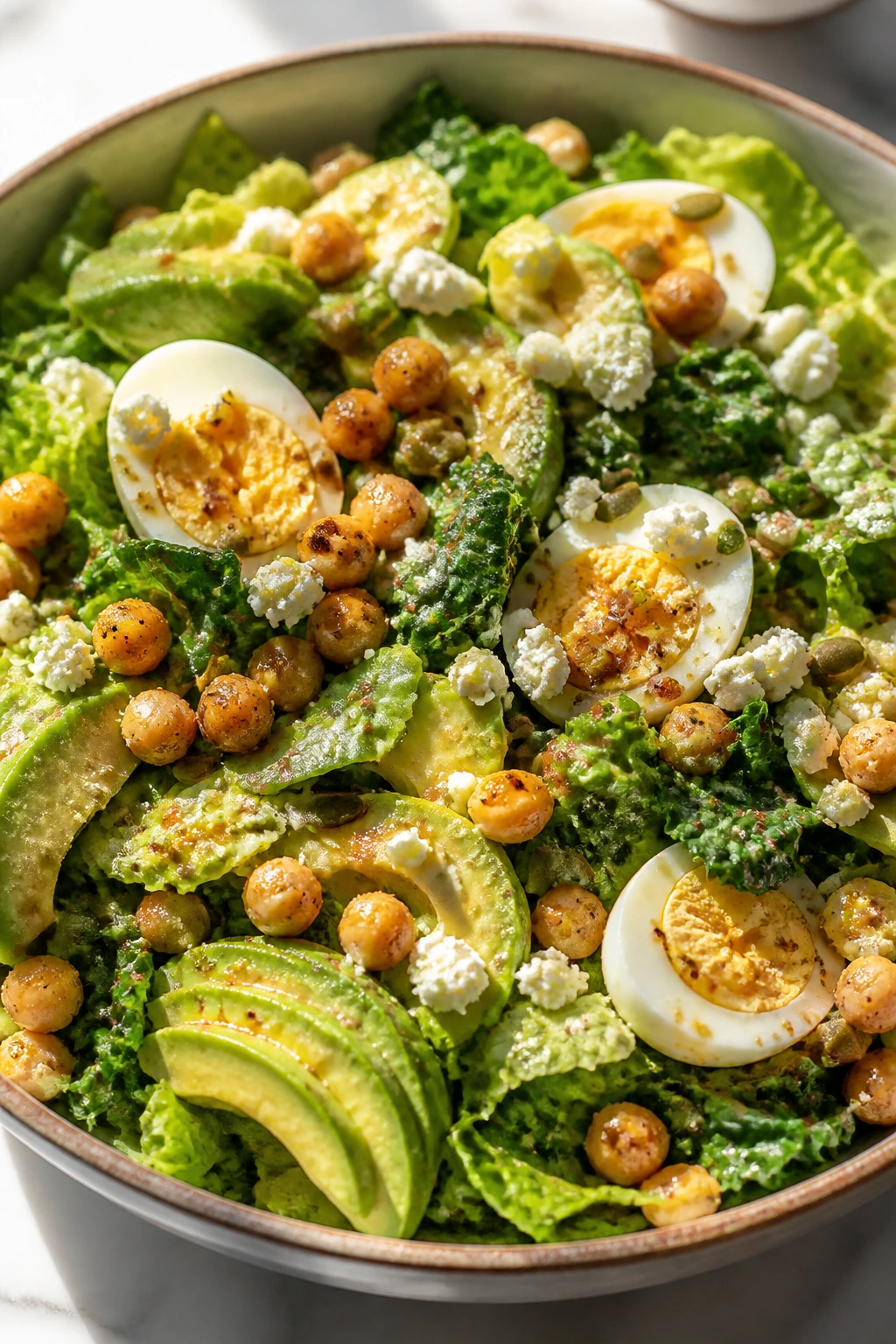
Description: A crisp, meal-sized salad with romaine, kale, arugula, toasted chickpeas, eggs, avocado, feta, and a sharp lemon-Dijon vinaigrette. It eats like lunch or dinner and stays interesting from the first forkful to the last.
Prep Time: 25 minutes
Cook Time: 12 minutes
Total Time: 37 minutes
Course: Main Course, Salad
Cuisine: American
Servings: 4 servings
Calories: 340 kcal
Ingredients
For the Salad:
- 1 large head romaine lettuce, chopped into bite-size pieces and thoroughly dried
- 4 cups baby kale or chopped lacinato kale, ribs removed if tough
- 2 cups baby arugula
- 1 medium English cucumber, halved lengthwise and sliced 1/4-inch thick
- 1 pint cherry tomatoes, halved
- 1 large carrot, peeled and shredded
- 6 radishes, thinly sliced
- 1/3 small red onion, very thinly sliced
- 1 cup canned chickpeas, rinsed, drained, and patted dry
- 1 teaspoon olive oil
- 1/2 teaspoon smoked paprika
- Pinch kosher salt
- 4 hard-boiled eggs, peeled and halved
- 1 avocado, sliced just before serving
- 1/2 cup crumbled feta cheese
- 1/3 cup toasted pepitas or sunflower seeds
For the Homemade Dressing:
- 1/4 cup extra-virgin olive oil
- 3 tablespoons fresh lemon juice
- 1 tablespoon red wine vinegar
- 1 tablespoon Dijon mustard
- 1 teaspoon honey or maple syrup
- 1 small garlic clove, finely grated or minced to a paste
- 1/2 teaspoon kosher salt, plus more to taste
- 1/4 teaspoon freshly ground black pepper
- 1/4 teaspoon dried oregano
- 1 to 2 tablespoons cold water, to thin if needed
Instructions
-
Place the eggs in a saucepan, cover with cold water by 1 inch, bring to a boil, turn off the heat, cover for 10 minutes, then cool in ice water for 5 minutes and peel.
-
Heat the olive oil in a skillet over medium heat. Add the chickpeas, smoked paprika, and pinch of salt, then cook for 5 to 7 minutes until lightly toasted and dry on the outside.
-
Whisk together the olive oil, lemon juice, red wine vinegar, Dijon mustard, honey or maple syrup, garlic, salt, pepper, and oregano until glossy. Add cold water if needed to loosen the dressing.
-
Combine the romaine, kale, arugula, cucumber, tomatoes, carrot, radishes, and red onion in a large bowl.
-
Add the chickpeas, eggs, avocado, feta, and pepitas. Drizzle with the dressing and toss gently until lightly coated.
-
Taste and adjust with more salt, lemon, or pepper if needed. Serve immediately.
Notes: Keep the greens dry, dress the salad right before serving, and add avocado at the last minute. The dressing keeps for 1 week refrigerated, and the salad is best eaten the day it’s assembled.