



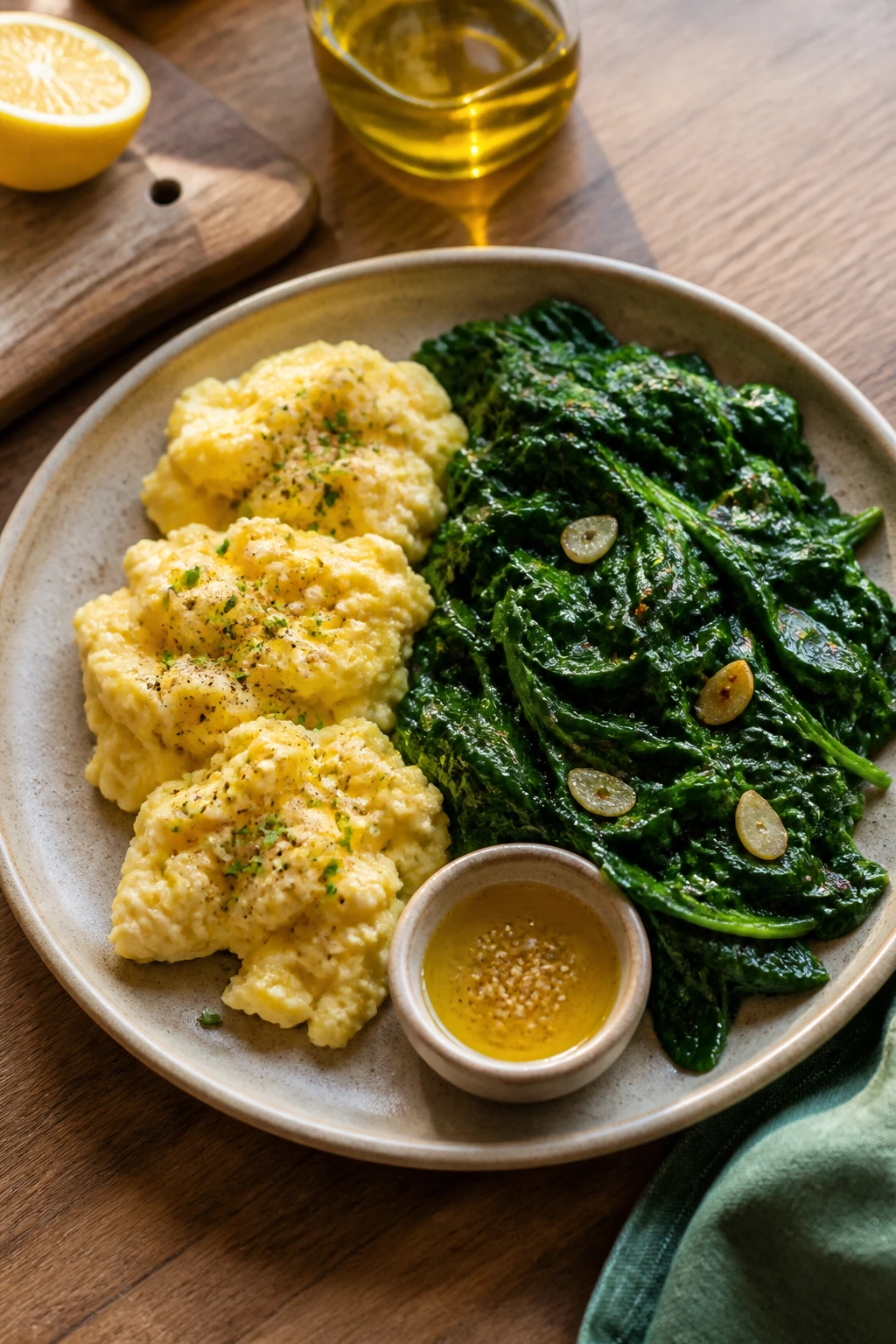
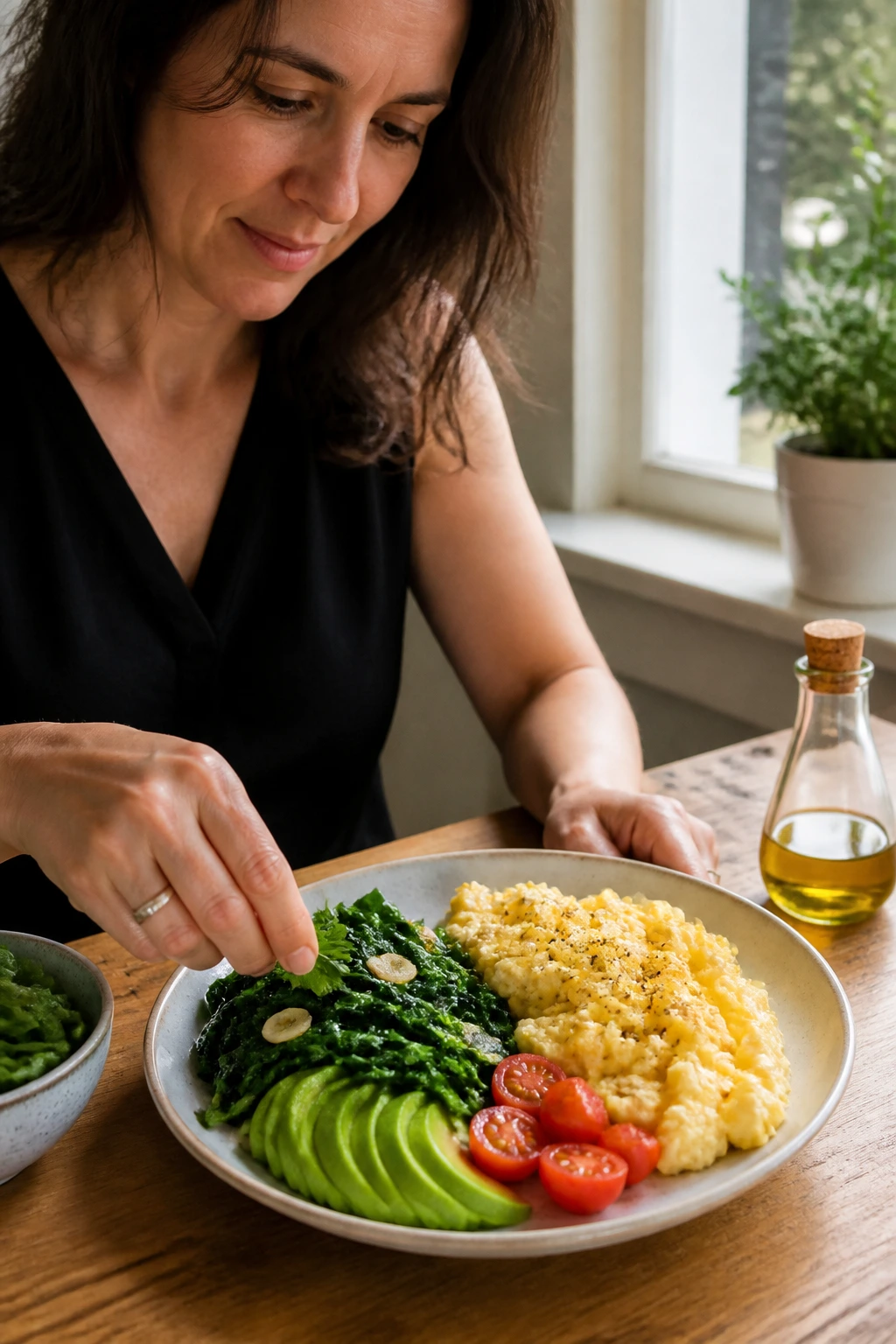
Three scrambled eggs, a slick of olive oil, and a pile of garlicky spinach do not look like diet food until you notice what’s missing: the bread basket, the mountain of rice, the heavy sauces that turn a light plate into a calorie sink. A light low carb meal plan under 500 calories works because it stops pretending the plate needs filler. It gives the calories to protein, vegetables, and a little fat for taste, then gets out of the way.
That sounds simple. It isn’t always easy.
Once you start building meals this way, you notice how fast a tablespoon of oil disappears, how a small handful of nuts can quietly hijack a whole lunch, and how a well-seasoned skillet dinner can feel bigger than a plate twice its size. The trick is not to eat sad little portions. The trick is to make the calories count where your mouth and stomach actually notice them.
Why This Approach Works
- Protein does the heavy lifting: Chicken, eggs, Greek yogurt, fish, tofu, and lean turkey keep meals from feeling flimsy, which matters a lot when you’re capping a plate at 500 calories.
- Vegetables add volume without crowding the budget: Mushrooms, zucchini, broccoli, cabbage, spinach, and cauliflower are the quiet heroes here because they build a full plate fast.
- Measured fat tastes better than free-poured fat: A teaspoon or two of olive oil, a measured slice of avocado, or a spoon of tahini gives a meal enough richness without blowing the calorie count.
- The plan stays flexible: You can make breakfast, lunch, or dinner from the same building blocks and still keep the numbers in check.
- It works on real weeknights: Most of the meals can be cooked in 15 to 25 minutes, which is the difference between a plan you use and a plan you admire from a distance.
- You don’t have to eat tiny food: A bowl of cauliflower rice, a proper chicken salad, or a salmon-and-veg skillet can look like a full dinner plate if you season it with intent.
Why a 500-Calorie Cap Changes the Way You Cook
A 500-calorie ceiling changes the meal before it ever reaches the pan. Suddenly every ingredient has to earn its spot. That sounds harsh, but in practice it’s freeing. You stop tossing in extras because they seem harmless, and you start noticing which foods actually make a meal feel finished.
Oil is the first thing people underestimate. One tablespoon is about 120 calories, which means a casual pour can eat a quarter of your budget before the onions even soften. Cheese does the same job in a different outfit. Nuts too. Even “healthy” add-ons can turn a tidy plate into a dense one if you don’t measure them.
The upside is that low-carb cooking and calorie control get along better than most people expect, because both reward foods with a lot of texture, water, and protein per bite. That’s why a skillet of chicken, peppers, zucchini, and salsa can feel generous while staying light. There’s more chewing. More flavor. Less dead weight.
I also like the psychological side of the 500-calorie mark. It’s enough room for a real meal, not so much room that you start freelancing with every spoonful. You can build a breakfast that keeps you full until lunch, a lunch that doesn’t make you miserable by 3 p.m., or a dinner that doesn’t leave you hunting the pantry at night.
What “Low Carb” Means in Practice
People throw the phrase around as if it’s one exact number. It isn’t. A low carb meal can mean different things depending on whether you count total carbs or net carbs, and depending on how low you want to go.
If you track total carbs, you’ll usually feel better with a meal built around non-starchy vegetables, modest dairy, and lean protein, while keeping rice, bread, pasta, potatoes, and sugary sauces out of the picture. If you track net carbs, the fiber in vegetables can make a meal look cleaner on paper than it would if you counted every gram the same way. Either method works if you stay consistent.
For most plates in this plan, I’d aim for 10 to 25 grams of net carbs or roughly 15 to 35 grams of total carbs, depending on the ingredients. That’s not a rule carved into stone. It’s a practical range that leaves room for berries, Greek yogurt, beans in a small portion, or a little squash without turning the meal into a starch parade.
One thing I’d avoid is the “zero carb or nothing” mindset. That usually leads to meals so stripped down they become annoying by the third bite. A few cherry tomatoes, half a cup of berries, or a measured portion of hummus can still fit comfortably. The point is to keep the carb load low enough that the plate stays balanced, not to eat like a nutrition label.
The Plate Formula That Keeps You Full
The easiest way to stay under 500 calories without getting hungry is to build every plate from the same simple structure. Not the same foods every time. The same structure. That distinction matters.
Protein First
Start with 3 to 5 ounces of protein. Chicken breast, salmon, shrimp, turkey, lean beef, eggs, tofu, tempeh, cottage cheese, or Greek yogurt all work, but the point is to make protein the anchor. It slows down how fast you get hungry again and gives the rest of the meal a shape.
Then Add Volume
Next comes 1½ to 3 cups of non-starchy vegetables. That might be spinach, cauliflower rice, broccoli, cabbage, mushrooms, zucchini, green beans, asparagus, or a salad mix. These foods are cheap in calories and expensive in chew time, which is a nice trade when you want a meal to feel like an actual meal.
Finish With Fat and Flavor
Then use 1 to 2 teaspoons of fat or a measured tablespoon of sauce to finish the plate. Olive oil, avocado, tahini, pesto, butter, cheese, or a nut-based dressing all count. They’re not the enemy. They just need a seat at the table instead of the whole table.
A bright acid changes everything here. Lemon juice, vinegar, pickled onions, salsa, mustard, and hot sauce make a light plate feel dressed rather than stripped. That matters more than people think. A meal with salt, acid, and heat often feels more complete than one with extra calories but no real flavor structure.
A Sample Day of Light Low Carb Meals Under 500 Calories
A good sample day should look like food a person would actually eat, not a Pinterest stunt. Here’s one version built for a normal appetite, normal pantry, and normal weeknight energy.
Breakfast: A two-egg spinach omelet with 1 ounce of feta, a handful of mushrooms, and ½ cup of berries on the side. Cook it in a nonstick skillet with 1 teaspoon of olive oil. You’re looking at roughly 320 to 360 calories and a modest carb load, mostly from the berries and vegetables.
Lunch: Chicken lettuce wraps with 4 ounces of shredded chicken, diced celery, a spoon of Greek yogurt, Dijon mustard, cucumber slices, and a few avocado ribbons. That lands around 350 to 430 calories, depending on how generous you are with the avocado and yogurt. Cold, crunchy, and not boring.
Dinner: Salmon with roasted broccoli and cauliflower rice. Use 5 ounces of salmon, 2 cups of broccoli, 1 cup of cauliflower rice, 1 teaspoon of olive oil, lemon, salt, pepper, and dill. That plate usually sits around 430 to 490 calories if you keep the oil measured.
If you want a snack, choose one with a purpose: a boiled egg, a small container of plain Greek yogurt, a few cucumber slices with cottage cheese, or a string cheese. Don’t snack because the clock says you should. Snack because the meal gap is real.
Breakfasts That Stay Light Without Feeling Tiny
Morning food has a bad habit of swinging between extremes. Either it’s a pastry in disguise or it’s a bowl of disappointment. The breakfasts that work best in a light low carb meal plan under 500 calories sit in the middle: enough protein to last, enough texture to feel finished, and enough flavor that you don’t resent the first bite.
Hot Skillets That Actually Wake You Up
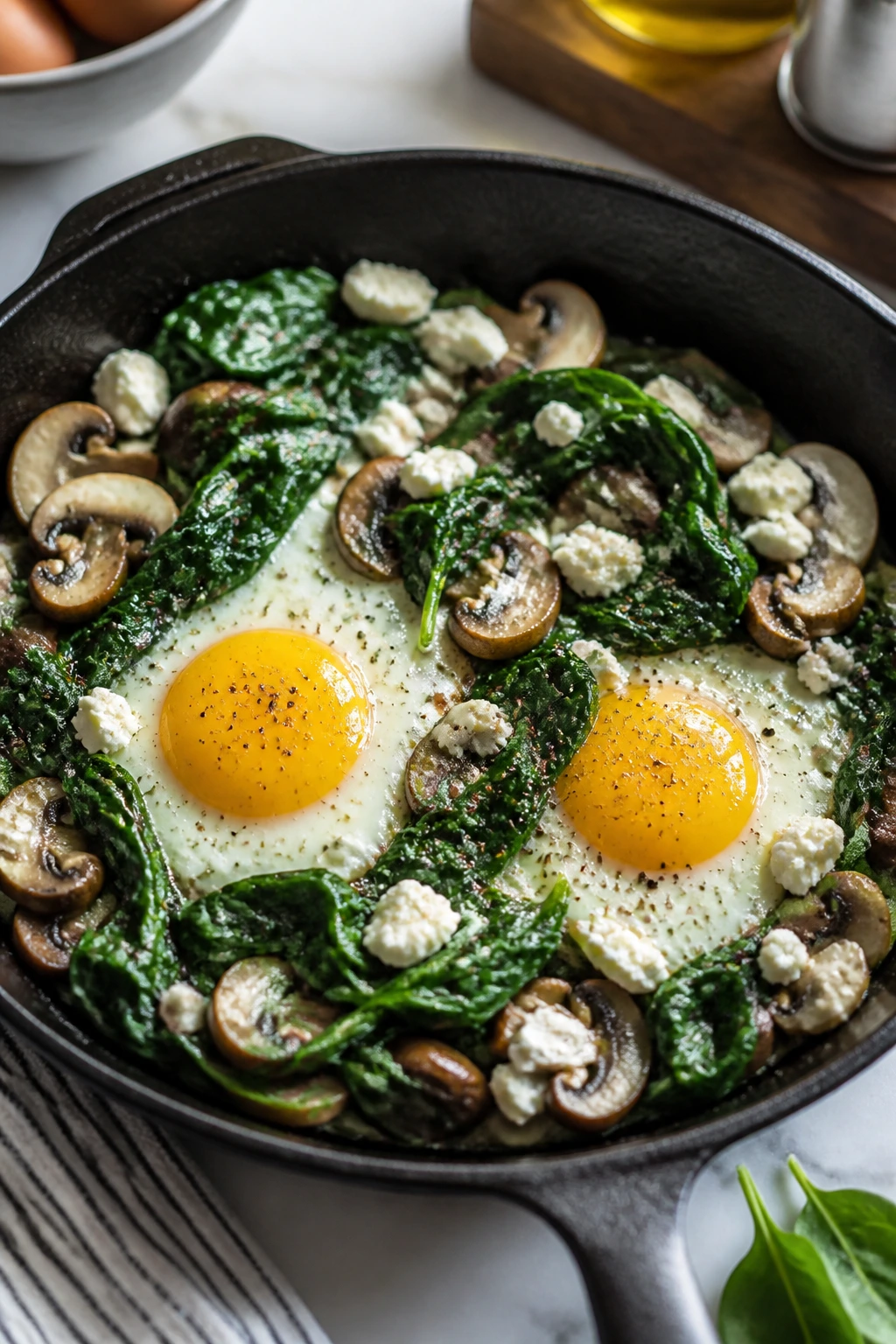
A skillet breakfast has one job: hit the table hot enough that the eggs still smell good when you sit down. A classic combination is 2 whole eggs, 2 egg whites, spinach, mushrooms, and a little cheese. Cook the vegetables first so they lose water, then slide in the eggs. That keeps the plate from turning wet, which is the fastest way to make a low-carb breakfast feel cheap.
If you like a little more heft, add a slice of turkey bacon or 2 ounces of smoked salmon. Both stay within the budget if you don’t start adding extra cheese on top of everything.
Cold Breakfasts for Days When the Stove Feels Like Too Much
Greek yogurt bowls can work, but they need restraint. Use plain Greek yogurt, not the sugared kind, then add chia seeds, a few walnuts, cinnamon, and a small handful of berries. That gives you creaminess and crunch without turning the bowl into dessert. Cottage cheese with cucumber, tomato, black pepper, and a little olive oil is another one I trust.
The mistake here is piling on nuts until the bowl looks expensive and the calorie count looks ugly. A tablespoon or two is enough. More than that and you’re eating trail mix with a spoon.
Sweet Breakfasts Without the Sugar Crash
If you want sweet, keep it deliberate. A chia pudding made with unsweetened almond milk and a scoop of protein powder can land under 400 calories with very low carbs, and the texture is better than people expect if you let it sit long enough to thicken. Add a few raspberries, not a mound.
Egg muffins with a little cinnamon and turkey sausage on the side sound odd until you’re standing in a kitchen at 7 a.m. needing something fast. Then they sound like common sense.
Lunches That Reheat Cleanly and Still Taste Fresh
Lunch is where good intentions usually get punished. You pack something sensible, then by noon it’s either soggy, bland, or both. The low-carb lunch that works needs to survive a little time in the fridge and still taste like a meal instead of leftovers with ambition.
Bowls Beat Random Leftovers
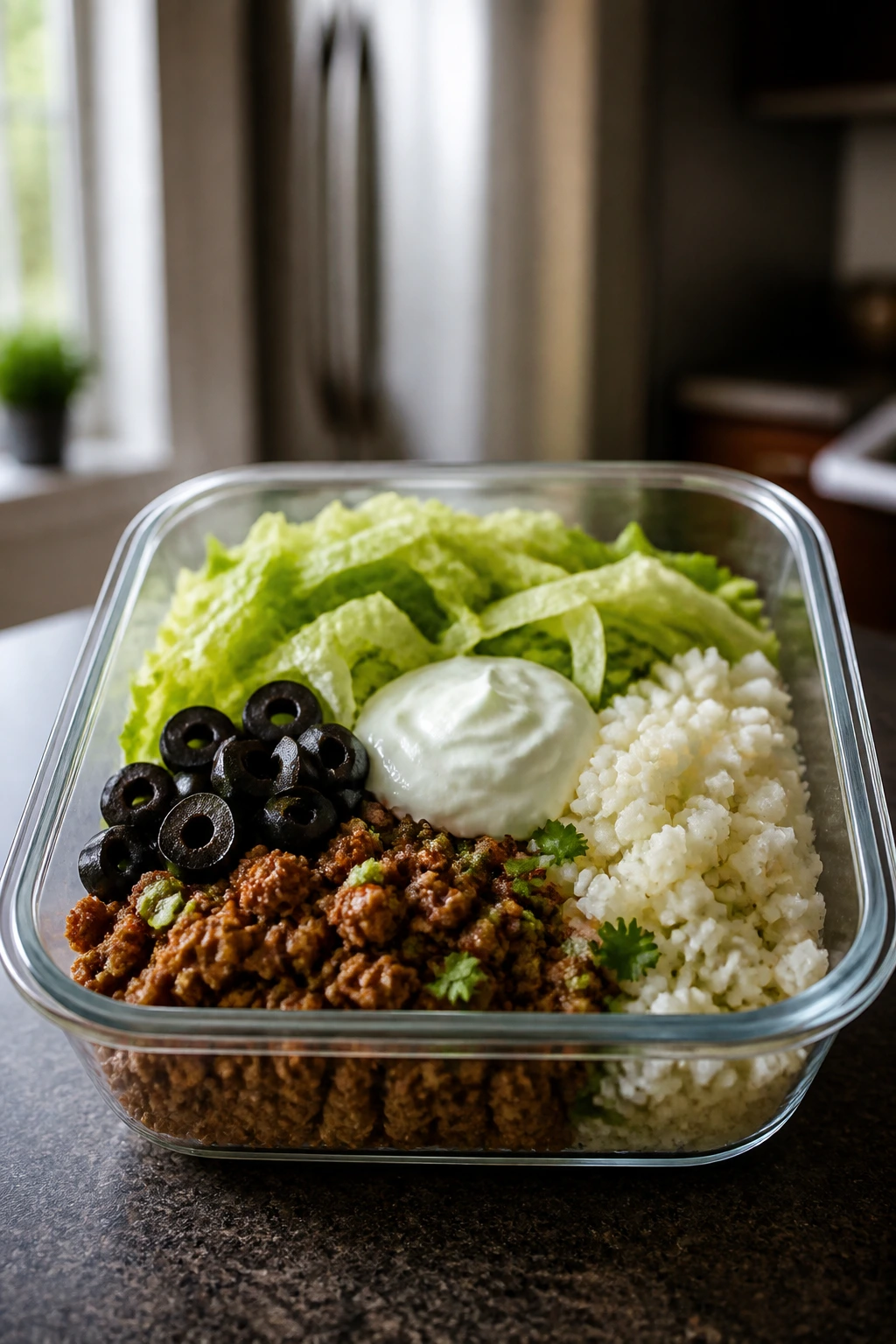
A bowl built around a protein, a crunchy vegetable, and a measured dressing holds together better than a bunch of separate containers. Think turkey taco bowl with shredded lettuce, salsa, cauliflower rice, black olives, and a dollop of Greek yogurt. That comes in under 500 calories easily if you keep the cheese to a measured sprinkle.
Another good one: tuna salad over cucumber ribbons and romaine, with celery, dill, lemon, and a spoonful of olive-oil mayo. It’s cold, sharp, and doesn’t need reheating. Sometimes that alone is enough to make it more useful than a hot lunch.
Wraps That Don’t Collapse Halfway Through
Lettuce wraps can be fragile, but they’re worth using if you choose the right greens. Romaine hearts and butter lettuce hold up better than loose spring mix. Fill them with chicken salad, egg salad, or turkey, then tuck the filling in tight. If you overstuff them, they crack and you spend lunch cleaning your desk instead of eating.
A good low-carb wrap filling usually needs one creamy element and one crunchy element. Greek yogurt with diced celery. Mayo with pickles. Mustard with shaved radish. Without that contrast, the wrap tastes flat.
Soup If You Want Something That Feels Bigger Than It Is
Brothy soups are underrated in a meal plan under 500 calories. Chicken, cabbage, celery, mushrooms, and zucchini in a clear broth can feel generous because the bowl looks deep and the spoon keeps moving. Add a little Parmesan or a spoon of pesto if the broth needs a lift.
Cream soups can work too, but they’re easy to overdo with cream and cheese. That’s not a reason to avoid them. It’s a reason to measure.
Dinners That Still Feel Like Dinner
Dinner is where the emotional test happens. Lunch can be practical. Breakfast can be functional. Dinner has to feel like you meant it. Under 500 calories, that usually means a hot pan, enough seasoning to matter, and a plate that has shape and color.
Skillet Meals With a Real Center of Gravity
A chicken-and-broccoli skillet with garlic, lemon, and a little Parmesan can feel surprisingly complete if you sear the chicken instead of steaming it. Use a hot pan, let the edges brown, then pull in the vegetables so they pick up the bits left behind. That little brown residue is flavor. Don’t scrub it away with extra liquid too early.
Turkey meatballs with zucchini noodles and marinara work for the same reason. The meatballs carry the meal, the zucchini gives you volume, and the sauce makes the whole thing feel intentional. If you want to keep it lower in carbs, use a sauce with no added sugar and don’t drown the bowl.
Fish and Seafood Keep the Plate Light
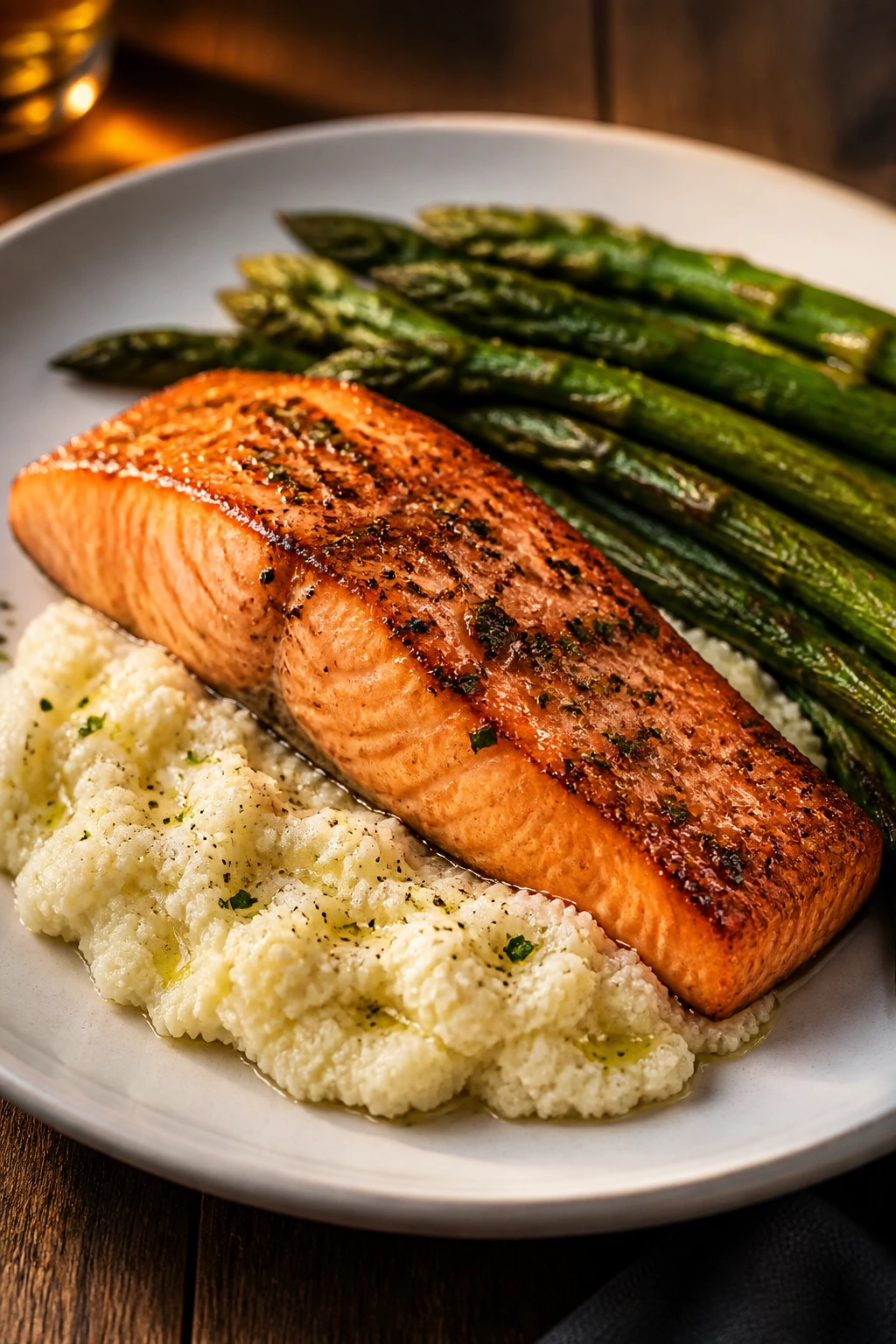
Salmon, shrimp, cod, and tilapia all fit easily into a low carb dinner under 500 calories. The trick is not to bury them. A piece of salmon with asparagus and cauliflower mash tastes cleaner than a fish fillet smothered in a heavy cream sauce.
Shrimp is especially useful because it cooks fast and gives you a lot of protein for the calories. A shrimp sauté with garlic, cherry tomatoes, spinach, and a spoon of feta can feel fresh without getting delicate. That’s a word I don’t usually trust in dinner. Fresh is better.
Vegetarian Dinners Need Texture, Not Apologies
Tofu stir-fries and eggplant skillets can absolutely belong here, but they need crisp edges and strong seasoning. Press tofu, brown it hard, then pair it with broccoli, cabbage, snap peas, or mushrooms. A thin sauce of soy sauce, ginger, and sesame oil goes a long way when you measure it instead of free-pouring.
Vegetarian low carb plates often fail because they lean too hard on cheese. Cheese helps, sure, but it is not a personality. If you want the plate to hold up, give it roasted vegetables, acid, and something with chew.
How to Build a Light Low Carb Meal Plan Under 500 Calories
The cleanest way to make a light low carb meal plan under 500 calories work is to stop thinking like a recipe collector and start thinking like a plate builder. You need a handful of proteins, two or three vegetable routines, and a few sauces you can make quickly without measuring your patience down to zero.
Keep Three Proteins Ready
Choose one poultry option, one fish or seafood option, and one vegetarian option to rotate through the week. That might mean cooked chicken breast, salmon fillets, and extra-firm tofu. If you keep those on hand, lunch and dinner become assembly jobs instead of creative writing assignments.
Pick Two Vegetables for Roasting and Two for Crunch
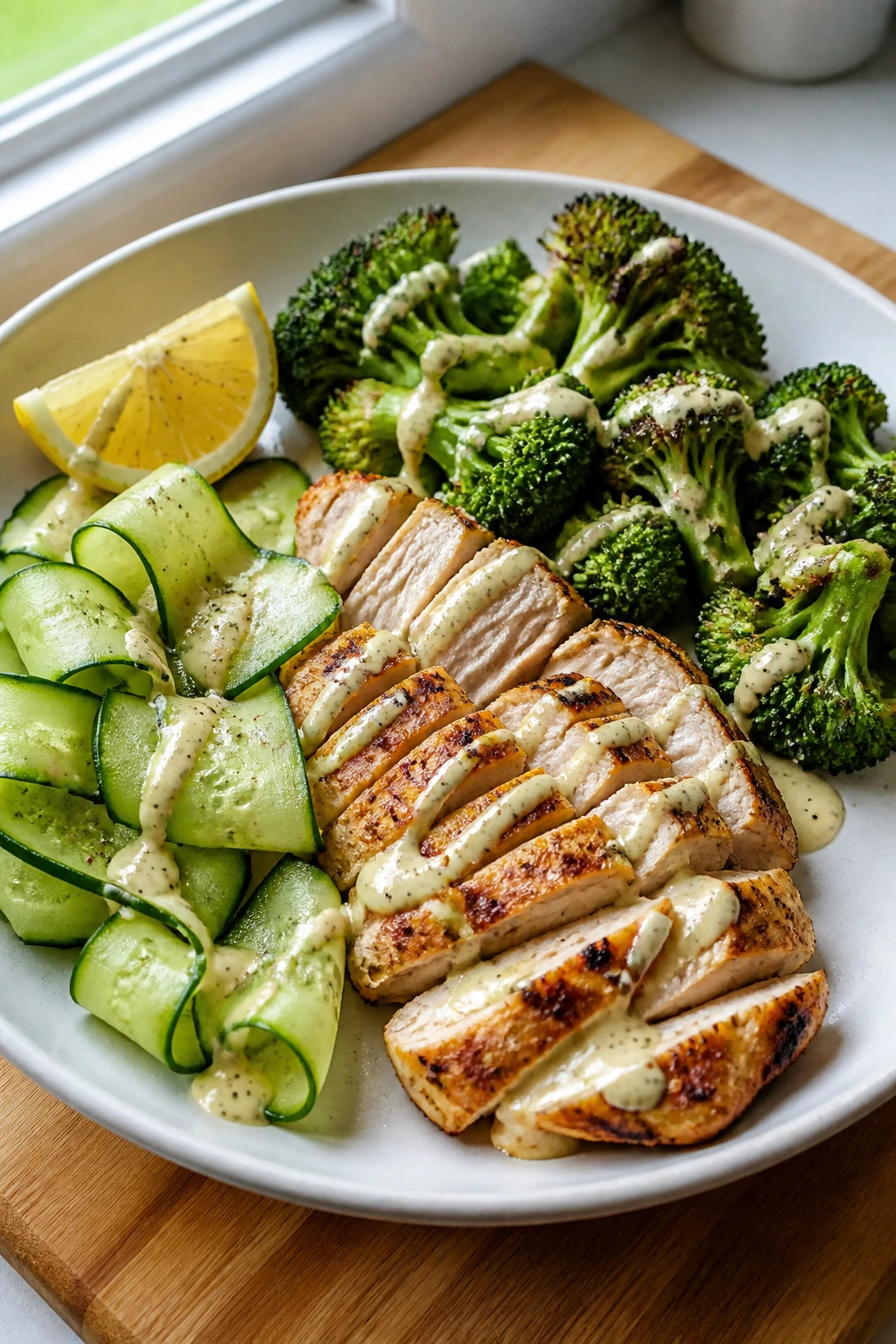
Roasted broccoli and cauliflower are easy to keep around. So are cucumber and romaine for cold meals. That mix covers most cravings: something warm, something crisp, something leafy, something with a little char.
Hold the Sauce Line
A low carb meal gets boring fast when the sauce is weak. Keep a small set of options in the fridge: salsa, mustard vinaigrette, Greek yogurt ranch, chimichurri, lemon-tahini, or a simple garlic-herb dressing. Measure them. Taste them. Stop before the bowl swims.
One more thing. Don’t build every meal around the same texture. If breakfast is soft, make lunch crunchy. If lunch is cold, make dinner hot. If dinner is creamy, make breakfast sharp. The palate gets tired long before the calories do.
Practical Tips for Making the Plan Stick
Flavor Enhancement: Finish cooked vegetables with lemon zest, vinegar, or a spoon of salsa right before serving. That small hit of acid makes the whole plate taste brighter, and it’s cheaper than adding more cheese or oil.
Time-Saver: Roast two sheet pans of vegetables at once. One can be broccoli and cauliflower, the other zucchini and peppers. They keep for several days and can slide into eggs, bowls, and dinner plates with almost no effort.
Cost-Saver: Buy proteins in the form you’ll actually use. Whole chicken thighs can be cheaper than pre-cut breasts, and plain yogurt is usually better value than flavored cups. A little knife work now saves money later.
Portion Control: Put nuts, cheese, avocado, and dressing on the plate with a spoon, not from the package. That one habit prevents the quiet calorie creep that wrecks a meal plan faster than dessert does.
Pro Move: Keep one crunchy topping around, like toasted seeds or sliced almonds, and use no more than a tablespoon. The crunch makes low-carb food feel deliberate, not stripped down.
The Mistakes That Usually Push Meals Over 500 Calories
The first mistake is free-pouring fats. Olive oil, butter, pesto, tahini, mayo, and creamy dressings are all fine, but they are dense. The symptom is a plate that looks wholesome and somehow lands at 650 calories. The fix is boring and effective: measure the fat once or twice until your eye learns what a teaspoon and a tablespoon actually look like.
The second mistake is treating “low carb” like “no vegetables”. People get so focused on cutting starch that they forget the part that makes meals satisfying. Then they’re left with chicken and a lonely forkful of lettuce. The fix is to make non-starchy vegetables the bulk of the plate. They’re the volume, the texture, and the part that keeps the meal from collapsing in on itself.
The third mistake is using protein that’s too small or too lean to matter. Four skinny bites of chicken breast won’t carry you very far, and a meal built that way sends you hunting for snacks an hour later. Fix it by building around a meaningful portion: usually 3 to 5 ounces, depending on the rest of the plate. If the protein is plant-based, you may need a little more volume or some added fat to stay satisfied.
The fourth mistake is stacking “healthy extras” until they aren’t extras anymore. A handful of almonds. A slice of avocado. A spoon of sunflower seeds. A sprinkle of cheese. A drizzle of dressing. That’s six little decisions and half your calorie budget gone. Pick the extras on purpose. Two is enough for one meal, sometimes three if the rest of the plate is very lean.
Smart Swaps and Variations for Different Eating Styles
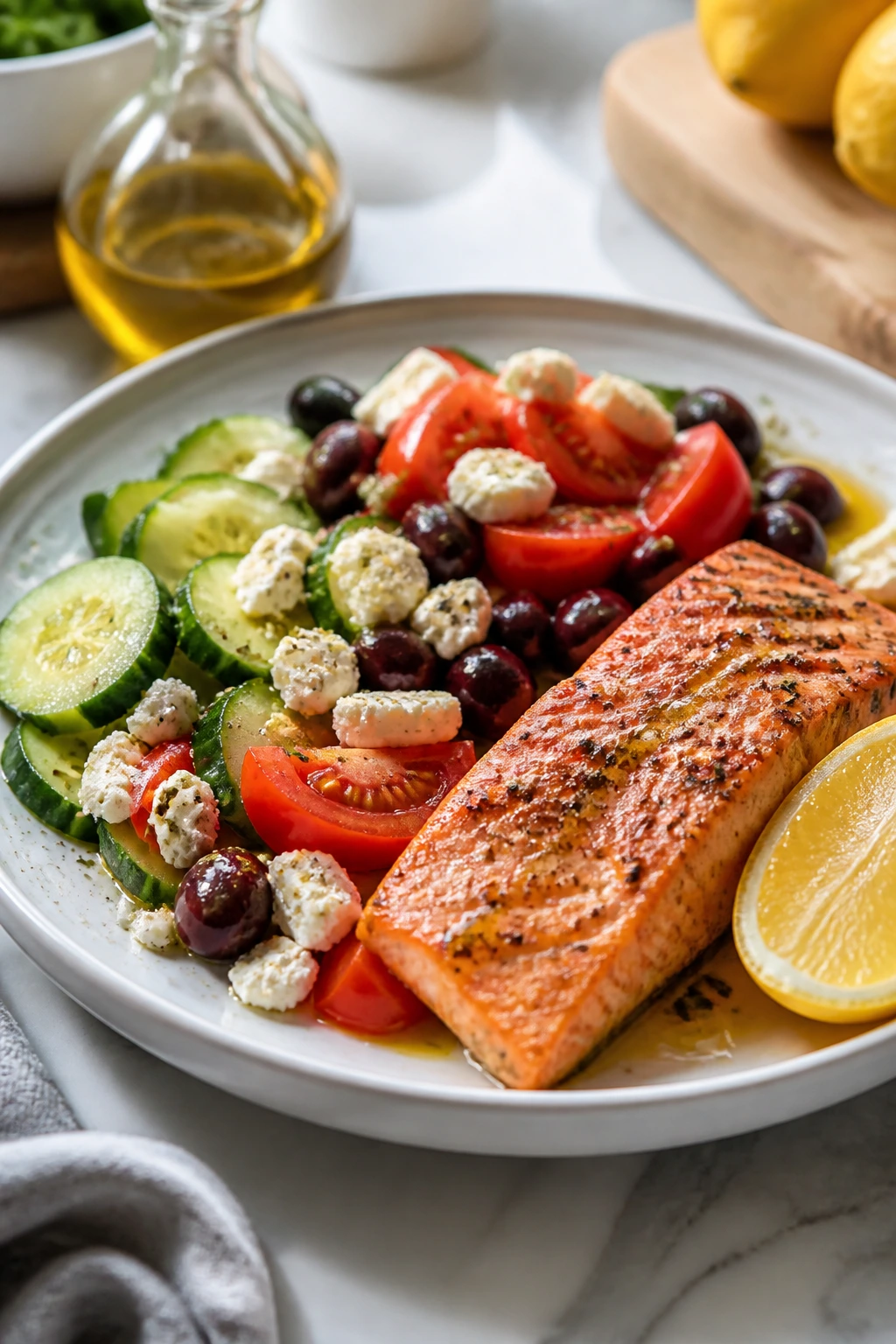
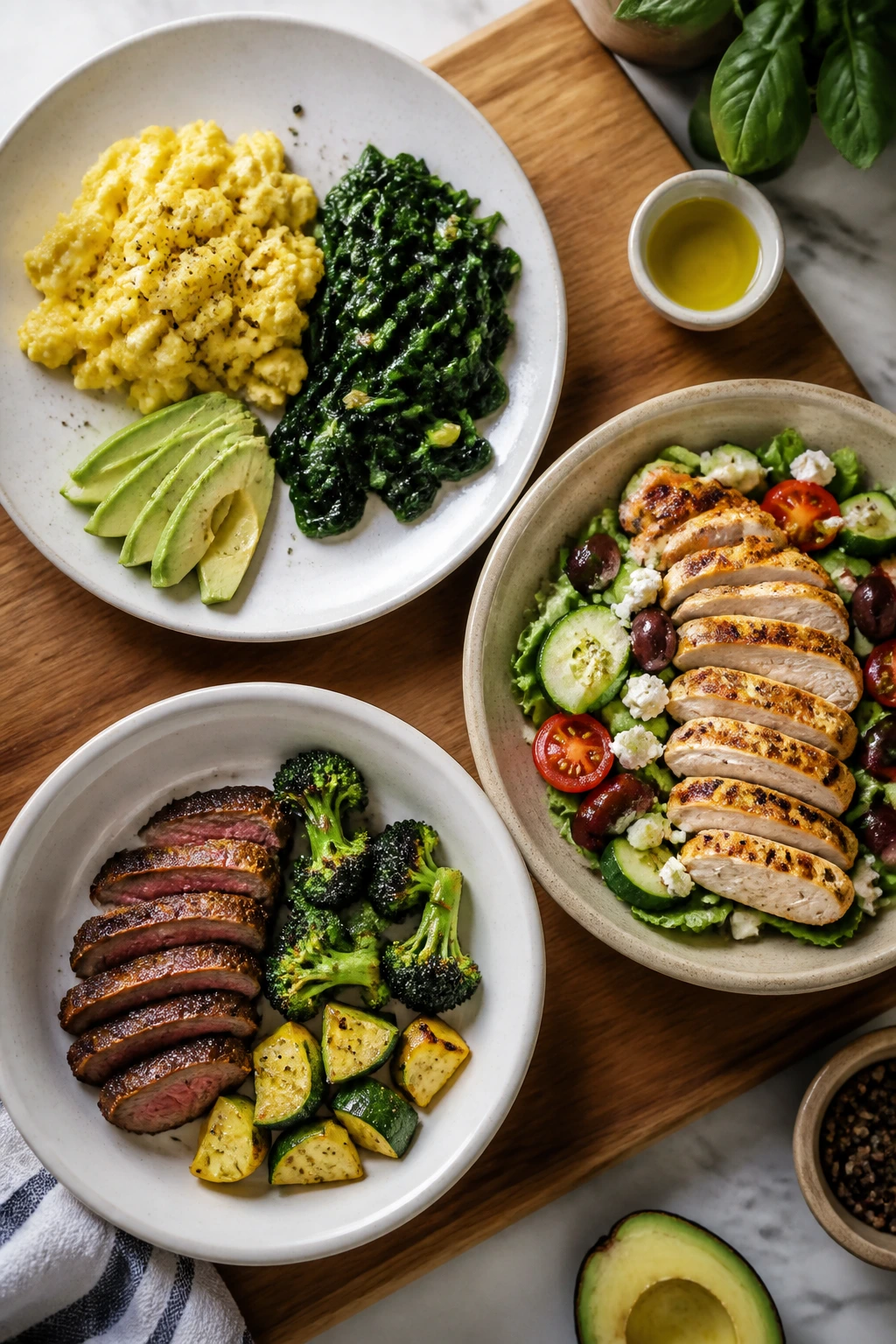
Mediterranean Lean Plate: Use salmon, chicken, or shrimp with cucumber, tomato, olives, feta, lemon, and a measured spoon of olive oil. This version feels bright and salty, and it handles lunch leftovers better than many heavier plates because the flavors wake up after a night in the fridge.
Dairy-Light Version: Skip cheese, cream, and heavy yogurt, then lean on avocado, tahini, herbs, mustard, and citrus for richness. The meal still feels complete, but the texture is cleaner and less heavy, which helps if dairy tends to sit like a brick.
Vegetarian Low-Carb Plate: Use tofu, tempeh, eggs, cottage cheese, or Greek yogurt as the main protein, then load up on mushrooms, cabbage, spinach, and broccoli. The key is browning the protein hard enough to give it a little edge; bland tofu is a decision, not a fate.
Higher-Protein Training Plate: If you’re hungrier after workouts, move closer to the 500-calorie ceiling and make the protein portion larger while keeping the starch out. A salmon bowl, turkey lettuce wraps, or egg-and-cottage-cheese breakfast all work well here.
Mild-and-Kid-Friendly Plate: Use roasted chicken, cucumber slices, a little shredded cheese, and carrots or broccoli with a mild dip. Skip the sharp vinegar and hot sauce, then let the adult at the table finish their own plate with chili flakes or pickled onions.
The Tools That Make the Job Easier
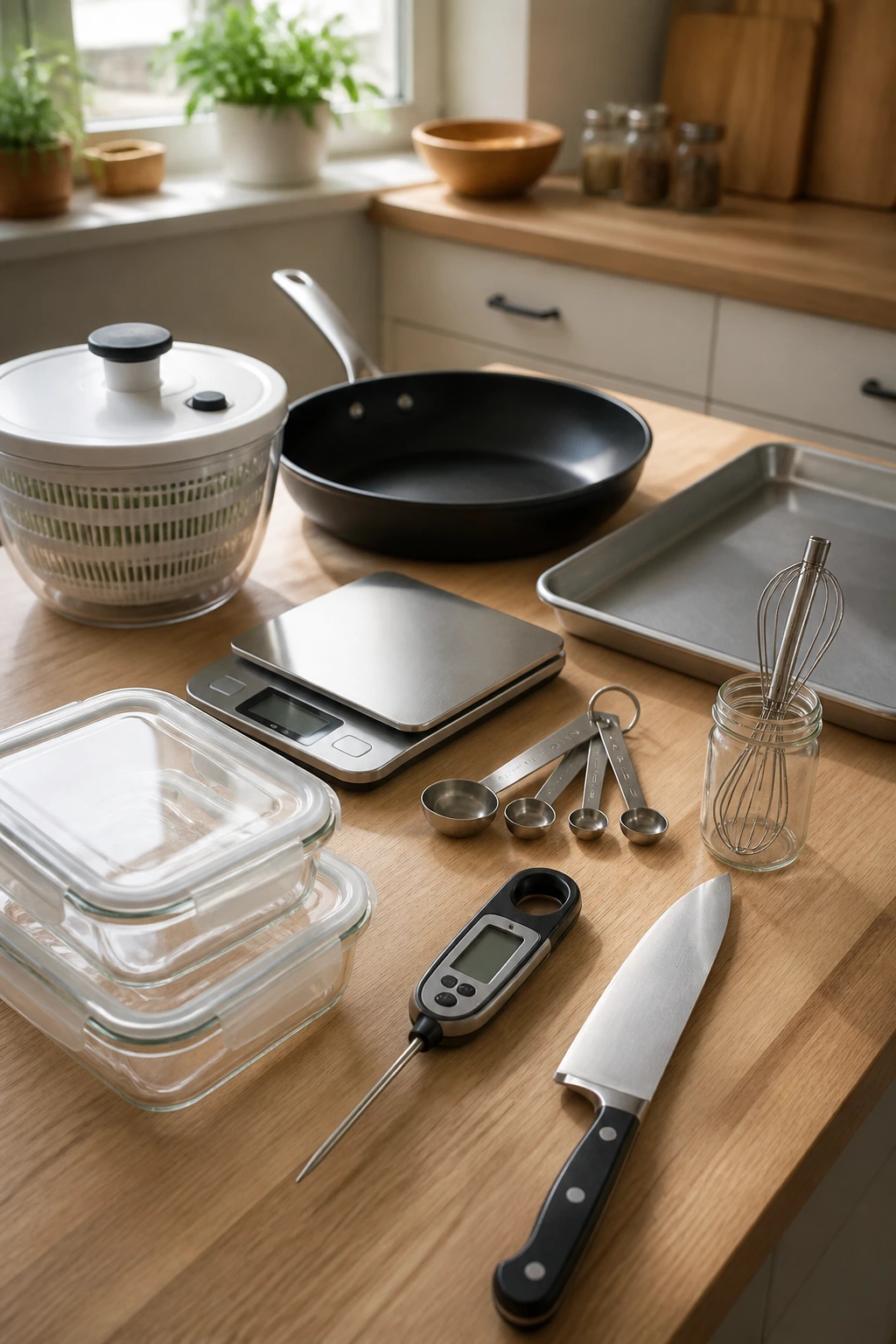
- Digital kitchen scale: The fastest way to learn what 3 ounces of chicken or 1 tablespoon of dressing actually looks like.
- Measuring spoons: Oil, nut butter, tahini, pesto, and cheese all behave better when you stop guessing.
- 10- or 12-inch skillet: Big enough to brown protein without crowding, which matters more than people think.
- Rimmed sheet pan: Roasting vegetables in one layer gives you better color and less sogginess.
- Sharp chef’s knife: Faster prep, cleaner cuts, less frustration with cabbage, cucumbers, and herbs.
- Meal prep containers: Clear ones help you see what’s ready to eat, which cuts down on forgotten leftovers.
- Instant-read thermometer: Helpful for chicken, fish, and turkey so you stop poking at food and hoping for the best.
- Salad spinner: Worth it if you use a lot of greens; dry lettuce holds dressing better and lasts longer.
- Small whisk or jar with a lid: Good for quick vinaigrettes and yogurt-based dressings.
Storage, Meal Prep, and Leftover Rules
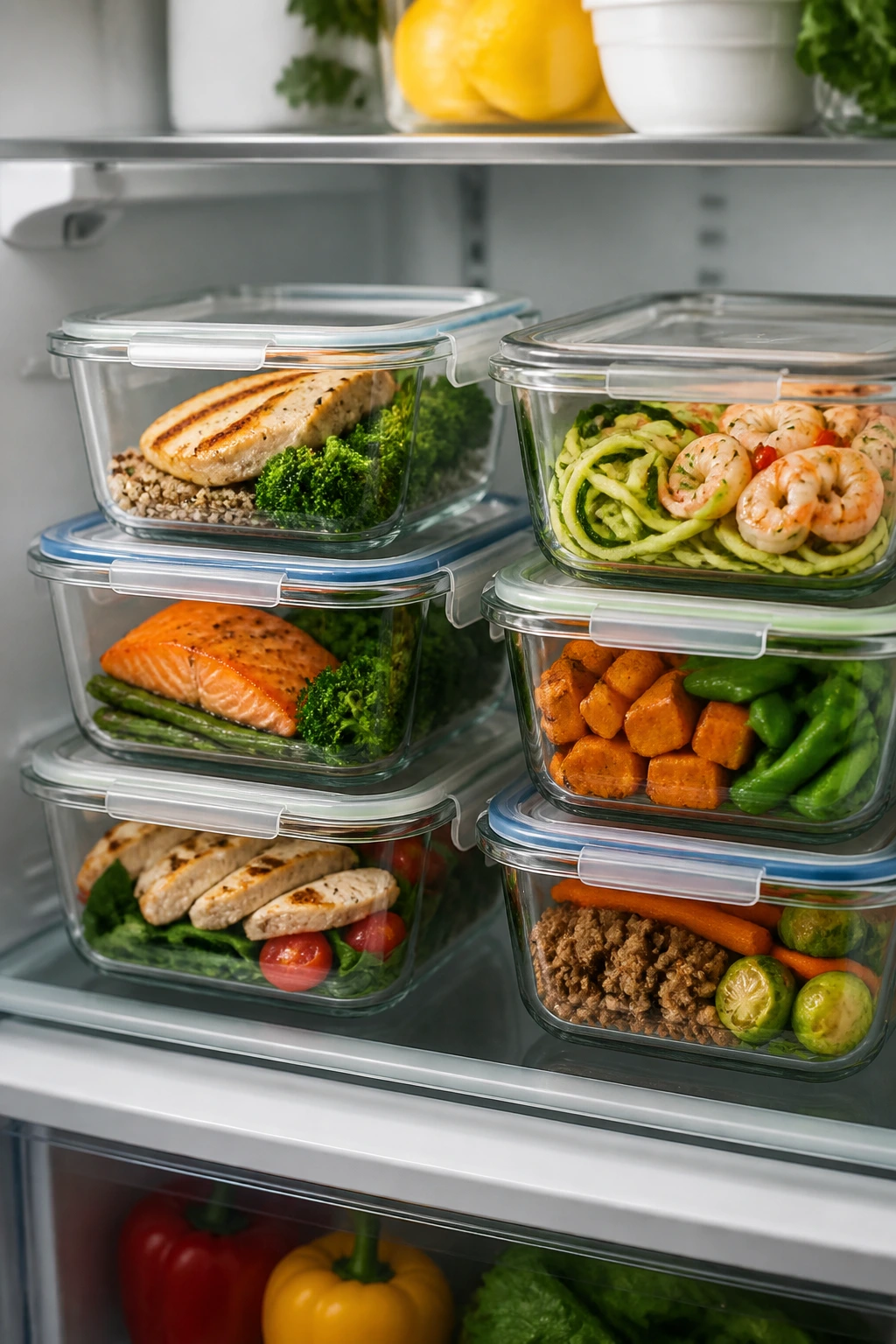
Cooked proteins keep best when they’re cooled quickly and stored in shallow containers. In the fridge, cooked chicken, turkey, tofu, and roasted vegetables usually hold for 3 to 4 days. Fish is shorter; I’d use it within 2 to 3 days because the texture slips faster. If you’re making bowls or salads, store the dressing separately so the vegetables don’t go limp.
Some parts of the plan freeze well. Cooked chicken, turkey meatballs, soups, and some roasted vegetables can be frozen for up to 2 months if they’re packed tightly and labeled clearly. Cauliflower rice freezes better than leafy greens, which tend to turn soft and watery after thawing. Egg-based dishes can freeze, but the texture changes enough that I usually prefer them fresh or refrigerated.
Reheating depends on the food. Chicken and turkey do well in the microwave at medium power with a splash of water or broth. Roasted vegetables come back best in a hot skillet or oven so they regain a little edge. Fish should be reheated gently or eaten cold; aggressive heat turns it dry and stale-tasting fast. If a meal includes avocado, add it after reheating, not before.
Meal prep gets easier if you separate the components. Roast the vegetables. Cook the proteins. Wash the greens. Mix the sauce. Then combine only what you plan to eat soon. That approach keeps the food tasting assembled instead of embalmed.
Frequently Asked Questions
How low should the carbs be in a meal like this?
A practical target is usually 10 to 25 grams of net carbs per meal, or a bit higher if your vegetables, yogurt, or berries push the number up. The best number is the one you can repeat without feeling foggy or deprived.
Can I still eat fruit on a low carb meal plan under 500 calories?
Yes, but use fruit like a garnish, not a bowl filler. Berries are the easiest fit because they give color, acidity, and a sweet finish without eating the calorie budget the way grapes, bananas, or mango can.
What if I get hungry an hour later?
That usually means the protein portion was too small or the fats were measured too tightly. Add another ounce or two of protein first, then check whether the meal needs more volume from vegetables before you reach for extra oil or cheese.
Is this plan okay if I don’t count net carbs?
Absolutely. Count total carbs if that feels cleaner, and keep the same plate structure: protein, vegetables, and a measured fat. The meal still works even if you never subtract fiber on a calculator.
Can vegetarian meals stay under 500 calories and still feel filling?
They can, but they need more attention to texture. Pressed tofu, eggs, cottage cheese, Greek yogurt, tempeh, and roasted vegetables do the job better than a plain salad with a few seeds on top.
What’s the easiest way to make lunch ahead of time?
Build bowls or lettuce wraps with the dressing packed separately. Protein, cut vegetables, and a crunchy base like cabbage or romaine hold up well for several days, while wet ingredients stay in their own container until eating time.
Can I use cauliflower rice every day?
You can, but I wouldn’t rely on it alone. Rotate in broccoli rice, shredded cabbage, zucchini noodles, roasted vegetables, and salads so the food doesn’t start tasting like the same idea in different clothes.
What if my meal goes over 500 calories by a little?
That’s not a failure. Trim the oil, cheese, avocado, or nuts on the next plate and keep going. Precision matters, but a meal plan breaks when people turn every small overshoot into a reason to quit.
A Calm Way to Keep It Going
A light low carb meal plan under 500 calories works best when it feels like a set of habits, not a moral project. The plates should look tidy, taste like real food, and leave enough room in your day for the rest of your life. That’s the whole point. Not punishment. Not hunger games with a fork.
Build the meal around protein. Let vegetables carry the volume. Measure the fats that matter. Then season the thing properly, because bland restraint is still bland. The version that lasts is usually the one that feels a little generous at the table and a little disciplined in the measuring spoon.
If you want a good place to start, make one breakfast, one lunch, and one dinner from this structure this week. After that, the pattern starts doing some of the work for you.