



A light healthy dinner under 500 calories should still look like dinner, not a compromise arranged on a salad plate.
That’s where a lot of people go wrong. They slash the calories, strip out the starch, under-season the vegetables, and then wonder why they’re hunting for crackers ten minutes later. A dinner like that may fit a number, but it doesn’t fit real life. The better move is to build a plate with enough protein to hold you, enough vegetables to give the meal volume, a measured amount of fat, and a carb portion that earns its spot instead of sneaking in by accident.
I like this kind of dinner because it has structure. A piece of salmon with roasted broccoli and a scoop of quinoa feels different from a bowl of plain greens with a dry chicken breast perched on top. One actually settles you. The other feels like a penance. That distinction matters more than most calorie counters want to admit.
Why a 500-Calorie Dinner Ceiling Works So Well
A dinner target of 500 calories gives you a guardrail without turning the meal into a math exam.
That number is useful because dinner tends to be where people lose the plot. Lunch was rushed, snacks were random, and then suddenly it’s evening and you’re standing in front of the fridge looking for something that feels like food. A ceiling gives the plate shape. It also keeps the calories from drifting upward through oil, cheese, nuts, sauces, and “just a little more” portions that quietly become half the meal.
There’s another reason this range works. A dinner in the 350-to-500 calorie range leaves room for a real breakfast, a real lunch, and the occasional snack without turning the day into a starvation contest. If your daily intake is higher or your activity level is higher, 500 may feel light in a good way. If you’re smaller or less hungry at night, it can still be enough when the food is built with enough protein and fiber to actually keep you satisfied.
The number itself is not magic. The structure is.
A plate with 4 to 5 ounces of lean protein, 2 cups or more of vegetables, and a modest starch portion can land under 500 calories and still taste like something you’d cook on purpose. A 500-calorie dinner built from the right ingredients usually eats better than a 300-calorie dinner made from the wrong ones. That’s the part worth remembering.
What a Light Dinner Looks Like on the Plate
The easiest way to picture a good dinner is to stop thinking about “low calorie” and start thinking about balance in the bowl or on the plate.
The old MyPlate visual from USDA still earns its keep: half vegetables, a quarter protein, a quarter starch. I’d tweak that for dinner and say the protein can nudge a little higher if you get hungry later in the evening. A dinner plate doesn’t need to be tiny. It needs to be coherent.
Here’s what that often looks like in practice: a palm-sized piece of chicken or fish, a mound of roasted broccoli or sautéed greens, and a small scoop of rice, potatoes, or beans. The food should look arranged, not sparse. If the plate looks like something was taken away, you’re probably cutting too hard. If it looks abundant but still fits your calorie target, you’re doing it right.
The rough numbers that make dinner easier
- Protein: 3 to 5 ounces of chicken, fish, turkey, tofu, or shrimp usually gives you the anchor you need without eating the whole calorie budget.
- Vegetables: 2 cups of nonstarchy vegetables can add real volume for very few calories, especially when you roast or sauté them well.
- Starch: 1/2 cup cooked rice, quinoa, or pasta, or one small potato, gives the plate enough substance to feel like dinner.
- Fat: 1 teaspoon to 1 tablespoon of oil, butter, tahini, pesto, or dressing is plenty when you’re using it with intent.
- Sauce: 2 tablespoons of a bright sauce can change the whole meal, but a heavy pour can double the calorie count before you blink.
A useful dinner is not a starvation exercise. It’s a layout problem.
Protein Is the Piece That Keeps the Meal from Fading Away
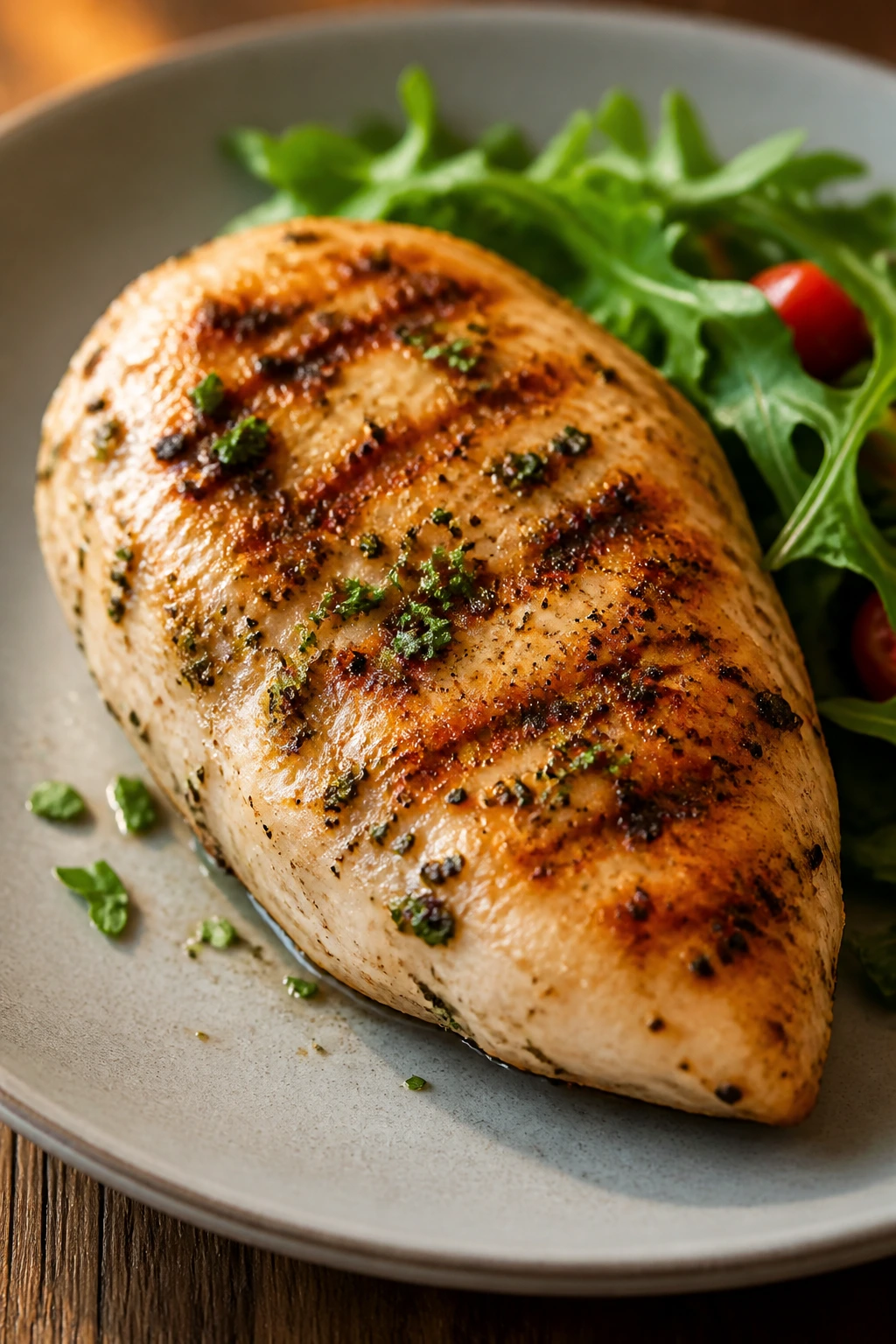
Protein earns its keep fast at dinner. Without it, the plate gets fragile. You eat, you leave the table, and half an hour later you’re back in the pantry acting like dinner never happened.
For a light healthy dinner under 500 calories, I like to think in terms of 25 to 35 grams of protein as a practical target. That often means a 4-ounce chicken breast, a 5-ounce piece of fish, a full cup of Greek yogurt in a sauce or bowl, a generous portion of tofu, or a mix of beans and grains that adds up properly. You do not need to chase a perfect number, but you do need enough protein that the meal has a spine.
Lean animal proteins that work especially well
Chicken breast is the easy one, but it’s not the only one. Turkey cutlets, shrimp, cod, tilapia, salmon, and lean pork tenderloin all fit cleanly into a lower-calorie dinner if you cook them with a measured amount of fat. Shrimp is especially handy because it cooks in minutes and gives you a lot of protein for the calories.
Fish deserves a note. A 5-ounce salmon fillet brings more fat than cod or shrimp, but that fat is part of why the plate feels satisfying. Keep the side portions modest and salmon fits beautifully under the cap.
Plant proteins that hold the line
Tofu, tempeh, edamame, lentils, black beans, and chickpeas all work, but they behave differently. Tofu takes on seasoning and browns well in a skillet or oven. Lentils need acid and herbs to feel lively. Beans are better when they’re not asked to carry the whole dinner alone; pair them with vegetables and a grain, and they stop feeling like a side dish.
Doneness matters more than people think
Dry protein ruins a light dinner fast. Dry chicken breast tastes like a punishment. Dry tofu tastes like missed potential. Dry fish feels worse because the texture tells the story immediately.
Use an instant-read thermometer if you can. Chicken is done at 165°F, and fish usually eats best when it’s just cooked through and flakes with gentle pressure. That one tool saves more dinners than almost any recipe trick.
Vegetables Give You Volume, Color, and Breathing Room
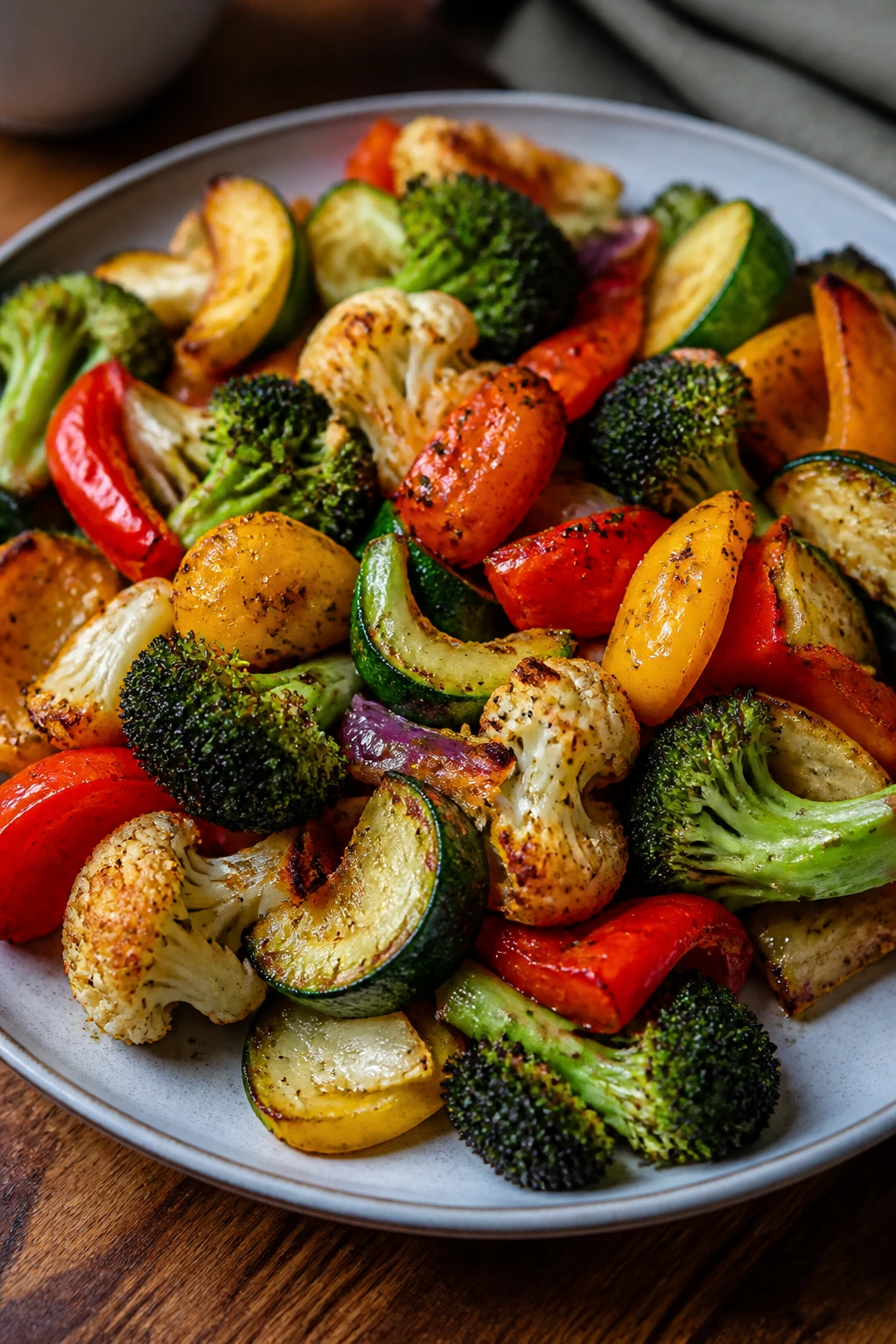
Broccoli, cabbage, zucchini, mushrooms, peppers, greens, cauliflower, and green beans are the unsung heroes of a light healthy dinner. They let you put a lot of food on the plate without blowing the calorie budget.
Raw vegetables can work, but cooked vegetables usually do the heavier lifting at dinner. Roasting gives you browning. Sautéing gives you softness and a little gloss. Steaming works when you want something fast, but it needs finishing — lemon, vinegar, herbs, a little salt — or it tastes flat and office-cafeteria plain.
Roasted vegetables are hard to beat because they feel substantial. Toss broccoli florets, cauliflower, Brussels sprouts, zucchini, or carrots with a measured spoon of oil, salt, pepper, and garlic powder. Roast at 425°F until the edges brown and the undersides pick up those dark caramel spots that smell nutty when the pan comes out. That’s the point where vegetables stop feeling like a punishment and start tasting like dinner.
Mushrooms deserve their own mention. They lose water first, then they start to brown. If you crowd them in a pan, they steam and go soft in a bland way. Give them space and a hot skillet, and they turn meaty enough to help stretch a dish without pretending to be meat.
Carbs Are Not the Enemy at Dinner
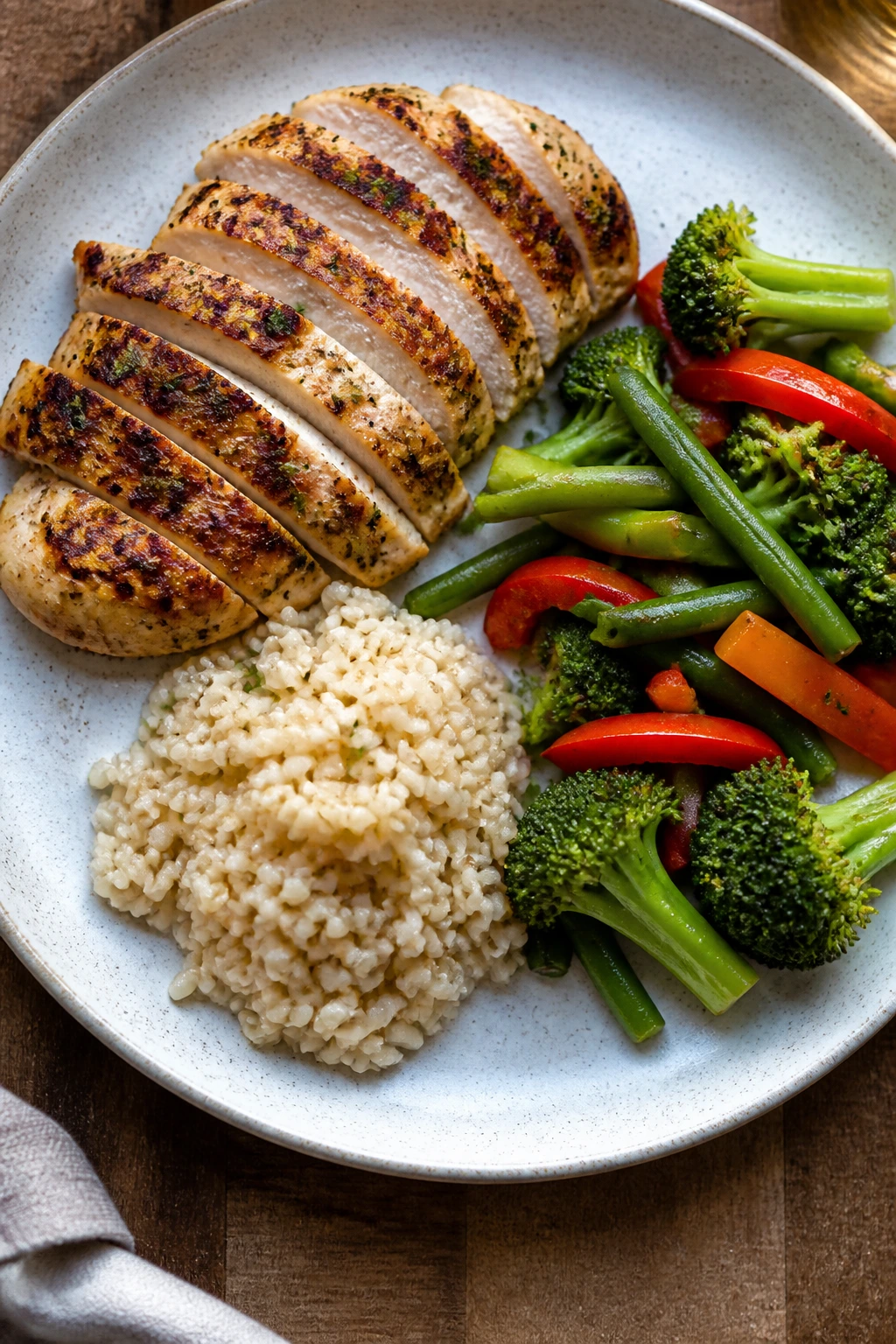
Carbs are the part people cut too hard.
Skip them entirely and a light dinner often stops feeling like a meal. A little rice, a small potato, a slice of bread, a tortilla, or a scoop of beans can make the plate feel complete without pushing it over the line. The trick is not to build the whole dinner from starch. The trick is to use starch the way it’s meant to be used: as support.
A half cup of cooked rice or quinoa, a medium roasted potato, or one small whole-grain pita is usually enough to give the meal a little heft. If you’re active, eating late, or tend to wake up hungry when dinner is too sparse, the carb portion can move upward slightly. If you’re less hungry at night, keep it smaller and let the vegetables and protein do more of the work.
A few carb choices fit this style especially well:
- Baby potatoes: roast them until the skins blister and the centers go fluffy.
- Brown rice or white rice: keep the portion honest; a small scoop goes a long way once there’s sauce on the plate.
- Quinoa: useful when you want a nutty base that still feels light.
- Whole-grain pasta: works best in a vegetable-heavy bowl with a lean sauce.
- Corn tortillas or pita: useful when dinner wants to be folded, wrapped, or dipped.
- Beans and lentils: these count as both protein and carb, which is why they’re so handy in lower-calorie meals.
A small carb portion does something practical. It keeps the meal from ending too abruptly.
Fats and Sauces Are Where Calories Sneak In
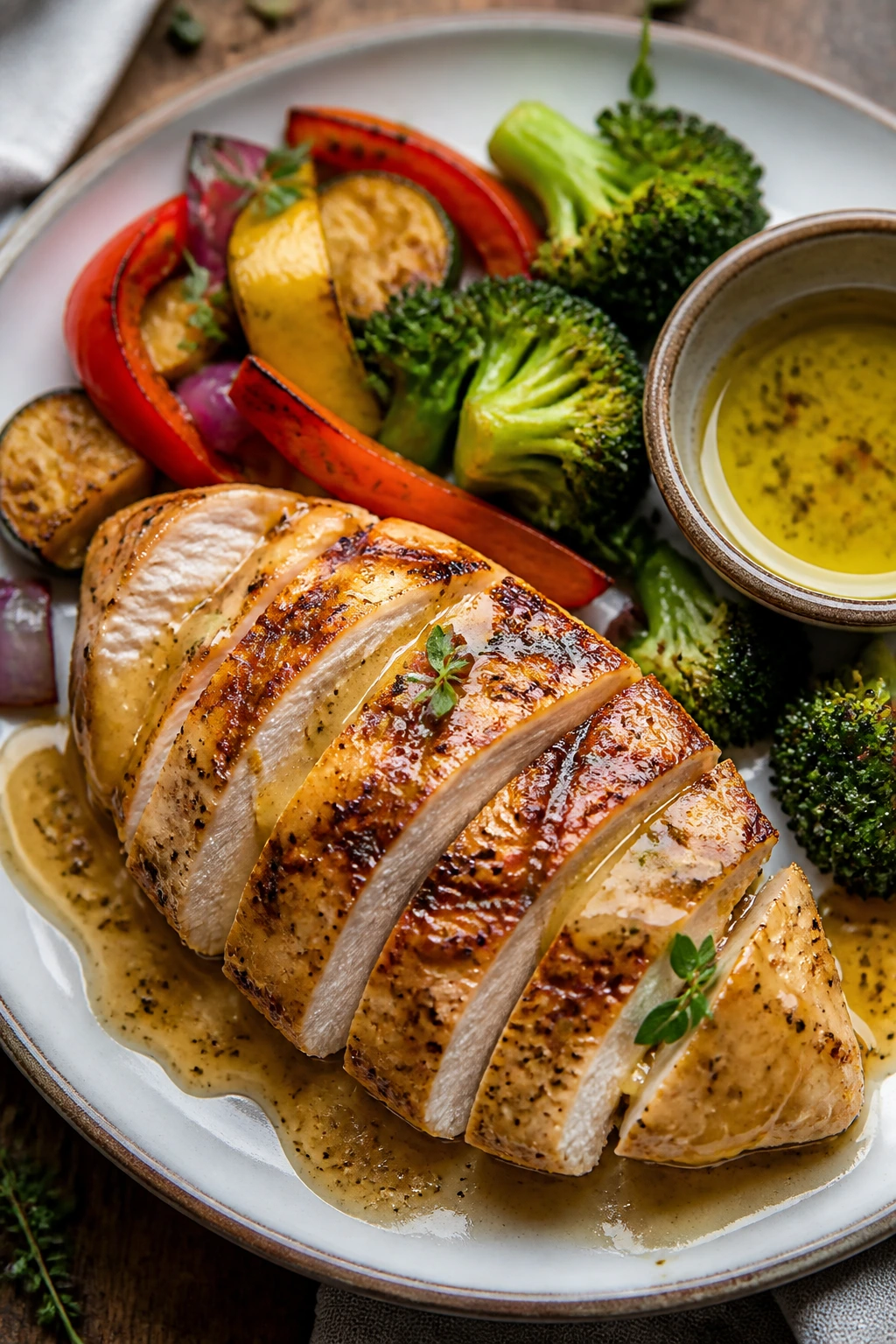
The oil bottle is where many light dinners quietly fail.
One tablespoon of olive oil is about 120 calories. That number is the reason people think they made a 450-calorie dinner and somehow ended up at 700. Nuts, cheese, pesto, tahini, avocado, and creamy dressings all do the same thing if you don’t portion them with a real spoon and not the fantasy spoon in your head.
I’m not against fat. Far from it. Fat carries flavor, helps browning, and keeps vegetables from tasting like they were steamed under a bus station heat lamp. But it needs a measuring spoon, not a tilt of the wrist.
The sauces that give the most back for the least
A yogurt sauce with lemon juice, garlic, salt, and dill adds brightness without much weight. Salsa gives you acidity, salt, and heat for very few calories. Soy sauce, ginger, and lime do the same thing in a different direction. Harissa mixed with yogurt, mustard whisked into a vinaigrette, or a spoonful of pesto stretched with lemon juice can all rescue an otherwise plain plate.
Keep flavor in the foreground
Acid changes the whole dinner. Lemon, vinegar, lime, pickled onions, capers, and tomatoes make a plate taste finished. Without one of those, a low-calorie meal can feel muddy or flat. With one, even a simple bowl of chicken, rice, and broccoli starts to taste deliberate.
The sauce should support the food, not drown it. That’s the line.
Four Dinner Templates That Stay Under 500 Calories
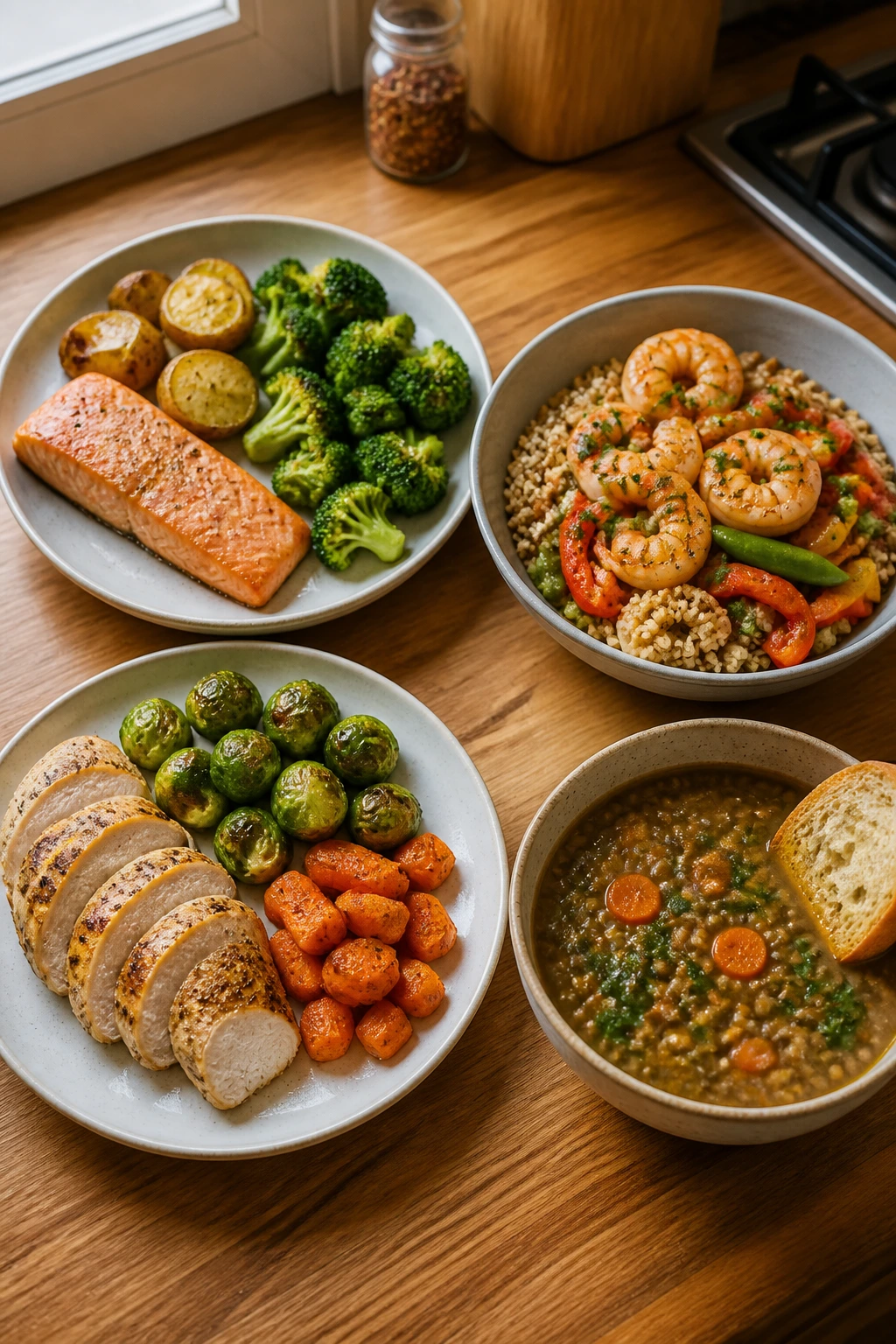
A lot of people want a menu, but what they really need is a pattern.
These four templates are the ones I keep coming back to because they’re fast, flexible, and easy to keep under control. The exact calories move a bit depending on brands and portions, but each one can sit comfortably below 500 when you measure the fat and keep the starch in its lane.
Sheet-Pan Protein, Vegetables, and a Small Starch
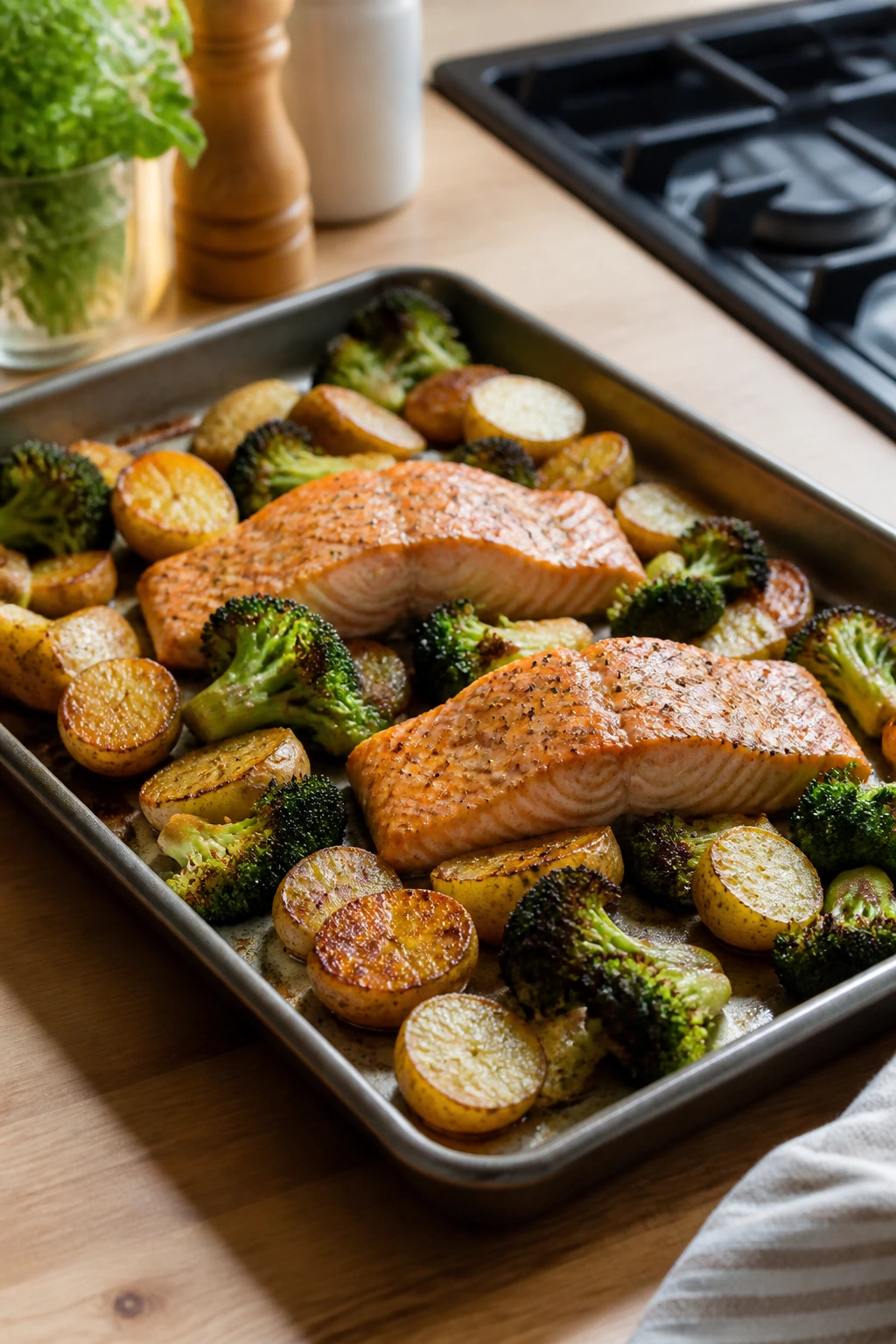
Think salmon with broccoli and baby potatoes, or chicken breast with Brussels sprouts and carrots. Toss everything with 1 to 2 teaspoons of oil per serving, add salt, pepper, garlic, and a hit of lemon at the end.
The magic here is simplicity. The oven does the work, and the browning makes the plate taste richer than it is. A 5-ounce salmon fillet, 2 cups of vegetables, and a modest potato portion often lands around 430 to 490 calories, depending on oil and sauce. That leaves enough room for a spoon of yogurt dill sauce or a squeeze of lemon without panic.
Skillet Bowl With Rice or Quinoa
This is the fastest weeknight move. Brown shrimp, turkey, tofu, or chicken in a skillet, add peppers, onions, zucchini, or cabbage, and spoon it over 1/2 cup cooked rice or quinoa. The bowl format is forgiving because everything can be chopped small and cooked quickly.
A sesame-ginger version works well here. So does a taco-style bowl with black beans, shredded lettuce, salsa, and a small scoop of rice. You get enough texture that the bowl feels full, and the measured starch keeps the meal grounded.
Soup or Stew With One Solid Side
Soup is underrated in lower-calorie dinners because it gives you a lot of volume from broth, vegetables, and lean protein. Chicken vegetable soup, lentil soup, or a tomato-based bean soup can stay well under 500 calories, especially if you don’t turn it into a cream-heavy situation.
Pair the bowl with one slice of whole-grain bread or a small side salad with a measured vinaigrette. The side matters. A bowl of soup by itself can feel light in a good way, but soup plus one crisp, structured side feels like a complete dinner.
Big Salad, But Built Like a Meal
A big salad only works when it has weight. That means warm chicken, shrimp, tofu, or salmon on top; not a cold scatter of vegetables with a few sad sunflower seeds. Use sturdy greens, chopped cucumber, tomatoes, radish, roasted sweet potato, beans, or a little grain if needed.
Dress it lightly. A salad that’s soaked in dressing often blows past the calorie target before the protein even gets a chance to matter. A good one stays crisp, layered, and filling. The fork should have work to do.
The Kitchen Gear That Makes Light Dinners Easier
Good gear does not make the meal for you. It just removes friction.
- Rimmed sheet pan: essential for roasting vegetables and proteins without oil dripping onto the oven floor.
- 12-inch skillet: useful for quick stir-fries, sautéed vegetables, shrimp, and pan-seared chicken.
- Instant-read thermometer: the cleanest way to avoid dry chicken and overcooked fish.
- Sharp chef’s knife: a dull knife makes vegetable prep miserable and slow.
- Cutting board with a stable base: a damp towel underneath keeps it from sliding.
- Measuring spoons: especially useful for oil, tahini, pesto, butter, and dressing.
- Mixing bowls: handy for tossing vegetables with seasoning before they hit the pan.
- Food storage containers: important if you want leftovers to stay separate and not become one soggy mass.
- Fine-mesh strainer: useful for rinsing beans and draining quick grains.
- Microplane or zester: one small hit of lemon zest can change an entire plate.
A food scale is optional, but if you’re trying to learn what a 4-ounce portion of chicken or a 1/2 cup scoop of rice actually looks like, it teaches fast. You don’t need it forever. You may want it at the start.
Smart Shopping for Lean Proteins and Bright Produce
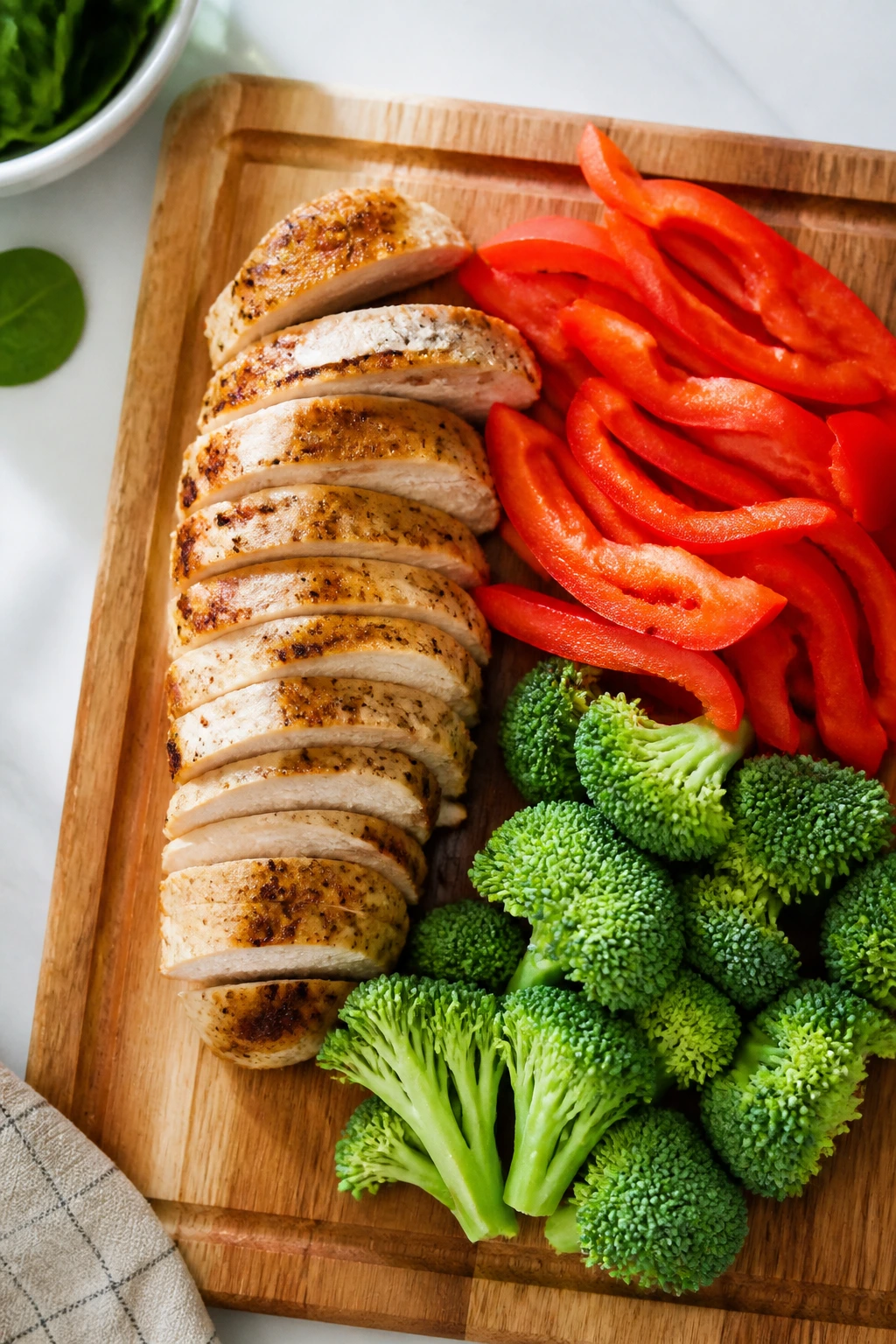
The grocery cart does half the work.
Start with proteins that don’t need much rescue. Plain chicken breast, shrimp, cod, tofu, turkey cutlets, eggs, lentils, and Greek yogurt all fit neatly into the kind of dinner we’re talking about. If a protein only tastes good after a long bath in cheese or cream, it’s not the easiest choice for a 500-calorie target.
Frozen vegetables are worth buying without guilt. Broccoli, cauliflower, green beans, peas, and stir-fry blends are picked and frozen fast, which means they often hold up better than the limp vegetables hiding in the back of the produce drawer. Use them when the fridge looks bare or the week has gone sideways.
Cabbage is one of the best budget vegetables for this style of cooking. It roasts, sautés, braises, and shreds into slaw without demanding much. Carrots, onions, mushrooms, zucchini, and bell peppers also give you a lot of usable food for the money.
Read labels on sauces and condiments. A jar can seem light until you see that 2 tablespoons of pesto or dressing carries more calories than the vegetable base itself. That does not make those foods bad. It just means they should be treated like accents, not the whole show.
Broth, canned tomatoes, beans, salsa, mustard, vinegar, and spice blends are the pantry pieces that keep a light dinner from turning bland. I’d rather cook with those than chase a fancy low-calorie sauce that tastes like nothing.
Small Tweaks That Make the Plate Better
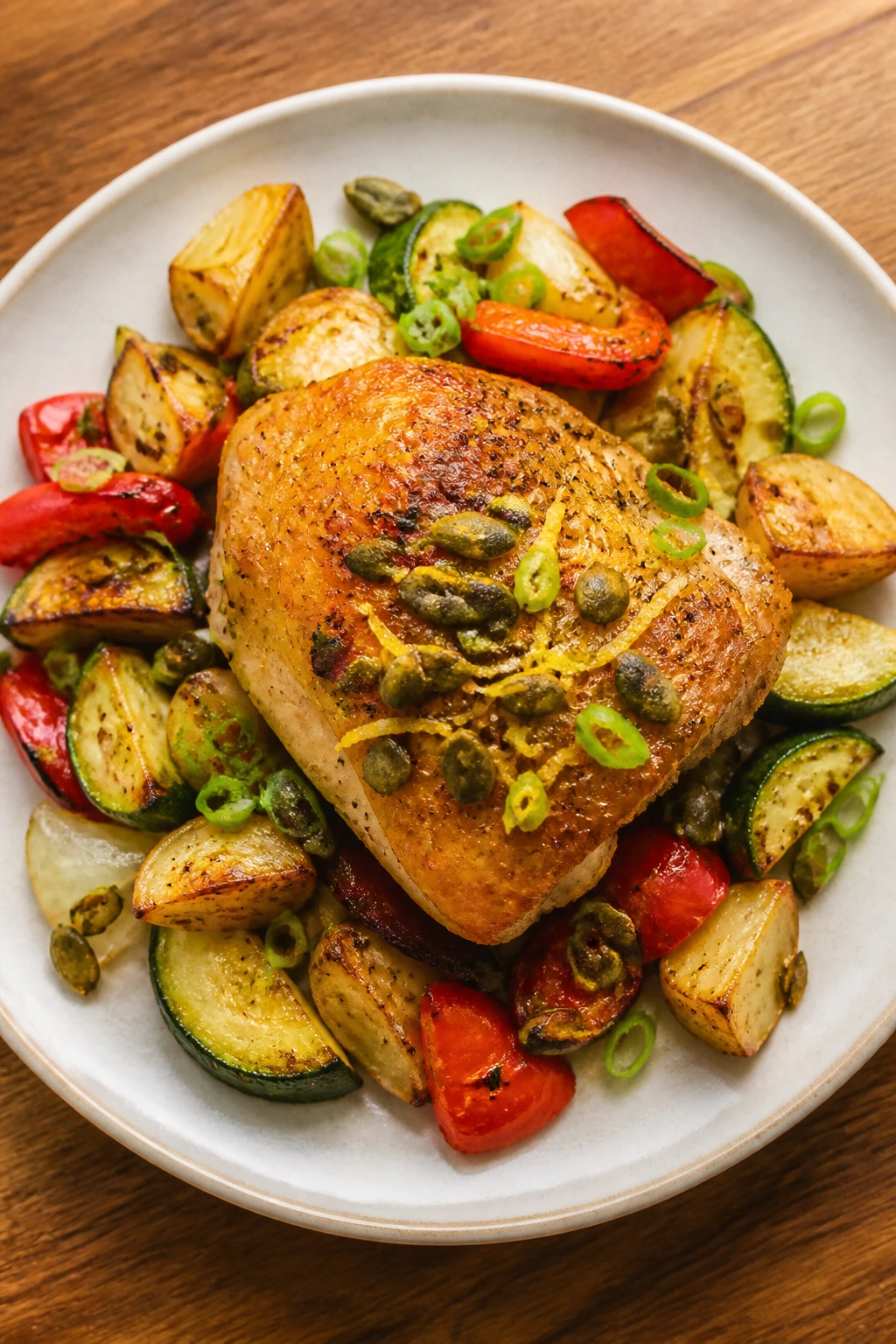
A good light dinner usually needs only a few small adjustments, not a complete reinvention.
Flavor Enhancement: finish cooked vegetables with lemon zest, lime juice, or a splash of vinegar. That last hit of acid wakes up everything underneath it, especially broccoli, cabbage, beans, and chicken.
Time-Saver: cook one extra protein and one extra tray of vegetables while you’re at it. Tomorrow’s dinner becomes assembly instead of cooking, and that’s a big deal when the evening is already crowded.
Cost-Saver: lean on cabbage, carrots, eggs, beans, canned tuna, and frozen edamame. These are the ingredients that let you keep dinner sensible without spending a fortune on one small piece of fish.
Texture Trick: add a measured crunchy finish. A tablespoon of toasted pumpkin seeds, chopped scallions, sliced radish, or a few sesame seeds makes a plate feel more finished. Don’t pour the whole bag on top. A little crunch is enough.
Make-It-Yours: if you need more calories, add a small potato, an extra half cup of rice, or a slice of bread. If you want fewer, trim the starch and keep the protein and vegetables steady. That’s the simplest way to tune the plate without wrecking it.
A light dinner gets better when you think like a cook and not like a spreadsheet.
Common Mistakes That Make the Plate Feel Too Small
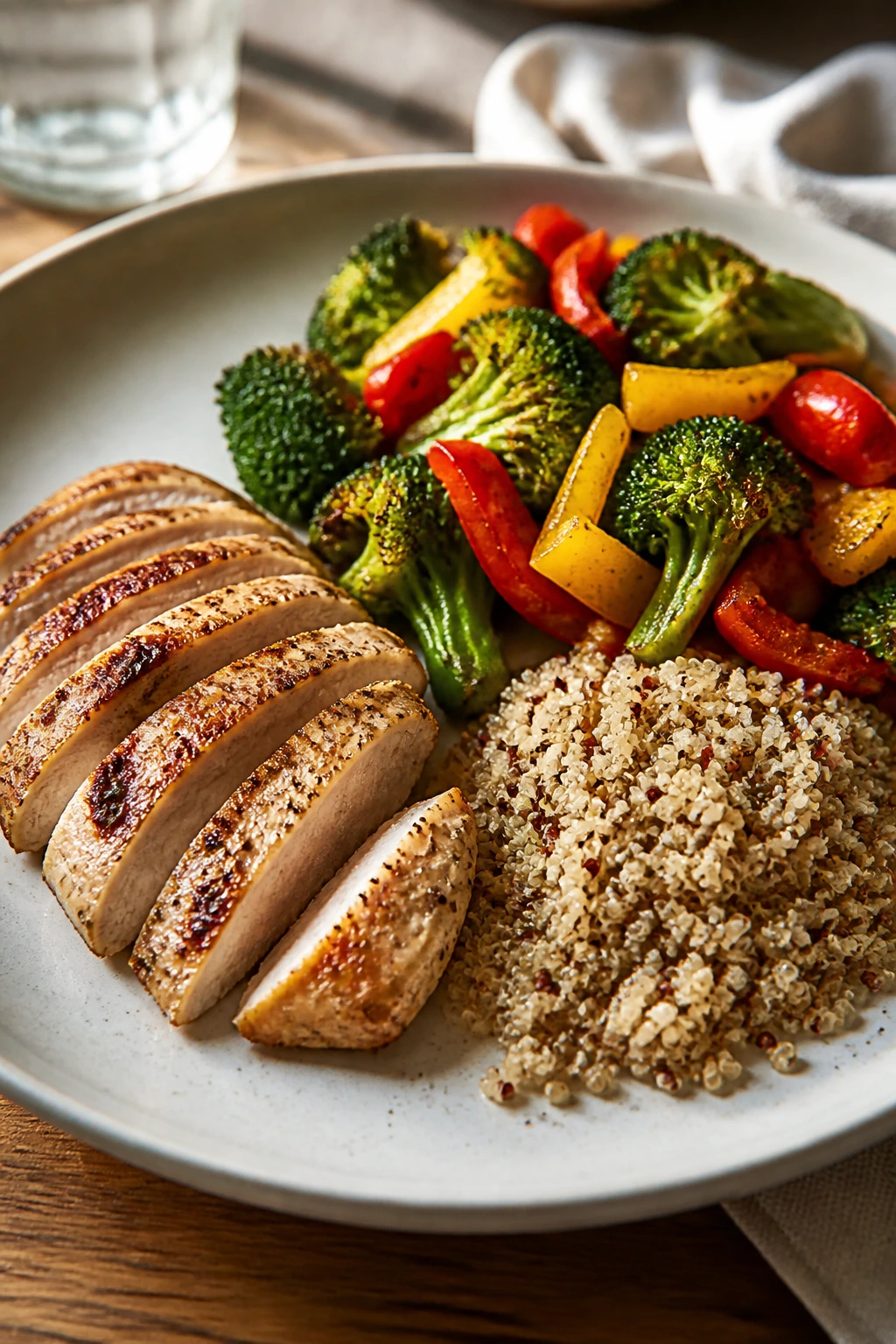
The most common mistake is cutting protein too hard.
A dinner made from lettuce, cucumber, and a few shreds of chicken may technically stay under 500 calories, but it won’t keep you happy. The symptom is obvious: you finish the meal and keep looking around the kitchen. The fix is to build the plate around a real protein portion first, then shape the rest of the meal around it.
Another easy mistake is pouring oil without measuring. People do this with roasting, sautéing, and dressing. The pan looks the same either way, which is why it’s sneaky. Use a teaspoon or tablespoon, then adjust based on how the food is browning.
Skipping seasoning is a trap too. A lot of people think a low-cal dinner should taste restrained, so they under-salt the vegetables and forget acid at the end. The result is a meal that tastes flat and forces you to compensate with extra bread, cheese, or dessert. Salt, herbs, garlic, chili, mustard, and lemon are not optional decoration. They are part of the dinner.
Too much raw food can also backfire. A giant salad sounds virtuous, but if it’s cold, wet, and mostly lettuce, it can feel more like work than a meal. The fix is to add warmth and substance: roasted vegetables, a warm protein, beans, a little grain, or a toasted topping in a measured amount.
Last, people forget that sauces count. A “light” bowl with a heavy pour of creamy dressing can jump by 150 calories before the fork hits the plate. Spoon sauces on top, don’t flood the bowl. A little goes a long way when the rest of the dish is already doing its job.
Ways to Change the Template Without Losing the Balance
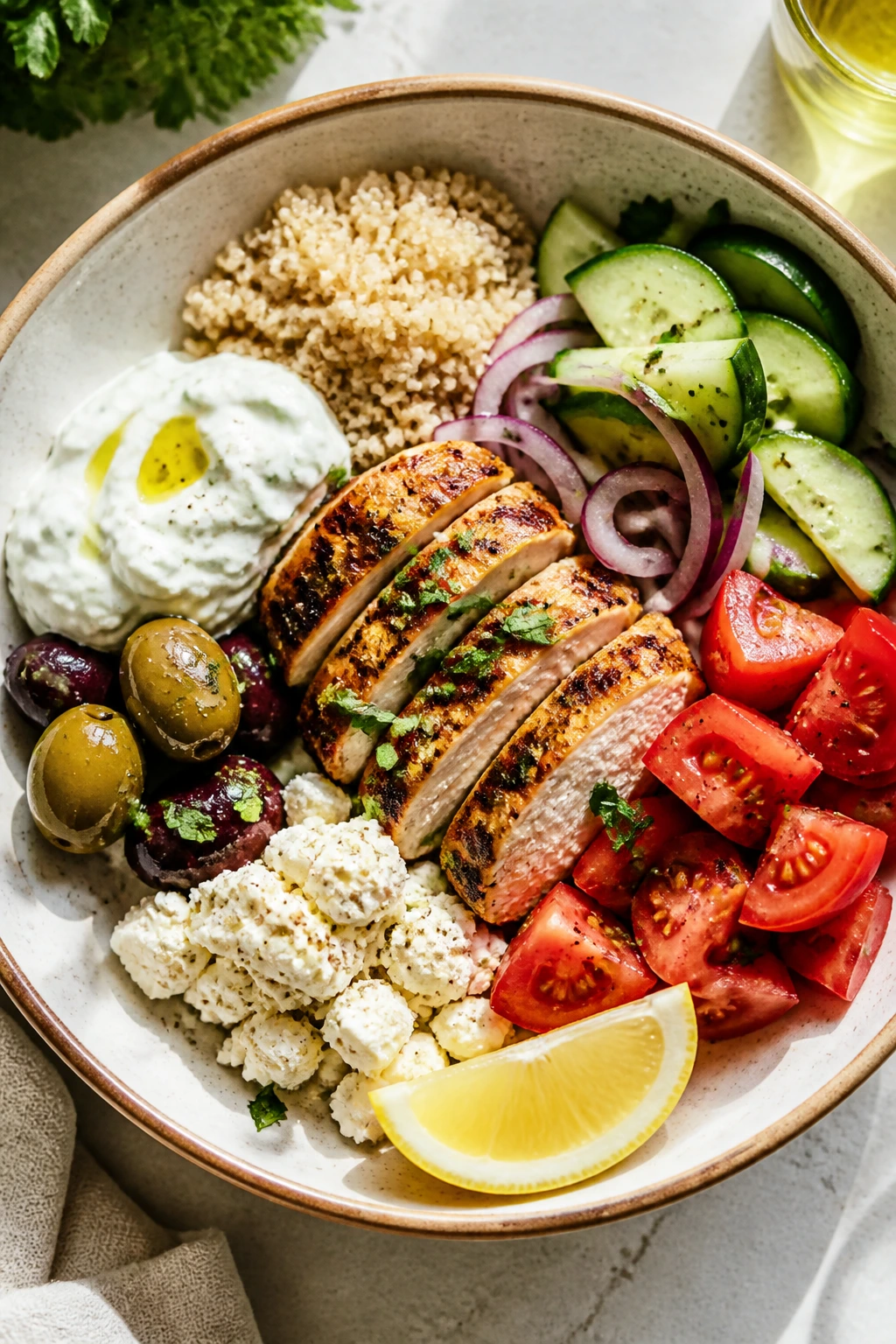
Some nights call for a different shape of dinner.
Mediterranean Lemon Bowl: use salmon, chicken, or chickpeas with cucumber, tomato, olives, red onion, and a spoon of feta. A lemon-garlic yogurt sauce keeps it bright, and a small scoop of couscous or quinoa rounds it out without making the plate heavy.
Weeknight Taco Skillet: cook lean turkey or black beans with onion, bell pepper, cumin, chili powder, and salsa. Serve over shredded lettuce with a small tortilla, a sprinkle of cheese, and avocado measured in slices instead of half the fruit.
Ginger-Sesame Stir-Fry: shrimp, tofu, or chicken works here. Use broccoli, snap peas, carrots, and cabbage with soy sauce, ginger, garlic, and a little sesame oil. Keep the oil measured and the rice portion modest; the stir-fry flavor does most of the work.
Cozy Soup Night: make lentil soup, chicken vegetable soup, or tomato-based bean soup. Pair it with one slice of toast or a small whole-grain roll, and you’ve got a meal that feels settled rather than skimpy.
No-Cook Fridge Plate: rotisserie chicken, bagged salad, cucumber, cherry tomatoes, hummus, and a piece of fruit can land in the right calorie range with almost no cooking. This is the fallback dinner for nights when the stove is not happening. Nothing fancy. Just useful.
Lower-Carb Version: keep the protein and vegetables the same, cut the rice or potato in half, and add more roasted cauliflower, zucchini, or leafy greens. You still get a full plate, but the carbs step back.
Storage, Meal Prep, and Reheating Without Ruining the Texture
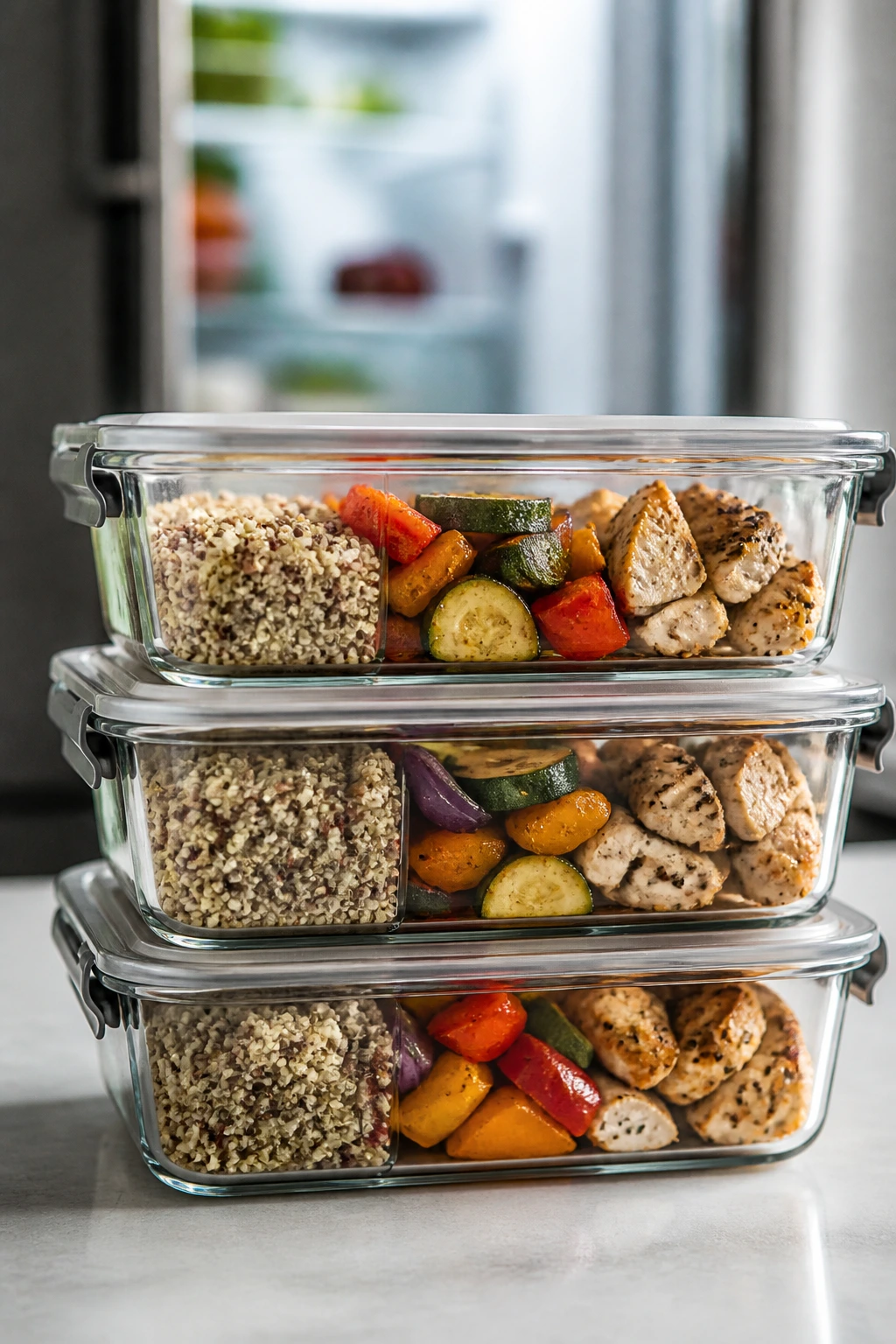
Meal prep only works if the leftovers still taste like food.
Most cooked proteins keep well in the fridge for 3 to 4 days. Chicken, turkey, tofu, beans, grains, and roasted vegetables all hold up nicely if you cool them fast and store them in shallow containers. Fish is a little trickier; it’s best eaten within 2 to 3 days because the texture softens faster than chicken or tofu.
Cooked grains usually keep for 4 days. Rice, quinoa, farro, and couscous can all be portioned into small containers, which makes it easier to build a dinner fast without eyeballing everything again. Roasted vegetables also do well for 3 to 4 days, though the edges soften a little. That’s fine. They’re still useful in bowls, soups, or wraps.
Sauces should be kept separate whenever possible. Yogurt sauces, vinaigrettes, salsa-based toppings, and tahini dressings often last 4 to 5 days in the fridge, but they keep their texture best when they’re not sitting on the food. Pour them on right before serving.
Freezing works best for soups, stews, shredded chicken, turkey, beans, and cooked grains. Aim for up to 2 months in the freezer for best flavor and texture. Fish and delicate vegetables are less forgiving after freezing, so I’d skip freezing those unless you have no other option.
Reheating is different depending on the meal. Skillet dinners do well in a pan over medium heat with a splash of water or broth. Sheet-pan dinners can go back into a 350°F oven for 8 to 12 minutes. Grain bowls reheat well in the microwave if you cover them and add a teaspoon of water so the rice or quinoa doesn’t dry out. Keep greens and crunchy toppings out of the container until serving time. That one habit saves a lot of sad lunches and broken dinners.
Some meals improve overnight. Soup almost always does. Chili does. Bean-based bowls often do too. Fresh salads do not. Build those at the last minute.
Questions People Ask Before Building One of These Dinners
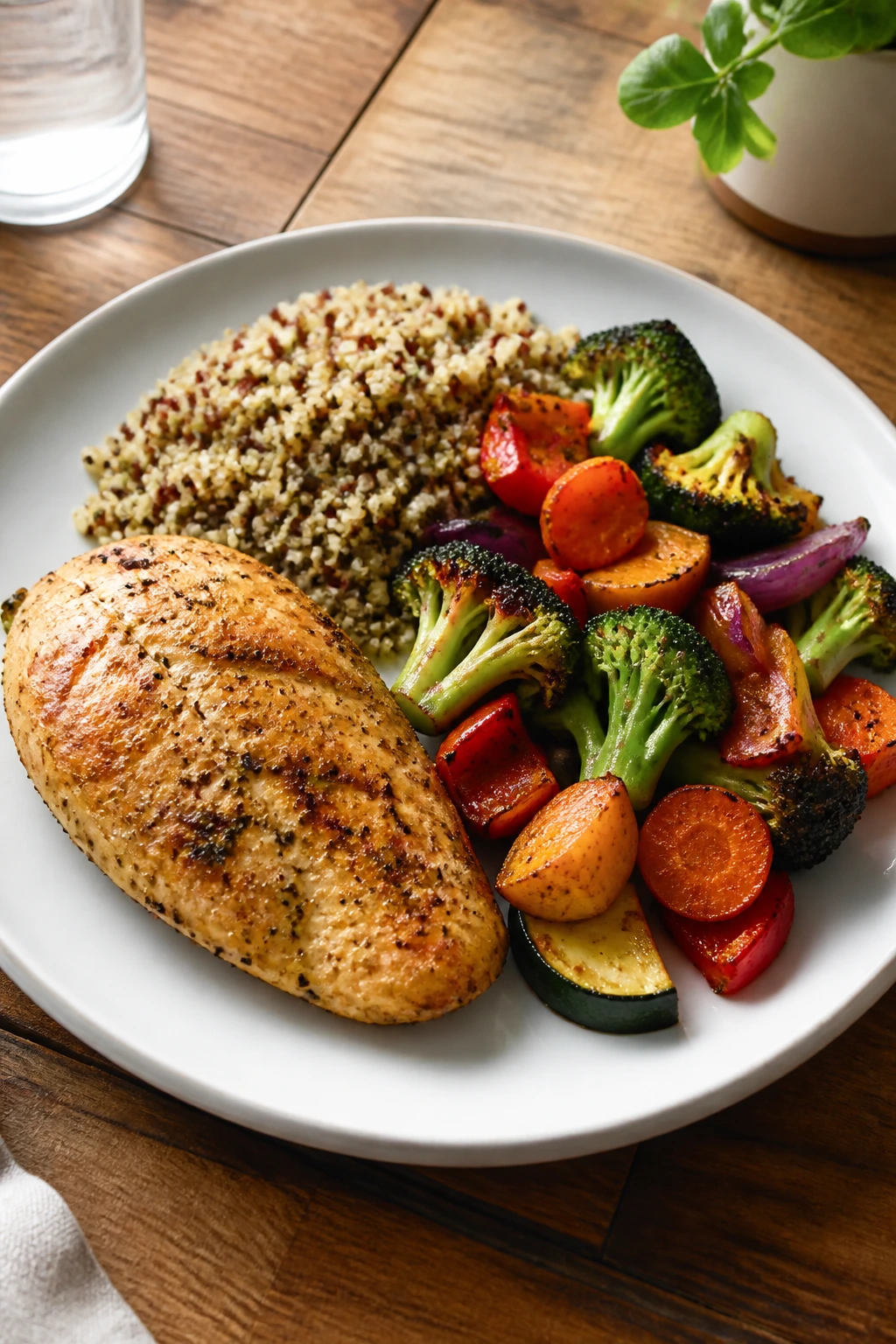
Can a dinner under 500 calories still include pasta?
Yes, if the pasta portion is measured and the rest of the plate is built around vegetables and lean protein. A 1-cup serving of cooked pasta with shrimp, tomatoes, spinach, and a light sauce can fit easily. The mistake is using pasta as the base, the side, and the comfort all at once.
How much protein should I aim for at dinner?
A practical range is 25 to 35 grams for many people, which usually means a solid portion of meat, fish, tofu, or a bean-and-grain combo. If you’re very active or dinner is your biggest meal, you may want more. If you’re smaller or not especially hungry at night, a little less can still work.
Is 500 calories too low for dinner?
For some people, yes. For others, it’s fine. The better question is whether the meal leaves you satisfied for several hours without pushing you into snacking mode. If you’re hungry an hour later, the fix is usually more protein or fiber, not more willpower.
What if I’m still hungry after eating?
First, look at the structure. Did you get enough protein? Were the vegetables cooked with some flavor? Was the portion of starch too tiny? A small bowl of fruit, a cup of herbal tea, or an extra side of vegetables is a smarter second step than reaching for random snacks.
Are frozen vegetables okay for light dinners?
Absolutely. They’re one of the easiest ways to keep dinner fast and keep the fridge from going bad before you use it. Roast them from frozen if the package allows it, or sauté them straight from the freezer and let the water cook off before adding sauce.
How do I estimate calories without weighing everything?
Use your hand as a rough guide: palm-sized protein, fist-sized starch, two fists of vegetables, and a thumb of fat. It won’t be perfect, but it gets you close enough for everyday cooking. If you want more accuracy, weigh the oil and starch once or twice and learn the portions by sight.
Can I make these dinners vegetarian or vegan?
Yes. Tofu, tempeh, lentils, chickpeas, black beans, edamame, and seitan all fit the format well. Keep an eye on sauces and toppings, because vegan meals can drift upward quickly when nuts, oils, and avocado start stacking.
What’s the easiest cooking method for beginners?
Sheet-pan dinners are probably the simplest. You season everything, spread it out, and let the oven do the job while you prep the sauce or side. A skillet comes close, but sheet-pan cooking is more forgiving if you’re still learning when things are done.
A Dinner Pattern You Can Reuse Without Getting Bored
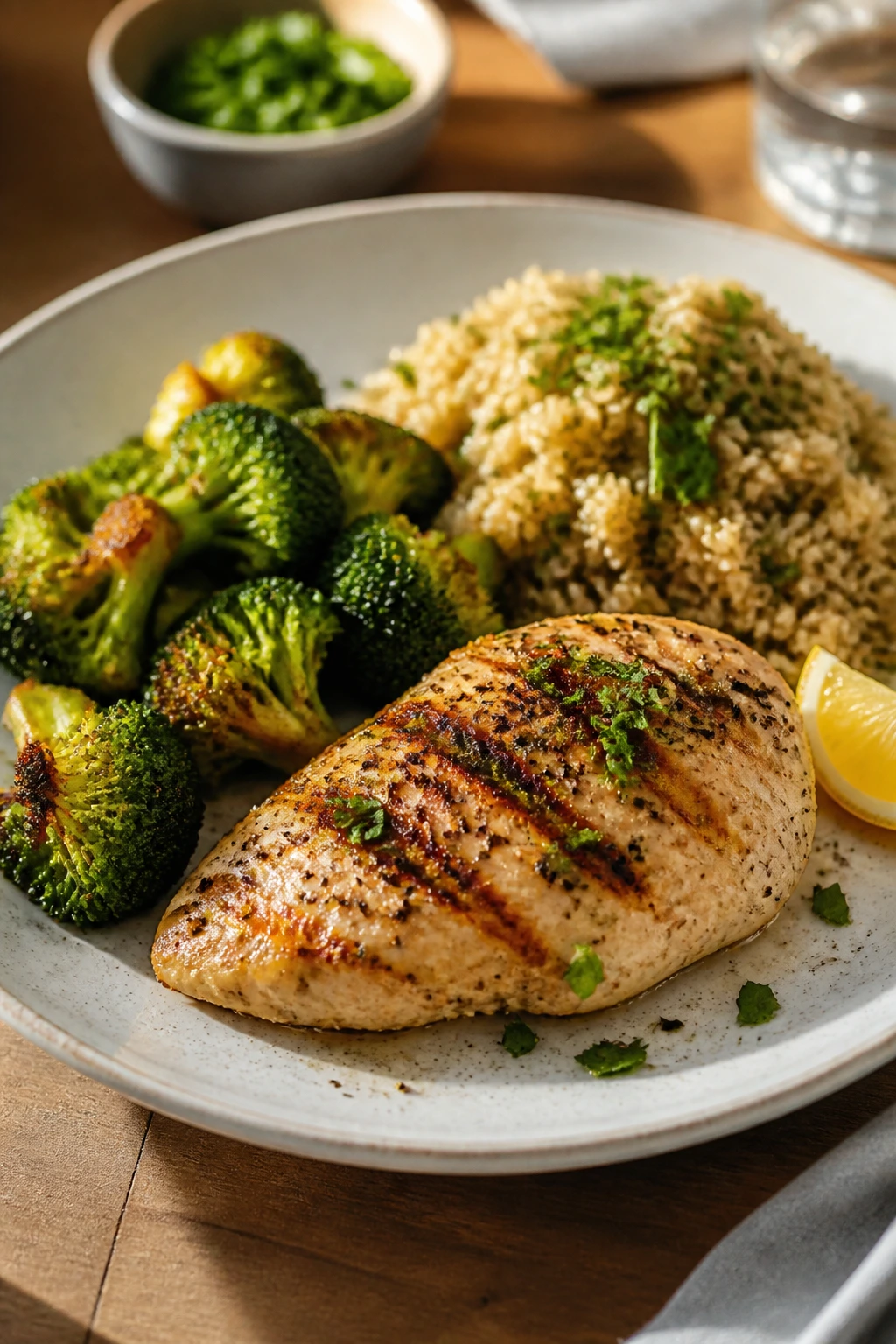
A useful dinner pattern is a quiet kind of freedom. Once you know how to build a plate with protein, vegetables, a measured starch, and one sharp finishing flavor, you stop starting from scratch every night.
That’s the real win here. Not a perfect calorie count. Not a punishment meal. A dinner you can repeat on tired nights without needing a recipe, a scale, or a pep talk.
Keep the protein solid, keep the oil measured, and let the vegetables do some actual work. Do that, and a light healthy dinner under 500 calories stops feeling like a restriction and starts feeling like a reliable way to eat well without overthinking it.