



Cold cucumber, radish slices with a peppery edge, and a lemony dressing that leaves a light sheen on the bowl—that’s the kind of salad I keep coming back to. A light seasonal salad with homemade dressing only works if the greens stay dry, the acid has somewhere to go, and each bite gives you a clean snap instead of a soggy shrug.
That sounds picky because it is. Salads get boring fast when every ingredient is soft, or when the dressing tastes like an afterthought poured from a bottle that’s been sitting in the door too long. A good homemade dressing changes the whole story. It clings to the leaves, wakes up the vegetables, and leaves enough sharpness to make you want another forkful instead of just pushing the bowl aside.
I like salads built with restraint. Three or four textures, maybe five if the avocado is ripe enough to smear a little against the fork, and a vinaigrette that tastes bright on its own but settles down once it hits the bowl. This one leans that way on purpose: tender greens, crisp vegetables, a salty crumble of feta, toasted seeds, fresh herbs, and a dressing with lemon, Dijon, and shallot.
The useful part is that the formula bends without breaking. Swap the produce with the market, keep the structure, and it still behaves. That’s the part worth keeping.
Why This Light Seasonal Salad with Homemade Dressing Works
-
Crunch stays crisp: The cucumber, radish, and snap peas give each bite a clean snap, and the greens hold up because they’re dried before the dressing ever touches them.
-
The dressing has actual backbone: Lemon, white wine vinegar, Dijon, and shallot make a vinaigrette that tastes sharp enough to matter, then mellows once it coats the leaves.
-
It changes with the season without losing its shape: Keep the ratios the same and swap in peaches, pears, apples, roasted squash, or blanched green beans when the produce changes.
-
It works as a side or a light meal: Avocado, feta, and toasted seeds give the bowl enough body that it doesn’t feel like decorative garnish.
-
Nothing gets lost in the shuffle: Every ingredient is cut to a bite-friendly size, so the first forkful tastes like a complete salad, not a pile of unrelated bits.
-
The whole bowl stays bright: The acidity isn’t shy, which matters because tender greens dull flavor faster than most people expect.
A Bowl Built on Crunch, Cream, and Bright Acid
A salad like this lives or dies by contrast. One forkful should feel cool and crisp from the cucumber, then a little peppery from the radish, then soft from the avocado, then salty from the feta, then nutty from the seeds. If all you taste is lettuce, the bowl has already lost.
That’s why I’m strict about the mix. I don’t want twelve ingredients fighting for attention. I want four jobs done well: the greens carry the dressing, the vegetables keep things lively, the cheese adds salt, and the seeds give the final bite something to push against. It’s the same reason a good sandwich needs texture in more than one layer. A salad does too.
This version also knows when to stop. There’s no heavy creamy dressing pulling it into the gray zone, no pile of croutons masquerading as structure, and no random fruit salad energy. Just a clean, cold bowl with a vinaigrette that tastes like lemon peel and shallot, not cafeteria corners.
And yes, the produce matters. Use what looks alive. If the cucumbers are firm, the herbs smell grassy when you rub them, and the tomatoes give a little when you press them, you’re halfway there before you even reach for the knife.
Timing, Yield, and the Best Way to Serve the Light Seasonal Salad with Homemade Dressing
Yield: Serves 4 as a side salad or 2 as a light main
Prep Time: 20 minutes
Cook Time: 4 minutes
Total Time: 24 minutes
Difficulty: Beginner — the only real skills here are knife work, whisking, and knowing when to stop tossing.
Chill/Rest Time: 5 minutes for the dressing to sit
Best Served: Right after tossing, when the greens are cold and the avocado still looks fresh
The timing looks short because it is short. That’s one of the quiet pleasures of this salad. The only heat comes from toasting the seeds, and even that takes less than five minutes. Everything else is just careful cutting and not making the bowl wetter than it needs to be.
If you’re planning this beside roasted chicken, grilled fish, or a piece of sourdough with butter, this is the salad you want on the table while the main is still holding heat. If you want it as lunch, keep the avocado generous and don’t skimp on the seeds.
The Ingredients, Measured and Ready
For the Salad:
- 6 cups mixed tender greens, such as butter lettuce, baby spinach, and arugula, washed and spun very dry
- 1 cup Persian cucumber, thinly sliced
- 1 cup radishes, thinly sliced
- 1 cup cherry tomatoes, halved
- 1 cup sugar snap peas, trimmed and sliced on the bias
- 1 ripe avocado, sliced just before serving
- 1/2 cup shaved fennel or thinly sliced celery
- 1/3 cup crumbled feta or goat cheese
- 1/4 cup sunflower seeds or pumpkin seeds
- 2 tablespoons chopped fresh dill, parsley, or mint
For the Homemade Dressing:
- 3 tablespoons extra-virgin olive oil
- 1 tablespoon fresh lemon juice
- 1 tablespoon white wine vinegar
- 1 teaspoon Dijon mustard
- 1 teaspoon honey or maple syrup
- 1 small shallot, finely minced (about 2 tablespoons)
- 1/2 teaspoon kosher salt, plus more to taste
- 1/4 teaspoon freshly ground black pepper
- 1 teaspoon lemon zest, optional
Why Each Ingredient Matters
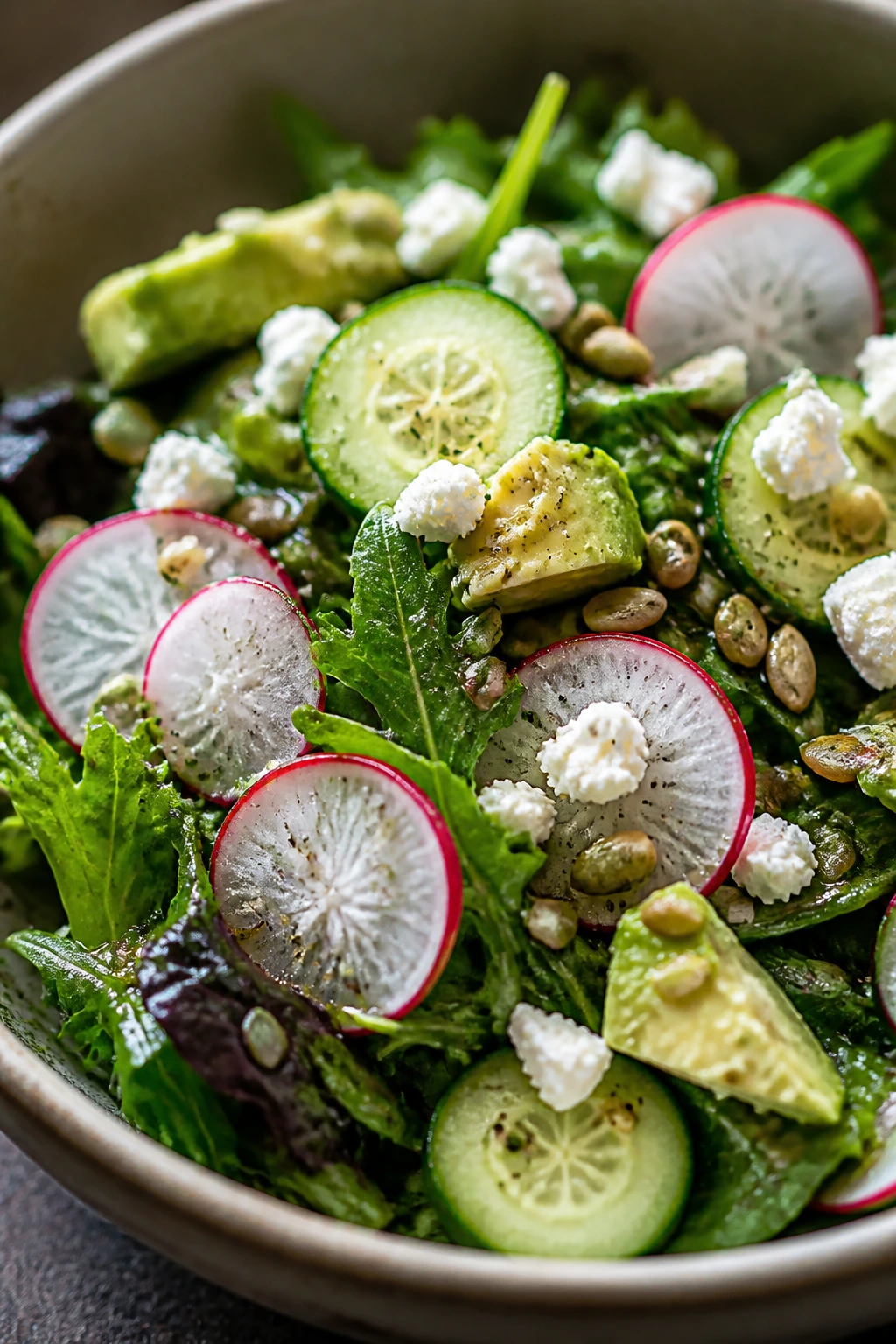
Tender Greens
What to use: 6 cups of mixed tender greens, ideally butter lettuce for softness, baby spinach for volume, and a little arugula for pepper.
Preparation: Wash the leaves, then dry them until they feel almost silky rather than damp; tear big leaves into forkable pieces.
Substitutions: Little gem, romaine hearts, baby kale, or a sturdy spring mix all work if you want more structure.
Tips: Wet greens are the fastest way to water down a vinaigrette. If the leaves are still cool and dry, they’ll hold the dressing instead of shedding it.
Crunchy Vegetables
What to use: 1 cup cucumber, 1 cup radishes, 1 cup halved cherry tomatoes, 1 cup sugar snap peas, and 1/2 cup shaved fennel or celery.
Preparation: Slice everything thin enough to eat in one or two bites; the bias-cut snap peas and paper-thin radishes make the bowl feel lighter.
Substitutions: Persian cucumbers can stand in for English cucumbers, and shaved kohlrabi or thin bell pepper strips can replace fennel.
Tips: Keep the pieces cold and crisp. If the cucumbers are seedy and soft in the middle, scoop that center out before slicing.
Creamy, Salty, and Crunchy Finishes
What to use: 1 ripe avocado, 1/3 cup crumbled feta or goat cheese, 1/4 cup sunflower or pumpkin seeds, and 2 tablespoons fresh herbs.
Preparation: Slice the avocado at the very end, crumble the cheese loosely, toast the seeds, and tear the herbs instead of mincing them too fine.
Substitutions: Blue cheese, shaved Parmesan, or cotija can replace feta; sliced almonds or pistachios can replace seeds; basil can replace dill if that’s what’s in the fridge.
Tips: Add avocado last so it doesn’t get mashed into the greens. Herbs should smell bright when you rub them between your fingers; if they smell dull, use less and lean on the lemon.
The Dressing Foundation
What to use: 3 tablespoons olive oil, 1 tablespoon lemon juice, 1 tablespoon white wine vinegar, 1 teaspoon Dijon, 1 teaspoon honey, 1 minced shallot, salt, pepper, and a little lemon zest.
Preparation: Whisk everything except the oil first, then drizzle in the oil so it thickens into a loose emulsion.
Substitutions: Champagne vinegar can replace white wine vinegar, maple syrup can replace honey, and a small pinch of grated garlic can replace the shallot if you want a sharper edge.
Tips: Taste the dressing before it hits the greens. It should feel a touch assertive on its own; once it coats the salad, it settles into balance.
The Homemade Dressing That Keeps It Bright
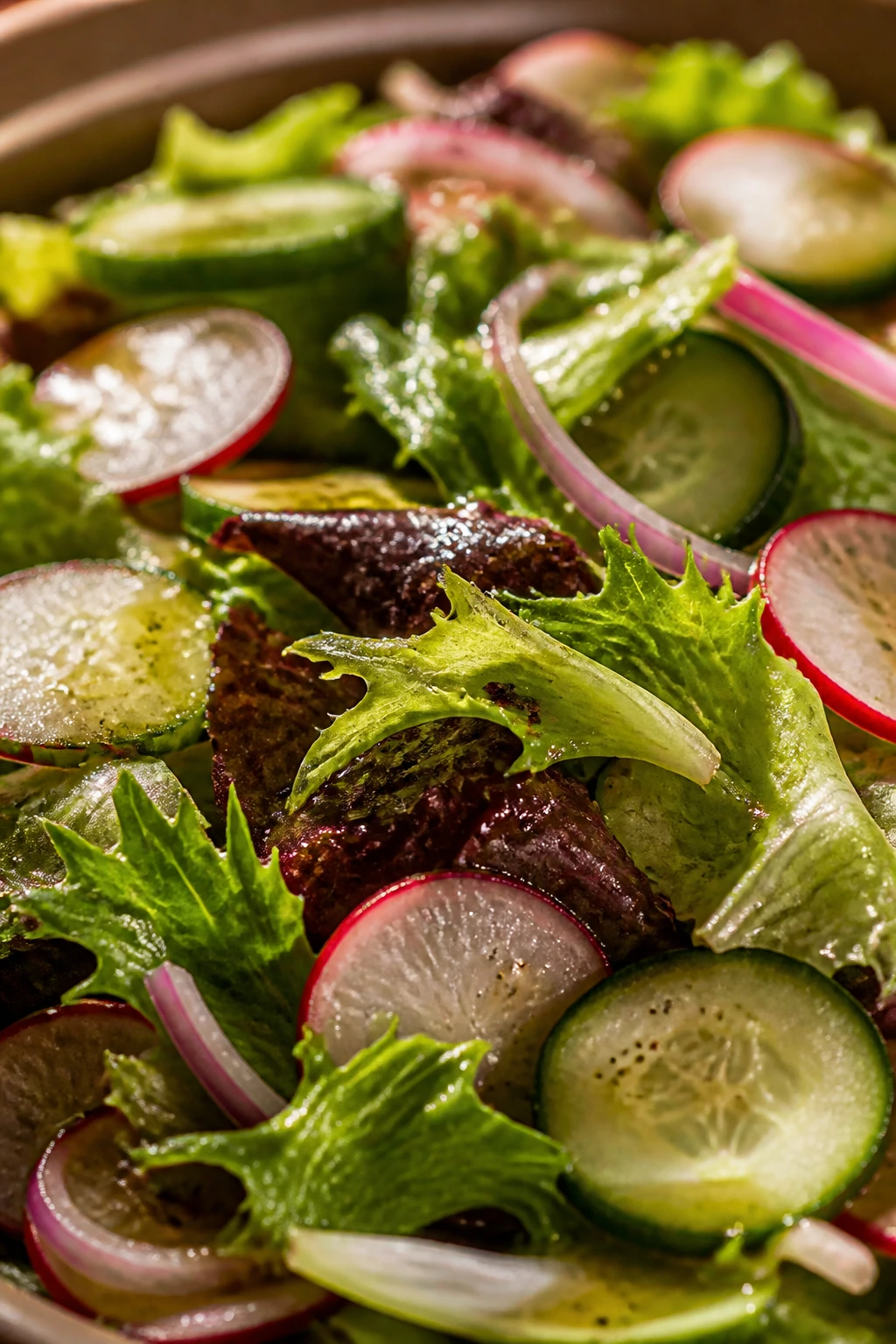
A dressing like this is doing more work than it looks like. Lemon juice gives the first bright hit, vinegar sharpens the middle, and Dijon quietly helps the oil and acid hold together instead of sliding apart in the bowl. The shallot matters too. Raw onion would be louder and harsher; shallot softens into the background and leaves a faint sweetness that makes the dressing taste rounder.
The ratio here leans light, not heavy. I want enough oil to carry flavor, but not so much that the greens look slick. If you’ve ever had a salad that felt greasy after two bites, you know why that matters. This vinaigrette should cling in a thin coat, not puddle at the bottom of the bowl.
Whisking also changes the texture. When the Dijon and shallot are fully blended before the oil goes in, the dressing turns a little glossy. That sheen matters. It’s the difference between a dressing that slides off the leaves and one that makes each bite taste seasoned from edge to edge.
If you want the dressing to be even better, let it sit for five minutes before using it. The shallot takes the edge off, the lemon and vinegar stop shouting at each other, and the whole thing tastes more intentional. Simple. Effective.
How to Build It Without Bruising the Greens
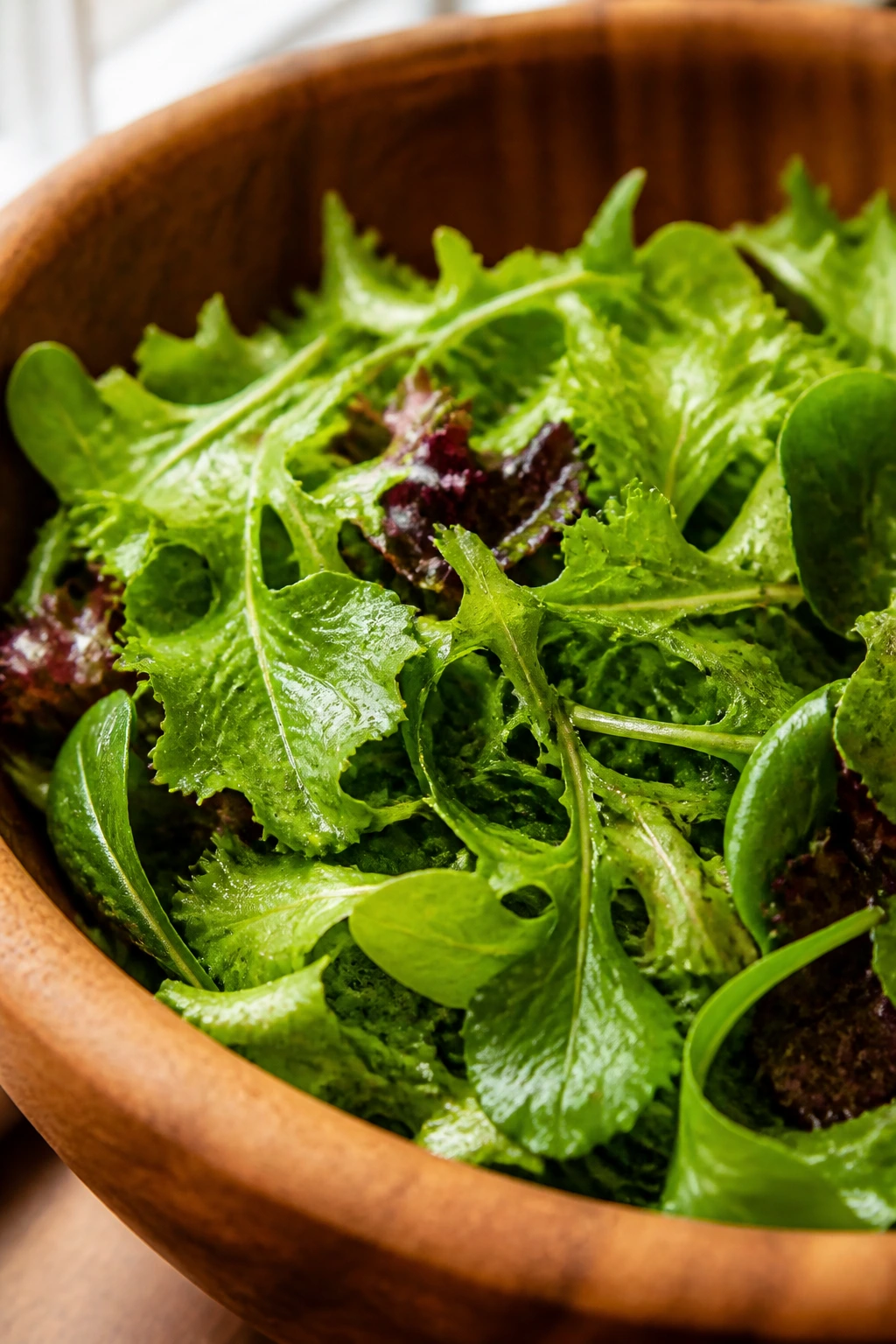
Make the dressing first.
- In a small bowl or a jar with a tight lid, whisk together the lemon juice, white wine vinegar, Dijon mustard, honey, minced shallot, salt, black pepper, and lemon zest until the honey dissolves.
- Slowly drizzle in the olive oil while whisking constantly, or screw the lid on the jar and shake hard for 15 to 20 seconds until the dressing looks glossy and slightly thickened.
- Set the dressing aside for 5 minutes while you finish the vegetables. This short rest softens the shallot and keeps the flavor from tasting sharp and raw.
Toast the seeds and prep the produce.
- Set a dry skillet over medium heat. Add the sunflower seeds or pumpkin seeds and toast them for 3 to 4 minutes, shaking the pan often, until they smell nutty and a few seeds begin to pop.
- Move the seeds to a plate immediately so they don’t keep cooking in the hot pan. Burnt seeds turn bitter fast, and bitter is not what this salad needs.
- Wash and dry the greens thoroughly if they aren’t already cleaned. Slice the cucumber, radishes, tomatoes, snap peas, and fennel or celery. Keep the pieces thin enough to eat easily, but not so thin that they collapse.
Assemble the bowl.
- Put the greens into a large mixing bowl. Add the cucumber, radishes, tomatoes, snap peas, fennel or celery, and half the herbs. Toss gently with your hands or salad tongs.
- Spoon in about two-thirds of the dressing and toss again until the leaves are lightly coated. Stop before the bowl looks wet; the greens should glisten, not pool.
- Fold in the avocado slices, then scatter the feta or goat cheese, toasted seeds, and the rest of the herbs over the top.
- Taste a leaf. Add the last bit of dressing, or a pinch more salt, only if the bowl still feels flat. Serve on chilled plates or a shallow platter right away.
What to Serve Beside the Bowl
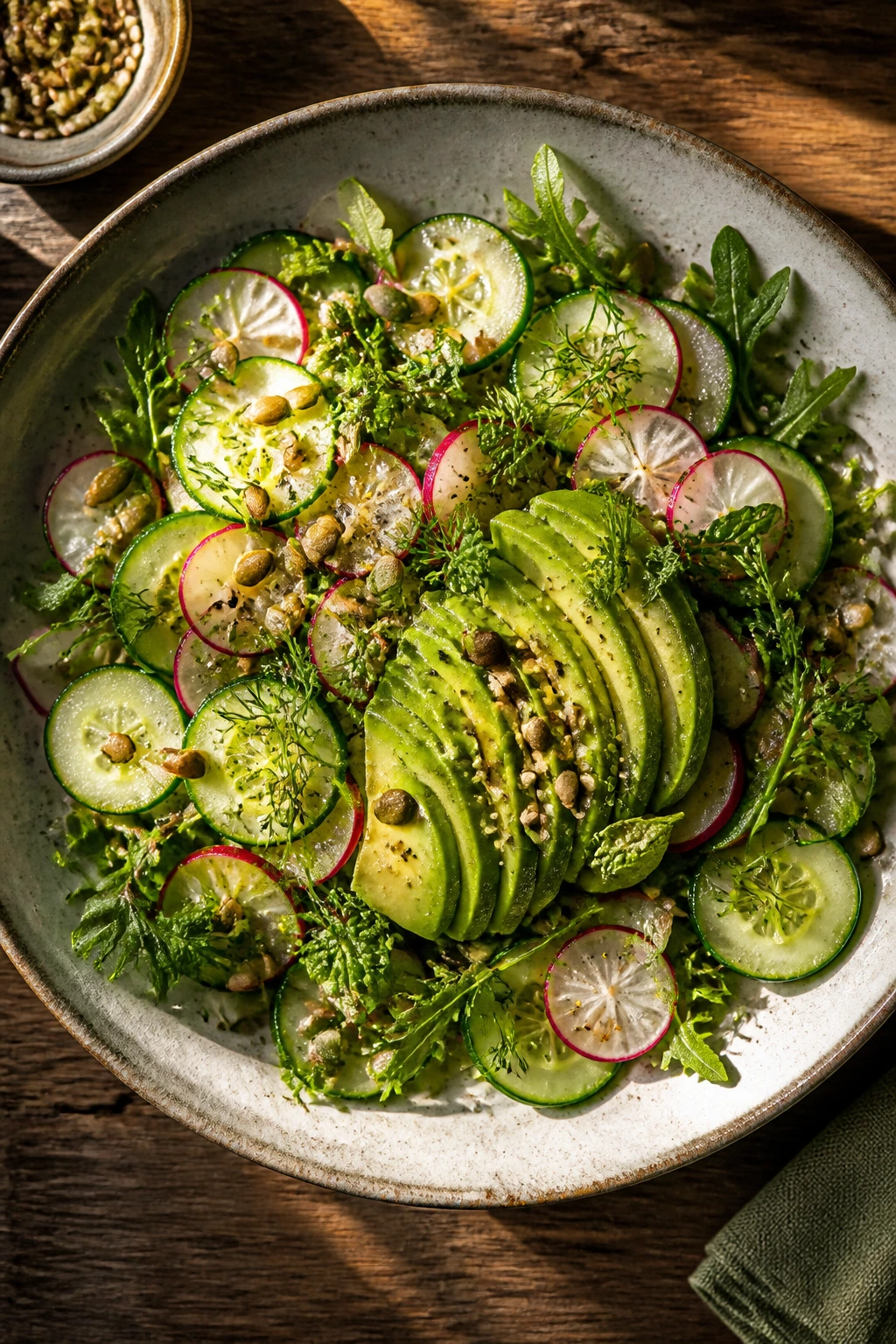
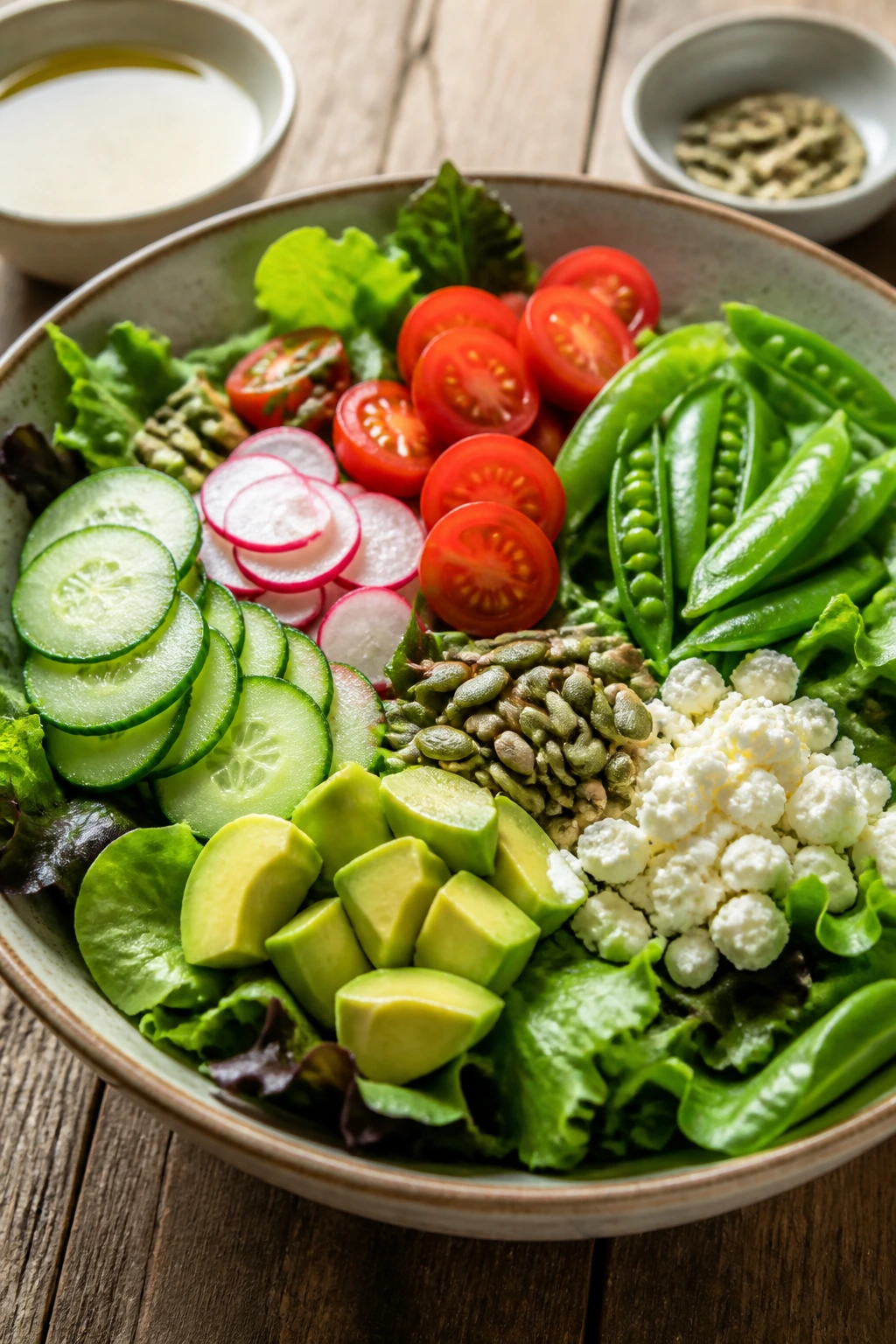
Presentation: A shallow bowl or wide platter works better than a deep salad bowl because you can see the vegetables instead of burying them. I like to finish with the avocado, seeds, and herbs on top so the bowl looks like it was assembled with a little care, not dumped together in a rush.
Accompaniments: This salad sits nicely next to roast chicken, grilled salmon, seared tofu, a simple omelet, or a thick slice of sourdough with butter. If you want a lighter lunch, add a cup of lentils or two soft-boiled eggs and call it done. A bowl of tomato soup or chilled cucumber soup also makes a clean pairing.
Portions: As a side, this serves 4 without feeling skimpy. As a light main, split it between 2 people and add protein if you want it to hold you past an afternoon. If you’re scaling it up for a bigger table, keep the dressing separate until the last minute and toss in batches.
Beverage Pairing: Sparkling water with lemon slices keeps the bowl feeling sharp and clean. A dry white wine, like Sauvignon Blanc or Pinot Grigio, matches the lemon and herbs without crowding them. For something non-alcoholic, iced mint tea or cucumber water fits the same lane.
Small Moves That Improve the Bowl
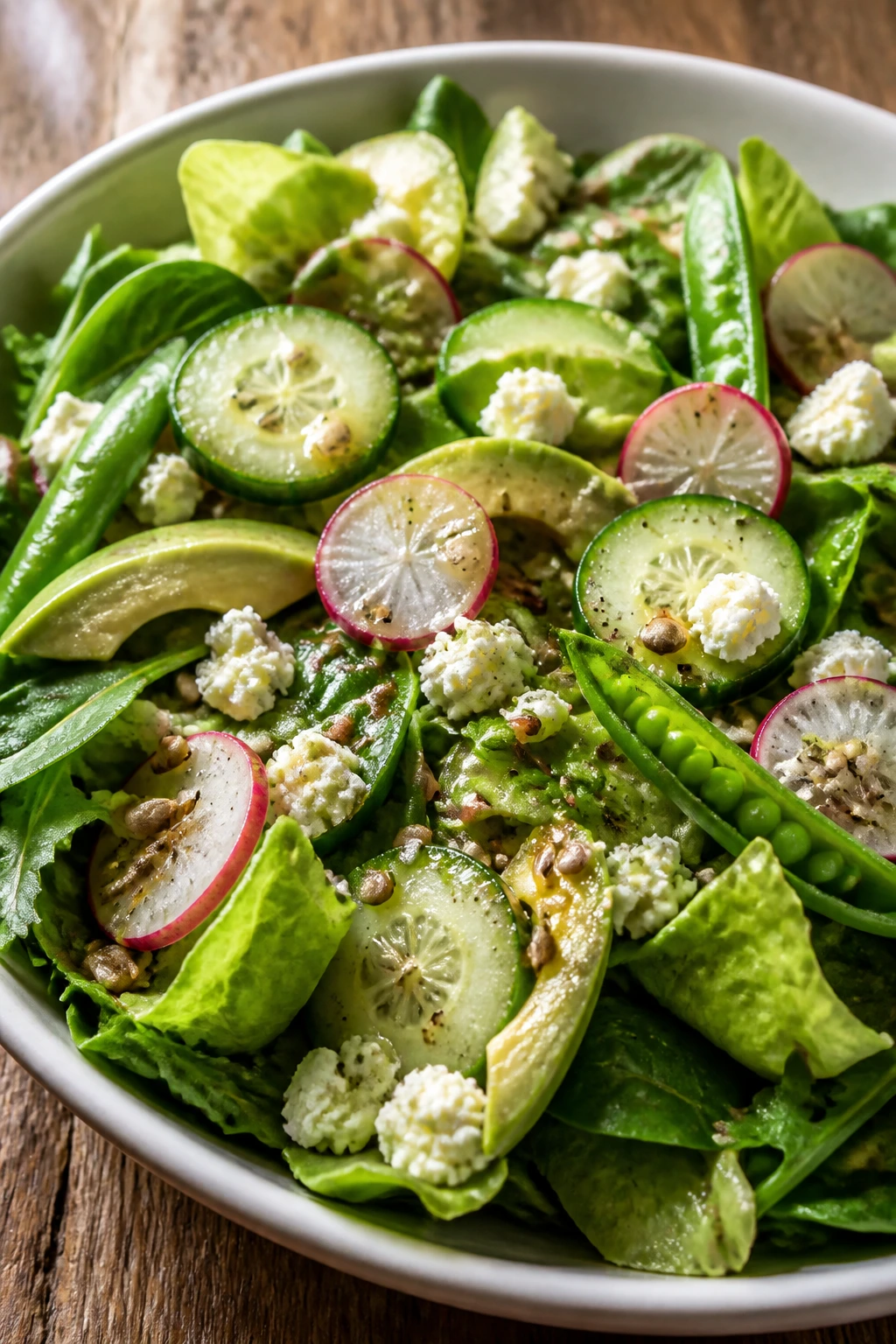
Flavor Enhancement: Grate a little lemon zest over the salad right before serving. It smells brighter than the juice tastes and gives the greens a lift without adding more liquid.
Time-Saver: Toast the seeds and make the dressing up to 3 days ahead. Keep both in separate containers, and the actual assembly takes less time than setting the table.
Texture Move: Chill the cucumber, radishes, and tomatoes in the fridge for 15 minutes after slicing if you want a colder, crisper bowl. That tiny step matters more than people think, especially if the kitchen is warm.
Cost-Saver: If fennel is expensive or hard to find, use celery instead. It gives a clean crunch, doesn’t muddy the flavor, and won’t fight the dressing.
Make-It-Yours: For a dairy-free bowl, skip the feta and add a few olives or capers for salt. For a fuller meal, add shredded chicken, chickpeas, or halved soft-boiled eggs without changing the dressing at all.
Common Mistakes That Leave It Limp or Flat
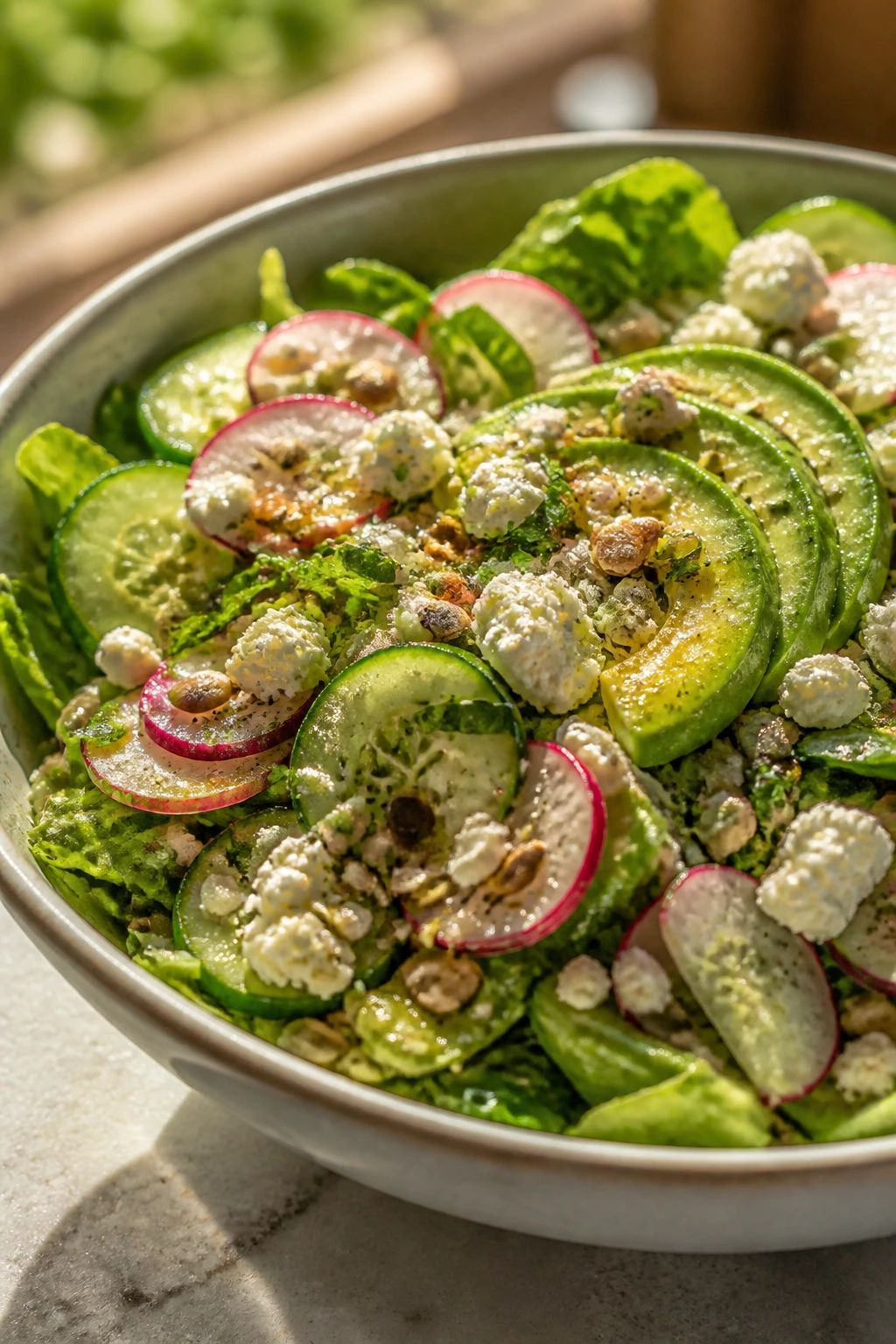
The first mistake is wet greens. You can taste it immediately: the dressing turns thin, the bowl looks sad, and the leaves slip around instead of holding onto anything. Spin the greens dry, then pat them if needed with a towel. If a leaf feels damp between your fingers, it’s not ready.
The second mistake is dressing too early. Give a dressed salad ten minutes on the counter and the tender greens start to slump. Dress it at the last possible moment, then get it to the table. If you must wait, keep the dressing separate and toss again right before serving.
Another common problem is cutting every ingredient to the same soft texture. A bowl full of avocado, tomatoes, and cheese can taste mushy even when it’s seasoned well. You need one crisp element, one juicy element, and one crunchy finish. That contrast is the whole point.
People also underseason the dressing. A vinaigrette that tastes mild in the jar can taste flat once it hits the greens. Salt the dressing, taste a leaf after tossing, and adjust. Don’t keep adding oil when what you really need is a pinch more salt or another squeeze of lemon.
Then there’s slicing the vegetables too thick. Thick cucumber rounds and chunky radish pieces make the bowl clumsy. Thin slices eat better, catch more dressing, and keep the whole thing feeling light.
Finally, don’t add the avocado too early. It browns, softens, and starts mixing into the leaves. Slice it last, fold it in near the end, and the bowl keeps its clean look.
Variations and Adaptations
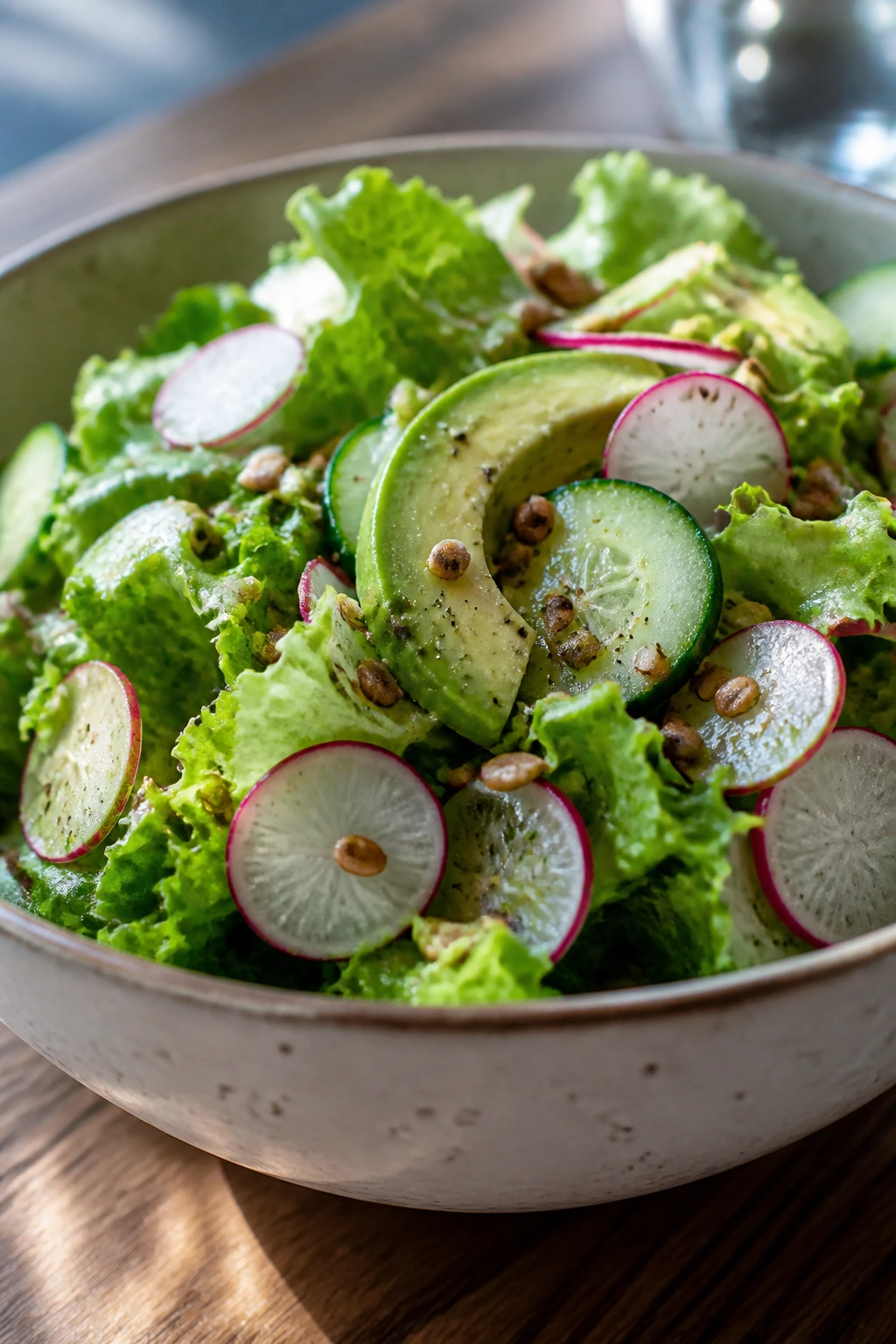
Spring Herb Garden: Add blanched asparagus tips and a few thawed peas, then lean harder on dill and parsley. This version tastes fresh and green, and it works especially well if the fennel is tender and sweet.
Late-Summer Stone Fruit: Swap the tomatoes for sliced peaches or nectarines, change the herbs to basil, and use goat cheese instead of feta. The fruit brings juice without making the bowl watery, as long as you slice it just before serving.
Autumn Orchard Crunch: Replace the snap peas and tomatoes with thin apple slices and small cubes of roasted squash. Maple in the dressing feels right here, and toasted pumpkin seeds give the bowl a deeper, earthier crunch.
Protein Bowl Upgrade: Add halved hard-boiled eggs, grilled chicken, or chickpeas. Keep the dressing a little more generous so the extra protein gets coated and the salad still tastes dressed rather than dry.
Dairy-Free Citrus Bowl: Skip the cheese entirely and add sliced olives, capers, and a little extra lemon zest. The salt from the olives stands in for the feta, and the bowl keeps its bright edge.
Tools That Make Assembly Easier
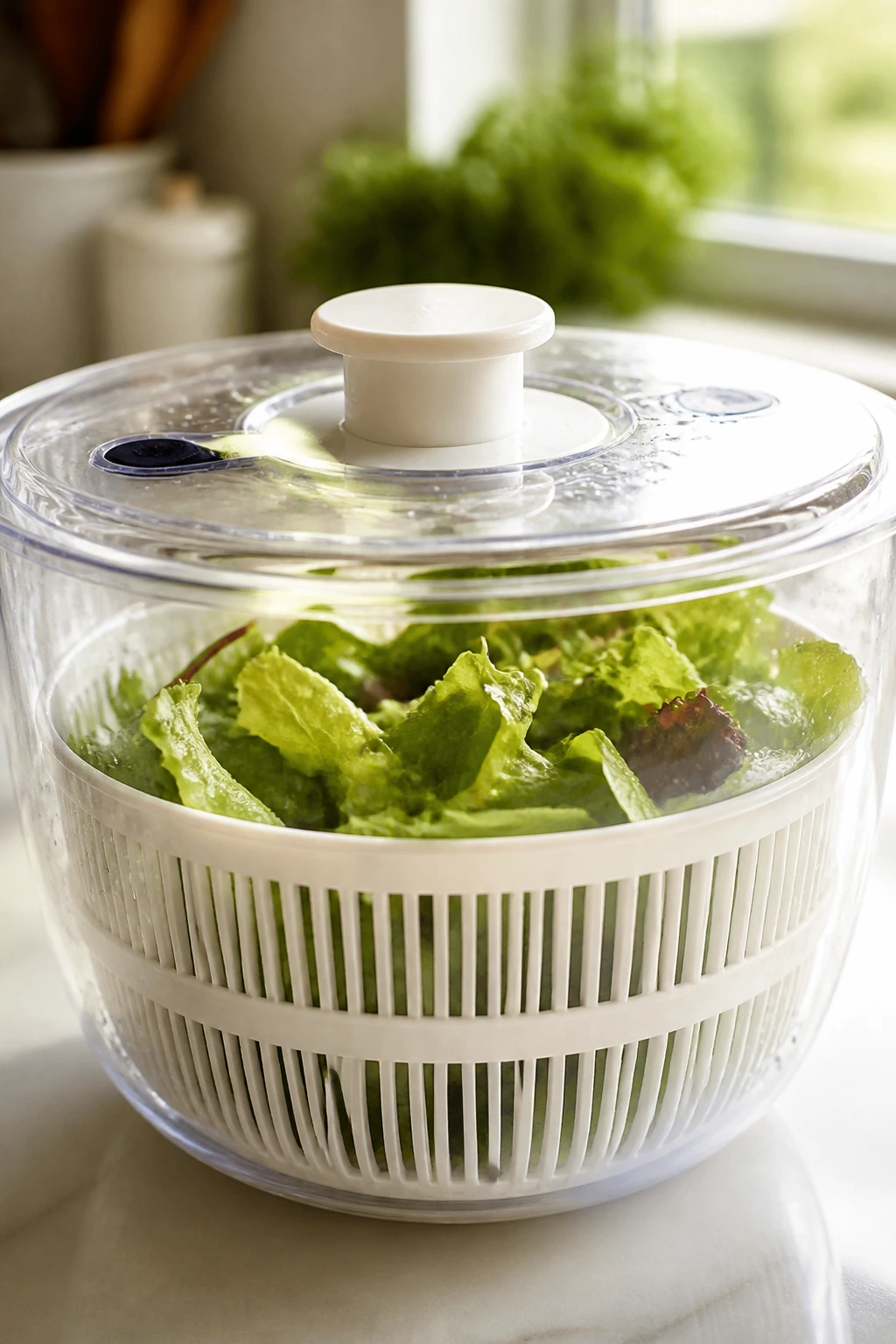
- Salad spinner: The fastest way to get greens dry enough to hold dressing without going limp.
- Large mixing bowl: A roomy bowl gives you space to toss gently instead of smashing the leaves.
- Sharp chef’s knife: Thin slices matter here, and a dull blade crushes cucumbers and herbs.
- Cutting board with a damp towel underneath: Keeps the board from sliding while you slice radishes and fennel.
- Small whisk or fork: Either one will pull the dressing together if you don’t want to use a jar.
- Dry skillet: Needed for toasting the seeds, which adds more flavor than buying them already toasted.
- Citrus juicer or reamer: Optional, but it helps you get the lemon juice without chasing seeds around the bowl.
Make-Ahead, Storage, and Leftovers
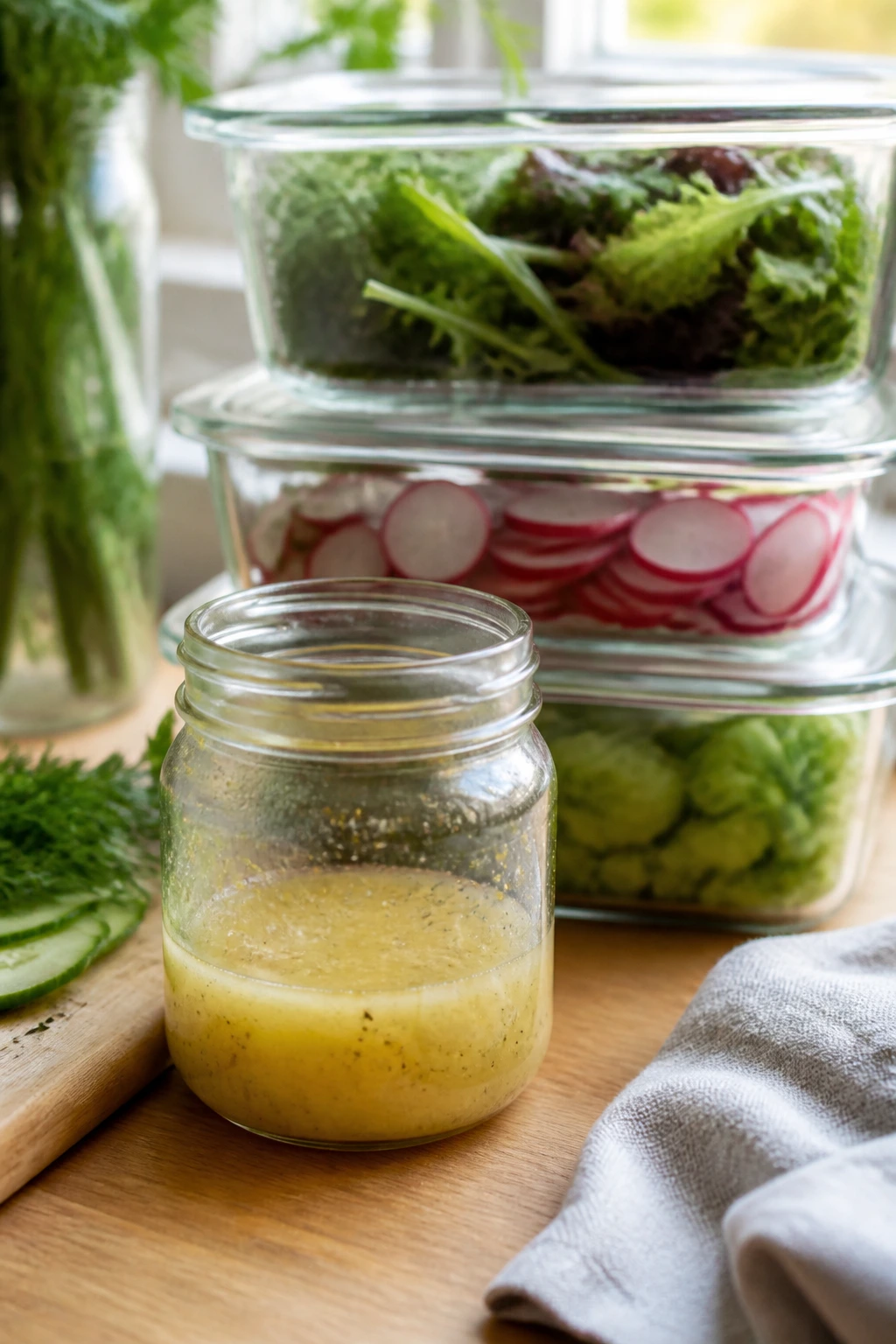
The dressing keeps well in a sealed jar in the refrigerator for up to 1 week. It will separate as it sits, which is normal. Just shake it hard for 10 to 15 seconds before using it again. If it tastes dull after chilling, let it sit on the counter for 5 minutes and give it another shake.
The washed greens can be stored for 3 to 4 days if they’re very dry and tucked into a container lined with a paper towel. Change the paper towel if it gets damp. Cucumber, radishes, celery, fennel, and snap peas can be sliced 2 to 3 days ahead and stored separately in airtight containers.
Avocado is the exception. Slice it only when you’re ready to serve, or it will brown and soften faster than the rest of the bowl. If you have leftover avocado, press plastic wrap directly onto the cut surface and use it within a day, though the texture won’t be as clean.
An assembled salad doesn’t keep well. Once dressed, it’s best eaten within 30 minutes, and I’d rather be honest about that than pretend otherwise. If you know you’ll have leftovers, keep the greens and vegetables separate from the dressing, then combine only what you plan to eat. For a second round, add a fresh handful of greens, another spoonful of dressing, and a few more seeds to wake it back up.
There’s no reheating step here, and that’s not a flaw. Salads like this are built to stay cold, crisp, and immediate. If you use one of the warm-vegetable variations, reheat those pieces separately and let them cool to just-warm before adding them to the greens.
Questions People Ask Before Making It
Can I use bagged greens instead of washing my own?
Yes, as long as they’re dry and the mix includes tender leaves that won’t fight the dressing. Bagged greens can save time, but check for trapped moisture at the bottom of the bag and pat them dry if needed.
Do I have to use shallot in the dressing?
No, but it gives the vinaigrette a softer edge than raw onion or garlic. If you skip it, the dressing will taste cleaner but also a little plainer, so taste it before serving and add a pinch more salt or lemon if needed.
What if my dressing tastes too sharp?
Add another teaspoon of olive oil and whisk again, then taste a leaf after tossing. A tiny bit more honey can help too, but don’t drown the acidity completely; the salad needs enough bite to keep it lively.
Can I make this salad the night before?
You can prep the ingredients, but don’t assemble the bowl until just before eating. Keep the dressing, greens, vegetables, seeds, and avocado separate so the texture doesn’t collapse.
How do I turn this into a real lunch instead of a side?
Add 2 soft-boiled eggs, a cup of chickpeas, or 4 to 6 ounces of grilled chicken or salmon. That gives the bowl enough heft to carry you through a meal without making it heavy.
What can I use instead of feta?
Goat cheese gives a softer, creamier bite; shaved Parmesan gives salt without much bulk; cotija brings a firmer crumble. If you’d rather skip cheese entirely, olives or capers can step in for the salty note.
Why does the salad taste dull after I toss it?
Usually the bowl needs salt, not more oil. Taste a leaf, not the dressing in the jar, then add a pinch of salt or a spoonful more dressing and toss once more.
Why This Bowl Sticks Around
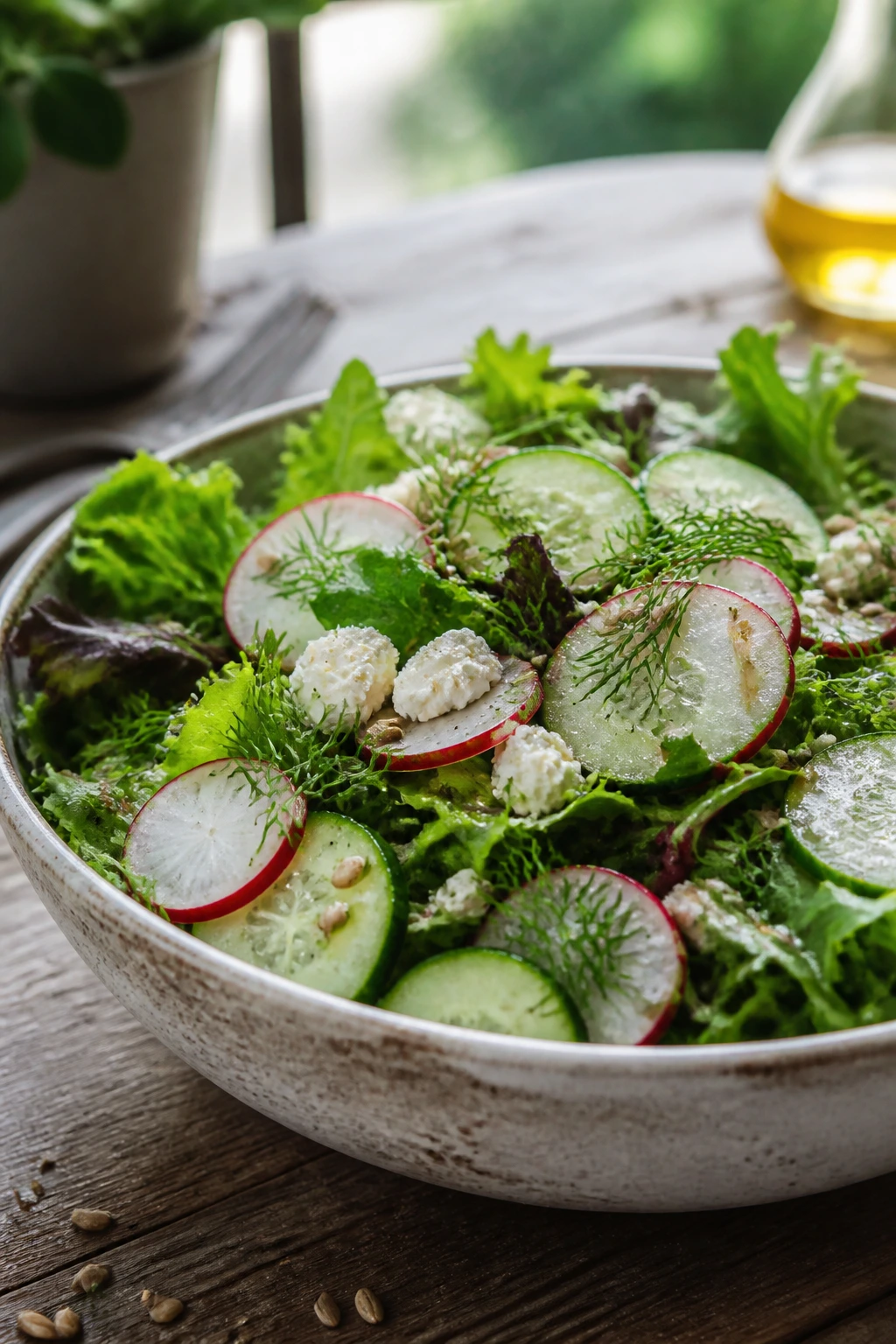
A salad earns repeat status when it knows what it’s doing. This one does. It gives you crunch first, then acid, then cream, then a clean herbal finish that doesn’t sit around and linger too long. That sounds small, but small is the whole game here.
Keep the greens dry, keep the dressing bright, and keep the produce honest. That’s enough. Change the vegetables with the market, swap the herbs depending on what smells alive, and the bowl still works on a Tuesday night or beside something a little more dressed up.
Light Seasonal Salad with Homemade Dressing — Recipe Card
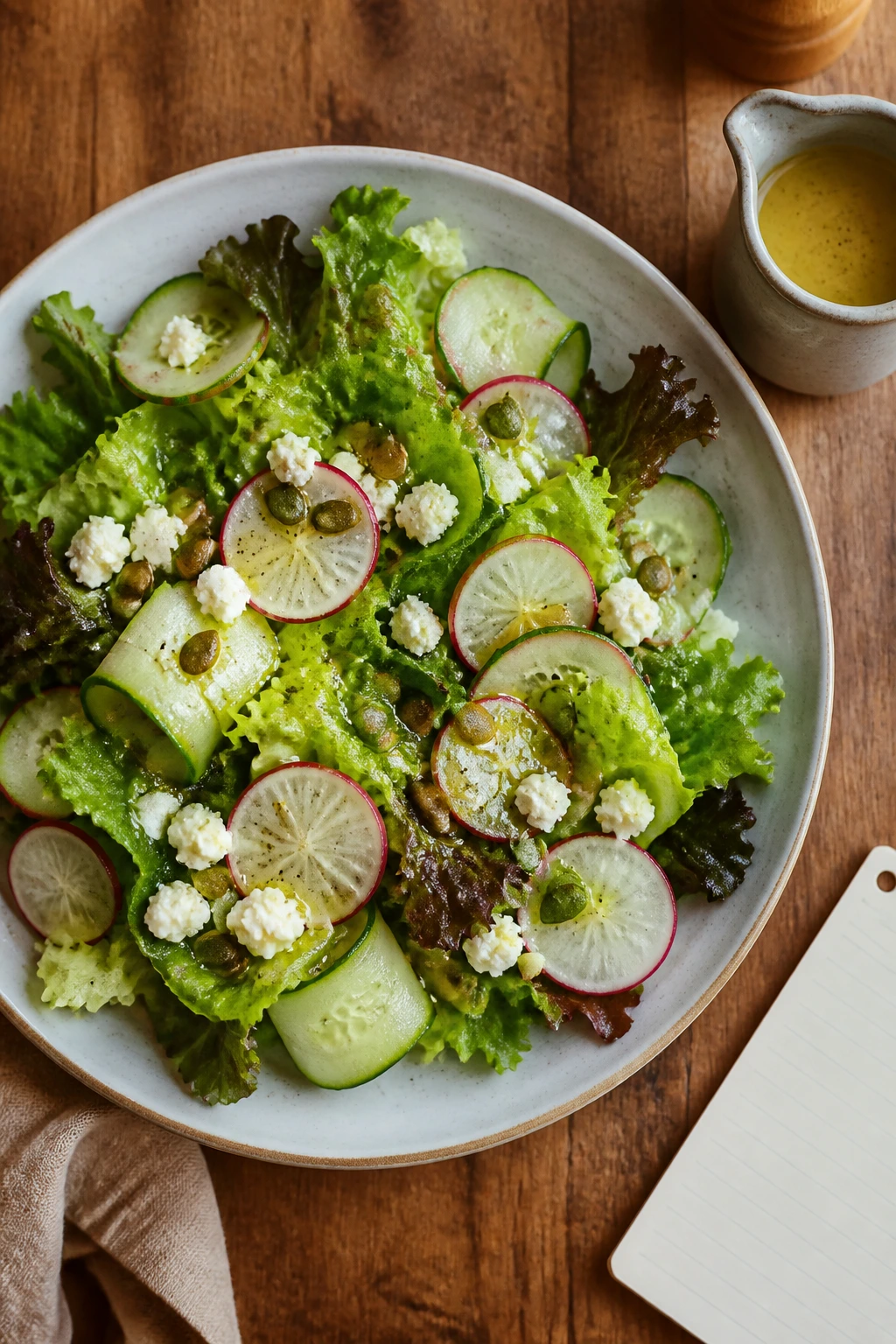
Recipe Name: Light Seasonal Salad with Homemade Dressing
Description: A crisp, bright salad built with tender greens, seasonal vegetables, feta, herbs, and a lemon-Dijon vinaigrette. It’s light enough for a side and sturdy enough for a simple lunch.
Prep Time: 20 minutes
Cook Time: 4 minutes
Total Time: 24 minutes
Course: Salad, Side Dish, Light Lunch
Cuisine: American
Servings: 4 side servings
Calories: About 240 kcal per serving
Ingredients
For the Salad:
- 6 cups mixed tender greens, such as butter lettuce, baby spinach, and arugula, washed and spun very dry
- 1 cup Persian cucumber, thinly sliced
- 1 cup radishes, thinly sliced
- 1 cup cherry tomatoes, halved
- 1 cup sugar snap peas, trimmed and sliced on the bias
- 1 ripe avocado, sliced just before serving
- 1/2 cup shaved fennel or thinly sliced celery
- 1/3 cup crumbled feta or goat cheese
- 1/4 cup sunflower seeds or pumpkin seeds
- 2 tablespoons chopped fresh dill, parsley, or mint
For the Homemade Dressing:
- 3 tablespoons extra-virgin olive oil
- 1 tablespoon fresh lemon juice
- 1 tablespoon white wine vinegar
- 1 teaspoon Dijon mustard
- 1 teaspoon honey or maple syrup
- 1 small shallot, finely minced (about 2 tablespoons)
- 1/2 teaspoon kosher salt, plus more to taste
- 1/4 teaspoon freshly ground black pepper
- 1 teaspoon lemon zest, optional
Instructions
- In a small bowl or jar, whisk together the lemon juice, vinegar, Dijon mustard, honey, shallot, salt, pepper, and lemon zest.
- Slowly whisk in the olive oil until the dressing looks glossy and slightly thickened, then let it rest for 5 minutes.
- Toast the seeds in a dry skillet over medium heat for 3 to 4 minutes, shaking often, until fragrant; cool on a plate.
- Wash and dry the greens thoroughly, then slice the cucumber, radishes, tomatoes, snap peas, and fennel or celery.
- Add the greens and vegetables to a large bowl with half the herbs.
- Pour in about two-thirds of the dressing and toss gently until lightly coated.
- Fold in the avocado, then top with feta, toasted seeds, and the remaining herbs.
- Taste and add more dressing, salt, or pepper if needed, then serve immediately.
Notes: Add the avocado at the very end so it stays fresh. Store extra dressing in the fridge for up to 1 week. If the greens are wet, dry them again before tossing.