



A salad can do two jobs at once, and most people only let it do one. They pile up leaves, add a few vegetables, maybe a sad handful of chicken, then wonder why lunch feels like a compromise. A hearty grilled chicken salad with homemade dressing should not feel like that. It should feel like a cold bowl with real weight: warm char on the chicken, crisp romaine, creamy avocado, a sharp little bite of red onion, and a dressing that actually clings instead of sliding to the bottom of the plate.
The version I keep coming back to is built the way a good meal should be built. There’s protein that was seasoned before it hit the grill, not after. There’s enough crunch that the last forkful still has texture. There’s acid in the dressing so the olive oil doesn’t flatten everything out. And there’s a little salt from feta and chickpeas to make the whole thing taste composed, not random. That balance matters. A lot. Without it, a chicken salad is just a pile of ingredients pretending to be dinner.
What separates a truly satisfying bowl from one you eat out of obligation is usually one small thing: the chicken is juicy, the greens are dry, the dressing has a mustard backbone, and the toppings are chosen for contrast instead of decoration. That’s the difference between “I guess this is healthy” and “I’d happily make this again tomorrow.” The details aren’t fussy. They’re practical. The grill marks matter. The resting time matters. The order you build the salad in matters.
Why You’ll Keep Making This Bowl
-
Juicy chicken, not dry cubes: The chicken gets a short lemon-and-spice marinade, then a quick grill over medium-high heat, which gives you browned edges without turning the center chalky.
-
A dressing with enough backbone: Dijon mustard keeps the lemon vinaigrette from splitting, so it coats the greens instead of pooling under them.
-
Real dinner-level texture: Chickpeas, pumpkin seeds, cucumber, avocado, and feta keep every bite changing a little, which is the whole point of a salad that’s supposed to satisfy.
-
Easy to scale up: Double the chicken, double the dressing, and you’ve got lunch for the next day without any extra thought.
-
Flexible ingredients: Swap the greens, change the cheese, or use thighs instead of breasts and the bowl still holds together.
-
Tastes better than it looks on paper: A good grilled chicken salad can sound plain until the first bite lands. Then the lemon, smoke, salt, and crunch do all the talking.
Yield: Serves 4
Prep Time: 25 minutes
Cook Time: 12 minutes
Total Time: 37 minutes, plus 15 to 30 minutes marinating
Difficulty: Beginner — the method is straightforward, but the chicken needs a thermometer and a short rest to stay juicy.
Chill/Rest Time: 5 to 10 minutes for the chicken after grilling
Best Served: Right after assembly, while the greens are crisp and the chicken is still warm
The Ingredients That Make the Bowl Feel Substantial
For the Chicken and Marinade:
- 1½ pounds boneless, skinless chicken breasts, pounded to an even ¾-inch thickness
- 2 tablespoons olive oil
- 1 tablespoon fresh lemon juice
- 1 teaspoon kosher salt
- 1 teaspoon smoked paprika
- 1 teaspoon garlic powder
- ½ teaspoon black pepper
- ½ teaspoon dried oregano
For the Salad:
- 8 cups chopped romaine lettuce
- 2 cups baby spinach
- 1 cup cherry tomatoes, halved
- 1 medium cucumber, diced
- 1 avocado, sliced
- 1 small red onion, very thinly sliced
- 1 cup cooked chickpeas, rinsed and drained
- 2 hard-boiled eggs, halved
- ½ cup crumbled feta cheese
- ⅓ cup toasted pumpkin seeds
For the Homemade Dressing:
- ⅓ cup extra-virgin olive oil
- 3 tablespoons fresh lemon juice
- 1 tablespoon red wine vinegar
- 1 tablespoon Dijon mustard
- 1 teaspoon honey
- 1 small garlic clove, grated or minced to a paste
- 1 teaspoon finely chopped fresh parsley
- ½ teaspoon kosher salt
- ¼ teaspoon black pepper
Why This Salad Feels Like a Real Dinner
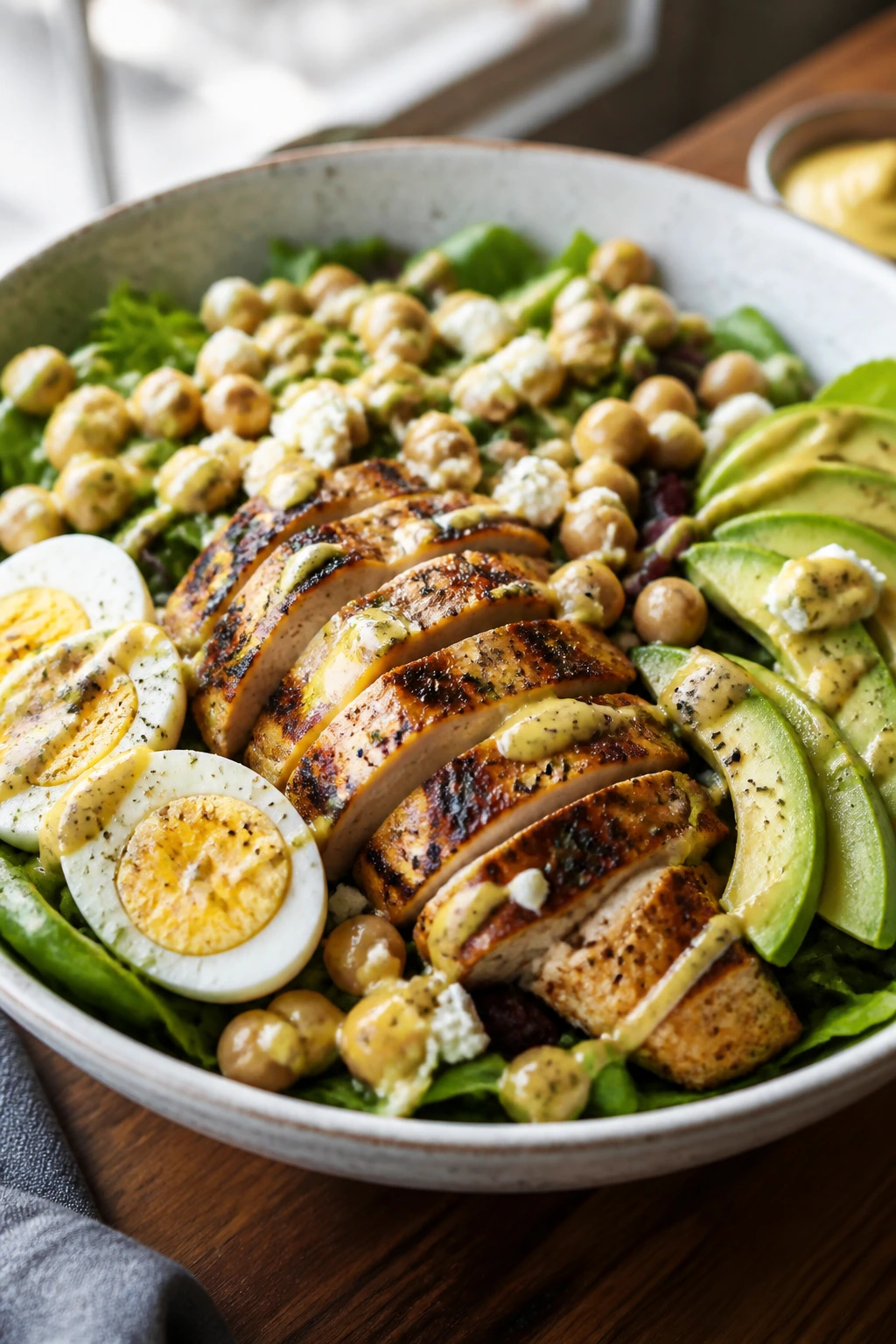
A lot of chicken salads are built like a side dish that wandered off. This one is built like an actual meal, which means every component has a job. The grilled chicken brings smoke and protein. The chickpeas, eggs, and feta give it staying power. The dressing has enough acid to keep the bowl from tasting heavy, even with avocado in the mix.
There’s also a texture lesson hiding in here. Crisp romaine gives you the snap, baby spinach softens the edges, cucumber cools things off, and pumpkin seeds add the dry, roasty crunch that keeps your fork from getting bored. That mix matters more than fancy ingredients. A salad becomes memorable when it keeps changing in your mouth.
And yes, the homemade dressing pulls the whole thing together, but not in the lazy way bottled dressing often does. Bottled ranch or bottled vinaigrette can flatten a salad into one note. A quick lemon-Dijon dressing gives you brightness first, then salt, then a little sweetness from honey, then the peppery finish at the end. That sequence is why this bowl tastes built, not dumped.
The Chicken Has to Carry Its Weight
What to use: 1½ pounds boneless, skinless chicken breasts, pounded to an even ¾-inch thickness, or chicken thighs if you prefer a richer bite.
Preparation: Flatten the thicker end so the pieces cook at the same pace, then coat them in olive oil, lemon juice, salt, smoked paprika, garlic powder, black pepper, and oregano for at least 15 minutes.
Substitutions: Chicken thighs work well and stay a little more forgiving on the grill. Turkey cutlets can also stand in if you want a leaner, thinner cut.
Tips: Even thickness is the difference between juicy chicken and that dry, stringy center nobody wants. I also like to pull the chicken from the fridge 10 to 15 minutes before grilling so it isn’t ice-cold in the middle.
The Greens Need Structure
What to use: 8 cups chopped romaine and 2 cups baby spinach.
Preparation: Chop the romaine into bite-size pieces and spin or pat the leaves very dry before assembling. Tear any big spinach leaves if they feel oversized.
Substitutions: Little gem, green leaf lettuce, or a spring mix can replace some of the romaine. If you want a sturdier base, add a handful of chopped kale and massage it with a teaspoon of dressing first.
Tips: Wet greens are the fastest way to make the dressing slide off. If you wash the lettuce yourself, dry it more than you think you need to — the leaves should feel crisp, not slick.
The Toppings Keep It from Feeling Thin
What to use: 1 cup cherry tomatoes, 1 medium cucumber, 1 avocado, 1 small red onion, 1 cup cooked chickpeas, 2 hard-boiled eggs, ½ cup feta, and ⅓ cup pumpkin seeds.
Preparation: Halve the tomatoes, dice the cucumber, slice the onion as thinly as you can, and keep the avocado for last so it doesn’t brown while you cook the chicken.
Substitutions: White beans can replace chickpeas. Sunflower seeds can replace pumpkin seeds. Goat cheese can stand in for feta if you want something softer and tangier.
Tips: The chickpeas should be drained well and patted dry if you want them to stay firm. A damp chickpea tastes dull. A dry one tastes nutty.
The Dressing That Pulls the Whole Bowl Together
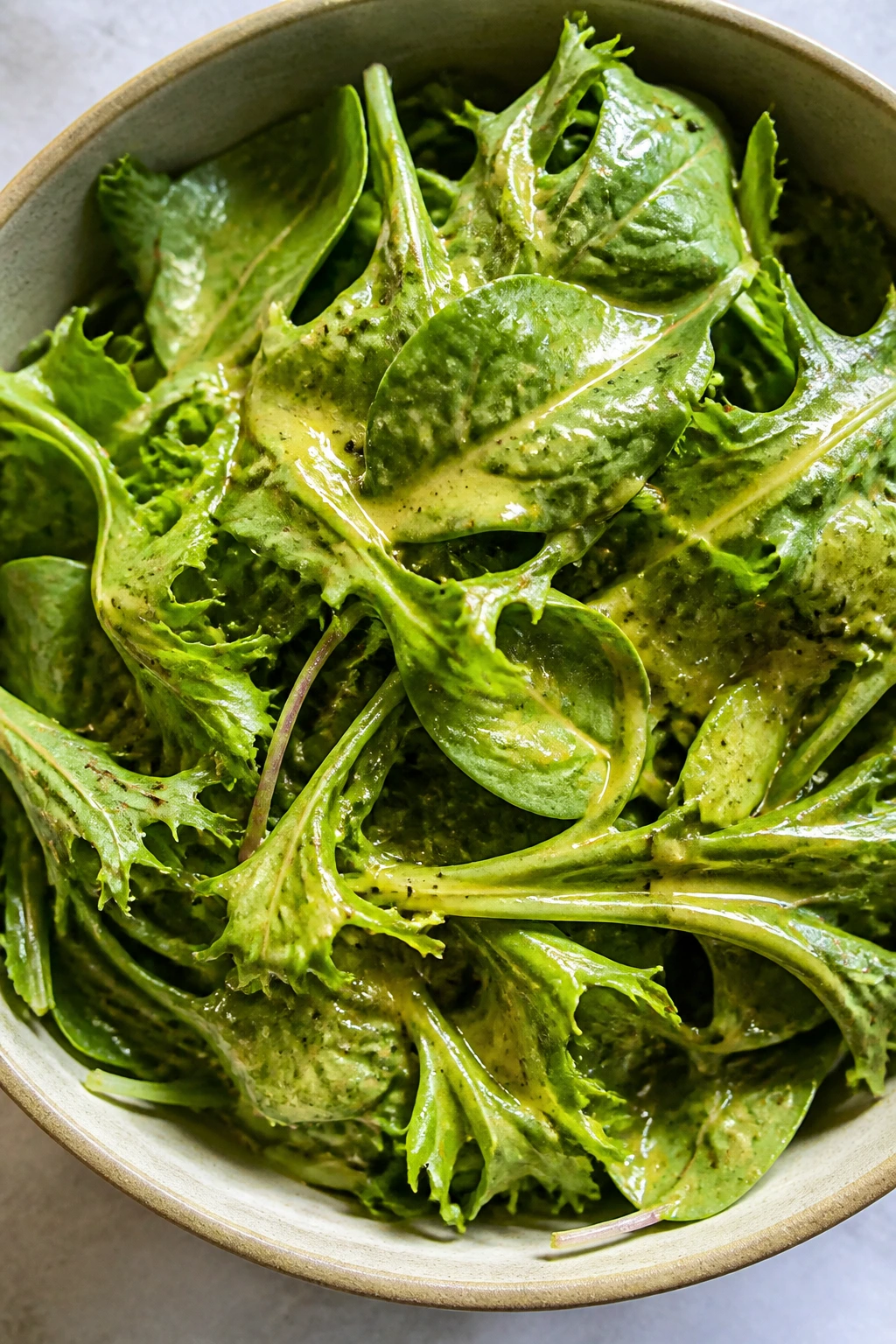
The dressing is where this salad stops being “chicken plus vegetables” and becomes something you want to eat with focus. Lemon juice gives it lift, red wine vinegar sharpens the edges, and Dijon mustard keeps the oil from separating into little slicks on the greens. Honey is doing a small but important job here too. It rounds off the acid without turning the dressing sweet.
I like this style of dressing because it works with grilled chicken instead of competing with it. Creamy dressings can be great, but they often bury the smoke and paprika. This one leaves the char alone. You still taste the grill. You still taste the salt on the feta. You still get that bright, almost snappy hit of lemon when you bite into a tomato.
The Flavor Balance Is Deliberate
What to use: ⅓ cup olive oil, 3 tablespoons lemon juice, 1 tablespoon red wine vinegar, 1 tablespoon Dijon, 1 teaspoon honey, 1 garlic clove, parsley, salt, and black pepper.
Preparation: Whisk everything in a small bowl, or shake it in a jar with a tight lid until the dressing turns cloudy and thick. Taste it before using; it should taste sharp but not harsh.
Substitutions: Apple cider vinegar can replace red wine vinegar. Maple syrup can replace honey if that’s what you have. If you want a more herb-heavy profile, swap parsley for chopped dill or chives.
Tips: Grate the garlic very fine or mash it into a paste so you don’t get a harsh raw bite in one mouthful. And don’t skip the Dijon — it’s the glue here.
Grilling Chicken Without Drying It Out
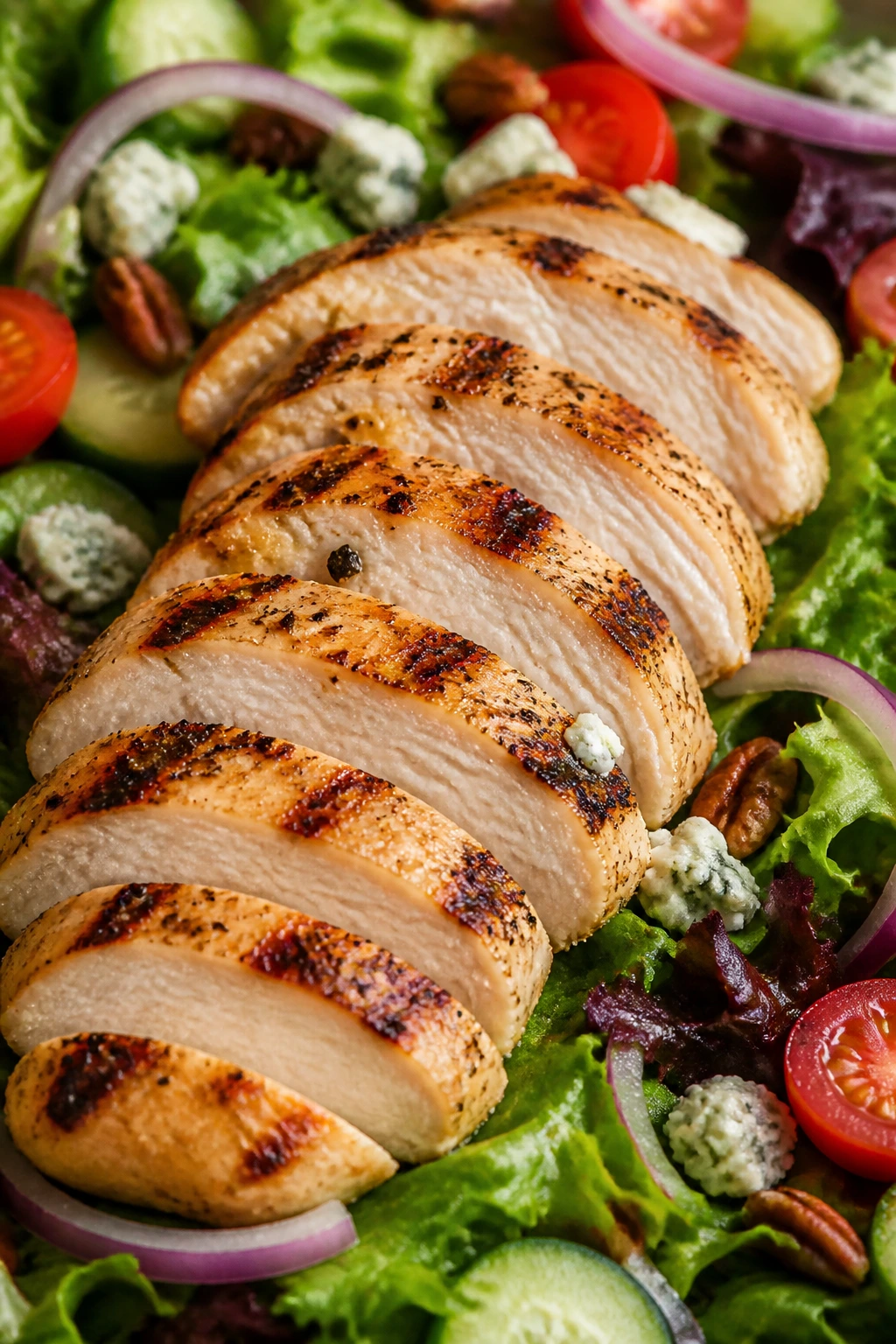
Chicken breast has a reputation problem, and most of it is earned. People cook it too long, leave it too thick, or slice it before it rests. Then they blame the cut instead of the method. The fix is not complicated. Give the chicken even thickness, hot enough heat to mark the outside, and a thermometer so you don’t guess.
A grill or grill pan at medium-high heat is the sweet spot. You want enough heat for browning, but not so much that the outside burns before the center reaches 165°F. The exterior should get those dark lines and a faint smoky smell. Inside, the juices should run clear, not pink. That’s the line.
If you use thighs instead of breasts, the game changes a little. Thighs are more forgiving and a bit richer, but they can take a minute or two longer. Either way, the real key is not overhandling the chicken once it hits the grate. Put it down. Let it cook. Turn it once. That’s usually enough.
Building the Bowl So It Stays Crisp
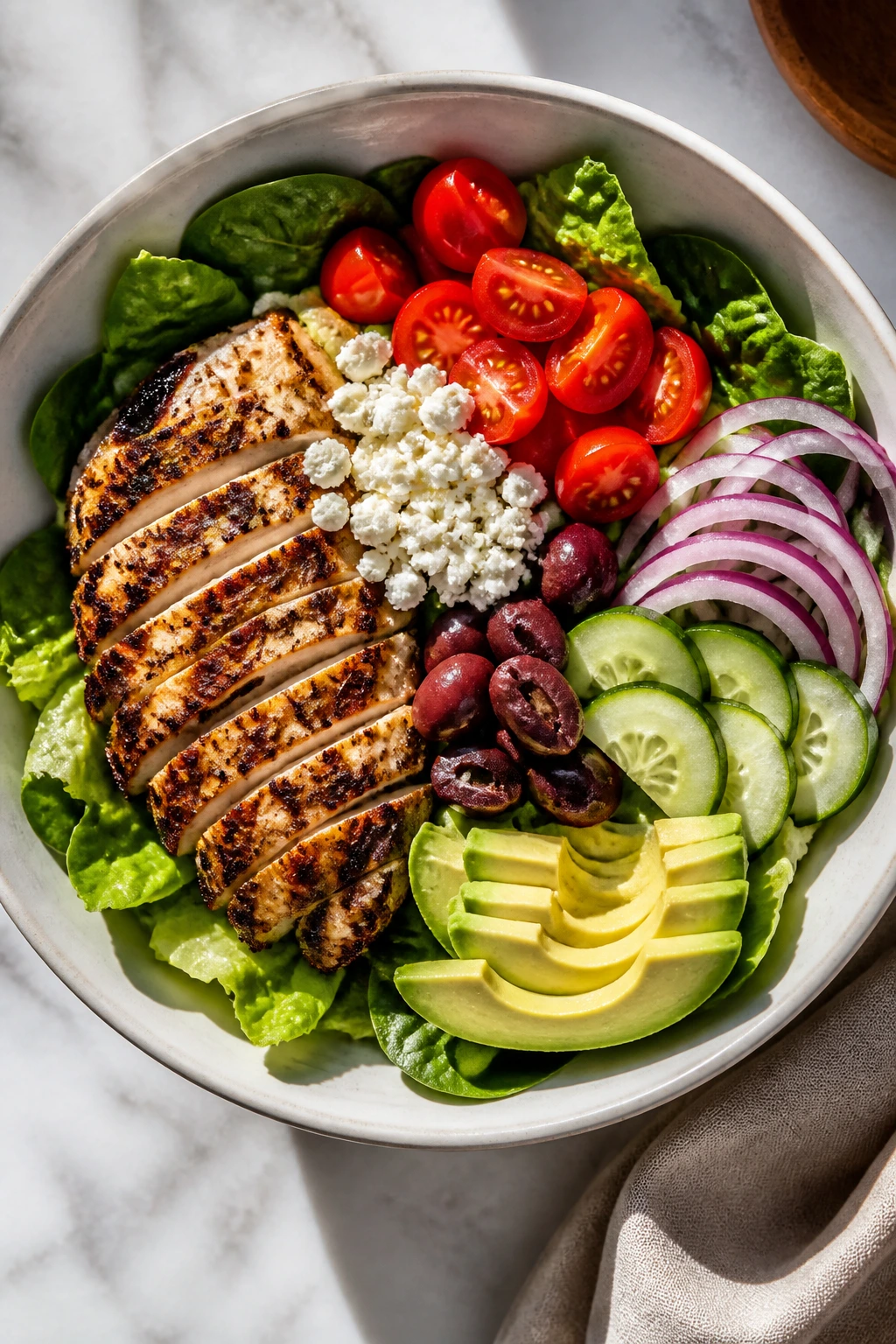
A salad can fall apart in the bowl before it ever reaches the table. Dressing too early. Tomatoes cut too far ahead. Warm chicken dumped onto wet greens. The fix is a little choreography, not extra effort.
Start with the romaine and spinach in a large bowl, then scatter the cucumber, tomatoes, chickpeas, onion, eggs, feta, and seeds over the top. Keep the avocado for the very end so it stays green and clean-looking. Slice the chicken after it rests, then lay it across the top instead of burying it under the greens. That keeps the heat where you want it and the structure visible.
The dressing goes on last, and you do not need much more than a few tablespoons at a time if you’re serving immediately. A heavy hand can drown the lettuce in seconds. A light hand, followed by a second drizzle at the table, gives people control. I like that better anyway. Nobody should have to eat someone else’s version of “enough dressing.”
Step-by-Step: From Prep Bowl to Plate
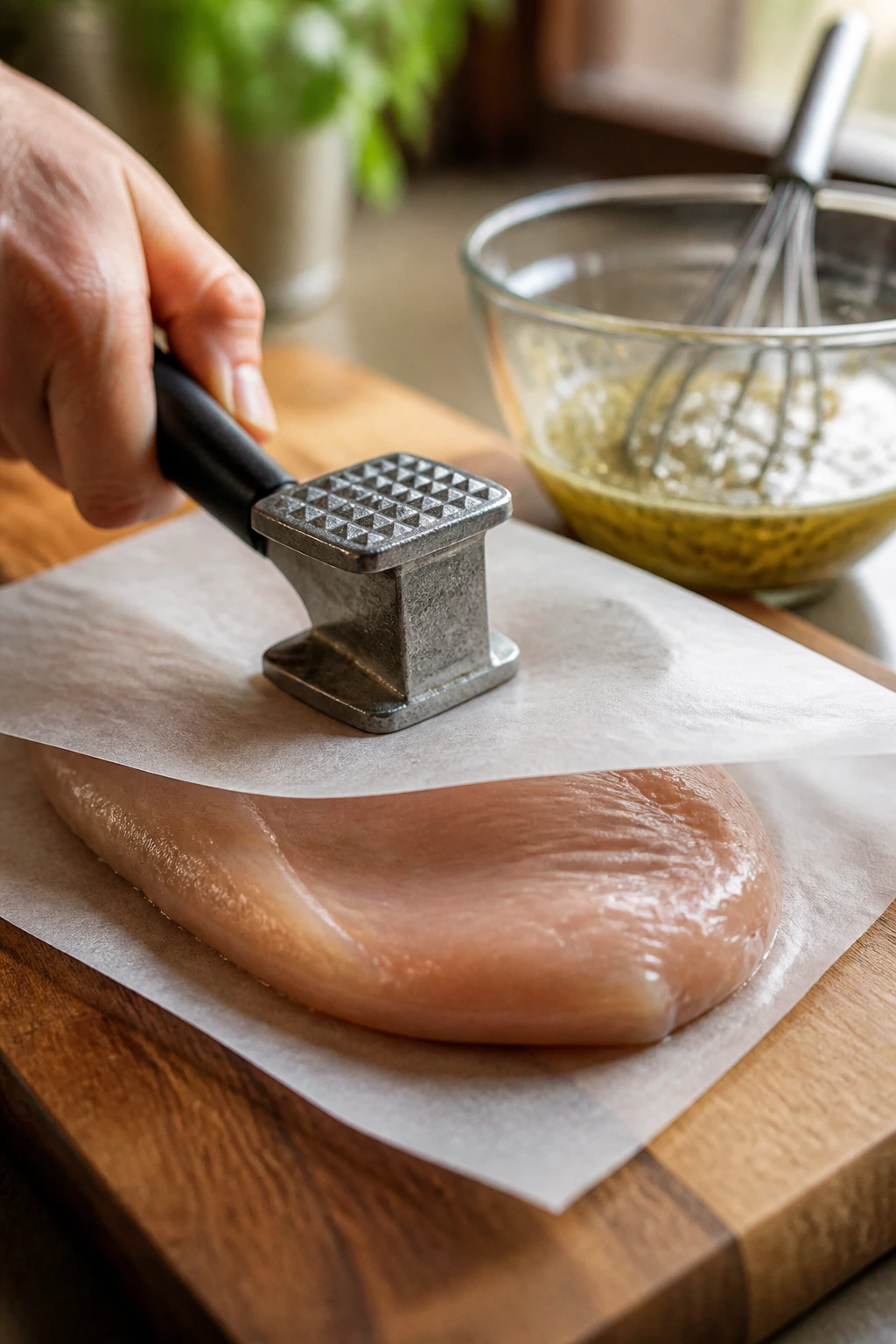
Prep the Chicken and Dressing:
- Pat the chicken breasts dry with paper towels, then pound them to an even ¾-inch thickness between two sheets of parchment or inside a zip-top bag. This helps them cook at the same pace and prevents the thin end from drying out before the thick end is done.
- In a medium bowl, whisk together 2 tablespoons olive oil, 1 tablespoon lemon juice, 1 teaspoon kosher salt, 1 teaspoon smoked paprika, 1 teaspoon garlic powder, ½ teaspoon black pepper, and ½ teaspoon dried oregano. Add the chicken and turn it until coated on all sides. Let it sit for 15 to 30 minutes while you make the salad and dressing.
- In a small bowl or jar, whisk together ⅓ cup olive oil, 3 tablespoons lemon juice, 1 tablespoon red wine vinegar, 1 tablespoon Dijon mustard, 1 teaspoon honey, 1 grated garlic clove, 1 teaspoon parsley, ½ teaspoon salt, and ¼ teaspoon black pepper. Taste and adjust with a pinch more salt if it tastes flat.
Cook the Chicken: 4. Preheat a grill or grill pan over medium-high heat, about 425°F to 450°F, and lightly oil the grates or pan. The surface should be hot enough that the chicken sizzles when it touches down. 5. Grill the chicken for 5 to 7 minutes per side, depending on thickness, until the outside has clear grill marks and the thickest part reaches 165°F on an instant-read thermometer. Do not cut into the chicken to check it; you’ll lose the juices you worked for. 6. Transfer the chicken to a clean board and rest it for 5 to 10 minutes. The juices should settle back into the meat, and the center will finish cooking a bit from carryover heat.
Assemble the Salad: 7. While the chicken rests, place 8 cups chopped romaine and 2 cups baby spinach in a large bowl or platter. Top with 1 cup halved cherry tomatoes, 1 diced cucumber, 1 cup drained chickpeas, 1 thinly sliced red onion, 2 halved hard-boiled eggs, ½ cup feta, and ⅓ cup pumpkin seeds. 8. Slice the chicken across the grain into strips. Arrange it over the greens, then add the avocado slices just before serving so they stay neat and green. 9. Drizzle on about half the dressing first, toss lightly, and add more only if the bowl needs it. You want the leaves coated, not slicked into a puddle. 10. Taste a forkful before sending it to the table. Add a pinch more salt, another squeeze of lemon, or a spoonful of dressing if the bowl needs brightness. The last adjustment matters more than people think.
The Tools That Make the Job Easier
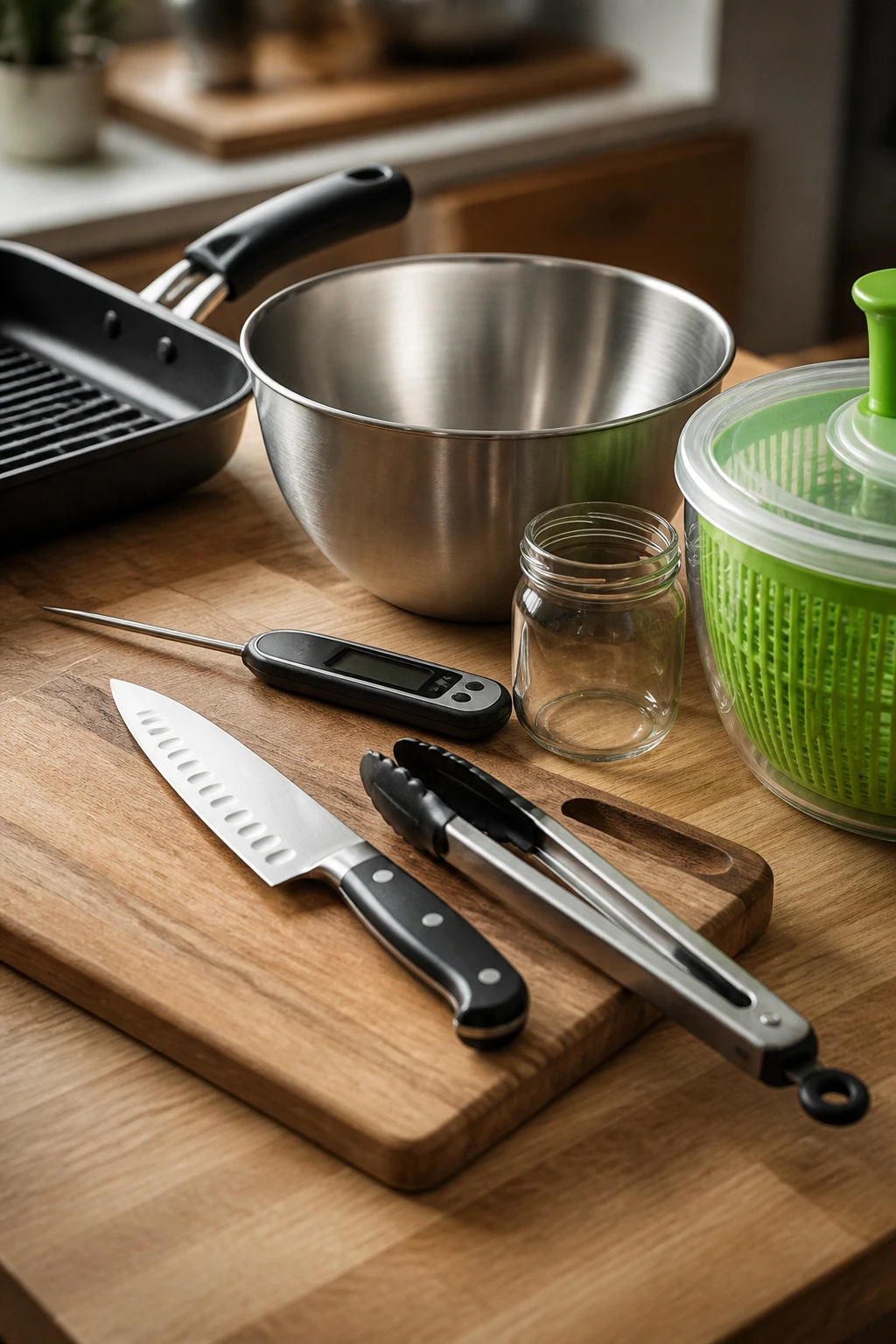
- Outdoor grill or grill pan: Either works; the grill gives you more smoke, while a heavy grill pan does fine on the stovetop.
- Instant-read thermometer: This is the easiest way to hit 165°F without guessing.
- Large mixing bowl or salad platter: You need room to toss without crushing the greens.
- Small bowl or lidded jar: Best for the dressing; a jar makes shaking easier than whisking.
- Chef’s knife: Thin onion slices and clean avocado cuts depend on a sharp blade.
- Cutting board: Use one for the chicken and a separate one for produce if you can.
- Tongs: Helpful for turning the chicken without piercing it.
- Salad spinner or clean kitchen towels: Dry greens hold dressing better and stay crisp longer.
How to Serve It at the Table
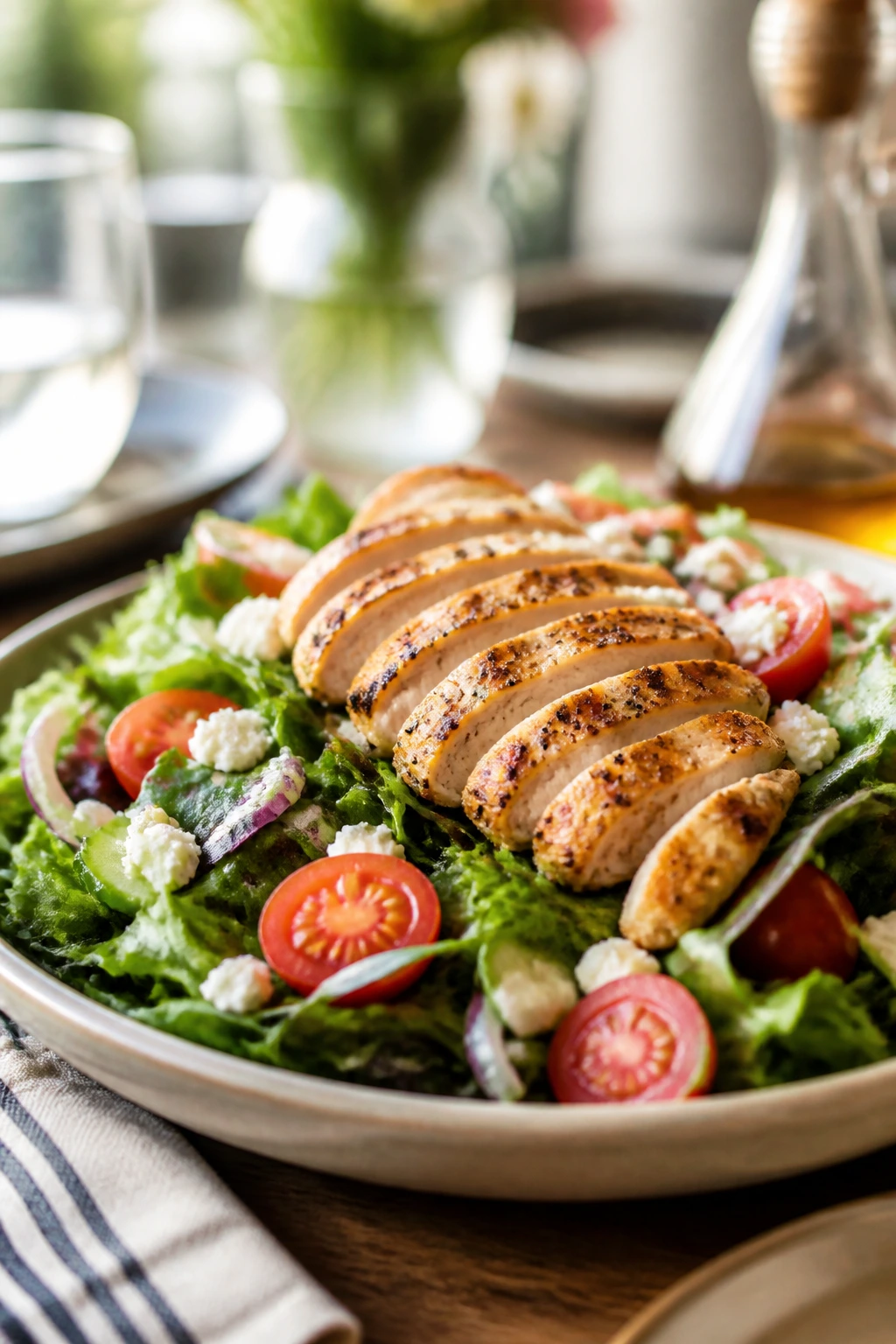
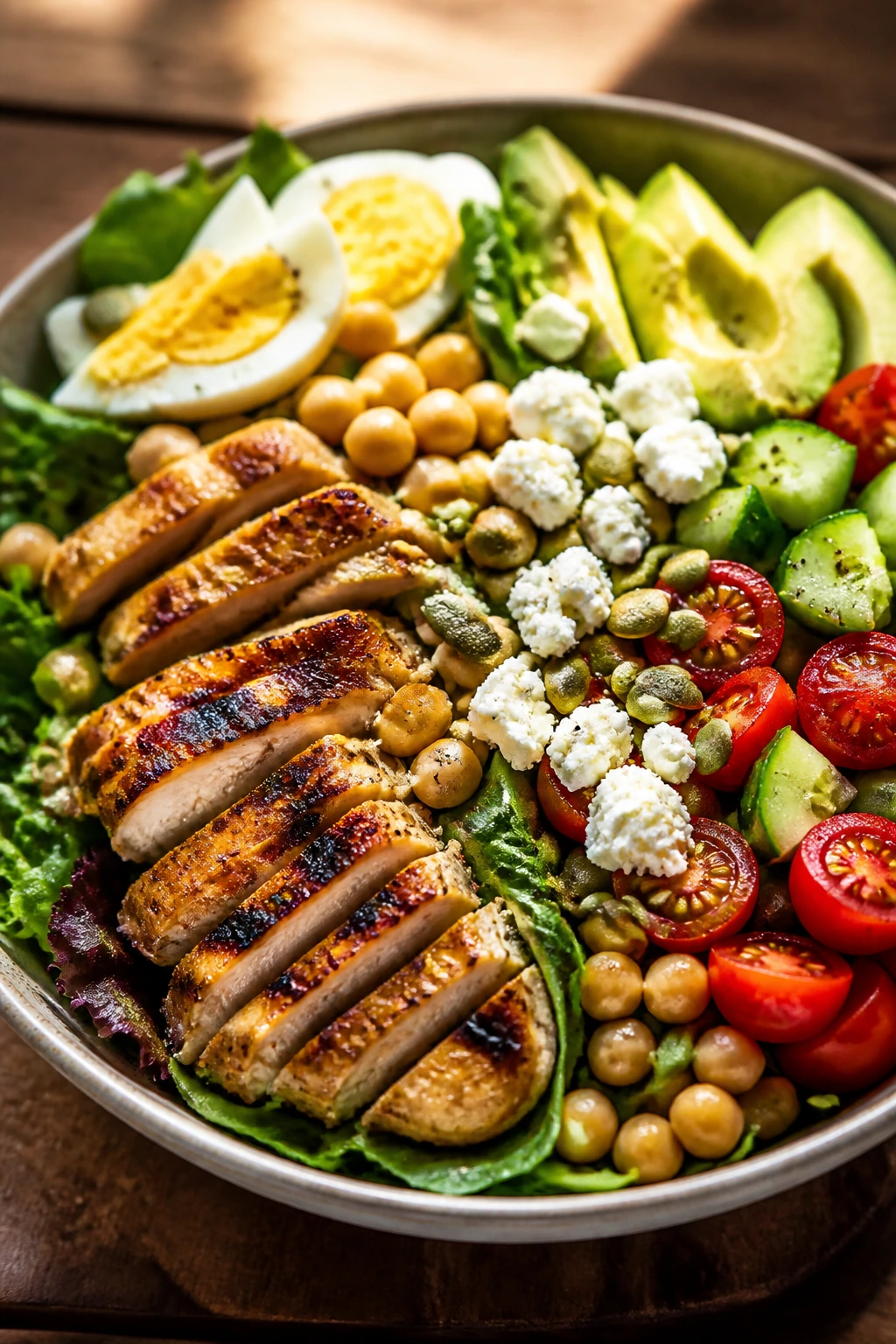
Presentation: Pile the greens first, then lay the sliced chicken across the top in a loose fan. Scatter the tomatoes, onion, chickpeas, and seeds around the chicken so the bowl looks layered instead of dumped. A final crumble of feta and a little black pepper on top make the whole plate look finished.
Accompaniments: This salad stands on its own, but a slice of sourdough, grilled pita, or a warm piece of garlic bread turns it into a more relaxed meal. If you want something lighter, a bowl of chilled melon or a few cucumber spears with lemon and salt fits the same plate without crowding it.
Portions: Four servings is the sweet spot here if you’re treating it as dinner. For a bigger appetite, serve it with bread and call it two hearty portions instead of stretching the chicken too thin. For lunch boxes, split everything into four containers and keep the dressing separate until eating time.
Beverage Pairing: Sparkling water with lemon keeps the citrus note going without fighting the feta. If you want something with more character, a crisp white wine like Sauvignon Blanc or a dry rosé matches the dressing’s acidity and the chicken’s char.
Small Moves That Improve the Bowl
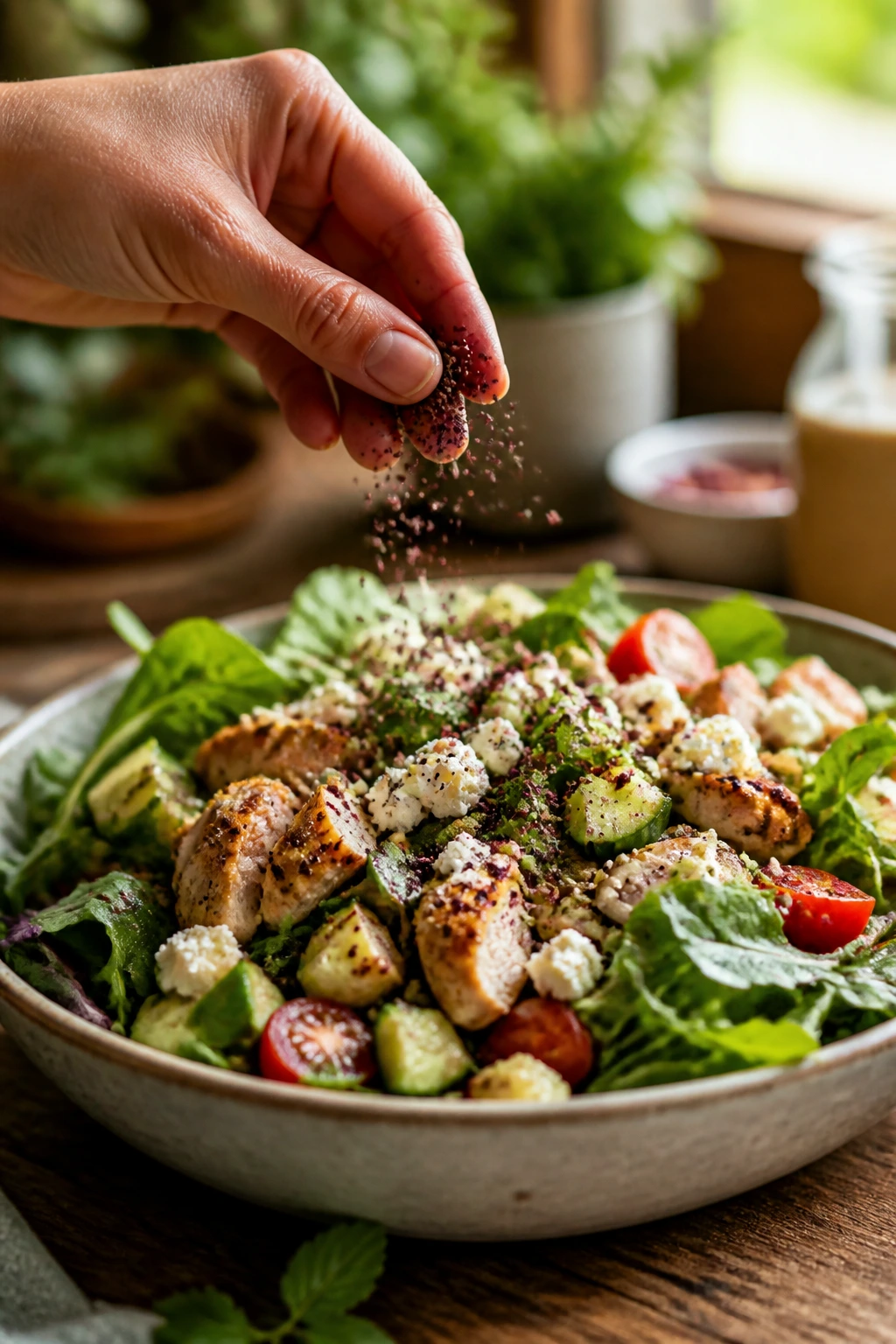
Flavor Enhancement: A pinch of sumac over the finished salad gives the lemon a deeper, almost floral edge. It is subtle, not loud, and it works especially well if your tomatoes are sweet.
Customization: Add sliced radishes if you like a peppery snap, or swap the chickpeas for cooked farro if you want a chewier base. If you want the salad richer, a spoonful of chopped olives tucked into one corner changes the whole bowl in a good way.
Serving Suggestions: Keep a few extra pumpkin seeds, feta crumbles, and a lemon wedge on the side so people can season their own portion at the table. That little bit of self-service makes the plate feel fresher, and it saves you from overdressing the whole bowl.
Make-It-Yours: For a dairy-free version, skip the feta and add avocado plus a few extra seeds. For a lower-carb version, cut the chickpeas in half and increase the chicken and greens. For a sharper version, double the vinegar in the dressing and add minced shallot.
Mistakes That Turn a Good Salad Limp
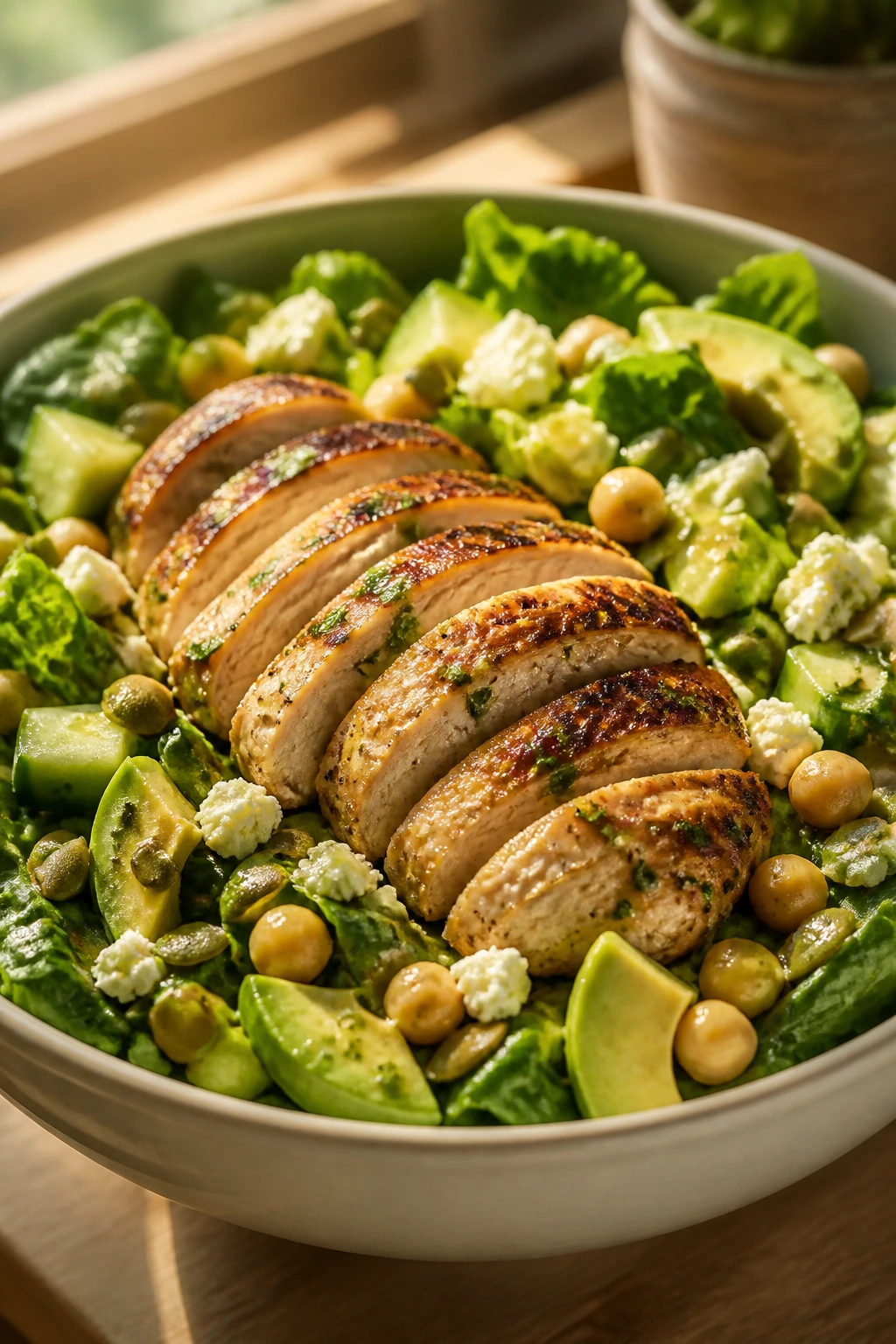
One common mistake is using wet greens. The symptom is easy to spot: dressing slides off, the bowl gets watery, and the leaves taste tired. Wash the greens ahead of time, spin them dry, and if you’re in a hurry, pat them with a clean towel before assembling.
Another is overcooking the chicken. Breast meat goes from juicy to dry fast, and the difference between 160°F and 170°F can feel huge on the plate. Pull it at 165°F, rest it, and slice only after the juices settle.
A third mistake is adding the avocado too early. It turns dull and bruised-looking while you finish everything else. Cut it at the end, or if you have to prep ahead, toss it with a little lemon juice and store it right on top of the bowl, not buried underneath.
People also make the salad taste flat by underseasoning the dressing. Lemon and oil alone can taste thin. Salt, Dijon, garlic, and a touch of honey are what give the dressing shape.
Finally, there’s cutting the chicken with the grain instead of across it. The meat ends up stringy. Slice across the grain, and the strips stay tender enough to eat with a fork, which is exactly what you want from a salad like this.
Variations That Still Taste Like the Same Dish
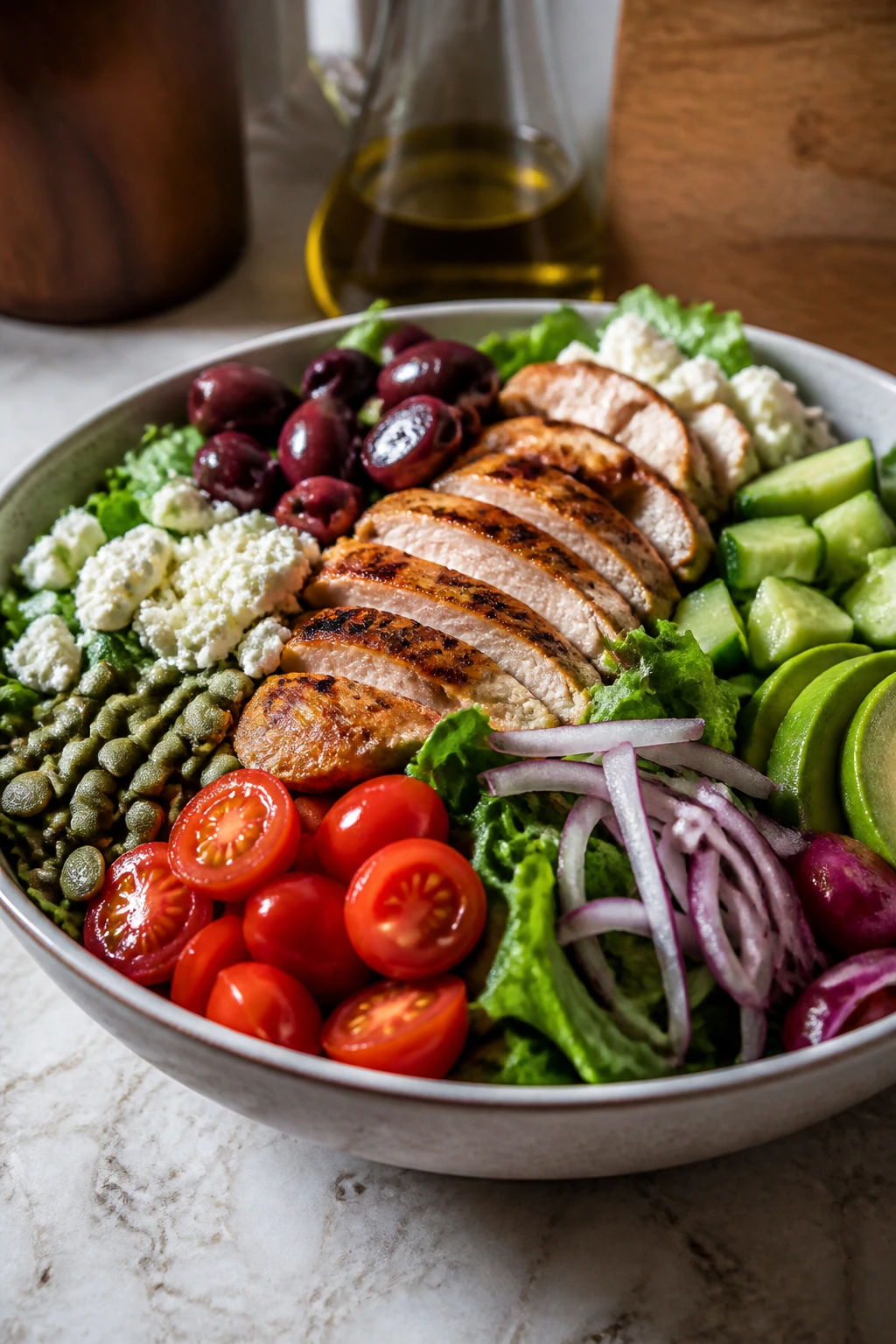
Mediterranean Lean: Swap the pumpkin seeds for kalamata olives and add chopped cucumber, parsley, and a little extra feta. The flavor gets saltier and brighter, almost like a chopped Greek salad with a grill mark on top.
Creamier Lemon Herb: Stir 2 tablespoons of plain Greek yogurt into the dressing and reduce the olive oil by the same amount. The result is thicker and a little more lush, which works well if you want the dressing to cling hard to romaine.
Spicy Smoke Version: Add ¼ teaspoon cayenne to the chicken seasoning and finish the salad with sliced jalapeño. It keeps the same basic structure but brings heat that cuts through the avocado and feta.
Grain Bowl Conversion: Serve the same chicken and toppings over 2 cups of cooked quinoa or farro instead of the greens. The dressing stays the same, and the bowl becomes sturdier for packed lunches or colder weather meals.
No-Egg Version: Leave out the hard-boiled eggs and add another half cup of chickpeas plus a few more seeds. You keep the heft, but the flavor leans cleaner and less rich.
Make-Ahead, Storage, and Reheating Guidance
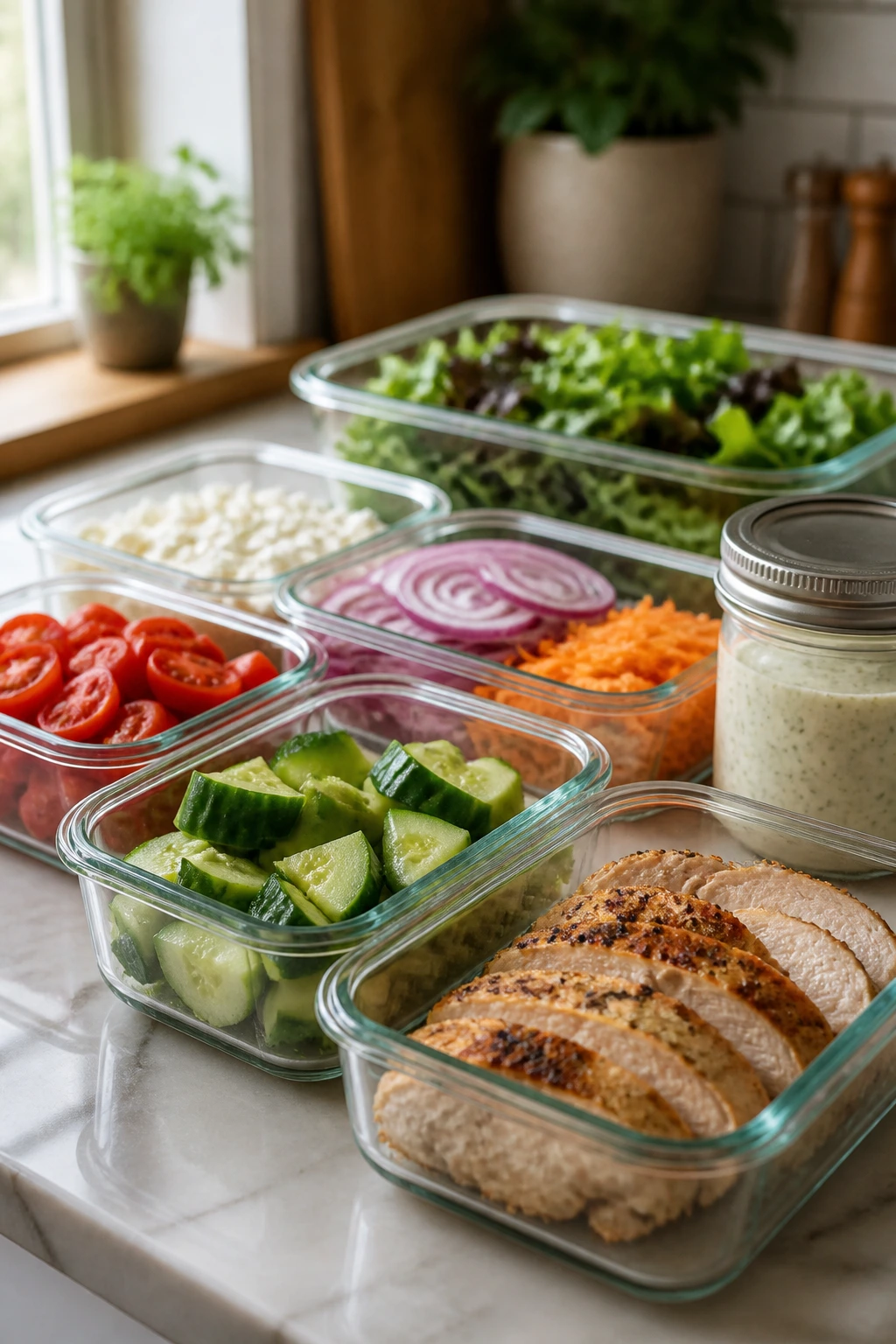
This salad is best assembled right before eating, but most of the parts can be handled ahead if you keep them separate. The chicken can be grilled up to 4 days ahead and stored in an airtight container in the refrigerator. The dressing keeps well for 5 to 7 days in a jar in the fridge; just shake it hard before using because the oil will firm up a little when chilled. The chopped vegetables will last 2 to 3 days if they’re dry and tucked into sealed containers with a paper towel to catch excess moisture.
If you want to make lunch boxes, pack the greens, toppings, chicken, and dressing separately. That keeps the romaine crisp and the tomatoes from bleeding into everything else. Avocado is the one ingredient that really wants to be cut at the last minute, but if you must pack it, add extra lemon juice and press plastic wrap directly onto the surface before sealing the container.
Reheating the chicken is easy. For the best texture, warm it in a 300°F oven for 8 to 10 minutes, covered loosely with foil, or in a skillet over low heat with a teaspoon of water and a lid. A microwave works in a pinch, but use 30-second bursts at medium power so the meat doesn’t go rubbery at the edges. Cold chicken is fine on the salad too, especially if you’re packing lunch. It just changes the mood a little.
Freezing is possible for the chicken, but not the assembled salad. Freeze cooked chicken strips for up to 2 months in a freezer bag with the air pressed out. Thaw them in the refrigerator overnight, then warm gently before serving. The dressing does not freeze well because the emulsion can split. Make it fresh when you need it.
Questions People Actually Ask Before Making It
Can I use chicken thighs instead of breasts?
Yes, and they’re often more forgiving. Boneless thighs usually stay juicier on the grill and can handle an extra minute or two without drying out. Keep the same seasoning, and cook them until the thickest part reaches 165°F.
What if I don’t have a grill?
A grill pan or heavy cast-iron skillet works well. Heat it over medium-high, add a light film of oil, and cook the chicken the same way you would on a grill, turning only once. You’ll miss the smoke, but the browning still does a lot of the work.
Can I make this salad for lunch the next day?
Yes, if you keep the dressing separate and pack the avocado last or omit it until serving. The chicken, chickpeas, eggs, and chopped vegetables hold well for a day or two, and the salad stays much better than most dressed greens would.
How do I keep the avocado from browning?
Toss the slices with a little lemon juice and place them on top of the salad rather than mixing them in. If you’re prepping ahead, leave the avocado whole and cut it right before eating. That’s the cleanest fix.
Is this salad filling enough without bread?
For most people, yes. The chicken, chickpeas, eggs, feta, avocado, and seeds add enough protein and fat to make it a real meal. If you’re serving a bigger appetite, bread on the side is easy and doesn’t require changing the salad itself.
Can I skip the eggs or feta?
Absolutely. The salad still works if you remove one or both, but you may want to replace some of that richness with extra chickpeas, seeds, or avocado so the bowl doesn’t feel too lean.
What should I do if the dressing tastes too sharp?
Add another teaspoon of olive oil and a small pinch of honey, then whisk again. If it still feels aggressive, a tiny splash of water can soften the acidity without making it bland. Taste after each change. Small adjustments matter here.
A Salad Worth Repeating
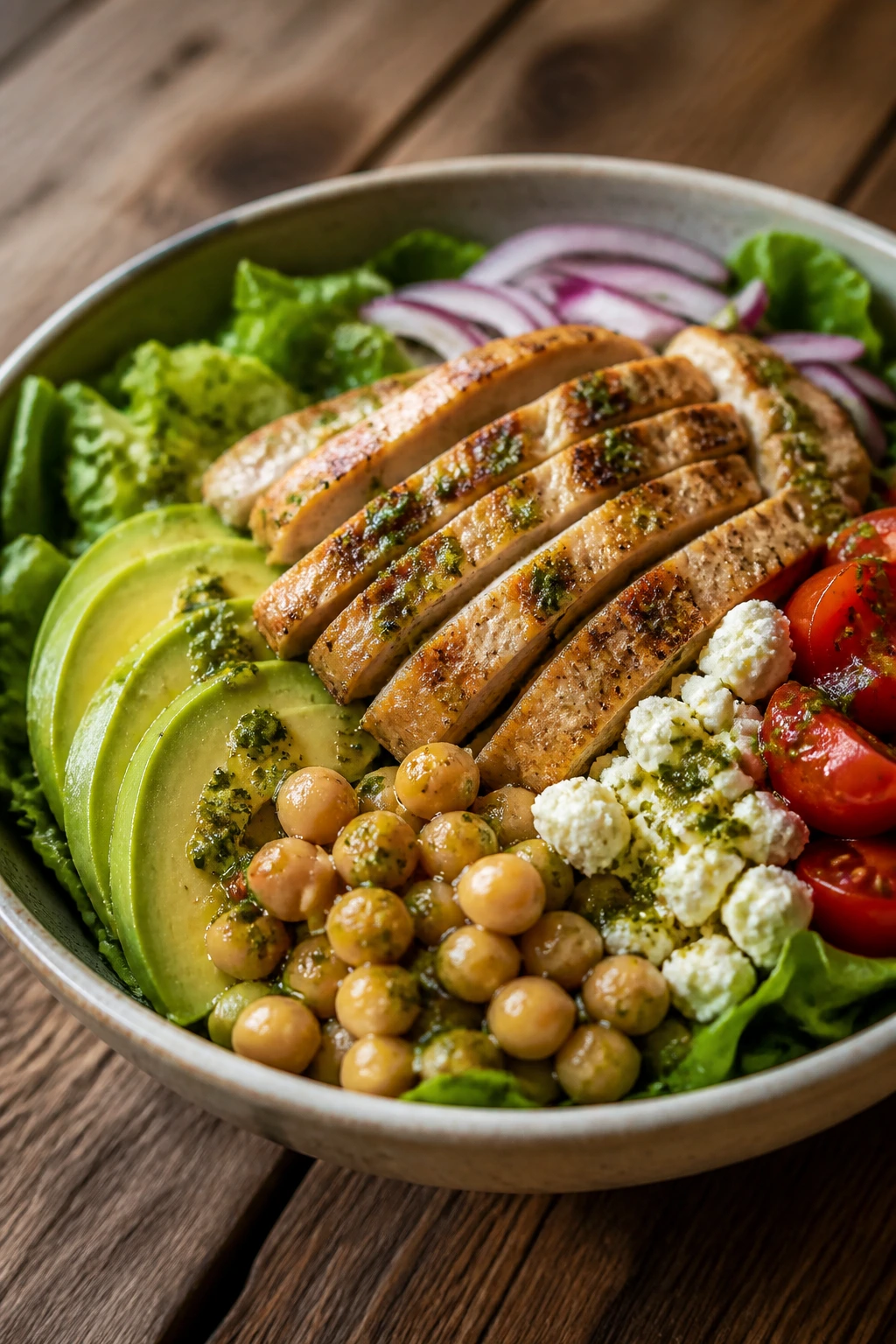
There’s a reason this kind of bowl sticks around in a home cook’s rotation: it solves the usual salad problem without getting fussy. You get smoke from the chicken, creaminess from the avocado, salt from the feta, bite from the onion, and enough crunch to keep the whole thing alive from first forkful to last. That is not a small thing. A salad that finishes well earns its place.
The best part is how little drama it asks for. A short marinade, a hot grill, a dressing made in one bowl, and a careful order of assembly — that’s it. Once you’ve made it this way a couple of times, you stop thinking of chicken salad as a fallback and start treating it like a meal you actually want.
Hearty Grilled Chicken Salad with Homemade Dressing — Recipe Card
Recipe Name: Hearty Grilled Chicken Salad with Homemade Dressing
Description: Grilled lemon-paprika chicken served over romaine, spinach, chickpeas, avocado, feta, and crisp vegetables with a bright homemade Dijon vinaigrette. It eats like dinner, not a side salad.
Prep Time: 25 minutes
Cook Time: 12 minutes
Total Time: 37 minutes, plus 15 to 30 minutes marinating
Course: Main Course, Lunch, Dinner
Cuisine: American
Servings: 4 servings
Calories: About 560 kcal per serving
Ingredients
For the Chicken and Marinade:
- 1½ pounds boneless, skinless chicken breasts, pounded to an even ¾-inch thickness
- 2 tablespoons olive oil
- 1 tablespoon fresh lemon juice
- 1 teaspoon kosher salt
- 1 teaspoon smoked paprika
- 1 teaspoon garlic powder
- ½ teaspoon black pepper
- ½ teaspoon dried oregano
For the Salad:
- 8 cups chopped romaine lettuce
- 2 cups baby spinach
- 1 cup cherry tomatoes, halved
- 1 medium cucumber, diced
- 1 avocado, sliced
- 1 small red onion, very thinly sliced
- 1 cup cooked chickpeas, rinsed and drained
- 2 hard-boiled eggs, halved
- ½ cup crumbled feta cheese
- ⅓ cup toasted pumpkin seeds
For the Homemade Dressing:
- ⅓ cup extra-virgin olive oil
- 3 tablespoons fresh lemon juice
- 1 tablespoon red wine vinegar
- 1 tablespoon Dijon mustard
- 1 teaspoon honey
- 1 small garlic clove, grated or minced to a paste
- 1 teaspoon finely chopped fresh parsley
- ½ teaspoon kosher salt
- ¼ teaspoon black pepper
Instructions
- Pat the chicken dry and pound it to an even ¾-inch thickness.
- Whisk together the marinade ingredients, coat the chicken, and let it sit for 15 to 30 minutes.
- Whisk or shake together the dressing ingredients until emulsified.
- Preheat a grill or grill pan over medium-high heat and lightly oil the surface.
- Grill the chicken for 5 to 7 minutes per side, until the thickest part reaches 165°F.
- Rest the chicken for 5 to 10 minutes, then slice it across the grain.
- Combine the romaine, spinach, tomatoes, cucumber, chickpeas, onion, eggs, feta, and pumpkin seeds in a large bowl.
- Arrange the sliced chicken and avocado on top.
- Drizzle with dressing, toss lightly, and serve with extra dressing on the side if desired.
Notes:
- Keep the greens very dry so the dressing clings instead of sliding off.
- The dressing keeps for 5 to 7 days in the refrigerator.
- For the juiciest chicken, do not skip the rest time after grilling.