



A light vegan salad with homemade dressing should never feel like a punishment bowl. The first forkful ought to snap with cold cucumber, then catch on peppery greens, then finish with a sharp lemon-Dijon lift that tastes clean rather than oily. When the leaves are dry and the dressing is balanced, the whole bowl has a kind of quiet confidence that store-bought dressing rarely manages.
A lot of salads fail for a simple reason: they’re wet. Wet greens, wet tomatoes, watery dressing, limp onion, and a pile of toppings that seem cheerful until they sit together for five minutes. This version avoids that mess by using a mix of sturdy and delicate leaves, a short list of vegetables with real texture, and a dressing that clings instead of sliding off.
The bowl also has enough body to work as lunch if you want it to. I like that part. A few chickpeas, some avocado, a handful of seeds, and suddenly the salad isn’t a side dish begging for bread five minutes later. It stays light, but it doesn’t disappear.
Why This Bowl Works So Well
Crispness comes first: The mix of romaine and arugula gives you two different kinds of bite — one grassy and peppery, the other cool and crunchy. That contrast is what keeps the salad interesting from the first forkful to the last.
The dressing does real work: Lemon juice, apple cider vinegar, Dijon, maple syrup, garlic, and shallot hit sharp, salty, and slightly sweet in a way that plain oil-and-acid dressing doesn’t. The mustard helps the dressing emulsify, so it coats the leaves instead of pooling at the bottom of the bowl.
It stays light without feeling thin: A small amount of chickpeas, avocado, and toasted seeds adds enough richness to make the bowl feel finished. You get some staying power, but the salad never turns heavy or muddy.
The ingredients are easy to keep crisp: English cucumber, radishes, and carrots hold their shape well after slicing. That matters more than people think, because a salad built from soft, watery pieces turns dull fast.
It works with what you’ve got: Swap the greens, change the herbs, skip the onion, or lean harder on the chickpeas. The formula is forgiving as long as you keep the balance: cold, dry greens; bright dressing; crunchy vegetables; and a small creamy element at the end.
One more thing: this is the kind of salad that benefits from restraint. No giant shower of toppings. No aggressive overdressing. Just clean flavors in the right proportions.
What Goes Into the Bowl
Yield: 4 side servings or 2 light lunch servings
Prep Time: 20 minutes
Cook Time: 3 minutes
Total Time: 23 minutes
Difficulty: Beginner — the work is mostly slicing, whisking, and tossing, with one quick seed toast if you want extra crunch.
Best Served: Right after tossing, while the greens are cold and the avocado is still firm.
For the Salad:
- 4 cups baby arugula
- 2 cups chopped romaine lettuce
- 1 English cucumber, halved lengthwise and sliced into half-moons
- 1 cup cherry tomatoes, halved
- 4 radishes, trimmed and thinly sliced
- 1 medium carrot, peeled into ribbons or grated
- 1 ripe avocado, sliced just before serving
- 3/4 cup cooked chickpeas, rinsed and drained
- 1/4 small red onion, very thinly sliced
- 2 tablespoons toasted pumpkin seeds
- 2 tablespoons chopped fresh parsley
- 1 tablespoon chopped fresh dill
For the Lemon-Dijon Dressing:
- 3 tablespoons extra-virgin olive oil
- 2 tablespoons fresh lemon juice
- 1 tablespoon apple cider vinegar
- 1 teaspoon Dijon mustard
- 1 teaspoon maple syrup
- 1 small garlic clove, finely grated
- 1 tablespoon finely minced shallot
- 1/2 teaspoon fine sea salt
- 1/4 teaspoon black pepper
- 1 to 2 tablespoons cold water, as needed
The ingredient list looks short because it is short. That’s part of the appeal. There’s nowhere for mediocre components to hide.
Why These Ingredients Matter More Than You’d Think
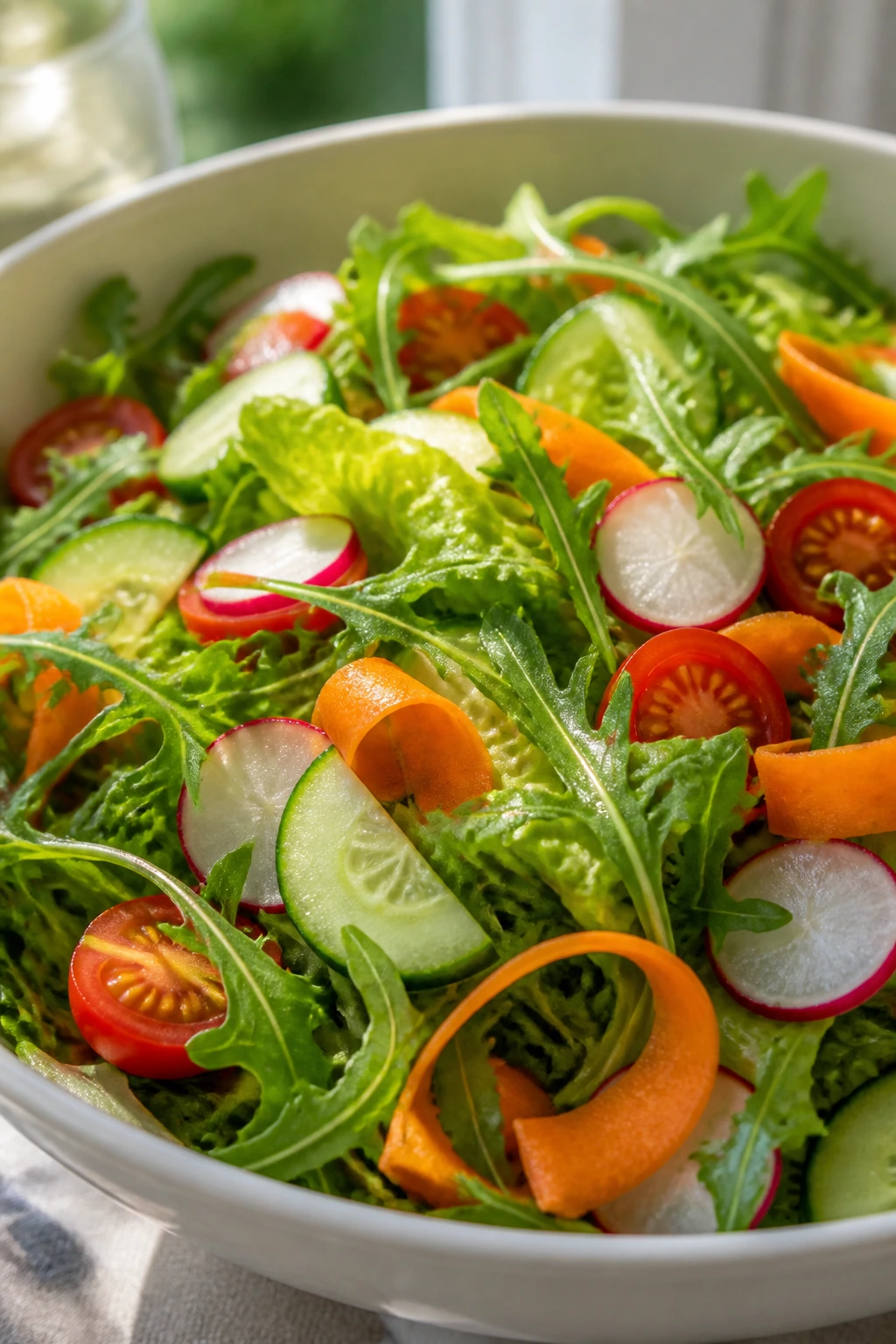
Greens That Carry the Dressing
What to use: 4 cups baby arugula and 2 cups chopped romaine.
Preparation: Wash them well, then dry them until they’re no longer damp to the touch. Romaine should be torn or chopped into bite-size pieces, not shredded into tiny threads.
Substitutions: Butter lettuce, little gem, spinach, or a spring mix can stand in if that’s what’s in the fridge.
Tips: Cold, dry greens are the difference between a bowl that tastes lively and one that tastes washed out. If the leaves still hold water, the dressing won’t cling properly.
Arugula gives the salad its peppery edge. Romaine gives it crunch. The combination is a lot more useful than a single soft lettuce, because one leaf type would leave the whole bowl feeling one-note. Food-data listings place arugula at only a few calories per cup, which is part of why a bright dressing and a little fat are doing the flavor heavy lifting here.
Crunchy Vegetables That Stay Fresh
What to use: 1 English cucumber, 1 cup cherry tomatoes, 4 radishes, 1 medium carrot, and 1/4 small red onion.
Preparation: Slice the cucumber into half-moons, halve the tomatoes, cut the radishes paper-thin, and either ribbon or grate the carrot. Slice the onion so thinly that it almost falls apart.
Substitutions: Fennel can replace the radishes for a sweeter crunch, and shaved zucchini works if you want something softer. If raw onion is too sharp, use chives instead.
Tips: English cucumbers are worth choosing because the skin is thinner and the seed cavity is smaller. That means less juice leaking into the bowl later, which is exactly what you want.
The vegetables should bring snap, not water. That’s the job. Tomatoes can go either way, so halving them and adding them near the end keeps their juices from staining the whole salad pink and soft.
Creamy and Nutty Finishers
What to use: 1 ripe avocado, 3/4 cup cooked chickpeas, 2 tablespoons toasted pumpkin seeds, 2 tablespoons parsley, and 1 tablespoon dill.
Preparation: Slice the avocado at the very end, right before serving. Pat the chickpeas dry if they’ve been sitting in liquid, and toast the seeds only if they’re raw.
Substitutions: White beans can replace chickpeas, hemp seeds can replace pumpkin seeds, and mint can replace dill if you want a brighter herbal finish.
Tips: Use avocado that gives slightly under pressure, not one that feels soft all over. Soft avocado turns mushy the second you toss it, while a just-ripe one holds its shape and gives the bowl little buttery pockets.
These pieces keep the salad from feeling like a tray of garnish. Chickpeas add a bit of structure. Avocado adds creaminess without cream. Seeds give a little chew and a faint roasted note that makes the rest of the bowl taste sharper.
The Dressing That Makes the Whole Thing Work
What to use: 3 tablespoons olive oil, 2 tablespoons lemon juice, 1 tablespoon apple cider vinegar, 1 teaspoon Dijon, 1 teaspoon maple syrup, 1 garlic clove, 1 tablespoon shallot, salt, pepper, and cold water.
Preparation: Grate the garlic finely, mince the shallot very small, and whisk or shake everything until the dressing looks glossy and lightly thickened.
Substitutions: White wine vinegar can replace apple cider vinegar, and agave can replace maple syrup if that’s what you have. If you want a softer dressing, reduce the vinegar to 2 teaspoons and add a little more lemon.
Tips: The mustard helps the oil and acid hold together. Without it, the dressing separates more quickly and ends up tasting harsher at the bottom of the bowl than it does on the first bite.
This is a lemon dressing with enough backbone to taste deliberate. It should be bright first, then slightly rounded by the maple, then finish with garlic and pepper. If it tastes flat, it usually needs salt before anything else.
The Lemon-Dijon Dressing That Keeps Everything Bright
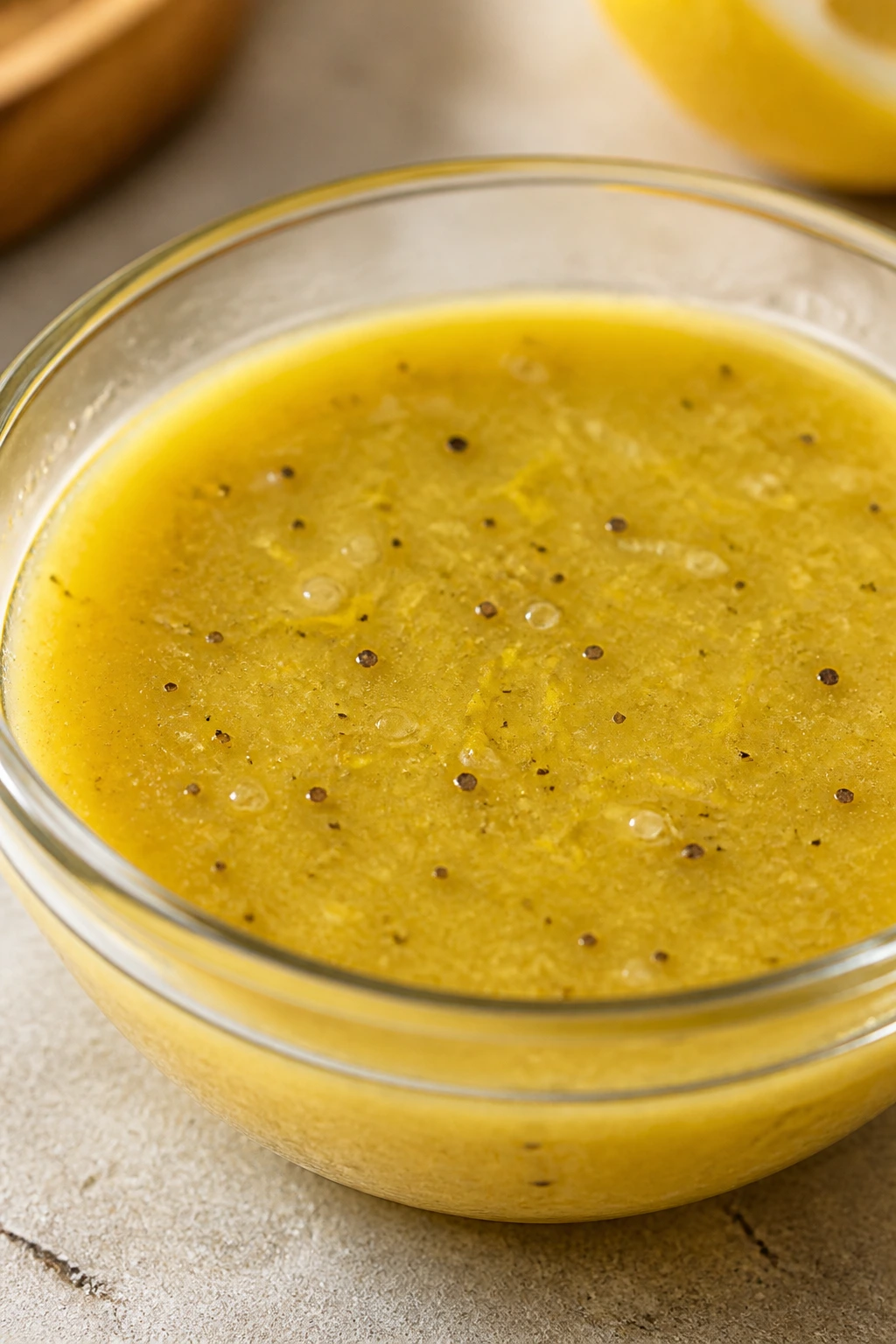
A homemade dressing has one job: make the vegetables taste more like themselves, not mask them. That’s why I like a sharp lemon base here rather than a creamy vegan dressing. Cream can be lovely, but it changes the feel of the salad. This one stays light on the tongue and still gives the bowl shape.
The balance matters. Too much lemon and the leaves taste stripped down. Too much oil and the whole thing gets slippery. The maple syrup is only there to take the edge off the acid, not to make the dressing sweet. If you can taste sweetness clearly, you’ve gone too far.
Dijon is the quiet helper in the bowl. It brings heat, but more important, it helps emulsify the dressing so it coats the greens in a thin layer instead of breaking apart into oil slicks and puddles. That’s the difference between a salad that tastes dressed and a salad that tastes drenched.
Shallot and garlic both need to be used with a light hand. Raw garlic can turn rude fast, especially if the clove is large, so grate a small one and stop there. Shallot adds a little allium bite without taking over. If you want the bowl to taste cleaner, use less garlic and more lemon zest instead.
Taste the dressing before you toss the salad. Always. A dressing that tastes a bit stronger than you want on its own usually lands correctly once it hits the greens. What you do not want is a bland dressing trying to survive against arugula and radish. It will lose.
One small habit makes the whole bowl better: whisk in a tablespoon of cold water before you decide the dressing is finished. It softens the acid, loosens the texture, and helps the dressing spread more evenly over the leaves. If it still feels too sharp after that, add the second tablespoon. If it tastes dull, add a pinch more salt before you reach for more oil.
The Tools That Make the Job Easier
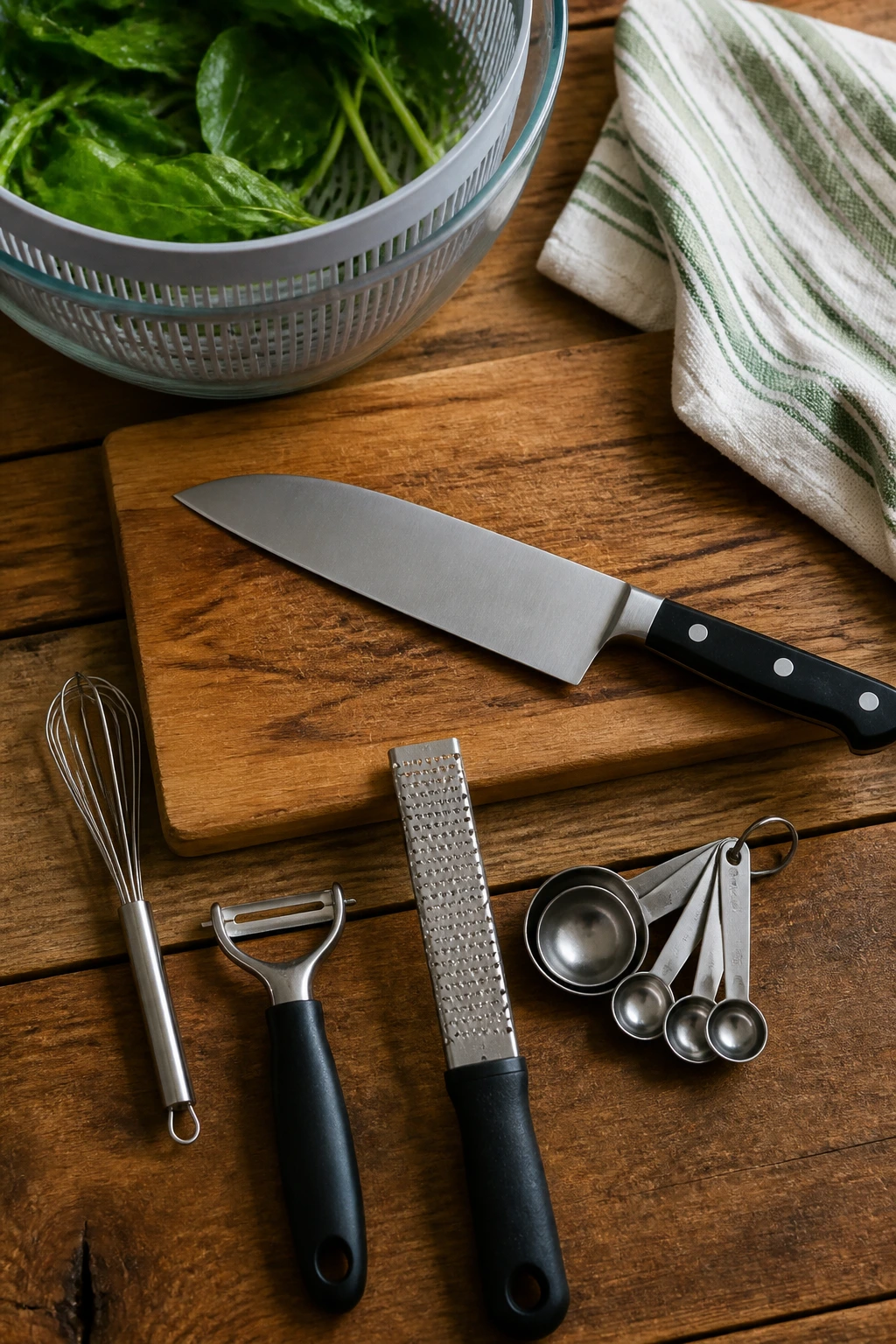
- Large salad bowl: A wide bowl gives you room to toss without crushing the greens.
- Chef’s knife: You’ll want a sharp blade for the cucumber, onion, and herbs.
- Cutting board: Use one with a stable surface; a slipping board makes thin slicing annoying and unsafe.
- Salad spinner or clean kitchen towel: Dry greens are non-negotiable, and either tool will get you there.
- Small whisk or jar with lid: The dressing comes together faster if you can shake or whisk it hard for 10 to 15 seconds.
- Vegetable peeler: Handy for carrot ribbons and less messy than a knife for this job.
- Microplane or fine grater: Best for the garlic so it disappears into the dressing.
- Measuring spoons: You want the lemon, vinegar, mustard, and maple in the right balance, not eyeballed chaos.
A mandoline is optional if you like extremely thin radishes or fennel. Use it only if you’re comfortable with it. A dull knife and a rushed mandoline are both bad ideas.
How to Build the Salad Without Bruising the Greens
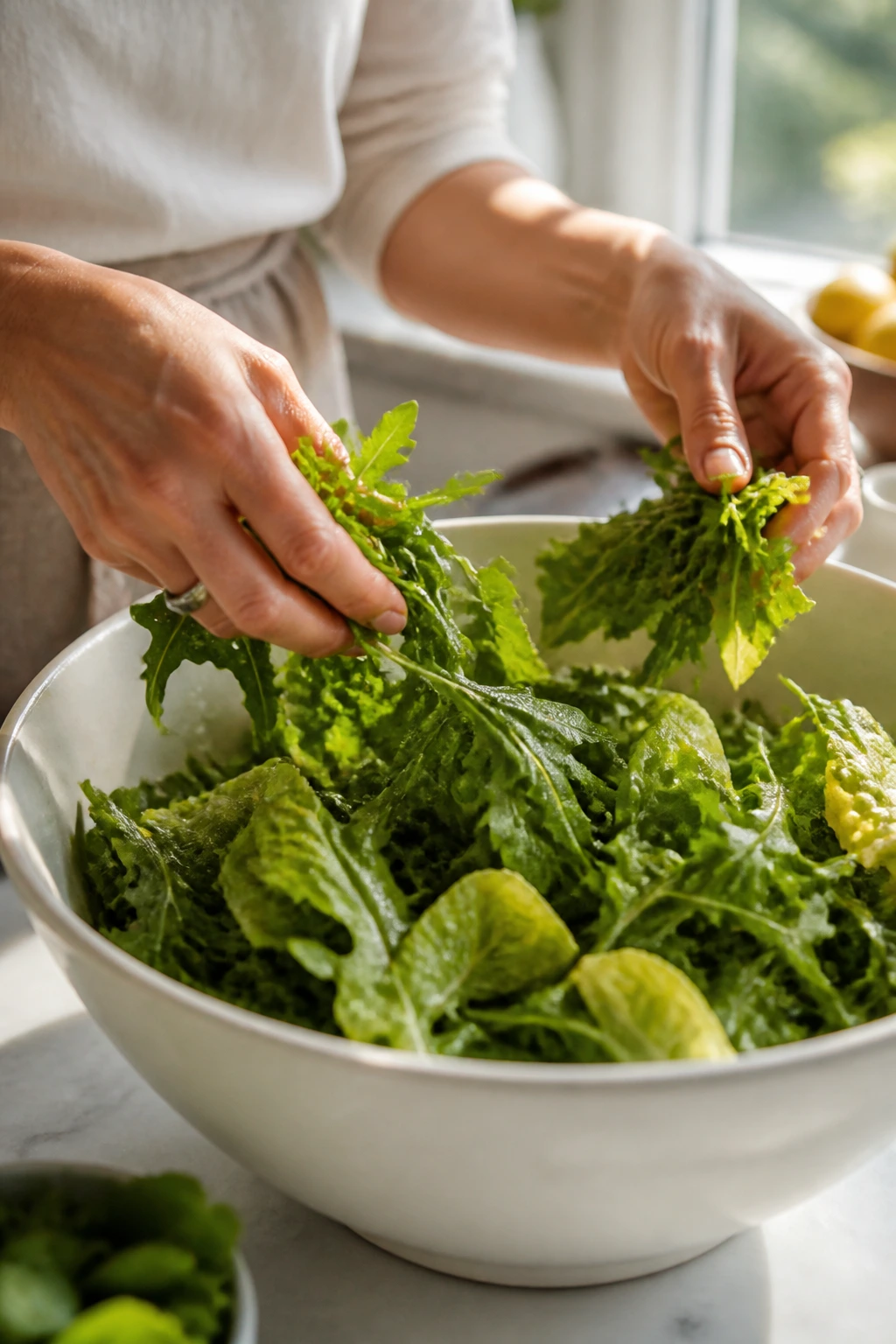
Toast the seeds and mix the dressing:
- Set a small dry skillet over medium heat and add the pumpkin seeds, if they’re raw. Toast for 2 to 3 minutes, shaking the pan once or twice, until they smell nutty and start to take on a deeper color. Pull them off the heat the moment they turn fragrant; they burn fast.
- In a small bowl or a jar with a tight lid, whisk together the olive oil, lemon juice, apple cider vinegar, Dijon mustard, maple syrup, grated garlic, minced shallot, salt, and black pepper. If you’re using a jar, seal it and shake hard for about 15 seconds until the dressing looks glossy and slightly thickened.
- Stir in 1 tablespoon cold water, then taste. Add the second tablespoon only if the dressing still feels too sharp or too thick to spread well. It should taste lively, not aggressive.
Prep the vegetables: 4. Wash the arugula and romaine, then dry them thoroughly with a salad spinner or clean towel. Put the greens in a large bowl once they’re dry, not before. Wet leaves will sabotage everything that comes next. 5. Slice the cucumber, tomatoes, radishes, carrot, and red onion. Keep the pieces separate for a minute so you can see the size and adjust if needed. The cucumber should be thin enough to bend, not so thin that it turns limp. 6. Pat the chickpeas dry with paper towel. This sounds fussy, but it helps them hold the dressing instead of watering down the bowl.
Assemble and finish: 7. Add about half the dressing to the greens and toss gently with your hands or two large spoons until the leaves are lightly coated. Fold in the cucumber, tomatoes, radishes, carrot, onion, chickpeas, parsley, and dill. The salad should look dressed, not glossy and heavy. Stop tossing the second the leaves are evenly coated. 8. Slice the avocado and add it on top, along with the toasted pumpkin seeds. Drizzle on the remaining dressing only if the bowl still looks dry. Serve right away.
If you want a neater presentation, hold back a few tomato halves, avocado slices, and seeds for the top. A little intentional layering goes a long way.
How to Serve a Light Vegan Salad with Homemade Dressing
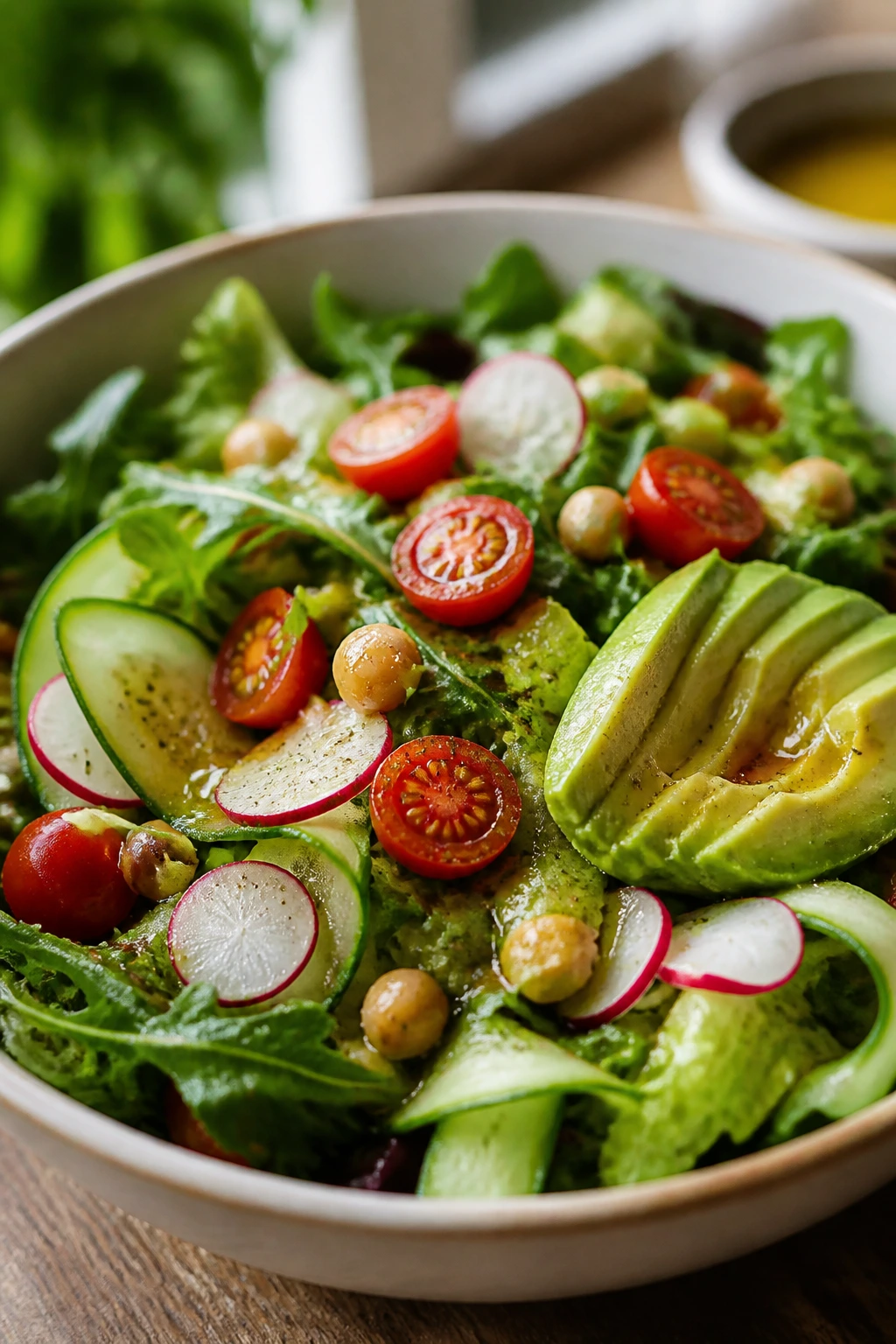
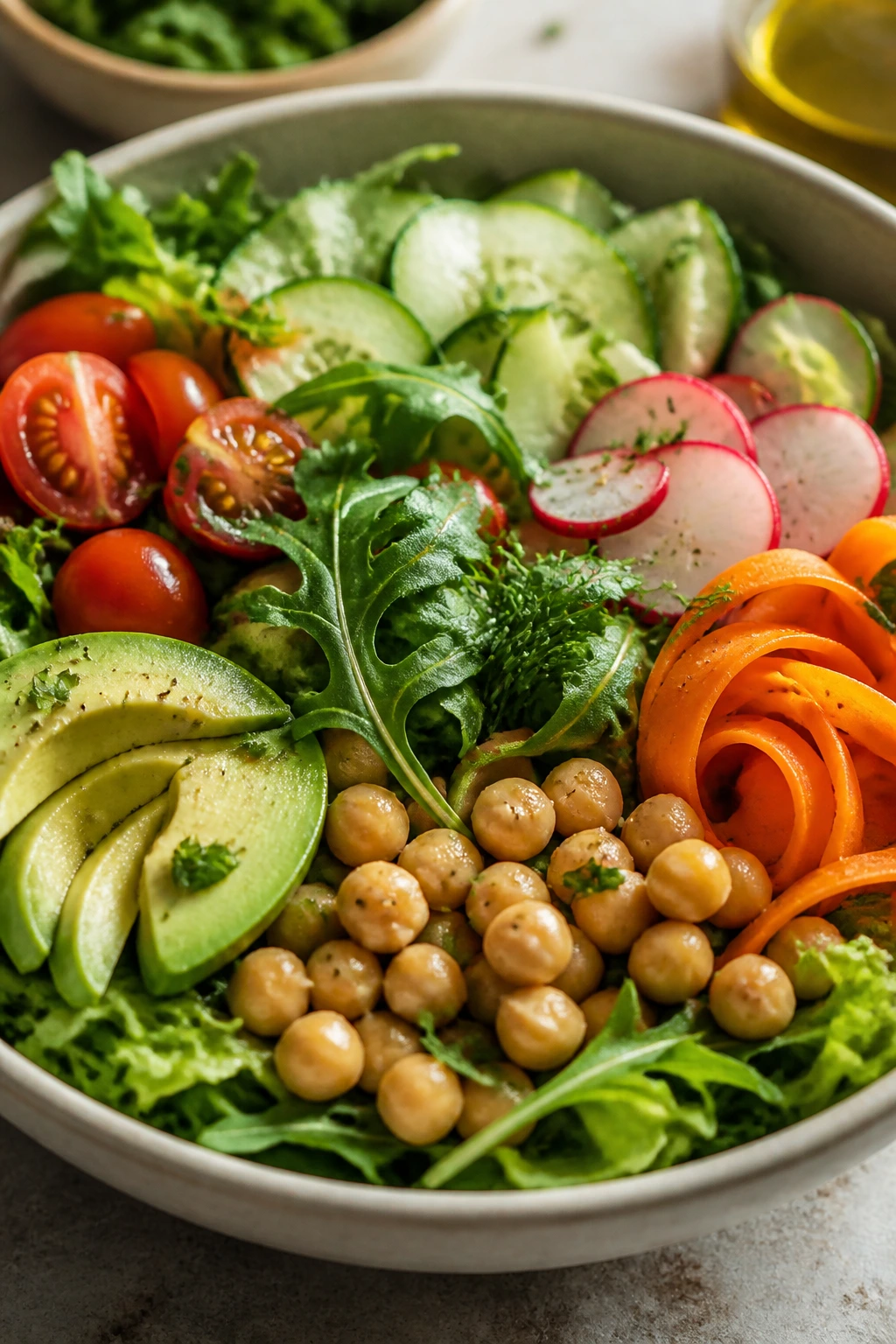
Presentation: Pile the dressed greens first, then tuck the cucumber, radishes, tomatoes, and chickpeas over the top in loose clusters. Finish with avocado slices, seeds, and a few extra herbs so the bowl looks fresh and arranged rather than stirred into a blur.
Accompaniments: A piece of toasted sourdough, a bowl of lentil soup, or warm pita with hummus all sit nicely beside this salad. If you want a fuller plate, add roasted potatoes or a slab of marinated tofu on the side without changing the salad itself.
Portions: Four side servings is the comfortable range here, or two very solid lunch portions if you want the salad to carry the meal. If you’re scaling up, increase the greens and vegetables first, then double the dressing only as needed — extra oil is not the answer to a bigger bowl.
Beverage Pairing: Sparkling water with lemon, cucumber-mint water, or a dry white wine with crisp acidity all work. The salad is bright and clean, so the drink should be too. Avoid anything sugary; it muddies the finish.
A chilled plate helps more than people think. If you have time, put the serving bowls in the fridge for 10 minutes before you assemble everything. The salad stays lively longer, and the avocado looks better too.
Additional Tips and Flavor Boosters
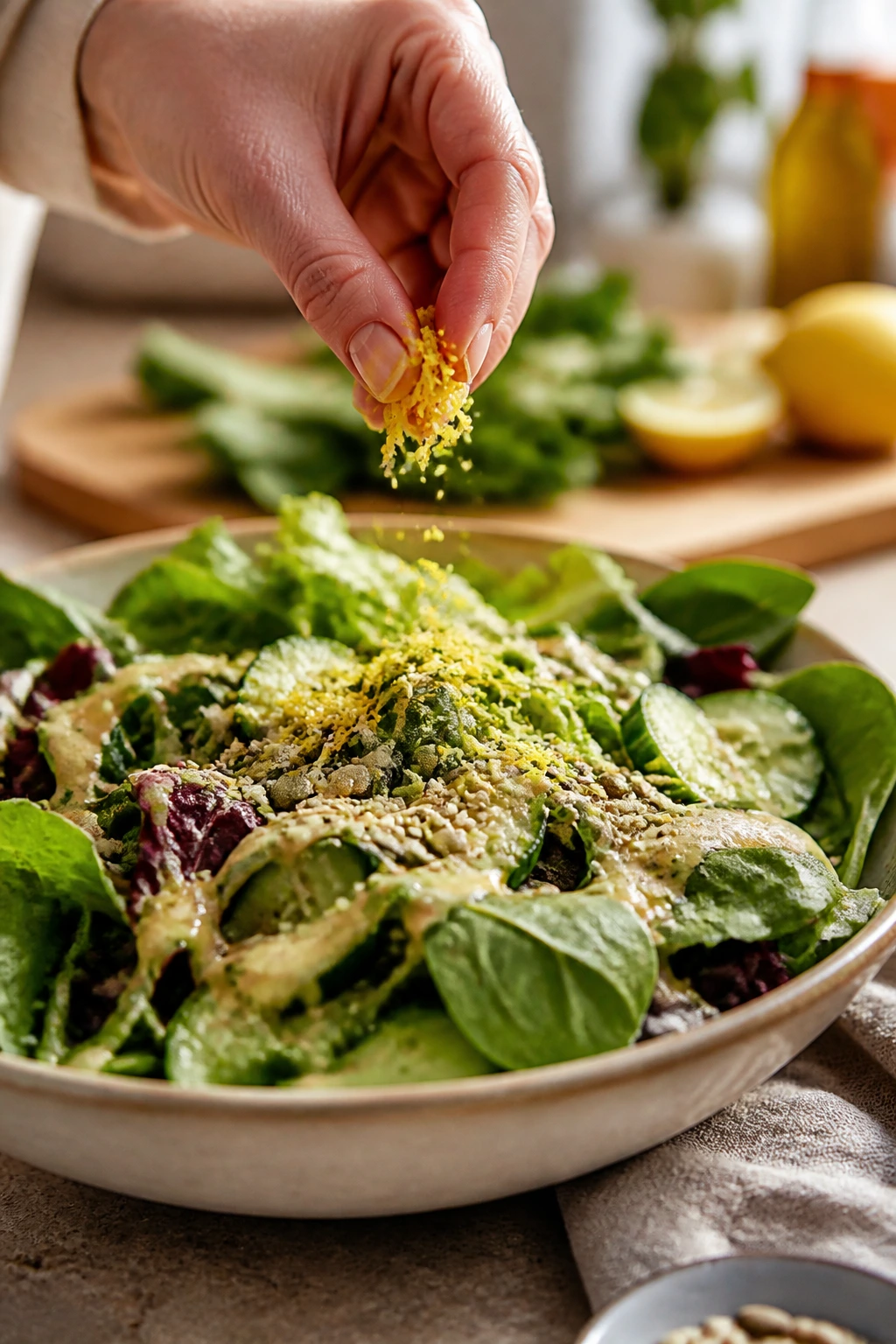
Flavor Enhancement: Add 1 teaspoon of lemon zest to the dressing. The zest gives the bowl a sharper citrus smell and makes the lemon taste more lifted without adding more acid.
Time-Saver: Wash and dry the greens earlier in the day, then store them lined with a paper towel in a sealed container. When dinner time rolls around, you’re slicing instead of scrambling around the sink.
Cost-Saver: If avocado is expensive or not ripe, skip it and add an extra 1/4 cup chickpeas plus a few more pumpkin seeds. The salad still feels complete, and you won’t be paying for a soft fruit that turns to mush on contact.
Make-It-Yours: For a low-oil version, cut the olive oil to 2 tablespoons and add 1 tablespoon cold water plus a spoonful of blended chickpeas to give the dressing some body. For a protein bump, increase the chickpeas to 1 cup and add a spoonful of hemp seeds at the end.
Serving Suggestion: A few flaky salt crystals on the avocado and a final grind of black pepper change the whole bowl. It’s a tiny step, but it makes the top layer taste as thoughtful as the dressing underneath.
If you like herbs, don’t stop at parsley and dill. Mint or basil both work, though they pull the salad in different directions. Mint makes it feel cooler. Basil makes it taste greener and a little sweeter.
Common Mistakes That Make a Salad Soggy
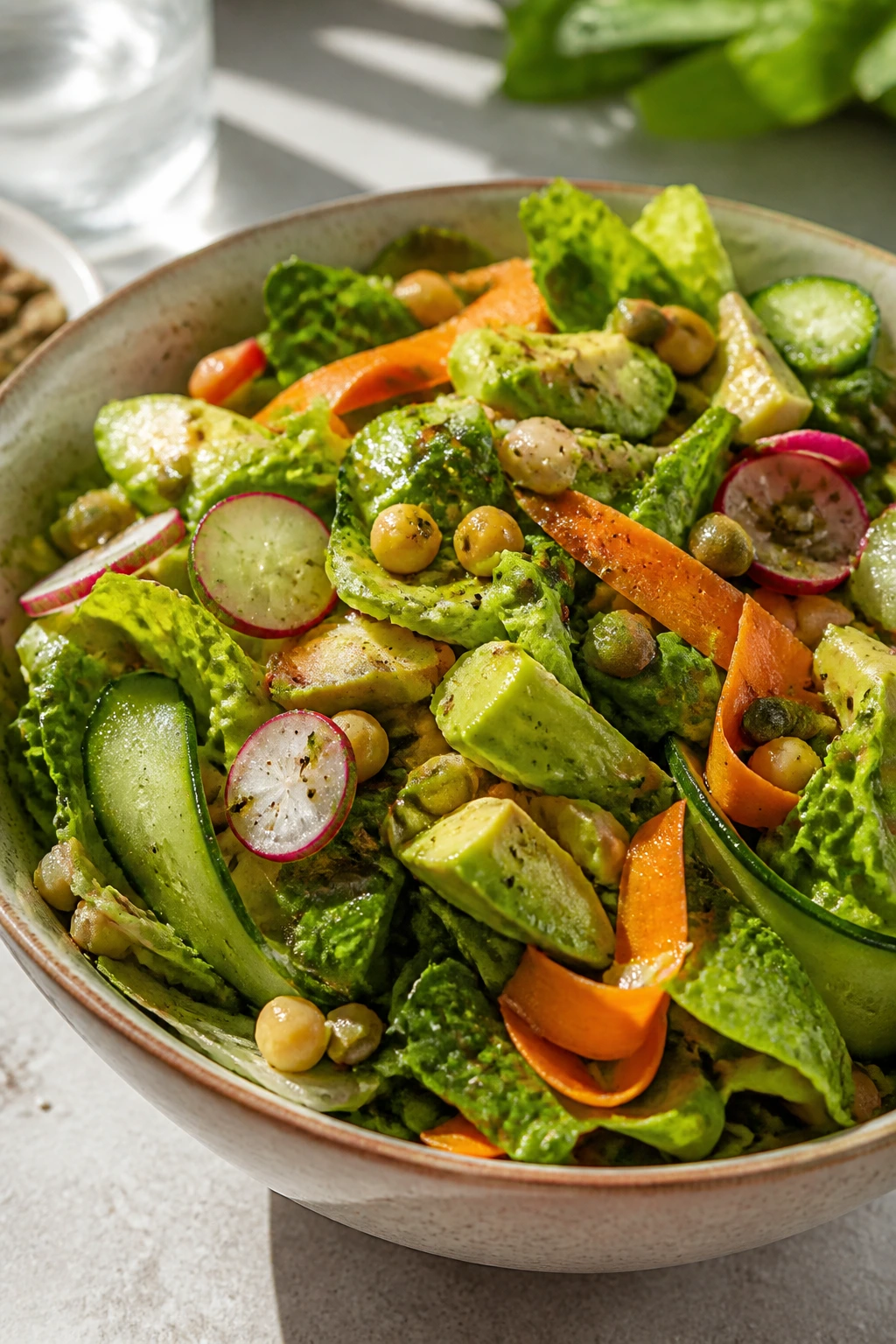
Wet greens: This is the big one. If the lettuce still has water clinging to the leaves, the dressing slides right off and collects in the bottom of the bowl. Spin or towel-dry the greens until they feel dry and springy, not damp.
Overdressing the first toss: People often pour on the whole dressing because they want every leaf coated, then the salad turns heavy and the cucumbers start releasing juice. Start with half the dressing, toss, and add only what the bowl can absorb. You can always add more. You cannot pull it back out.
Cutting the avocado too early: Avocado browns quickly and softens even faster once it’s sliced. If you cut it before the other vegetables are ready, it turns mushy and dull by the time the salad hits the table. Slice it last, then place it on top rather than burying it under the greens.
Using watery tomatoes without control: Cherry tomatoes are fine, but if you halve them too far ahead they start leaking into the salad. If you’re prepping ahead, keep the tomatoes separate and add them right before serving. Seeded tomatoes can help if yours are very juicy.
Skipping the acid-salt balance: A dressing that tastes flat usually needs salt, not more lemon. A dressing that tastes harsh usually needs a little oil or maple. Tasting as you go saves the bowl. Blind pouring does not.
Tossing too hard: Arugula bruises faster than romaine, and aggressive mixing turns the leaves limp and dark at the edges. Use a gentle lift-and-turn motion with your hands or two big spoons. The dressing should coat the greens, not beat them into submission.
There’s a reason salad restaurants keep their hands light on the mixing step. Once delicate leaves are bruised, no amount of extra dressing fixes the texture.
Variations and Swaps That Still Taste Like This Salad
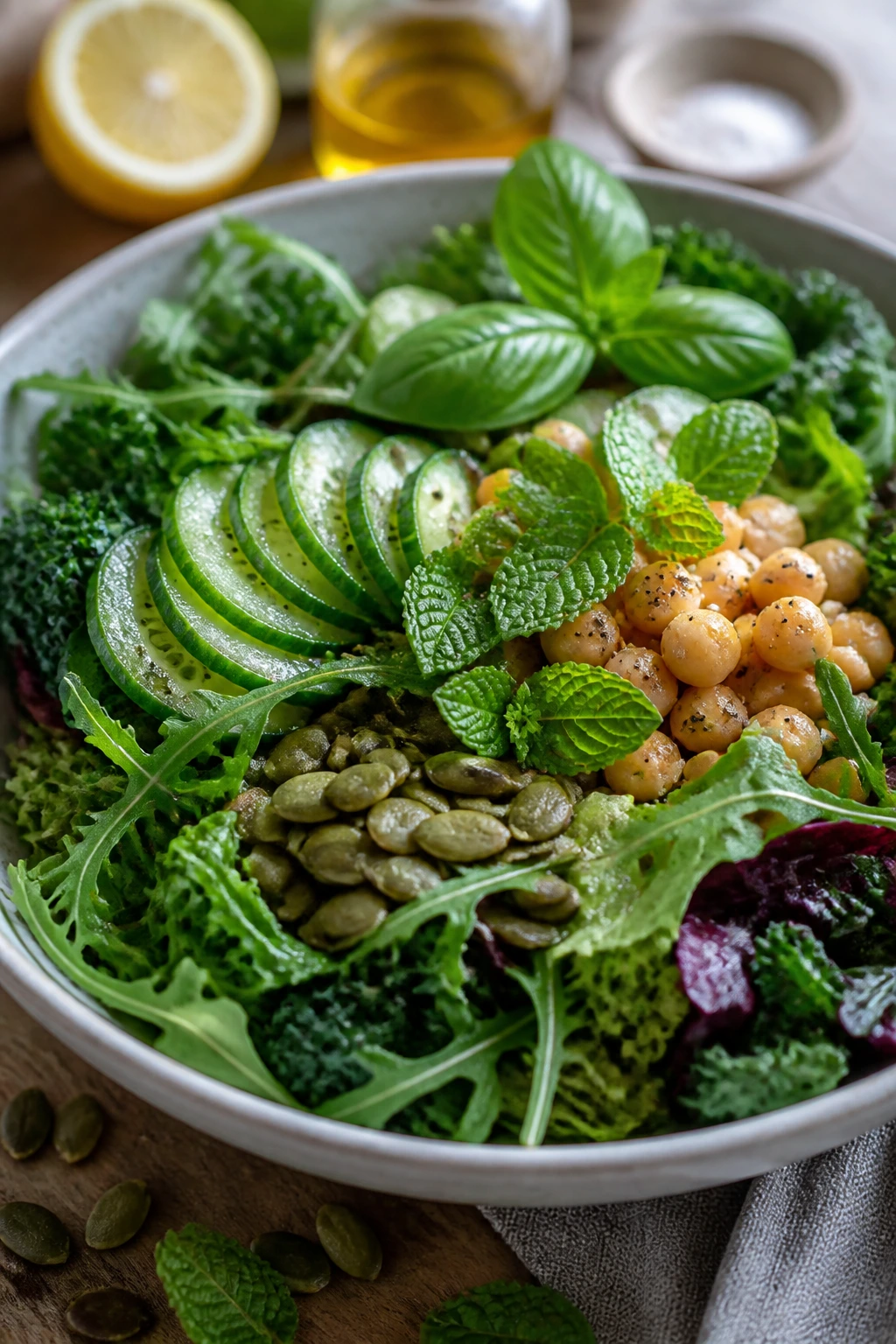
Herb Garden Bowl: Swap the dill for mint and add 1 tablespoon chopped basil. The flavor turns cooler and greener, which works well if you’re serving the salad beside grilled vegetables or simple flatbread.
Creamy Tahini Finish: Replace 1 tablespoon of the olive oil with 1 tablespoon tahini and add an extra tablespoon of water to loosen the dressing. The result is still bright, but it has a soft sesame note and a slightly thicker texture that clings well to romaine.
Protein-Forward Chickpea Lunch: Increase the chickpeas to 1 cup and add 2 tablespoons hemp seeds. This version eats more like a meal, especially if you pair it with roasted potatoes or a slice of bread.
Apple-Fennel Crunch: Replace the radishes with 1/2 small fennel bulb, shaved thin, and add 1/2 crisp apple sliced into matchsticks. The sweetness and anise-like crunch change the whole rhythm of the bowl without making it feel heavy.
If you want a less sharp onion flavor, soak the sliced red onion in cold water for 10 minutes, then drain and pat dry. That little step makes the bite gentler without losing the crunch. I reach for it when I want the onion present but not loud.
Storing a Light Vegan Salad with Homemade Dressing
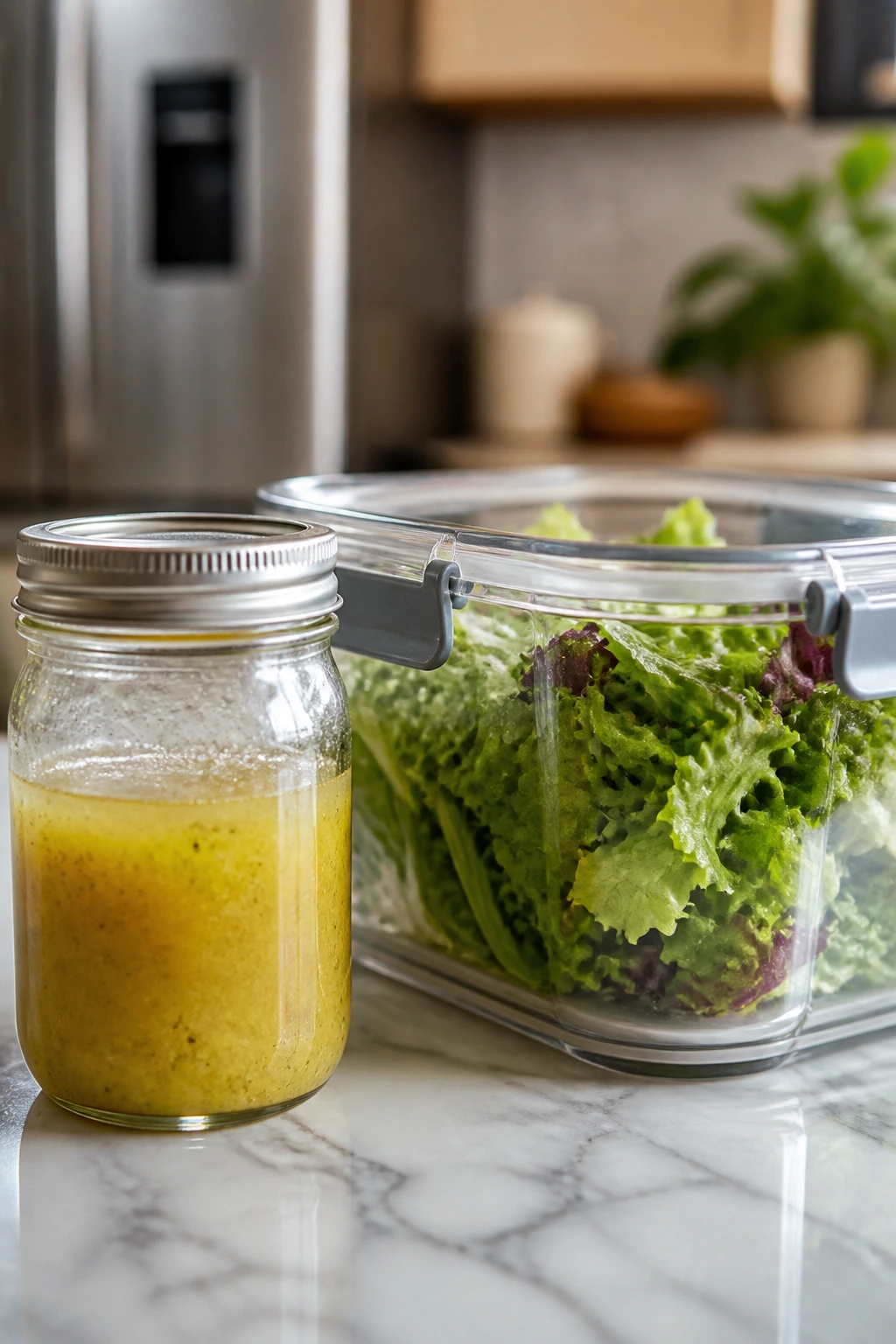
The dressed salad is a short-lived creature. Once the vinaigrette hits the greens, it’s best eaten within 20 to 30 minutes. After that, the romaine softens, the arugula droops, and the cucumber starts handing water back to the bowl.
Undressed components last much longer. Store the washed, fully dried greens in an airtight container lined with a paper towel for up to 3 days in the fridge. Keep the sliced cucumber, radishes, carrots, onion, and tomatoes in separate containers if you can manage it; that keeps the juices from mixing and extending the soggy factor.
The dressing keeps well in a sealed jar in the fridge for up to 5 days. It may thicken slightly or separate a little, and that’s normal. Shake it hard before using, then taste again. Cold oil dulls flavor, so the dressing usually needs a quick rebalancing with a pinch of salt or a squeeze more lemon after it comes out of the fridge.
Chickpeas can be cooked ahead and stored for 3 to 4 days in the refrigerator. If you’re using canned chickpeas, rinse and drain them, then let them dry before storing. That little bit of patience keeps them from becoming slick and starchy in the bowl.
Freezing is not useful here. Greens, cucumber, tomato, and avocado all suffer badly from freezing and thawing. If you want a make-ahead version, prep the parts separately and assemble at the last minute. That is the move.
If your greens have gone a little soft, an ice-water bath can rescue them. Soak them for 5 to 10 minutes, spin them dry, and chill them again before using. It won’t fix everything, but it will pull them back from the edge.
FAQ: Light Vegan Salad Questions
Can I make the salad ahead of time?
Yes, but keep the dressing separate and wait to add the avocado. You can prep the greens and vegetables a few hours ahead, then toss everything together right before serving so the textures stay crisp.
What greens work best if I do not like arugula?
Little gem, butter lettuce, spinach, or a spring mix all work. If you want a bit of crunch, keep romaine in the mix; if you want a softer salad, lean more on butter lettuce and spinach.
Can I use bottled lemon juice?
You can, but the flavor is flatter and often a little harsher. If you use bottled juice, start with slightly less than the recipe calls for and taste carefully before adding more, because bottled acid can take over fast.
How do I keep the dressing from separating?
Whisk or shake it hard, and do not skip the Dijon. Mustard helps the oil and acid stay blended longer, and the tiny bit of water smooths the texture so it coats the greens more evenly.
What if I want more protein without making the salad heavy?
Add another 1/4 to 1/2 cup chickpeas or a handful of hemp seeds. Those additions give the salad more staying power without turning it into a dense bowl of food.
Can I leave out the avocado?
Absolutely. If you skip it, add a few more seeds or a spoonful of extra chickpeas so the bowl still has some richness. You can also finish with a little more olive oil in the dressing, but keep the amount modest.
My salad got watery. Can I fix it?
Sometimes, yes. Drain off excess liquid, add a handful of dry greens, and toss again with only a spoonful of dressing. If the cucumbers and tomatoes were pre-salted or cut too early, the best fix is to serve the salad right away and be lighter with salt next time.
Is there a good substitute for Dijon mustard?
Yes. White miso gives the dressing a savory edge, or you can use a small amount of tahini for a softer, creamier texture. Both change the flavor a bit, but they still help the dressing hold together.
A Bowl Worth Making Again
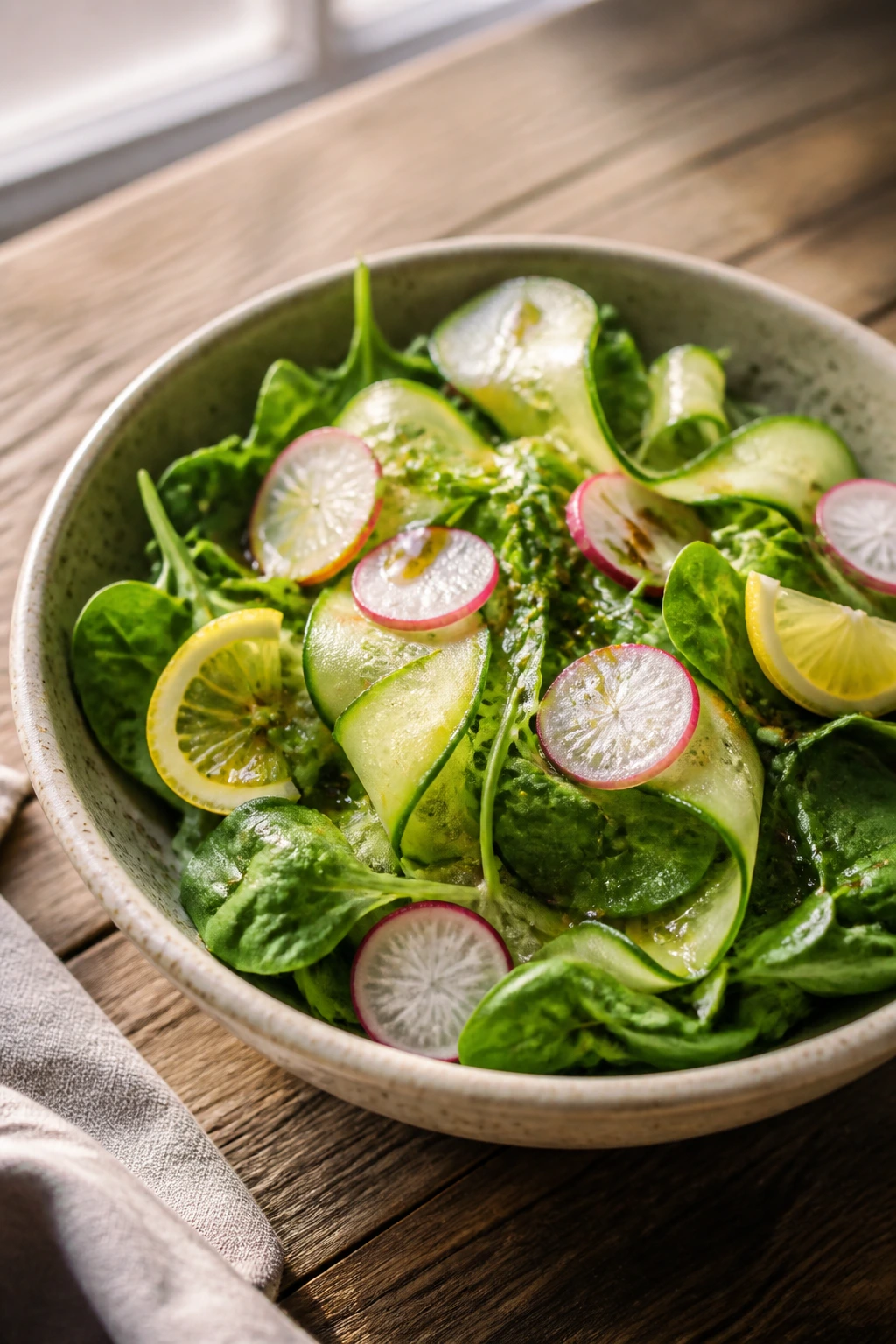
The reason this salad works is not mysterious. It’s the cold greens, the clean bite of lemon, the small hit of sweetness from maple, the crunch of cucumber and radish, and the fact that every ingredient seems to know its place. Nothing is there to show off. The bowl feels calm because the parts are doing different jobs.
That’s the part I like most. You can make it quickly, but it does not taste quick. It tastes like someone paid attention to texture, temperature, and dressing balance — which, honestly, is the whole trick with salad. Get those three things right and you don’t need much else.
Light Vegan Salad with Homemade Dressing — Recipe Card
Recipe Name: Light Vegan Salad with Homemade Dressing
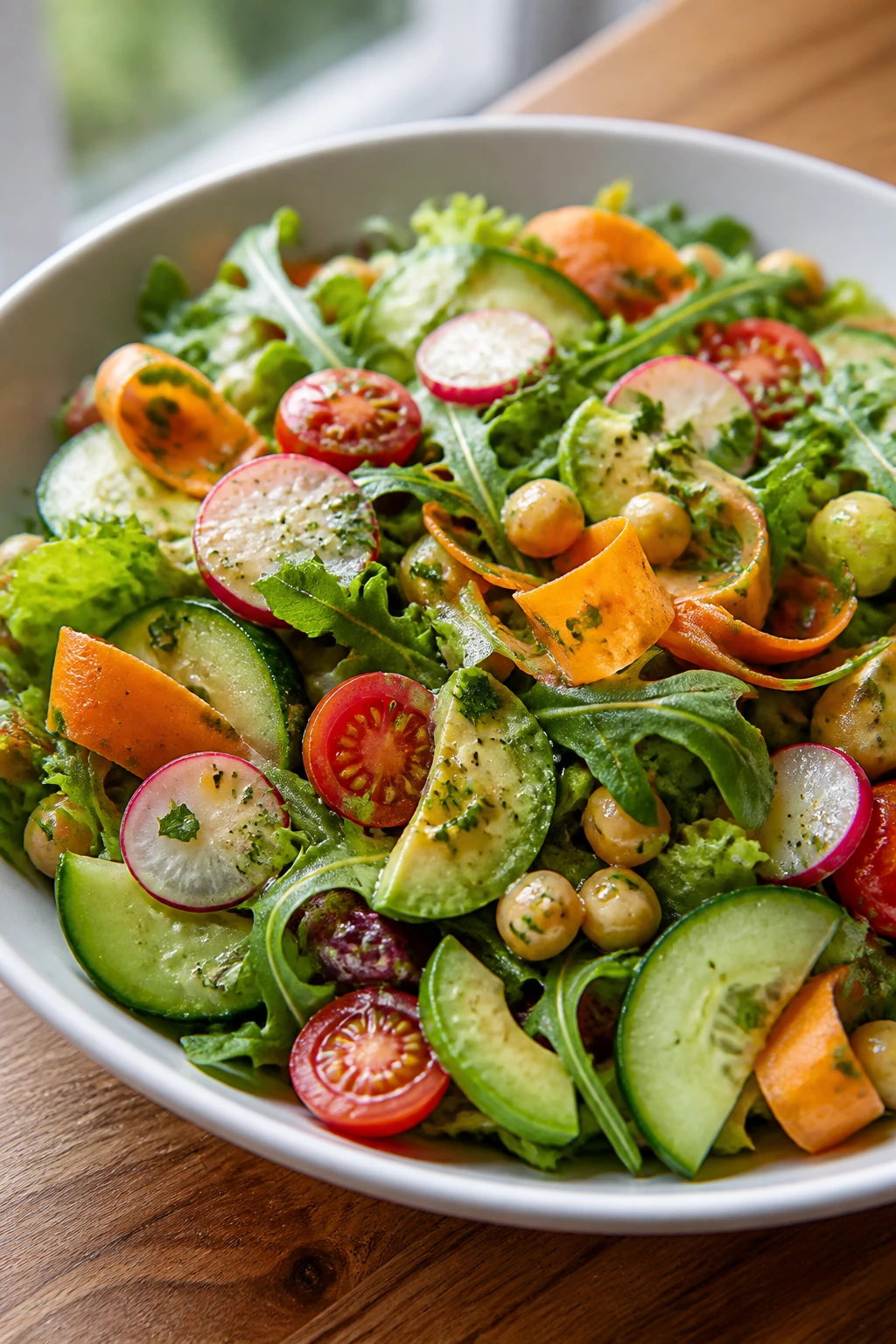
Description: A crisp vegan salad with arugula, romaine, cucumber, tomatoes, radishes, carrot, avocado, chickpeas, herbs, and a bright lemon-Dijon dressing.
Prep Time: 20 minutes
Cook Time: 3 minutes
Total Time: 23 minutes
Course: Salad
Cuisine: Contemporary American
Servings: 4
Calories: about 250 kcal per serving
Ingredients
For the Salad:
- 4 cups baby arugula
- 2 cups chopped romaine lettuce
- 1 English cucumber, halved lengthwise and sliced into half-moons
- 1 cup cherry tomatoes, halved
- 4 radishes, trimmed and thinly sliced
- 1 medium carrot, peeled into ribbons or grated
- 1 ripe avocado, sliced just before serving
- 3/4 cup cooked chickpeas, rinsed and drained
- 1/4 small red onion, very thinly sliced
- 2 tablespoons toasted pumpkin seeds
- 2 tablespoons chopped fresh parsley
- 1 tablespoon chopped fresh dill
For the Lemon-Dijon Dressing:
- 3 tablespoons extra-virgin olive oil
- 2 tablespoons fresh lemon juice
- 1 tablespoon apple cider vinegar
- 1 teaspoon Dijon mustard
- 1 teaspoon maple syrup
- 1 small garlic clove, finely grated
- 1 tablespoon finely minced shallot
- 1/2 teaspoon fine sea salt
- 1/4 teaspoon black pepper
- 1 to 2 tablespoons cold water, as needed
Instructions
- Toast the pumpkin seeds in a dry skillet over medium heat for 2 to 3 minutes, if needed, until fragrant.
- Whisk or shake together the olive oil, lemon juice, apple cider vinegar, Dijon, maple syrup, garlic, shallot, salt, pepper, and cold water.
- Wash and dry the greens thoroughly, then place them in a large salad bowl.
- Slice the cucumber, tomatoes, radishes, carrot, and red onion.
- Pat the chickpeas dry and add half the dressing to the greens, tossing gently to coat.
- Fold in the cucumber, tomatoes, radishes, carrot, onion, chickpeas, parsley, and dill.
- Add the avocado and pumpkin seeds on top, then drizzle with remaining dressing as needed.
- Serve immediately.
Notes: Keep the dressing separate until the last minute. Add avocado just before serving so it stays neat. A little lemon zest in the dressing adds a brighter finish.