



A moist candy egg with cream cheese frosting should taste like a proper cake with a little mischief baked in. The crumb ought to stay soft for days, the candy eggs should give you a sharp little crack under the fork, and the frosting should land with a cool tang instead of a sugar rush that flattens everything else.
Most versions go wrong in one of two ways. They bake up dry because the batter is too lean, or they turn cloying because the frosting tries to carry the whole show. The version I keep coming back to uses butter for flavor, oil for softness, sour cream for body, and a handful of chopped candy eggs folded in at the very end so the shells stay intact instead of dissolving into pastel dust.
That balance matters more than novelty. You want a cake that slices cleanly, chills well, and still tastes plush after a night in the fridge — which is exactly where cream cheese frosting earns its keep. The candy eggs bring crunch, the frosting reins in the sweetness, and the whole thing lands somewhere between a homey snack cake and a proper celebration bake. Start with the texture, and the rest falls into place.
Why This Cake Earns a Spot on the Table
-
Tender crumb: Sour cream and buttermilk keep the cake soft even after it’s been chilled, which matters because cream cheese frosting tastes best cold or cool.
-
Crunch in the right places: Chopping the candy eggs into pea-size pieces gives you little pockets of shell and chocolate without turning the batter heavy or lumpy.
-
Sweetness with a brake pedal: Cream cheese frosting brings a tang that cuts through the candy coating better than plain buttercream ever could.
-
Easy to slice: A 9×13-inch pan gives you neat squares instead of tall layers that slide around when the frosting softens.
-
Make-ahead friendly: The cake bakes cleanly one day ahead, and the frosting settles into a smoother, thicker coat after a short chill.
-
No special tricks needed: You do not need a fussy method, a candy thermometer, or a stack of layer pans to get a cake that feels polished enough for guests.
Yield, Timing, and Best Serving Window
Yield: 12 to 15 slices
Prep Time: 25 minutes
Cook Time: 32 to 38 minutes
Total Time: 1 hour to 1 hour 5 minutes, plus cooling time
Difficulty: Beginner — the batter is straightforward, but the cake does need a full cool before frosting so the cream cheese layer stays put.
Chill/Rest Time: 1 hour cooling before frosting; 15 minutes chilling after frosting for cleaner slices
Best Served: Slightly chilled or at cool room temperature, when the frosting is set but not hard
The Ingredient List for the Cake and Frosting
For the Cake
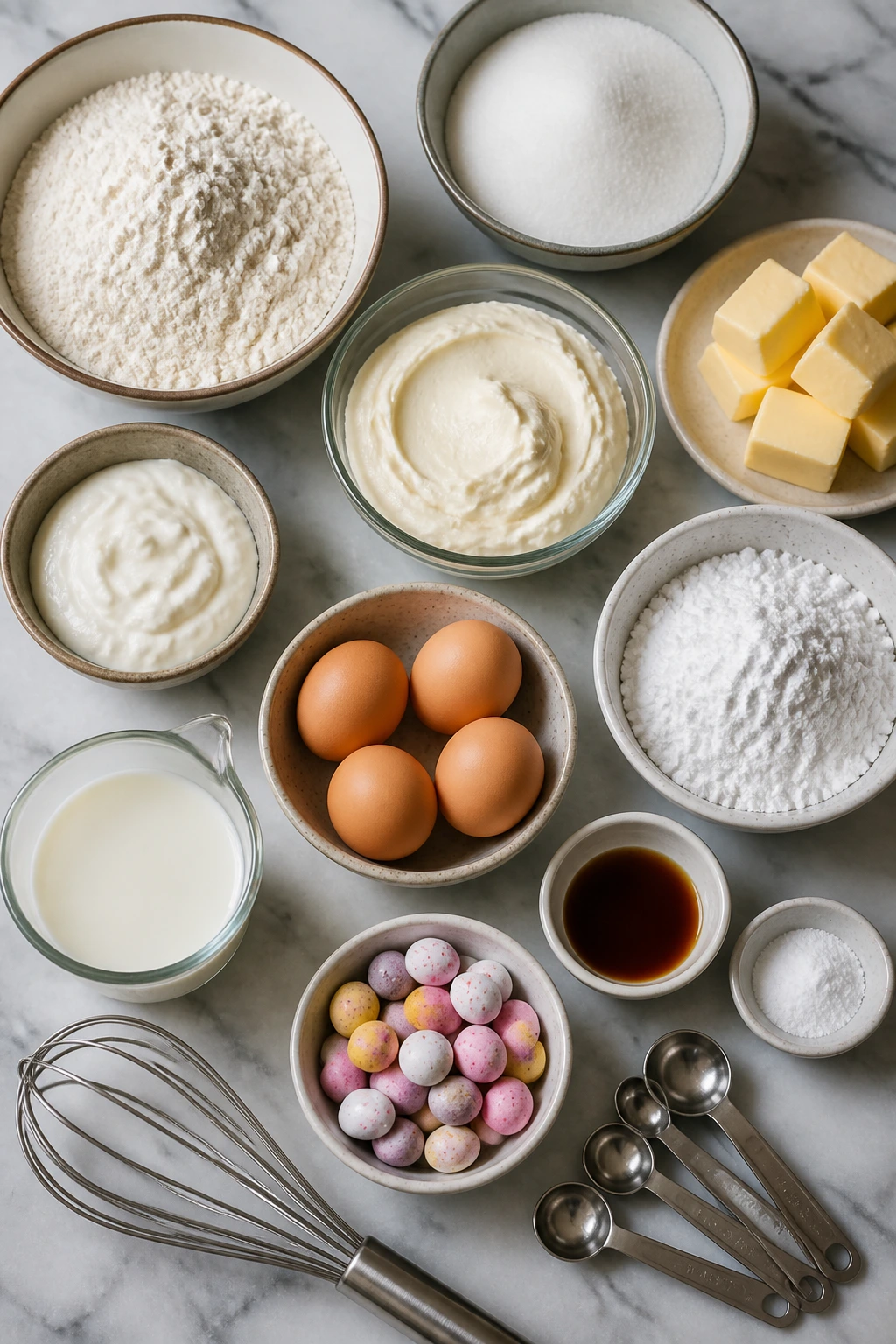
- 2 1/2 cups all-purpose flour
- 2 teaspoons baking powder
- 1 teaspoon baking soda
- 1 teaspoon fine sea salt
- 1 cup unsalted butter, softened to room temperature
- 1/2 cup neutral oil, such as canola or avocado
- 1 1/4 cups granulated sugar
- 1/2 cup packed light brown sugar
- 4 large eggs, room temperature
- 2 teaspoons pure vanilla extract
- 1 cup sour cream, room temperature
- 1 cup buttermilk, room temperature
- 1 tablespoon all-purpose flour, for tossing the candy eggs
- 1 1/2 cups mini candy-coated chocolate eggs, divided and roughly chopped
For the Cream Cheese Frosting
- 8 ounces full-fat cream cheese, softened to room temperature
- 1/2 cup unsalted butter, softened to room temperature
- 4 cups powdered sugar, sifted
- 1 1/2 teaspoons pure vanilla extract
- 1/4 teaspoon fine sea salt
- 2 to 3 tablespoons heavy cream or whole milk, as needed
For the Topping
- 1/2 cup mini candy-coated chocolate eggs, whole or lightly crushed
Why Each Ingredient Matters More Than It Looks
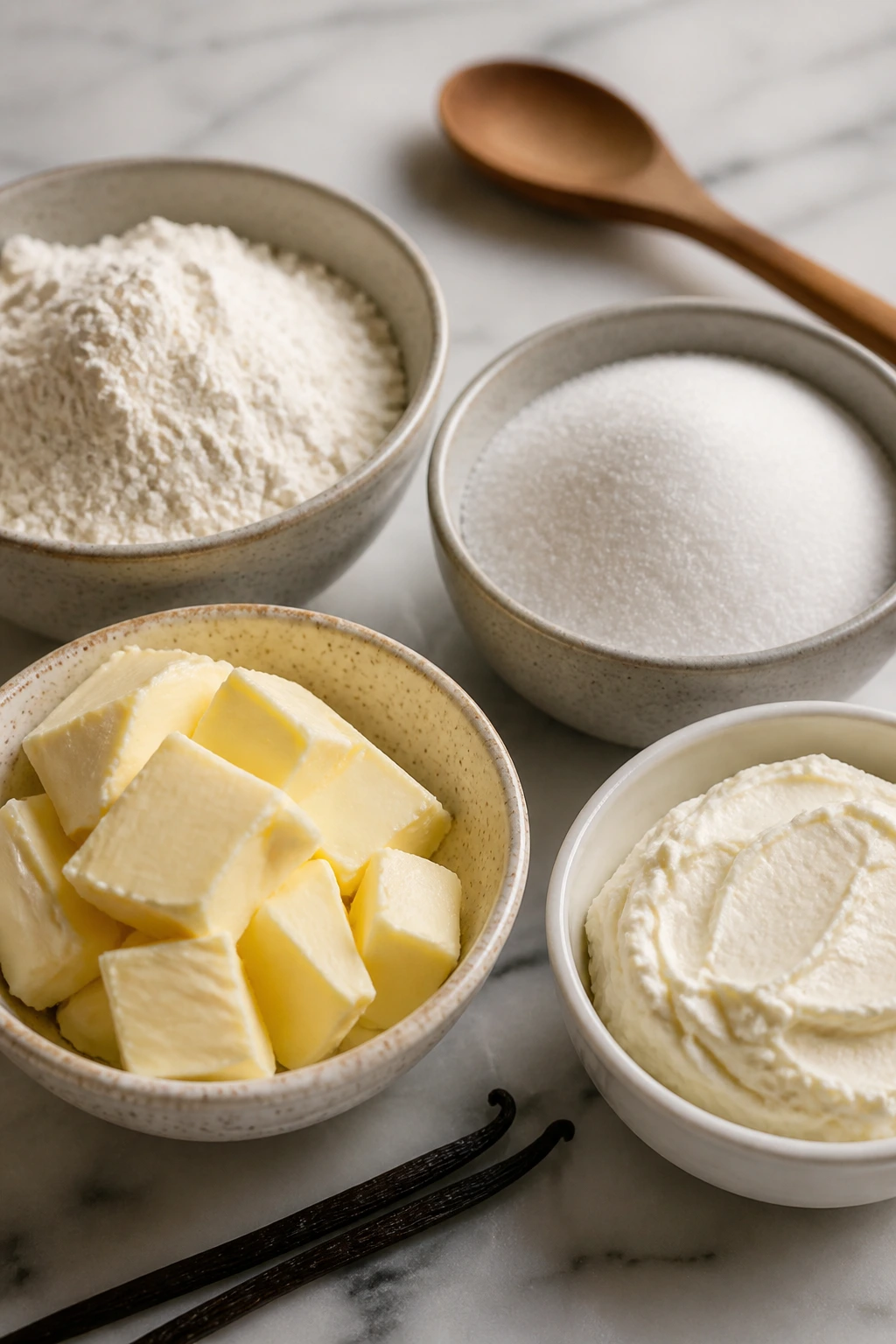
Cake Structure
What to use: 2 1/2 cups all-purpose flour, 2 teaspoons baking powder, 1 teaspoon baking soda, and 1 teaspoon fine sea salt.
Preparation: Whisk the dry ingredients together before they ever touch the wet mixture. That spreads the leavening evenly and keeps the salt from landing in one salty pocket.
Substitutions: A good 1:1 gluten-free baking blend works if it already contains xanthan gum. If you prefer cake flour, use it for a slightly finer crumb, but do not pack the cup.
Tips: Spoon the flour into the measuring cup and level it off. Scooping straight from the bag can pack in too much flour, and this cake turns dry before it turns fluffy.
Butter, Oil, Sugar, and Eggs
What to use: 1 cup softened butter, 1/2 cup neutral oil, 1 1/4 cups granulated sugar, 1/2 cup brown sugar, and 4 large eggs.
Preparation: The butter should dent when you press it, not collapse into soup. The eggs need to be room temperature so they blend into the batter instead of turning it patchy.
Substitutions: Canola oil, avocado oil, or mild grapeseed oil all work. If you only have granulated sugar, use 1 3/4 cups total and expect a slightly less chewy crumb.
Tips: The oil keeps the cake soft after chilling, while the butter gives the first bite a richer flavor. That combination is worth the extra bowl. It does a better job than using one fat alone.
Dairy for the Tender Crumb
What to use: 1 cup sour cream and 1 cup buttermilk.
Preparation: Let both sit out long enough to lose the fridge chill. Cold dairy can make the batter look broken for a minute, which is normal, but room-temperature ingredients blend more smoothly.
Substitutions: Plain Greek yogurt can replace the sour cream. If you do not have buttermilk, stir 1 tablespoon white vinegar or lemon juice into 1 cup milk and let it stand for 5 minutes.
Tips: Do not swap these for low-fat versions just to trim richness. The cake’s soft texture depends on the fat and acidity working together.
Candy Eggs
What to use: 1 1/2 cups mini candy-coated chocolate eggs, divided, with 1 cup chopped into the batter and 1/2 cup left for the top.
Preparation: Chop them into pea-size pieces. If the pieces are much smaller, they melt into the batter; if they’re much larger, they sink and make awkward pockets.
Substitutions: Mini chocolate chips, chopped chocolate-covered peanuts, or malted milk eggs work if you want a different crunch. Peanut butter eggs can work too, but they taste sweeter and a little heavier.
Tips: Toss the chopped candy eggs in 1 tablespoon flour before folding them in. That thin coat helps keep them suspended instead of dropping to the bottom of the pan.
Cream Cheese Frosting
What to use: 8 ounces full-fat cream cheese, 1/2 cup butter, 4 cups powdered sugar, 1 1/2 teaspoons vanilla, 1/4 teaspoon salt, and 2 to 3 tablespoons cream or milk.
Preparation: Both the cream cheese and butter need to be soft all the way through. If the center is still cool, the frosting will keep tiny lumps no matter how long you beat it.
Substitutions: Mascarpone can replace half the cream cheese if you want a milder tang. Dairy-free cream cheese can work, but expect a softer set.
Tips: Block-style cream cheese beats tub spread every time here. The tub versions hold too much water and make the frosting loose, which is a headache on a sheet cake.
The Tools That Make Mixing Less Fussy
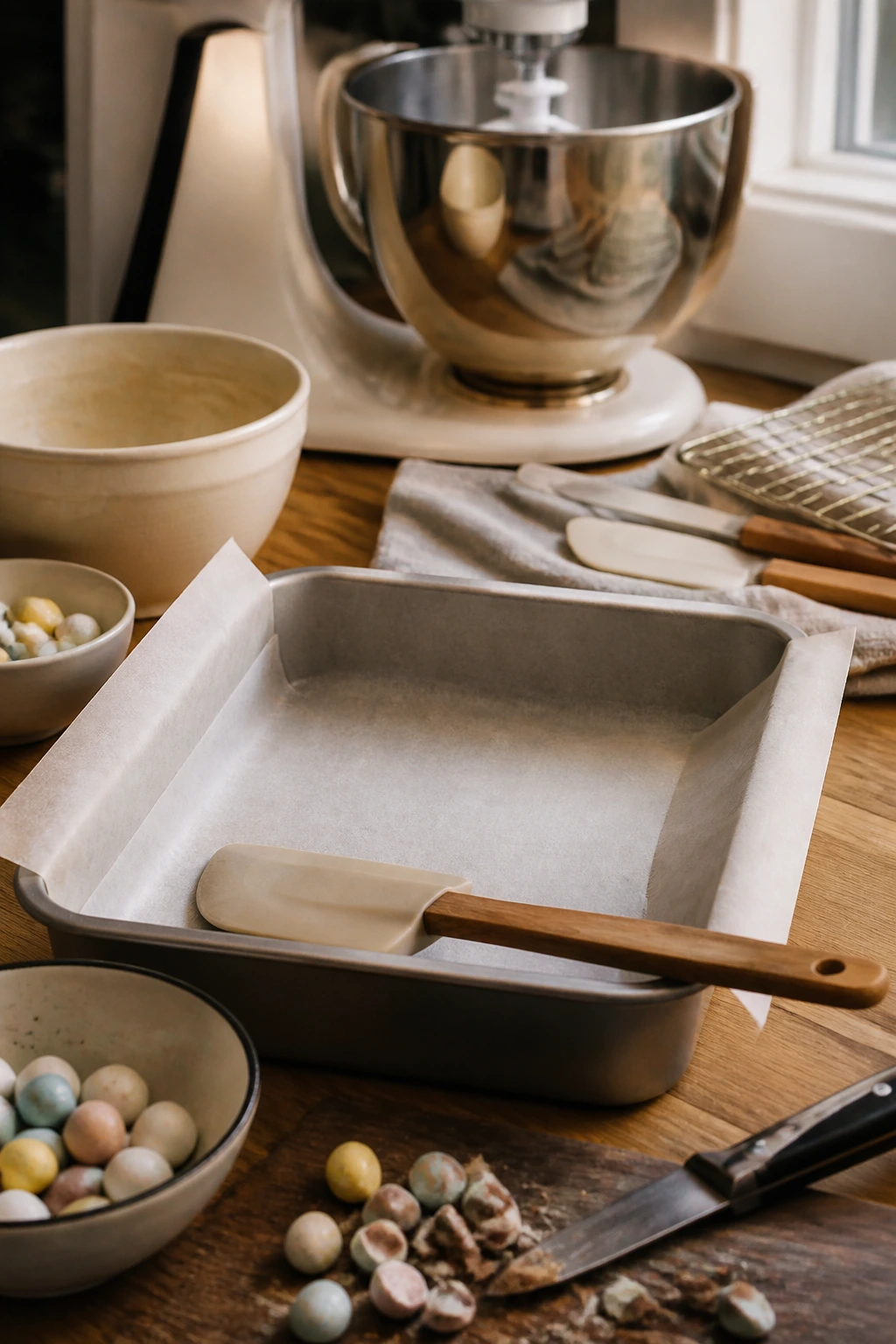
-
9×13-inch baking pan: A metal pan bakes evenly and gives you a soft edge without a pale, gummy center.
-
Parchment paper: A sling makes it easy to lift the cake out cleanly, which matters if you want neat squares.
-
Stand mixer or hand mixer: You need enough power to cream the butter and sugar until pale, fluffy, and slightly expanded.
-
Large mixing bowls: One for dry ingredients, one for batter, one for frosting. Crowded bowls lead to flour dust on the counter.
-
Rubber spatula: The folding step needs a soft hand, not a whisk.
-
Offset spatula: A small offset spatula gives you smoother frosting and fewer torn crumbs.
-
Wire cooling rack: Cooling the cake out of the pan stops condensation from making the bottom damp.
-
Sharp chef’s knife: Best for chopping the candy eggs into clean pieces without crushing them into colored shards.
Prep the Pan and Mix the Dry Ingredients
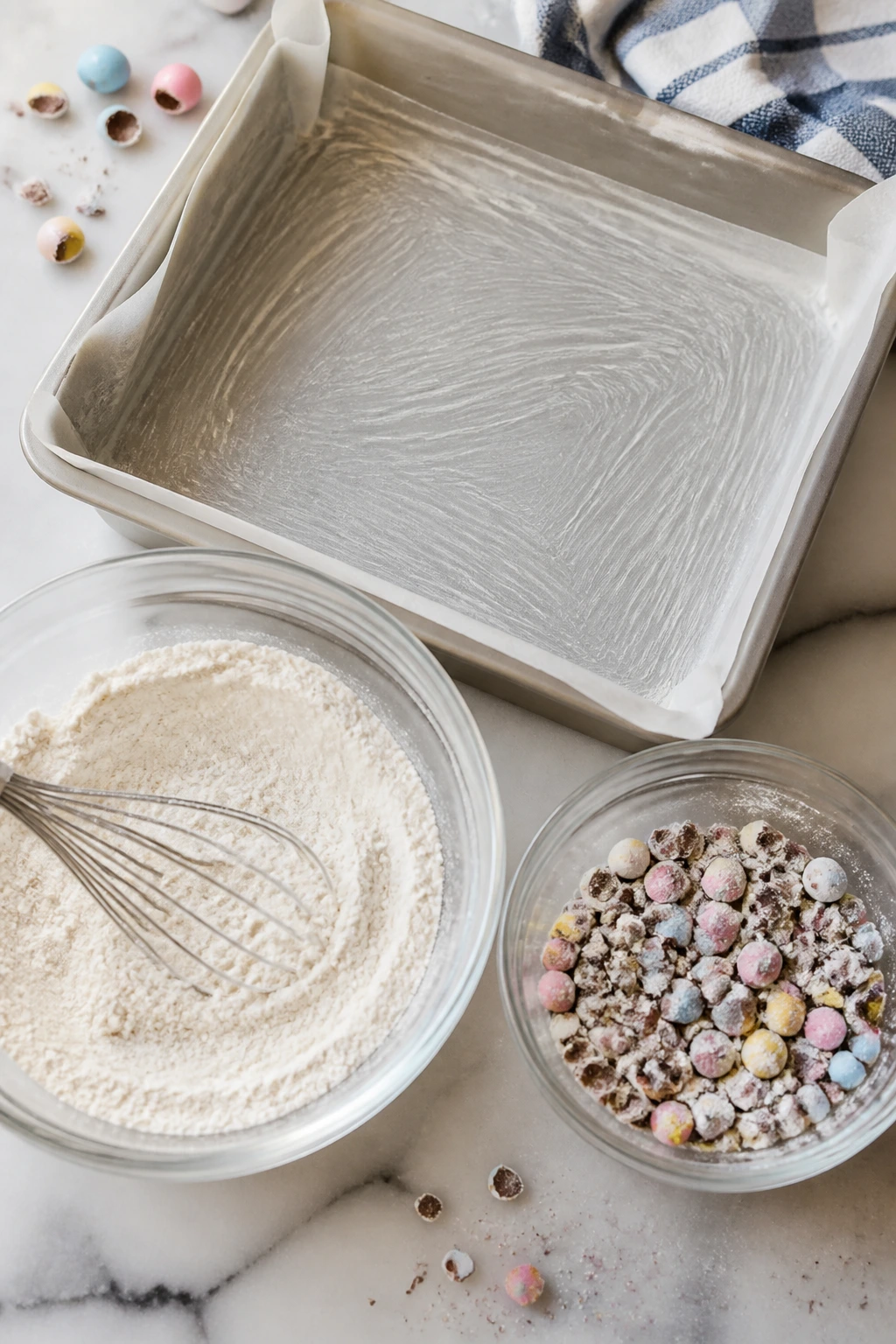
Prepare the Pan and Set Up the Candy Eggs:
-
Preheat the oven to 350°F (175°C) and position a rack in the center of the oven.
-
Grease a 9×13-inch baking pan with butter or nonstick spray, then line it with parchment paper, leaving a 2-inch overhang on the long sides. That overhang becomes a sling, which makes lifting the cake out later much easier.
-
Put 1 cup of the candy eggs into a bowl and chop them into pea-size pieces with a sharp knife. Toss the chopped pieces with 1 tablespoon flour until they look lightly dusted.
-
In a medium bowl, whisk together the flour, baking powder, baking soda, and salt until the mixture looks even and free of clumps.
Why this step matters: You want the oven hot before the batter is ready, and you want the candy eggs prepped before the batter starts waiting. A cake batter with buttermilk and sour cream should not sit around too long after mixing, or the leavening begins doing its job before the pan is even ready.
Build the Batter and Bake the Cake
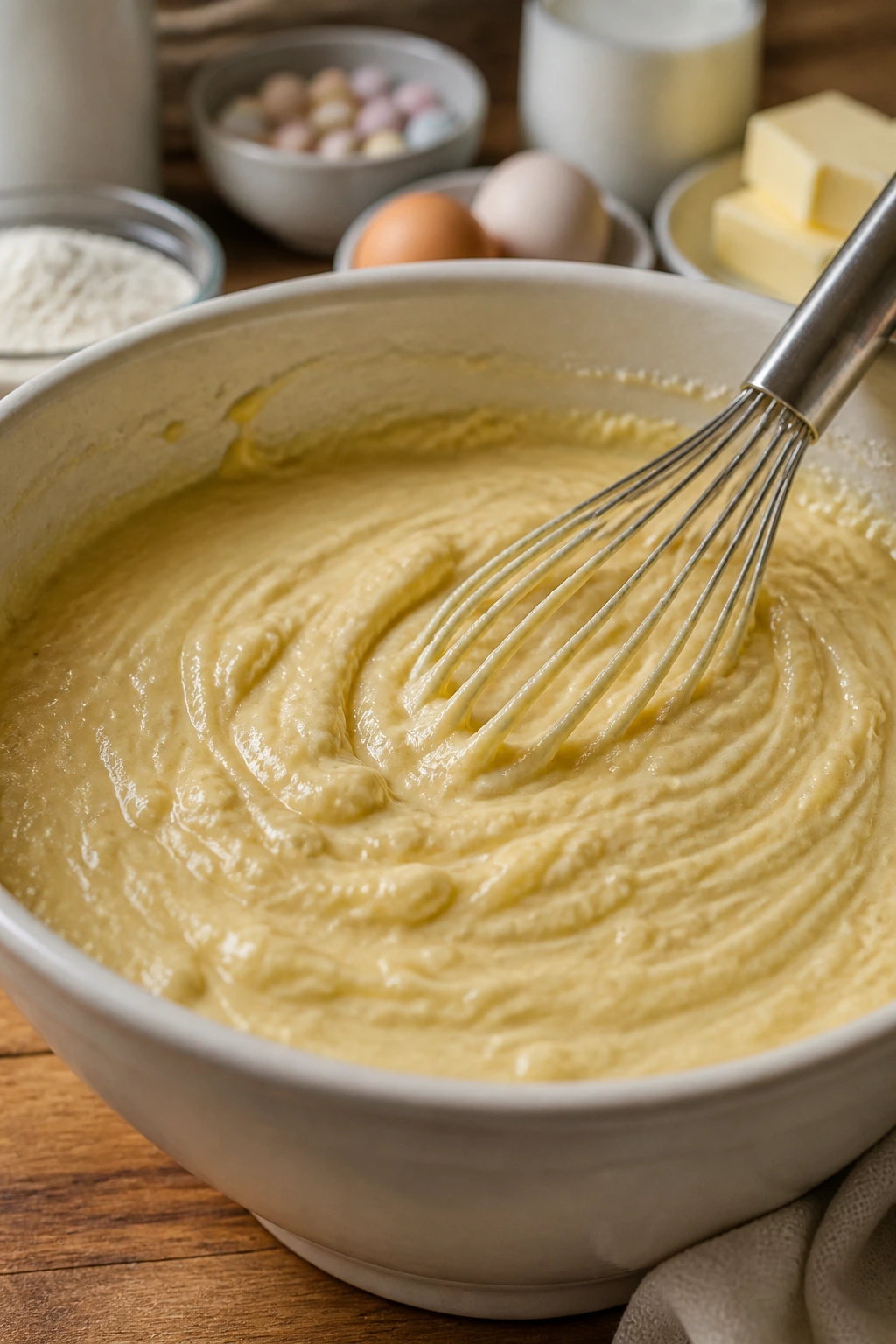
Cream the Butter and Sugar:
- In a large bowl or stand mixer fitted with the paddle attachment, beat the softened butter, oil, granulated sugar, and brown sugar on medium-high speed for 3 to 4 minutes. The mixture should turn lighter in color and look fluffy, with no hard sugar streaks hiding at the bottom.
Add the Eggs and Dairy:
-
Beat in the eggs one at a time, mixing for about 20 seconds after each addition. Scrape down the bowl after the second egg so nothing sticks in a cold ring around the edge.
-
Add the vanilla extract and sour cream, then mix on low speed just until the batter looks smooth. It may look slightly thick and glossy at this point, and that is exactly what you want.
Combine Wet and Dry:
-
Add the dry ingredients in three additions, alternating with the buttermilk in two additions: dry, buttermilk, dry, buttermilk, dry. Mix on low speed and stop as soon as the flour disappears. Do not beat the batter hard here — that is how a tender cake turns rubbery.
-
Fold in the flour-dusted candy eggs with a rubber spatula using slow, gentle strokes. A few colored streaks are fine; what you want to avoid is smashing every piece into crumbs.
Bake:
-
Scrape the batter into the prepared pan and spread it into an even layer with the spatula. Tap the pan once on the counter to settle any large air pockets.
-
Bake for 32 to 38 minutes, rotating the pan halfway through if your oven has a hot spot. The top should spring back lightly when pressed in the center, and a toothpick inserted into the middle should come out with a few moist crumbs, not wet batter. If the top browns too quickly, tent the pan loosely with foil after 25 minutes.
-
Set the pan on a wire rack and let the cake cool in the pan for 20 minutes. Then use the parchment overhang to lift it out, or leave it in the pan and cool it completely for another 40 to 50 minutes. Do not frost warm cake; the frosting will slide, soften, and turn greasy at the edges.
Beat the Frosting and Finish the Cake
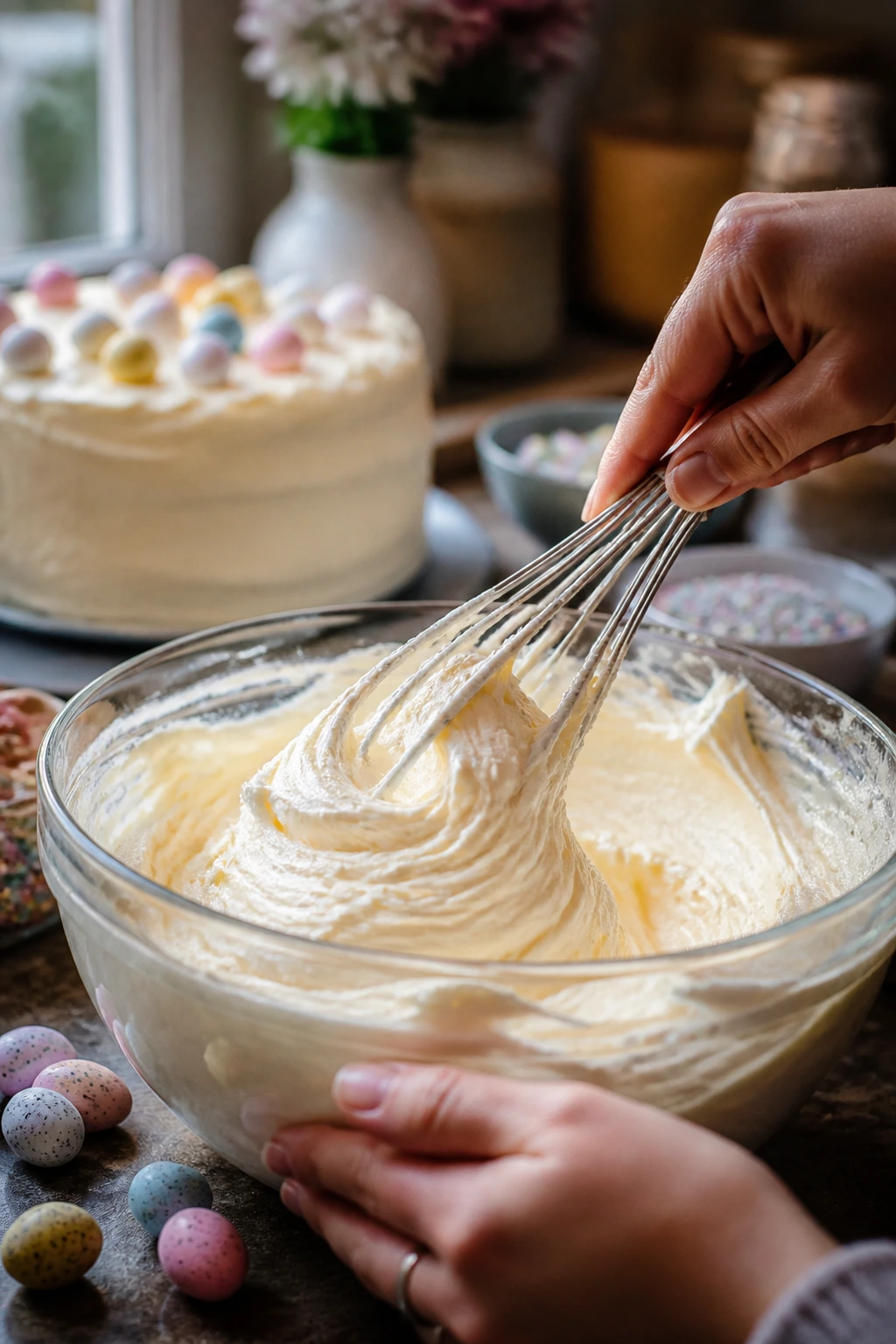
Make the Cream Cheese Frosting:
-
In a large bowl, beat the softened cream cheese and butter on medium speed for 1 to 2 minutes, until the mixture looks smooth and streak-free. If you see little lumps, keep going, but stop before the mixture turns airy and loose.
-
Add the powdered sugar in two additions, starting on low speed so you do not create a cloud of sugar dust. Beat until the frosting thickens and looks matte rather than glossy.
-
Mix in the vanilla extract, salt, and 2 tablespoons of cream or milk. Beat for 30 to 45 seconds, just until the frosting is thick, spreadable, and able to hold soft swirls. If it feels stiff, add the remaining tablespoon of cream. If it feels loose, chill it for 10 minutes.
Frost and Decorate:
-
Spread the frosting over the completely cooled cake in generous swoops, pushing it all the way to the edges. I like a thick layer here. Thin frosting on a candy egg cake feels stingy.
-
Scatter the remaining candy eggs over the top, pressing a few lightly into the frosting so they stay put. If you want a more finished look, pile a little line of candy eggs around the edge and leave the center open.
-
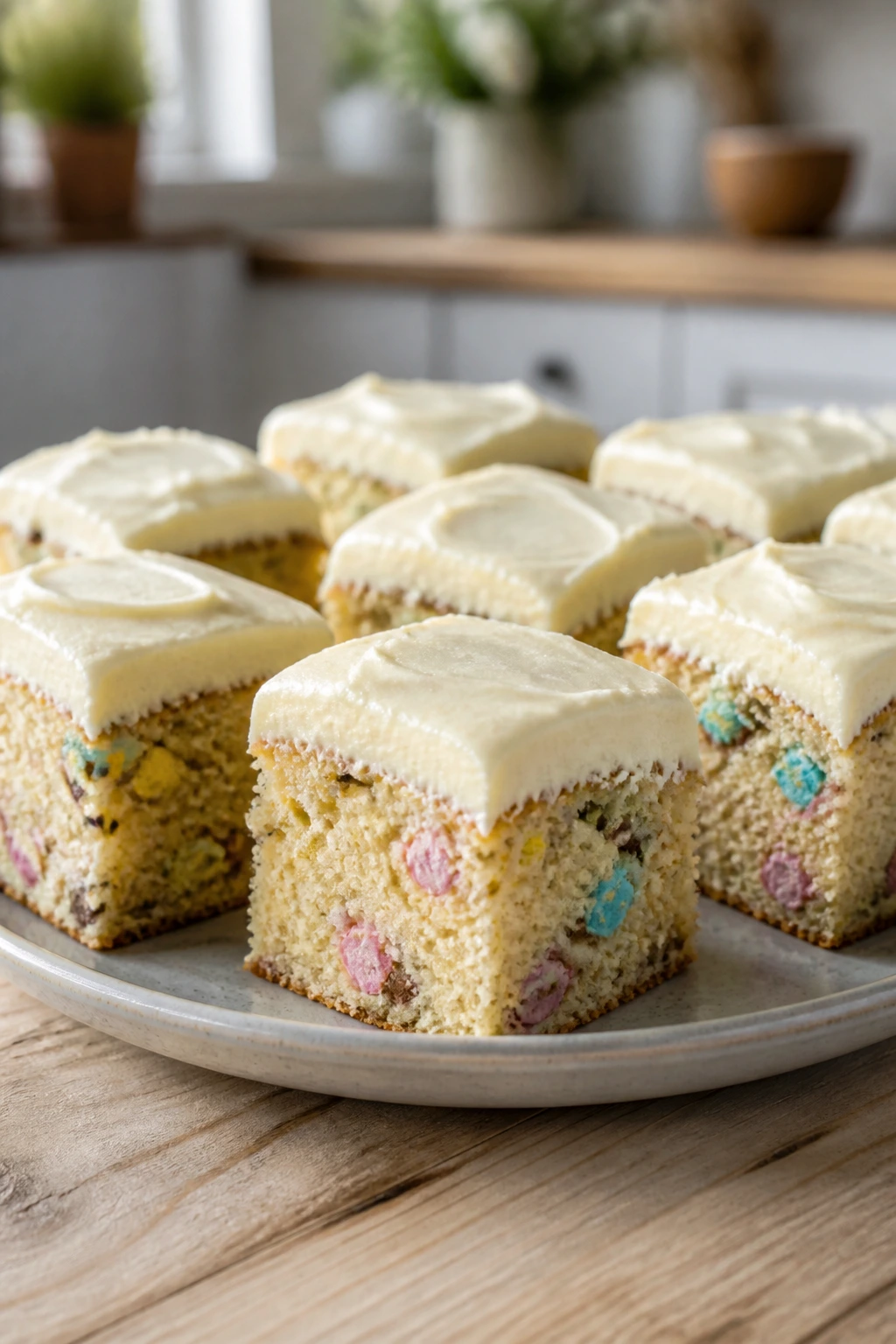
Chill the cake for 15 minutes before slicing if you want the cleanest squares. Use a sharp knife dipped in hot water and wiped dry between cuts. That extra minute is the difference between neat edges and a smeared frosting job.
How to Serve It Without Losing the Crunch
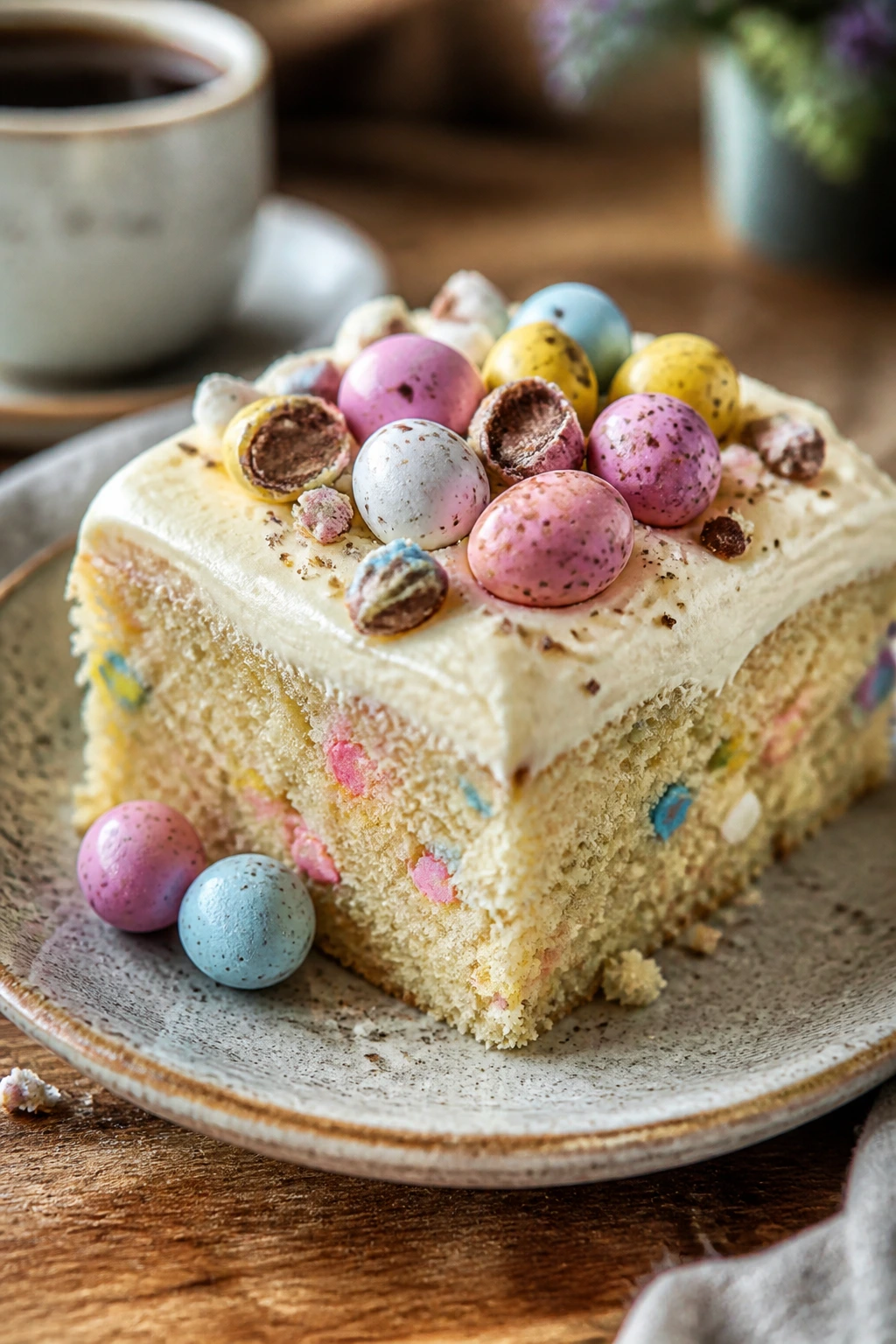
Presentation: Let the frosted cake sit at cool room temperature for 10 to 15 minutes before slicing so the frosting softens just enough to cut cleanly. A few chopped candy eggs scattered over the top look better than a heavy blanket of them, because you still want to see the thick cream cheese frosting underneath.
Accompaniments: A square of this cake goes well with cold milk, plain coffee, or a mug of black tea. If you want a plated dessert, add a few tart berries on the side — raspberries work especially well because they cut the sweetness without fighting the candy shell.
Portions: Cut the cake into 12 large squares for a dessert plate or 15 smaller pieces for a buffet. If you are serving it after a heavier meal, smaller squares are smarter; the frosting is rich enough to carry a thin slice.
Beverage Pairing: Coffee with a little milk, Earl Grey tea, or an unsweetened iced latte all play nicely with the tangy frosting. For a cold option, whole milk is the simplest answer, and it does the job better than anything fancy.
Tips That Keep the Crumb Tender
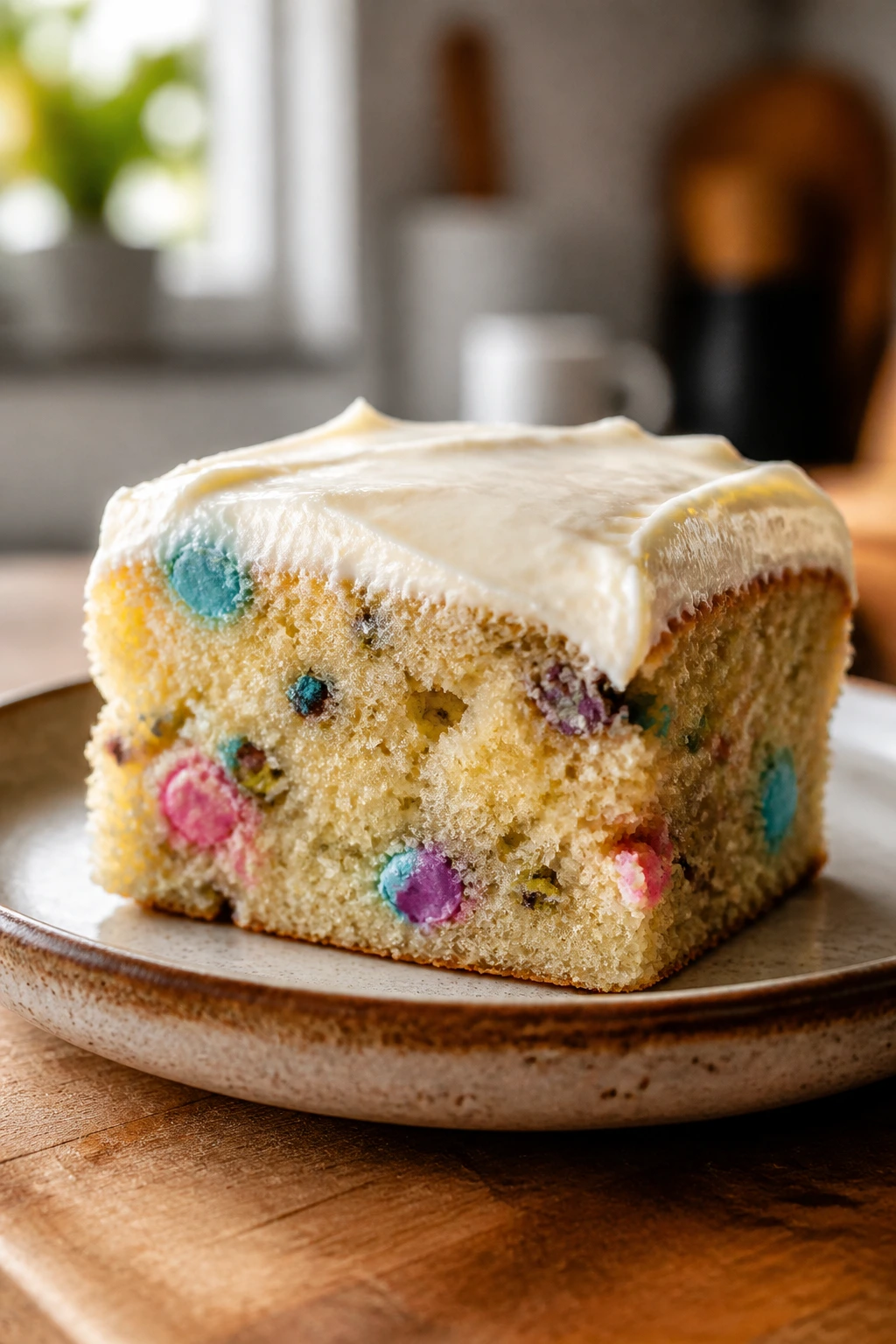
Flavor Enhancement: A tiny bit of orange zest — about 1 teaspoon — stirred into the frosting brightens the candy shell and gives the cake a cleaner finish. You can also add 1/4 teaspoon almond extract to the batter if you like that old-school bakery flavor.
Time-Saver: Bake the cake a day ahead and frost it once it has cooled and been wrapped. The crumb firms up just enough overnight that the slices come out straighter, which is handy if you care about clean corners.
Pro Move: Freeze the chopped candy eggs for 10 to 15 minutes before folding them in. Cold pieces hold their shape a little better and bleed less color into the batter.
Cost-Saver: Use a 9×13 pan instead of trying to turn this into a layer cake. You will need less frosting, fewer garnishes, and less time, and nobody misses the extra project once the first square gets cut.
Make-It-Yours: If you want a less sweet finish, pull the sugar back in the frosting by 1/2 cup and add an extra pinch of salt. The cake itself has enough sweetness from the candy eggs to support that move.
Mistakes That Lead to a Dense Cake or Runny Frosting
-
Measuring flour by scooping straight from the bag: The cake turns tight and dry, and the middle can feel faintly bready instead of soft. Fix it by spooning the flour into the cup or weighing it if you have a scale.
-
Folding the candy eggs in too early: If you add them before the batter is fully mixed, the shell can crack into tiny bits and streak the crumb with color. Wait until the flour is almost gone, then fold gently at the end.
-
Frosting a warm cake: The frosting slides, the edges look shiny, and the first slice turns messy fast. Let the cake cool all the way through, even if that means waiting longer than you want to.
-
Using spreadable cream cheese: Tub cream cheese contains more water, so the frosting stays soft and loose. Block cream cheese gives you a thicker, steadier frosting that actually holds its shape on the cake.
-
Overbaking for a perfectly clean toothpick: A spotless toothpick often means the cake is already past its best texture. Pull it when the pick shows a few moist crumbs and the center springs back when touched.
-
Chopping the candy eggs into dust: Tiny shards disappear into the batter and you lose the crunch that makes the cake interesting. Aim for pieces that are small enough to distribute but large enough to bite into.
Variations That Still Taste Like the Same Dessert
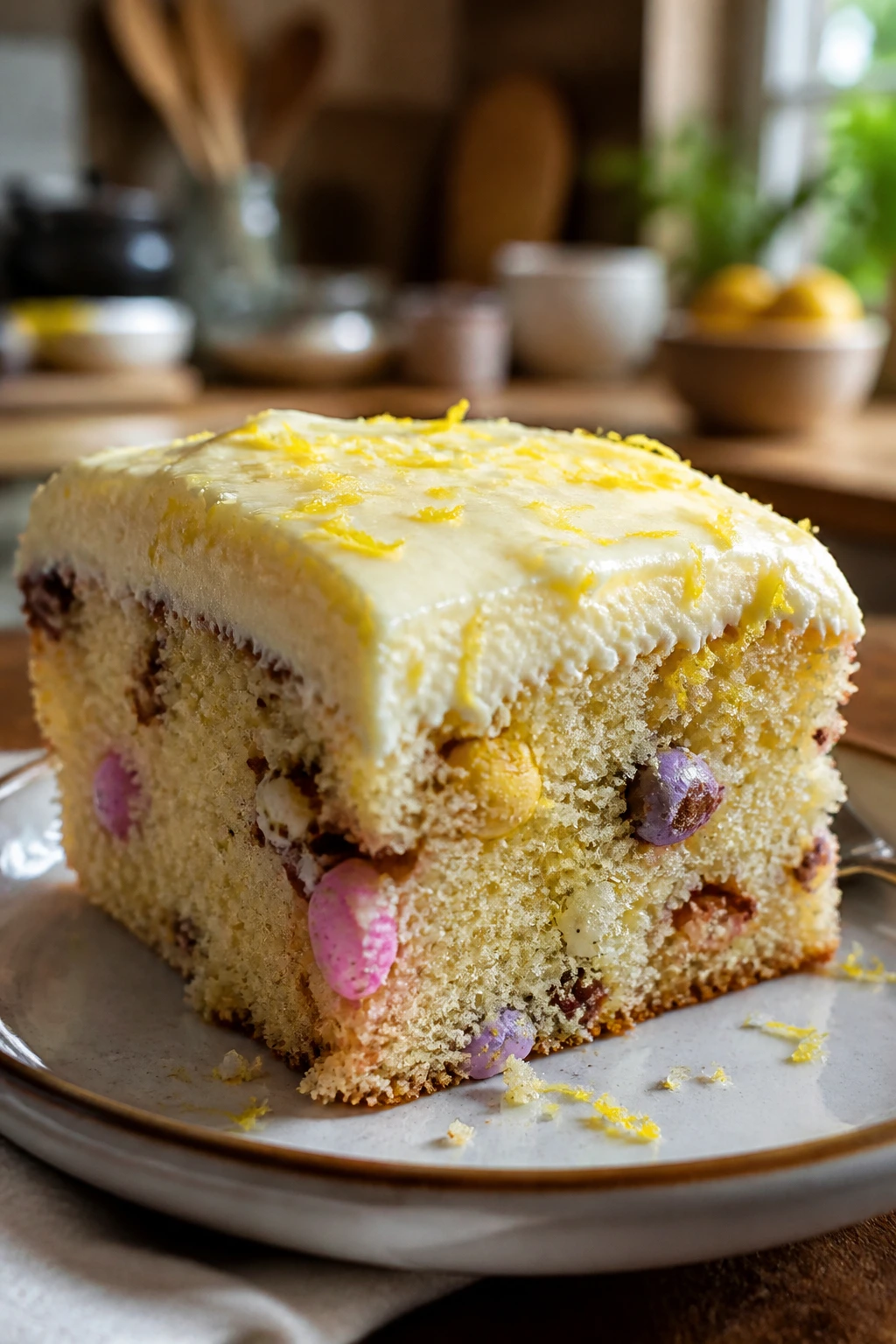
Lemon Brightener: Add 2 teaspoons of lemon zest to the batter and 1 teaspoon to the frosting. The citrus doesn’t make the cake taste like lemon cake; it just cuts through the sweetness and makes the candy eggs taste a little sharper.
Cupcake Parade: Divide the batter between 24 lined muffin cups and bake at 350°F for 18 to 20 minutes. Pipe or swirl the frosting on top and press one candy egg into each cupcake while the frosting is still soft.
Gluten-Free Tray Bake: Swap the flour for a good 1:1 gluten-free baking blend with xanthan gum already included. Let the batter sit for 10 minutes before baking so the flour can hydrate a bit; that helps the crumb stay even instead of gritty.
Extra-Chocolate Crunch: Replace 1/2 cup of the candy eggs with mini chocolate chips or chopped chocolate-covered almonds. You still get the shell crack, but the chocolate note goes deeper and the cake tastes less like pure sugar.
Coffee Shop Slice: Add 1 teaspoon of instant espresso powder to the batter and 1/2 teaspoon to the frosting. It does not make the cake taste like coffee; it just gives the chocolate in the candy eggs a darker edge.
Make-Ahead, Storage, and Leftovers
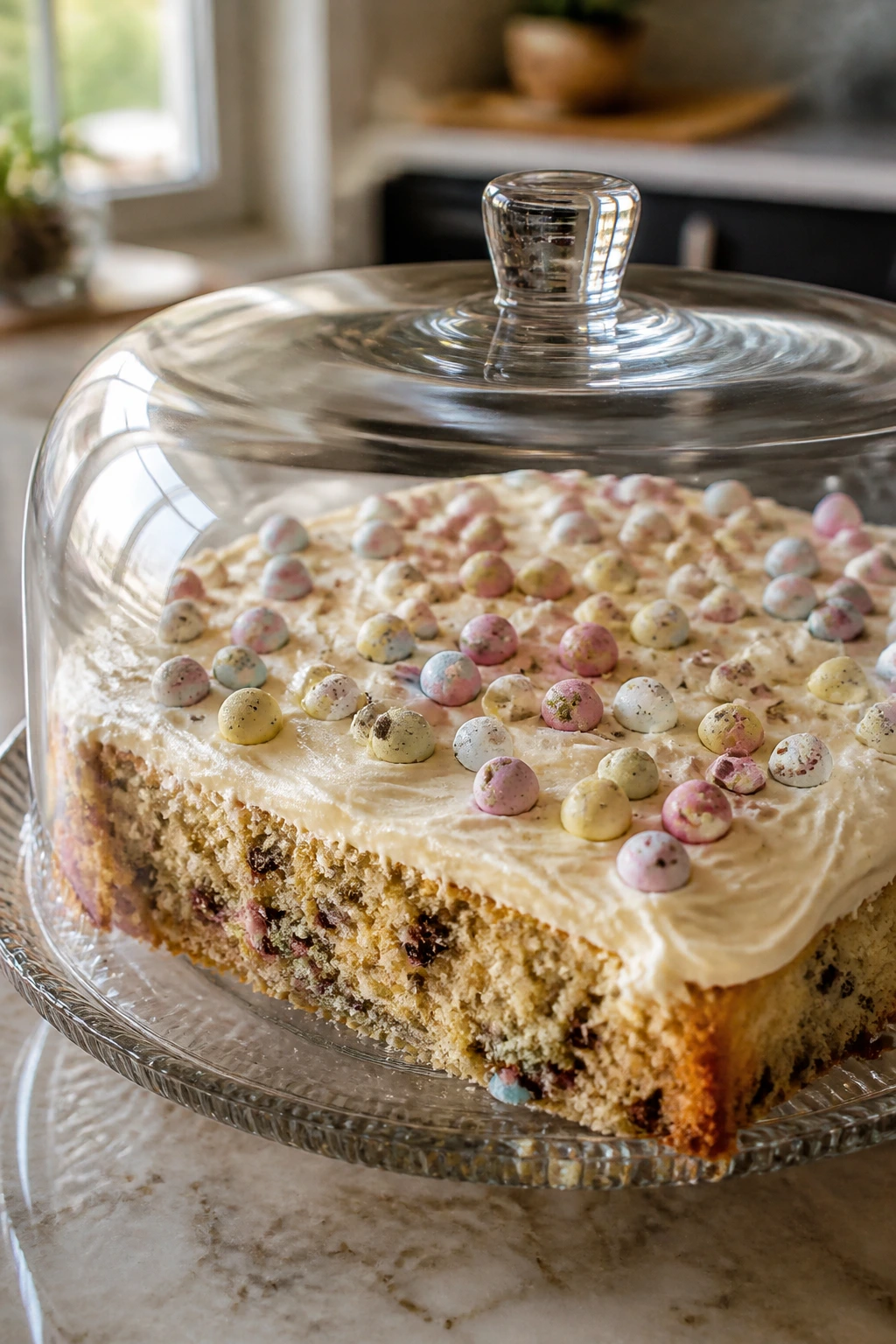
Cake like this behaves well if you plan for it. The unfrosted cake can be baked, cooled, wrapped tightly, and held at room temperature for 1 day or refrigerated for up to 3 days. If you need more time, freeze the unfrosted cake, well wrapped, for up to 2 months.
The frosted cake keeps in the refrigerator for 3 to 4 days, covered loosely with foil or in a cake carrier. I actually prefer it after a few hours of chilling because the frosting tightens a little and the crumb settles. Let slices sit at room temperature for 20 to 30 minutes before serving so the frosting softens back up.
If you want to freeze leftovers, freeze individual slices on a tray until firm, then wrap each slice in plastic and slide it into a freezer bag. They’ll keep for about 1 to 2 months. Thaw overnight in the refrigerator, then give them 15 to 20 minutes on the counter before eating. I would not microwave a frosted slice unless you enjoy melted frosting puddles; the texture gets greasy fast.
One small detail matters more than people think: candy egg topping is best added the day you serve the cake. The shells soften overnight under the frosting. The cake still tastes good, but the crunch fades a little, and that crunch is half the fun.
Questions Bakers Ask Most
Can I use full-size candy eggs instead of mini ones?
You can, but chop them more carefully. Full-size eggs create bigger pockets in the crumb and can sink if the pieces are too heavy, so I prefer minis for even distribution and cleaner slices.
What if I do not have buttermilk?
Mix 1 tablespoon white vinegar or lemon juice into 1 cup whole milk and let it sit for 5 minutes. It will not taste sour in the finished cake, but it gives you the acidity needed for a softer crumb.
Why did my candy eggs sink to the bottom?
They were probably too large, too heavy, or not dusted with flour. Chop them into small pieces, toss them lightly in flour, and fold them into batter that has already thickened from the dry ingredients.
Can I make this cake as a layer cake?
Yes, but the sheet cake version is easier to frost and less likely to slide around. If you do turn it into layers, cool the cakes completely, chill them before frosting, and keep the frosting a little stiffer by adding 1/2 cup extra powdered sugar.
Does this need to stay refrigerated?
Yes, once it’s frosted with cream cheese frosting. A short stretch at room temperature is fine for serving, but I keep it chilled if it will sit longer than about 2 hours.
Can I make the frosting ahead?
Absolutely. The frosting can be made up to 3 days ahead and stored in the refrigerator in a covered bowl. Let it soften for 20 minutes, then beat it briefly before spreading so it regains its smooth texture.
How do I keep the frosting from turning loose?
Use block cream cheese, not tub spread, and make sure the butter and cream cheese are soft but not warm. If the frosting still feels slack, add a little more powdered sugar and chill it for 10 minutes before spreading.
What if my oven runs hot?
Start checking the cake at 28 minutes instead of waiting for the full bake time. A hot oven can set the edges fast while the center still needs a few minutes, so a quick foil tent keeps the top from overbrowning.
A Cake Worth Saving a Few Pieces For
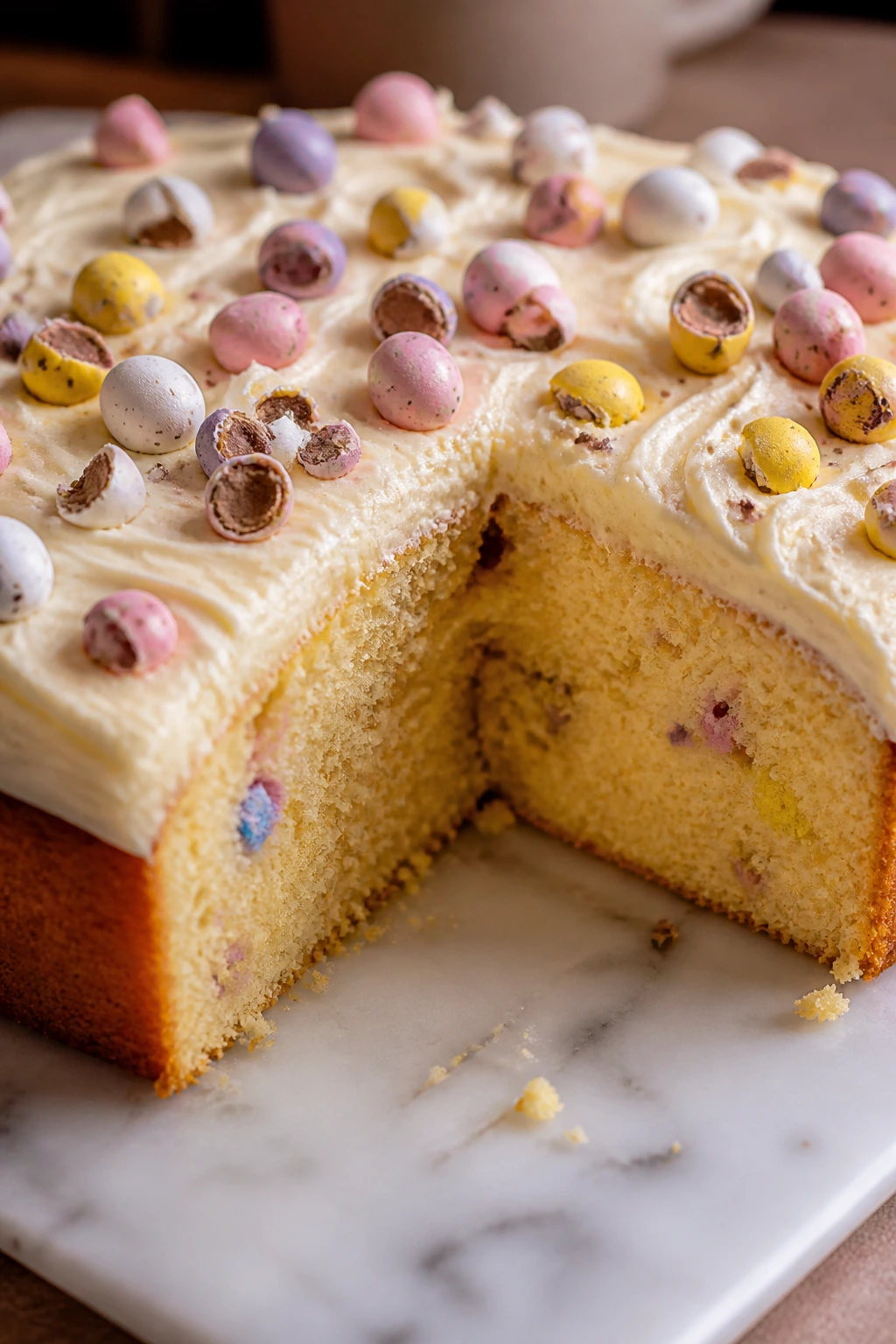
The charm of this cake is that it does not try to be delicate. It is soft, a little playful, and sturdy enough to sit in the fridge without turning sad, which is more than I can say for most frosted sheet cakes. Keep the candy eggs chopped at the last minute, keep the cake fully cool, and the whole thing stays plush from the first square to the last corner piece.
If you make it once, the method starts to feel obvious in the best way. The batter is simple, the frosting is old-school, and the candy eggs do the one job they were born to do: bring crunch, color, and a little surprise to an otherwise plain vanilla slice. Keep a few pieces hidden in the back of the fridge for yourself.
Moist Candy Egg Cake with Cream Cheese Frosting — Recipe Card
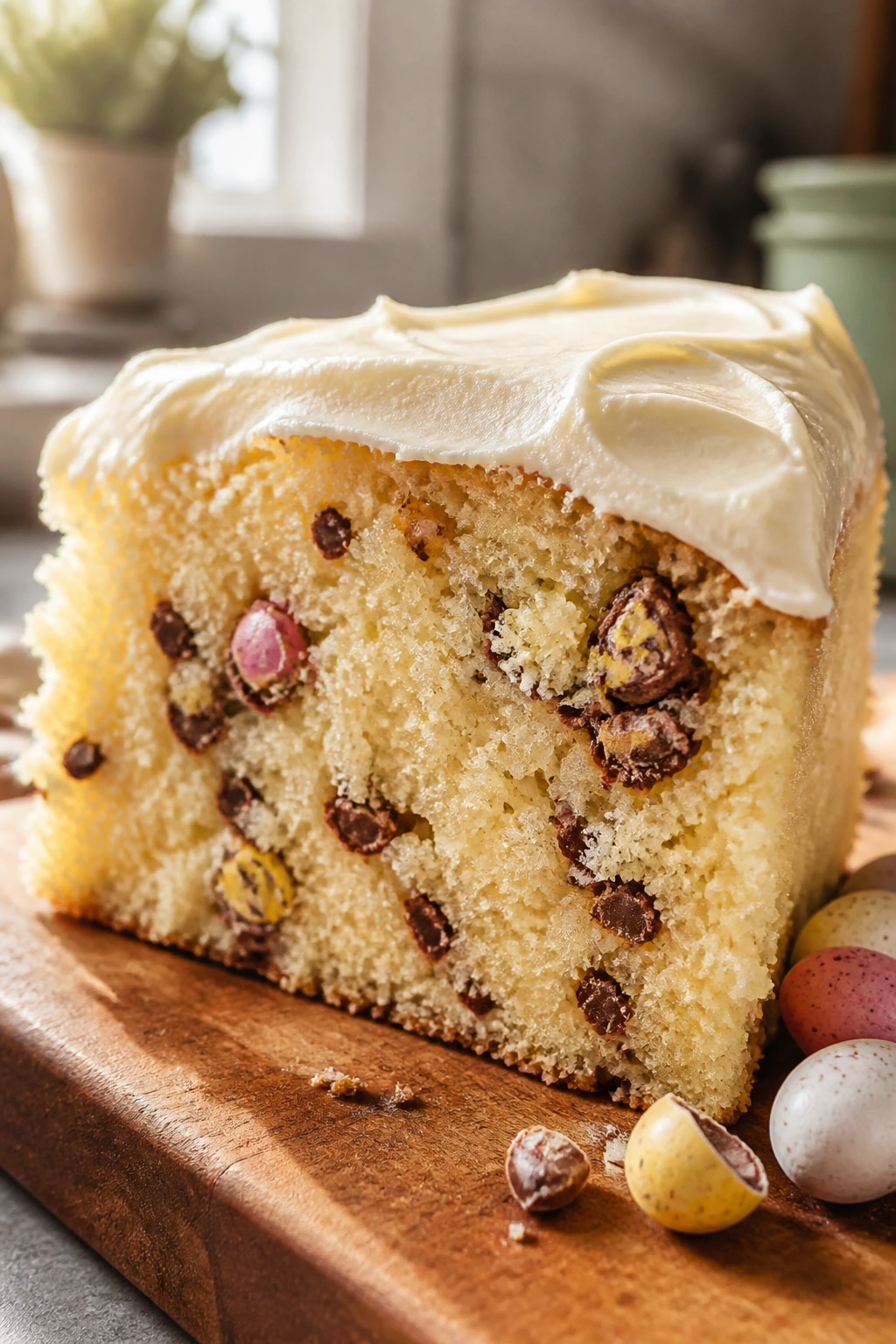
Recipe Name: Moist Candy Egg Cake with Cream Cheese Frosting
Description: A soft vanilla sheet cake made with sour cream, buttermilk, and chopped mini candy eggs, finished with a tangy cream cheese frosting. The cake stays plush for days, and the candy shell pieces add little crunchy bursts in every slice.
Prep Time: 25 minutes
Cook Time: 32 to 38 minutes
Total Time: 1 hour to 1 hour 5 minutes, plus cooling time
Course: Dessert
Cuisine: American
Servings: 12 to 15 servings
Calories: About 490 kcal per serving
Ingredients
For the Cake
- 2 1/2 cups all-purpose flour
- 2 teaspoons baking powder
- 1 teaspoon baking soda
- 1 teaspoon fine sea salt
- 1 cup unsalted butter, softened
- 1/2 cup neutral oil
- 1 1/4 cups granulated sugar
- 1/2 cup packed light brown sugar
- 4 large eggs, room temperature
- 2 teaspoons pure vanilla extract
- 1 cup sour cream, room temperature
- 1 cup buttermilk, room temperature
- 1 tablespoon all-purpose flour, for tossing the candy eggs
- 1 1/2 cups mini candy-coated chocolate eggs, divided and roughly chopped
For the Cream Cheese Frosting
- 8 ounces full-fat cream cheese, softened
- 1/2 cup unsalted butter, softened
- 4 cups powdered sugar, sifted
- 1 1/2 teaspoons pure vanilla extract
- 1/4 teaspoon fine sea salt
- 2 to 3 tablespoons heavy cream or whole milk
For the Topping
- 1/2 cup mini candy-coated chocolate eggs, whole or lightly crushed
Instructions
-
Preheat the oven to 350°F (175°C). Grease a 9×13-inch pan and line it with parchment paper, leaving an overhang.
-
Chop 1 cup of the candy eggs into pea-size pieces and toss them with 1 tablespoon flour. Whisk together the flour, baking powder, baking soda, and salt in a medium bowl.
-
Beat the butter, oil, granulated sugar, and brown sugar until light and fluffy, about 3 to 4 minutes.
-
Beat in the eggs one at a time, then add the vanilla and sour cream.
-
Add the dry ingredients in 3 additions, alternating with the buttermilk in 2 additions, mixing on low speed until just combined.
-
Fold in the flour-dusted candy eggs with a rubber spatula.
-
Spread the batter into the pan and bake for 32 to 38 minutes, until a toothpick comes out with a few moist crumbs.
-
Cool the cake completely before frosting.
-
Beat the cream cheese and butter until smooth. Add the powdered sugar, vanilla, salt, and cream, and beat until thick and spreadable.
-
Frost the cooled cake and top with the remaining candy eggs. Chill briefly for cleaner slices.
Notes:
Keep the cake refrigerated because of the cream cheese frosting. Add the final candy egg topping close to serving time if you want the crunchiest texture.