



A candy apple should crack, not gum up your teeth. That first bite ought to give you a clean snap, then a hit of tart fruit, then a little melt of something creamy on top that softens the sugar rush before it gets bossy. Rich Candy Apples with Cream Cheese Frosting do exactly that. They keep the old-school hard shell, but the frosting gives the whole thing a tangy, dessert-shop finish that feels a lot more interesting than plain red lacquer.
The trick is balance. You need apples that stay crisp under pressure, syrup that reaches the hard-crack stage without drifting into burnt bitterness, and a frosting thick enough to pipe without sliding off the shell like it has somewhere better to be. Get those three pieces right and the apple stops tasting like fairground nostalgia and starts tasting like a real pastry case dessert.
And yes, the frosting matters more than people think. A little cream cheese cuts through the sugar in the candy shell, which is exactly why this version works: the shell stays crisp, but the finish tastes rounded instead of flat. That’s the whole point here. Not more sugar. Better sugar.
Why Rich Candy Apples with Cream Cheese Frosting Earn Their Place on the Dessert Tray
- The candy shell stays crisp: Cooking the syrup to 300°F gives you that brittle, glassy crack instead of a chewy coating that pulls at your teeth.
- The frosting does real work: Cream cheese frosting brings a tangy edge that keeps the apple from tasting like pure sugar on sugar.
- The texture contrast is the draw: You get cold, crisp apple; hard candy shell; and a soft, pipeable swirl on top. It’s a three-texture dessert that actually makes sense.
- They look polished without fussy decorating: A red shell with a white frosting crown is dramatic on its own. No sprinkles circus required.
- The recipe is flexible in a smart way: You can change the apple variety, the frosting flavor, or the finish without breaking the structure of the dessert.
- They hold up better than most people expect: As long as the apples are dry and the frosting is thick, these can be assembled cleanly and served without a sticky meltdown.
Yield: 8 candy apples
Prep Time: 25 minutes
Cook Time: 20 minutes
Total Time: 45 minutes active, plus 20 minutes for the candy shell to set
Difficulty: Intermediate — the steps are straightforward, but candy syrup waits for no one once it reaches hard-crack stage.
Chill/Rest Time: 20 minutes for the shell to harden; frosting can be chilled 10 minutes if it softens too much
Best Served: The same day, after the candy shell has set and the frosting is piped on
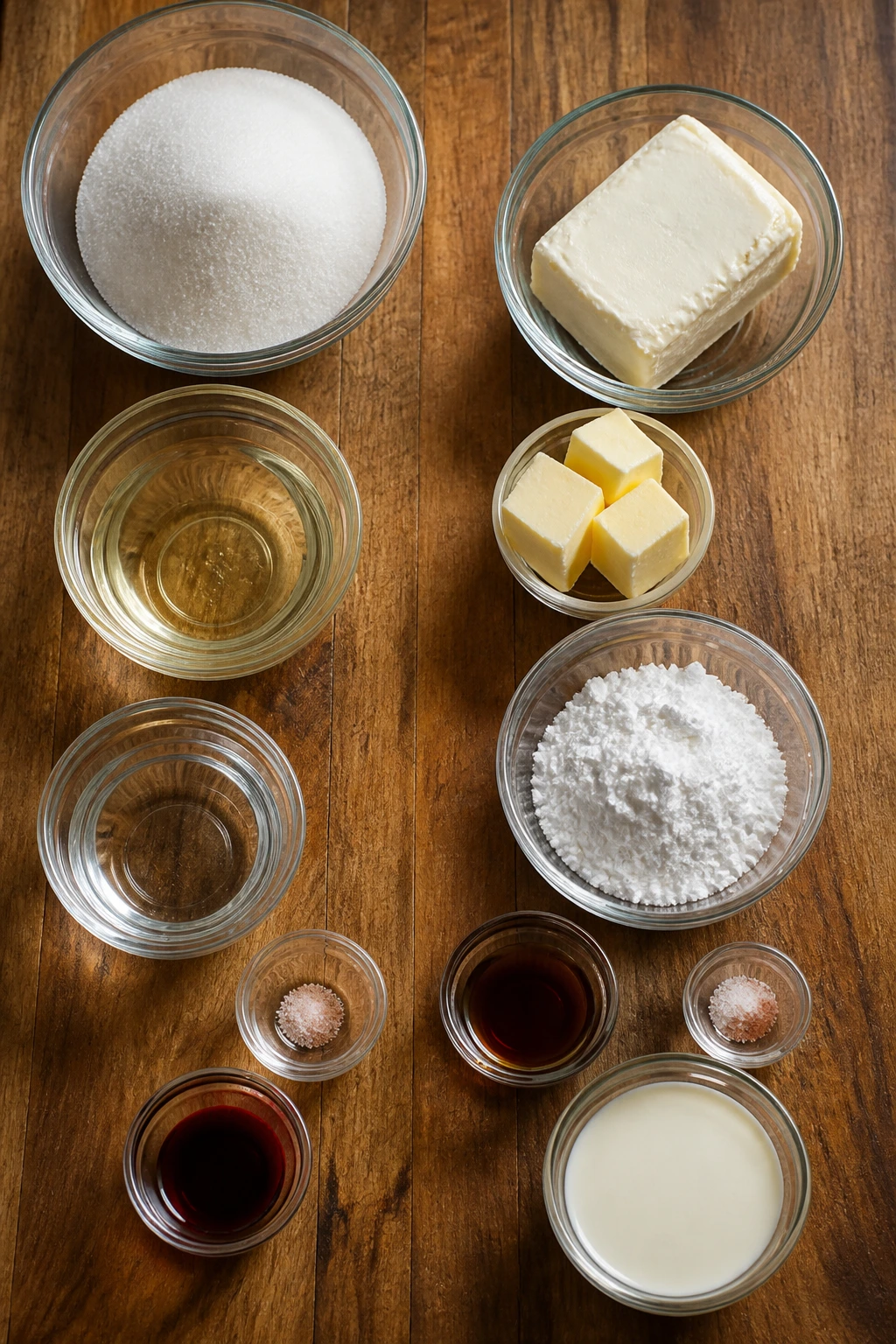
Ingredients for the Candy Shell and Cream Cheese Frosting
For the Candy Shell:
- 8 medium tart apples, such as Granny Smith, Pink Lady, or Honeycrisp, scrubbed and dried
- 8 wooden candy apple sticks or sturdy skewers
- 2 cups granulated sugar
- 1 cup light corn syrup
- 1/2 cup water
- 1/4 teaspoon fine salt
- 1/2 teaspoon red gel food coloring, optional
For the Cream Cheese Frosting:
- 8 ounces cream cheese, softened to room temperature
- 4 tablespoons unsalted butter, softened
- 1 3/4 cups powdered sugar, sifted
- 1 teaspoon pure vanilla extract
- 1/8 teaspoon fine salt
- 1 to 2 tablespoons heavy cream, only if needed for a softer piping consistency
What Each Ingredient Is Doing, and Why It Matters
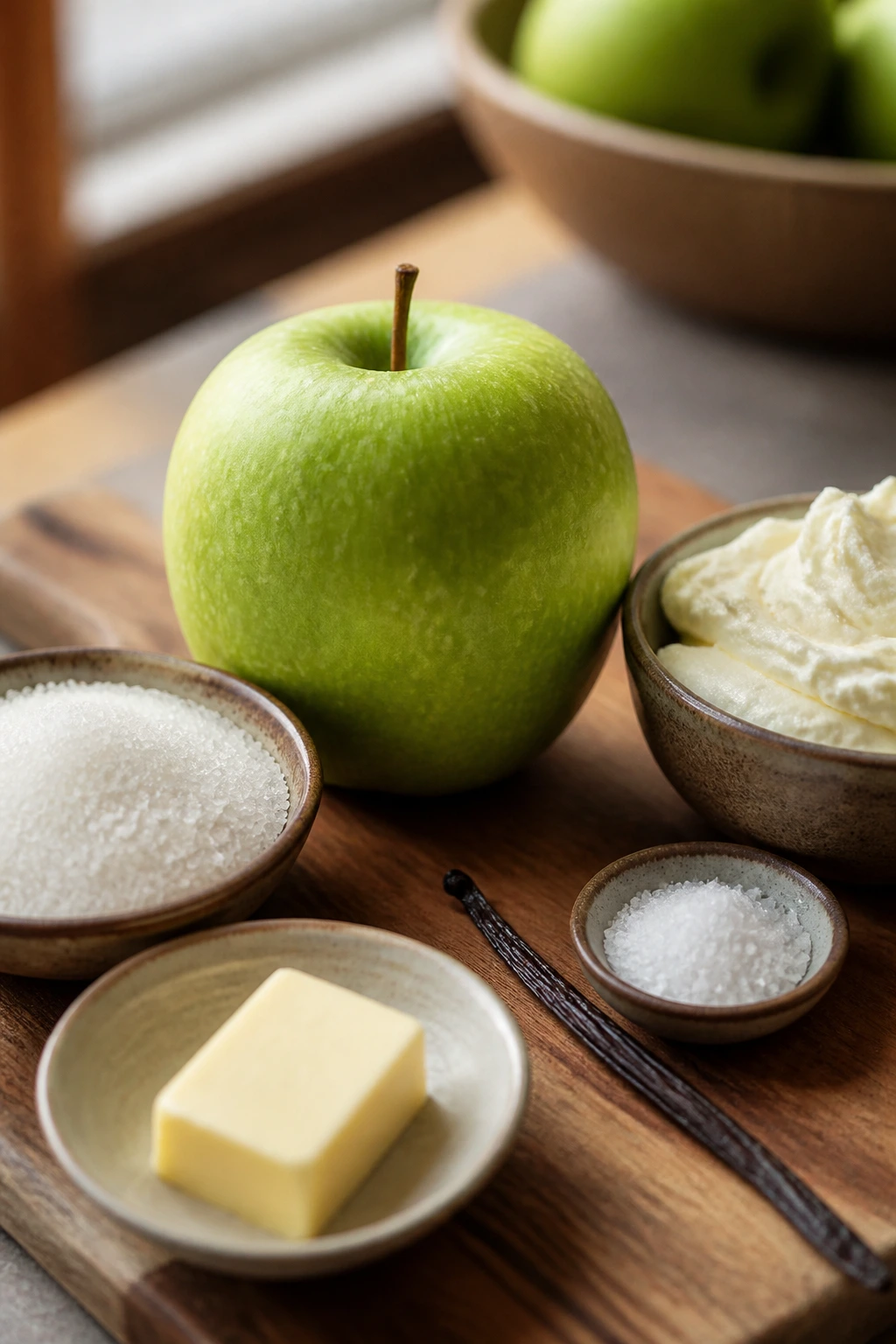
Apples
What to use: 8 medium tart, firm apples, ideally Granny Smith or another crisp variety with a tight skin.
Preparation: Wash them in warm water, scrub off any waxy film, dry them until the skins feel matte, and bring them to room temperature for a few minutes before dipping.
Substitutions: Pink Lady, Honeycrisp, Braeburn, and even Winesap work well if they’re firm and not mealy.
Tips: Wax is the quiet enemy here; if the candy doesn’t want to cling, the apple is usually slick, damp, or both.
Candy Shell
What to use: 2 cups granulated sugar, 1 cup light corn syrup, 1/2 cup water, 1/4 teaspoon fine salt, and optional red gel coloring for a classic candy-apple look.
Preparation: Measure everything before the heat goes on. Once the syrup boils, you do not want to be fumbling for a measuring spoon.
Substitutions: Glucose syrup can stand in for corn syrup if that’s what you have. I would not switch to brown sugar here; the flavor gets muddy and the color loses that hard candy shine.
Tips: The syrup must reach 300°F for a brittle shell. A few degrees short and the coating turns tacky; a few degrees too far and it starts tasting scorched.
Cream Cheese Frosting
What to use: 8 ounces cream cheese, 4 tablespoons unsalted butter, 1 3/4 cups powdered sugar, 1 teaspoon vanilla, 1/8 teaspoon fine salt, and a splash of heavy cream if needed.
Preparation: Let the cream cheese and butter soften fully so the frosting whips smooth instead of turning lumpy.
Substitutions: Mascarpone makes the frosting richer and softer; a dairy-free cream cheese and plant butter can work if you need a non-dairy version.
Tips: Keep the frosting thick. If it’s loose enough to drip off a spoon, it will slide off the apple shell before the first bite.
Assembly Extras
What to use: 8 wooden sticks, a silicone baking mat or greased parchment, and a piping bag with a small round or star tip.
Preparation: Line the tray before the syrup is ready, and set the piping bag up in advance so the finished candy shells can be decorated without delay.
Substitutions: A zip-top bag with a small corner snipped off does the piping job if you don’t own a pastry bag.
Tips: A silicone mat is more forgiving than parchment for sticky candy. It also peels away more cleanly once the shells set.
The Gear That Keeps Sugar Under Control
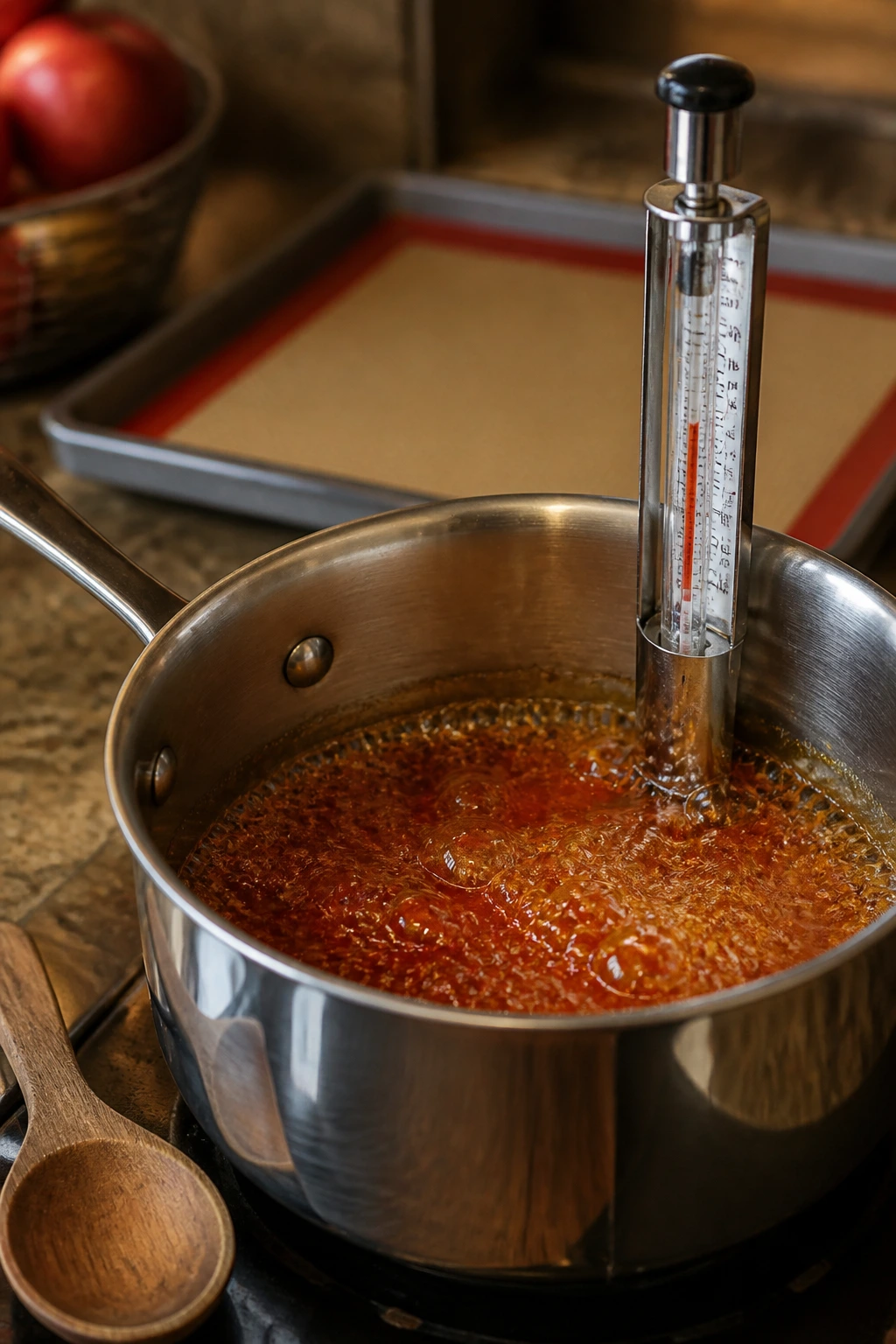
Candy apples look simple from across the room. They are not. Hot sugar gets fussy in a hurry, and the right tools make the difference between a glossy shell and a pan full of amber regret.
- Heavy-bottomed medium saucepan: This keeps the sugar from scorching in hot spots and gives you a steadier boil.
- Candy thermometer: Non-negotiable unless you enjoy guessing at the hard-crack stage.
- Silicone baking mat or lightly greased parchment: The apples need a nonstick landing zone.
- Piping bag with a small round or open star tip: This gives the frosting a clean finish instead of a blob.
- Wooden candy apple sticks or sturdy skewers: Thin toothpicks are not enough; the apples are heavier than they look.
- Pastry brush: Useful for washing down sugar crystals that climb the sides of the pan.
- Heatproof spatula or wooden spoon: Good for the first mix, then set it aside once the syrup starts boiling.
- Small bowl of warm water with a splash of vinegar: Handy for washing the apples and reducing surface wax before drying.
Why This Candy Apple Version Works Better Than Plain Glossy Shells
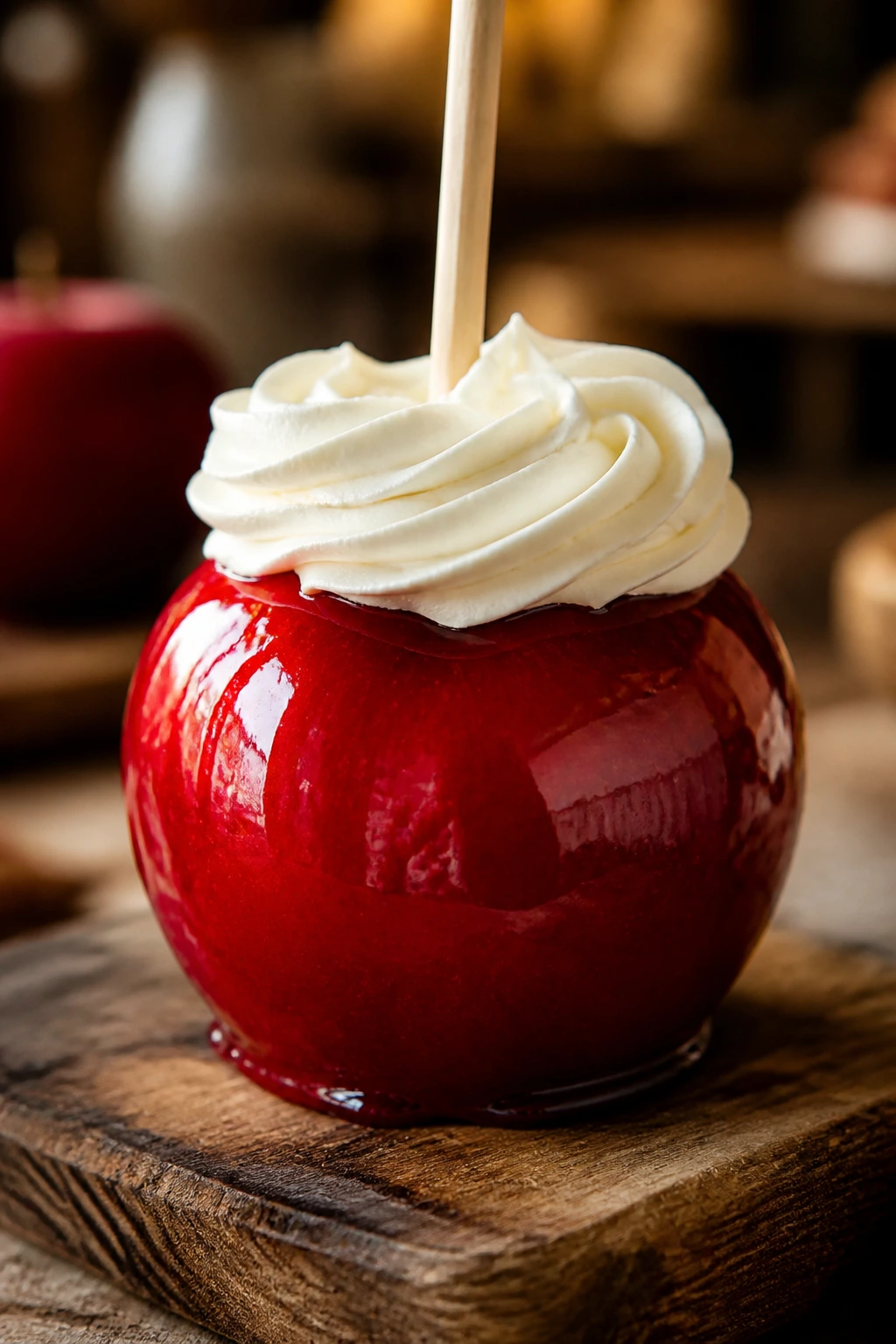
Classic candy apples have one big problem: after three bites, the sweetness starts to flatten everything else. The apple still snaps, the shell still crunches, but your palate gets buried under the same note over and over. Cream cheese frosting fixes that.
The frosting adds acid, salt, fat, and a softer texture all at once. That sounds fancy, but what it means on the plate is simple: every bite has a line of tension. The candy shell brings snap. The apple brings brightness. The frosting gives you a cool, tangy finish instead of another wave of sugar.
There’s also a practical reason this version feels more usable. A plain candy apple is fun for about thirty seconds and then you’re dealing with a single-note sugar bomb that’s hard to portion neatly. With the frosting piped on the top third or draped in a controlled spiral, the apple feels composed. It looks intentional, not just shiny.
And here’s the part I like best: the frosting makes the dessert feel like it belongs in a bakery case instead of at the bottom of a plastic carnival bag. Same basic idea. Better clothes.
Step-by-Step Candy Apple Method
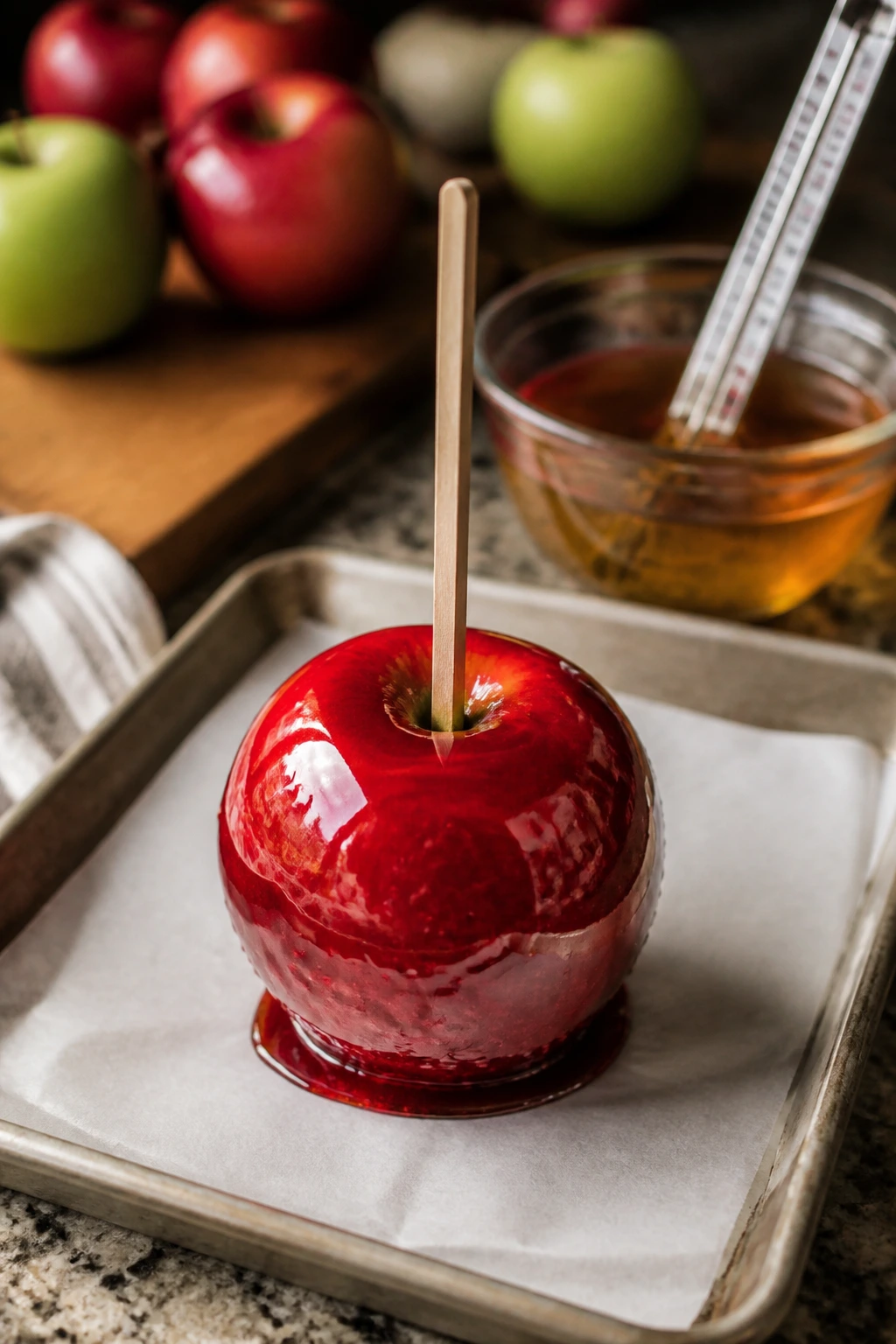
Prep the Apples and Tray
- Line a rimmed baking sheet with a silicone baking mat or lightly greased parchment paper. Set out the sticks, a clean dry towel, and a small bowl of warm water with a splash of white vinegar.
- Wash each apple in the warm vinegar water, rubbing away any waxy residue, then dry them thoroughly with the towel. Leave them out until the surfaces feel completely dry and matte. Any moisture left on the skin will make the candy slide.
- Push one stick about 1 1/2 to 2 inches into the stem end of each apple. Set the apples on the tray and let them sit at room temperature for 15 to 20 minutes while you make the syrup.
Cook the Candy Shell 4. In a heavy-bottomed medium saucepan, combine the sugar, corn syrup, water, and salt. Stir only until the mixture looks like wet sand and there are no dry sugar pockets left. 5. Place the pan over medium-high heat and clip on the candy thermometer. Once the mixture begins to boil, stop stirring. If crystals crawl up the sides, brush them down with a wet pastry brush. 6. Cook the syrup until it reaches 300°F (149°C). It should look clear at first, then start to show a faint amber tint at the edges. Do not walk away. The difference between glossy and burnt can be less than a minute. 7. Remove the pan from the heat. If using red coloring, stir it in quickly, then let the bubbles settle for 20 to 30 seconds so the surface is easier to read.
Dip and Set the Apples 8. Tilt the pan slightly and dip one apple at a time, rotating it to coat most of the surface. Lift it out, let the excess drip for 5 to 10 seconds, and scrape the bottom edge gently against the pan so you don’t get a thick puddle underneath. Set it on the prepared tray. 9. Repeat with the remaining apples. If the syrup starts to thicken before you finish, return the pan to very low heat for 10 to 15 seconds and keep going. 10. Leave the apples alone for 20 minutes, or until the candy shell is hard and glassy. The surface should feel dry, not tacky, when touched lightly.
Make the Frosting and Finish 11. Beat the cream cheese and butter together on medium speed for about 2 minutes, until smooth, creamy, and a little lighter in color. Scrape the bowl. 12. Add the powdered sugar, vanilla, and salt. Beat on low at first so the sugar doesn’t fly everywhere, then raise the speed to medium until the frosting is thick and pipeable. Add 1 teaspoon of heavy cream at a time only if the mixture feels too stiff to move through a piping tip. 13. Transfer the frosting to a piping bag fitted with a small round or open star tip, or use a zip-top bag with the corner snipped. Pipe a band, spiral, or crown around the top third of each cooled candy apple. Serve soon after decorating for the cleanest bite.
How to Serve Candy Apples Without Wrecking the Shell
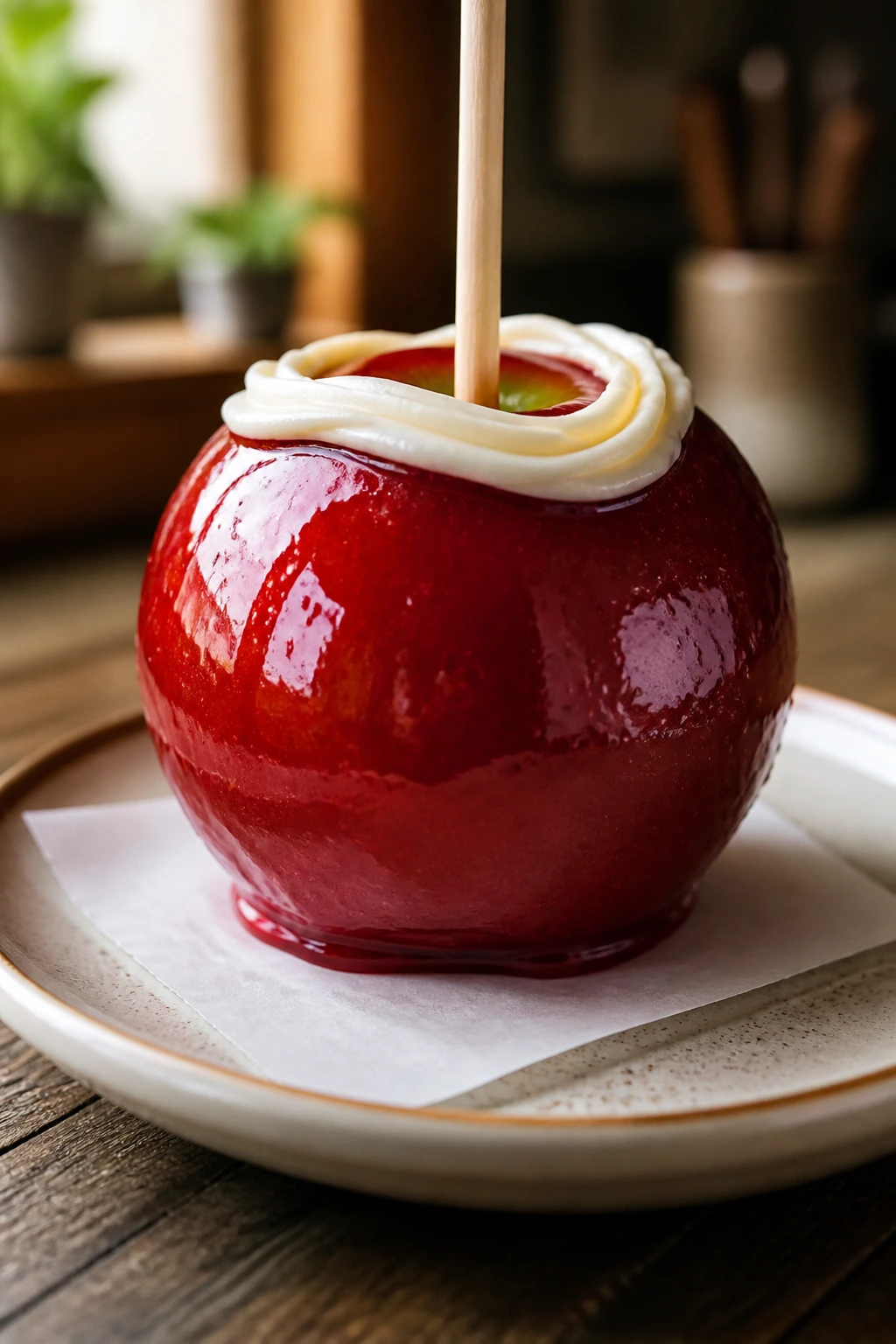
Presentation: Set each apple on a small parchment square or dessert plate so the candy doesn’t glue itself to the serving dish. A narrow piping ring near the stem keeps the red shell visible and makes the apple look finished, not overloaded.
Accompaniments: These are rich enough to stand alone, but a plain mug of coffee, a cold glass of whole milk, or sparkling apple cider makes a good landing spot after the sugar. If you’re serving a dessert board, keep the rest of it mild — shortbread, roasted nuts, and sliced pears are enough.
Portions: One apple is a full dessert for one person, especially if the coating is thick and the frosting is generous. If you want to stretch them for a group, cut the apples into wedges just before serving and hand out small dessert forks; that keeps the shell from shattering into lap-level chaos.
Beverage Pairing: Black tea with milk works better than sweet drinks because it cuts the frosting’s richness. Sparkling cider also fits nicely if you want the apple flavor to stay front and center.
Smart Tips for Better Gloss, Cleaner Bites, and Brighter Flavor
Temperature Control: The syrup needs to hit hard-crack territory, and that means using the thermometer instead of trusting your eyes. A pale amber syrup at 300°F gives you a glassy shell that snaps cleanly.
Dryness Is Everything: Apples that look dry can still carry a thin film of moisture or wax. Wipe them hard with a towel after the warm wash, then let them sit for a bit before dipping. If you rush this part, the candy will bead up and slide.
Frosting Texture: The frosting should be thick enough to hold a line. If you can drag a spoon through it and the trail stays open for a second, you’re in the right zone. If it slumps, chill the bowl for 10 minutes and beat again.
Pipe, Don’t Smother: A band or spiral of frosting works better than trying to frost the whole apple. The candy shell is slick, and thick coverage will drift downward as it softens. A clean ribbon looks better anyway.
Use the Right Apple: Granny Smith is still my favorite here because the sharpness cuts the sugar. Honeycrisp gives a juicier bite, but it can feel sweeter overall, so I’d pair it with a slightly tangier frosting if you choose it.
Work in a Dry Room if You Can: Candy shell and humidity are enemies. If the air feels damp, the surface can soften faster than you’d like. That’s one of those annoying facts that sounds minor until you watch a perfect shell go tacky on the tray.
Mistakes That Make Candy Apples Sloppy
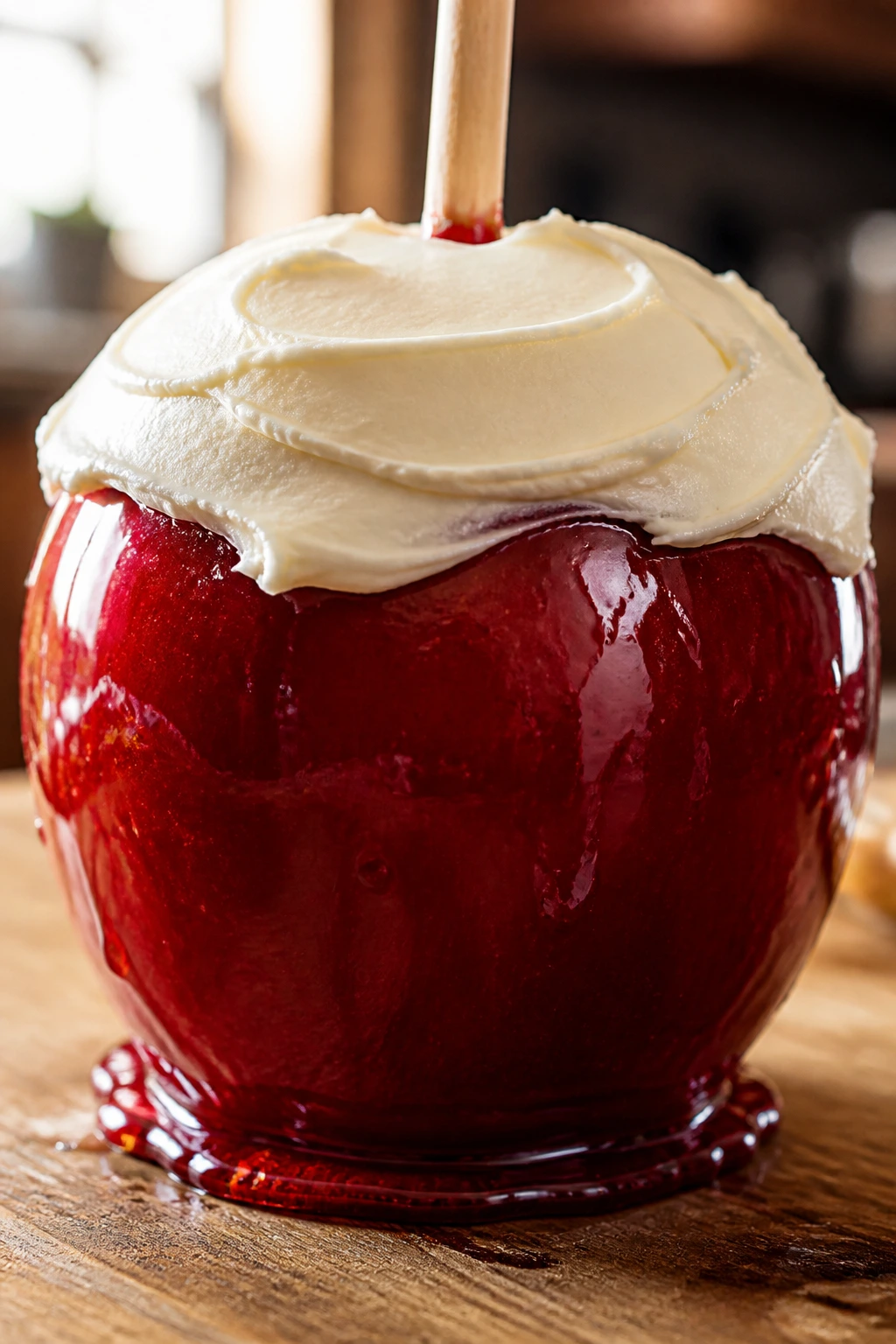
Leaving Wax on the Skin:
The shell slides or patches instead of clinging evenly. You’ll see candy pooling in some spots and bare apple showing through in others. Scrub the fruit in warm water, dry it well, and don’t skip this step just because the apples look clean from the bag.
Stirring the Syrup After It Starts Boiling:
The sugar can crystallize and turn grainy. Once the boil starts, leave the spoon alone and brush the sides of the pan if crystals creep upward. That one habit saves more candy than any fancy trick.
Pulling the Syrup Too Early:
If you stop before 300°F, the coating stays sticky or chewy. The apple may still look shiny, but the first bite will tell the truth. If you don’t have a thermometer, you’re gambling with the texture.
Dipping Apples That Are Cold and Wet:
Condensation forms the moment hot sugar hits the surface, and the shell won’t stick right. Room-temperature, dry apples behave better. If they came from the fridge, let them sit out until the chill is gone and the skins are bone dry.
Piping Frosting Too Soon:
If the candy shell hasn’t set, the frosting melts and slides. Give the apples their full 20 minutes before decorating. The frosting should sit on top like a crown, not pool at the base.
Refrigerating Finished Apples for Too Long:
The fridge solves the food-safety question for the frosting, but it also makes the shell sweat. If you need to hold them, keep the assembled apples short-term and expect the candy to soften a bit. For the cleanest texture, store the frosting separately and pipe it on near serving time.
Variations That Still Make Sense
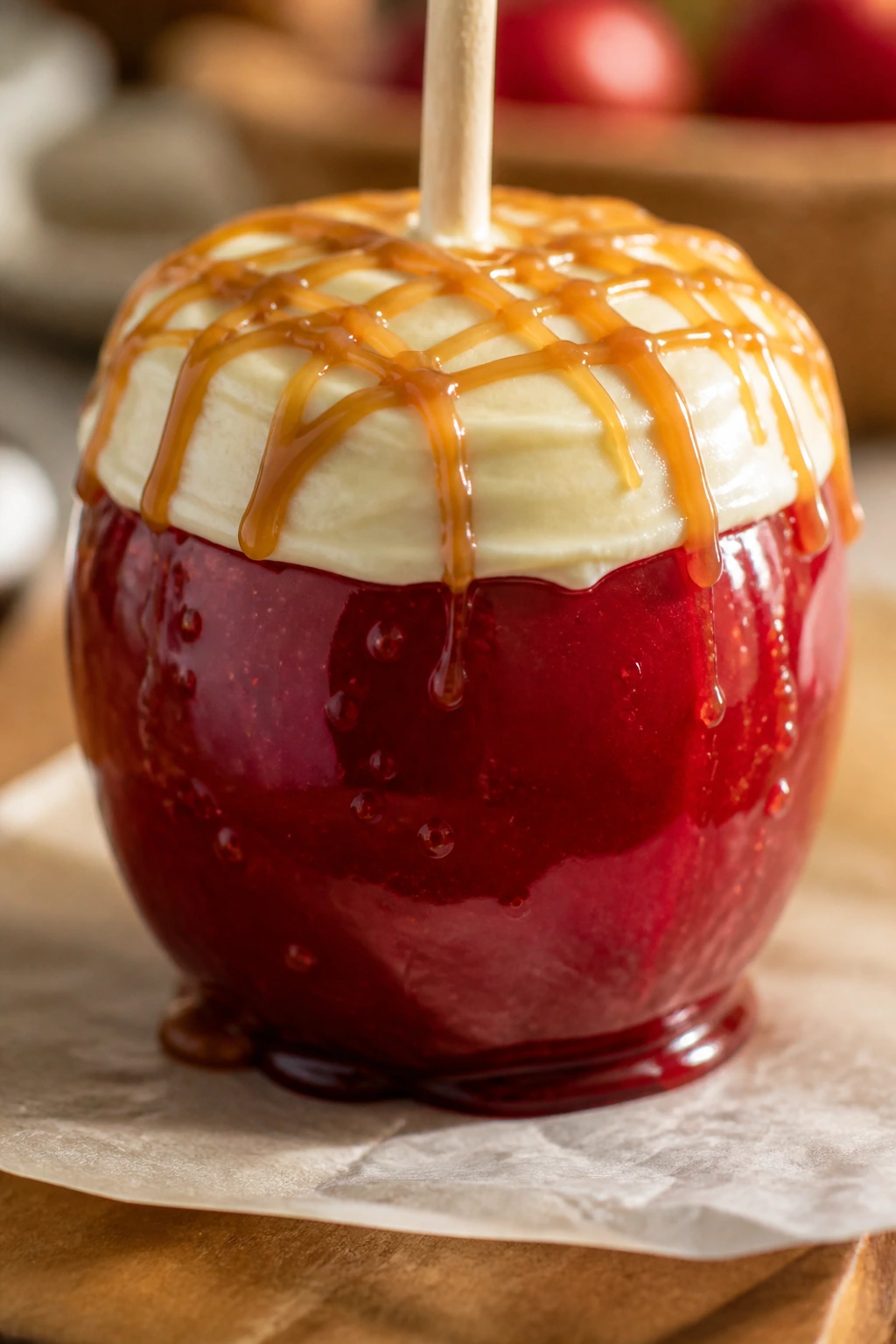
Salted Caramel Crown
Pipe the cream cheese frosting on the upper third of the apple, then drizzle a spoonful of cooled salted caramel over the top. The caramel adds a burnt-sugar note that plays well with the tang of the frosting. Keep the drizzle thin or you’ll bury the shell under another sticky layer.
Maple-Vanilla Orchard Apples
Add 1 tablespoon maple syrup and 1/2 teaspoon maple extract to the frosting, then use Pink Lady or Honeycrisp apples for a softer, rounder fruit flavor. This version tastes less sharp and a little more autumn-bakery than the original. It’s the one I’d make if I wanted the dessert to feel warmer without adding cinnamon everywhere.
Cinnamon-Whipped Frosting
Stir 1/2 teaspoon ground cinnamon and a tiny pinch of nutmeg into the frosting. The spice gives the cream cheese a pie-filling edge, which is useful if you want the apples to feel closer to a baked dessert. Don’t go heavy on the spice; the candy shell still needs room to shine.
Dairy-Free Finish
Use dairy-free cream cheese and a plant butter with a firm texture, then beat in the powdered sugar and vanilla the same way. The frosting won’t taste identical, but it will still pipe well if you keep it thick. This is the version to make when you want the structure of the dessert without the dairy.
Dark Chocolate Accent
After the frosting sets for 5 minutes, drizzle a little melted dark chocolate in thin stripes over the top. Dark chocolate sharpens the sweetness and gives the apple a slightly more grown-up finish. A little goes a long way here; the chocolate should accent, not take over.
Keeping Them Crisp: Make-Ahead, Storage, and Leftovers
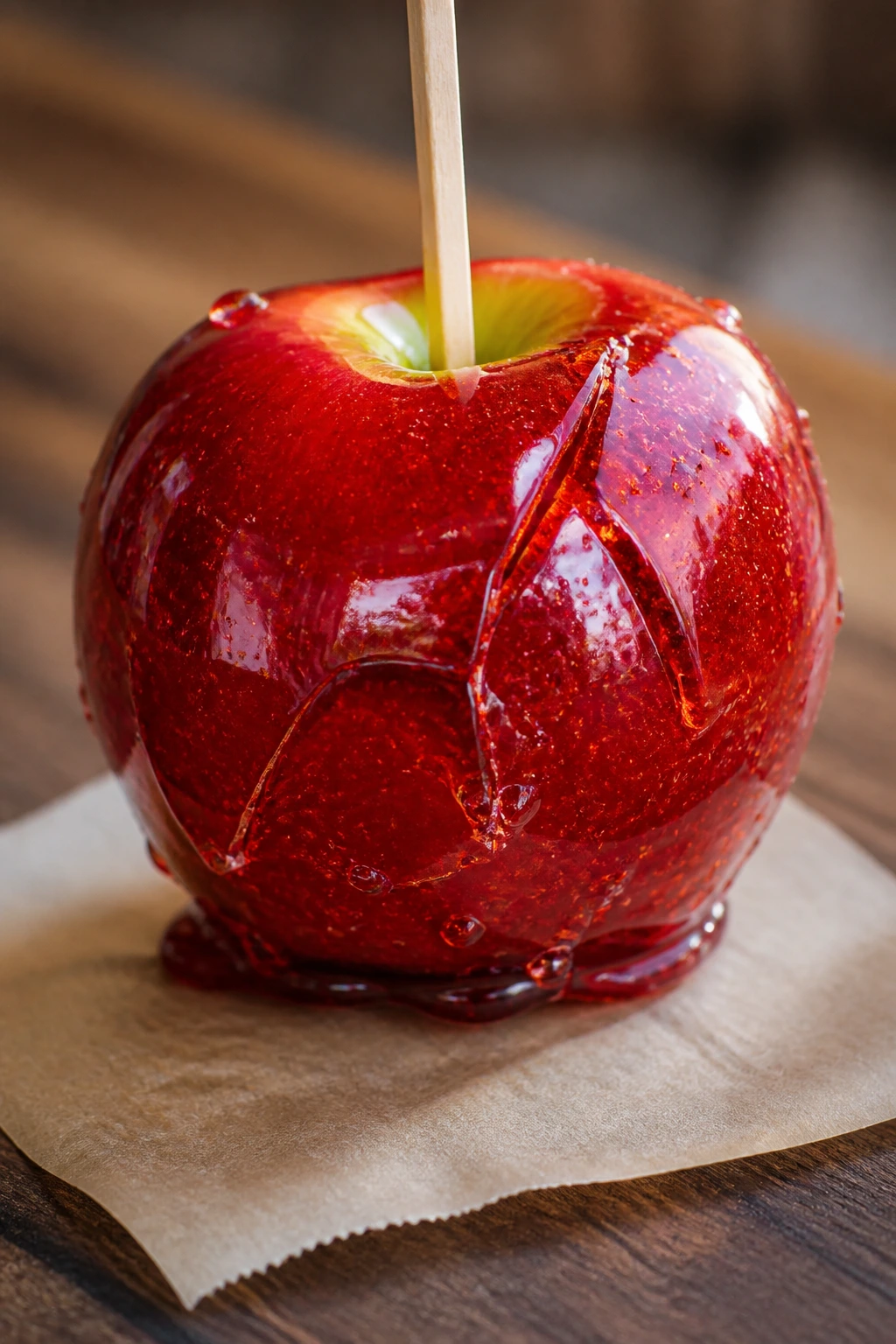
Candy apples are not a dessert that likes to wait around. The shell is at its best while it still feels sharp and brittle, and the frosting behaves best before humidity gets a vote. That means the smart move is to separate the jobs: make the candy shell ahead if needed, and pipe the frosting close to serving time.
The frosting can be made up to 5 days ahead and kept in an airtight container in the refrigerator. Press a piece of plastic wrap directly onto the surface so it doesn’t dry out. Before using it, let it sit until softened slightly, then rewhip for 20 to 30 seconds so it becomes pipeable again.
The plain candy-coated apples can sit in a cool, dry room for about 8 to 12 hours before they start losing their sharp texture. They should be arranged in a single layer on parchment or a silicone mat, uncovered or very loosely tented. Do not wrap them tightly; trapped moisture softens the shell faster than time does.
Once the frosting is piped on, the apples are best served the same day. If you need to hold them, keep them in the refrigerator for up to 24 hours, but expect the candy shell to soften and sweat a little. That’s the tradeoff. There is no real reheating method here — warming candy apples ruins the shell and melts the frosting, so leave heat out of the picture entirely.
Freeze them? No. The apples go mealy, the frosting breaks, and the candy shell loses the crisp edge that makes the whole dessert work.
Questions People Ask Before Making Candy Apples
Why is my candy coating sliding off the apple?
Usually it’s wax, moisture, or both. Scrub the apples in warm water, dry them hard, and let them sit until the skins aren’t cold and slick. If the sugar is at the right temperature and the apple is properly prepped, the coating should cling quickly.
Can I make these without corn syrup?
You can, but the syrup is less predictable without it. Corn syrup helps keep the sugar from crystallizing and makes the shell smoother. If you swap it out, expect a little more risk of graininess.
Do I have to use Granny Smith apples?
No, but you do want a firm, tart apple with a skin that holds up under pressure. Pink Lady and Honeycrisp are both solid choices. Softer apples can taste fine, but they turn mushy too fast and fight the candy shell.
Can I use store-bought cream cheese frosting?
Yes, if it’s thick enough to pipe. Store-bought frosting is often looser than homemade, so chill it first and see whether it holds a line on a spoon. If it slumps, it will slide on the apple.
How far ahead can I make candy apples for a party?
Make the frosting a few days ahead if you want, but make the candy-coated apples the same day whenever possible. If you need to assemble them earlier, keep them in a cool, dry place and pipe the frosting as close to serving time as you can manage.
What if my candy gets too thick before I finish dipping?
Set the pan back on very low heat for 10 to 15 seconds, just long enough to loosen it. Don’t let it sit on high heat or the sugar will darken and the flavor will turn bitter.
Can I pipe the frosting around the whole apple instead of the top?
Not if you want the shell to stay neat. Full coverage can weigh down the candy coating and make the apple harder to hold. A crown, band, or spiral gives you the flavor without the mess.
A Dessert With a Real Crack
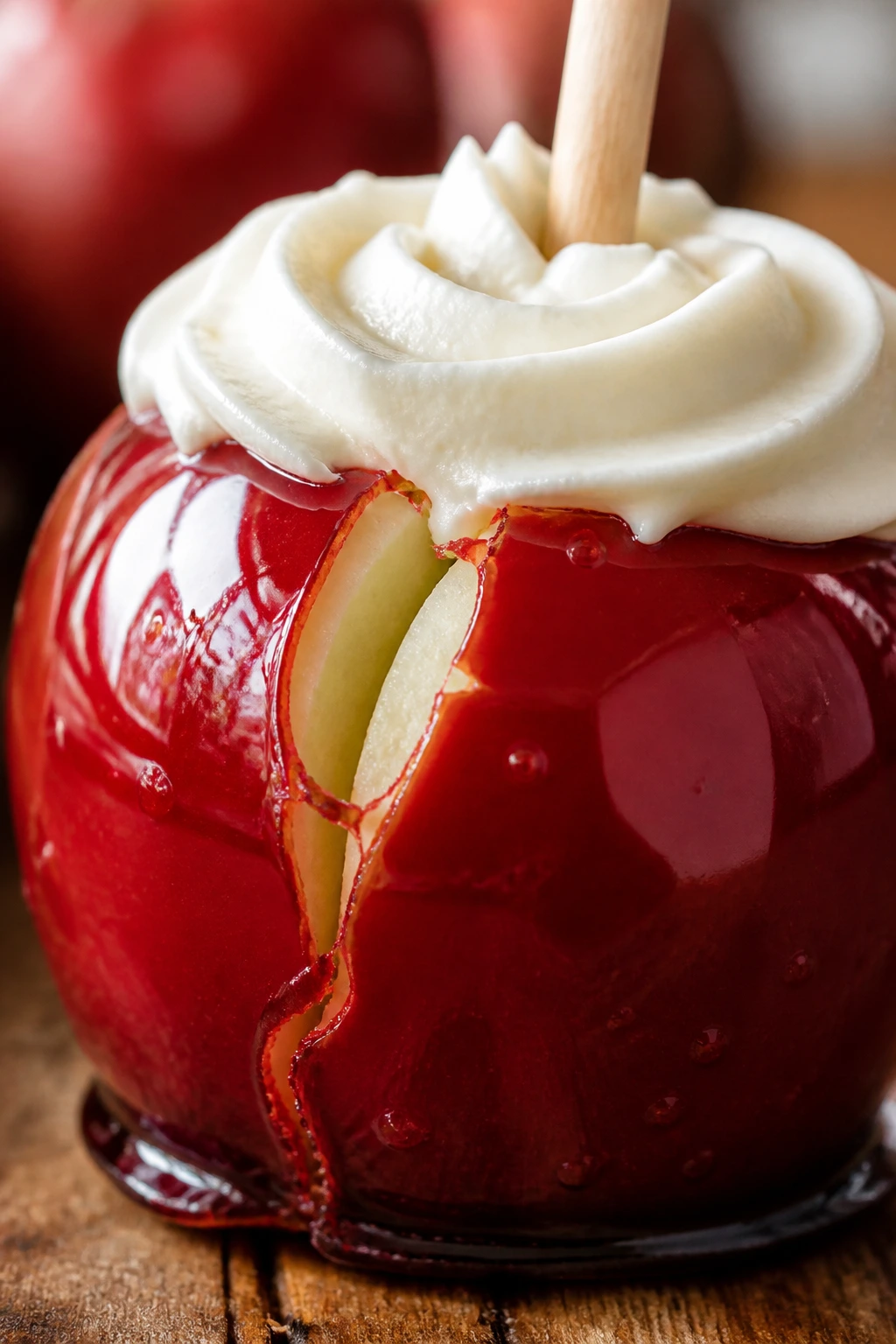
There’s a reason candy apples stick in memory: they’re all contrast. Hard shell, juicy fruit, sticky fingertips, clean snap. Add cream cheese frosting and the whole thing gets smarter without losing the fun. The sharpness of the apple and the tang of the frosting keep the sugar from flattening out after two bites, which is what happens with plain candy apples more often than people admit.
Treat the shell like glass, keep the frosting thick, and don’t rush the drying time. That’s the whole game. Get those details right and you end up with a dessert that looks playful, tastes balanced, and disappears fast once the plate hits the table.
Rich Candy Apples with Cream Cheese Frosting — Recipe Card
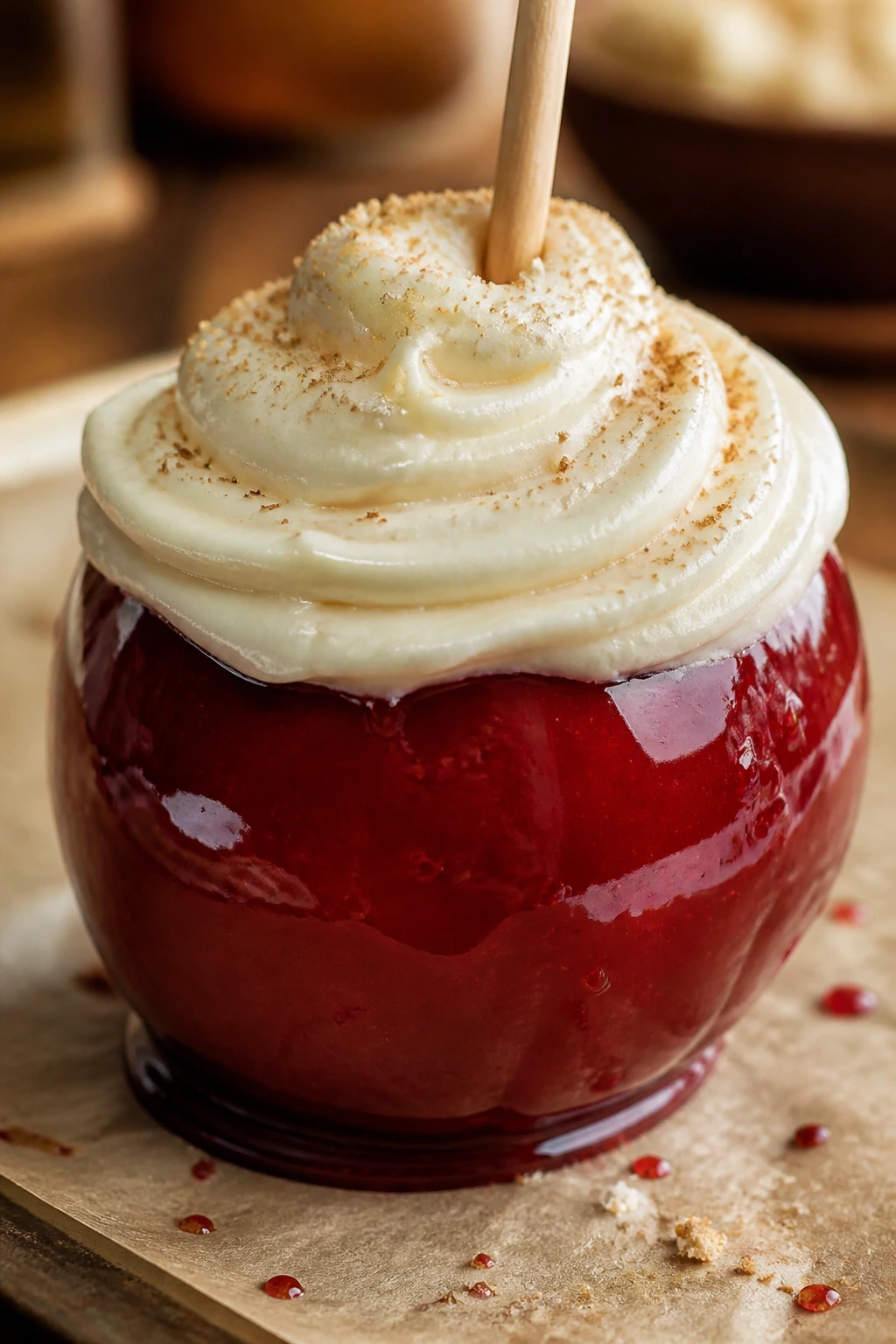
Recipe Name: Rich Candy Apples with Cream Cheese Frosting
Description: Crisp tart apples coated in a glossy hard candy shell and finished with a thick cream cheese frosting crown. The candy snaps cleanly, while the frosting adds a tangy, buttery finish that keeps the dessert from tasting one-note.
Prep Time: 25 minutes
Cook Time: 20 minutes
Total Time: 45 minutes active, plus 20 minutes for the shell to set
Course: Dessert
Cuisine: American
Servings: 8 servings
Calories: About 430 kcal per apple
Ingredients
For the Candy Shell:
- 8 medium tart apples, such as Granny Smith or Pink Lady, scrubbed and dried
- 8 wooden candy apple sticks or sturdy skewers
- 2 cups granulated sugar
- 1 cup light corn syrup
- 1/2 cup water
- 1/4 teaspoon fine salt
- 1/2 teaspoon red gel food coloring, optional
For the Cream Cheese Frosting:
- 8 ounces cream cheese, softened to room temperature
- 4 tablespoons unsalted butter, softened
- 1 3/4 cups powdered sugar, sifted
- 1 teaspoon pure vanilla extract
- 1/8 teaspoon fine salt
- 1 to 2 tablespoons heavy cream, only if needed for piping
Instructions
- Line a baking sheet with a silicone mat or lightly greased parchment. Wash and dry the apples, then insert one stick into each stem end.
- Combine the sugar, corn syrup, water, and salt in a heavy saucepan. Stir once, then bring to a boil over medium-high heat without stirring again.
- Cook the syrup to 300°F (149°C), brushing down any crystals on the pan sides as needed.
- Remove from the heat, stir in the red coloring if using, and let the bubbles settle briefly.
- Dip each apple, twirling to coat, then set on the prepared tray. Let the candy shell harden for about 20 minutes.
- Beat the cream cheese and butter until smooth, then add powdered sugar, vanilla, and salt. Beat until thick and pipeable, adding a little heavy cream only if needed.
- Pipe a band, spiral, or crown of frosting around the top third of each cooled candy apple.
- Serve the apples soon after decorating for the cleanest texture and the crispest shell.
Notes: Keep the frosting thick; a loose frosting will slide. Assemble close to serving time, and avoid refrigerating the finished apples for long periods if you want the shell to stay crisp.