



Blue cheese in a cake sounds like a dare until the first forkful lands. The crumb is tender, the frosting is cool and tangy, and the blue cheese doesn’t shout; it comes through in tiny salty bursts at the edges of the crumble.
That balance is the whole trick. Use a mild blue — Gorgonzola dolce or a gentle Danish blue works far better than a sharp, dry wedge — and keep the bits cold enough that they stay craggy instead of melting into a greasy smear.
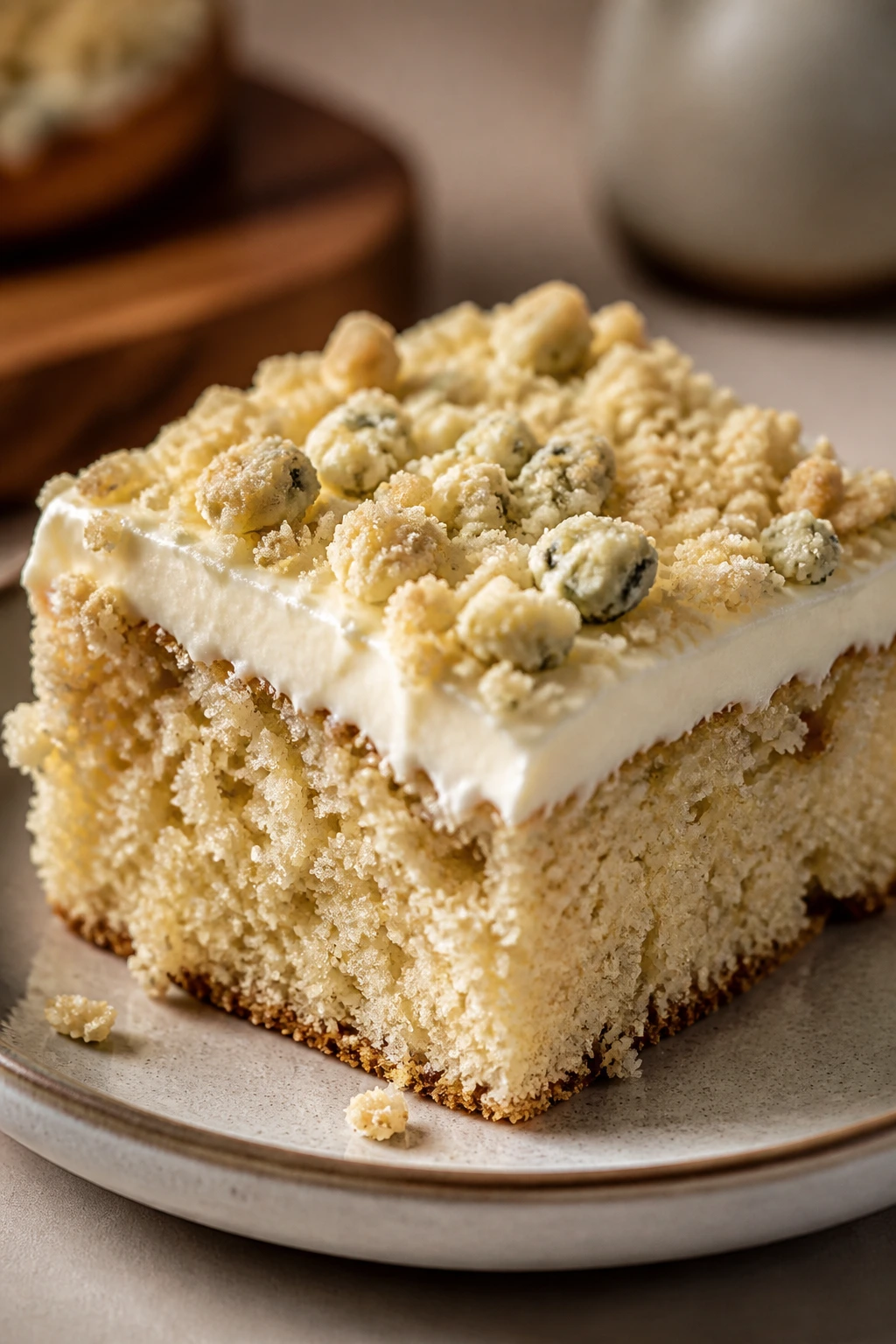
This fluffy blue cheese crumble with cream cheese frosting sits halfway between coffee cake and a cheese-board dessert, which is exactly why it works. You get vanilla, butter, and a bronzed streusel top; then the frosting steps in with that familiar cream-cheese tang and keeps the blue cheese from running off the rails.
Why You’ll Love This Cake
-
Sweet-salty contrast: Each slice gives you a soft vanilla cake base, then a salty, buttery crumble that tastes more earthy than loud.
-
Tender crumb: Cake flour, sour cream, and buttermilk keep the crumb fine and plush, even after a night in the fridge.
-
Controlled blue cheese flavor: The cheese lives in the crumble, not the batter, so you get little pockets of character instead of a cake that tastes like it wandered onto the wrong menu.
-
Easy to portion: A 9×13 pan gives you neat squares, which matters here because this is a rich dessert and you probably want smaller pieces than you’d cut from a layer cake.
-
Fruit-friendly: Pears, figs, raspberries, and even a spoonful of cherry jam make the blue cheese taste smoother and more rounded.
-
Make-ahead friendly: The crumble can be mixed in advance, the cake can be baked a day early, and the frosting holds up well if you beat it again before spreading.
Yield: 12 servings
Prep Time: 30 minutes
Cook Time: 35 to 40 minutes
Total Time: 1 hour 10 minutes, plus 1 hour cooling
Difficulty: Intermediate — the method itself is straightforward, but the crumble, frosting, and bake all benefit from attention to temperature.
Chill/Rest Time: 10 minutes for the crumble, 1 hour for the cake to cool fully
Best Served: At cool room temperature, after the frosting has set and the crumble still has a little bite
Why Blue Cheese Belongs in Dessert
Blue cheese in baking is not a gimmick when it’s handled with restraint. The reason it works here is the same reason salt belongs in caramel: a small amount changes the way sweetness tastes. Without it, the frosting would lean too flat and the cake would read as plain vanilla. With it, the whole slice gets this faint savory edge that makes people take a second bite before they can name what they’re tasting.
The crumble is the right place for blue cheese because heat softens the cheese just enough to blur the edges, but not so much that it disappears. You want those little pockets — some buttery, some salty, some crisp where the brown sugar caramelizes around the cheese. In the batter, blue cheese would be messy and hard to control. In a crumble, it behaves.
There’s also a texture reason. Blue cheese wants contrast. Put it next to something dry and sandy, and it feels sharper. Put it next to something plush and sweet, and it reads almost creamy. That is why the cream cheese frosting matters so much here. It doesn’t hide the blue cheese; it buffers it. The frosting gives your palate a landing pad, which lets the crumble stay interesting without becoming aggressive.
If you’ve had blue cheese with pears, figs, honey, or walnuts, the logic will make sense immediately. This cake borrows that pairing language and turns it into something sliceable. It tastes like a bakery cake that spent some time hanging out with a cheese board, and I mean that as a compliment.
What Goes Into the Pan
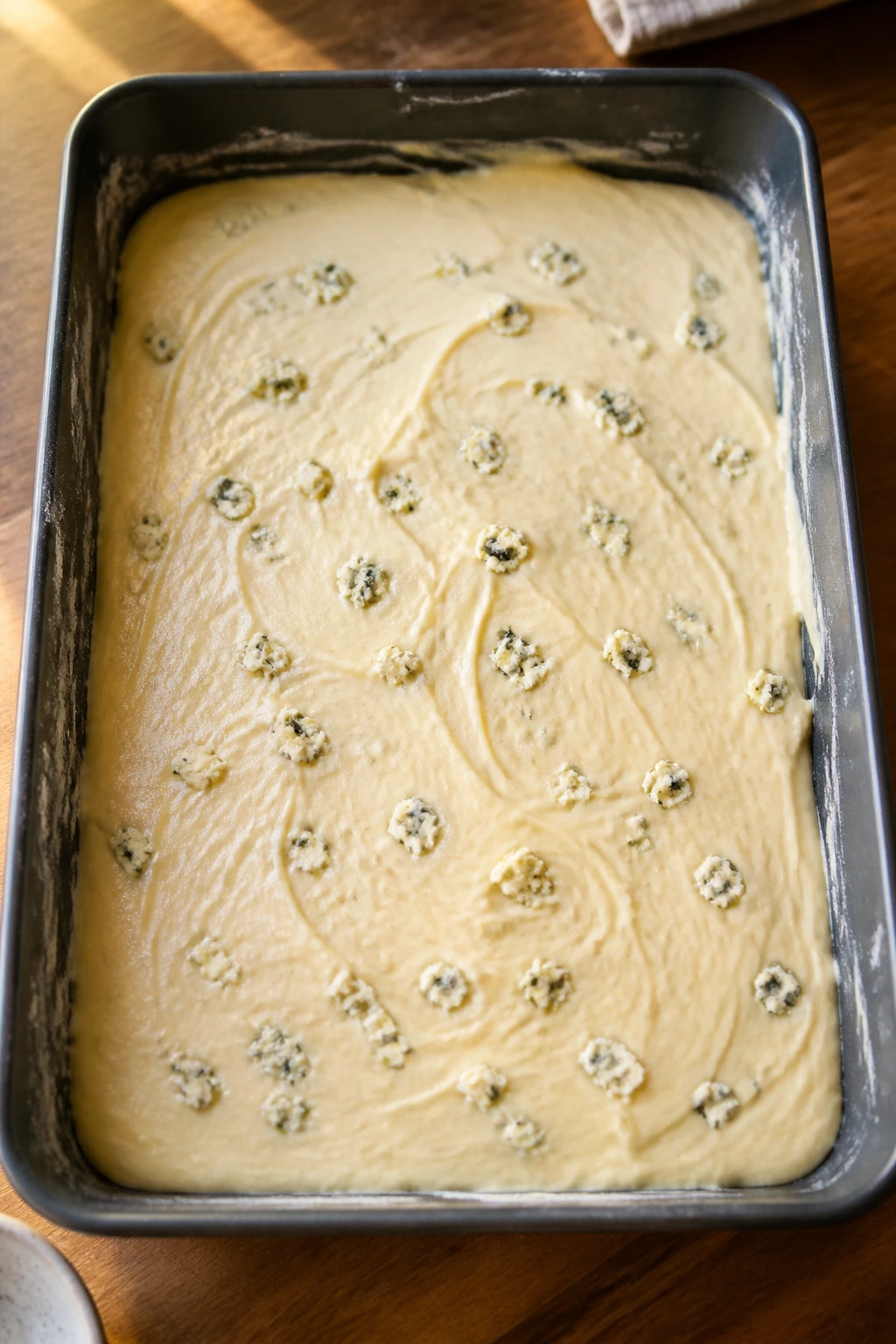
The ingredient list is short enough to keep in your head while you bake, but each part has a job. Keep the dairy at room temperature for the cake, keep the blue cheese cold for the crumble, and don’t skimp on the cooling time before frosting.
For the Cake:
- 2 3/4 cups cake flour, spooned and leveled
- 1 tablespoon baking powder
- 1/2 teaspoon baking soda
- 1/2 teaspoon fine sea salt
- 1 cup (2 sticks) unsalted butter, softened to room temperature
- 1 3/4 cups granulated sugar
- 4 large eggs, room temperature
- 2 teaspoons vanilla extract
- 1/2 cup sour cream, room temperature
- 1/2 cup buttermilk, room temperature
For the Blue Cheese Crumble:
- 1 cup all-purpose flour
- 1/2 cup packed light brown sugar
- 1/4 cup granulated sugar
- 6 tablespoons unsalted butter, cold and cubed
- 4 ounces mild blue cheese, chilled and crumbled very fine
- 1/2 cup toasted walnuts, chopped (optional)
For the Cream Cheese Frosting:
- 8 ounces cream cheese, softened
- 1/2 cup unsalted butter, softened
- 3 cups powdered sugar, sifted
- 1 teaspoon vanilla extract
- 1 to 2 tablespoons heavy cream
- Pinch of fine sea salt
Why Each Ingredient Pulls Its Weight
Cake Base
What to use: 2 3/4 cups cake flour, 1 tablespoon baking powder, 1/2 teaspoon baking soda, 1/2 teaspoon salt, 1 cup butter, 1 3/4 cups sugar, 4 eggs, 2 teaspoons vanilla, 1/2 cup sour cream, and 1/2 cup buttermilk.
Preparation: Let the butter, eggs, sour cream, and buttermilk sit out long enough to lose the chill. Cold dairy can make the batter look curdled, and while that’s not fatal, it makes it harder to get a smooth, even crumb.
Substitutions: If cake flour is hard to find, use 2 1/2 cups all-purpose flour plus 1/4 cup cornstarch. You can also swap the sour cream for full-fat plain Greek yogurt if that’s what’s in the fridge.
Tips: Cake flour is doing real work here. It keeps the crumb soft enough to support the crumble without turning the whole thing into a heavy brunch brick.
Blue Cheese Crumble
What to use: 1 cup all-purpose flour, 1/2 cup brown sugar, 1/4 cup granulated sugar, 6 tablespoons cold butter, 4 ounces mild blue cheese, and 1/2 cup toasted walnuts if you want the extra bite.
Preparation: Keep the blue cheese cold until the last minute, then crumble it by hand into tiny pieces. If it’s sticky or soft, pat it dry on paper towel first; wet cheese tends to smear into the butter instead of staying in pebbly clusters.
Substitutions: Gorgonzola dolce, Danish blue, or a gentle Stilton all work. If you want less funk, use 3 ounces blue cheese and replace the remaining ounce with extra butter and flour in the crumble.
Tips: Do not use an aggressively sharp blue unless you want the cake to taste like it wandered out of a cheesemonger’s back room. Mild is the move.
Cream Cheese Frosting
What to use: 8 ounces cream cheese, 1/2 cup butter, 3 cups powdered sugar, 1 teaspoon vanilla, 1 to 2 tablespoons heavy cream, and a pinch of salt.
Preparation: Soften the cream cheese and butter until they yield to a finger press, but don’t let them get oily. If they’re too warm, the frosting gets loose and loses that clean, spreadable texture.
Substitutions: Mascarpone can replace up to half the cream cheese if you want a sweeter, less tangy finish. You can also use milk instead of cream, though the frosting will be a touch softer.
Tips: Sift the powdered sugar if it’s clumpy. One tiny lump doesn’t matter. Ten of them will leave little pale pockets in the frosting, and nobody wants that.
The Tools That Make the Batter Behave
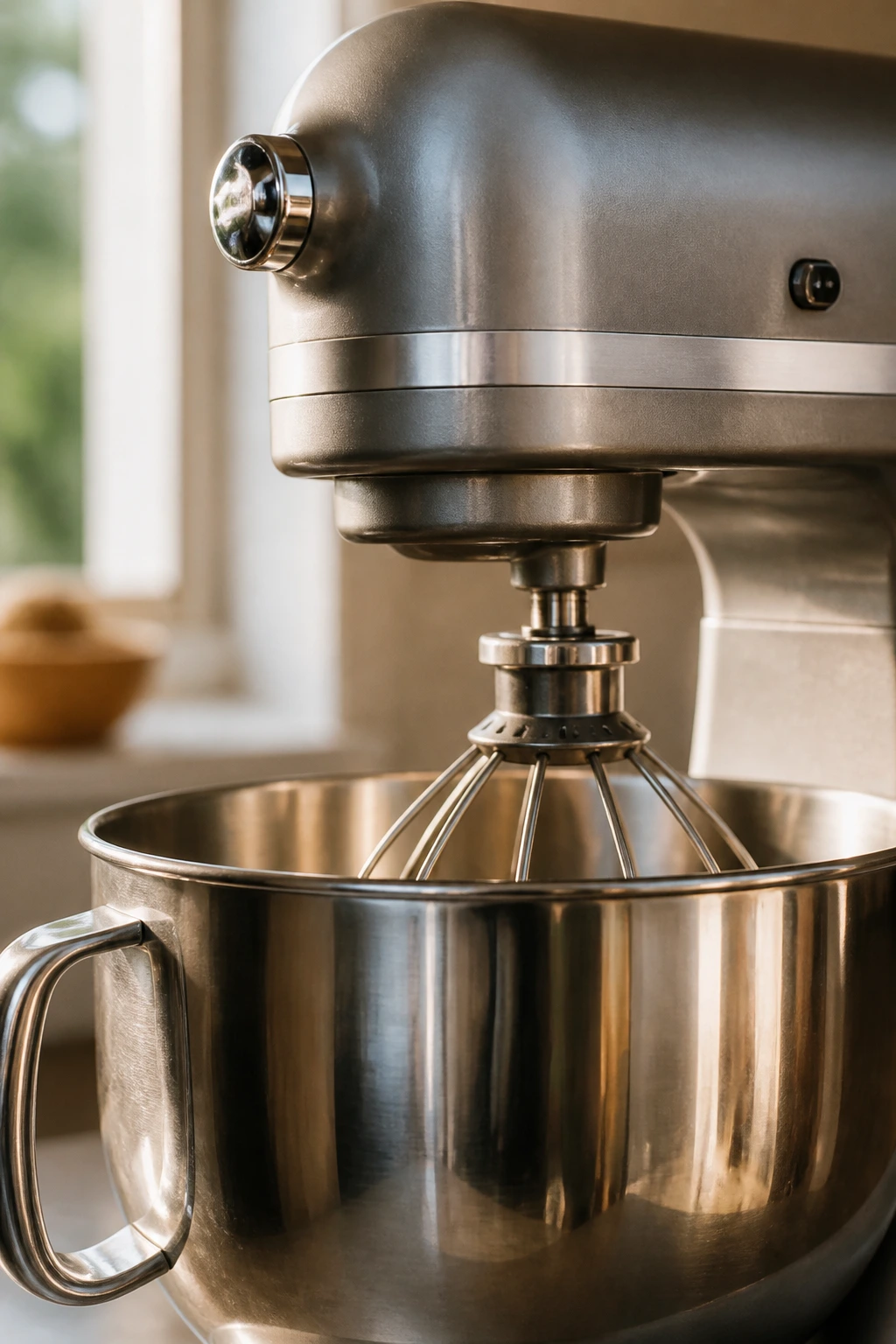
A few pieces of equipment keep this cake from becoming fussy. Nothing here is exotic, and most of it lives in a normal kitchen drawer.
-
9×13-inch baking pan — A metal pan gives the best browning on the bottom and edges. Glass works, but it usually needs a few extra minutes.
-
Parchment paper — Leave an overhang on the long sides so you can lift the cooled cake out cleanly.
-
Stand mixer or hand mixer — You need enough power to cream the butter and sugar until pale and fluffy. A whisk alone will make you earn this dessert.
-
Large mixing bowl — Useful for the crumble, especially if you’re rubbing the butter in by hand.
-
Medium bowl — For the dry cake ingredients, so you can keep the batter from turning overmixed.
-
Pastry cutter or your fingertips — Either works for the crumble. Fingers give you better control; a pastry cutter is cleaner if you want to keep the blue cheese less sticky.
-
Offset spatula — The easiest way to spread the frosting without tearing the crumb.
-
Wire cooling rack — The cake needs air underneath it or steam will gather under the pan and soften the bottom.
-
Fine sieve or sifter — Optional, but handy for the powdered sugar if you want the frosting smoother.
Mix the Batter and Build the Crumble
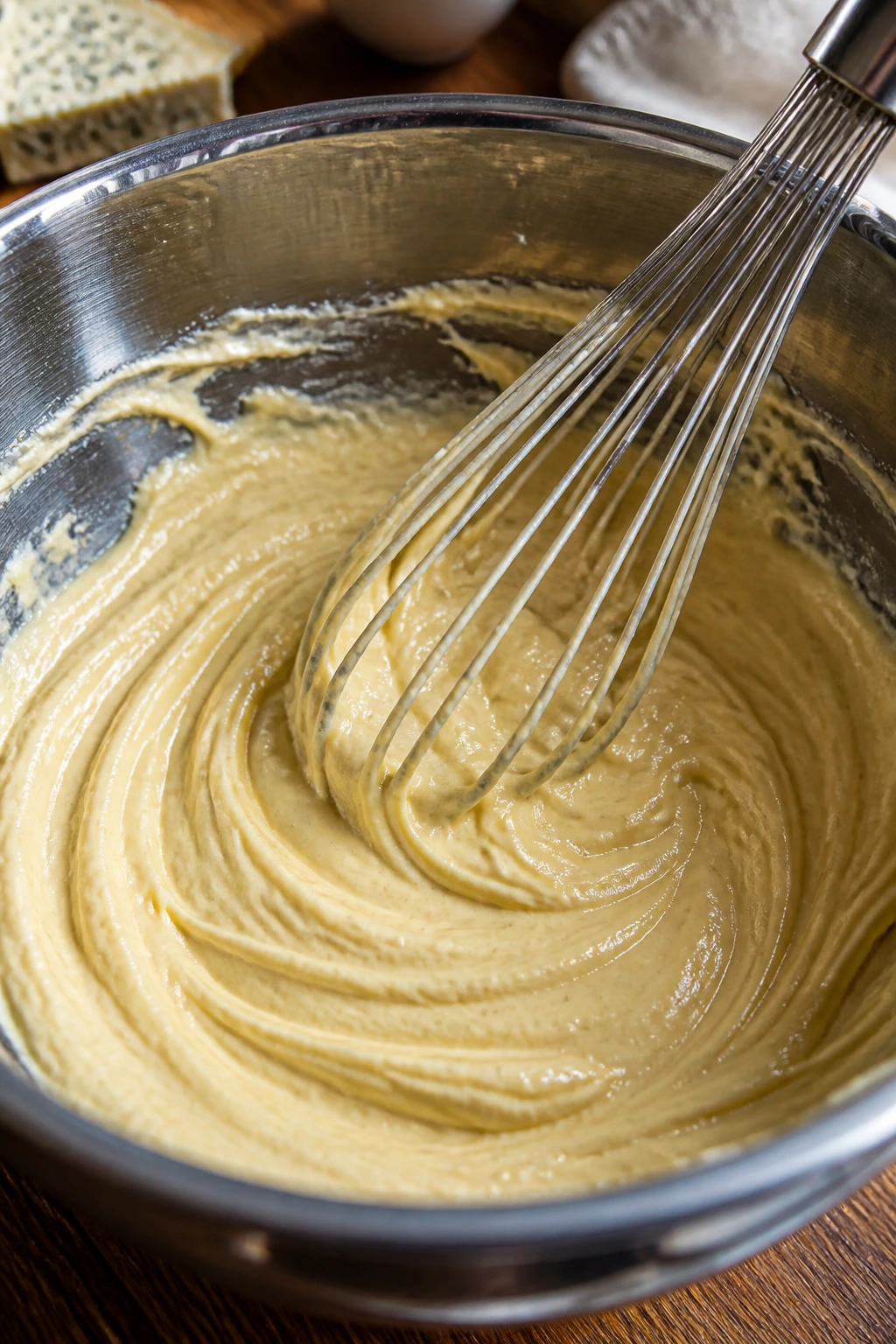
The cake batter and the crumble both depend on temperature, but in opposite directions. The batter wants softness and room temp. The crumble wants cold butter and cold cheese. Keep those two moods separate, and the whole thing goes more smoothly.
Prepare the Pan and Preheat
-
Preheat the oven to 350°F (175°C) and position a rack in the center.
-
Grease a 9×13-inch baking pan with butter, then line it with parchment paper, leaving a 2-inch overhang on the long sides.
Make the Blue Cheese Crumble
-
In a large bowl, whisk together 1 cup flour, 1/2 cup brown sugar, and 1/4 cup granulated sugar.
-
Add the 6 tablespoons cold cubed butter and rub it into the dry mixture with your fingertips or a pastry cutter until the crumbs look like damp sand with a few pea-size clumps.
-
Fold in the 4 ounces very cold crumbled blue cheese and the 1/2 cup chopped toasted walnuts, if using. The mixture should look rough and pebbly, not smooth. Do not overwork it — if the butter melts, the crumble will bake into a paste instead of crisping. Chill the bowl while you make the batter.
Mix the Cake Batter
-
In a medium bowl, whisk together the cake flour, baking powder, baking soda, and salt.
-
In a separate large bowl, beat the butter and sugar on medium-high speed for 3 to 4 minutes, until pale, fluffy, and visibly increased in volume.
-
Add the eggs one at a time, beating for about 20 seconds after each addition and scraping down the bowl once halfway through. Beat in the vanilla.
-
Reduce the mixer to low. Add the dry ingredients in three additions, alternating with the sour cream and buttermilk in two additions, beginning and ending with the dry ingredients. Mix only until the last streak of flour disappears. Stop early rather than late — overmixing tightens the crumb fast.
-
Scrape the batter into the prepared pan and spread it into an even layer with an offset spatula.
Bake, Cool, and Frost the Cake
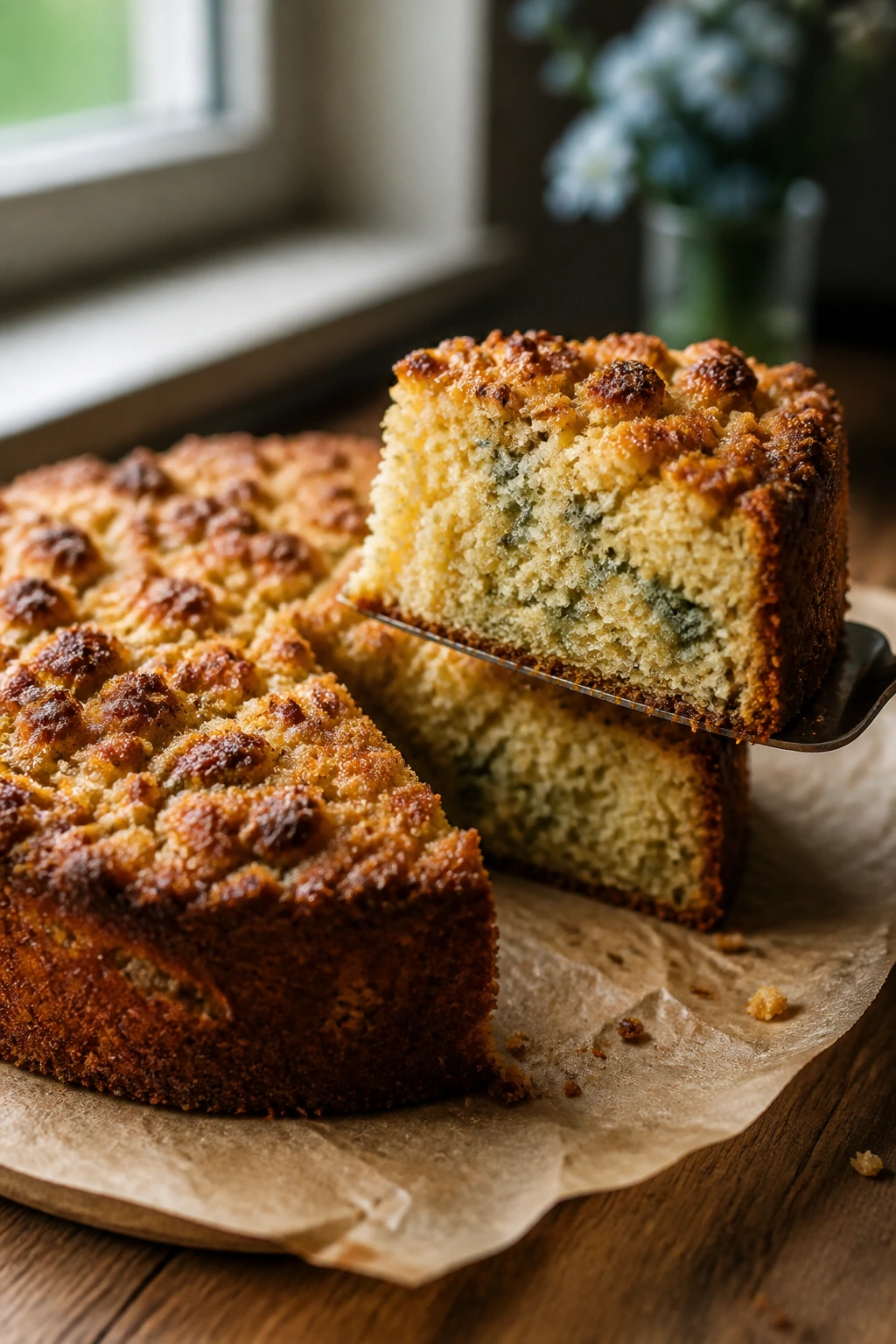
This is the part where the cake turns from batter to something you can actually cut. The crumble should look bronzed and rustic, not pale. The center should spring back when touched lightly. If the top gets too dark before the middle is done, foil is your friend.
-
Scatter about two-thirds of the blue cheese crumble evenly over the batter, pressing it in very lightly with your fingertips so it clings to the surface. Reserve the remaining third for the finished cake.
-
Bake for 35 to 40 minutes, rotating the pan once halfway through, until the top is deep golden, the edges have started to pull away from the pan, and a skewer inserted in the center comes out with a few moist crumbs. If the crumble browns fast, tent the pan loosely with foil after about 25 minutes.
-
Set the pan on a wire rack and cool for 20 minutes. Then lift the cake out using the parchment overhang and let it cool completely on the rack, about 1 hour. Do not frost a warm cake — the frosting will slide, and the crumble will soften in the wrong way.
-
To make the frosting, beat the cream cheese and butter together on medium speed for 1 to 2 minutes, until smooth and creamy. Add the powdered sugar in three additions, beating on low at first so it doesn’t fly everywhere, then add the vanilla, cream, and salt. Beat just until spreadable. If it seems loose, chill it for 10 minutes and beat again.
-
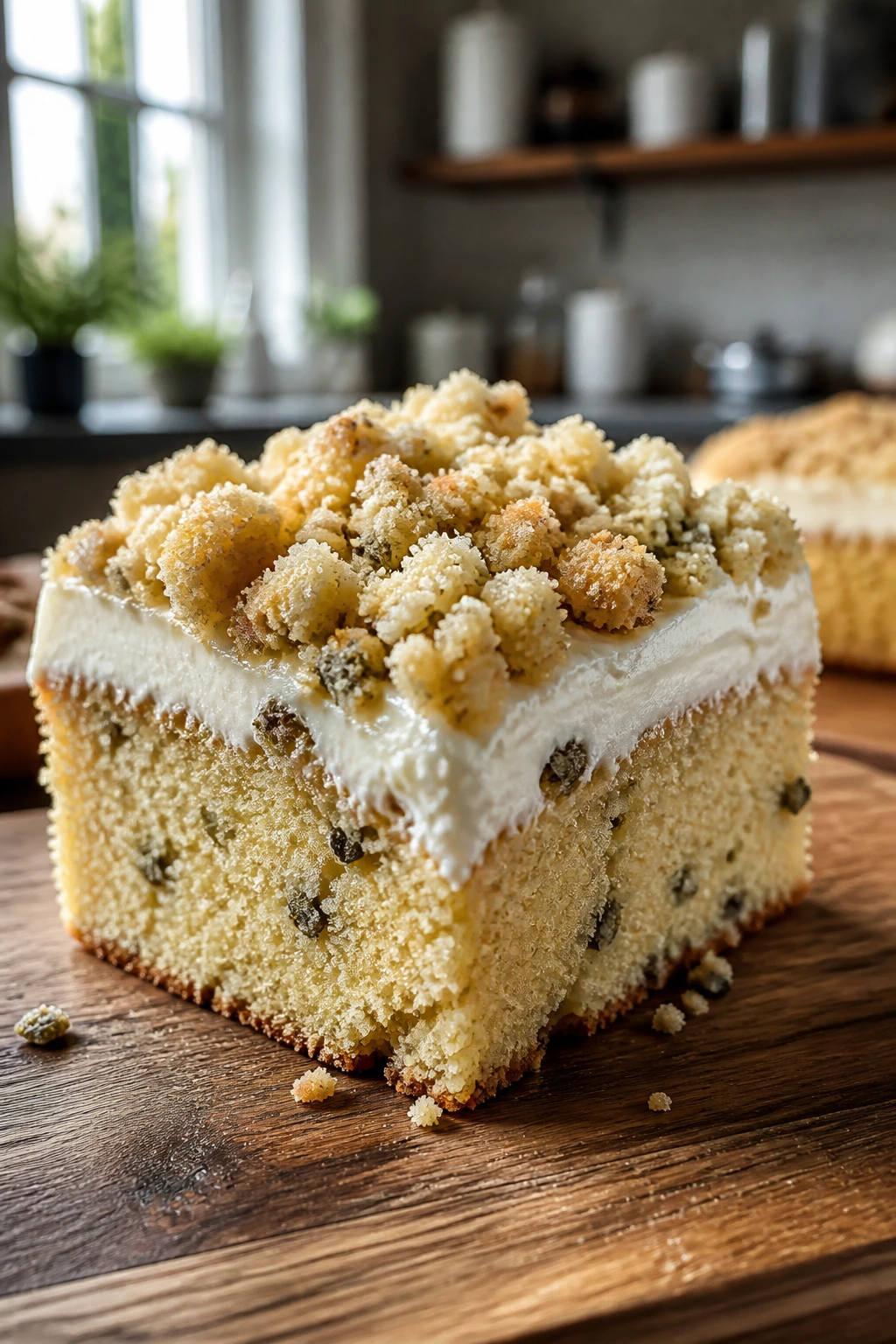
Spread the frosting over the cooled cake in a thin, even layer. You don’t need a thick blanket here; a modest layer keeps the crumble visible and lets the blue cheese stay part of the story.
-
Sprinkle the reserved crumble over the frosting, then press it in very lightly so it sticks. If you want neat squares, chill the frosted cake for 15 minutes before cutting.
-
Slice with a long, sharp knife wiped clean between cuts. A hot knife helps if the frosting has been in the fridge.
How to Serve It on a Plate
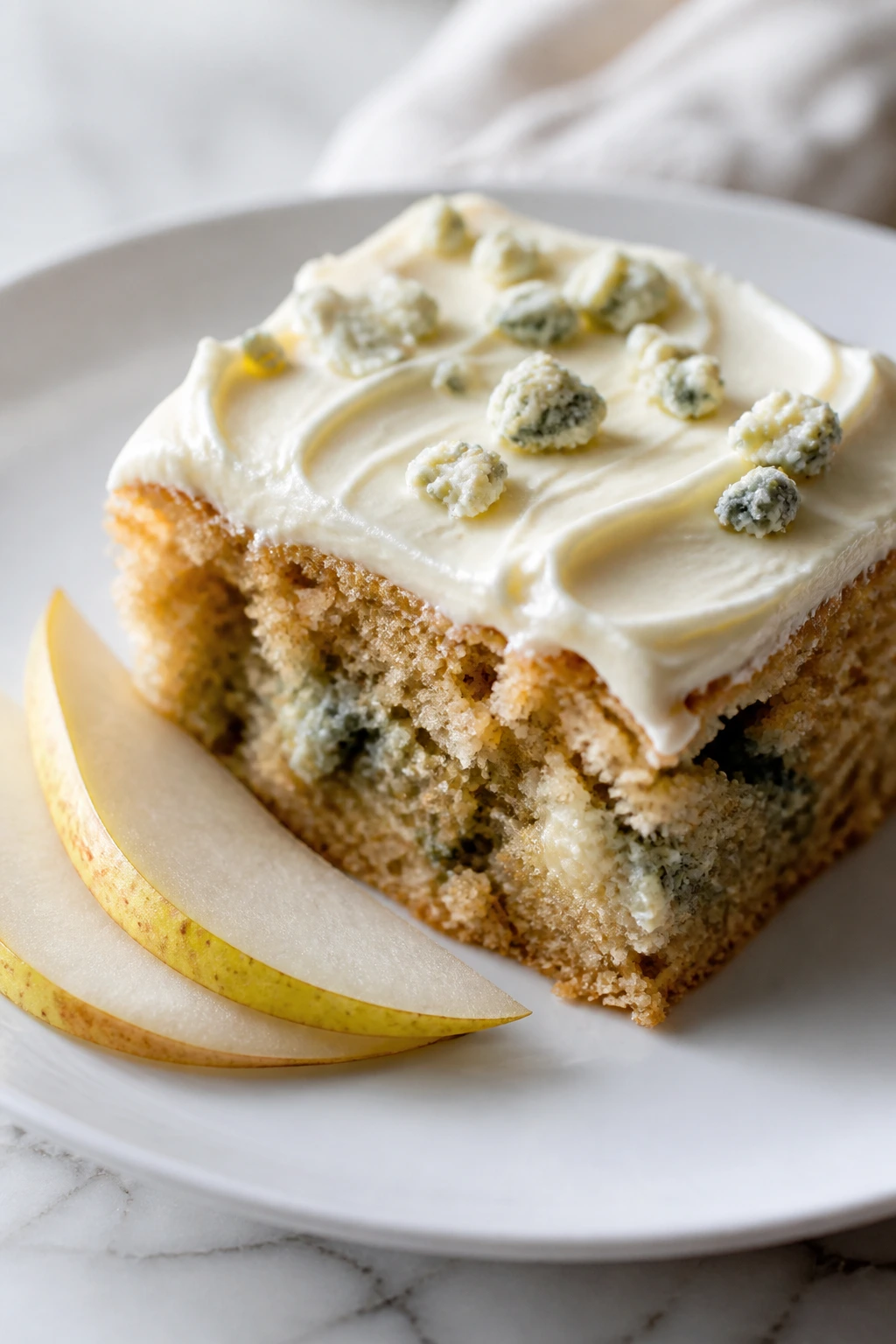
Presentation: Cut the cake into 12 squares for a dessert table or 15 smaller pieces if you’re serving it after a bigger meal. A clean white plate shows off the golden crumble and the pale frosting nicely, and a tiny pile of crumb fallout on the side makes it look intentional instead of messy.
Accompaniments: Sliced pears are the obvious friend here, and they’re the right one. A spoonful of fig jam, a few fresh raspberries, or a small mound of macerated cherries works too, especially if you want the blue cheese to taste calmer. If you’re serving this for brunch, a plain bowl of berries keeps the plate from feeling heavy.
Portions: One square is enough for most people. The cake is rich in the way cream cheese frosting and butter-heavy crumble always are, so smaller squares make more sense than giant slabs. If you want to stretch it for a crowd, cut the pieces smaller and serve them with coffee.
Beverage Pairing: I like this with black coffee or a slightly off-dry Riesling. The coffee sharpens the savory note in the crumble; the Riesling leans into the sweet-salty contrast without making the frosting taste sugary.
Small Adjustments That Make a Big Difference
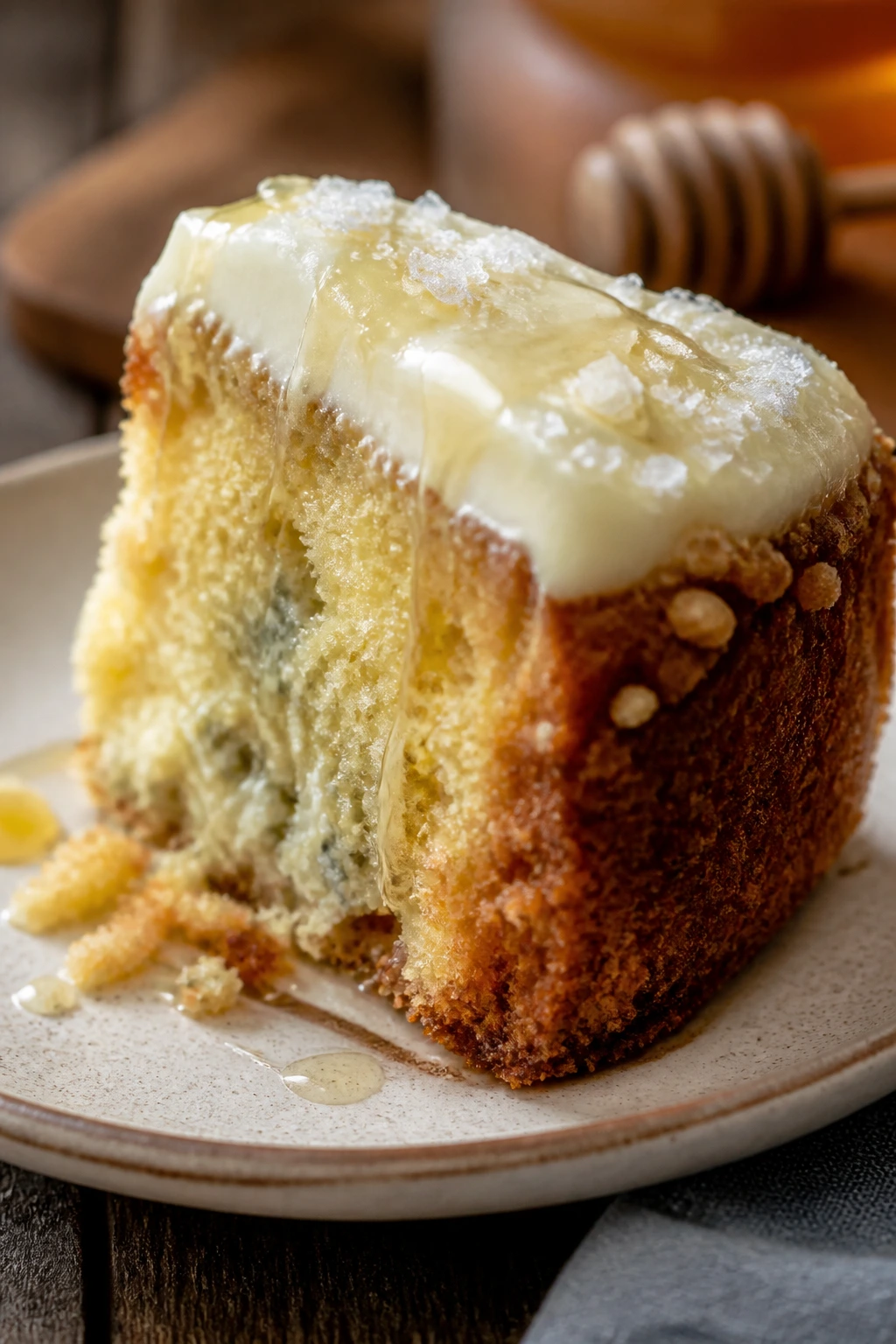
Flavor Enhancement: If your blue cheese is gentle and you want a little more sparkle, whisk 1 teaspoon honey into the frosting. It softens the savory edge without turning the cake into a honey dessert. A few grains of flaky salt on the top also help, especially if you used a very mild blue.
Time-Saver: Make the crumble up to 3 days ahead and keep it refrigerated in a covered bowl. Cold crumble bakes better anyway, and having that piece finished turns the rest of the cake into a much calmer job.
Pro Move: Warm your knife under hot water before slicing, then wipe it dry. The frosting cuts cleaner, the crumble stays on top of the slice, and the edges look bakery-neat instead of ragged.
Cost-Saver: You do not need an expensive wedge of aged Stilton for this. A modest wedge of Gorgonzola dolce or Danish blue gives the same salty bite and usually behaves better in the crumble because it stays softer.
Make-It-Yours: For a slightly fruitier slice, spread a thin smear of pear butter or fig jam on the cake before the frosting goes on. Keep it thin. Too much and the whole thing turns slippery.
Common Mistakes and Easy Fixes
-
Using a sharp, dry blue cheese: The cake can taste harsh and one-note if the cheese is too aggressive. Use a mild blue, and if all you can find is a stronger one, cut the amount back to 3 ounces.
-
Letting the crumble get warm before baking: Warm butter turns the topping into a paste, and the blue cheese melts into the flour instead of staying in little pockets. Chill the crumble for 10 to 15 minutes before it hits the batter.
-
Overmixing the cake after the flour goes in: The crumb turns tight and slightly rubbery, especially around the edges. Mix only until the last flour streak disappears, then stop.
-
Frosting a warm cake: The frosting softens and slides into the crumble, which ruins the texture contrast. Wait until the cake is fully cool, even if that means walking away for an hour.
-
Pulling the cake based on color alone: A deep golden top can hide a wet middle. Use the skewer test in the center; you want a few moist crumbs, not batter.
-
Using too thick a layer of frosting: A heavy coat buries the crumble and mutes the blue cheese. Spread a thin layer and let the cake keep some edge.
Variations Worth Trying
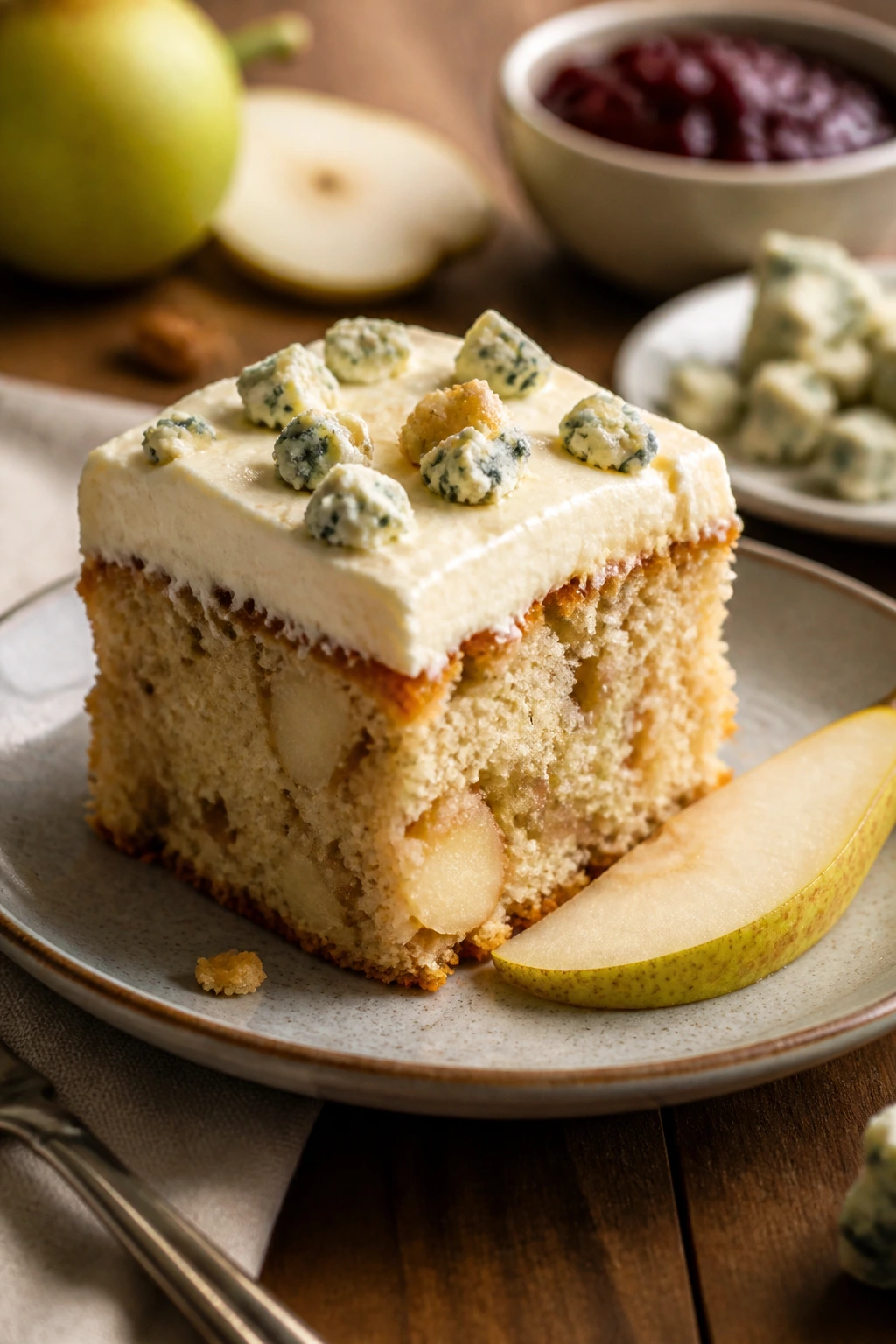
Pear and Gorgonzola Dolce Slice
Fold 1 1/2 cups diced ripe pears into the cake batter or scatter them over the batter before the crumble goes on. Use Gorgonzola dolce for a softer, sweeter blue note. The pears bake into soft pockets that make the blue cheese taste rounder.
Fig-Jam Brunch Square
Spread 1/4 cup fig jam in a thin layer over the cooled cake before frosting. The jam gives a dark, sticky sweetness that plays well with the blue cheese and makes the cake feel more brunch than dessert. This one is excellent with coffee.
Sharper Stilton Finish
Swap the mild blue cheese for 3 ounces Stilton and reduce the brown sugar in the crumble to 1/3 cup. That makes the topping drier and more assertive, so I’d only use it if you already like blue cheese straight from the wedge.
Gluten-Free Pan Cake
Use a 1:1 gluten-free flour blend in both the cake and the crumble. Let the batter sit for 10 minutes before baking so the flour hydrates, and expect a slightly tighter crumb. It still slices well, especially once chilled.
Make-Ahead, Storage, and Reheating
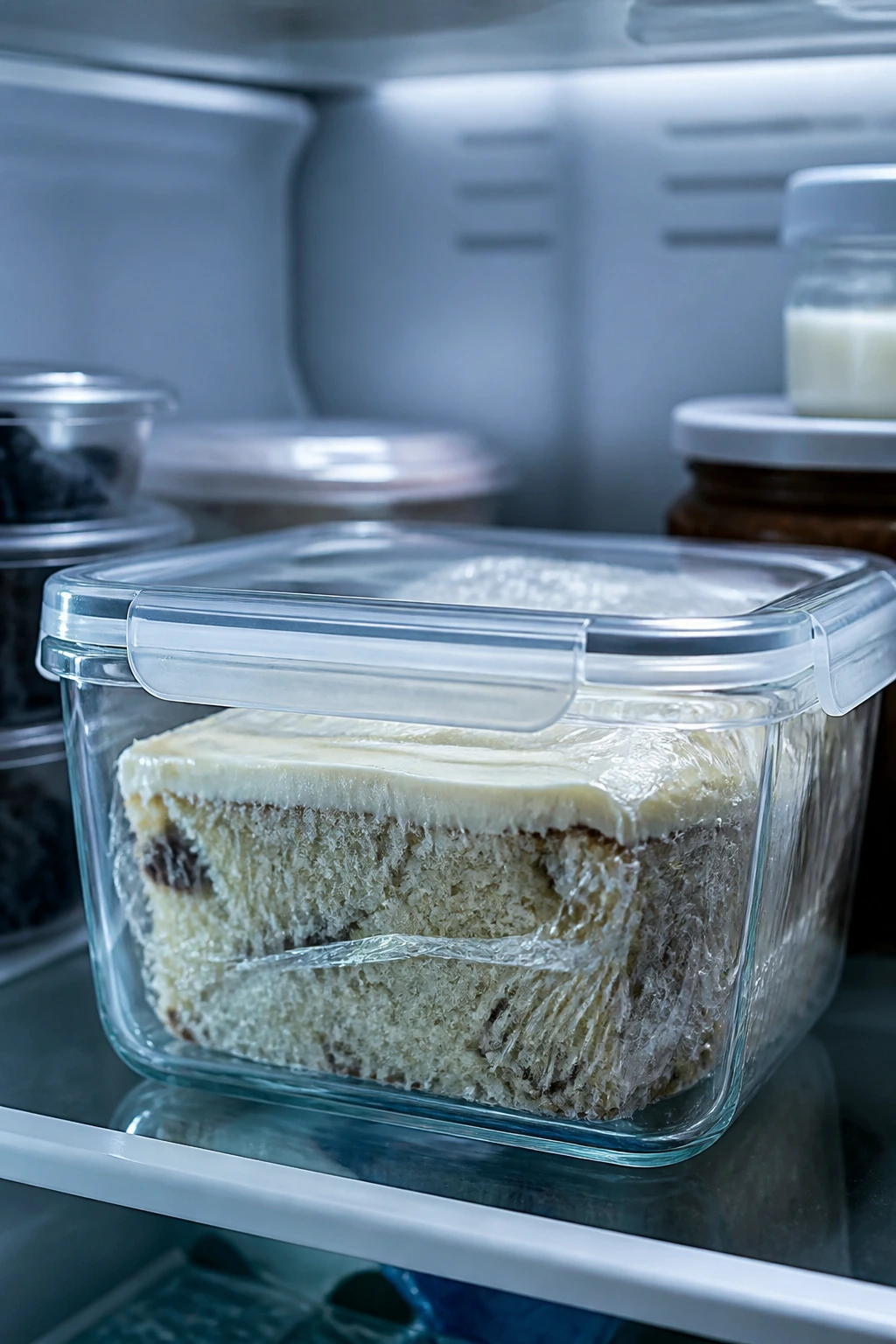
You can break this cake into pieces and make almost all of it ahead of time. The crumble can be mixed and refrigerated for up to 3 days. The cake itself can be baked a day in advance, cooled completely, and wrapped tightly once it’s at room temperature. The frosting can also be made 2 days ahead and kept in the fridge; just let it soften slightly and beat it again before using.
Once frosted, keep the cake covered in the refrigerator for up to 4 days. Cream cheese frosting should not sit out on the counter for long stretches; give it no more than 2 hours at room temperature if it’s already frosted. If you want the cleanest texture, store the cake in a shallow airtight container so the frosting doesn’t pick up refrigerator smells.
Freezing works best with the unfrosted cake. Wrap the cooled cake or individual slices tightly in plastic wrap, then in foil, and freeze for up to 2 months. The frosting can be frozen too, but the texture is a little less perfect after thawing, so I’d only do that if you’re in a pinch. Thaw both in the fridge overnight, then bring the cake to cool room temperature before serving.
For reheating, use low heat. An unfrosted slice can go in a 275°F oven for 8 to 10 minutes until just warmed through. A frosted slice is better left alone; if you want it less cold, let it sit on the counter for 20 to 30 minutes. Microwaving tends to make the frosting weep, and the crumble loses its edge fast.
Questions People Ask About Blue Cheese Cake
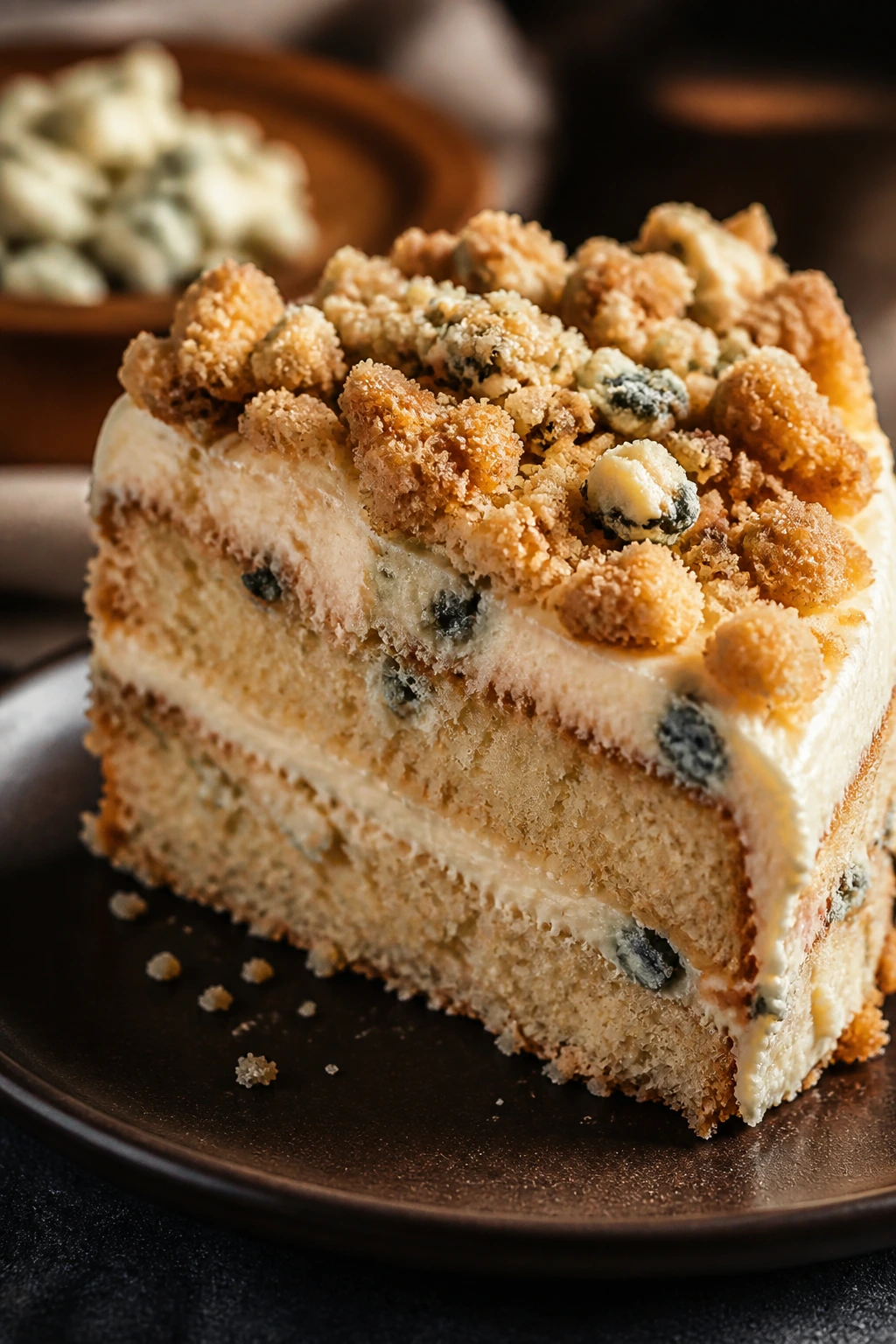
What kind of blue cheese works best in this cake?
A mild, creamy blue is the safest choice. Gorgonzola dolce, Danish blue, and some softer Stiltons crumble nicely and don’t overpower the frosting. Very dry, sharp blues can taste too intense once baked.
Does the cake taste strongly of blue cheese?
Not if you keep the ratio as written. The blue cheese shows up in the crumble as a salty, earthy note rather than a full cheese-forward flavor, and the cream cheese frosting softens the edges even more. Think cheese-board echo, not cheese bomb.
Can I make this with all-purpose flour instead of cake flour?
Yes. Use 2 1/2 cups all-purpose flour plus 1/4 cup cornstarch in the cake batter. The crumb will be a touch sturdier, but it still works well in a sheet-pan cake.
Can I make this as cupcakes or a layer cake?
Cupcakes work, and they bake in about 18 to 22 minutes at 350°F. A layer cake is possible in two 8-inch pans, but the crumble is a little easier to manage in a sheet pan because it stays where you place it.
What if my frosting gets too loose?
That usually means the cream cheese or butter was too warm, or the cream went in too fast. Chill the bowl for 10 to 15 minutes, then beat again. If it still looks soft, add a little more powdered sugar, about 1/4 cup at a time.
Can I skip the walnuts?
Absolutely. The walnuts add a dry, toasty bite and make the crumble a little less soft, but the cake still works without them. If you leave them out, keep the crumble well chilled so it doesn’t flatten in the oven.
Can I make this the day before serving?
Yes, and I’d actually recommend it if you want neat slices. Bake and frost it the day before, then hold back a spoonful of crumble to freshen the top just before serving. The flavors settle overnight in a good way.
One Last Slice
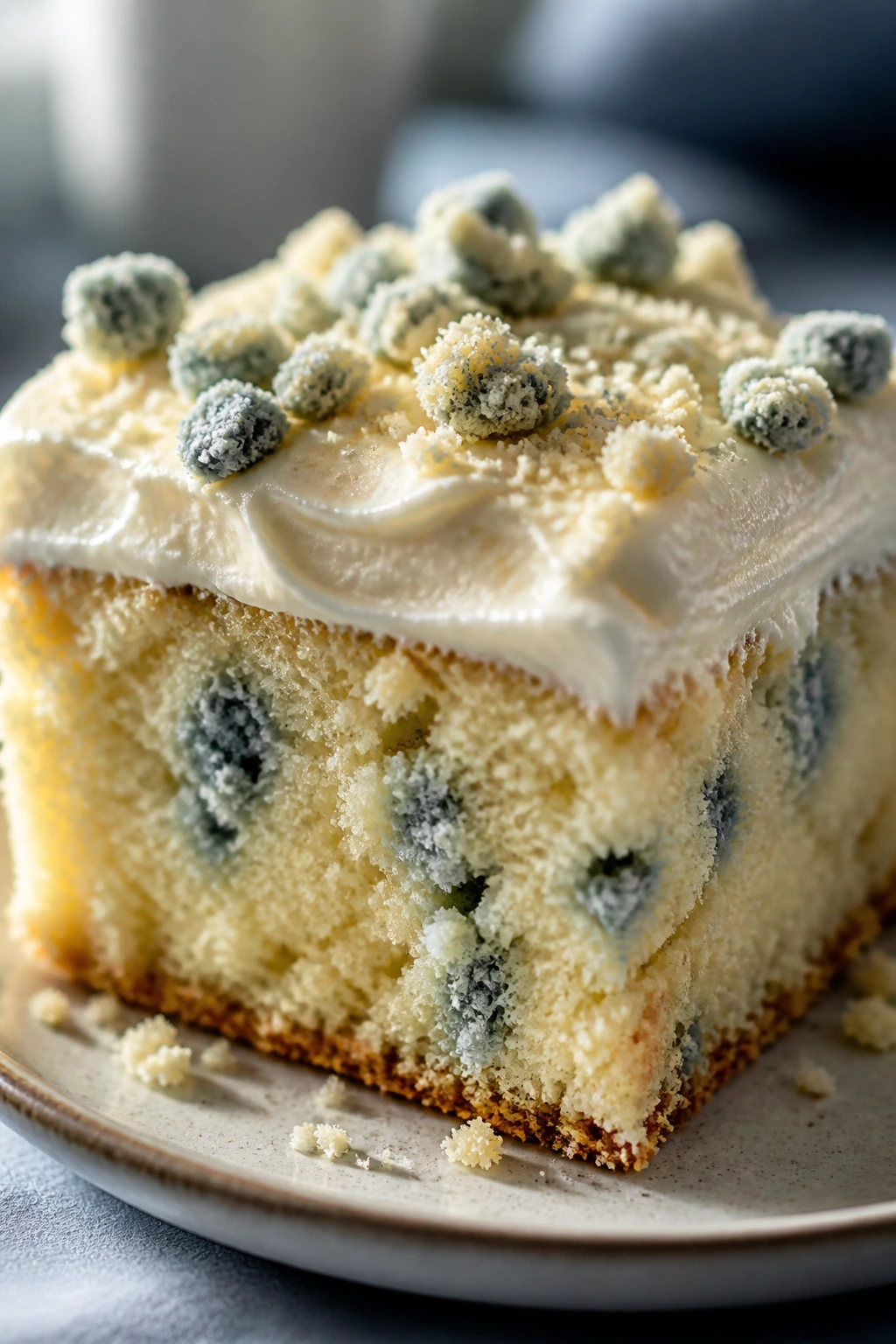
Blue cheese in dessert will never be everybody’s favorite move, and that’s part of the fun. When the cheese is mild, the crumble is cold, and the frosting stays thin, the whole cake lands in a narrow sweet-savory lane that feels more thoughtful than strange.
A small square is enough to show what’s going on. A second one is where people usually stop pretending they were only curious. Keep the blue cheese restrained, keep the frosting cool, and this is the kind of bake that gets remembered because it refuses to taste like anything else on the table.
Fluffy Blue Cheese Crumble with Cream Cheese Frosting — Recipe Card
Recipe Name: Fluffy Blue Cheese Crumble with Cream Cheese Frosting
Description: A tender vanilla-buttermilk cake with a buttery blue cheese crumble and a thin layer of cream cheese frosting. The blue cheese stays mild and salty, while the frosting keeps the whole slice balanced.
Prep Time: 30 minutes
Cook Time: 35 to 40 minutes
Total Time: 1 hour 10 minutes, plus 1 hour cooling
Course: Dessert
Cuisine: American
Servings: 12 servings
Calories: About 420 kcal per serving
Ingredients
For the Cake:
- 2 3/4 cups cake flour, spooned and leveled
- 1 tablespoon baking powder
- 1/2 teaspoon baking soda
- 1/2 teaspoon fine sea salt
- 1 cup (2 sticks) unsalted butter, softened to room temperature
- 1 3/4 cups granulated sugar
- 4 large eggs, room temperature
- 2 teaspoons vanilla extract
- 1/2 cup sour cream, room temperature
- 1/2 cup buttermilk, room temperature
For the Blue Cheese Crumble:
- 1 cup all-purpose flour
- 1/2 cup packed light brown sugar
- 1/4 cup granulated sugar
- 6 tablespoons unsalted butter, cold and cubed
- 4 ounces mild blue cheese, chilled and crumbled very fine
- 1/2 cup toasted walnuts, chopped (optional)
For the Cream Cheese Frosting:
- 8 ounces cream cheese, softened
- 1/2 cup unsalted butter, softened
- 3 cups powdered sugar, sifted
- 1 teaspoon vanilla extract
- 1 to 2 tablespoons heavy cream
- Pinch of fine sea salt
Instructions
- Preheat the oven to 350°F (175°C). Grease a 9×13-inch pan and line it with parchment paper.
- Make the crumble by combining the flour, sugars, butter, blue cheese, and walnuts until pebbly. Chill while you make the batter.
- Whisk the cake flour, baking powder, baking soda, and salt together.
- Cream the butter and sugar until pale and fluffy, about 3 to 4 minutes.
- Beat in the eggs one at a time, then the vanilla, sour cream, and buttermilk. Add the dry ingredients in three additions and mix just until combined.
- Spread the batter in the pan and top with about two-thirds of the crumble, pressing it in lightly.
- Bake for 35 to 40 minutes, until golden and a skewer comes out with moist crumbs. Tent with foil if the top browns too quickly.
- Cool the cake completely.
- Beat the cream cheese, butter, powdered sugar, vanilla, cream, and salt until smooth and spreadable.
- Spread the frosting over the cooled cake, then sprinkle on the remaining crumble.
- Chill for 15 minutes if you want cleaner slices, then cut and serve.
Notes: Keep the blue cheese cold for the crumble, cool the cake fully before frosting, and use a thin layer of frosting so the topping stays visible.