



Moist elegant cupcakes with cream cheese frosting have a very specific job: they need to look polished on a plate, then give up a soft, plush crumb the second your fork cuts in. If the cake part is dry, the frosting has to work too hard. If the frosting is cloying, the whole thing collapses into sugar with a paper liner attached. I’ve made enough cupcakes to know that the sweet spot lives in the middle — tender but not fragile, rich but not heavy, pretty without being fussy.
That balance is why I like this version so much. The batter uses butter for flavor, oil for lasting softness, sour cream for body, and buttermilk for the gentle acidity that helps the crumb stay fine instead of bready. The cream cheese frosting stays classic, but it’s handled in a way that keeps it smooth, pipeable, and just tangy enough to make the vanilla taste cleaner.
The result is the kind of cupcake that doesn’t need a dramatic garnish to feel finished. A clean swirl, a berry, maybe a little zest if you want to dress it up — that’s enough. The details do the heavy lifting here, and they start in the first bowl.
Why These Cupcakes Stay Soft, Tall, and a Little Fancy
-
Soft even after chilling: The mix of butter, oil, sour cream, and buttermilk keeps the crumb supple after a night in the fridge, which matters because cream cheese frosting likes cooler storage.
-
A frosting that holds its shape: Full-fat block cream cheese, softened butter, and powdered sugar added in stages make a frosting that pipes into ridges instead of slumping into a glossy mess.
-
A clean vanilla flavor: The batter doesn’t hide behind spices or chocolate. You taste vanilla first, then the light tang from the frosting, and that contrast is what makes the bite feel finished.
-
Easy to dress up or keep plain: A single berry, a sprinkle of lemon zest, or a dusting of finely chopped pistachios changes the look fast without changing the base recipe.
-
No specialty pantry required: Nothing in this recipe asks for a hard-to-find ingredient. The trick is technique, not a rare flour or a commercial bakery stabilizer.
-
Works for parties and quiet weekends: These cupcakes look neat on a platter, but they’re just as good when you pull one out of the fridge and let it sit for twenty minutes with coffee.
A Quick Snapshot Before the Oven Heats Up
A batch of these lands neatly at 18 standard cupcakes, which is a very usable number. It’s enough for a birthday tray, a potluck, or a fridge full of polite leftovers that don’t disappear in one sitting.
Yield: 18 standard cupcakes
Prep Time: 25 minutes
Cook Time: 18 to 20 minutes
Total Time: 1 hour 15 minutes
Difficulty: Beginner — the method is straightforward, and the real skill is stopping the mixer at the right moment.
Chill/Rest Time: 30 to 45 minutes for the cupcakes to cool before frosting; 10 to 15 minutes for the frosting if it softens too much
Best Served: The day they’re frosted, at cool room temperature
The Ingredient List for the Cupcakes and Frosting
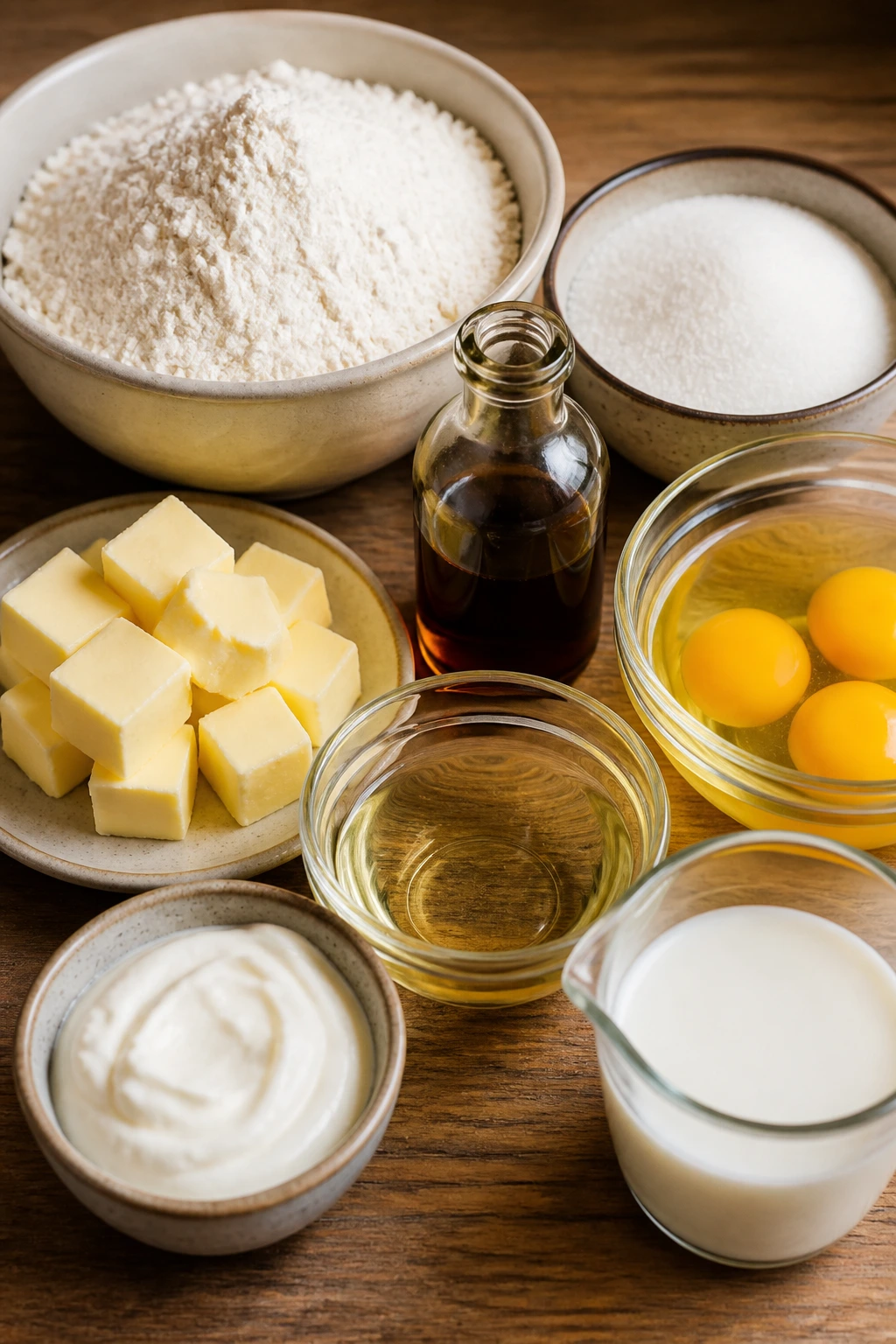
I like this ingredient list because it’s short enough to memorize after one bake, but specific enough that every item earns its slot.
For the Cupcakes:
- 1 1/2 cups all-purpose flour
- 1 1/2 teaspoons baking powder
- 1/2 teaspoon baking soda
- 1/2 teaspoon fine sea salt
- 1/2 cup unsalted butter, softened to room temperature
- 1/2 cup neutral oil, such as canola or avocado
- 1 1/4 cups granulated sugar
- 3 large eggs, room temperature
- 2 teaspoons vanilla extract
- 1 cup sour cream, room temperature
- 1/2 cup buttermilk, room temperature
For the Cream Cheese Frosting:
- 8 ounces full-fat cream cheese, softened but still cool
- 1/2 cup unsalted butter, softened
- 4 cups powdered sugar, sifted
- 1 teaspoon vanilla extract
- 1/8 teaspoon fine salt
- 1 to 2 tablespoons heavy cream, only if needed for piping consistency
Why Each Ingredient Matters in These Cream Cheese Frosted Cupcakes
For the Cupcake Batter
What to use: You want 1 1/2 cups flour, a full spoonful of leaveners, 1/2 cup butter, 1/2 cup oil, 1 1/4 cups sugar, 3 eggs, vanilla, sour cream, and buttermilk. That combination gives you a cupcake that tastes rich but still springs back under your finger.
Preparation: Let the eggs, sour cream, and buttermilk sit out until they are no longer cold from the fridge. Cold dairy can make the batter look broken for a few moments, and cold eggs take longer to mix in cleanly.
Substitutions: Full-fat Greek yogurt can stand in for sour cream, and whole milk plus 1 1/2 teaspoons lemon juice can replace the buttermilk if that’s what you have. If you want a slightly tighter, cake-like crumb, cake flour can replace the all-purpose flour by weight.
Tips: Don’t skip the oil. Butter gives flavor, but oil keeps the crumb soft after chilling, which is the whole game when cream cheese frosting is involved.
For the Cream Cheese Frosting
What to use: Use 8 ounces block-style cream cheese, 1/2 cup butter, 4 cups sifted powdered sugar, vanilla, salt, and just enough heavy cream to help it pipe if needed. Block cream cheese gives you body; spreadable tub cream cheese tends to be too loose.
Preparation: Let the butter soften fully, but keep the cream cheese only mildly softened. That slight difference in temperature helps the frosting stay thick instead of turning glossy and runny.
Substitutions: If you need a lighter tang, reduce the cream cheese to 6 ounces and add another 2 ounces of butter. For a dairy-free version, use plant-based cream cheese and stick-style vegan butter, though the frosting will be a little softer and will benefit from an extra chill.
Tips: Sift the powdered sugar if it’s clumpy. A gritty frosting ruins a good cupcake faster than almost anything else.
The Equipment That Makes Piping Easier
You do not need a professional setup, but a few exact tools make the whole process calmer.
- 2 standard 12-cup muffin pans — Two pans let you bake all 18 cupcakes in one round; one pan works if you’re fine with a second batch.
- 18 paper cupcake liners — Paper keeps the sides neat and helps the cupcakes release cleanly.
- 2 mixing bowls — One for dry ingredients, one for the batter; fewer bowls mean more flour on the counter, and that gets annoying fast.
- Hand mixer or stand mixer with paddle attachment — You can do this by hand, but the frosting in particular is easier with a mixer.
- Rubber spatula — Essential for scraping the bowl and folding the final flour streaks in by hand.
- Ice cream scoop or large cookie scoop — A 3-tablespoon scoop keeps the cupcakes even, which helps them bake at the same rate.
- Wire rack — Cooling the cupcakes off the hot pan keeps the bottoms from steaming.
- Piping bag fitted with a 1M or 2D star tip — Optional, but if you want the frosting to look tidy and tall, this is the easiest route.
Mixing the Batter Without Toughening It
Prep the Pan:
-
Preheat the oven to 350°F (175°C) and position a rack in the center of the oven. Line two standard muffin pans with 18 paper liners. If you only have one pan, plan to bake in two rounds and keep the second batch of batter at room temperature while the first bakes.
-
Whisk the 1 1/2 cups all-purpose flour, 1 1/2 teaspoons baking powder, 1/2 teaspoon baking soda, and 1/2 teaspoon salt in a medium bowl for about 20 seconds. You’re looking for an even blend with no pale streaks of baking soda hiding at the bottom.
Build the Batter:
-
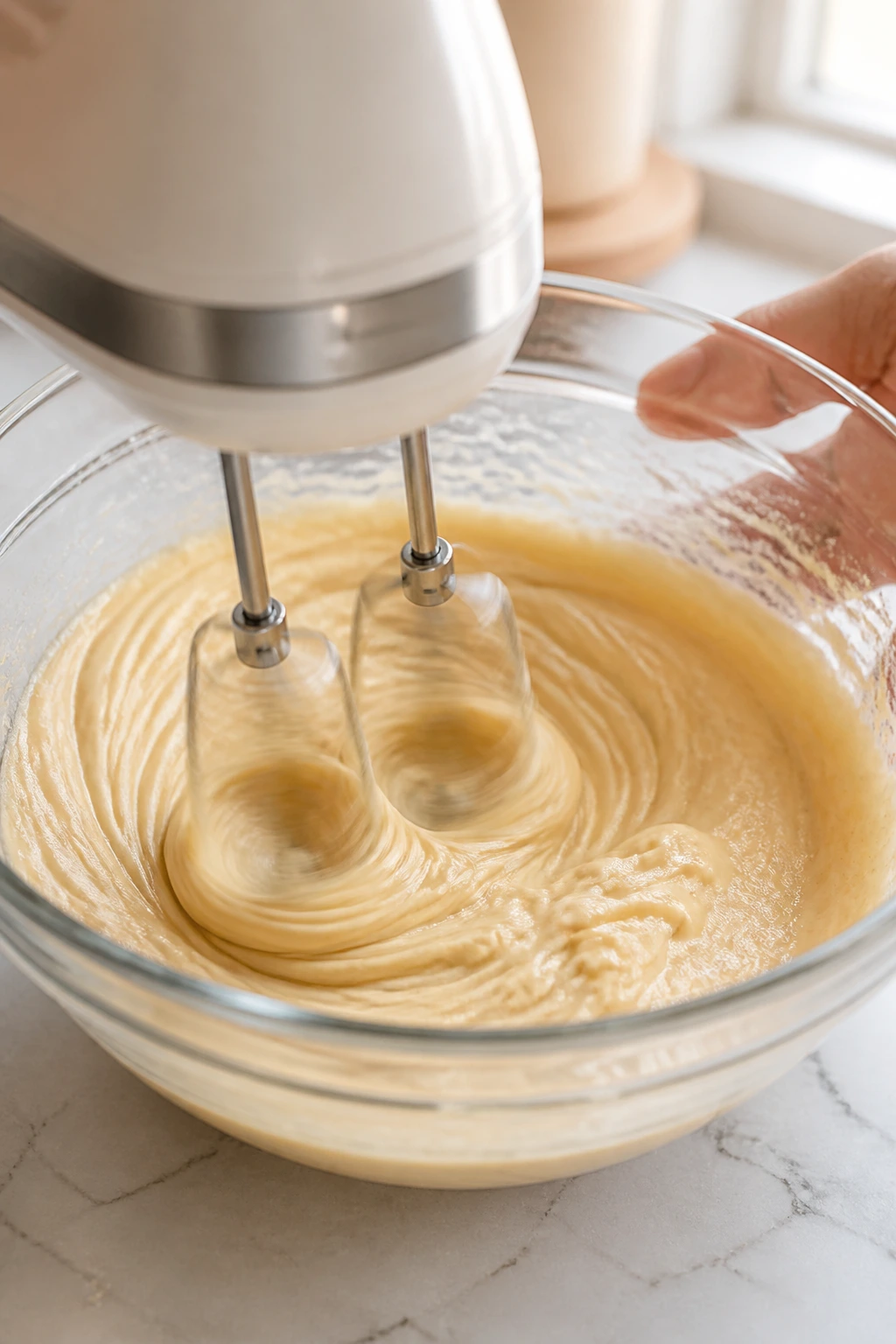
In a large bowl, beat the 1/2 cup softened butter, 1/2 cup oil, and 1 1/4 cups sugar on medium speed for 2 to 3 minutes. The mixture should look thick, glossy, and slightly lighter in color, but it will not get as fluffy as an all-butter cake batter.
-
Add the 3 eggs one at a time, beating for about 20 to 30 seconds after each egg. Scrape the bowl once halfway through. If the batter looks a little curdled here, that’s normal; the flour is what smooths it out.
-
Beat in the 2 teaspoons vanilla, 1 cup sour cream, and 1/2 cup buttermilk on low speed just until the mixture looks mostly smooth. It should smell like vanilla and tang, with no streaks of sour cream sitting on the bottom.
-
Add the dry ingredients in two additions, mixing on low speed only until the flour disappears. Stop as soon as you stop seeing dry patches. Overmixing here is the fastest route to a tight, chewy crumb.
Baking, Cooling, and Reading the Cupcakes in the Oven
Fill and Bake:
-
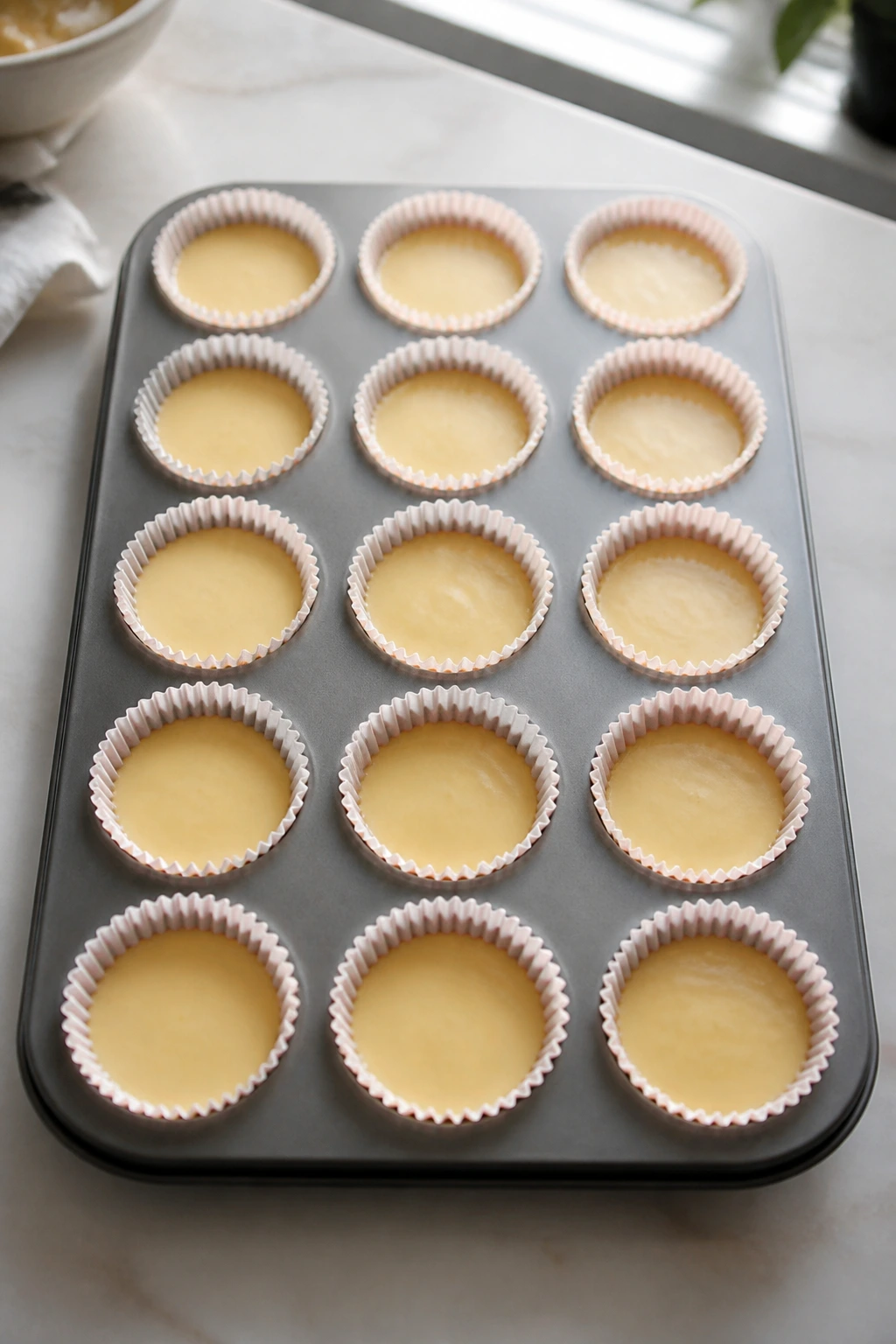
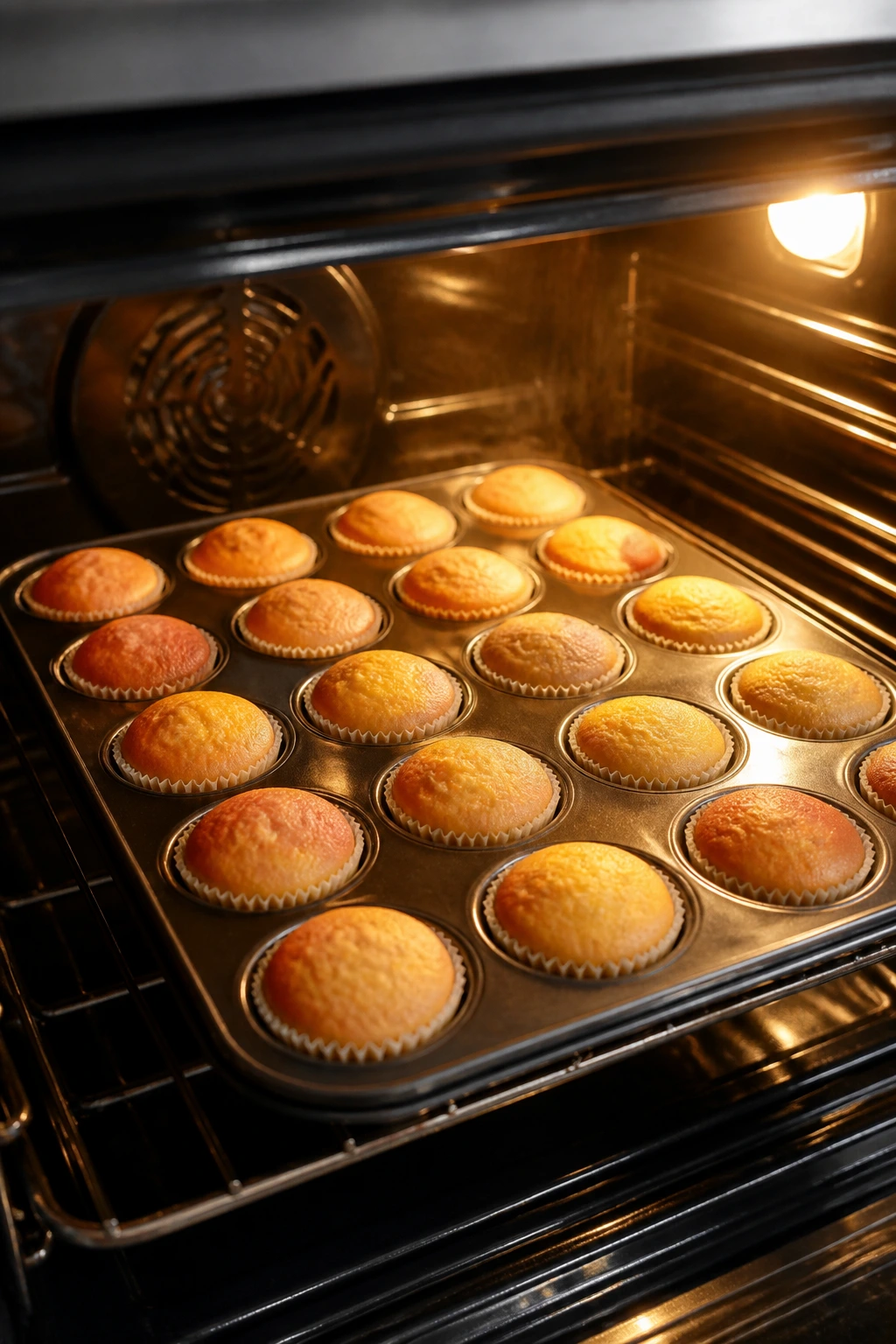
Divide the batter evenly among the 18 liners, filling each one about 2/3 full. A 3-tablespoon scoop makes this painless. Tap each pan once on the counter to pop the biggest air bubbles, then bake for 18 to 20 minutes.
-
Check for doneness by touching the top of one cupcake gently. It should spring back, and a toothpick inserted in the center should come out with a few moist crumbs, not wet batter. If your oven runs hot, start checking at 17 minutes; if it runs cool, give them another minute or two.
-
Let the cupcakes rest in the pan for 5 minutes, then move them to a wire rack and cool completely. This usually takes 30 to 45 minutes. Do not frost them warm. Even slightly warm cupcakes will melt the frosting into the liner.
Whipping the Cream Cheese Frosting to Pipeable Shape
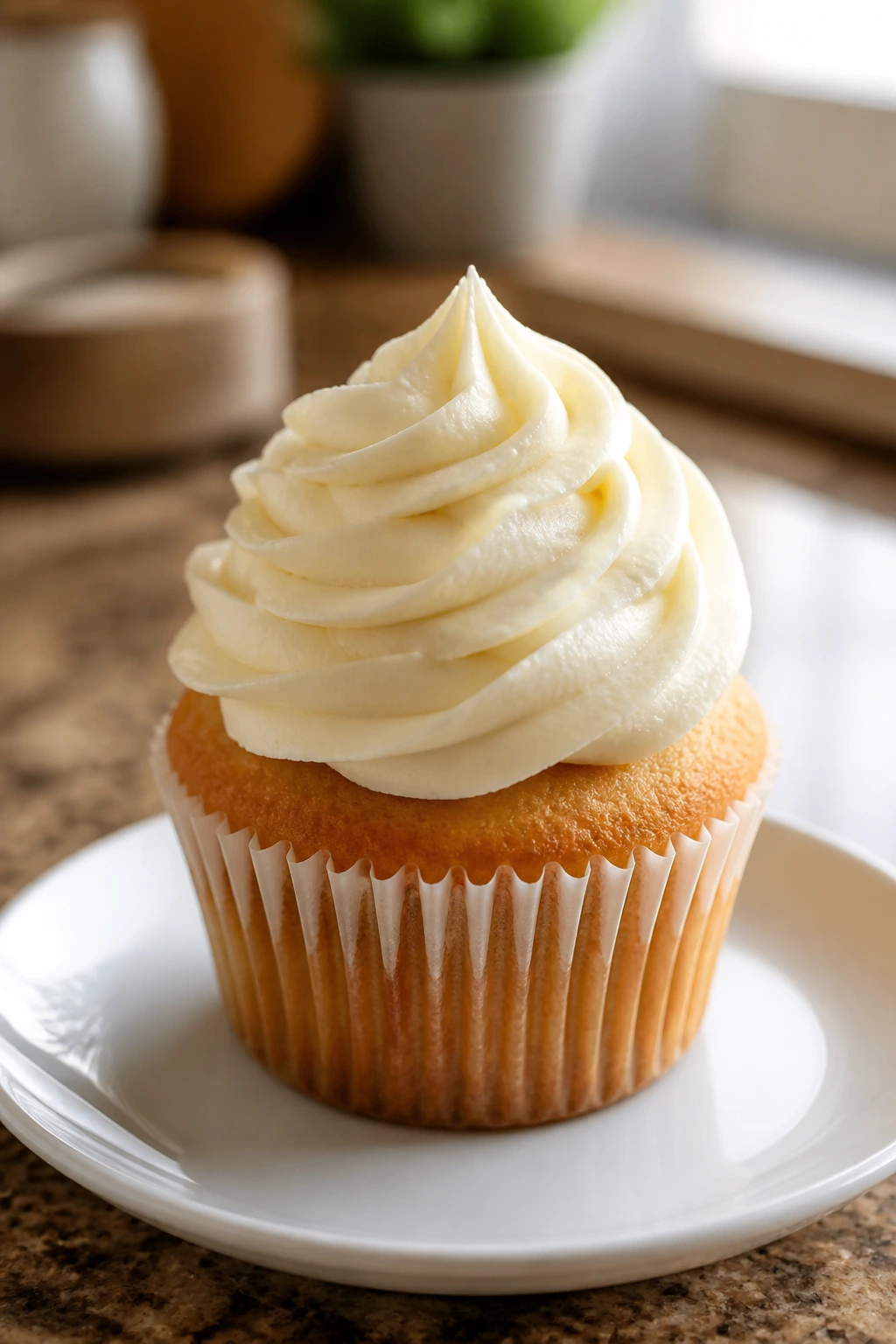
Make the Frosting:
-
In a clean bowl, beat the 8 ounces cream cheese and 1/2 cup butter together for about 1 minute on medium speed. Stop when the mixture is smooth and no visible lumps remain, but do not keep beating once it’s creamy — too much mixing loosens cream cheese frosting.
-
Add the 4 cups sifted powdered sugar, 1 teaspoon vanilla, and 1/8 teaspoon salt in two additions, mixing on low speed after each one. Once the sugar is in, beat just until the frosting looks thick and silky. If it seems loose, add 1 tablespoon heavy cream only if the frosting feels stiff, not soft. If it’s too slack, chill it for 10 to 15 minutes and stir again.
Frost and Finish:
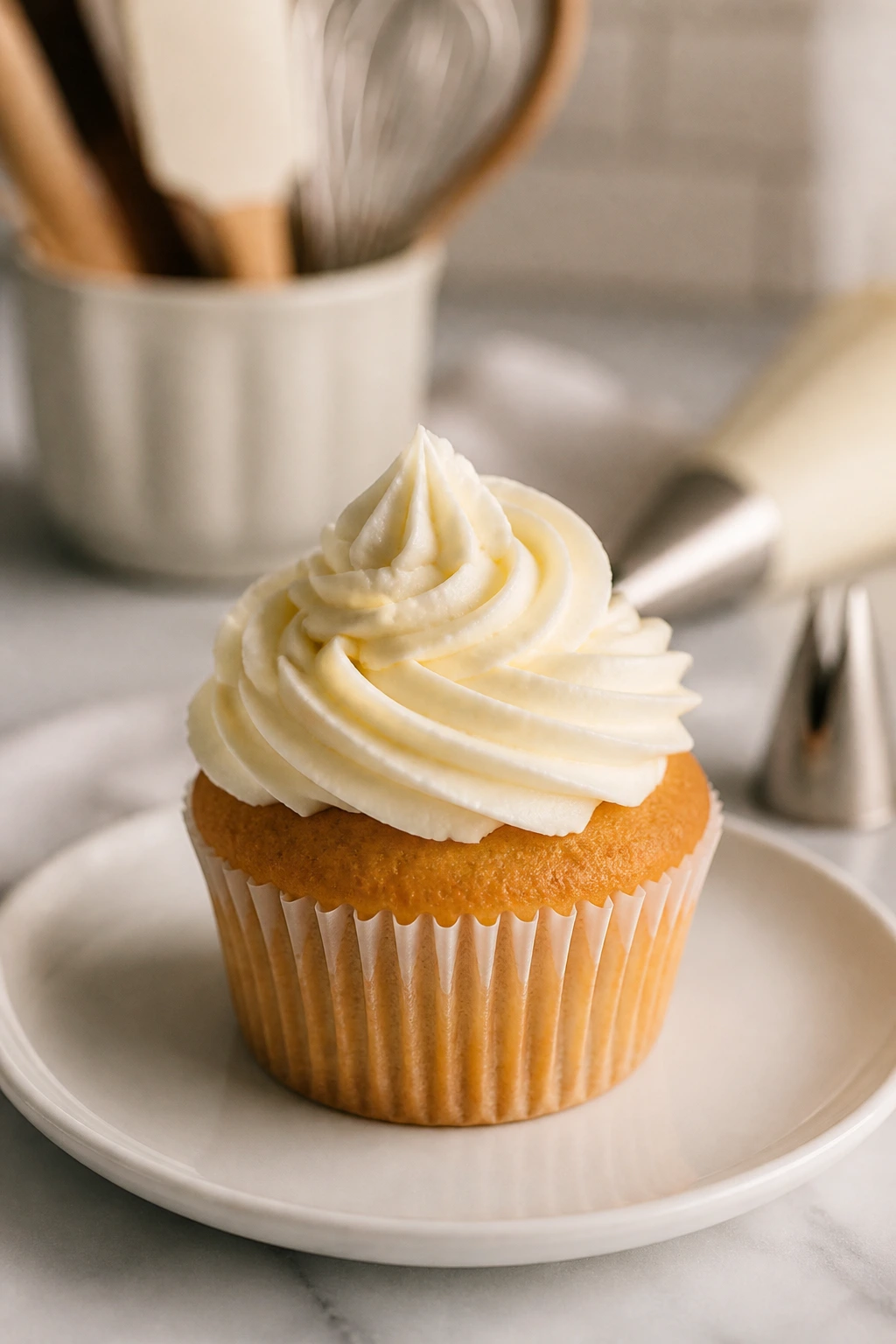
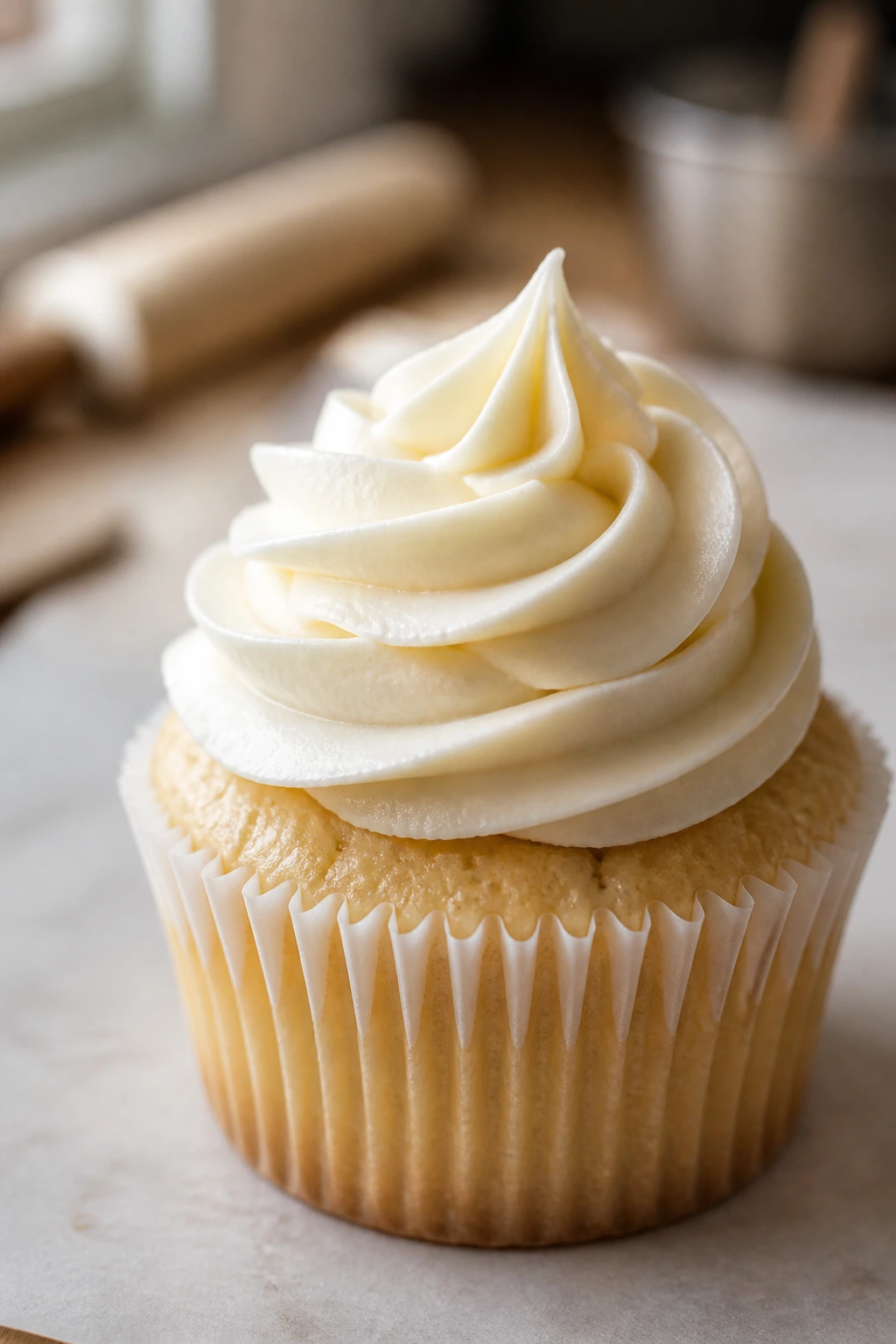
- Transfer the frosting to a piping bag fitted with a star tip, or spread it with an offset spatula if you prefer a softer look. Pipe a spiral from the outside edge inward, then stop before you crowd the center. A tall swirl looks tidy, but a smaller one is easier to eat without frosting landing on your shirt.
How to Serve Them So They Look Intentional
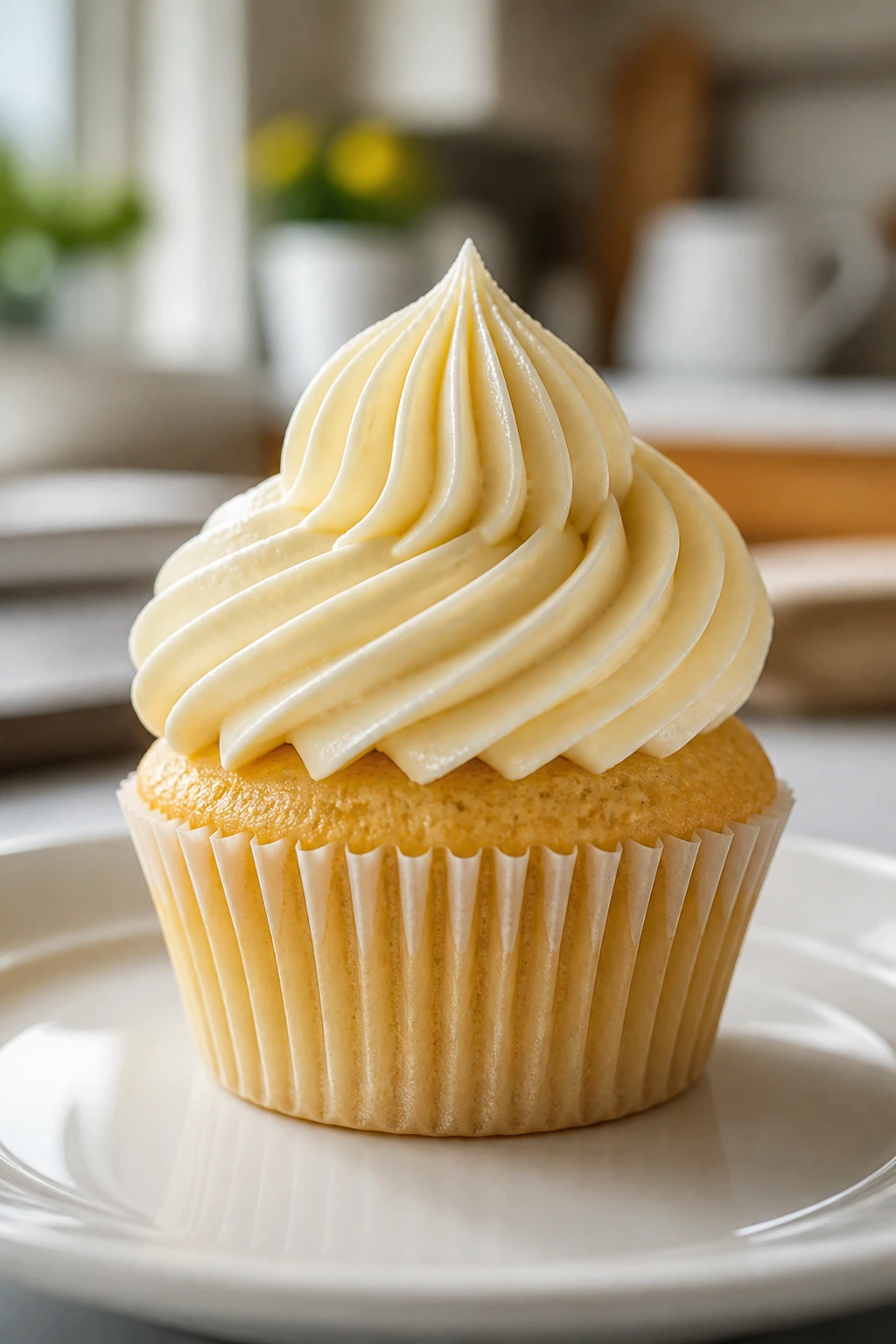
Presentation: I like these on a plain white platter or a long ceramic tray because the frosting becomes the visual focus. One clean swirl with a single raspberry, a sliver of strawberry, or a few curls of lemon zest is enough; you do not need to bury the cupcakes under decoration.
Accompaniments: A cup of strong coffee, black tea, or an icy glass of milk fits the tangy frosting well. If you’re serving them at a larger dessert spread, fresh berries and a lightly sweet fruit salad keep the plate from feeling heavy.
Portions: One standard cupcake is a normal dessert portion. Two work if the frosting is modest and the rest of the meal was light; if you’re scaling up for a party, the recipe doubles cleanly, just bake in batches and keep the unused frosting chilled.
Beverage Pairing: Coffee with a little cream is my first choice, because the bitterness cuts through the frosting’s sweetness. Earl Grey or another black tea does the same job with a softer finish.
Small Upgrades and Flavor Additions
Flavor Enhancement: A teaspoon of vanilla bean paste in the frosting gives you little specks and a deeper vanilla smell. If you like a brighter finish, grate in half a lemon’s zest; it doesn’t make the cupcakes taste lemony, it just wakes up the cream cheese.
Texture Control: Keep the cream cheese slightly cooler than the butter. That small temperature gap is what gives you frosting that holds ridges when you drag a spoon through it. If everything is warm, the frosting gets shiny and soft.
Piping Trick: Use a 1M star tip and pipe in one steady spiral. Start at the outer edge and move in a circle with a steady hand, then lift straight up at the center for a neat top. If you prefer a more dramatic swirl, chill the frosting for 10 minutes before piping so the ridges stay sharp.
Cost-Saver: Store-brand butter is fine here. I would not cheap out on the cream cheese, though — block-style full-fat cream cheese gives the best texture, and the low-fat versions tend to loosen once they’re beaten.
The Most Common Cupcake Mistakes and How to Fix Them
-
Using cold dairy and eggs: The batter can look broken or lumpy, and the cupcakes may bake with uneven tunnels. Let the eggs, sour cream, and buttermilk sit out long enough to lose the fridge chill.
-
Overmixing after the flour goes in: The tops may dome too hard and the crumb feels dense instead of tender. Mix only until the flour disappears, then stop. A few tiny streaks are better than a beaten batter.
-
Filling the liners too full: The batter spills over, the tops mushroom, and the frosting sits on a lopsided cap. Keep each liner about 2/3 full; that gives you a neat dome without overflow.
-
Frosting warm cupcakes: The frosting slides, turns glossy, and can sink into the top of the cupcake. Wait until the cupcakes are fully cool, not “mostly cool.” There’s a difference, and it matters.
-
Beating the frosting too long: Cream cheese frosting turns loose when it gets overworked. Beat until smooth, add the sugar in stages, and stop once the texture is thick enough to hold a swirl.
-
Using spreadable tub cream cheese: The frosting often ends up too soft to pipe cleanly. Block cream cheese is firmer and gives a better finish.
Variations for Different Pans, Tastes, and Diets
Lemon-First Cupcakes: Add the zest of 2 lemons to the batter and 1 teaspoon of zest to the frosting. The cupcakes stay moist, but the flavor shifts brighter and cleaner, which works well for spring brunches or anything served with berries.
Chocolate Velvet Swap: Replace 1/4 cup of the flour with 1/4 cup unsweetened cocoa powder and add 2 tablespoons extra buttermilk. The frosting stays the same, and the result is a softer chocolate cupcake with that sharp cream cheese contrast people tend to reach for first.
Cinnamon Tea Cupcakes: Stir 1 teaspoon ground cinnamon and 1/4 teaspoon nutmeg into the dry mix. These are the cupcakes I’d make for an afternoon tea tray because the spices make the vanilla taste warmer without turning the cake into a spice cake.
Gluten-Free Batch: Use a 1:1 gluten-free baking flour blend that contains xanthan gum. Let the batter sit for 15 minutes before scooping so the starches can hydrate, then bake until the centers spring back. The crumb will be a little tighter, but the sour cream still keeps it from drying out.
Plant-Based Swirl: Swap in plant butter, vegan cream cheese, 1 cup unsweetened vegan yogurt, and 1/2 cup oat milk plus 1 1/2 teaspoons lemon juice in place of the buttermilk. For the eggs, use 3 flax eggs made from 3 tablespoons ground flaxseed mixed with 9 tablespoons water; the cupcakes will be a touch denser, but the flavor still lands in the right place.
Storage, Make-Ahead, and Keeping the Frosting Behaved
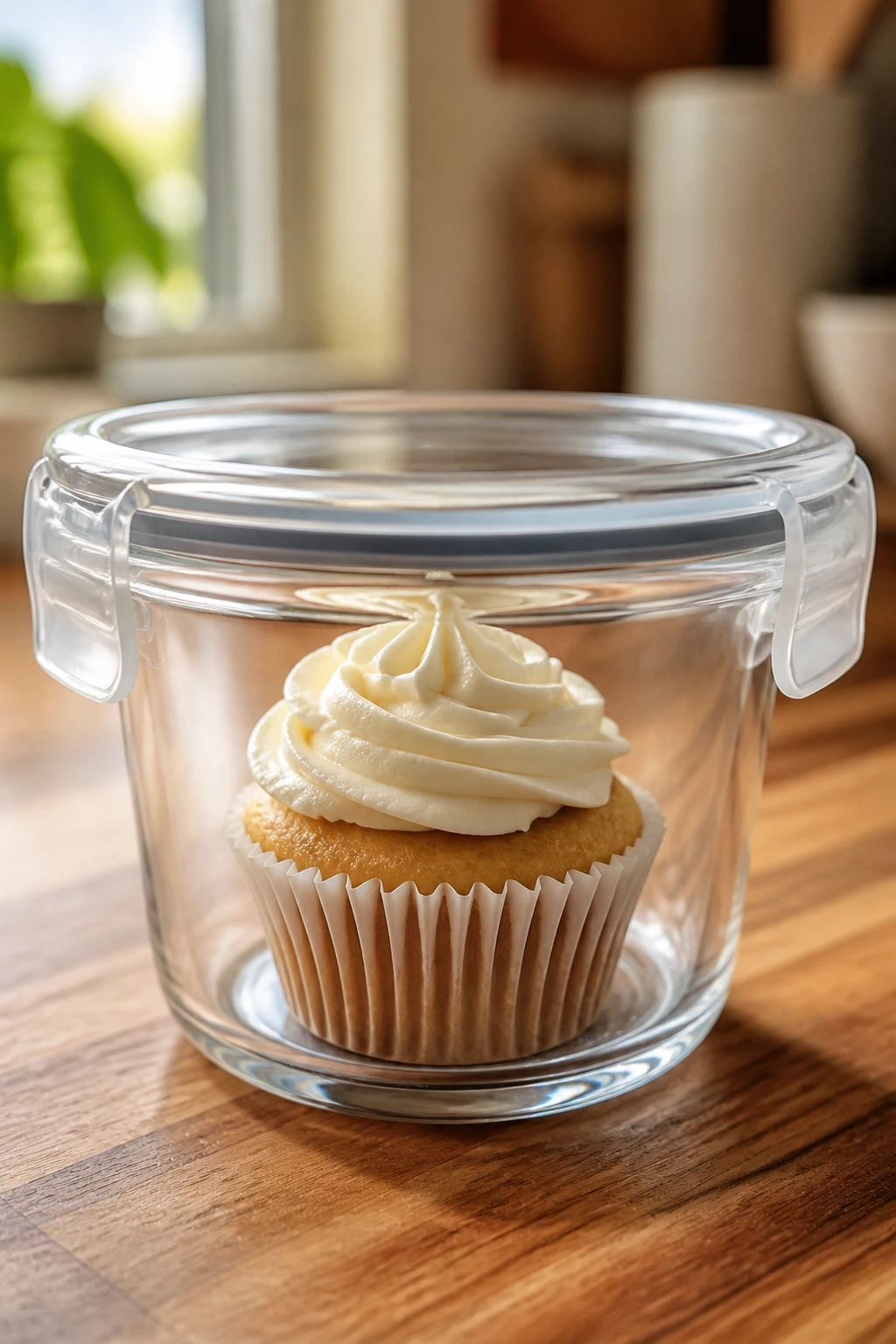
Short Counter Time: Once frosted, these cupcakes can sit at room temperature for about 2 hours before the cream cheese frosting needs to go back into the fridge. If the room is warm, shorten that to about 1 hour. I do not leave them out all afternoon; cream cheese frosting is too delicate for that.
Refrigerator: Store frosted cupcakes in an airtight container for 3 to 4 days. If you stack them, use a shallow container and a sheet of parchment between layers, though I prefer a single layer because the frosting stays prettier.
Freezer: Freeze the unfrosted cupcakes for up to 2 months. Wrap each one tightly in plastic wrap, then slide them into a freezer bag. The frosting also freezes for about 1 month, but I still think it’s better to freeze the cupcakes and make the frosting fresh the day you serve them.
Make-Ahead Plan: Bake the cupcakes a day in advance and keep them wrapped at room temperature if they’ll be unfrosted, or refrigerate them if they’re already frosted. The frosting can be made up to 2 days ahead and chilled; let it soften for about 15 minutes, then stir or whip briefly before piping.
Bringing Them Back to Life: If the cupcakes come from the fridge, let them sit out for 20 to 30 minutes before serving so the crumb softens again. I do not microwave frosted cupcakes. If you want a barely warm cupcake, warm it plain for 8 to 10 seconds and frost after.
Questions People Ask Before They Bake Them
Can I make these as mini cupcakes instead of standard ones?
Yes. Use a mini muffin pan, fill each cup about 2/3 full, and bake for roughly 10 to 12 minutes. Start checking early, because mini cupcakes go from perfect to dry very fast.
Can I use all butter and skip the oil?
You can, but the cupcakes won’t stay as soft after chilling. The oil is there for a reason: it keeps the crumb tender even when the frosting is cold from the fridge. If you want more butter flavor, use both, the way this recipe does.
Why did my cream cheese frosting turn runny?
Usually the cream cheese was too warm, the butter was too soft, or the mixture was beaten too long. Chill the bowl for 10 to 15 minutes, then beat again briefly. If it’s still loose, add a little more powdered sugar, about 1/4 cup at a time.
Can I make the cupcakes a day ahead?
Yes, and honestly, that’s a smart move. Bake them, cool them completely, then store them airtight. Frosting them the next day gives you cleaner swirls and less panic.
How do I get the frosting to pipe tall instead of drooping?
Use full-fat block cream cheese, sift the powdered sugar, and chill the frosting briefly if it feels soft. A 1M star tip also helps because it builds ridges fast instead of smearing the frosting flat.
Can I freeze frosted cupcakes?
You can, but the texture is better if you freeze the cupcakes unfrosted and frost them after thawing. Frosted cupcakes freeze in a pinch, yet the swirl can lose a little definition once it thaws.
What if my cupcakes sink in the middle?
They were probably underbaked, or the oven temperature was off. Bake until the tops spring back and the center has just a few moist crumbs on the tester; if you like, keep an oven thermometer in the oven so you know the heat is real and not wishful.
A Cupcake Worth Reaching For
A good cupcake should feel easy to eat and slightly too polished to have come from a sleepy afternoon in your kitchen. That’s what this one does. The crumb stays soft because the batter uses butter, oil, sour cream, and buttermilk in a very specific way, and the frosting tastes like cream cheese instead of pure sugar, which is a small mercy I appreciate every time.
The little details matter more than the fancy garnish. Cool the cupcakes all the way down. Keep the cream cheese frosting thick and cold enough to hold a swirl. Stop mixing sooner than your instincts tell you to. Those are the things that make these cupcakes feel worth repeating, and once you’ve made them once, the formula tends to stick.
Moist Elegant Cupcakes with Cream Cheese Frosting — Recipe Card
Recipe Name: Moist Elegant Cupcakes with Cream Cheese Frosting
Description: Tender vanilla cupcakes made with butter, oil, sour cream, and buttermilk, topped with a tangy cream cheese frosting that pipes into tall, tidy swirls. They stay soft after chilling and taste balanced rather than overly sweet.
Prep Time: 25 minutes
Cook Time: 18 to 20 minutes
Total Time: 1 hour 15 minutes
Course: Dessert
Cuisine: American
Servings: 18 cupcakes
Calories: 370 kcal
Ingredients
For the Cupcakes:
- 1 1/2 cups all-purpose flour
- 1 1/2 teaspoons baking powder
- 1/2 teaspoon baking soda
- 1/2 teaspoon fine sea salt
- 1/2 cup unsalted butter, softened to room temperature
- 1/2 cup neutral oil, such as canola or avocado
- 1 1/4 cups granulated sugar
- 3 large eggs, room temperature
- 2 teaspoons vanilla extract
- 1 cup sour cream, room temperature
- 1/2 cup buttermilk, room temperature
For the Cream Cheese Frosting:
- 8 ounces full-fat cream cheese, softened but still cool
- 1/2 cup unsalted butter, softened
- 4 cups powdered sugar, sifted
- 1 teaspoon vanilla extract
- 1/8 teaspoon fine salt
- 1 to 2 tablespoons heavy cream, only if needed for piping consistency
Instructions
-
Preheat the oven to 350°F (175°C) and line 18 cups of two standard muffin pans with paper liners.
-
Whisk the flour, baking powder, baking soda, and salt in a medium bowl until evenly combined.
-
Beat the butter, oil, and sugar in a large bowl for 2 to 3 minutes until thick and slightly lighter in color.
-
Add the eggs one at a time, mixing briefly after each one and scraping the bowl once if needed.
-
Beat in the vanilla, sour cream, and buttermilk on low speed until mostly smooth.
-
Add the dry ingredients in two additions, mixing on low speed just until the flour disappears.
-
Divide the batter evenly among the liners, filling each about 2/3 full, then bake for 18 to 20 minutes until the tops spring back and a toothpick comes out with moist crumbs.
-
Cool the cupcakes in the pan for 5 minutes, then transfer them to a wire rack and cool completely.
-
Beat the cream cheese and butter together for about 1 minute until smooth.
-
Add the powdered sugar, vanilla, and salt in two additions, mixing on low speed until thick and silky. Add heavy cream only if the frosting needs a little slack for piping.
-
Pipe or spread the frosting onto the cooled cupcakes.
-
Serve the same day, or chill until ready to serve and bring back to cool room temperature before eating.
Notes: Use block-style cream cheese, not spreadable tub cream cheese. Chill the frosting for 10 to 15 minutes if it softens too much. Do not frost warm cupcakes.