



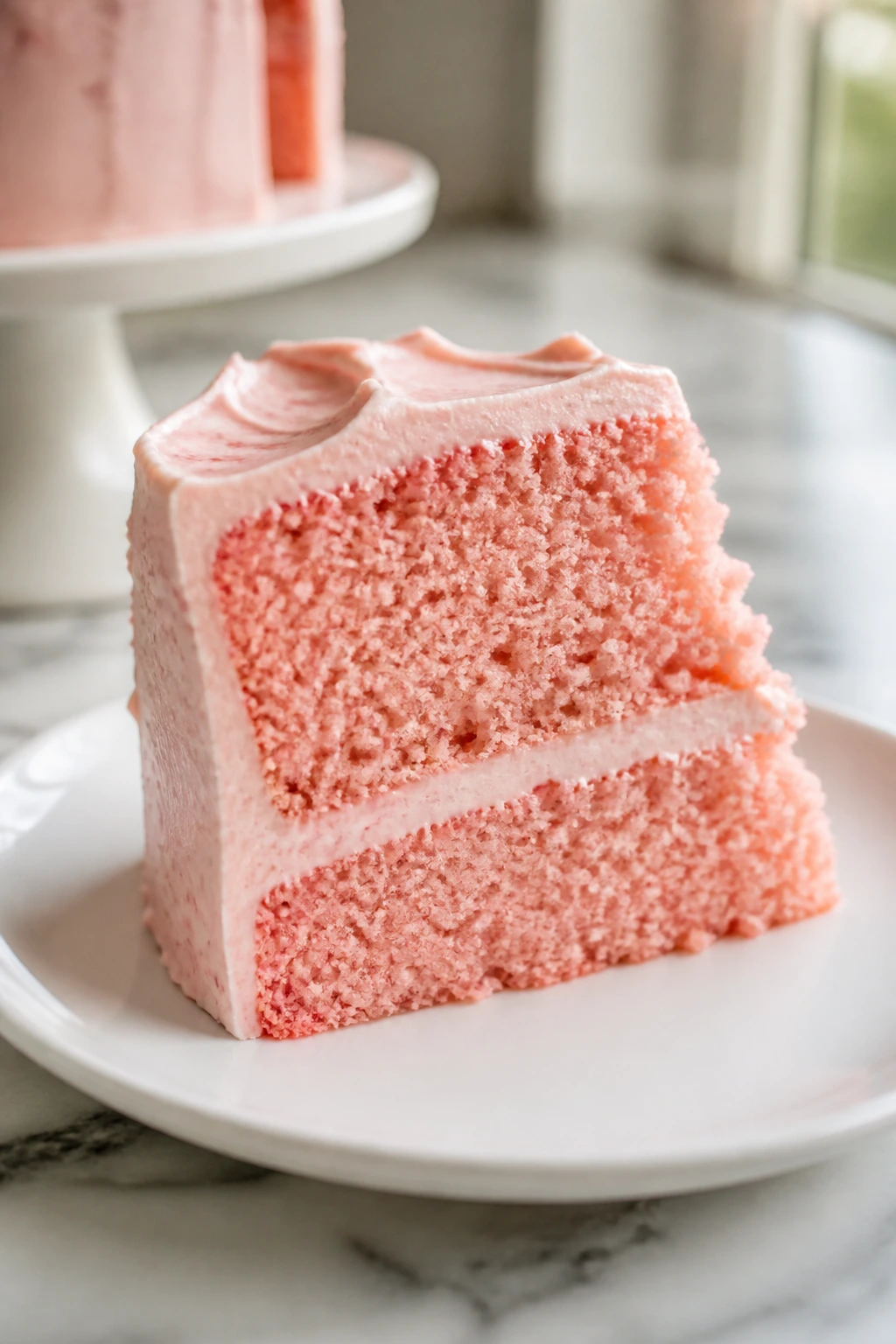
The first thing that hits you is the smell: warm butter, vanilla, and that faint grape-skin note that comes out of a rosé reduction. A rich pink champagne cake should feel a little celebratory before you even cut it, and this one does. The crumb is tender without being flimsy, the frosting brings a cold, tangy snap against all that sweetness, and the whole thing lands somewhere between bakery polish and old-fashioned party cake.
A lot of pink champagne cake recipes lean on boxed mix, gelatin, or a bottle of sparkling wine poured in with crossed fingers. That can work if you want color and a hint of fizz in the name, but it usually tastes thin. I prefer the version that actually cooks with the champagne, brushes the layers with syrup, and lets cream cheese frosting carry the finishing weight. That’s where the flavor starts acting like it has a pulse.
The trick is restraint. Champagne in cake does not need to shout. It needs to be concentrated, folded into a fine crumb, and paired with enough tang and salt to keep the sweetness from going limp. When that balance lands, the cake slices cleanly, smells expensive, and somehow feels even better on the second day.
Why This Pink Champagne Cake Keeps Getting Requested
- The champagne flavor survives baking: Reducing the rosé first keeps the grape and berry notes in the crumb instead of losing them in the oven.
- The frosting has real backbone: Cream cheese gives the finish a sharp edge, so the cake tastes rich instead of sugary.
- The crumb stays soft for days: Sour cream, milk, and champagne syrup keep each slice plush long after the knife comes out.
- The pink color is gentle, not neon: Freeze-dried strawberry powder gives a blush tone that looks natural on the plate.
- It’s fancy without being fussy: You can frost it smoothly or leave a loose swirl on top and it still looks finished.
- It slices better than most celebration cakes: A short chill firms the frosting enough for neat wedges and clean edges.
Yield: Serves 12
Prep Time: 35 minutes
Cook Time: 30 to 35 minutes
Total Time: 1 hour 10 minutes active, plus 1 hour 30 minutes cooling and chilling
Difficulty: Intermediate — the steps are straightforward, but the cake rewards careful mixing and a little patience with the cooling and frosting.
Chill/Rest Time: 1 hour cooling, plus 20 to 30 minutes after frosting
Best Served: Slightly chilled or at cool room temperature
Where the Pink Champagne Flavor Actually Comes From
A lot of people assume champagne cake should taste fizzy. It doesn’t. Bubbles disappear the second heat gets involved, and that is fine. What matters is the dry, fruity note in the wine itself, the slight acidity, and the way those flavors cling after you reduce the liquid. Dry rosé sparkling wine works especially well because it brings color and a soft berry edge without turning the cake into a sugar bomb.
I keep circling back to the reduction because it does the heavy lifting here. If you pour champagne straight into batter, most of what you taste after baking is vanilla and butter. When you simmer it down first, the wine stops acting like a novelty and starts acting like an ingredient. That’s the difference between a cake that sounds festive and one that tastes like somebody paid attention.
The frosting matters just as much. Cream cheese frosting gives this cake a colder, cleaner finish than buttercream would, and that sharpness makes the champagne note feel brighter. It also keeps the whole dessert from sliding into one-note sweetness, which is a common problem with celebration cakes that lean too hard on powdered sugar. This version has a little bite. It needs that.
Why I reduce the wine first
The reduced champagne adds flavor without making the batter wet. That matters more than most recipes admit, because too much liquid can leave a cake squat and a little gummy in the center. A half cup of reduction folds into the batter neatly, especially with cake flour and sour cream doing their jobs alongside it.
Why the frosting is cream cheese, not buttercream
Buttercream can taste pretty against a champagne cake, but it often blunts the whole point. Cream cheese frosting gives you tang, salt, and a cooler finish that cuts through the richness of the butter-based crumb. I’d rather have one bite that tastes balanced than a whole cake that feels like a sugar rush.
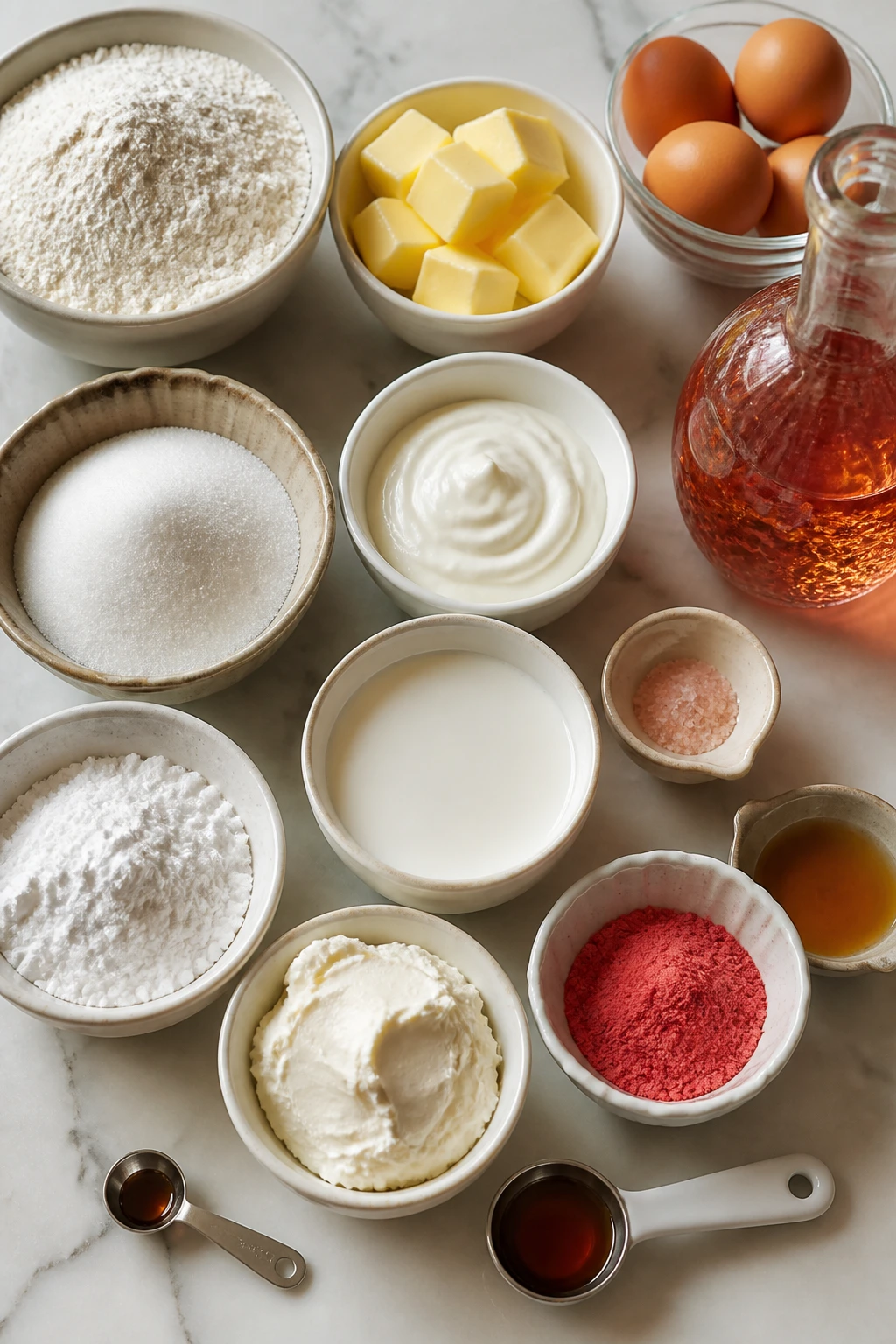
The Shopping List for the Cake, Syrup, and Frosting
For the Pink Champagne Cake Layers
- 2 1/2 cups cake flour, sifted
- 2 1/2 teaspoons baking powder
- 1/2 teaspoon baking soda
- 3/4 teaspoon fine sea salt
- 1/4 cup freeze-dried strawberries, finely ground and sifted
- 1 cup unsalted butter (2 sticks), softened to cool room temperature
- 1 3/4 cups granulated sugar
- 4 large eggs, room temperature
- 2 teaspoons vanilla extract
- 1 teaspoon almond extract
- 1/2 cup sour cream, room temperature
- 1/2 cup whole milk, room temperature
- 1/2 cup champagne reduction, cooled from 1 1/2 cups pink champagne or rosé sparkling wine
For the Champagne Syrup
- 1 cup pink champagne or rosé sparkling wine
- 1/4 cup granulated sugar
- 1 teaspoon fresh lemon juice
For the Cream Cheese Frosting
- 16 ounces block-style cream cheese, softened but still cool
- 1 cup unsalted butter, softened to cool room temperature
- 4 1/2 to 5 cups powdered sugar, sifted
- 1 teaspoon vanilla extract
- 1/4 teaspoon almond extract
- 1/4 teaspoon fine sea salt
- 1 to 2 tablespoons cooled champagne reduction
Why Each Ingredient Pulls Its Weight
Champagne Reduction and Syrup
What to use: 1 1/2 cups pink champagne or dry rosé sparkling wine reduced to 1/2 cup for the cake, plus 1 cup champagne with 1/4 cup sugar and 1 teaspoon lemon juice for the syrup.
Preparation: Reduce the first batch over medium-low heat until it measures 1/2 cup, then cool it completely before it touches the batter. Simmer the syrup batch just until the sugar dissolves and the liquid looks lightly glossy.
Substitutions: Sparkling white grape juice works for a no-alcohol version, though it will taste sweeter; add a touch more lemon juice if that happens.
Tips: Don’t chase a dark reduction. You want a concentrated, clean-tasting liquid, not a sticky syrup that tastes cooked.
Cake Batter Builders
What to use: 2 1/2 cups cake flour, 1/4 cup freeze-dried strawberry powder, 1 cup butter, 1 3/4 cups sugar, 4 eggs, 1/2 cup sour cream, 1/2 cup whole milk, vanilla, almond extract, baking powder, baking soda, and salt.
Preparation: Sift the dry ingredients together so the strawberry powder disappears evenly into the flour. Bring the eggs, sour cream, and milk to room temperature so the batter blends without clinging in cold streaks.
Substitutions: If cake flour is unavailable, use all-purpose flour plus cornstarch, or a good 1:1 gluten-free baking blend with xanthan gum if you need a gluten-free cake.
Tips: The batter should look thick and plush, not runny. That’s what keeps the layers tall and even.
Cream Cheese Frosting
What to use: 16 ounces block cream cheese, 1 cup butter, 4 1/2 to 5 cups powdered sugar, vanilla, almond extract, salt, and 1 to 2 tablespoons champagne reduction.
Preparation: Let the cream cheese soften just enough to beat smooth, but don’t let it turn greasy and floppy. Cut the butter into pieces so it blends before the sugar goes in.
Substitutions: Mascarpone can replace half the cream cheese for a softer, milder frosting, though it won’t hold its shape as firmly.
Tips: If the frosting looks loose, chill it for 10 minutes, then beat it briefly again. That small pause saves a lot of frustration.
The Pan, Mixer, and Other Tools That Make It Easier
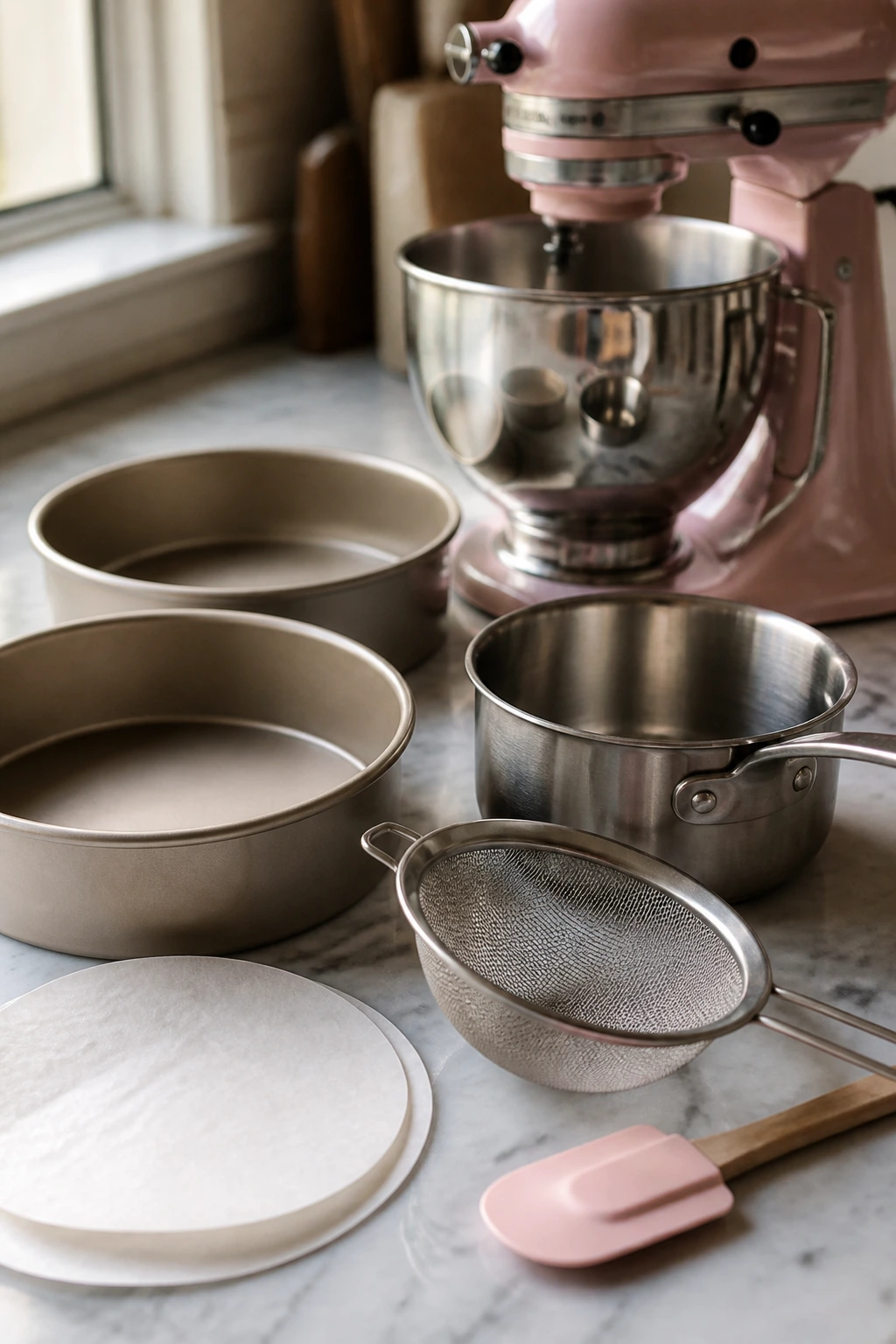
A cake like this doesn’t need specialty gear, but the right few tools keep the layers neat and the frosting less annoying.
- Two 9-inch round cake pans: Standard pans give you even layers and easy stacking.
- Parchment rounds: These keep the bottoms from sticking and make the first flip much cleaner.
- Stand mixer or hand mixer: Either one works; a stand mixer saves your arms when the frosting comes together.
- Medium saucepan: You’ll need one for the champagne reduction and another for the syrup if you don’t want to wash between stages.
- Fine-mesh sieve: Helpful for sifting cake flour, strawberry powder, and powdered sugar without clumps.
- Rubber spatula: For folding and scraping. A cake batter should not be left marooned in the corners of the bowl.
- Offset spatula or long butter knife: The easiest way to spread frosting smoothly across the top and sides.
- Wire cooling rack: Airflow under the layers keeps them from steaming into themselves.
- Digital kitchen scale, optional: If you bake often, weighing flour gives you the same crumb every time.
Mixing the Batter and Baking the Layers
Build the Champagne Base
- Reduce the champagne: Pour 1 1/2 cups pink champagne or rosé sparkling wine into a small saucepan and set it over medium-low heat. Simmer gently, without a hard boil, until it reduces to 1/2 cup, about 12 to 15 minutes. The liquid should look a little syrupy and smell concentrated, not burnt.
- Make the syrup: In a second saucepan, combine 1 cup champagne, 1/4 cup granulated sugar, and 1 teaspoon lemon juice. Bring it to a gentle simmer over medium heat, stirring once or twice, until the sugar dissolves and the mixture looks lightly glossy, about 4 to 6 minutes. Set it aside to cool.
Prepare the Pans and Dry Mix
- Heat the oven and line the pans: Preheat the oven to 350°F (175°C) and position a rack in the center. Grease two 9-inch round cake pans, line the bottoms with parchment rounds, then grease the parchment too.
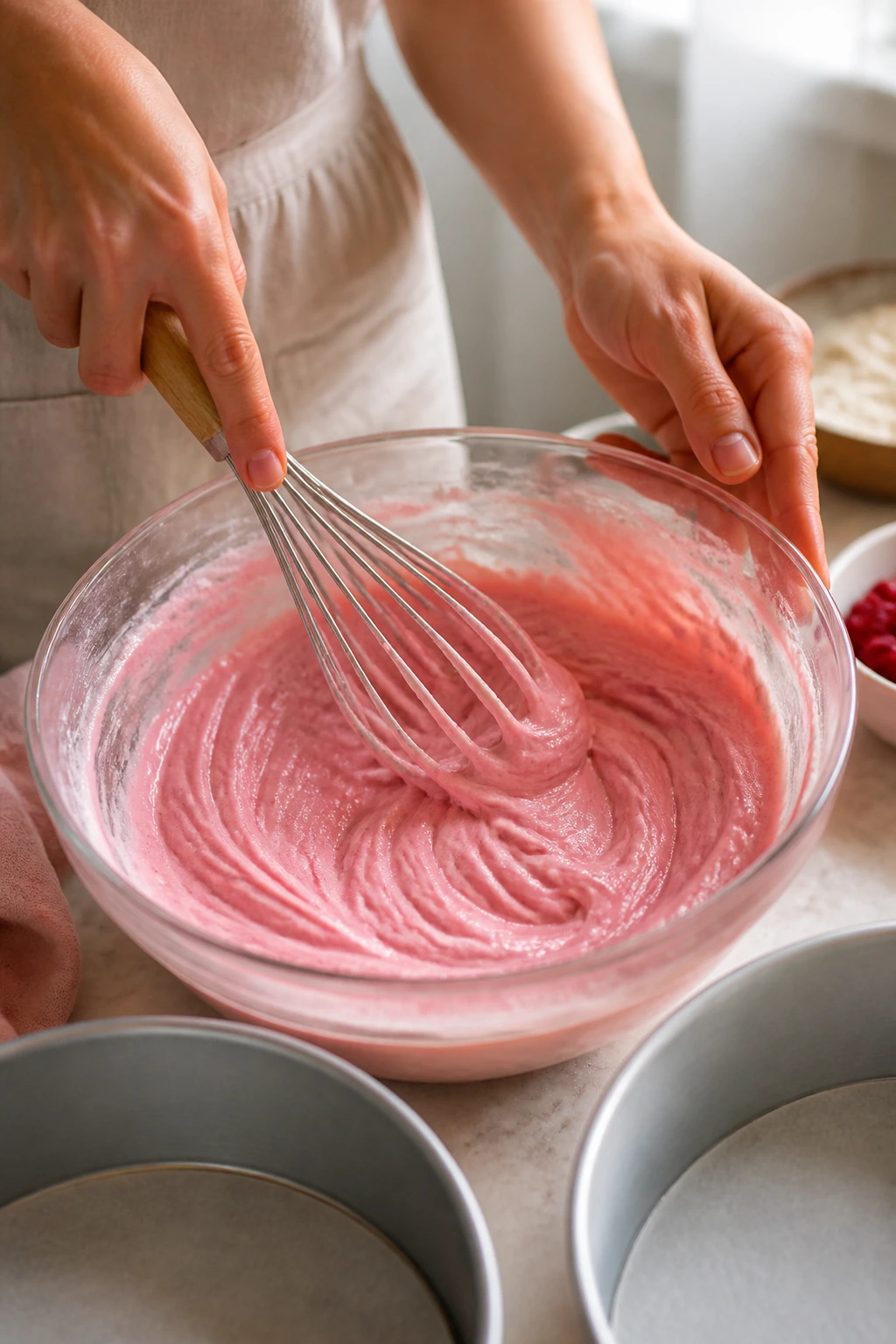
- Whisk the dry ingredients: In a medium bowl, whisk together 2 1/2 cups cake flour, 2 1/2 teaspoons baking powder, 1/2 teaspoon baking soda, 3/4 teaspoon salt, and 1/4 cup finely ground freeze-dried strawberries until the mixture looks evenly pale pink and no powder clumps remain.
Cream and Combine
- Beat the butter and sugar: In a large bowl, beat 1 cup softened butter and 1 3/4 cups sugar on medium-high speed for 3 to 4 minutes, until the mixture is pale, fluffy, and a little louder in volume. Scrape the bowl once or twice; the butter at the bottom likes to stay dense.
- Add the eggs and extracts: Beat in the 4 eggs one at a time, mixing for about 20 seconds after each egg. Add 2 teaspoons vanilla extract and 1 teaspoon almond extract, then beat just until the mixture looks smooth.
- Add the dairy and dry ingredients alternately: Stir together 1/2 cup sour cream, 1/2 cup whole milk, and the 1/2 cup cooled champagne reduction. With the mixer on low, add the dry ingredients in three additions, alternating with the wet mixture in two additions. Start and end with the dry mixture. Stop as soon as the flour disappears. Overmixing here makes the crumb tight and dry.
Bake and Cool
- Divide and bake: Split the batter evenly between the pans. Smooth the tops with a spatula and bake for 28 to 32 minutes, rotating the pans halfway through if your oven runs hot on one side. The cakes are done when the tops spring back lightly and a tester comes out with a few moist crumbs, or when the center reads about 205°F on an instant-read thermometer.
- Cool and brush with syrup: Let the cakes cool in the pans for 10 minutes, then run a thin knife around the edges and turn them out onto a rack. While they’re still slightly warm, brush each layer with a few spoonfuls of the cooled champagne syrup. The surface should look glossy, not soaked enough to puddle. Cool completely before frosting.
Whipping the Frosting and Putting the Cake Together
Make the Cream Cheese Frosting
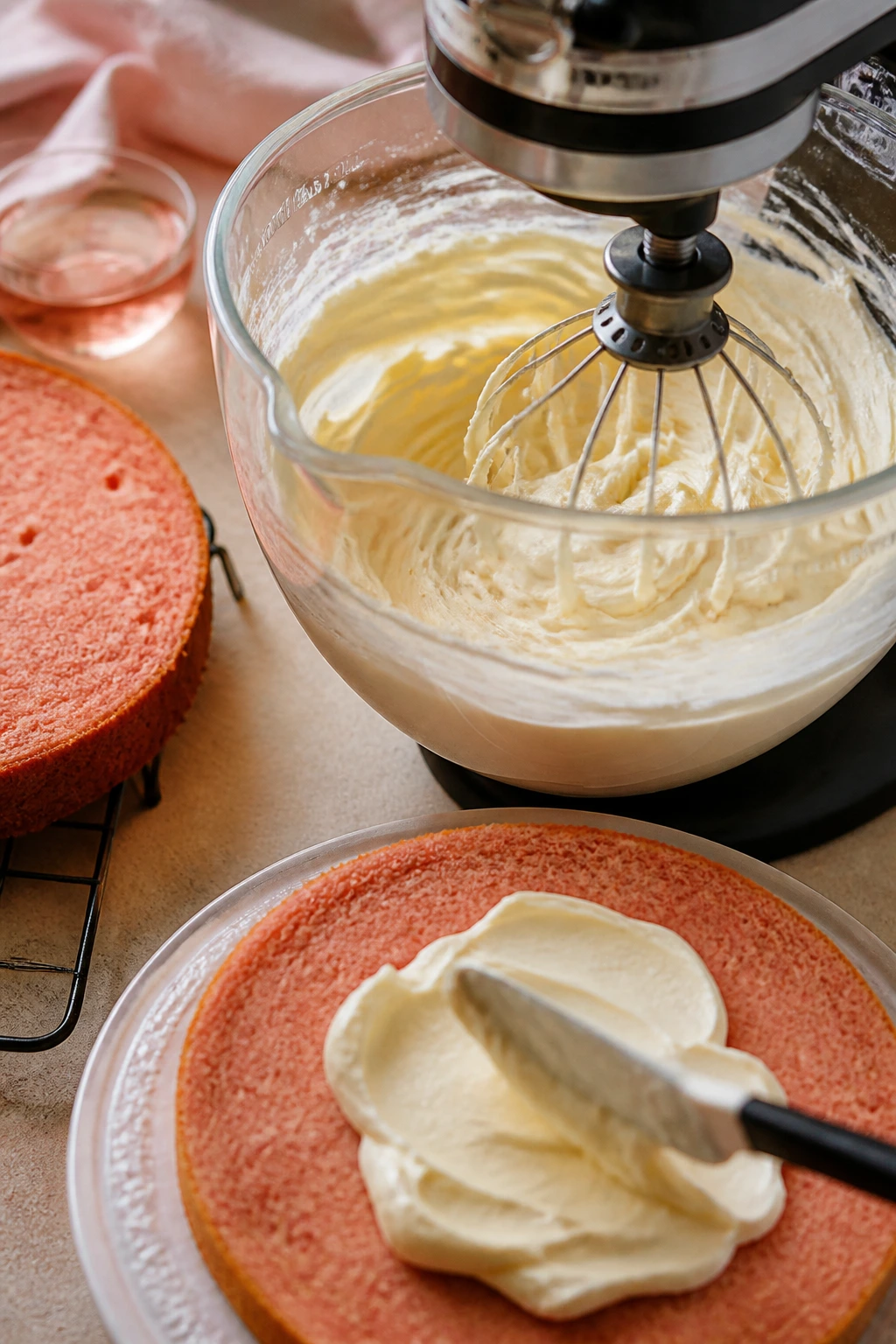
- Beat the base smooth: In a large bowl, beat 16 ounces block cream cheese and 1 cup softened butter on medium speed for 1 to 2 minutes, until there are no lumps. Scrape the bowl down well; cream cheese hides in the corners.
- Add the sugar and flavorings: With the mixer on low, add 4 1/2 cups powdered sugar in two or three additions. Beat in 1 teaspoon vanilla, 1/4 teaspoon almond extract, 1/4 teaspoon salt, and 1 to 2 tablespoons cooled champagne reduction. The frosting should be thick, spreadable, and able to hold a swoop. If it feels loose, beat in the remaining 1/2 cup powdered sugar.
- Level and stack the layers: If the cake domed a little, trim the tops with a serrated knife so the layers sit flat. Place one layer on a cake plate and spread about 3/4 cup frosting over the top. Add the second layer, cut side down if you leveled it, and press lightly so the stack settles.
- Crumb-coat the cake: Spread a thin layer of frosting over the top and sides to catch crumbs, then chill the cake for 15 to 20 minutes until the surface feels set. Do not skip this if your kitchen is warm; soft frosting slides, and it gets annoying fast.
- Finish and decorate: Frost the top and sides with the remaining frosting, leaving it smooth or giving it a loose, hand-finished swirl. Chill the cake for another 20 minutes before slicing so the cuts come out neat. If you want to garnish it, add fresh raspberries, sliced strawberries, or a few sugared petals right before serving.
How to Serve It at the Table
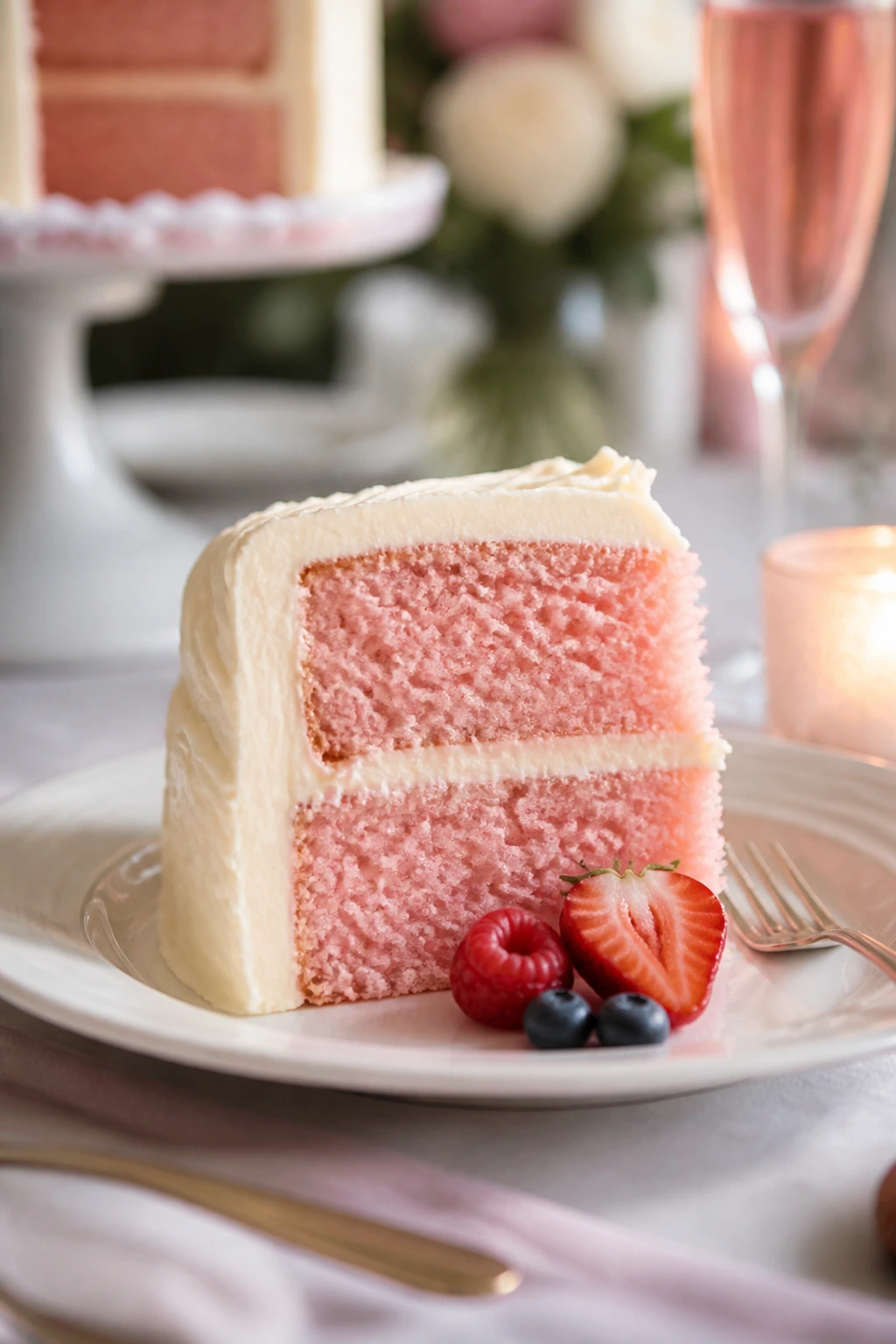
Presentation: A chilled cake knife makes cleaner slices than a warm one, so run the blade under hot water, wipe it dry, and cut in one long motion. A few berries on the plate are enough; the cake already carries the visual weight with its blush crumb and white frosting.
Accompaniments: Fresh raspberries, sliced strawberries, or a spoonful of lightly macerated berries work well because they echo the wine note without making the dessert too sweet. If you’re serving after dinner, a small scoop of vanilla ice cream is fine, but I usually prefer the cake on its own with coffee or strong black tea.
Portions: Twelve slices is the sweet spot for this cake. If it’s part of a dessert spread, cut 14 smaller slices; if it’s the only dessert on the table, keep the wedges a little wider and let the frosting do its job.
Beverage Pairing: Dry sparkling wine fits the theme, but a cup of bitter coffee or Earl Grey tea is the better move if you want balance. The tea’s citrus edge and the coffee’s roast both cut through the cream cheese in a way still water never will.
Practical Tips That Matter More Than Fancy Decoration
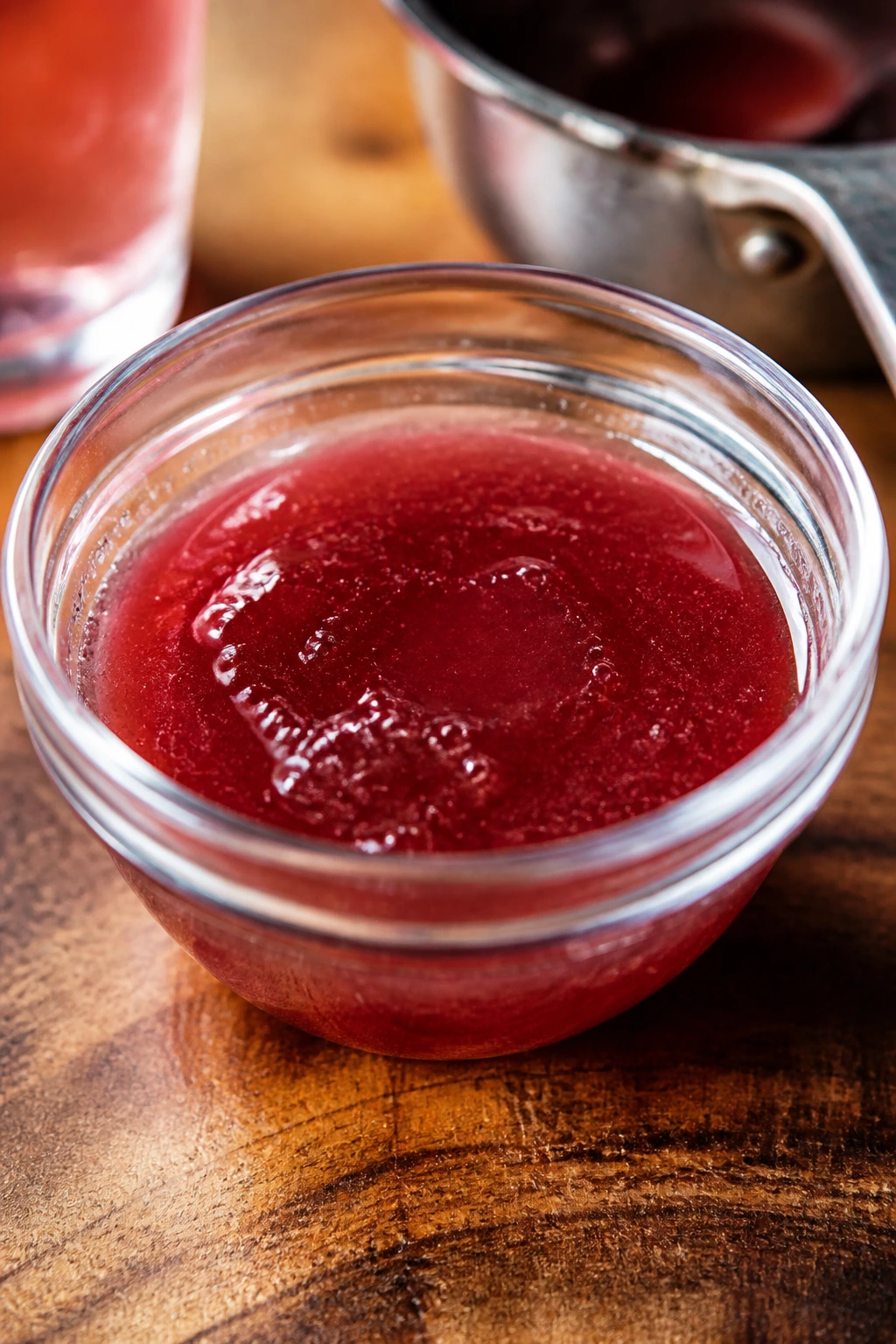
Flavor Enhancement: Brush the layers with syrup while they’re still slightly warm. The syrup sinks in more evenly, and the cake tastes like it has champagne running through the crumb instead of sitting on top of it. That one move is the difference between an elegant flavor and a whisper of one.
Time-Saver: Bake the cake layers a day ahead and wrap them tightly once they’re fully cool. Cold layers are easier to trim and frost, and the crumb feels less delicate when you are assembling them.
Pro Move: Chill the mixing bowl for the frosting for 10 minutes before you start if your kitchen runs warm. Cream cheese frosting is much easier to keep thick when the bowl itself isn’t holding heat.
Cost-Saver: Use a dry rosé or brut sparkling wine you would actually drink, not a luxury bottle. Since you’re reducing it and adding sugar, the flavor matters more than label drama.
Make-It-Yours: If almond extract isn’t your thing, replace it with another teaspoon of vanilla and a little lemon zest. The cake loses none of its structure, and the finish turns brighter and cleaner.
Common Mistakes That Flatten the Flavor or Texture
- Boiling the champagne too hard: If the reduction bubbles aggressively, the liquid can taste flat and faintly bitter. Keep it at a gentle simmer and stop when it reaches the right measure.
- Using cream cheese that’s too soft or tub-style cream cheese: The frosting turns loose, almost glossy in a bad way, and won’t hold a clean edge. Use block cream cheese and stop beating as soon as it smooths out.
- Overmixing after the flour goes in: The batter gets stretchy and the baked crumb turns tight instead of tender. Mix only until the last streak of flour disappears.
- Frosting warm layers: Warm cake melts the frosting on contact, which leads to sliding, tearing, and a lumpy finish. Cool the layers completely, then chill the assembled cake briefly before the final coat.
- Skipping the syrup because the layers already seem moist: The syrup is not just about moisture; it carries flavor into the middle of the cake. Without it, the champagne note fades and the dessert tastes more like a vanilla layer cake with a pink tint.
Variations Worth Baking
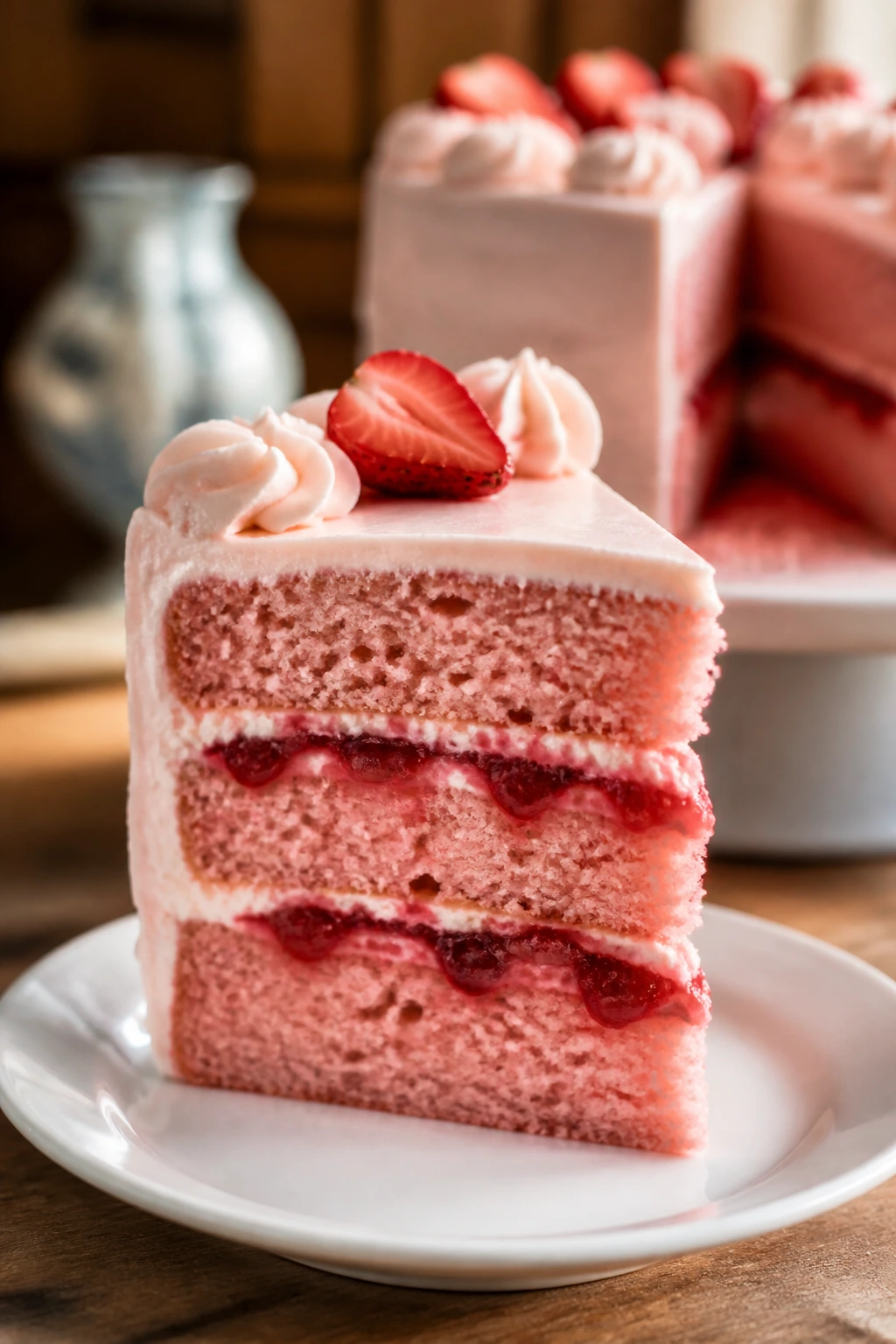
Strawberry Rosé Layer Cake
Keep the freeze-dried strawberry powder, then add a handful of thinly sliced fresh strawberries between the layers. If the berries are sweet, trim the frosting sugar by a few tablespoons so the filling doesn’t tip the whole slice into candy territory.
Brut Lemon Sparkle
Use a very dry rosé or brut sparkling wine, then add 2 teaspoons lemon zest to the batter and 1 teaspoon lemon zest to the frosting. The citrus sharpens the champagne note and makes the cake taste brighter, especially if you serve it cold.
Cupcake Parade
Turn the batter into about 24 cupcakes, filling each cup about two-thirds full and baking at 350°F for 18 to 20 minutes. Brush each warm cupcake with a few drops of syrup before frosting; that tiny step keeps the flavor from disappearing into the wrapper.
Gluten-Free Celebration Cake
Swap the cake flour for a good 1:1 gluten-free baking blend that already contains xanthan gum. Let the batter rest for 15 minutes before baking so the flour hydrates, then check the layers a few minutes early because some gluten-free blends brown faster at the edges.
No-Alcohol Sparkler
Use sparkling white grape juice in both the reduction and the syrup, and add an extra teaspoon of lemon juice to keep the sweetness from running away with the cake. The flavor is lighter and fruitier, but the texture and method stay the same.
Keeping the Cake Happy After Day One
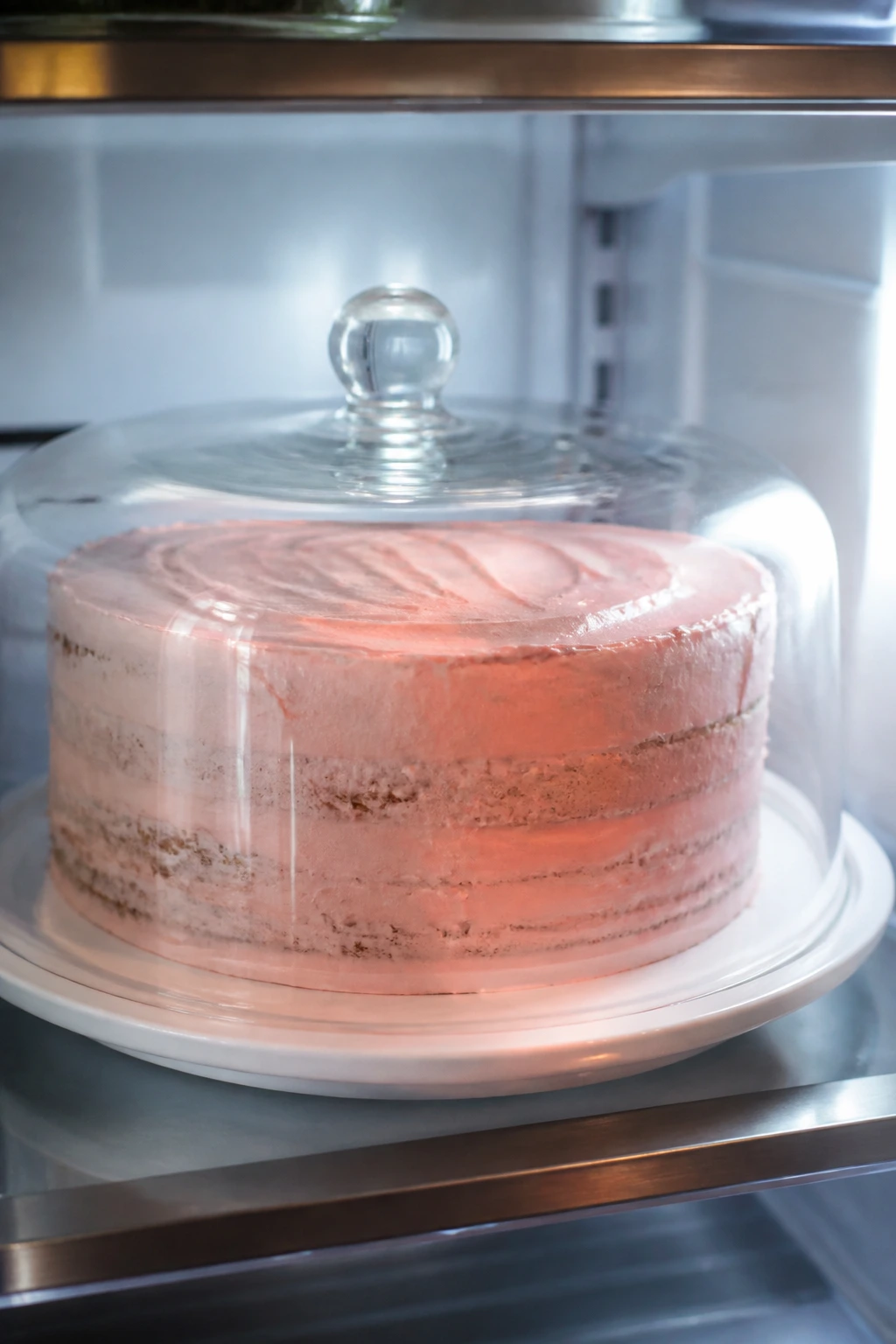
A frosted cream cheese cake lives in the refrigerator, not on the counter. Once assembled, it keeps well for up to 4 days refrigerated if you cover it with a cake dome or loosely tent it with plastic wrap after the frosting firms. The flavor actually settles into something rounder after an overnight rest, though the frosting will firm up a bit.
For room temperature serving, let slices sit out for 30 to 45 minutes before cutting or eating. That softens the butter in the crumb and takes the chill off the cream cheese frosting, which makes the champagne note easier to taste. More than 2 hours at room temperature is not where I’d leave a cake with dairy frosting.
To freeze, wrap the unfrosted cake layers tightly in plastic wrap, then foil, and freeze for up to 2 months. Thaw them in the refrigerator overnight while still wrapped, then bring them to cool room temperature before frosting. You can also freeze individual frosted slices, but the texture is best if you freeze the unfrosted layers and make the frosting fresh.
The champagne syrup keeps in a small jar in the refrigerator for 1 week. The frosting will hold for 3 to 4 days in the fridge; if it stiffens, let it sit out for 15 minutes and beat it briefly before using. I do not recommend reheating the finished cake in the microwave. If you want a warmer bite, let it sit at room temperature instead. That’s the safer, cleaner move.
Questions Bakers Usually Ask Before They Start
Can I use regular champagne instead of rosé?
Yes, but the cake will lose some of its natural blush and berry note. If you use regular brut champagne, the flavor stays elegant, but the color will be paler unless you add a little extra strawberry powder.
Do I really need to reduce the champagne first?
Yes, if you want the flavor to survive baking. Straight champagne adds moisture, but reduction concentrates the wine so the cake tastes like something instead of just smelling festive in the bowl.
Can I make this without alcohol?
You can. Sparkling white grape juice works well for both the batter reduction and the syrup, and a little extra lemon juice keeps it from tasting syrupy-sweet.
Why did my frosting turn loose?
The two common reasons are cream cheese that was too soft and butter that was too warm. Chill the bowl for 10 to 15 minutes, then beat the frosting again; that usually brings it back.
Can I bake this in 8-inch pans?
Yes, but the layers will be taller, so plan on a few extra minutes in the oven. Start checking around 30 minutes, and don’t rely on the clock alone—watch for springy tops and a clean tester with a few crumbs.
Can I make the layers a day ahead?
Absolutely. In fact, I prefer it that way because the cooled layers are easier to frost, and the syrup has time to settle into the crumb before the cake is served.
What if I want a stronger champagne taste?
Add a little more champagne reduction to the frosting, but only a teaspoon or two at a time. Too much liquid makes the frosting slack, and once that happens, you spend the rest of the afternoon fixing it.
A Cake Built for a Real Toast
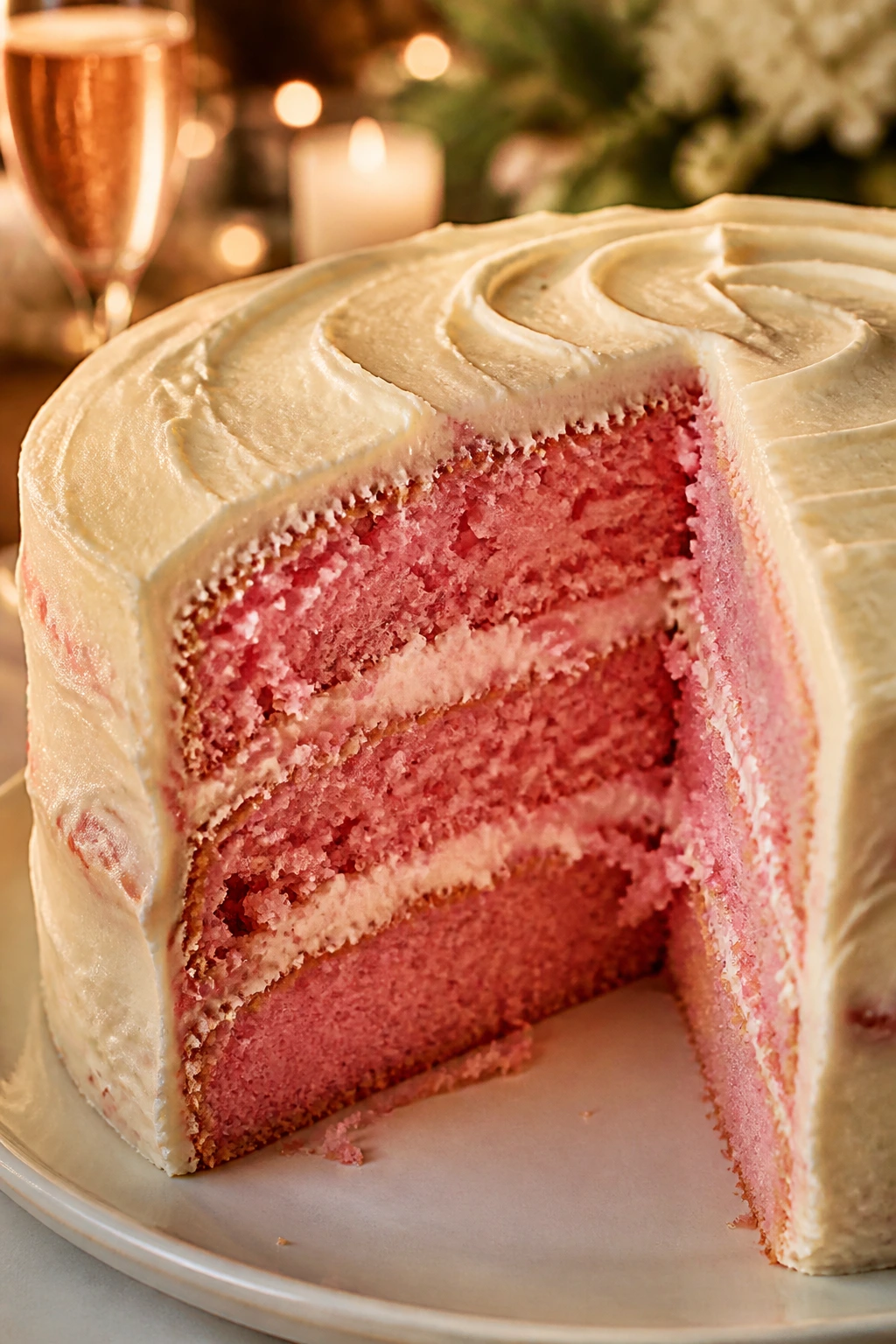
What I like most about this cake is that it does not rely on gimmicks. The pink color is soft, the champagne flavor is present but controlled, and the cream cheese frosting keeps the whole thing from turning into a sugar parade. It looks like something you’d bring out with actual glasses on the table, which is exactly the point.
Bake it once, and you’ll probably start keeping a bottle of rosé sparkling wine on hand for the reduction alone. Strange pantry behavior? Maybe. Worth it? Completely.
Rich Pink Champagne Cake with Cream Cheese Frosting — Recipe Card
Recipe Name: Rich Pink Champagne Cake with Cream Cheese Frosting
Description: A tender pink champagne layer cake made with reduced rosé sparkling wine, a subtle strawberry blush, and tangy cream cheese frosting. The syrup brushed over the warm layers keeps the crumb soft and gives the cake a clean champagne finish.
Prep Time: 35 minutes
Cook Time: 30 to 35 minutes
Total Time: 1 hour 10 minutes active, plus 1 hour 30 minutes cooling and chilling
Course: Dessert
Cuisine: American
Servings: 12
Calories: About 750 kcal per serving
Ingredients
For the Pink Champagne Cake Layers
- 2 1/2 cups cake flour, sifted
- 2 1/2 teaspoons baking powder
- 1/2 teaspoon baking soda
- 3/4 teaspoon fine sea salt
- 1/4 cup freeze-dried strawberries, finely ground and sifted
- 1 cup unsalted butter (2 sticks), softened to cool room temperature
- 1 3/4 cups granulated sugar
- 4 large eggs, room temperature
- 2 teaspoons vanilla extract
- 1 teaspoon almond extract
- 1/2 cup sour cream, room temperature
- 1/2 cup whole milk, room temperature
- 1/2 cup champagne reduction, cooled from 1 1/2 cups pink champagne or rosé sparkling wine
For the Champagne Syrup
- 1 cup pink champagne or rosé sparkling wine
- 1/4 cup granulated sugar
- 1 teaspoon fresh lemon juice
For the Cream Cheese Frosting
- 16 ounces block-style cream cheese, softened but still cool
- 1 cup unsalted butter, softened to cool room temperature
- 4 1/2 to 5 cups powdered sugar, sifted
- 1 teaspoon vanilla extract
- 1/4 teaspoon almond extract
- 1/4 teaspoon fine sea salt
- 1 to 2 tablespoons cooled champagne reduction
Instructions
- Reduce the champagne: Simmer 1 1/2 cups champagne over medium-low heat until reduced to 1/2 cup; cool completely.
- Make the syrup: Simmer 1 cup champagne with 1/4 cup sugar and 1 teaspoon lemon juice until glossy and the sugar dissolves; cool.
- Prep the oven and pans: Heat oven to 350°F (175°C) and line two 9-inch round pans with parchment.
- Mix dry ingredients: Whisk together the flour, baking powder, baking soda, salt, and strawberry powder.
- Cream butter and sugar: Beat butter and granulated sugar until pale and fluffy, about 3 to 4 minutes.
- Add eggs and flavoring: Beat in eggs one at a time, then add vanilla and almond extract.
- Combine wet and dry: Mix sour cream, milk, and champagne reduction together; add to the batter alternately with the dry ingredients, mixing on low just until combined.
- Bake: Divide batter between pans and bake 28 to 32 minutes, until springy and a tester comes out with moist crumbs.
- Cool and brush: Cool cakes 10 minutes in the pans, turn out onto racks, and brush the warm layers with champagne syrup.
- Make frosting: Beat cream cheese and butter until smooth; add powdered sugar, vanilla, almond extract, salt, and champagne reduction until thick and spreadable.
- Assemble: Level layers if needed, fill with frosting, crumb-coat, chill 15 to 20 minutes, then frost the outside.
- Finish: Chill the finished cake 20 minutes before slicing and garnish as desired.
Notes: Use a dry rosé or brut sparkling wine for the cleanest flavor. For a no-alcohol version, swap in sparkling white grape juice. Keep the finished cake refrigerated and let slices sit out 30 to 45 minutes before serving.