



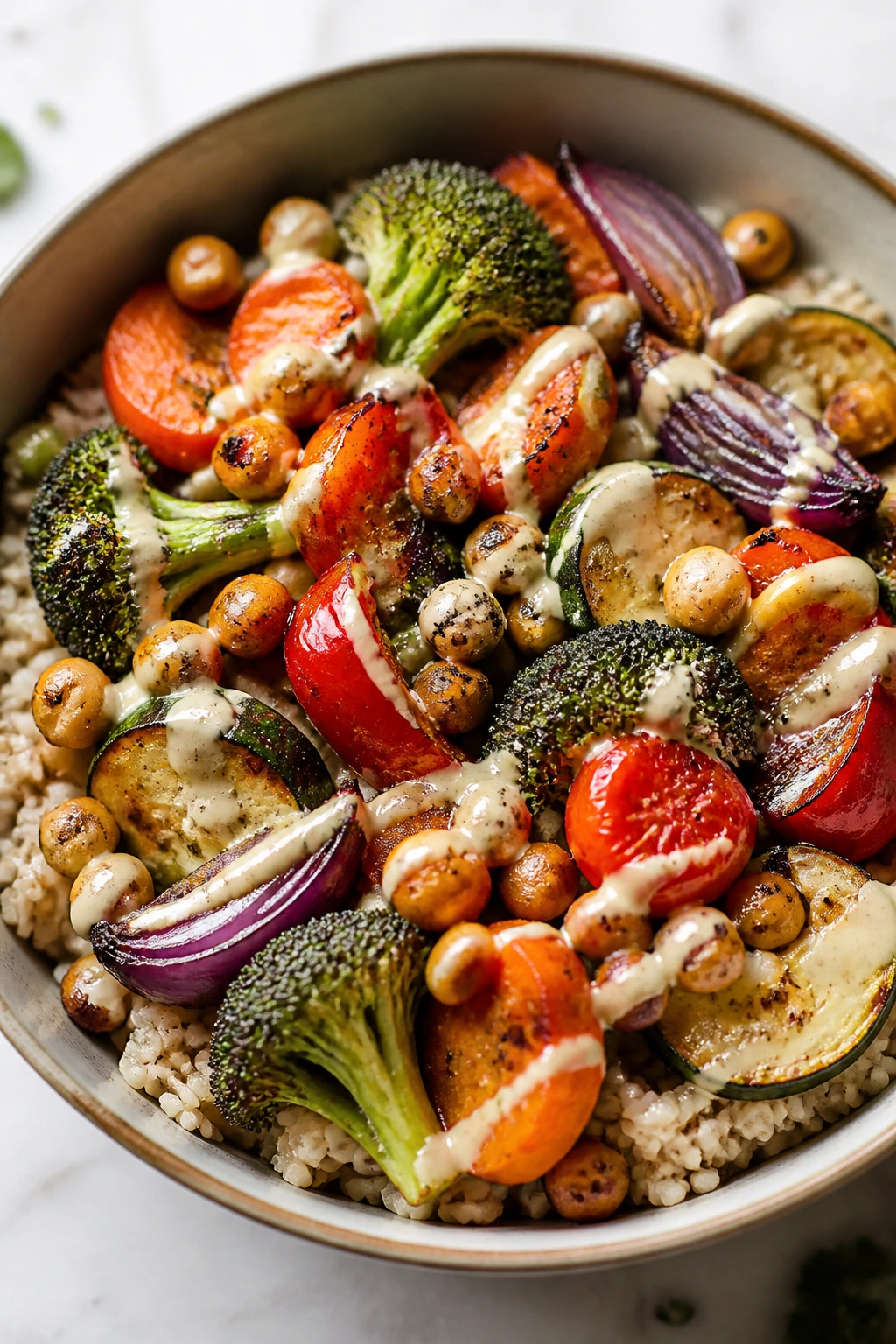
Roasted vegetable rice looks modest in the bowl, but the first bite tells a different story. The rice is soft and nutty, the vegetables come off the pan with browned edges and little sweet spots, and the tahini-lemon drizzle ties everything together without turning the whole thing heavy. Roasted vegetable rice is one of those dinners that feels like it took a plan, even when it mostly took a hot oven and a decent knife.
What makes it worth repeating is the contrast. Steamed vegetables can be fine. Roasted vegetables, especially when you let the broccoli get a little char on the tips and the onions soften into something almost jammy, bring a deeper flavor that plain rice rarely gets on its own. Add chickpeas for extra substance, and the bowl stops acting like a side dish and starts behaving like dinner.
There’s also a practical pleasure here that I never get tired of. The rice can simmer while the vegetables roast. The sauce takes a minute to whisk together. Nothing is fussy, but nothing tastes lazy either. That’s the sweet spot I’m always chasing on a weeknight, and this bowl lands right in it.
Why This Roasted Vegetable Rice Deserves a Spot in Rotation
Brown rice gives the bowl backbone: The grain stays a little chewy instead of collapsing into mush, so it can handle the roasted vegetables and sauce without turning soft and vague.
The oven does the flavor work: Broccoli florets, carrots, onion, and chickpeas all pick up browned edges at 425°F, which is where the sweetness shows up and raw vegetable sharpness backs off.
You get real dinner, not a garnish: Chickpeas add enough protein and heft that a bowl of this can stand on its own, especially if you finish it with feta or a spoonful of yogurt.
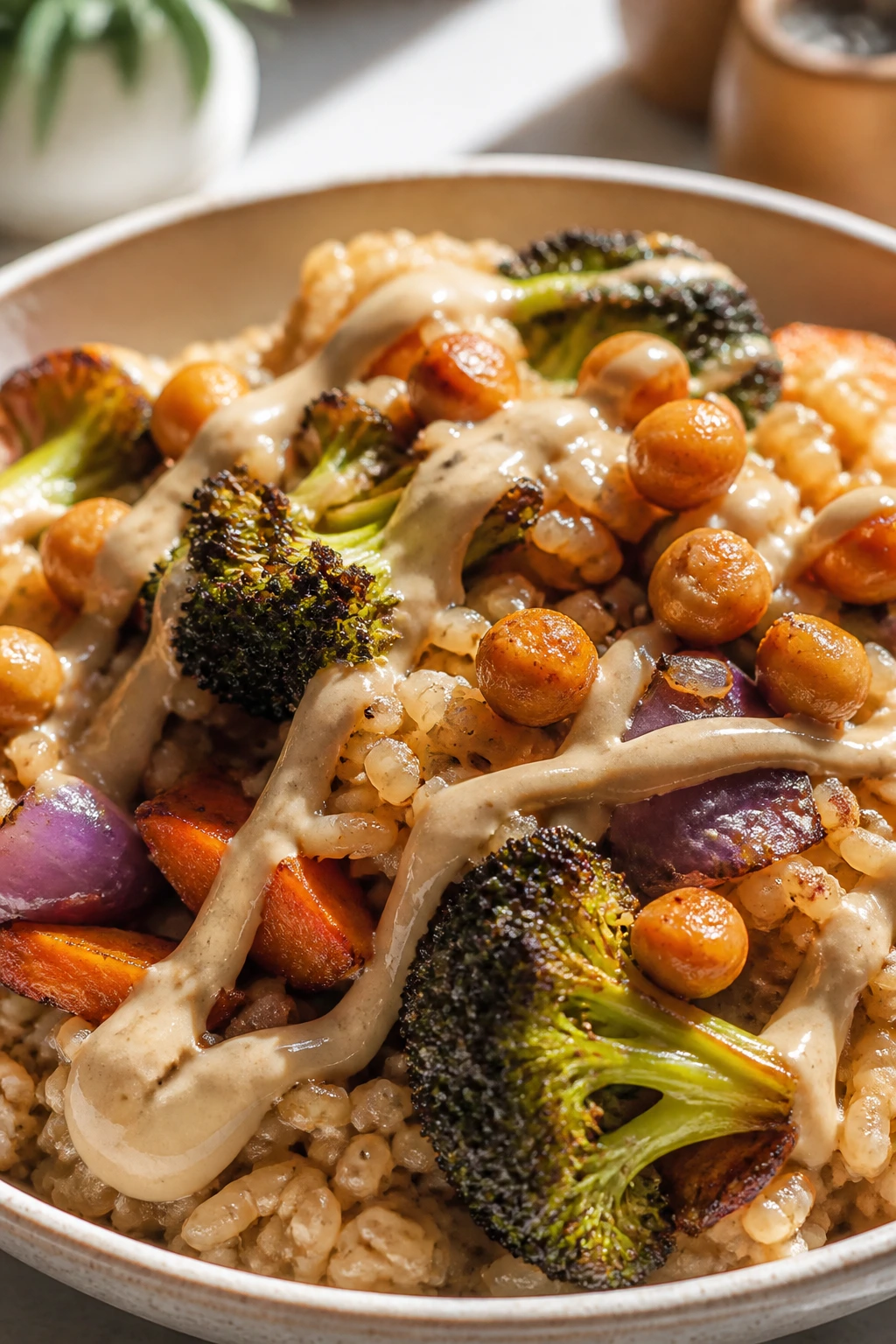
The sauce is creamy without being heavy: Tahini, lemon juice, garlic, and a little maple syrup make a drizzle that tastes bright and nutty instead of rich in a sleepy way.
Meal prep actually makes sense here: The rice, vegetables, and sauce keep well separately, so tomorrow’s lunch won’t taste like leftovers that lost a fight with the fridge.
It forgives small mistakes: If the carrots are sliced a little thick or the broccoli is a little darker than planned, the lemon and herbs pull everything back into balance.
Yield: Serves 4
Prep Time: 20 minutes
Cook Time: 45 minutes
Total Time: 1 hour 5 minutes
Chill/Rest Time: 10 minutes for the rice to steam after cooking
Difficulty: Beginner — the steps are straightforward, but the oven timing and pan spacing matter.
Best Served: Warm, with the tahini drizzle added just before eating
What Roasting Does to Rice Night
Roasted vegetable rice sits somewhere between a grain bowl and a pilaf, but the roasting is what changes the whole personality of the dish. A pot of rice on its own is background music. A sheet pan of vegetables at 425°F is where the melody starts. The onions soften at the edges, the carrots turn sweet, the chickpeas dry out just enough to get a little crunch, and the whole kitchen smells like dinner instead of starch.
This is the part most people underestimate. The vegetables are not just “cooked.” They’re browned. That browning matters more than people like to admit, because it gives you bitterness, sweetness, and depth all at once. Broccoli that’s barely steamed tastes like broccoli. Broccoli that’s roasted until the florets darken at the tips and the stems go tender tastes like something built, not just warmed through.
I like this version because it leans on pantry basics without tasting like a compromise. Brown rice, canned chickpeas, tahini, lemon, olive oil, garlic. None of that is flashy. Put them together the wrong way and you get a bowl that feels flat. Put them together with enough heat and a little salt discipline, and it tastes layered. The lemon wakes up the tahini. The chickpeas soak up the cumin and smoked paprika. The rice catches the drips. Simple ingredients, yes. Simple outcome, no.
And that’s the real trick. The bowl doesn’t depend on a long ingredient list. It depends on timing, space on the pan, and the willingness to let the vegetables take on color before you pull them out.
What Goes Into the Bowl
For the Brown Rice Base:
- 1 cup long-grain brown rice, rinsed until the water runs mostly clear
- 2 1/4 cups low-sodium vegetable broth
- 1 tablespoon olive oil
- 1/2 teaspoon fine salt
For the Roasted Vegetables:
- 1 large broccoli crown, cut into 1-inch florets, about 4 cups
- 2 medium carrots, peeled and sliced into 1/2-inch coins
- 1 red bell pepper, seeded and cut into 1-inch strips
- 1 red onion, cut into 1-inch wedges
- 1 medium zucchini, halved lengthwise and sliced into 1/2-inch half-moons
- 1 cup cherry tomatoes
- 1 (15-ounce) can chickpeas, drained, rinsed, and patted very dry
- 3 tablespoons olive oil
- 3 cloves garlic, minced
- 1 teaspoon smoked paprika
- 1 teaspoon ground cumin
- 3/4 teaspoon kosher salt
- 1/2 teaspoon black pepper
For the Tahini-Lemon Drizzle:
- 1/4 cup tahini
- 2 tablespoons fresh lemon juice
- 1 teaspoon lemon zest
- 1 small garlic clove, finely grated
- 1 tablespoon maple syrup
- 1/4 teaspoon fine salt
- 3 to 5 tablespoons warm water
For Finishing:
- 2 tablespoons chopped fresh parsley
- 1 tablespoon chopped fresh dill or mint
- 1/4 cup crumbled feta, optional
- Lemon wedges, for serving
Ingredient Deep-Dive for Better Texture and Better Flavor
Brown Rice Base
What to use: 1 cup long-grain brown rice and 2 1/4 cups low-sodium vegetable broth. The broth does a lot of quiet work here, because plain water can leave the rice tasting thin under all the roasted vegetables.
Preparation: Rinse the rice in a fine-mesh strainer until the water runs nearly clear, then drain it well before it hits the pot. That quick rinse removes surface starch and helps the grains stay separate instead of sticky.
Substitutions: White basmati works if you want a faster version, and jasmine rice is fine if you like a softer texture. Just know the liquid and cook time change, so don’t use the brown-rice timing if you swap grains.
Tips: Brown rice improves with a rest after cooking. Keep the lid on for the full 10 minutes, then fluff it with a fork so the steam escapes slowly instead of clumping the grains together.
Roasted Vegetable Mix
What to use: Broccoli, carrots, red pepper, red onion, zucchini, cherry tomatoes, and chickpeas. This mix gives you hard vegetables that caramelize, softer vegetables that collapse a little, and chickpeas that pick up spice from the oil.
Preparation: Cut the broccoli into small, even florets and slice the carrots no thicker than 1/2 inch so they finish at the same time as the rest of the pan. Pat the chickpeas dry with a towel; wet chickpeas steam, and steamed chickpeas are the opposite of what you want here.
Substitutions: Cauliflower can stand in for broccoli, sweet potato can replace carrots, and green beans work well in place of zucchini if you want more snap. If you don’t care for chickpeas, cubed tofu or white beans can fill the same role.
Tips: Keep zucchini and tomatoes out of the first roast. They give off a lot of moisture, and if they go in too early they turn soft before the broccoli and carrots have had time to brown.
Tahini-Lemon Drizzle
What to use: Tahini, lemon juice, lemon zest, garlic, maple syrup, salt, and warm water. The maple syrup doesn’t make the sauce sweet; it just rounds off the sharp lemon edge and keeps the dressing from tasting harsh.
Preparation: Grate the garlic very fine so it disappears into the sauce instead of turning into little raw bites. Start with less water than you think you need, because tahini can go from thick to pourable fast.
Substitutions: Almond butter can work in a pinch, though the sauce tastes more nutty and less classic. If you want more tang, swap the maple syrup for a teaspoon of honey or leave it out entirely.
Tips: Tahini can seize when you add lemon juice. That thick paste stage is normal. Keep whisking and add warm water slowly; the sauce loosens and turns silky once it gets enough liquid.
Fresh Herbs and Salty Finishers
What to use: Fresh parsley, dill or mint, and optional feta. Parsley gives the bowl freshness without taking over, while dill or mint brings a brighter green note that plays well with lemon.
Preparation: Chop the herbs just before serving so they stay vivid and don’t bruise into a wet pile on the cutting board. Crumble the feta last, right before plating, so it stays in small salty pockets instead of dissolving.
Substitutions: Basil can work in warmer weather, and cilantro gives the bowl a sharper edge if that’s your thing. Skip the feta if you want a dairy-free bowl; the tahini sauce already carries enough weight.
Tips: Don’t treat the herbs like decoration. A proper handful changes the flavor of the whole bowl. A little on top is pretty; enough to taste in every forkful is better.
The Tools That Make Dinner Easier
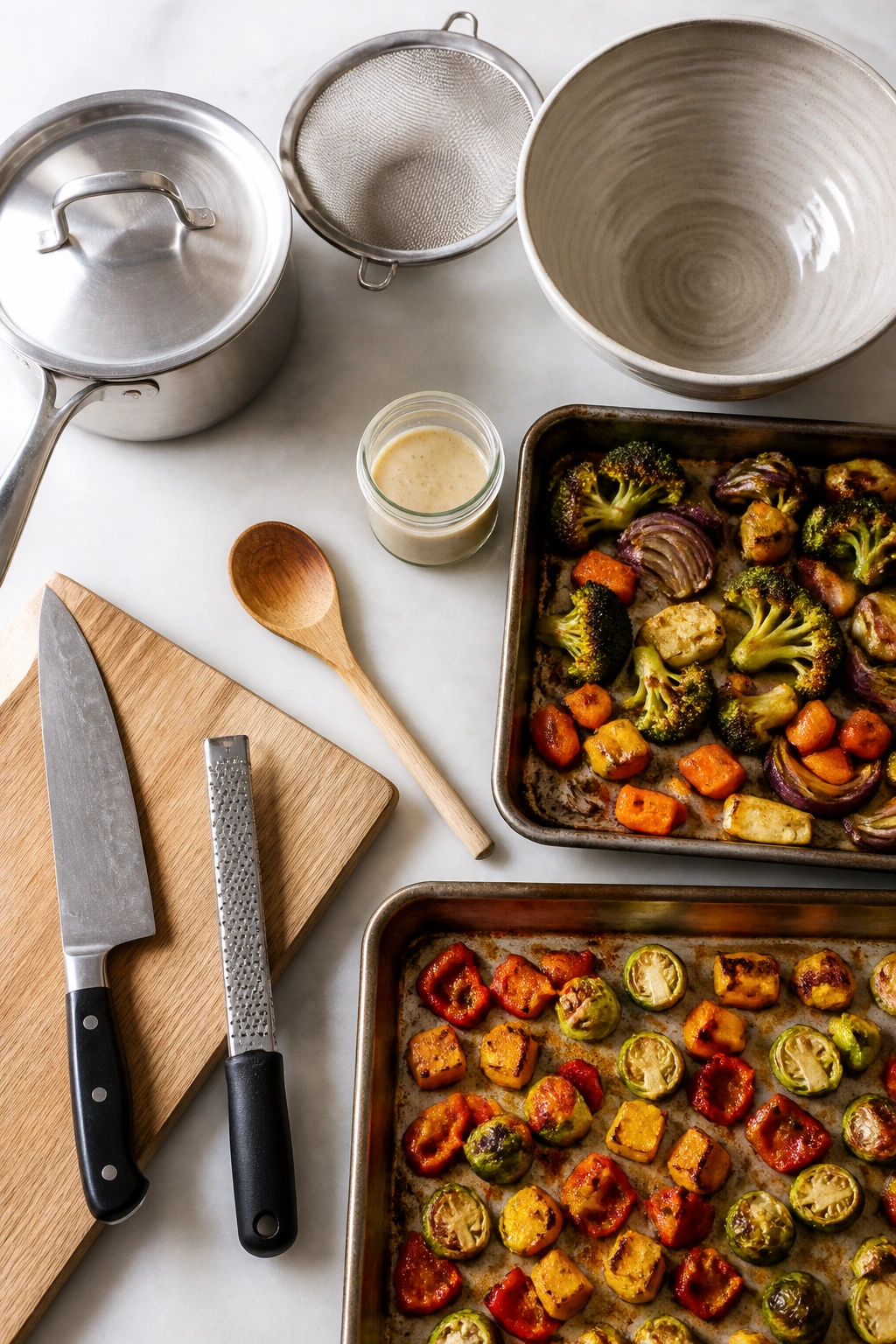
- Rimmed sheet pans, preferably two: Two pans keep the vegetables from crowding, which is the difference between roasting and steaming.
- Medium saucepan with a tight lid: Brown rice needs steady heat and a lid that actually seals well.
- Fine-mesh strainer: Rinsing the rice and draining the chickpeas both go faster with one.
- Large mixing bowl: You need room to toss the vegetables without flinging paprika across the counter.
- Small bowl or jar for the sauce: A jar with a lid is handy if you want to shake the tahini dressing instead of whisking it.
- Wooden spoon or silicone spatula: Useful for stirring the rice and tossing the vegetables without breaking them apart.
- Chef’s knife and cutting board: The cut size matters here, especially for the carrots and broccoli.
- Microplane or fine grater: Best for the garlic and lemon zest in the sauce, since bigger pieces can taste too sharp.
How to Cook Roasted Vegetable Rice Step by Step
Cook the Rice:
-
Rinse and drain the rice. Put 1 cup brown rice in a fine-mesh strainer and rinse it under cool running water for 30 to 45 seconds, until the water runs mostly clear. Drain it well so extra water doesn’t throw off the liquid ratio.
-
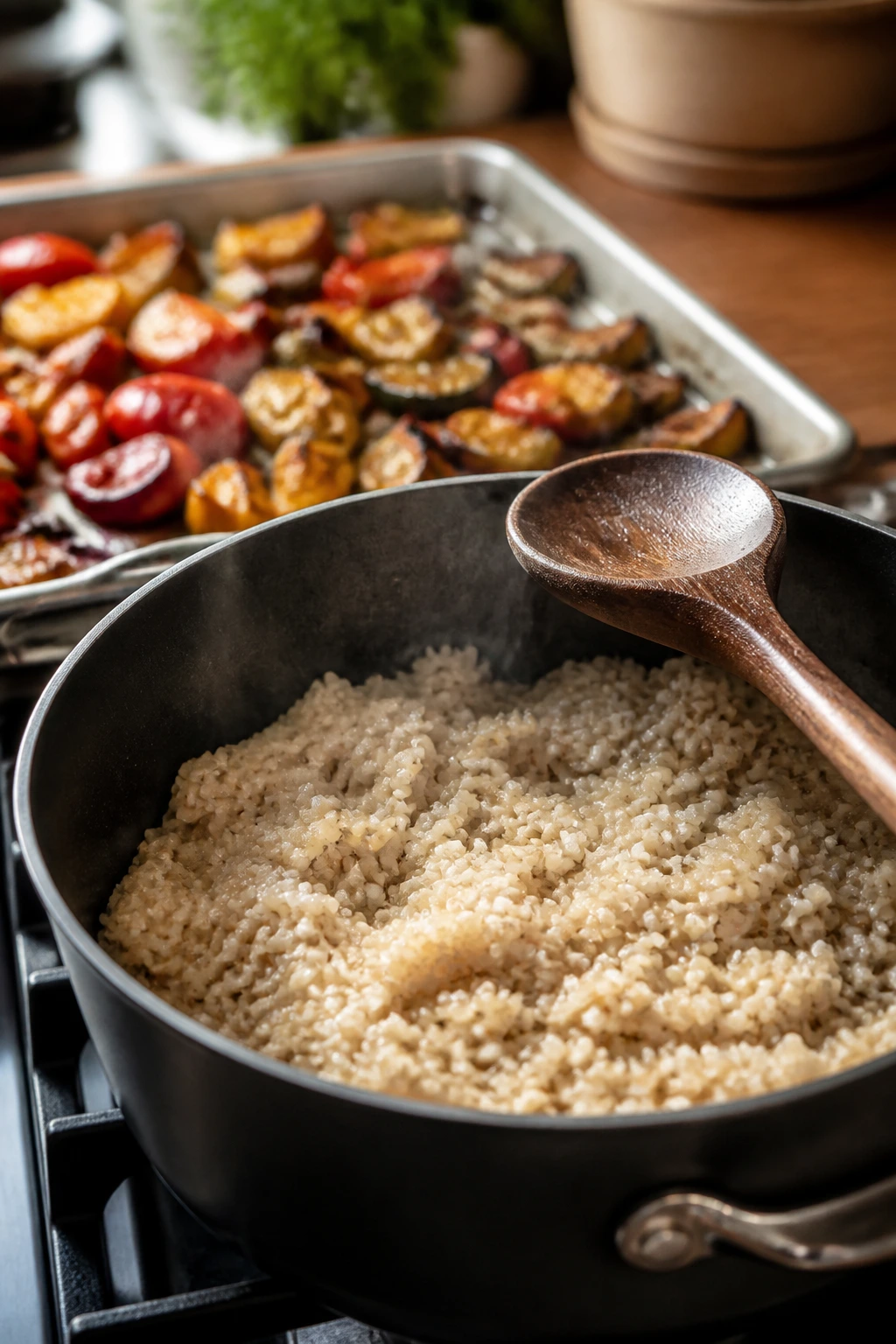
Start the rice in the pot. Combine the rice, 2 1/4 cups vegetable broth, 1 tablespoon olive oil, and 1/2 teaspoon fine salt in a medium saucepan. Bring it to a boil over medium-high heat, stirring once or twice so nothing sticks to the bottom.
-
Simmer gently and leave it alone. Once the liquid boils, reduce the heat to low, cover the pot, and simmer for 40 to 45 minutes, until the broth is absorbed and the rice is tender with a little chew. Do not keep lifting the lid. That leaks steam and drags out the cooking time.
-
Rest the rice before fluffing. Pull the pot off the heat and let it sit, covered, for 10 minutes. Then fluff with a fork. The grains should look separate, not wet or clumped.
Roast the Vegetables:
-
Preheat the oven and prepare the pans. Heat the oven to 425°F (220°C) and position racks in the upper and lower thirds. Line two rimmed sheet pans with parchment if you want faster cleanup.
-
Toss the sturdier vegetables first. In a large bowl, combine the broccoli, carrots, red bell pepper, red onion, chickpeas, 2 tablespoons olive oil, garlic, smoked paprika, cumin, kosher salt, and black pepper. Spread the mixture across the two pans in a single layer. If the vegetables are piled on top of each other, they steam instead of roast.
-
Roast the first round, then add the quick-cooking pieces. Roast for 15 minutes, then pull the pans from the oven and add the zucchini and cherry tomatoes. Drizzle with the remaining 1 tablespoon olive oil, toss gently, and spread everything back out. Return the pans to the oven for another 10 to 12 minutes, until the broccoli edges are browned and the tomatoes have burst.
-
Rotate the pans if needed. If one pan sits on a hotter rack or browns faster, switch the pans top to bottom halfway through the second roast. You want even color, not a patch of dark broccoli beside pale carrots.
Make the Sauce and Assemble:
-
Whisk the tahini drizzle. In a small bowl, combine the tahini, lemon juice, lemon zest, grated garlic, maple syrup, and salt. Whisk in 3 tablespoons warm water, then add more a teaspoon or tablespoon at a time until the sauce is smooth and spoonable. It should fall off the spoon in a thick ribbon, not sit in a paste.
-
Finish the rice and build the bowls. Stir the parsley and dill or mint into the fluffed rice. Spoon the rice into shallow bowls, top with the roasted vegetables and chickpeas, and drizzle with the tahini sauce. Finish with feta, a few grinds of black pepper, and lemon wedges on the side.
How to Serve It Without Making It Feel Like Leftovers
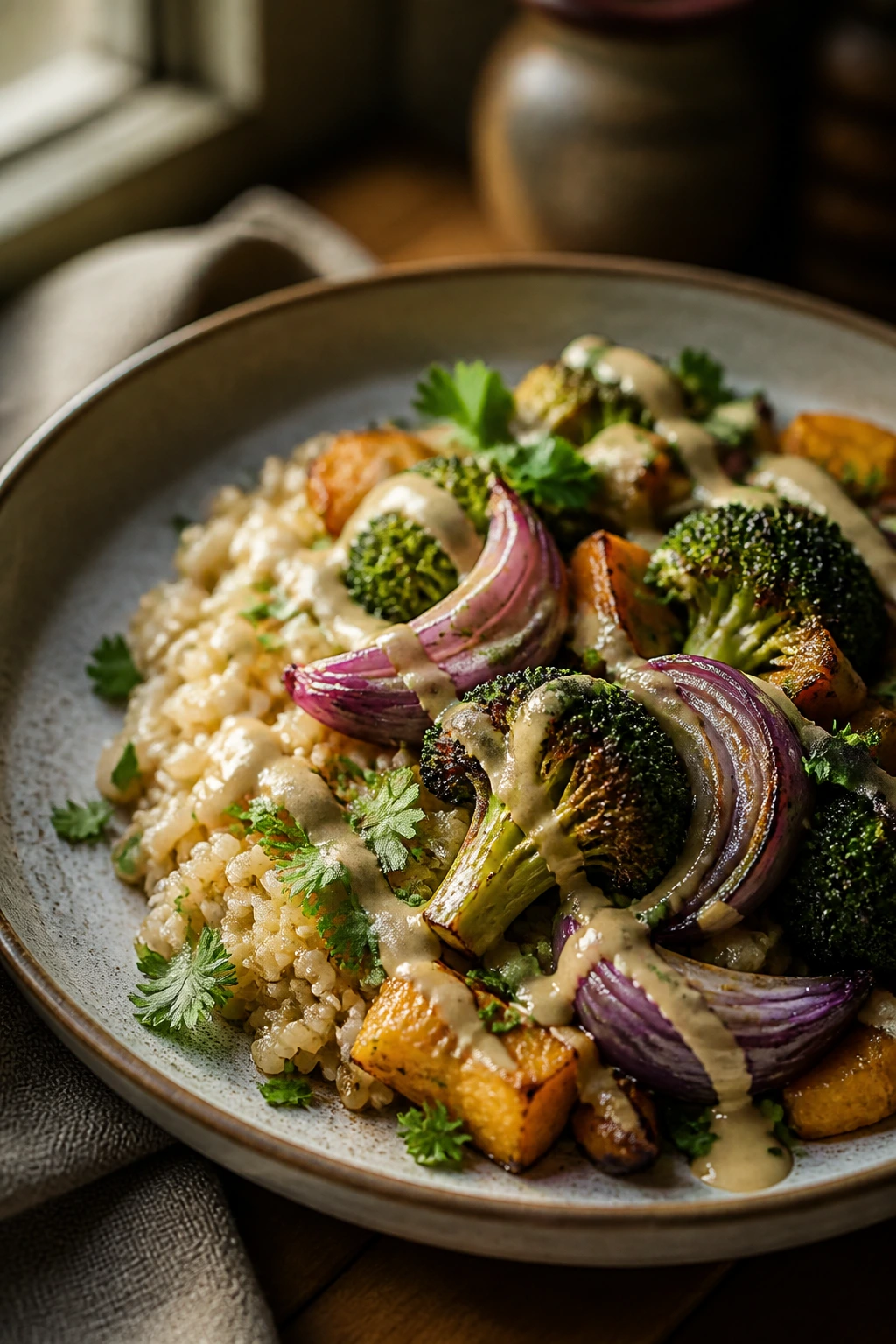
Presentation: Use shallow bowls instead of deep ones. Spoon the rice off-center, pile the vegetables high enough that the broccoli florets and red onion wedges stay visible, and drizzle the tahini in loose lines instead of burying everything under it. A final scatter of herbs keeps the bowl from looking brown-on-brown.
Accompaniments: If you want a side, keep it crisp and acidic. A cucumber salad with dill, sliced radishes, and a little vinegar works better than another starchy side, and warm pita or flatbread is useful for catching any extra sauce. A spoon of plain yogurt or labneh on top is nice if you’re not keeping it vegan.
Portions: Four servings works well as a main dinner, especially with chickpeas and feta. For hungrier eaters, plan on about 1 1/2 cups of the finished bowl per person. If you’re serving it alongside soup or salad, the recipe stretches comfortably to 5 or 6 smaller portions.
Beverage Pairing: Sparkling water with lemon keeps the lemon-tahini profile bright. A dry white wine, like Sauvignon Blanc, handles the herbs and roasted edges well. If you want something nonalcoholic with a little more body, iced green tea with a squeeze of citrus works better than sweet drinks.
Small Tweaks That Change the Whole Bowl
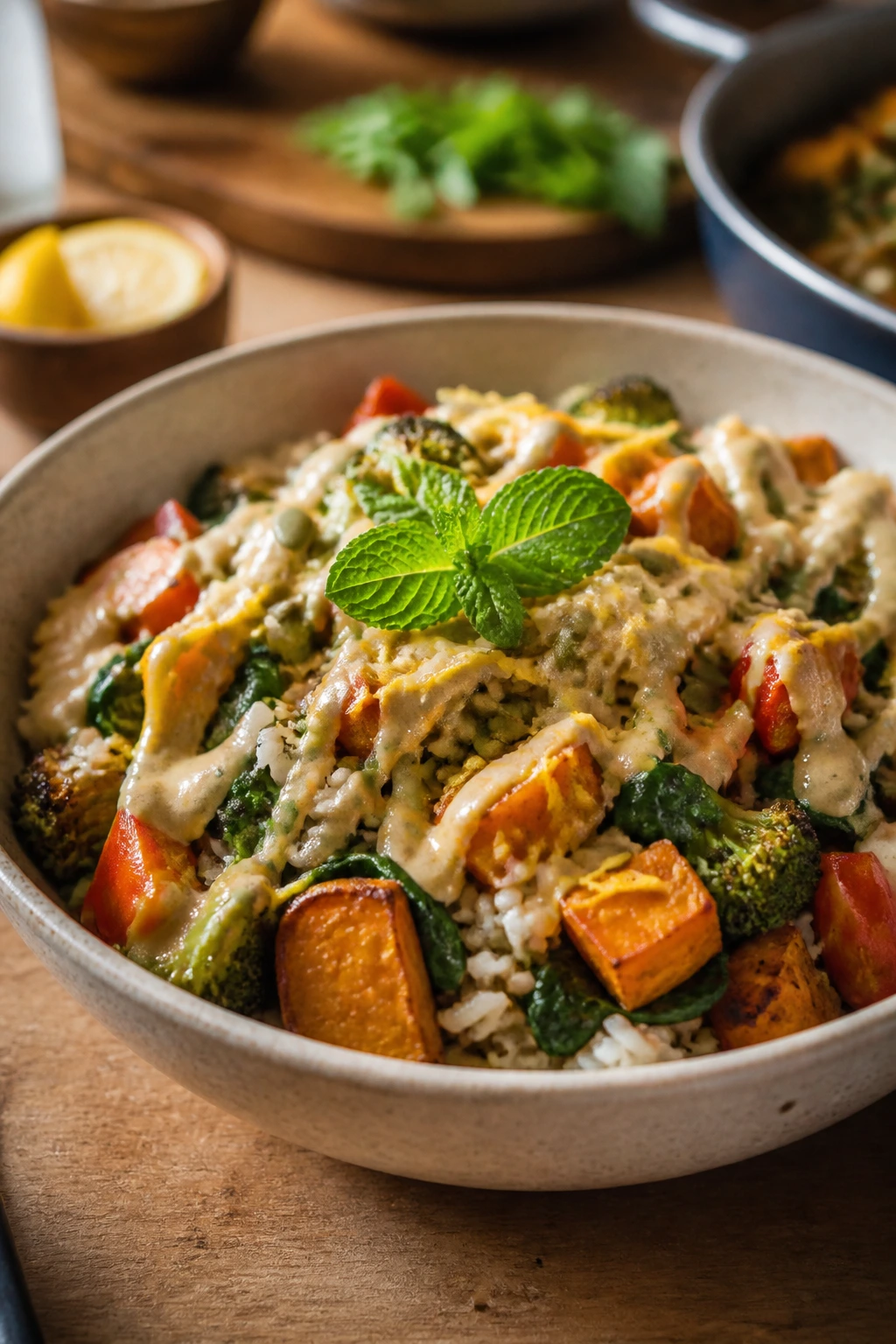
Flavor Enhancement: A pinch of sumac over the finished vegetables gives the bowl a tart, almost floral edge that fits right in with the lemon sauce. If you like heat, a few drops of chili oil or a small pinch of red pepper flakes in the tahini sauce sharpens the whole thing without making it aggressive.
Customization: Stir a handful of baby spinach into the hot rice right after fluffing. It wilts in seconds and folds in without turning the bowl watery. You can also swap dill for mint when you want a cooler finish, or add toasted pumpkin seeds for a little crunch that survives the sauce.
Serving Suggestions: Lemon zest on the rice is not a garnish-only move. It wakes up the grains before the sauce even lands. I also like a last-minute sprinkle of flaky salt if the feta is left out; it keeps the finish from tasting too soft.
Make-It-Yours: The bowl is already dairy-free if you skip feta and use maple syrup in the sauce. Gluten-free is built in. If you want it higher in protein, add baked tofu cubes or a fried egg on top, but keep the sauce and herbs the same so the bowl still tastes like itself.
Mistakes That Make Roasted Vegetable Rice Fall Flat
-
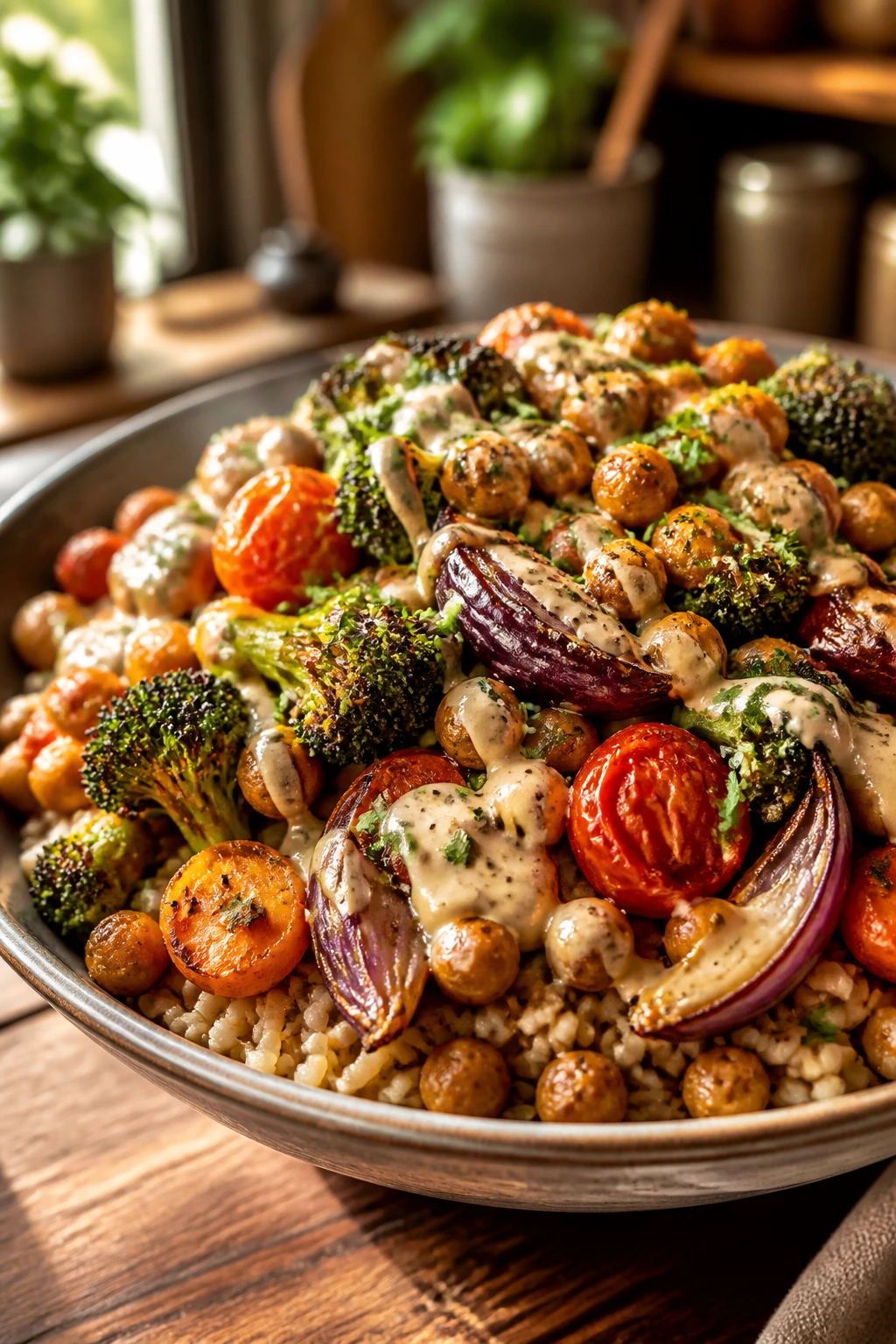
Crowding the sheet pans: If the vegetables are piled on top of one another, they trap steam and come out soft and gray instead of browned. Use two pans if you need them, and give the broccoli and chickpeas room to breathe.
-
Putting zucchini in too early: Zucchini gives off a lot of water. If it roasts for the full time with the carrots and broccoli, it turns sludgy and disappears into the pan. Add it halfway through, when the sturdier vegetables are already taking on color.
-
Using wet chickpeas: Chickpeas straight from the can, without drying, won’t roast properly. They go soft and a little slick. Pat them dry with a towel before seasoning them, and they’ll pick up better edges in the oven.
-
Skipping the rice rest: Brown rice needs those 10 covered minutes after cooking. If you fluff it too early, the grains can be a bit tight and underdone at the center. Letting it sit covered finishes the job with steam.
-
Making the tahini sauce too thick: A spoonable sauce is the goal. If it sits like hummus, it won’t spread through the bowl. Whisk in warm water slowly until it loosens, then stop before it turns watery.
-
Forgetting acid at the end: Rice, chickpeas, and roasted vegetables can taste dull if all you use is salt and olive oil. The lemon juice and zest are not optional extras here. They’re what make the bowl taste awake.
Variations That Keep the Bowl Interesting
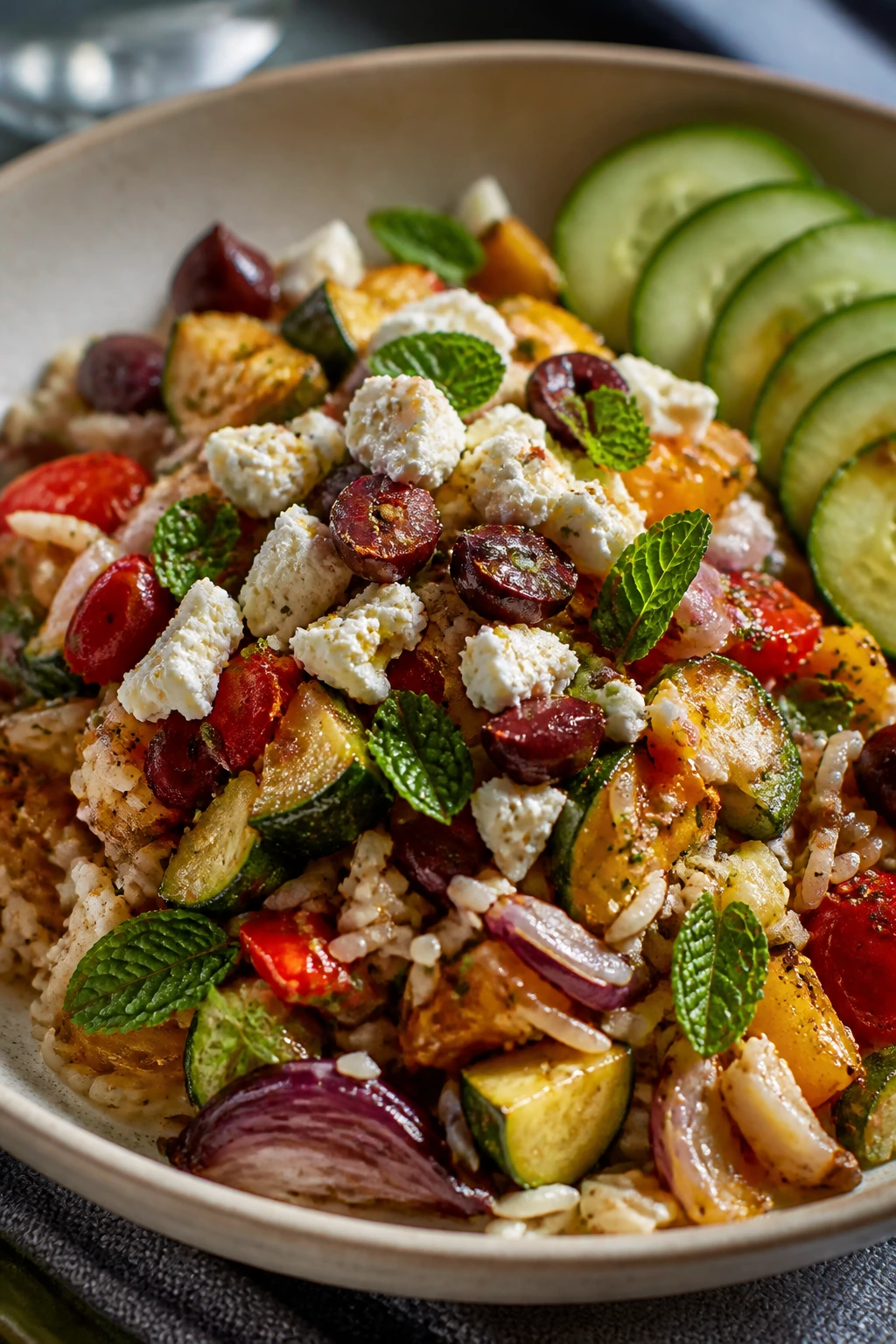
Mediterranean Market Bowl: Add Kalamata olives, swap dill for oregano, and scatter extra feta over the top. A few sliced cucumbers on the side make it feel more like a bright mezze plate than a grain bowl, which is a good thing if you want the dinner to feel lighter.
Smoky Harissa Version: Mix 1 to 2 tablespoons harissa into the olive oil before tossing the vegetables, then keep the tahini sauce a little simpler with just lemon, garlic, and water. Harissa brings heat and tomato depth, and it works especially well with carrots and broccoli.
Green Garden Bowl: Replace the red pepper and tomatoes with asparagus and peas, then finish the bowl with mint instead of dill. This version feels sharper and fresher, and it suits warmer weather without drifting into salad territory.
Protein-First Tofu Bowl: Swap the chickpeas for 12 ounces of extra-firm tofu cut into 3/4-inch cubes, pressed dry, and roasted alongside the vegetables. Toss the tofu with the same paprika-cumin mix, and it soaks up the spices while staying firm enough to hold its shape in the bowl.
Storing, Reheating, and Prepping Ahead
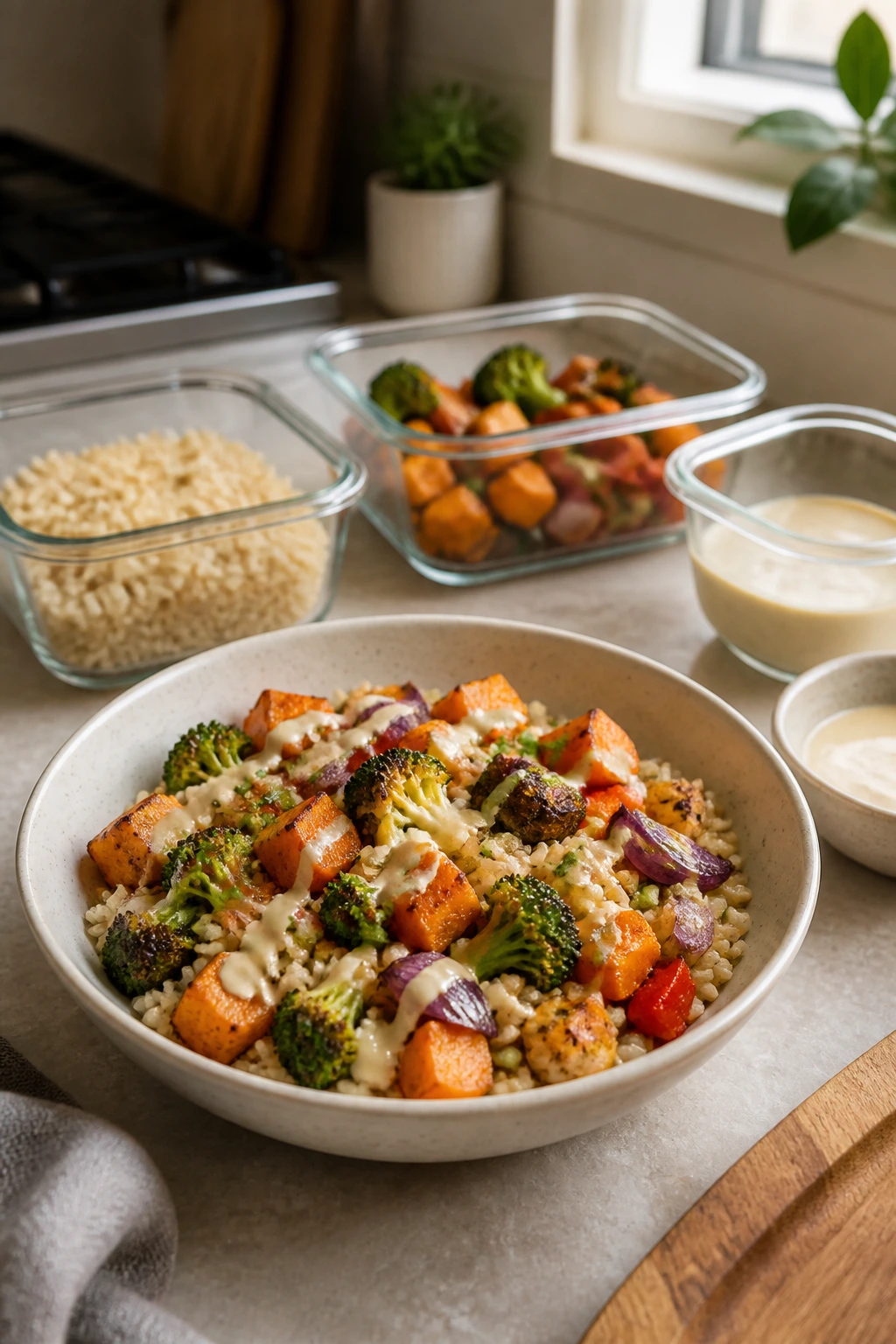
Cooked rice deserves a little respect. Spread it out on a plate or tray for a few minutes so steam escapes, then get it into the fridge within 2 hours. That matters for food safety and for texture. Warm rice that sits around too long gets gummy, and nobody wants that.
In the fridge, the assembled bowl keeps for 3 to 4 days, but the components stay better if you store them separately. Keep the rice in one container, the vegetables and chickpeas in another, and the tahini sauce in a jar. The sauce thickens in the fridge, which is normal; a teaspoon or two of warm water brings it back.
Freezing works best for the rice and chickpeas, not the zucchini and tomatoes. The rice freezes well for up to 2 months if you pack it flat in a freezer bag or airtight container. The roasted vegetables are best frozen for about 1 month, but the softer ones may lose some texture when thawed. If you know you want to freeze a batch, under-roast the vegetables by a couple of minutes so they don’t collapse when reheated.
For reheating, the stovetop gives the best control. Warm the rice in a skillet with 1 to 2 tablespoons water per cup of rice, cover it, and heat over medium-low until the steam loosens the grains. The microwave works too, especially for lunch, but cover the bowl and add a splash of water first. Reheat the vegetables separately if you can; they keep their shape better that way. The sauce should be added after reheating, not before, or it can separate and dull the flavor.
Prep ahead is easy. Chop the vegetables up to 2 days in advance and keep them in the fridge in a container lined with a paper towel. Whisk the sauce up to 4 days ahead. Rice can be cooked a day ahead and reheated with a little water, which is often easier than waiting for it to simmer while everything else is happening. If you do make the bowl ahead for lunch, keep the lemon wedges out until the very end; fresh lemon tastes sharper than bottled juice after sitting overnight.
Questions People Ask Before They Make It
Can I use white rice instead of brown rice?
Yes, and the bowl gets faster that way. White basmati or jasmine cooks more quickly and gives you a softer base, but it won’t have the same nutty chew as brown rice. If you switch, follow the package liquid ratio and shorten the simmer time rather than using the brown-rice timing.
Can I roast everything on one sheet pan?
You can, but only if the pan is large enough that the vegetables sit in one layer with visible gaps between them. If they’re crowded, the broccoli and chickpeas lose their edges and turn soft. I’d rather split the mixture across two pans than settle for steamed vegetables pretending to be roasted.
How do I keep the chickpeas crisp?
Dry them well before they go into the bowl, and don’t drown them in sauce before serving. If you want extra crispness, spread them near the edges of the pan where the heat tends to run a little stronger, and leave them in the oven until they’re firm and lightly bronzed.
What vegetables work best if I want to change the mix?
Cauliflower, sweet potato, green beans, and Brussels sprouts all roast well here. Just group vegetables by cooking time so the hard ones go in first and the soft ones follow later. Asparagus and peas are better toward the end because they cook fast and go limp if they sit in the oven too long.
My tahini sauce seized and got thick. Did I ruin it?
No. Tahini often turns pasty when lemon juice hits it, and that moment looks worse than it is. Keep whisking and add warm water slowly, and the sauce should loosen into something creamy and pourable.
Can I make this ahead for lunches?
Absolutely, and it holds up better than a lot of grain bowls. Store the rice, vegetables, and sauce separately if you can, then reheat the rice and vegetables before serving. If you’re packing it cold, keep the sauce on the side so the rice doesn’t soak it up and turn heavy.
Is this enough for dinner on its own?
With chickpeas and tahini, yes for most people. If you want more protein or just a fuller plate, add tofu, a fried egg, or a spoonful of yogurt. The bowl is built to take additions without falling apart.
A Bowl Worth Repeating
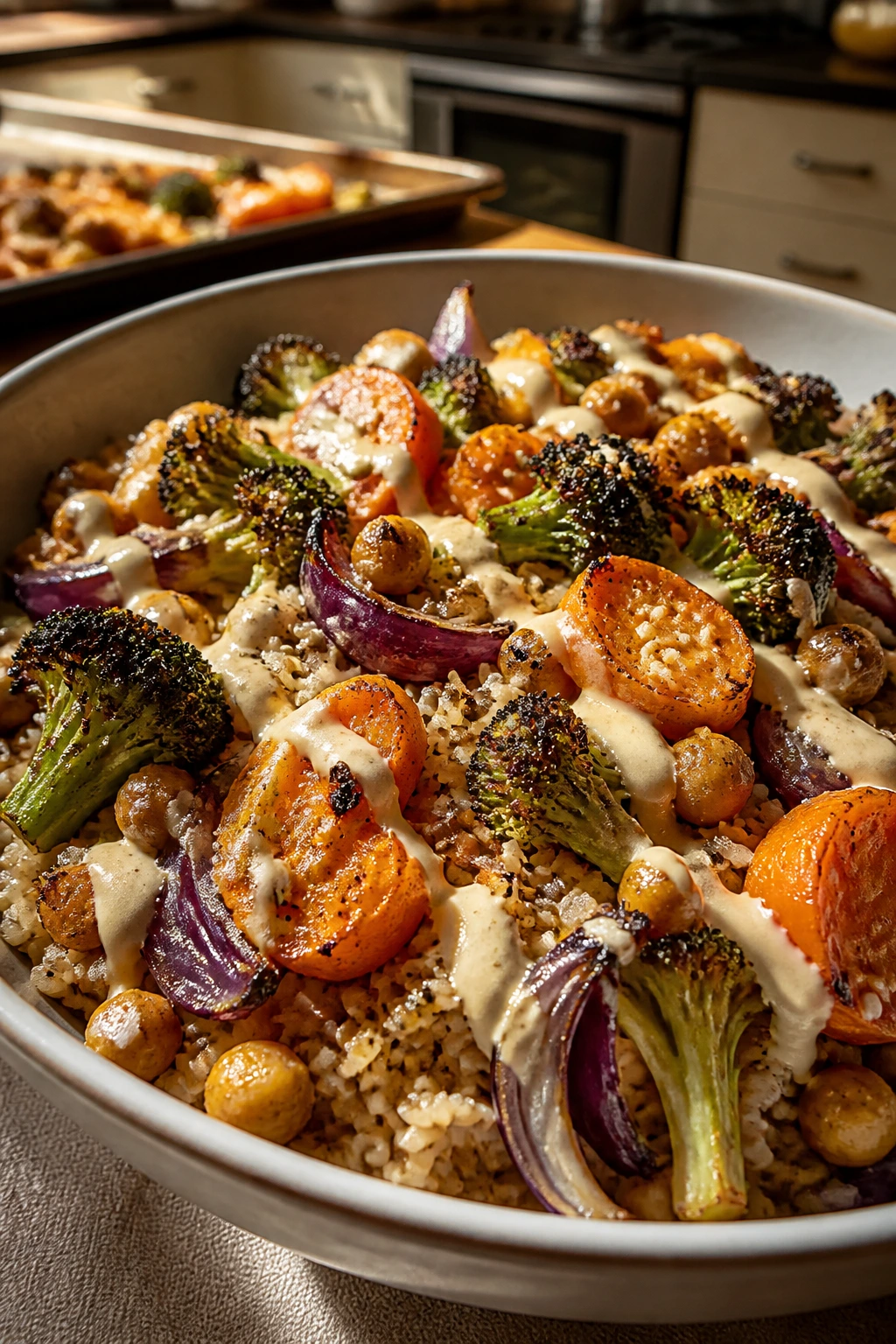
Roasted vegetable rice works because every part has a job. The rice catches the sauce. The vegetables bring sweetness and char. The chickpeas make it feel like a real meal instead of a side that wandered onto the main course’s plate. When the pieces are handled well, the bowl tastes cleaner and deeper than its ingredient list suggests.
I keep coming back to meals like this because they don’t ask for special treatment. A hot oven, a pot with a lid, a sharp knife, and a little patience with the roasting time are enough. Once you get the rhythm right, it’s the kind of dinner that starts living in your memory as a method, not just a recipe.
Roasted Vegetable Rice — Recipe Card
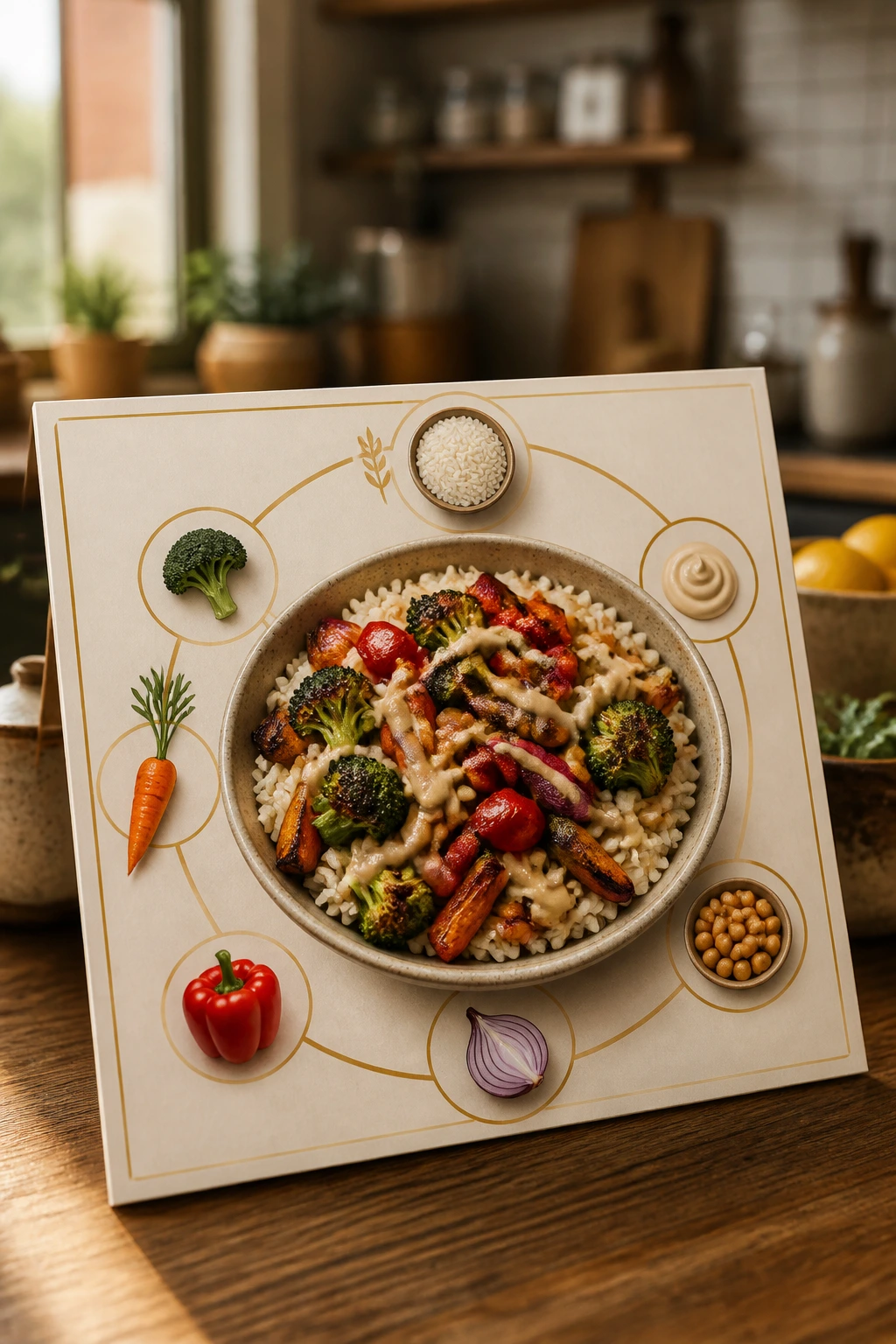
Recipe Name: Roasted Vegetable Rice
Description: Brown rice, chickpeas, and a mix of roasted vegetables come together with a lemon-tahini drizzle for a dinner that’s hearty, bright, and built on pantry staples. The vegetables pick up browned edges in the oven, which gives the bowl most of its flavor.
Prep Time: 20 minutes
Cook Time: 45 minutes
Total Time: 1 hour 5 minutes
Course: Dinner, Main Course
Cuisine: Mediterranean-Inspired, Vegetarian
Servings: 4
Calories: About 500 kcal per serving
Ingredients
For the Brown Rice Base:
- 1 cup long-grain brown rice, rinsed until the water runs mostly clear
- 2 1/4 cups low-sodium vegetable broth
- 1 tablespoon olive oil
- 1/2 teaspoon fine salt
For the Roasted Vegetables:
- 1 large broccoli crown, cut into 1-inch florets
- 2 medium carrots, peeled and sliced into 1/2-inch coins
- 1 red bell pepper, seeded and cut into 1-inch strips
- 1 red onion, cut into 1-inch wedges
- 1 medium zucchini, halved lengthwise and sliced into 1/2-inch half-moons
- 1 cup cherry tomatoes
- 1 (15-ounce) can chickpeas, drained, rinsed, and patted very dry
- 3 tablespoons olive oil
- 3 cloves garlic, minced
- 1 teaspoon smoked paprika
- 1 teaspoon ground cumin
- 3/4 teaspoon kosher salt
- 1/2 teaspoon black pepper
For the Tahini-Lemon Drizzle:
- 1/4 cup tahini
- 2 tablespoons fresh lemon juice
- 1 teaspoon lemon zest
- 1 small garlic clove, finely grated
- 1 tablespoon maple syrup
- 1/4 teaspoon fine salt
- 3 to 5 tablespoons warm water
For Finishing:
- 2 tablespoons chopped fresh parsley
- 1 tablespoon chopped fresh dill or mint
- 1/4 cup crumbled feta, optional
- Lemon wedges, for serving
Instructions
-
Rinse the brown rice under cool water until the water runs mostly clear, then drain it well.
-
Combine the rice, broth, olive oil, and salt in a medium saucepan. Bring to a boil, reduce the heat to low, cover, and simmer for 40 to 45 minutes.
-
Remove from the heat and let the rice rest, covered, for 10 minutes. Fluff with a fork.
-
Heat the oven to 425°F (220°C) and line two rimmed sheet pans.
-
Toss the broccoli, carrots, bell pepper, onion, chickpeas, olive oil, garlic, smoked paprika, cumin, salt, and pepper in a large bowl. Spread across the sheet pans in a single layer.
-
Roast for 15 minutes, then add the zucchini and cherry tomatoes. Toss gently, spread out again, and roast for 10 to 12 minutes more.
-
Whisk the tahini, lemon juice, lemon zest, garlic, maple syrup, salt, and warm water together until smooth and pourable.
-
Stir the parsley and dill or mint into the rice. Spoon into bowls, top with the roasted vegetables and chickpeas, drizzle with the sauce, and finish with feta and lemon wedges.
Notes: Add water to the tahini sauce slowly so it stays creamy. Store the rice, vegetables, and sauce separately for the best leftovers.