



A healthy dinner should still smell like dinner. Roasted protein veggies do that job with a little swagger: browned tofu, crisped chickpeas, broccoli with singed edges, and peppers that soften at the corners without collapsing into a puddle. When the tray comes out right, every bite has a different texture. No limp greens. No pale cubes. No sad, wet compromise pretending to be a meal.
The trick is not piling on more ingredients. It’s managing moisture and timing, which is where most sheet-pan dinners get lazy. Zucchini and cherry tomatoes behave nothing like cauliflower, and if you treat them as if they do, the oven punishes you with steam. You can taste that mistake from across the table.
This version leans on tofu and chickpeas for the protein, then finishes with a lemon-tahini drizzle that’s sharp, nutty, and a little creamy without burying the roast. Once you know where the water goes and when each piece should hit the pan, the whole thing becomes the kind of healthy dinner you actually want to make twice.
Why Roasted Protein Veggies Earn a Spot in the Dinner Rotation
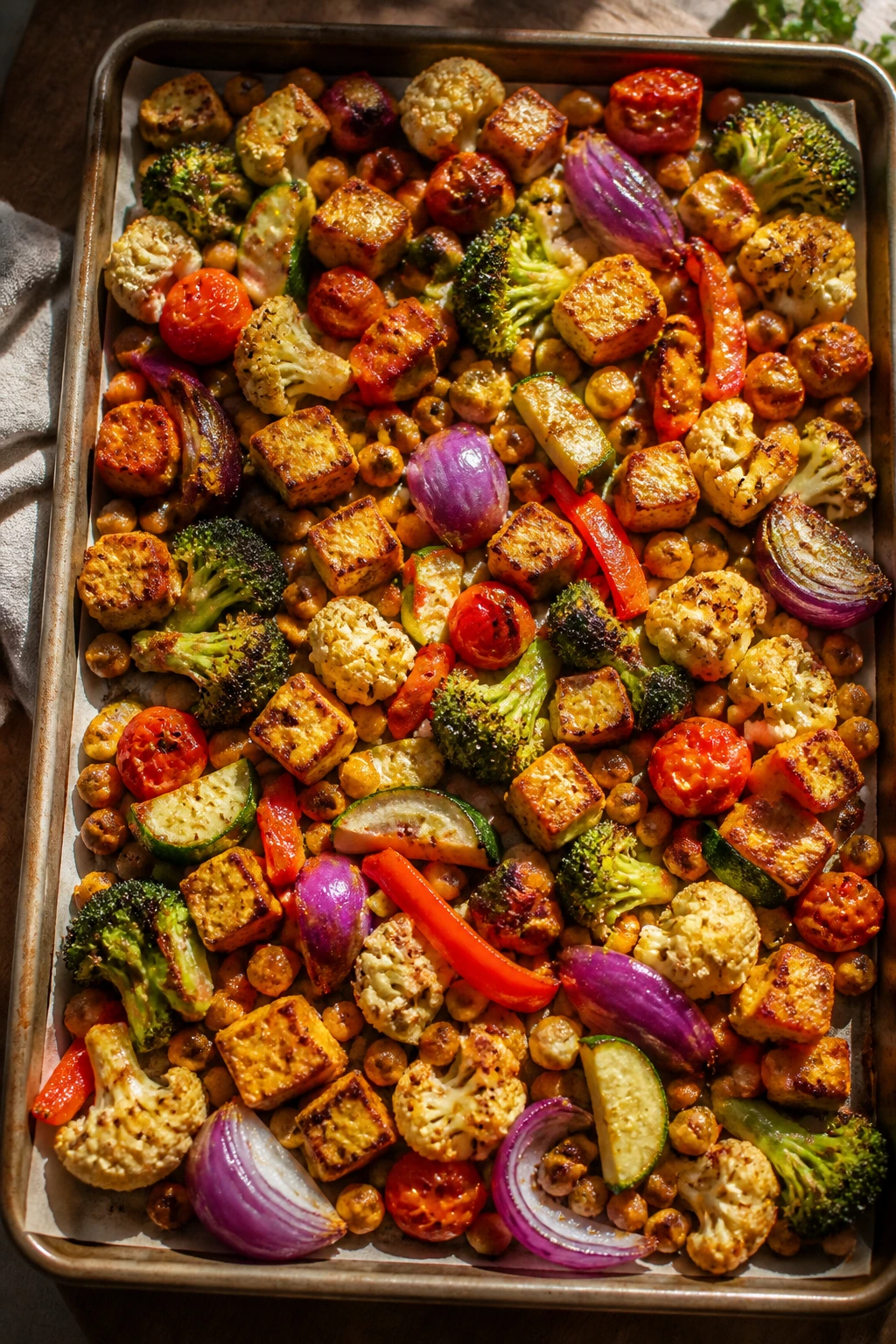
One hot oven does the heavy lifting: At 425°F, the tofu browns, the chickpeas dry out at the edges, and the broccoli gets those dark little freckles that taste nutty instead of raw.
The plate has texture from top to bottom: Crisp exterior, tender center, soft onion, and just-burst tomatoes. That contrast is the whole point.
The protein is built in, not tacked on later: Tofu and chickpeas make this feel like a meal instead of a side dish with ambitions.
The lemon-tahini finish matters: Acid and fat keep roasted vegetables from tasting dusty or flat, especially when you use a good amount of smoked paprika and cumin.
It forgives a fridge raid: Broccoli, cauliflower, peppers, zucchini, and red onion all work here, as long as you respect the timing. That’s handy when the produce drawer has a strange little mix of odds and ends.
It’s easy to scale for lunch boxes: Make the full tray, spoon it over grain bowls for a few days, and keep the sauce separate so the vegetables stay awake.
Roasted protein veggies are not fancy. That’s part of the charm. They just need enough space, enough heat, and a little judgment about what cooks fast and what needs more time.
The Ingredient List for Roasted Protein Veggies
The ingredient list looks long when it’s written out, but most of the work here is already done by the oven. The important part is choosing vegetables that can roast without collapsing and protein that browns instead of going soft. Timing beats quantity here, every single time.
For the Roasted Tray:
- 2 (14-ounce) blocks extra-firm tofu, drained and pressed
- 2 (15-ounce) cans chickpeas, drained, rinsed, and patted very dry
- 5 cups broccoli florets, cut into medium bite-size pieces
- 4 cups cauliflower florets, cut into similar-size pieces
- 2 bell peppers, sliced into 1-inch strips
- 1 large red onion, cut into 1/2-inch wedges
- 2 medium zucchini, cut into 1/2-inch half-moons
- 1 pint cherry tomatoes
- 3 tablespoons olive oil
- 3 tablespoons cornstarch
- 2 teaspoons kosher salt, divided
- 1 teaspoon black pepper, divided
- 2 teaspoons smoked paprika
- 1 teaspoon garlic powder
- 1 teaspoon ground cumin
- 1/2 teaspoon crushed red pepper flakes, optional
For the Lemon-Tahini Drizzle:
- 1/4 cup tahini
- 3 tablespoons lemon juice, plus more to taste
- 1 small garlic clove, finely grated
- 1 teaspoon maple syrup
- 3 to 5 tablespoons warm water
- 1/4 teaspoon kosher salt
For Finishing:
- 2 tablespoons chopped parsley or dill
- 1 tablespoon toasted sesame seeds or pumpkin seeds
- Lemon wedges, for serving
Yield: 6 servings
Prep Time: 25 minutes
Cook Time: 30 minutes
Total Time: 55 minutes
Difficulty: Beginner — the method is straightforward, but the tray works best when you pay attention to spacing and stagger the softer vegetables.
Chill/Rest Time: 5 minutes resting before serving
Best Served: Warm, right after the drizzle goes on
Why Each Ingredient Has a Job on the Pan
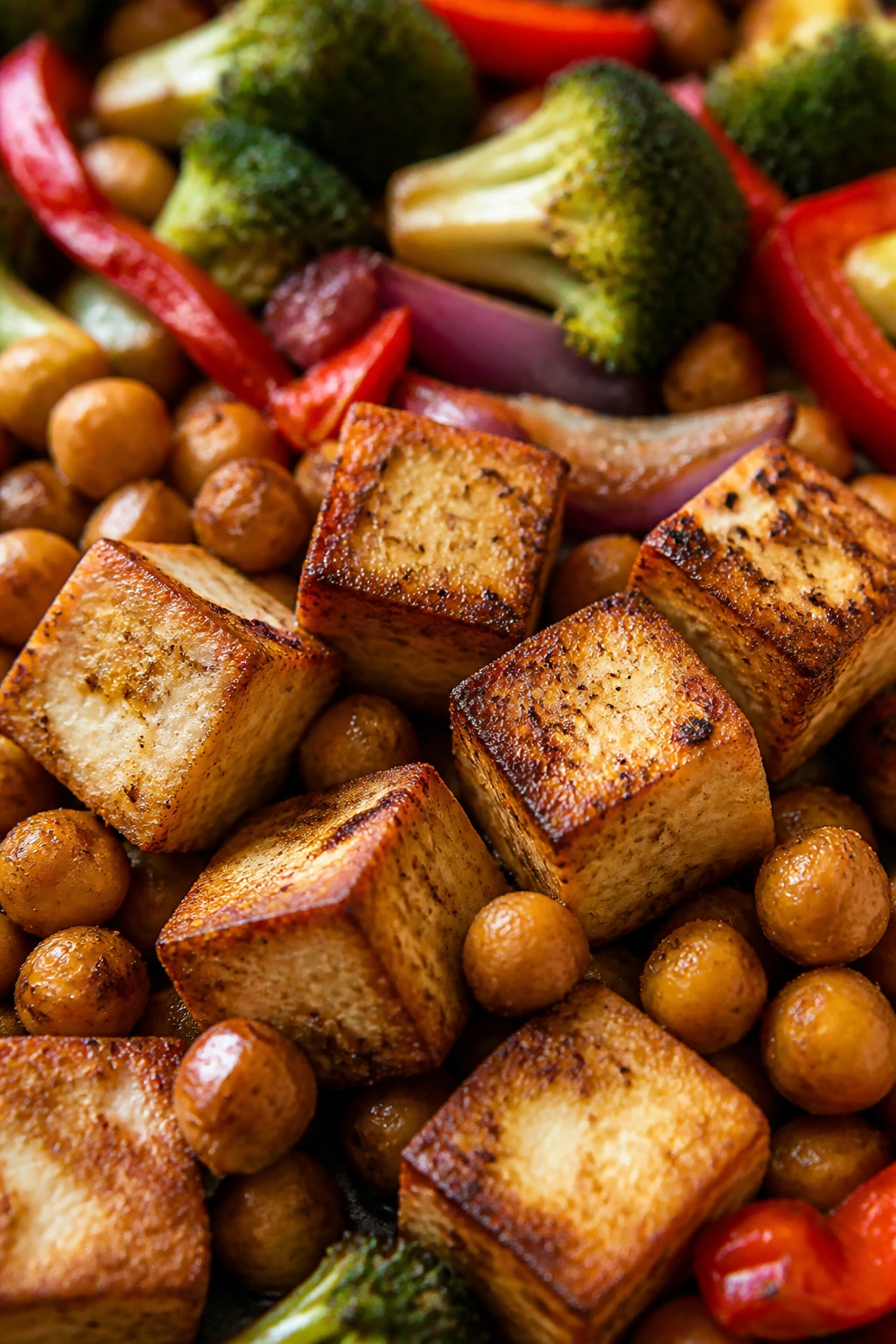
Protein Base
What to use: 2 blocks extra-firm tofu and 2 cans chickpeas. That pair gives the dish real staying power, with tofu handling the chew and chickpeas bringing little crisp edges if they’re dried well.
Preparation: Press the tofu for 15 to 20 minutes if it isn’t super-firm, then cut it into 1-inch cubes. Rinse the chickpeas and dry them hard on a kitchen towel; wet chickpeas roast like tiny steam bombs.
Substitutions: Tempeh works if you want a firmer, earthier bite. Halloumi also works if you’re fine with dairy and want a saltier, squeakier finish.
Tips: If the tofu still feels damp on the outside, it will brown poorly even if you coated it in spices. Give it a quick pat-down after cutting, and do not skip the cornstarch. That thin layer is what makes the edges turn crisp instead of rubbery.
Vegetables by Roast Time
What to use: 5 cups broccoli, 4 cups cauliflower, 2 bell peppers, 1 large red onion, 2 medium zucchini, and 1 pint cherry tomatoes. This mix gives you some vegetables that need a head start and some that want to go in late.
Preparation: Cut the broccoli and cauliflower into medium florets so they brown without drying out. Slice the peppers into wide strips and keep the zucchini on the thicker side; if you cut it too thin, it slumps before the pan is done.
Substitutions: Carrots, Brussels sprouts, asparagus, or mushrooms can slide in depending on what you have. If you use mushrooms, roast them on their own part of the pan so they don’t dump water onto everything else.
Tips: Keep the tomatoes and zucchini separate until the second half of roasting. They soften fast and need less time than broccoli or cauliflower, which is why the tray stays bright instead of mushy.
Seasonings and Crisping
What to use: 3 tablespoons olive oil, 3 tablespoons cornstarch, 2 teaspoons kosher salt, 1 teaspoon black pepper, 2 teaspoons smoked paprika, 1 teaspoon garlic powder, 1 teaspoon ground cumin, and 1/2 teaspoon crushed red pepper flakes if you want heat.
Preparation: Mix the spices together before they hit the tray. That way the tofu, chickpeas, and vegetables each get the same seasoning profile instead of one sad corner ending up underseasoned.
Substitutions: Smoked paprika can be swapped for sweet paprika, but you’ll lose some of the deeper roasted note. If cumin isn’t your thing, use coriander or a small pinch of dried oregano.
Tips: Cornstarch belongs on the tofu and chickpeas, not buried in the sauce. It helps the surface dry out in the oven, which is the difference between browned and soggy.
Lemon-Tahini Finish
What to use: 1/4 cup tahini, 3 tablespoons lemon juice, 1 grated garlic clove, 1 teaspoon maple syrup, 3 to 5 tablespoons warm water, and 1/4 teaspoon salt.
Preparation: Whisk the lemon juice and tahini first. The mixture will seize and look thick; that’s normal. Add warm water a tablespoon at a time until it turns glossy and pourable.
Substitutions: If tahini is missing from the pantry, plain Greek yogurt gives you a tangy drizzle, though it changes the dish’s vibe. Almond butter can work in a pinch, but it tastes sweeter and less clean than tahini.
Tips: Garlic in the sauce should be fine enough to disappear into the creaminess. Grated, not chopped. If you bite a raw garlic chunk in the middle of a creamy sauce, the whole plate suffers.
Finishing Touches
What to use: Chopped parsley or dill, toasted sesame seeds or pumpkin seeds, and lemon wedges.
Preparation: Chop the herbs after the roast is nearly finished so they stay bright and don’t wilt into the board. Toast the seeds in a dry skillet for a minute or two until they smell nutty.
Substitutions: Basil can work if you want a sweeter profile, and mint is lovely if you’re serving this with yogurt. Sunflower seeds are fine when pumpkin seeds are out of reach.
Tips: Finish with herbs after the sauce, not before. If the herbs go under the drizzle, they vanish into the plate. Put them on top where they can actually do something.
The Tools That Keep the Roast Dry, Crisp, and Even
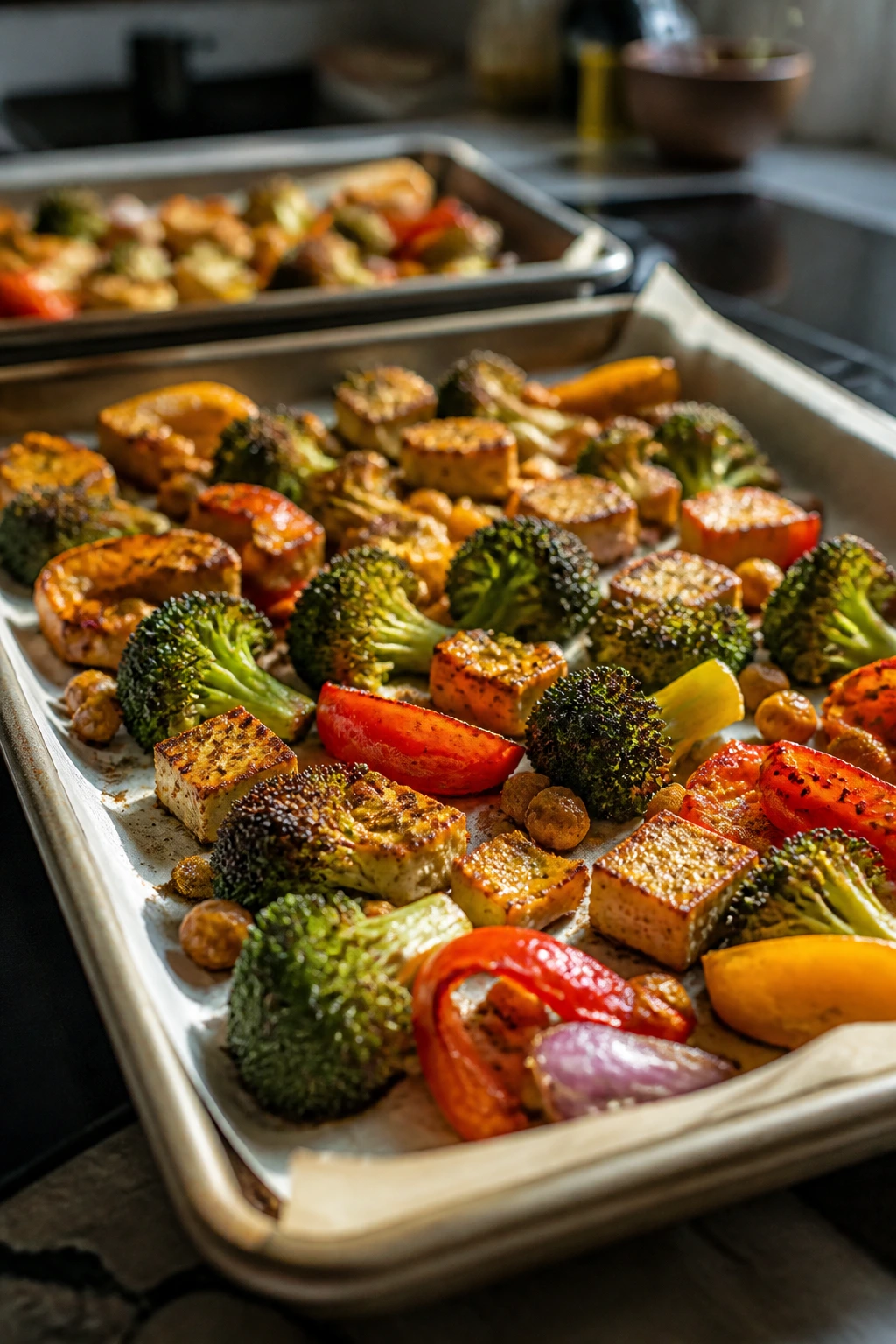
A tray dinner lives or dies on the pan setup. The ingredients matter, sure, but so does giving them enough room to breathe. Overcrowding makes vegetables weep. Steam is the enemy here.
- 2 rimmed half-sheet pans — You need two pans so the tofu, chickpeas, and vegetables can roast in a single layer without piling up.
- Parchment paper — Keeps the tofu from sticking and makes cleanup painless. Foil works, but parchment browns more gently.
- Two large mixing bowls — One for the protein, one for the vegetables. Trying to toss everything in one bowl turns into a mess fast.
- Clean kitchen towel or tofu press — A towel and a heavy skillet can press tofu just fine. No special gadget required.
- Silicone spatula or wooden spoon — Gentle enough for flipping tofu without shredding the edges.
- Small whisk or fork — For the tahini sauce. A fork works if you’re not in the mood to wash another tool.
- Sharp chef’s knife — Clean cuts matter here. Ragged florets brown unevenly.
- Cutting board with a damp towel underneath — The board stops sliding while you chop the vegetables, which sounds small until a bell pepper rockets away from you.
If you only own one sheet pan, roast in batches. I know that sounds tedious. It beats a grey, steamed tray by a mile.
How to Roast the Tofu, Chickpeas, and Vegetables
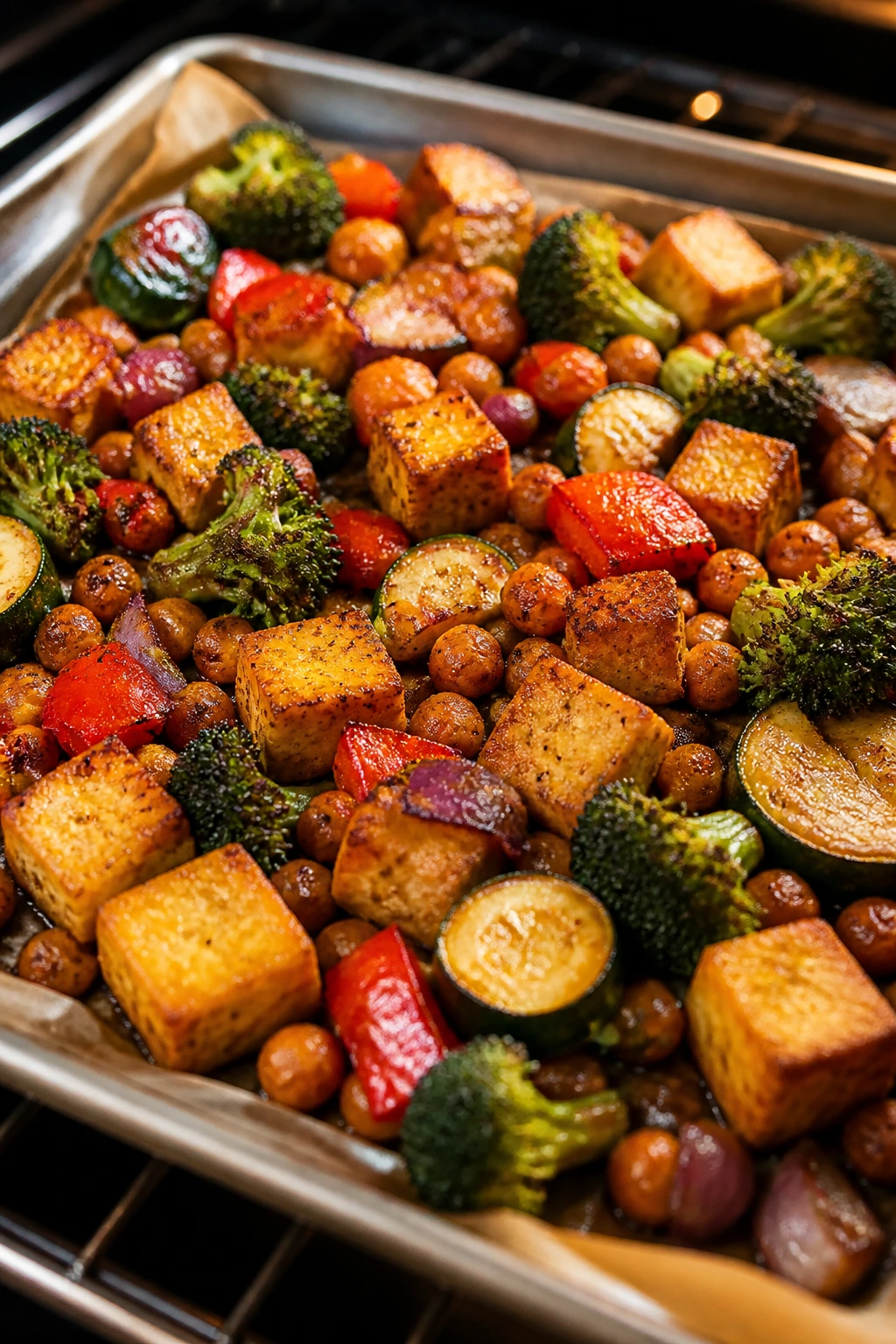
The oven wants order. That’s the whole secret. Give the tofu and chickpeas the longest run, tuck the vegetables in according to how much water they carry, and let the darker edges happen naturally instead of trying to rush them with extra oil.
Prep the Oven and the Sauce
-
Preheat the oven to 425°F (220°C) and position racks in the upper and lower thirds. Line 2 rimmed sheet pans with parchment paper.
-
Whisk the sauce in a small bowl by combining the tahini, lemon juice, grated garlic, maple syrup, salt, and 3 tablespoons warm water. It will look thick at first; keep whisking until it becomes smooth and pourable. Add the remaining water 1 tablespoon at a time if you want a thinner drizzle.
-
Press and dry the tofu if needed. Cut each block into 1-inch cubes and pat the cubes dry with a kitchen towel. Wet tofu steams; dry tofu browns. Drain the chickpeas, rinse them, and dry them as thoroughly as you can.
Season the Protein
-
Toss the tofu in a large bowl with 1 1/2 tablespoons olive oil, 2 tablespoons cornstarch, 1 teaspoon smoked paprika, 1/2 teaspoon garlic powder, 1/2 teaspoon cumin, 1 teaspoon kosher salt, and 1/2 teaspoon black pepper. Keep the coating light and even. If you see thick white clumps, break them up with your fingers.
-
Toss the chickpeas in the same bowl, or a second bowl if that’s easier, with 1 tablespoon olive oil, 1 tablespoon cornstarch, 1 teaspoon smoked paprika, 1/2 teaspoon cumin, 1/2 teaspoon kosher salt, and 1/4 teaspoon black pepper. They should look lightly dusted, not caked.
-
Spread the tofu and chickpeas across one prepared sheet pan in a single layer, leaving room around each piece. Do not crowd the pan. If the pieces touch too much, they soften instead of crisping.
Season the Vegetables
-
Toss the broccoli, cauliflower, bell peppers, and red onion with the remaining 1 1/2 tablespoons olive oil, 1 teaspoon garlic powder, 1 teaspoon smoked paprika, 1/2 teaspoon cumin, 1 teaspoon kosher salt, and 1/2 teaspoon black pepper. Spread them across the second sheet pan in one layer.
-
Roast both pans for 15 minutes, then switch the top and bottom pans between racks. Flip the tofu pieces with a spatula and stir the chickpeas so they brown on different sides. Stir the vegetables once, too, so the edges on the onion and peppers get a turn toward the heat.
-
Add the zucchini and cherry tomatoes to the vegetable pan, tossing them lightly with the browned vegetables. Roast both pans for another 10 to 12 minutes, until the tofu has crisp, golden corners, the chickpeas feel firm, and the broccoli is browned at the tips. If your oven is on the gentle side, give the pans 2 to 3 extra minutes.
Finish and Serve
- Rest the trays for 5 minutes, then transfer everything to a large serving platter or shallow bowls. Drizzle with the lemon-tahini sauce, scatter over the parsley and seeds, and pass the lemon wedges at the table. The pan should smell nutty, lemony, and a little toasted. That’s your cue.
How to Serve Roasted Protein Veggies Without Making Them Dull
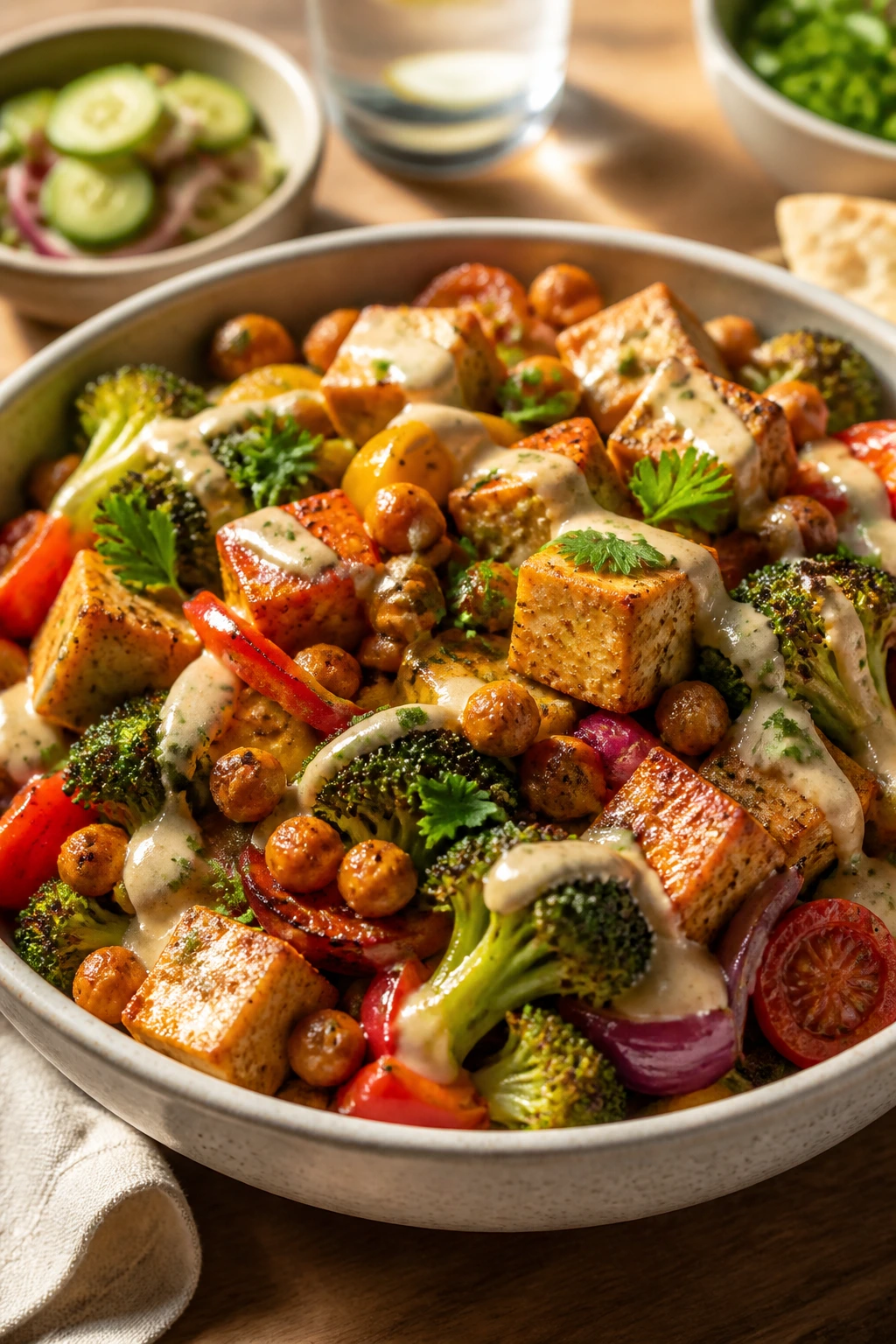
Presentation: I like this piled into shallow bowls instead of a flat plate. The sauce can pool around the edges, the herbs stay visible, and the browned tofu gets to sit on top where it belongs. If you want a little more polish, spoon a thin layer of the tahini sauce first, then heap the vegetables over it and finish with a final drizzle.
Accompaniments: This works beautifully over warm quinoa, brown rice, couscous, or farro. Warm pita on the side is also a smart move if you want something to scoop with. A sharp cucumber salad or plain arugula dressed with lemon gives the plate a cool snap next to all the roasting.
Portions: As a main dinner, plan on about 1 1/2 to 2 cups per person. If you serve it over grains, 1 cup of roasted vegetables and protein plus 1/2 cup cooked quinoa or rice is a solid dinner bowl. For a lighter lunch, the same tray goes further than you think because the vegetables are bulky and filling without being heavy.
Beverage Pairing: Sparkling water with lemon keeps the meal bright. Mint iced tea works well too, especially if you add a little extra cumin or red pepper. If you’re serving wine, a dry sauvignon blanc or something crisp and citrusy keeps pace with the tahini and char.
The plate should look relaxed, not arranged like a museum piece. Roast trays are supposed to look a little scattered. That’s part of their charm.
Small Moves That Push the Flavor Further
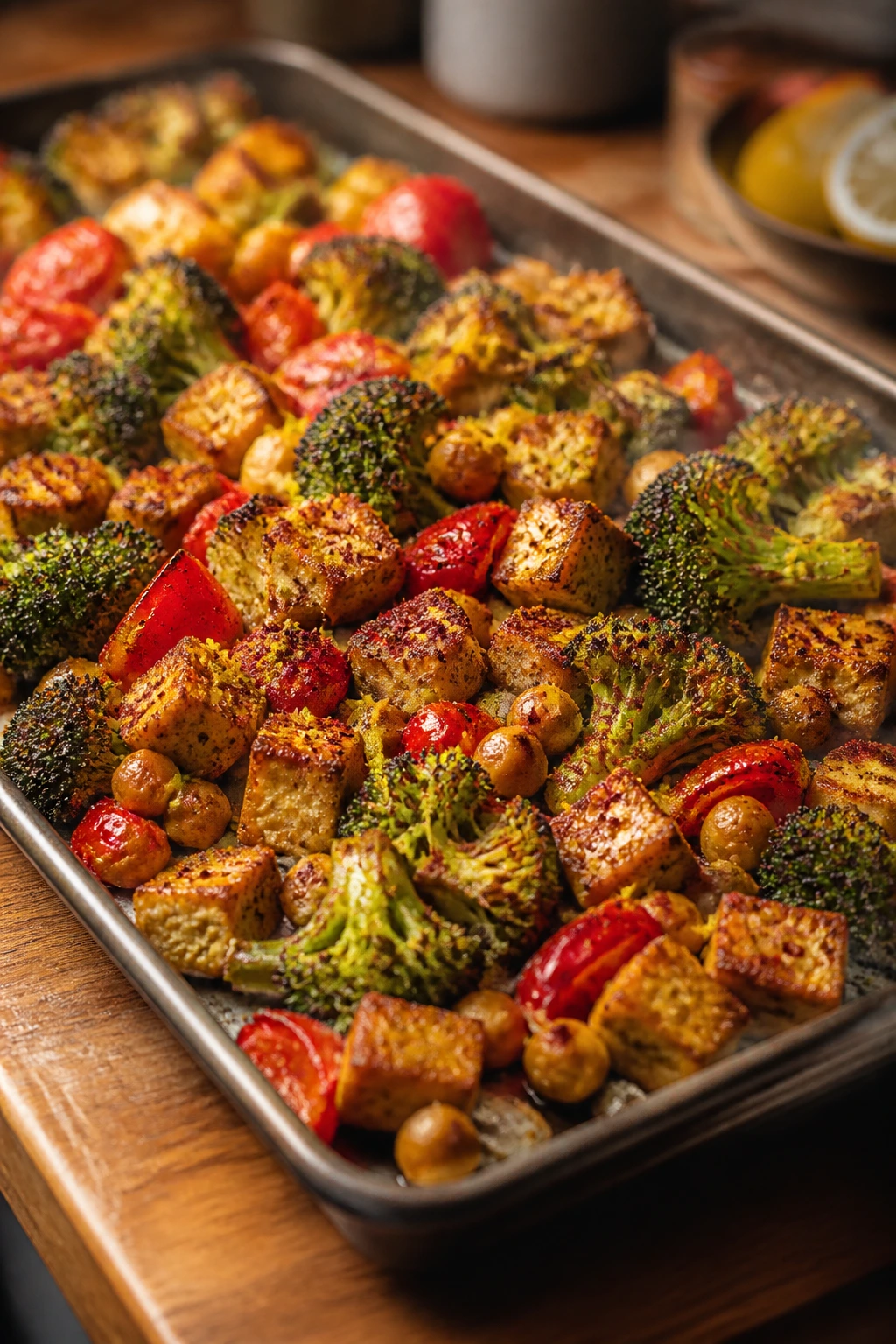
Flavor Enhancement: A little sumac at the end gives the tray a sharper, almost berry-bright edge that works especially well with lemon-tahini. I also like a squeeze of fresh lemon over the hot vegetables right before serving, because the acid wakes up the browned bits that the oven gives you for free.
Time-Saver: If you buy pre-cut broccoli and cauliflower, check that the pieces are dry. Wet pre-cut vegetables often hide in a cold bag and carry enough moisture to slow the roast. Pat them down on a towel and they’ll behave much better.
Texture Booster: Broil the tofu pan for 60 to 90 seconds at the end if the edges still look pale. Stand right there and watch it. The line between “crispy” and “burned” under a broiler is short and unkind.
Make-It-Yours: If you want more protein without changing the tray much, sprinkle hemp seeds over the finished bowls. They disappear into the sauce and add a soft, nutty note. For a dairy version, a spoonful of Greek yogurt mixed with lemon zest can sit next to the tahini and make the plate taste fuller.
There’s also room for heat if that’s your thing. A few extra red pepper flakes in the spice mix or a spoon of harissa stirred into the sauce gives the dinner a more assertive edge.
Common Mistakes That Leave Roasted Protein Veggies Soft
-
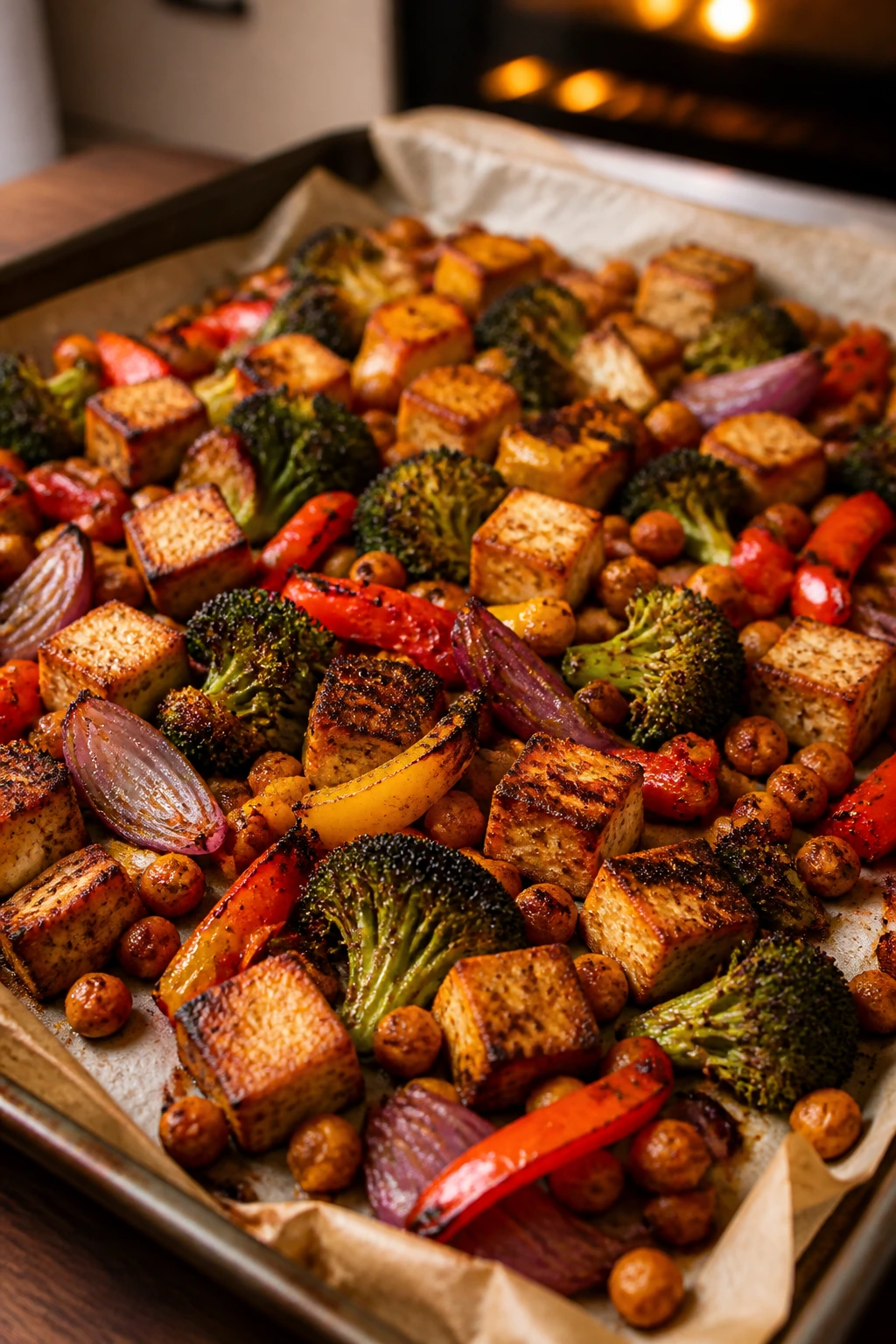
Packing everything onto one pan: The symptom is obvious: pale tofu, soggy onions, and broccoli that looks boiled at the edges. The fix is space. Use two pans, or roast in batches if your pans are smaller than a standard half-sheet.
-
Leaving the tofu wet: If the cubes are still damp when they hit the oil and cornstarch, they steam before they brown. Press them, cut them, and pat them dry again if needed. The surface should feel almost tacky, not slick.
-
Adding zucchini too early: Zucchini gives itself away fast. It goes from firm slices to collapsed ribbons in a short window, especially at 425°F. Hold it back until the second half of roasting so it softens instead of dissolving.
-
Underseasoning after roasting: Roasting dulls seasoning a little, especially salt. If the tray tastes flat at the end, it usually needed a final pinch of salt or a brighter hit of lemon, not more sauce. Taste before you drown the vegetables.
-
Using sauce that is too thick: Tahini can seize into a paste if you stop adding water too soon. Thin it gradually with warm water until it ribbons off the spoon. If it thickens while it sits, whisk in another teaspoon or two of water and a squeeze of lemon.
-
Ignoring the rack position: A low rack can leave the top of the tray underbrowned, and a top rack can scorch the onions before the broccoli is done. Upper and lower thirds give the pans a fair shot, and swapping them halfway through keeps the color even.
Crowding and dampness are the usual villains here. Once you solve those, the rest is just seasoning and timing.
Variations for Different Taste Buds and Diets
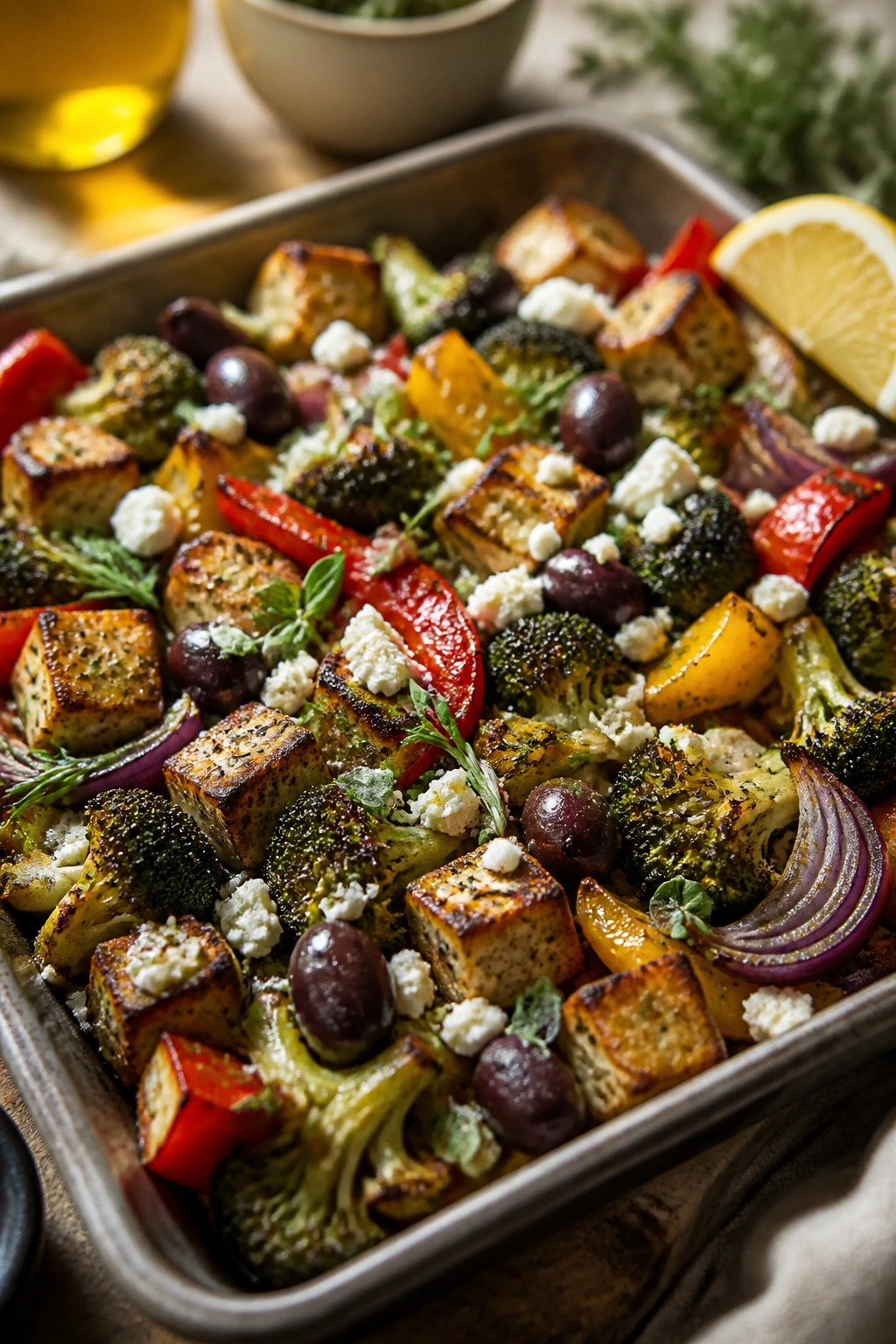
Mediterranean Lemon-Herb Tray: Swap the cumin for dried oregano, add more parsley, and finish with crumbled feta. Kalamata olives fit here if you want something saltier and more briny. This version tastes brighter and a little less smoky, which makes it a strong choice when you’re serving it over couscous.
Smoky Harissa Version: Stir 1 to 2 tablespoons harissa paste into the olive oil before tossing the vegetables, then leave out the maple syrup in the sauce or keep only half a teaspoon. The heat lands in a warmer, more concentrated way than red pepper flakes, and it plays nicely with cauliflower and red onion.
Sesame-Ginger Bowl: Replace the smoked paprika and cumin with 2 teaspoons grated ginger, 1 tablespoon tamari, and 1 teaspoon toasted sesame oil in the roasting mix. Finish with scallions and sesame seeds instead of parsley. This one leans more savory and less lemony, which is handy if you want a bowl that feels closer to takeout.
Paneer and Pepper Swap: If tofu isn’t your thing, use 1 1/2 pounds paneer cut into cubes and skip the cornstarch on the cheese. Paneer browns well and keeps a firm chew, so it can stand in for tofu without needing the same amount of drying time.
Extra-Green Pantry Version: Add asparagus or green beans during the final 8 minutes of roasting and replace the cherry tomatoes with sliced avocado added after the tray comes out. The result is a little fresher and less sweet, which works when you want a lighter plate.
The nice thing about this base is that it doesn’t collapse under substitutions. It’s sturdy. That’s rare, and worth using.
Storage, Reheating, and Make-Ahead Planning
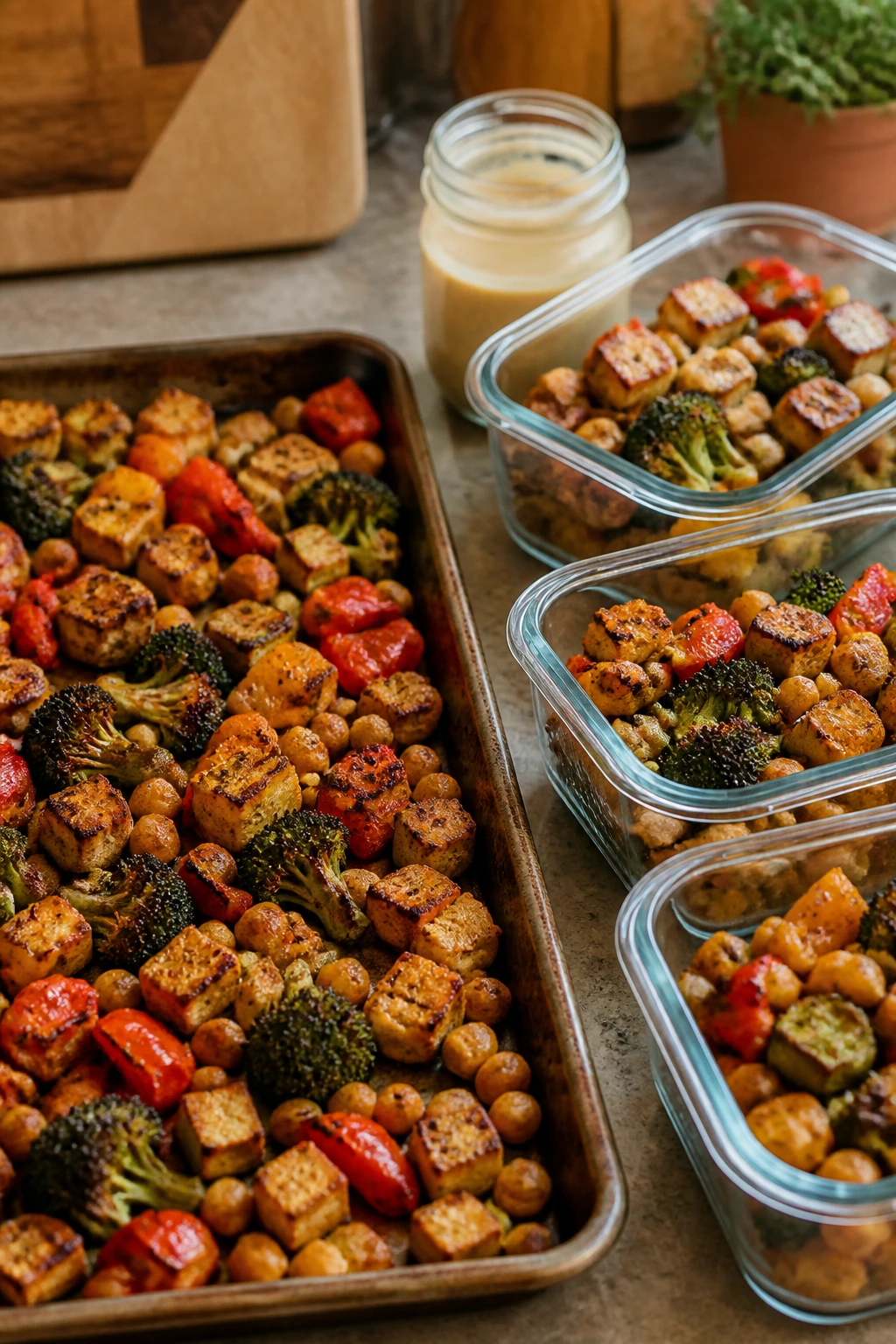
Roasted vegetables and tofu are good leftovers if you store them like you mean it. Put the cooled tray into airtight containers within 2 hours of cooking. In the refrigerator, the dish keeps for 3 to 4 days. The lemon-tahini sauce keeps for about 5 days on its own, and it often thickens overnight, which is normal.
Freezing works, but not equally well for every part of the meal. The tofu and chickpeas freeze for up to 2 months, though the tofu texture gets a little denser after thawing. Zucchini and tomatoes are the weak links here; they soften a lot after freezing, so I only freeze the tray if I’m fine with a softer lunch bowl later.
Reheat the vegetables and protein in a 400°F oven for 8 to 10 minutes on a small sheet pan, or use an air fryer at 375°F for 5 to 7 minutes. A skillet over medium heat also works if you want to bring back some edges. Microwave reheating is fine in a pinch, but it makes the vegetables softer and dulls the tofu crust.
For make-ahead planning, press the tofu up to 24 hours ahead and keep it wrapped in the fridge. The vegetables can be cut the day before and stored in separate containers, though I’d keep the zucchini away from the broccoli so the moisture from one doesn’t creep into the other. The sauce can be mixed 2 to 3 days ahead, but thin it with warm water again right before serving.
If you’re packing lunch, store the sauce separately and reheat the tray first. Cold tahini on hot vegetables gets gluey. Nobody wants that.
Roasted Protein Veggies FAQ
Can I use frozen vegetables instead of fresh?
Yes, but use them wisely. Frozen broccoli or cauliflower can work if you thaw them first and pat them very dry, while frozen zucchini is usually too watery for this recipe and turns soft in a hurry.
Do I really need to press the tofu?
If you’re using super-firm tofu and it feels dry, a brief drain may be enough. Regular extra-firm tofu needs pressing or it tends to steam on the outside instead of browning, which is the difference between a chewy cube and a pale one.
Can I make this without chickpeas?
You can, but the dish will feel less hearty. Tempeh is the cleanest swap for the same roasting method, while extra tofu can replace the chickpeas if you want to keep the tray simple.
What if my tahini sauce turns pasty?
That means it needed more water. Add warm water a teaspoon at a time and whisk after each addition until it loosens into a smooth drizzle; a little extra lemon juice can also help it relax.
Can I roast everything on one pan?
Only if the pan is huge and the vegetables aren’t crowded. If the pieces touch too much, they release steam and the whole tray loses color. Two pans are safer and give better browning.
How do I keep the zucchini from going mushy?
Cut it thick enough to hold shape, about 1/2 inch, and add it in the final stretch of roasting. Also, do not salt it early and leave it sitting, because salt draws water out fast.
Is this good cold for lunch?
Yes, though the texture changes. The tofu gets firmer, the vegetables soften a little, and the sauce should be packed separately so you can warm the tray and dress it right before eating.
A Tray Dinner Worth Repeating
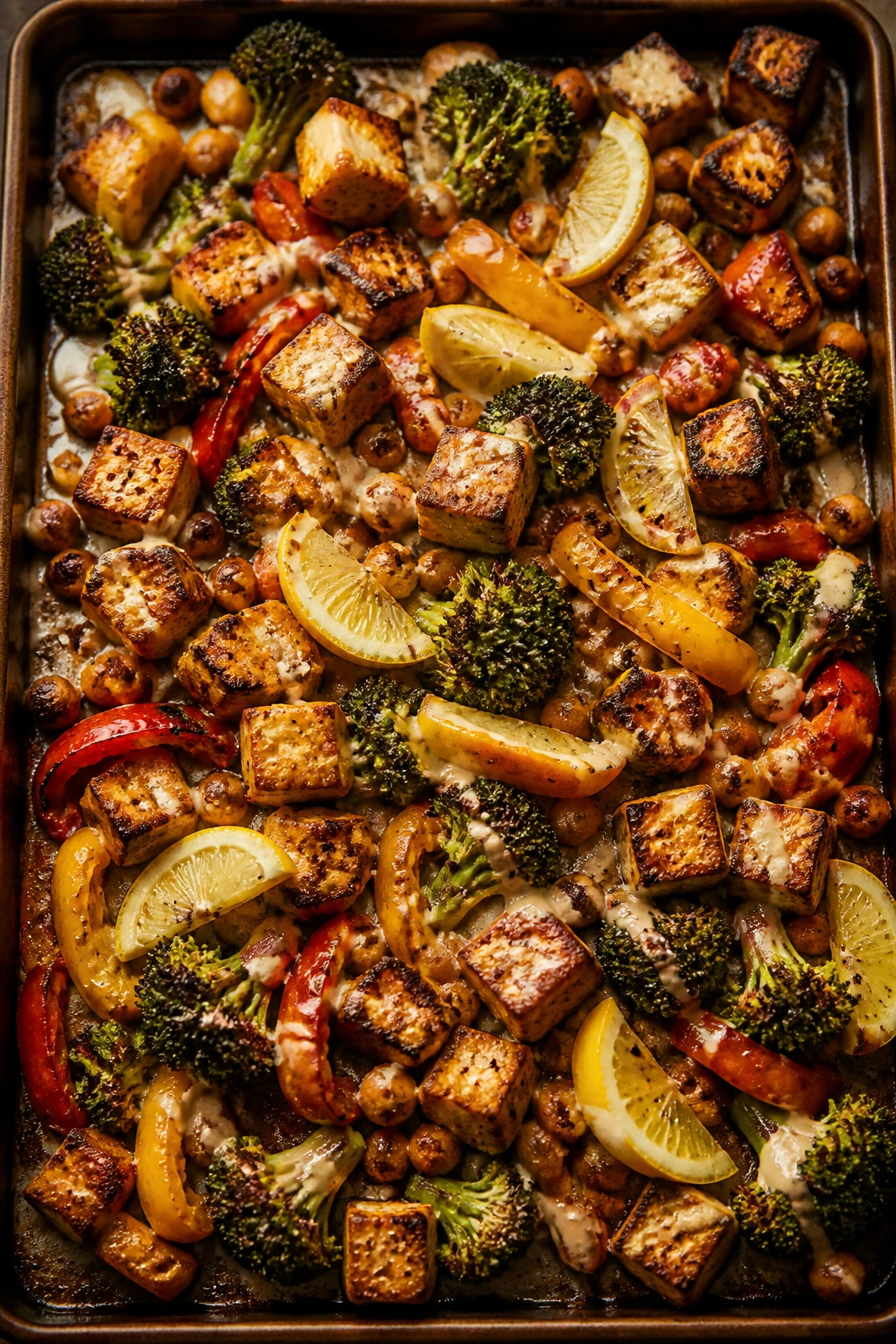
The best thing about roasted protein veggies is that the dish respects the ingredients instead of trying to hide them. Tofu should taste like tofu with good browning. Chickpeas should keep a little bite. Broccoli should have dark tips, not soft edges. When those details line up, dinner feels calm instead of noisy.
I like meals that tell you exactly what went right. This is one of them. If the vegetables are glossy and browned, if the sauce lands with a lemony snap, if the tofu has those crisp corners that break when you stab them with a fork, you did it properly — and the oven did the rest.
Roasted Protein Veggies with Crispy Tofu, Chickpeas, and Lemon-Tahini Drizzle — Recipe Card
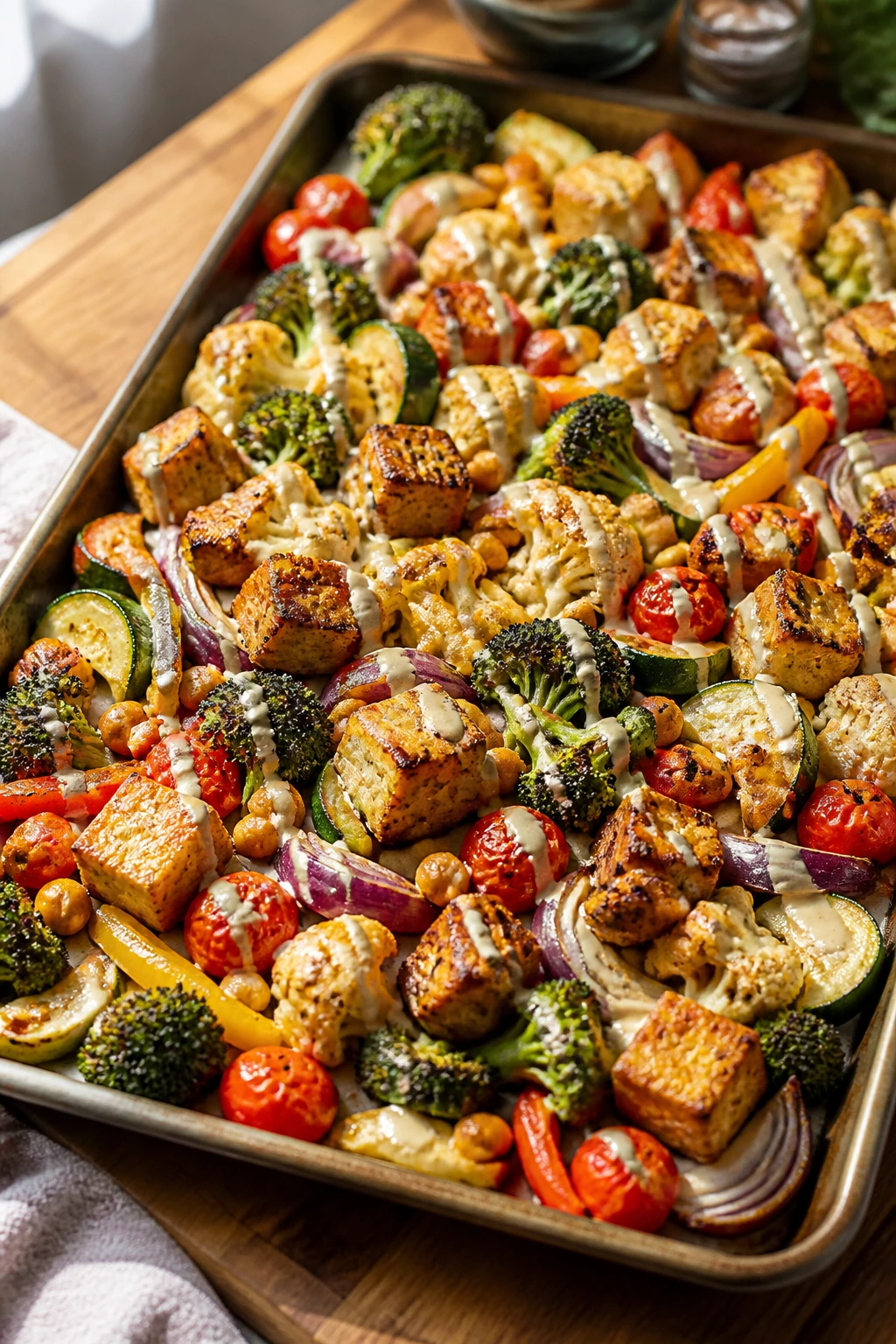
Recipe Name: Roasted Protein Veggies with Crispy Tofu, Chickpeas, and Lemon-Tahini Drizzle
Description: A sheet-pan vegetarian dinner with browned tofu, crisp chickpeas, and roasted vegetables finished with a bright lemon-tahini sauce. It eats like a full meal and keeps its texture better than most one-pan vegetable dishes.
Prep Time: 25 minutes
Cook Time: 30 minutes
Total Time: 55 minutes
Course: Dinner, Main Course
Cuisine: Mediterranean-leaning Vegetarian
Servings: 6 servings
Calories: About 390 kcal per serving
Ingredients
For the Roasted Tray:
- 2 (14-ounce) blocks extra-firm tofu, drained and pressed
- 2 (15-ounce) cans chickpeas, drained, rinsed, and patted dry
- 5 cups broccoli florets
- 4 cups cauliflower florets
- 2 bell peppers, sliced into 1-inch strips
- 1 large red onion, cut into wedges
- 2 medium zucchini, cut into half-moons
- 1 pint cherry tomatoes
- 3 tablespoons olive oil
- 3 tablespoons cornstarch
- 2 teaspoons kosher salt
- 1 teaspoon black pepper
- 2 teaspoons smoked paprika
- 1 teaspoon garlic powder
- 1 teaspoon ground cumin
- 1/2 teaspoon crushed red pepper flakes, optional
For the Lemon-Tahini Drizzle:
- 1/4 cup tahini
- 3 tablespoons lemon juice
- 1 small garlic clove, finely grated
- 1 teaspoon maple syrup
- 3 to 5 tablespoons warm water
- 1/4 teaspoon kosher salt
For Finishing:
- 2 tablespoons chopped parsley or dill
- 1 tablespoon toasted sesame seeds or pumpkin seeds
- Lemon wedges, for serving
Instructions
Prep the Oven and Sauce:
- Preheat the oven to 425°F (220°C) and line 2 rimmed sheet pans with parchment paper.
- Whisk the tahini, lemon juice, garlic, maple syrup, salt, and warm water until smooth and pourable. Add more water if needed.
Season the Protein and Vegetables: 3. Press and dry the tofu, then cut it into 1-inch cubes. 4. Toss the tofu with 1 1/2 tablespoons olive oil, 2 tablespoons cornstarch, 1 teaspoon smoked paprika, 1/2 teaspoon garlic powder, 1/2 teaspoon cumin, 1 teaspoon salt, and 1/2 teaspoon pepper. 5. Toss the chickpeas with 1 tablespoon olive oil, 1 tablespoon cornstarch, 1 teaspoon smoked paprika, 1/2 teaspoon cumin, 1 teaspoon salt, and 1/4 teaspoon pepper. 6. Toss the broccoli, cauliflower, bell peppers, and red onion with the remaining 1 1/2 tablespoons olive oil, garlic powder, smoked paprika, cumin, salt, and pepper.
Roast and Finish: 7. Spread the tofu and chickpeas on one sheet pan in a single layer and spread the vegetables on the second pan. 8. Roast for 15 minutes, then switch the pans between racks. Flip the tofu and stir the chickpeas and vegetables. 9. Add the zucchini and cherry tomatoes to the vegetable pan and roast for 10 to 12 minutes more, until the tofu is golden and the vegetables are browned at the edges. 10. Rest for 5 minutes, then drizzle with the tahini sauce and finish with herbs, seeds, and lemon wedges.
Notes: Keep the sauce separate if you’re meal-prepping. If your oven runs cool, add 3 to 4 extra minutes to the second roast. Do not crowd the pans if you want crisp edges.