



A vegan meal prep Sunday falls apart the moment everything tastes steamed. Pale cauliflower, soft onions, chickpeas that seem like they were introduced to the oven and immediately asked to leave—that’s the usual story.
Caramelized vegan meal prep Sunday works because it leans into browning instead of fighting it. You roast hard vegetables until the edges go bronze, cook one grain that stays chewy, and keep one sharp sauce waiting in a jar so the bowl tastes fresh even on day four.
I’ll take a tray of dark-edged onions and mushrooms over a polished but bland container every single time. The point is not to make six identical dinners; it’s to give yourself enough good building blocks that weeknight dinner can be assembled in two minutes and still taste like somebody cared.
That means paying attention to pan space, cooling time, and the difference between caramelized and merely softened. Small things. Big payoff. The first real section starts with the part most people get backwards: what caramelization actually does for vegan food.
Why This Prep Style Works Better Than Random Batch Cooking
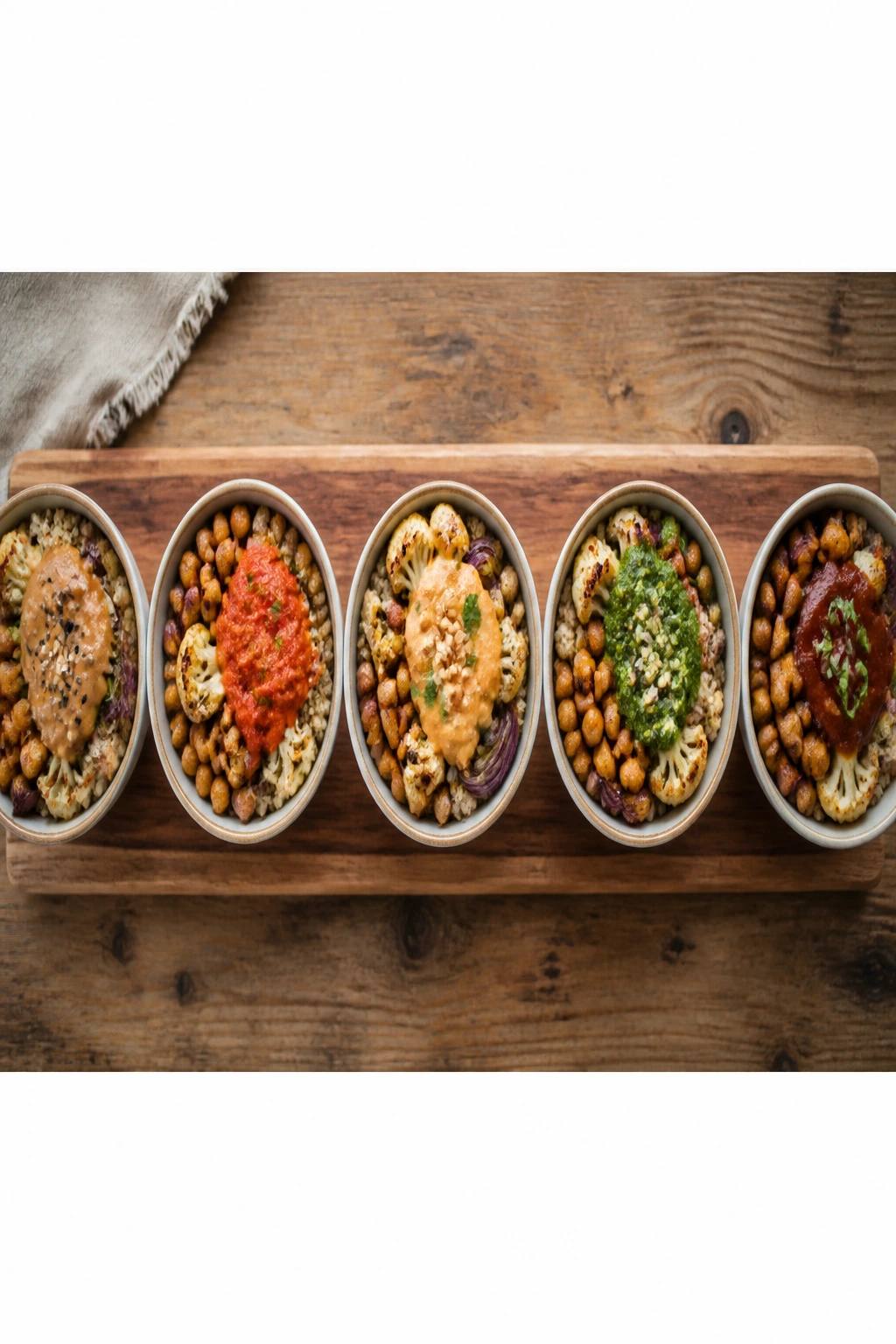
Deep browning does the heavy lifting: When onions, sweet potatoes, mushrooms, and cauliflower hit a hot oven, their edges darken and their natural sugars turn richer, which gives you flavor without needing a heavy sauce.
The fridge likes structure: Separating roasted vegetables, grains, protein, and sauce keeps the texture from collapsing into one soft mass by day three.
One sauce changes the whole week: A lemon-tahini drizzle on Monday, a miso-ginger spoonful on Wednesday, and a herb sauce on Friday can make the same tray feel like three different dinners.
Fiber and protein keep the bowl steady: Chickpeas, quinoa, cabbage, and roasted crucifers give the meal enough body that you are not rummaging for crackers an hour later.
Cleanup stays sane: Two sheet pans, one saucepan, one whisk, and a cutting board are enough for a batch that feeds you for several nights.
The food actually gets better with a little rest: Roasted onions mellow overnight, cumin settles into the chickpeas, and the grain picks up the little flecks of oil and spice that fall through the container.
What Caramelized Flavor Really Means in a Vegan Dinner
Caramelized doesn’t mean sweet in the dessert sense. It means browned, concentrated, and a little sticky at the edges, which is exactly what vegan food needs when you’re building dinner from vegetables, beans, and grains. Meat usually brings its own savory weight; plant food needs a bit more coaxing.
The trick starts with moisture. If a pan is crowded, vegetables steam. If the heat is too low, they soften before they color. If you cover them while they’re still hot, that steam condenses right back on the surface and turns your careful browning into a sad gray sheen. That is the whole game in three sentences.
Why water is the enemy here
Onions, mushrooms, zucchini, and tomatoes all carry a lot of water. That is not a flaw. It just means they need space and heat so the moisture can leave before the surface turns golden.
A heavy rimmed sheet pan works better than a thin one because it holds heat and gives you a little blast of sizzle the moment the vegetables touch down. Parchment is fine, though I sometimes skip it for the first roast when I want a little more direct contact on the pan. Dirty, yes. Worth it, also yes.
Why onions should lead the way
Onions are usually the best starting point because they soften, sweeten, and brown without falling apart. Red onions go jammy and deep; yellow onions get sweeter and more round; shallots get fancier than you need them to be on a Sunday night.
If the onion turns brown before the sweet potato is tender, cut the onion wedges larger next time. If the sweet potato softens before the onion has color, the cubes were too small or the oven ran cool. Caramelization is not mystical. It is a series of small adjustments.
The Shopping Basket for Four Solid Dinners
What you buy matters because this kind of meal prep lives or dies on texture. Some vegetables look good in the produce bin and go limp in the oven. Some grains sound healthy and turn gluey if you cook them too hard. The basket below is built to give you four balanced dinners with enough flexibility that the leftovers do not feel copied and pasted.
-
2 large red onions, cut into 1/2-inch wedges
They bring sweetness, color, and that deep browned edge that makes the whole tray smell finished. -
2 medium sweet potatoes, peeled or scrubbed and cut into 3/4-inch cubes
They roast into soft centers and crisp corners, which helps the bowl feel hearty without needing a lot of oil. -
1 large head cauliflower, cut into small florets
Cauliflower soaks up spice and browns cleanly when the florets are roughly the size of a walnut. -
16 ounces cremini or button mushrooms, torn or halved
Dry mushrooms with tight caps brown better than wet, wrinkled ones. -
2 medium carrots, sliced on a sharp diagonal
They hold their shape and bring a little sweetness without turning mushy. -
2 cans chickpeas, drained, rinsed, and patted dry
They’re the easiest protein anchor in a prep like this, and they crisp if you give them space. -
1 1/2 cups dry quinoa or 2 cups dry brown rice
Either one gives the bowls a chewy base that won’t collapse under the vegetables. -
1 bunch kale or 1 small green cabbage, thinly sliced
Kale can be wilted fast; cabbage stays crunchy longer and is my pick when I know the bowls need to survive the fridge. -
1 lemon, 1 garlic clove, 1/2 cup tahini, 1 tablespoon white miso, 1 tablespoon maple syrup
That combination makes a sauce with salt, acid, fat, and a little depth. No sauce, no dinner. -
Olive oil, smoked paprika, cumin, kosher salt, black pepper, and a splash of apple cider vinegar
These are the pantry pieces that keep the whole plan from tasting like plain roasted vegetables.
Buy the vegetables with a little restraint. Firm onions, heavy sweet potatoes, dry mushrooms, and a cauliflower head with tight florets will roast better than prettier, looser specimens. And if your tahini is seizing up in the jar, stir it before you leave the store; old tahini can be brick-thick and annoying when you need a smooth sauce fast.
Vegetables That Brown, Vegetables That Sweat, and How to Tell the Difference
The best vegetable for vegan meal prep is not the one that looks the flashiest raw. It is the one that holds shape after forty minutes of heat and still tastes like itself after two days in the fridge. That is a narrower category than people think.
Best browning vegetables
Onions, cauliflower, carrots, sweet potatoes, Brussels sprouts, cabbage wedges, fennel, and mushrooms all respond well to high heat. They are sturdy enough to roast without disappearing, and they bring enough surface area to pick up browning fast.
Cauliflower is especially useful because it picks up whatever you put around it. Smoked paprika, cumin, curry powder, lemon zest, sesame oil—cauliflower takes the note and keeps moving. Mushrooms do something similar, though they need a little more space than most people give them.
Vegetables that need a head start
Sweet potatoes and carrots are dense, so they do better when they are cut to a similar size and spread out with room between pieces. If you slice them too thick, the outside will color while the center stays stubborn. If you cut them too thin, they collapse and go sticky before they ever build a good edge.
Brussels sprouts need a very hot oven and a little patience. Cut them in half, leave the outer leaves on if they’re clean, and roast them cut-side down. That cut face is where the good stuff happens.
Vegetables that act badly in meal prep
Zucchini, eggplant, and tomatoes can work, but they are not my first choice for this style unless you know exactly what you’re doing. They leak moisture, and that moisture turns the rest of the tray soft. If you want them anyway, roast them separately and eat them in the first two days.
Baby spinach is another troublemaker. It looks neat in a bowl for about ten minutes, then it slumps into a dark green blanket. If you want greens, use kale, chard, collards, or shredded cabbage. They hold their shape and don’t apologize for it.
The Protein Layer That Keeps the Bowl Filling
Beans are not the boring part here. They’re the anchor.
Without a sturdy protein, the dinner becomes roasted vegetables on starch, which is fine for lunch and a little thin for actual dinner. Chickpeas, tofu, tempeh, and lentils all work, but they each ask for a slightly different treatment.
Chickpeas and lentils
Chickpeas are the easiest win. Drain them, rinse them, then dry them well on a towel. If they go into the oven wet, they steam and split instead of crisping. Toss them with olive oil, smoked paprika, cumin, salt, and, if you want more crunch, a teaspoon of cornstarch for every can.
Cooked lentils behave differently. They do not roast into something crisp, and they do not need to. French green lentils or black beluga lentils keep their shape best and are excellent stirred into warm grains with a splash of vinaigrette. Red lentils break down too much for this kind of bowl unless you want a soft, saucy base.
Tofu and tempeh
Extra-firm tofu can be excellent if you press it first. Twenty minutes under a plate and a heavy can is enough to push out excess water. Then cube it, toss it with tamari, oil, and a dusting of cornstarch, and roast it until the edges look dry and bronzed.
Tempeh has more bite and a little nuttiness. I like to steam it for 5 minutes before marinating, which softens the bitter edge some tempeh brings straight from the package. Then it can go into the oven or a hot skillet. The steam step feels fussy until you taste the result.
Which one to choose
If you want the fastest batch, use chickpeas. If you want the cleanest protein texture after reheating, use tofu. If you want something with more chew and a slightly earthy flavor, tempeh is the one. If you’re folding protein into a grain base, lentils are hard to beat because they disappear into the bowl without making it feel muddy.
Grains and Greens That Carry the Sauce Without Going Limp
A good bowl needs something to catch the sauce. A bad bowl just lets the sauce pool at the bottom and sit there like an apology.
Quinoa is the fastest path here, and I use it when I want dinner on the table without staring at the stove for forty minutes. Brown rice is steadier and more filling, though it takes longer. Farro has a good chew, but it isn’t gluten-free, so I only use it when that does not matter.
Grains that hold up
Cook grains a hair firm if you know they’re headed for the fridge. Quinoa that’s perfectly tender at dinner can feel too soft after it sits in a container overnight. Brown rice should be fluffy, not wet. If you’re using a rice cooker, that’s fine, but don’t drown the grain with extra water out of habit.
I spread cooked grains on a baking sheet for a few minutes before packing. It sounds old-fashioned and a little silly, but it helps steam escape and keeps the rice from clumping into one giant brick. Hot grain sealed into a box is where mush begins.
Greens that survive reheating
Kale is the easy winner. It wilts into the warm bowl without collapsing completely. Cabbage is even better if you want crunch that lasts. Thinly sliced green cabbage tastes sharper raw, and it stays lively for days in the fridge.
Chard and collards can work too, but they want a quick sauté or steam first. Baby greens are a last-minute add. If you pack them under hot grains, they melt into nothing. If you want something fresh on top of the reheated bowl, use cabbage ribbons, parsley, dill, or scallions instead.
A bowl needs contrast. Soft grain, browned vegetables, sturdy protein, and one raw thing with bite. Without that last piece, the whole dinner gets muddy.
The Sunday Cooking Order That Saves Time and Cleanup
One hot oven. One simmering pot. One bowl for sauce. That’s the whole rhythm.
The order matters because every component cools at a different pace. Roast first, cook grains while the vegetables are in the oven, make the sauce while everything rests, then pack once the steam has gone. If you try to do everything at once, you’ll spend the afternoon chasing yourself around the kitchen.
Step 1: Preheat the oven and set up the pans
- Heat the oven to 425°F (220°C) and put a rack in the center. If you have two rimmed sheet pans, line them with parchment now so you’re not fumbling with slippery paper later.
- If your pans are thin, let them heat in the oven for a few minutes before the vegetables go on. Hot metal gives you faster browning.
Step 2: Start the grains
3. Rinse 1 1/2 cups quinoa or 2 cups brown rice under cool water until the water runs mostly clear. That little rinse keeps the grains from tasting dusty.
4. Cook the grains with the package water ratio, a pinch of salt, and, if you like, a bay leaf. Quinoa usually takes about 15 minutes; brown rice often needs 35 to 40 minutes. Cook until the liquid is absorbed and the grains are tender but still distinct.
Step 3: Prep the vegetables by density
5. Cut the onions, sweet potatoes, cauliflower, carrots, and mushrooms into pieces that are close in size. Toss the onions, sweet potatoes, cauliflower, and carrots with olive oil, salt, pepper, smoked paprika, and cumin in a large bowl. Keep the mushrooms separate.
6. Spread the vegetables across the pans in a single layer. If the pieces touch in big piles, they steam instead of brown. That is the line you do not want to cross.
Step 4: Roast in stages
7. Roast the hard vegetables for 20 minutes, then pull the pans out, add the mushrooms and drained chickpeas, and toss everything gently. If the chickpeas are getting pale, add a touch more oil and another pinch of salt.
8. Roast for another 15 to 20 minutes, turning once, until the onion edges look lacquered, the cauliflower has dark spots, and the sweet potatoes are tender when pierced with a fork.
Step 5: Handle the greens and protein
9. Wilt kale in a skillet with a teaspoon of oil and a splash of water for 2 to 3 minutes, or use shredded cabbage raw if you want crunch. If you’re using tofu instead of chickpeas, roast it on a separate tray for 25 to 30 minutes until the edges firm up and deepen in color.
Step 6: Make the sauce while everything rests
10. Whisk together 1/2 cup tahini, the juice of 1 lemon, 1 grated garlic clove, 1 tablespoon white miso, 1 tablespoon maple syrup, and 2 to 4 tablespoons water until the sauce turns glossy and pourable. Add a splash more water if it tightens up.
11. Taste it. If it feels flat, add a pinch of salt. If it feels heavy, add another squeeze of lemon. That’s usually enough.
Step 7: Cool, then pack
12. Let the roasted vegetables and grains sit for 15 to 20 minutes so the steam fades. Do not close hot food into a lidded container right away—that’s how you trap condensation and kill the texture.
13. Pack the bowls with grain on the bottom, vegetables and protein on top, and the sauce in a separate small container unless you’re eating immediately.
That sequence leaves you with separate parts that can be mixed in different ways all week. It also keeps you from washing three extra bowls just because the order felt chaotic.
How to Plate the Bowls So They Still Feel Like Dinner
Presentation: Use shallow bowls instead of deep ones when you’re serving at home. A wide bowl lets the browned vegetables sit on display instead of sinking into the grain, and that matters more than people admit. A scatter of herbs, a spoon of sauce, and a few sesame seeds can make a reheated dinner look deliberate instead of rescued.
Accompaniments: A lemon wedge on the side is never wasted. Quick-pickled red onions, cucumber ribbons, chopped parsley, or a small handful of toasted seeds all sharpen the bowl without adding much work. If you want bread, warm pita or a piece of seeded sourdough works better than plain toast because it can scoop the sauce without breaking apart.
Portions: For a dinner portion, I aim for roughly 3/4 to 1 cup cooked grain, 1 to 1 1/2 cups roasted vegetables, and 1/2 to 3/4 cup protein with 2 tablespoons of sauce. If you’re packing lunch as well, scale back the grain a little and add more greens or cabbage so the container doesn’t feel heavy by noon. To serve more people, roast another tray rather than piling everything onto the same pan.
Beverage Pairing: Sparkling water with lemon, unsweetened iced tea, or a dry cider all work. If you want an alcohol pairing, a crisp white wine with a clean finish keeps up with the lemon-tahini sauce. Heavy drinks make the bowl feel dull. Sharp drinks help it wake up.
Small Moves That Make the Batch Taste Fresh on Day Three
Flavor Enhancement: Finish reheated bowls with something fresh and acidic. A squeeze of lemon, a spoonful of pickled onions, or a drizzle of cider vinegar changes the whole container in about three seconds. Without that lift, the meal can taste like it spent the night in the back of the fridge, which, to be fair, it did.
Time-Saver: Roast chickpeas and vegetables together only if you give the chickpeas real space. If they sit under a pile of cauliflower, they’ll never crisp. I scatter them toward the outside edges of the pan, where the heat is a little harsher.
Pro Move: Keep one fresh green element out of the fridge job entirely. Parsley, dill, scallions, basil, or shredded cabbage added at the end gives the bowl a second texture. The difference between “meal prep” and “actual dinner” is often one raw ingredient.
Cost-Saver: Cabbage, carrots, onions, brown rice, and dried chickpeas are cheaper than fancy vegan shortcuts and hold up better in the fridge anyway. There’s no prize for using the most expensive plant protein in the store if it turns rubbery after reheating.
Texture Fix: If you like crunch, pack seeds or nuts separately. Pumpkin seeds, sesame seeds, chopped almonds, or sunflower seeds stay crisp for days in a tiny container and make a reheated bowl feel newly assembled. I do this even when I’m tired. Especially when I’m tired.
The Mistakes That Make Meal Prep Taste Flat or Watery
Crowding the pan is the easiest mistake to make and the hardest one to forgive. The vegetables sit on top of one another, the moisture has nowhere to go, and suddenly you’ve got steamed onions and pale cauliflower. Use two pans if you need to. Two pans are cheaper than disappointment.
Skipping acid is another common miss. Roasted vegetables taste round and soft in a container, which sounds nice until you realize they’ve also gone dull. A splash of lemon juice, vinegar, or a sharp sauce at the end fixes that fast. Without acid, the food feels heavy even when the ingredients are light.
Packing everything while it’s still hot creates a little private sauna inside the container. The steam softens the browned edges you worked for, and the next day you’re eating texture that has given up. Let the food cool until it stops smoking before you seal it.
Using only soft vegetables is a trap. If your whole tray is sweet potato, zucchini, and tomatoes, the result will slide toward mush. Add cauliflower, cabbage, onions, or Brussels sprouts so the tray has some structure.
Under-seasoning before roasting is the last one I’ll call out. A pinch of salt on the finished bowl is not the same as seasoning the vegetables before they go in the oven. The salt helps draw a little moisture out, and that moisture is what gives the pan its color. If the vegetables taste bland after roasting, season them before they hit the heat next time.
Five Flavor Swaps That Keep the Same Base From Feeling Repeated
Miso-Sesame Market Bowl: Swap the tahini-lemon sauce for a mix of white miso, rice vinegar, a little sesame oil, and warm water. Use broccoli, carrots, tofu, and quinoa for a bowl that tastes nutty and sharp instead of creamy. A sprinkle of sesame seeds and scallions finishes it without much effort.
Harissa Tray With Chickpeas: Toss cauliflower, sweet potatoes, onions, and chickpeas with harissa paste, olive oil, cumin, and salt before roasting. Finish with lemon juice and chopped parsley. It leans smoky and warm, which is useful when the standard paprika route starts feeling tired.
Peanut-Lime Crunch Box: Use shredded cabbage, roasted carrots, edamame, and rice, then drizzle with peanut butter, lime juice, soy sauce, garlic, and a touch of maple syrup. Add crushed peanuts at the table. This one is louder and a little more playful, and it holds up beautifully because cabbage doesn’t sulk.
Green Herb Reset: Roast fennel, cauliflower, and white beans with olive oil and black pepper, then finish with a parsley-dill sauce and lemon zest. Farro or brown rice works underneath. It tastes cleaner and more springlike without becoming flimsy.
Smoky Chipotle Dinner Bowl: Use black beans, sweet potatoes, onions, and corn with smoked paprika and chipotle powder. Finish with lime and avocado added only when serving. The avocado should not sit in the fridge container unless you enjoy brown edges and regret.
The Tools Worth Pulling From the Cabinet
-
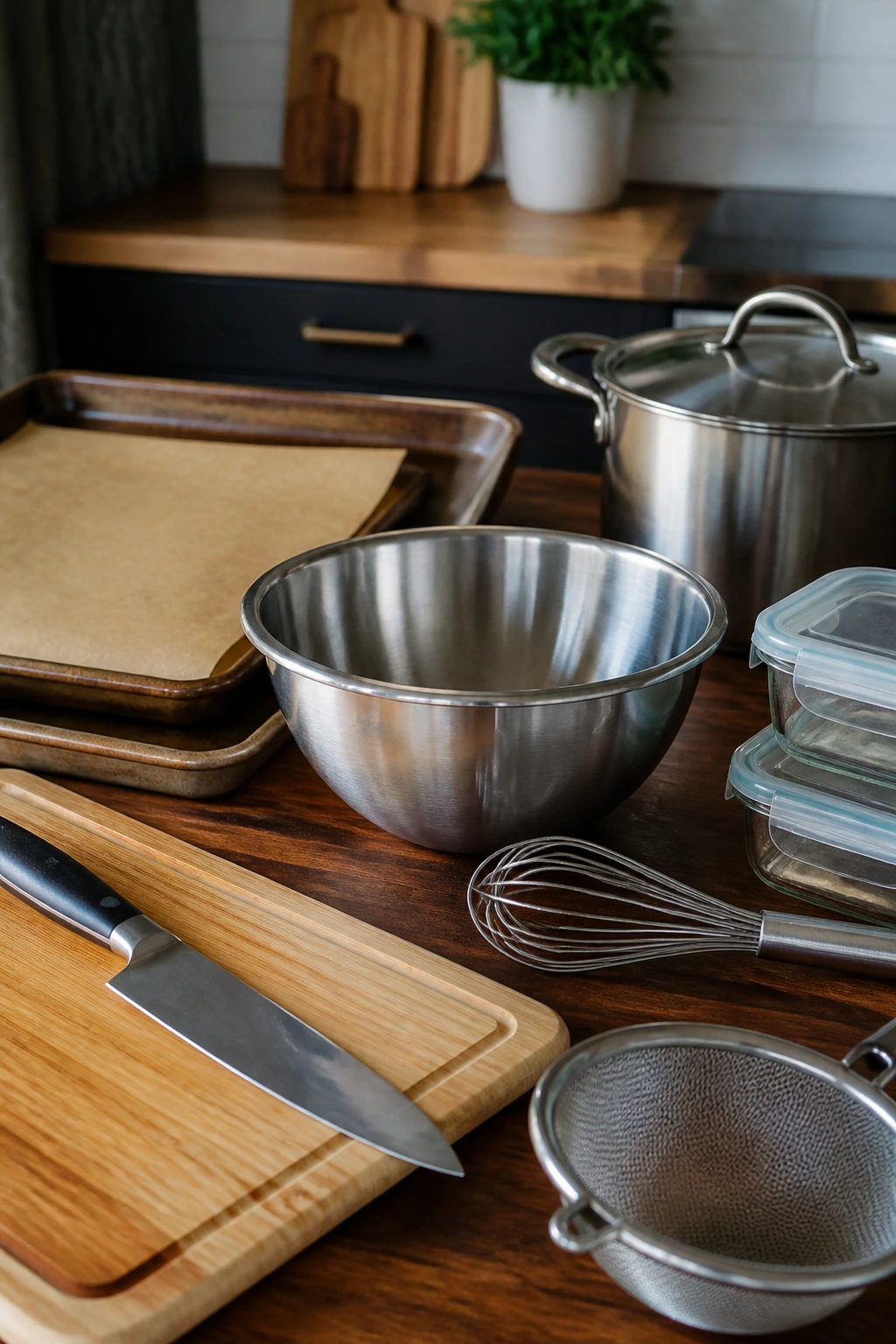
2 rimmed sheet pans
The rim keeps oil and vegetable juices from sliding off into the oven. -
Parchment paper or silicone mats
These make cleanup easier, though parchment can brown a little better if you want more direct contact on the pan. -
Large mixing bowl
You need room to toss vegetables without pushing seasoning all over the counter. -
Chef’s knife and sturdy cutting board
A sharp knife matters here because uniform pieces roast more evenly. I like a damp towel under the board so it doesn’t wander. -
Medium saucepan with lid or rice cooker
Either one works for grains. The rice cooker saves attention; the saucepan gives you more control. -
Fine-mesh strainer or colander
Useful for rinsing chickpeas and quinoa, and worth having close by. -
Whisk or fork
Tahini sauce goes from thick to smooth with a little agitation and enough water. -
Airtight containers with separate sauce cups
Glass containers hold heat well and don’t pick up stains as fast as plastic. -
Silicone spatula or tongs
Handy for turning vegetables without scraping off all the browned bits that you want to keep. -
Small jars with lids
Perfect for sauce, pickled onions, seeds, and anything crunchy you want to keep separate.
Storage, Freezing, and Reheating Without Sad Leftovers
Cool the food before you pack it. That sounds obvious until you’re standing in the kitchen with an almost-empty tray and the instinct to shut the lid on everything immediately. Let the roasted vegetables and grains sit until they stop steaming, then move them into containers within about 2 hours. If the kitchen is warm, I’d move faster than that.
In the fridge, the cooked grains, roasted vegetables, chickpeas, tofu, and sauce will usually keep well for 3 to 4 days. The sauce often holds a bit longer, especially if it’s tahini-based, but I still keep an eye on smell and texture. If something gets slimy, sharp, or strangely dull, it’s done.
Freezing works better for some parts than others. Cooked grains freeze well for up to 2 to 3 months, and chickpeas or tofu can freeze too, though tofu may shift in texture after thawing. Roasted mushrooms, cauliflower, and sweet potatoes can be frozen, but they soften on the other side, so I treat them as backup components rather than ideal ones. Cabbage, herbs, and anything raw should stay out of the freezer entirely.
For reheating, the oven or toaster oven gives you the best texture. Spread the bowl components on a tray and heat at 375°F (190°C) for 10 to 15 minutes, then add sauce and fresh herbs at the end. A skillet over medium heat works too, especially if you want the vegetables to pick up a little edge again. The microwave is fine for speed—cover the container loosely, add a teaspoon of water to the grains, and heat in short bursts so the food doesn’t dry out in the middle and scorch at the edges.
If the bowl tastes flat after reheating, do not drown it in more oil. It probably wants salt, acid, and a crunchy top. That’s a different fix.
Questions People Ask Before They Start
Can I make this without tofu or chickpeas?
Yes. Lentils, edamame, white beans, or tempeh all work. If you skip the protein completely, add more seeds, nuts, or a bigger grain portion, but the bowl will feel less like dinner and more like a side dish.
What if I only have one sheet pan?
Use it. Roast the vegetables in two batches instead of cramming everything on one pan. It takes a little longer, but the browning is better and you won’t end up with a tray that tastes boiled.
Which grain is best if I want gluten-free meal prep?
Quinoa and brown rice are the safest choices. Millet also works if you like a softer, fluffier texture. Farro is the one to skip if gluten is an issue.
How do I keep sweet potatoes from turning mushy?
Cut them into even cubes, roast them in a hot oven, and leave space between pieces. If they’re touching, the exteriors soften before the edges can brown. A 3/4-inch cube is usually the sweet spot.
Can I freeze the whole bowl?
I wouldn’t freeze the full assembled bowl if it has cabbage, herbs, or a creamy sauce. Freeze the grain and the roasted vegetables separately, then add fresh sauce and greens after reheating. The bowl will taste much more alive that way.
What if I hate tahini?
Use a lemon-olive oil vinaigrette, a peanut-lime sauce, or a miso-ginger dressing instead. The job of the sauce is to add acid and contrast, not to be tahini for the sake of tahini.
Is this possible without much oil?
Yes, but the browning will be lighter and the vegetables may roast more softly. Use parchment, a hot oven, and a little vegetable broth if needed, but don’t expect crisp edges to show up on their own. Oil helps transfer heat and flavor.
How much protein should a dinner bowl have?
I like enough chickpeas, tofu, tempeh, or lentils that the bowl feels complete on its own—usually around 20 grams of protein or more depending on the rest of the meal. If you’re still hungry after dinner, add more protein first rather than doubling the grain.
Can I use an air fryer instead of the oven?
Yes, especially for chickpeas, tofu, and small batches of vegetables. Work in smaller loads and shake the basket often so the pieces don’t scorch on one side and pale on the other. It’s faster, but the batch size is tiny compared with a sheet pan.
The Dinner Habit That Pays You Back All Week
A good vegan meal prep Sunday is not about making Monday look like Sunday in a plastic box. It’s about building enough browned edges, chewy grains, sharp sauce, and fresh crunch that dinner can be assembled without thinking too hard.
That’s the real payoff. Not perfection. Not a fridge full of identical meals. Just a few sturdy components that taste like they were made by someone who understands heat, time, and the difference between soft food and satisfying food.
Do the browning properly once, and the rest of the week gets easier in a way you can actually taste.