



A plain dinner can go dull fast. A forkful of quick pickled vegetables fixes that in one bite.
I keep a jar like this around when a plate needs crunch more than another sauce. Thin carrots, radishes, cucumber, red onion, and a little daikon take on a bright vinegar brine in a matter of hours, and the first bite lands cold, sharp, and clean. That’s the whole appeal. Nothing fancy. Just vegetables doing a better job than a heavy dressing ever could.
This is not a canning project, and that matters. A quick pickle lives in the fridge, which means you can make it on a weeknight without hauling out a water-bath setup or planning around a full afternoon. The vegetables stay more alive in texture, too, especially if you cut them thin, salt the watery ones first, and don’t pour scorching liquid over delicate slices.
The jar smells vivid when it’s done: vinegar, garlic, peppercorns, a little sweetness, and that faint raw snap from the vegetables that tells you they’re still worth eating. The carrots stay crunchy, the onion turns pink at the edges, and the brine gets into the crevices instead of sitting on top like a shrug. That’s why this recipe earns a spot next to roasted fish, tofu, beans, rice, eggs, or whatever else is on the table.
Why Quick Pickled Vegetables Earn Their Spot on a Dinner Plate
A good quick pickle does one job better than most side dishes: it wakes up the rest of the meal without demanding much from you. That’s useful when dinner is creamy, roasted, fried, or built around grains and beans that need a sharp edge.
-
Fast payoff: You need about 20 minutes of hands-on work, and the jar is ready for dinner after a short chill. The flavor gets cleaner and rounder after 4 hours, but you do not have to wait overnight to use it.
-
Crunch first: Salting the cucumber and onion briefly, then blotting them dry, keeps the jar snappy instead of watery. That small step does more for texture than any fancy ingredient.
-
Dinner rescue: A spoonful beside rice, lentils, fried eggs, tofu, salmon, or roasted chicken cuts through oil and cream in a way that feels intentional. It makes a plate taste finished.
-
Flexible produce: The brine works on carrots, daikon, radishes, bell pepper, and cucumber. If your crisper drawer has firm vegetables that need a job, they can go in the jar.
-
Low-fuss prep: No canning gear, no pressure to make a giant batch, no special technique beyond slicing and heating a brine until the sugar dissolves. That’s a very good trade.
-
Better by the next meal: The flavor settles in overnight, so leftovers improve instead of collapsing. Most salads can’t say that.
Time, Yield, and Best Serving Window
This recipe makes enough to keep dinner interesting for several nights, not just one. The jar is large enough to set down in the middle of the table and let people help themselves.
Yield: About 7 cups; serves 6 to 8 as a side or 4 to 5 as a topping for bowls and sandwiches
Prep Time: 20 minutes
Cook Time: 5 minutes
Total Time: 25 minutes active, plus chilling
Chill/Rest Time: 1 hour minimum, 4 hours for fuller flavor, overnight for the cleanest balance
Difficulty: Beginner — the method is mostly slicing, salting, simmering, and packing a jar
Best Served: Cold or lightly chilled, once the vegetables have had time to absorb the brine
The Exact Vegetable Mix and Brine
A pickle jar works better when every ingredient has a purpose. I like this mix because it gives you different textures in one bite: cool cucumber, dense carrot, peppery radish, sweet bell pepper, onion with a little bite, and daikon that soaks up flavor without turning soft.
For the Vegetables
- 1 medium cucumber, about 10 oz, halved lengthwise, seeded if watery, and sliced into 1/4-inch half-moons
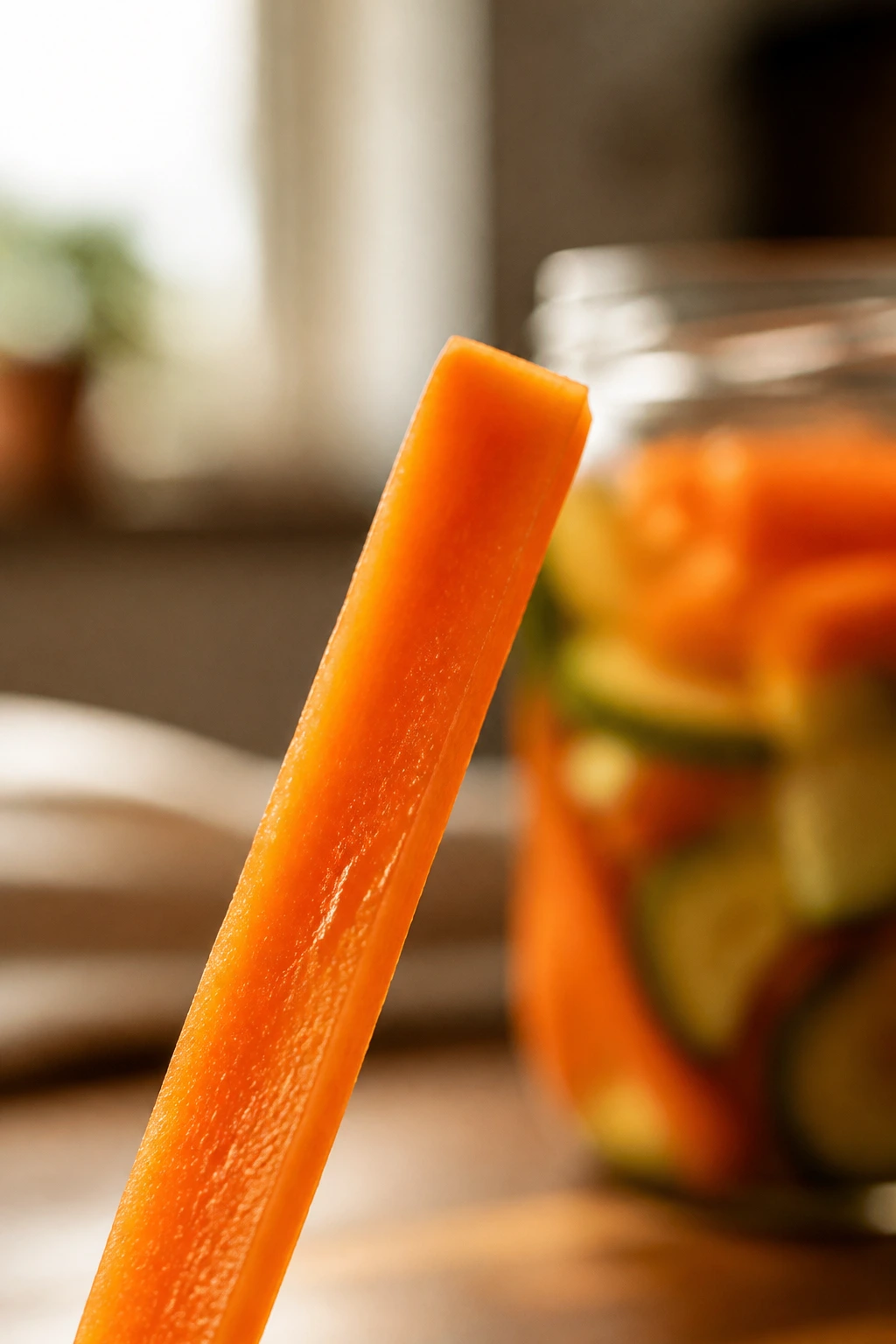
- 2 medium carrots, peeled and cut into matchsticks or thin diagonal coins
- 1 small daikon radish, about 8 oz, peeled and sliced into thin half-moons
- 8 to 10 radishes, trimmed and thinly sliced
- 1 small red onion, halved and thinly sliced
- 1 red bell pepper, cored and sliced into thin strips
For the Brine
- 1 1/4 cups unseasoned rice vinegar
- 3/4 cup apple cider vinegar
- 1/2 cup water
- 2 teaspoons kosher salt, divided
- 2 tablespoons cane sugar or honey
- 1 garlic clove, smashed
- 1 teaspoon mustard seeds
- 1 teaspoon coriander seeds
- 1/2 teaspoon black peppercorns
- 1/4 teaspoon red pepper flakes
- 1 bay leaf
For Serving
- 1 tablespoon chopped dill or cilantro, optional
- 1 teaspoon toasted sesame seeds, optional
Why Each Ingredient Matters
Crunchy Vegetables
- What to use: The full vegetable mix above gives you about 7 cups total, which is enough for several dinners or a small family meal.
- Preparation: Keep the cuts close in size. The cucumber wants thin half-moons, the carrots need either matchsticks or angled coins, and the daikon should be slender enough to soften in the brine without losing its bite.
- Substitutions: Fennel can stand in for daikon, kohlrabi can replace the radishes, and celery or thin-sliced fennel stalks can take the place of bell pepper. If you want green beans, blanch them for 60 seconds and shock them in ice water first.
- Tips: Seed the cucumber if it’s large or watery. That single move keeps the jar from tasting diluted by day two.
The Brine Base
- What to use: 1 1/4 cups unseasoned rice vinegar, 3/4 cup apple cider vinegar, 1/2 cup water, 2 tablespoons sugar or honey, and 2 teaspoons kosher salt, divided.
- Preparation: Measure everything before you turn on the stove. A quick pickle brine comes together fast, and once the sugar is in the pan, you want to stay near it.
- Substitutions: White vinegar gives a sharper, cleaner edge. If you want the brine gentler, use all rice vinegar. Maple syrup can replace honey if you want to keep the recipe vegan.
- Tips: Use unseasoned rice vinegar, not the seasoned kind sold for sushi rice. Seasoned vinegar already carries sugar and salt, and it throws the balance off fast.
Aromatics and Spice
- What to use: 1 smashed garlic clove, 1 teaspoon mustard seeds, 1 teaspoon coriander seeds, 1/2 teaspoon black peppercorns, 1/4 teaspoon red pepper flakes, and 1 bay leaf.
- Preparation: Smash the garlic with the side of your knife so the clove opens but doesn’t fall apart. That gives the brine a clean garlic note instead of a harsh one.
- Substitutions: Dill seed can replace coriander if you want a deli-style pickle. Fresh ginger gives the brine a warmer feel, and fennel seed adds a sweeter, almost tea-like note.
- Tips: If you like the spices to taste a little more alive, warm them in the dry saucepan for 20 to 30 seconds before adding the liquid. Don’t let them smoke. You want fragrance, not bitterness.
Finishing Herbs and Serving Add-Ins
- What to use: 1 tablespoon chopped dill or cilantro and 1 teaspoon toasted sesame seeds, both optional.
- Preparation: Add fresh herbs at the end or right before serving so they stay bright and don’t go soft in the brine.
- Substitutions: Scallions, mint, or a pinch of parsley can step in. A few toasted peanuts or sesame seeds work well if you want a nutty finish.
- Tips: Treat the herbs as a last-minute lift, not a storage ingredient. They’re there to give the jar a fresh top note when it reaches the table.
The Gear That Keeps the Crunch
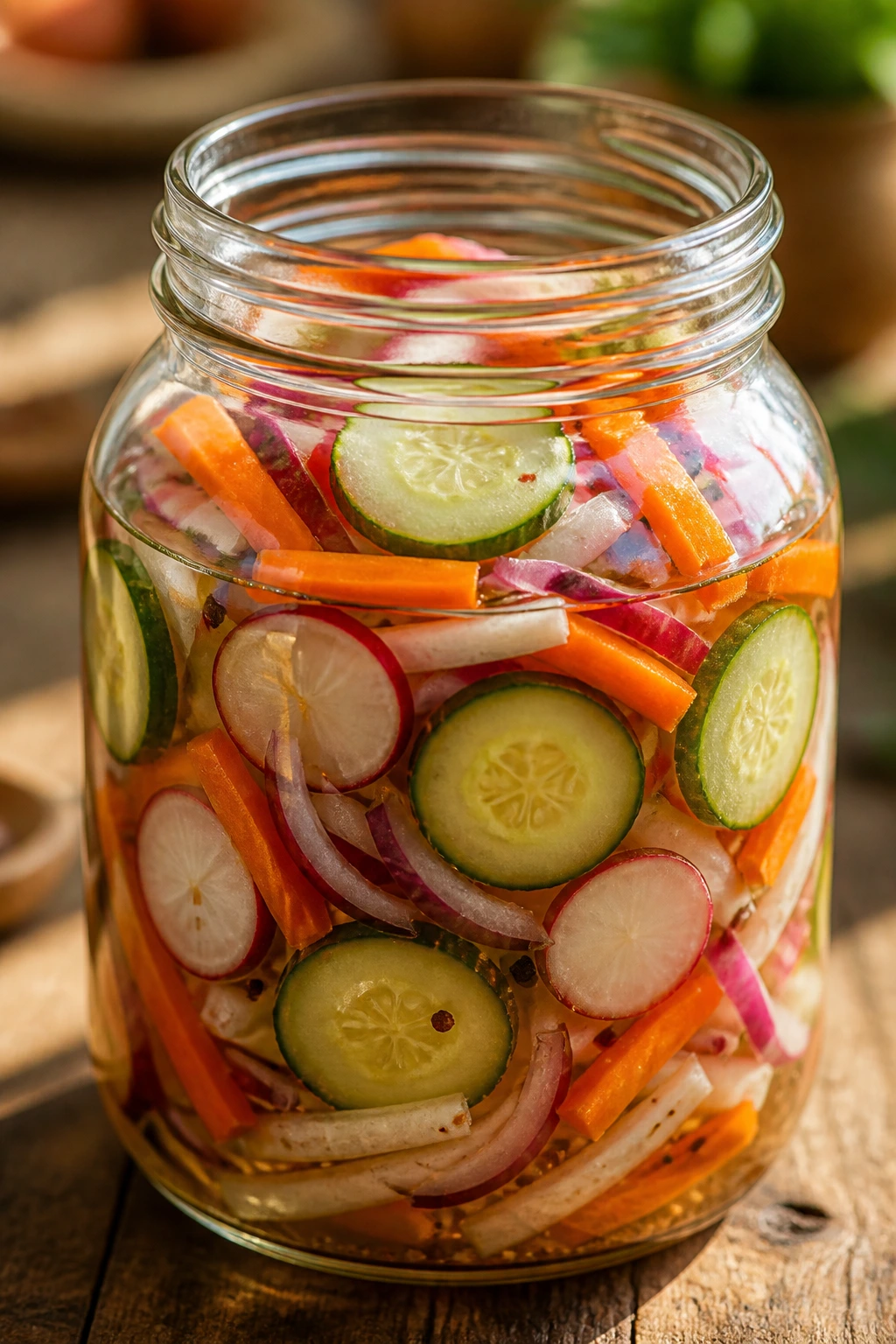
You don’t need much, but the right tools make this easier and a little safer.
- Sharp chef’s knife: Clean, thin cuts matter here. A dull blade crushes cucumbers and makes the carrots awkward to slice.
- Cutting board: A sturdy board gives you control. A damp kitchen towel underneath keeps it from skating around.
- Mandoline or julienne peeler, optional: Useful if you want even, paper-thin slices fast. Use the guard. Fingertips are expensive.
- Colander or fine-mesh strainer: Handy for salting and draining the cucumber and onion before they hit the jar.
- Small saucepan: A 1- to 2-quart saucepan is plenty for the brine.
- Heatproof measuring cup or bowl: Good for catching the brine if you’re pouring before the jar is fully packed.
- Wide-mouth quart jar or 2 pint jars: Glass is easiest to clean and doesn’t hold onto pickle smells.
- Tongs or chopsticks: Helpful for packing vegetables tightly and nudging out air pockets.
How to Make Quick Pickled Vegetables Step by Step
Prep the Vegetables
-
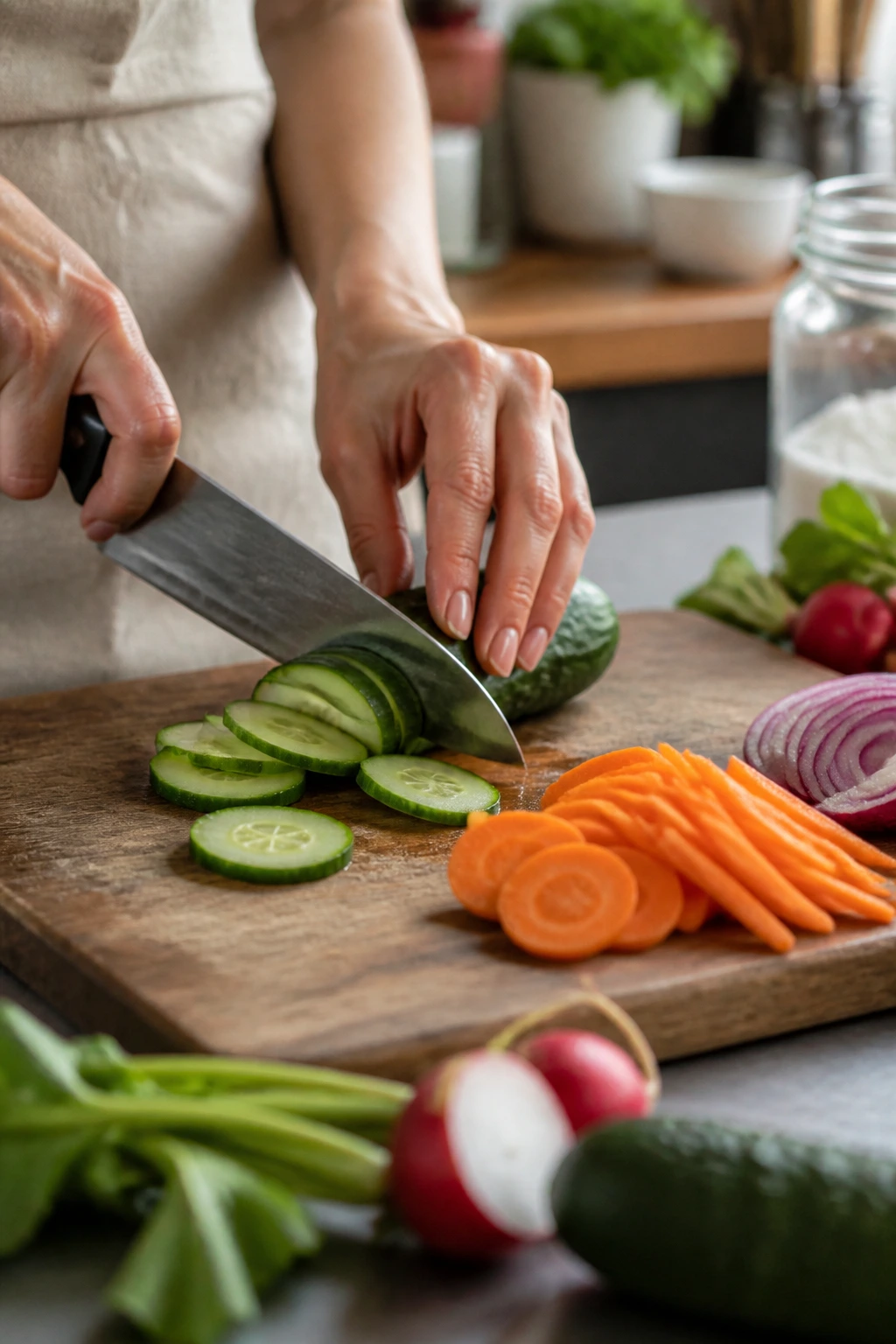
Wash and dry all the produce. Peel the carrots and daikon, trim the radishes, and halve the cucumber lengthwise. Scoop out the seedy center of the cucumber if it looks watery or soft, then slice everything into thin, even pieces. The thinner and more even the cuts, the better the brine moves through them.
-
Put the cucumber and onion in a colander and sprinkle them with 1/2 teaspoon of the kosher salt. Toss them with your hands, then let them sit for 10 minutes. Press them gently with paper towels or a clean kitchen towel until the surface moisture is gone. Skip this step and the jar gets loose, pale, and watery faster than you want.
Build the Brine
-
Add the rice vinegar, apple cider vinegar, water, remaining 1 1/2 teaspoons salt, sugar or honey, garlic, mustard seeds, coriander seeds, black peppercorns, red pepper flakes, and bay leaf to the saucepan. Set it over medium heat.
-
Bring the mixture to a bare simmer, stirring once or twice, just until the sugar dissolves and the liquid looks clear, about 2 to 3 minutes. Do not boil hard. A hard boil is how you push the brine into a flat, cooked smell.
-
Remove the pan from the heat and let the brine cool for 5 to 10 minutes while you pack the vegetables. It should still be warm, but not hot enough to make cucumber slices slump.
Pack and Chill
-
Pack the carrots, daikon, radishes, bell pepper, drained cucumber, and onion into the jar or jars, tucking the garlic, spices, and bay leaf between the pieces. Press down lightly with a spoon so the vegetables sit snugly instead of floating.
-
Pour the warm brine over the vegetables until they’re fully submerged. Tap the jar gently on the counter to release air bubbles, then add a small splash of extra brine or water only if a few pieces are poking up. Seal the jar.
-
Let the jar cool at room temperature for 20 to 30 minutes, then refrigerate it. Taste after 1 hour if you need something for dinner that night, but give it 4 hours or overnight if you want the cleanest snap and the most even flavor. Once the jar is cool enough to handle, it belongs in the fridge. These are fridge pickles, not shelf-stable canned pickles.
How I’d Serve Them at Dinner
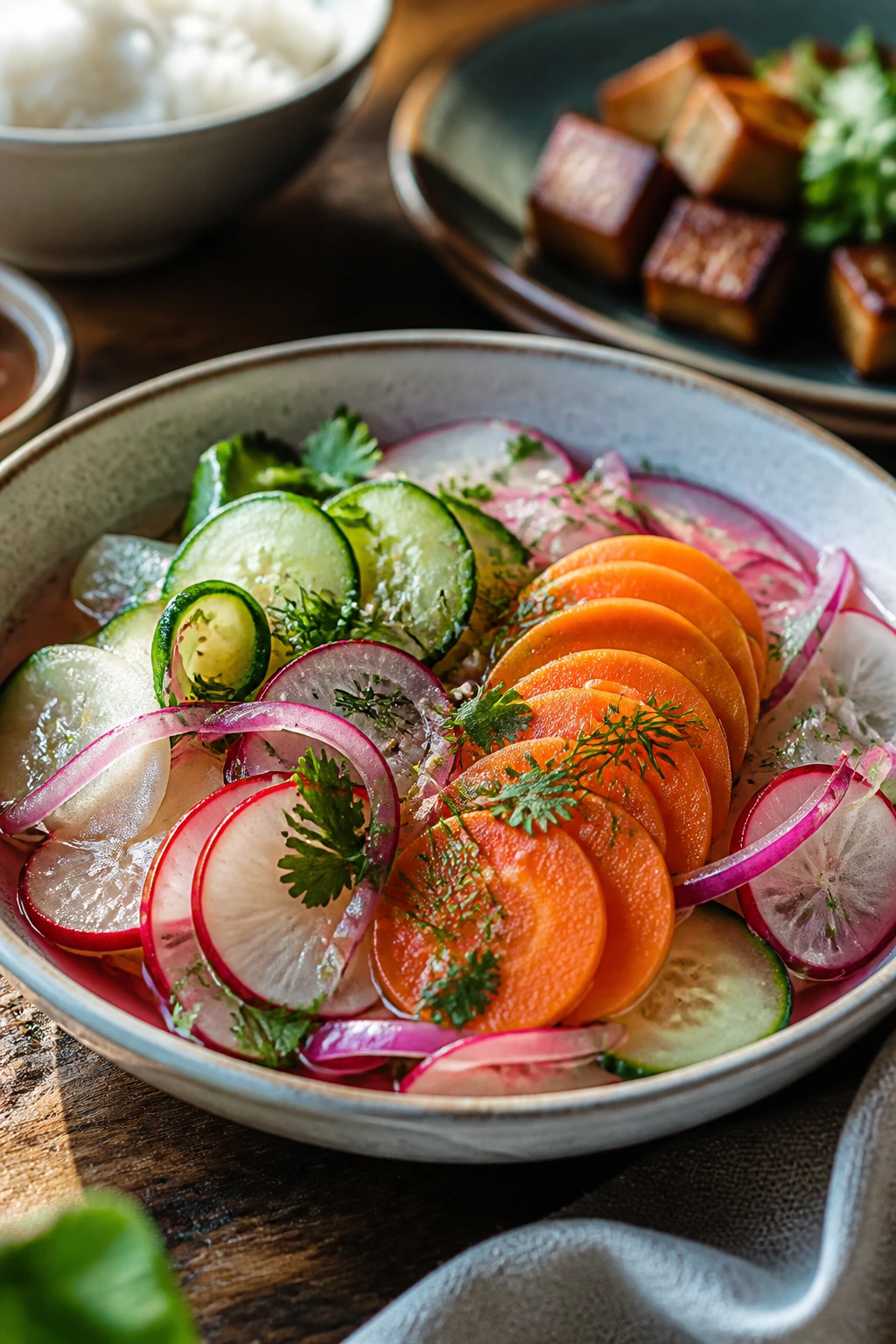
Presentation: Spoon the vegetables into a shallow bowl so the colors stay visible. I like to fan the carrot coins and onion slices across the top instead of burying everything in one pile. A little chopped dill, cilantro, or sesame seed scattered over the surface makes the jar look finished without much effort.
Accompaniments: These are happiest beside a bowl of rice with roasted tofu, black beans, or a soft egg; next to salmon with crispy skin; tucked into a pita with hummus; or spooned over grain bowls with quinoa, avocado, and greens. They also do useful work against anything creamy — tahini sauce, yogurt, mayo, melted cheese, mashed beans. The pickle’s acidity cuts through all of it.
Portions: Count on about 1/4 cup per person as a side and closer to 1/2 cup when the pickles are doing the main flavor job in a bowl or sandwich. If you’re serving a crowd, set the jar near the main dish and let people add their own. They’ll take more than you think.
Beverage Pairing: Sparkling water with lime keeps the meal bright without competing with the brine. If you want something with more snap, a dry cider, a crisp lager, or unsweetened iced green tea works well. Avoid sugary drinks here; they flatten the tang.
Small Tweaks That Improve Flavor
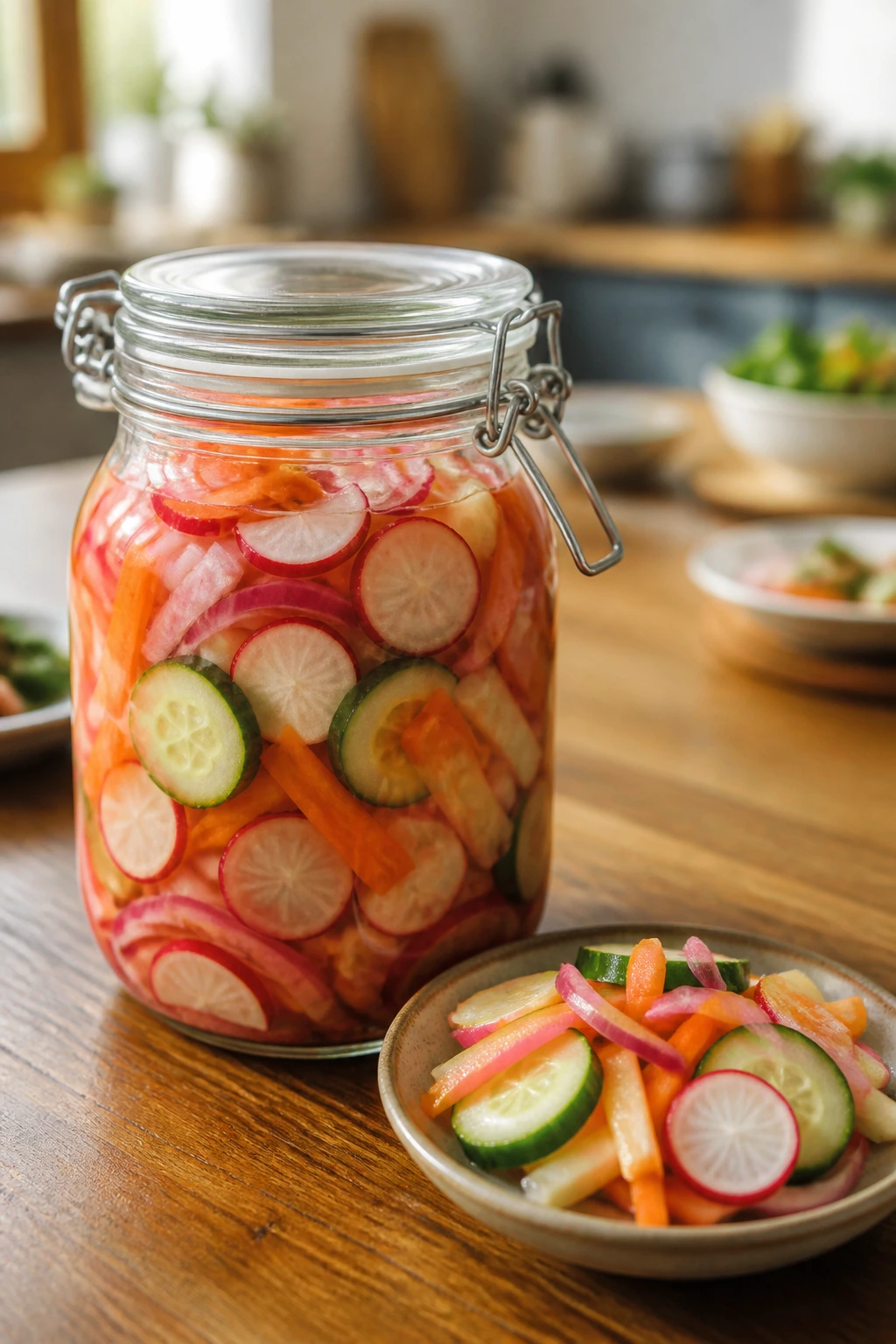
Flavor Enhancement: Toast the mustard seeds and coriander seeds in the dry pan for 20 to 30 seconds before adding the vinegar and water. They should smell warm and a little citrusy, not dark or smoky. That tiny step gives the brine more depth, especially if you’re pairing the pickles with plain rice or simple roasted vegetables.
Customization: If you want a softer, rounder pickle, replace 1/4 cup of the apple cider vinegar with more rice vinegar and add a thin 1-inch piece of peeled ginger. For a sharper jar, swap the apple cider vinegar for white vinegar and keep the sugar exactly where it is. That balance matters more than people think.
Serving Suggestions: A little chopped herb at the end changes the whole feel of the dish. Dill makes the jar taste colder and more deli-like; cilantro pushes it toward grain bowls and tacos; scallions give it a clean onion edge. I also like a pinch of flaky salt on the plate if I’m serving the pickles next to roasted squash or beans.
Make-It-Yours: For a lower-sugar version, cut the sugar to 1 tablespoon and keep the salt where it is. For a lower-sodium version, reduce the brine salt to 1 1/2 teaspoons total, knowing the texture will soften a bit faster. For a vegan version, use cane sugar or maple syrup instead of honey. That’s the nice part here — the recipe keeps its shape even when you shift the edges.
What Usually Goes Wrong
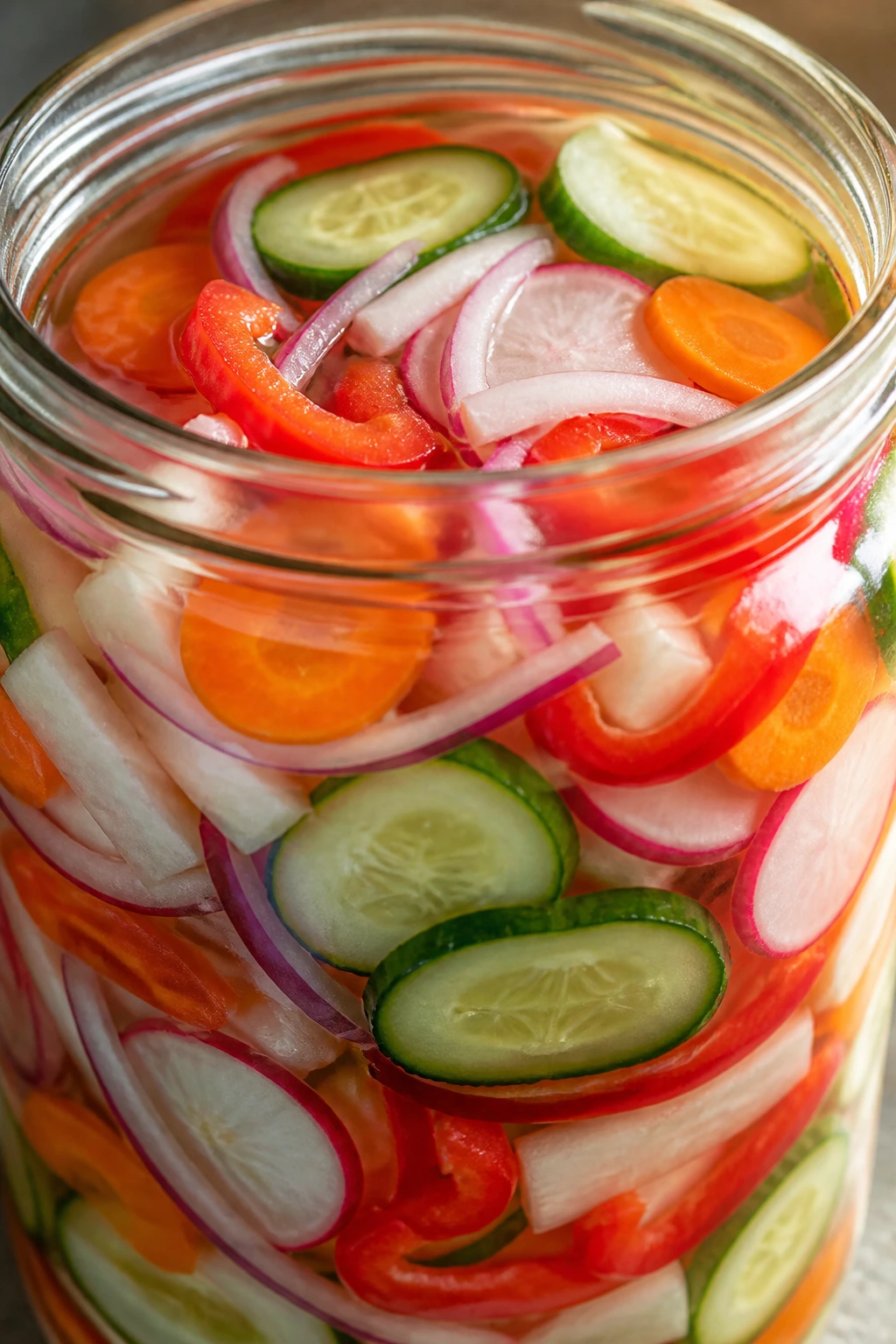
Pickles are forgiving in some ways, picky in others. The mistakes are small, but the fix is even smaller once you know what to look for.
-
Cutting the vegetables too thick: The brine never gets all the way through, so the outside tastes sharp while the middle stays raw and blunt. Slice everything thin enough that it bends a little when you pick it up.
-
Pouring boiling brine over delicate cucumbers: The cucumbers go soft before the jar has a chance to set up. Let the brine cool for 5 to 10 minutes first, and if you’re extra cautious, pack the cucumber near the top of the jar.
-
Skipping the salt drain on cucumber and onion: The jar looks fine at first, then a puddle forms at the bottom and the brine tastes thin. Salting and blotting those watery vegetables is the difference between crisp and sloppy.
-
Using seasoned rice vinegar by accident: The pickles end up sweeter and saltier than you meant, and the garlic/spice balance disappears under the seasoning. Buy unseasoned rice vinegar and keep the sweetness measured by hand.
-
Packing the jar loosely: Floating slices stay pale and the brine doesn’t touch every surface. Press the vegetables down firmly enough that the liquid rises around them, and tap the jar once or twice to release bubbles.
-
Leaving the jar on the counter overnight: These are not canned pickles, and room temperature is not their friend. Once the jar is cool, refrigerate it. That’s how you keep the texture where it belongs.
Variations Worth Keeping on Repeat
Dill-Led Deli Jar
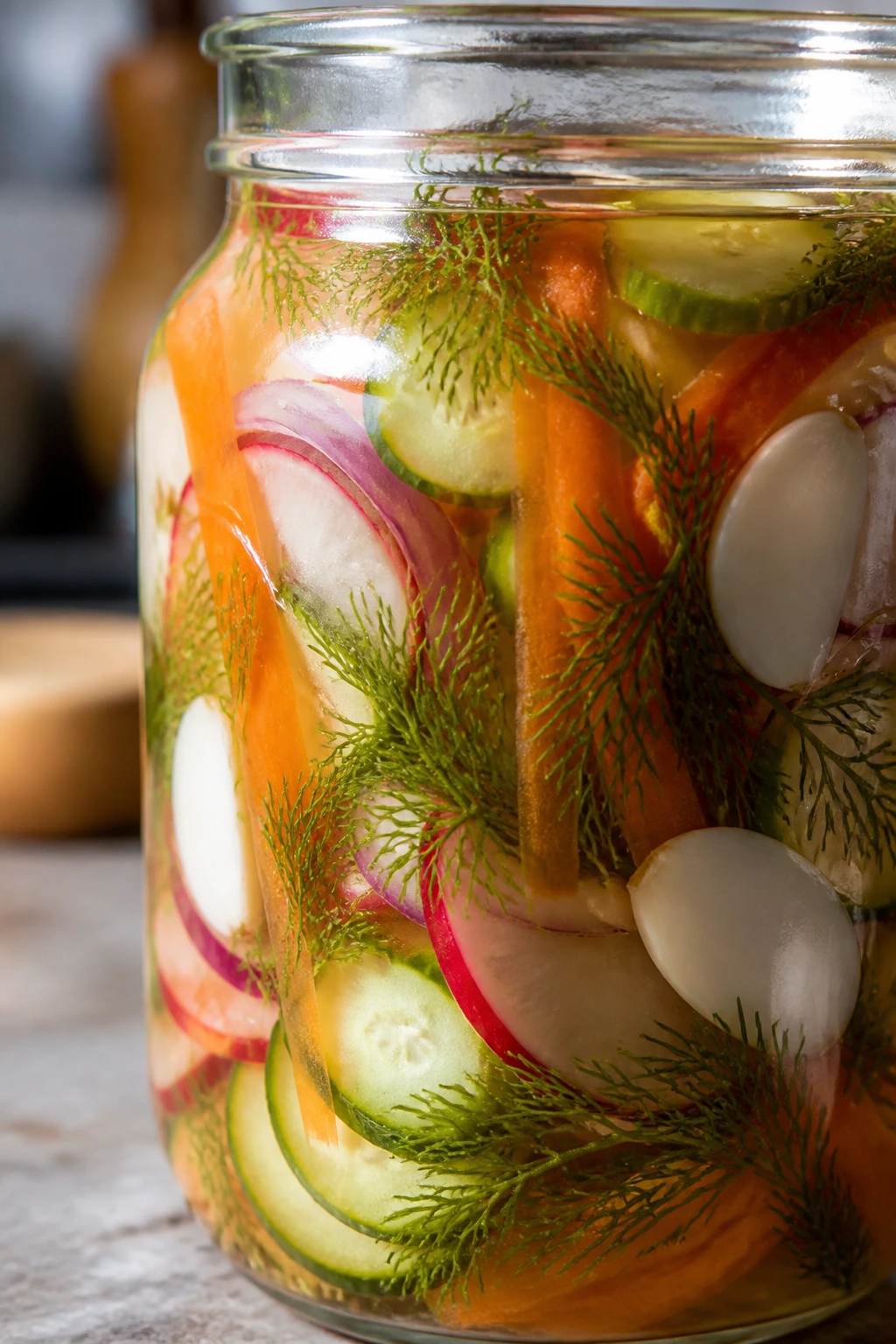
Swap the cilantro for 2 dill sprigs and add 2 extra smashed garlic cloves. Use all rice vinegar if you want the brine to taste softer and a little more classic. This version works best with sandwiches, roasted potatoes, or a cold grain bowl.
Ginger-Sesame Bowl Pickles
Add a 1-inch piece of peeled ginger to the brine and finish the jar with toasted sesame seeds and scallions at serving. Keep the red pepper flakes if you want a little heat. This is the one I reach for beside rice, salmon, or tofu because it tastes built for bowls.
Chili-Lime Crunch
Replace the red pepper flakes with 1 thinly sliced fresno chile or 1 serrano, depending on how much heat you want. Add lime zest only when serving, not in the brine. The zest fades in the fridge, but fresh citrus on the plate is bright in a way the jar can’t quite manage.
Golden Carrot and Cabbage Batch
Replace the bell pepper and cucumber with 2 cups very thinly sliced cabbage plus an extra carrot. Add 1/2 teaspoon turmeric to the brine and keep the onion. The jar turns more slaw-like, which is useful when you want something that holds up for a few more days in the fridge.
Make-Ahead, Fridge Life, and Leftovers for Quick Pickled Vegetables
These pickles are built for make-ahead, but they still have limits. Once the jar is cool, store it in the refrigerator and keep the vegetables submerged. If you use a clean utensil each time, the jar stays in good shape longer. If people fish directly from the jar with greasy fingers or dinner forks, it shortens the life fast.
Refrigerator life: The mix is best in the first 5 days. A carrot- or daikon-heavy jar can stay crisp for 7 to 10 days, but cucumber pieces soften first, so I usually work through those early. If the vegetables are still submerged and the jar smells clean and vinegary, they’re fine.
Room temperature: Do not leave the jar out longer than 2 hours once it has cooled. That’s especially true if the kitchen is warm or the jar has been opened and closed a few times. These are quick fridge pickles, and the fridge is where they keep their texture.
Freezer: Don’t freeze them. The water in the vegetables expands, the walls collapse, and the snap disappears. You’d end up with something dull and slippery, which is the opposite of the point.
Make-ahead: The brine can be mixed and simmered up to 3 days ahead, then cooled and refrigerated. The vegetables can be sliced a day ahead, kept wrapped in a dry towel in the fridge, and packed the next day. If you want the crispest jar, assemble everything the same day you plan to eat it.
Leftover brine: A little leftover brine can be shaken into a salad dressing with olive oil and a dab of mustard, or used to quick-pickle a few onion slices later. Don’t top the jar off with plain water; it dulls the flavor fast. If the brine level drops, make a fresh half-batch of the same vinegar-water mix and pour it in cold.
Questions People Ask Before Making Them
Can I use only one type of vinegar?
Yes. All rice vinegar gives a softer, rounder pickle, while all white vinegar gives a sharper one. If you use only white vinegar, I’d keep the sugar at 2 tablespoons so the jar doesn’t taste abrupt.
How soon can I eat them?
You can taste them after 1 hour, and they’ll already have a clear pickle edge. After 4 hours, the flavor moves deeper into the vegetables and the jar tastes more balanced.
Do I need to sterilize the jar?
For fridge pickles like these, a clean jar washed in hot soapy water is enough. Sterilizing matters for shelf-stable canning, which this recipe is not. Clean, dry glass is the right move here.
Why did my vegetables go soft?
Usually one of three things happened: the slices were too thick, the brine was too hot, or the cucumber held too much water. Seed the cucumber, salt and blot the onion, and let the brine cool a few minutes before pouring.
Can I make this without sugar?
You can, but the brine will taste sharper and less rounded. If you want to cut the sugar, start with 1 tablespoon instead of none, then taste after the first chill. A tiny bit of sweetness helps the vegetables read as bright instead of harsh.
What vegetables work best if I want more crunch?
Carrots, daikon, radishes, fennel, cabbage, and bell pepper hold up well. Zucchini and very ripe cucumbers soften faster, so if you use them, keep the slices thin and expect a shorter fridge life.
Can I double the recipe?
Yes, and it scales cleanly. Use a bigger jar or two jars, and make sure the vegetables still sit under the brine rather than crowding above it. If you double the vegetables, double the brine too; don’t try to stretch a single batch across two jars.
A Bright Finish for Weeknight Plates
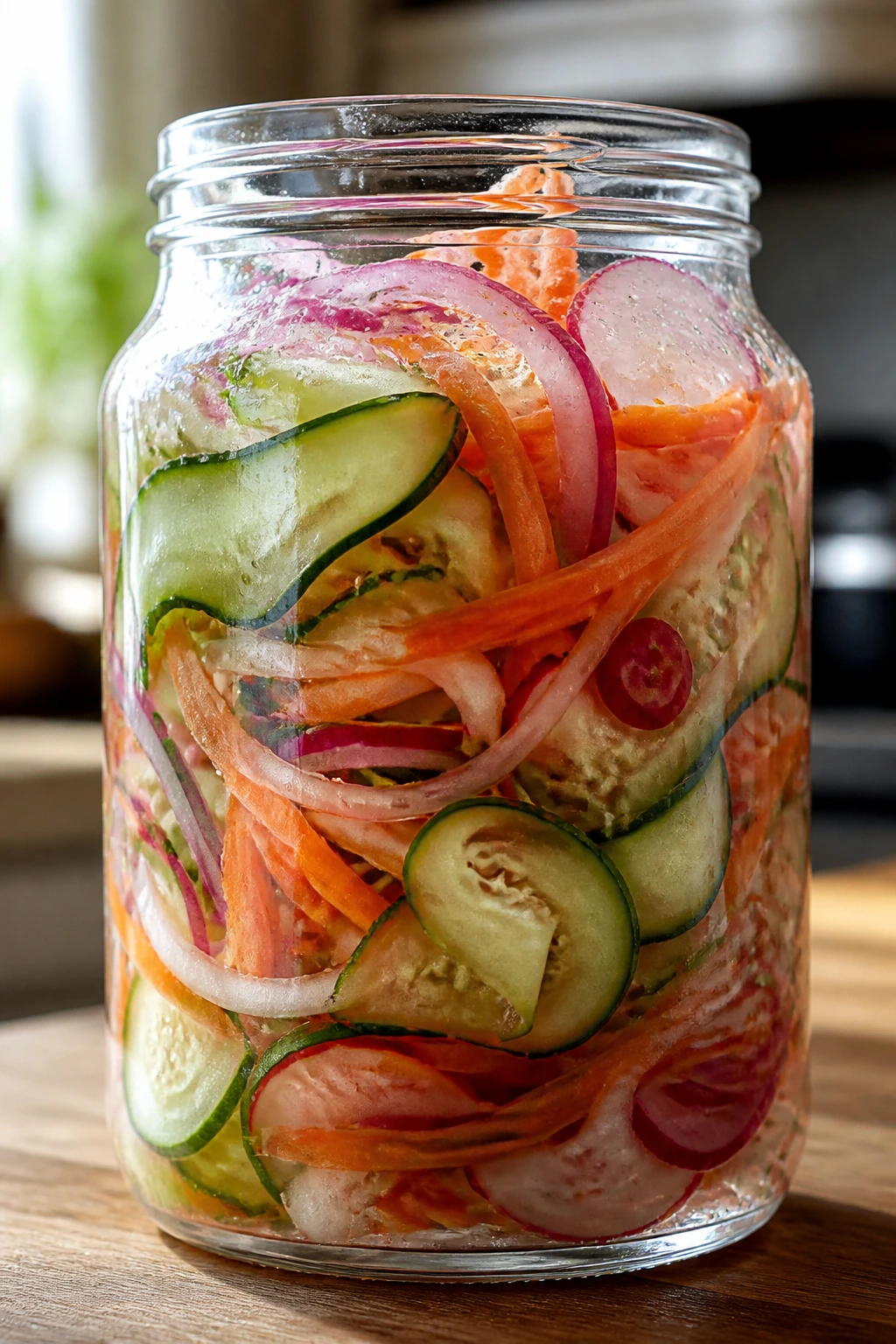
A jar of quick pickled vegetables doesn’t look like much sitting on the fridge shelf. Then dinner arrives, a little too soft or a little too rich, and that bright crunch starts doing real work. It lifts grains. It cuts fat. It makes leftovers feel planned instead of accidental.
I like recipes that earn their space through usefulness, not theatrics, and this one does exactly that. Keep the cuts thin, keep the brine balanced, and keep the jar cold. The rest takes care of itself.
Crispy Quick Pickled Vegetables for a Healthy Dinner — Recipe Card
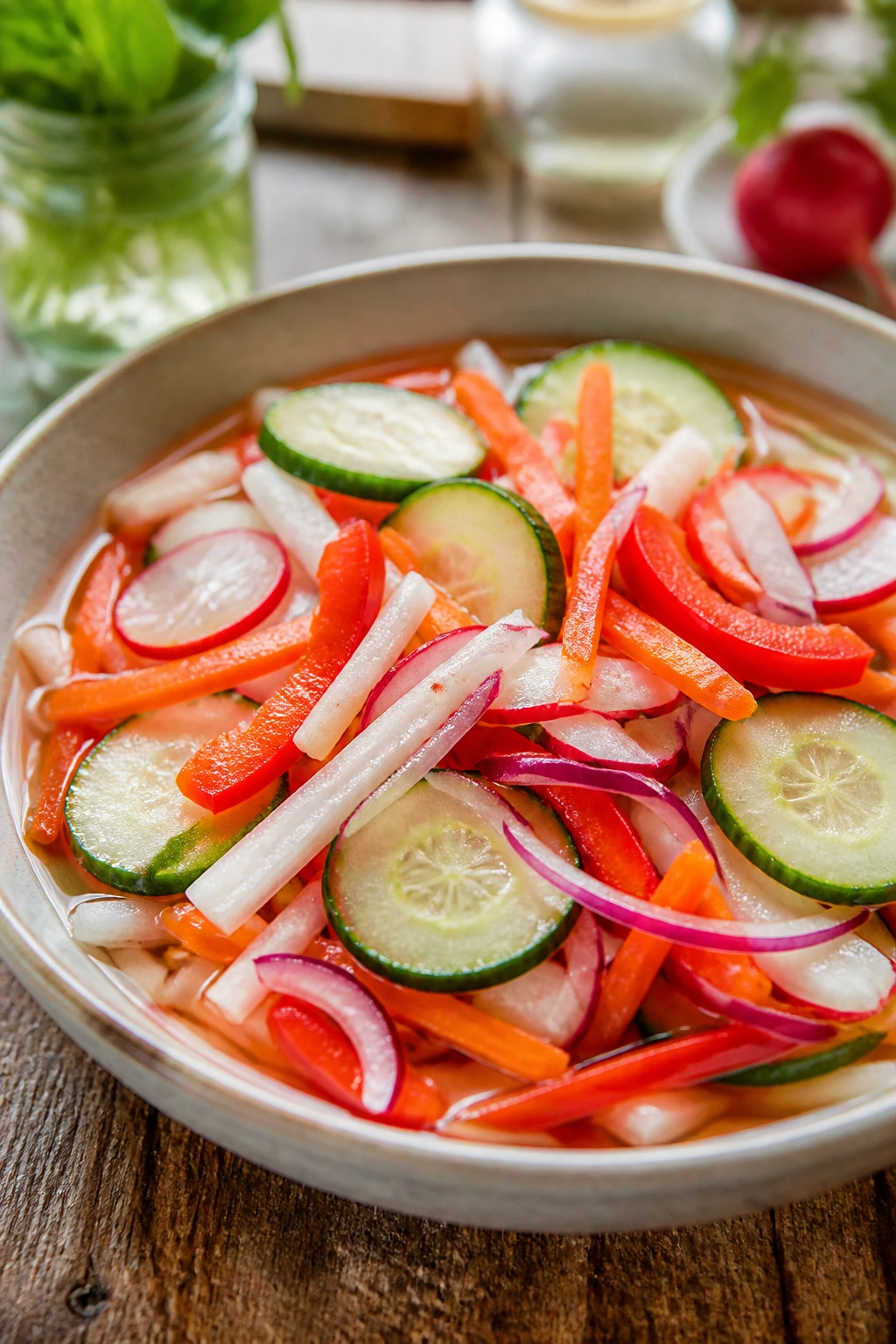
Recipe Name: Crispy Quick Pickled Vegetables for a Healthy Dinner
Description: A bright mix of cucumber, carrots, daikon, radishes, red onion, and bell pepper in a tangy rice-vinegar brine. Crisp, sharp, and ready to wake up rice bowls, roasted mains, sandwiches, and simple weeknight plates.
Prep Time: 20 minutes
Cook Time: 5 minutes
Total Time: 25 minutes active, plus chilling
Course: Side Dish, Condiment
Cuisine: American-Inspired
Servings: 6 to 8
Calories: About 45 kcal per serving
Ingredients
For the Vegetables
- 1 medium cucumber, about 10 oz, halved lengthwise, seeded if watery, and sliced into 1/4-inch half-moons
- 2 medium carrots, peeled and cut into matchsticks or thin diagonal coins
- 1 small daikon radish, about 8 oz, peeled and sliced into thin half-moons
- 8 to 10 radishes, trimmed and thinly sliced
- 1 small red onion, halved and thinly sliced
- 1 red bell pepper, cored and sliced into thin strips
For the Brine
- 1 1/4 cups unseasoned rice vinegar
- 3/4 cup apple cider vinegar
- 1/2 cup water
- 2 teaspoons kosher salt, divided
- 2 tablespoons cane sugar or honey
- 1 garlic clove, smashed
- 1 teaspoon mustard seeds
- 1 teaspoon coriander seeds
- 1/2 teaspoon black peppercorns
- 1/4 teaspoon red pepper flakes
- 1 bay leaf
For Serving
- 1 tablespoon chopped dill or cilantro, optional
- 1 teaspoon toasted sesame seeds, optional
Instructions
-
Wash and dry the produce, then slice the cucumber, carrots, daikon, radishes, onion, and bell pepper into thin, even pieces.
-
Toss the cucumber and onion with 1/2 teaspoon of the salt in a colander and let them sit for 10 minutes. Blot dry.
-
Combine the rice vinegar, apple cider vinegar, water, remaining salt, sugar or honey, garlic, mustard seeds, coriander seeds, peppercorns, red pepper flakes, and bay leaf in a small saucepan.
-
Bring the brine to a bare simmer over medium heat, stirring until the sugar dissolves, about 2 to 3 minutes.
-
Remove from the heat and let the brine cool for 5 to 10 minutes.
-
Pack the vegetables into a clean quart jar or 2 pint jars, tucking the garlic and spices between the pieces.
-
Pour the warm brine over the vegetables until fully submerged, tap out bubbles, and seal the jar.
-
Cool for 20 to 30 minutes at room temperature, then refrigerate for at least 1 hour before serving. For the best crunch, wait 4 hours or overnight.
Notes: Use unseasoned rice vinegar, not seasoned. These are fridge pickles, not shelf-stable canned pickles. The flavor deepens overnight, and the cucumbers are best within the first few days.