



The difference between roasted veggies that disappear and roasted veggies that get nudged around a plate is usually one thing: space. Give the vegetables room, and the oven gives you back browned edges, tender centers, and those little caramelized bits on the pan that taste like you meant to do something fancy. Cramp everything together, and you get a damp pile that smells nice but eats like compromise.
That’s why a good tray of roasted veggies for a healthy dinner matters more than people admit. It is not just a side dish wearing a better outfit. When the cauliflower turns nutty, the Brussels sprouts pick up dark, crisp leaf edges, the carrots go sweet at the corners, and the chickpeas dry out just enough to feel chewy instead of mushy, dinner starts to feel finished. Add a lemon-tahini drizzle and the whole thing stops reading as “we had vegetables tonight” and starts reading as an actual meal.
I like this kind of dinner because it has range. You get crunch, softness, sweetness, salt, and acid in one sweep, and you do not need a long ingredient list to make it happen. The trick is not bravery; it is attention. Cut the vegetables with some care. Keep the wet ones separate from the dense ones. Roast hot. Finish bright. That’s the whole game, and it starts with why the method works so well.
Why This Tray Earns Its Place at Dinner
- The oven does the heavy lifting: A hot 425°F oven browns the vegetables faster than a lower temperature, which means you get color before the softer pieces collapse.
- Chickpeas make the tray feel like dinner, not a side: One drained can adds a little chew, some protein, and enough body that you do not need to build a separate main dish.
- Two pans beat one crowded pan every time: Space lets moisture escape, which is why the edges turn crisp instead of soggy.
- The finish matters as much as the roast: A quick lemon-tahini drizzle cuts through the sweetness of carrots and onions and gives the whole tray a creamy, nutty finish.
- The vegetables keep their own personality: Broccoli stays green and toasty, cauliflower goes nutty, zucchini softens, and tomatoes burst just enough to sauce the pan a little.
- It scales without drama: Double the ingredients, use another pan or two, and the method still works without turning into a project.
What Roasting Does to Vegetables at 425°F
A sheet pan of vegetables can be a mess or a meal. The difference is not magic; it’s heat, airflow, and moisture management. Roasting at 425°F pushes water out of the surface quickly enough that browning starts before the vegetables turn limp. That browned surface is where the flavor lives. It tastes deeper, sweeter, a little toasted, and it is the reason roasted vegetables feel so much more satisfying than steamed ones.
Dry Heat, Not Gentle Heat
Broccoli and cauliflower love a blast of heat because their florets catch the oven’s dry air and brown at the tips first. Carrots and onions behave differently. They need a little more time to soften, then they take on those sticky, caramelized edges that make a pan taste round and sweet instead of flat. If you roast them at a timid temperature, the water seeps out before the color sets, and the vegetables start to slump before they ever get interesting.
Why Dense and Delicate Vegetables Need Different Timelines
Zucchini is the troublemaker here. It goes from firm to slouchy fast, which is why I keep it on a separate pan or add it later if the oven runs hot. Tomatoes are the same way, only with more drama. They burst and wrinkle quickly, and once they do, they can bleed liquid across the pan if they are crowded in with sturdier vegetables. That is not a disaster, but it changes the texture.
The smarter move is to roast the firm vegetables and the softer ones with a little separation. You do not need a culinary degree for that. You just need to respect the fact that a carrot and a zucchini are not arriving at the same appointment.
Why the Lemon-Tahini Finish Belongs at the End
Tahini has a rich, almost roasted flavor on its own, but it can feel heavy if you heat it for too long. Lemon wakes it up. Garlic gives it a little bite. Warm water thins it enough to drizzle over the tray instead of sitting in a paste on top. That final sauce is what turns a pan of vegetables into dinner you can eat with a fork and actually finish.
The other reason I like the finish at the end is practical: roasted vegetables can taste a little stern without acid. A squeeze of lemon or a spoonful of sharp sauce loosens everything up. It makes the carrots taste more like carrots, the broccoli taste greener, and the chickpeas taste less like a pantry afterthought.
The Flavor Balance I Keep Coming Back To
Sweet vegetables need salt. Dense vegetables need oil. Soft vegetables need space. Everything needs a little acid at the end.
That is the whole formula, and once you feel it in your hands a few times, you stop needing to follow a recipe like a checklist. You start looking at a tray and knowing where the weak spots are before the pan even goes in the oven.
Yield: Serves 4 as a main dish
Prep Time: 20 minutes
Cook Time: 25 to 30 minutes
Total Time: 45 to 50 minutes
Difficulty: Beginner — the steps are simple, but the pan spacing and staggered roasting matter.
Best Served: Warm, right off the sheet pans
What Goes Into the Pan
For the Roasted Vegetables and Chickpeas
- 1 small head cauliflower, about 1 pound, cut into 1-inch florets
- 1 small head broccoli, about 1 pound, cut into 1-inch florets
- 12 ounces Brussels sprouts, trimmed and halved
- 3 medium carrots, peeled and cut on the diagonal into 1/2-inch pieces
- 1 medium red onion, cut into 8 wedges
- 1 red bell pepper, seeded and cut into 1-inch strips
- 2 medium zucchini, cut into 1/2-inch half-moons
- 1 pint cherry tomatoes
- 1 (15-ounce) can chickpeas, rinsed and patted very dry
- 3 tablespoons extra-virgin olive oil
- 1 1/2 teaspoons kosher salt, divided
- 1/2 teaspoon black pepper
- 1 teaspoon garlic powder
- 1 teaspoon smoked paprika
- 1 teaspoon dried oregano
- 1/4 teaspoon crushed red pepper flakes, optional
For the Lemon-Tahini Drizzle
- 1/4 cup tahini
- 2 tablespoons fresh lemon juice
- 1 small garlic clove, finely grated
- 2 to 4 tablespoons warm water
- 1/4 teaspoon kosher salt
For Finishing
- 2 tablespoons chopped fresh parsley
- 1 teaspoon lemon zest
- 2 tablespoons toasted pumpkin seeds, optional
Why Each Ingredient Earns Its Place
Dense Vegetables
What to use: 1 small head cauliflower, 12 ounces Brussels sprouts, 3 medium carrots, and 1 medium red onion give the tray a sturdy base with different textures and levels of sweetness.
Preparation: Cut the cauliflower into 1-inch florets so the stems and tops cook at the same pace. Halve the Brussels sprouts from top to root, and cut the carrots on a diagonal so they roast faster than coin slices.
Substitutions: Sweet potato cubes, parsnips, or small wedges of cabbage can step in for part of this group if you want a softer, sweeter tray. Turnips work too, though they bring a sharper edge.
Tips: Keep the pieces a little larger than you think you need. Tiny carrot bits burn before the florets are browned, and those little charred specks are not worth the trade.
Quick-Roasting Vegetables
What to use: 1 red bell pepper, 2 medium zucchini, and 1 pint cherry tomatoes bring color and a softer finish to the tray.
Preparation: Slice the pepper into broad strips so it keeps some shape. Cut the zucchini into half-moons that are thick enough to hold up through the roast, and leave the tomatoes whole.
Substitutions: Asparagus, green beans, or mushrooms can replace part of this group depending on what you have. If you use mushrooms, give them their own space because they shed water fast and can make the pan slippery.
Tips: These vegetables should not share cramped quarters with the cauliflower and carrots from the start. They cook faster, and if they sit under a blanket of denser vegetables, they soften before they brown.
Chickpeas
What to use: 1 can chickpeas, rinsed and dried, adds enough heft to make the tray work as a dinner instead of a side.
Preparation: Drain them well, then pat them dry with a clean kitchen towel. If a few loose skins fall off, that is fine; the bare spots crisp well.
Substitutions: Cannellini beans can replace chickpeas if you want a softer result. Cubed extra-firm tofu also works, but it needs a little more oil and a longer roast to pick up color.
Tips: Drier chickpeas roast better. If they still look wet when they hit the pan, they steam first and crisp later, which is not the same thing.
Oil and Spice Blend
What to use: 3 tablespoons extra-virgin olive oil, 1 1/2 teaspoons kosher salt, 1/2 teaspoon black pepper, 1 teaspoon garlic powder, 1 teaspoon smoked paprika, 1 teaspoon dried oregano, and 1/4 teaspoon crushed red pepper flakes if you like a little heat.
Preparation: Mix the spices into the oil before tossing so every piece gets coated evenly. The oil should cling in a thin sheen, not pool in the bottom of the bowl.
Substitutions: Cumin, coriander, Italian seasoning, or a mild curry blend can stand in for the oregano and paprika if you want a different direction. Use what you already trust, not a drawer full of half-used jars.
Tips: Three tablespoons across this much produce is enough. More oil does not mean more browning; it often means slicker vegetables and more smoke on the pan.
Lemon-Tahini Finish
What to use: 1/4 cup tahini, 2 tablespoons lemon juice, 1 grated garlic clove, 2 to 4 tablespoons warm water, and 1/4 teaspoon salt make a sauce that is creamy enough to coat but sharp enough to cut through the roast.
Preparation: Whisk the tahini with lemon juice first. It may seize and thicken. That is normal. Add warm water a tablespoon at a time until it turns loose and silky.
Substitutions: Thin plain yogurt with lemon and garlic if you want a tangier, cooler sauce. Hummus thinned with warm water works in a pinch, too.
Tips: Make the sauce a touch thinner than you think you want. It tightens as it sits, and a thick tahini paste will not drip across the vegetables the way you want it to.
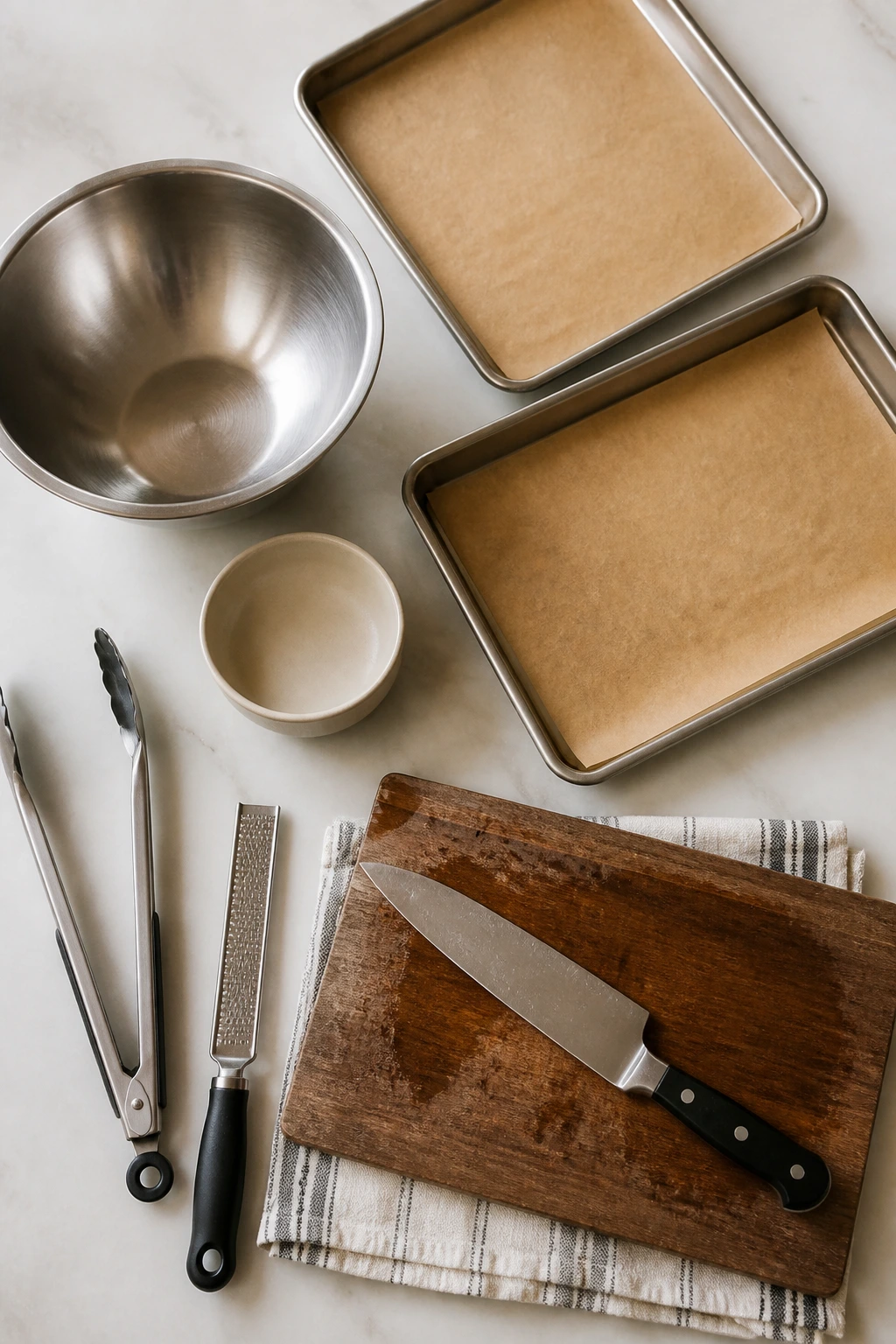
The Tools That Keep the Vegetables Crisp
- 2 large rimmed sheet pans: This is the non-negotiable piece. One pan can work only if the vegetables are in a true single layer with breathing room.
- Parchment paper: Makes cleanup easier and keeps the vegetables from sticking where the oil pools.
- Large mixing bowl: Big enough to toss the denser vegetables without breaking the cauliflower into confetti.
- Small bowl or jar: Useful for whisking the tahini sauce until it goes smooth.
- Sharp chef’s knife: Clean cuts matter here. Ragged pieces cook unevenly and shed more water.
- Cutting board with a damp towel underneath: Stops the board from slipping when you are cutting slippery zucchini or onions.
- Tongs or a wide spatula: Handy for turning the vegetables halfway through the roast.
- Microplane or fine grater: Best for the garlic and lemon zest in the finish.
How to Roast the Tray Without Guessing
A tray like this rewards a little organization. Not perfection. Organization.
The vegetables do not need to be fussed over every minute, but they do need to be cut in a way that gives the oven a fair shot. Dense vegetables go on one pan. Delicate vegetables go on another. The sauce gets mixed while the pans roast, not after you realize everything is already cold.
Prep the Oven and Pans
-
Preheat the oven to 425°F (220°C) and position racks in the upper and lower thirds. Line 2 large rimmed sheet pans with parchment paper.
-
Set out a large bowl for the dense vegetables and a second bowl or the second sheet pan for the quicker vegetables. Keeping them separate from the start saves you from trying to rescue a crowded pan halfway through.
Make the Lemon-Tahini Drizzle
- In a small bowl, whisk together the tahini, lemon juice, grated garlic, and 2 tablespoons warm water. The mixture may seize and look tight at first. Keep whisking and add more warm water, 1 tablespoon at a time, until it turns creamy and drizzly. Stir in the salt. Set aside.
Season the Dense Vegetables
- In the large bowl, combine the cauliflower, Brussels sprouts, carrots, red onion, and chickpeas with 2 tablespoons olive oil, 1 teaspoon salt, black pepper, garlic powder, smoked paprika, oregano, and red pepper flakes if using. Toss with your hands until every surface looks lightly glossy. Spread the mixture onto one sheet pan in a single layer, with as many cut sides facing down as you can manage. Do not pile the vegetables into a mound.
Season the Quicker Vegetables
- On the second sheet pan, toss the broccoli, red bell pepper, zucchini, and cherry tomatoes with the remaining 1 tablespoon olive oil and the remaining 1/2 teaspoon salt. Spread them in a single layer. The pan should look full but not crammed; you should still see space between most pieces.
Roast in Two Waves
-
Roast both pans for 15 minutes, then swap their positions and rotate each pan from front to back. Roast for another 10 to 12 minutes, until the cauliflower and carrots have browned edges, the chickpeas feel drier and a little crisp at the seams, and the zucchini gives slightly when pierced with a fork. The tomatoes should be wrinkled and starting to split.
-
If the quicker vegetables look done before the denser ones, pull that pan early and let the other continue for a few more minutes. Oven heat is not always even, and your eyes are better than the timer here.
Finish and Serve
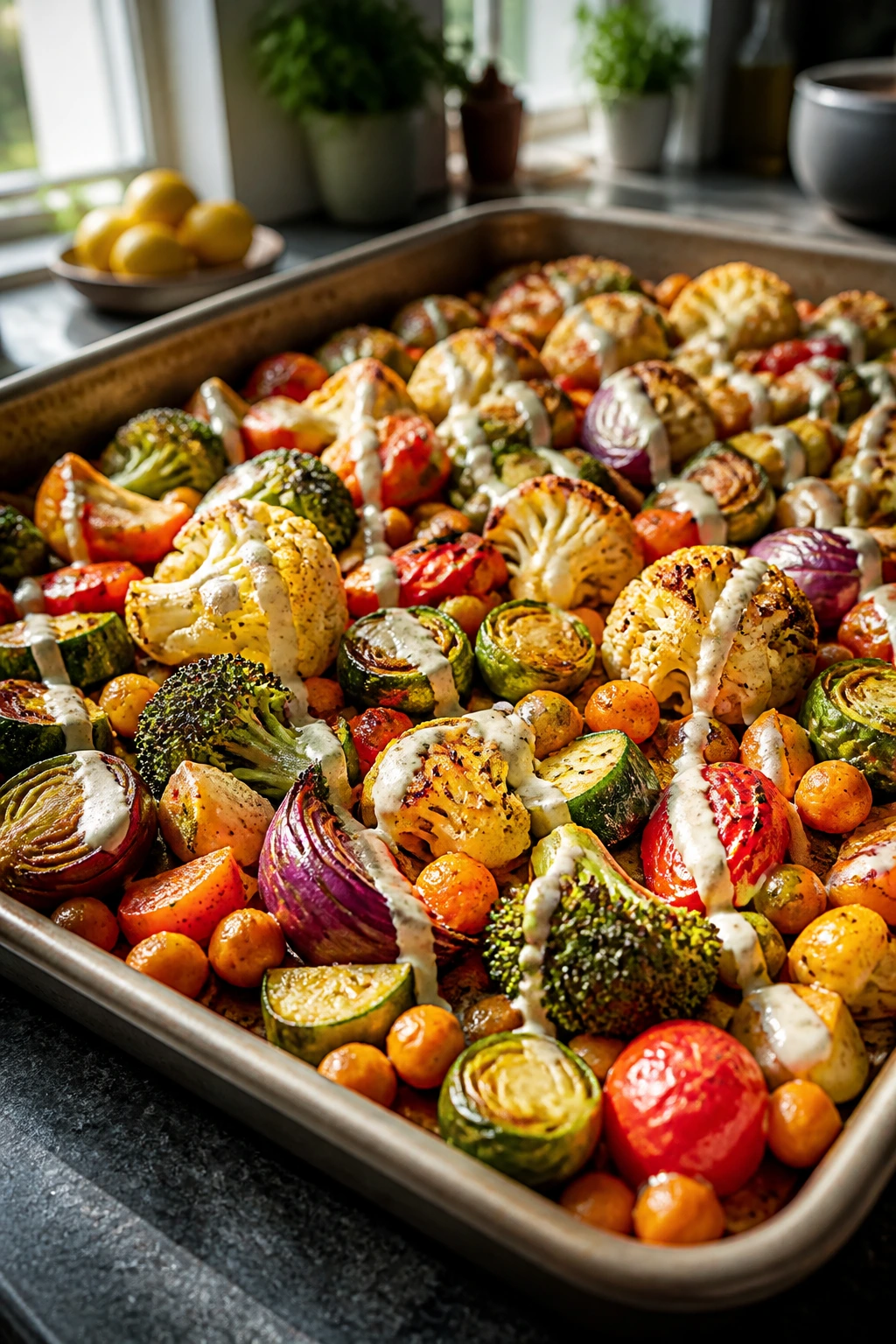
- Transfer the vegetables to a large serving platter or bowl. Drizzle with half of the lemon-tahini sauce, scatter over the parsley, lemon zest, and pumpkin seeds if using, then serve the remaining sauce on the side. Taste the vegetables first. Sometimes a little extra salt or another squeeze of lemon is what pulls the whole tray together.
How to Serve It as a Real Dinner
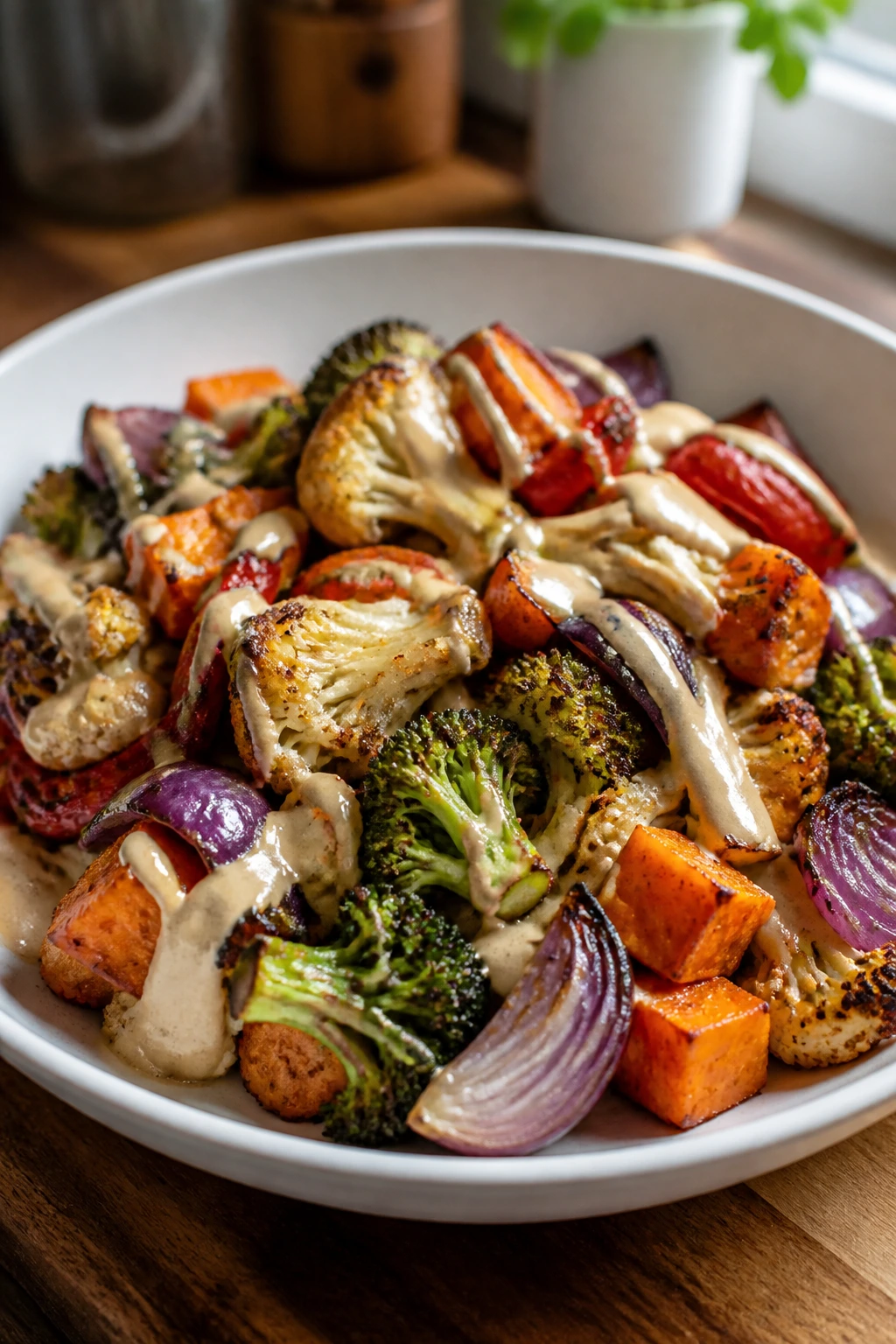
Presentation: Spoon the vegetables into a wide shallow bowl or onto a platter so the browned edges stay visible. A white bowl makes the color pop, but any wide dish works as long as it does not hide the crisp parts under a heap of sauce. Drizzle the tahini in ribbons, not a flood.
Accompaniments: Serve the tray over warm quinoa, farro, brown rice, or couscous if you want more bulk. Pita, hummus, and a simple cucumber salad work well too. A handful of olives on the side is not required, but I never complain when they show up.
Portions: As written, this makes 4 main-dish servings or 6 smaller portions alongside bread or grain. For a bigger appetite, plan on about 1 1/2 to 2 cups per person and add a scoop of grains. For a lighter dinner, 1 generous cup can sit next to a fried egg or a piece of grilled tofu.
Beverage Pairing: I like this with sparkling water and lemon when I want something clean and simple. A dry white wine like Sauvignon Blanc or Vermentino also works because the acidity keeps pace with the tahini and roasted onions. If you want a nonalcoholic match with more character, iced mint tea is excellent.
Small Tweaks That Make the Whole Pan Better
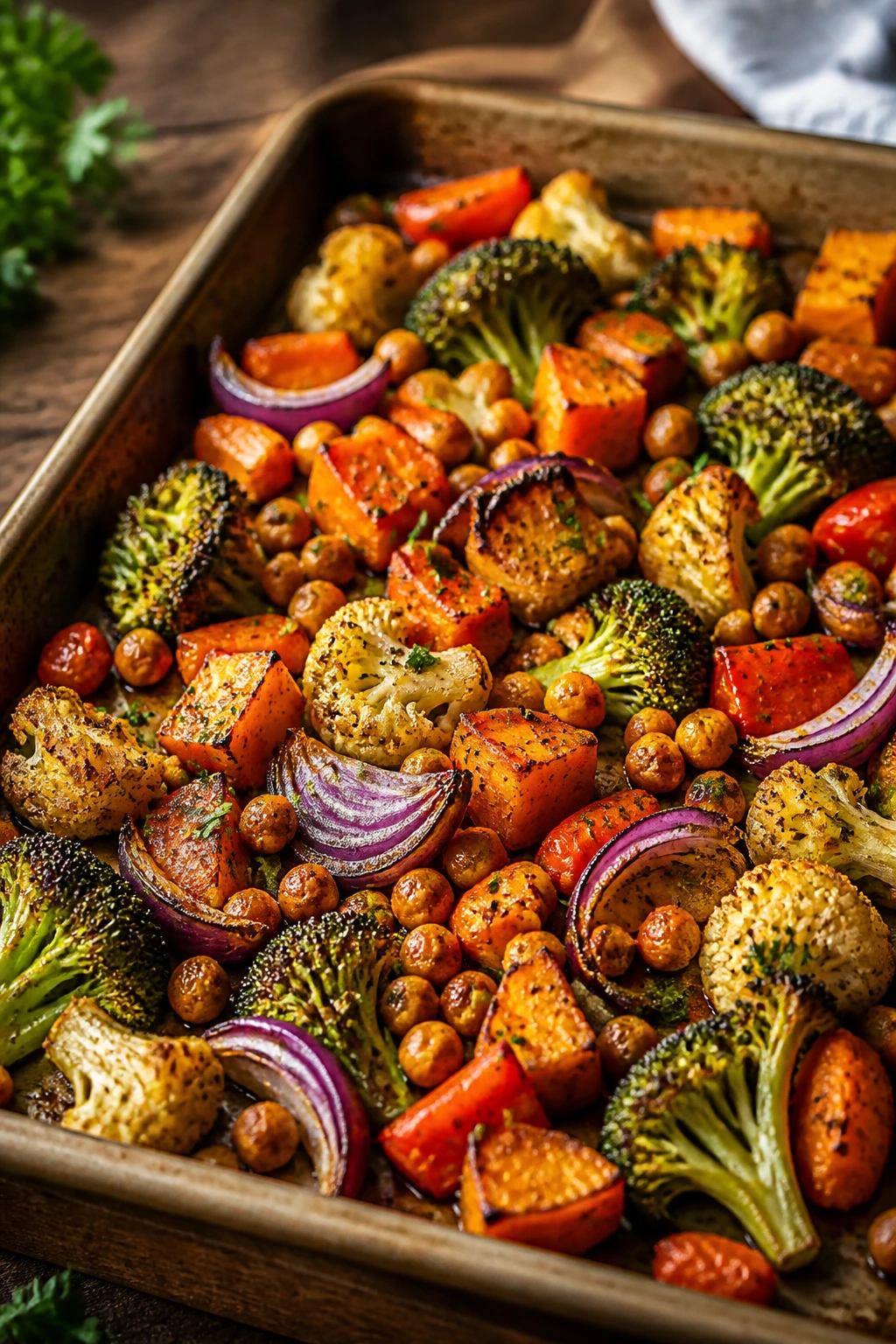
Flavor Enhancement: A pinch of sumac over the finished tray gives you a tart, berry-like edge that plays especially well with lemon and tahini. If you like warmth more than tang, a little cumin in the spice mix turns the tray deeper and earthier without making it heavy.
Time-Saver: Buy pre-cut cauliflower florets or pretrimmed Brussels sprouts when you need to cut the prep down. I still cut the carrots and zucchini myself because the sizes matter, but saving five or ten minutes on the florets can make the difference between making dinner and ordering it.
Pro Move: Dry the chickpeas like you mean it. I use a towel, then let them sit for a minute on the towel before they hit the bowl. That extra drying step is what gives you those little crisp seams on the outside instead of soft beans that taste like they were warmed in the rain.
Cost-Saver: Cabbage wedges, onions, and carrots can stretch this tray cheaply when broccoli or cauliflower are expensive. Cabbage roasts into sweet, browned ribbons if you cut it into thick wedges and leave the core attached so it holds together.
Make-It-Yours: If you want more heat, stir 1 to 2 teaspoons harissa into the oil before tossing the vegetables. If you want a cooler finish, swap the tahini drizzle for lemony yogurt. The vegetables stay the same; the personality changes.
Mistakes That Turn a Good Tray Soft
-
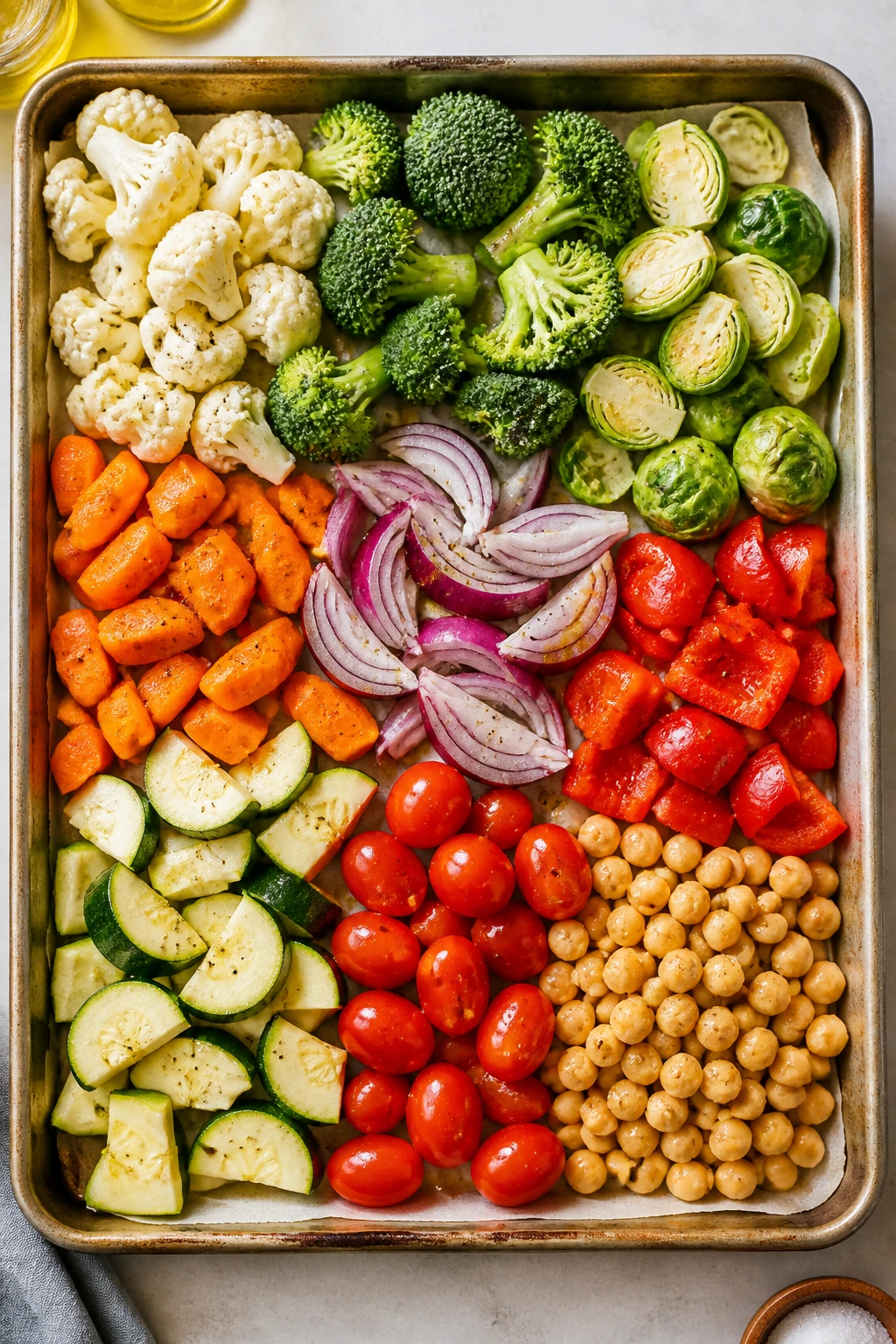
Crowding the pan: The most common problem. If the vegetables sit on top of each other, they trap steam and go limp instead of browning. The fix is brutally simple: use two sheet pans and spread the vegetables out in a single layer.
-
Leaving moisture on the chickpeas or vegetables: Wet chickpeas roast like sponges, not like crisp little nuggets. Wet zucchini and tomatoes can puddle the pan. Dry everything well before oiling it, especially the chickpeas and broccoli stems.
-
Cutting everything to the same size: A carrot coin and a zucchini half-moon do not cook the same way. If you cut them all to the same thickness, some will still be hard while others slump. Separate the dense vegetables from the soft ones and give them the right cut for their cooking speed.
-
Adding the tahini sauce too early: Tahini can brown and thicken into paste if it goes into a hot oven. Drizzle it at the end or serve it on the side. The sauce should finish the vegetables, not vanish into the pan.
-
Under-salting the tray: Roasted vegetables need more salt than many people think, because the oven concentrates flavor as water leaves the produce. If the tray tastes flat, it usually needs salt and acid, not more cooking time.
-
Pulling everything when the softest vegetable is done: Zucchini can fool you here. If it is tender, you might think the whole tray is ready. Check the carrots and cauliflower. They should have browned spots and feel tender all the way through before you call it done.
Versions Worth Trying
Sunny Mediterranean Tray
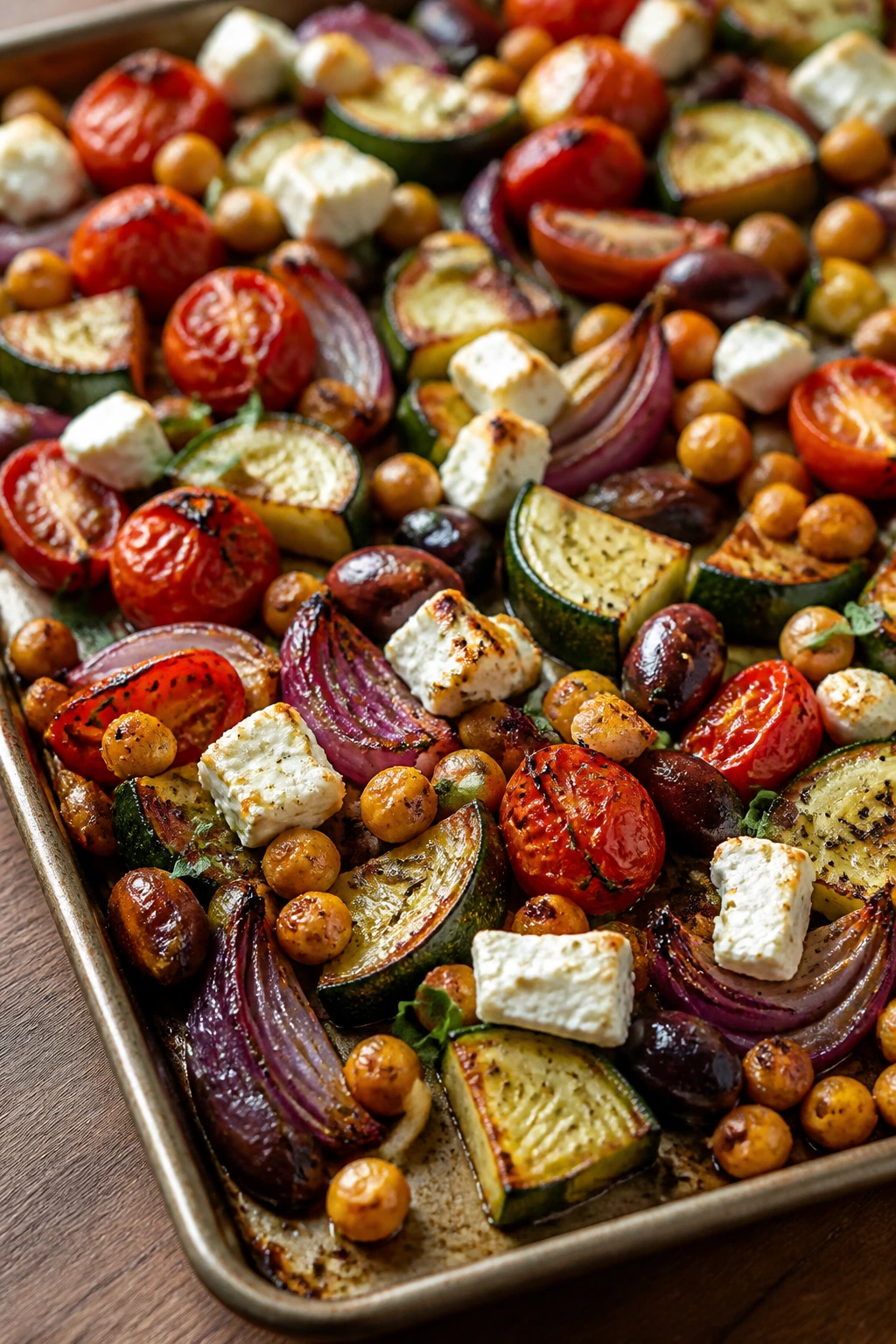
Swap the oregano for a little more dried thyme, add a handful of olives after roasting, and finish with crumbled feta if you eat dairy. This version likes chickpeas, red onion, zucchini, and cherry tomatoes, and it turns the tray into something that feels at home beside pita and chopped cucumber.
Smoky Harissa Chickpea Pan
Stir 1 to 2 teaspoons harissa into the olive oil before tossing the vegetables, then keep the lemon-tahini sauce but make it slightly thinner. This one works best with cauliflower, carrots, onions, and chickpeas because those vegetables hold up to the heat without going mushy.
Sesame-Ginger Dinner Bowl
Swap the olive oil seasoning for a mix of neutral oil, grated ginger, a splash of soy sauce, and sesame oil. Use broccoli, bell pepper, mushrooms, and zucchini, then finish with sesame seeds and scallions. It tastes different enough to feel like a new dinner, but it still relies on the same high-heat roasting method.
Maple-Mustard Root Tray
Use carrots, Brussels sprouts, red onion, and sweet potatoes, then whisk a spoonful of Dijon and a teaspoon of maple syrup into the oil. The sweet-sour glaze caramelizes fast, so keep an eye on it near the end of the roast. This version is the one I make when the vegetables in the crisper drawer are more root-heavy than green.
Garlic-Parmesan Finish
Skip the tahini drizzle and shower the finished tray with grated Parmesan, chopped parsley, and a squeeze of lemon. It is a little richer, less saucy, and very good when you want roasted vegetables next to grilled chicken or eggs.
Make-Ahead, Storage, and Reheating
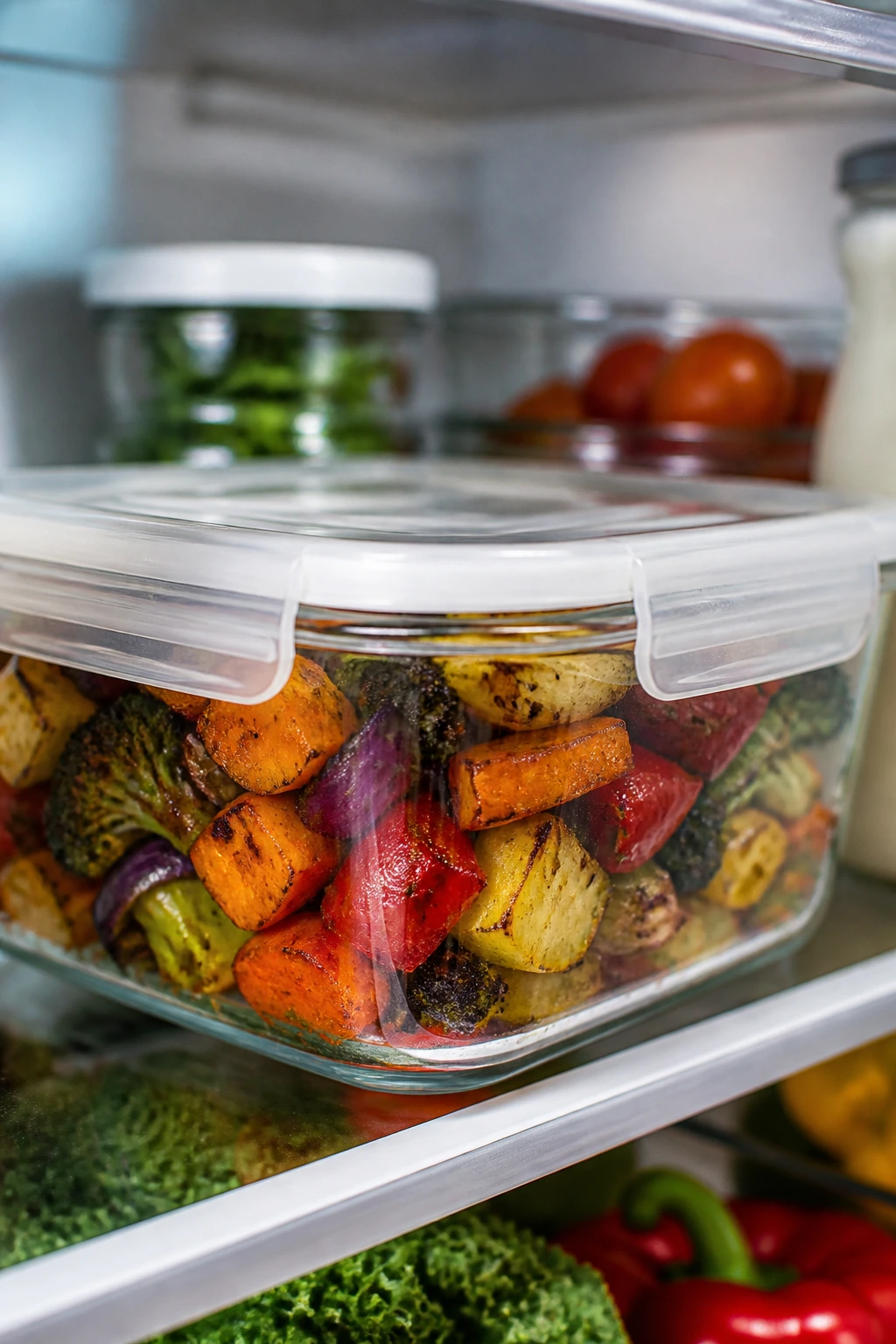
Roasted vegetables are at their best when they come out of the oven, but the leftovers hold up better than you might expect if you store them properly. Let the vegetables cool for about 20 to 30 minutes before packing them up. If you seal them while they are still steaming hot, the trapped moisture softens the browned edges.
Store leftovers in an airtight container in the refrigerator for up to 4 days. Keep the tahini sauce separate if you can; the vegetables stay cleaner that way, and you can decide later how much sauce you want on each portion. If the sauce thickens in the fridge, loosen it with a teaspoon or two of warm water before serving.
Freezing works, but I only recommend it if you are okay with softer texture. The best candidates are cauliflower, broccoli, carrots, Brussels sprouts, onions, and chickpeas. Zucchini and tomatoes turn mushier after freezing, so if you know you want to freeze some of the tray, it helps to scoop out a portion before they go on the pan. Frozen roasted vegetables keep for about 2 months.
For reheating, the oven wins. Spread the vegetables on a sheet pan and warm them at 425°F (220°C) for 8 to 12 minutes until the edges perk up again. An air fryer at 350°F (175°C) for 4 to 6 minutes also works well for smaller amounts. A skillet over medium-high heat with a teaspoon of oil gives you decent results if you only need a bowl or two. The microwave is the last resort. It heats fast, but it softens everything, and there is no way around that.
For make-ahead prep, chop the dense vegetables and mix the spice blend 1 to 2 days ahead. Store the cut vegetables in a dry container lined with a paper towel, and keep the sauce in a jar in the fridge. I would not season the vegetables too early, because salt pulls out moisture and makes the pan wetter before it ever enters the oven.
Questions People Ask Before They Turn On the Oven
Can I use frozen vegetables instead of fresh?
Yes, but choose them carefully. Frozen broccoli or cauliflower can work if you roast them on a separate pan straight from frozen and accept a little less browning than fresh gives you. I would avoid frozen zucchini and tomatoes here; they release too much water and flatten the texture.
Do I really need two sheet pans?
If you want browned vegetables, yes, or at least close to it. One pan can work only if it is oversized and the vegetables are spread in a true single layer with plenty of room. A crowded pan turns this recipe into steamed vegetables with oil on top.
What if I do not like tahini?
Use lemon yogurt, thinned hummus, or even a simple olive oil and lemon finish. Tahini gives you a nutty, creamy layer, but the vegetables do not depend on it. The roast itself is still doing the heavy lifting.
Can I add protein to the pan?
Absolutely. Extra-firm tofu is the easiest swap because it roasts at the same pace as the cauliflower if you cut it into cubes and press it dry first. If you want a faster protein fix, serve the vegetables with fried eggs or spoon them over white beans.
How do I stop zucchini from getting mushy?
Cut it thicker than you think you should, and keep it off the denser pan if possible. Zucchini does best on its own sheet pan or added later in the roast. If you cook it too early, it collapses and starts watering down the rest of the vegetables.
What if the vegetables are browned on top but still hard inside?
That usually means the pieces were cut too large or the oven runs hot on top. Keep roasting in 3 to 5 minute bursts and check the thickest carrot or cauliflower stem with a fork. If the edges are getting too dark before the centers soften, lower the pan one rack.
Can I make this low-oil?
You can cut the oil slightly, but do not remove it entirely and expect the same result. A light coat of oil helps the vegetables brown instead of drying out in patches. If you want less oil, use a little less and increase the importance of spacing and heat.
What is the best way to turn leftovers into lunch?
Warm the vegetables in a skillet, then put them over grains, greens, or toast with the sauce on the side. I like them tucked into a pita with a fried egg, but they also work cold if you treat them like a chunky salad topping. The trick is not to hide them under too much dressing.
A Tray Worth Repeating
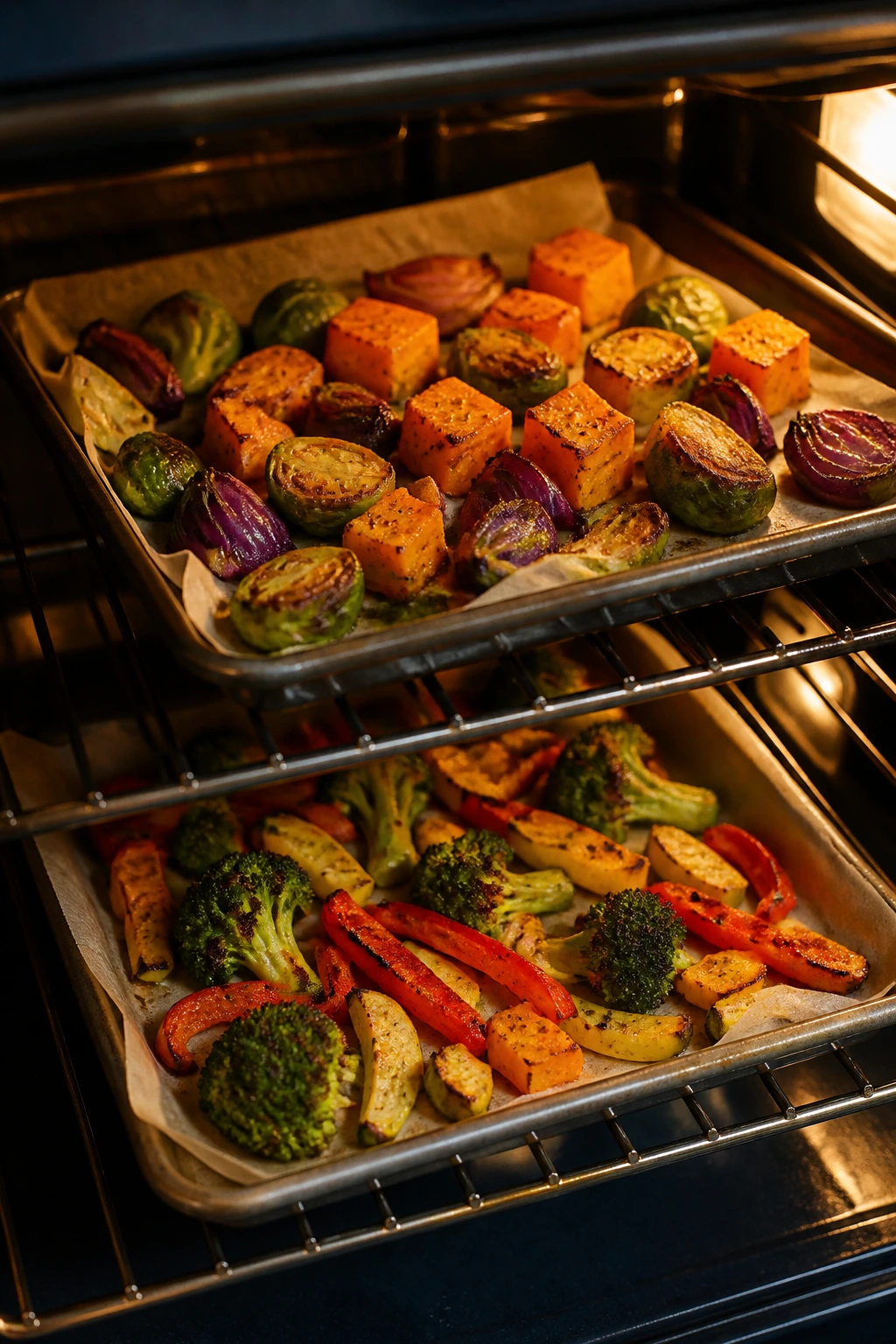
A good tray of roasted veggies does not need a speech. It needs heat, room, and a finish that wakes the whole thing up. Once the cauliflower has those brown, nutty edges and the chickpeas have gone a little crisp, the pan already tastes like dinner; the lemon-tahini just gives it shape.
I come back to this kind of meal because it is practical without feeling dull. There is enough color on the pan to make it look generous, enough texture to keep each bite different, and enough flexibility that you can build it from whatever vegetables are sitting in the crisper drawer without losing the point. Get the pan hot, keep the pieces honest in size, and the oven will do the rest.
Roasted Veggies for a Healthy Dinner — Recipe Card
Recipe Name: Roasted Veggies for a Healthy Dinner
Description: A sheet-pan vegetarian dinner with browned cauliflower, broccoli, Brussels sprouts, carrots, zucchini, bell pepper, tomatoes, and chickpeas, finished with a lemon-tahini drizzle.
Prep Time: 20 minutes
Cook Time: 25 to 30 minutes
Total Time: 45 to 50 minutes
Course: Main Course
Cuisine: Mediterranean-Inspired
Servings: 4 servings
Calories: About 300 kcal per serving
Ingredients
For the Roasted Vegetables and Chickpeas
- 1 small head cauliflower, about 1 pound, cut into 1-inch florets
- 1 small head broccoli, about 1 pound, cut into 1-inch florets
- 12 ounces Brussels sprouts, trimmed and halved
- 3 medium carrots, peeled and cut on the diagonal into 1/2-inch pieces
- 1 medium red onion, cut into 8 wedges
- 1 red bell pepper, seeded and cut into 1-inch strips
- 2 medium zucchini, cut into 1/2-inch half-moons
- 1 pint cherry tomatoes
- 1 (15-ounce) can chickpeas, rinsed and patted very dry
- 3 tablespoons extra-virgin olive oil
- 1 1/2 teaspoons kosher salt, divided
- 1/2 teaspoon black pepper
- 1 teaspoon garlic powder
- 1 teaspoon smoked paprika
- 1 teaspoon dried oregano
- 1/4 teaspoon crushed red pepper flakes, optional
For the Lemon-Tahini Drizzle
- 1/4 cup tahini
- 2 tablespoons fresh lemon juice
- 1 small garlic clove, finely grated
- 2 to 4 tablespoons warm water
- 1/4 teaspoon kosher salt
For Finishing
- 2 tablespoons chopped fresh parsley
- 1 teaspoon lemon zest
- 2 tablespoons toasted pumpkin seeds, optional
Instructions
-
Preheat the oven to 425°F (220°C) and line 2 large rimmed sheet pans with parchment paper.
-
In a small bowl, whisk together the tahini, lemon juice, grated garlic, 2 tablespoons warm water, and salt. Add more warm water, 1 tablespoon at a time, until the sauce is smooth and drizzly.
-
In a large bowl, toss the cauliflower, Brussels sprouts, carrots, red onion, and chickpeas with 2 tablespoons olive oil, 1 teaspoon salt, black pepper, garlic powder, smoked paprika, oregano, and red pepper flakes if using. Spread on one sheet pan in a single layer.
-
On the second sheet pan, toss the broccoli, red bell pepper, zucchini, and cherry tomatoes with the remaining 1 tablespoon olive oil and the remaining 1/2 teaspoon salt. Spread into a single layer.
-
Roast both pans for 15 minutes, then swap their positions and rotate them front to back. Roast for 10 to 12 minutes more, until the vegetables are browned at the edges and tender.
-
Transfer the vegetables to a platter or bowl. Drizzle with half of the tahini sauce, then scatter over the parsley, lemon zest, and pumpkin seeds if using. Serve the rest of the sauce on the side.
-
Taste and add a little extra salt or lemon juice if needed. Serve warm.
Notes: For the best texture, do not crowd the pans. If you want to make the tray ahead, keep the sauce separate and reheat the vegetables in a hot oven before serving.