



A fresh vegan picnic for a healthy dinner works best when the food can survive a real outing: the fridge door swings open, the cooler gets hauled a few blocks, the blanket lands a little crooked, and nobody wants to eat a bowl of limp greens because the dressing leaked early. The picnic that still tastes bright after all that is the one worth packing.
That usually means building dinner from pieces that like being cold: chickpeas with enough salt to taste awake, grains that stay chewy, cucumbers and radishes that keep their snap, and a sauce that clings instead of puddling. I’d rather eat that than a carefully arranged pile of soggy wraps every time.
Get the texture right, keep moisture where it belongs, and the meal feels calm instead of fussy. A blanket dinner can be light without being small, which is the whole point when you want something satisfying but not heavy after a long day.
Why This Picnic Formula Works
Bright food holds attention.
Cold vegetables, herbs, and lemony dressings wake up the palate fast, which matters more outdoors where wind, cold air, or a distracted conversation can flatten flavors.
The meal can be built in layers.
A vegan picnic dinner does not need one heroic dish. It usually works better as a base, a protein, a crunchy vegetable, and a sharp finish packed separately and brought together at the blanket.
It eats like dinner, not snacks.
Beans, grains, and tofu give the plate some weight, so you do not end up hunting for something more filling ten minutes later.
The texture stays honest.
A good picnic basket avoids the classic collapse: lettuce gone soggy, crackers turned soft, herbs bruised, and dressing everywhere except where you want it.
Prep can happen early.
The grain, protein, and dressing can be made ahead and chilled, which makes the actual departure feel easy instead of like a tiny catering job.
Cleanup stays small.
When the food is packed in a few containers and eaten with forks or reusable chopsticks, you are left with less to carry home and fewer dishes to stare at later.
The Flavor Balance That Keeps Cold Food Interesting
A healthy picnic dinner falls apart fast when every bite tastes like restraint. Cold food needs a little more salt, a little more acid, and a little more contrast than the same ingredients would need on a hot plate.
Salt Gives the Picnic Its Spine
Salt is not just about making food taste salty. On cold grains, beans, and vegetables, it sharpens the edges so the food tastes awake instead of flat. A spoonful of capers, a few olives, a briny pickle, or a generous pinch of flaky salt on tomatoes can make the whole basket feel more finished.
Acid Stops the Meal From Going Beige
Lemon juice, red wine vinegar, rice vinegar, and even a splash of pickle brine all help cut through starch and creaminess. This is especially useful when your base is something mild like quinoa or white beans, because acid keeps the bowl from tasting like it has been waiting in the fridge too long.
Creaminess Keeps It From Feeling Bare
A picnic dinner that is only crunch and acid gets old quickly. Tahini, hummus, avocado, smashed beans, or a cashew dressing gives the meal a rounder feel, which is useful when you want the plate to satisfy without leaning on bread alone.
Crunch Is Not Garnish
Crunch is the detail people remember. Toasted pepitas, sunflower seeds, sliced radishes, snap peas, fennel, shaved cabbage, or a handful of crushed pita chips changes the whole bite. The food feels more deliberate when every forkful has one crisp thing in it.
That’s the whole trick.
The Building Blocks That Travel Best
A picnic dinner gets easier once you stop trying to make every container do everything. I like to think in five parts: a base, a protein, a vegetable with real snap, a creamy or salty element, and one bright finish.
A Base That Stays Chewy
Farro is excellent if gluten is fine and you want something with bite. Quinoa is lighter and works well when you want a clean, fluffy base that takes dressing quickly. Brown rice is sturdy, but it needs a stronger vinaigrette because it can taste a little dull when it cools. Millet, couscous, and small pasta shapes all work too, though they each pull the meal in a different direction.
The best base is the one that still tastes good after chilling for a few hours. That matters more than elegance.
A Protein That Does Not Need a Stove
Chickpeas are the easiest answer. Lentils, especially French green or black beluga lentils, hold their shape well and make the meal feel more substantial. Baked tofu gives chew and absorbs dressing like it was built for the job. Tempeh works too, though I always give it a little extra seasoning because cold tempeh without enough salt can lean bitter.
A Sharp Finish
Pickled onions, lemon zest, chopped herbs, capers, olives, or thinly sliced scallions keep the meal from getting sleepy. One small hit of brightness can rescue a container of grain salad that would otherwise taste plain by the third bite.
A Crunchy Vegetable
This is where a picnic dinner starts to look alive. Cucumbers, radishes, bell peppers, fennel, cabbage, snap peas, celery, and broccoli florets all bring structure. If they are sliced or blanched correctly, they keep their bite long enough to matter.
Crisp Vegetables That Stay Snappy
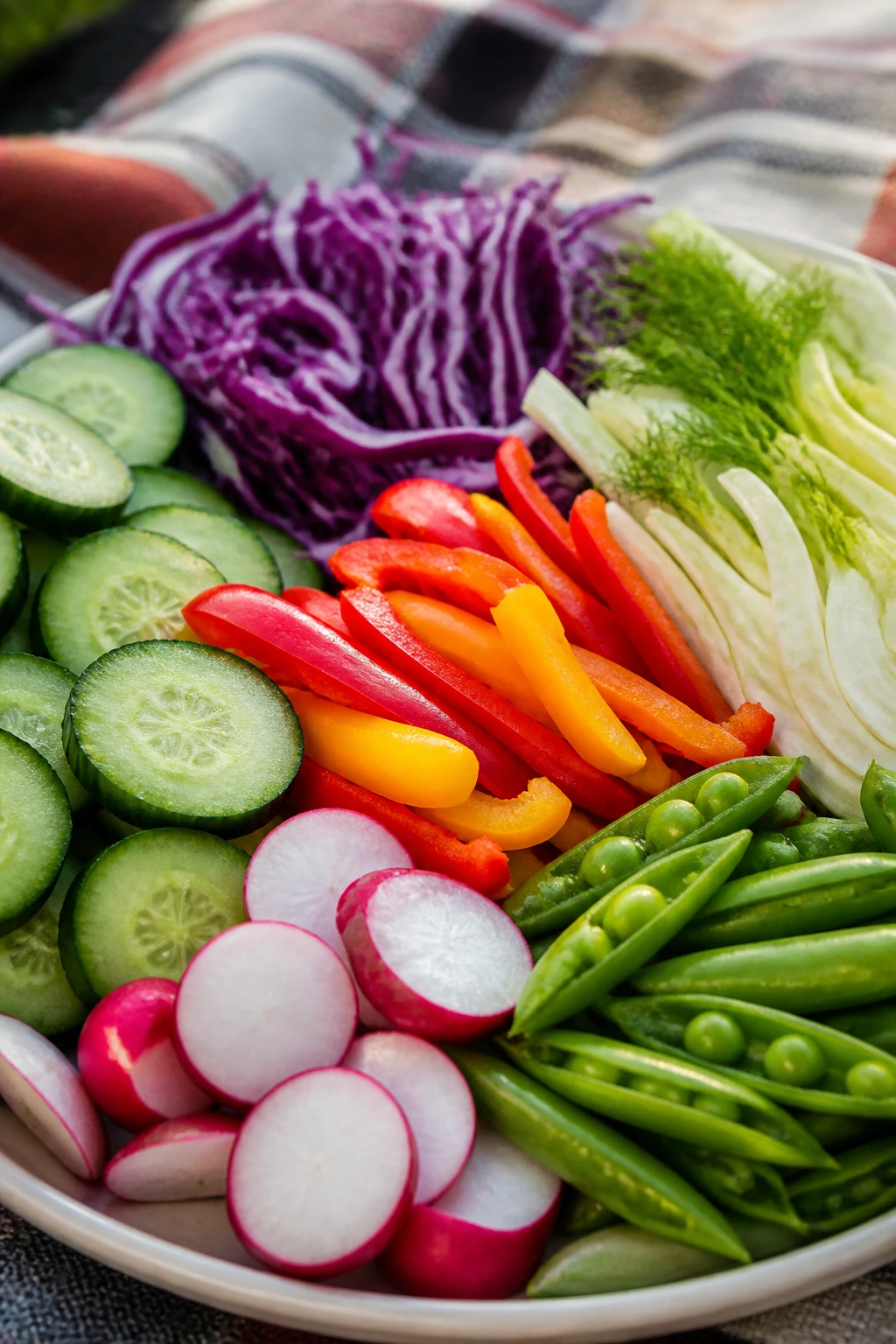
Some vegetables are picnic gold because they like being cold. Others become damp by the time you find the napkins. I have little patience for the second group.
The Best Cold-Weather Performers
- Cucumbers: Seed them if they are large, salt them lightly, then blot them dry before packing so they do not flood the container.
- Radishes: Thin slices keep their peppery snap, and a short soak in ice water makes them even crisper.
- Bell peppers: Cut into long strips so they are easy to grab and do not collapse into tiny wet pieces.
- Snap peas: Leave them whole unless they are huge; the pod gives a clean crunch that feels cheerful in a grain salad.
- Fennel: Shave it paper thin and toss it with lemon so it stays bright and aromatic.
- Shredded cabbage: This is one of the most reliable picnic greens because it holds texture for hours and does not panic under dressing.
- Celery: A little old-school, maybe, but it brings that cold snap people forget about until they bite into it.
- Broccoli florets: Blanch them for 60 to 90 seconds, then shock them in ice water and dry them well. They keep a nice bite when treated properly.
The Vegetables I Pack Differently
Cherry tomatoes are good, but I pack them whole and cut them only when the food is being served. Once sliced, they can leak and soften everything around them. Cucumbers are the same story: great when dry, disastrous when left to sit in their own water.
Leaf lettuce can work, but only if you dry it thoroughly and keep the dressing far away. If I want a no-drama picnic, I reach for cabbage, romaine hearts, endive, or sturdy herbs instead. Delicate leaves are fine in theory. Not always in a cooler.
Satisfying Vegan Proteins Without a Stove
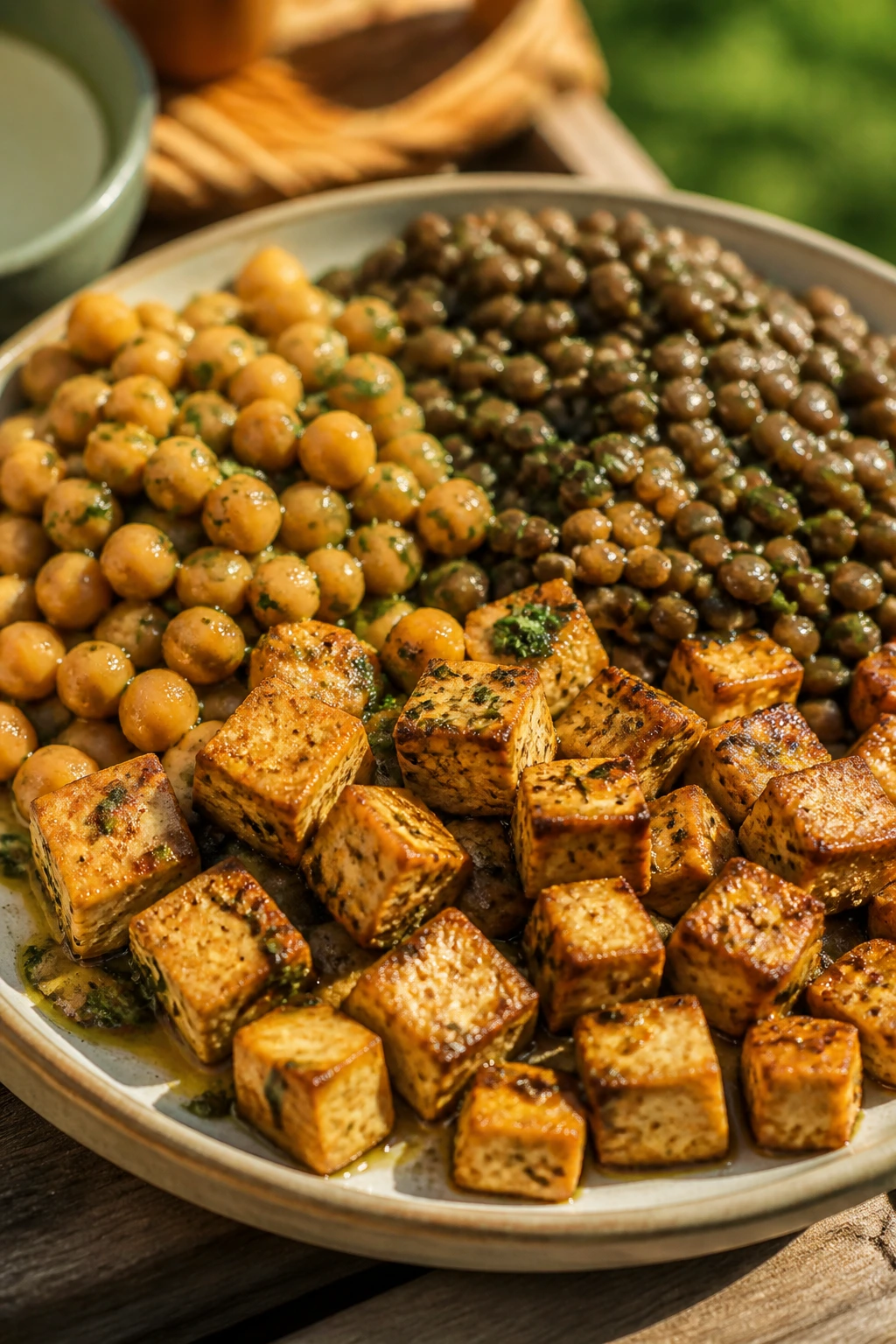
A picnic dinner needs more than vegetables and good intentions. Protein is what keeps the meal feeling like a meal after the first half of the blanket conversation is over.
Chickpeas and White Beans
Chickpeas are the most flexible choice by a long shot. Mash half of them with tahini, lemon, and salt, then leave the rest whole for texture. White beans are softer and creamier, which makes them excellent in an herb salad or a lemony smash with olive oil and garlic.
A can of beans is not a compromise here. It is a shortcut with good manners.
Lentils That Hold Their Shape
French green lentils and beluga lentils are worth the extra scan in the grocery aisle because they stay tidy after cooking and chilling. Cook them until just tender, not mushy. If they collapse, the salad starts eating like paste, and nobody needs that.
Lentils love mustard, vinegar, parsley, dill, and a little onion. They are one of the easiest ways to make a cold dinner feel grounded.
Baked Tofu With Real Bite
Tofu needs a little structure to work in a picnic setting. I press it, cube it, toss it with oil, salt, and a seasoning blend, then bake it at 425°F until the edges are firm and bronzed, usually 25 to 30 minutes depending on the cube size. You want the outside dry enough to hold up under dressing, not soft and pale.
Cold baked tofu can be excellent. It has a chewy, almost deli-salad quality when it is seasoned well.
Tempeh and Edamame
Tempeh is sturdy and nutty, but I always steam it for about 10 minutes before seasoning if I want to tame the bitterness. Then I slice or cube it and finish it in a pan or oven. Edamame is easier: thaw it, season it lightly, and toss it into bowls for a clean green protein that stays pleasant even when chilled.
Seitan if Gluten Is Fine
Seitan is not for everyone, but it can be a smart picnic protein because it holds flavor and texture so well. Thin slices or cubes marinated in lemon, soy sauce, and garlic can make a grain bowl feel more like dinner and less like a side dish parade.
Sauces, Dips, and Dressings That Carry the Meal
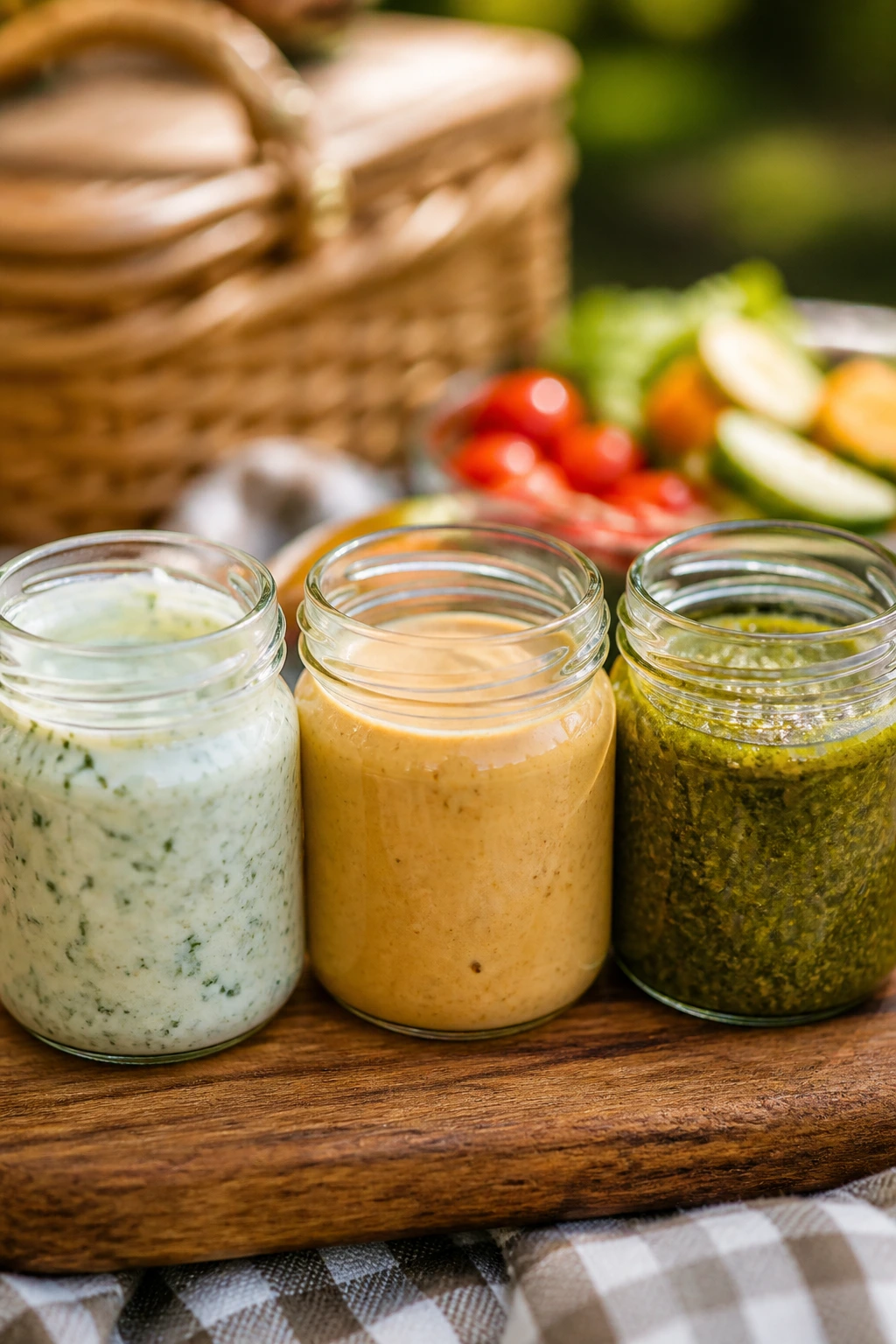
A picnic dinner lives or dies by the jar of sauce. Too thin, and it leaks all over the bag. Too thick, and it refuses to coat the grains. Too bland, and the whole meal tastes as though you forgot the final step.
Dressings That Work Cold
A lemon-tahini dressing is one of the most reliable picnic dressings because it clings to grains, roasted vegetables, and chickpeas without going watery. A little warm water loosens it; lemon brings it back to life. A miso-ginger dressing does something similar with more savory depth, though it needs a careful hand with salt because miso can get loud fast.
A plain vinaigrette is good too, especially when the base is sturdy. Olive oil, vinegar, mustard, salt, and a touch of maple syrup can carry a farro salad farther than people expect.
Dips That Double as Sauce
Hummus is the obvious one, and there is a reason it shows up in so many picnic baskets. White bean dip, baba ganoush, and a blended herb sauce all do the same job with slightly different moods. If I want the meal to feel richer, I bring two sauces: one creamy, one acidic. That tiny split keeps every bite from tasting identical.
Keep It Separate Unless You Want Soft Food
If the salad includes delicate greens, cucumbers, or crackers, keep the dressing in a small jar until the moment you eat. Once those pieces are tossed early, they stop behaving. If the meal is built on cabbage, grains, or chickpeas, though, I’m more willing to dress it ahead because those ingredients can handle the soak.
The Cooler, Containers, and Small Tools Worth Bringing
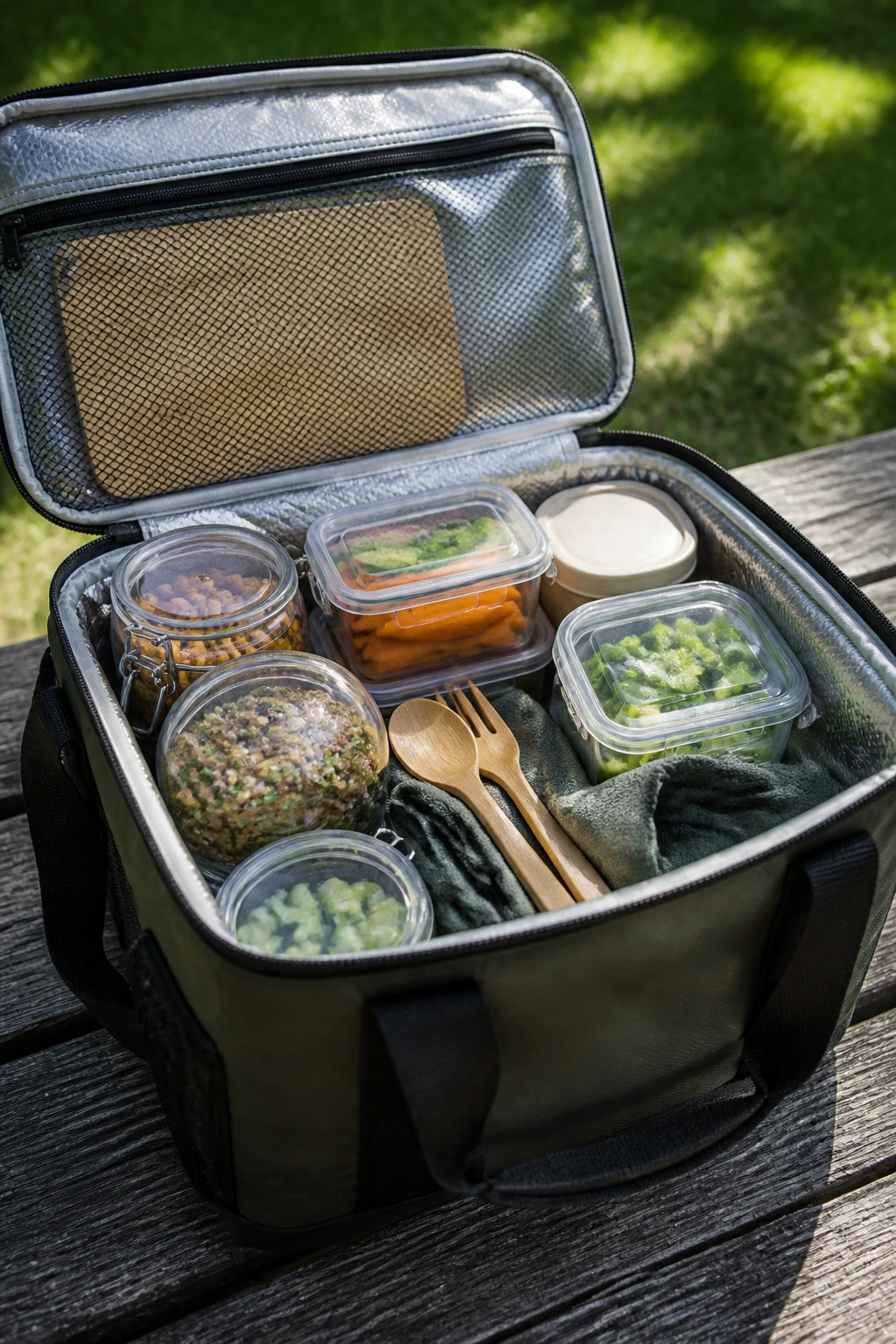
The right tools make a picnic dinner feel prepared instead of improvised. You do not need a pile of gear, but the pieces you do bring should work hard.
- Insulated cooler: This matters more than the basket itself. A soft tote is fine for dry items, but a real cooler keeps cold foods in the safe zone and saves the texture of the meal.
- Frozen water bottles or ice packs: Frozen bottles pull double duty because they cool the food and turn into drinking water later.
- Leakproof jars: Use these for dressing, pickles, olives, and any sauce that could escape if the bag tips.
- Wide, shallow containers: They make packing easier and keep salad from getting crushed under its own weight.
- Small airtight boxes: Good for sliced vegetables, herbs, seeds, and crunchy toppings.
- Cloth napkins: They take up less space than paper and do not feel flimsy in your hand.
- Reusable utensils: A fork, spoon, and one sharp small knife are usually enough.
- Serving spoon or tongs: Helpful if the meal is built from multiple shared containers.
- Clean kitchen towel: Use it to wrap containers, separate items, and catch condensation.
- Cutting board: Optional if you are finishing vegetables or fruit outside, but handy if you plan to slice lemons, herbs, or avocado on site.
A small note: if you pack glass, tuck it into the center of the cooler where it is less likely to bang against the sides. No one wants to hear that clink on the walk over.
How to Pack the Basket So Dinner Arrives Intact
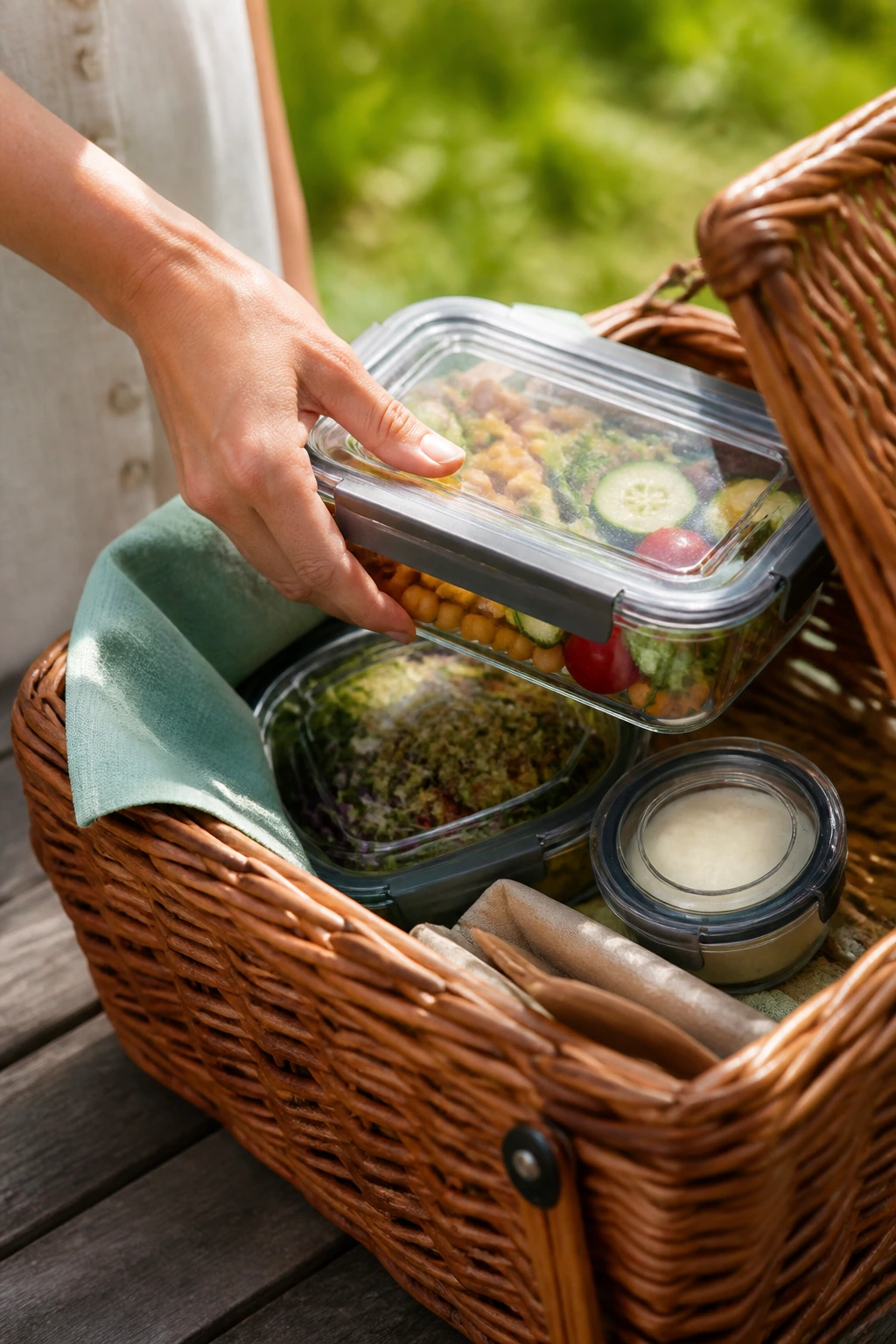
Packing is half the recipe here. The food can be excellent and still fall apart if the cooler is messy or the order is wrong.
Start Cold, Stay Cold
Pack everything fully chilled before it goes into the cooler. Warm grain salad is one thing at a kitchen table; in a closed bag under a blanket, it becomes a food-safety problem fast. Cold ingredients also hold texture better, especially tofu, beans, and sliced vegetables.
Keep Wet and Dry Separate
This is where most picnic dinners go wrong. Dressings, pickles, juicy tomatoes, and marinated onions should live in their own containers until the food is being eaten. Crunchy toppings need their own box too, or they turn soft in minutes. Keep cucumbers, cabbage, and lettuce dry with a paper towel if they are going to sit for a while.
Pack in Eating Order
Put the thing you’ll eat last deepest in the cooler and the thing you’ll want first on top. That keeps you from digging through everything every time someone wants a napkin. I also like to pack the plates, forks, and opening tools last so they are easy to grab without rummaging.
Use the Cooler Like a Refrigerator, Not a Tote
A half-empty cooler warms up fast. If you do not have many items, fill the gaps with ice packs, frozen bottles, or a folded towel so the cold air stays around the food. Keep the cooler in the shade once you arrive. Open it once for the main course, not eight times for admiration.
Cold Food Safety for Outdoor Suppers
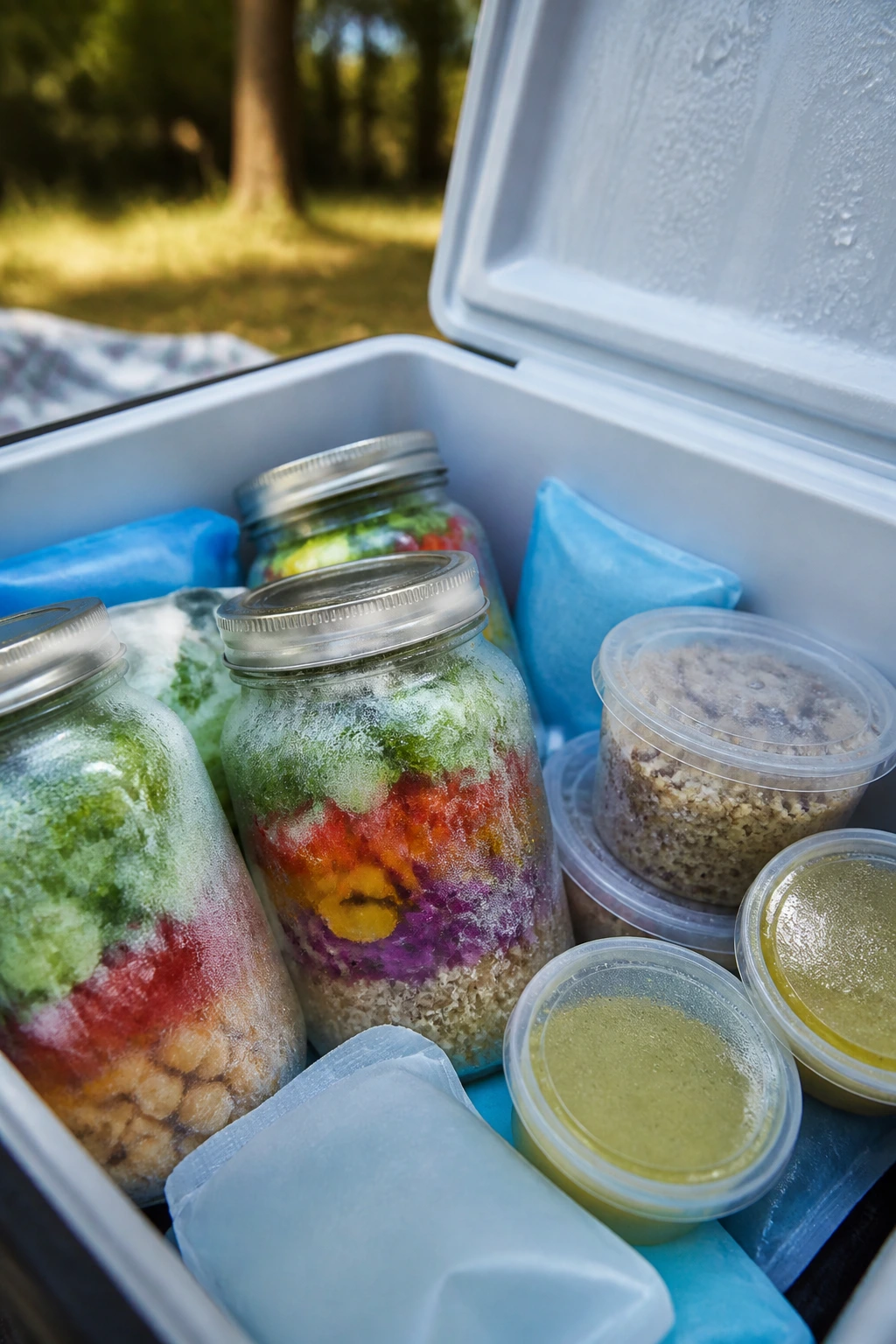
Food safety is the boring part that keeps the whole evening pleasant.
Cold vegan food should stay at or below 40°F when possible, and it should not sit at room temperature for more than two hours. If the day is hot and the cooler is sitting in direct sun, I treat one hour as the useful limit. That is the standard food-safety line for a reason, and picnic food does not get a special exemption because it is plant-based.
The most vulnerable items are cooked grains, beans, tofu, and dressing. They are all fine when kept chilled, but they should not sit out while people are chatting and forgetting to eat. If the cooler starts to feel soft, or if the food is no longer cold to the touch, move it back into chilled storage or eat it sooner rather than later.
A few habits make this easier:
- Pre-chill the cooler if you can.
- Use frozen water bottles or multiple ice packs, not a single warm one.
- Keep the lid closed between servings.
- Do not pack hot food next to cold food unless the hot item is in a true insulated container.
- If anything smells off, looks slimy, or has sat out too long, skip it.
Nobody wants a picnic memory built around regret.
A Mix-and-Match Picnic Menu You Can Build Fast
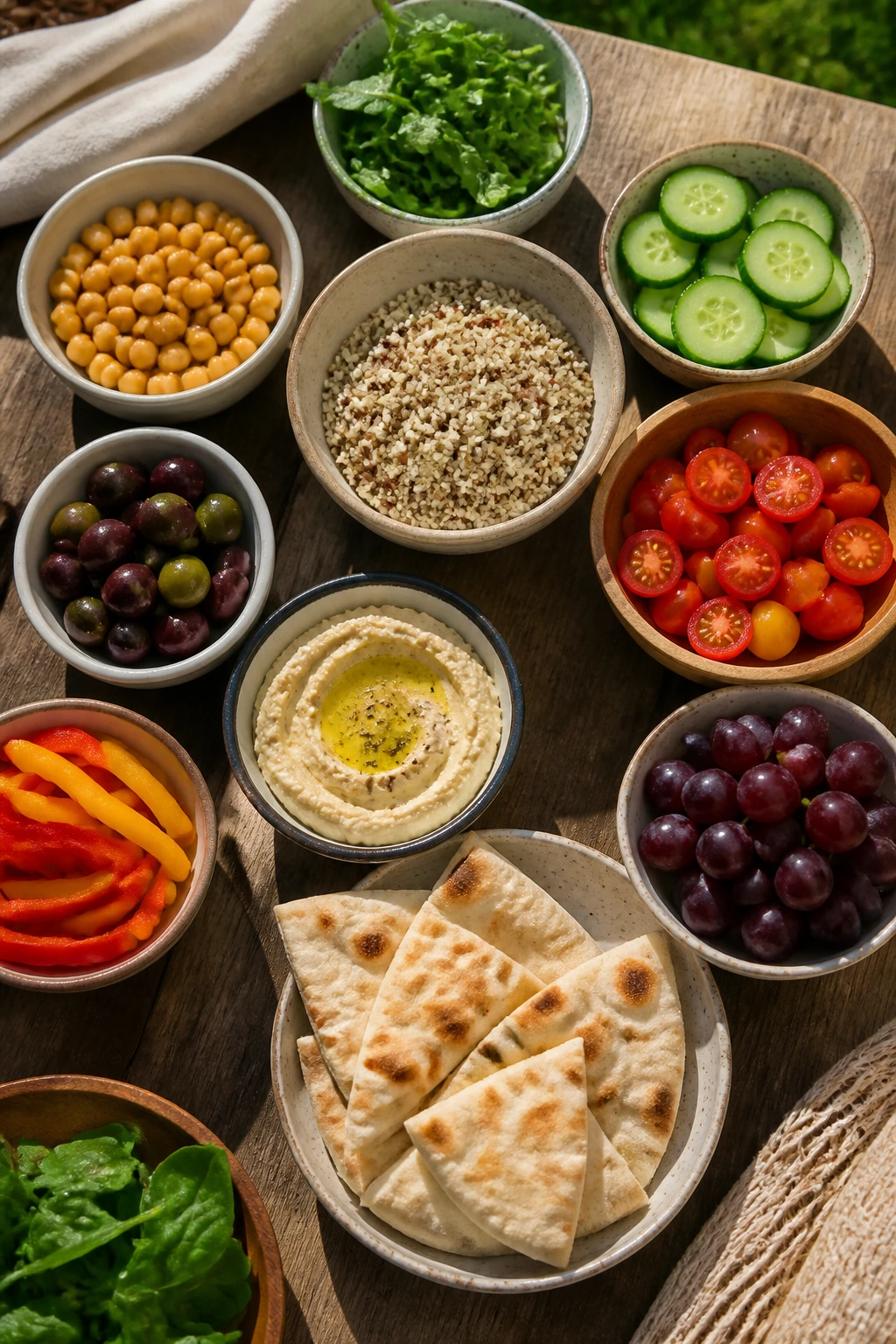
A useful picnic dinner menu should be more like a formula than a script. That way you can shop once and make three different versions from the same pile of ingredients.
Bright Herb Basket
This version is all about lemon, cucumbers, dill, and a clean grain base. Think quinoa or farro, chickpeas, shredded cabbage, chopped parsley, and a lemon-tahini dressing. Add grapes or strawberries on the side, and the whole basket starts feeling crisp and awake.
Smoky Grain Bowl Basket
This one leans heartier. Roasted sweet potatoes, baked tofu, brown rice or farro, snap peas, and a smoky paprika dressing give you a more grounded meal without turning heavy. I like pepitas on top because they keep the texture from going soft.
Mezze-Style Dinner Basket
This is the basket I reach for when I want the meal to feel social. Hummus, pita wedges, cucumbers, olives, tomato halves, roasted carrots, and a bean salad can sit beside each other without fighting. The flavors are familiar, but the mix of cold and creamy pieces keeps it from feeling like a snack board with ambitions.
Pantry-Friendly Basket
If the fridge is thin, canned white beans, jarred roasted red peppers, artichokes, olives, whole-grain crackers, and a quick vinaigrette can still make a real dinner. Toss in a sturdy fruit like apples or plums and you have an outdoor meal that feels intentional without a long shopping list.
How to Serve It So It Feels Like a Real Meal
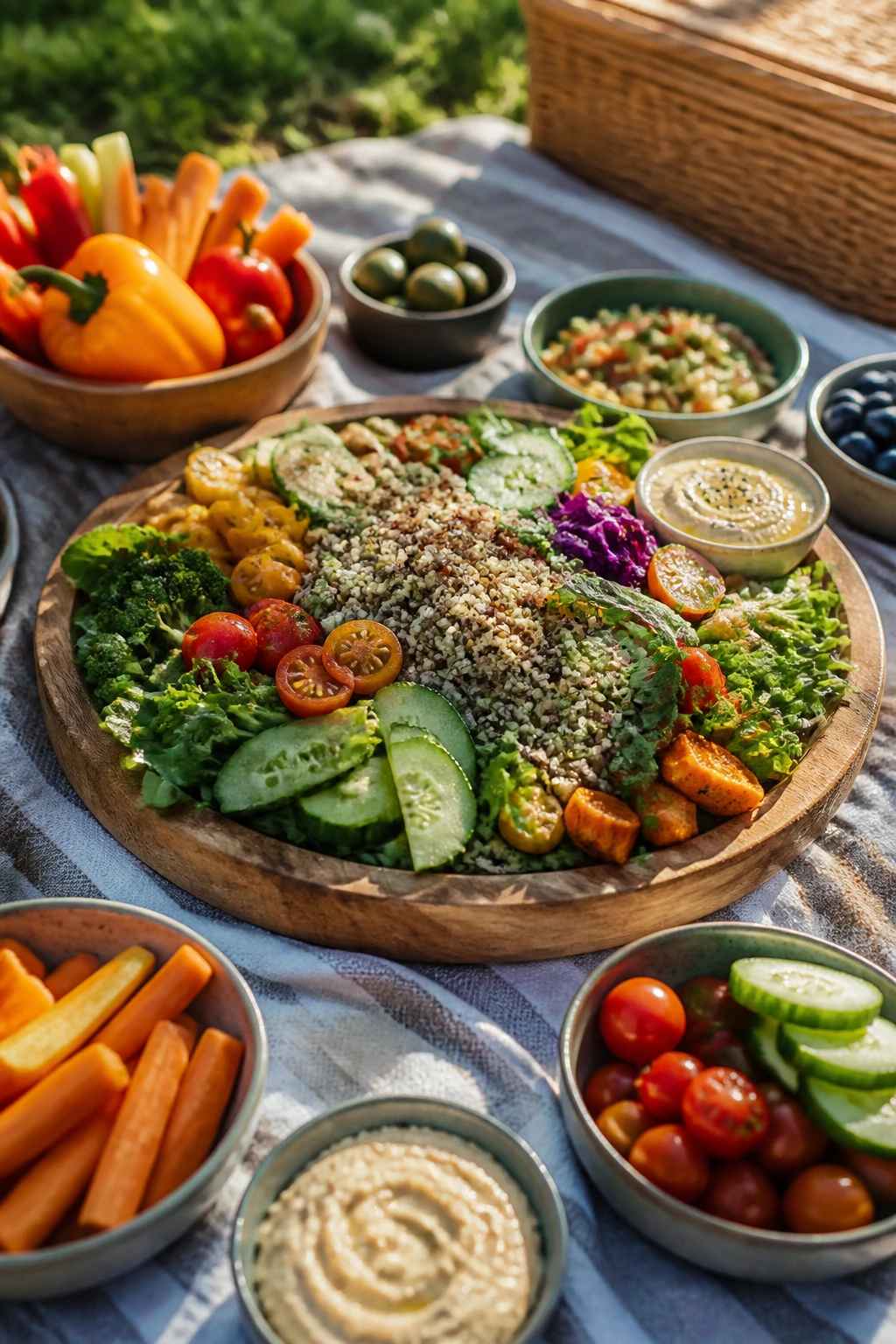
A picnic can look thrown together even when the food is good. A little attention to the final spread changes that.
Presentation:
Use one larger platter or shallow bowl for the centerpiece salad, then set the crunchy vegetables, fruit, and dip around it in smaller containers. Scatter herbs or seeds on top at the last minute so the food looks awake rather than packed. If you’re using a blanket, put the prettiest container where people’s eyes land first.
Accompaniments:
Seeded crackers, whole-grain pita, toasted sourdough, or a pile of sturdy lettuce cups all work well beside a vegan picnic dinner. I also like a simple fruit side — grapes, berries, sliced melon, or crisp apples — because the sweet bite resets the palate between forkfuls.
Portions:
For a dinner picnic, plan on about 1 to 1½ cups of grain salad or a similar base per adult, plus a generous scoop of vegetables and at least ½ cup of protein-rich food. If the group eats lightly, you can scale back; if this is the whole meal, be more generous with the beans, tofu, and bread.
Beverage Pairing:
Sparkling water with lime, cucumber-mint water, or unsweetened iced green tea all fit the meal without crowding it. If you want something a little richer, a cold herbal iced tea with lemon works better than anything syrupy.
Additional Tips and Flavor Boosters
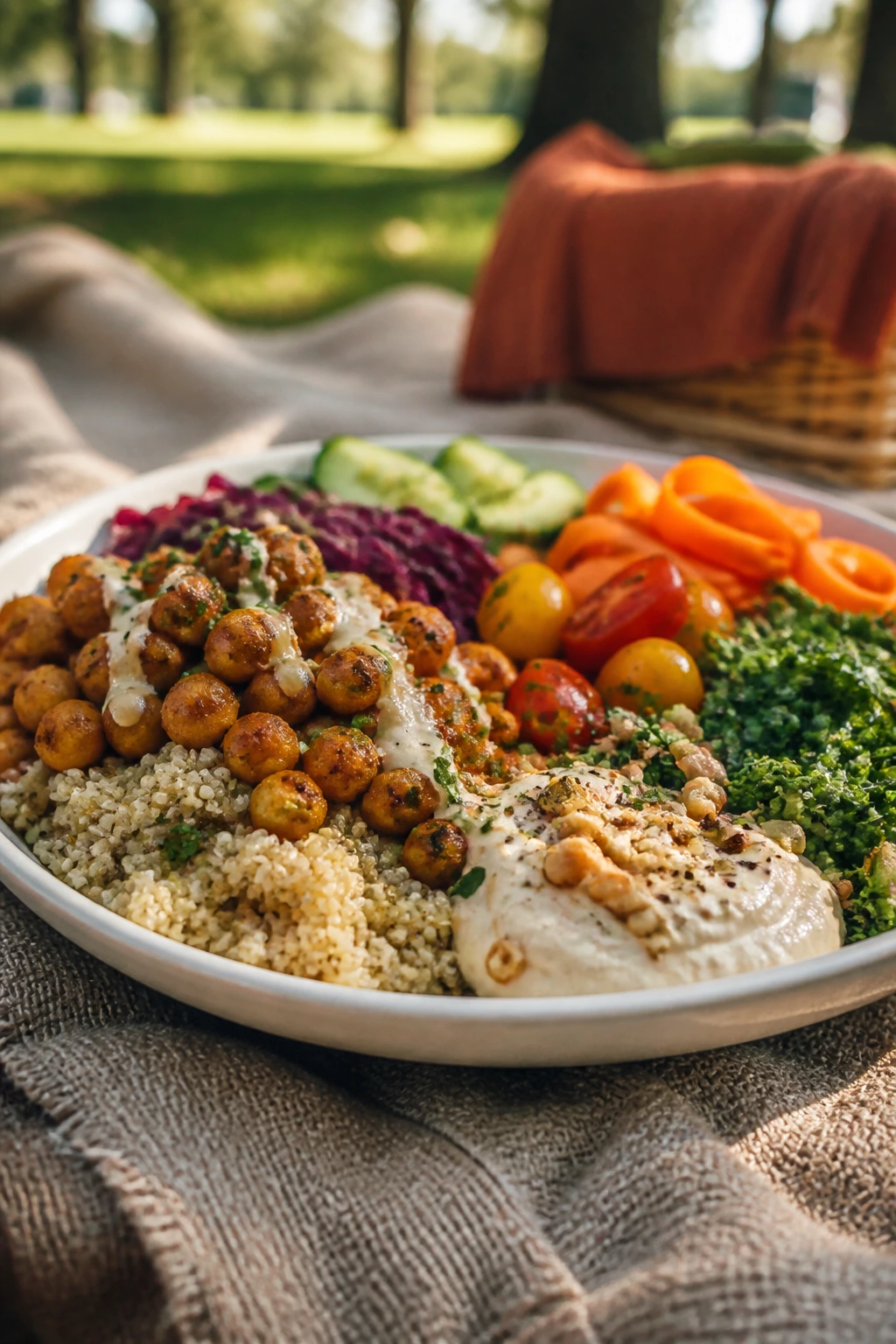
Flavor Enhancement:
A little citrus zest goes a long way. I like to grate lemon or orange zest over chickpeas, grain salads, or roasted vegetables right before serving because it smells fresh and cuts through the chill in a way juice alone cannot.
Customization:
If you want more heft, add avocado only at the last minute or tuck it into whole wedges with the pit removed. For more protein, sprinkle hemp seeds or add extra tofu cubes. If you want more color, fold in shredded purple cabbage, roasted beets, or shaved fennel. The basket gets more interesting when one container has a strong visual note.
Serving Suggestions:
Toasted seeds, chopped herbs, crushed pistachios, or a small spoonful of chili oil can finish the meal fast. Keep the finishing touch separate until the last minute so it stays sharp. A scattered handful of dill on a bean salad can make the whole thing smell greener.
Make-It-Yours:
For gluten-free eaters, use quinoa, rice, or millet instead of farro or pita. For nut-free eating, build around tahini, sunflower seeds, or a bean-based dressing. For an oil-light version, blend white beans with lemon, garlic, water, and herbs; it coats vegetables without feeling greasy. For extra heat, add sliced jalapeño, chili flakes, or a tiny spoonful of harissa to the sauce.
Common Mistakes That Turn Picnic Food Limp
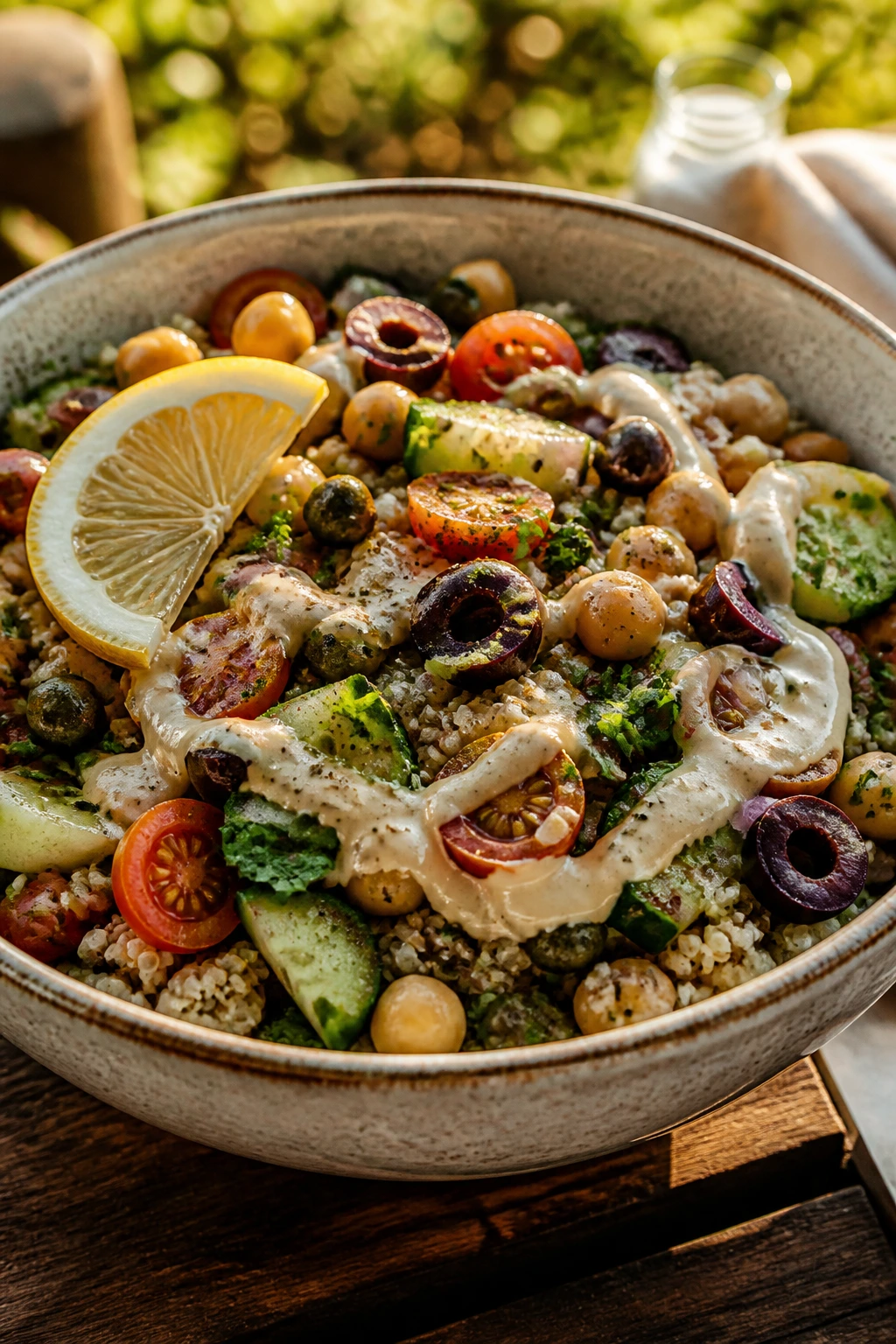
Packing the dressing too early.
The symptom is obvious: greens collapse, crackers soften, and the whole bowl tastes tired. The fix is simple — keep dressing in a sealed jar and toss it only right before eating unless the ingredients are sturdy enough to handle the soak.
Using the wrong greens.
Baby spinach and delicate lettuce look lovely in the fridge and sad on a blanket. Switch to cabbage, romaine hearts, endive, kale, or herbs with some backbone so the salad still has structure after transport.
Letting water pool in the container.
This happens with cucumbers, tomatoes, and washed greens. Dry everything thoroughly, blot cut vegetables, and use a paper towel or clean cloth to catch extra moisture before it turns into a puddle.
Forgetting acid and salt.
Cold food tastes flatter than food served warm, so a timid hand with seasoning makes the whole meal feel unfinished. Use lemon, vinegar, pickled onions, olives, capers, and enough salt to wake up the ingredients.
Overfilling the cooler with warm air.
A half-empty cooler or one that gets opened every few minutes does not keep food cold for long. Pack it tightly, use ice packs, and keep the lid shut until it is time to eat.
Trying to make everything one texture.
A bowl of soft beans, soft grains, and soft avocado is a fast road to boredom. Aim for one creamy element, one chewy element, and one crisp element in every serving.
Variations and Alternative Picnic Styles
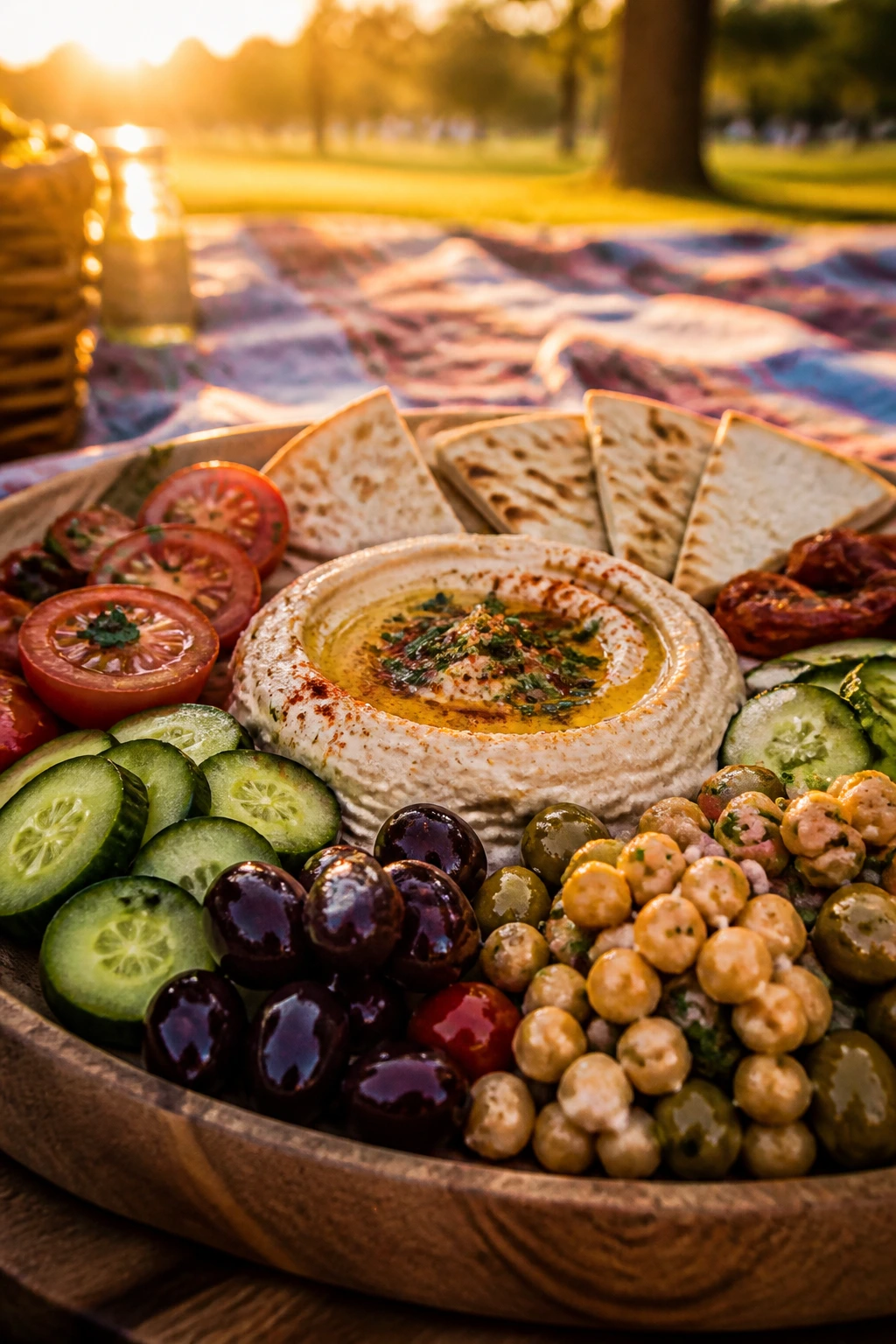
Mediterranean Mezze Night
Build the meal around hummus, cucumber, olives, tomato, pita, and a chickpea salad dressed with lemon and parsley. Roasted eggplant or baba ganoush can take the place of a grain base if you want the spread to feel lighter and more appetizer-like. This is the easiest version to scale for a group because most of the food can sit in separate bowls without losing its shape.
High-Protein Grain Bowl Picnic
Use quinoa or farro, baked tofu, edamame, shredded cabbage, and a tahini-ginger sauce. Add steamed broccoli or snap peas for color and bite. This version is the one I’d pack for someone who wants dinner to feel like dinner, not just a pretty snack assembly.
No-Cook Pantry Basket
Open the cans, rinse the beans, slice the vegetables, and stop there. White beans, canned chickpeas, artichoke hearts, jarred roasted peppers, olives, whole-grain crackers, and fruit can make a very respectable meal when the kitchen is too warm to turn anything on. The trick is seasoning the beans aggressively enough to compensate for the lack of roasting or searing.
Kid-Friendly Finger-Food Spread
Think mini wraps, hummus, cucumber sticks, grapes, berries, mild bean salad, and soft pita triangles. Keep the herbs a little lighter and the dressings less sharp if you want the food to feel easy for younger eaters. A few playful shapes go a long way here.
Gluten-Free Crunch Basket
Use rice, quinoa, millet, corn tortillas, or rice crackers as the base, then build with chickpeas, roasted vegetables, and a bright dressing. Add seeds for crunch and keep the sauces separate so nothing turns gummy. This version works well when the goal is a picnic dinner that still feels complete without wheat.
Make-Ahead, Storage, and Reheating Guidance
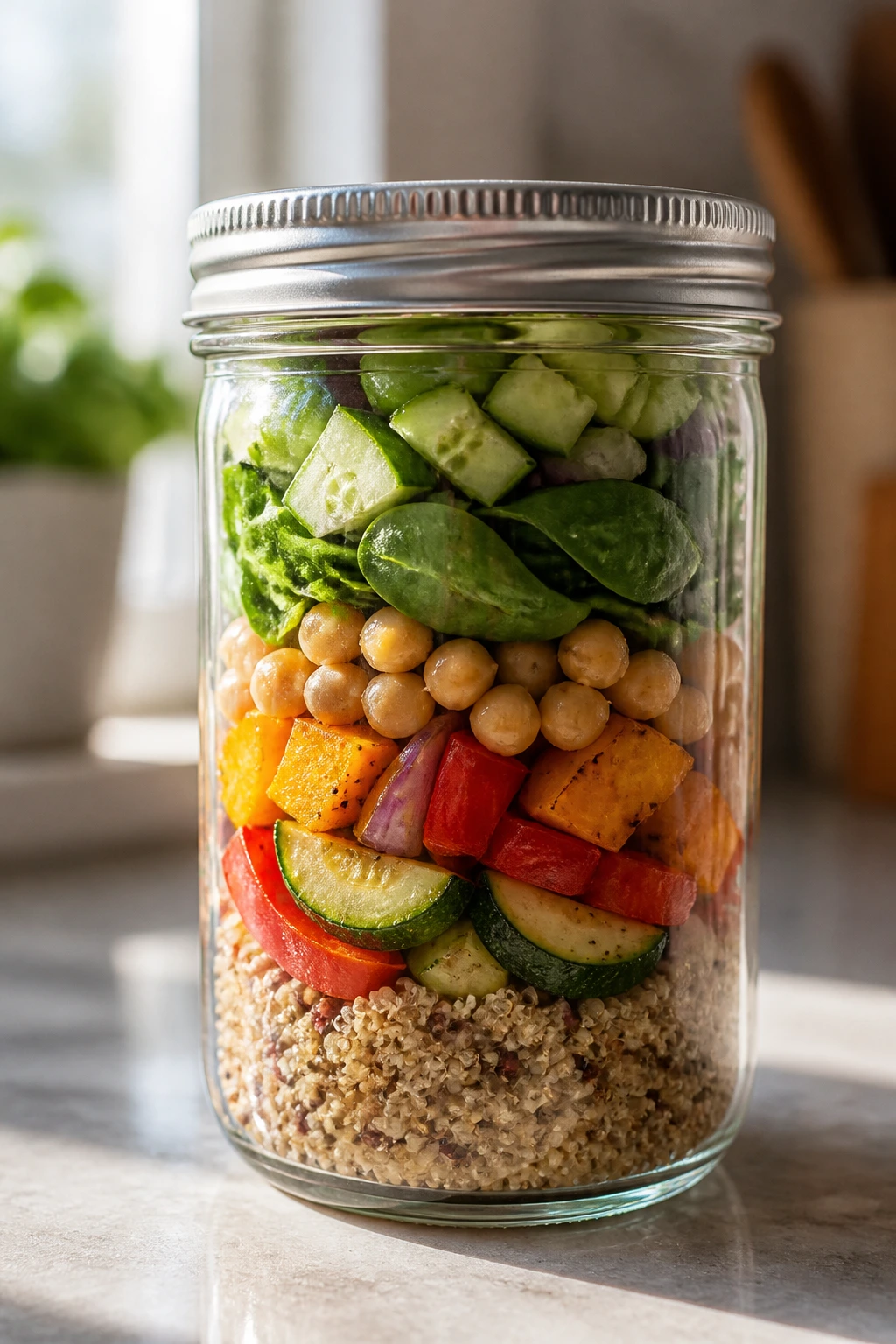
The best picnic dinner is usually made in stages. Some parts want the fridge. Some parts want the freezer. Some parts should stay far away from heat until the final moment.
What Keeps Well in the Fridge
Cooked grains keep for about 4 days in the refrigerator if they are sealed and chilled quickly after cooking. Cooked lentils, chickpeas, and other beans also keep for 3 to 4 days. Baked tofu and tempeh usually hold for 3 to 4 days as well, though I think tofu tastes best in the first couple of days when the edges are still firm.
What Can Be Frozen
Plain cooked grains freeze well for about 2 months. Beans and lentils also freeze neatly in portioned containers. Baked tofu can be frozen, though the texture changes and gets a little spongier after thawing, which some people like and some do not. Dressings with lots of herbs or fresh citrus are better made fresh, because freezing tends to dull them.
What Should Stay Fresh
Cut cucumbers, radishes, and cabbage are at their best for 2 to 3 days if they are kept dry. Delicate greens and herbs are better used within 1 to 2 days. Once a salad is dressed, the clock speeds up fast. Dressed grain salads are fine the next day, but they lose some snap after that.
Best Reheating Methods
If you want to serve a warm component at home before heading out, reheat grains or roasted vegetables in a skillet over medium-low heat with a splash of water, covered, until they’re hot through. The microwave works too if you cover the container with a damp paper towel and stir once halfway through. Roasted vegetables recover their edges best in a 400°F oven for 8 to 10 minutes.
Make-Ahead Timing That Works
You can cook grains, beans, tofu, and dressings a day ahead without hurting the meal. Slice the crisp vegetables the same day or the night before if they are well dried and stored separately. Assemble the picnic boxes as close to departure as you can. The food tastes cleaner that way.
Frequently Asked Questions
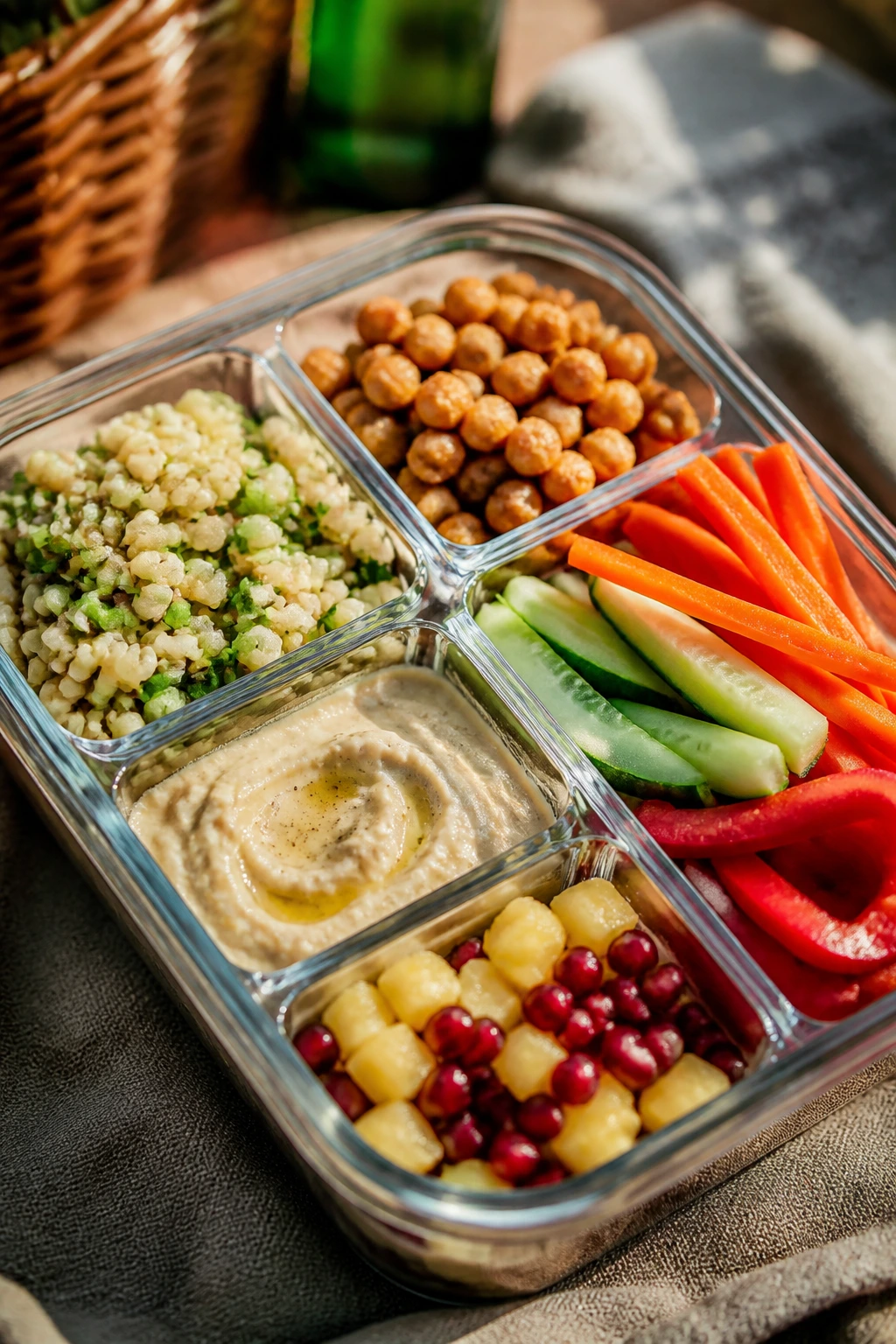
Can I make a vegan picnic dinner without cooking anything?
Yes, and it can still feel like dinner if you use the right ingredients. Rely on canned chickpeas or white beans, pre-washed sturdy greens, whole fruit, olives, crackers, hummus, and a good dressing. If you want a little more heft without turning on the stove, add marinated tofu from the store or a thick bean dip.
What vegan protein travels best cold?
Chickpeas, lentils, baked tofu, tempeh, and edamame all hold up well, but they behave differently. Chickpeas are the easiest, baked tofu has the most chew, and lentils give the meal a neat, earthy feel. I reach for chickpeas first when I want the least fuss, and tofu when I want the plate to feel more substantial.
How do I keep salad from getting soggy?
Dry the vegetables well, keep dressing separate, and choose sturdy greens. Cabbage, romaine hearts, endive, and shredded kale survive the trip much better than baby spinach or tender spring mix. If you can, pack the dressing under the salad rather than on top only if the ingredients are sturdy enough to handle it; otherwise, keep it in a small jar and toss at the blanket.
Can I pack avocado?
You can, but it behaves best when added at the last minute. Whole avocados travel better than cut ones, and sliced avocado needs lemon or lime plus tight wrapping if you must bring it already opened. I treat avocado as a finishing move, not a base ingredient, because it bruises too fast.
What if I do not have a cooler?
Use the smallest insulated bag or box you have, freeze water bottles, and keep the trip short. Pack only cold foods that can tolerate a little temperature swing, and do not leave the bag in the sun. If you are close to home or a park nearby, it can still work; you just need to be stricter about timing.
How far ahead can I assemble everything?
Most components can be made 1 to 3 days ahead if stored separately. Once the salad is dressed, though, it is best eaten within 24 hours for the cleanest texture. I would assemble the final boxes the same day whenever possible, even if the individual parts were cooked earlier.
How do I make the meal filling enough for dinner?
Include a grain or starch, a protein, a creamy element, and a crunchy vegetable. That combination matters more than piling on more salad leaves. A picnic dinner feels satisfying when it has both chew and body, not when it is all garnish and no foundation.
Can I bring one warm dish and the rest cold?
Absolutely, and that often works better than forcing everything into one temperature. Keep the hot component above safe holding temperature in an insulated container, and keep the cold items chilled in the cooler. A warm grain or roasted vegetable dish beside a cold bean salad can make the meal feel more complete.
A Dinner That Slows the Evening Down
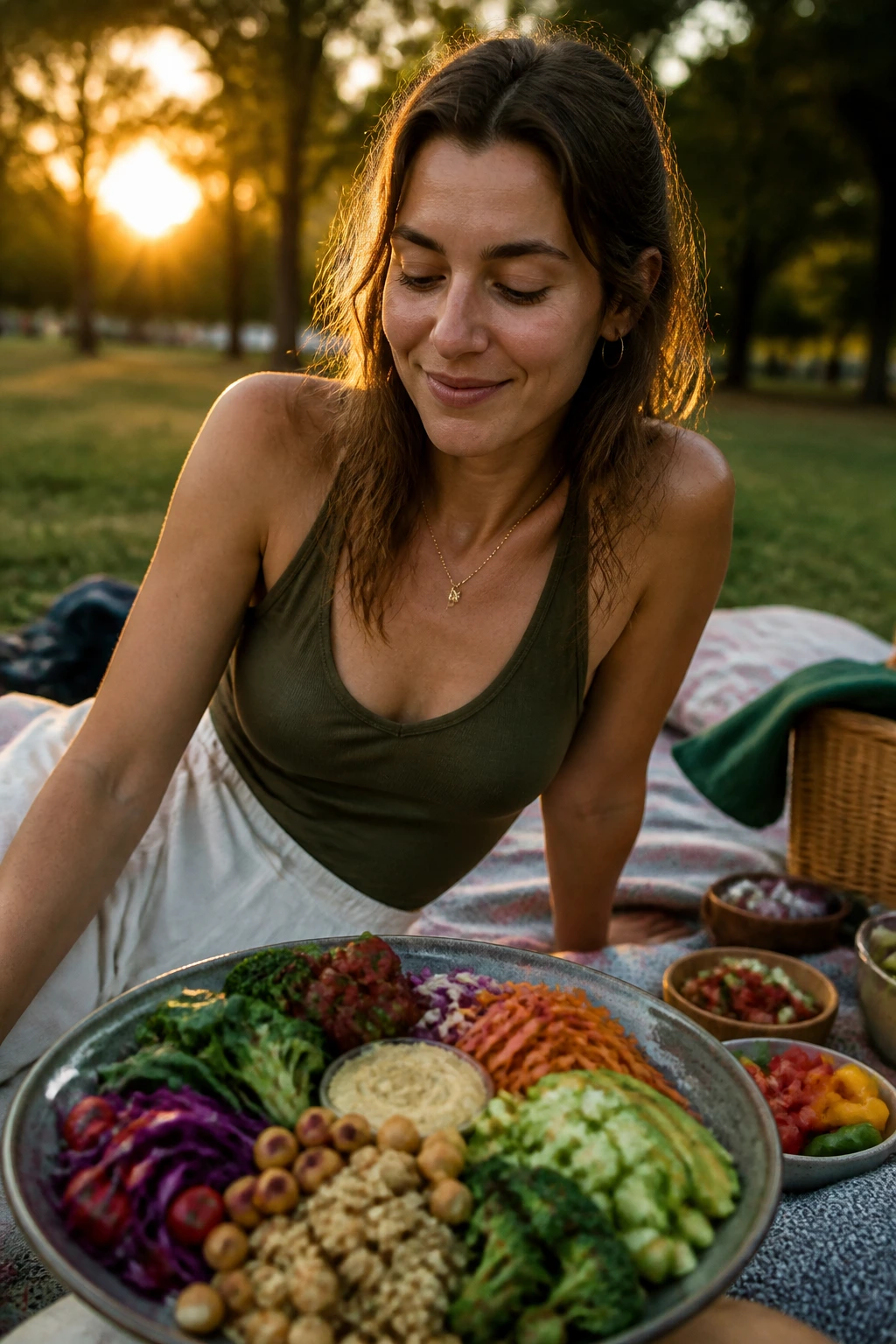
A good vegan picnic dinner does not feel like a compromise. It feels like a small reset: bright vegetables, something chewy, something creamy, something sharp, and enough salt to make the whole thing sing a little.
That’s why this style of meal works so well. The food does not need to be hot to be satisfying, and it does not need to be elaborate to feel thoughtful. Pack the cucumbers dry, keep the dressing in a jar, and build the basket with ingredients that still taste like themselves after a few hours in transit. The rest is just a blanket, a fork, and a little time to sit still.